Edo was the sword’s age of connoisseurship: the Hon’ami appraisers, the shogunal register of famous blades of 1719, and a thriving literature turned the sword into an object of study even as it ceased to be drawn in war.
 NihontoWatchNihontoWatch
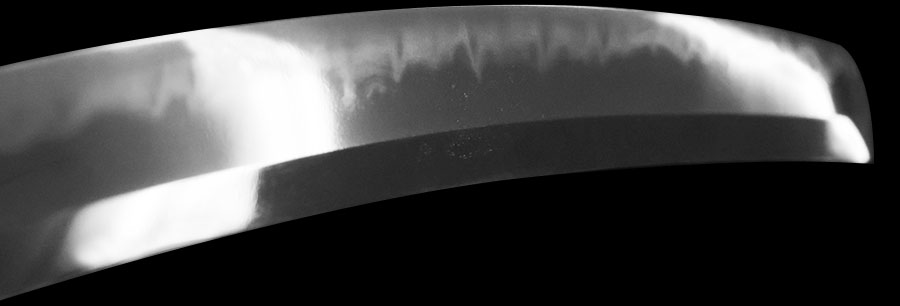
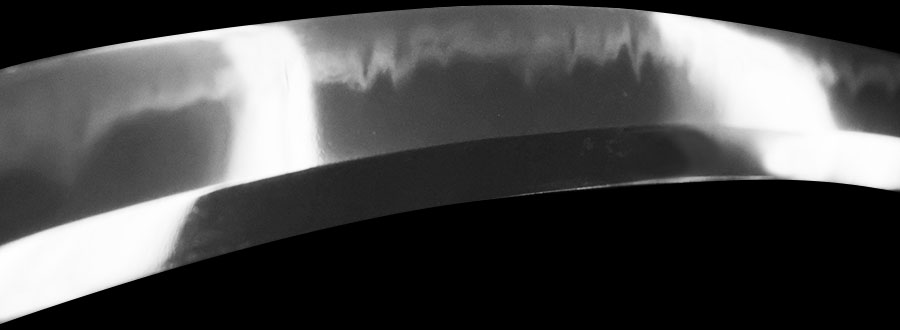
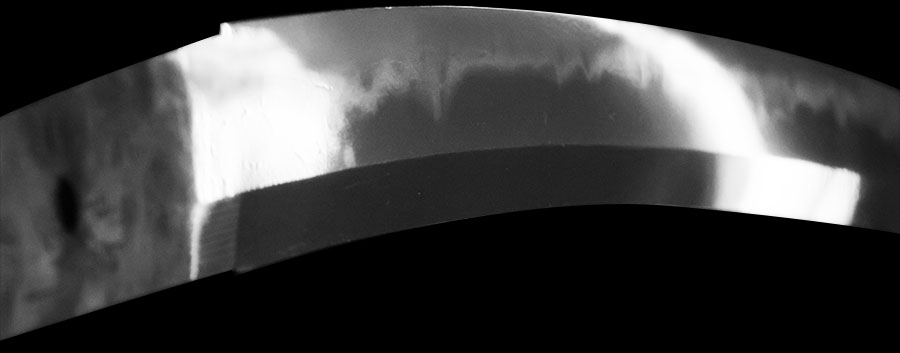
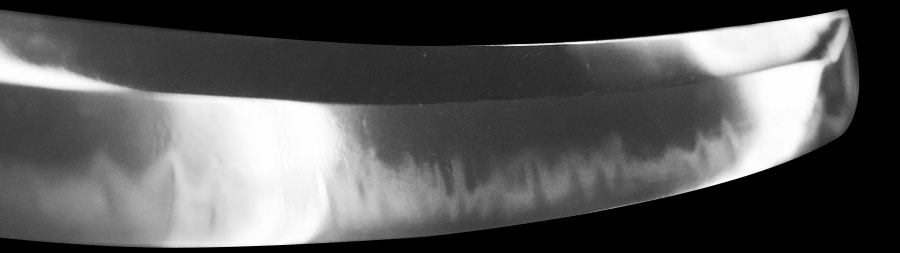
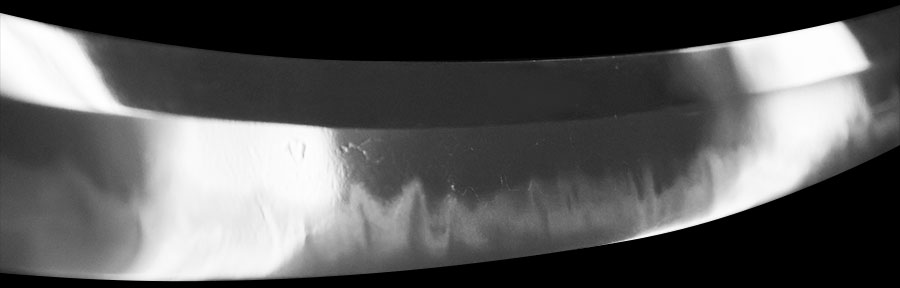
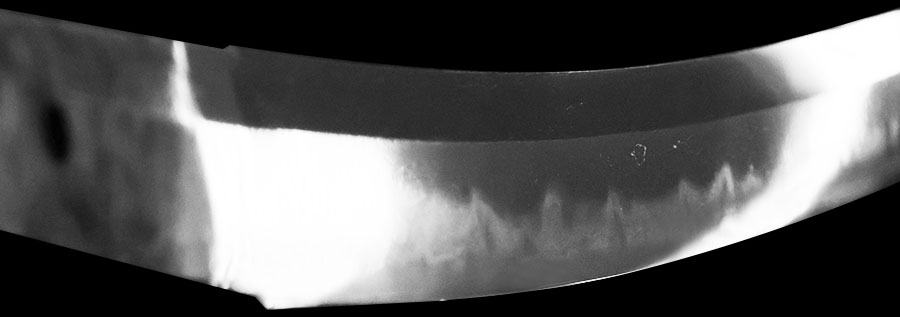
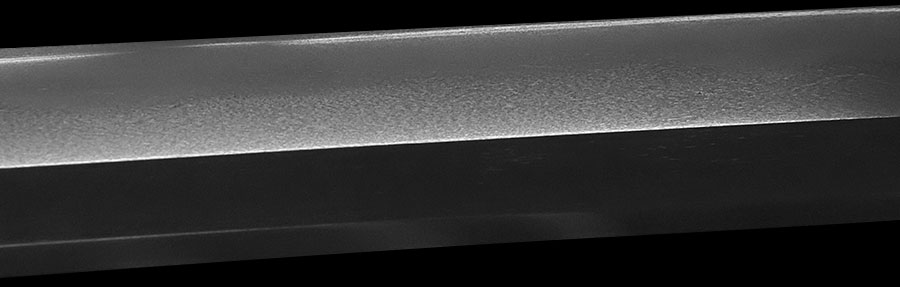
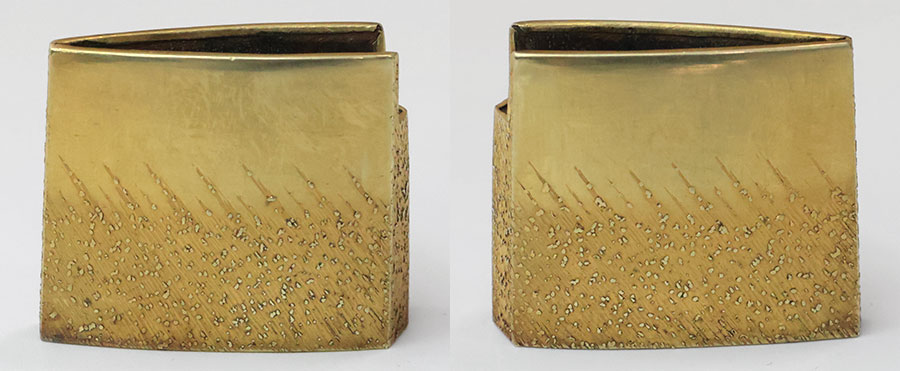
出ました出ました薩摩島津家の藩工として巨匠としても有名な薩摩新々刀の巨匠薩摩正良(さつませいりょう)(伯耆守正幸)の天明6年期(1786年)(240年前)の有る54才の時の名脇差が出ました。「新々刀」とは江戸時代後期の安永元年(1772年)(254年前)から明治9年(1876年)(150年前)の廃刀令までに作刀された日本刀のことを言い。「古刀」を理想とした作品です。薩摩正良は若い頃から抜群の技量を見せ、奥元平とともに、薩摩新々刀の双璧と呼ばれた名工です。相州伝の影響を受け、のびやかな作風で知られ、新々刀時代のさきがけとなりました。本脇差の制作時の天明時代の薩摩の国は素晴らしく天下への権勢が高まった時代で薩摩藩の第8代藩主島津重豪公(しまづしげひで)の時代で、11代将軍徳川家斉公の正室の父として、高輪下馬将軍と言われる程権勢を振い、また学問への造詣が深く藩校の造士館を開設し、武芸稽古場として演武館も設立し、医療技術養成の医学院を設立し、蘭学に大変な興味を示し長崎のオランダ商館に自ら出向いたり、オランダ船に乗船したりもし、蘭学大名、学者大名としても又有名で武士だけでなく百姓、町人にも教育の機会を与えました。薩摩正良は本脇差製作の3年後の寛政元年(1789年)(237年前)57才で伯耆守を受領して伯耆守正幸と改めます。正幸と名を改めた為に正良もその後(まさゆき)と呼ばれます。本脇差は正良54歳の脂の乗り切った時の名脇差です、正良は本名伊地知右衛門、当時弟子を四十数名も持ち大教育者としても特に有名です。「正良問答」と言う刀剣書も出した当時の文化人教養人としても全国的に有名でした。本脇差は元身幅と先身幅の差の有る反りの有る良い上品な脇差姿を現し、地金は小板目肌に鍛え地には地景や地沸を現し、刃紋は匂い出来に沸の付いた互の目乱れ刃を焼き、沸が良くついて沸匂が深く刃中上品な金筋がかかり薩摩相州伝の脇差を現して見事です。この度古いお数寄者様から自分も年を取りましたので大切にして頂ける方にお安くお譲り下さいとお預かりした為に特別保存刀剣には直ぐに成りますがご厚意で超格安価格にてご提供いたします。薩摩新々刀の横綱の薩摩正良の上品な名脇差を是非お楽しみくださいませ。
NihontoWatchOffered by Nipponto
This piece has sold
Get an email when a new Satsuma Masayuki piece hits the market.













As written by the shop
(Translation unavailable)
Ijichi (Satsuma), shinshinto · Satsuma · around 1772-1817
Fujishiro Jo saku · Tōken Taikan top 23%
6 pieces on the market now
Hoki no Kami Masayuki was a smith of the Ijichi house, the Satsuma domain smiths, the son of the second-generation Masayoshi, born in Kyoho 18 (1733). He succeeded as the third generation and signed Masayoshi (正良), with works from about the Horeki era. In Kansei 1 (1789), in the same year that his townsman Oku Motohira became Yamato no Kami, he received the title Hoki no Kami and changed his name to Masayuki. He worked into great old age, many late blades carrying his age in the signature, and died in Bunsei 1 or 2 (1818 to 1819) at eighty-six or eighty-seven. The published sources place him by one recurring pairing: with Oku Motohira he is one of the "twin pillars of Satsuma shinshinto"[[c:1]], and they add that he surpassed his forebears in skill and early won the repute of a pupil who outshone his teacher.
His characteristic hand is a broad, long, robust katana. The mihaba is wide, the kasane thick and the kissaki extended. Over it he tempers a ko-notare or shallow notare mixed with gunome, setting in pointed teeth, the nioi deep and the nie somewhat coarse, with sunagashi and kinsuji. The published sources call this his favoured manner and record that "he himself called it Soshu-den"[[c:2]]. Elsewhere they read it more exactly: he "excels in work modelled on Soshu-den, and above all on Shizu"[[c:3]]. The kinsuji and nie-suji that run long through his ha are the Satsuma lines known as imozuru, the yam-vine.
The jigane beneath is a well-forged itame, often mixed with mokume and flowing grain, with thick ji-nie and chikei, at times a conspicuous o-itame. The boshi runs in midare-komi or straight, turning back in ko-maru or o-maru, swept with hakikake and at times breaking into nie-kuzure. The nakago is almost always ubu, narrowing to a sword-shaped or iriyama-gata tip, with katte-agari file marks and a bold long signature cut with a thick chisel. The published sources say he carves a bo-hi on most of his blades, tying it to their wide mihaba and thick kasane, and they note one katana left without a groove because its width is comparatively standard.
The signature divides his record, but not his manner. Twelve of his thirty-six designated blades are signed Masayoshi, dated from Meiwa 7 to the second month of Kansei 1, and the published sources call several of them typical and among his best. The robust body and the deep-nioi, coarse-nie temper are already present. What marks some early pieces is the base of the temper, a suguha-cho or broad suguha-cho line with a shallow notare, mixed with ko-gunome and pointed teeth, the kinsuji and nie-suji winding through the ha. The sources say this manner is often seen in his Meiwa and An'ei work and appears "modelled on the old works of Go and on Inoue Shinkai"[[c:4]]. One Tenmei 5 katana, 86.5 cm long and heavy in the hand, they judge without parallel among his works and call "the great work of Hoki no Kami Masayuki's life and its crowning piece"[[c:5]].
His inscriptions run beyond the date. One katana of Kansei 12 (1800) carries a Koshin-faith text, that a sword forged in a year when the Koshin day falls seven times secures lasting martial fortune, and the published sources call its province signature unusual. Others bear the invocation "Namu Hachiman Daibosatsu"[[c:6]] on the tang. Within his province he is read beside Motohira, the Oku house and the Ijichi house raised to their court titles in the same year. His own traits set him apart: the broad, robust sugata, the pointed teeth in a deep-nioi gunome, the coarse nie and the running imozuru. The sources measure refinement against that vine as well, praising one katana because "the yam-vine kinsuji and nie-suji"[[c:7]] do not appear on it, which lends it higher dignity.
For the collector he is one of the leading names of late Satsuma, and Fujishiro grades him Jo saku. He has no National Treasures and no Important Cultural Properties. His record on the modern designation tiers runs through the Juyo rank, where thirty-six of his works are held, all signed. Two carry distinguished local provenance. One katana descended in the Shimazu house, the lords of Satsuma, kept as a reserve sword of Tsurumaru castle. Another came down in the Kabayama family, a Shimazu branch, with a Satsuma koshirae whose fuchi-kashira and kojiri are by Masayuki's own hand. Most designated blades are held rather than traded, and a fine signed Masayuki in his Soshu-den manner comes to market only from time to time and with patience. He is more findable than the locked heritage of the older traditions, but a dated, age-inscribed katana in his full manner remains a substantial acquisition.
Where Masayuki stands among comparable artisans: across all of nihontō, and within tradition, era, and period. The tiers (Foremost · Leading · Major · Notable) weigh official designations from the NBTHK and Japan's Agency for Cultural Affairs, together with historical honors of lasting repute such as the Sansaku and Meibutsu-chō.
Select a lens to see how it's measured.
Years he was demonstrably active, proven by signed-and-dated blades
Yamato-den · Satsuma
32 pieces on the market now
The Satsuma school gathered the smiths of southern Kyushu under the patronage of the Shimazu, the daimyo house of Satsuma and Osumi, and the published sources read its history in two distinct flowerings rather than one continuous line. Its shinto fountainhead is Izu no Kami Masafusa, a son of the Mino smith Ujifusa who moved to Kagoshima and carried a strongly nie-laden hand into the province; the NBTHK names him the origin of Satsuma forging. From that root the early school rose to its summit in the pair the judges return to whenever they place it, Mondo-no-Sho Masakiyo and Ippei Yasuyo, the twin pillars of Satsuma shinto. Both were summoned in Kyoho 6 (1721) by the eighth shogun Tokugawa Yoshimune to forge in Edo and were granted the single-leaf hollyhock crest of the Tokugawa for their tangs, and the Ippei line continued through Yasuyo's adopted heir Yasuari. A century later a second summit formed in the shinshinto twin pillars, Oku Yamato no Kami Motohira of the Oku house and Hoki no Kami Masayuki of the Ijichi house, raised to their court titles in the same year of Kansei 1 (1789); Masayuki's name had begun as Masayoshi, and his pupil Masakage carried the manner into the Bunka and Bunsei years. The training the members record runs back through the Naminohira and Yamato roots of the early Ippei smiths, but the working idiom the school is known by is its own. That idiom is a Soshu-den read in coarse nie rather than in clove-flower, and the members describe it in a shared vocabulary. The body is broad in mihaba, thick in kasane, full in hiraniku and stoutly built, the imposing Satsuma sugata. Over a well-forged itame, often a tight ko-itame turning toward nagare or masame and carrying thick ji-nie and dark chikei, the smiths temper a notare-toned gunome-midare into which they set pointed togariba, deep in nioi with thick nie and coarse ara-nie mixed through. The feature the commentary names most often is what streams within that temper, the long kinsuji, nie-suji and sunagashi the sources call imozuru, the yam-vine of the province, vine-like nie-lines running unbroken through the ha.
The jigane takes a markedly blackish cast against which the bright nioiguchi and coarse nie stand out, and the boshi runs in midare-komi or straight, swept with hakikake and on the most vigorous work flaring to a flame-like kaen. Within this one settled manner the members divide. Masakiyo handled the varied Shizu-style midare, his yubashiri gathering at the crests of the temper into a nijuba-like, antique appearance, where Yasuyo tempered a calmer notare-toned suguha whose strength lay in the depth of its nioi and the length of its imozuru; Motohira and Masayuki carried the flamboyant gunome with its kaen boshi into the later period, while a small number of blades lean toward masame and recall the Yamato Hosho grain that the early training laid down. To kantei Satsuma work, the judges read three grounded marks together: the pointed togariba riding a notare base, the deep coarse nie with its running imozuru, and the dark, chikei-laden standing jigane, completed by the swept hakikake or kaen boshi and the broad heavy body. The tang offers further constants, almost always ubu with a bold thick-chiseled signature that frequently carries the smith's age, Motohira's funagata-narrowed kengyo point and Masayuki's bo-hi among them. Among the members the standing is high: Masakiyo and Yasuyo hold the early summit, while Motohira and Masayuki lead the shinshinto generation, the latter's pupil Masakage judged to have inherited the master's hand with notable refinement. The cutting reputation of the province, tied to its Jigen-ryu martial tradition, runs through the bold robust construction the sources call decisive in the hand. The provenance is grand for a domain school: blades presented by the Shimazu house upward to the shogun Yoshimune and to Konoe Iehisa, Minister of the Left, who returned silver and poems to the smiths, with pieces descending through the Tokugawa, the Imperial family and Shimazu branch houses such as the Kabayama. Such blades are held in long-established collections rather than traded, and a signed Satsuma work in its full vigorous Soshu-den comes to a collector only with patience. Learn more →
| Smith | Era | Designated |
|---|---|---|
| Yasuyo安代 | 1716-1736 | 18 |
| Motohira元平 | 1778-1789 | 39 |
| Masayuki正幸 | 1772-1817 | 36 |
| Masakiyo正清 | 1714-1736 | 26 |
| Yasuari安在 | 1744-1748 | 4 |
The Edo period (1615 to 1868)
Edo was the sword’s age of connoisseurship: the Hon’ami appraisers, the shogunal register of famous blades of 1719, and a thriving literature turned the sword into an object of study even as it ceased to be drawn in war.
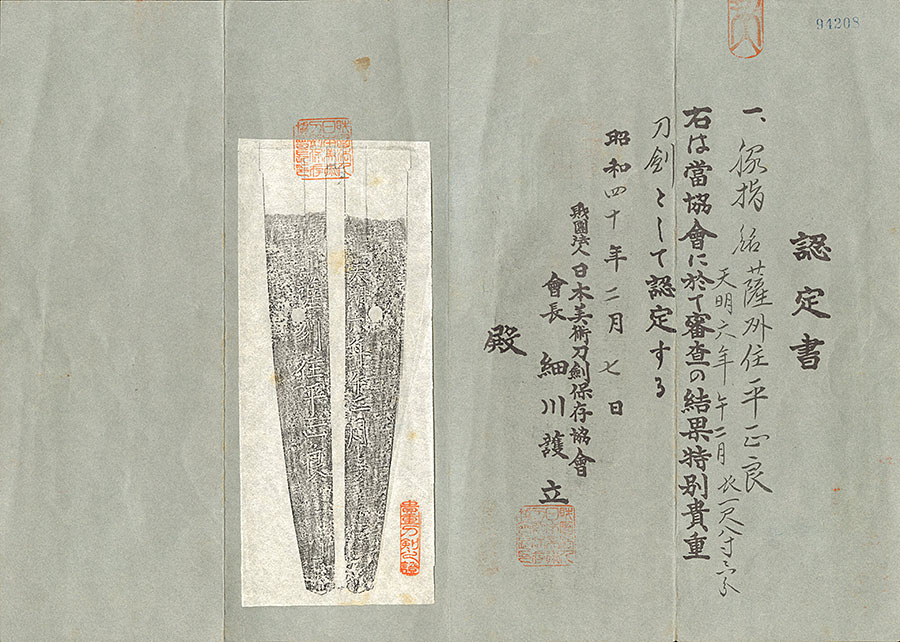
This work carries older NBTHK “Kichō”-era papers, which the NBTHK no longer issues and largely disavows today. To confirm the attribution, submission to an official Japanese examination body (such as the NBTHK or NTHK) for modern certification could be considered.
For returns due to customer circumstances, the cost is the customer's responsibility. For returns due to our mis-shipment or a defective item, we bear the cost.