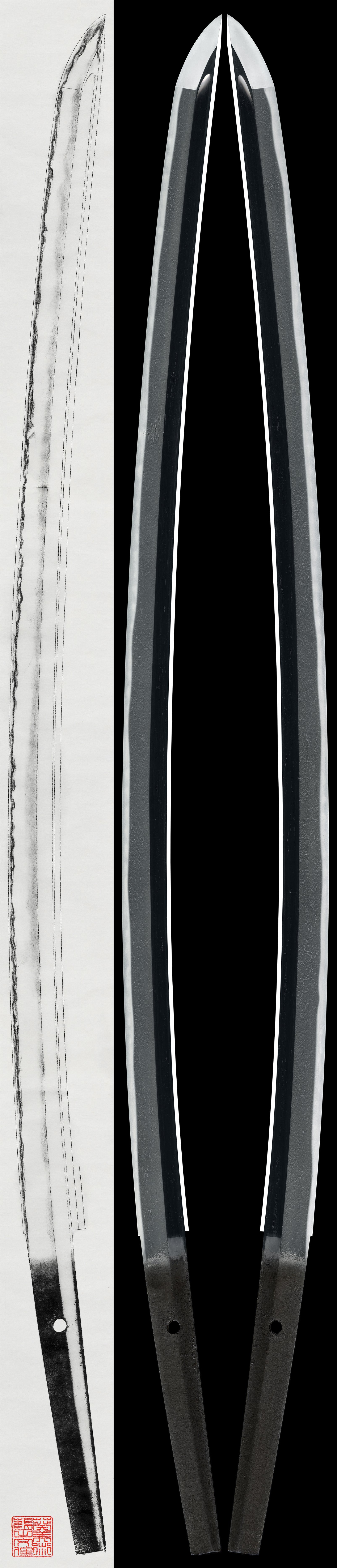
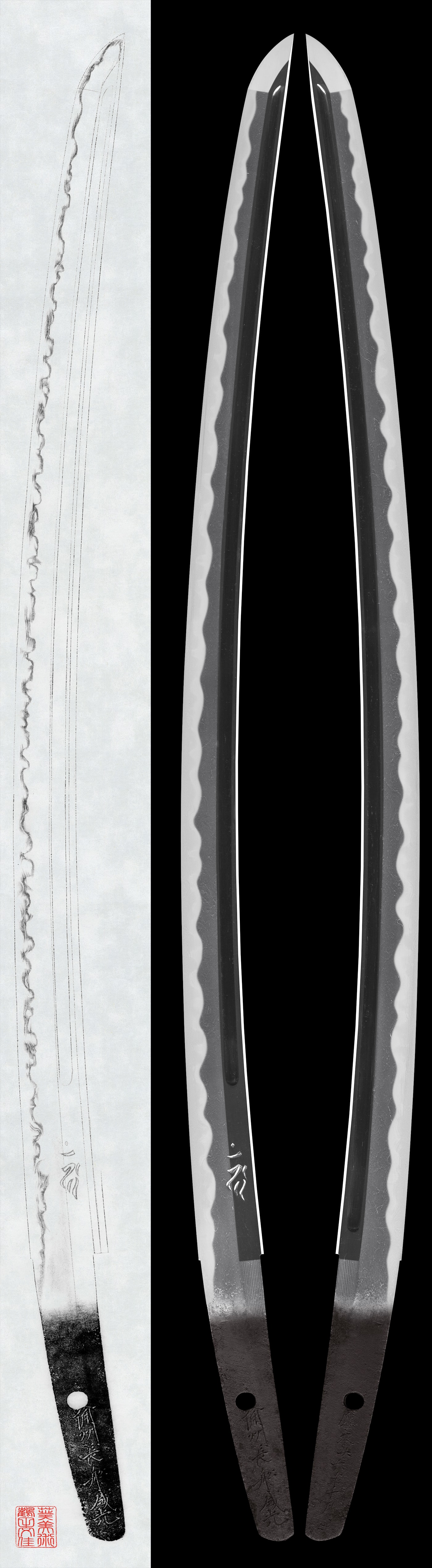
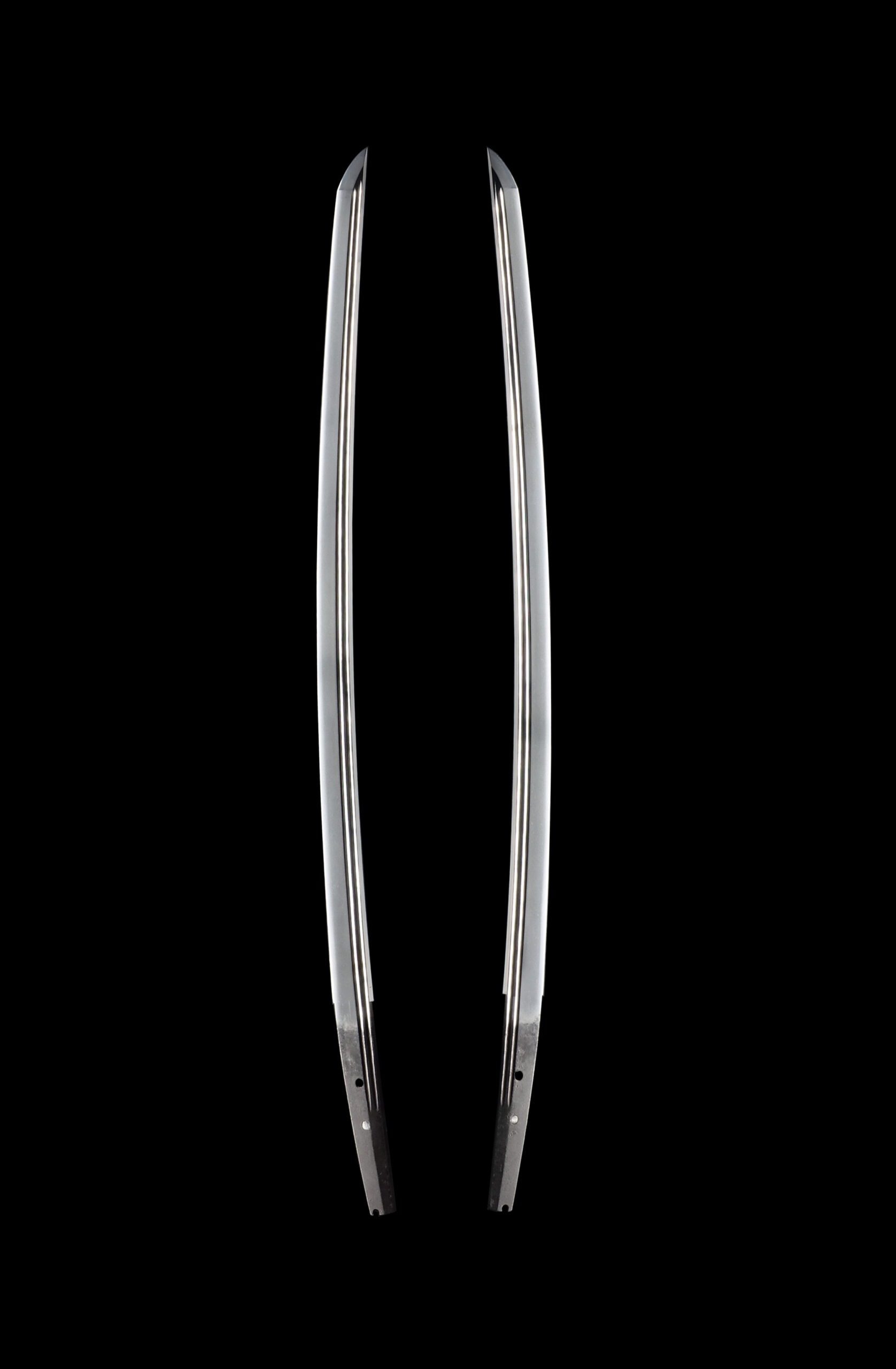
Sixty years of war between two courts drove blades long and broad, and Osafune met the demand: Kanemitsu and Chōgi led forges serving the provincial warriors who did the fighting, while Sōshū influence arrived with the armies to create Sōden-Bizen.
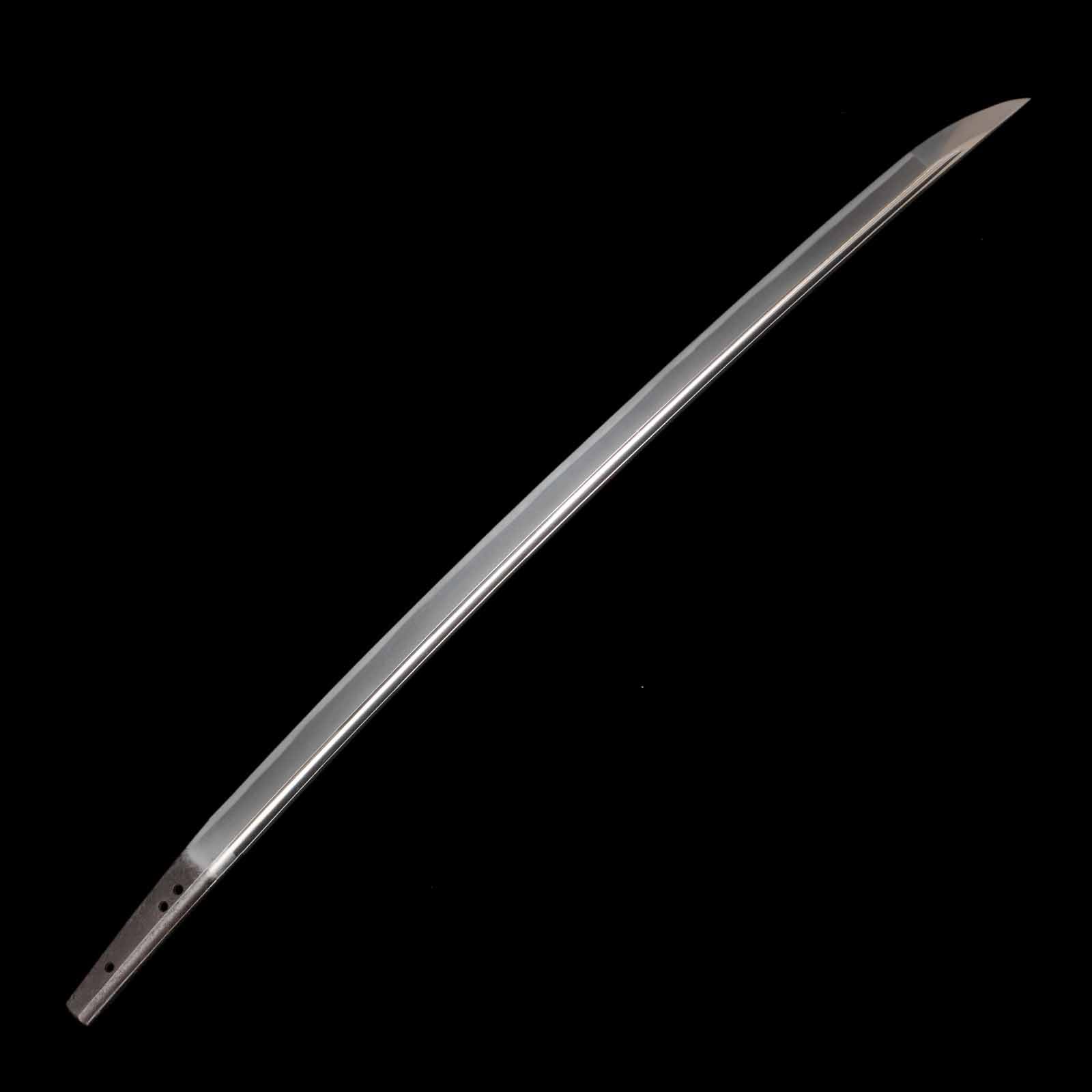
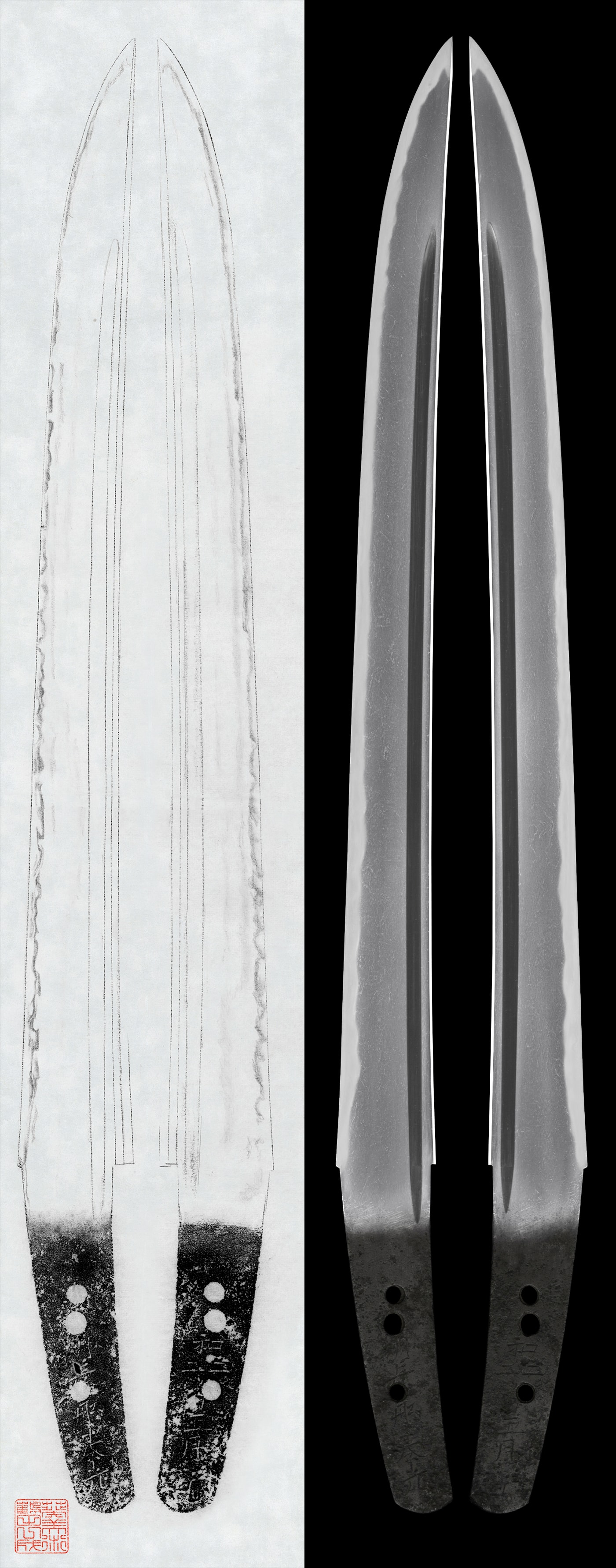
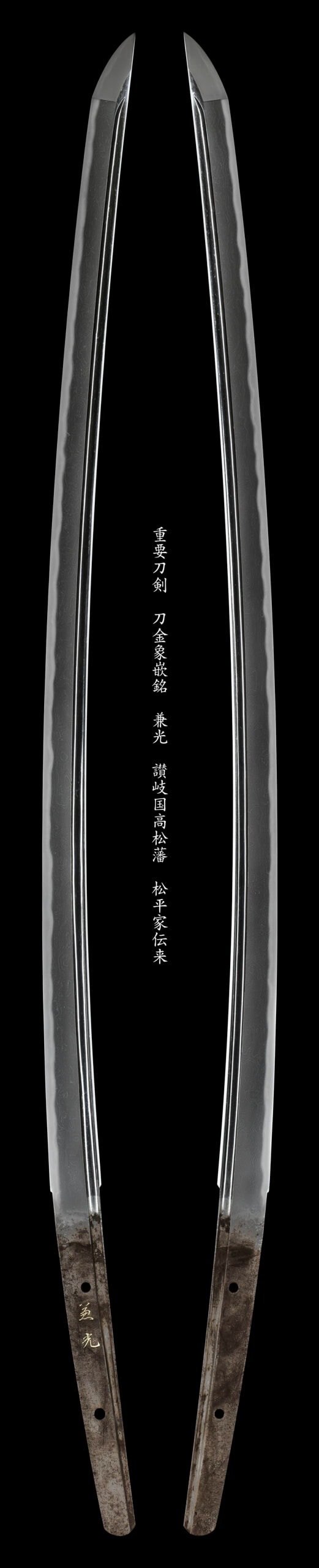
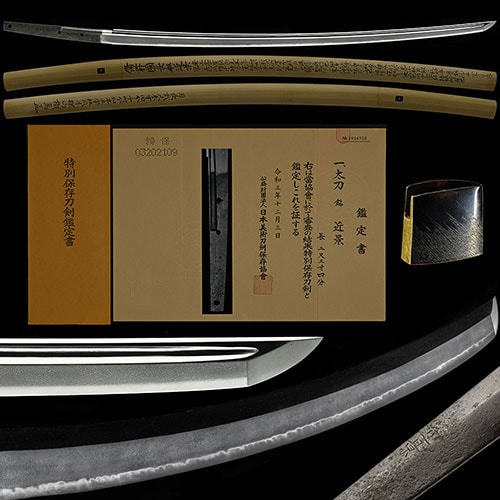
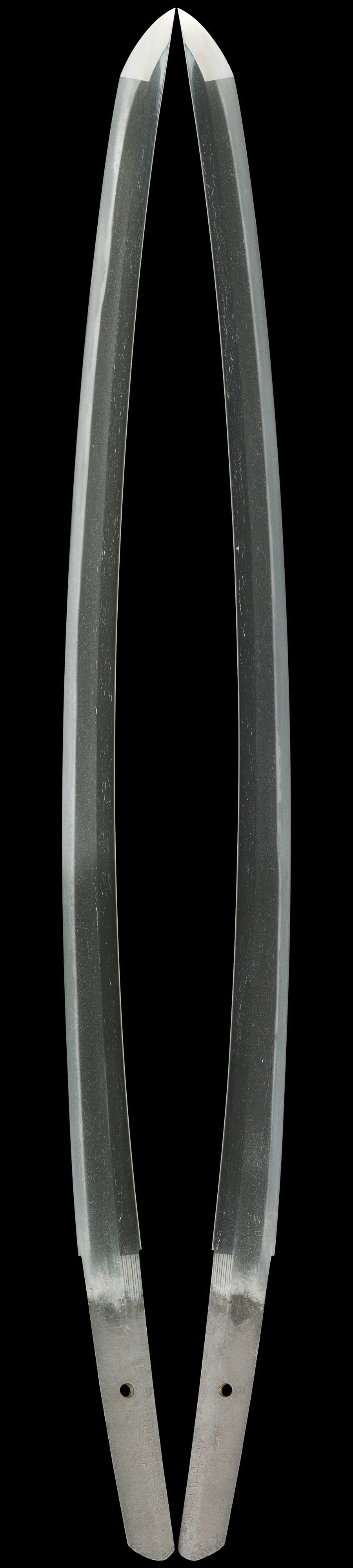
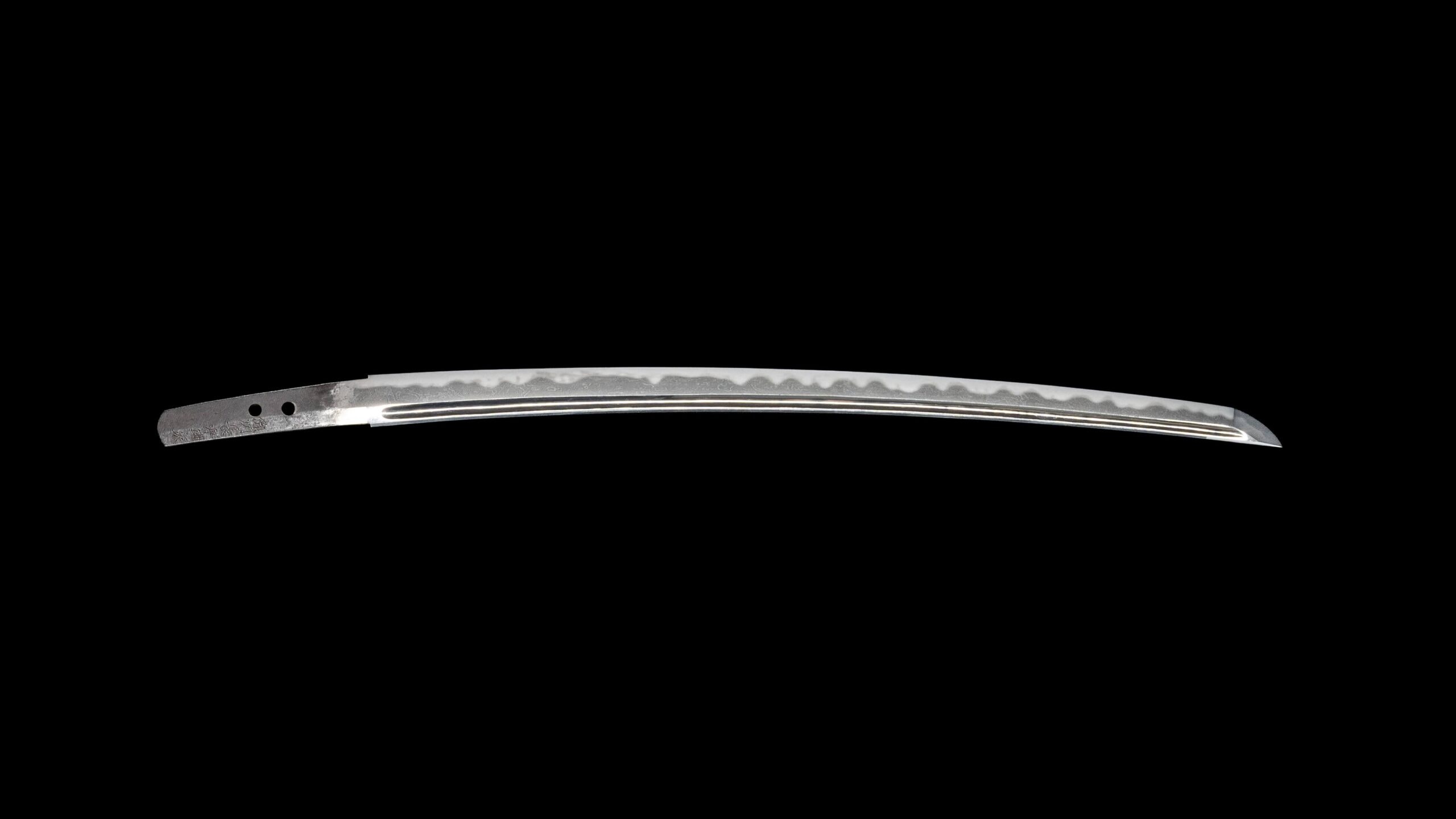
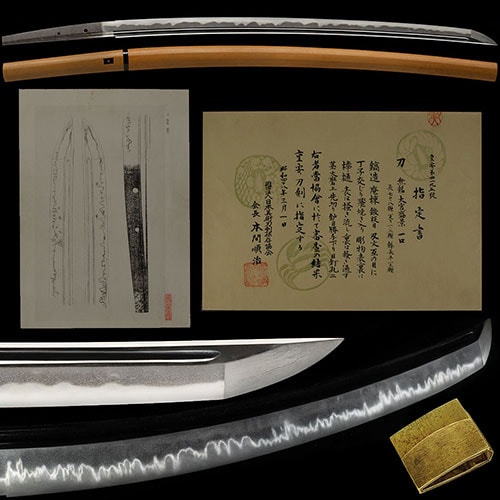
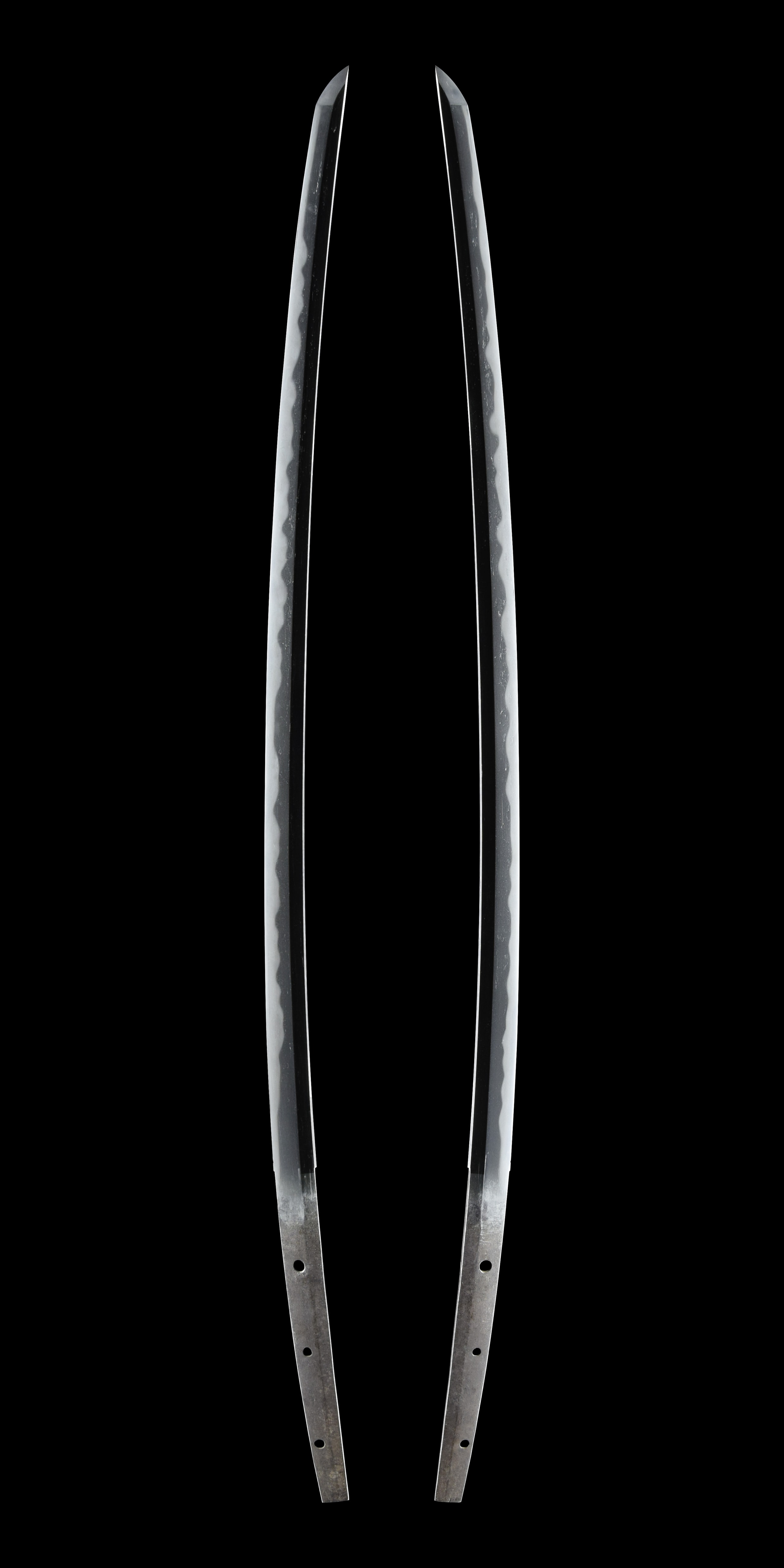
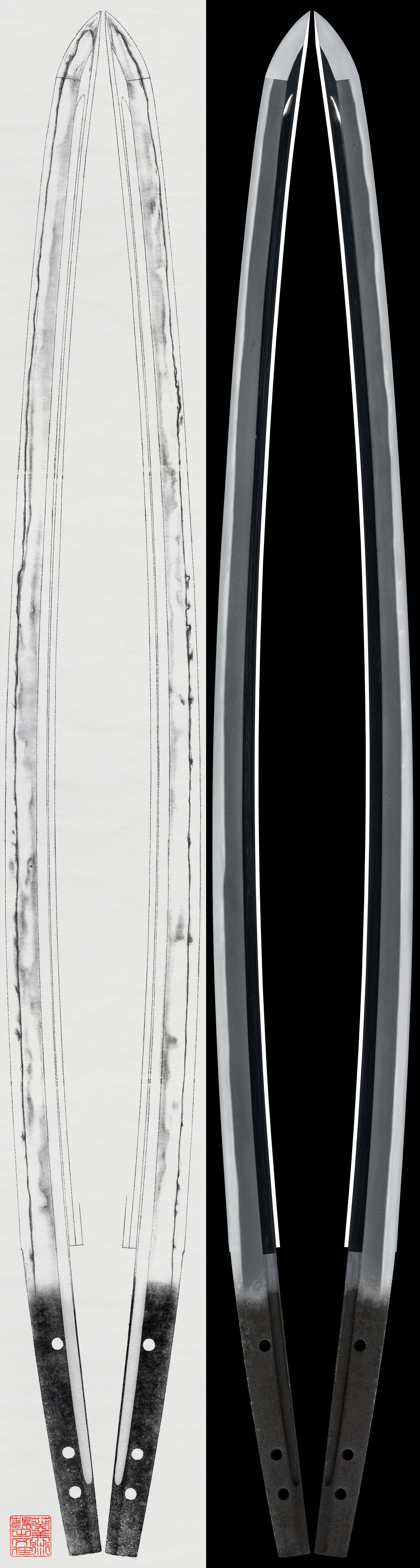
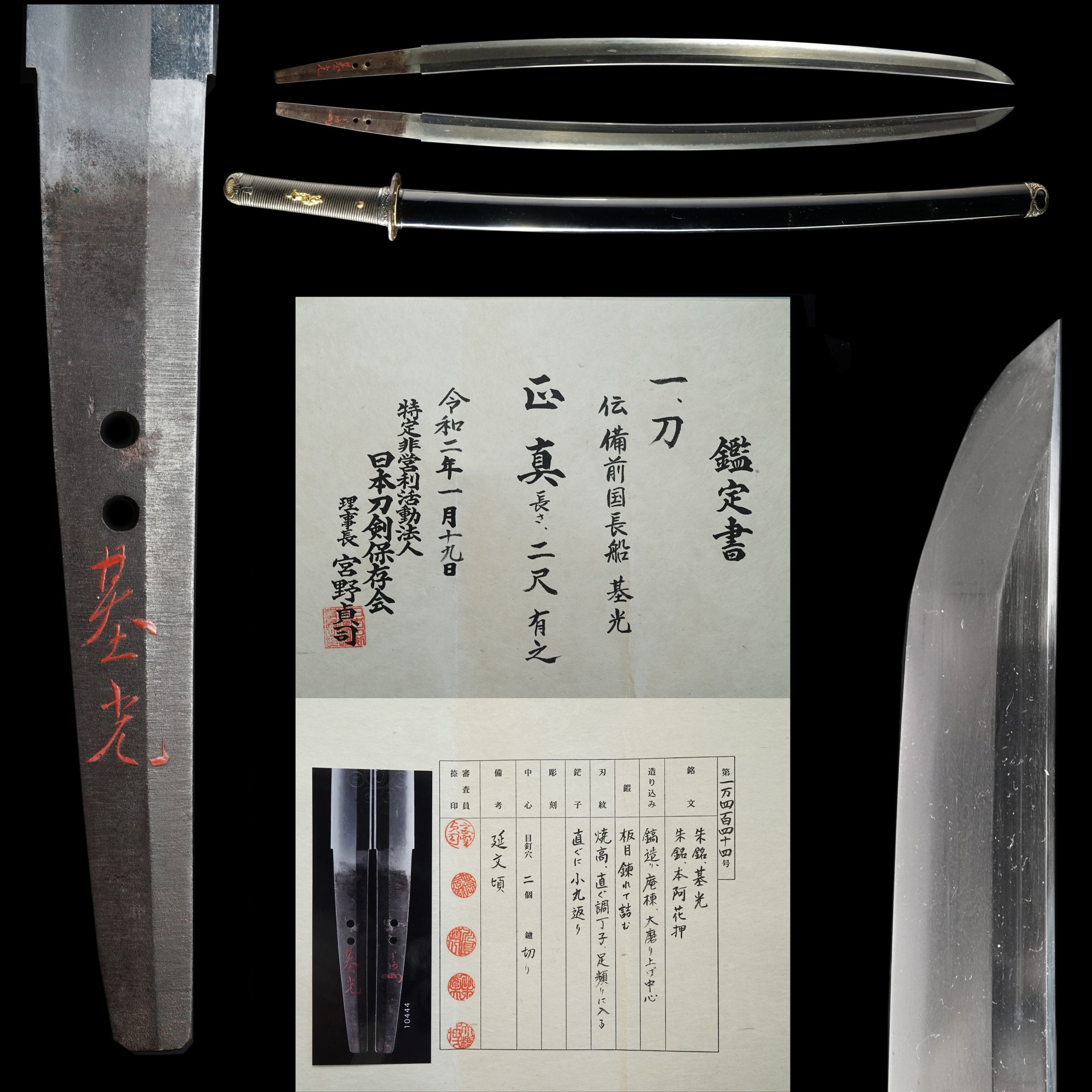
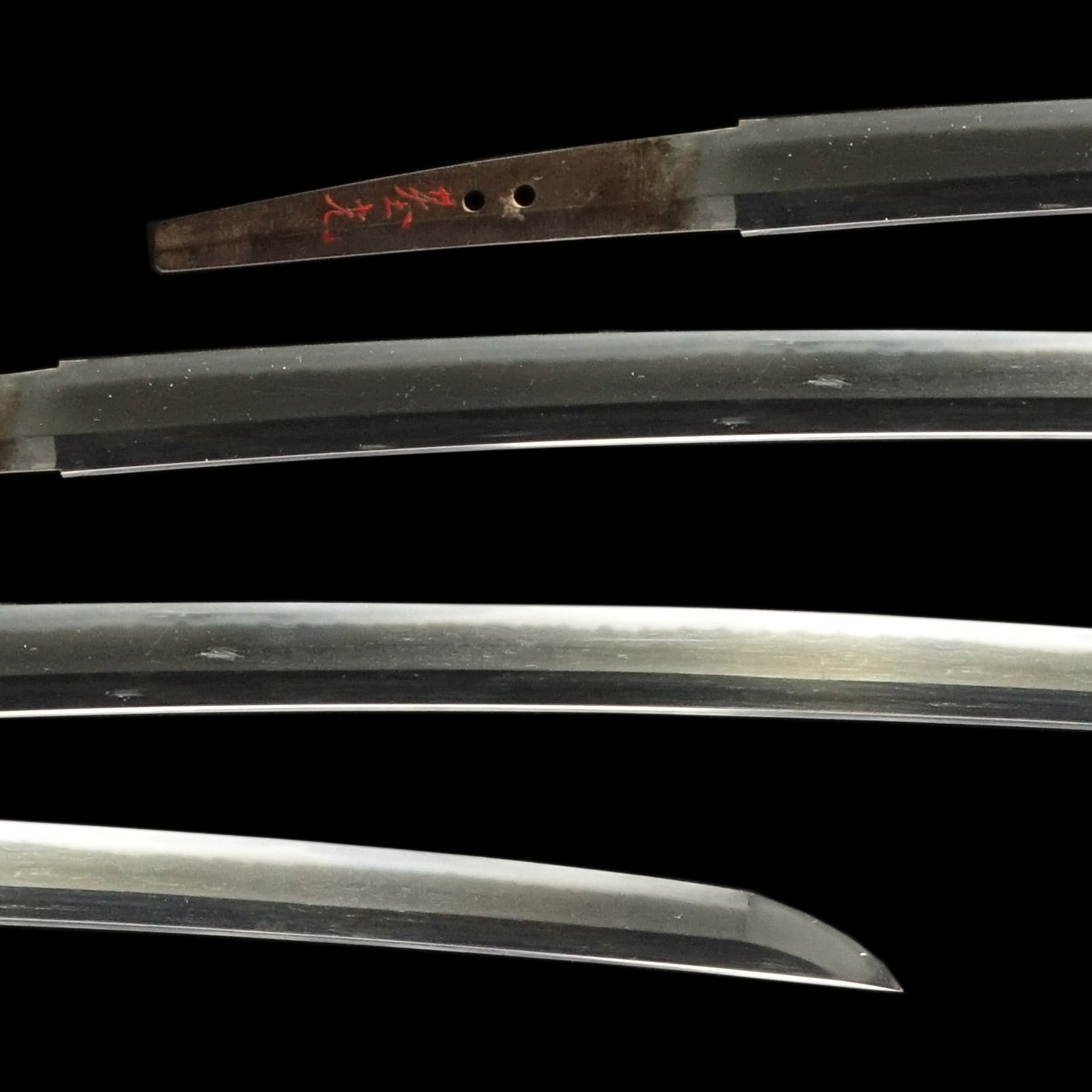
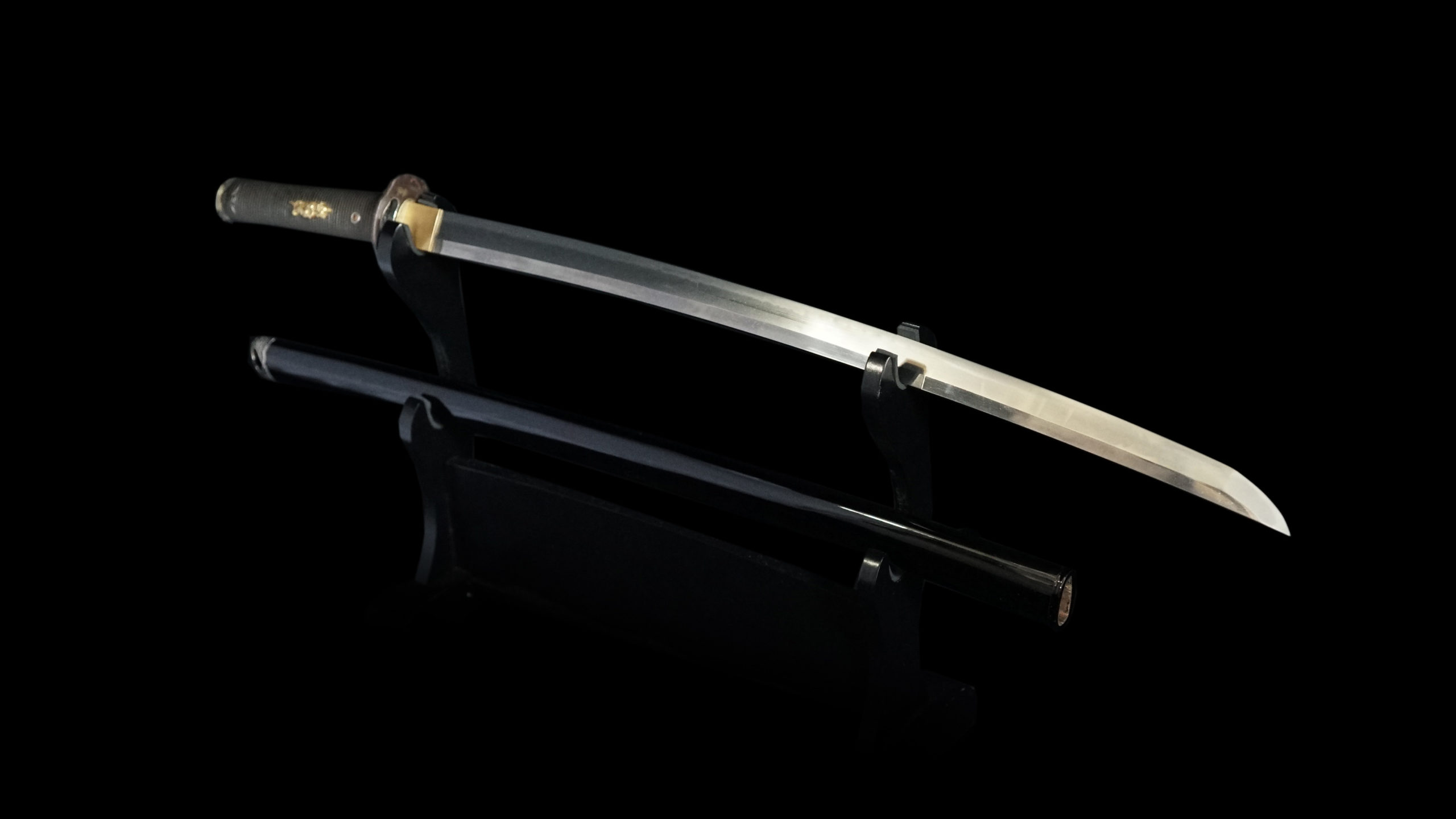
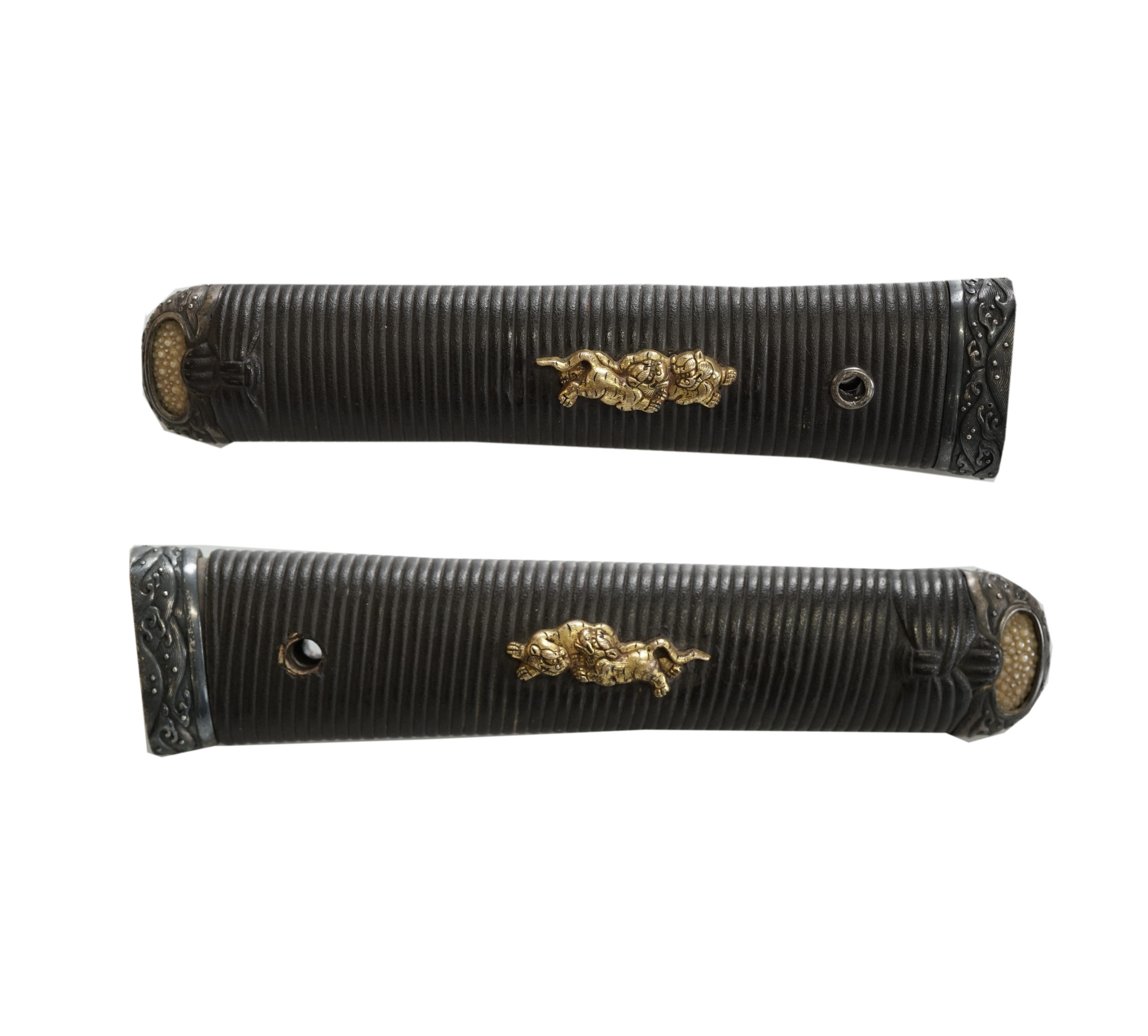
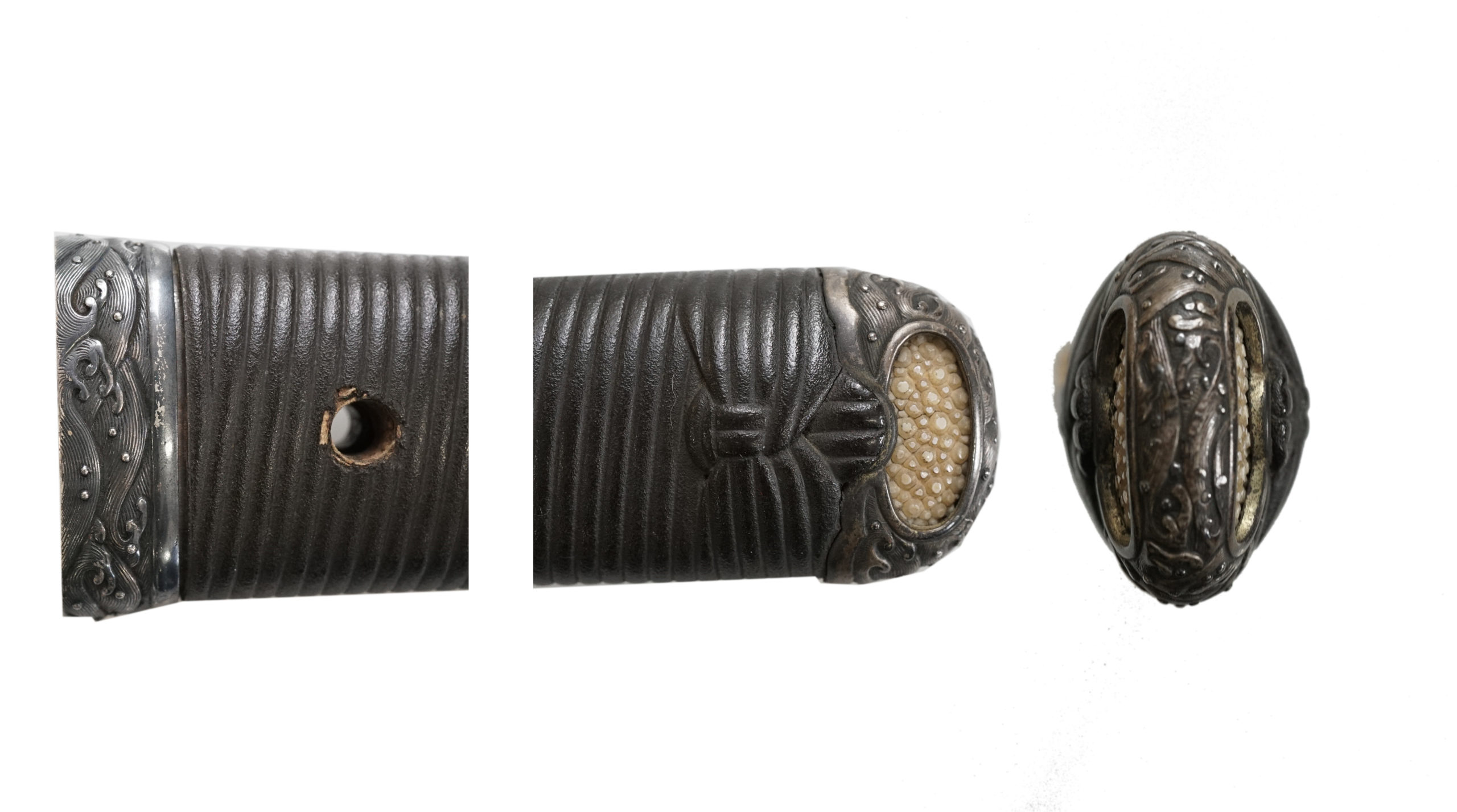
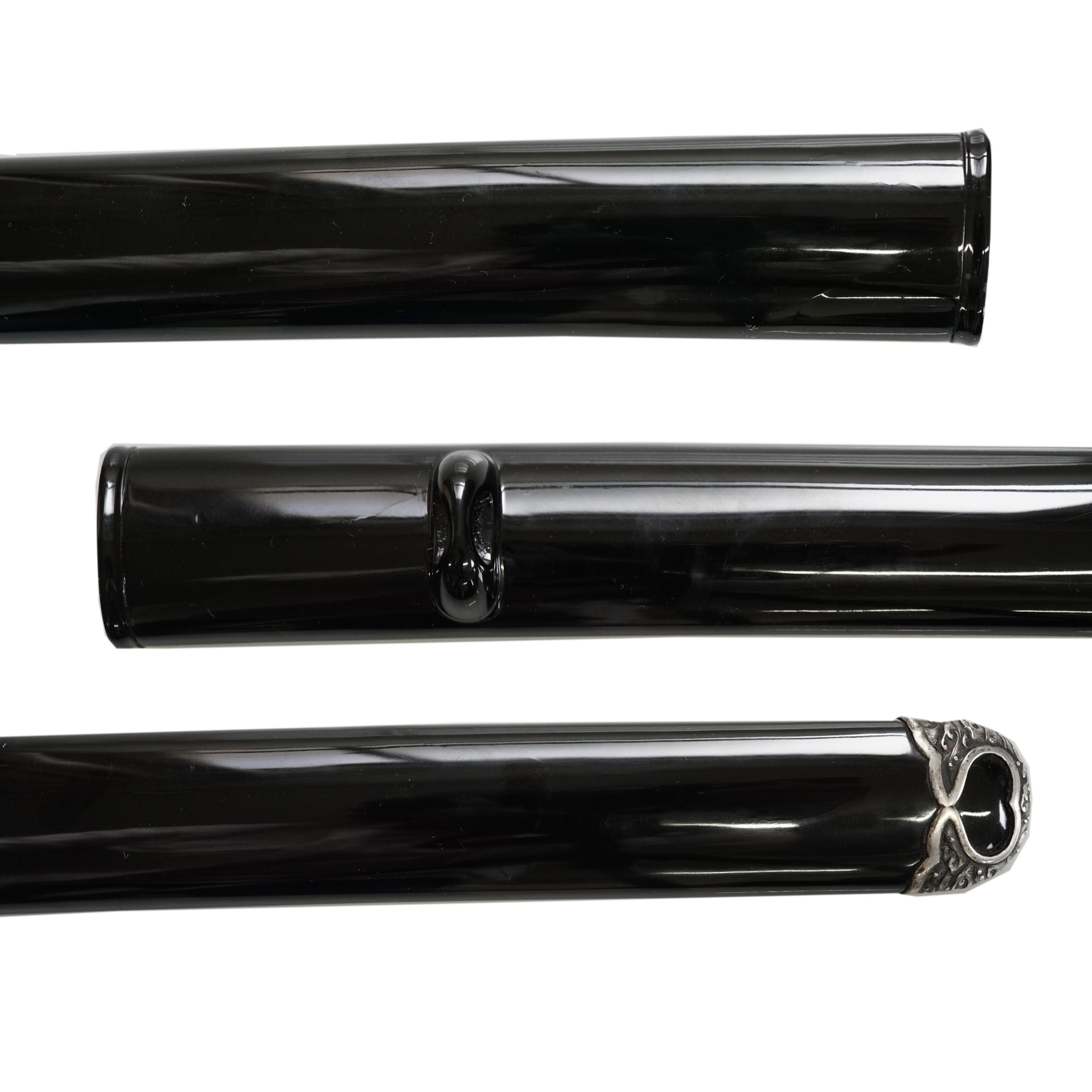
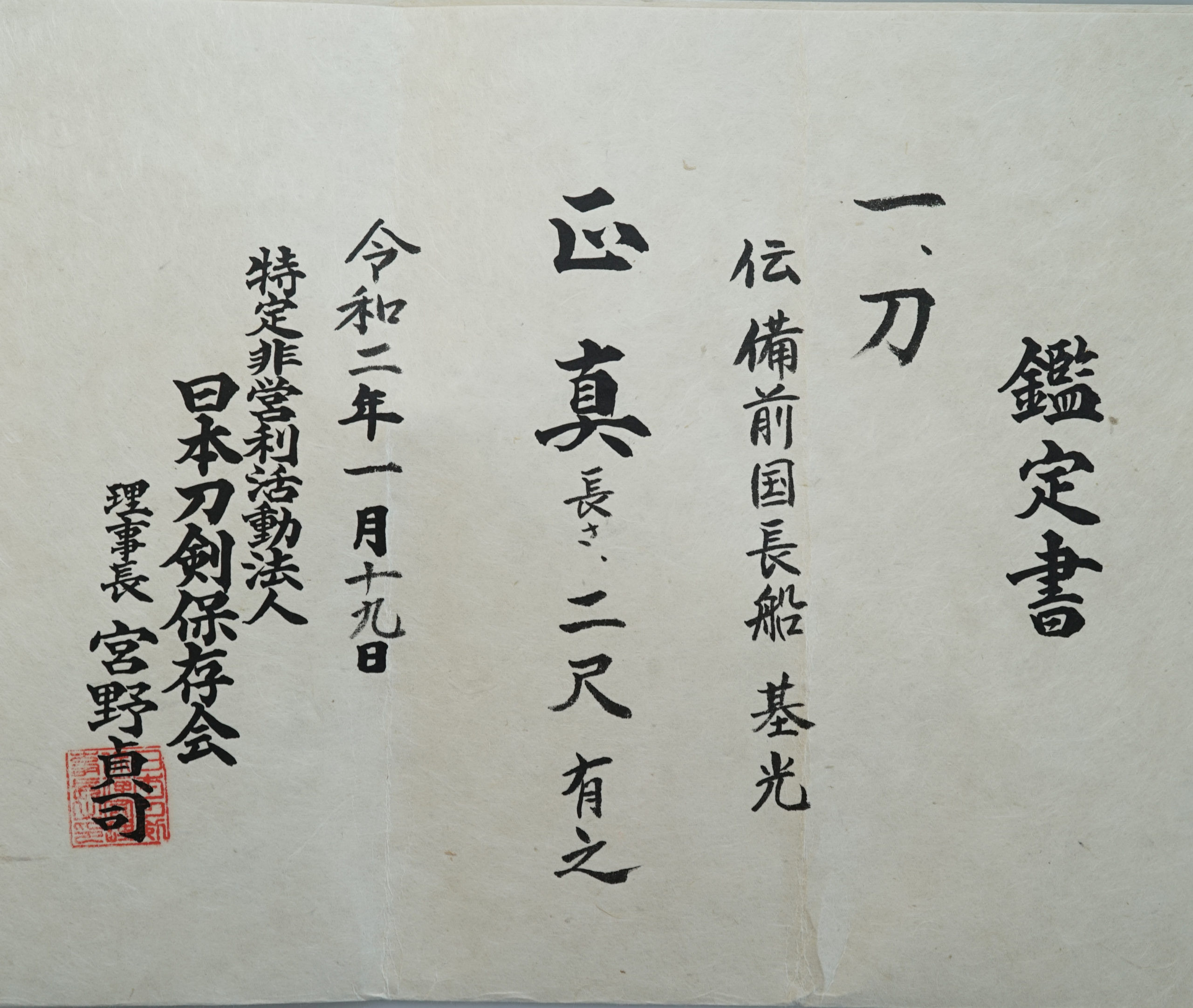
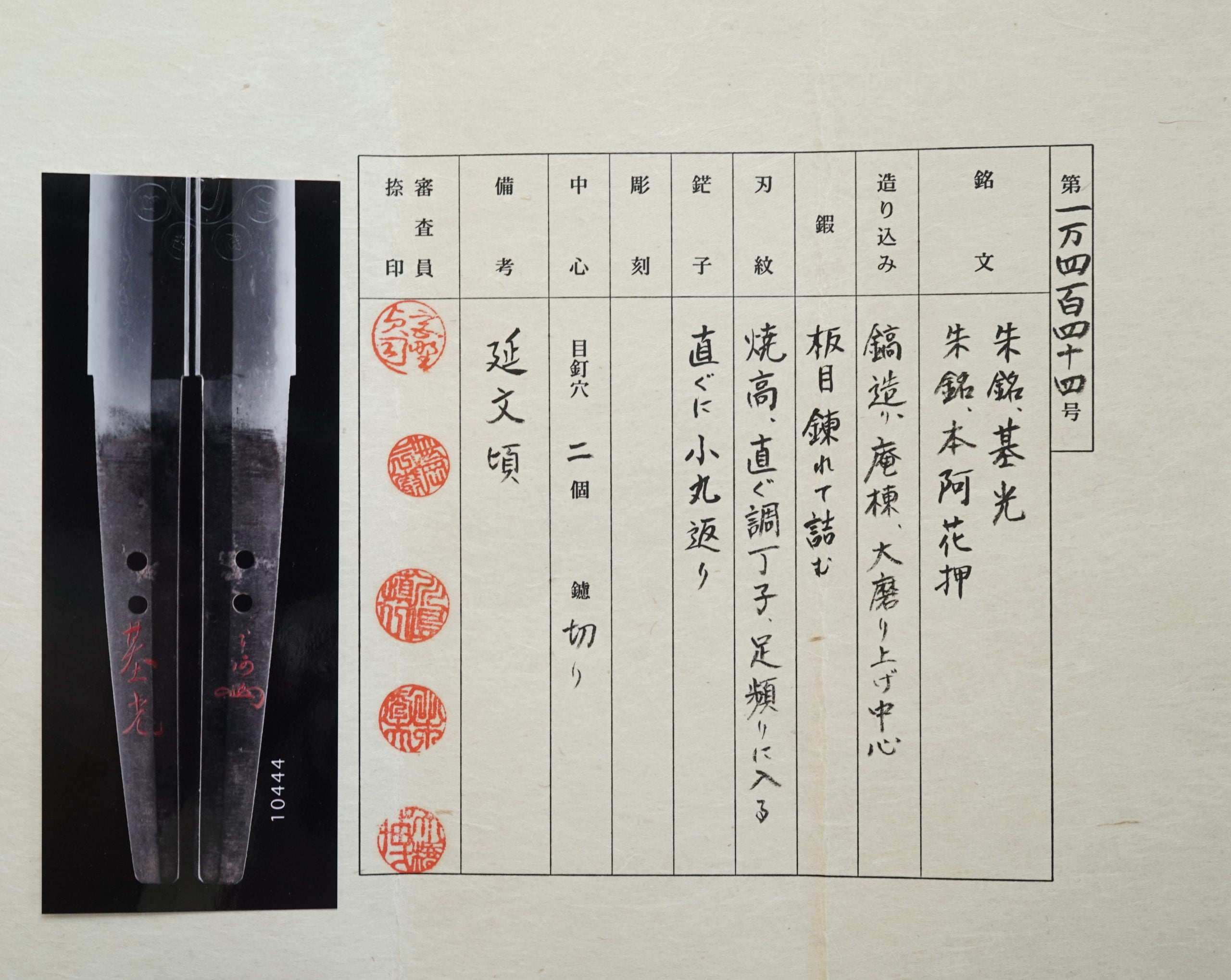
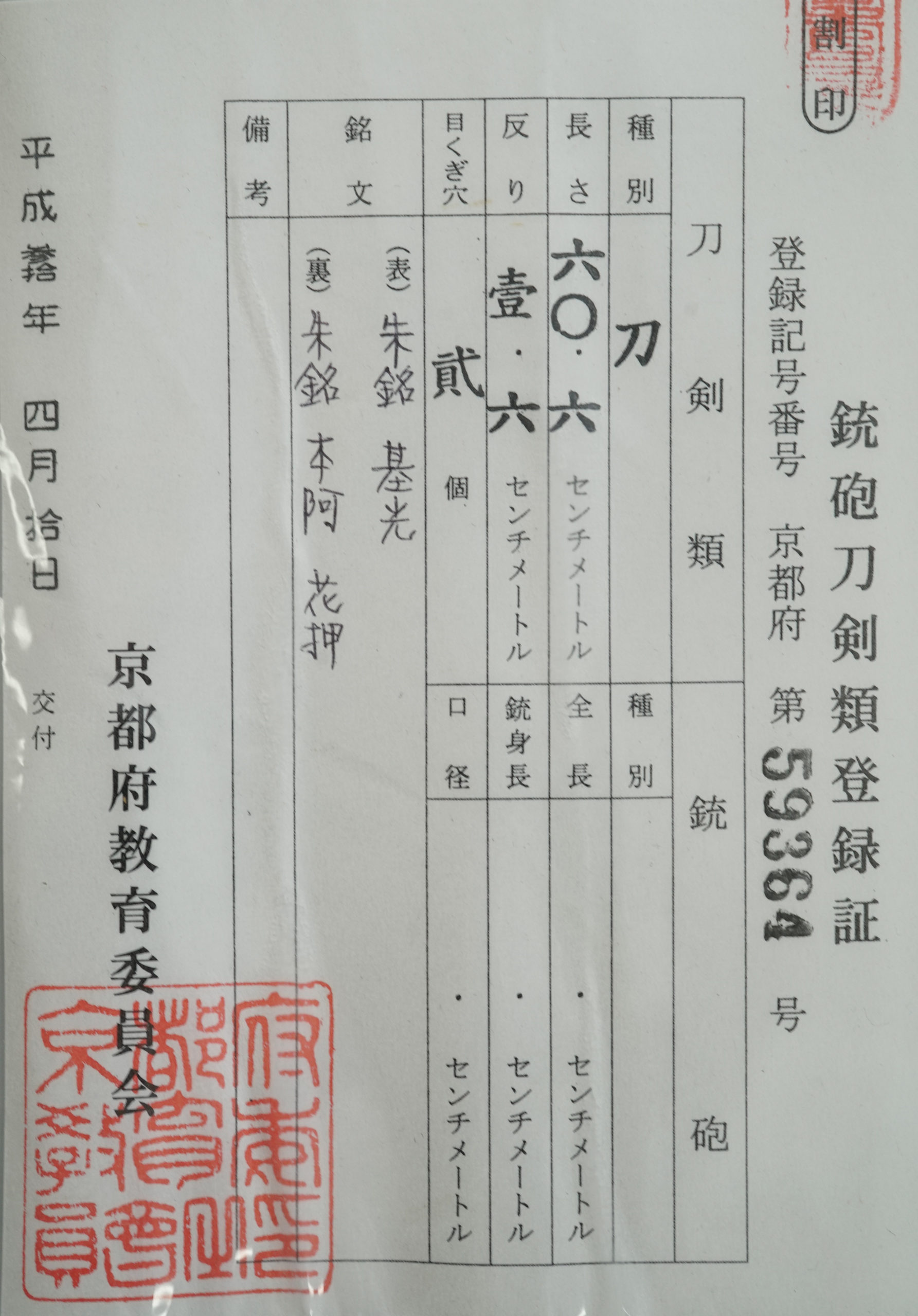
This antique Japanese katana is signed by Motomitsu, a swordsmith from the Bizen Osafune school active during the Nanbokucho Period. Motomitsu, believed to be the son of Kanemitsu, forged swords between 1342-1378 in a style similar to his master. The blade features a nagasa of 60.6 cm and comes with a full koshirae mounting and an NTHK Kanteisho certificate.
 NihontoWatch
mei · Osafune · Nanbokucho · nagasa 60.6cm · sori 1.6cm
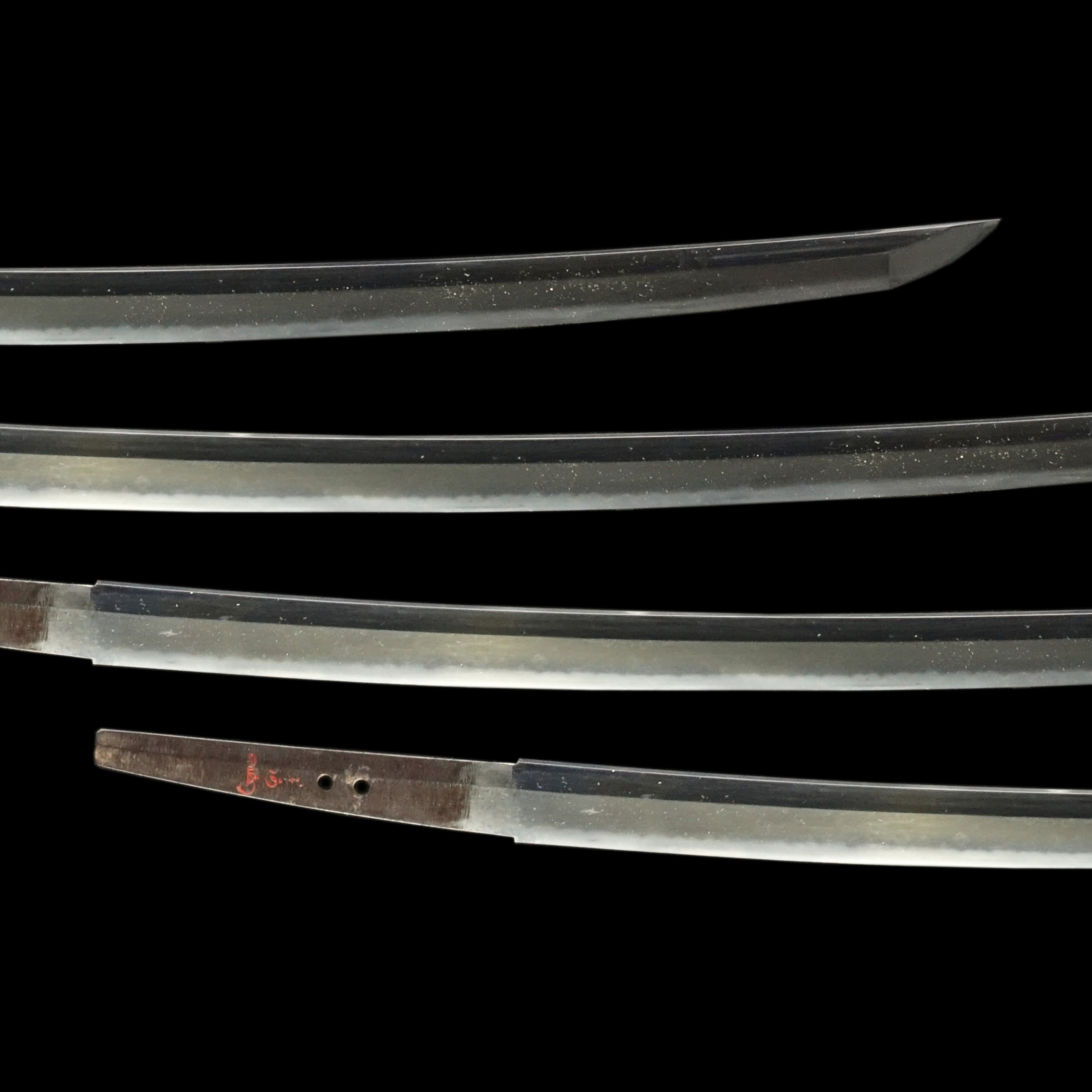
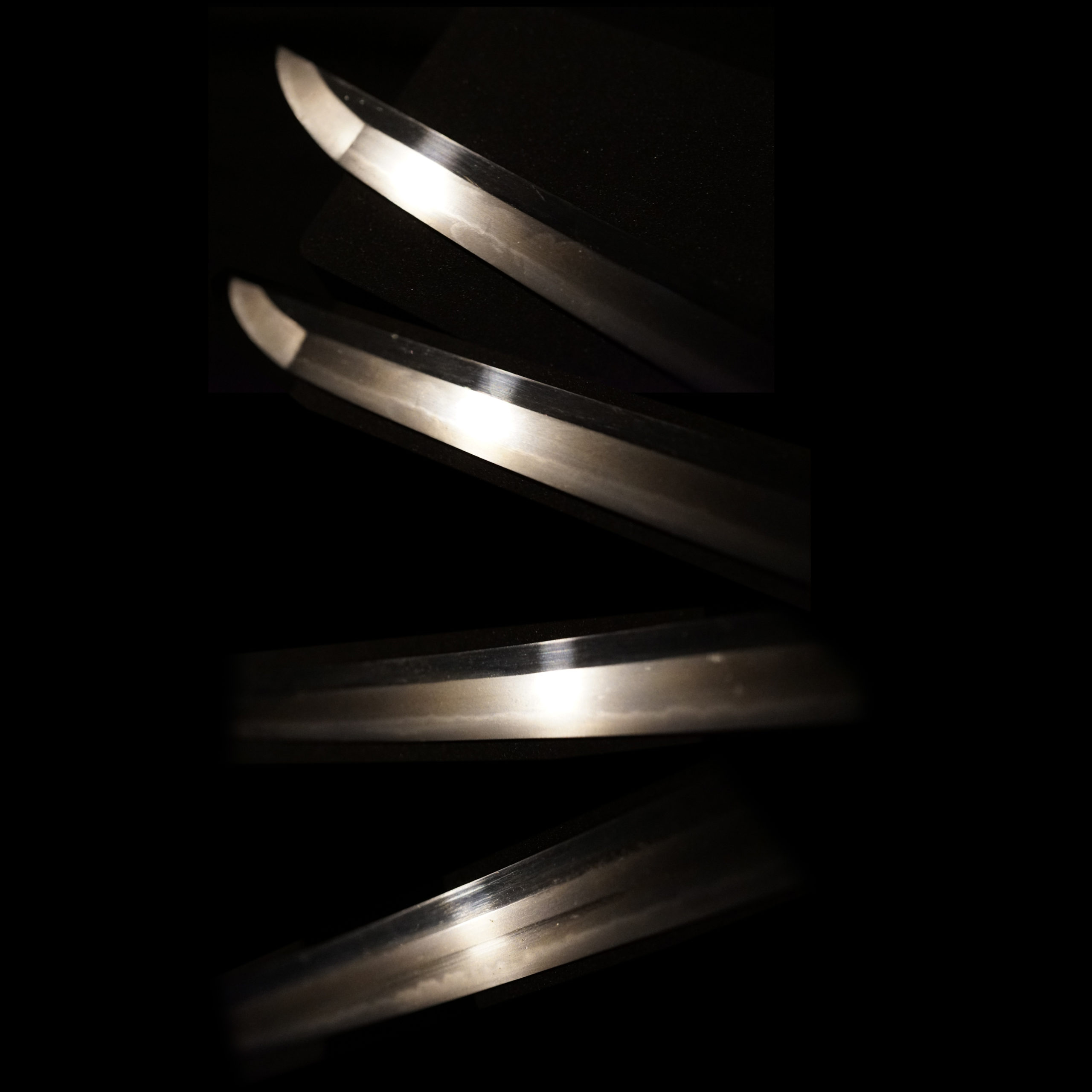
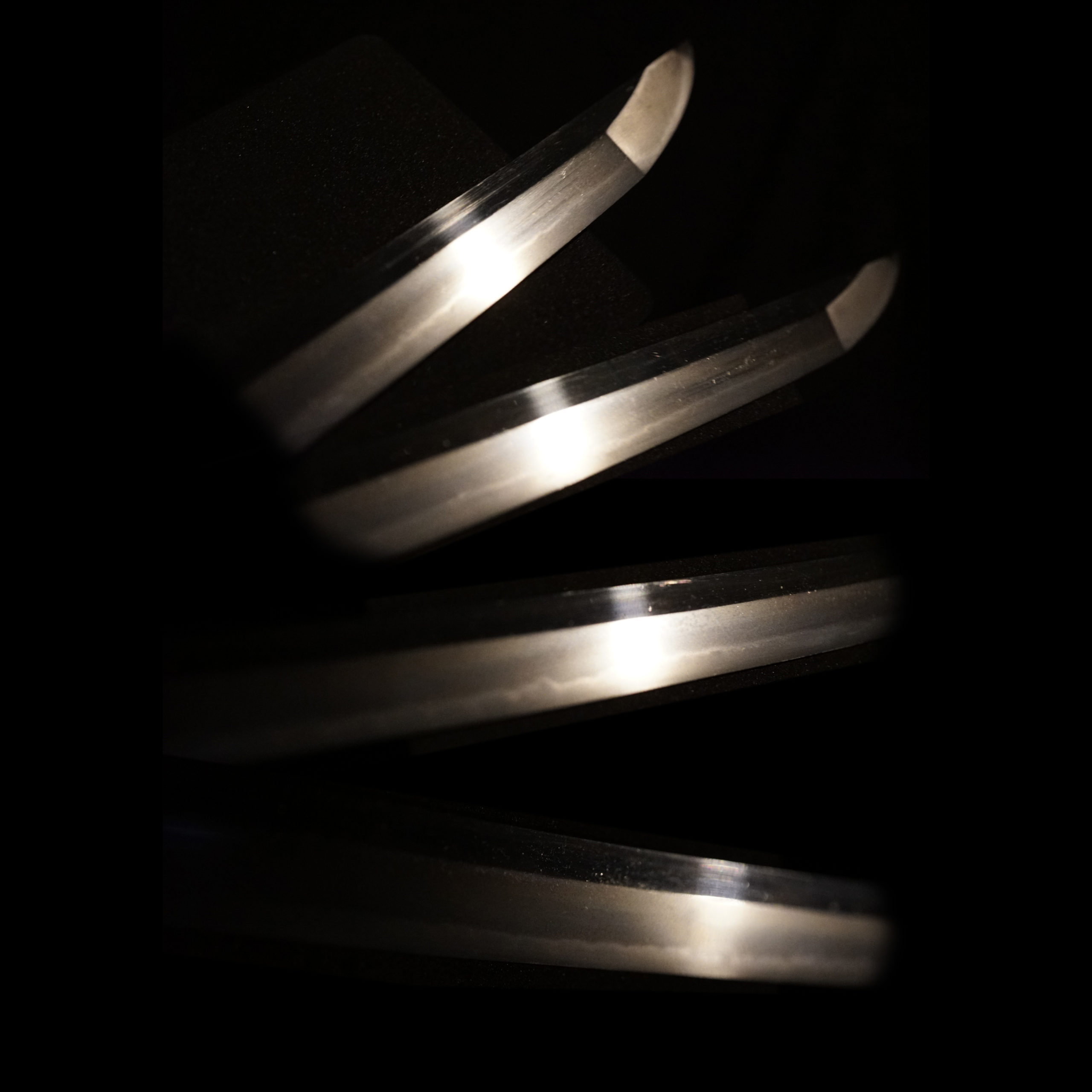
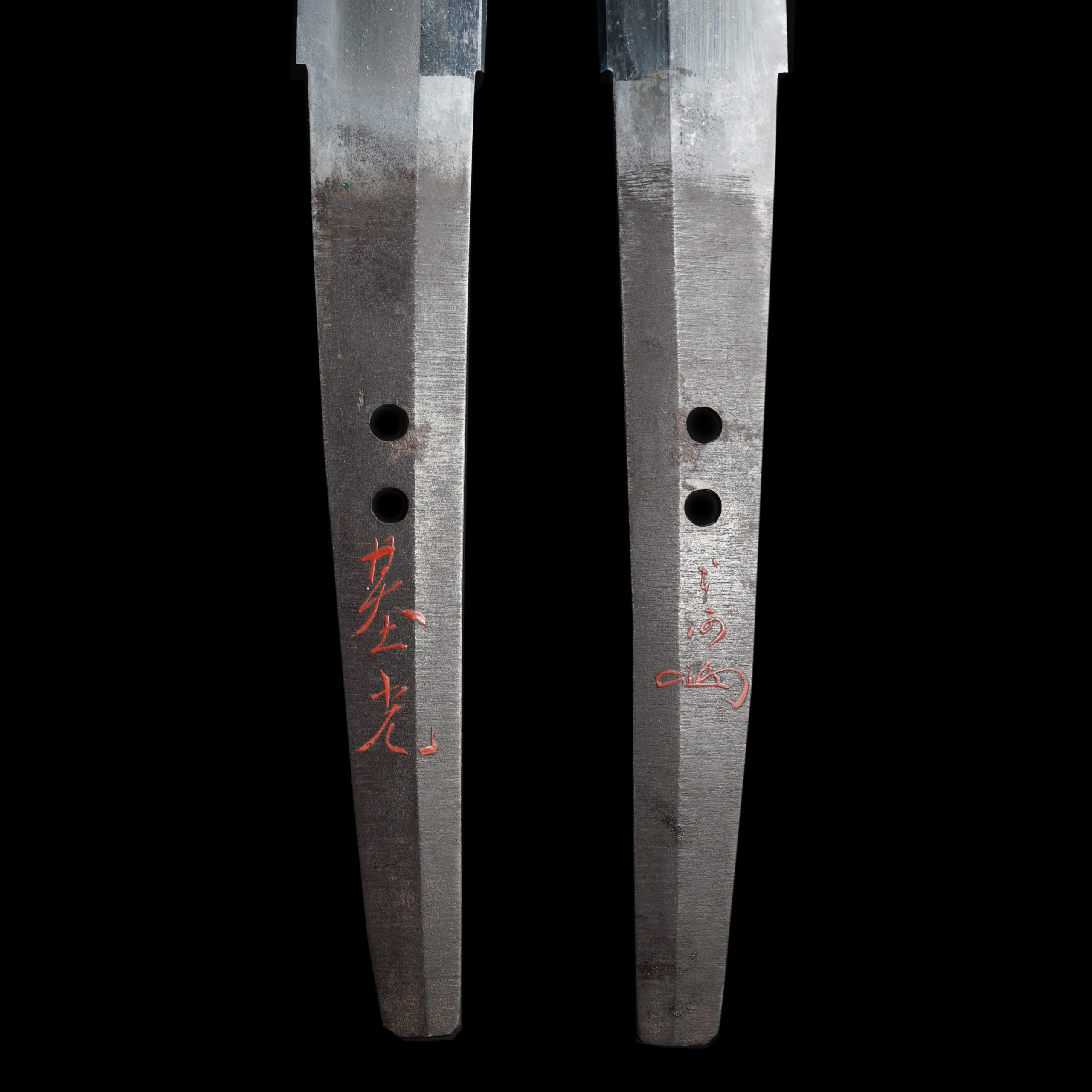
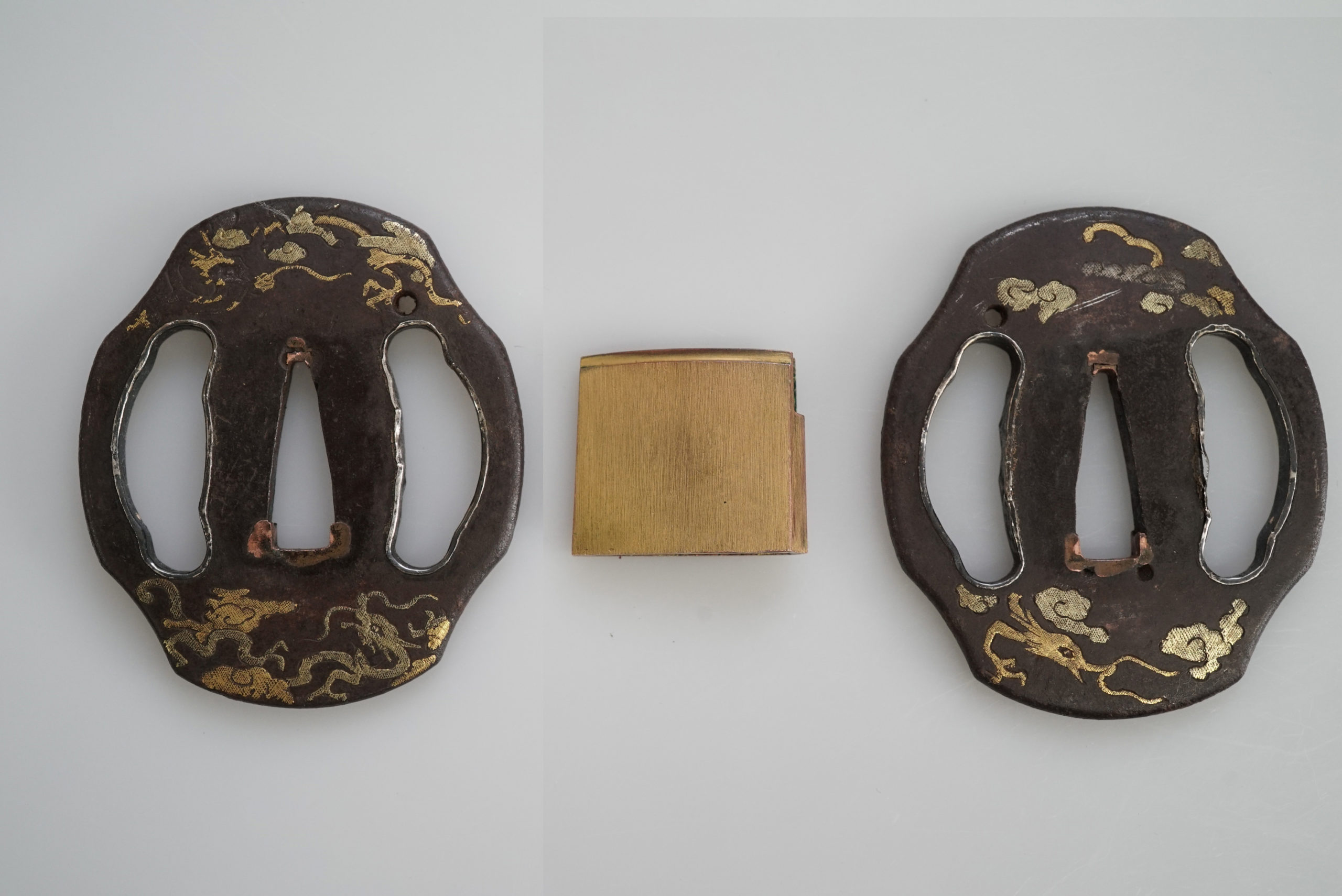
Bizen Osafune (Kanemitsu lineage) · Bizen · around 1342-1372
Tōken Taikan top 11%
1 piece on the market now
Motomitsu was a swordsmith of the Bizen Osafune school in the Nanbokuchō period, transmitted as either a son of Kanemitsu or a smith trained in his circle, and recorded as having held the title Saemon-no-jō. His dated works run from the Kōei era through Eiwa, so the span of his activity is securely fixed, and the published sources open the Tokubetsu Jūyō tachi held by the Tokugawa house plainly: "a signed tachi by Motomitsu, a pupil of the master"[[c:1]]. He carries the Kanemitsu manner forward into the second half of the fourteenth century, and the same commentary that places him in that lineage also draws the careful line that defines his standing within it.
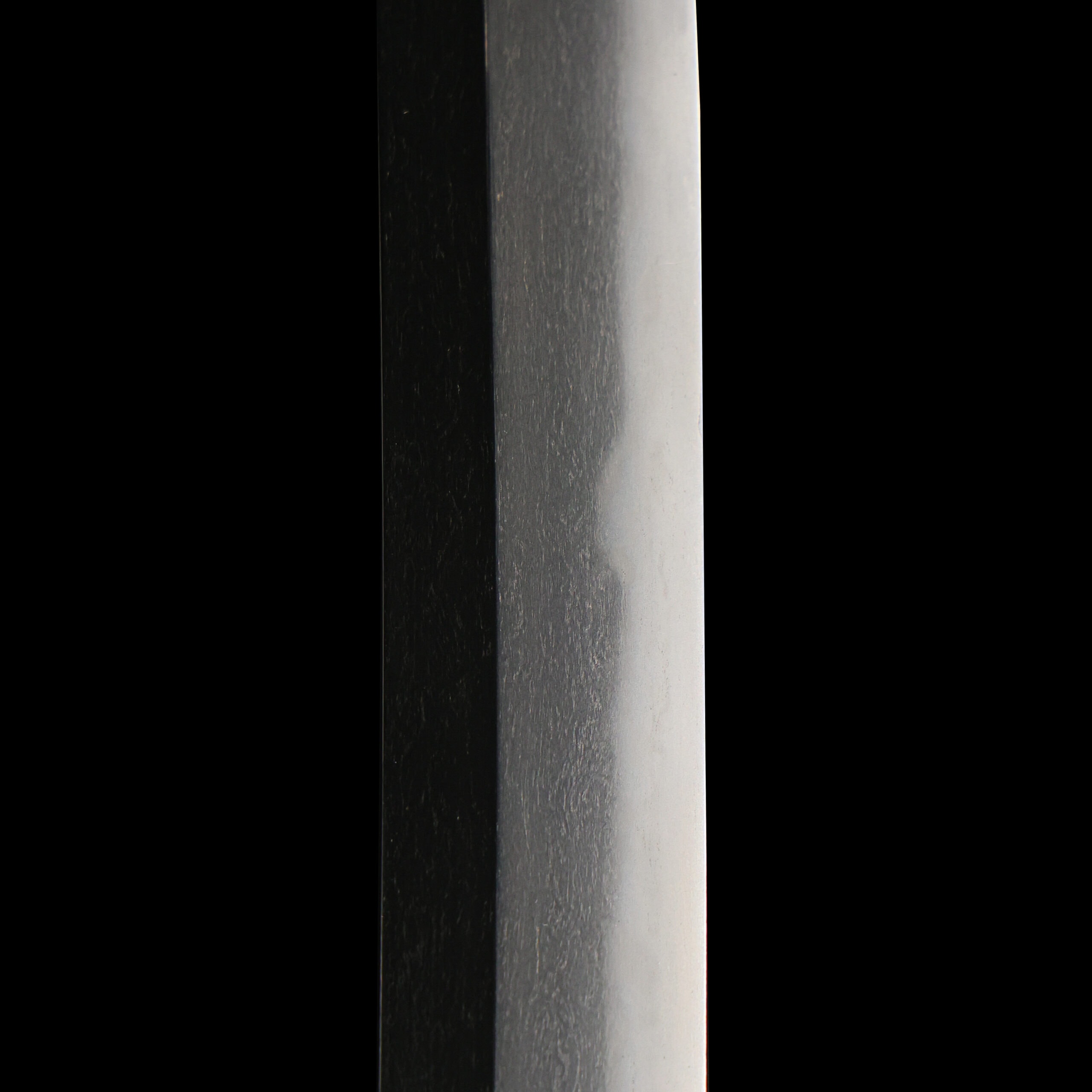
His hand is read first in the temper. Over an itame he sets a gunome-dominant midare whose spine is kataochi-gunome, the saw-tooth pattern of the Kanemitsu workshop, and into it he crowds angular teeth, togariba, and shallow ko-notare whose crests turn angular. The published sources name this intermixture as his own: of the Tokugawa tachi they write that "the workmanship is broadly Kanemitsu-den, yet, as in this blade, the gunome are conspicuous, and his distinctive character is seen in the way gunome of many shapes mingle together"[[c:2]]. The figure recurs across his Jūyō entries, set against the more orderly, linked gunome the school also produced. Ashi and yō enter, the nioiguchi tightens and runs bright with ko-nie, and kinsuji and sunagashi play through the ha.
The jigane is the constant beneath that temper. His itame is mixed with mokume and frequently tends to stand into hada-dachi, with ji-nie, fine chikei, and patches of jifu-toned steel, over which a midare-utsuri rises; near the edge it often reads instead as a straight, sugu-toned utsuri, the Osafune jigane he shares with his master. The bōshi enters in midare-komi and turns with a pointed tendency to a small round, finishing with fine hakikake. On his dirks he carves bō-hi, or a koshi-hi with accompanying soe-hi, and one tantō carries a devotional gomabashi, the quiet decorative vocabulary of late Osafune.
His record divides cleanly by form. On one side stand the signed, dated blades in his own hand: tachi cut Bishū Osafune Motomitsu, and the hira-zukuri wakizashi and tantō, several of them ubu and crisply dated to Bunna, Jōji and Ōan, of which the published sources say "the quality of the workmanship gives the sense of approaching Kanemitsu"[[c:3]] and which they prize as research material for the smith. On the other stand the ō-suriage mumei katana, wide in body with little taper and an extended chū-kissaki, the grand Nanbokuchō shape, judged to him from era and the Kanemitsu manner. The commentary notes that signed tachi by him are comparatively few.
What separates him from the rest of the group is exactly what the judges name when they affirm an unsigned blade. They find in the standing grain and the varied teeth within the kataochi-gunome the features that mark a work as his, writing of one katana that "within the Kanemitsu group there is that which should be most closely likened to Motomitsu, and the attribution is correctly affirmed"[[c:4]]. Yet they are equally candid about his rank: in overall standing "there are points where he yields slightly to Kanemitsu"[[c:5]]. His is the able second hand of the workshop, holding its temper while pressing his own crowded, varied gunome upon it, and the unsigned attributions rest on school and period rather than on a single decisive personal tell.
For the collector he is a documented but uncommon late-Osafune name. The Tōkō Taikan values him at the upper-middle level, and his connoisseurship record is built less on volume than on the precision of his dated, signed work. He has no National Treasures; his standing rests instead on one Important Cultural Property, a signed tachi preserved in the Mitsui Bunko in Tokyo, together with one Tokubetsu Jūyō and a body of Jūyō blades, some thirty-eight in the Tokubetsu Jūyō and Jūyō tiers in all. The provenance that survives is good: the Tokubetsu Jūyō tachi descends through the Tokugawa house, called by the published sources "a superior work by Motomitsu transmitted in the Great Tokugawa family"[[c:6]]; a katana bearing a gold-inlaid attribution thought to be the work of Hon'ami Mitsutada is held by the Sano Art Museum, formerly in the Homma collection. Most designated Motomitsu blades are held rather than traded, so a signed example comes to light only from time to time, and when one does it is a precise, datable record of how the Kanemitsu workshop carried Osafune through the Nanbokuchō age.
Where Motomitsu stands among comparable artisans: across all of nihontō, and within tradition, era, and period. The tiers (Foremost · Leading · Major · Notable) weigh official designations from the NBTHK and Japan's Agency for Cultural Affairs, together with historical honors of lasting repute such as the Sansaku and Meibutsu-chō.
Select a lens to see how it's measured.
Years he was demonstrably active, proven by signed-and-dated blades
Bizen-den · Bizen
Phase: Sōden-Bizen相伝備前· 1330–1394
236 pieces on the market now
The Soden Bizen school encompasses the group of Nanbokucho-period Osafune smiths in Bizen Province whose work absorbed the technical influence of the Soshu-den, producing a distinctive synthesis that stands apart from both orthodox Bizen and pure Sagami practice. The school divides into two principal lineages: the Kanemitsu group, representing the direct main line of Osafune that descends from Mitsutada through Nagamitsu and Kagemitsu; and the Chogi group, a collateral branch whose members carried the Soshu idiom to its most expressive extremes within Bizen. Kanemitsu, the chakuryu heir of Kagemitsu, pioneered the broad, relaxed notare-based midare that defines the mature Nanbokucho Osafune manner, while Chogi -- described by the NBTHK as the smith "who departs furthest from Bizen" among Bizen makers -- pushed nie-dominant forging to a level that rivals the output of the great Sagami smiths themselves. Together with disciples and contemporaries including Tomomitsu, Motomitsu, Masamitsu, Yoshimitsu, Kanenaga, Nagashige, and Nagamori, they constitute one of the most prolific and technically accomplished groups in the history of Japanese swordsmithing. The school's collective technical identity is anchored in a shared jigane of itame-hada mixed with mokume, with fine ji-nie adhering thickly, chikei entering well, and midare-utsuri standing out -- a persistent Bizen hallmark that survives even in the most Soshu-inflected work. The sugata overwhelmingly reflects the grand Nanbokucho taihai: wide mihaba with little taper between base and tip, and an extended chu-kissaki or o-kissaki conveying martial vigor. Within this shared framework, two distinct temperaments emerge.
" Yoshimitsu likewise inherits the small-pattern tendency, producing ko-gunome mixed with ko-choji whose restraint the NBTHK praises as "upper rank" Soden Bizen. The Chogi lineage, by contrast, emphasizes powerful nie in both ji and ha: Chogi's flamboyant large-scale midare weaves together gunome, choji, togariba, and koshi-hiraki forms with tobiyaki and yubashiri scattering freely, while kinsuji and sunagashi streak through the hardened edge. " Nagashige, now thought to be Chogi's elder brother rather than his junior, works a gentler, smaller-patterned midare yet with nie so strong as to "even surpass Chogi," while Nagamori occupies an intermediate position, his "somewhat smaller patterning" accompanied by rich internal activity. The historical significance of the Soden Bizen school lies in its demonstration that the Soshu influence, far from merely displacing Bizen conventions, catalyzed an extraordinary expansion of the Osafune repertoire. " The NBTHK's evaluative language across the school converges on consistent themes: the forging is "meticulous" and "excellent-quality," the nioiguchi "bright and clear," and the finest examples display a kenzen condition that attests to the soundness of Bizen steel at its peak. The abundance of dated inscriptions -- from Kanemitsu's forty-five-year span through Masamitsu's four-decade career extending into the early Muromachi period -- provides an unusually well-documented chronological framework, with later works by Masamitsu and Yoshimitsu pointing toward the subsequent development of Oei Bizen. Within the broader canon, the Soden Bizen school stands as the fullest realization of the creative possibilities that emerged when two of Japan's greatest forging traditions met and merged. Learn more →
| Smith | Era | Designated |
|---|---|---|
| Mitsutada光忠 | 1238-1239 | 60 |
| Nagamitsu長光 | 1274-1304 | 244 |
| Kagemitsu景光 | 1303-1336 | 143 |
| Kanemitsu兼光 | 1323-1370 | 231 |
| Sanenaga眞長 | 1299-1309 | 64 |
Bizen in the Nanbokuchō period
Sixty years of war between two courts drove blades long and broad, and Osafune met the demand: Kanemitsu and Chōgi led forges serving the provincial warriors who did the fighting, while Sōshū influence arrived with the armies to create Sōden-Bizen.
The NTHK’s principal certificate, issued for a blade of considerable quality. It confirms a genuine signature, or, for an unsigned (mumei) work, records the judges’ attribution to a smith or school. The paper carries a detailed worksheet with a numerical point score.
The NTHK (Nihon Tōken Hozon Kai, the Society for the Preservation of the Japanese Sword) is the oldest of Japan’s sword-appraisal bodies, founded in 1910, decades before the NBTHK. After the death of its long-serving head it divided into two successor societies, the NTHK and the NTHK-NPO, both of which continue to hold shinsa. NTHK certificates are known for a detailed worksheet that records a numerical point score alongside the judges’ written opinion, and the society is especially respected for its attribution of unsigned (mumei) work.
Returns/exchanges limited to defects caused by shipping (except willful misconduct or gross negligence by the company); customers must contact within 72 hours of receiving the product.
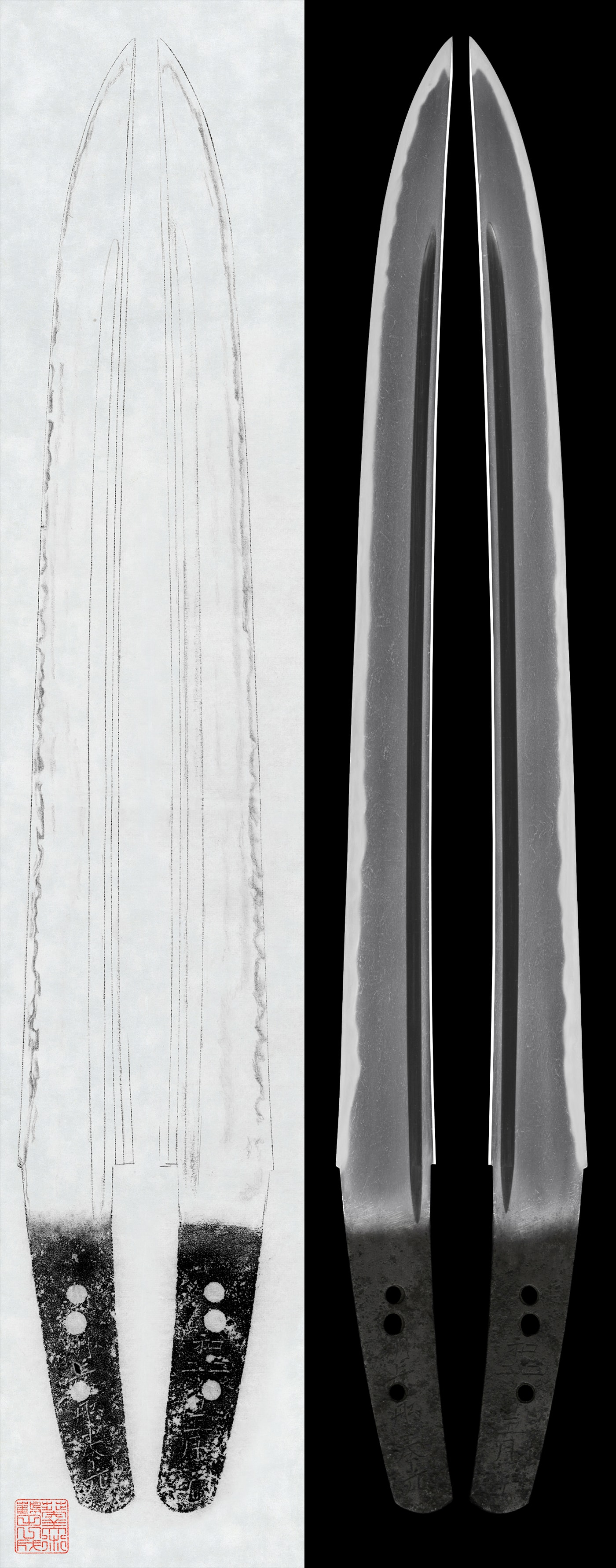

This antique Japanese katana is signed by Motomitsu, a swordsmith from the Bizen Osafune school active during the Nanbokucho Period. Motomitsu, believed to be the son of Kanemitsu, forged swords between 1342-1378 in a style similar to his master. The blade features a nagasa of 60.6 cm and comes with a full koshirae mounting and an NTHK Kanteisho certificate.
NihontoWatchmei · Osafune · Nanbokucho · nagasa 60.6cm · sori 1.6cm
Bizen Osafune (Kanemitsu lineage) · Bizen · around 1342-1372
Tōken Taikan top 11%
1 piece on the market now
Motomitsu was a swordsmith of the Bizen Osafune school in the Nanbokuchō period, transmitted as either a son of Kanemitsu or a smith trained in his circle, and recorded as having held the title Saemon-no-jō. His dated works run from the Kōei era through Eiwa, so the span of his activity is securely fixed, and the published sources open the Tokubetsu Jūyō tachi held by the Tokugawa house plainly: "a signed tachi by Motomitsu, a pupil of the master"[[c:1]]. He carries the Kanemitsu manner forward into the second half of the fourteenth century, and the same commentary that places him in that lineage also draws the careful line that defines his standing within it.
His hand is read first in the temper. Over an itame he sets a gunome-dominant midare whose spine is kataochi-gunome, the saw-tooth pattern of the Kanemitsu workshop, and into it he crowds angular teeth, togariba, and shallow ko-notare whose crests turn angular. The published sources name this intermixture as his own: of the Tokugawa tachi they write that "the workmanship is broadly Kanemitsu-den, yet, as in this blade, the gunome are conspicuous, and his distinctive character is seen in the way gunome of many shapes mingle together"[[c:2]]. The figure recurs across his Jūyō entries, set against the more orderly, linked gunome the school also produced. Ashi and yō enter, the nioiguchi tightens and runs bright with ko-nie, and kinsuji and sunagashi play through the ha.
The jigane is the constant beneath that temper. His itame is mixed with mokume and frequently tends to stand into hada-dachi, with ji-nie, fine chikei, and patches of jifu-toned steel, over which a midare-utsuri rises; near the edge it often reads instead as a straight, sugu-toned utsuri, the Osafune jigane he shares with his master. The bōshi enters in midare-komi and turns with a pointed tendency to a small round, finishing with fine hakikake. On his dirks he carves bō-hi, or a koshi-hi with accompanying soe-hi, and one tantō carries a devotional gomabashi, the quiet decorative vocabulary of late Osafune.
His record divides cleanly by form. On one side stand the signed, dated blades in his own hand: tachi cut Bishū Osafune Motomitsu, and the hira-zukuri wakizashi and tantō, several of them ubu and crisply dated to Bunna, Jōji and Ōan, of which the published sources say "the quality of the workmanship gives the sense of approaching Kanemitsu"[[c:3]] and which they prize as research material for the smith. On the other stand the ō-suriage mumei katana, wide in body with little taper and an extended chū-kissaki, the grand Nanbokuchō shape, judged to him from era and the Kanemitsu manner. The commentary notes that signed tachi by him are comparatively few.
What separates him from the rest of the group is exactly what the judges name when they affirm an unsigned blade. They find in the standing grain and the varied teeth within the kataochi-gunome the features that mark a work as his, writing of one katana that "within the Kanemitsu group there is that which should be most closely likened to Motomitsu, and the attribution is correctly affirmed"[[c:4]]. Yet they are equally candid about his rank: in overall standing "there are points where he yields slightly to Kanemitsu"[[c:5]]. His is the able second hand of the workshop, holding its temper while pressing his own crowded, varied gunome upon it, and the unsigned attributions rest on school and period rather than on a single decisive personal tell.
For the collector he is a documented but uncommon late-Osafune name. The Tōkō Taikan values him at the upper-middle level, and his connoisseurship record is built less on volume than on the precision of his dated, signed work. He has no National Treasures; his standing rests instead on one Important Cultural Property, a signed tachi preserved in the Mitsui Bunko in Tokyo, together with one Tokubetsu Jūyō and a body of Jūyō blades, some thirty-eight in the Tokubetsu Jūyō and Jūyō tiers in all. The provenance that survives is good: the Tokubetsu Jūyō tachi descends through the Tokugawa house, called by the published sources "a superior work by Motomitsu transmitted in the Great Tokugawa family"[[c:6]]; a katana bearing a gold-inlaid attribution thought to be the work of Hon'ami Mitsutada is held by the Sano Art Museum, formerly in the Homma collection. Most designated Motomitsu blades are held rather than traded, so a signed example comes to light only from time to time, and when one does it is a precise, datable record of how the Kanemitsu workshop carried Osafune through the Nanbokuchō age.
Where Motomitsu stands among comparable artisans: across all of nihontō, and within tradition, era, and period. The tiers (Foremost · Leading · Major · Notable) weigh official designations from the NBTHK and Japan's Agency for Cultural Affairs, together with historical honors of lasting repute such as the Sansaku and Meibutsu-chō.
Select a lens to see how it's measured.
Years he was demonstrably active, proven by signed-and-dated blades
Bizen-den · Bizen
Phase: Sōden-Bizen相伝備前· 1330–1394
236 pieces on the market now
The Soden Bizen school encompasses the group of Nanbokucho-period Osafune smiths in Bizen Province whose work absorbed the technical influence of the Soshu-den, producing a distinctive synthesis that stands apart from both orthodox Bizen and pure Sagami practice. The school divides into two principal lineages: the Kanemitsu group, representing the direct main line of Osafune that descends from Mitsutada through Nagamitsu and Kagemitsu; and the Chogi group, a collateral branch whose members carried the Soshu idiom to its most expressive extremes within Bizen. Kanemitsu, the chakuryu heir of Kagemitsu, pioneered the broad, relaxed notare-based midare that defines the mature Nanbokucho Osafune manner, while Chogi -- described by the NBTHK as the smith "who departs furthest from Bizen" among Bizen makers -- pushed nie-dominant forging to a level that rivals the output of the great Sagami smiths themselves. Together with disciples and contemporaries including Tomomitsu, Motomitsu, Masamitsu, Yoshimitsu, Kanenaga, Nagashige, and Nagamori, they constitute one of the most prolific and technically accomplished groups in the history of Japanese swordsmithing. The school's collective technical identity is anchored in a shared jigane of itame-hada mixed with mokume, with fine ji-nie adhering thickly, chikei entering well, and midare-utsuri standing out -- a persistent Bizen hallmark that survives even in the most Soshu-inflected work. The sugata overwhelmingly reflects the grand Nanbokucho taihai: wide mihaba with little taper between base and tip, and an extended chu-kissaki or o-kissaki conveying martial vigor. Within this shared framework, two distinct temperaments emerge.
" Yoshimitsu likewise inherits the small-pattern tendency, producing ko-gunome mixed with ko-choji whose restraint the NBTHK praises as "upper rank" Soden Bizen. The Chogi lineage, by contrast, emphasizes powerful nie in both ji and ha: Chogi's flamboyant large-scale midare weaves together gunome, choji, togariba, and koshi-hiraki forms with tobiyaki and yubashiri scattering freely, while kinsuji and sunagashi streak through the hardened edge. " Nagashige, now thought to be Chogi's elder brother rather than his junior, works a gentler, smaller-patterned midare yet with nie so strong as to "even surpass Chogi," while Nagamori occupies an intermediate position, his "somewhat smaller patterning" accompanied by rich internal activity. The historical significance of the Soden Bizen school lies in its demonstration that the Soshu influence, far from merely displacing Bizen conventions, catalyzed an extraordinary expansion of the Osafune repertoire. " The NBTHK's evaluative language across the school converges on consistent themes: the forging is "meticulous" and "excellent-quality," the nioiguchi "bright and clear," and the finest examples display a kenzen condition that attests to the soundness of Bizen steel at its peak. The abundance of dated inscriptions -- from Kanemitsu's forty-five-year span through Masamitsu's four-decade career extending into the early Muromachi period -- provides an unusually well-documented chronological framework, with later works by Masamitsu and Yoshimitsu pointing toward the subsequent development of Oei Bizen. Within the broader canon, the Soden Bizen school stands as the fullest realization of the creative possibilities that emerged when two of Japan's greatest forging traditions met and merged. Learn more →
| Smith | Era | Designated |
|---|---|---|
| Mitsutada光忠 | 1238-1239 | 60 |
| Nagamitsu長光 | 1274-1304 | 244 |
| Kagemitsu景光 | 1303-1336 | 143 |
| Kanemitsu兼光 | 1323-1370 | 231 |
| Sanenaga眞長 | 1299-1309 | 64 |
Bizen in the Nanbokuchō period
Sixty years of war between two courts drove blades long and broad, and Osafune met the demand: Kanemitsu and Chōgi led forges serving the provincial warriors who did the fighting, while Sōshū influence arrived with the armies to create Sōden-Bizen.
The NTHK’s principal certificate, issued for a blade of considerable quality. It confirms a genuine signature, or, for an unsigned (mumei) work, records the judges’ attribution to a smith or school. The paper carries a detailed worksheet with a numerical point score.
The NTHK (Nihon Tōken Hozon Kai, the Society for the Preservation of the Japanese Sword) is the oldest of Japan’s sword-appraisal bodies, founded in 1910, decades before the NBTHK. After the death of its long-serving head it divided into two successor societies, the NTHK and the NTHK-NPO, both of which continue to hold shinsa. NTHK certificates are known for a detailed worksheet that records a numerical point score alongside the judges’ written opinion, and the society is especially respected for its attribution of unsigned (mumei) work.
Returns/exchanges limited to defects caused by shipping (except willful misconduct or gross negligence by the company); customers must contact within 72 hours of receiving the product.