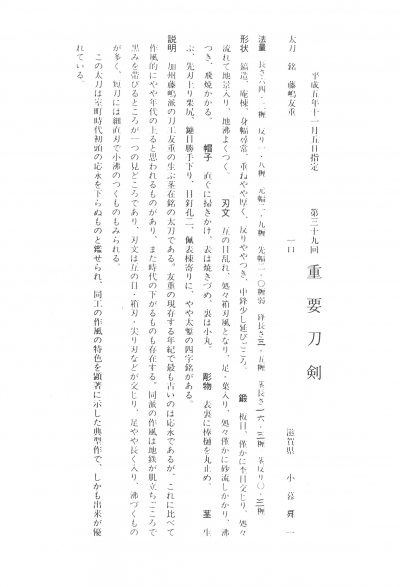
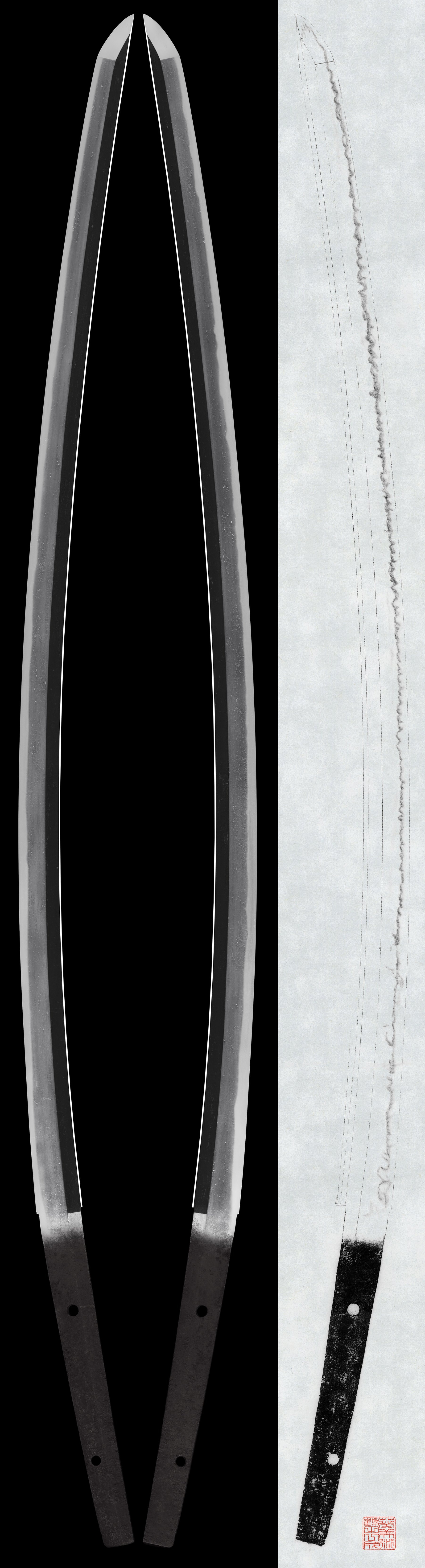
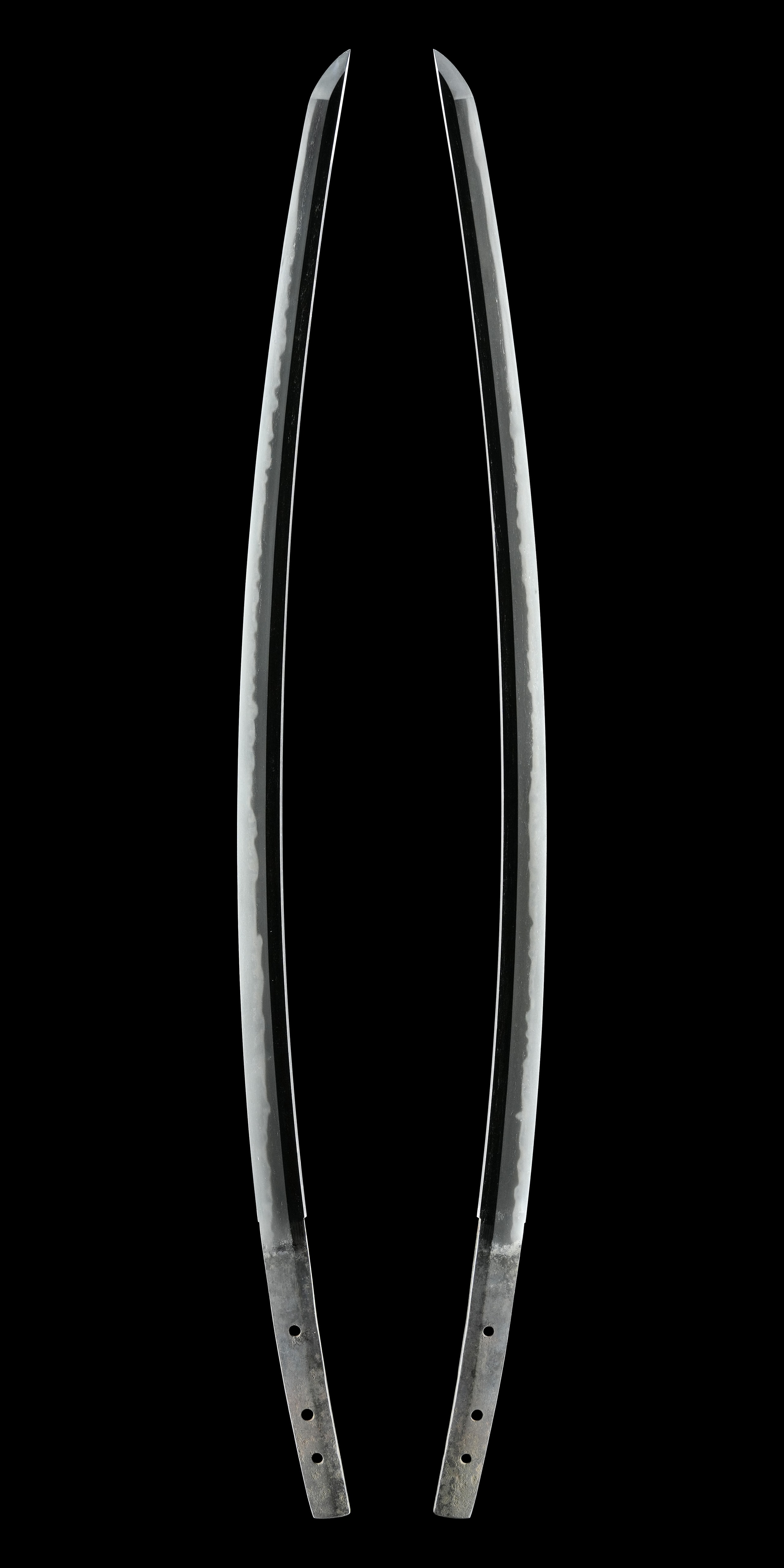
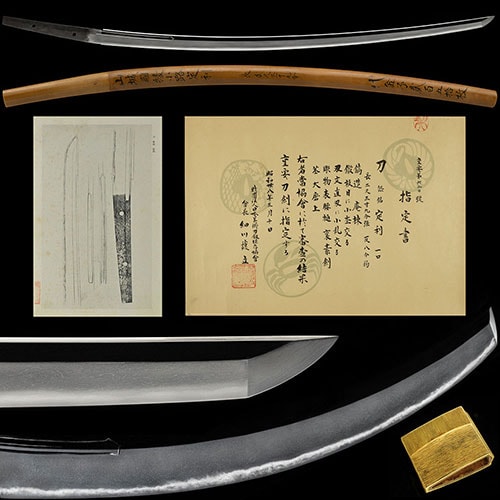
Tomoshige is the founder and representative smith of the Fujishima school of Fujishima village in Kaga province, the name carried by several generations from the end of Nanbokucho through Muromachi and on into the early-modern era. The earliest dated work found among them is a tanto of Oei 2 (1395), and the published sources treat that date as the chronological anchor for the whole name. The first generation comes down by tradition as a pupil of Rai Kunitoshi of Yamashiro, alternatively of Sanekage of his own province, but the NBTHK doubts both readings in nearly the same words across blade after blade, finding no stylistic tie to Rai Kunitoshi[[c:1]] and a chronological impossibility with Sanekage, and judging from the make and the nakago finish that the line descends rather from the Yamato tradition, close to the Yamato Shikkake hand. The oldest piece thought to be his, a tachi held at Atsuta Shrine, is read as confirming that distance from the Rai school. No surviving work predates Nanbokucho.
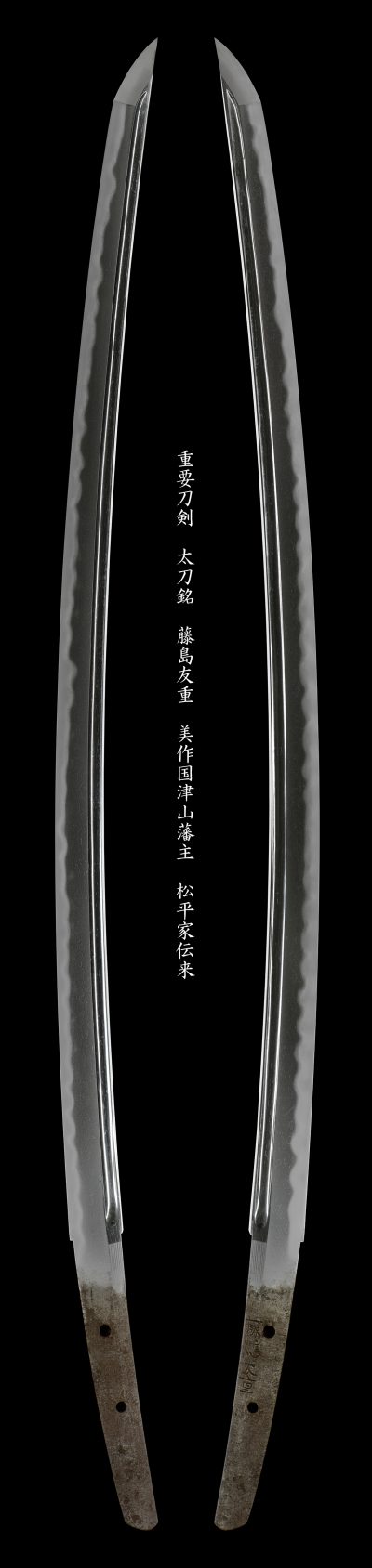
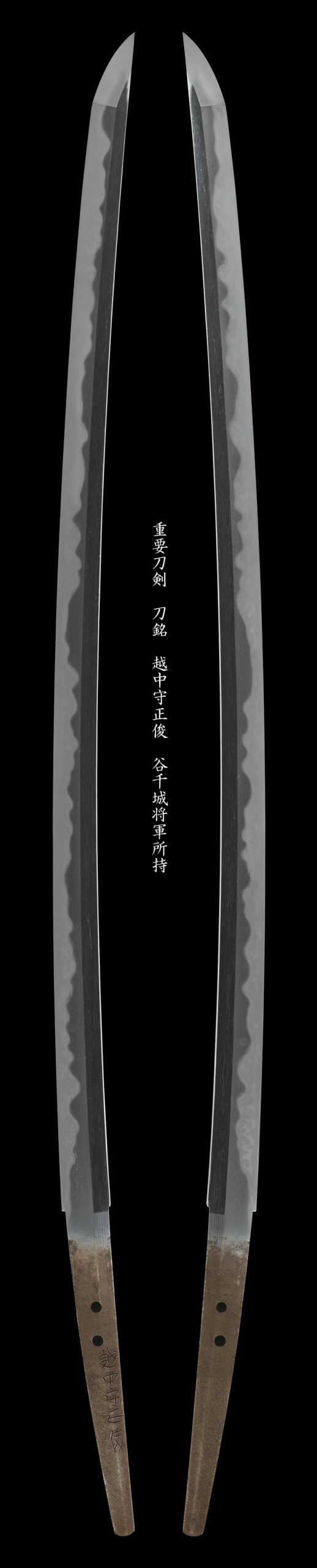
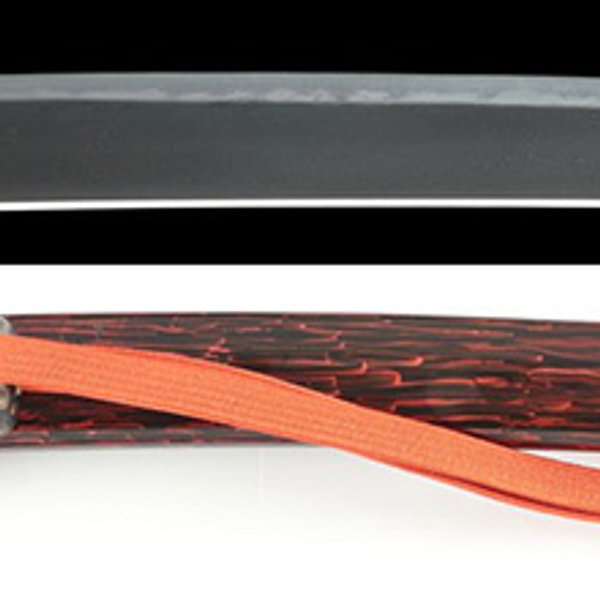
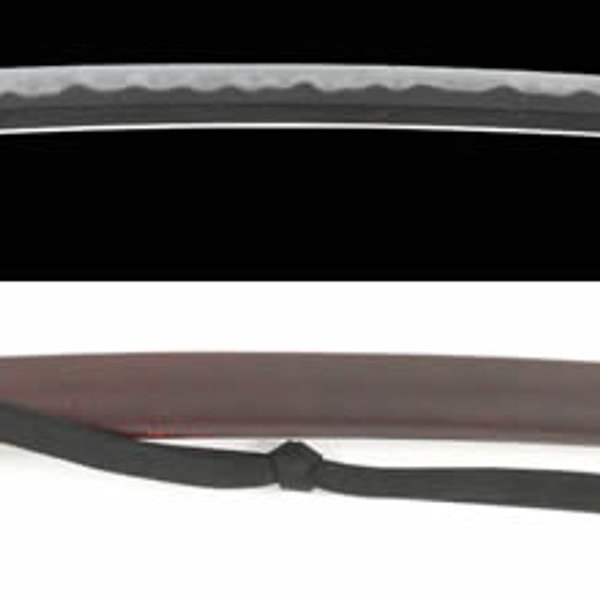
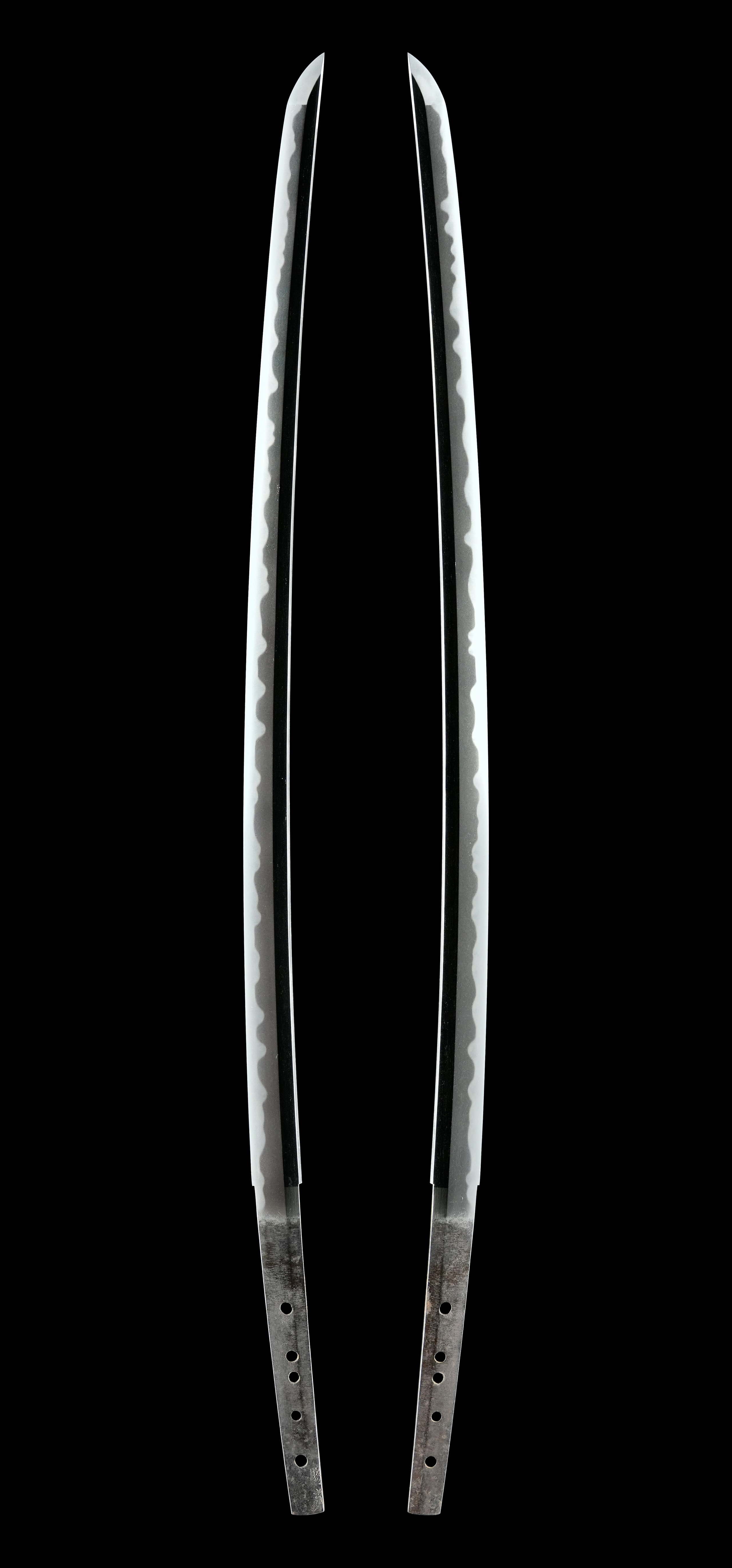
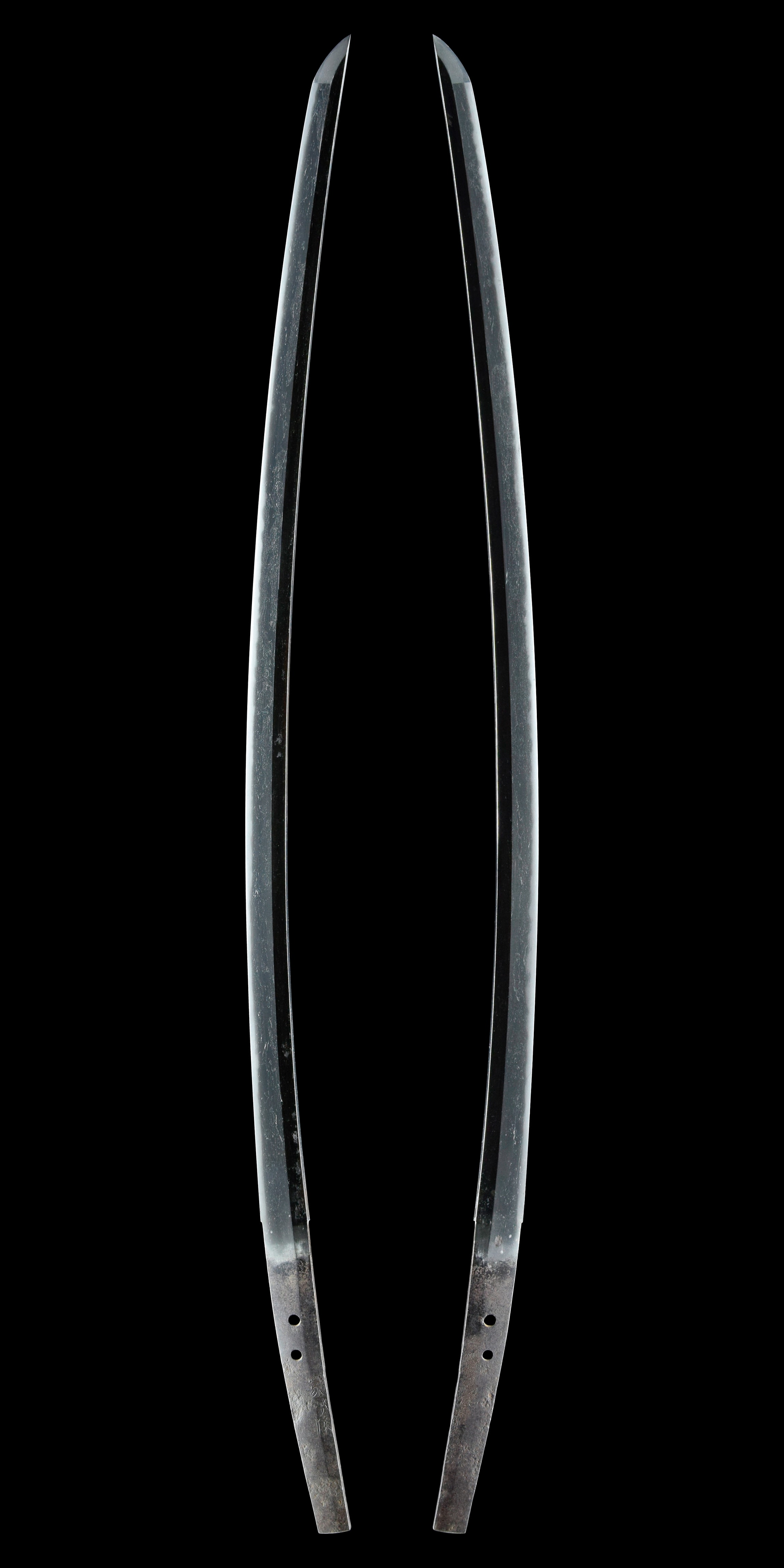
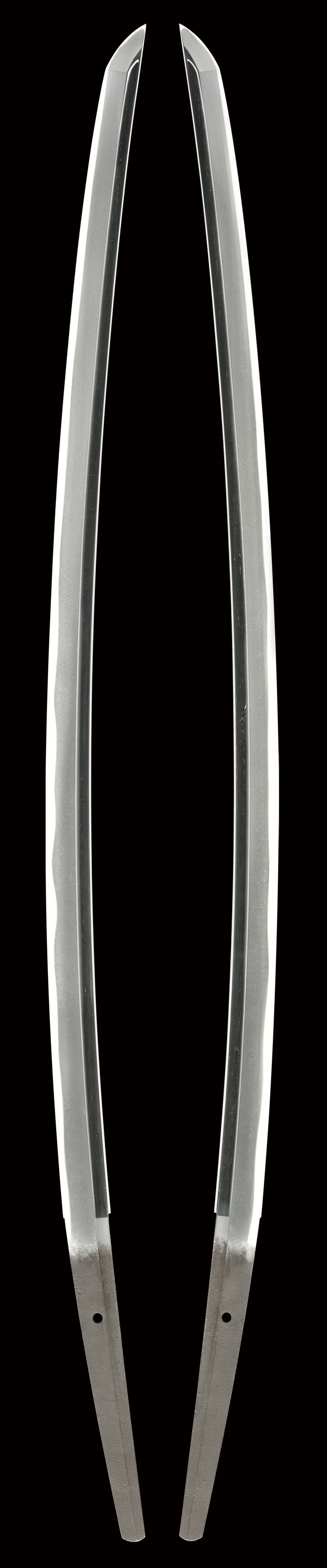
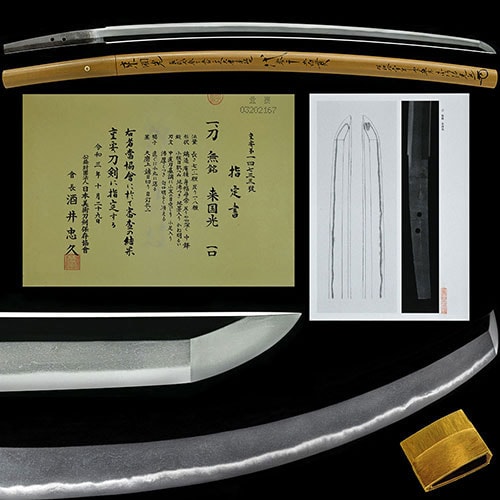
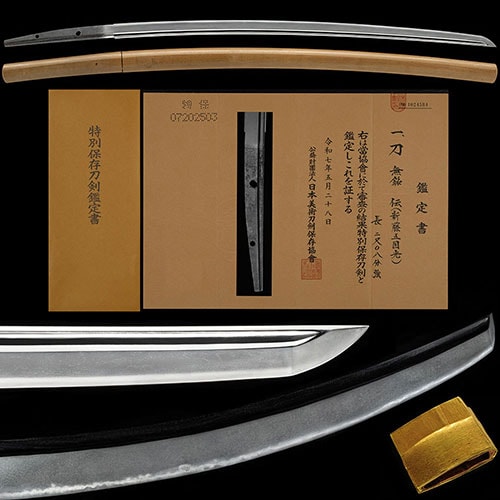
The recognition of Tomoshige lives in his jigane. He forges a board-grained itame that mixes in mokume and runs to nagare, standing somewhat open, the surface gathering ji-nie and chikei, and the steel carries a distinct blackish cast. The published record names exactly this as the school's chief point, that the jigane stands and tends dark[[c:2]], the mark of northern-country work. Over that jigane he tempers a gunome midare into which box-shaped, pointed and angular teeth enter together with notare and ko-notare, at times rising into a compound, multi-peaked midare. The NBTHK calls the feel of it a make in which Bizen temperament and Mino flavor are mixed[[c:3]], the ashi rather long, the whole nie-laden with patches of rough nie, sunagashi sweeping the ha and kinsuji entering, small tobiyaki scattered here and there. The boshi runs straight or midare-komi into a ko-maru and is often swept with hakikake. It is the conjunction that identifies him, a Yamato-rooted dark steel under an active temper that borrows from two other traditions.
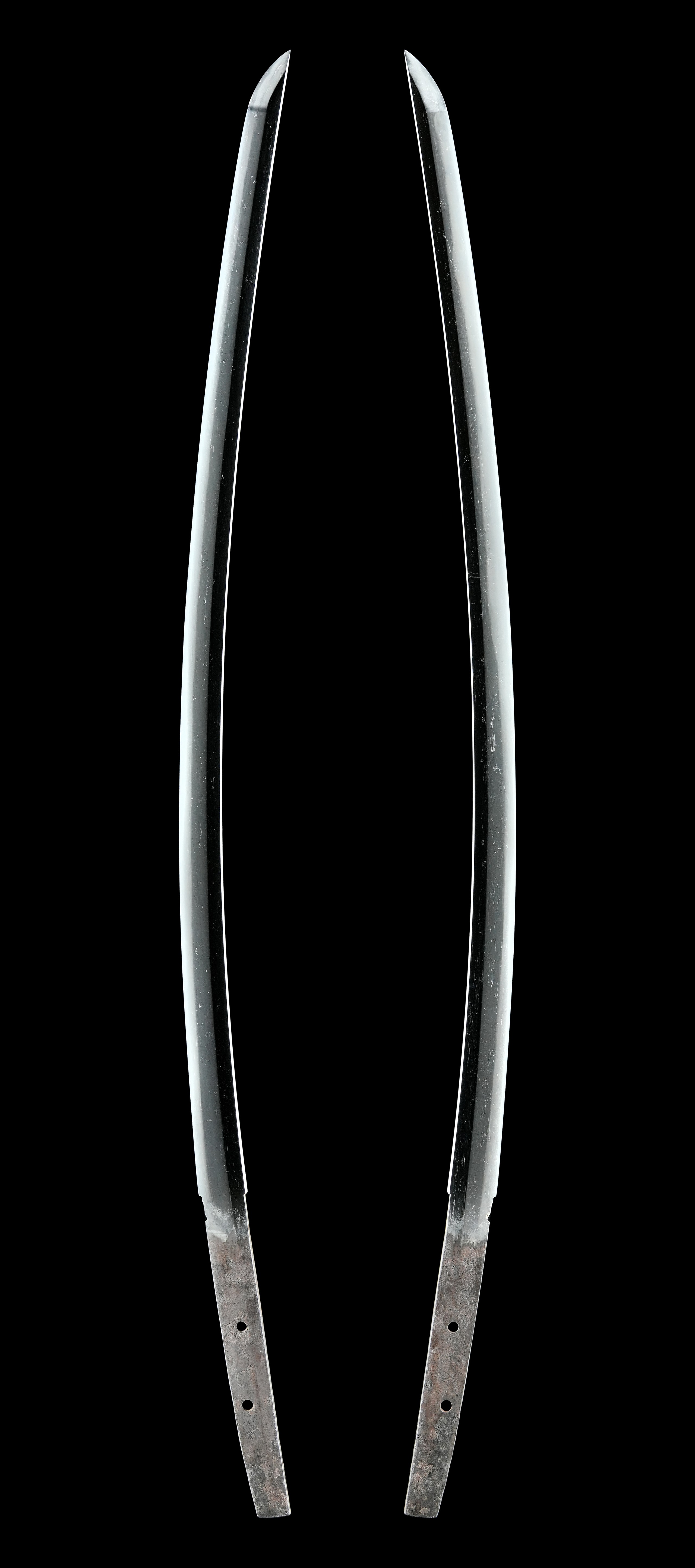
The jigane repays a closer look, because it is where the school and the man are read. The board grain stands and flows rather than tightening into the fine ko-itame of a Yamashiro blade, and on the yari and naginata it sharpens further toward a masame-leaning hada, the most plainly Yamato of his ji. The dark color is not an accident of polish but a property of the steel itself, and the published sources tie it directly to the northern provinces, writing of one dated tanto that the blackish cast of the metal shows the kantei point of northern-country work[[c:4]]. Across several blades a faint whitish utsuri rises in the ji, the quiet shirake reflection of northern steel rather than a bright Bizen one. The hamon answers the ji with its own mix: angular and box-shaped teeth are singled out as a point worth naming on the typical work, the ashi enters long, the nioiguchi at times sits in nie and at times in a deeper nioi, and the activity is constant without ever becoming showy.
Within this single manner the published sources mark the short blades apart. On the tanto the school hand can quiet, the kitae tightening to a ko-itame, the temper dropping to a narrow suguha or a low ko-notare with ko-gunome and ko-nie, the nioiguchi sometimes misty with hotsure and yubashiri, the boshi a ko-maru that on one piece returns deep into a jizo-like shape. The longer blades carry the box-and-pointed midare; the tanto are where the Yamato base of the school shows most simply, even as the dark steel keeps its northern mark. A second, dated register leans further toward Yamato still: the Oei 16 (1409) wakizashi tempers a suguha base with small teeth and a yakizume boshi, and the NBTHK reads it as a make in which a Yamato temperament can be seen[[c:5]] while the dark color of the steel keeps the northern grain plainly shown[[c:6]]. As one of the very few early-dated Tomoshige it is valued as reference material for the school's range. The name is almost always signed, thirteen of fourteen designated blades on an ubu nakago, the four-character Fujishima Tomoshige most common, sometimes a two-character Tomoshige, the single long full signature surviving on one piece alone; the published sources lean on the signature and the date together to read a given blade as the Oei Tomoshige.
What sets Tomoshige apart from the schools his work otherwise recalls is held in his own grounded traits rather than borrowed from theirs. His midare resembles a Bizen make in its gunome and its long ashi, but the box-shaped and pointed teeth, the standing dark ji and the constant sunagashi pull it away from a clean Bizen choji; one wakizashi is read as showing an Aoe air, and one tanto is compared to Naoe Shizu and to Sekishu Naotsuna, the Mino and northern lines his own work sits between. The teacher question is settled by elimination toward Yamato, the line bound neither to Rai Kunitoshi in style nor to Sanekage in date. He stands at the head of the Hokurikudo Fujishima manner, kin in feel to the Etchu and Echizen smiths of the same region, and the name continues for generations on the same fixed character of dark standing ji and box-and-pointed midare, the Oei smiths the most highly regarded and the Muromachi work the most often surviving.
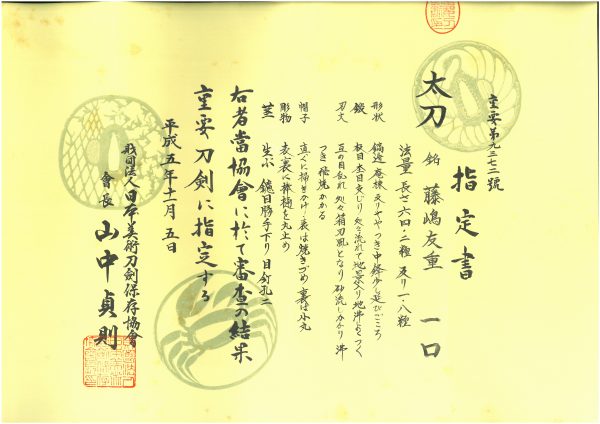
Fourteen of his blades stand in the Juyo tier, and Fujishiro rates the smith Chu-jo saku. His finest single work is a great spear, the o-mi-yari signed Fujishima Tomoshige and carved with a sanko-ken and the deity-name Myoken Daibosatsu, which the NBTHK judges not merely the best spear of the school and name but one of the representative famous spears of its age[[c:7]]. Surviving naginata by him are noted as rare. Provenance gathers around two houses recorded in his own blades: an Oei-period katana descended in the Inaba daimyo house, and a tanto held in the Imperial collection. These are heritage blades held in long-standing hands rather than goods of the market, and the man himself is not among the unattainable names; his designated swords come to auction and to dealers from time to time, a Juyo Tomoshige a realistic if uncommon encounter for a patient collector, valued less for rarity at the very top than for the way a single dark-steeled blade carries the whole northern school in its ji.