After the Ōnin War broke the Ashikaga order, a century of Sengoku warfare armed nearly every province in Japan. The era rewards a discriminating eye: routine work exists in quantity, and beside it stand custom blades of the first rank.
 NihontoWatchNihontoWatch
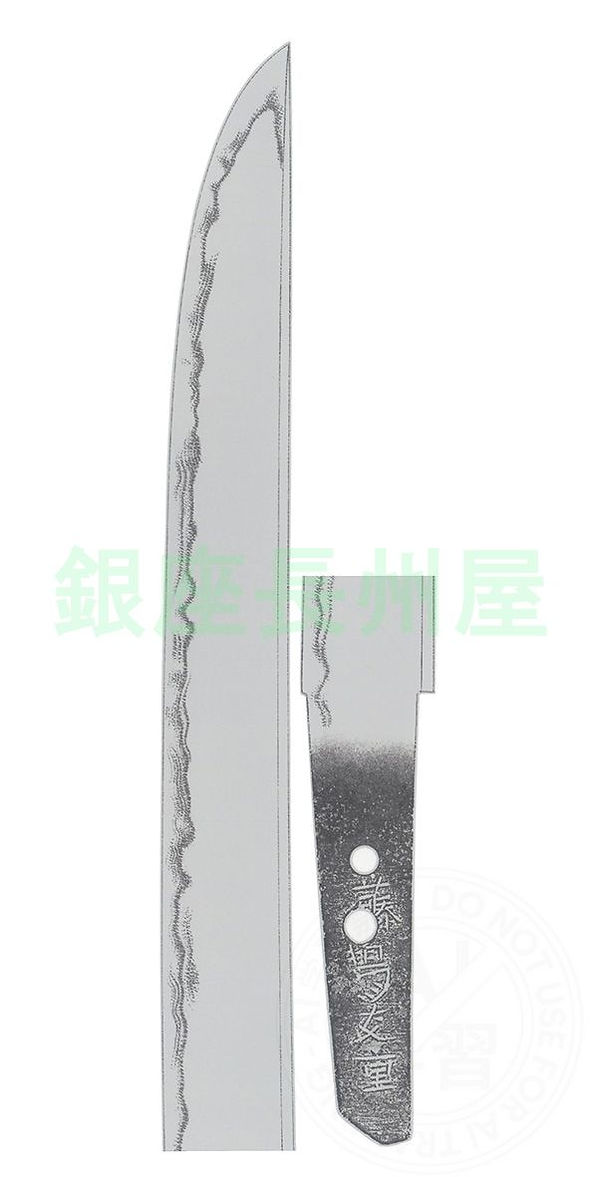
The oldest dated work by the Kaga Province koto smith Fujishima Tomoshige is from Oei 2, 1st month, 22nd day. While the forging of the jitetsu is excellent and there are works that show Yamato-den characteristics—such as a base of gunome-midareba reminiscent of Bizen-mono interspersed with togari-ba likely influenced by Mino, featuring strong activity of yubashiri, kinsan, and sunagashi that becomes nijuba—there is also a masterpiece tanto in suguba with a furisode-nakago that could be mistaken for Rai Kunitoshi; the breadth of his style and the high level of skill to master it, namely his depth as a toko, is immeasurable.
NihontoWatchOffered by Choshuya

Fujishima Tomoshige is a name with Jūyō-designated work, and we couldn’t find current papers for this piece. Treat the name as unproven until papers say otherwise. — Hoshi Ask me first
2 on the market
As written by the shop
Machine translation from the shop's Japanese · may contain errors ·
Kaga (Kashu), the Fujishima school · Kaga · around 1394-1428
Fujishiro Chu-jo saku · Tōken Taikan top 26%
2 pieces on the market now
Tomoshige is the founder and representative smith of the Fujishima school of Fujishima in Kaga province, a name carried by several generations from the end of Nanbokucho through Muromachi and on into the early-modern era. The earliest dated work found among them is a tanto of Oei 2 (1395), which the published sources call extremely valuable as the oldest date seen on any Tomoshige. The first generation comes down by tradition as a pupil of Rai Kunitoshi of Yamashiro, alternatively of Sanekage of his own province. One Juyo paper doubts both readings: looking at the tachi of Atsuta Shrine, thought to be his oldest work, it finds no stylistic tie to Rai Kunitoshi[[c:1]] and a chronology that cannot be reconciled with Sanekage, and judges from the make and the nakago finish that the line descends rather from the Yamato tradition. Another compares his manner to the Yamato Shikkake school, with something of Bizen as well. The Juyo papers find no surviving work they can place before the Nanbokucho period.
The recognition of Tomoshige lives in his jigane. He forges an itame that mixes in mokume and runs to nagare, standing somewhat open, the surface gathering ji-nie and chikei, and the steel carries a distinct blackish cast. The published record names exactly this as the school's chief point, that the jigane stands and tends dark[[c:2]]. Over that jigane he tempers a gunome midare into which box-shaped, pointed and angular teeth enter together with ko-notare, at times rising into a compound, multi-peaked midare. The NBTHK calls the feel of it a make in which Bizen temperament and Mino flavor are mixed[[c:3]]. The ashi run rather long and the whole is nie-laden. Sunagashi sweeps the ha, kinsuji enter, and small tobiyaki are scattered here and there. The boshi runs straight or midare-komi into a ko-maru and is often swept with hakikake.
The itame commonly stands and flows rather than tightening, and on the great spear it becomes a standing masame. The dark color belongs to the steel itself, and the published sources tie it directly to the northern provinces, writing of the Oei 2 tanto that the blackish cast of the metal shows the kantei point of northern-country work[[c:4]]. On several blades a faint whitish utsuri rises in the ji. The hamon answers with its own mix. Angular teeth are singled out as a point worth naming on one typical katana, and the nioiguchi sits at times in nie and at times in a deeper nioi.
The short blades and the dated pieces mark the edges of this manner. On the tanto the hand can quiet, and the published sources note that tanto with a narrow suguha and ko-nie are also seen; one later tanto, tempered in ko-notare with round-headed gunome and sunagashi, is compared to Naoe Shizu and to Sekishu Naotsuna, yet its standing, dark itame shows the character of northern work. The Oei 16 (1409) wakizashi leans further toward Yamato. It tempers a suguha base with small teeth and a yakizume-like boshi, and the NBTHK reads in it a Yamato temperament[[c:5]] while the dark color of the steel keeps the northern grain plainly shown[[c:6]]. As one of the few early-dated Tomoshige it is valued as reference material for his range. A signed tanto recorded in Honma's inventory of the Imperial collection adds a strongly uchizori hira-zukuri in flowing itame with a whitish tendency, a gunome midare with ko-notare and sunagashi heavy in the lower half, and a long-returning midare-komi boshi; Honma judged it good work no later than the early Muromachi period[[c:7]], the bonji on its face a clumsy later carving, probably to hide a flaw. The name is signed on every one of his fifteen blades with published commentary, fourteen of them on an ubu nakago, the four-character Fujishima Tomoshige most common, sometimes a two-character Tomoshige, and a long signature on one piece.
What sets Tomoshige apart is held in his own grounded traits. His midare recalls a Bizen make in its gunome and its long ashi, but the box-shaped and pointed teeth, the standing dark ji and the constant sunagashi give it his own character. One wakizashi is read as showing an Aoe air[[c:8]]. The teacher question is settled by elimination toward Yamato, the line bound neither to Rai Kunitoshi in style nor to Sanekage in date. He stands at the head of the Fujishima manner of Kaga, and the name continues for generations on the same fixed character of dark standing ji and box-and-pointed midare, the work that survives in greatest number being of the Muromachi period.
Fourteen of his blades stand in the Juyo tier, and Fujishiro rates the smith Chu-jo saku. His finest single work is a great spear, the o-mi-yari signed Fujishima Tomoshige and carved with a sanko-ken and the deity-name Myoken Daibosatsu. The NBTHK judges that no spear of the school or the name is likely to surpass it, and that it is one of the representative famous spears of its age[[c:9]]. Surviving naginata by him are noted as rare. Recorded provenance is thin: an Oei-period katana descended in the Inaba house during the Edo period, with a gold nashiji tachi mounting, and the signed tanto in Honma's inventory. No National Treasure or Important Cultural Property stands under his name. His Juyo blades are mostly held rather than traded, so that a Juyo Tomoshige is an uncommon encounter, though not beyond the reach of a patient collector of northern work.
Where Tomoshige stands among comparable artisans: across all of nihontō, and within tradition, era, and period. The tiers (Foremost · Leading · Major · Notable) weigh official designations from the NBTHK and Japan's Agency for Cultural Affairs, together with historical honors of lasting repute such as the Sansaku and Meibutsu-chō.
Select a lens to see how it's measured.
Years he was demonstrably active, proven by signed-and-dated blades
Yamashiro-den · Kaga
16 pieces on the market now
Among the provincial lineages of the Hokurikudo, the Fujishima school took its name and its base from the village of Fujishima in Kaga province, where Tomoshige stands as founder and the name he set down passed through several generations from the close of the Nanbokucho period across the Muromachi and on into the early-modern Shinto era. The members place the chronological anchor with care: the earliest firmly dated work is a tanto of Oei 2 (1395), and the NBTHK finds nothing among the surviving blades that goes back earlier than Nanbokucho. Old documentary tradition reads the first generation as a pupil of Rai Kunitoshi of Yamashiro, alternatively of Kashu Sanekage or Rai Toshimune, but the published sources doubt each reading in turn, finding no stylistic tie to Rai Kunitoshi and a chronological impossibility with Sanekage; judging from the make and the nakago finish, they settle by elimination toward the Yamato tradition, close to the Yamato Shikkake hand. A tachi held at Atsuta Shrine and a two-character ken read as the oldest surviving piece bracket the early end of the line. The recognition of the school lives in its jigane. The members agree on a board-grained itame that mixes in mokume and runs to nagare, standing somewhat open (hada-dachi), the surface gathering ji-nie and chikei, the steel carrying a distinct blackish cast named kan'a-iro and tied directly to the northern provinces as hokkoku-hada; a faint whitish shirake-utsuri rises quietly against this dark ground rather than a bright Bizen reflection. Over that ji the school tempers a gunome-midare into which box-shaped (hako-ba), pointed and angular (togariba) teeth enter together with notare and ko-notare, the ashi running rather long, the ha nie-laden with sunagashi sweeping it and kinsuji entering, small tobiyaki and muneyaki scattered here and there.
The NBTHK reads the feel of it as a make in which Bizen temperament and Mino flavor coexist, the boshi running straight or midare-komi into a ko-maru, often swept with hakikake or running to yakizume. The members also mark the short blades apart: on the tanto the hand can quiet to a ko-itame and a narrow hoso-suguha or low ko-gunome with ko-nie, the nioiguchi sometimes clouding to urumi, the boshi turning jizo-like or returning deep, this the simplest face of the Yamato base while the dark steel keeps its northern mark. To kantei a Fujishima blade the eye works the conjunction rather than any single trait: the standing dark ji read together with the box-and-pointed midare and the constant sunagashi names the school where a clean Bizen choji or a true Yamashiro ko-itame would not. The members note works read variously toward an Aoe air, toward Naoe Shizu and Sekishu Naotsuna, the Mino and northern lines the school sits between, kin in feel to the Etchu and Echizen smiths of the same region. Among the membership Tomoshige carries the name and the standing; Fujishiro rates the founder Chu-jo saku and places others among the middle ranks of the koto smiths, and the most highly regarded work falls in the Oei generation while the Muromachi work survives most often. The single finest piece is a great spear (o-mi-yari) signed Fujishima Tomoshige and carved with a sanko-ken and the deity-name Myoken Daibosatsu, which the published sources judge not merely the best spear of the school but one of the representative famous spears of its age; surviving naginata by the line are noted as rare, their ubu-nakago valued as dating evidence. Provenance gathers around named houses recorded in the blades themselves, an Oei katana descended in the Inaba daimyo house and a tanto recorded in Honma's inventory of the Imperial collection, heritage pieces in long-standing hands; yet the line is not among the unattainable names, and a Juyo Tomoshige remains a realistic if uncommon encounter for the patient collector, valued for the way a single dark-steeled blade carries the whole northern school in its ji. Learn more →
| Smith | Era | Designated |
|---|---|---|
| Tomoshige友重 | 1394-1428 | 15 |
| Tomoshige友重 | 1346-1370 | 5 |
| Tomoshige友重 | 1324-1326 | 5 |
| Fujishima藤島 | 1394-1428 | 4 |
| Yukimitsu行光 | 1340-1346 | 0 |
The Muromachi period (1392 to 1573)
After the Ōnin War broke the Ashikaga order, a century of Sengoku warfare armed nearly every province in Japan. The era rewards a discriminating eye: routine work exists in quantity, and beside it stand custom blades of the first rank.
We could not find an authenticity certificate on the seller’s listing. Japanese swords and fittings are normally papered by the NBTHK (or the NTHK). Without one, the attribution is the seller’s own assessment and has not been independently verified — treat it with caution and ask the dealer about certification before buying.
If, due to our fault, the item differs significantly from its proper condition, the item may be returned. Cooling-off is within one week of the item's arrival.
Price on request