NihontoWatch MonNihontoWatchBETA
MarketEncyclopedia
NihontoWatch Mon

NihontoWatchBETA

Market
Encyclopedia
Overview·Kantei·Designations·Provenance·Blade Forms·Signatures·Lineage·School
OverviewKanteiDesignationsProvenanceBlade FormsSignaturesLineageSchool
  1. Schools
  2. Fujishima
  3. Tomoshige

Fujishima Tomoshige

友重

Jūyō
Vol. 21, No. 110 · Tachi

Fujishima Tomoshige

友重

15 ranked works

ProvinceKagaEraOei (1394–1428)PeriodMuromachiSchoolFujishimaTraditionYamashiro-denGeneration3rdTeacherTomoshigeFujishiroChu-jo sakuToko Taikan500(top 26%)TypeSwordsmithCodeTOM196
1Gyobutsu
14Jūyō Tōken

Overview

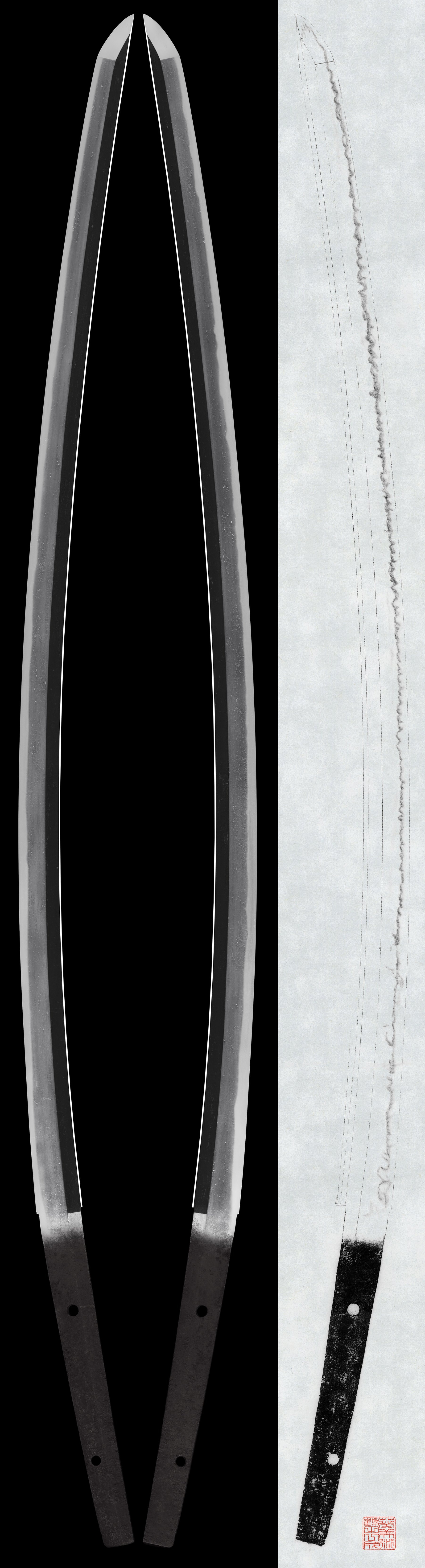
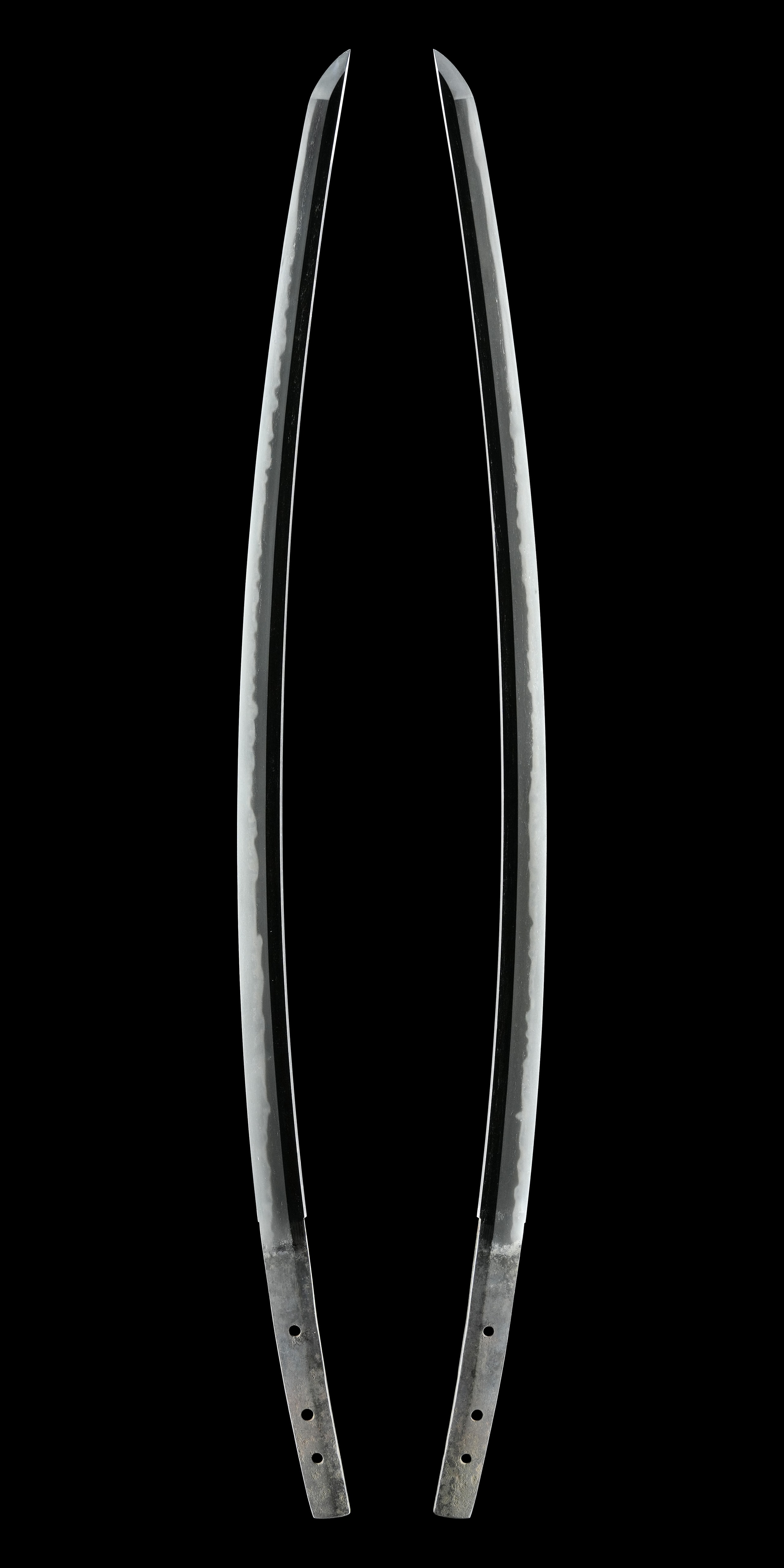
Tomoshige is the founder and representative smith of the Fujishima school of Fujishima village in province, the name carried by several generations from the end of through and on into the early-modern era. The earliest dated work found among them is a of Oei 2 (1395), and the published sources treat that date as the chronological anchor for the whole name. The first generation comes down by tradition as a pupil of Kunitoshi of Yamashiro, alternatively of Sanekage of his own province, but the doubts both readings in nearly the words across blade after blade, finding no stylistic tie to Kunitoshi (来国俊とは作風的に結ばれず) and a chronological impossibility with Sanekage, and judging from the make and the finish that the line descends rather from the Yamato tradition, close to the Yamato Shikkake hand. The oldest piece thought to be his, a held at Atsuta Shrine, is read as confirming that distance from the school. No surviving work predates .

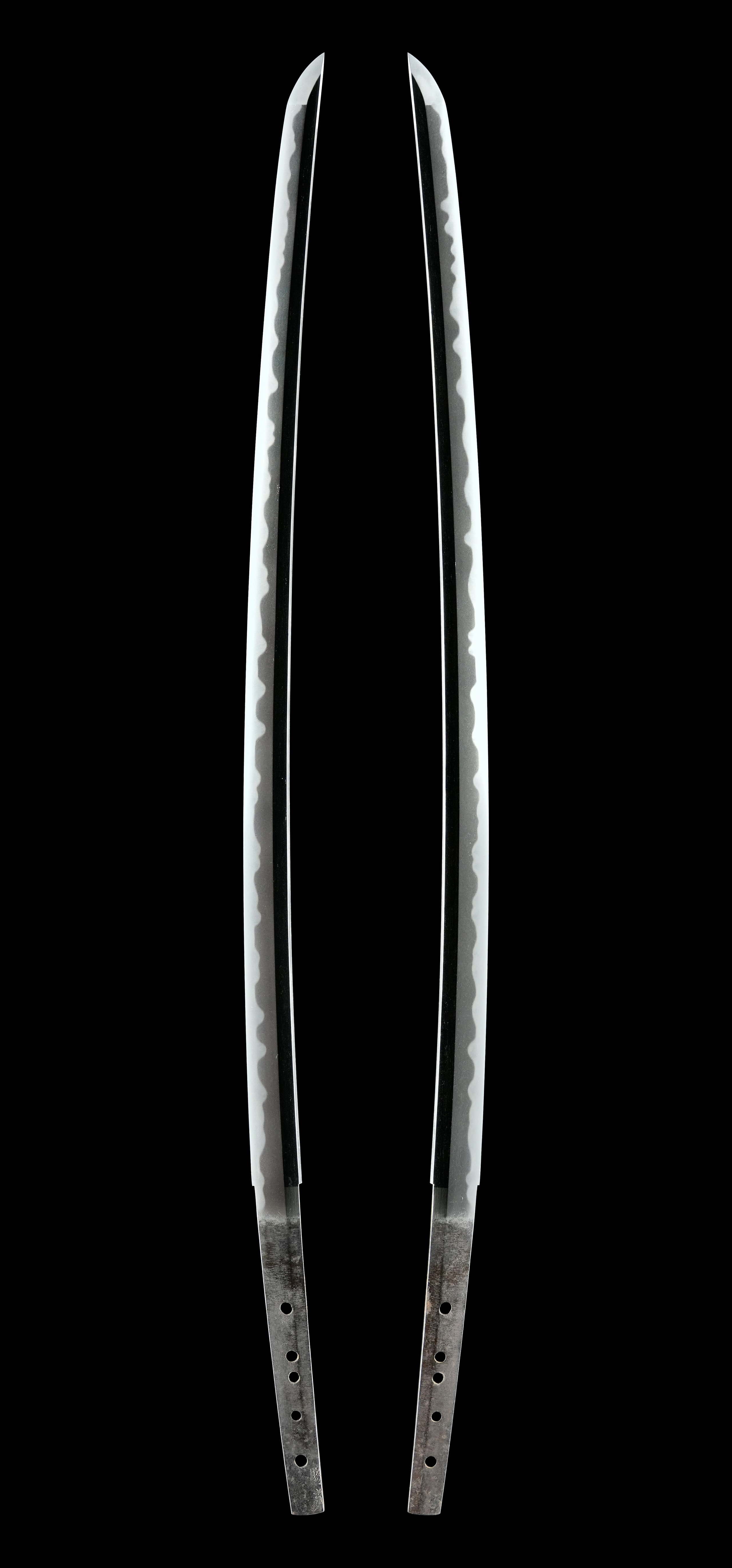
The recognition of Tomoshige lives in his . He forges a board-grained that mixes in and runs to , standing somewhat open, the surface gathering and , and the steel carries a distinct blackish cast. The published record names exactly this as the school's chief point, that the stands and tends dark (肌立ちごころで黒みをおびる), the mark of northern-country work. Over that he tempers a into which box-shaped, pointed and angular teeth enter together with and , at times rising into a compound, multi-peaked . The calls the feel of it a make in which temperament and flavor are mixed (備前気質と美濃風が混在した感のある乱れ刃), the rather long, the whole -laden with patches of rough , sweeping the and entering, small scattered here and there. The runs straight or into a and is often swept with . It is the conjunction that identifies him, a Yamato-rooted dark steel under an active temper that borrows from two other traditions.

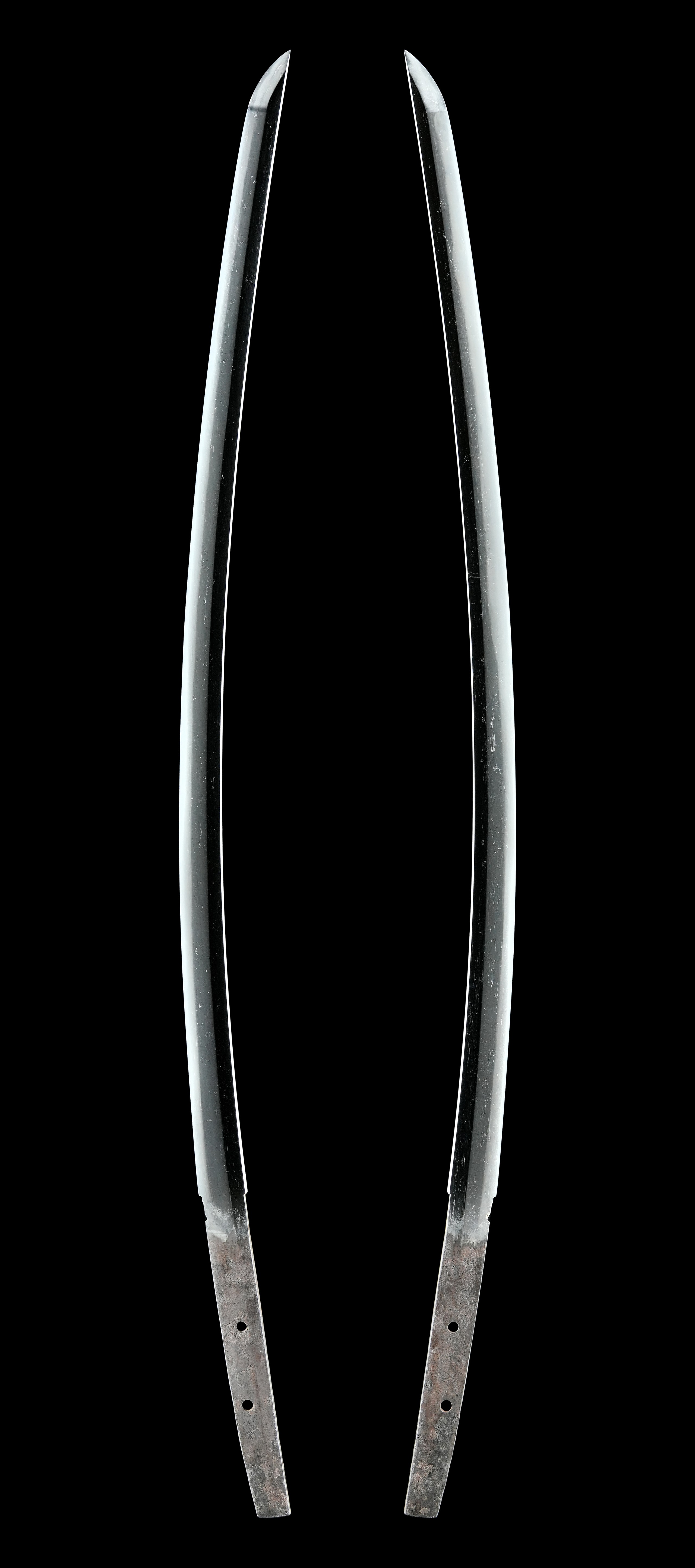
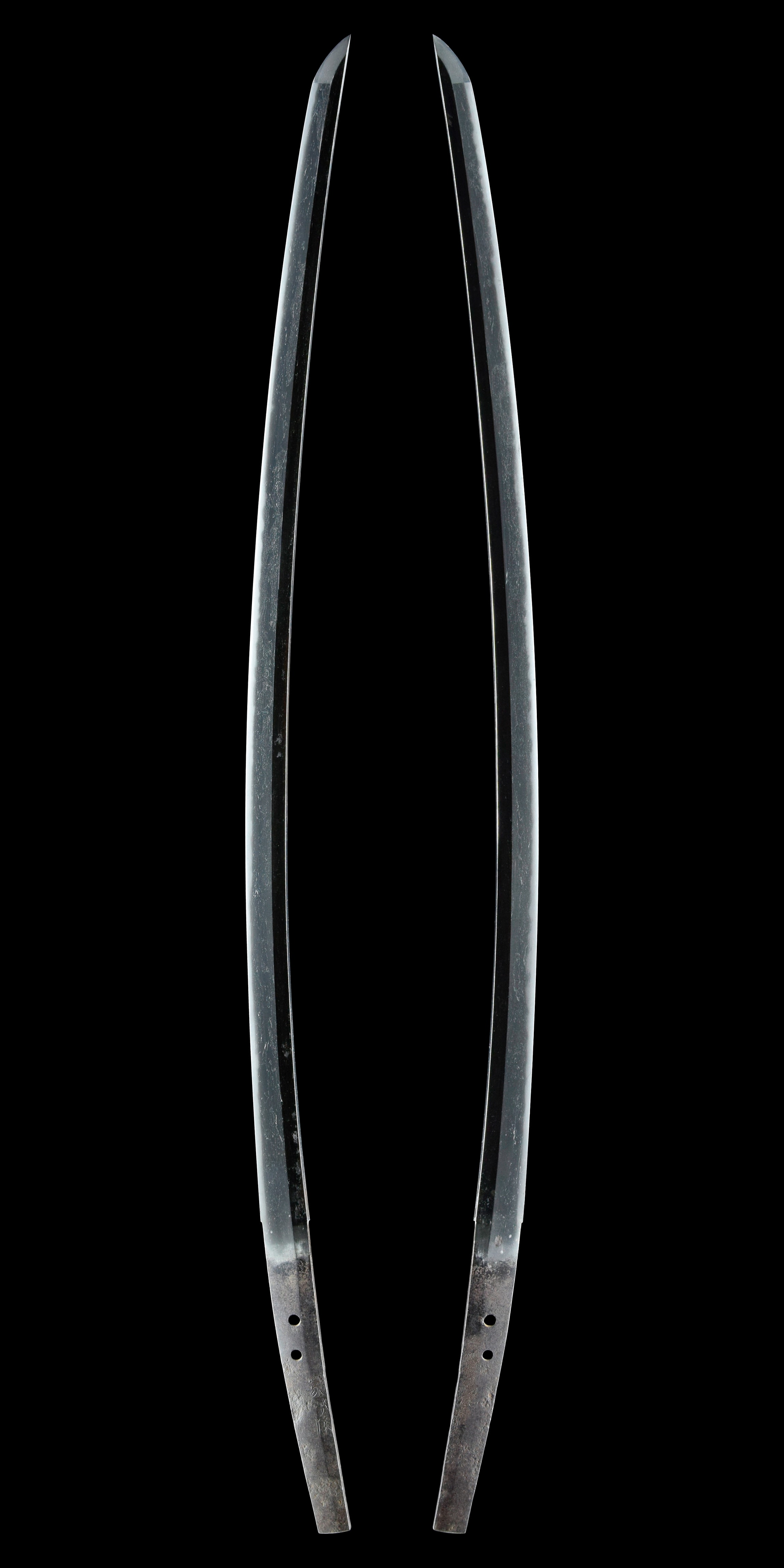
The repays a closer look, because it is where the school and the man are read. The board grain stands and flows rather than tightening into the fine of a Yamashiro blade, and on the and it sharpens further toward a -leaning , the most plainly Yamato of his . The dark color is not an accident of polish but a property of the steel itself, and the published sources tie it directly to the northern provinces, writing of one dated that the blackish cast of the metal shows the point of northern-country work (地がねの色が黒みを帯びているところに北国物の見どころが示され). Across several blades a faint whitish rises in the , the quiet reflection of northern steel rather than a bright one. The answers the with its own mix: angular and box-shaped teeth are singled out as a point worth naming on the typical work, the enters long, the at times sits in and at times in a deeper , and the activity is constant without ever becoming showy.

Within this single manner the published sources mark the short blades apart. On the the school hand can quiet, the tightening to a , the temper dropping to a narrow or a low with and , the sometimes misty with and , the a that on one piece returns deep into a jizo-like shape. The longer blades carry the box-and-pointed ; the are where the Yamato base of the school shows most simply, even as the dark steel keeps its northern mark. A second, dated register leans further toward Yamato still: the Oei 16 (1409) tempers a base with small teeth and a , and the reads it as a make in which a Yamato temperament can be seen (大和気質が看て取れる) while the dark color of the steel keeps the northern grain plainly shown (北国風の肌合が明示されている). As one of the very few early-dated Tomoshige it is valued as reference material for the school's range. The name is almost always signed, thirteen of fourteen designated blades on an , the four-character Fujishima Tomoshige most common, sometimes a two-character Tomoshige, the single long full signature surviving on one piece alone; the published sources lean on the signature and the date together to read a given blade as the Oei Tomoshige.

What sets Tomoshige apart from the schools his work otherwise recalls is held in his own grounded traits rather than borrowed from theirs. His resembles a make in its and its long , but the box-shaped and pointed teeth, the standing dark and the constant pull it away from a clean ; one is read as showing an air, and one is compared to Naoe and to Sekishu Naotsuna, the and northern lines his own work sits between. The teacher question is settled by elimination toward Yamato, the line bound neither to Kunitoshi in style nor to Sanekage in date. He stands at the head of the Hokurikudo Fujishima manner, in feel to the and smiths of the region, and the name continues for generations on the fixed character of dark standing and box-and-pointed , the Oei smiths the most highly regarded and the work the most often surviving.

Fourteen of his blades stand in the tier, and Fujishiro rates the smith Chu-jo . His finest single work is a great spear, the o-mi- signed Fujishima Tomoshige and carved with a and the deity-name Myoken Daibosatsu, which the judges not merely the best spear of the school and name but one of the representative famous spears of its age (同時代を代表する名槍の一本である). Surviving by him are noted as rare. Provenance gathers around two houses recorded in his own blades: an Oei-period descended in the Inaba house, and a held in the Imperial collection. These are heritage blades held in long-standing hands rather than goods of the market, and the man himself is not among the unattainable names; his designated swords come to auction and to dealers from time to time, a Tomoshige a realistic if uncommon encounter for a patient collector, valued less for rarity at the very top than for the way a single dark-steeled blade carries the whole northern school in its .
Kantei

one dominant manner across a multi-generation name, not a dated chronology of a single hand: the published sources treat Tomoshige as a school-level tell, reading every blade against a fixed school character rather than ordering one smith's career; within that one manner they mark the short-blade register apart (the tanto's narrow suguha and ko-nie) and single out the Oei-period typical work as the reference make, with a Yamato-leaning suguha-base variant on certain dated pieces

Tomoshige is the founder and representative smith of the Fujishima school of Fujishima in province, a name carried by several generations from the end of through and on into the early-modern era. The first generation is traditionally said to have been a pupil of Kunitoshi, alternatively of Sanekage of the province, but the published sources doubt both, the link unsupported by the work itself and the Sanekage one untenable by date, and read his manner instead as descending from the Yamato tradition, close to the Yamato Shikkake line. No surviving work predates , and the earliest dated piece is a of Oei 2 (1395). His point is the : a standing that runs to with a blackish steel, the published sources naming this northern-country character the school's chief tell. Over it he tempers a that mixes box-shaped, pointed and angular teeth, with a feel of mixed and temperament, rather long, the whole -laden with and , the swept with into a ; his sometimes take a narrow with . He signs almost always on an , in a four-character Fujishima Tomoshige or a two-character Tomoshige.

Diagnostic discriminators

36% of his works

21% of his works

21% of his works

生ぶ茎

93% of his works

Observation by phase

The Oei-period typical work, the Fujishima reference make

the four-character Fujishima Tomoshige mei on an ubu nakago: the published sources read the bulk of the surviving work, signed and dated around Oei, as the school standard, the dated Oei pieces anchoring the chronology and the undated ones placed a little earlier or later against them

The reference Tomoshige is a or of standard or slightly narrow build, the body sometimes wide on the and , the and signed. The is , with mixed and the running to , standing somewhat, forming and entering, the steel tending blackish and on several pieces a whitish rising faintly; the published sources name the standing, dark-tinged the school's chief tell, a northern-country character. The is a that mixes box-shaped, pointed and angular teeth with and , at times running to a compound, multi-peaked , the feel that of mixed and temperament; and enter, the is -laden with patches of rough , sweeps it and enter, with small here and there. The runs straight or into a , often swept with . Carving is plain, and on the longer blades.

Sugata 姿
Jigane 地鉄
Hamon 刃文
Bōshi 帽子

The short-blade register, the tanto's narrow suguha

the form itself: the published sources set the tanto apart from the long blades, noting that while his long swords run to the box-and-pointed gunome midare, his tanto sometimes take a narrow suguha with ko-nie, a calmer make tied to the smaller form

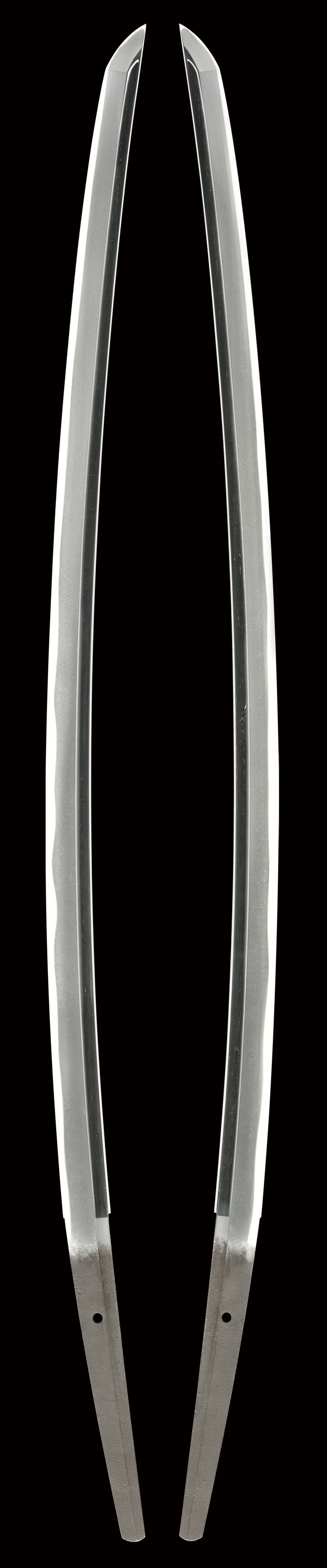
On the the school manner can quiet: or bodies of standard or slightly wide build, the a tighter to itame with and and the blackish steel, the dropping to a narrow or a low with and , the at times misty with and . The turns , on one piece with a deep jizo-like return. The published sources read these against the longer blades as the register where the Yamato base of the school shows most plainly, even as the dark steel keeps the northern-country mark.

Jigane 地鉄
Hamon 刃文
Bōshi 帽子

The Yamato-leaning suguha-base variant

less firmly establishedcertain dated pieces, the Oei 16 (1409) wakizashi above all: against his usual midare-laden make the published sources note works whose ha is suguha-based and whose boshi turns to a yakizume, where a Yamato temperament shows plainly even as the steel keeps the dark northern-country cast

A small group of dated blades temper a quieter, Yamato-toned manner: a base with and , and small, even along a that frays into with patches of and thick , the running to a . The published sources read the Oei 16 as the clearest case, calling its make Yamato in temperament against his usual domain, the dark steel still marking it as northern work; as one of the few dated Tomoshige of so early a year it is valued as reference material for the school's range. The variant closes the school back toward the Yamato Shikkake descent the published sources favor over the tradition.

Jigane 地鉄
Hamon 刃文
Bōshi 帽子
Scholarship

The school formula is repeated nearly verbatim across the corpus: the Fujishima line of Kaga, founded by Tomoshige, carries the same name for several generations from the end of Kamakura through to the early-modern era.

The teacher tradition is recorded and doubted in one breath: the first generation is handed down as a pupil of Rai Kunitoshi, but the published sources find nothing to bear it out, the oldest surviving work being Nanbokucho at the earliest.

The published sources weigh the candidate teachers and settle on a Yamato descent: judged from the make and the nakago finish, the line is better thought to draw on the Yamato tradition than on Rai Kunitoshi or Sanekage.

The northern-country character is named as the kantei: the steel tinged blackish is read as the mark of northern-country work, the school's chief point of recognition.

The Oei 16 (1409) wakizashi is read as a Yamato-tempered exception: its ha is suguha-based and its boshi a yakizume, a Yamato temperament against his usual domain, the dark steel keeping the northern mark, and it is prized as one of the few early dated works for knowing the school's range.

Designations

Kokuhō—
Jūyō Bunkazai—
Jūyō Bijutsuhin—
Gyobutsu1
Tokubetsu Jūyō—
Jūyō Tōken14

Elite Standing

0.09 across 15 designated works

Top 19% among smiths

Provenance

2 documented provenances across certified works by Tomoshige

Provenance Standing

1 works held in elite collections across 2 documented provenances

Top 78% among smiths

Raw score: 1.86 / 10

Blade Forms

Distribution across 15 ranked works

Signatures

Signature types across 15 ranked works

Currently Available

Lineage

TeacherTomoshige
Tomoshige
Students (3)
  1. 1.Tomoshige友重3 for sale15designated
  2. 2.Tomoshige友重5designated
  3. 3.Tomoshige友重

Fujishima School

Other artisans of the Fujishima school

  1. 1.Tomoshige友重5designated
  2. 2.Tomoshige友重5designated
  3. 3.Fujishima藤島4designated
  4. 4.Tomokiyo友清1designated