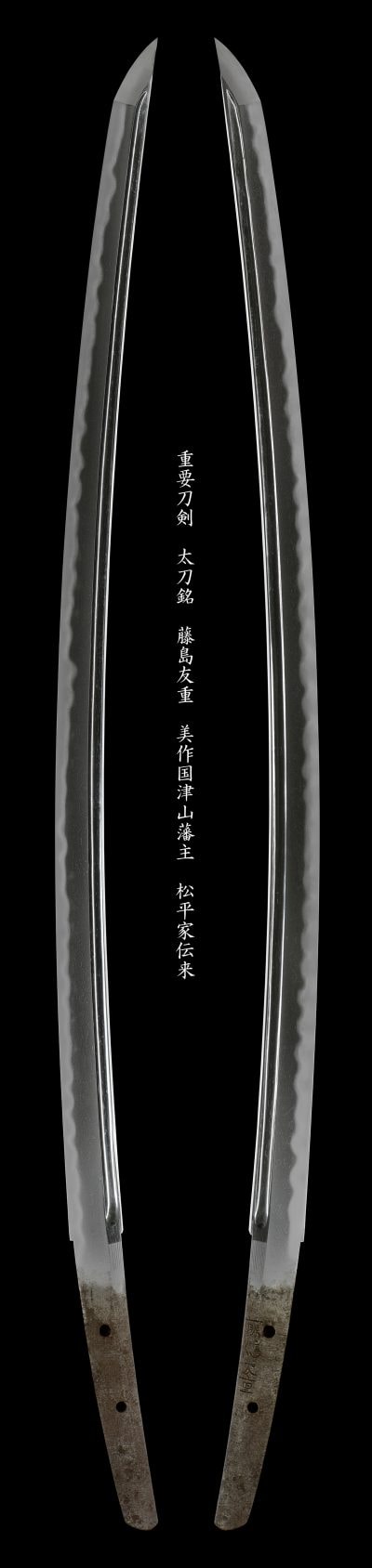
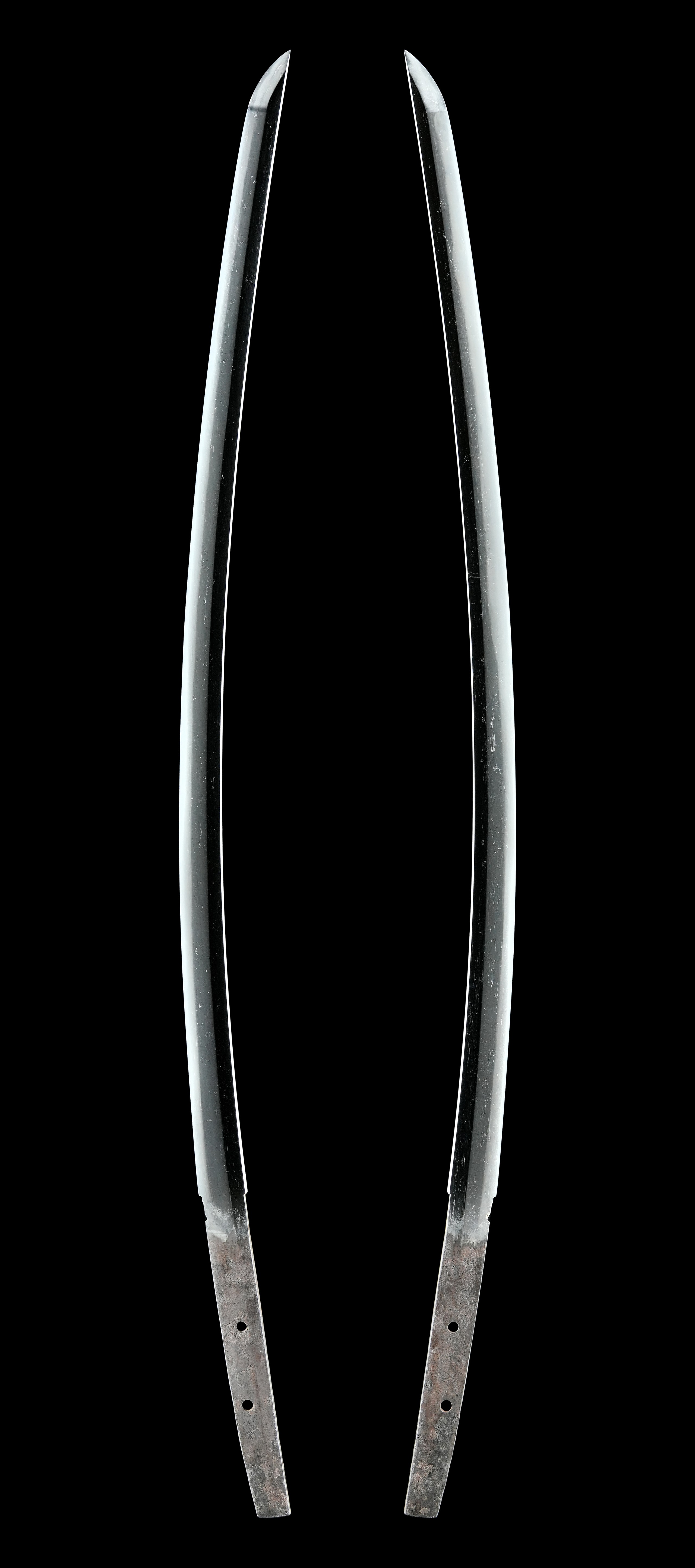
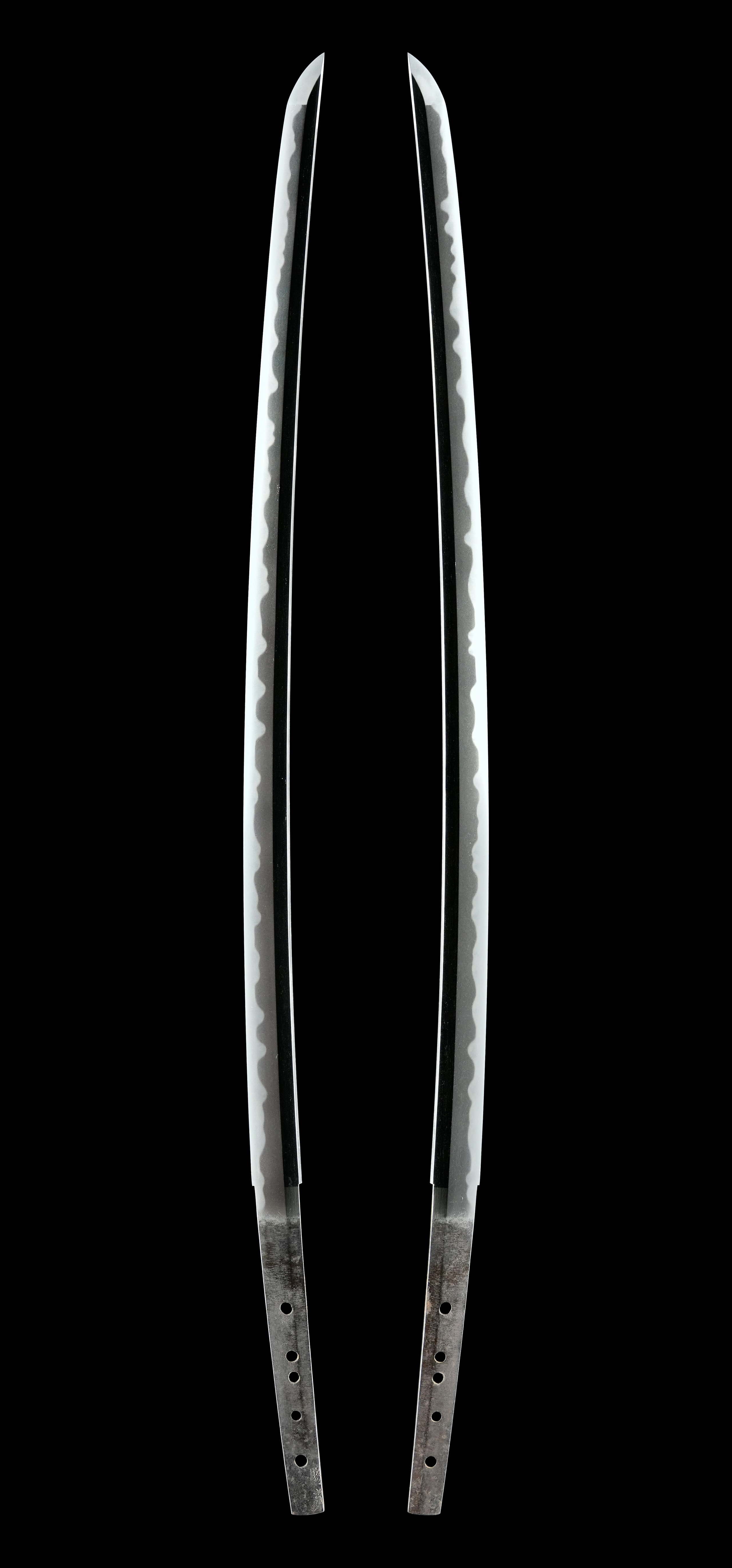
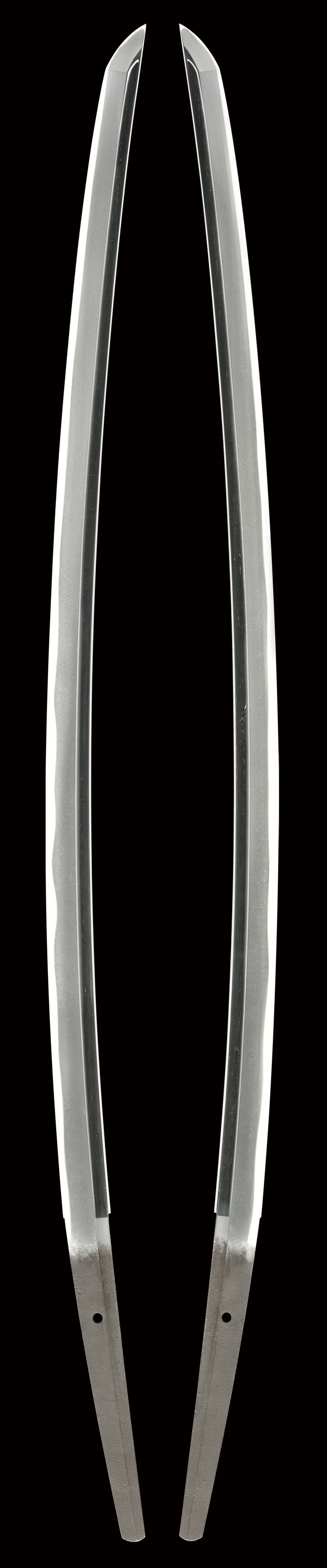
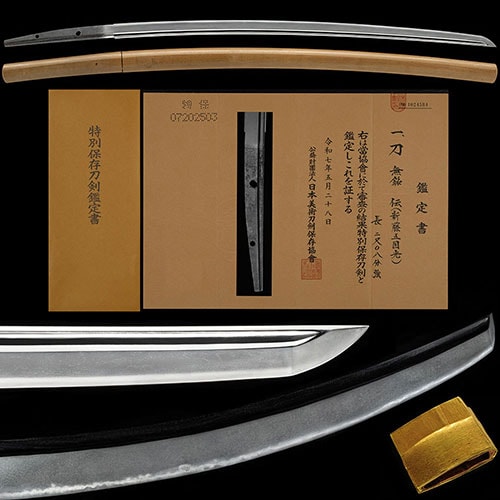
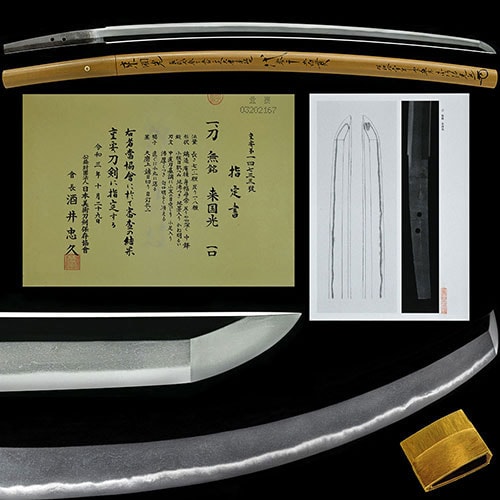
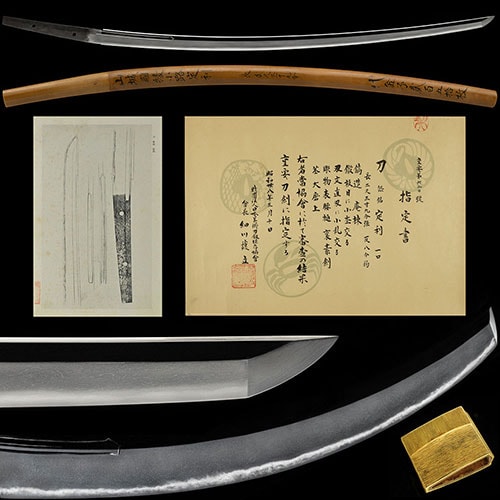
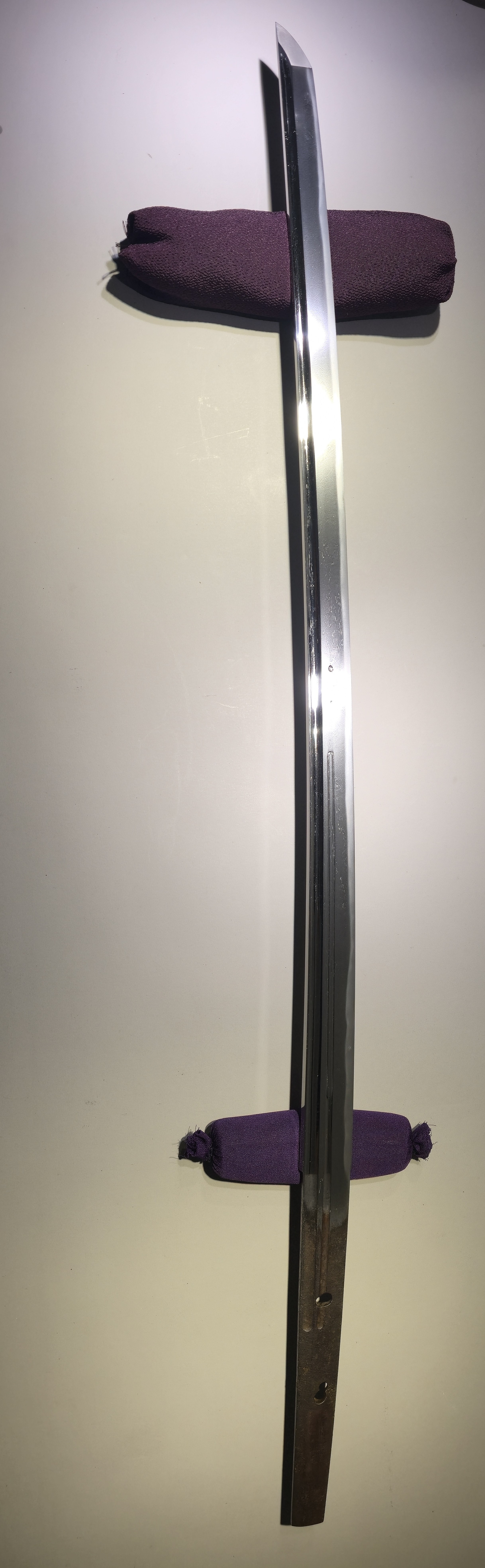
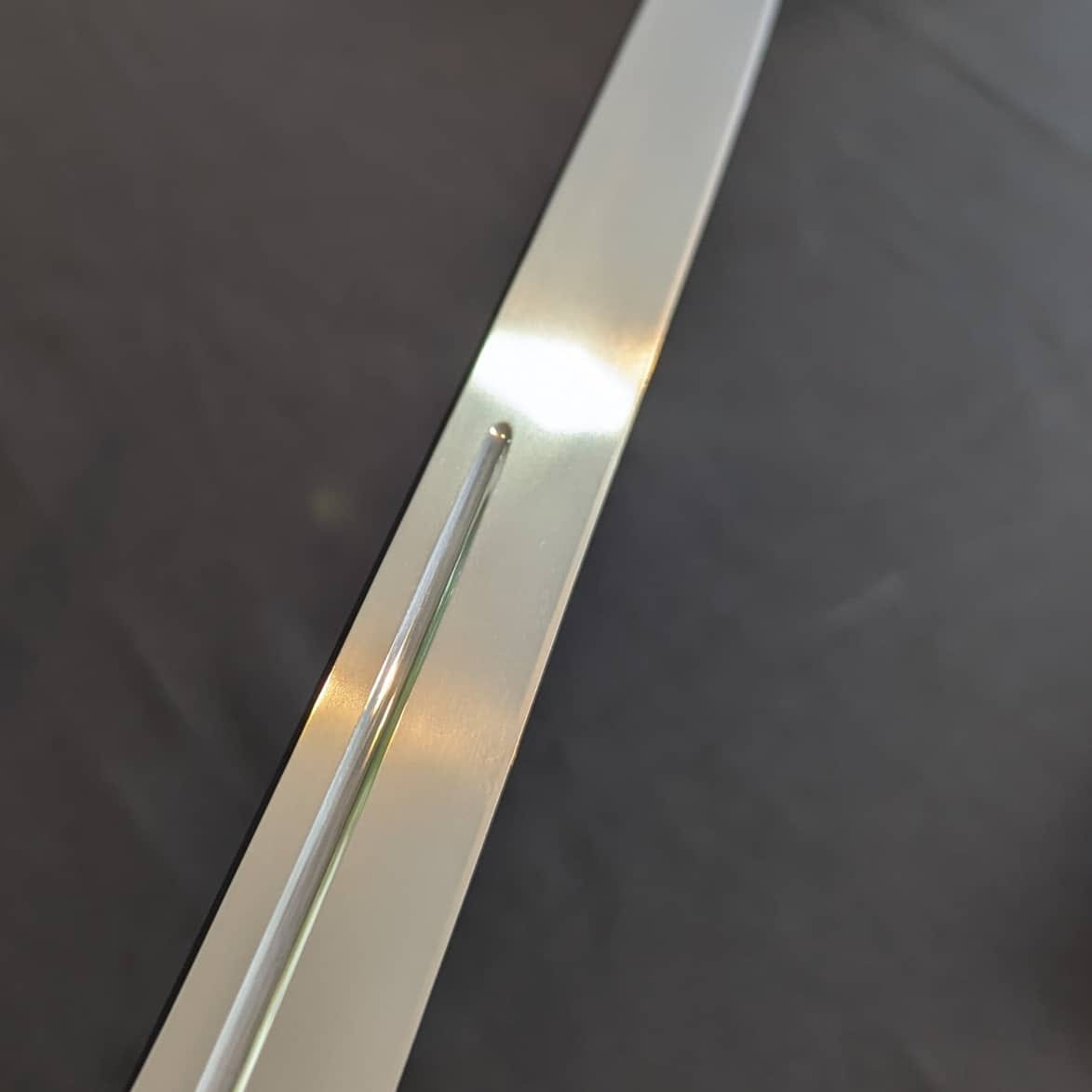
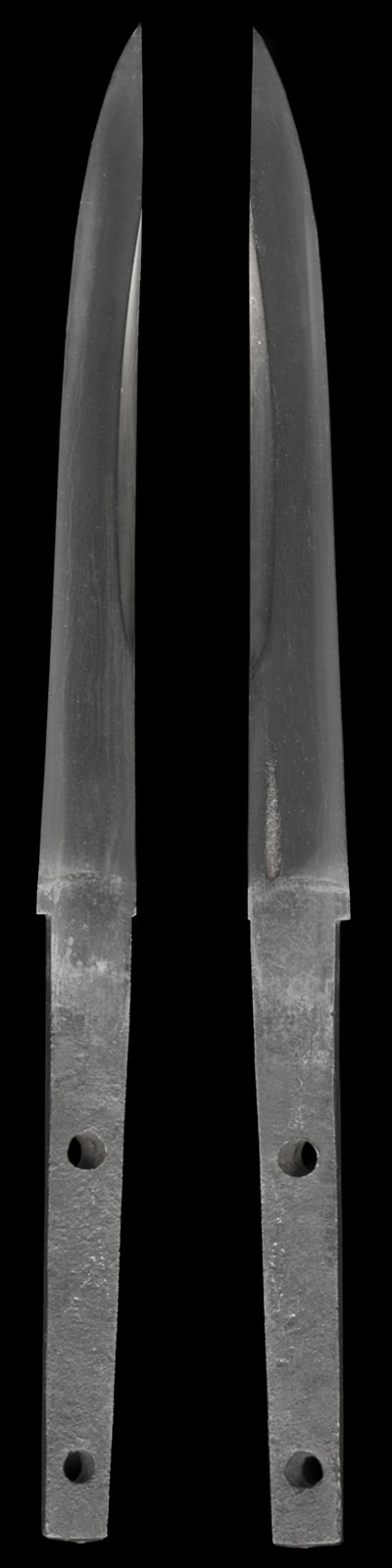
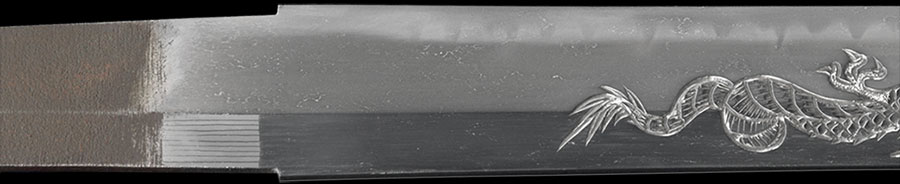
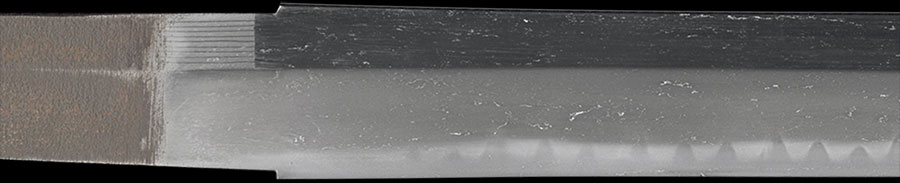
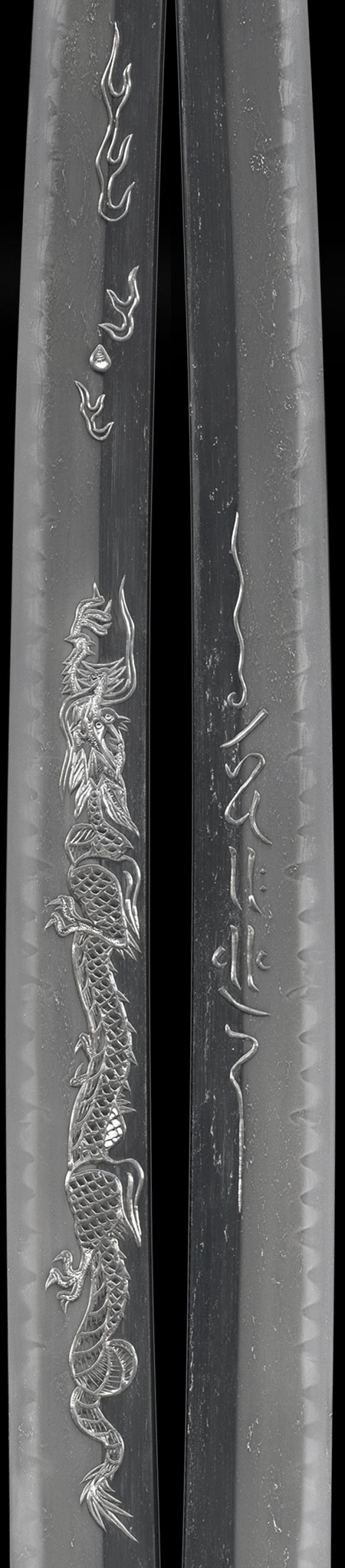
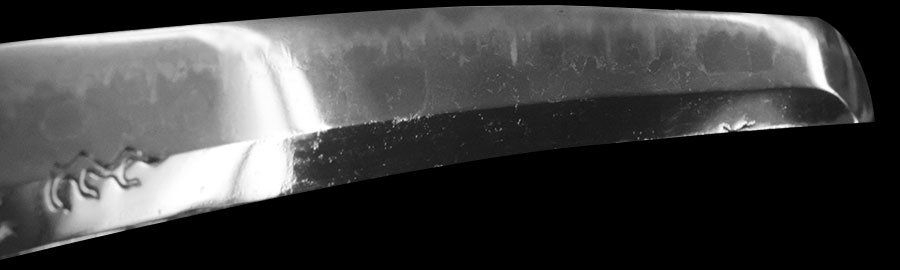
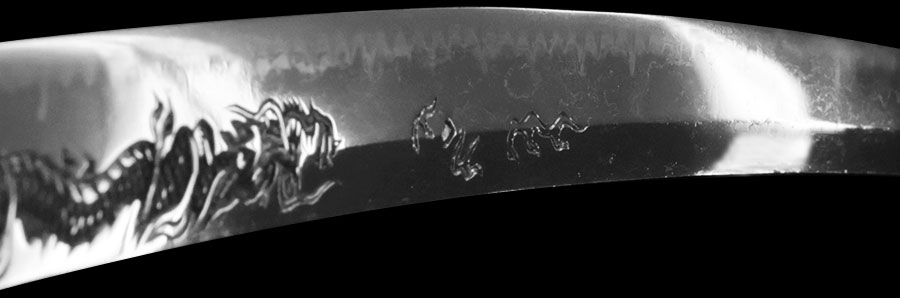
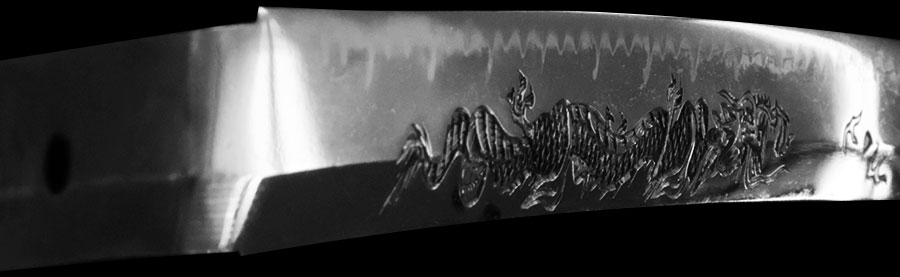
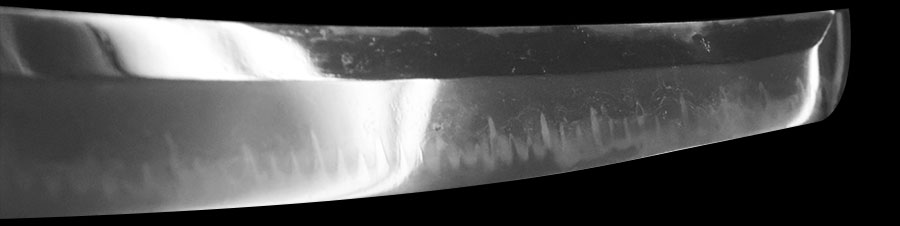
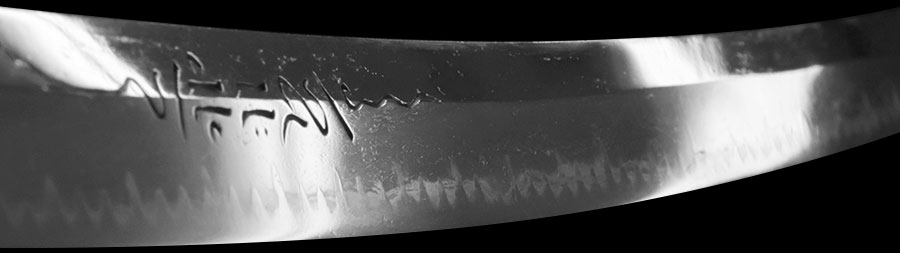
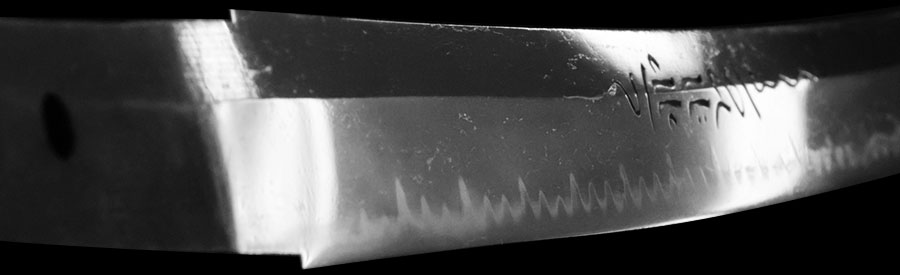
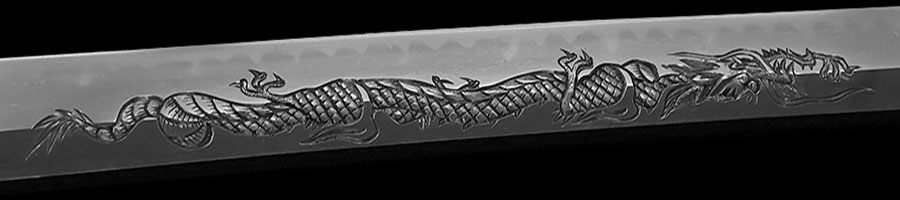
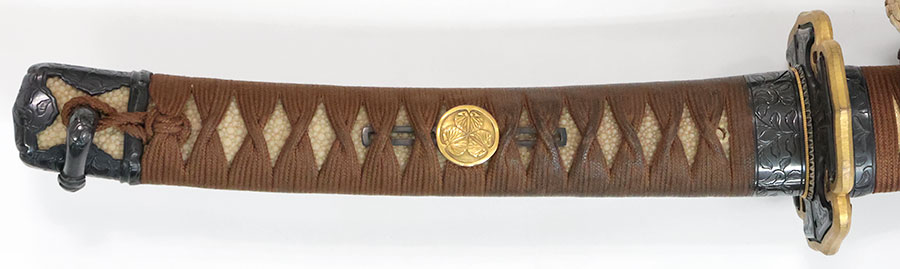
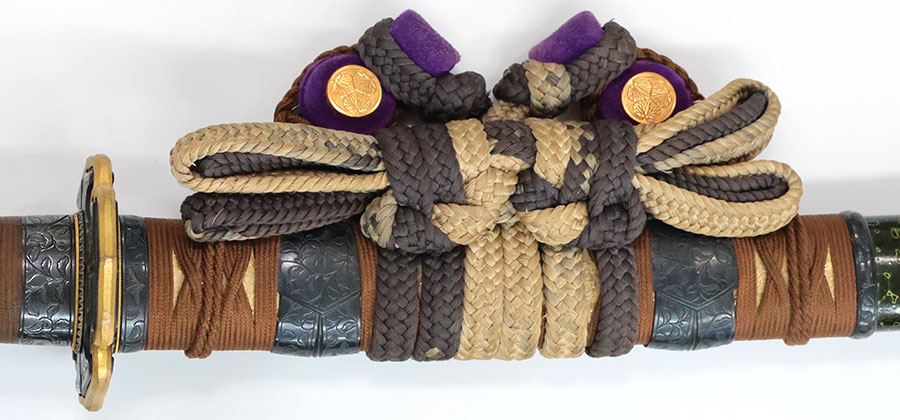
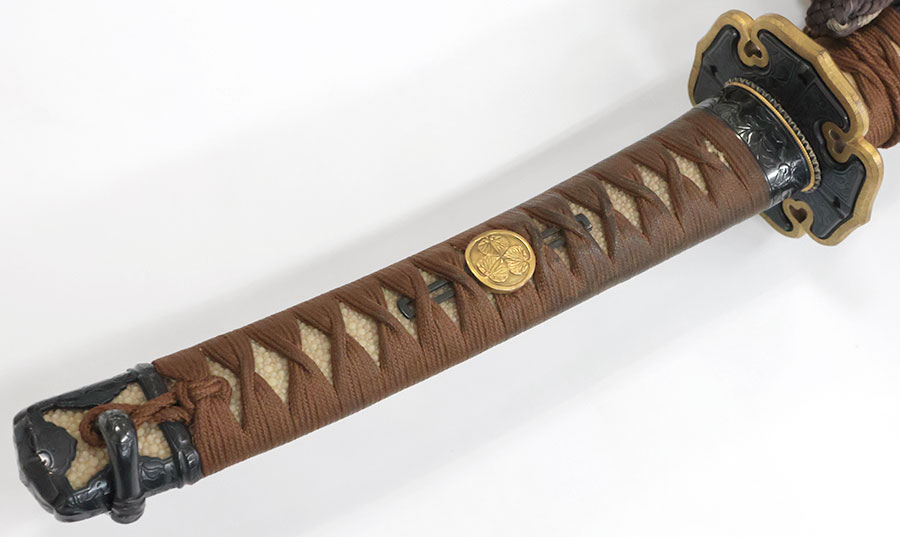
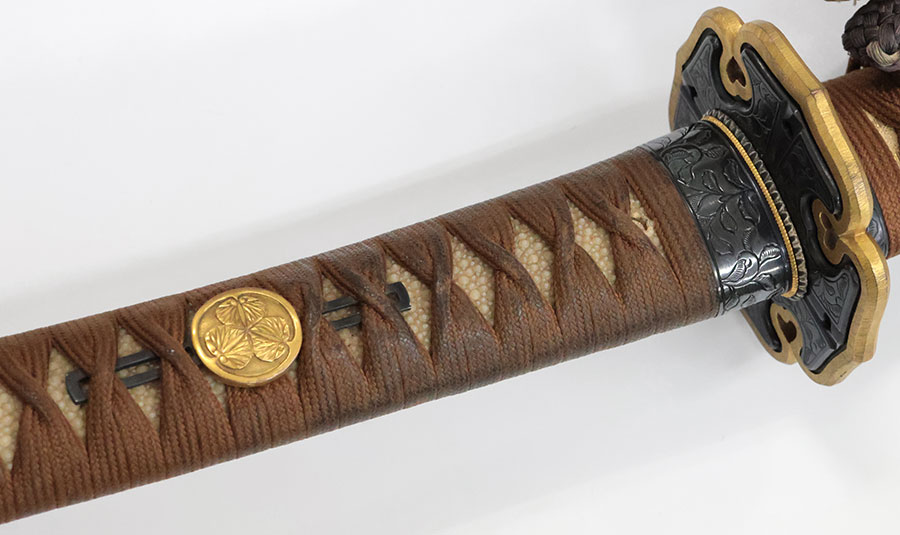
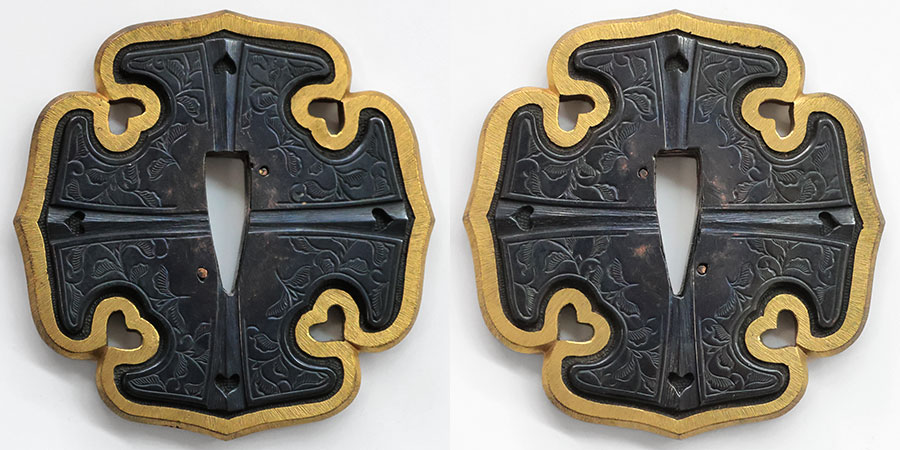
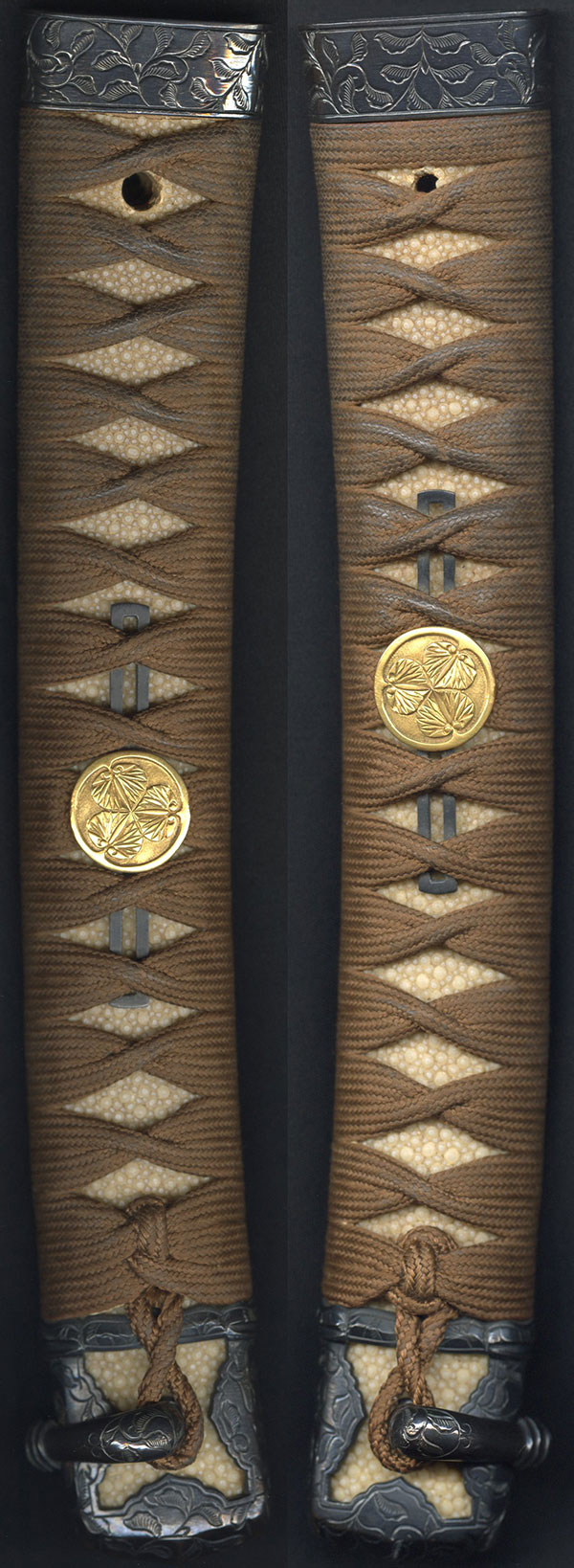
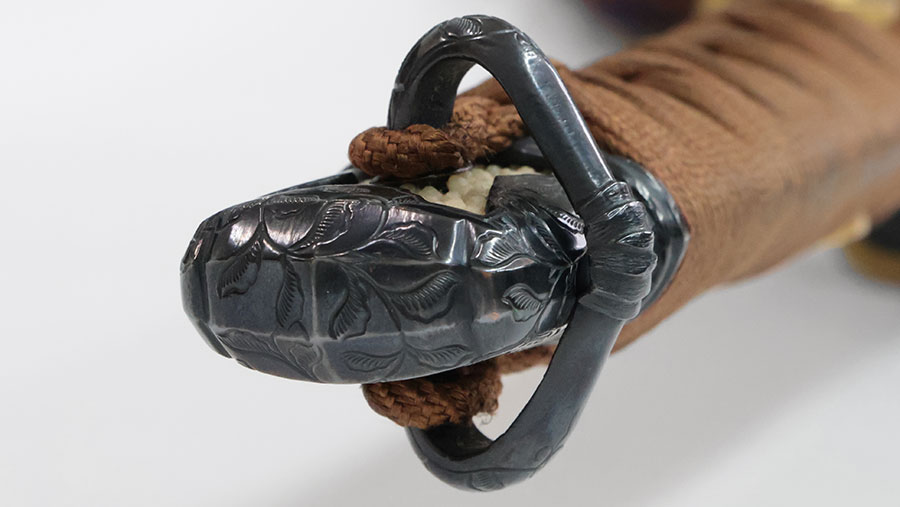
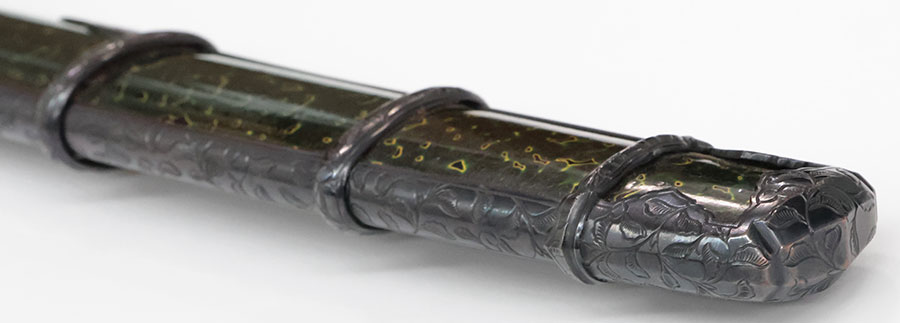
It has appeared, it has appeared—a celebrated sword by Yukimitsu, cherished for generations in an old family, complete with a luxurious itomaki-tachi koshirae. While Yukimitsu is exceptionally famous as the father of Soshu Masamune, this sword was likely handed down during the Edo period as being by that Soshu Yukimitsu. However, as there are no confirmed zaimei tachi works by Soshu Yukimitsu, this sword is likely by Kaga Yukimitsu. The lineage of Kaga Yukimitsu traces back to the Nanbokucho period around the Eiwa era (1375, 651 years ago), starting with the first generation Fujishima Yukimitsu, who was the second son of Fujishima Tomoshige from the school of Yamashiro Rai Kunitoshi; thereafter, the name Yukimitsu continued for generations in Kaga. This sword is an old Yukimitsu work from around the Tenbun era of the Muromachi period (1543, 483 years ago), precisely the time when firearms were introduced to Tanegashima from Portugal, and he is renowned as a wazamono maker. The sugata is beautiful, with a difference between the moto-mihaba and saki-mihaba and a shallow sori. The jigane is itame-hada mixed with masame-hada, with ji-nie appearing on the ji. The horimono is magnificent, featuring a shin-no-hori of a houju (sacred gem) and ryu (dragon) on the omote, and layered bonji on the ura. The hamon is nioi-deki with ko-nie, consisting of gunome-ba and gunome-togari-ba, with frequent sunagashi within the ha and abundant nie activity, including mune-yaki, truly displaying the tempered edge of a wazamono. The koshirae is a luxurious itomaki-tachi koshirae with issaku-kanagu of shakudo-ji featuring kusabana (floral) carvings, adding further splendor to this Yukimitsu sword. We received this sword from the head of an old family who stated that while it has been treasured for generations, they and their spouse have grown old and wish for it to be passed on at a low price to someone who will cherish it. Therefore, we are offering it at a special bargain price that could be considered the value of the tachi koshirae alone. Please by all means enjoy this wazamono koto by Kashu Yukimitsu, complete with its luxurious itomaki-tachi koshirae.
 NihontoWatch
Nanbokucho · nagasa 67.9cm · sori 1.3cm
















Yamashiro-den · Kaga · around 1340-1346
Tōken Taikan top 31%
2 pieces on the market now
Yamashiro-den · Kaga
20 pieces on the market now
Among the provincial lineages of the Hokurikudo, the Fujishima school took its name and its base from the village of Fujishima in Kaga province, where Tomoshige stands as founder and the name he set down passed through several generations from the close of the Nanbokucho period across the Muromachi and on into the early-modern Shinto era. The members place the chronological anchor with care: the earliest firmly dated work is a tanto of Oei 2 (1395), and the NBTHK finds nothing among the surviving blades that goes back earlier than Nanbokucho. Learn more →
| Smith | Era | Designated |
|---|---|---|
| Tomoshige友重 | 1394-1428 | 15 |
| Tomoshige友重 | 1346-1370 | 5 |
| Tomoshige友重 | 1324-1326 | 5 |
| Fujishima藤島 | 1394-1428 | 4 |
| Yukimitsu行光 | 1340-1346 | 0 |
We could not find an authenticity certificate on the seller’s listing. Japanese swords and fittings are normally papered by the NBTHK (or the NTHK). Without one, the attribution is the seller’s own assessment and has not been independently verified — treat it with caution and ask the dealer about certification before buying.
For returns due to customer circumstances, the cost is the customer's responsibility. For returns due to our mis-shipment or a defective item, we bear the cost.
It has appeared, it has appeared—a celebrated sword by Yukimitsu, cherished for generations in an old family, complete with a luxurious itomaki-tachi koshirae. While Yukimitsu is exceptionally famous as the father of Soshu Masamune, this sword was likely handed down during the Edo period as being by that Soshu Yukimitsu. However, as there are no confirmed zaimei tachi works by Soshu Yukimitsu, this sword is likely by Kaga Yukimitsu. The lineage of Kaga Yukimitsu traces back to the Nanbokucho period around the Eiwa era (1375, 651 years ago), starting with the first generation Fujishima Yukimitsu, who was the second son of Fujishima Tomoshige from the school of Yamashiro Rai Kunitoshi; thereafter, the name Yukimitsu continued for generations in Kaga. This sword is an old Yukimitsu work from around the Tenbun era of the Muromachi period (1543, 483 years ago), precisely the time when firearms were introduced to Tanegashima from Portugal, and he is renowned as a wazamono maker. The sugata is beautiful, with a difference between the moto-mihaba and saki-mihaba and a shallow sori. The jigane is itame-hada mixed with masame-hada, with ji-nie appearing on the ji. The horimono is magnificent, featuring a shin-no-hori of a houju (sacred gem) and ryu (dragon) on the omote, and layered bonji on the ura. The hamon is nioi-deki with ko-nie, consisting of gunome-ba and gunome-togari-ba, with frequent sunagashi within the ha and abundant nie activity, including mune-yaki, truly displaying the tempered edge of a wazamono. The koshirae is a luxurious itomaki-tachi koshirae with issaku-kanagu of shakudo-ji featuring kusabana (floral) carvings, adding further splendor to this Yukimitsu sword. We received this sword from the head of an old family who stated that while it has been treasured for generations, they and their spouse have grown old and wish for it to be passed on at a low price to someone who will cherish it. Therefore, we are offering it at a special bargain price that could be considered the value of the tachi koshirae alone. Please by all means enjoy this wazamono koto by Kashu Yukimitsu, complete with its luxurious itomaki-tachi koshirae.
NihontoWatchNanbokucho · nagasa 67.9cm · sori 1.3cm
Yamashiro-den · Kaga · around 1340-1346
Tōken Taikan top 31%
2 pieces on the market now
Yamashiro-den · Kaga
20 pieces on the market now
Among the provincial lineages of the Hokurikudo, the Fujishima school took its name and its base from the village of Fujishima in Kaga province, where Tomoshige stands as founder and the name he set down passed through several generations from the close of the Nanbokucho period across the Muromachi and on into the early-modern Shinto era. The members place the chronological anchor with care: the earliest firmly dated work is a tanto of Oei 2 (1395), and the NBTHK finds nothing among the surviving blades that goes back earlier than Nanbokucho. Learn more →
| Smith | Era | Designated |
|---|---|---|
| Tomoshige友重 | 1394-1428 | 15 |
| Tomoshige友重 | 1346-1370 | 5 |
| Tomoshige友重 | 1324-1326 | 5 |
| Fujishima藤島 | 1394-1428 | 4 |
| Yukimitsu行光 | 1340-1346 | 0 |
We could not find an authenticity certificate on the seller’s listing. Japanese swords and fittings are normally papered by the NBTHK (or the NTHK). Without one, the attribution is the seller’s own assessment and has not been independently verified — treat it with caution and ask the dealer about certification before buying.
For returns due to customer circumstances, the cost is the customer's responsibility. For returns due to our mis-shipment or a defective item, we bear the cost.