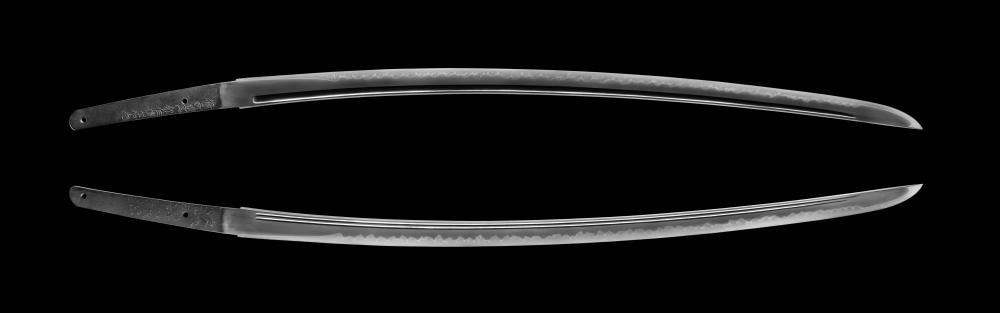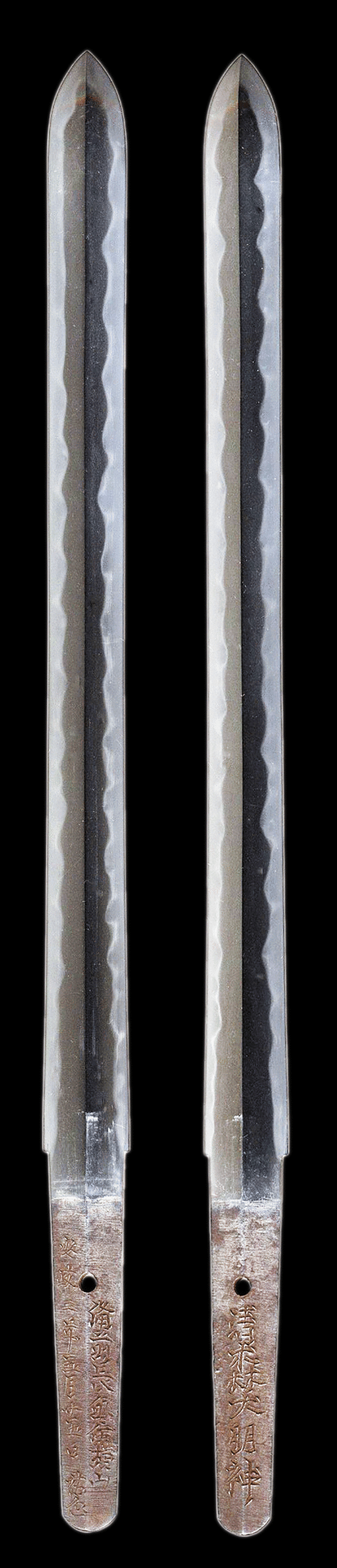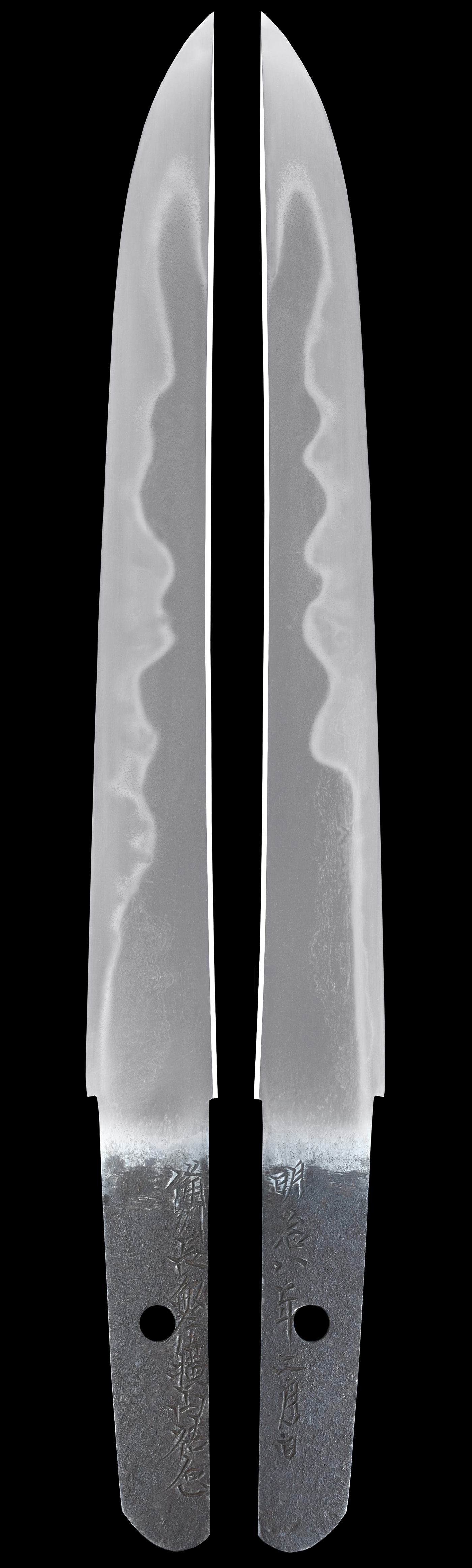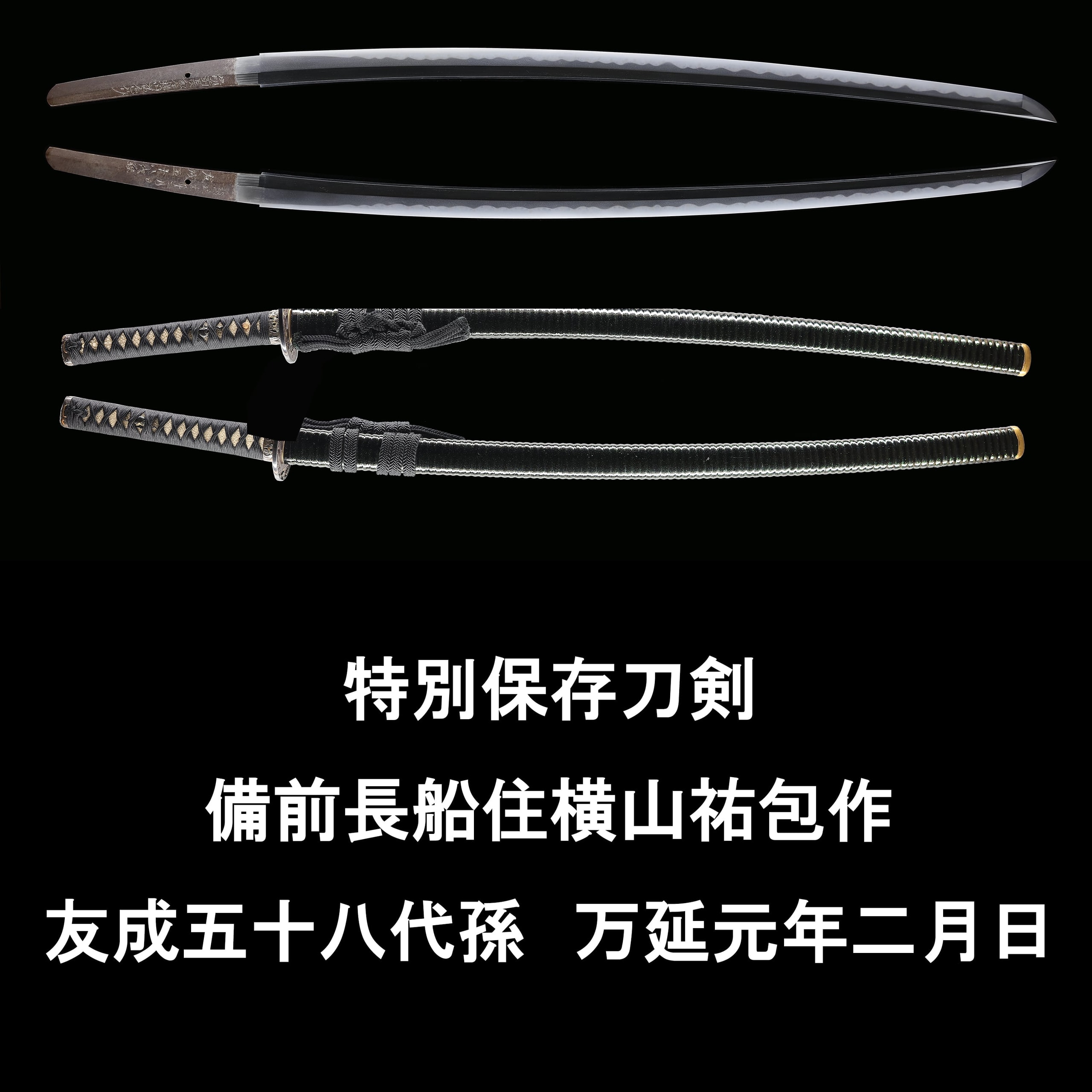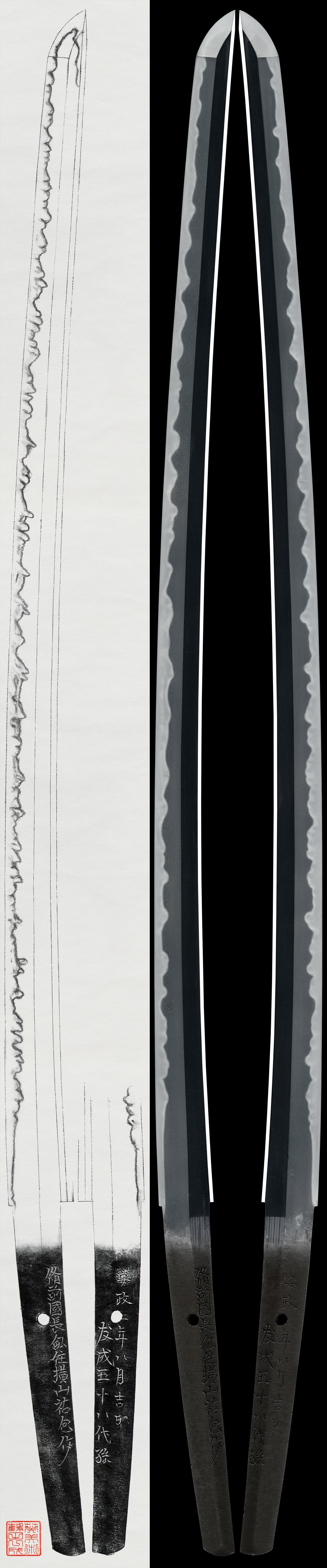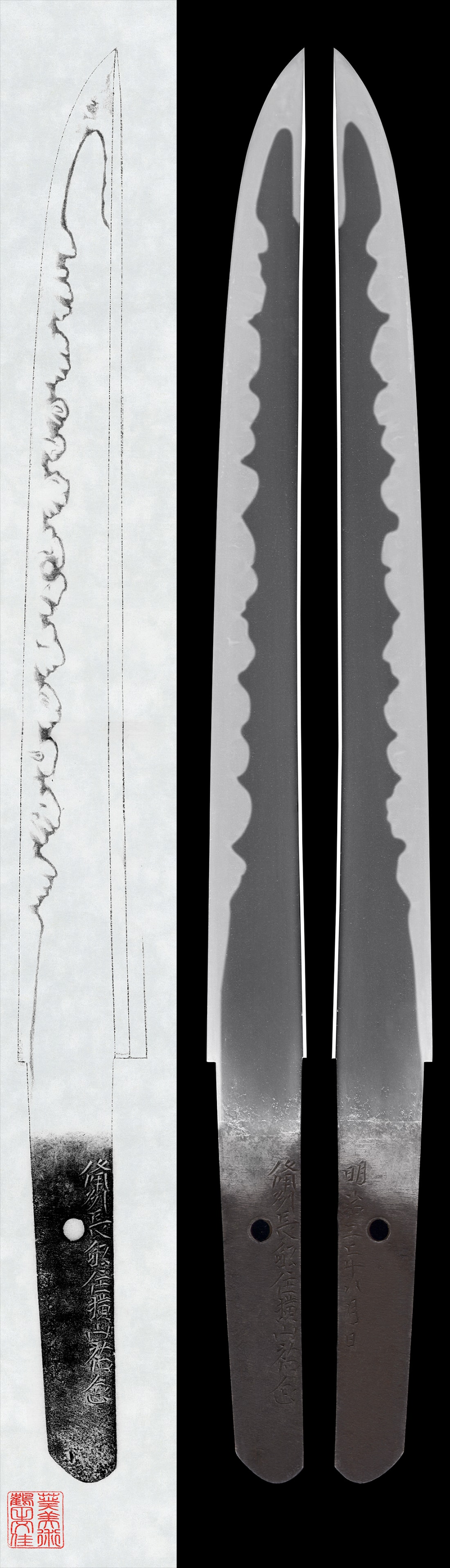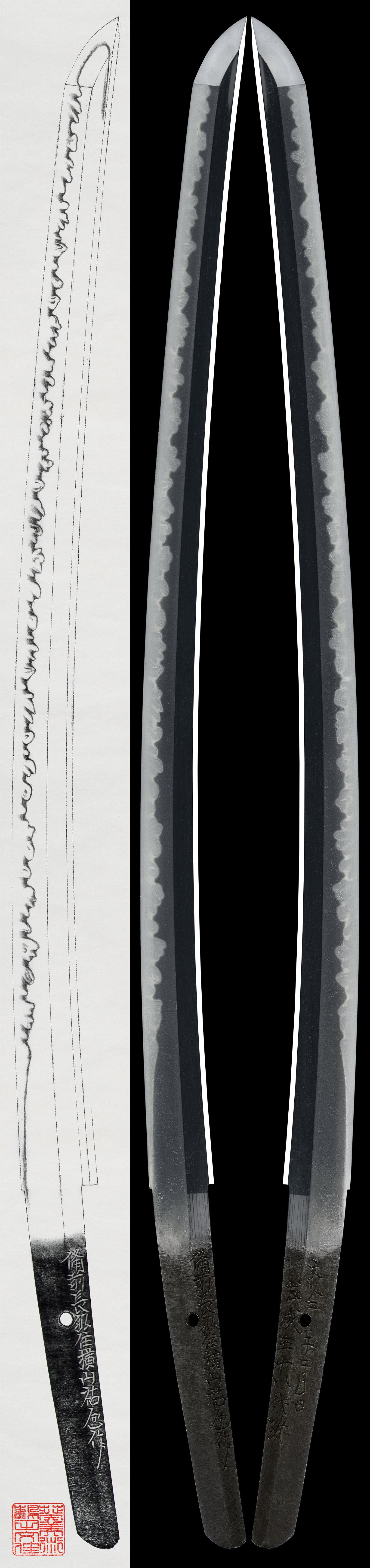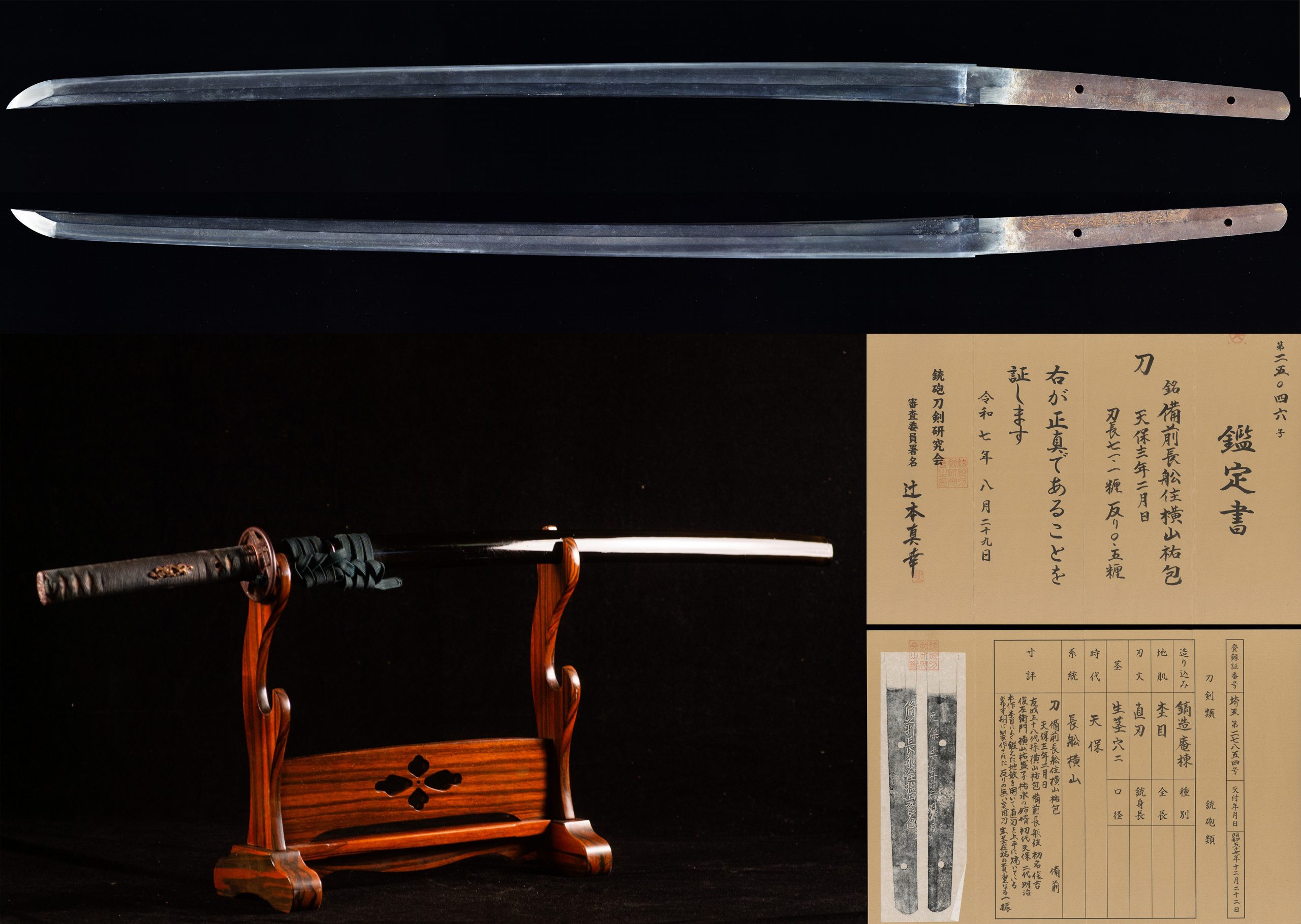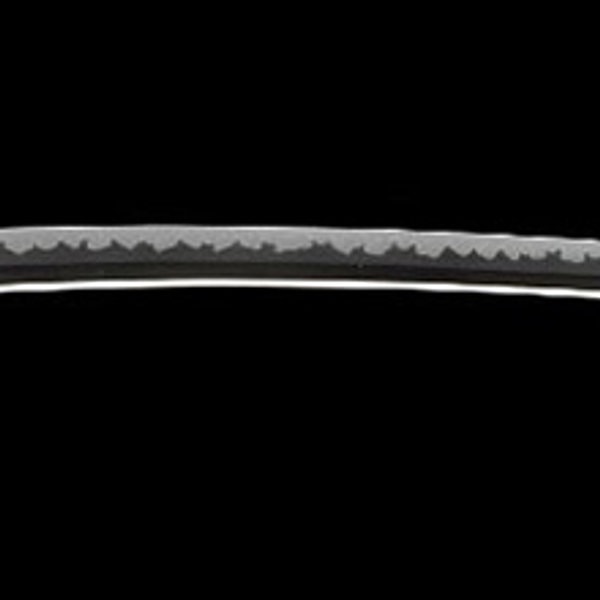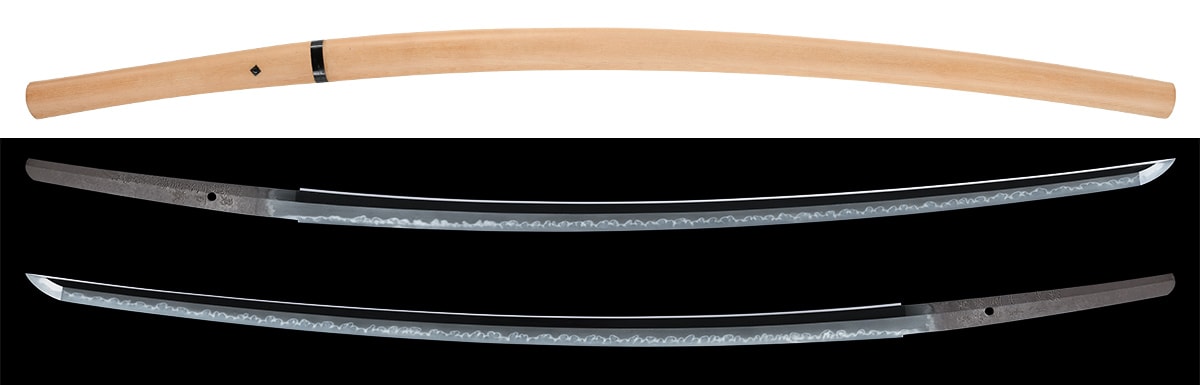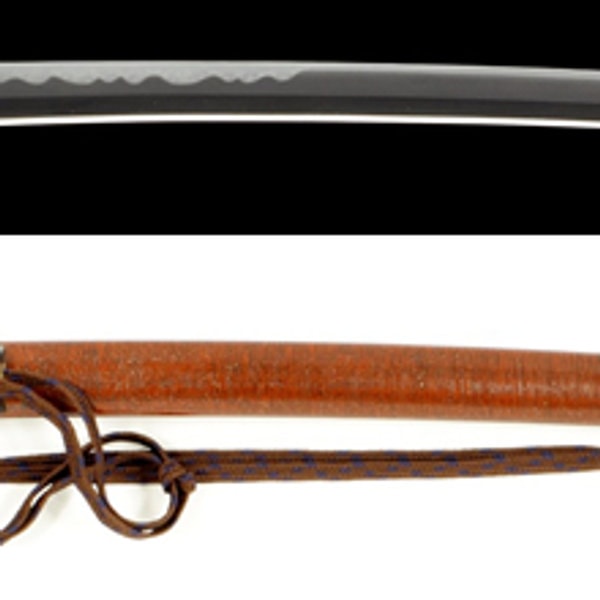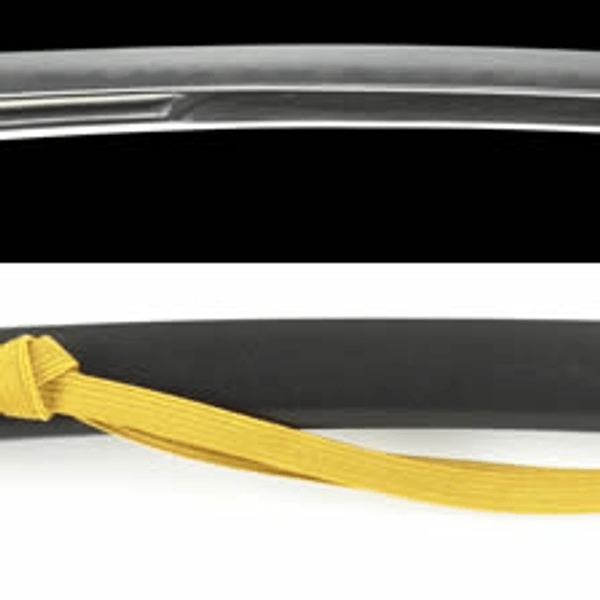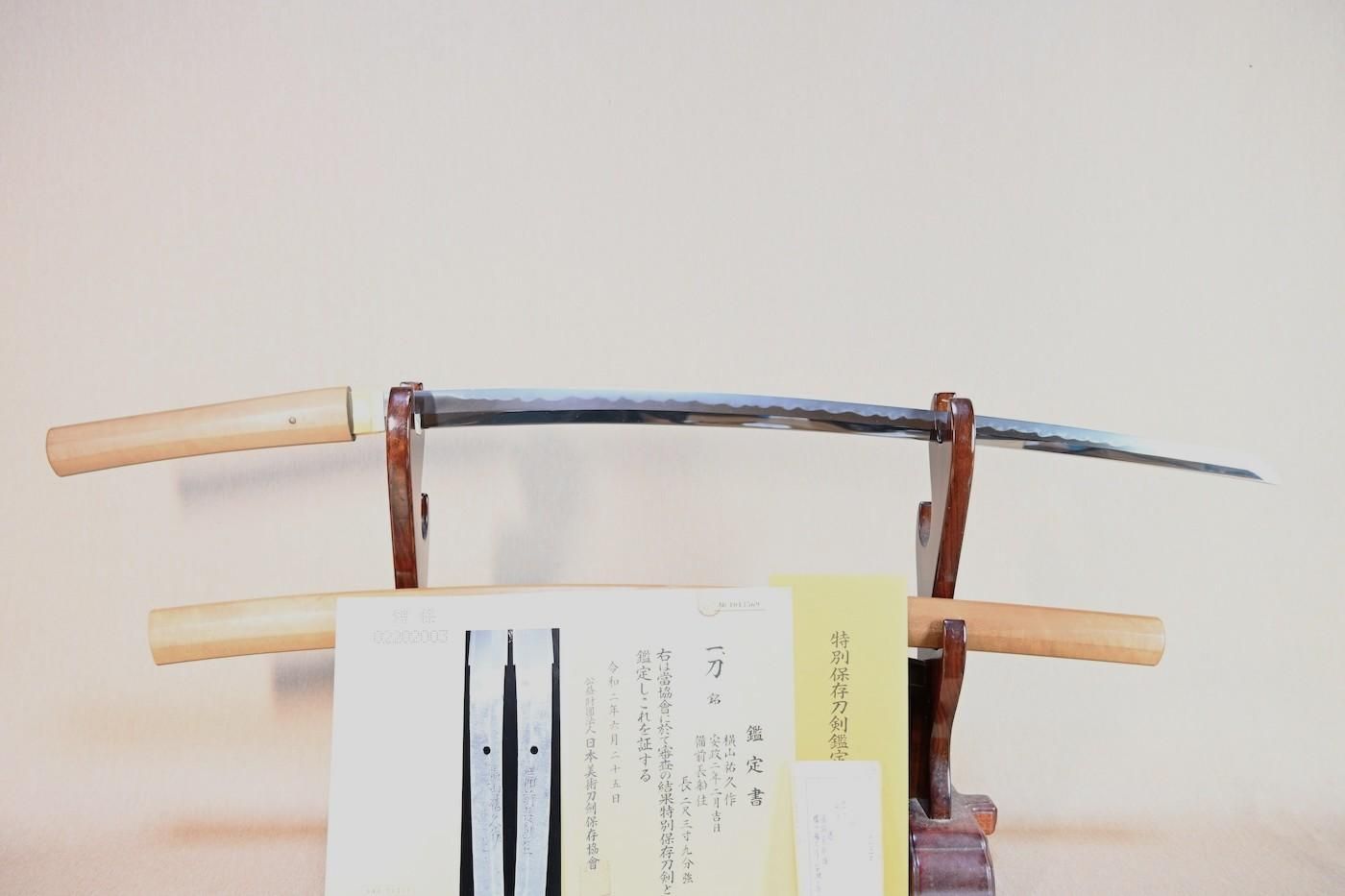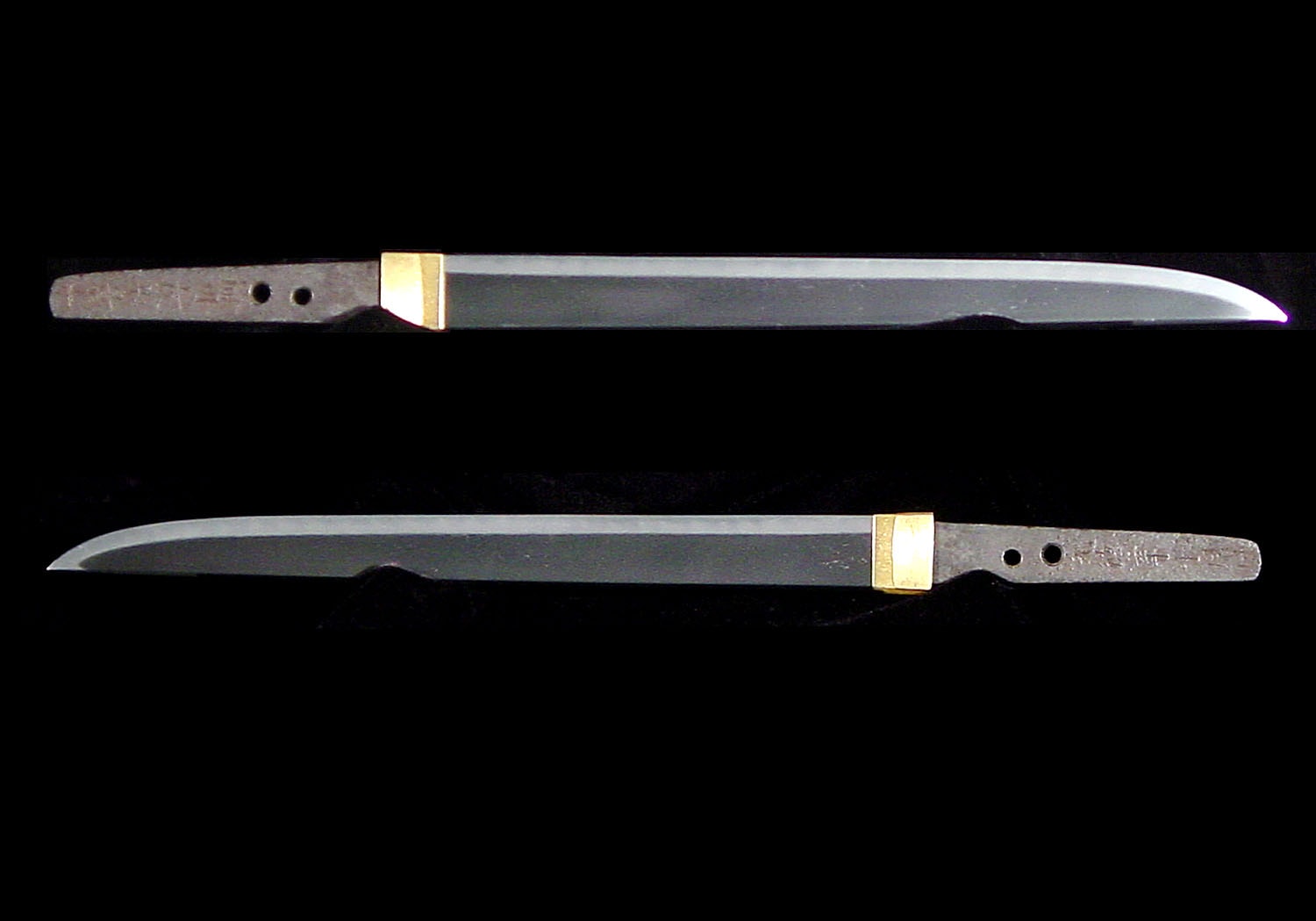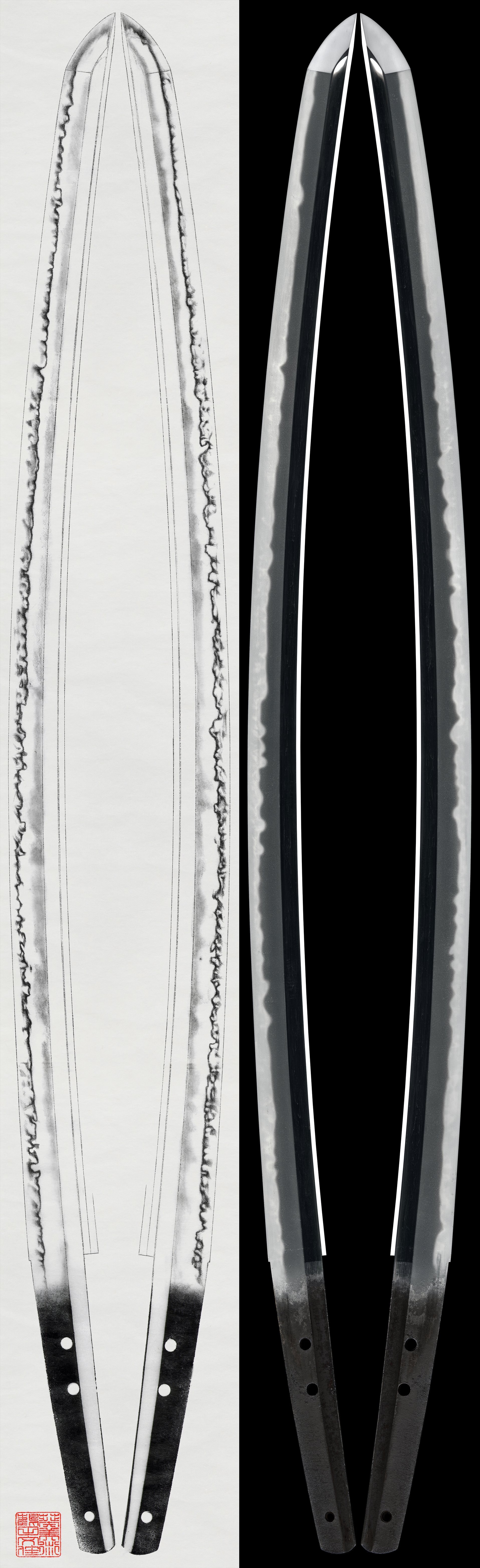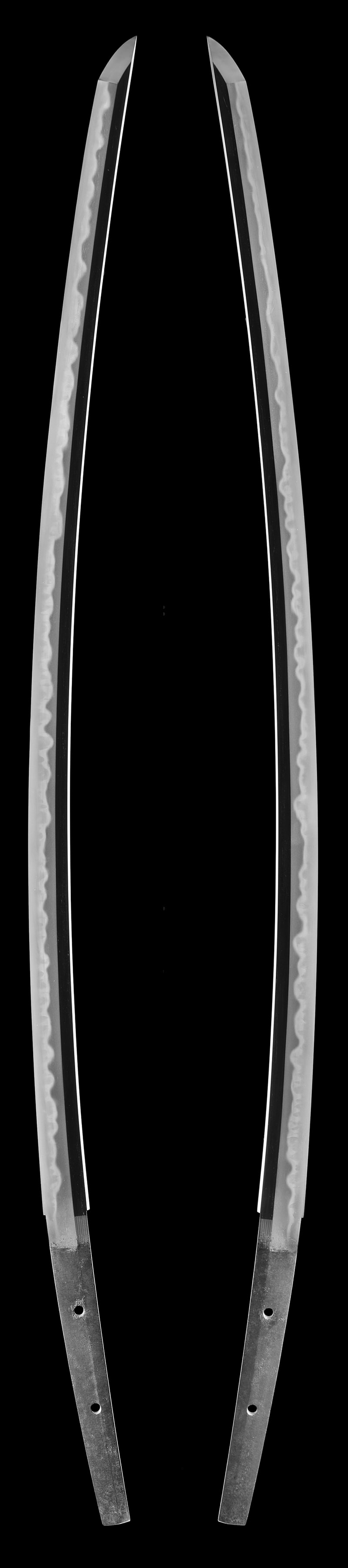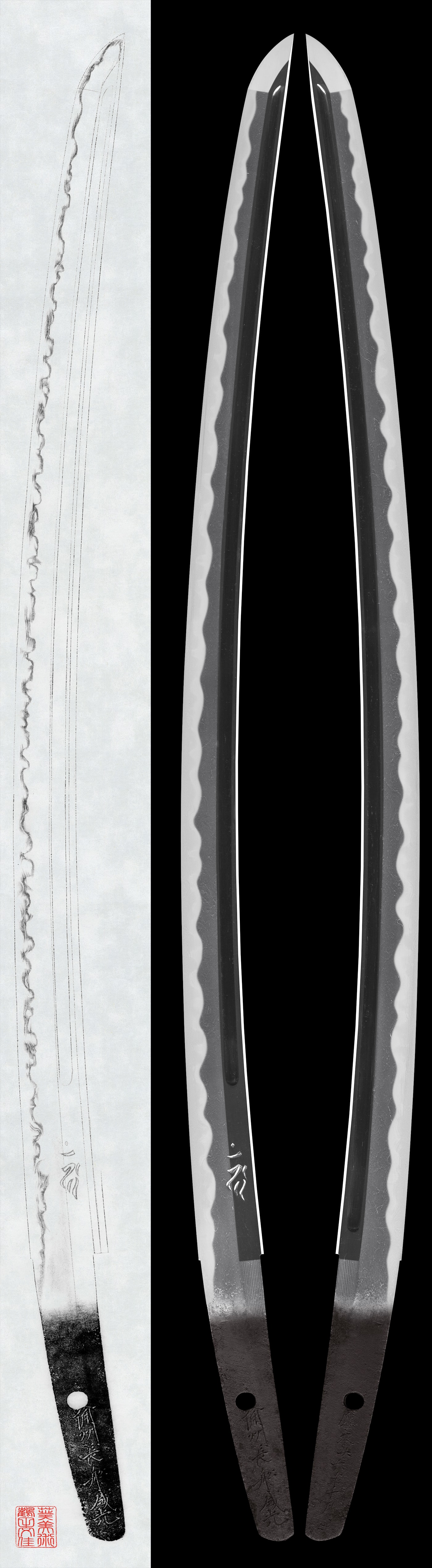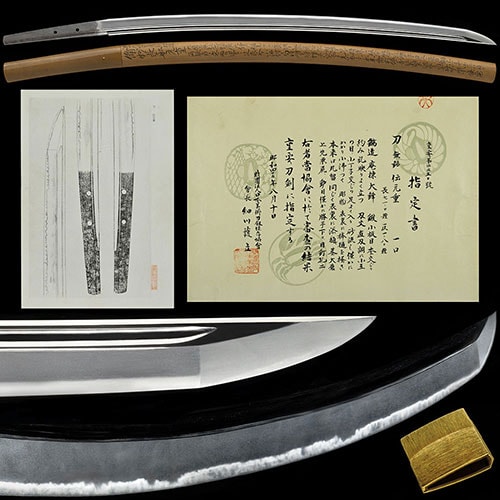
This listing features a Daisho (matching pair of long and short swords) with a katana signed by Yokoyama Sukekane, who resided in Bizen Osafune. Sukekane, an adopted son of Yokoyama Sukemori and brother-in-law to Kaga no Suke Sukenaga, was a spirited swordsmith active in the late Edo period. He claimed to be the 58th generation descendant of Tomonari and was known for his precise gunome choji hamon with a tight nioiguchi.
mei · Kaei (1848-1854)


Bizen-den · Bizen · around 1834-1872
Tōken Taikan top 60%
10 pieces on the market now
Bizen-den · Bizen
38 pieces on the market now
| Smith | Era | Designated |
|---|---|---|
| Sukenobu祐信 | 1830-1844 | 0 |
| Suketaka祐高 | 1865-1868 | 0 |
| Sukeharu祐春 | 1864-1865 | 0 |
| Sukehiro祐廣 | 1854-1860 | 0 |
| Sukekane祐包 | 1868-1912 | 0 |
We could not find an authenticity certificate on the seller’s listing. Japanese swords and fittings are normally papered by the NBTHK (or the NTHK). Without one, the attribution is the seller’s own assessment and has not been independently verified — treat it with caution and ask the dealer about certification before buying.
If, due to our fault, the item differs significantly from its proper condition, the item may be returned. Cooling-off is within one week of the item's arrival.
This listing features a Daisho (matching pair of long and short swords) with a katana signed by Yokoyama Sukekane, who resided in Bizen Osafune. Sukekane, an adopted son of Yokoyama Sukemori and brother-in-law to Kaga no Suke Sukenaga, was a spirited swordsmith active in the late Edo period. He claimed to be the 58th generation descendant of Tomonari and was known for his precise gunome choji hamon with a tight nioiguchi.
mei · Kaei (1848-1854)


Bizen-den · Bizen · around 1834-1872
Tōken Taikan top 60%
10 pieces on the market now
Bizen-den · Bizen
38 pieces on the market now
| Smith | Era | Designated |
|---|---|---|
| Sukenobu祐信 | 1830-1844 | 0 |
| Suketaka祐高 | 1865-1868 | 0 |
| Sukeharu祐春 | 1864-1865 | 0 |
| Sukehiro祐廣 | 1854-1860 | 0 |
| Sukekane祐包 | 1868-1912 | 0 |
We could not find an authenticity certificate on the seller’s listing. Japanese swords and fittings are normally papered by the NBTHK (or the NTHK). Without one, the attribution is the seller’s own assessment and has not been independently verified — treat it with caution and ask the dealer about certification before buying.
If, due to our fault, the item differs significantly from its proper condition, the item may be returned. Cooling-off is within one week of the item's arrival.