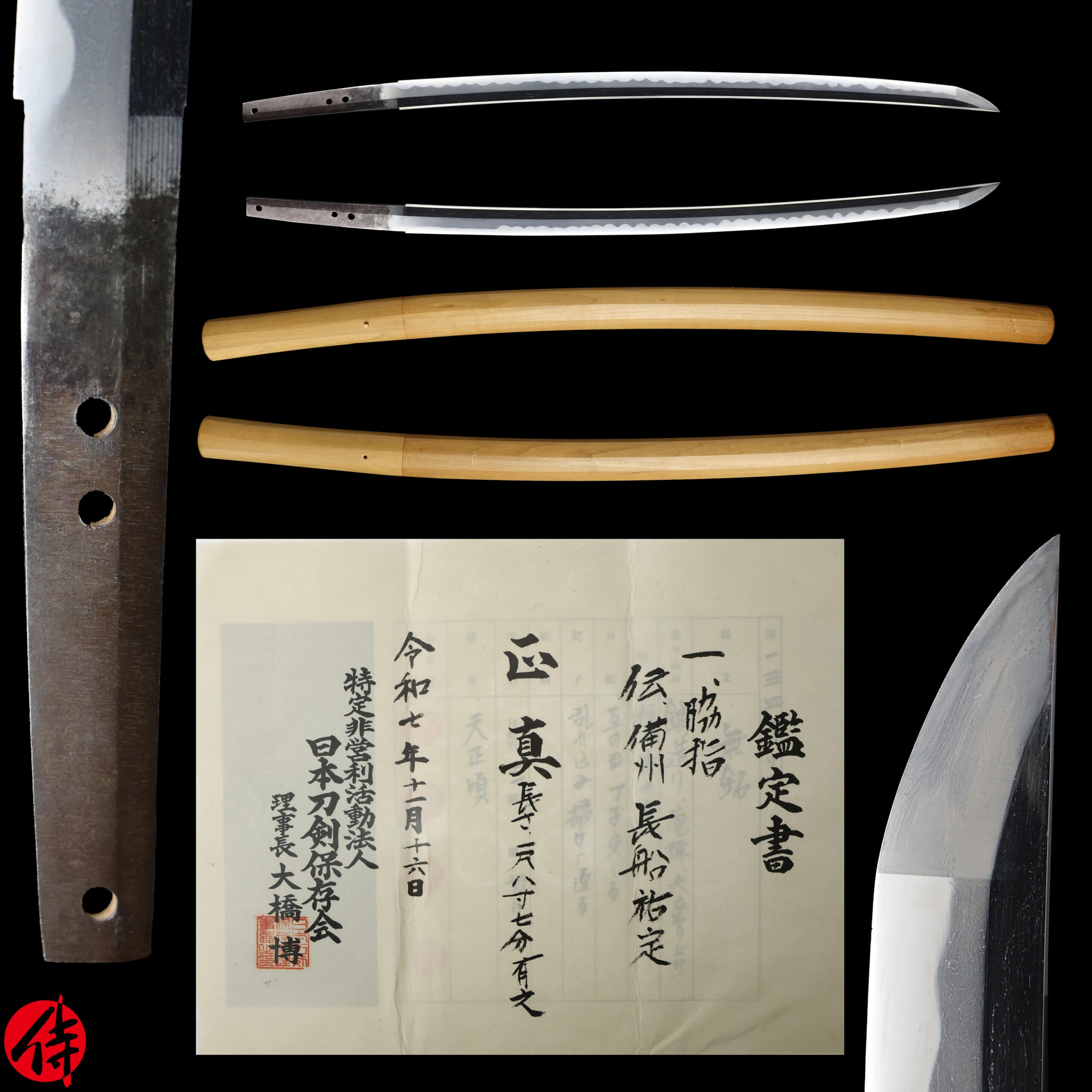
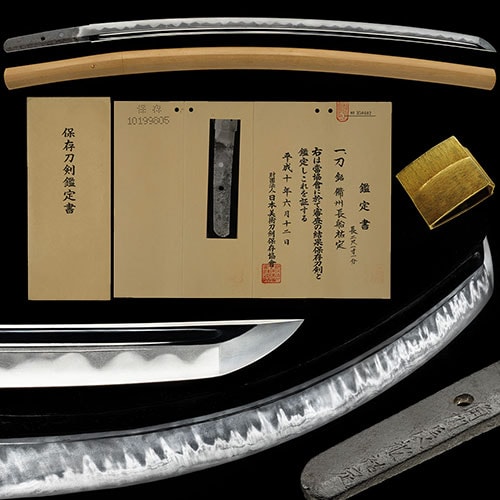
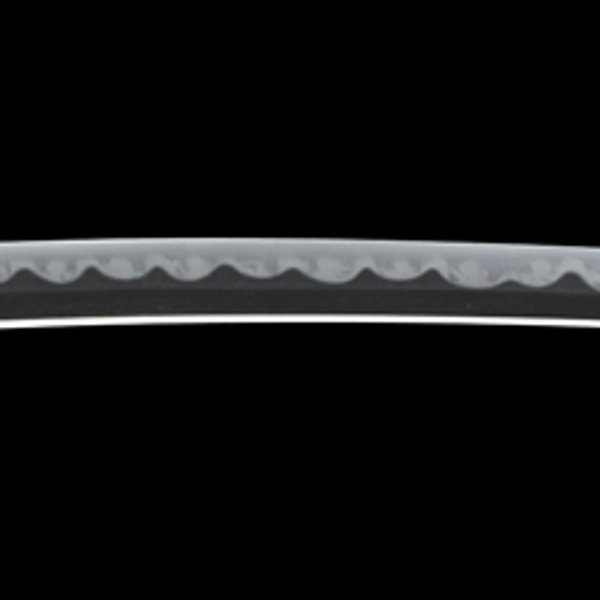
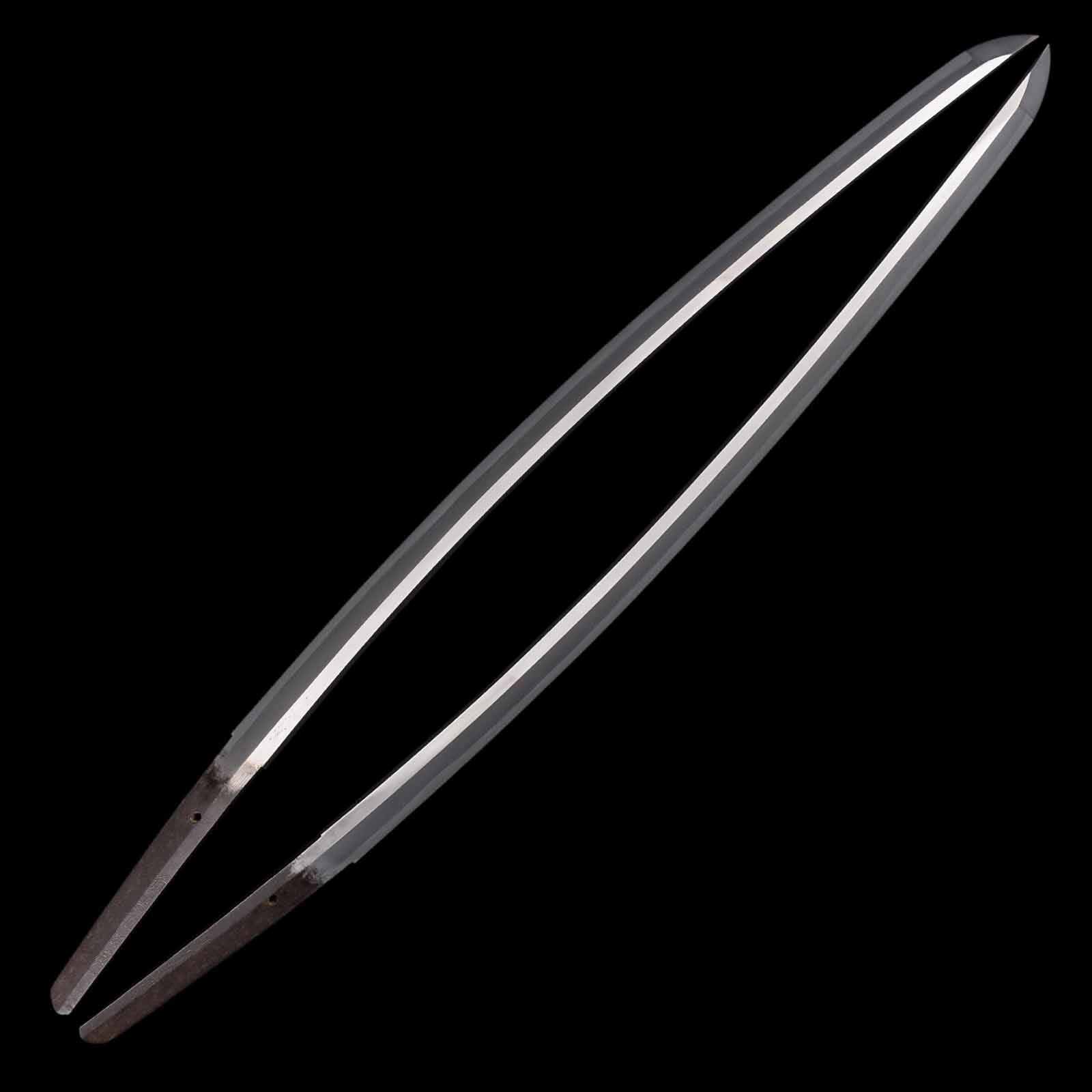
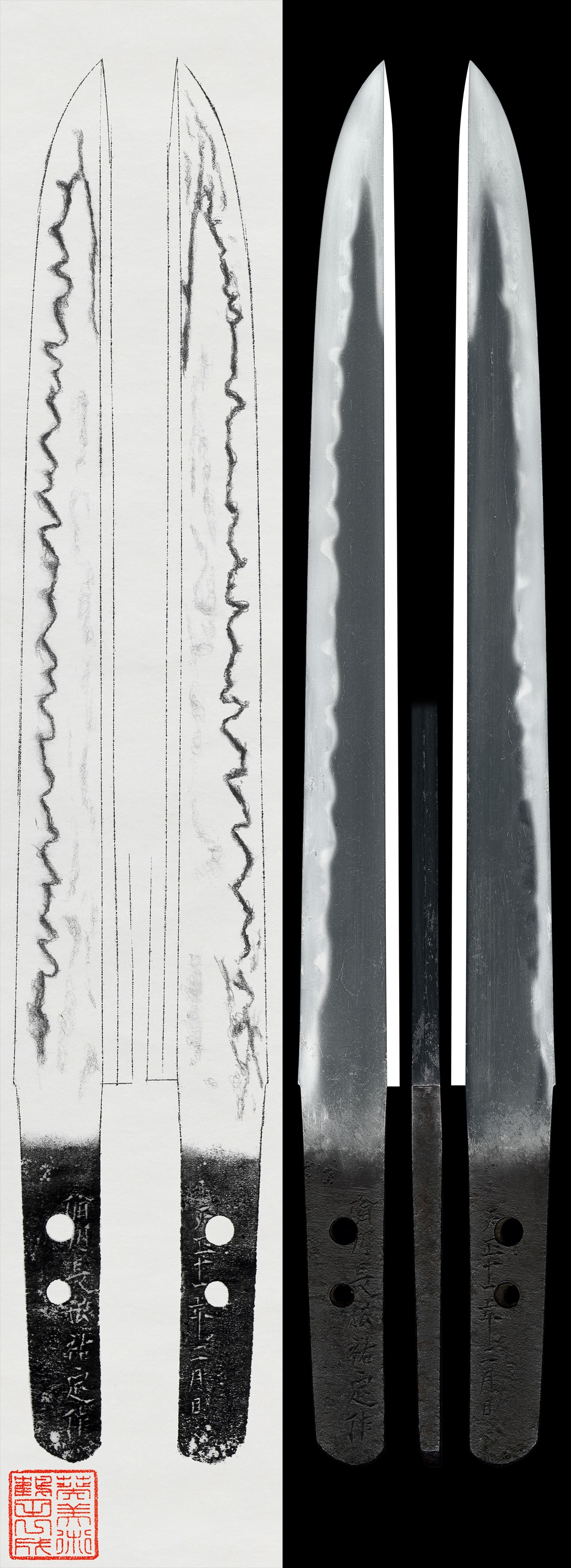
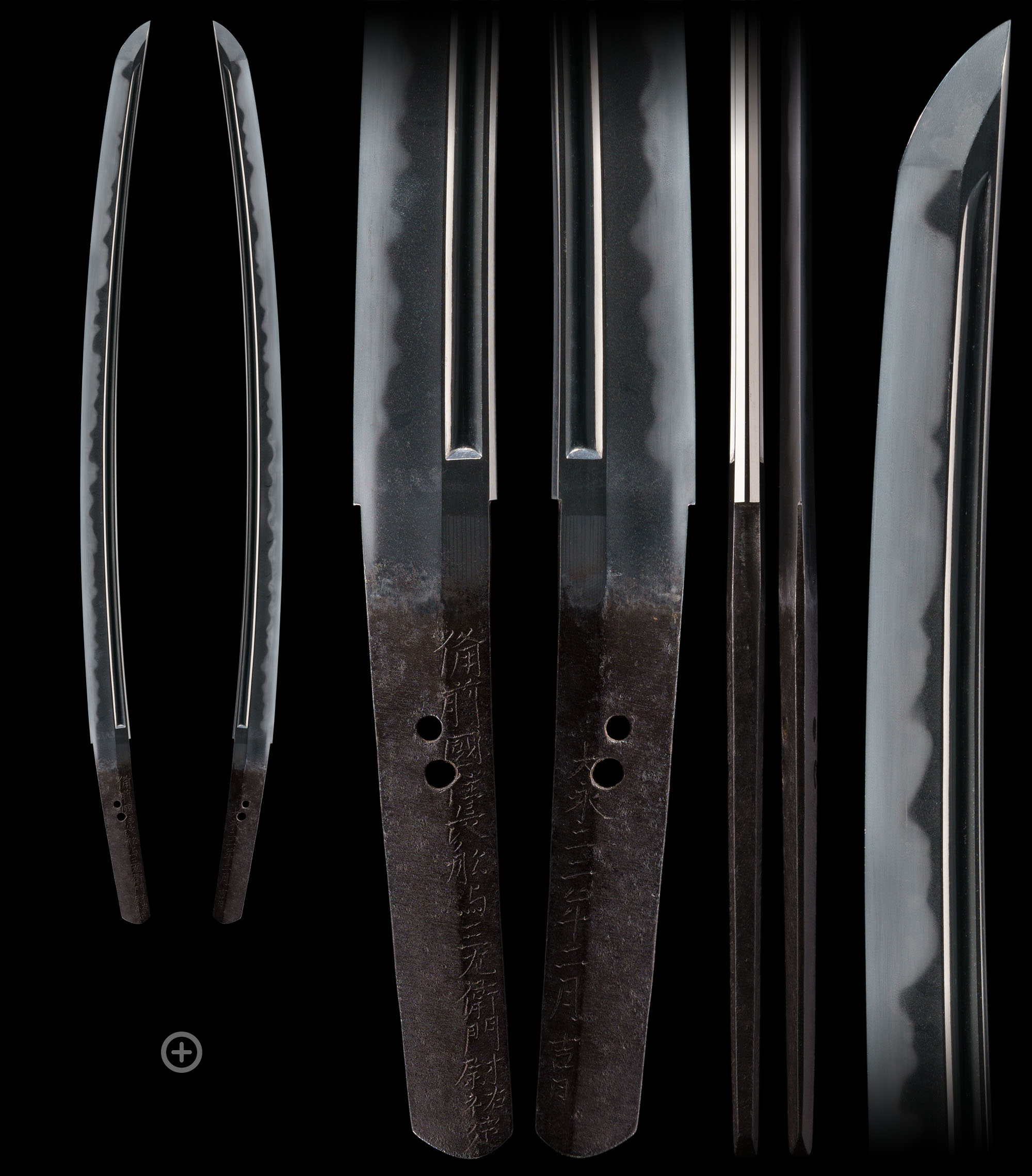
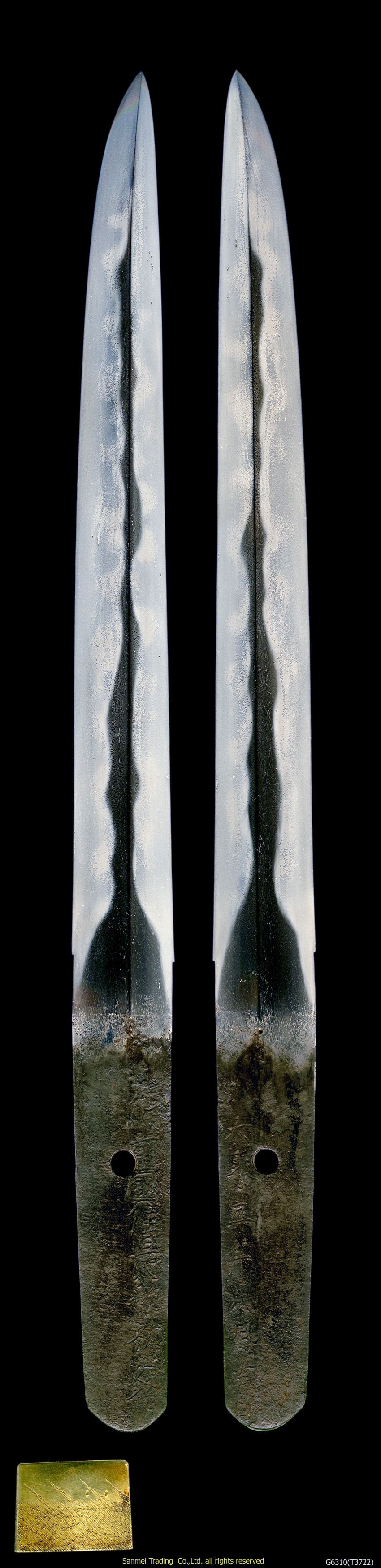
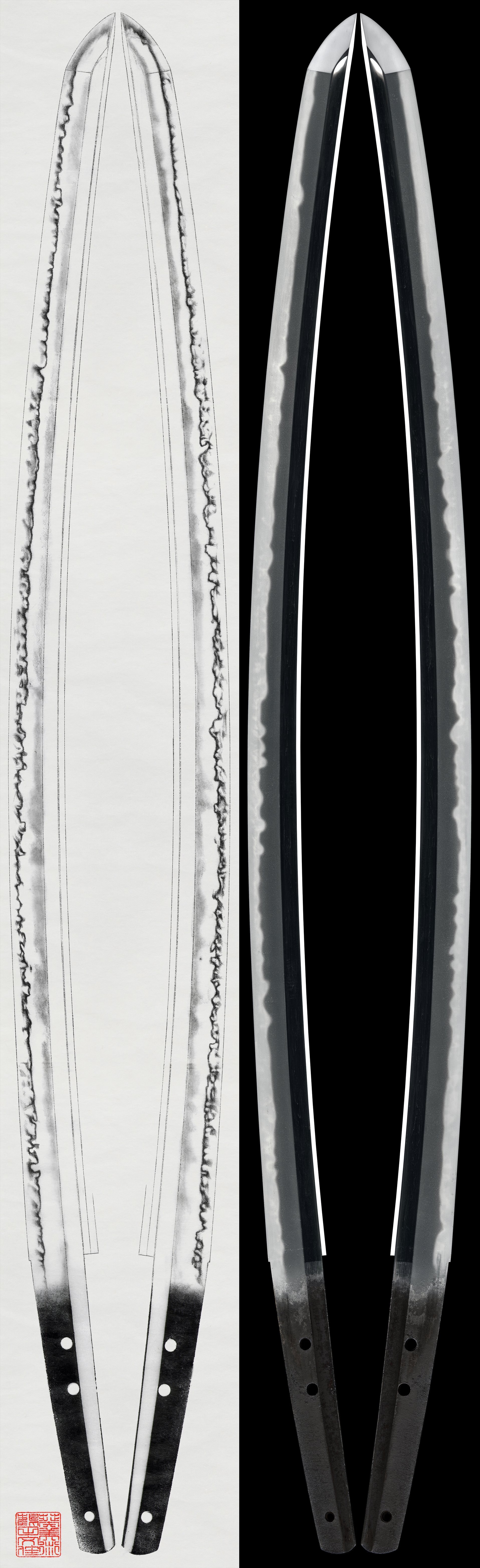
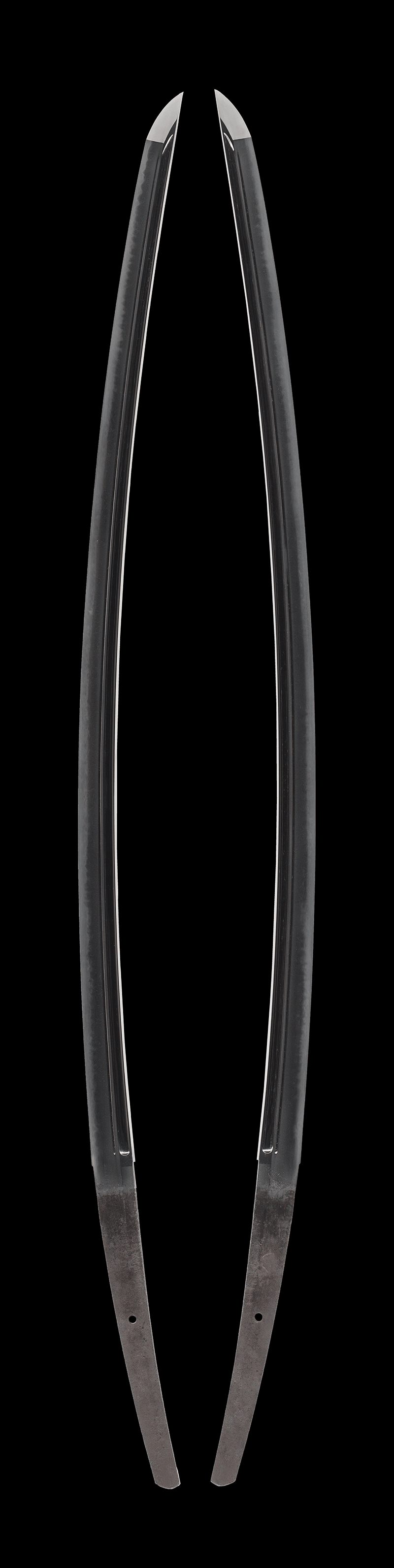
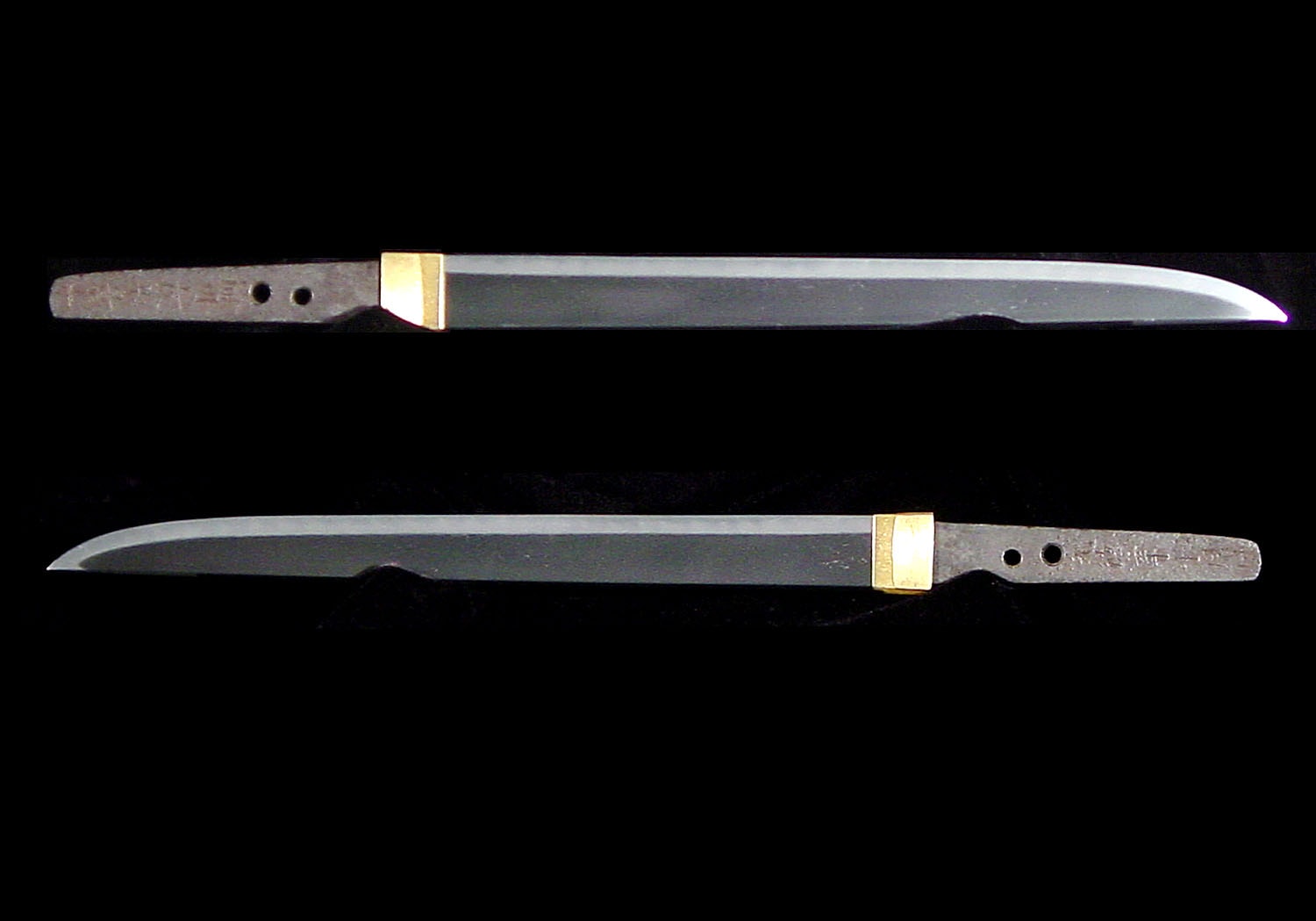
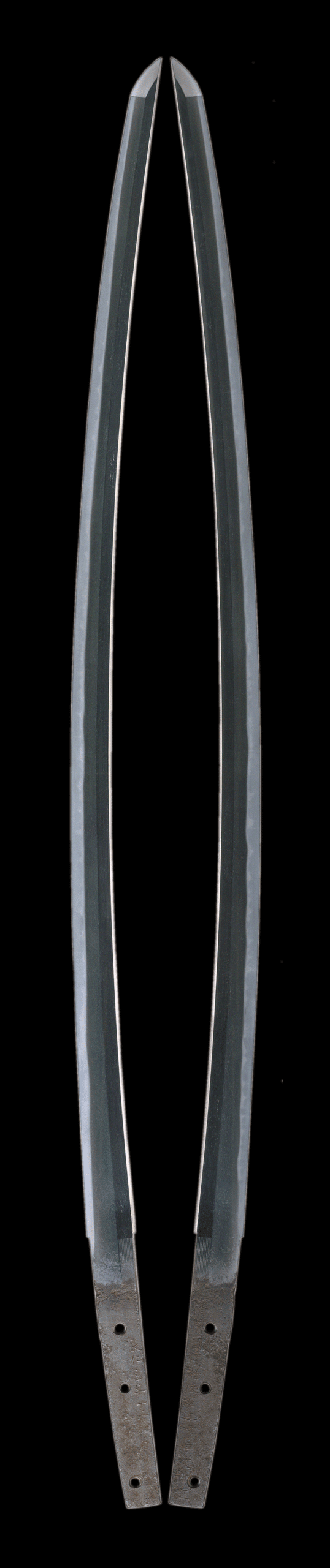
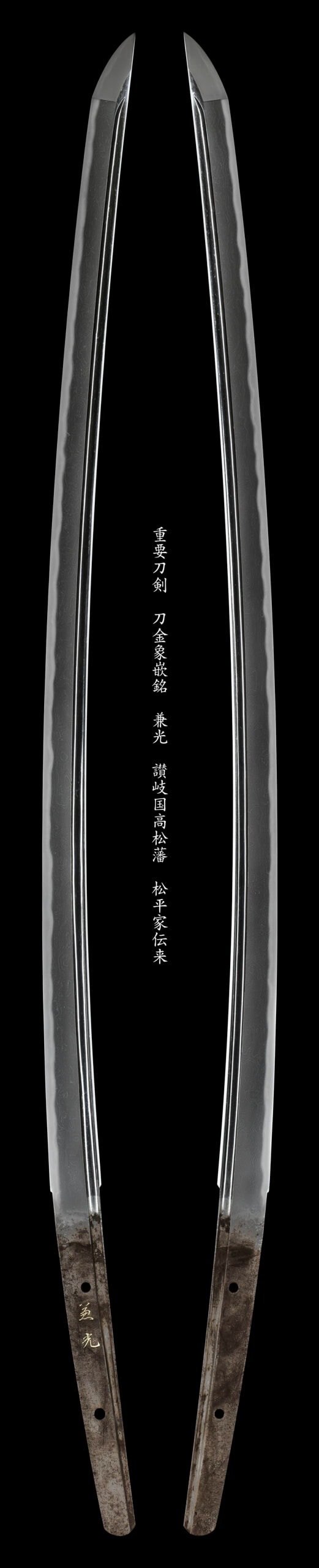
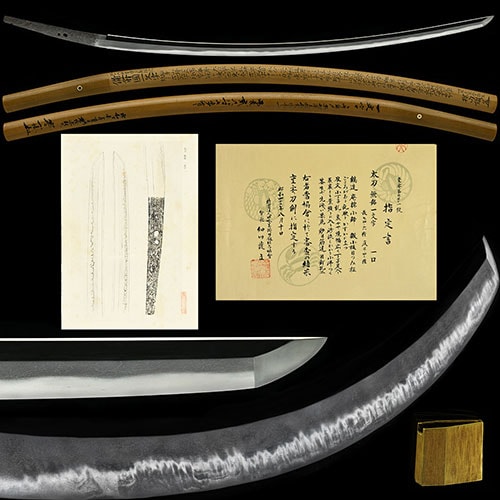
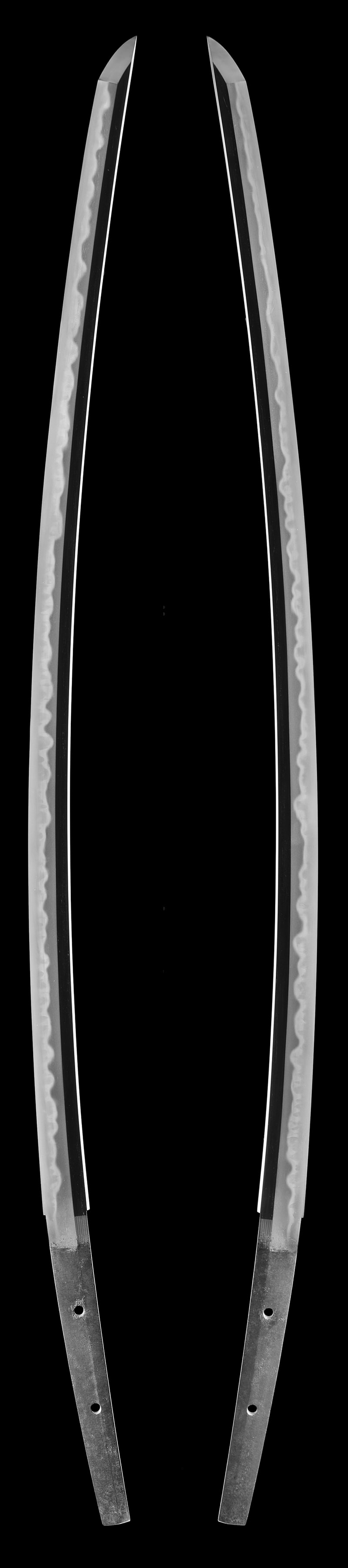
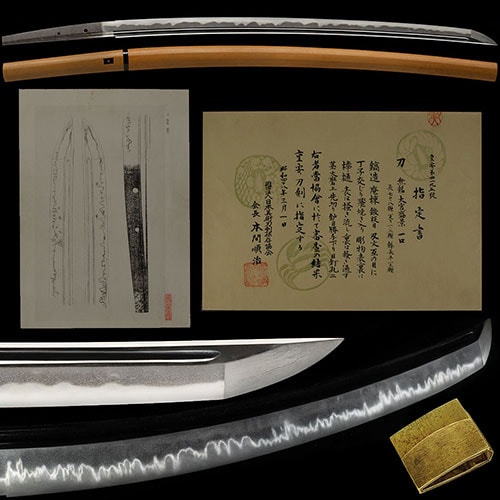
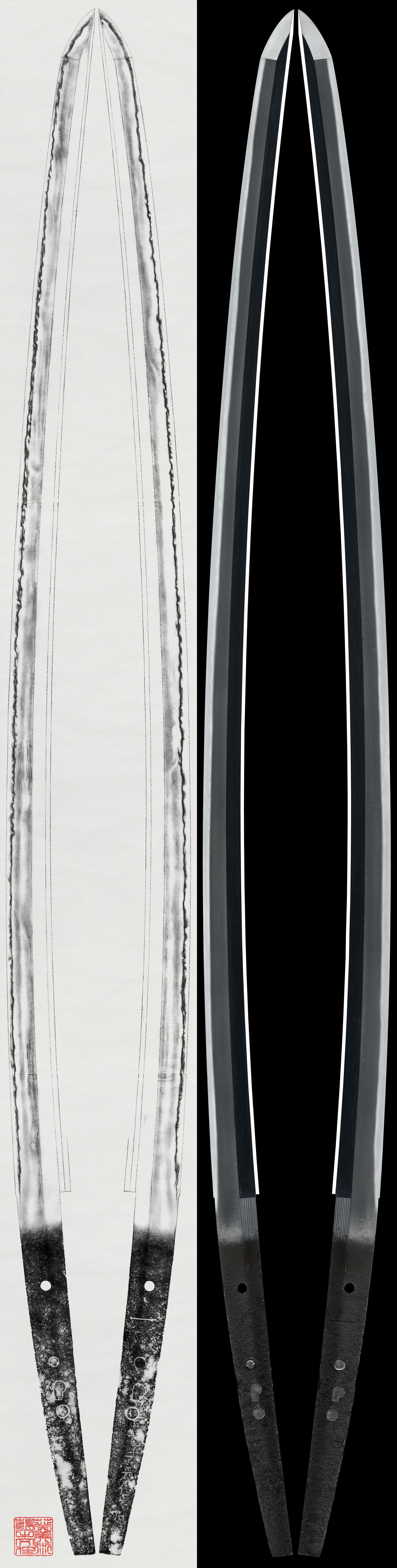
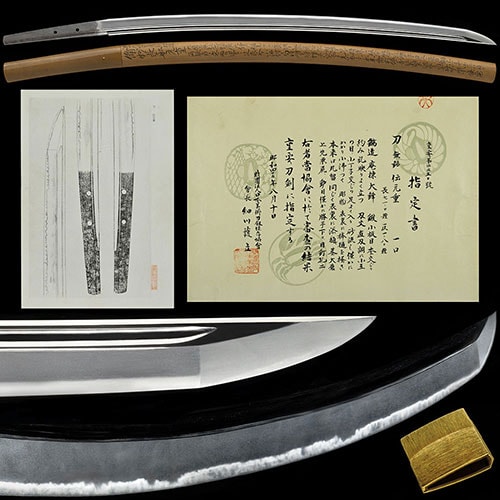
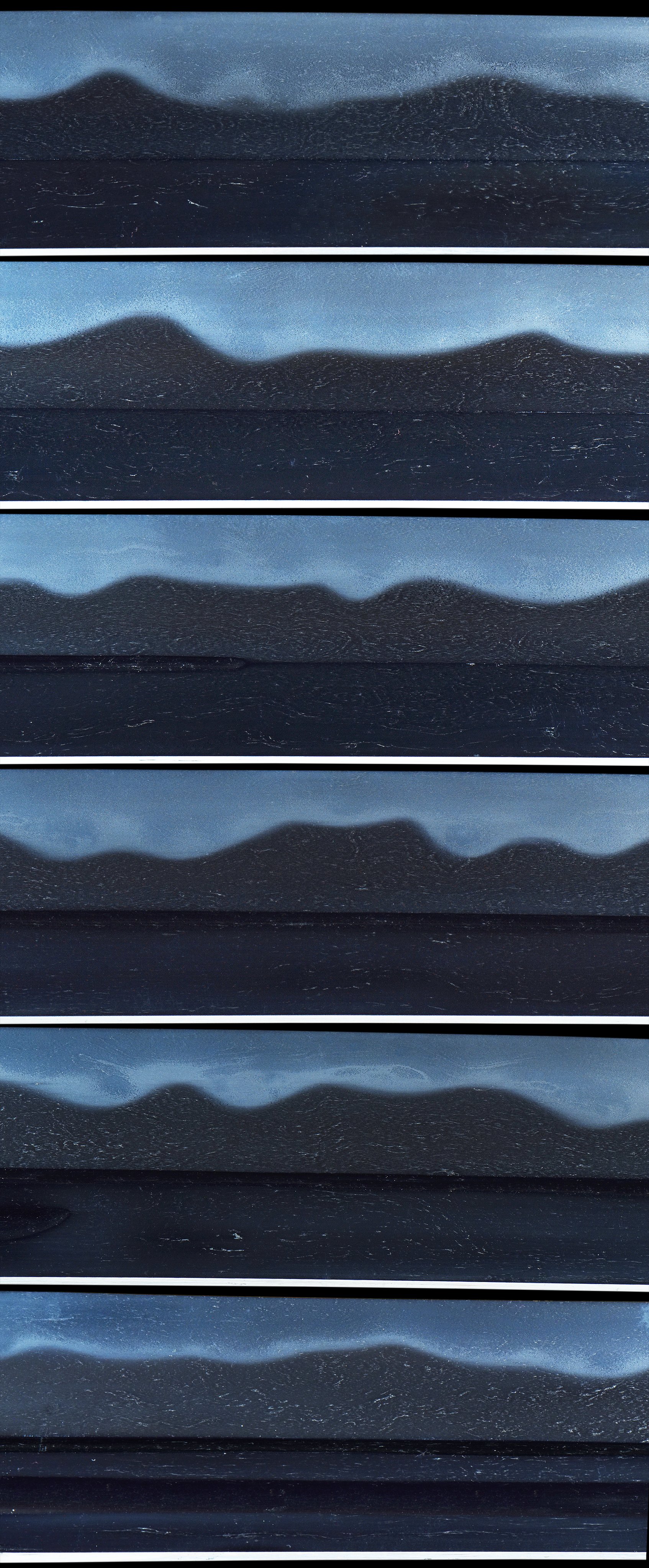
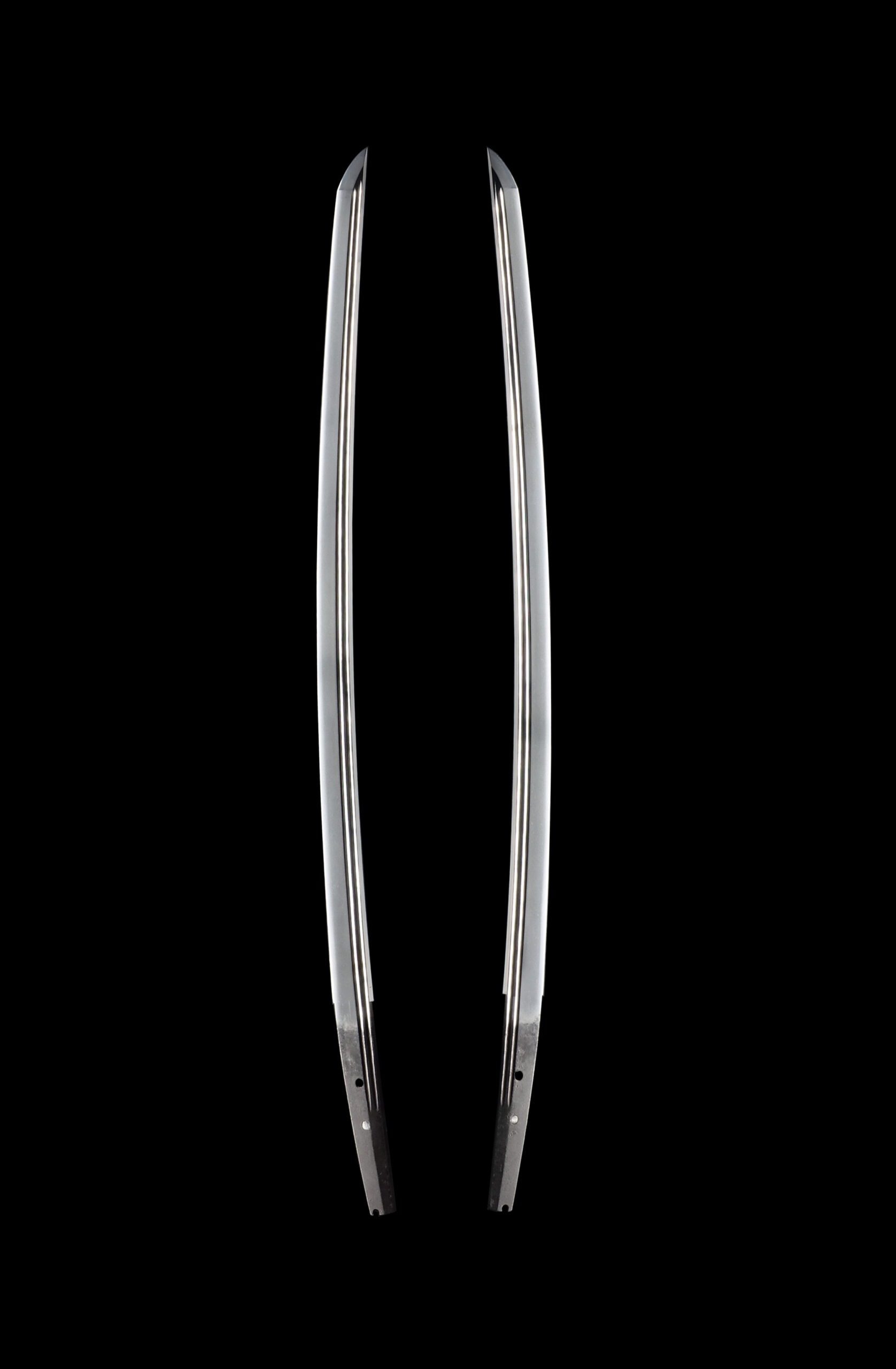
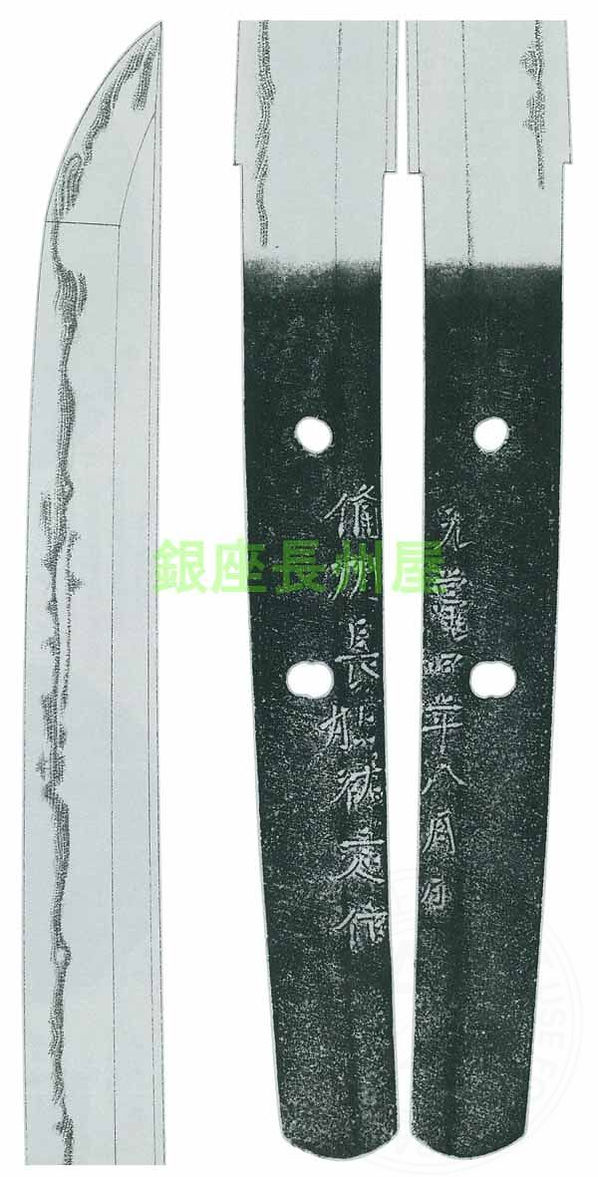
This listing features a katana by Sukesada from the Osafune school in Bizen Province, dating to the late Muromachi period (Genki 4th year, 1573). The Sukesada family was a major lineage of Bizen smiths, known for producing robust swords to meet the demands of the Sengoku period.
 NihontoWatchBETA
mei · Osafune · Muromachi
Bizen-den · Bizen
71 pieces on the market now
Sukesada (祐定) is the great name of late-Muromachi Osafune, the most prosperous of the Bizen forges that scholars group together as Sue-Bizen. The signature was carried by a body of smiths so large that the early-modern reference Hayami-dashi lists as many as twenty-one who appended a zokumyo (common name) to distinguish themselves, and the published commentary is blunt that of all the late-Osafune families the Sukesada line was the largest and most productive. Two registers of work issue from this single name. Learn more →
| Smith | Era | Designated |
|---|---|---|
| Sukesada祐定 | 1504-1551 | 72 |
| Sukesada祐定 | 1532-1583 | 18 |
| Sukesada祐定 | 1547-1592 | 8 |
| Sukesada祐定 | 1487-1521 | 5 |
| Sukesada祐定 | 1532-1573 | 3 |
We could not find an authenticity certificate on the seller’s listing. Japanese swords and fittings are normally papered by the NBTHK (or the NTHK). Without one, the attribution is the seller’s own assessment and has not been independently verified — treat it with caution and ask the dealer about certification before buying.
If, due to our fault, the item differs significantly from its proper condition, the item may be returned. Cooling-off is within one week of the item's arrival.
This listing features a katana by Sukesada from the Osafune school in Bizen Province, dating to the late Muromachi period (Genki 4th year, 1573). The Sukesada family was a major lineage of Bizen smiths, known for producing robust swords to meet the demands of the Sengoku period.
NihontoWatchBETAmei · Osafune · Muromachi
Bizen-den · Bizen
71 pieces on the market now
Sukesada (祐定) is the great name of late-Muromachi Osafune, the most prosperous of the Bizen forges that scholars group together as Sue-Bizen. The signature was carried by a body of smiths so large that the early-modern reference Hayami-dashi lists as many as twenty-one who appended a zokumyo (common name) to distinguish themselves, and the published commentary is blunt that of all the late-Osafune families the Sukesada line was the largest and most productive. Two registers of work issue from this single name. Learn more →
| Smith | Era | Designated |
|---|---|---|
| Sukesada祐定 | 1504-1551 | 72 |
| Sukesada祐定 | 1532-1583 | 18 |
| Sukesada祐定 | 1547-1592 | 8 |
| Sukesada祐定 | 1487-1521 | 5 |
| Sukesada祐定 | 1532-1573 | 3 |
We could not find an authenticity certificate on the seller’s listing. Japanese swords and fittings are normally papered by the NBTHK (or the NTHK). Without one, the attribution is the seller’s own assessment and has not been independently verified — treat it with caution and ask the dealer about certification before buying.
If, due to our fault, the item differs significantly from its proper condition, the item may be returned. Cooling-off is within one week of the item's arrival.