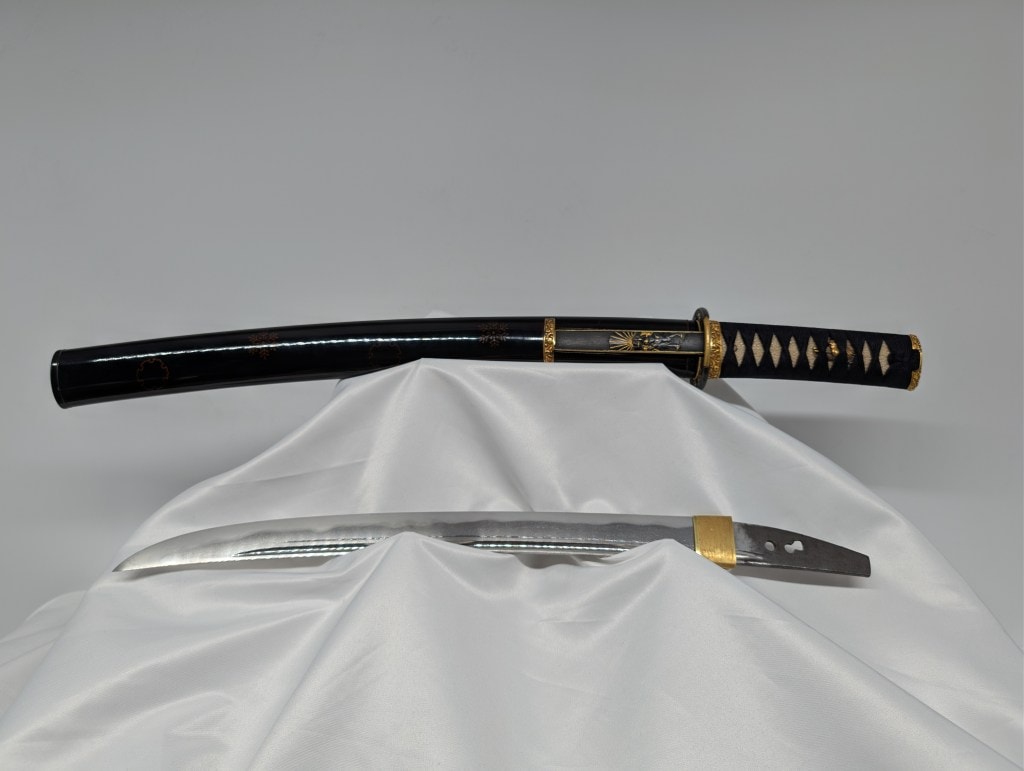
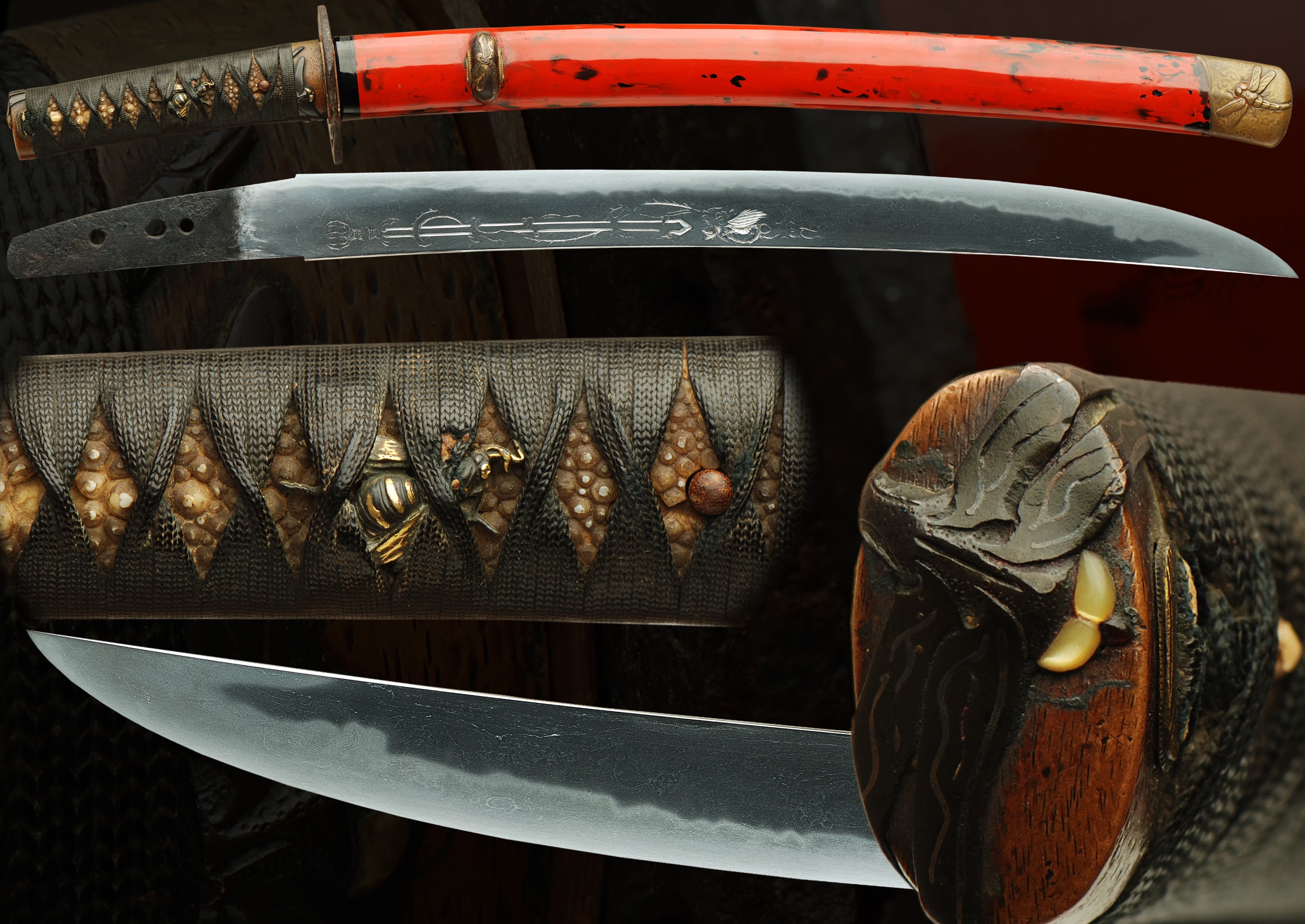
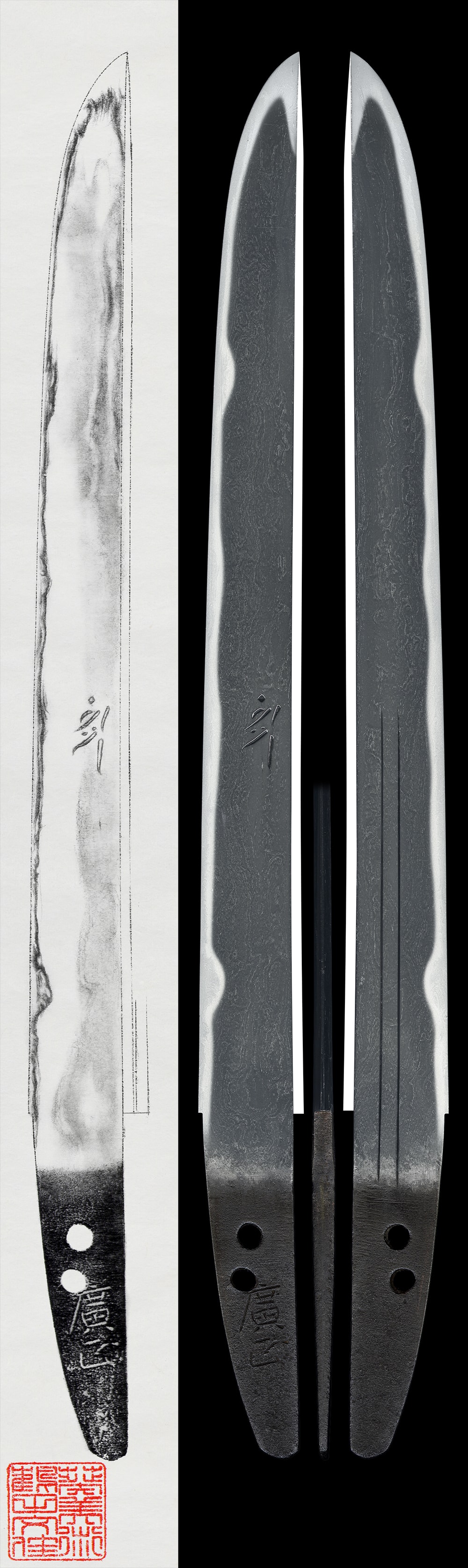
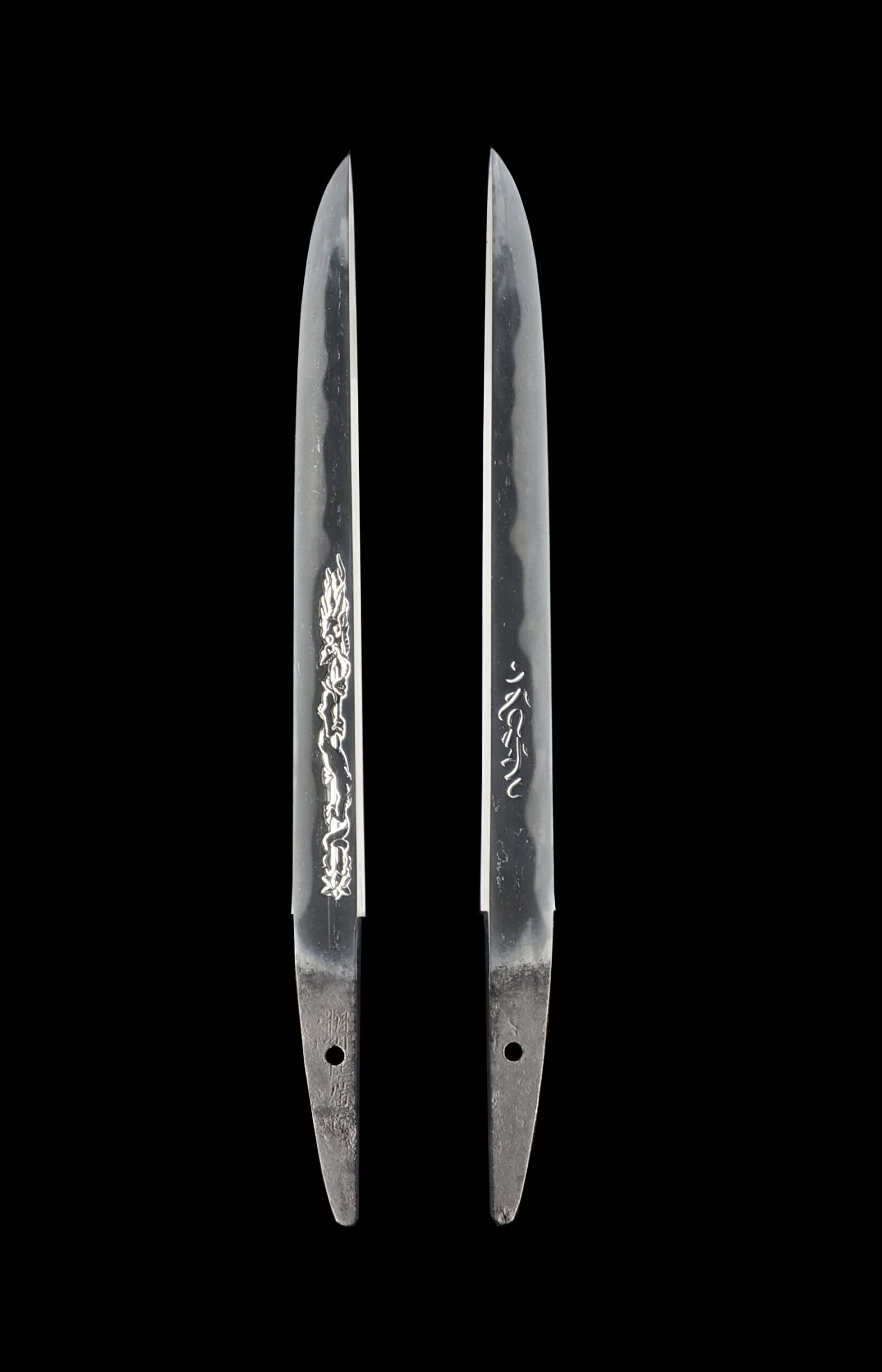
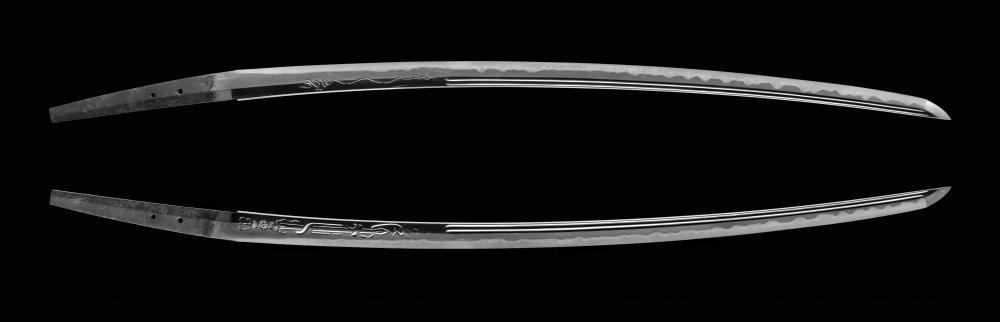
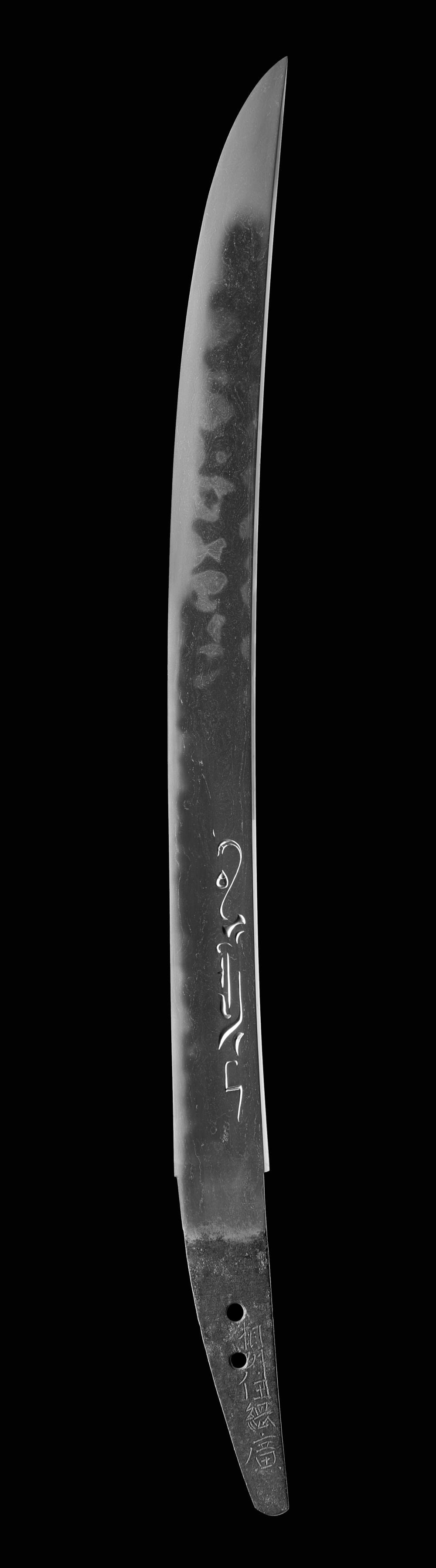
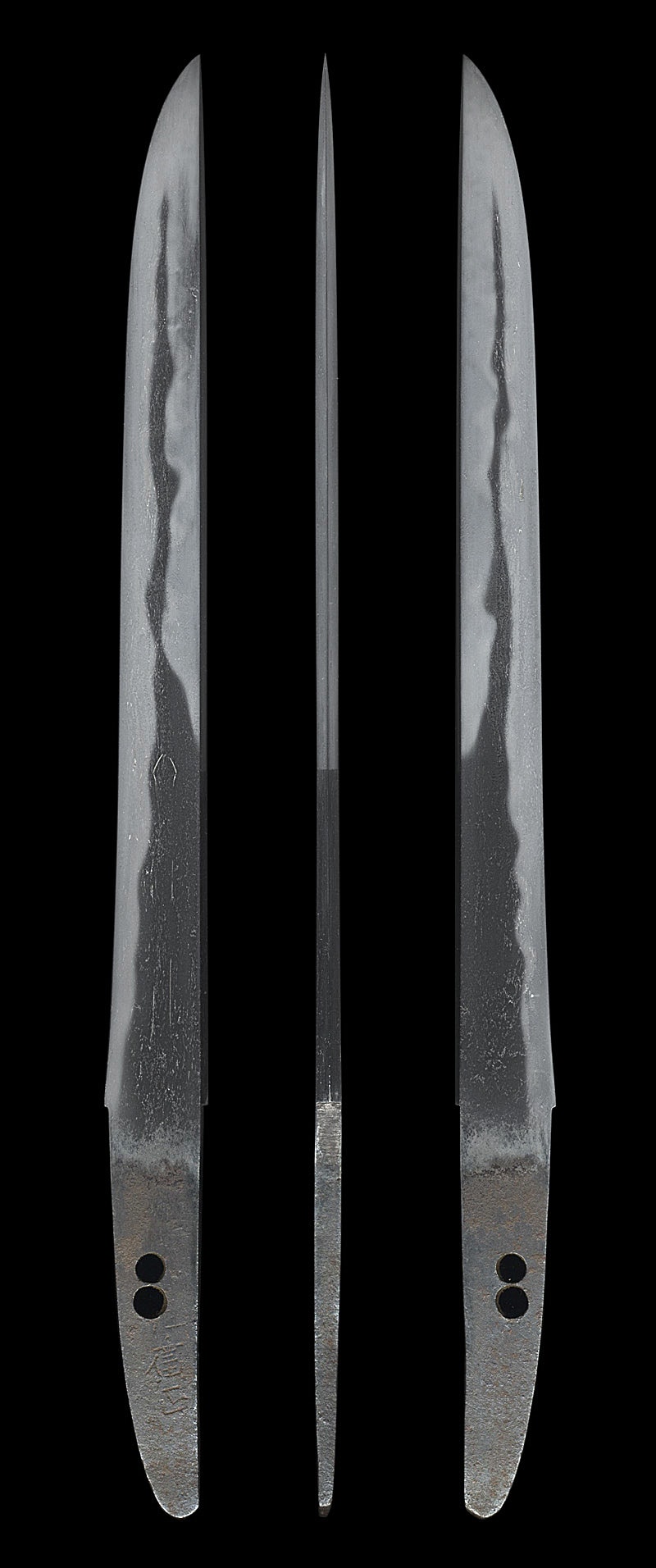
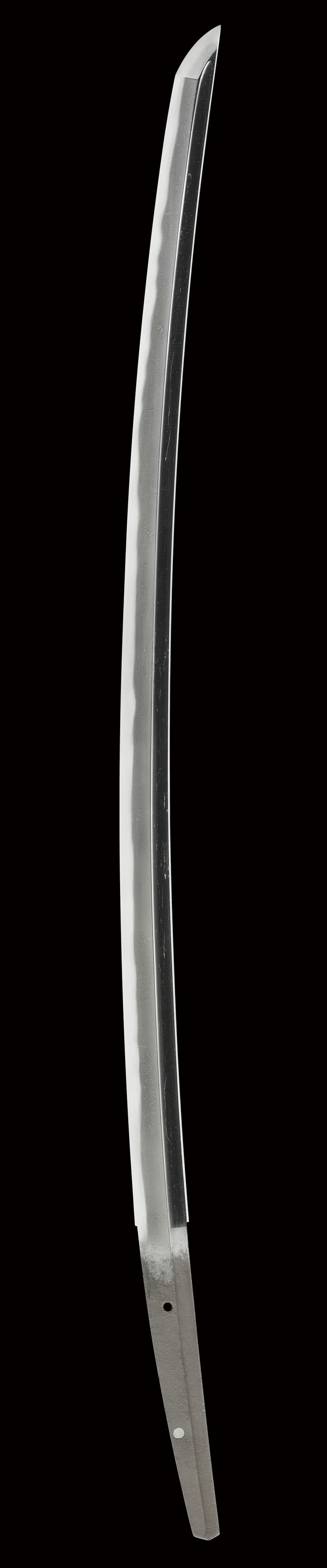
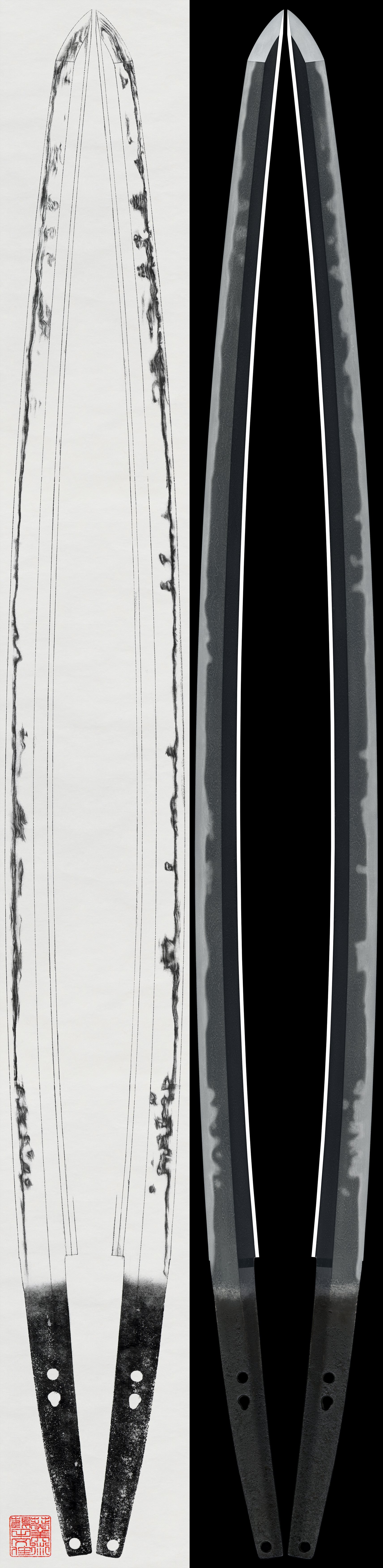
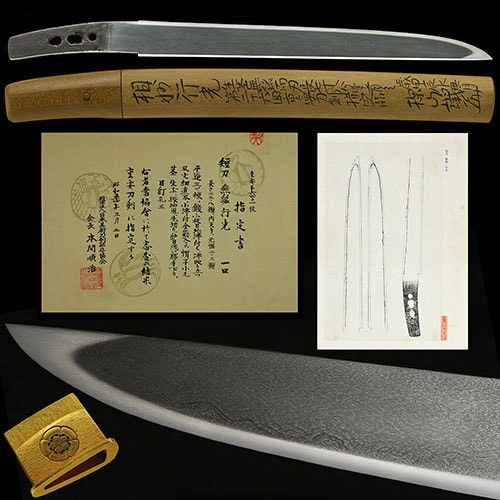
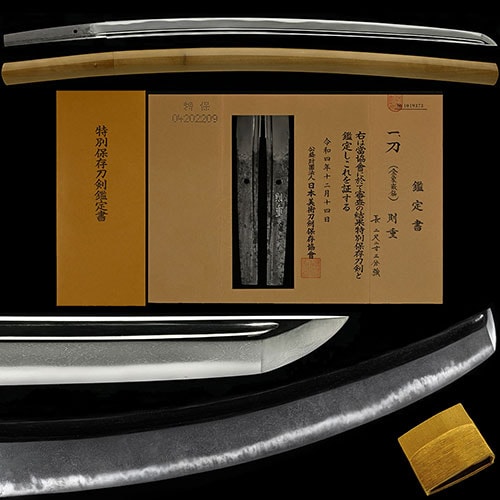
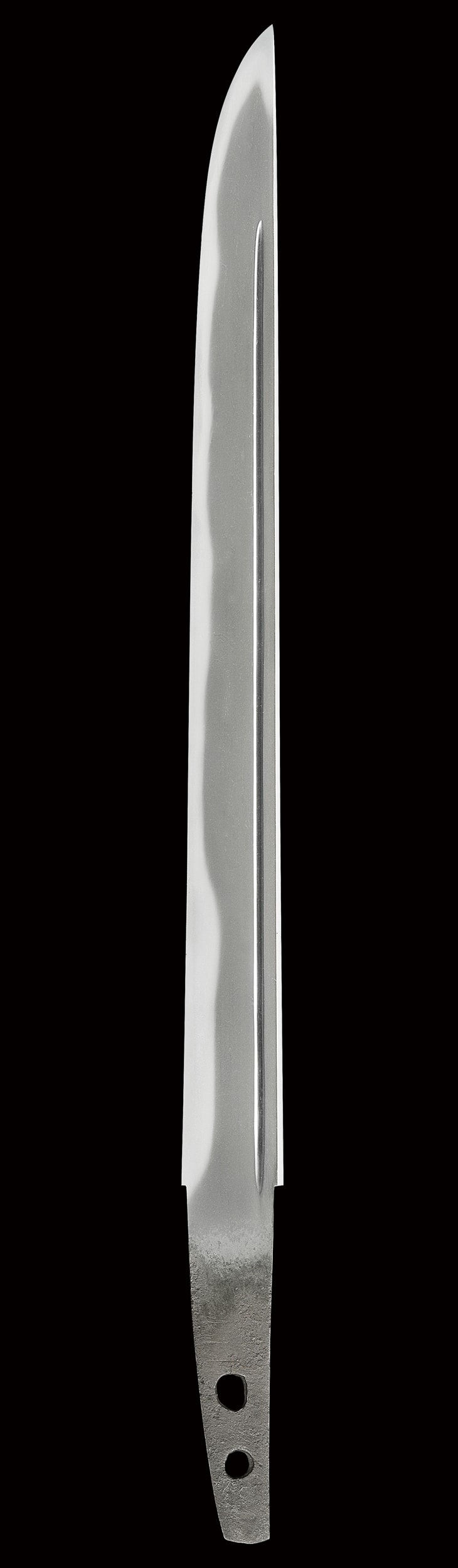
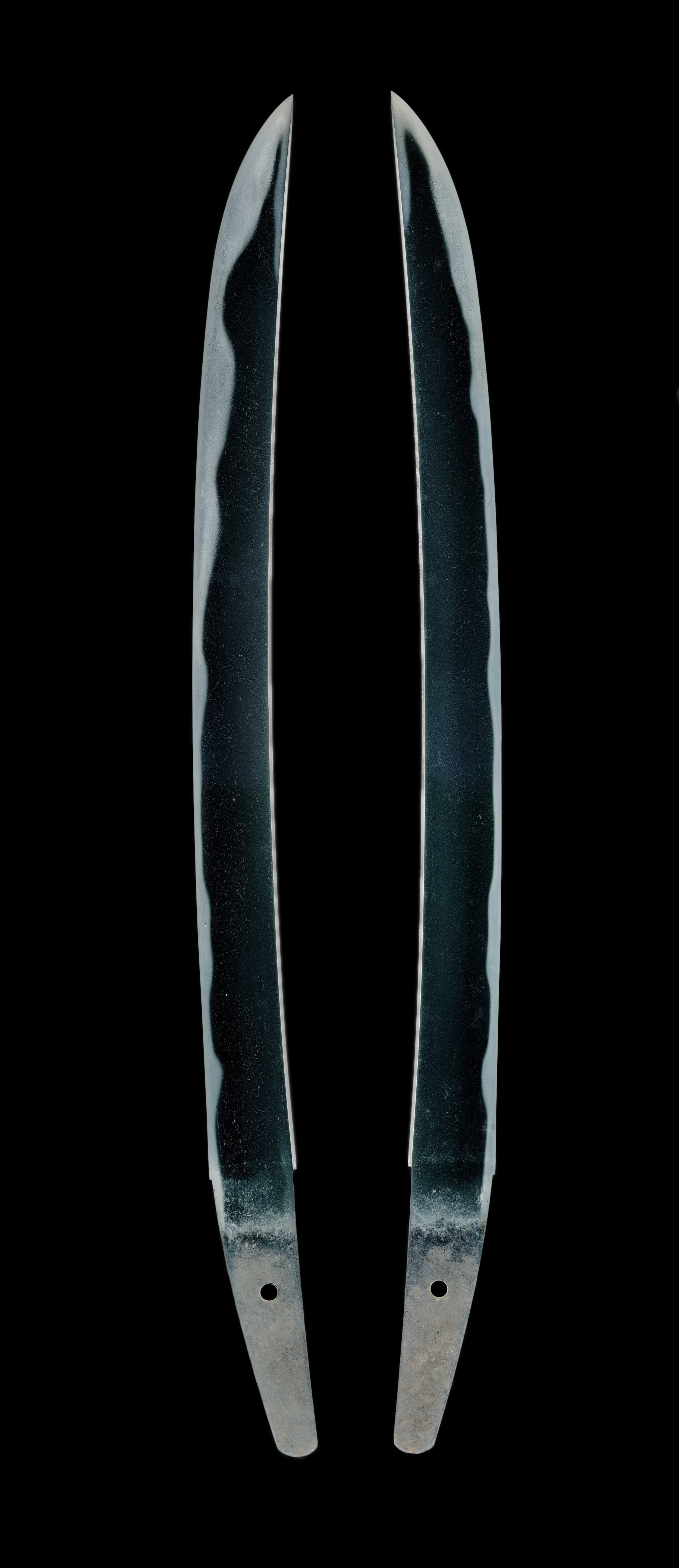
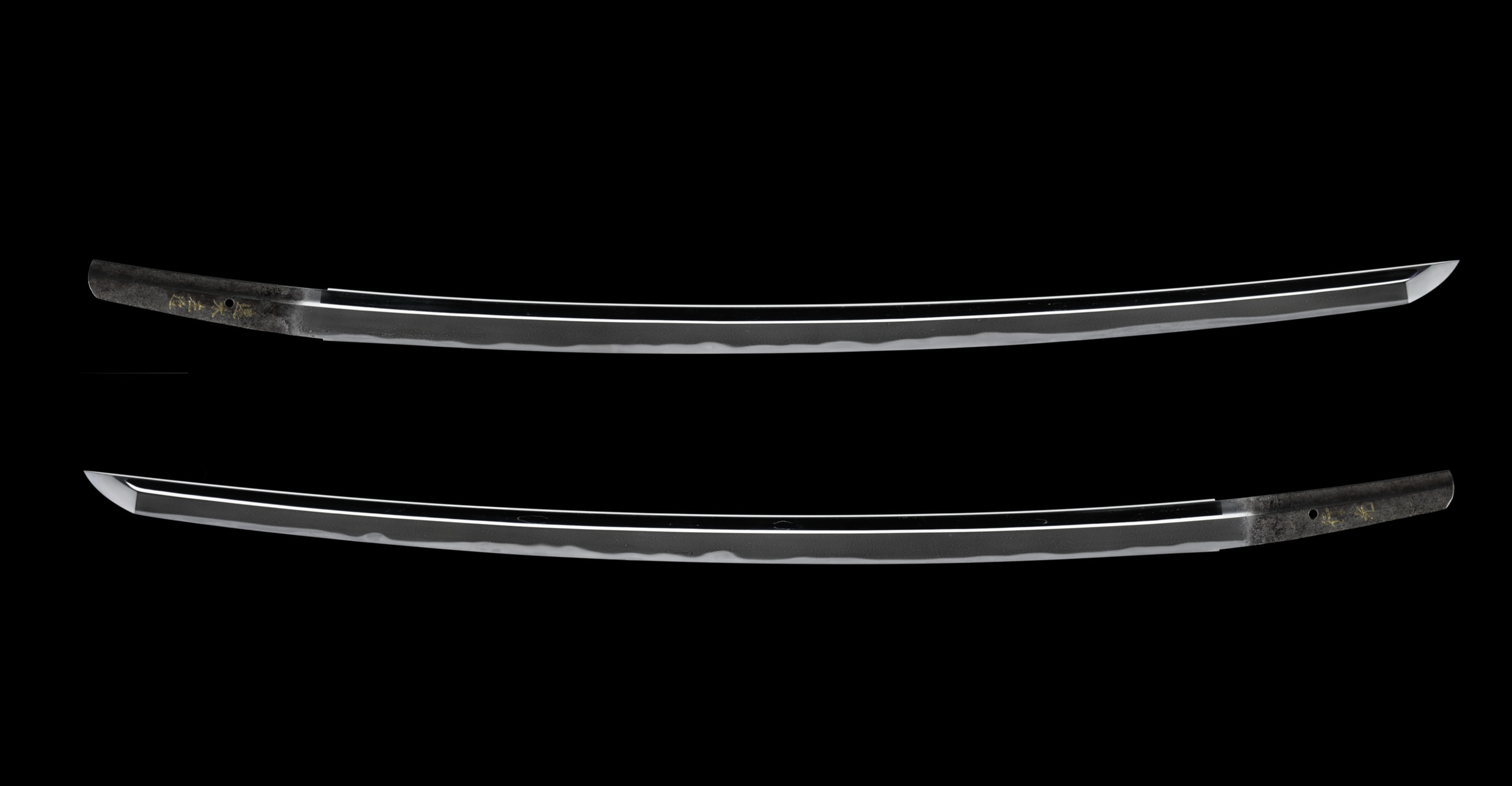
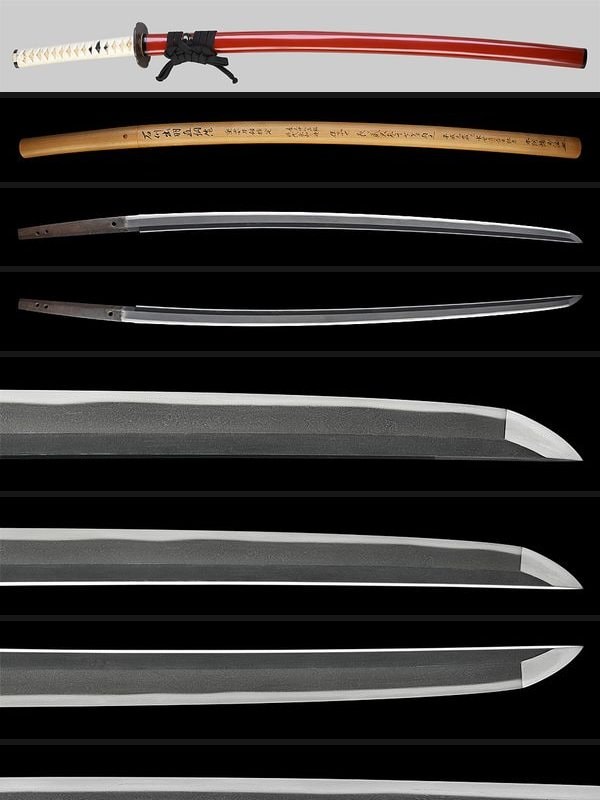
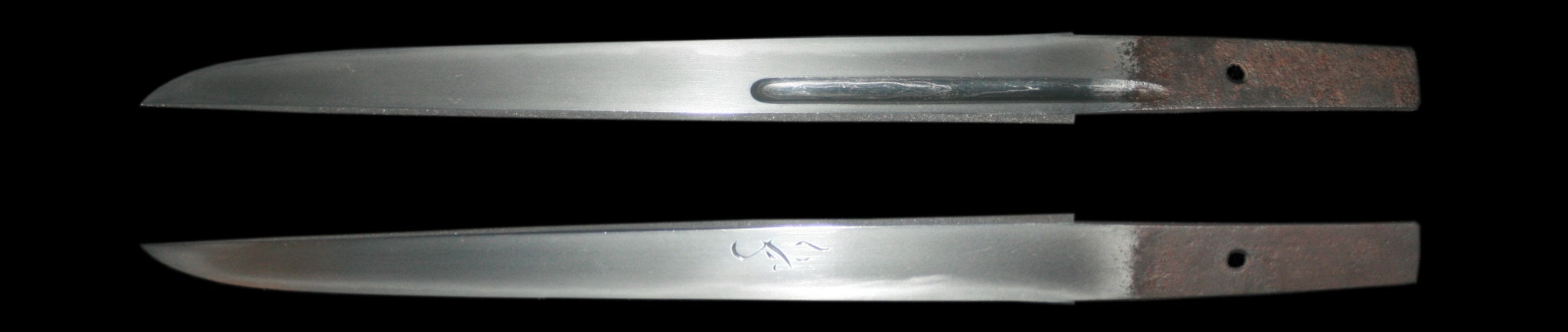
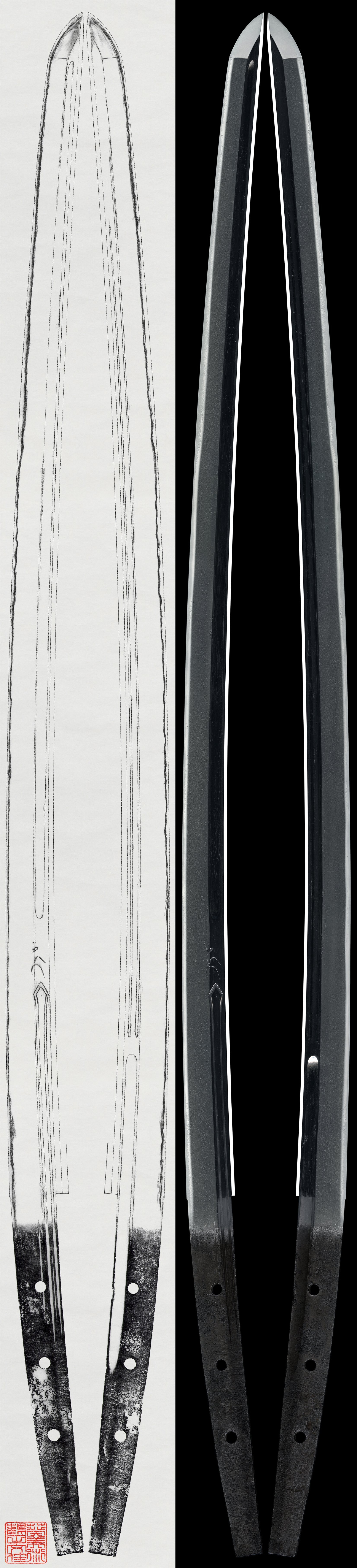
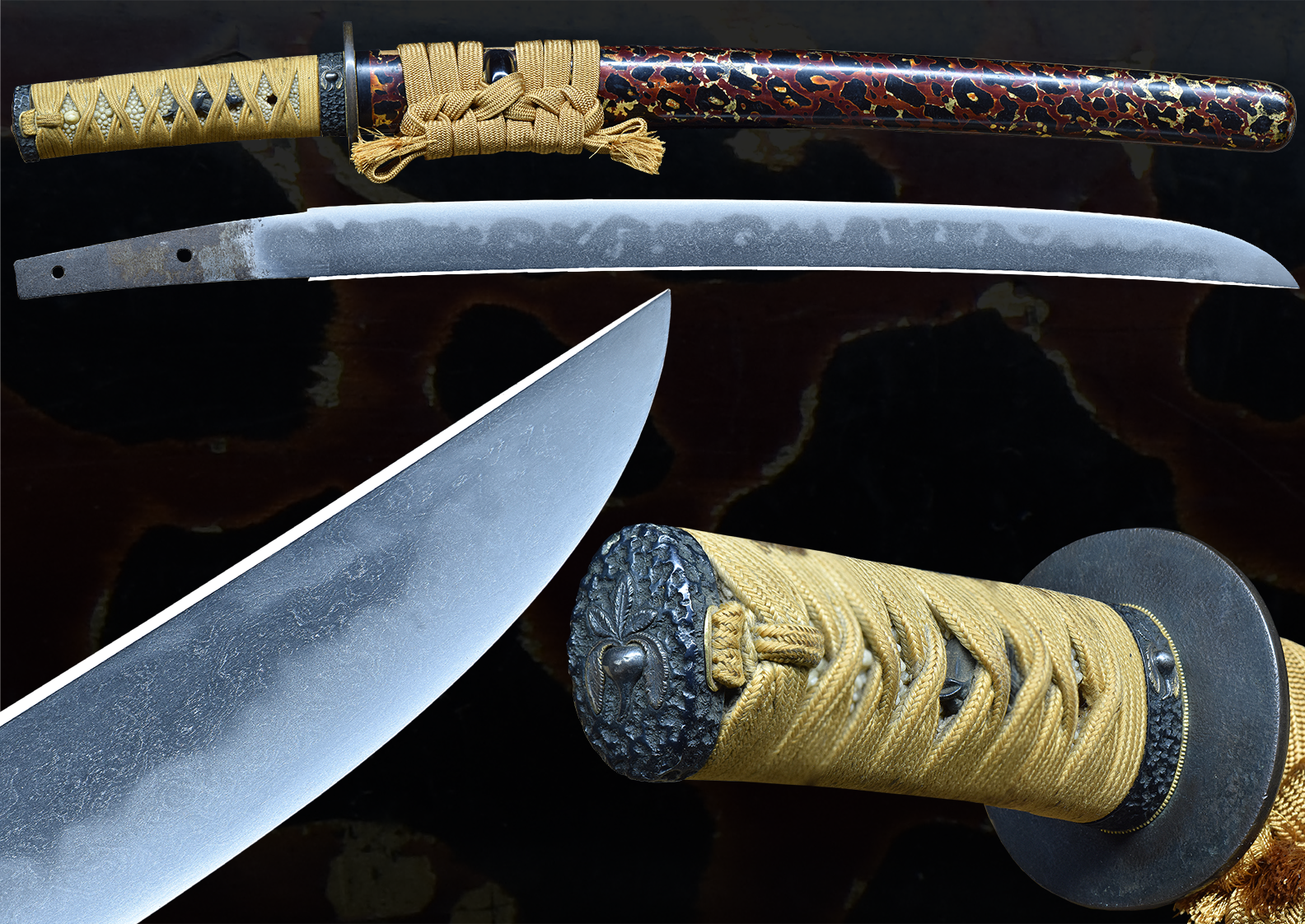
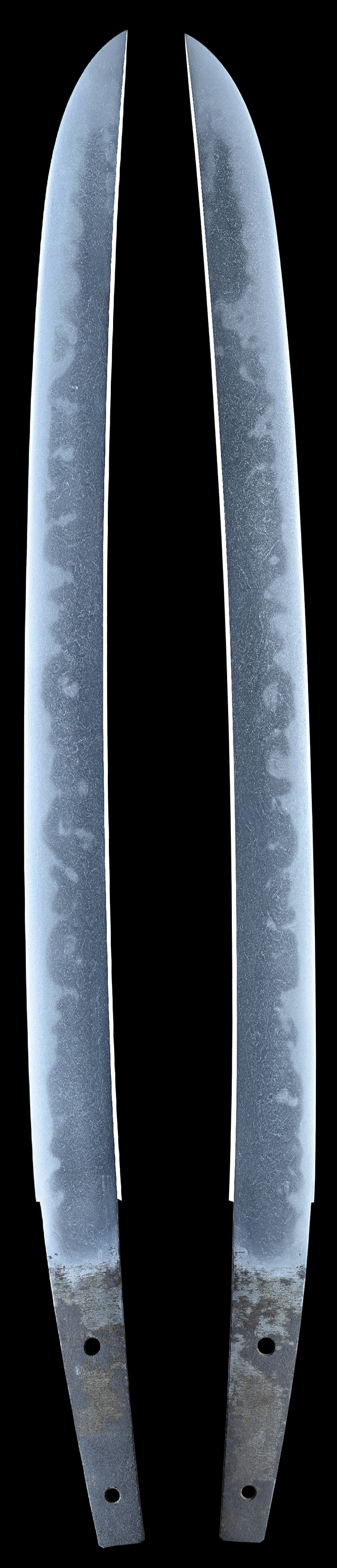
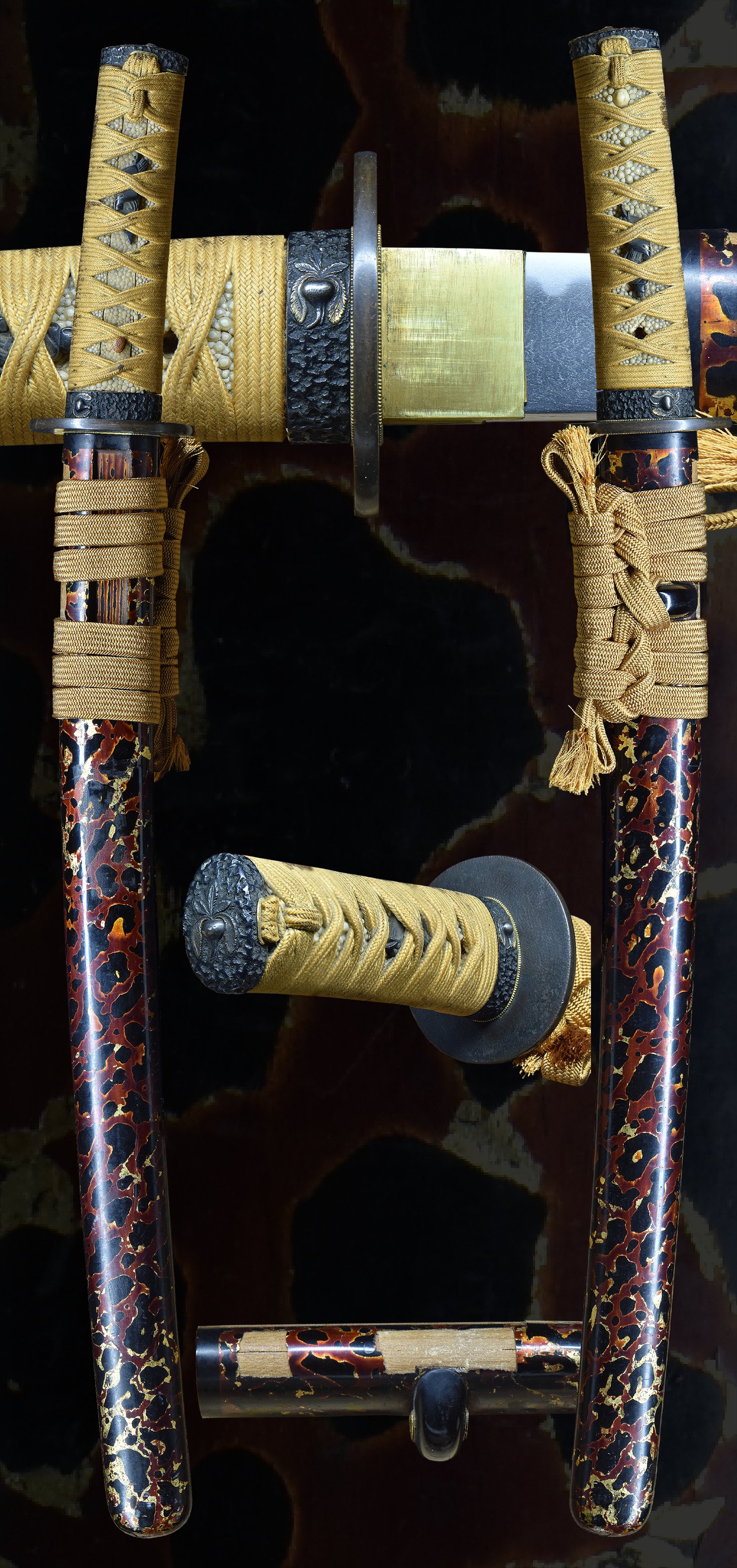
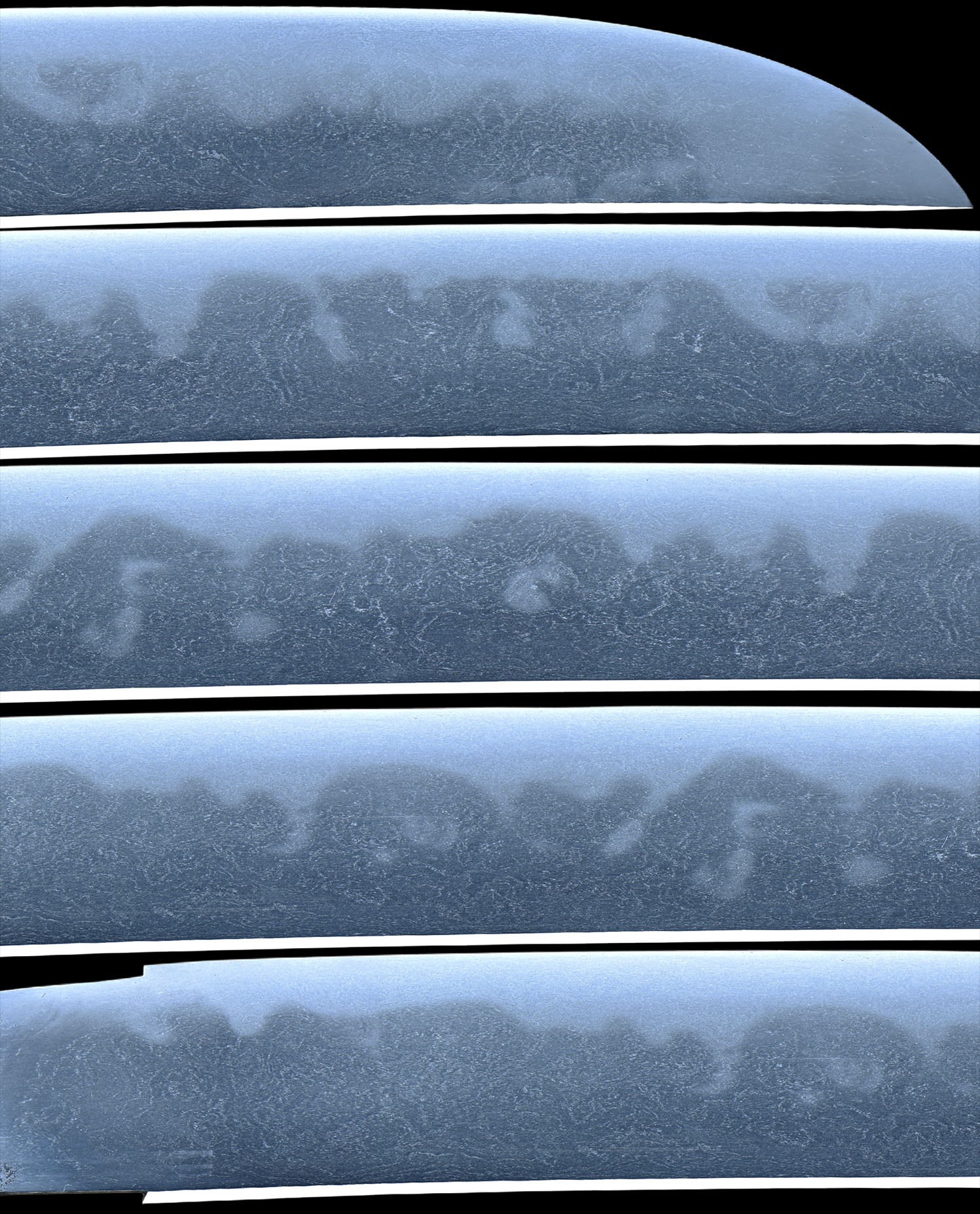
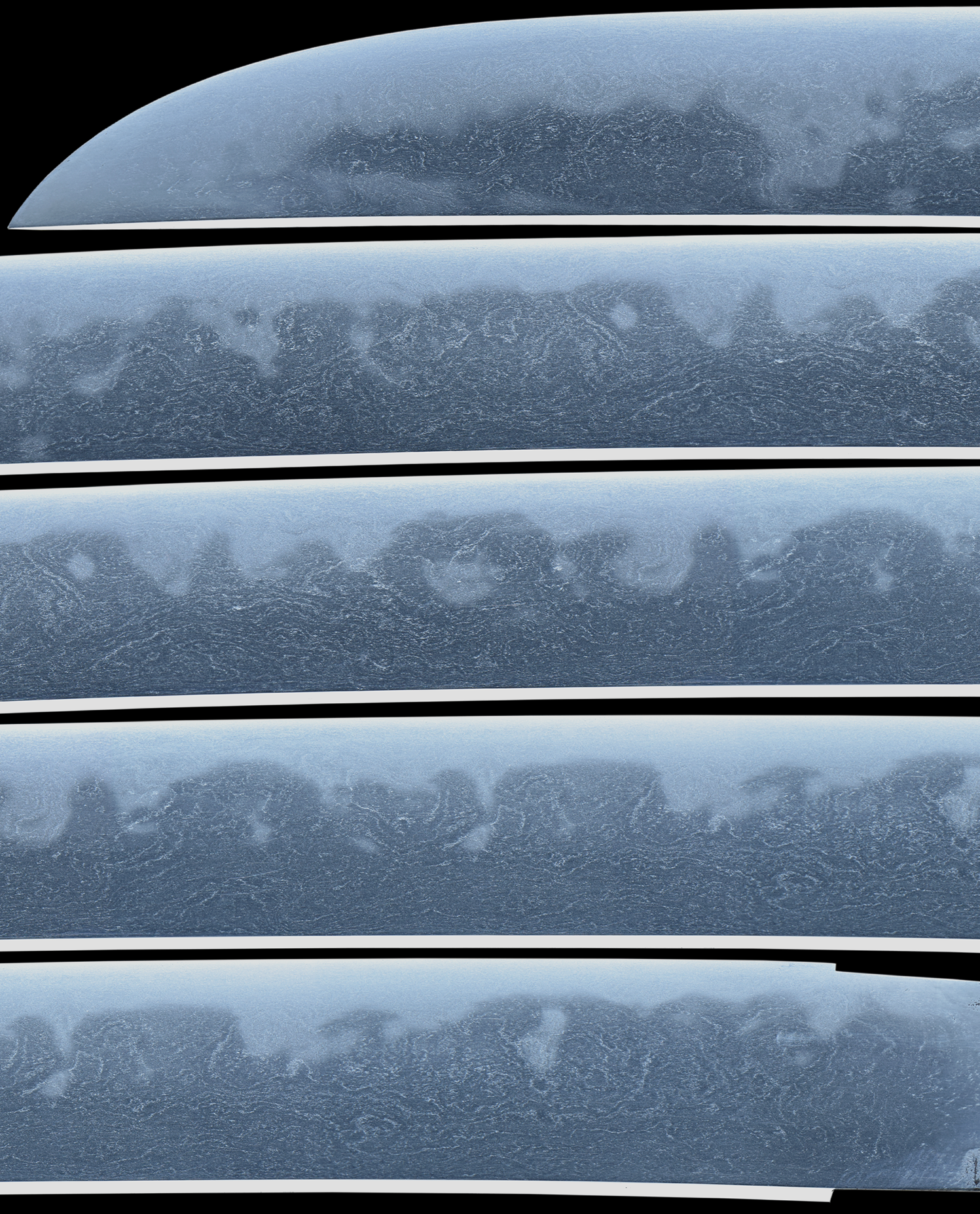
Wakizashi by Yasuharu of the Sōshū school, active during the Tenbun era (1532–1555) in Sagami Province. The blade is mumei suriage with a pointed chōji-ba hamon in koshi no hiraita style. It comes with a koshirae featuring gold tsuka ito, shakudo fuchi-kashira with daikon, and a multicolored saya with some damage.
 NihontoWatchBETA
suriage · Soshu · Koto · nagasa 41.2cm · sori 0.6cm
Soshu-den · Sagami
18 pieces on the market now
Within the province of Sagami, where Masamune and his successors had set the Soshu-den on its course, a late body of smiths carried that workmanship forward through the Muromachi period after the classic Nanbokucho masters had passed. These are the Sue-Soshu (末相州), the late Sagami line that took up the manner of Hiromitsu and Akihiro and worked it into the sixteenth century under the patronage of the Later Hojo of Odawara. Learn more →
| Smith | Era | Designated |
|---|---|---|
| Fusamune總宗 | 1504-1521 | 5 |
| Tsunahiro綱廣 | 1532-1555 | 12 |
| Hiromasa廣正 | 1444-1456 | 4 |
| Kiyohira清平 | 1673-1681 | 4 |
| Tsunaie綱家 | 1532-1555 | 3 |
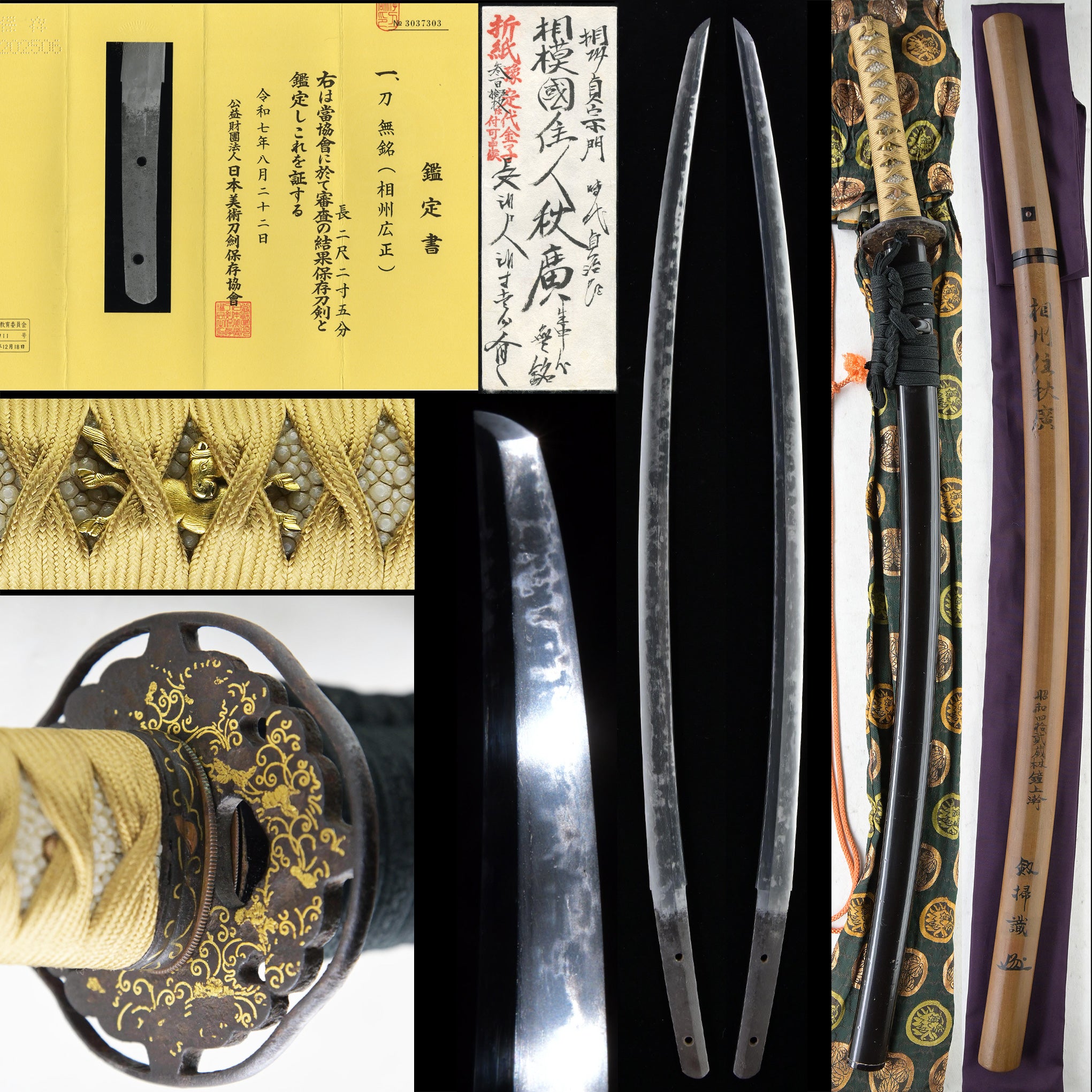
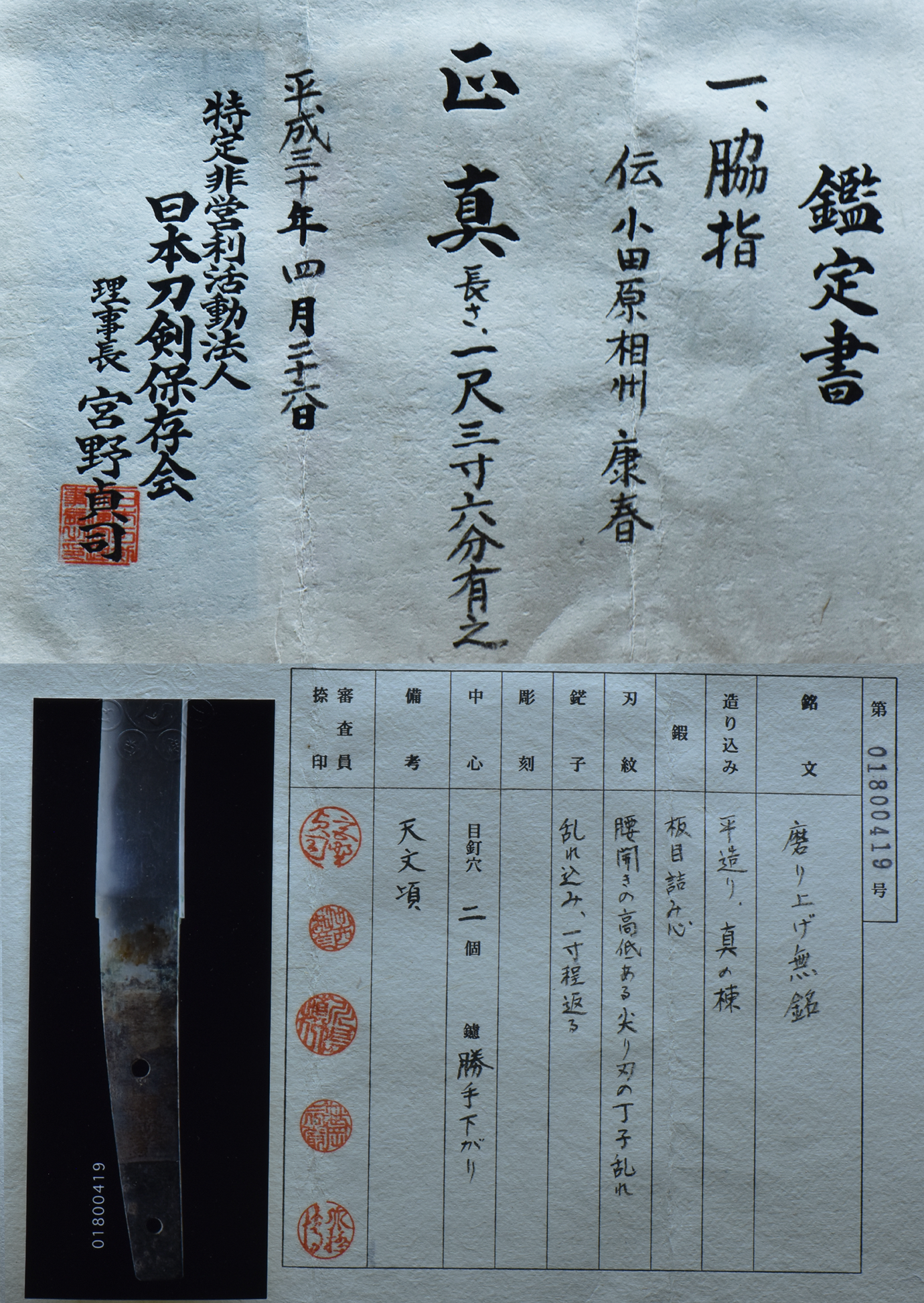
The NTHK’s principal certificate, issued for a blade of considerable quality. It confirms a genuine signature, or, for an unsigned (mumei) work, records the judges’ attribution to a smith or school. The paper carries a detailed worksheet with a numerical point score.
The NTHK (Nihon Tōken Hozon Kai, the Society for the Preservation of the Japanese Sword) is the oldest of Japan’s sword-appraisal bodies, founded in 1910, decades before the NBTHK. After the death of its long-serving head it divided into two successor societies, the NTHK and the NTHK-NPO, both of which continue to hold shinsa. NTHK certificates are known for a detailed worksheet that records a numerical point score alongside the judges’ written opinion, and the society is especially respected for its attribution of unsigned (mumei) work.
We offer a 48 hour inspection period for all Antique items shipped within the United States only. If the item is not to your satisfaction, we will gladly refund your money less any shipping and handling fees. All sales are final after the 48 hour inspection period. Please note that all discounted items are a final sale and not returnable.
Wakizashi by Yasuharu of the Sōshū school, active during the Tenbun era (1532–1555) in Sagami Province. The blade is mumei suriage with a pointed chōji-ba hamon in koshi no hiraita style. It comes with a koshirae featuring gold tsuka ito, shakudo fuchi-kashira with daikon, and a multicolored saya with some damage.
NihontoWatchBETAsuriage · Soshu · Koto · nagasa 41.2cm · sori 0.6cm
Soshu-den · Sagami
18 pieces on the market now
Within the province of Sagami, where Masamune and his successors had set the Soshu-den on its course, a late body of smiths carried that workmanship forward through the Muromachi period after the classic Nanbokucho masters had passed. These are the Sue-Soshu (末相州), the late Sagami line that took up the manner of Hiromitsu and Akihiro and worked it into the sixteenth century under the patronage of the Later Hojo of Odawara. Learn more →
| Smith | Era | Designated |
|---|---|---|
| Fusamune總宗 | 1504-1521 | 5 |
| Tsunahiro綱廣 | 1532-1555 | 12 |
| Hiromasa廣正 | 1444-1456 | 4 |
| Kiyohira清平 | 1673-1681 | 4 |
| Tsunaie綱家 | 1532-1555 | 3 |
The NTHK’s principal certificate, issued for a blade of considerable quality. It confirms a genuine signature, or, for an unsigned (mumei) work, records the judges’ attribution to a smith or school. The paper carries a detailed worksheet with a numerical point score.
The NTHK (Nihon Tōken Hozon Kai, the Society for the Preservation of the Japanese Sword) is the oldest of Japan’s sword-appraisal bodies, founded in 1910, decades before the NBTHK. After the death of its long-serving head it divided into two successor societies, the NTHK and the NTHK-NPO, both of which continue to hold shinsa. NTHK certificates are known for a detailed worksheet that records a numerical point score alongside the judges’ written opinion, and the society is especially respected for its attribution of unsigned (mumei) work.
We offer a 48 hour inspection period for all Antique items shipped within the United States only. If the item is not to your satisfaction, we will gladly refund your money less any shipping and handling fees. All sales are final after the 48 hour inspection period. Please note that all discounted items are a final sale and not returnable.