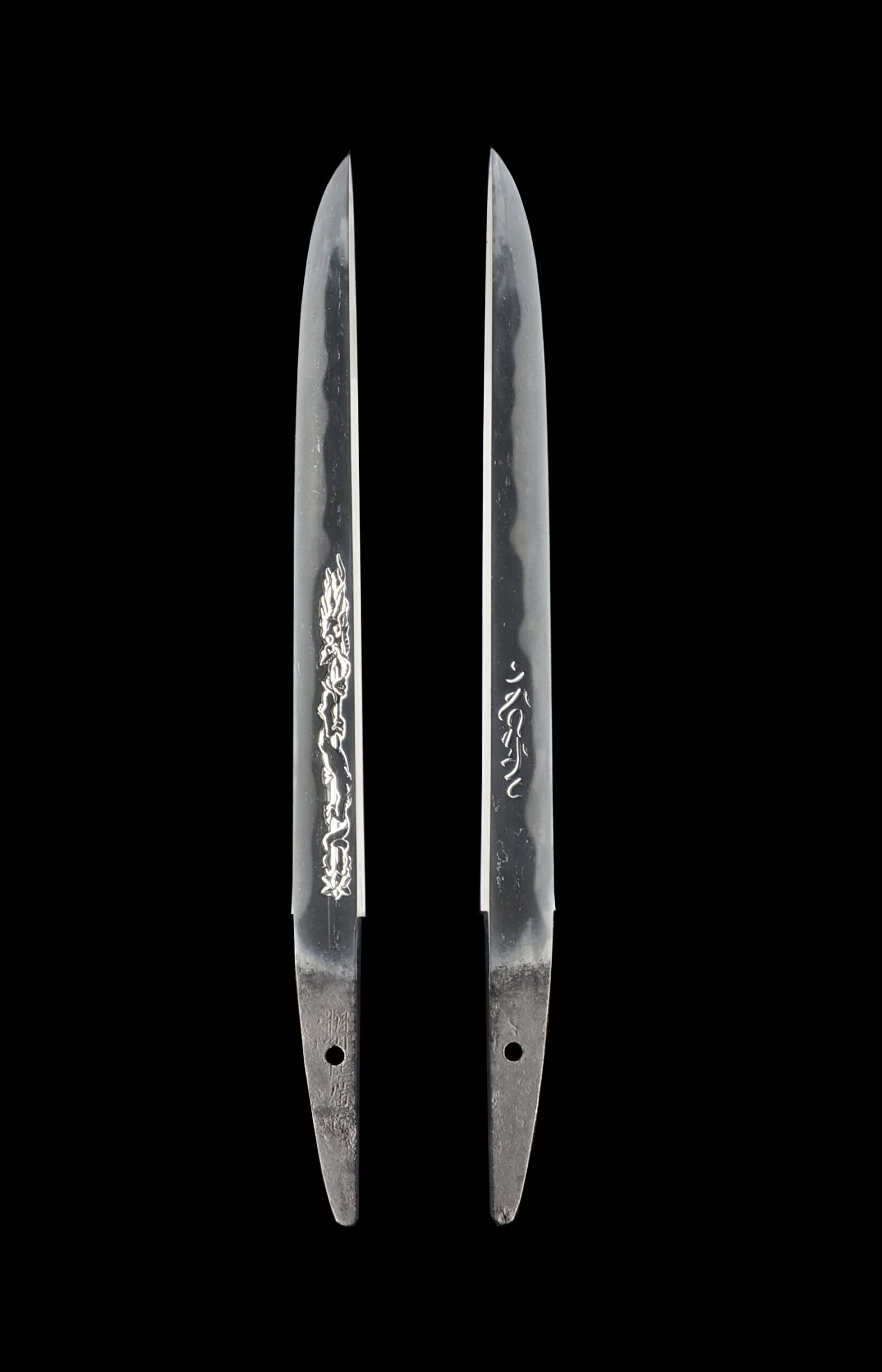
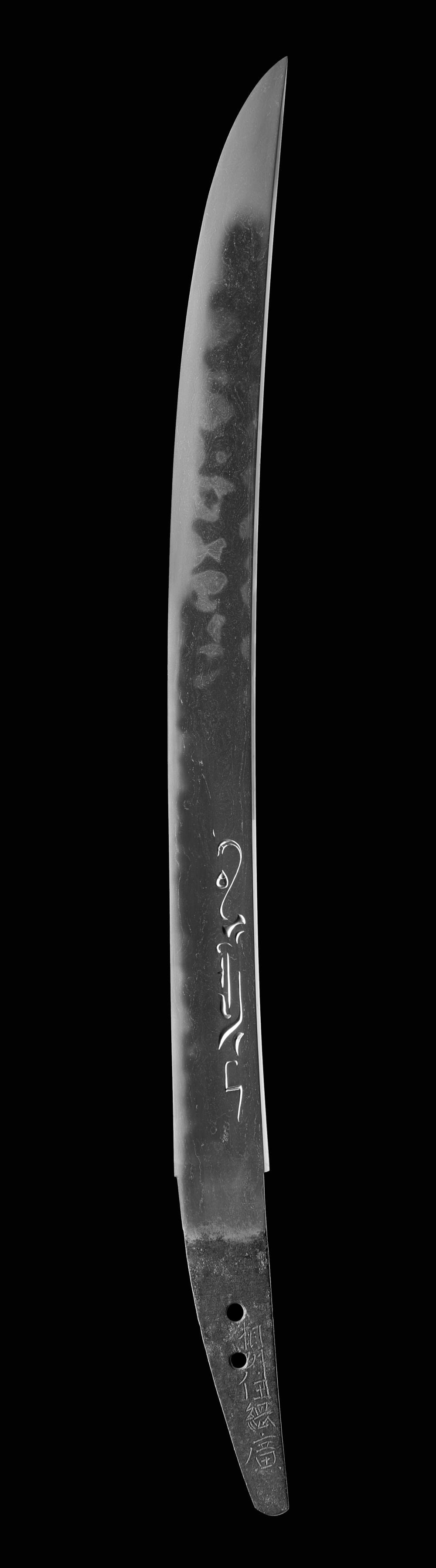
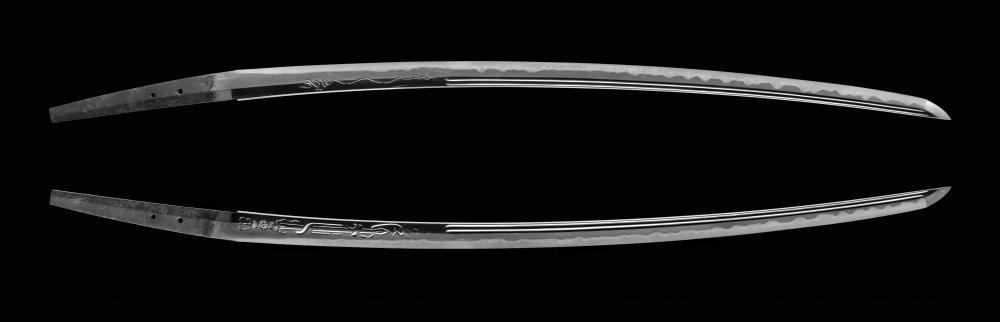
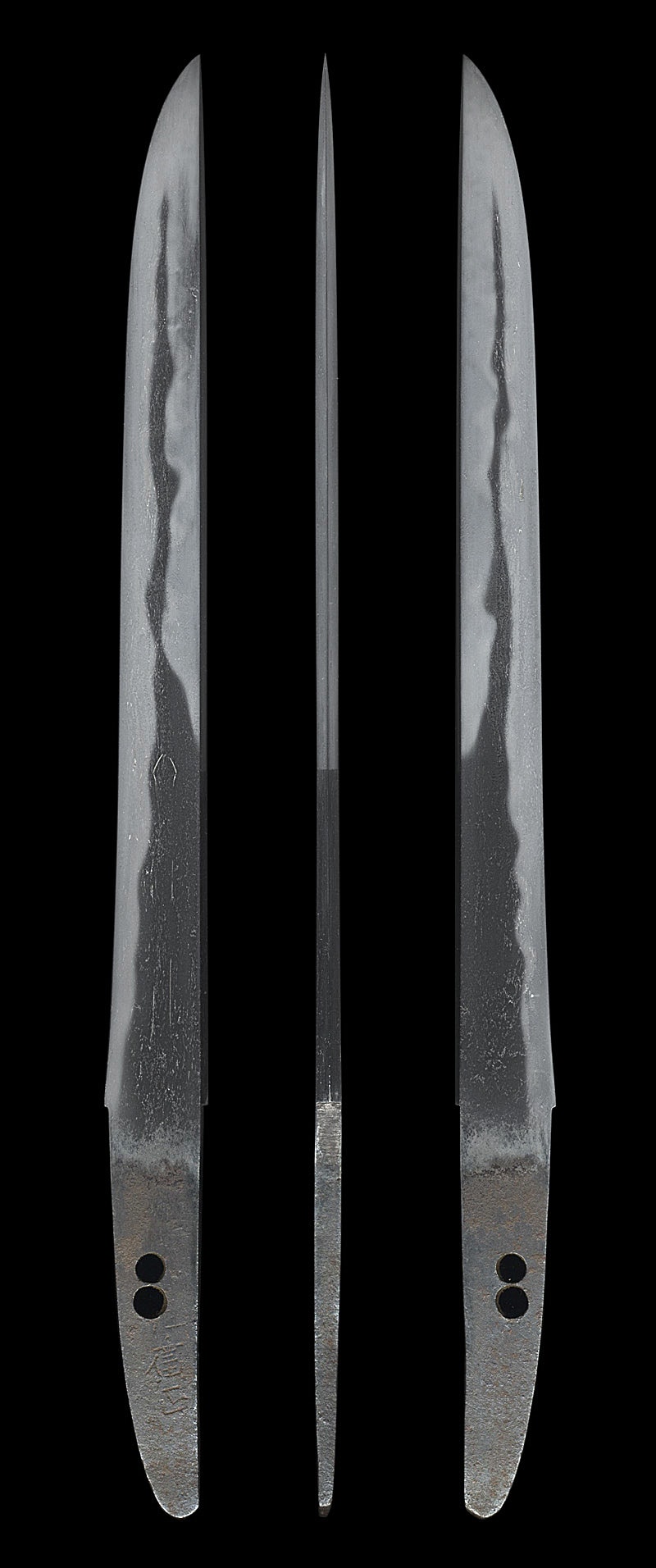
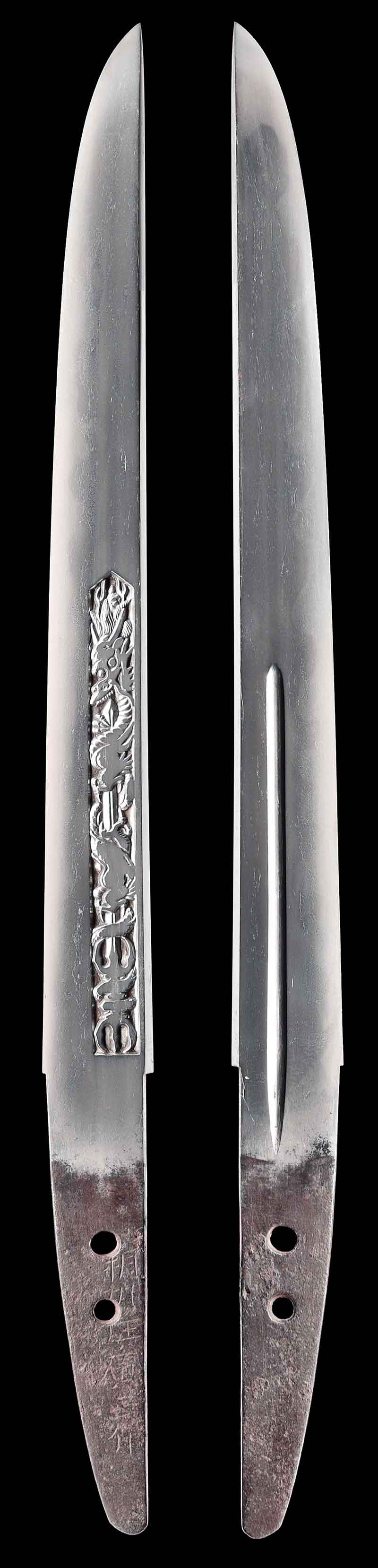
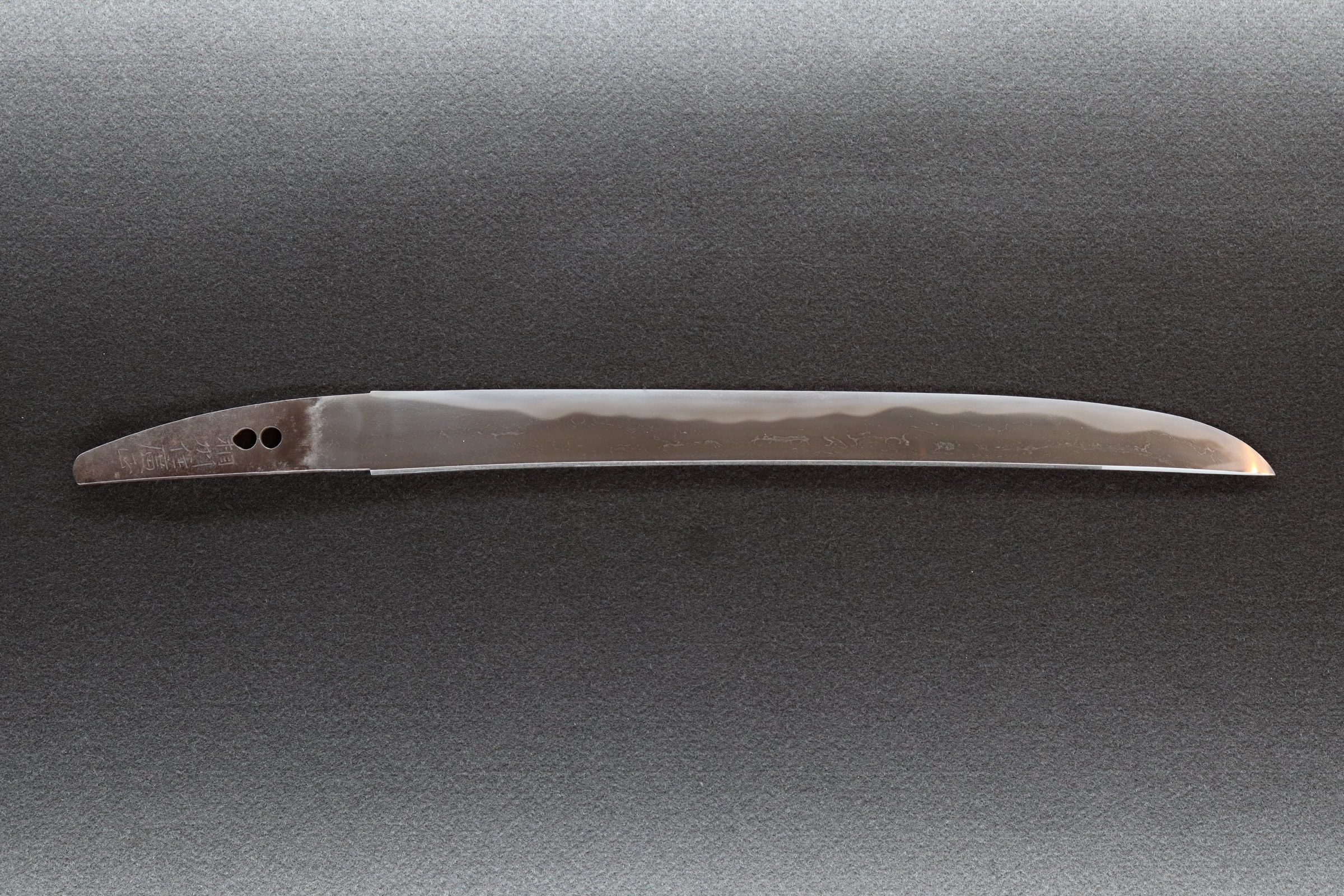
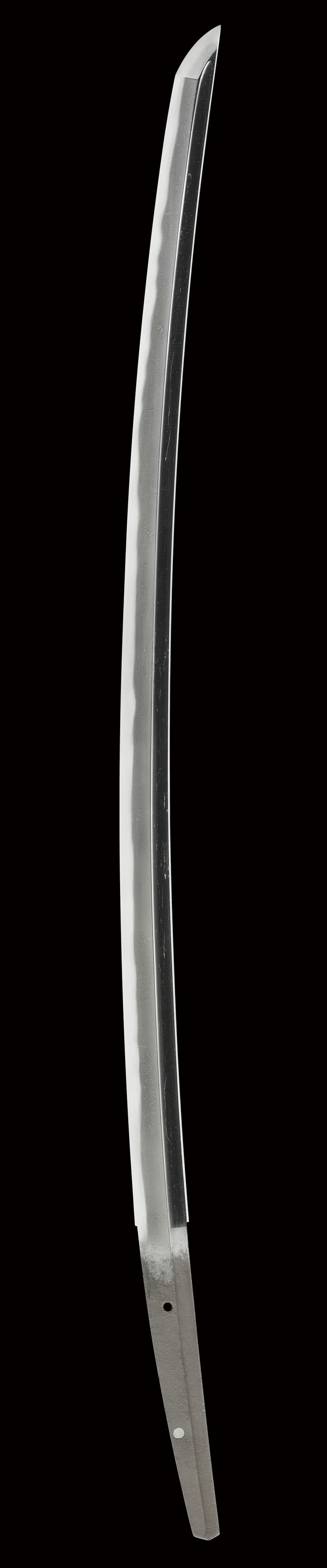
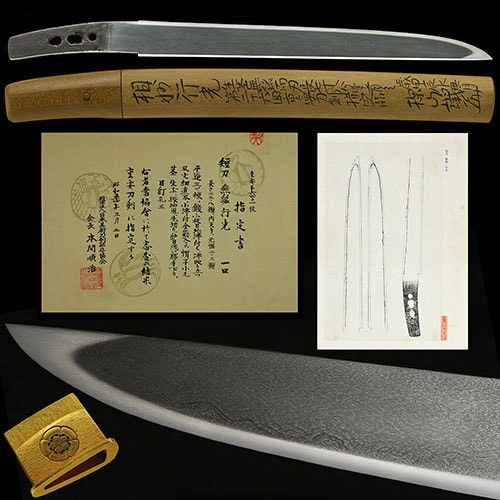
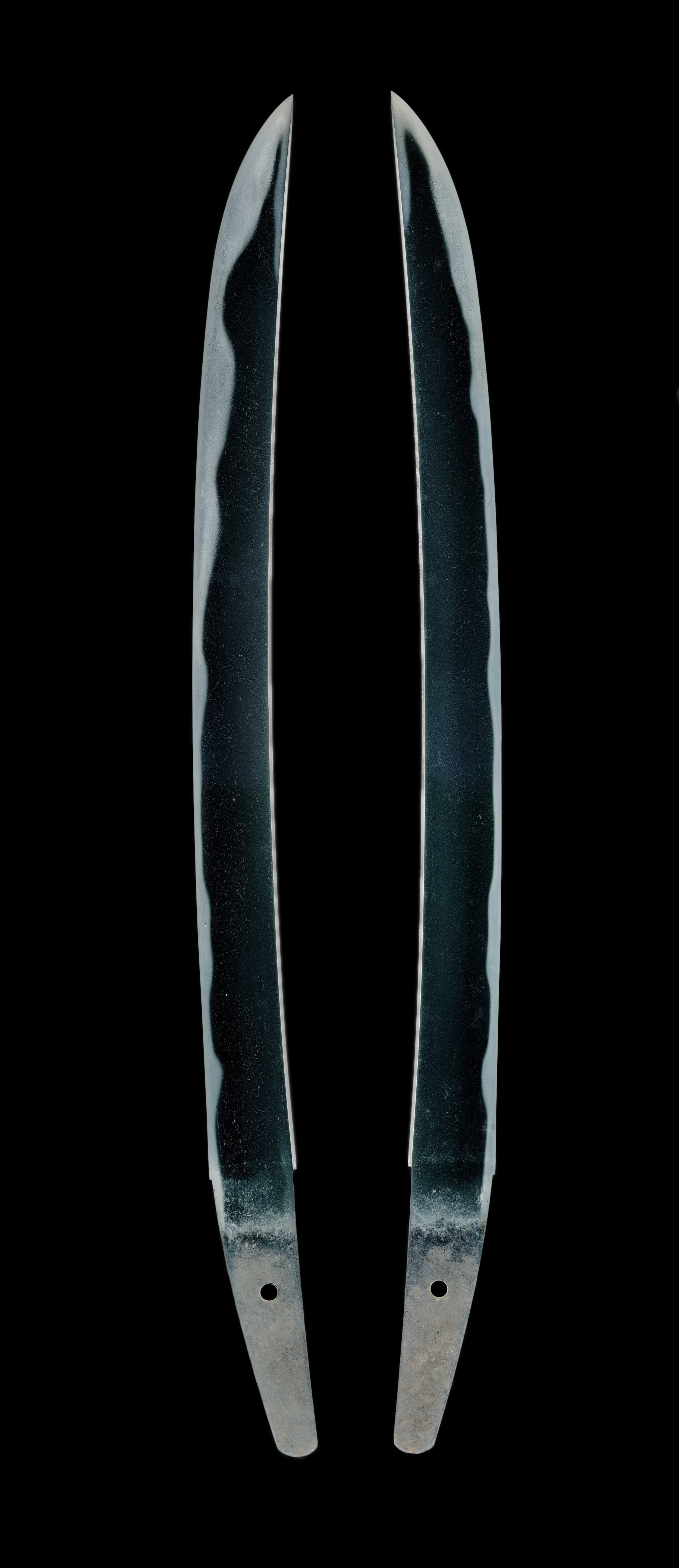
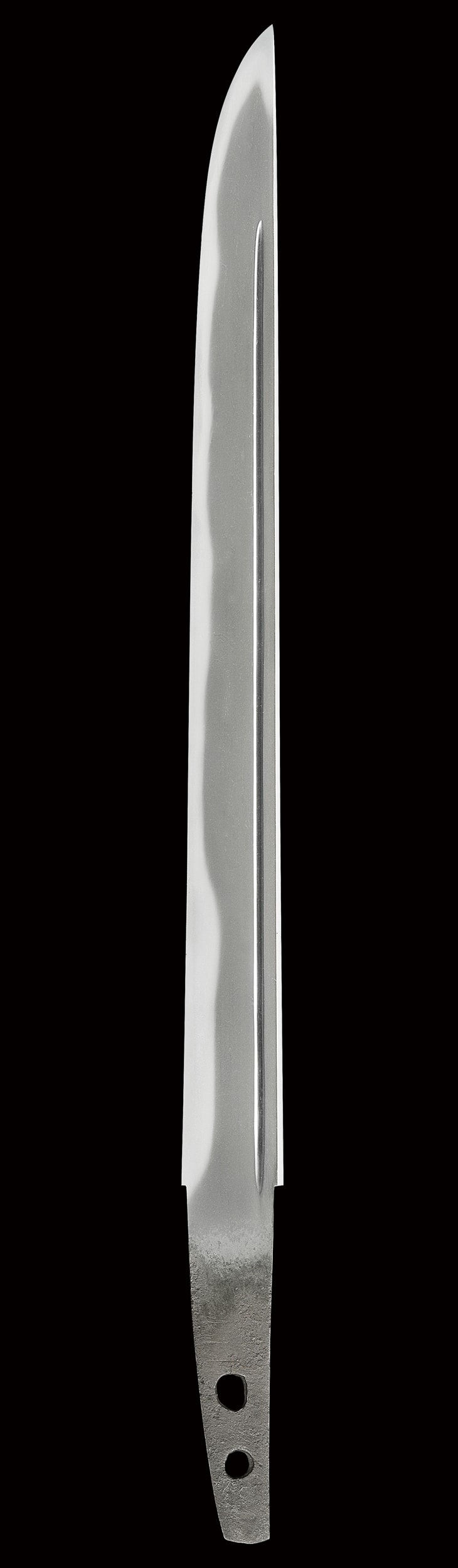
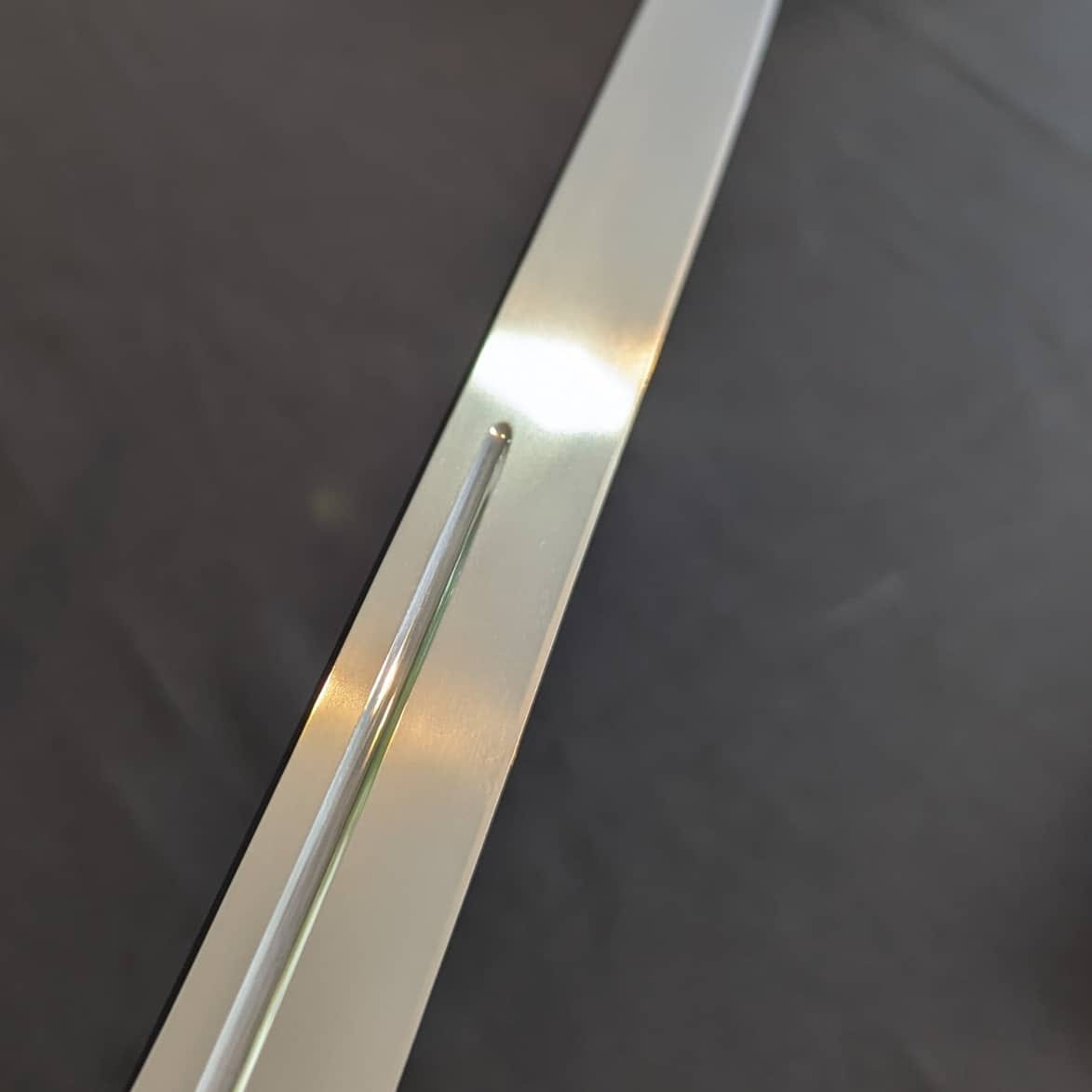
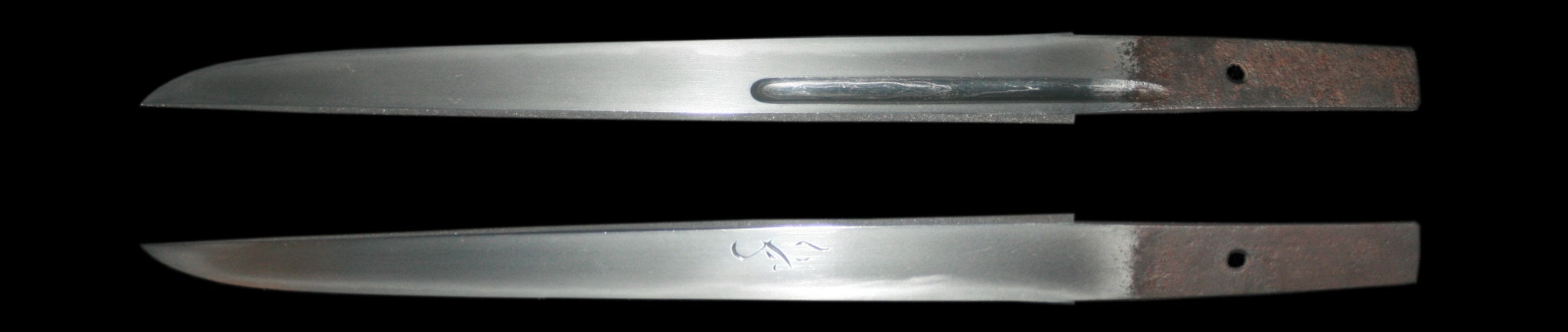
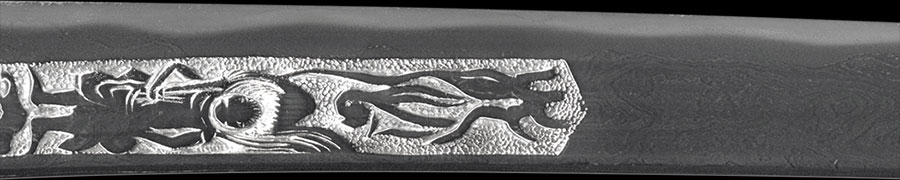
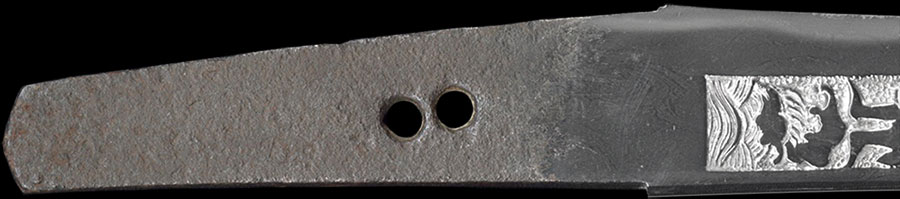
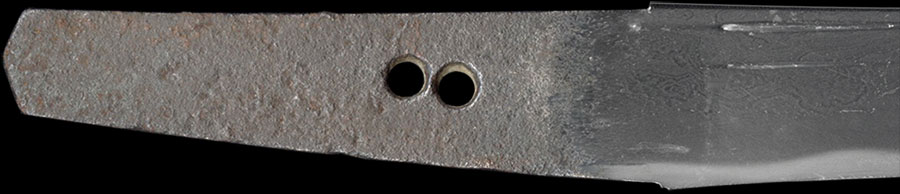
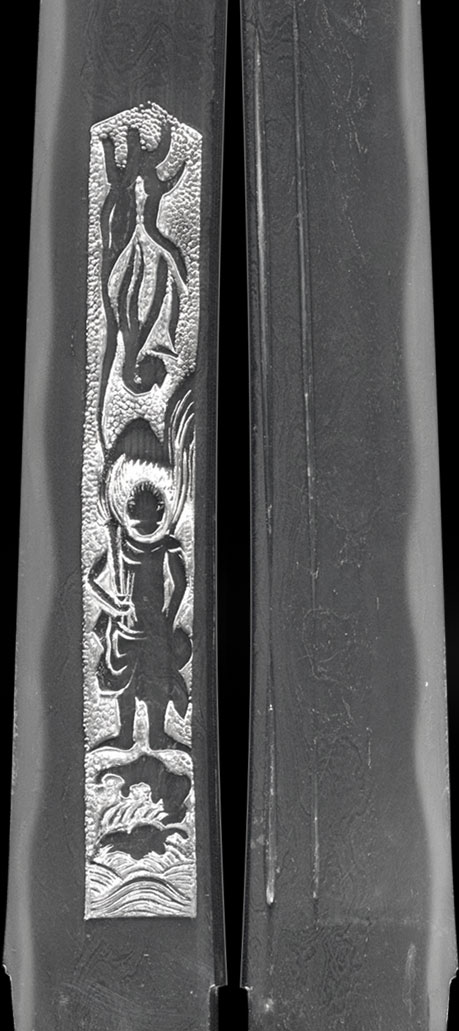
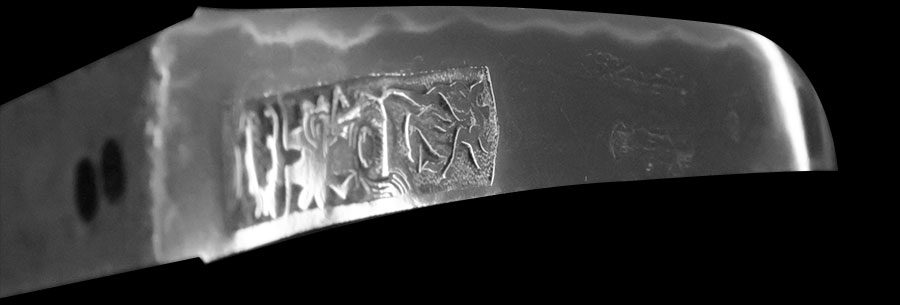
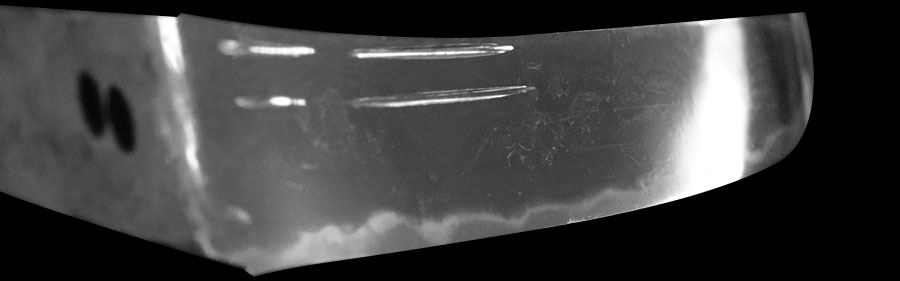
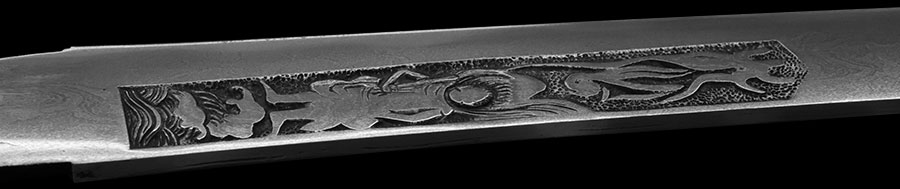
It has arrived, it has arrived! When I first laid eyes on this tanto, I was completely drawn in by its intense charm. Although it has not yet been submitted for kantei, it is a tanto that has been handed down through an old family as the work of Soshu Fusamune. Soshu Fusamune has been famous since ancient times as a master of horimono, and the carvings on this tanto may brilliantly prove that reputation. Soshu Fusamune was one of the representative swordsmiths of the Odawara Soshu school during the Eisho era of the Muromachi period (circa 1505, 521 years ago). He was active at the same time as Magoroku Kanemoto and Izumi no Kami Kanesada in Mino, Muramasa in Kuwana, and Yosozaemon no Jo Sukesada in Bizen Osafune. It was a time when the famous Hojo Soun was at the height of his activity. This tanto is an ubu mumei tanto, exhibiting a hira-zukuri tanto sugata with a difference between the moto-mihaba and saki-mihaba. The jigane is itame-hada mixed with mokume-hada, with ji-nie appearing on the ji. The horimono is Soshu-bori, featuring a magnificent Shin no Taki Fudo carved within a hitsu, with gomabashi carved on the ura side. The hamon is nioi-deki with ko-nie, tempered in gunome-ba, and the boshi is hakikake at the tip, becoming a kaen-boshi with wonderful power. On this occasion, we received this hira-zukuri tanto with Soshu-bori—passed down through generations of an old family as Soshu Fusamune—from the owners who said, "We have grown old, so please pass this on at a low price to someone who will cherish it in the future." Therefore, we are offering it this time at a special, ultra-low price. Please do enjoy it.
 NihontoWatch
mumei · Muromachi · nagasa 26.7cm · sori 0.2cm





Soshu-den · Sagami · around 1469-1487
Tōken Taikan top 31%
1 piece on the market now
Where Fusamune stands among comparable artisans: across all of nihontō, and within tradition, era, and period. The tiers (Foremost · Leading · Major · Notable) weigh official designations from the NBTHK and Japan's Agency for Cultural Affairs, together with historical honors of lasting repute such as the Sansaku and Meibutsu-chō.
Select a lens to see how it's measured.
Soshu-den · Sagami
Phase: Sue-Sōshū末相州· 1356–1868
17 pieces on the market now
When the great Kamakura masters had passed and the country slid into the wars of the late Muromachi, a residual Soshu-den held on in Sagami under a new patron. The Later Hojo, ruling from Odawara castle, kept smiths at hand, and it was from this orbit that the leading name of the window emerged: Tsunahiro, transmitted as a retained smith of the Odawara Hojo who took the character tsuna from Hojo Ujitsuna. Learn more →
| Smith | Era | Designated |
|---|---|---|
| Fusamune總宗 | 1504-1521 | 5 |
| Tsunahiro綱廣 | 1532-1555 | 12 |
| Hiromasa廣正 | 1444-1456 | 4 |
| Kiyohira清平 | 1673-1681 | 4 |
| Tsunaie綱家 | 1532-1555 | 3 |
We could not find an authenticity certificate on the seller’s listing. Japanese swords and fittings are normally papered by the NBTHK (or the NTHK). Without one, the attribution is the seller’s own assessment and has not been independently verified — treat it with caution and ask the dealer about certification before buying.
For returns due to customer circumstances, the cost is the customer's responsibility. For returns due to our mis-shipment or a defective item, we bear the cost.
It has arrived, it has arrived! When I first laid eyes on this tanto, I was completely drawn in by its intense charm. Although it has not yet been submitted for kantei, it is a tanto that has been handed down through an old family as the work of Soshu Fusamune. Soshu Fusamune has been famous since ancient times as a master of horimono, and the carvings on this tanto may brilliantly prove that reputation. Soshu Fusamune was one of the representative swordsmiths of the Odawara Soshu school during the Eisho era of the Muromachi period (circa 1505, 521 years ago). He was active at the same time as Magoroku Kanemoto and Izumi no Kami Kanesada in Mino, Muramasa in Kuwana, and Yosozaemon no Jo Sukesada in Bizen Osafune. It was a time when the famous Hojo Soun was at the height of his activity. This tanto is an ubu mumei tanto, exhibiting a hira-zukuri tanto sugata with a difference between the moto-mihaba and saki-mihaba. The jigane is itame-hada mixed with mokume-hada, with ji-nie appearing on the ji. The horimono is Soshu-bori, featuring a magnificent Shin no Taki Fudo carved within a hitsu, with gomabashi carved on the ura side. The hamon is nioi-deki with ko-nie, tempered in gunome-ba, and the boshi is hakikake at the tip, becoming a kaen-boshi with wonderful power. On this occasion, we received this hira-zukuri tanto with Soshu-bori—passed down through generations of an old family as Soshu Fusamune—from the owners who said, "We have grown old, so please pass this on at a low price to someone who will cherish it in the future." Therefore, we are offering it this time at a special, ultra-low price. Please do enjoy it.
NihontoWatchmumei · Muromachi · nagasa 26.7cm · sori 0.2cm
Soshu-den · Sagami · around 1469-1487
Tōken Taikan top 31%
1 piece on the market now
Where Fusamune stands among comparable artisans: across all of nihontō, and within tradition, era, and period. The tiers (Foremost · Leading · Major · Notable) weigh official designations from the NBTHK and Japan's Agency for Cultural Affairs, together with historical honors of lasting repute such as the Sansaku and Meibutsu-chō.
Select a lens to see how it's measured.
Soshu-den · Sagami
Phase: Sue-Sōshū末相州· 1356–1868
17 pieces on the market now
When the great Kamakura masters had passed and the country slid into the wars of the late Muromachi, a residual Soshu-den held on in Sagami under a new patron. The Later Hojo, ruling from Odawara castle, kept smiths at hand, and it was from this orbit that the leading name of the window emerged: Tsunahiro, transmitted as a retained smith of the Odawara Hojo who took the character tsuna from Hojo Ujitsuna. Learn more →
| Smith | Era | Designated |
|---|---|---|
| Fusamune總宗 | 1504-1521 | 5 |
| Tsunahiro綱廣 | 1532-1555 | 12 |
| Hiromasa廣正 | 1444-1456 | 4 |
| Kiyohira清平 | 1673-1681 | 4 |
| Tsunaie綱家 | 1532-1555 | 3 |
We could not find an authenticity certificate on the seller’s listing. Japanese swords and fittings are normally papered by the NBTHK (or the NTHK). Without one, the attribution is the seller’s own assessment and has not been independently verified — treat it with caution and ask the dealer about certification before buying.
For returns due to customer circumstances, the cost is the customer's responsibility. For returns due to our mis-shipment or a defective item, we bear the cost.