In the Sengoku era the school served a second warrior court: the Later Hōjō at Odawara, whose patronage kept the Tsunahiro line forging hitatsura for the uchigatana age until the castle fell to Hideyoshi in 1590.
 NihontoWatchNihontoWatch
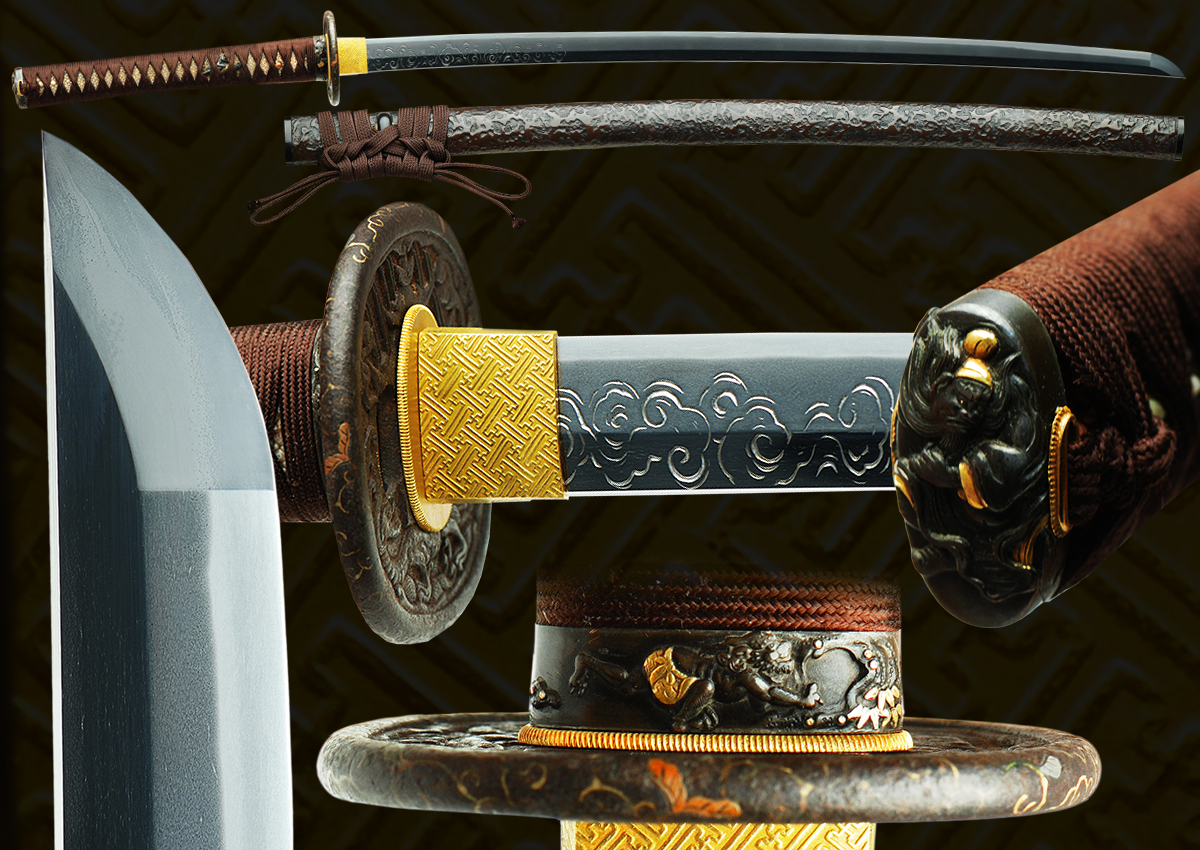
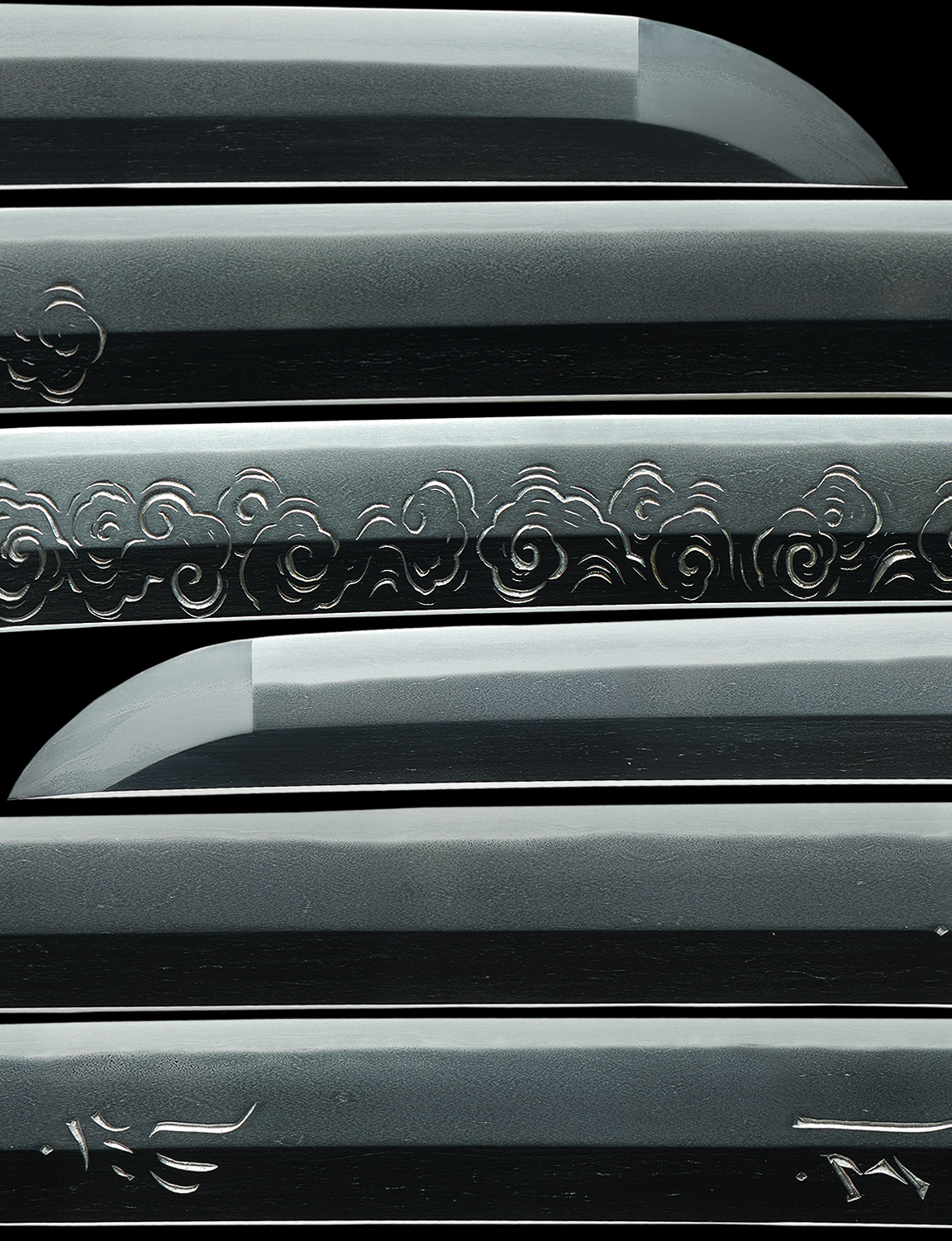
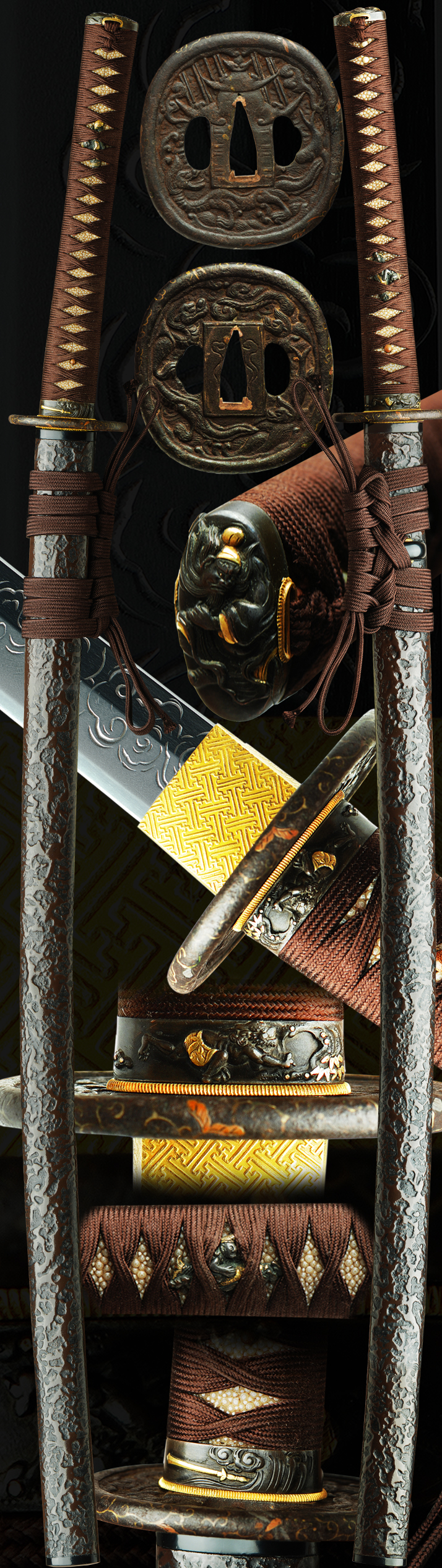
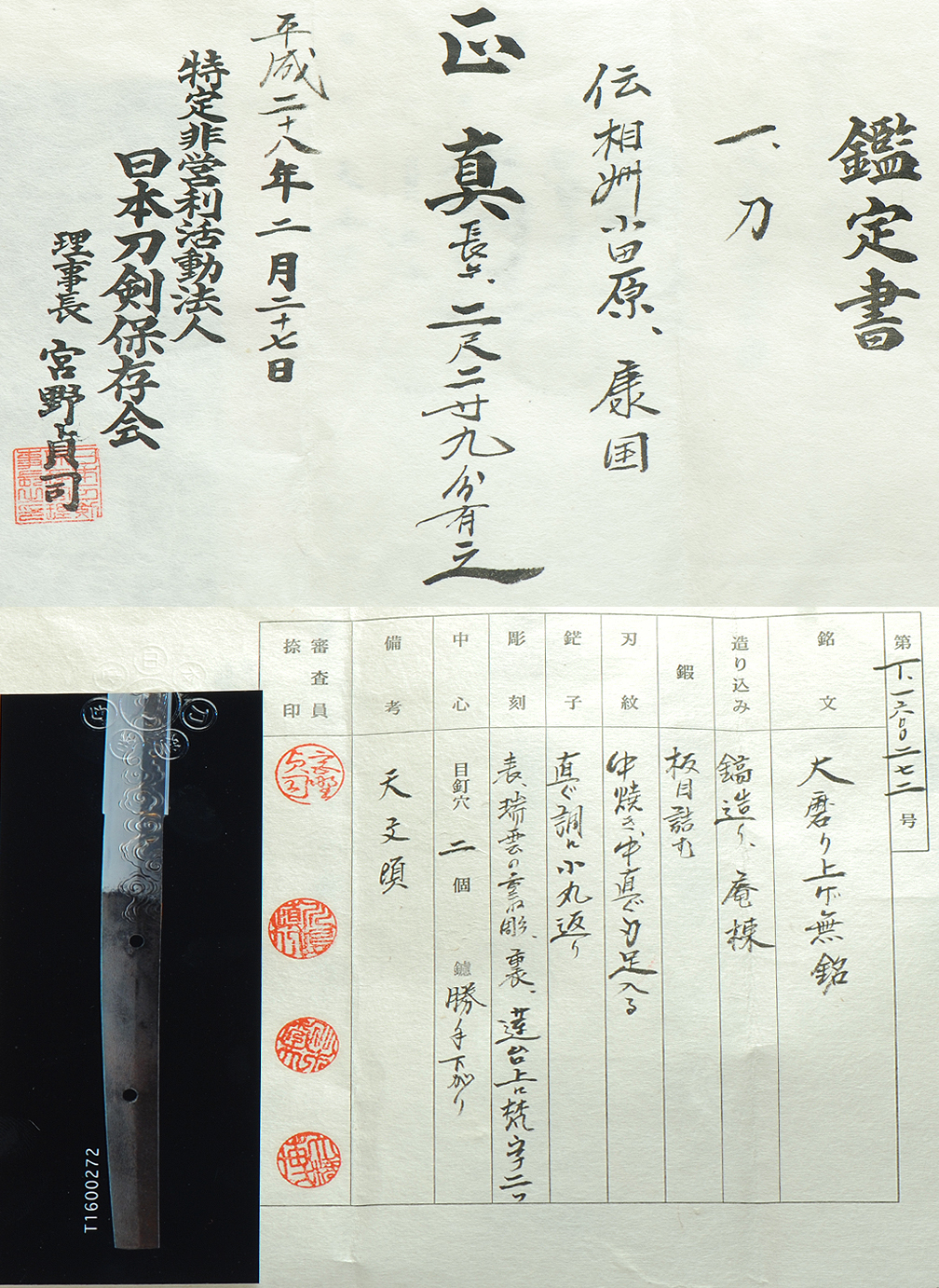
YASUKUNI (康国), 1st gen., Kyōroku (享禄, 1528-1532), Sagami – “Sōshū-jū Yasukuni” (相州住康国), “Yasukuni saku” (康国作), Odawara-Sōshū group, according to tradition a student of Shimada Yoshisuke (義助) and the younger brother of Tsunaie (綱家), Hōjō Ujiyasu (北条氏康, 1515-1571) granted him the character for “yasu” (康), the hamon is a gunome-midare or notare-midare with unobtrusive nie, that means the Sōshū tradition with its emphasis on nie already began to disappear at that time, he was an excellent horimono carver, ō-wazamono, jō-saku This a beautiful later period Koto Katana in the Soshu tradition, this sword is reminiscent of the beautiful work of this era. The blade is a longish mumei piece with a fine hada and a wavy notare-ish sugu-ha hamon. At almost 28” this blade is a wonderful piece with pristine hormono. The hada is a fine Mokume with itame covered in ji-nie which produces an oily slick appearance. There is a longish ko-maru kissaki with hakikake. There is ji-nie all over. The sublime execution of the the ko-itame with mokume reminds one of the twinkling of stars as the ji-nie highlights the intricacies of the workmanship of the steel. The hamon is made up of a conservative wavy sugu-ha base which looks spectacular in this polish which is pristine. A fantastic sword with much to enjoy and appreciate. The koshirae is a beautiful stand out set. These are of a shoki and oni theme with a golden ken. There is a beautifully textured saya of a darkish lacquer mixed with brown in a larger stone like texture mimicking the cloud like horimono. There is also a gold foil key fret style habaki with gold washed Seppa. Yasukuni, a JoSaku smith was a master of horimono as can be seen on this sword. There were 2 generations of Odawara Yasukuni and we believe this to be the 1st. This sword with beautiful horimono of tsurushi-gumo ( hanging cloud ) emulates the great blades from an ealier era. There is beautiful horimono of Rendai and Bonji on one side and ” tsurushi-gumo” on the other. The blade is tremendously healthy and in a spectacular crisp polish. The hamon is a very subtle sugu-ha-midare with many inner workings. There is a well worked fantastic hada of ko- itame with mokume and can be appreciated from across the room and can be viewed in the photos. To Note: Many Horimono found on swords were either put there at a later date or to cover flaws. As can be seen in this blade that it is not the case. The sword is virtually flawless and the horimono was carved as intended by a master carver. As seen these carvings are truly unique works of art and only add to the aesthetics of the blade. These carvings are executed in the utmost manner as to enhance the quality of the sword overall! A number of great Odawara Soshu smiths worked in this tradition. A note on Horimono; The Drifting Cloud, known as Ukigumo (浮雲) in Japanese can be seen ascending the blade. Clouds are Buddhist representations and can be found in many works of art and narrative. In Buddhism, clouds signify the ‘Western Paradise’ beyond earth; and in Shintoism, the spirits of the dead. The koshirae is a spectacular accompaniment to the sword. The fittings of shoki and oni are also in a spectacular pristine condition. The Tsuka-ito and Sageo are brown and the lacquer is finished in a stone texture of brown highlights which perfectly accompanies the horimono of the blade. There is a solid dragon tsuba with highlights of copper and gold on the rim. Cloud like carvings can also be found which all in all appears to be in the Nanban style and there are menuki of fleeting men. The Same has a beautifully aged patina. This sword is on consignment. kantei-sho (鑑定書) – Appraisal katana (刀) Den Sôshû Odawara, Yasukuni (伝相州小田原、康国) shôshin (正真) – Authentic nagasa 2 shaku 2 sun 9 bu kore ari (長さ二尺二寸九分有之) – Blade length ~ 69.4 cm Heisei 28 nen 2 gatsu 27 nichi (平成二十八年二月二十七日) – February 27th 2016 Non Profit Organization (特定非営利活動法人) Nihon Tôken Hozon Kai (日本刀剣保存会) – NTHK Board Chairman (理事長): Miyano Teiji (宮野貞司) No T-1600272 meibun (銘文) – Signature: ô-suriage mumei tsukurikomi (造り込み) – Shape: shinogi-zukuri, iori-mune kitae (鍛) – Forging: dense itame hamon (刃紋) – Hardening: medium wide chû-suguha with ashi bôshi (鋩子) – Hardening in tip: sugu-chô with a ko-maru-kaeri chôkoku (彫刻) – Engravings: on the omote side auspicious clouds, on the ura side a rendai with two bonji above bikô (備考) – Remarks: around Tenbun (天文, 1532-1555) shinsa’in natsu’in (審査員捺印) – Seals of Judges: 4 seals [et_bloom_inline optin_id=”optin_1″]
Offered by Nihonto Antiques



As written by the shop
Soshu-den · Sagami
21 pieces on the market now
Within the province of Sagami, where Masamune and his successors had set the Soshu-den on its course, a late body of smiths carried that workmanship forward through the Muromachi period after the classic Nanbokucho masters had passed. These are the Sue-Soshu (末相州), the late Sagami line that took up the manner of Hiromitsu and Akihiro and worked it into the sixteenth century under the patronage of the Later Hojo of Odawara. The published sources draw a division within the group: one body of smiths remained at Kamakura while a separate circle lived at Odawara under the Hojo, the latter collectively called the Odawara-Soshu. The Tsunahiro line anchors the whole, its shodai transmitted as a descendant of Hiromasa who first signed Masahiro, summoned by Hojo Ujitsuna to Odawara and granted the character tsuna; the name then passed as a workshop title through several generations into the Edo period. Around it stand Tsunaie, a retained smith of the Hojo regarded among the more skilled of the late line; Fusamune, the Odawara smith whose carving carries a long reputation; the mid-Muromachi Hiromasa, transmitted as the third generation of his name; Masahiro, a Sagami lineage of four or five generations said to descend from a younger son of Masamune; and Hirotsugu of Kamakura, who also bears Tenbun-era inscriptions tying him to Suruga. The shared vocabulary of the school is read off temper, steel, and carving together. The jigane is an itame mixed with mokume and nagare-hada that tends to stand and open rather than gather tightly, ji-nie adhering across it with chikei entering, the Odawara hands (Fusamune above all) tightening this toward a packed ko-itame. Over that ground the smiths temper a gunome-midare into which choji, togariba, the arrow-notch yahazu tooth, and ko-notare enter, the ha widening as it rises; nie attaches with sunagashi and kinsuji, and tobiyaki with muneyaki are then carried across the ji until the whole becomes hitatsura, the full-temper manner the sources name as the inheritance from Hiromitsu and Akihiro.
The Odawara face leans angular and compound, gunome heads breaking into doubled and koshi-biraki structures over a tight, nioi-dominant nioiguchi, while the Kamakura face of Tsunahiro keeps the broader, yahazu-laced midare. Devotional carving recurs throughout, true and grass kurikara, bonji on a lotus rendai, sanko-ken and gomabashi in raised relief, and incised invocations such as Hachiman Daibosatsu. Set against the classic Soshu-den apex, the divergence is one of register rather than kind: where the Kamakura and Nanbokucho masters reached great depth of nie and clarity of steel, the late line works a flatter, more demonstrative hitatsura over a standing grain, the steel less deep and the nie less profound, the flamboyance of full temper standing in for the restrained command of the founders. For kantei, the Sue-Soshu blade announces itself by the Muromachi sugata (compact hira-zukuri tanto with uchizori, or sun-nobi wakizashi of wide mihaba with sakizori) carrying full hitatsura over an open, standing itame, with the dense devotional horimono the sources treat as a defining mark of Sagami work of the era; the absence of the deep, lucid nie and the midare-utsuri-free clarity of the Kamakura masters separates it from classic Soshu. The Odawara hand is told from the Kamakura hand by its tighter steel, its angular and koshi-biraki gunome, and Fusamune's exceptionally refined relief carving. Among the members, Tsunahiro is the first name of the group, the smith who closes the tradition, the published sources naming him well known and highly skilled within the group, with Tsunaie and Fusamune as the next most accomplished; Hiromasa and Masahiro furnish the dated, ubu-signed documents on which the divided generations are anchored. Provenance, where it survives, is real and distinguished: a Tsunahiro wakizashi bears the ownership inscription of the Hojo retainer Sakurai Daigaku and later passed to Okubo Ichio, while one of his blades is recorded in Honma's inventory of the Imperial collection; most members, however, carry no recorded daimyo or temple history, their standing resting on the rarity of a signed late-Sagami blade and the carving and steel the sources praise on each. A signed Sue-Soshu work, seldom met yet not locked away as national patrimony, offers the student the Muromachi register of the Soshu-den read whole. Learn more →
| Smith | Era | Designated |
|---|---|---|
| Fusamune總宗 | 1504-1521 | 5 |
| Tsunahiro綱廣 | 1532-1555 | 14 |
| Hiromasa廣正 | 1444-1456 | 4 |
| Tsunaie綱家 | 1532-1555 | 3 |
| Hirotsugu廣次 | 1492-1501 | 4 |
Sōshū in the Muromachi period
In the Sengoku era the school served a second warrior court: the Later Hōjō at Odawara, whose patronage kept the Tsunahiro line forging hitatsura for the uchigatana age until the castle fell to Hideyoshi in 1590.
The NTHK’s principal certificate, issued for a blade of considerable quality. It confirms a genuine signature, or, for an unsigned (mumei) work, records the judges’ attribution to a smith or school. The paper carries a detailed worksheet with a numerical point score.
The NTHK (Nihon Tōken Hozon Kai, the Society for the Preservation of the Japanese Sword) is the oldest of Japan’s sword-appraisal bodies, founded in 1910, decades before the NBTHK. After the death of its long-serving head it divided into two successor societies, the NTHK and the NTHK-NPO, both of which continue to hold shinsa. NTHK blade certificates are known for a detailed worksheet that records a numerical point score alongside the judges’ written opinion (fitting papers carry the judges’ opinion without a point score), and the society is especially respected for its attribution of unsigned (mumei) work.
We offer a 48 hour inspection period for all Antique items shipped within the United States only. If the item is not to your satisfaction, we will gladly refund your money less any shipping and handling fees. All sales are final after the 48 hour inspection period. Please note that all discounted items are a final sale and not returnable.