NihontoWatch Mon

NihontoWatch

MarketAuctions
Encyclopedia
NihontoWatch Mon

NihontoWatch

MarketAuctions
Encyclopedia

Description

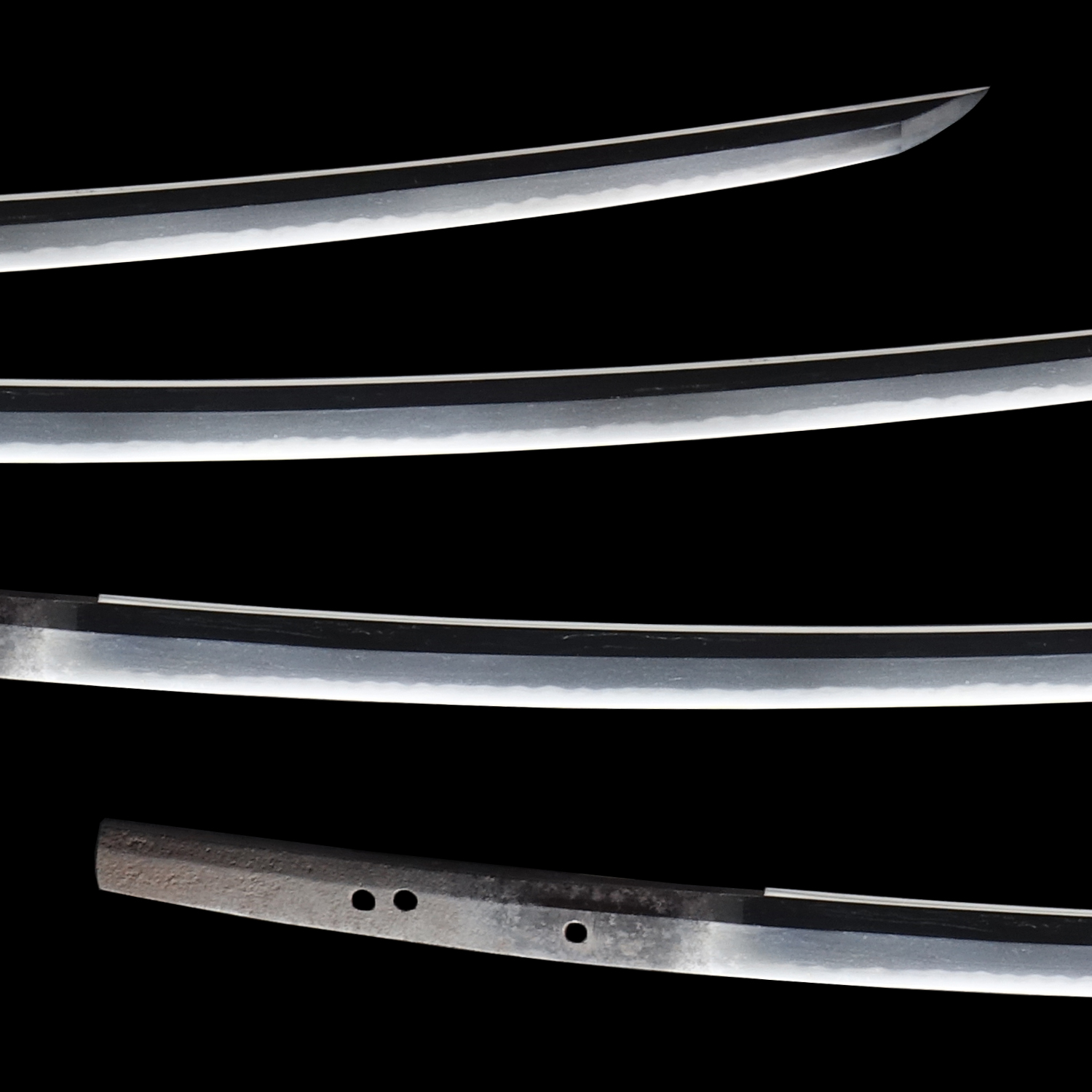
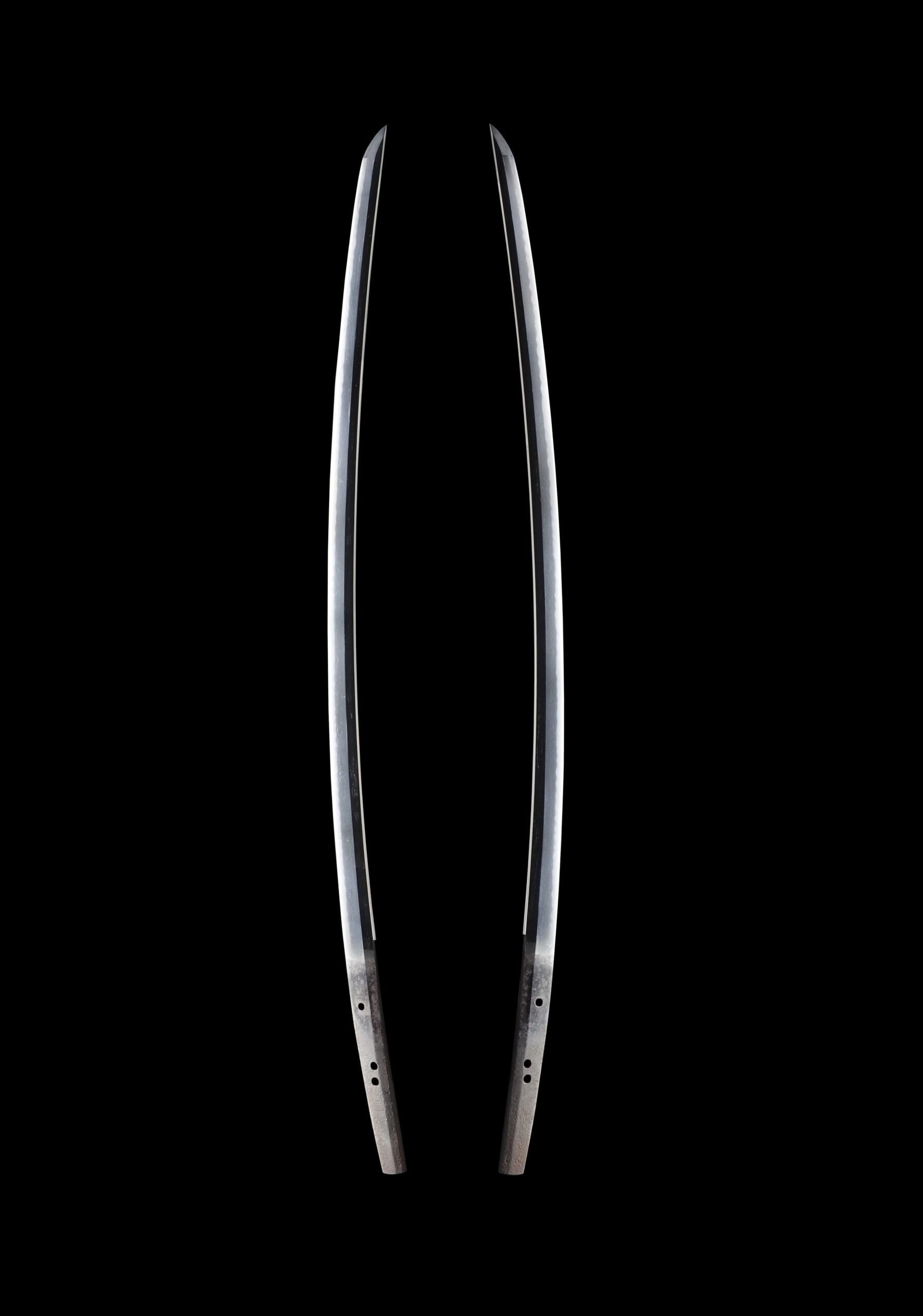
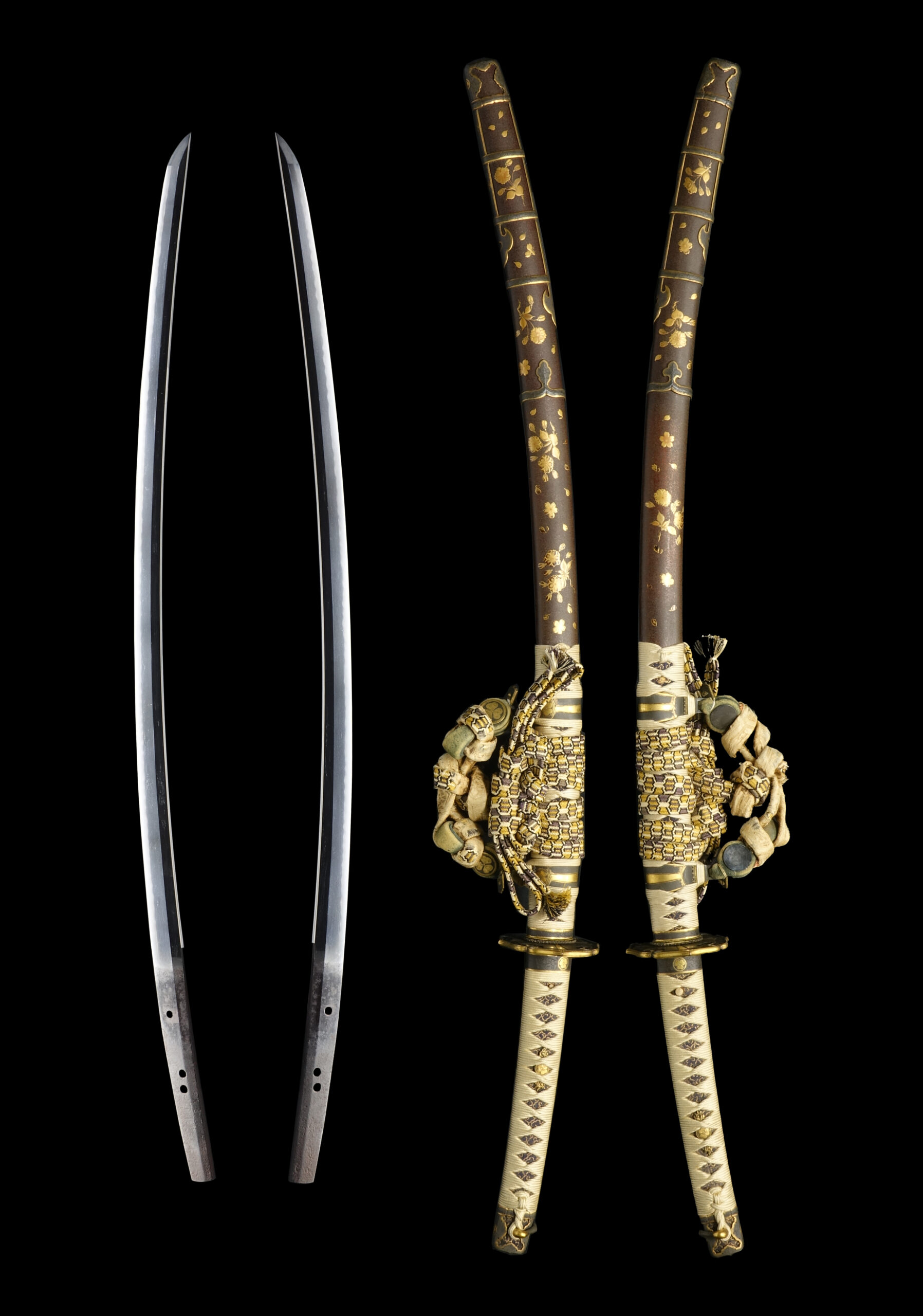
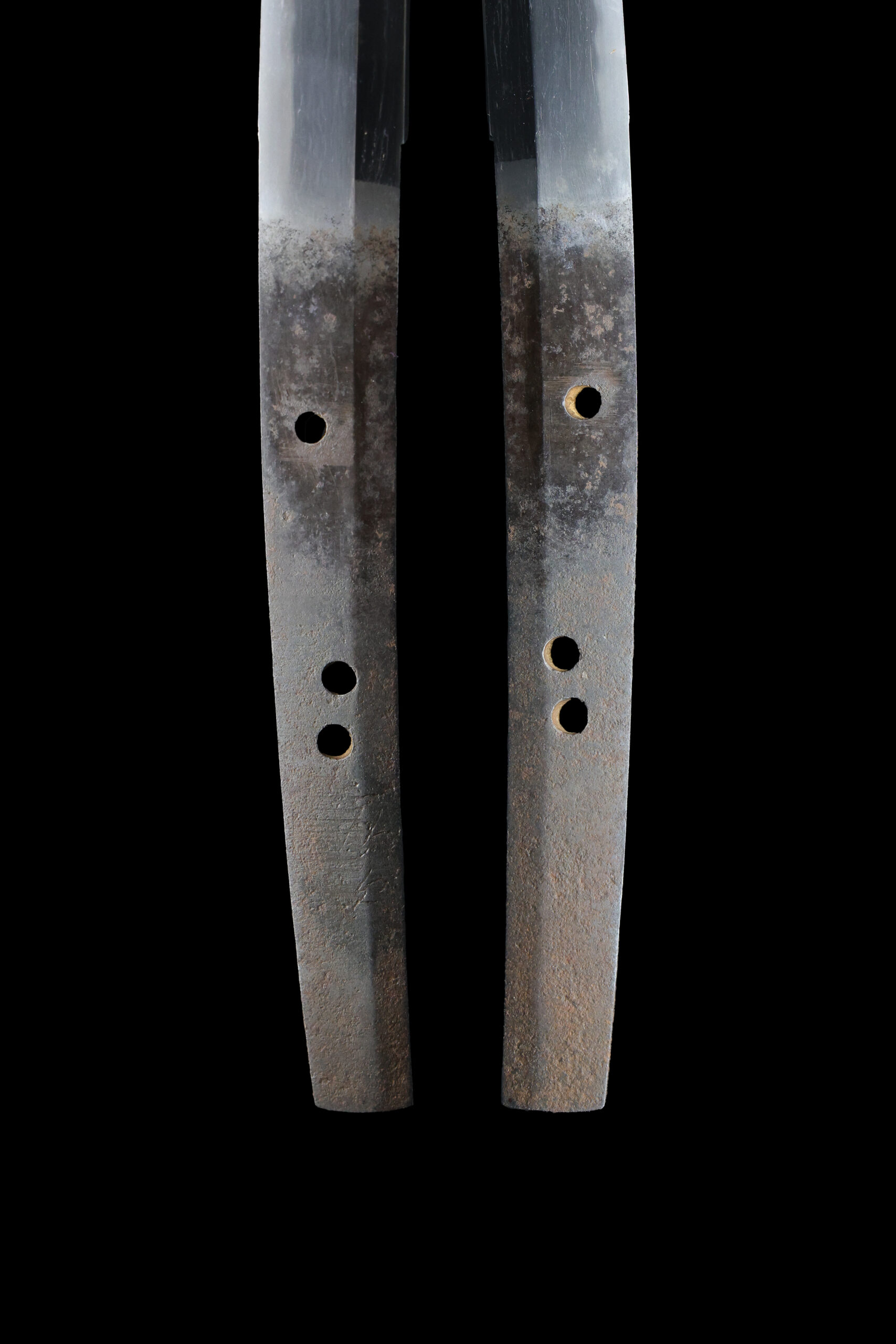
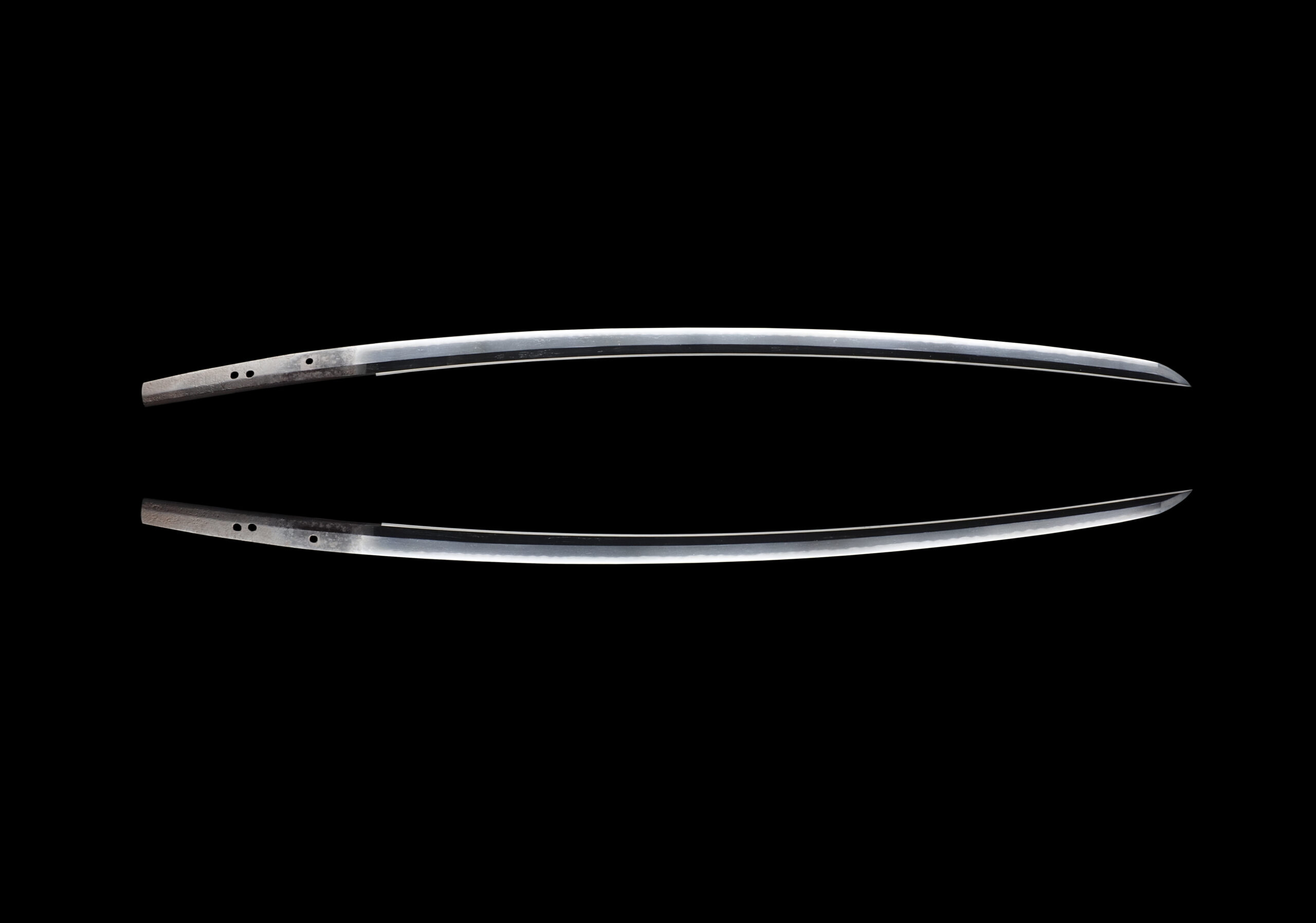
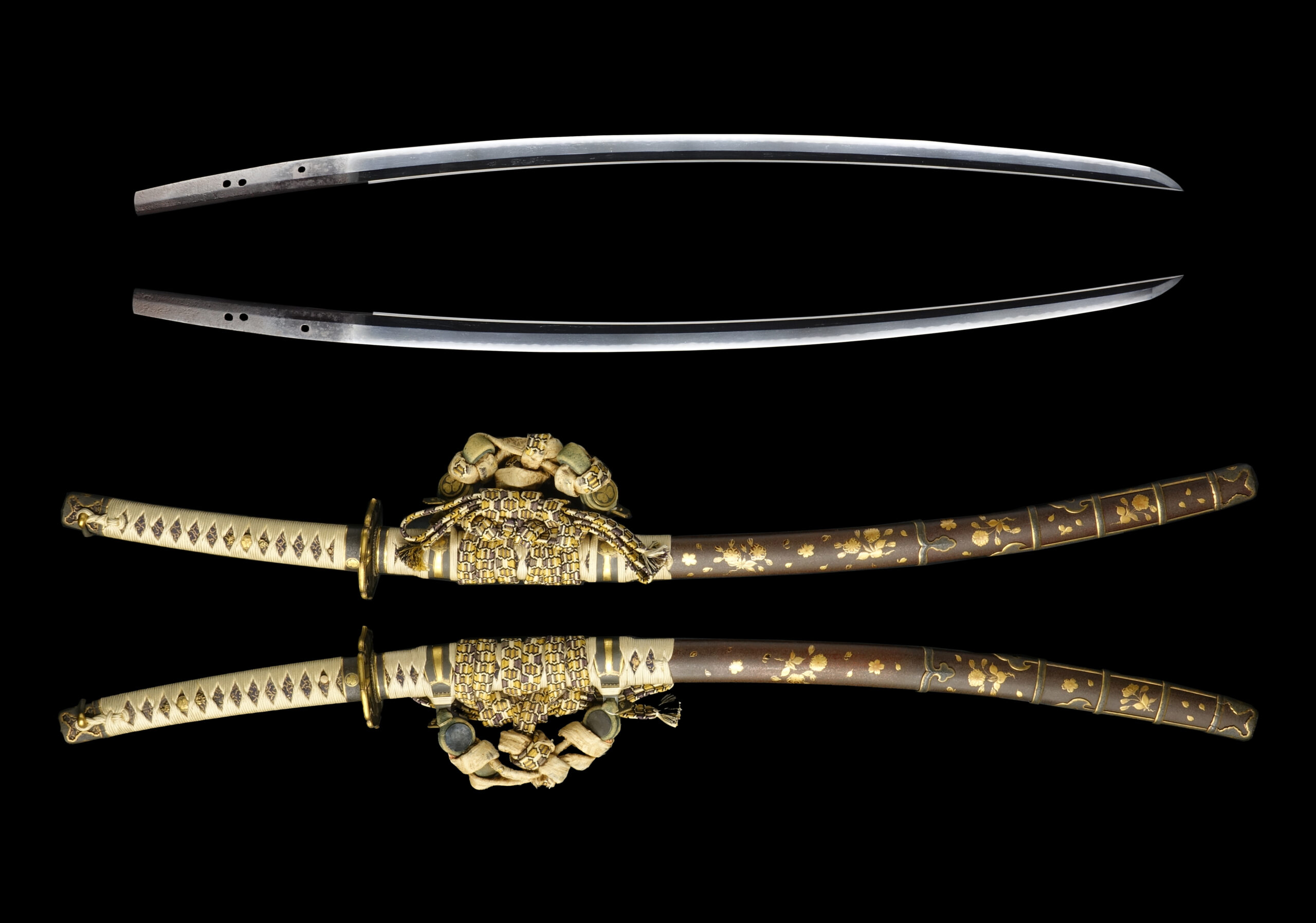
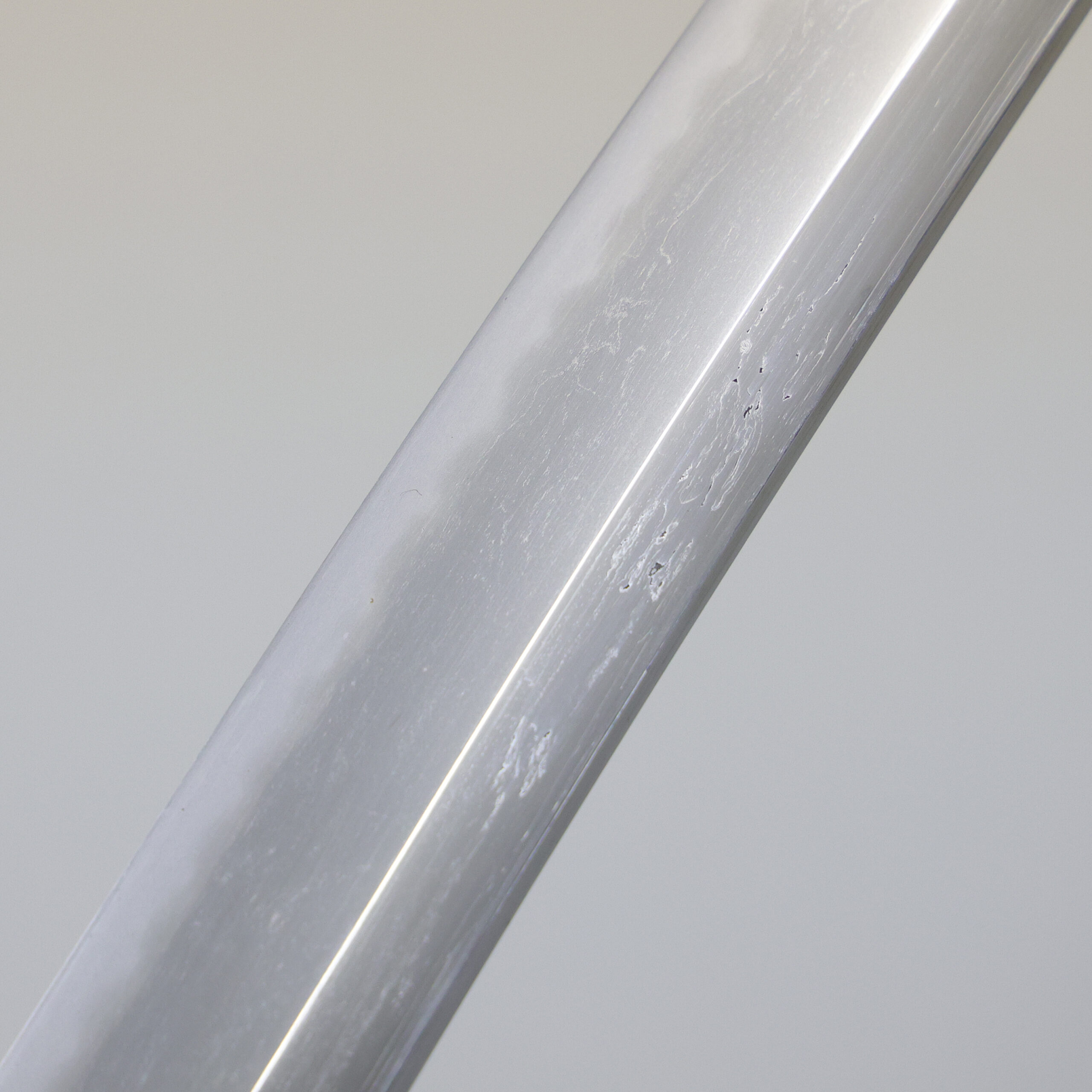
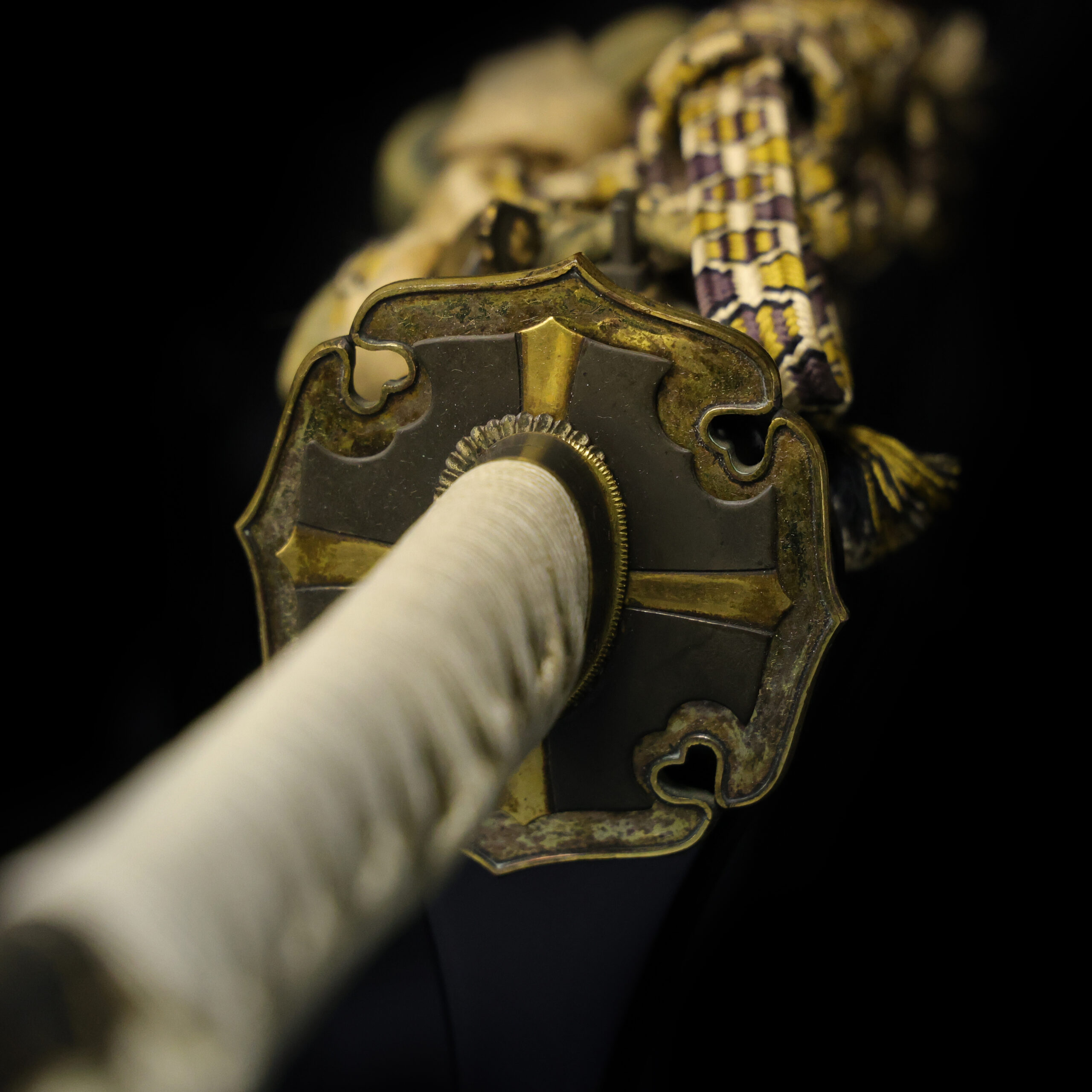
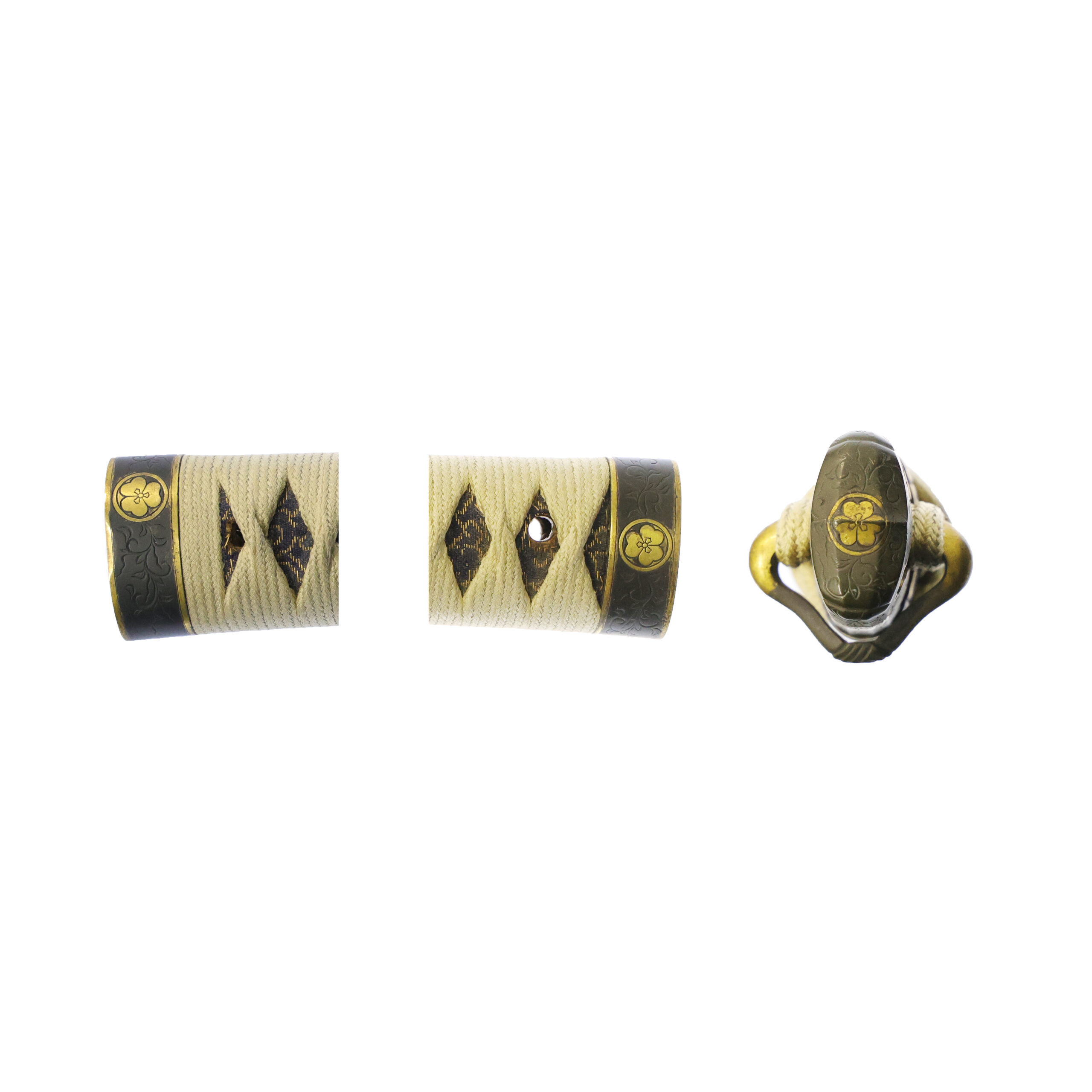
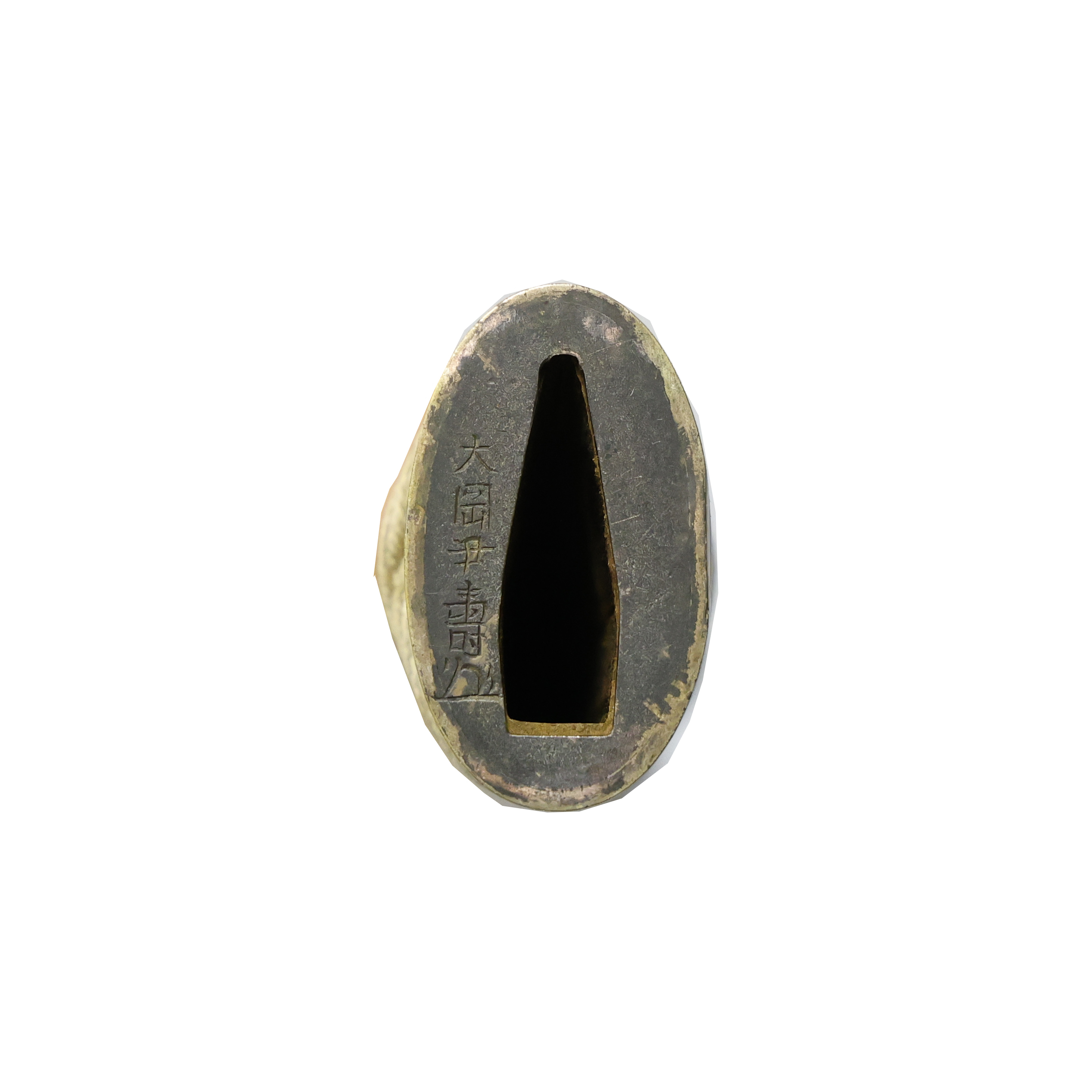
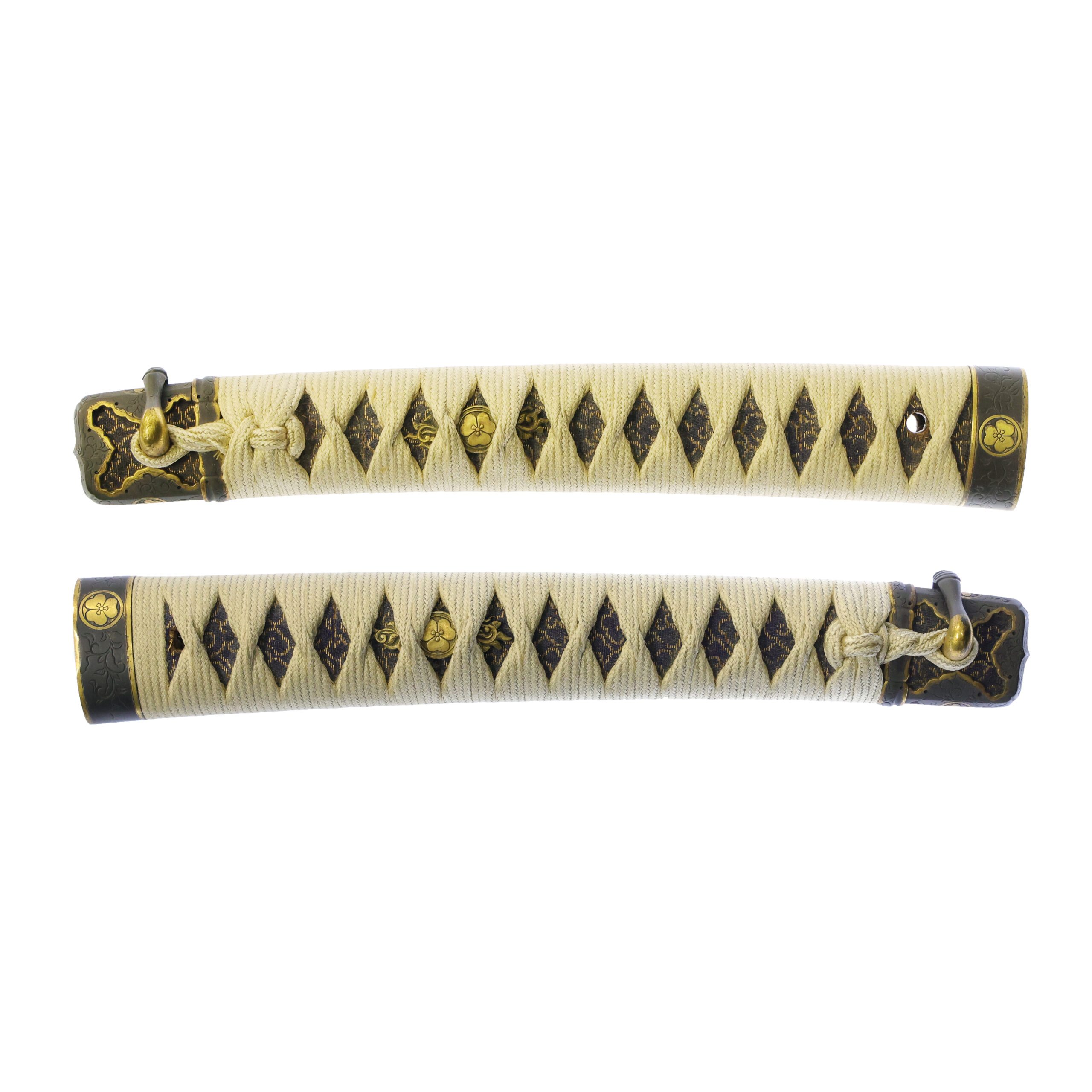
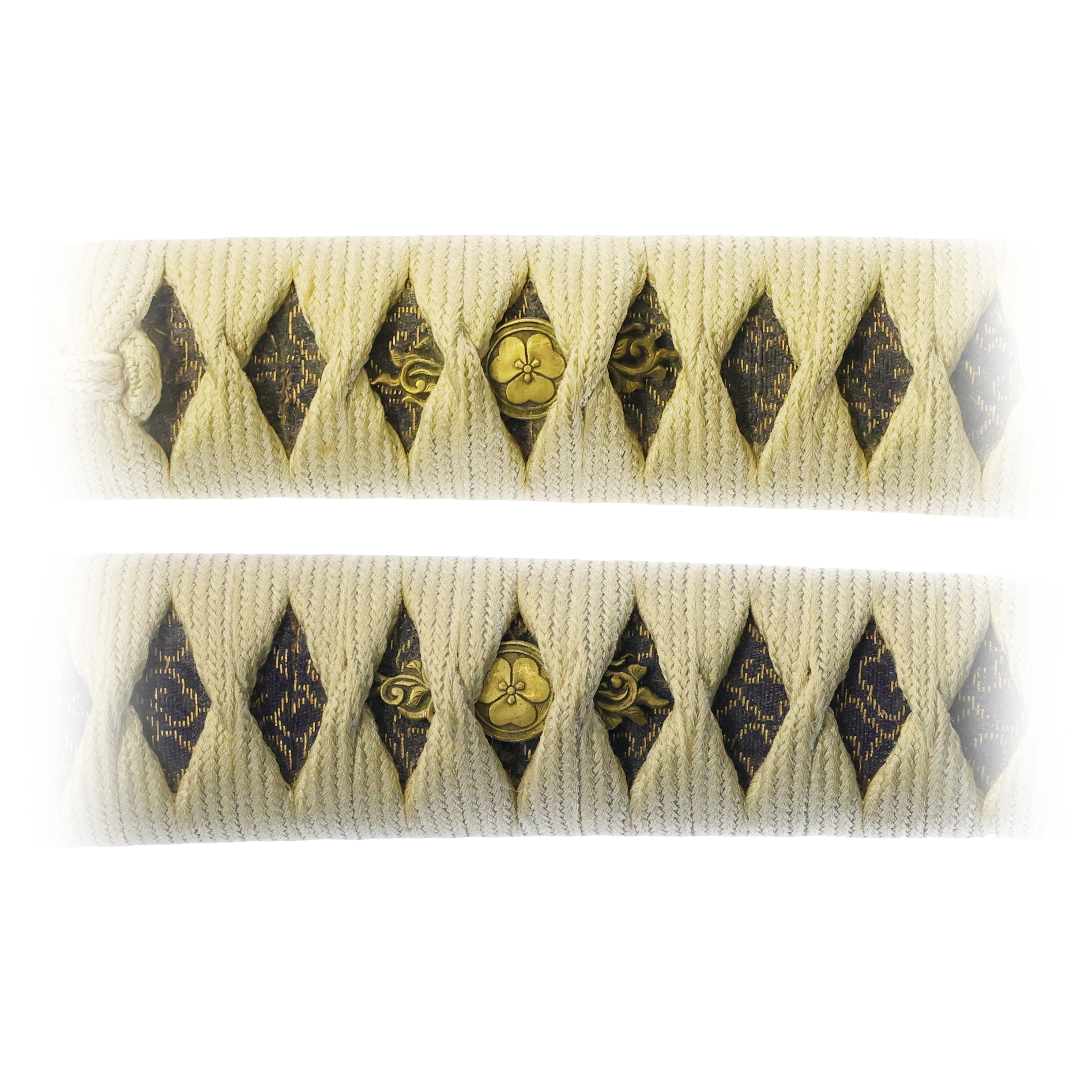
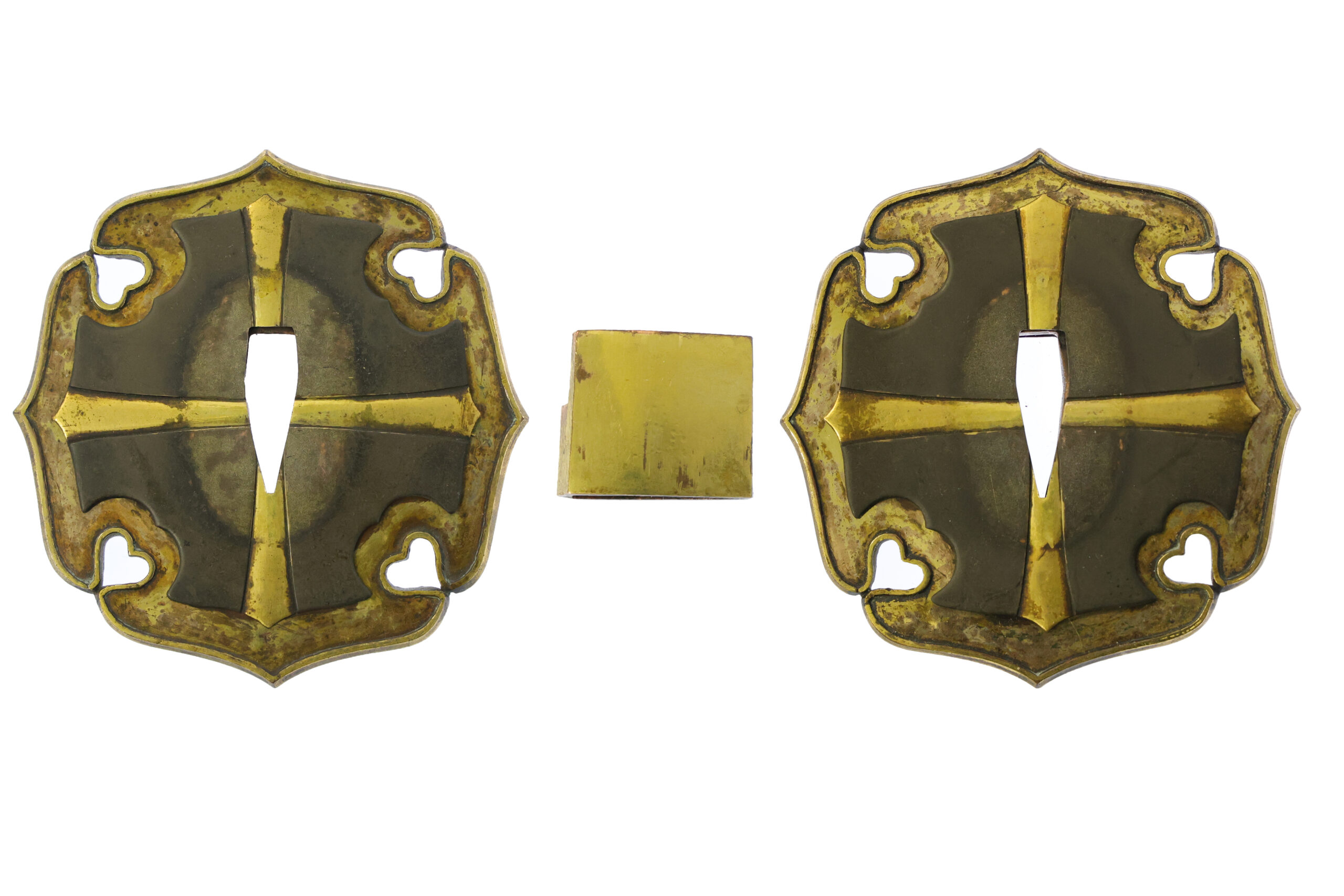
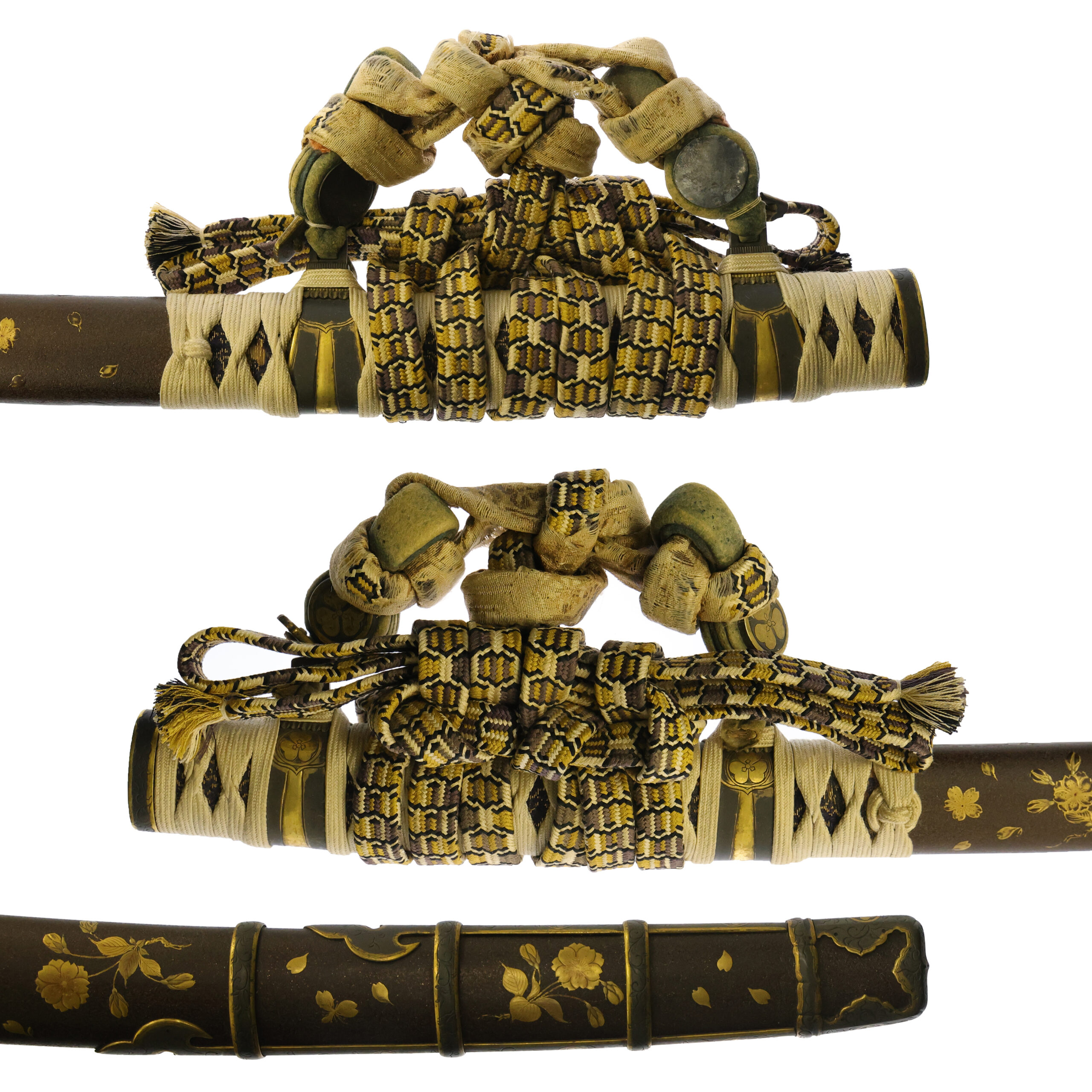
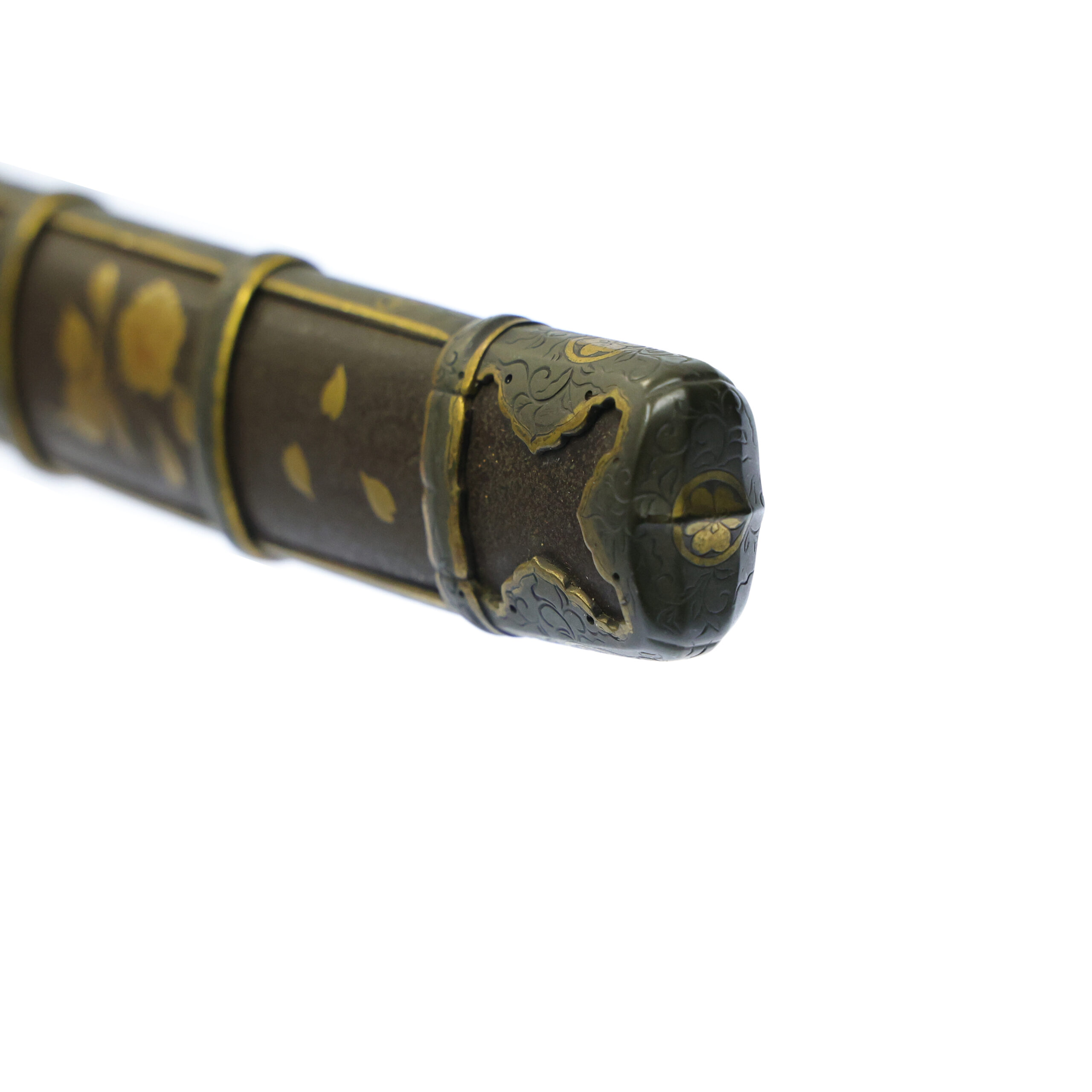
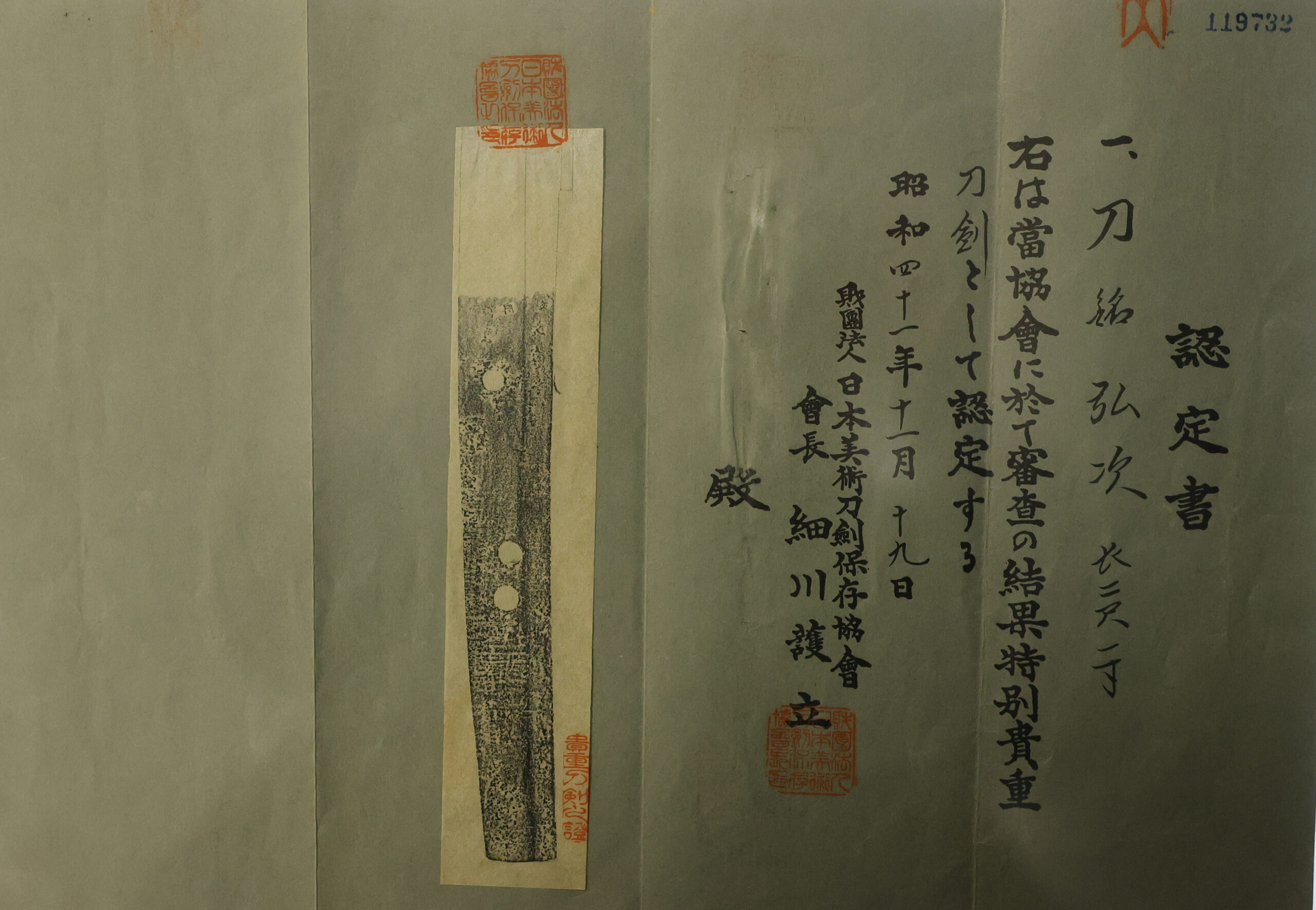
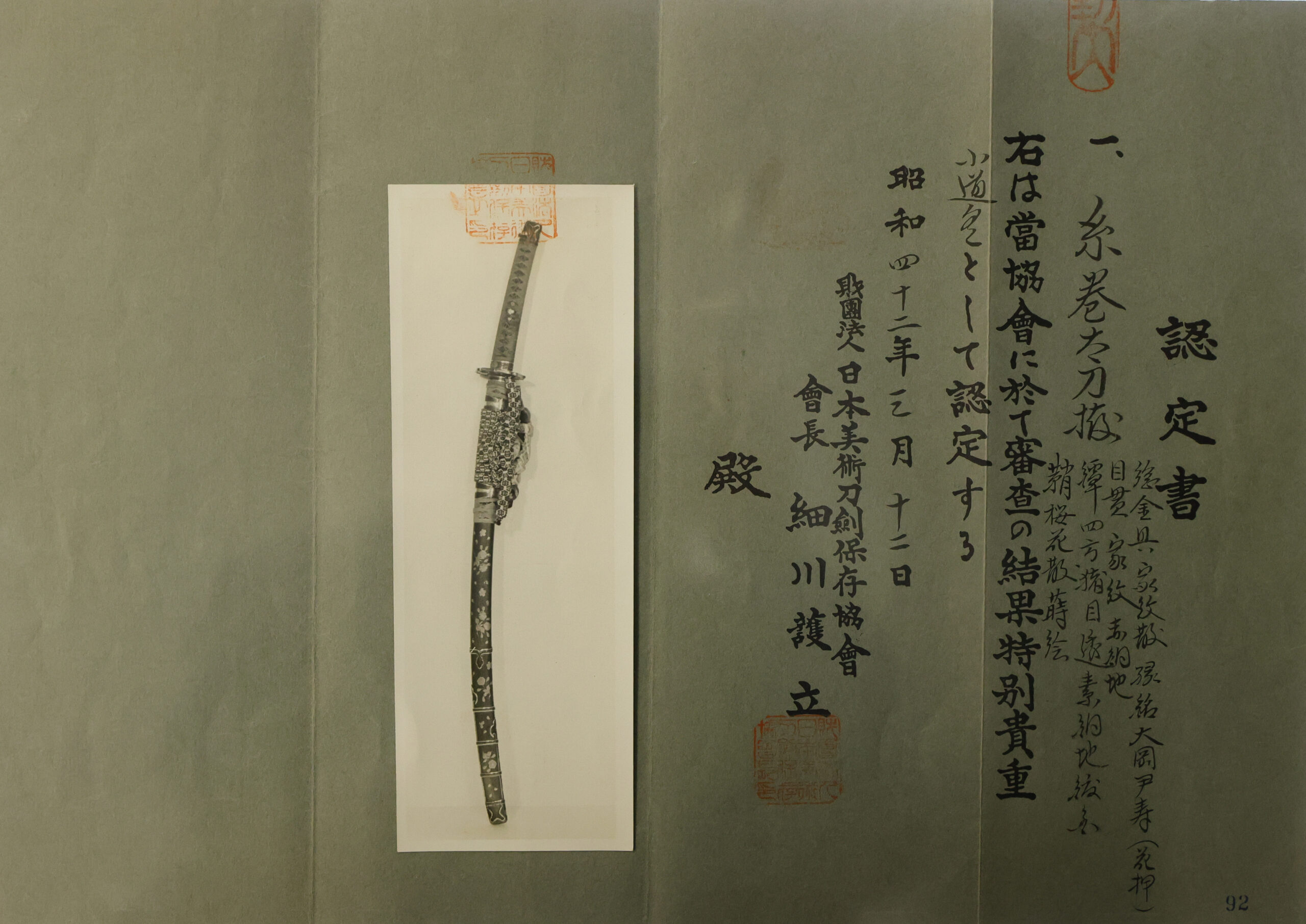
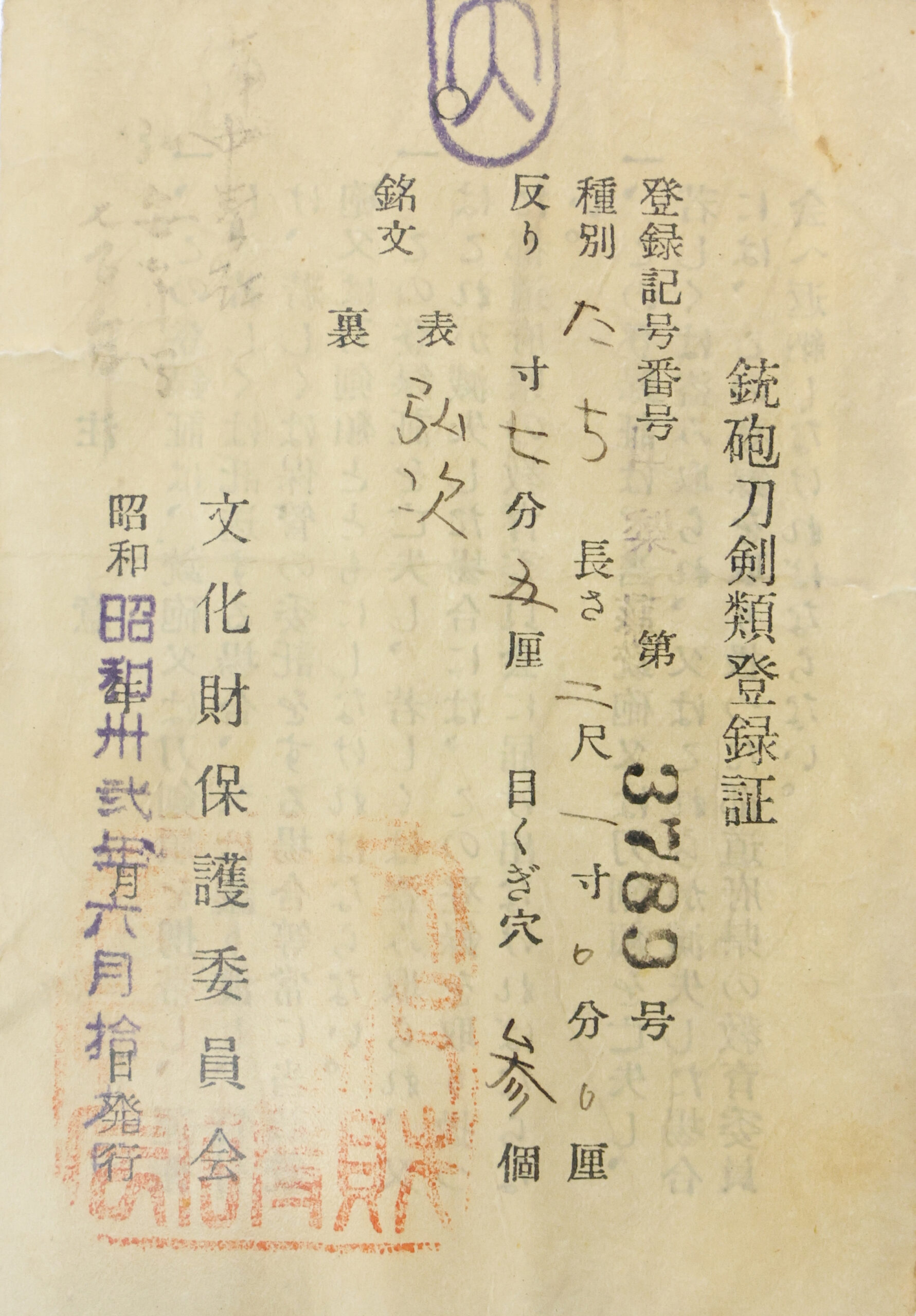
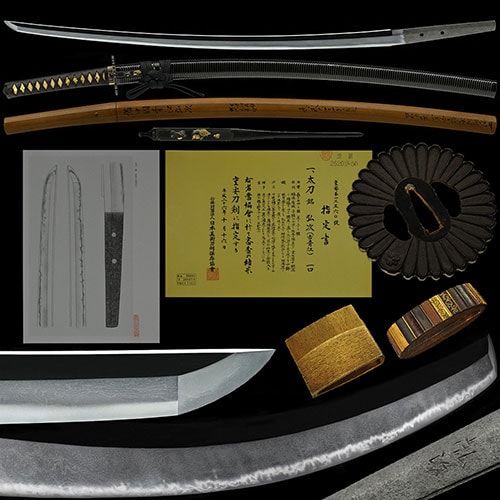
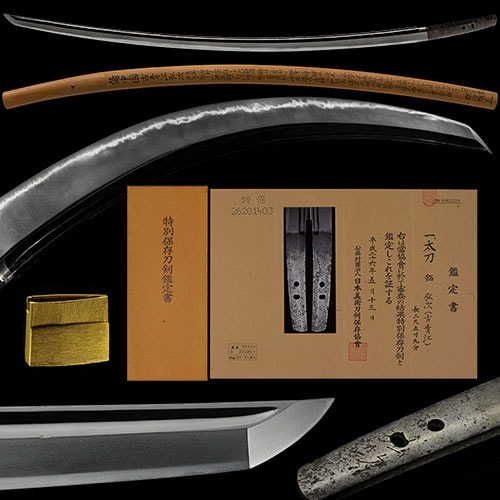
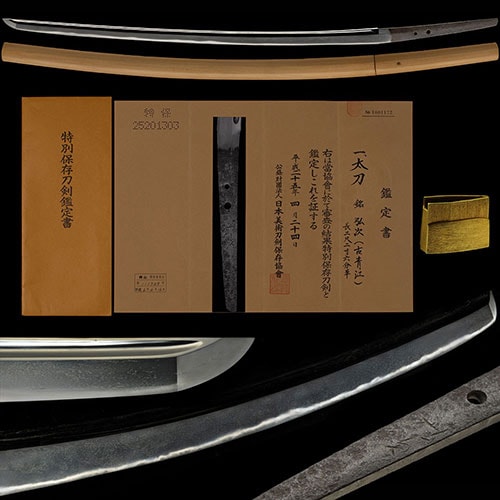
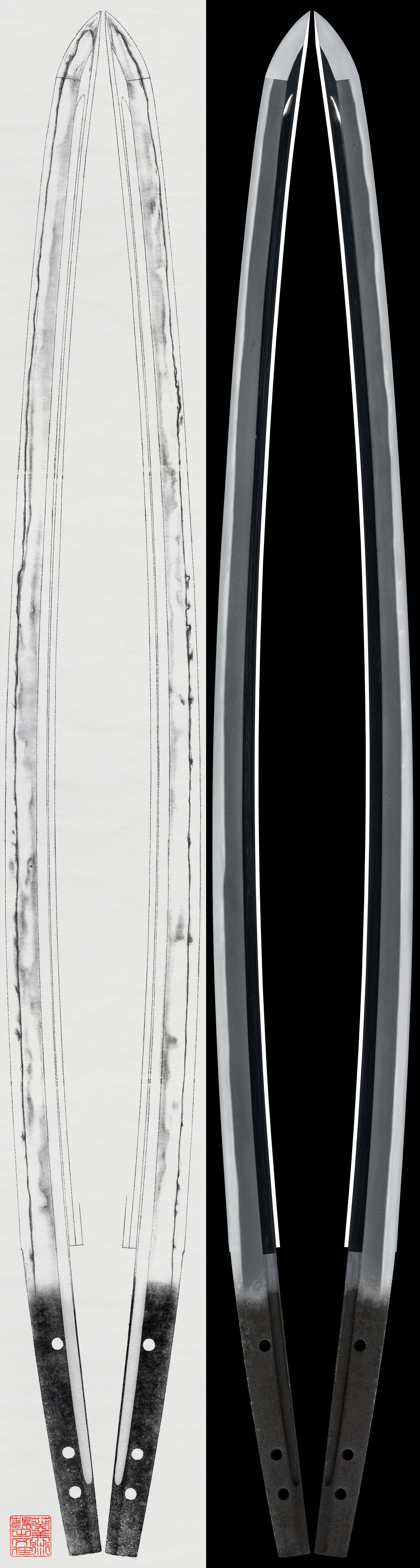
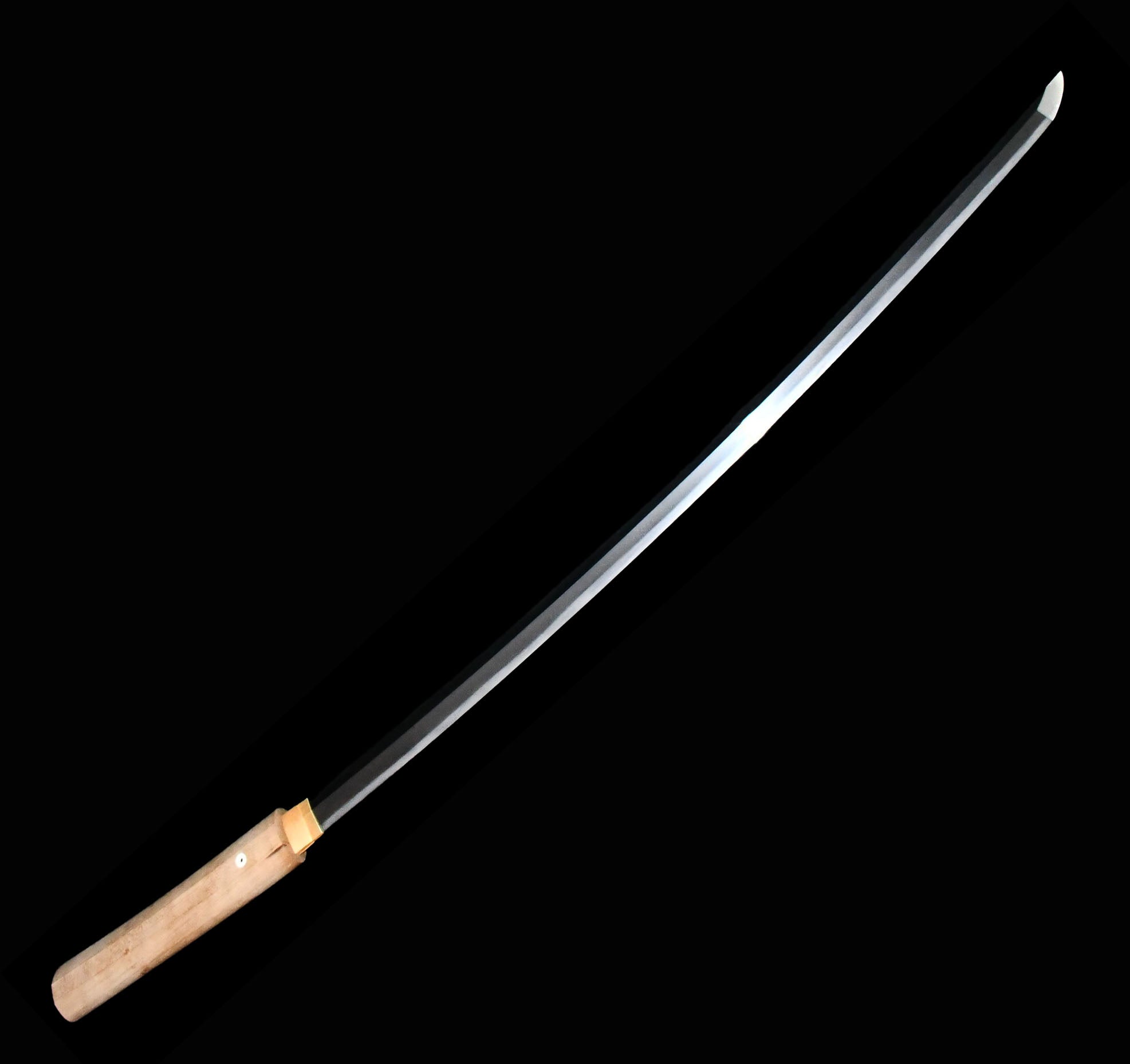
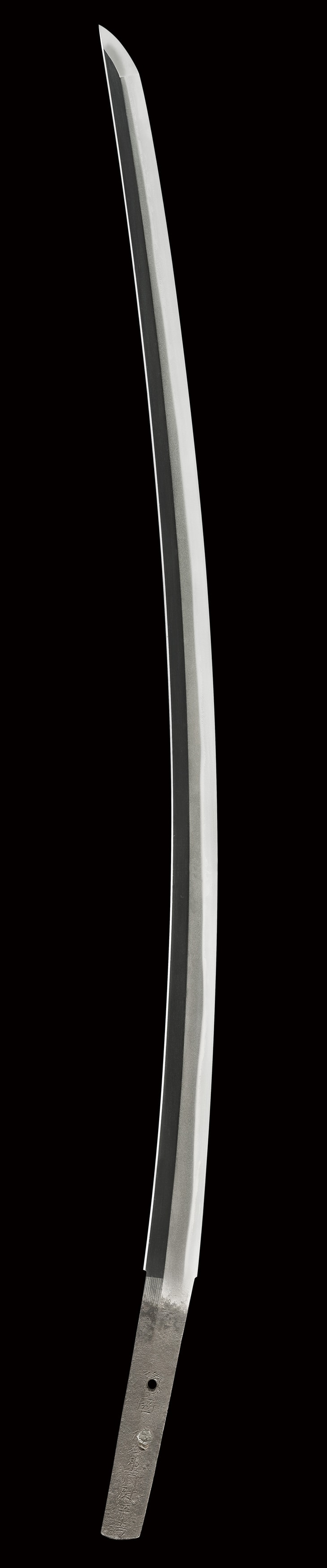
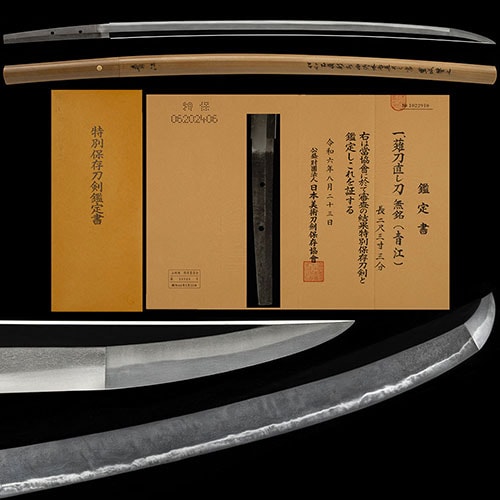
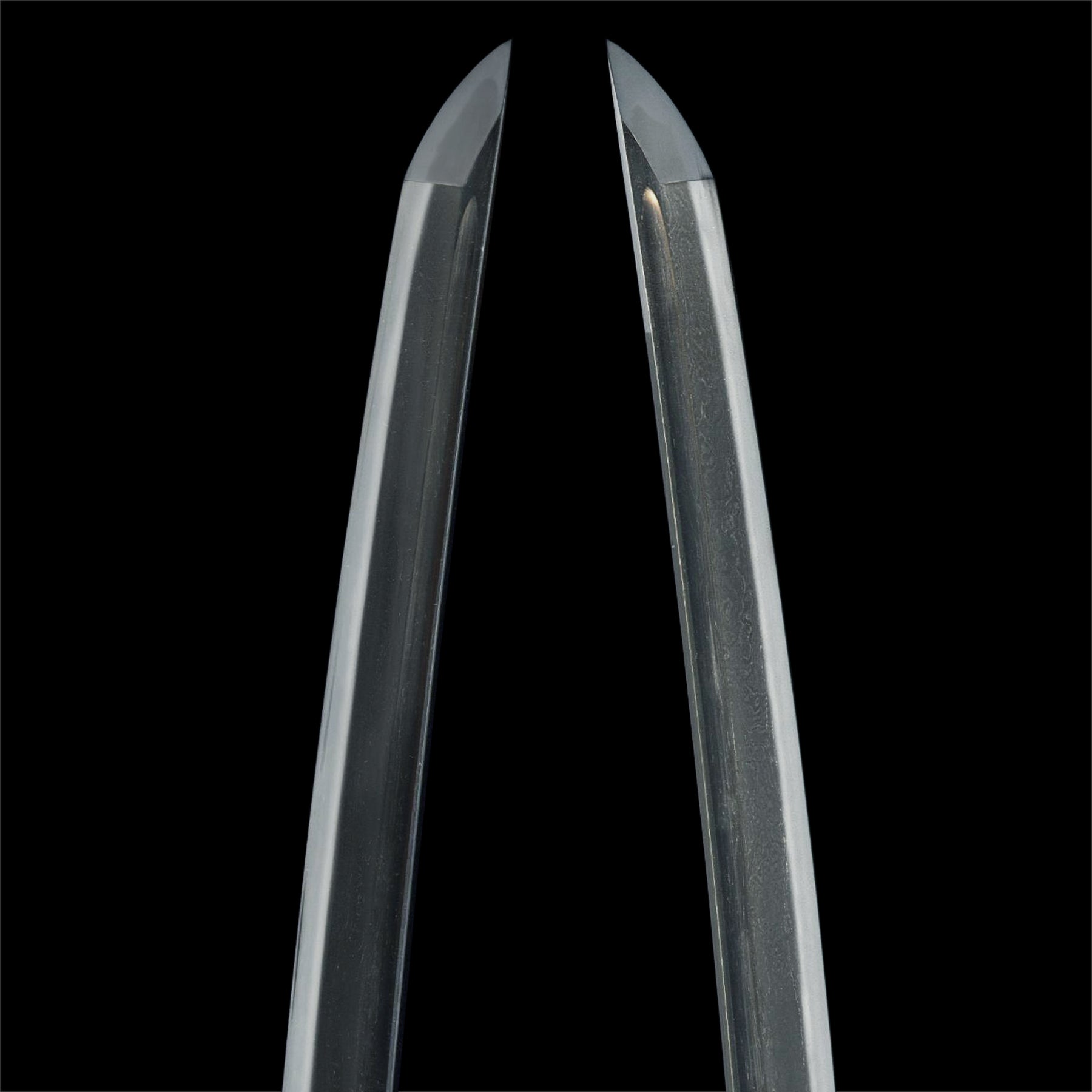
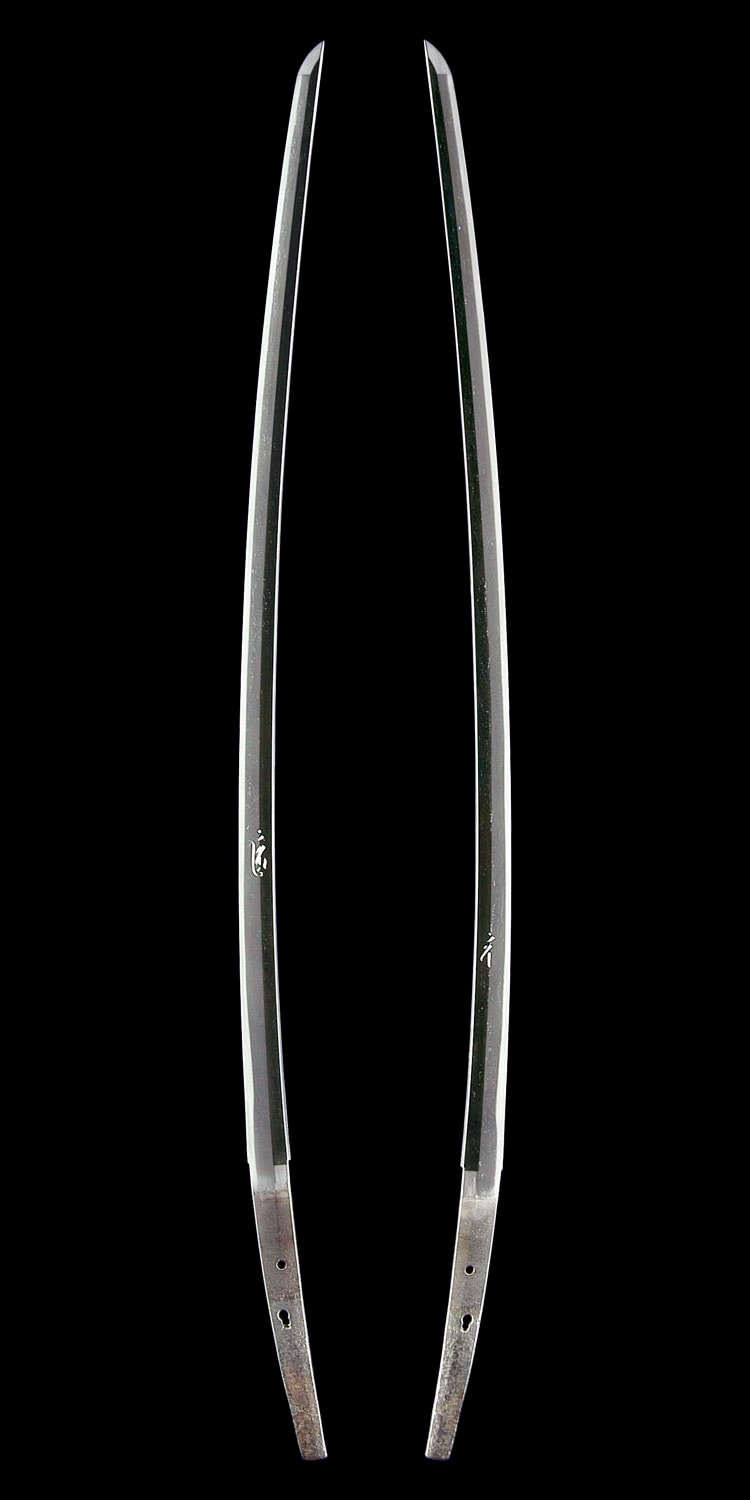
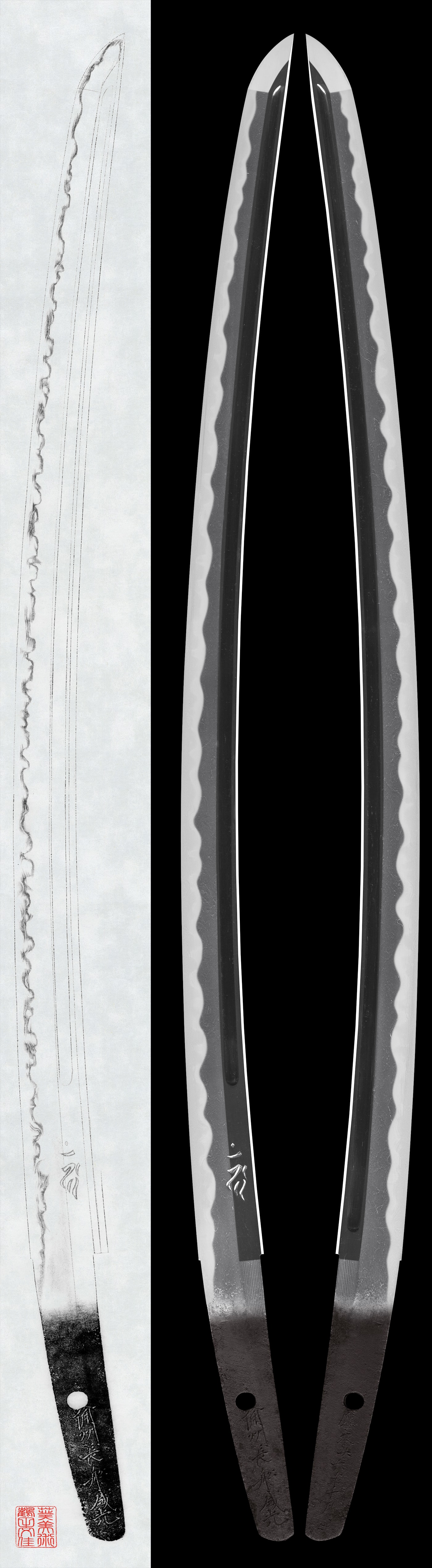
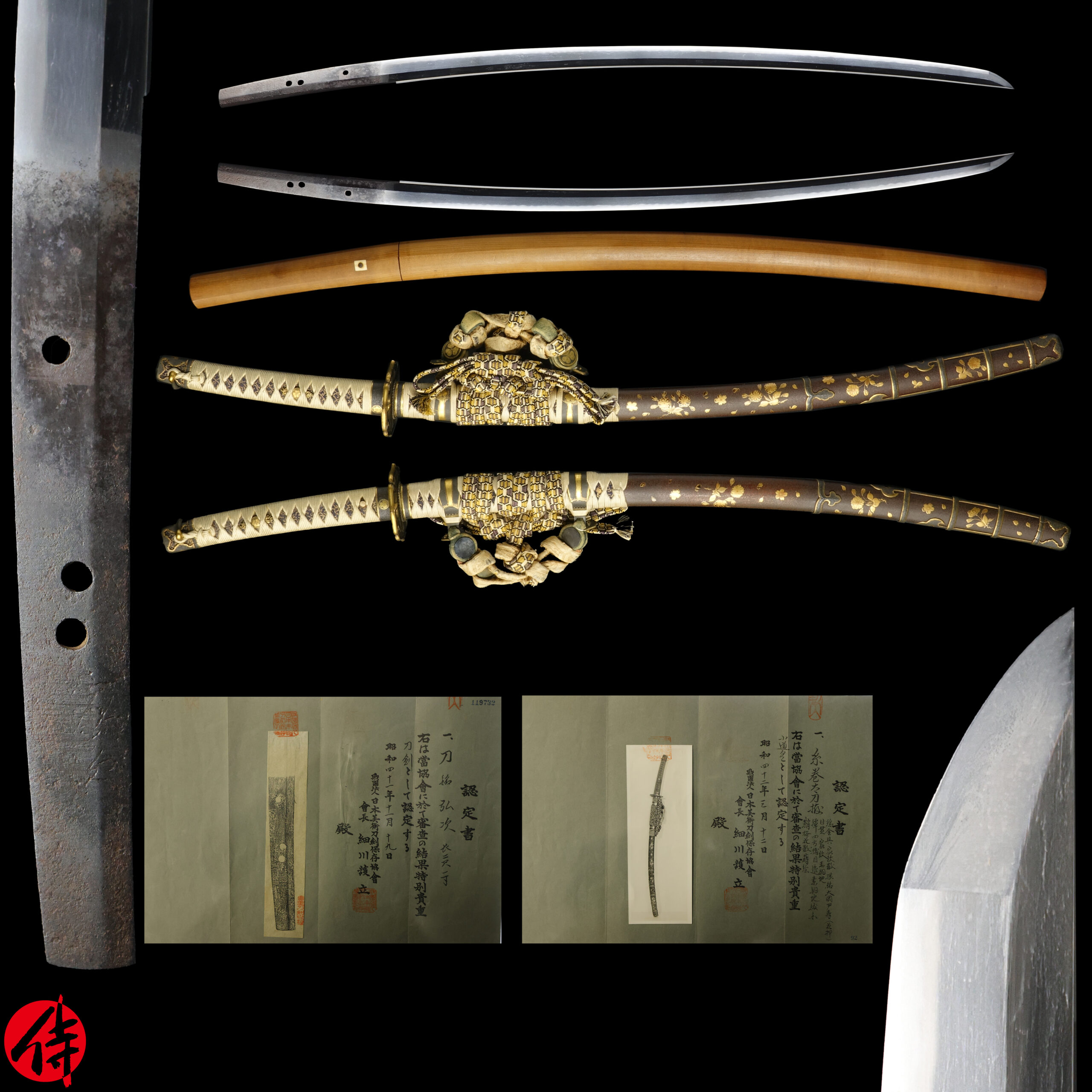
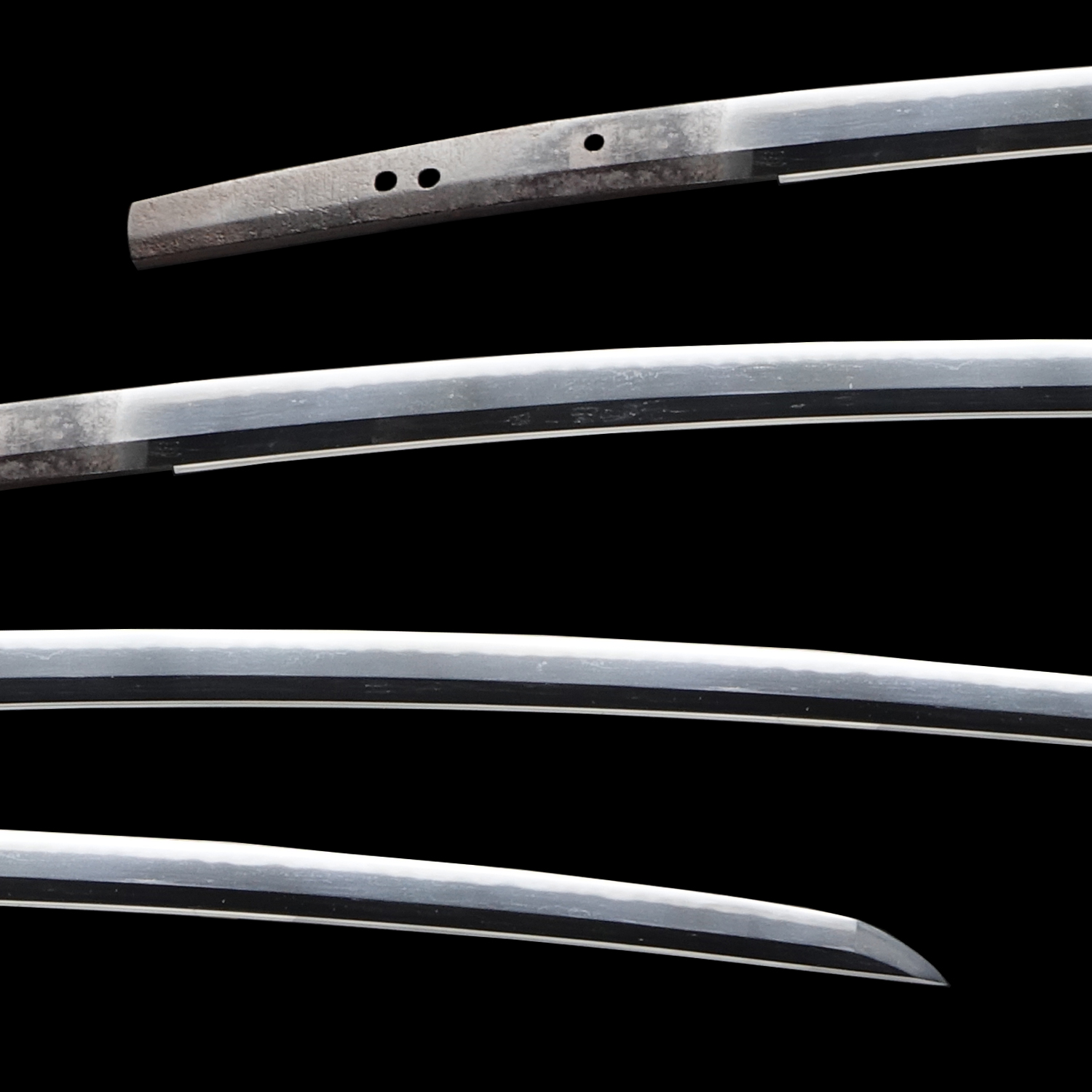
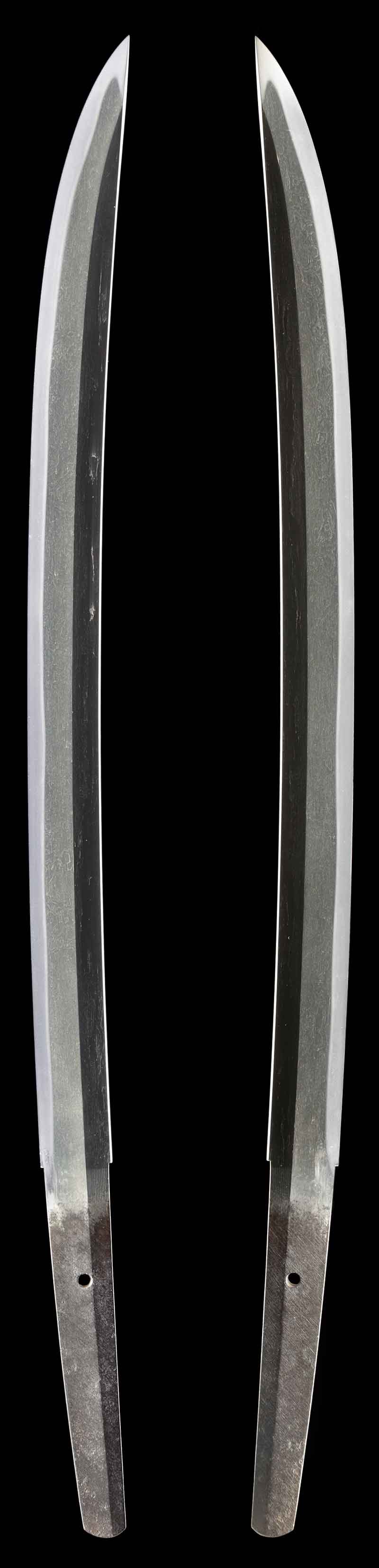
This antique Japanese Tachi is signed by Hirotsugu, a smith active during the Koto era (Kamakura-Muromachi period) in Bitchu province. It comes with an NBTHK Tokubetsu Kicho certificate for both the blade and its elaborate Tachi-koshirae, which features Katabami-mon and Mitsu Kashiwa family crests. The sword has a cutting edge length of 69.4 cm and a curvature of 2.2 cm.

NihontoWatch MonNihontoWatch
MarketAuctionsEncyclopedia
Swords›Bizen-den›Aoe›Ko-Aoe›Hirotsugu›Antique Japanese Sword Tachi Signed by Hirotsugu with NBTHK Tokubetsu Kicho Certificate for the blade and Koshirae
tachiTokubetsu Kichō
Ko-Aoe Hirotsugu

Antique Japanese Sword Tachi Signed by Hirotsugu with NBTHK Tokubetsu Kicho Certificate for the blade and Koshirae

mei · Genryaku (1184-1185) · nagasa 69.4cm · sori 2.2cm

SOLD
Ko-Aoe Hirotsugu — 1 of 26
Ko-Aoe Hirotsugu — 2 of 26
Ko-Aoe Hirotsugu — 3 of 26
Ko-Aoe Hirotsugu — 4 of 26
Ko-Aoe Hirotsugu — 5 of 26
Ko-Aoe Hirotsugu — 6 of 26
Ko-Aoe Hirotsugu — 7 of 26
Ko-Aoe Hirotsugu — 8 of 26
Ko-Aoe Hirotsugu — 9 of 26
Ko-Aoe Hirotsugu — 10 of 26
Ko-Aoe Hirotsugu — 11 of 26
Ko-Aoe Hirotsugu — 12 of 26
Ko-Aoe Hirotsugu — 13 of 26
Ko-Aoe Hirotsugu — 14 of 26
Ko-Aoe Hirotsugu — 15 of 26
Ko-Aoe Hirotsugu — 16 of 26
Ko-Aoe Hirotsugu — 17 of 26
Ko-Aoe Hirotsugu — 18 of 26
Ko-Aoe Hirotsugu — 19 of 26
Ko-Aoe Hirotsugu — 20 of 26
Ko-Aoe Hirotsugu — 21 of 26
Ko-Aoe Hirotsugu — 22 of 26
Ko-Aoe Hirotsugu — 23 of 26
Ko-Aoe Hirotsugu — 24 of 26
Ko-Aoe Hirotsugu — 25 of 26
Ko-Aoe Hirotsugu — 26 of 26
1 / 26
1 / 26
Ko-Aoe Hirotsugu — 1 of 26Ko-Aoe Hirotsugu — 2 of 26Ko-Aoe Hirotsugu — 3 of 26Ko-Aoe Hirotsugu — 4 of 26Ko-Aoe Hirotsugu — 5 of 26Ko-Aoe Hirotsugu — 6 of 26Ko-Aoe Hirotsugu — 7 of 26Ko-Aoe Hirotsugu — 8 of 26Ko-Aoe Hirotsugu — 9 of 26Ko-Aoe Hirotsugu — 10 of 26Ko-Aoe Hirotsugu — 11 of 26Ko-Aoe Hirotsugu — 12 of 26Ko-Aoe Hirotsugu — 13 of 26Ko-Aoe Hirotsugu — 14 of 26Ko-Aoe Hirotsugu — 15 of 26Ko-Aoe Hirotsugu — 16 of 26Ko-Aoe Hirotsugu — 17 of 26Ko-Aoe Hirotsugu — 18 of 26Ko-Aoe Hirotsugu — 19 of 26Ko-Aoe Hirotsugu — 20 of 26Ko-Aoe Hirotsugu — 21 of 26Ko-Aoe Hirotsugu — 22 of 26Ko-Aoe Hirotsugu — 23 of 26Ko-Aoe Hirotsugu — 24 of 26Ko-Aoe Hirotsugu — 25 of 26Ko-Aoe Hirotsugu — 26 of 26
Measurements & details
Smith
Ko-Aoe Hirotsugu
Type
Tachi
School
Ko-Aoe
Period
Around 1184–1185(Genryaku)
Province
Bitchu
Signature
Signed(100% of this smith's designated works are signed)
Measurements
Nagasa 69.4cmSori 2.2cm
Description

This antique Japanese Tachi is signed by Hirotsugu, a smith active during the Koto era (Kamakura-Muromachi period) in Bitchu province. It comes with an NBTHK Tokubetsu Kicho certificate for both the blade and its elaborate Tachi-koshirae, which features Katabami-mon and Mitsu Kashiwa family crests. The sword has a cutting edge length of 69.4 cm and a curvature of 2.2 cm.

About the maker

Hirotsugu

弘次

Ko-Aoe (Aoe, Bitchu) · Bitchu · around 1184-1185

Tōken Taikan top 5%

1 piece on the market now

›

Hirotsugu is a Ko-Aoe smith of Bitchū province whose surviving signed work falls across the early to middle Kamakura period, the span under which the Aoe school's earliest and most archaic blades are gathered. The Aoe group worked at Ko'i and Manju in the lower Takahashi river basin, and is traditionally founded by Yasutsugu around the Jōan era of the early 1170s. The published sources place Hirotsugu within the meikan as a son of Kunitsugu, his period given as Kōan, the name continuing through several recorded generations from the Genryaku era down to a late appearance in the Bunwa era of the Nanbokuchō period. Against that documentary placement the workmanship of his surviving tachi reads older: the judges on the 24th-session Jūyō blade note that although the meikan gives a Kōan date, its two-character signature and archaic manner give it points in common with the early-Kamakura Aoe group[[c:1]]. His extant signed work is comparatively scarce, the commentary on the earliest of his Jūyō tachi noting only that he was an Aoe smith whose pieces are few[[c:2]], so his hand is read from a small but consistent body of slender tachi.

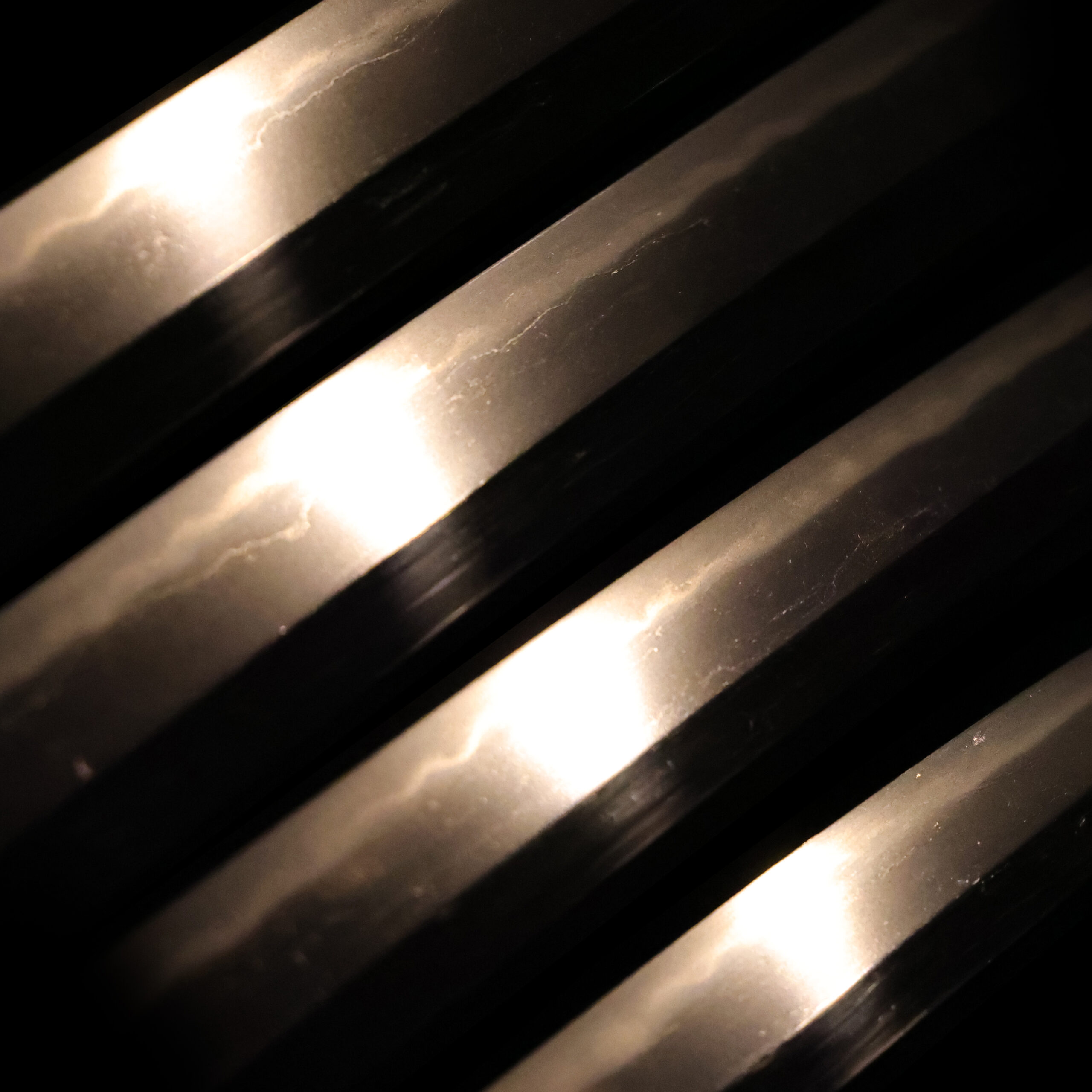
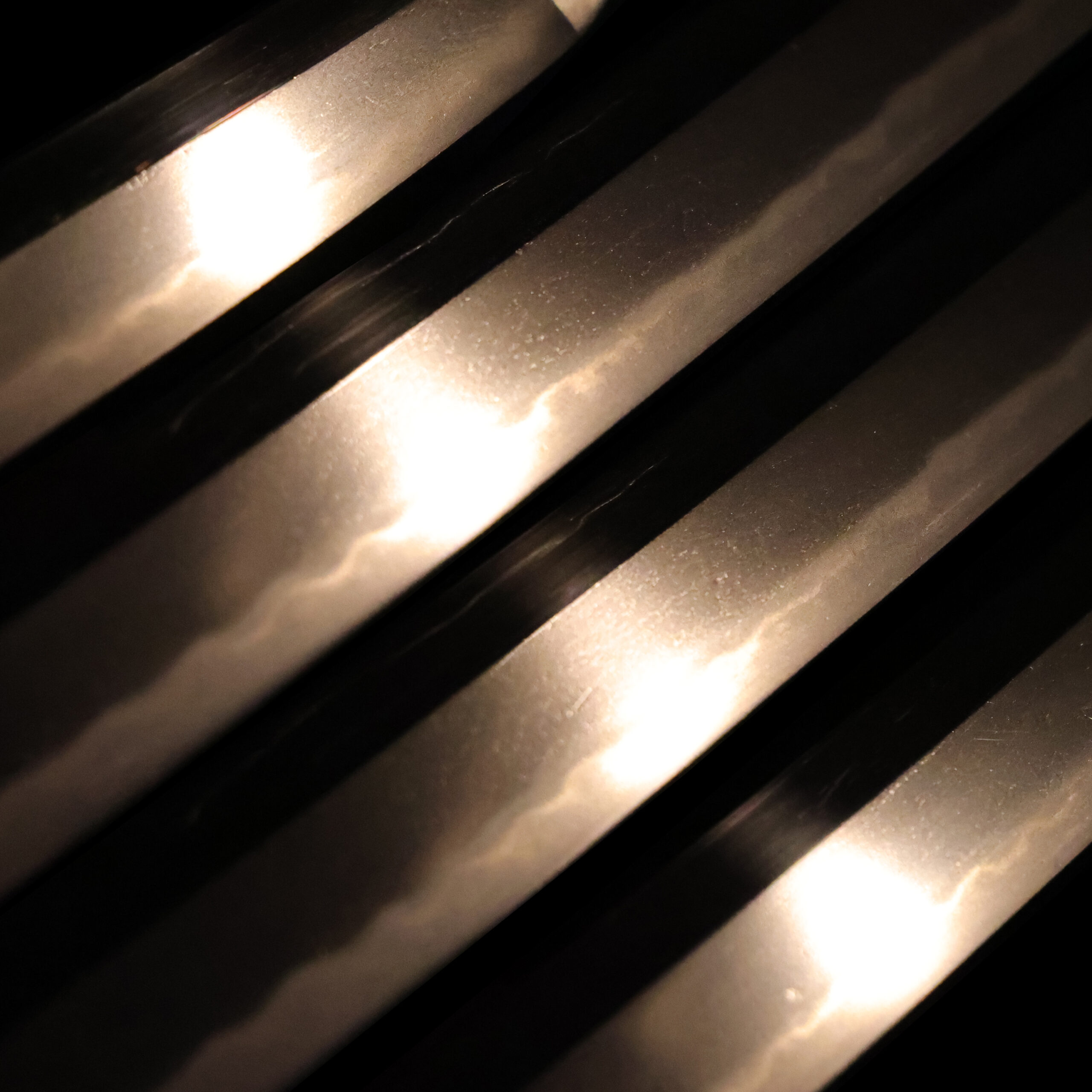
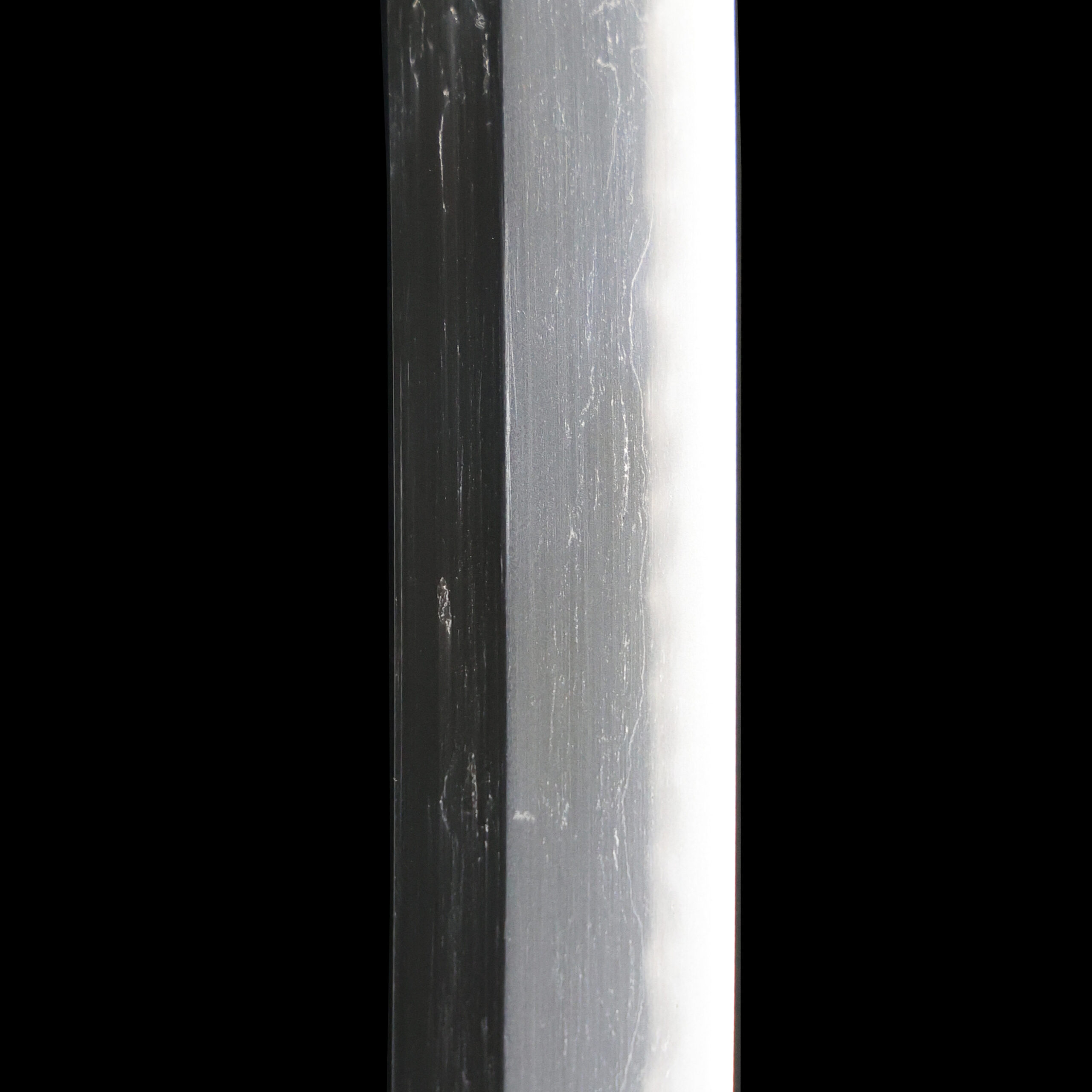
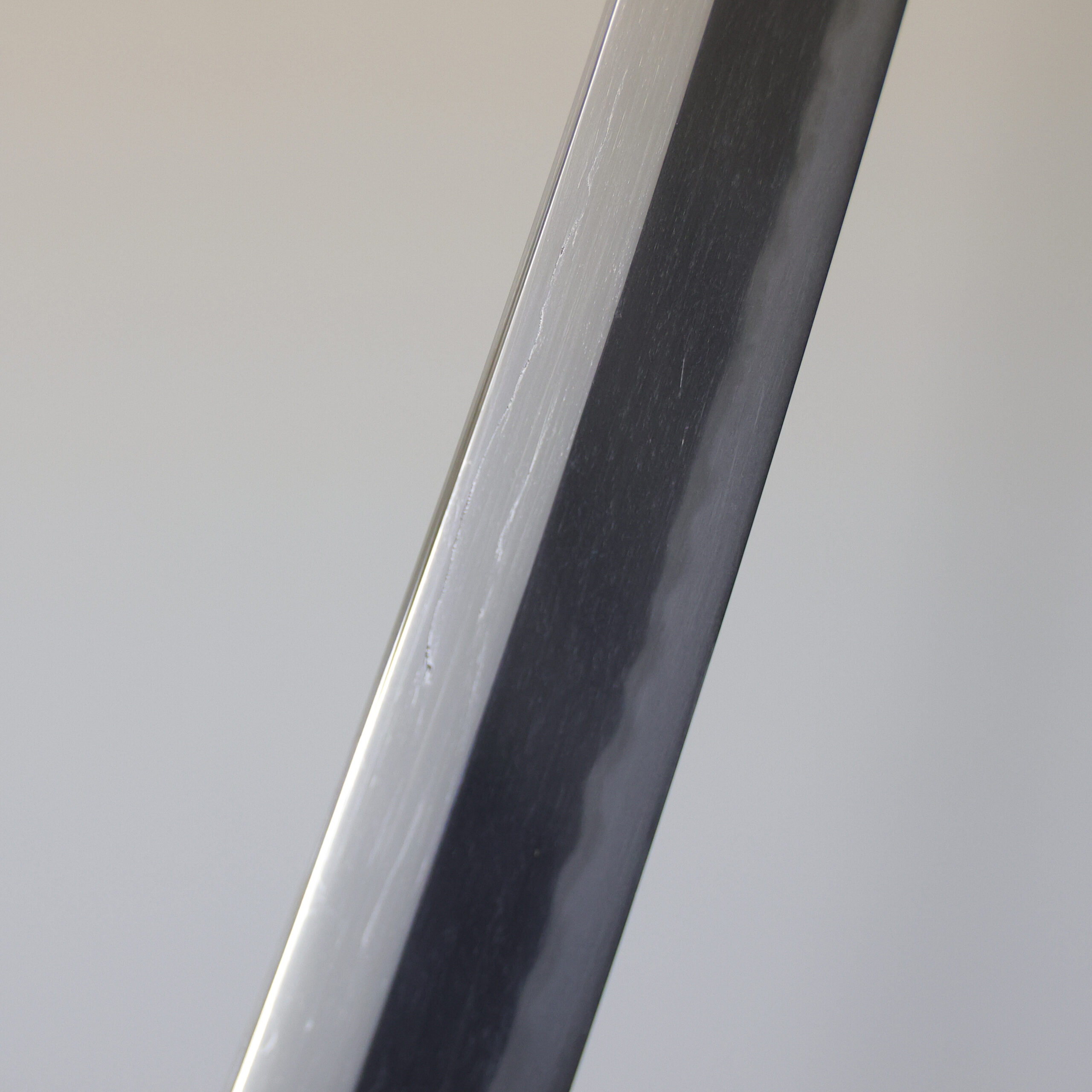
The forging is where his blades are first known, and it is the Aoe jigane in its clearest form. Over an itame-hada thick with mokume the grain stands and gathers into the crepe-like texture the school is named for, what the published sources call the so-called chirimen skin[[c:3]]. Through that crepe ji fine ji-nie attaches thickly and chikei enter, and into it is mixed jifu, the patchy mottling of old Bizen-related steel, out of which a faint jifu-utsuri rises rather than the bright midare-utsuri of contemporary Bizen work. This is the discriminating mark of his jigane: not a clear reflection read across the ji, but a speckled, quiet shadow gathered out of the mottling, the Aoe variant of the Bizen feature. It is a jigane of subdued depth, and the published sources, characterizing the school, say that compared with contemporaneous Bizen work it is somewhat plainer and carries a quietly astringent savor[[c:4]].

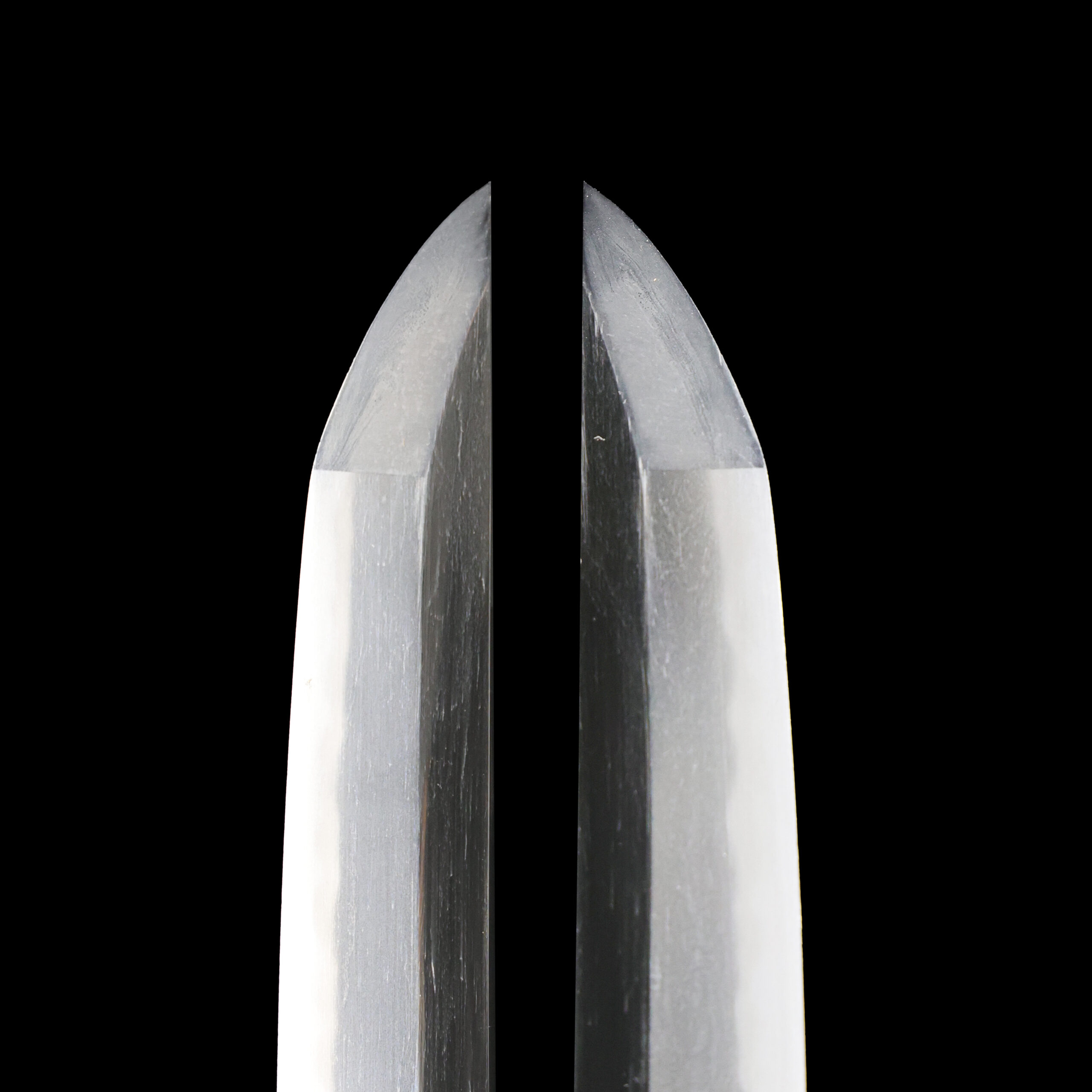
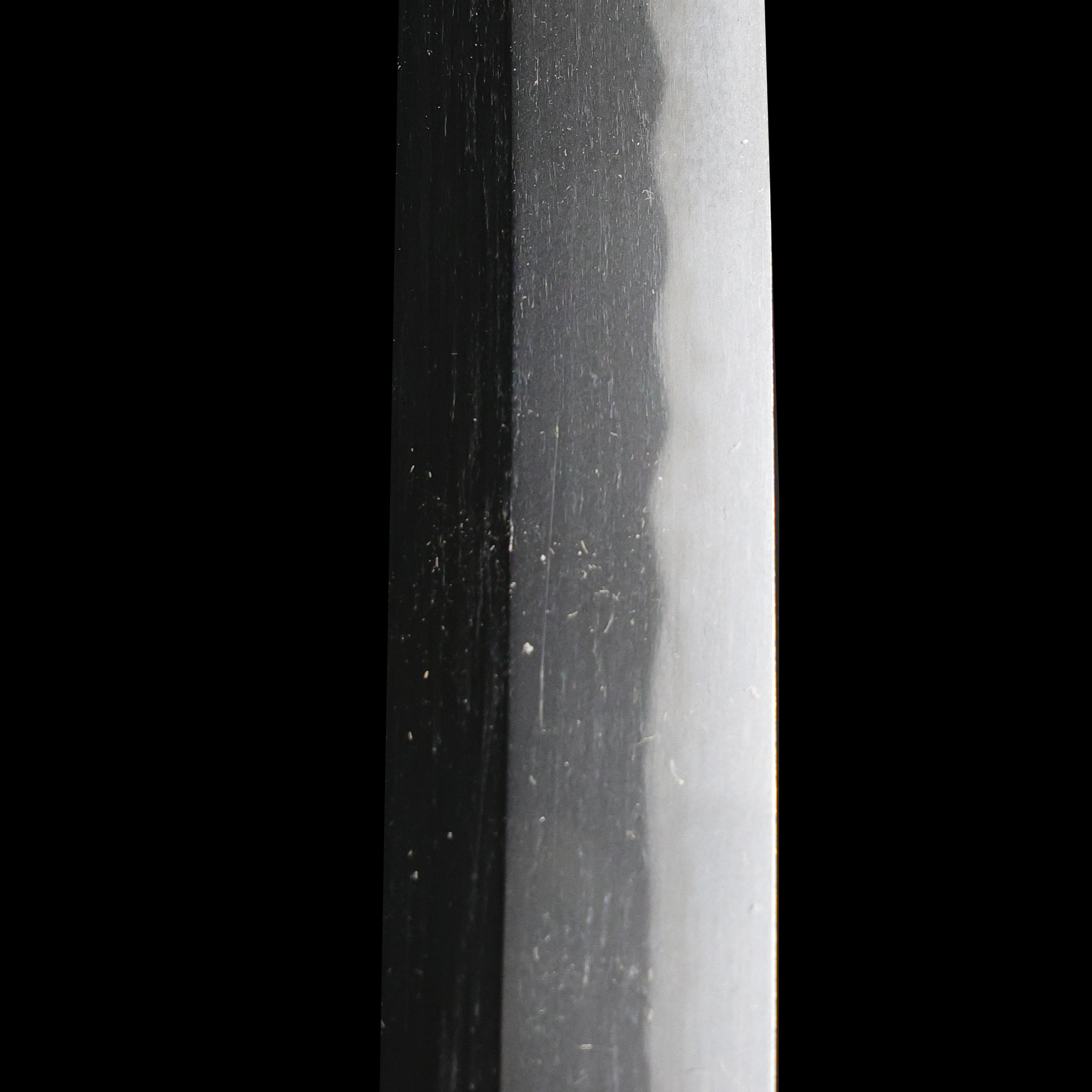
The temper sits over a chū-suguha base broken low into small midare, with a tendency toward small gunome and, on the more restrained blades, small chōji. Ashi and yō enter frequently, the work carried in nie, the habuchi showing hotsure with fine sunagashi; the nioiguchi runs deep and in places takes on an urumi softness. On the 60th-session Jūyō tachi, the richest of his extant ha, the activity opens further: ashi and saka-ashi together, the reverse-slanting feet that are the Aoe hallmark, with ko-nie, small yubashiri and tobiyaki-like spots, hotsure, sunagashi and kinsuji all entering. That saka-ashi, the feet slanting back toward the base, is the clearest point by which his hamon parts from the straight ashi of Bizen. The bōshi runs straight and turns back small, ko-maru on most blades and pointed on others, often touched by hakikake, and once ending in yakitsume. The signature is cut in two characters at the tip of the nakago, and four of the five surviving tachi are suriage with one preserved ubu.

Within that single coherent manner the published record draws one telling distinction, concerning the brightness of the nioiguchi. Many Ko-Aoe works tend to a shizumi, a sinking and subdued nioiguchi, part of what the sources mean in calling the school plainer than Bizen. Against this the Tokubetsu Jūyō tachi is singled out: whereas the usual Ko-Aoe blade sinks, this one is instead rather bright, a point the judges expressly draw attention to[[c:5]]. The same blade is read as expressing the features of the school with particular clarity, a crepe ji with jifu and a jifu-utsuri-like reflection, an archaic and well-nie'd suguha foundation mixed with small midare and a tendency to small gunome, the fine variation along the habuchi conveying an old flavor. The ubu 37th-session tachi shows the other side of his range, carrying horimono, a suken at the koshimoto and bō-hi with soe-hi run as kaki-nagashi, its two-character signature cut large with a thick chisel, the kind of confident original blade that anchors the reading of the suriage pieces.

Hirotsugu's place is among the early Ko-Aoe makers whose work the NBTHK gathers close to old Bizen, and his distinction is carried by his own attested traits rather than by the comparison: the crepe itame with its jifu, the faint jifu-utsuri, the saka-ashi-bearing suguha worked in nie. The published commentary on the 14th-session tachi reads the slender, shallow-sori, small-pointed build together with the small itame turning to chirimen-hada and the suguha base mixed with ko-chōji midare as clearly showing the characteristic features of the Aoe school of the Kamakura period[[c:6]], and finds it an excellent tachi in both ji and ha. His archaic, nie-worked suguha sets him apart from the later Aoe smiths, whose saka-chōji and dan-utsuri grew more pronounced into the Nanbokuchō period; he belongs to the quieter, earlier register of the school, the manner the sources repeatedly read as old-fragrant and classically elegant. The 60th-session tachi is judged a Ko-Aoe work rich in subdued savor whose activities in both ji and ha are full of nuance[[c:7]], valued besides as study material for an extant example by his hand.

The weight of designation behind his name is modest in number but high in tier. Of the works on official record, five are designated, reaching the Tokubetsu Jūyō and Jūyō ranks and one Important Cultural Property; there are no National Treasures. The Important Cultural Property tachi is held at the Akihasan Hongū Akiha Shrine, patrimony in shrine keeping rather than anything that moves, and one further blade is recorded as a Prefectural Cultural Property in private hands. None of his blades carries a recorded denrai lineage of owners, so the connoisseurship rests on the tier record and on the quality the judges read into individual pieces, foremost the Tokubetsu Jūyō tachi, whose original robust construction is described as well retained, a thick kasane and full hiraniku surviving the shortening into a hamaguri-ba, plainly a careful commission for a warrior house[[c:8]]. With his signed tachi few and the foremost held as cultural property, a Hirotsugu in open hands is among the rarer encounters in old Aoe work, the Tokubetsu Jūyō and Jūyō pieces reaching the market only seldom and a signed example a landmark when one does.

Historical importance

Where Hirotsugu stands among comparable artisans: across all of nihontō, and within tradition, era, and period. The tiers (Foremost · Leading · Major · Notable) weigh official designations from the NBTHK and Japan's Agency for Cultural Affairs, together with historical honors of lasting repute such as the Sansaku and Meibutsu-chō.

随一
Foremost
屈指
Leading
有数
Major
著名
Notable

Select a lens to see how it's measured.

Designation record
5 designated works
Jūyō Bunkazai
1
Tokubetsu Jūyō
1
Jūyō
3
1 work by Hirotsugu on the market→
Hirotsugu — full profileKo-Aoe (Aoe, Bitchu) school
About the school

Ko-Aoe

古青江

Bizen-den · Bitchu

Phase: Ko-Aoe古青江· 1100–1235

3 pieces on the market now

›

The Ko-Aoe school flourished in the lower basin of the Takahashi River in Bitchu Province, forging swords at the districts of Koi and Manju in a region long renowned as a source of iron. The school is traditionally held to have begun with Yasutsugu around the Joan era (1171-1175), and works produced from the end of the Heian period through approximately the mid-Kamakura period are distinguished as Ko-Aoe, with production continuing under the broader Aoe designation through the late Nanbokucho era. Learn more →

Leading smiths
SmithEraDesignated
Masatsune正恒1213-121928
Yasutsugu康次1211-121311
Kanetsugu包次1211-12139
Tsunetsugu恒次1207-121112
Suketsugu助次1261-126414
Explore the Ko-Aoe school →
Authenticity not guaranteed

This work carries older NBTHK “Kichō”-era papers, which the NBTHK no longer issues and now regards as unreliable. To confirm the attribution, submission to an official Japanese examination body (such as the NBTHK or NTHK) for modern certification could be considered.

Seller
S
Samurai Museum
🇯🇵Ships from Japan
›
✓Verified dealersamuraimuseum.jp
✓Ships worldwide✓English supportPayPalCredit card
Return policy

Returns/exchanges limited to defects caused by shipping (except willful misconduct or gross negligence by the company); customers must contact within 72 hours of receiving the product.

View all of Samurai Museum’s listings→View this item on the dealer’s site→

More works by Ko-Aoe Hirotsugu

View all →
Eirakudo
Jūyō
Tachi - Jūyō - by Ko-Aoe Hirotsugu - Hirotsugu - Juyo TokenTachi - Jūyō - by Ko-Aoe Hirotsugu - Hirotsugu - Juyo Token

Tachi

ByKo-Aoe Hirotsugu
Ask

Previously sold by Ko-Aoe Hirotsugu

Eirakudo
Tokuho
Tachi - Tokuho - by Ko-Aoe Hirotsugu - Hirotsugu Koaoe - Tokubetsu Hozon TokenTachi - Tokuho - by Ko-Aoe Hirotsugu - Hirotsugu Koaoe - Tokubetsu Hozon Token
Sold

Tachi

ByKo-Aoe Hirotsugu
SOLD
Eirakudo
Tokuho
Tachi - Tokuho - by Ko-Aoe Hirotsugu - Ko-Aoe Hirotsugu - Tokubetsu Hozon TokenTachi - Tokuho - by Ko-Aoe Hirotsugu - Ko-Aoe Hirotsugu - Tokubetsu Hozon Token
Sold

Tachi

ByKo-Aoe Hirotsugu
SOLD

More from the Ko-Aoe school

View all →
Goushuya
Jūyō Bijutsuhin
Tachi - Jubi - by Ko-Aoe School - Important Art Object Tachi: Sueyoshi of Ko-Aoe, Passed down in the Naito Family, Lord of Murakami Domain, Echigo ProvinceTachi - Jubi - by Ko-Aoe School - Important Art Object Tachi: Sueyoshi of Ko-Aoe, Passed down in the Naito Family, Lord of Murakami Domain, Echigo Province

Tachi

ByKo-Aoe School
Ask
Nihon Art
Jūyō
Tachi - Jūyō - by Ko-Aoe Tsuneyoshi - Ko-Aoe TsuneyoshiTachi - Jūyō - by Ko-Aoe Tsuneyoshi - Ko-Aoe Tsuneyoshi

Tachi

ByKo-Aoe Tsuneyoshi
Ask

More from the Aoe school

View all →
Eirakudo
Jūyō Bijutsuhin
Katana - Jubi - by Chu-Aoe Sadatsugu - Aoe Sadatsugu - Juyo BijutsuhinKatana - Jubi - by Chu-Aoe Sadatsugu - Aoe Sadatsugu - Juyo Bijutsuhin

Katana

ByChu-Aoe Sadatsugu
Ask
Token-Net
Jūyō
Jūyō - by Aoe School - Naginata Naoshi Katana: Mumei (Aoe)Jūyō - by Aoe School - Naginata Naoshi Katana: Mumei (Aoe)

Naginata Naoshi Katana: Mumei (Aoe)

ByAoe School
¥3,200,000
Eirakudo
Tokuho
Tokuho - by Aoe School - Aoe Katana Tokubetsu Hozon TokenTokuho - by Aoe School - Aoe Katana Tokubetsu Hozon Token

Aoe Katana Tokubetsu Hozon Token

ByAoe School
¥2,380,000
Samurai Nippon
Jūyō
Kodachi - Jūyō - by Chu-Aoe Yoshitsugu - Kodachi: Bitchu no Kuni ju Uemonnojo Tairano Yoshitsugu (Aoe)Kodachi - Jūyō - by Chu-Aoe Yoshitsugu - Kodachi: Bitchu no Kuni ju Uemonnojo Tairano Yoshitsugu (Aoe)

Kodachi

ByChu-Aoe Yoshitsugu
¥6,500,000
Aoi Art
Jūyō
Katana - Jūyō - by Aoe School - Mumei (Aoe school)Katana - Jūyō - by Aoe School - Mumei (Aoe school)

Katana

ByAoe School
¥3,200,000
Toyuukai
Jūyō
Katana - Jūyō - by Aoe School - Mumei (Aoe) - 51st Juyo TokenKatana - Jūyō - by Aoe School - Mumei (Aoe) - 51st Juyo Token

Katana

ByAoe School
¥5,500,000
Toushin
Jūyō
Tachi - Jūyō - by Aoe School - Bitchu no Kuni ju Sahyoenojo Naotsugu saku - Gentoku 2nd Year (details unknown)Tachi - Jūyō - by Aoe School - Bitchu no Kuni ju Sahyoenojo Naotsugu saku - Gentoku 2nd Year (details unknown)

Tachi

ByAoe School
Ask
Tsuruginoya
Jūyō
Katana - Jūyō - by Aoe School - AoeKatana - Jūyō - by Aoe School - Aoe

Katana

ByAoe School
¥4,300,000

More from the Bizen tradition

View all →
Katanahanbai
Tokuho
Wakizashi - Tokuho - by Osafune Tomomitsu - Bishu Osafune Tomomitsu - Dated Teiji 5th Year, 8th MonthWakizashi - Tokuho - by Osafune Tomomitsu - Bishu Osafune Tomomitsu - Dated Teiji 5th Year, 8th Month

Wakizashi

ByOsafune Tomomitsu
¥4,800,000
Tsuruginoya
Jūyō
Katana - Jūyō - by Fukuoka Ichimonji School - Mumei Fukuoka IchimonjiKatana - Jūyō - by Fukuoka Ichimonji School - Mumei Fukuoka Ichimonji

Katana

ByFukuoka Ichimonji School
¥10,000,000
Nihonto.com
Jūyō
Tanto - Jūyō - by Osafune Kagemitsu - Juyo Tanto by Bizen KagemitsuTanto - Jūyō - by Osafune Kagemitsu - Juyo Tanto by Bizen Kagemitsu

Tantō

ByOsafune Kagemitsu
¥89,500
Eirakudo
Jūyō
Tachi - Jūyō - by Fukuoka Ichimonji School - Fukuoka Ichimonji - Juyo TokenTachi - Jūyō - by Fukuoka Ichimonji School - Fukuoka Ichimonji - Juyo Token

Tachi

ByFukuoka Ichimonji School
Ask
Aoi Art
Tokuho
Katana - Tokuho - by Osafune Motomitsu - Mumei (Attributed to Osafune Motomitsu)Katana - Tokuho - by Osafune Motomitsu - Mumei (Attributed to Osafune Motomitsu)

Katana

ByOsafune Motomitsu
¥1,200,000
Aoi Art
Jūyō
Katana - Jūyō - by Yoshioka Ichimonji Sukemitsu - Ichi Bizen-koku Yoshioka Sakon Sho (Sukemitsu)Katana - Jūyō - by Yoshioka Ichimonji Sukemitsu - Ichi Bizen-koku Yoshioka Sakon Sho (Sukemitsu)

Katana

ByYoshioka Ichimonji Sukemitsu
¥9,500,000
Goushuya
Jūyō
Katana - Jūyō - by Osafune Kanemitsu - Kanemitsu with Gold Inlay InscriptionKatana - Jūyō - by Osafune Kanemitsu - Kanemitsu with Gold Inlay Inscription

Katana

ByOsafune Kanemitsu
Ask
Iida Koendo
Jūyō
Tachi - Jūyō - by Osafune Shigezane - Bishu Osafune ju Shigezane, Enbun 3rd year, 12th monthTachi - Jūyō - by Osafune Shigezane - Bishu Osafune ju Shigezane, Enbun 3rd year, 12th month

Tachi

ByOsafune Shigezane
¥33,000,000

Swords

  • Katana
  • Wakizashi
  • Tantō
  • Tachi
  • Naginata
  • Yari

Fittings

  • Tsuba
  • Fuchi-Kashira
  • Kozuka
  • Menuki

By Certification

  • Tokujū
  • Jūyō
  • Tokuho
  • Hozon

Resources

  • Dealer Directory
  • Artist Directory
  • Glossary
  • Browse All
Nihontowatch© 2026
TermsPrivacyCookiesAbout

Description

This antique Japanese Tachi is signed by Hirotsugu, a smith active during the Koto era (Kamakura-Muromachi period) in Bitchu province. It comes with an NBTHK Tokubetsu Kicho certificate for both the blade and its elaborate Tachi-koshirae, which features Katabami-mon and Mitsu Kashiwa family crests. The sword has a cutting edge length of 69.4 cm and a curvature of 2.2 cm.

NihontoWatch MonNihontoWatch
MarketAuctionsEncyclopedia
Swords›Bizen-den›Aoe›Ko-Aoe›Hirotsugu›Antique Japanese Sword Tachi Signed by Hirotsugu with NBTHK Tokubetsu Kicho Certificate for the blade and Koshirae
tachiTokubetsu Kichō
Ko-Aoe Hirotsugu

Antique Japanese Sword Tachi Signed by Hirotsugu with NBTHK Tokubetsu Kicho Certificate for the blade and Koshirae

mei · Genryaku (1184-1185) · nagasa 69.4cm · sori 2.2cm

SOLD
Ko-Aoe Hirotsugu — 1 of 26
Ko-Aoe Hirotsugu — 2 of 26
Ko-Aoe Hirotsugu — 3 of 26
Ko-Aoe Hirotsugu — 4 of 26
Ko-Aoe Hirotsugu — 5 of 26
Ko-Aoe Hirotsugu — 6 of 26
Ko-Aoe Hirotsugu — 7 of 26
Ko-Aoe Hirotsugu — 8 of 26
Ko-Aoe Hirotsugu — 9 of 26
Ko-Aoe Hirotsugu — 10 of 26
Ko-Aoe Hirotsugu — 11 of 26
Ko-Aoe Hirotsugu — 12 of 26
Ko-Aoe Hirotsugu — 13 of 26
Ko-Aoe Hirotsugu — 14 of 26
Ko-Aoe Hirotsugu — 15 of 26
Ko-Aoe Hirotsugu — 16 of 26
Ko-Aoe Hirotsugu — 17 of 26
Ko-Aoe Hirotsugu — 18 of 26
Ko-Aoe Hirotsugu — 19 of 26
Ko-Aoe Hirotsugu — 20 of 26
Ko-Aoe Hirotsugu — 21 of 26
Ko-Aoe Hirotsugu — 22 of 26
Ko-Aoe Hirotsugu — 23 of 26
Ko-Aoe Hirotsugu — 24 of 26
Ko-Aoe Hirotsugu — 25 of 26
Ko-Aoe Hirotsugu — 26 of 26
1 / 26
1 / 26
Ko-Aoe Hirotsugu — 1 of 26Ko-Aoe Hirotsugu — 2 of 26Ko-Aoe Hirotsugu — 3 of 26Ko-Aoe Hirotsugu — 4 of 26Ko-Aoe Hirotsugu — 5 of 26Ko-Aoe Hirotsugu — 6 of 26Ko-Aoe Hirotsugu — 7 of 26Ko-Aoe Hirotsugu — 8 of 26Ko-Aoe Hirotsugu — 9 of 26Ko-Aoe Hirotsugu — 10 of 26Ko-Aoe Hirotsugu — 11 of 26Ko-Aoe Hirotsugu — 12 of 26Ko-Aoe Hirotsugu — 13 of 26Ko-Aoe Hirotsugu — 14 of 26Ko-Aoe Hirotsugu — 15 of 26Ko-Aoe Hirotsugu — 16 of 26Ko-Aoe Hirotsugu — 17 of 26Ko-Aoe Hirotsugu — 18 of 26Ko-Aoe Hirotsugu — 19 of 26Ko-Aoe Hirotsugu — 20 of 26Ko-Aoe Hirotsugu — 21 of 26Ko-Aoe Hirotsugu — 22 of 26Ko-Aoe Hirotsugu — 23 of 26Ko-Aoe Hirotsugu — 24 of 26Ko-Aoe Hirotsugu — 25 of 26Ko-Aoe Hirotsugu — 26 of 26
Measurements & details
Smith
Ko-Aoe Hirotsugu
Type
Tachi
School
Ko-Aoe
Period
Around 1184–1185(Genryaku)
Province
Bitchu
Signature
Signed(100% of this smith's designated works are signed)
Measurements
Nagasa 69.4cmSori 2.2cm
Description

This antique Japanese Tachi is signed by Hirotsugu, a smith active during the Koto era (Kamakura-Muromachi period) in Bitchu province. It comes with an NBTHK Tokubetsu Kicho certificate for both the blade and its elaborate Tachi-koshirae, which features Katabami-mon and Mitsu Kashiwa family crests. The sword has a cutting edge length of 69.4 cm and a curvature of 2.2 cm.

About the maker

Hirotsugu

弘次

Ko-Aoe (Aoe, Bitchu) · Bitchu · around 1184-1185

Tōken Taikan top 5%

1 piece on the market now

›

Hirotsugu is a Ko-Aoe smith of Bitchū province whose surviving signed work falls across the early to middle Kamakura period, the span under which the Aoe school's earliest and most archaic blades are gathered. The Aoe group worked at Ko'i and Manju in the lower Takahashi river basin, and is traditionally founded by Yasutsugu around the Jōan era of the early 1170s. The published sources place Hirotsugu within the meikan as a son of Kunitsugu, his period given as Kōan, the name continuing through several recorded generations from the Genryaku era down to a late appearance in the Bunwa era of the Nanbokuchō period. Against that documentary placement the workmanship of his surviving tachi reads older: the judges on the 24th-session Jūyō blade note that although the meikan gives a Kōan date, its two-character signature and archaic manner give it points in common with the early-Kamakura Aoe group[[c:1]]. His extant signed work is comparatively scarce, the commentary on the earliest of his Jūyō tachi noting only that he was an Aoe smith whose pieces are few[[c:2]], so his hand is read from a small but consistent body of slender tachi.

The forging is where his blades are first known, and it is the Aoe jigane in its clearest form. Over an itame-hada thick with mokume the grain stands and gathers into the crepe-like texture the school is named for, what the published sources call the so-called chirimen skin[[c:3]]. Through that crepe ji fine ji-nie attaches thickly and chikei enter, and into it is mixed jifu, the patchy mottling of old Bizen-related steel, out of which a faint jifu-utsuri rises rather than the bright midare-utsuri of contemporary Bizen work. This is the discriminating mark of his jigane: not a clear reflection read across the ji, but a speckled, quiet shadow gathered out of the mottling, the Aoe variant of the Bizen feature. It is a jigane of subdued depth, and the published sources, characterizing the school, say that compared with contemporaneous Bizen work it is somewhat plainer and carries a quietly astringent savor[[c:4]].

The temper sits over a chū-suguha base broken low into small midare, with a tendency toward small gunome and, on the more restrained blades, small chōji. Ashi and yō enter frequently, the work carried in nie, the habuchi showing hotsure with fine sunagashi; the nioiguchi runs deep and in places takes on an urumi softness. On the 60th-session Jūyō tachi, the richest of his extant ha, the activity opens further: ashi and saka-ashi together, the reverse-slanting feet that are the Aoe hallmark, with ko-nie, small yubashiri and tobiyaki-like spots, hotsure, sunagashi and kinsuji all entering. That saka-ashi, the feet slanting back toward the base, is the clearest point by which his hamon parts from the straight ashi of Bizen. The bōshi runs straight and turns back small, ko-maru on most blades and pointed on others, often touched by hakikake, and once ending in yakitsume. The signature is cut in two characters at the tip of the nakago, and four of the five surviving tachi are suriage with one preserved ubu.

Within that single coherent manner the published record draws one telling distinction, concerning the brightness of the nioiguchi. Many Ko-Aoe works tend to a shizumi, a sinking and subdued nioiguchi, part of what the sources mean in calling the school plainer than Bizen. Against this the Tokubetsu Jūyō tachi is singled out: whereas the usual Ko-Aoe blade sinks, this one is instead rather bright, a point the judges expressly draw attention to[[c:5]]. The same blade is read as expressing the features of the school with particular clarity, a crepe ji with jifu and a jifu-utsuri-like reflection, an archaic and well-nie'd suguha foundation mixed with small midare and a tendency to small gunome, the fine variation along the habuchi conveying an old flavor. The ubu 37th-session tachi shows the other side of his range, carrying horimono, a suken at the koshimoto and bō-hi with soe-hi run as kaki-nagashi, its two-character signature cut large with a thick chisel, the kind of confident original blade that anchors the reading of the suriage pieces.

Hirotsugu's place is among the early Ko-Aoe makers whose work the NBTHK gathers close to old Bizen, and his distinction is carried by his own attested traits rather than by the comparison: the crepe itame with its jifu, the faint jifu-utsuri, the saka-ashi-bearing suguha worked in nie. The published commentary on the 14th-session tachi reads the slender, shallow-sori, small-pointed build together with the small itame turning to chirimen-hada and the suguha base mixed with ko-chōji midare as clearly showing the characteristic features of the Aoe school of the Kamakura period[[c:6]], and finds it an excellent tachi in both ji and ha. His archaic, nie-worked suguha sets him apart from the later Aoe smiths, whose saka-chōji and dan-utsuri grew more pronounced into the Nanbokuchō period; he belongs to the quieter, earlier register of the school, the manner the sources repeatedly read as old-fragrant and classically elegant. The 60th-session tachi is judged a Ko-Aoe work rich in subdued savor whose activities in both ji and ha are full of nuance[[c:7]], valued besides as study material for an extant example by his hand.

The weight of designation behind his name is modest in number but high in tier. Of the works on official record, five are designated, reaching the Tokubetsu Jūyō and Jūyō ranks and one Important Cultural Property; there are no National Treasures. The Important Cultural Property tachi is held at the Akihasan Hongū Akiha Shrine, patrimony in shrine keeping rather than anything that moves, and one further blade is recorded as a Prefectural Cultural Property in private hands. None of his blades carries a recorded denrai lineage of owners, so the connoisseurship rests on the tier record and on the quality the judges read into individual pieces, foremost the Tokubetsu Jūyō tachi, whose original robust construction is described as well retained, a thick kasane and full hiraniku surviving the shortening into a hamaguri-ba, plainly a careful commission for a warrior house[[c:8]]. With his signed tachi few and the foremost held as cultural property, a Hirotsugu in open hands is among the rarer encounters in old Aoe work, the Tokubetsu Jūyō and Jūyō pieces reaching the market only seldom and a signed example a landmark when one does.
Historical importance

Where Hirotsugu stands among comparable artisans: across all of nihontō, and within tradition, era, and period. The tiers (Foremost · Leading · Major · Notable) weigh official designations from the NBTHK and Japan's Agency for Cultural Affairs, together with historical honors of lasting repute such as the Sansaku and Meibutsu-chō.
随一
Foremost
屈指
Leading
有数
Major
著名
Notable

Select a lens to see how it's measured.

Designation record
5 designated works
Jūyō Bunkazai
1
Tokubetsu Jūyō
1
Jūyō
3
1 work by Hirotsugu on the market→
Hirotsugu — full profileKo-Aoe (Aoe, Bitchu) school
About the school

Ko-Aoe

古青江

Bizen-den · Bitchu

Phase: Ko-Aoe古青江· 1100–1235

3 pieces on the market now

›

The Ko-Aoe school flourished in the lower basin of the Takahashi River in Bitchu Province, forging swords at the districts of Koi and Manju in a region long renowned as a source of iron. The school is traditionally held to have begun with Yasutsugu around the Joan era (1171-1175), and works produced from the end of the Heian period through approximately the mid-Kamakura period are distinguished as Ko-Aoe, with production continuing under the broader Aoe designation through the late Nanbokucho era. Learn more →

Leading smiths
SmithEraDesignated
Masatsune正恒1213-121928
Yasutsugu康次1211-121311
Kanetsugu包次1211-12139
Tsunetsugu恒次1207-121112
Suketsugu助次1261-126414
Explore the Ko-Aoe school →
Authenticity not guaranteed

This work carries older NBTHK “Kichō”-era papers, which the NBTHK no longer issues and now regards as unreliable. To confirm the attribution, submission to an official Japanese examination body (such as the NBTHK or NTHK) for modern certification could be considered.

Seller
S
Samurai Museum
🇯🇵Ships from Japan
›
✓Verified dealersamuraimuseum.jp
✓Ships worldwide✓English supportPayPalCredit card
Return policy

Returns/exchanges limited to defects caused by shipping (except willful misconduct or gross negligence by the company); customers must contact within 72 hours of receiving the product.

View all of Samurai Museum’s listings→View this item on the dealer’s site→

More works by Ko-Aoe Hirotsugu

View all →
Eirakudo
Jūyō
Tachi - Jūyō - by Ko-Aoe Hirotsugu - Hirotsugu - Juyo TokenTachi - Jūyō - by Ko-Aoe Hirotsugu - Hirotsugu - Juyo Token

Tachi

ByKo-Aoe Hirotsugu
Ask

Previously sold by Ko-Aoe Hirotsugu

Eirakudo
Tokuho
Tachi - Tokuho - by Ko-Aoe Hirotsugu - Hirotsugu Koaoe - Tokubetsu Hozon TokenTachi - Tokuho - by Ko-Aoe Hirotsugu - Hirotsugu Koaoe - Tokubetsu Hozon Token
Sold

Tachi

ByKo-Aoe Hirotsugu
SOLD
Eirakudo
Tokuho
Tachi - Tokuho - by Ko-Aoe Hirotsugu - Ko-Aoe Hirotsugu - Tokubetsu Hozon TokenTachi - Tokuho - by Ko-Aoe Hirotsugu - Ko-Aoe Hirotsugu - Tokubetsu Hozon Token
Sold

Tachi

ByKo-Aoe Hirotsugu
SOLD

More from the Ko-Aoe school

View all →
Goushuya
Jūyō Bijutsuhin
Tachi - Jubi - by Ko-Aoe School - Important Art Object Tachi: Sueyoshi of Ko-Aoe, Passed down in the Naito Family, Lord of Murakami Domain, Echigo ProvinceTachi - Jubi - by Ko-Aoe School - Important Art Object Tachi: Sueyoshi of Ko-Aoe, Passed down in the Naito Family, Lord of Murakami Domain, Echigo Province

Tachi

ByKo-Aoe School
Ask
Nihon Art
Jūyō
Tachi - Jūyō - by Ko-Aoe Tsuneyoshi - Ko-Aoe TsuneyoshiTachi - Jūyō - by Ko-Aoe Tsuneyoshi - Ko-Aoe Tsuneyoshi

Tachi

ByKo-Aoe Tsuneyoshi
Ask

More from the Aoe school

View all →
Eirakudo
Jūyō Bijutsuhin
Katana - Jubi - by Chu-Aoe Sadatsugu - Aoe Sadatsugu - Juyo BijutsuhinKatana - Jubi - by Chu-Aoe Sadatsugu - Aoe Sadatsugu - Juyo Bijutsuhin

Katana

ByChu-Aoe Sadatsugu
Ask
Token-Net
Jūyō
Jūyō - by Aoe School - Naginata Naoshi Katana: Mumei (Aoe)Jūyō - by Aoe School - Naginata Naoshi Katana: Mumei (Aoe)

Naginata Naoshi Katana: Mumei (Aoe)

ByAoe School
¥3,200,000
Eirakudo
Tokuho
Tokuho - by Aoe School - Aoe Katana Tokubetsu Hozon TokenTokuho - by Aoe School - Aoe Katana Tokubetsu Hozon Token

Aoe Katana Tokubetsu Hozon Token

ByAoe School
¥2,380,000
Samurai Nippon
Jūyō
Kodachi - Jūyō - by Chu-Aoe Yoshitsugu - Kodachi: Bitchu no Kuni ju Uemonnojo Tairano Yoshitsugu (Aoe)Kodachi - Jūyō - by Chu-Aoe Yoshitsugu - Kodachi: Bitchu no Kuni ju Uemonnojo Tairano Yoshitsugu (Aoe)

Kodachi

ByChu-Aoe Yoshitsugu
¥6,500,000
Aoi Art
Jūyō
Katana - Jūyō - by Aoe School - Mumei (Aoe school)Katana - Jūyō - by Aoe School - Mumei (Aoe school)

Katana

ByAoe School
¥3,200,000
Toyuukai
Jūyō
Katana - Jūyō - by Aoe School - Mumei (Aoe) - 51st Juyo TokenKatana - Jūyō - by Aoe School - Mumei (Aoe) - 51st Juyo Token

Katana

ByAoe School
¥5,500,000
Toushin
Jūyō
Tachi - Jūyō - by Aoe School - Bitchu no Kuni ju Sahyoenojo Naotsugu saku - Gentoku 2nd Year (details unknown)Tachi - Jūyō - by Aoe School - Bitchu no Kuni ju Sahyoenojo Naotsugu saku - Gentoku 2nd Year (details unknown)

Tachi

ByAoe School
Ask
Tsuruginoya
Jūyō
Katana - Jūyō - by Aoe School - AoeKatana - Jūyō - by Aoe School - Aoe

Katana

ByAoe School
¥4,300,000

More from the Bizen tradition

View all →
Katanahanbai
Tokuho
Wakizashi - Tokuho - by Osafune Tomomitsu - Bishu Osafune Tomomitsu - Dated Teiji 5th Year, 8th MonthWakizashi - Tokuho - by Osafune Tomomitsu - Bishu Osafune Tomomitsu - Dated Teiji 5th Year, 8th Month

Wakizashi

ByOsafune Tomomitsu
¥4,800,000
Tsuruginoya
Jūyō
Katana - Jūyō - by Fukuoka Ichimonji School - Mumei Fukuoka IchimonjiKatana - Jūyō - by Fukuoka Ichimonji School - Mumei Fukuoka Ichimonji

Katana

ByFukuoka Ichimonji School
¥10,000,000
Nihonto.com
Jūyō
Tanto - Jūyō - by Osafune Kagemitsu - Juyo Tanto by Bizen KagemitsuTanto - Jūyō - by Osafune Kagemitsu - Juyo Tanto by Bizen Kagemitsu

Tantō

ByOsafune Kagemitsu
¥89,500
Eirakudo
Jūyō
Tachi - Jūyō - by Fukuoka Ichimonji School - Fukuoka Ichimonji - Juyo TokenTachi - Jūyō - by Fukuoka Ichimonji School - Fukuoka Ichimonji - Juyo Token

Tachi

ByFukuoka Ichimonji School
Ask
Aoi Art
Tokuho
Katana - Tokuho - by Osafune Motomitsu - Mumei (Attributed to Osafune Motomitsu)Katana - Tokuho - by Osafune Motomitsu - Mumei (Attributed to Osafune Motomitsu)

Katana

ByOsafune Motomitsu
¥1,200,000
Aoi Art
Jūyō
Katana - Jūyō - by Yoshioka Ichimonji Sukemitsu - Ichi Bizen-koku Yoshioka Sakon Sho (Sukemitsu)Katana - Jūyō - by Yoshioka Ichimonji Sukemitsu - Ichi Bizen-koku Yoshioka Sakon Sho (Sukemitsu)

Katana

ByYoshioka Ichimonji Sukemitsu
¥9,500,000
Goushuya
Jūyō
Katana - Jūyō - by Osafune Kanemitsu - Kanemitsu with Gold Inlay InscriptionKatana - Jūyō - by Osafune Kanemitsu - Kanemitsu with Gold Inlay Inscription

Katana

ByOsafune Kanemitsu
Ask
Iida Koendo
Jūyō
Tachi - Jūyō - by Osafune Shigezane - Bishu Osafune ju Shigezane, Enbun 3rd year, 12th monthTachi - Jūyō - by Osafune Shigezane - Bishu Osafune ju Shigezane, Enbun 3rd year, 12th month

Tachi

ByOsafune Shigezane
¥33,000,000

Swords

  • Katana
  • Wakizashi
  • Tantō
  • Tachi
  • Naginata
  • Yari

Fittings

  • Tsuba
  • Fuchi-Kashira
  • Kozuka
  • Menuki

By Certification

  • Tokujū
  • Jūyō
  • Tokuho
  • Hozon

Resources

  • Dealer Directory
  • Artist Directory
  • Glossary
  • Browse All
Nihontowatch© 2026
TermsPrivacyCookiesAbout
NihontoWatch Mon

NihontoWatch

MarketAuctions
Encyclopedia
NihontoWatch Mon

NihontoWatch

MarketAuctions
Encyclopedia