In the Sengoku era the school served a second warrior court: the Later Hōjō at Odawara, whose patronage kept the Tsunahiro line forging hitatsura for the uchigatana age until the castle fell to Hideyoshi in 1590.
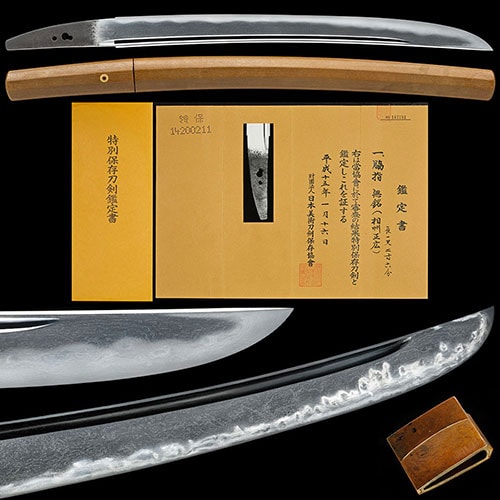
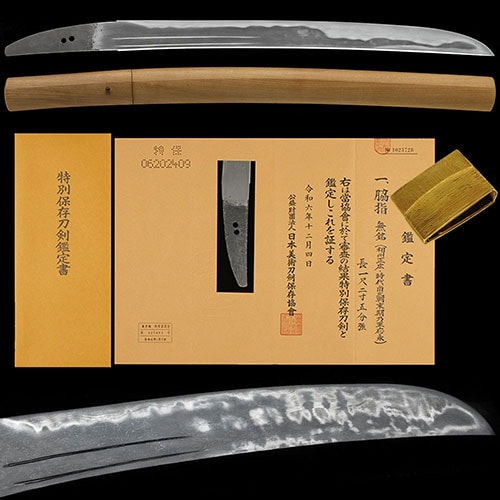
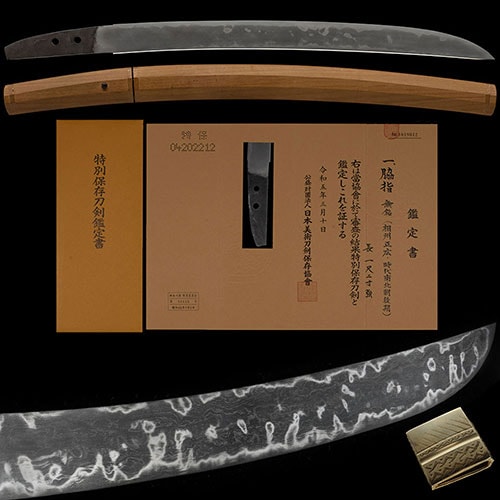
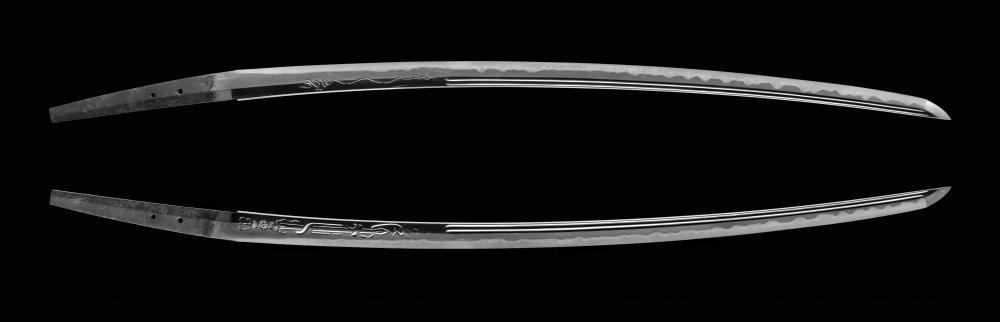
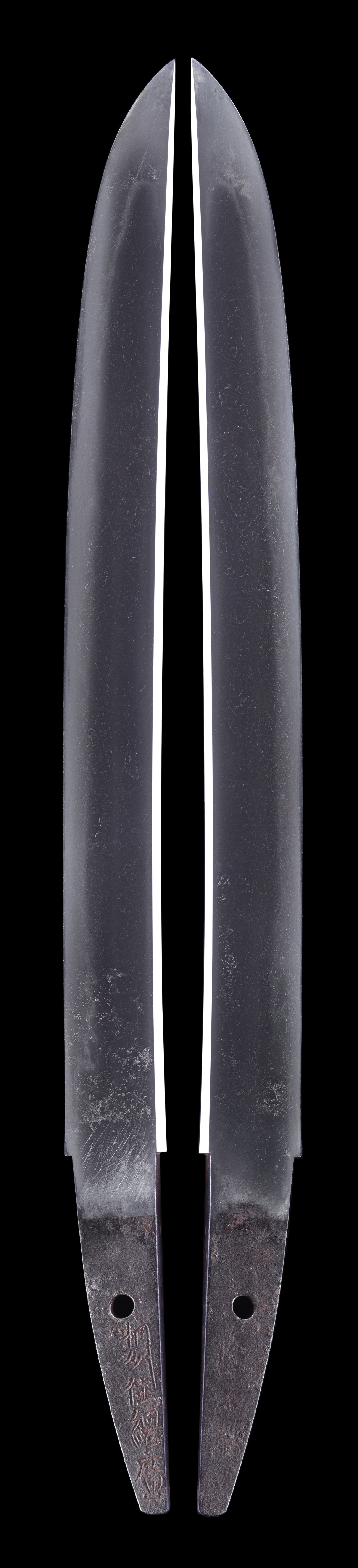
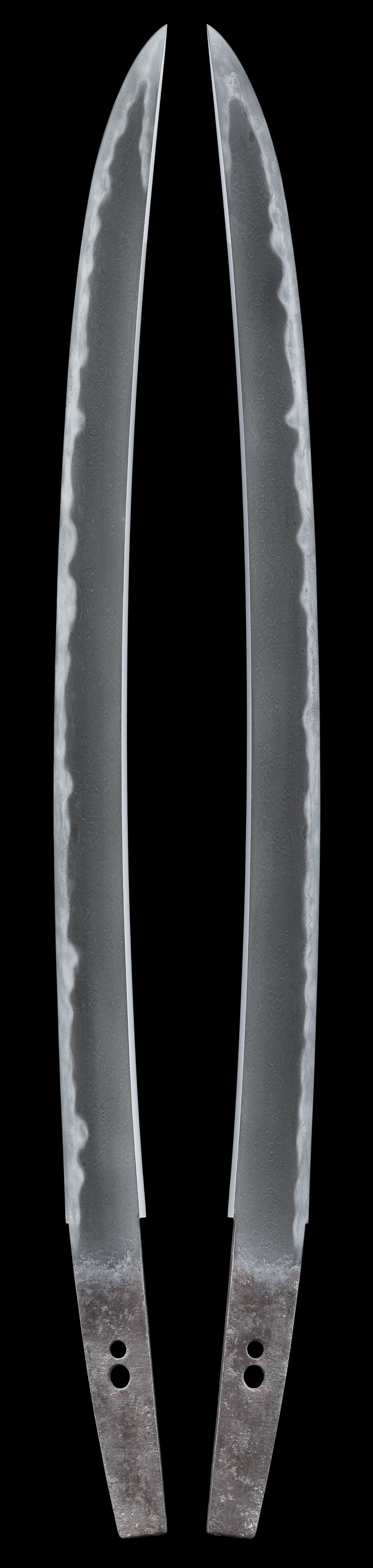
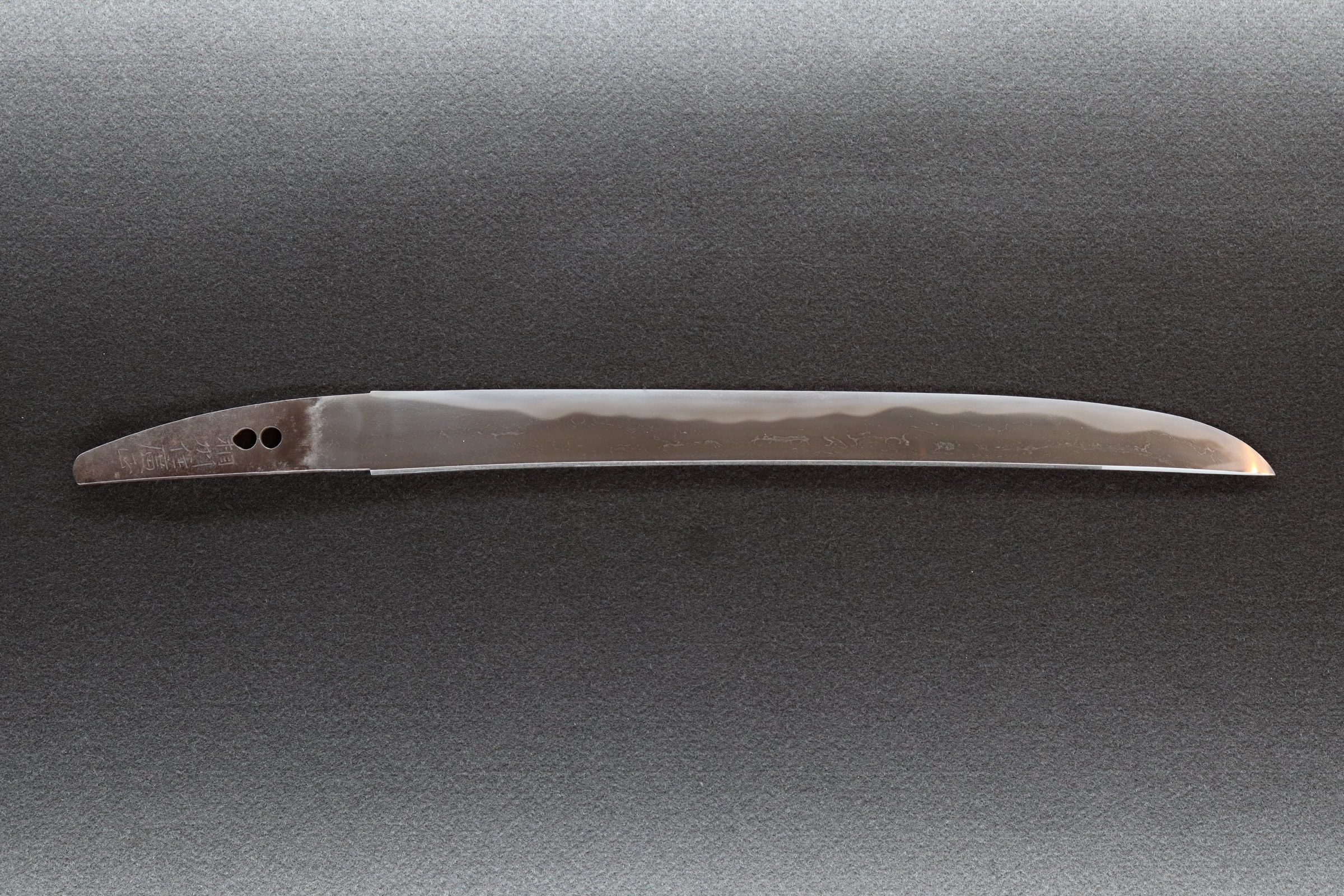
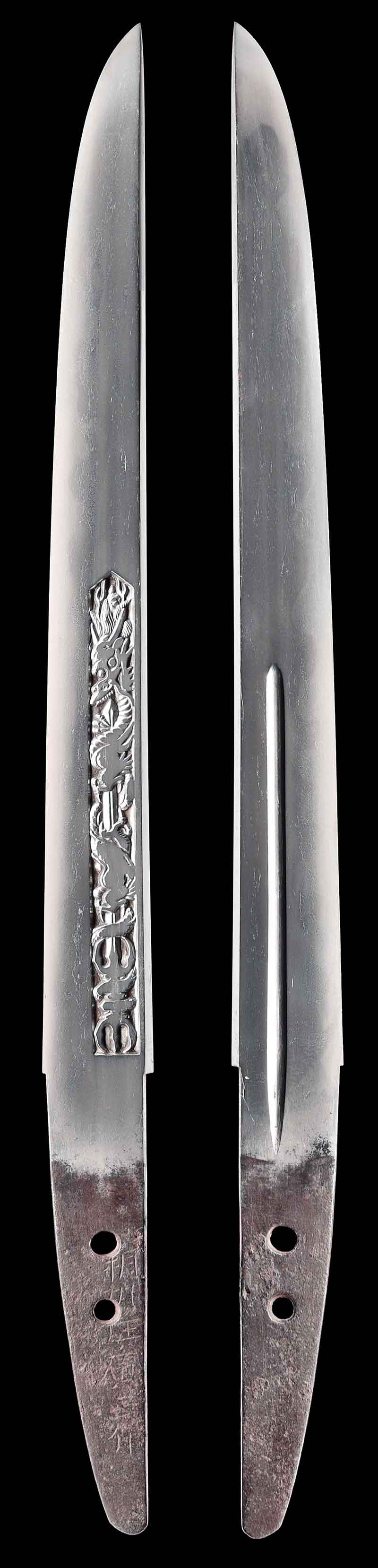
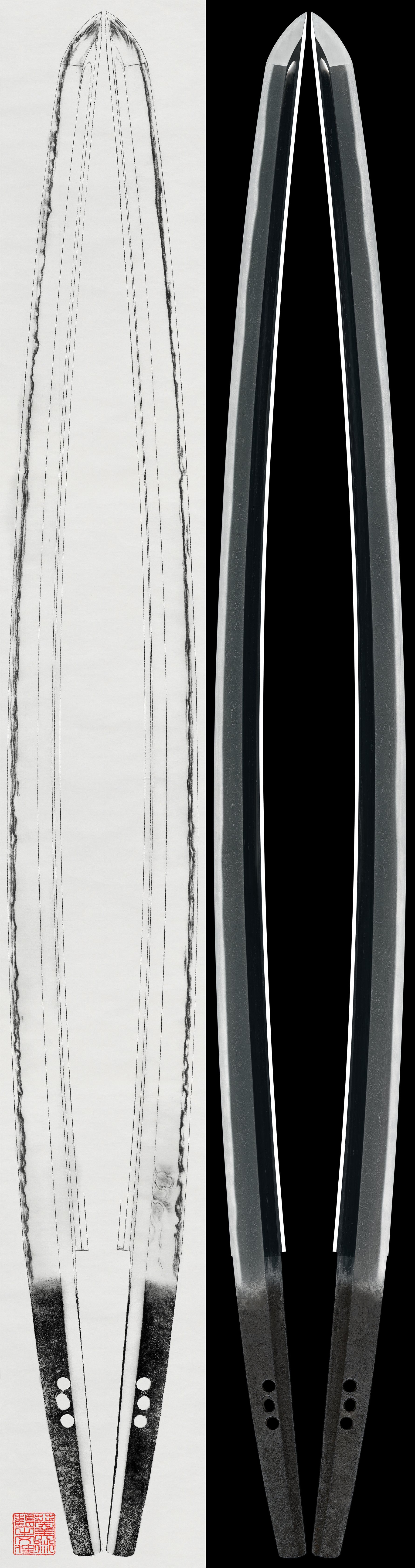
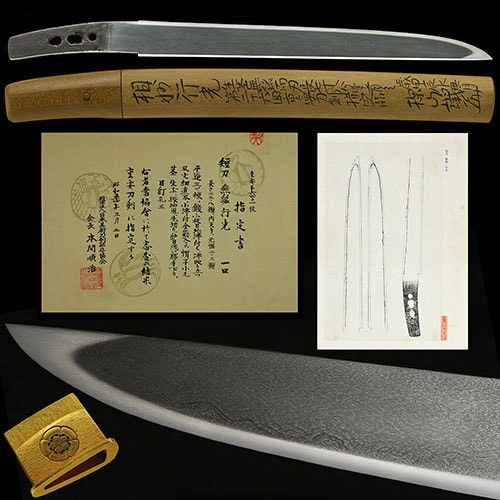
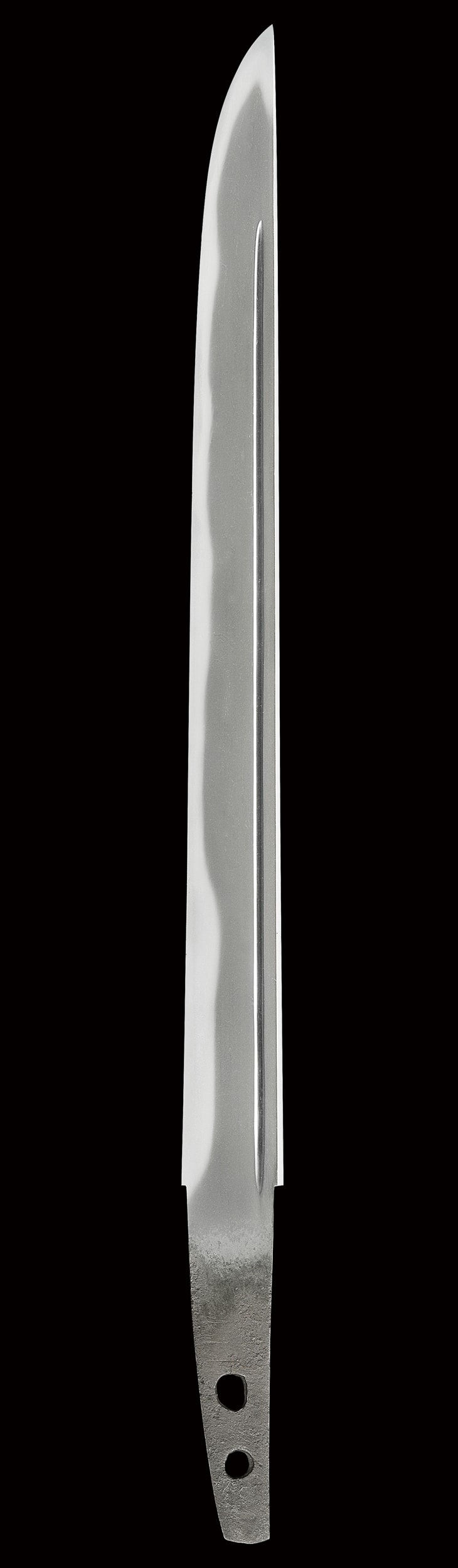
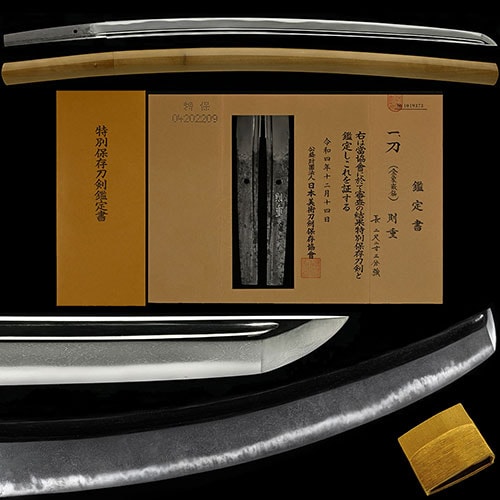
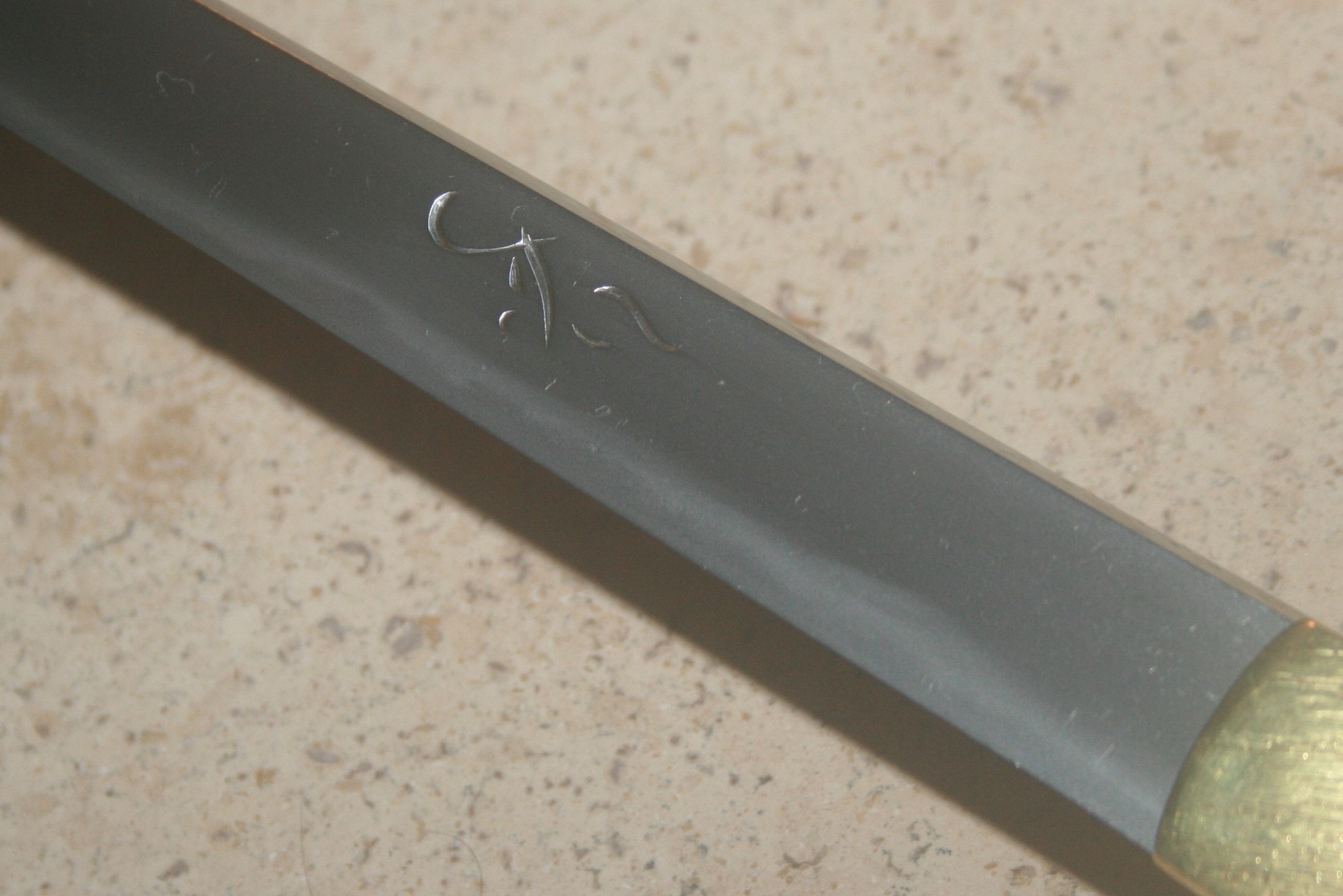
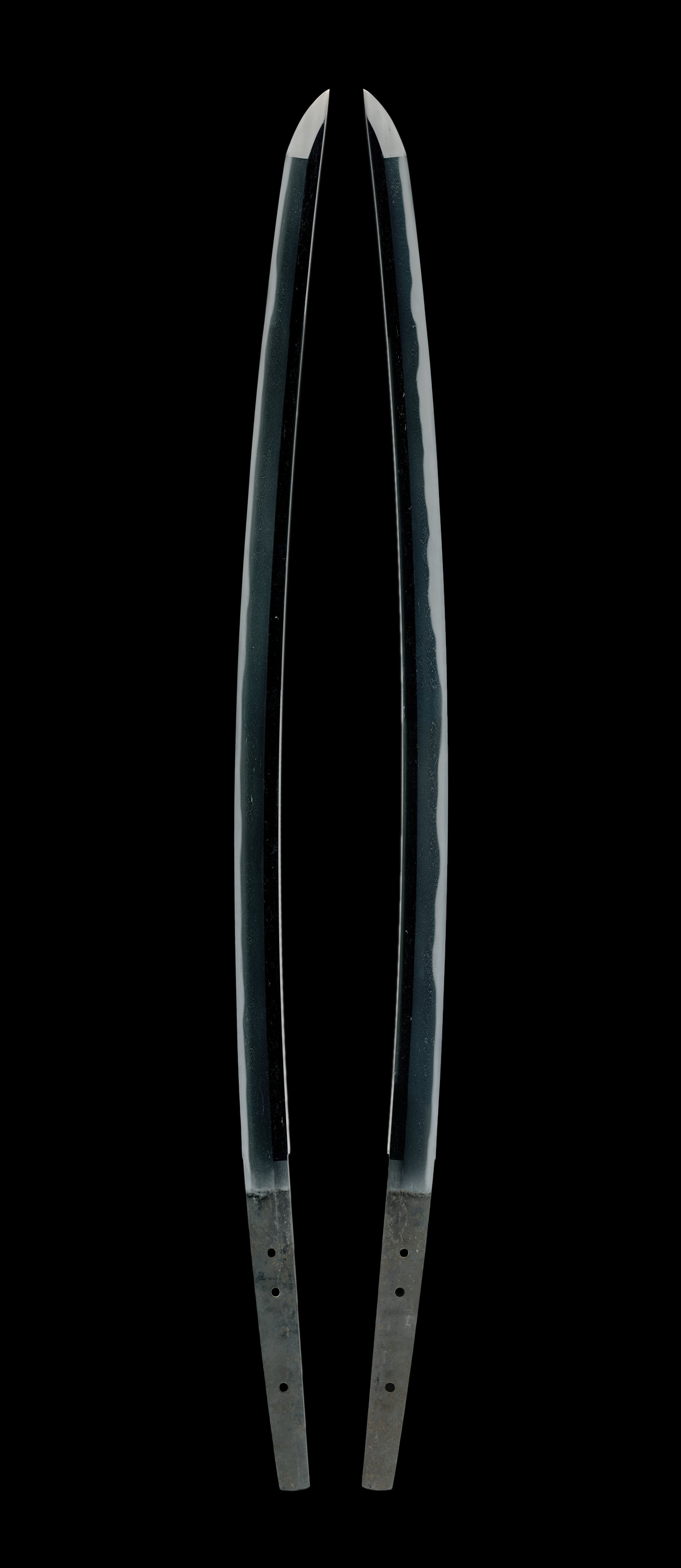
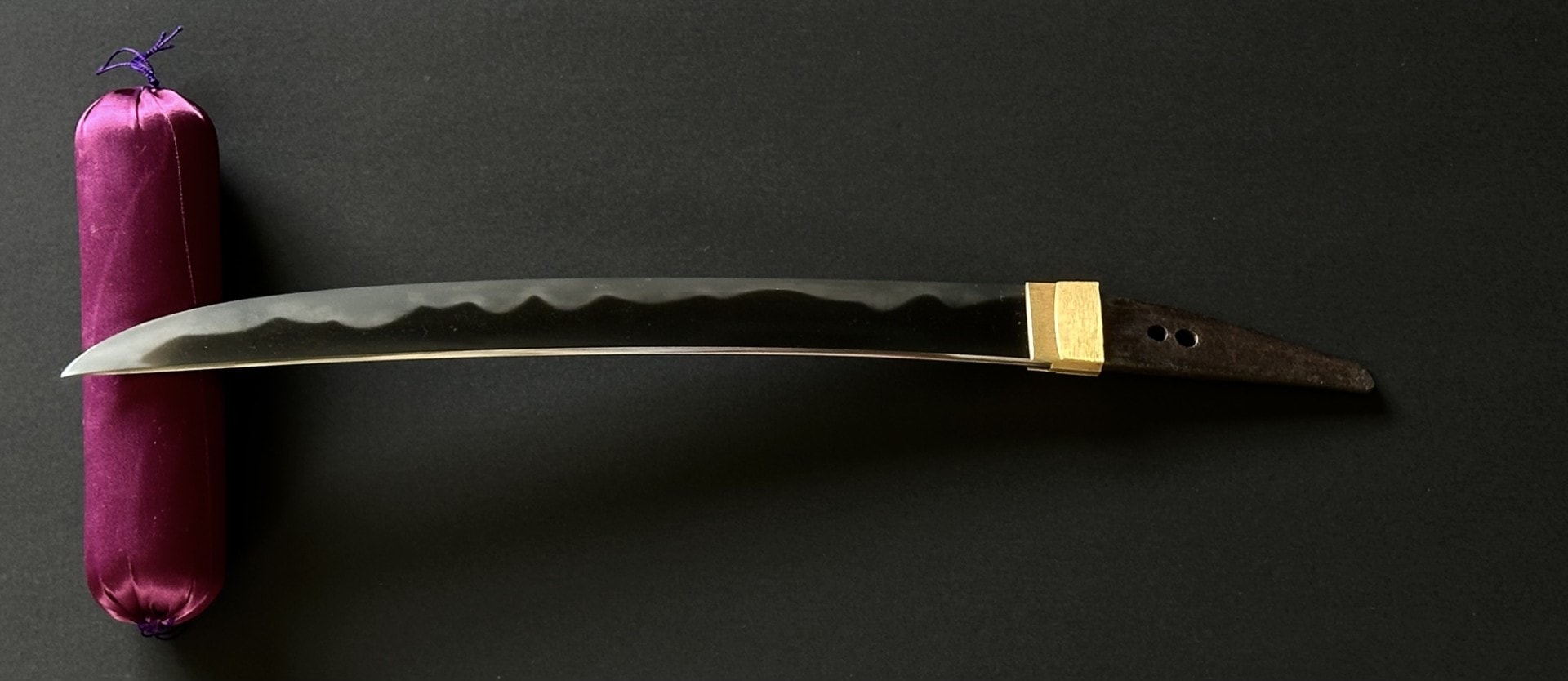
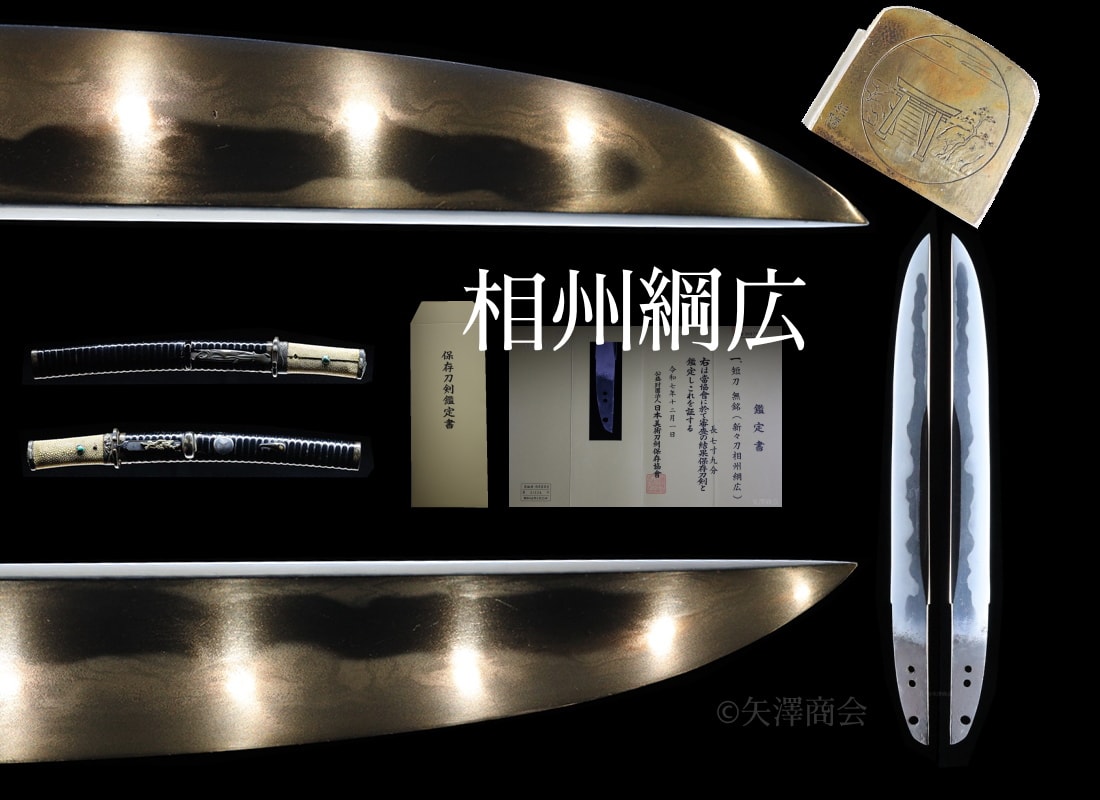
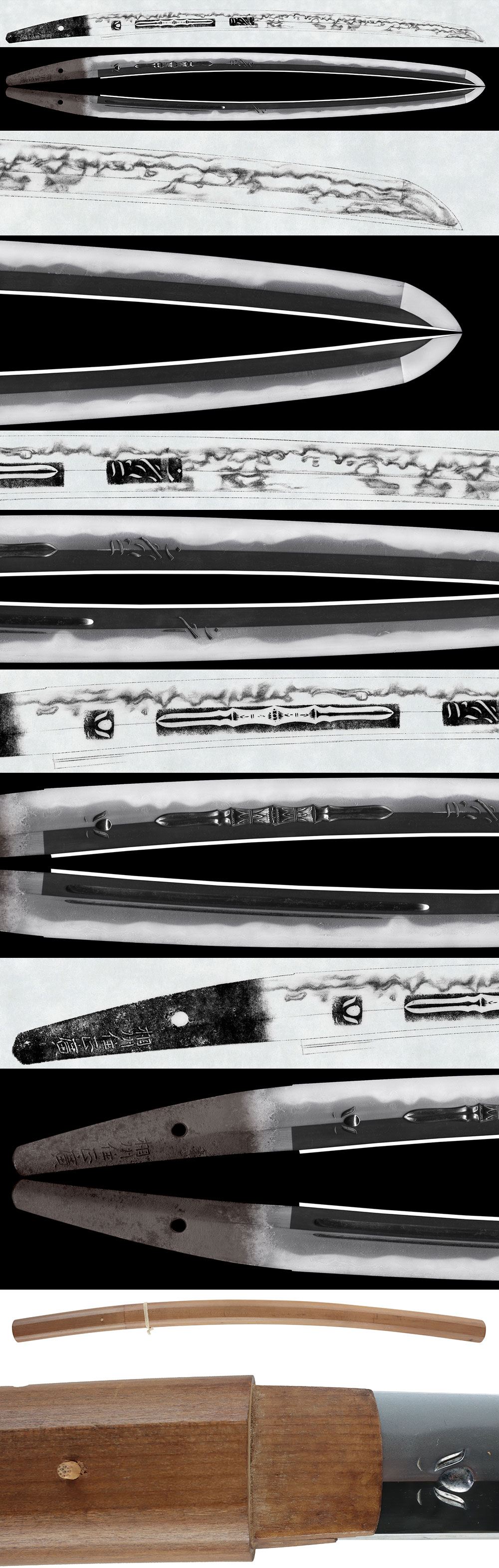
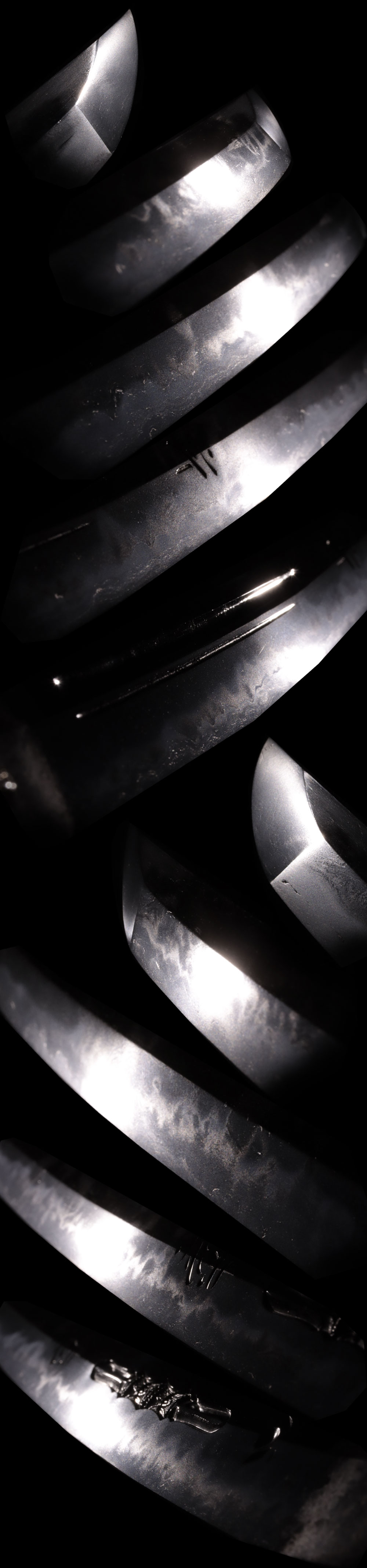
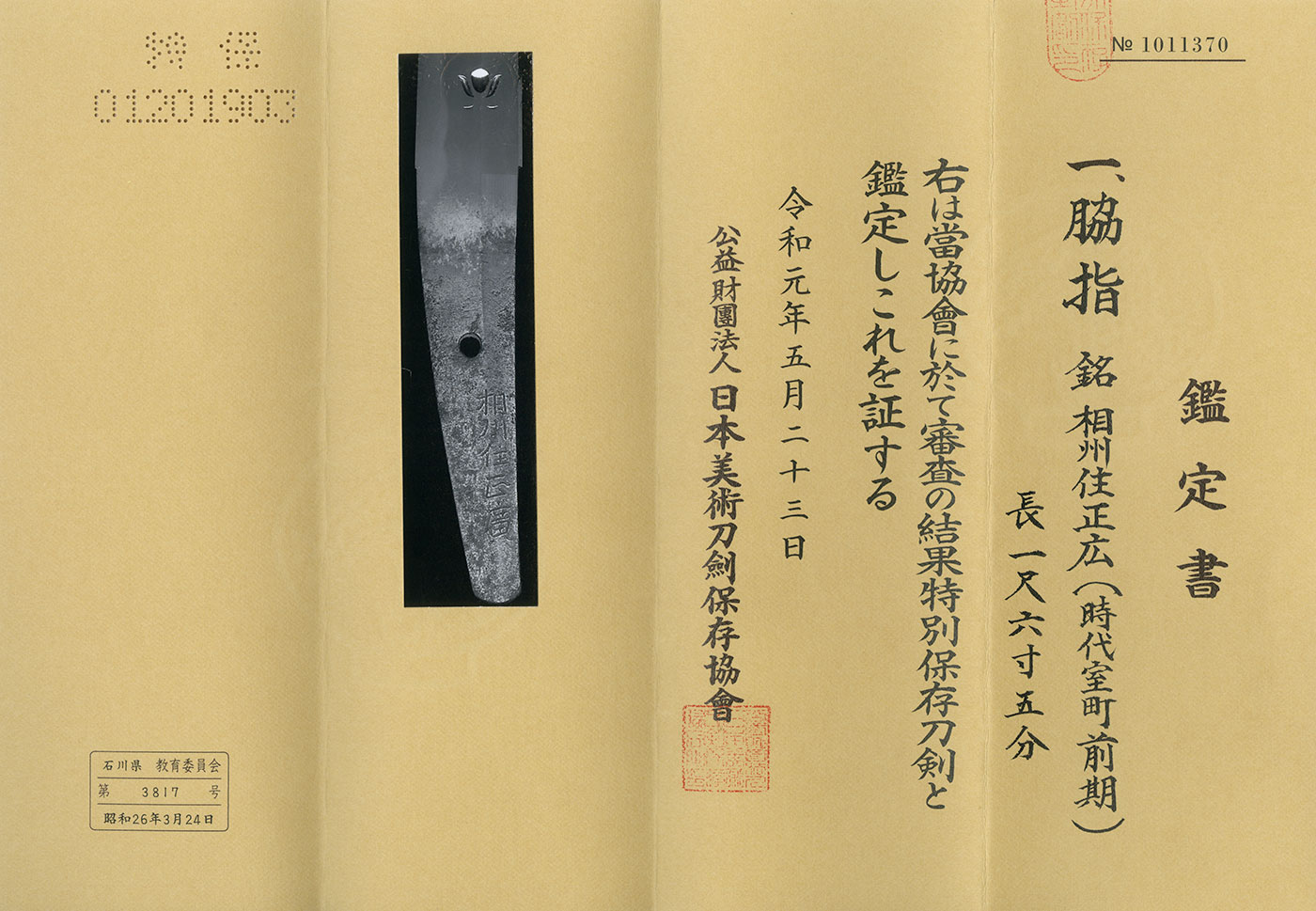
This is a tanto by Soshu ju Masahiro, active from the Nanbokucho to Muromachi period. The blade features extensive carvings and a soft hitatsura temper. It is certified as NBTHK Tokubetsu Hozon Token.
 NihontoWatch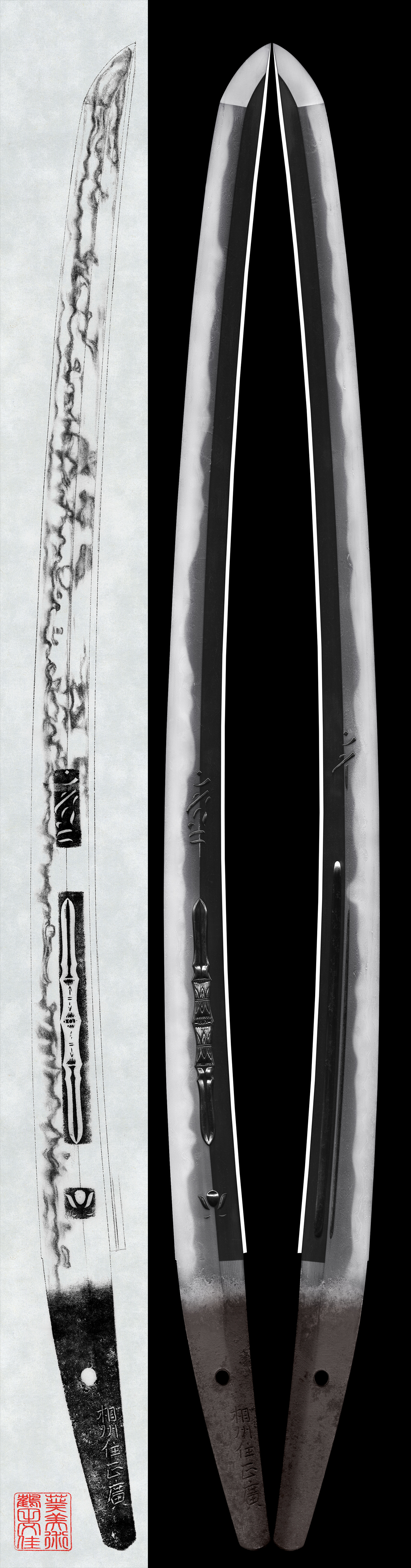
Soshu-den · Sagami · around 1362-1392
Tōken Taikan top 18%
Soshu Masahiro is a lineage of smiths working in Sagami Province that continued for four or five generations, traditionally transmitted as descending from the youngest son of Masamune. The first generation, styled "Soshu Masahiro," produced works bearing era names such as Joji and Meitoku, with the earliest known dated example inscribed Sadaharu 2 (1363). However, from the standpoint of chronology, it is not feasible to connect Masahiro and Masamune directly; rather, it is necessary to posit the existence of one additional intermediary figure between them. The line extended to the end of the Muromachi period, and it is also said that the fourth generation changed his name to Tsunahiro; however, the distinctions among the second and third generations are not clearly established.
The Masahiro line works in a Soshu-den idiom characterized by itame-hada forging, sometimes mixed with mokume, with abundant ji-nie and chikei. The hamon favors a notare-based composition mixing gunome and choji, enriched with well-entering ashi and yo, and accompanied throughout by sunagashi and kinsuji. In more vigorous examples, tobiyaki develops into an overall hitatsura-like manner, and the nioiguchi is bright and clear with ko-nie adhering well. The boshi typically enters in midare-komi, and the manner of cutting the inscription "Soshu-ju Masahiro" closely resembles the practice seen in Akihiro, indicating the shared technical milieu of late Soshu tradition. Early-generation works frequently display hira-zukuri construction with mitsu-mune, broad mihaba, thin kasane, and sun-nobi proportions with sakizori — the characteristic Nanbokucho-period form — and many bear accomplished horimono including bonji, kurikara, dokko-sho, and rendai.
The NBTHK consistently praises the Masahiro line as displaying the excellence of the Soshu tradition, with workmanship of both ji and ha rated as excellent and of upper-level quality. Well-preserved examples are noted as kenzen — sound in condition — and the carvings executed on the blades are repeatedly described as splendid. Works such as the tachi recorded in Nihonto Taikan show connections with Hiromitsu and Akihiro through their minayaki-like tempering, further attesting to the line's place within the broader circle of later Soshu-den masters who carried forward and sustained the legacy of the Masamune tradition through the Muromachi period.
Where Masahiro stands among comparable artisans: across all of nihontō, and within tradition, era, and period. The tiers (Foremost · Leading · Major · Notable) weigh official designations from the NBTHK and Japan's Agency for Cultural Affairs, together with historical honors of lasting repute such as the Sansaku and Meibutsu-chō.
Select a lens to see how it's measured.
Years he was demonstrably active, proven by signed-and-dated blades
Soshu-den · Sagami
Phase: Sue-Sōshū末相州· 1356–1868
23 pieces on the market now
When the great Kamakura masters had passed and the country slid into the wars of the late Muromachi, a residual Soshu-den held on in Sagami under a new patron. The Later Hojo, ruling from Odawara castle, kept smiths at hand, and it was from this orbit that the leading name of the window emerged: Tsunahiro, transmitted as a retained smith of the Odawara Hojo who took the character tsuna from Hojo Ujitsuna. The first generation's earliest dated works fall in the Tenbun era, and the line runs forward in the conventional reckoning through Tensho, Keicho, Kan'ei, and Manji, the third generation drawn west to Tsugaru by Tamenobu to forge daisho before returning home. Around him stood a wider Sagami population working the same idiom: Hirotsugu of Kamakura, whose strongest hands cluster near the Meio and Tenbun years; Hiromasa and Soso, names carried across several indistinct generations; Masahiro, reaching back toward Joji; and the Odawara group of Yasuharu, Yasukuni, and Fusamune, the last praised above all for his carving. These smiths inherited the manner of the Nanbokucho apex at a remove of generations rather than by direct descent from the mainline of Masamune and Sadamune. The signature of the phase is the open declaration of the full temper. The forging stays itame mixed with mokume, the grain inclined to stand (hadadachi-gokoro), with ji-nie and chikei; over it the smiths ran a notare-and-gunome ground that climbs the upper half into hitatsura, tobiyaki and muneyaki firing across ji and mune, sunagashi and kinsuji threading the ha. This is the hitatsura and o-midare learned from Hiromitsu and Akihiro, but pushed toward display: the Hirotsugu katana of the 61st Juyo runs its temper so high it reaches the shinogi, mixing choji, togariba, and yahazu-gata into a demonstrative yakidaka pattern.
The contrast with the classic apex is precise and the appraisers mark it. Where Masamune raised nie to its deepest refinement over a bright, clear steel, the Sue-Soshu ji tends to shirake, a whitish cast standing in for that clarity, and the nioiguchi inclines to shizumi, a sunken or subdued quality rather than depth. The 238th Jubi record states the point plainly for the first-generation Tsunahiro: the ji and ha carry abundant nie, yet the very shape of the hamon departs from that of Hiromitsu and Akihiro. The temper is broader and busier across the surface, but it lacks the quiet command and the leaping interior activity of the original. To kantei the window is to separate this demonstrative late temper from the classic Soshu-den it imitates: a standing itame with shirake, a wide hitatsura worked with yahazu and crescent tobiyaki, a nioiguchi that sinks rather than deepens, and signatures reading Soshu-ju with full given names rather than the o-suriage mumei of the great forebears. The named hands carry the distinctions, Fusamune through his dense, precise horimono of kurikara and bonji, Tsunahiro through his crescent tobiyaki and high monouchi fire, Hirotsugu through a hitatsura vigorous enough to recall Hasebe. Provenance keeps these blades close to power: several rest in the Imperial collection at the Kunaicho, one bearing the ownership inscription of Akimoto Yoshihide of Kozuke, another the Hachiman Daibosatsu invocation of a Sengoku warrior, the Tsunahiro commission tied by its dated nakago to the Tsugaru house. Learn more →
| Smith | Era | Designated |
|---|---|---|
| Fusamune總宗 | 1504-1521 | 5 |
| Tsunahiro綱廣 | 1532-1555 | 12 |
| Hiromasa廣正 | 1444-1456 | 4 |
| Tsunaie綱家 | 1532-1555 | 3 |
| Kiyohira清平 | 1673-1681 | 4 |
Sōshū in the Muromachi period
In the Sengoku era the school served a second warrior court: the Later Hōjō at Odawara, whose patronage kept the Tsunahiro line forging hitatsura for the uchigatana age until the castle fell to Hideyoshi in 1590.
We could not find an authenticity certificate on the seller’s listing. Japanese swords and fittings are normally papered by the NBTHK (or the NTHK). Without one, the attribution is the seller’s own assessment and has not been independently verified — treat it with caution and ask the dealer about certification before buying.
If you wish to return an item, please notify us within 3 days of receipt. After this period we cannot accept cancellations. Please ship the return to us within 5 business days. Cancellation is conditional on the item being kept in the same condition as at the time of sale, so please handle it with care.