NihontoWatch MonNihontoWatch
マーケット
事典
鑑定
NihontoWatch MonNihontoWatch
マーケット
事典
鑑定

説明

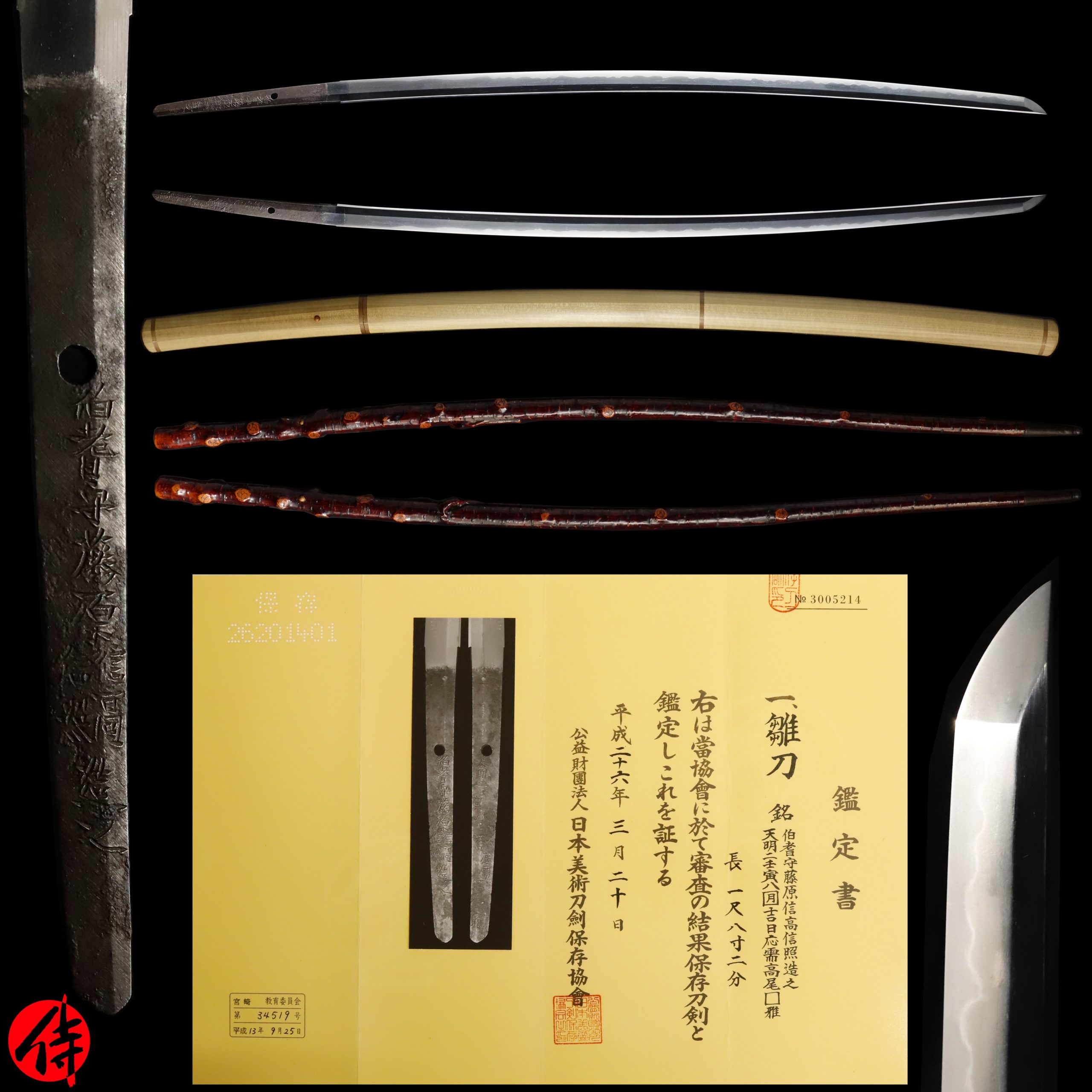
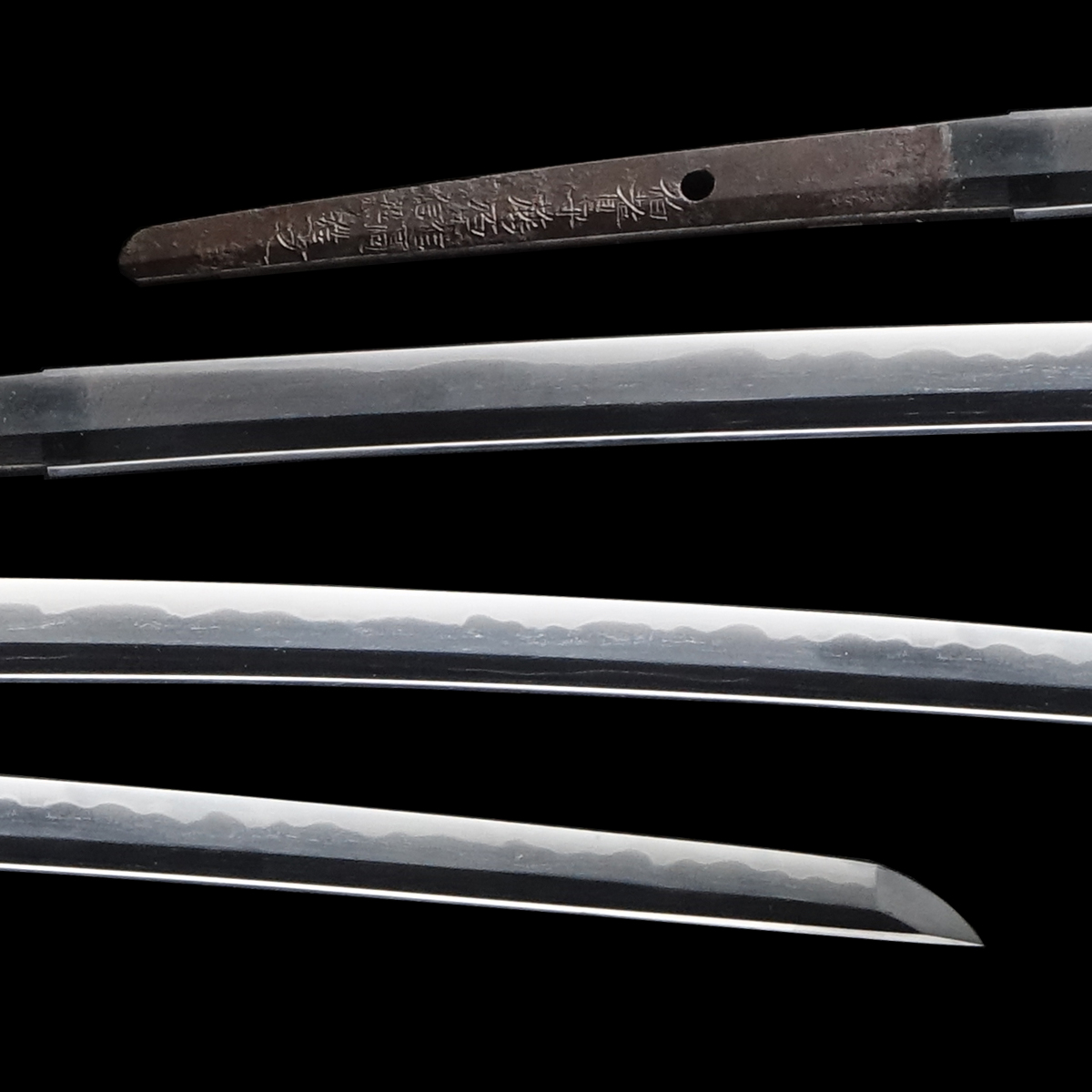
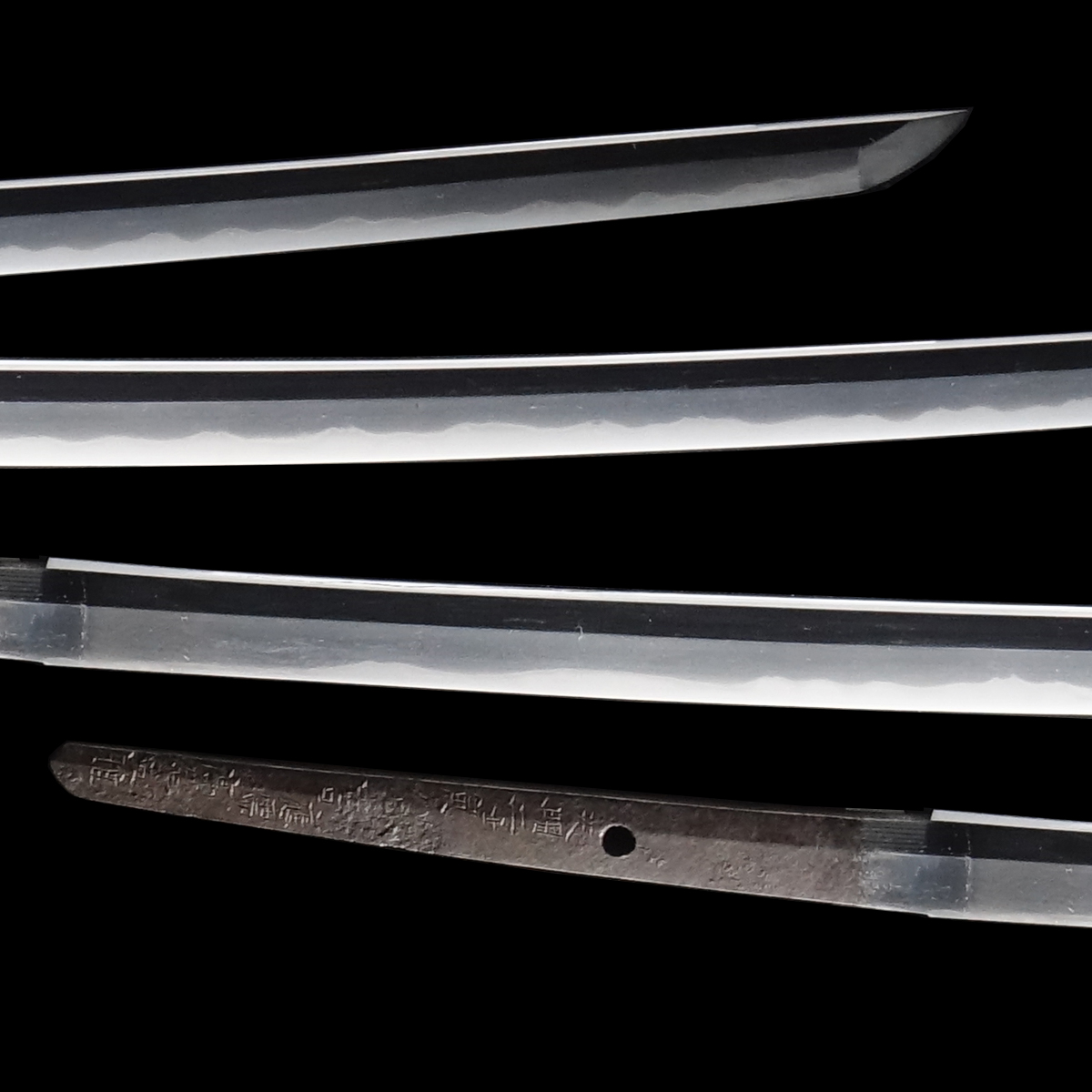
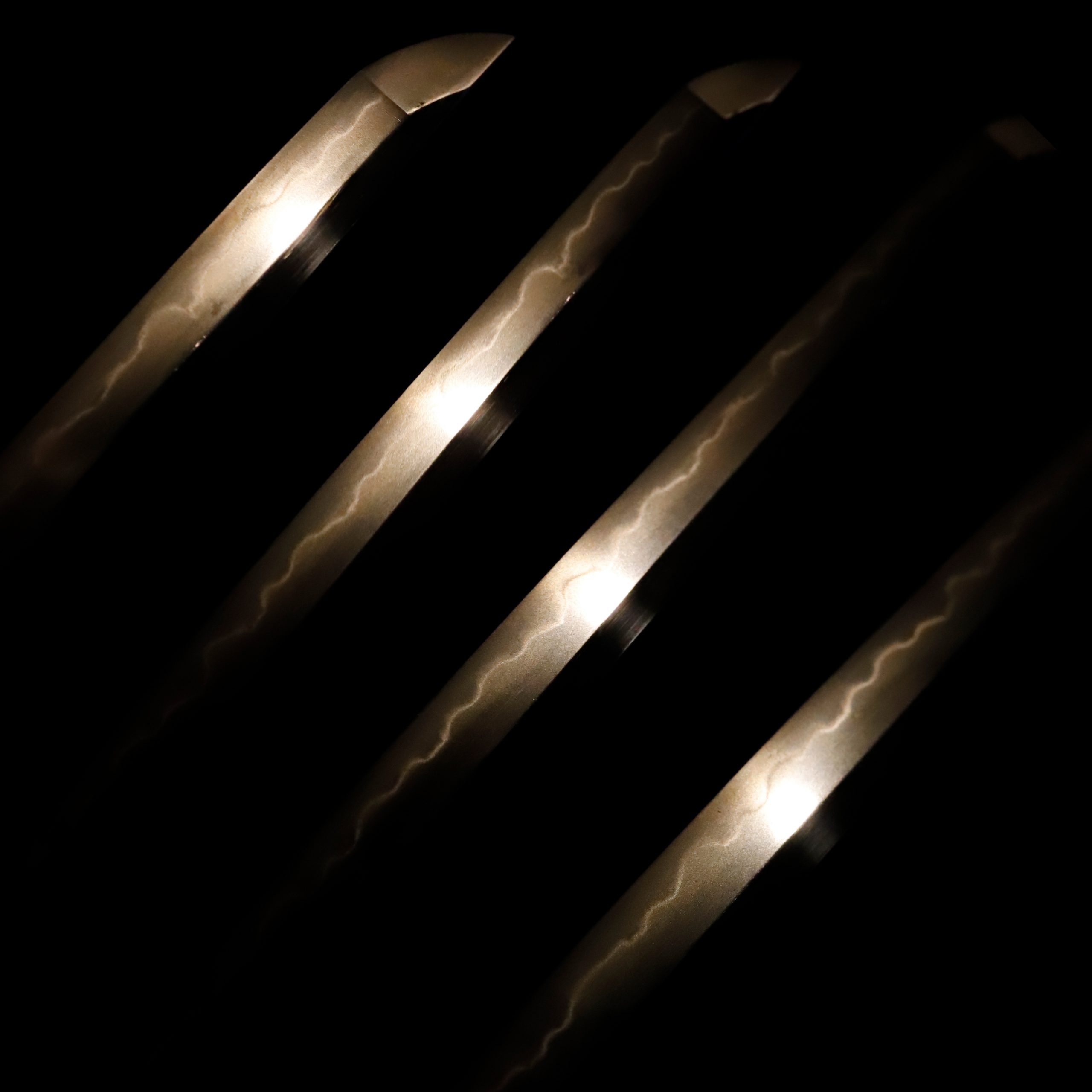
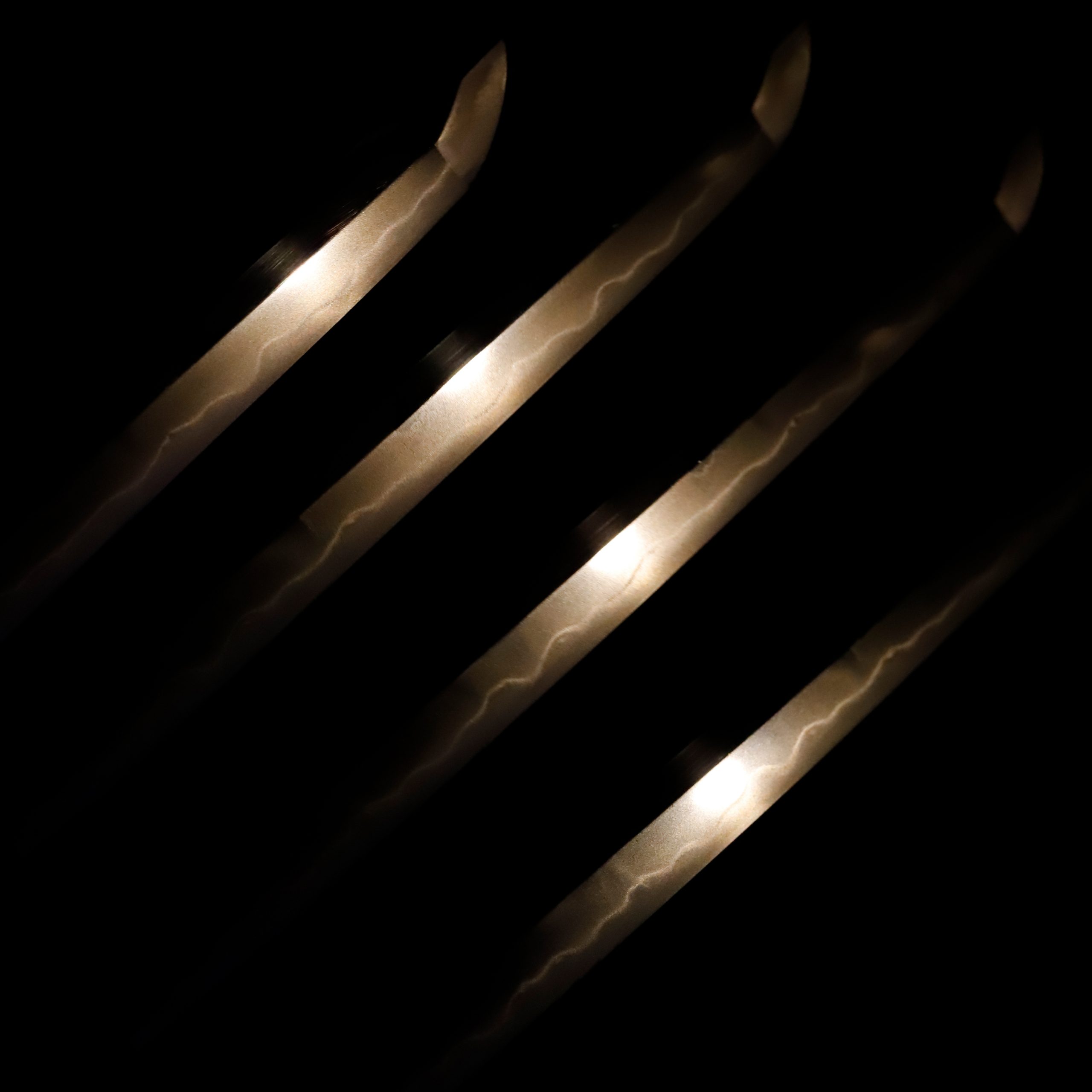
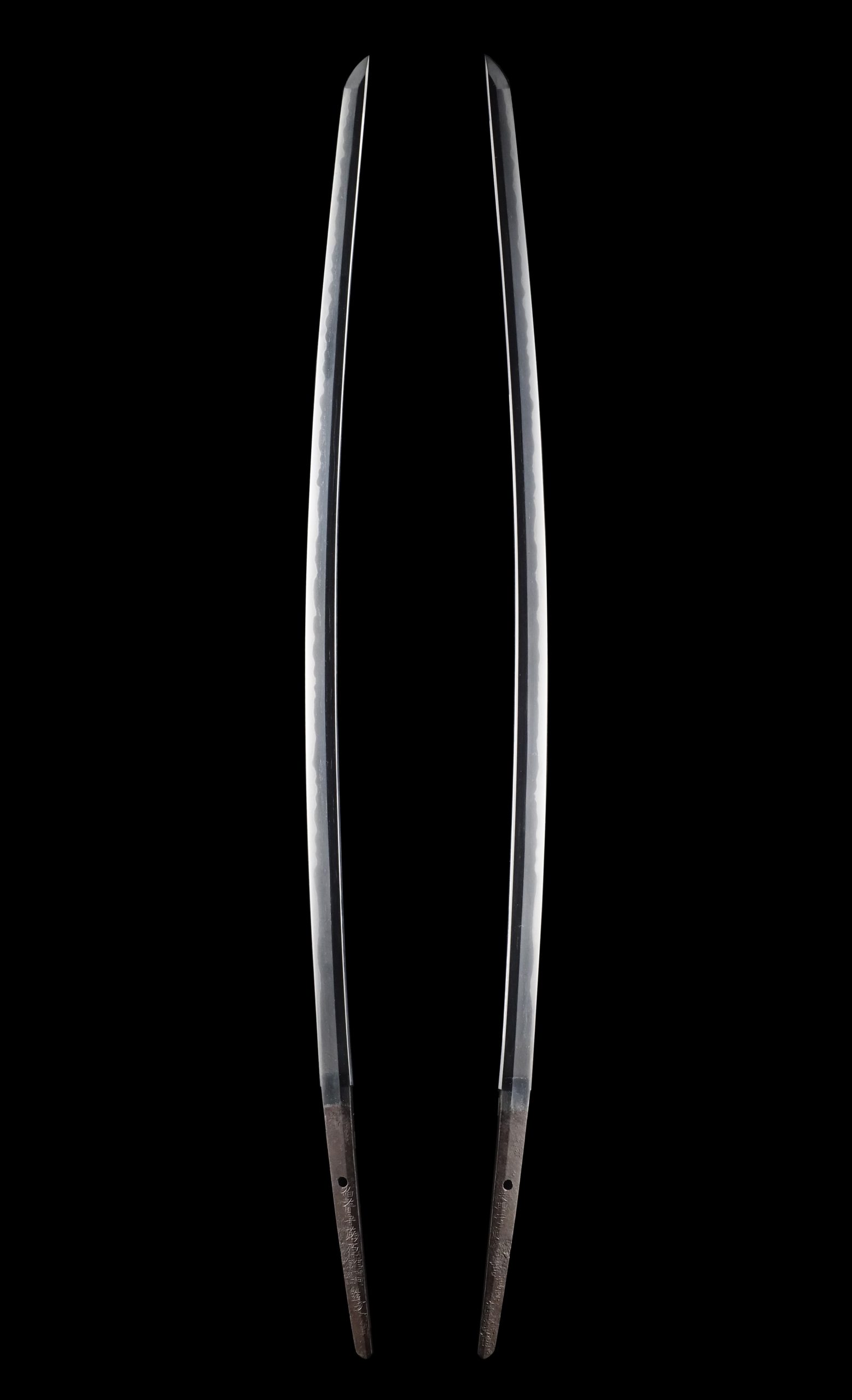
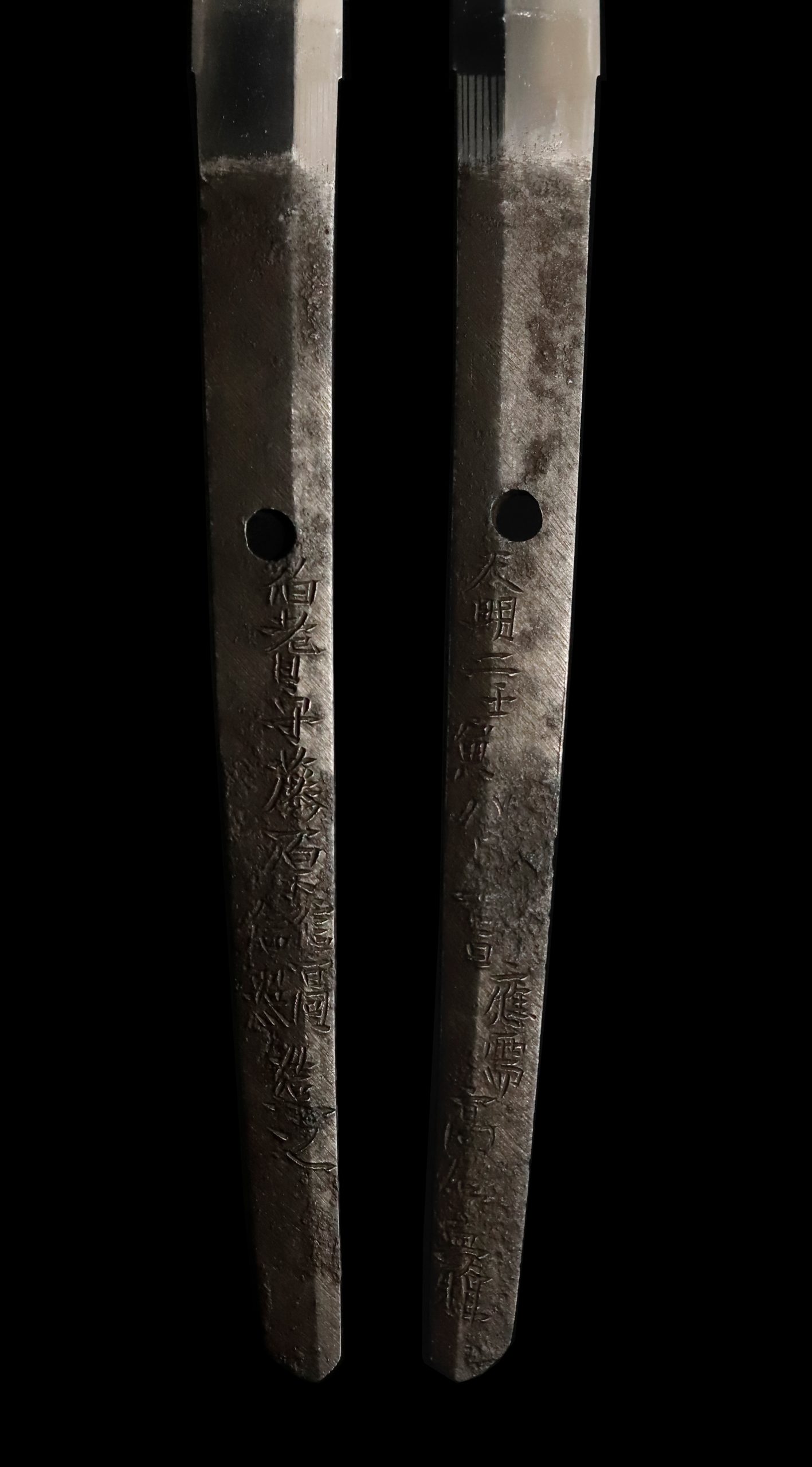
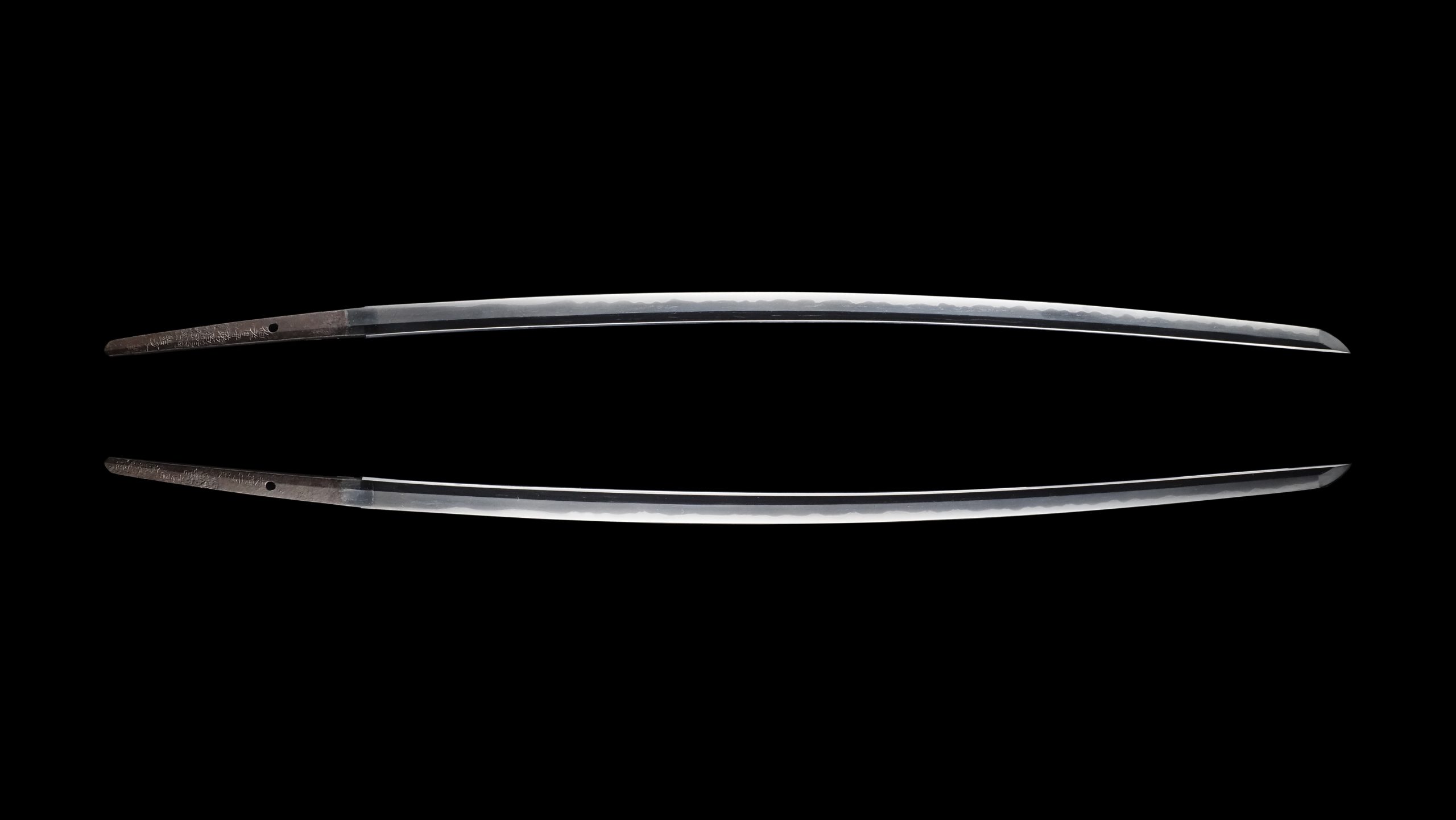
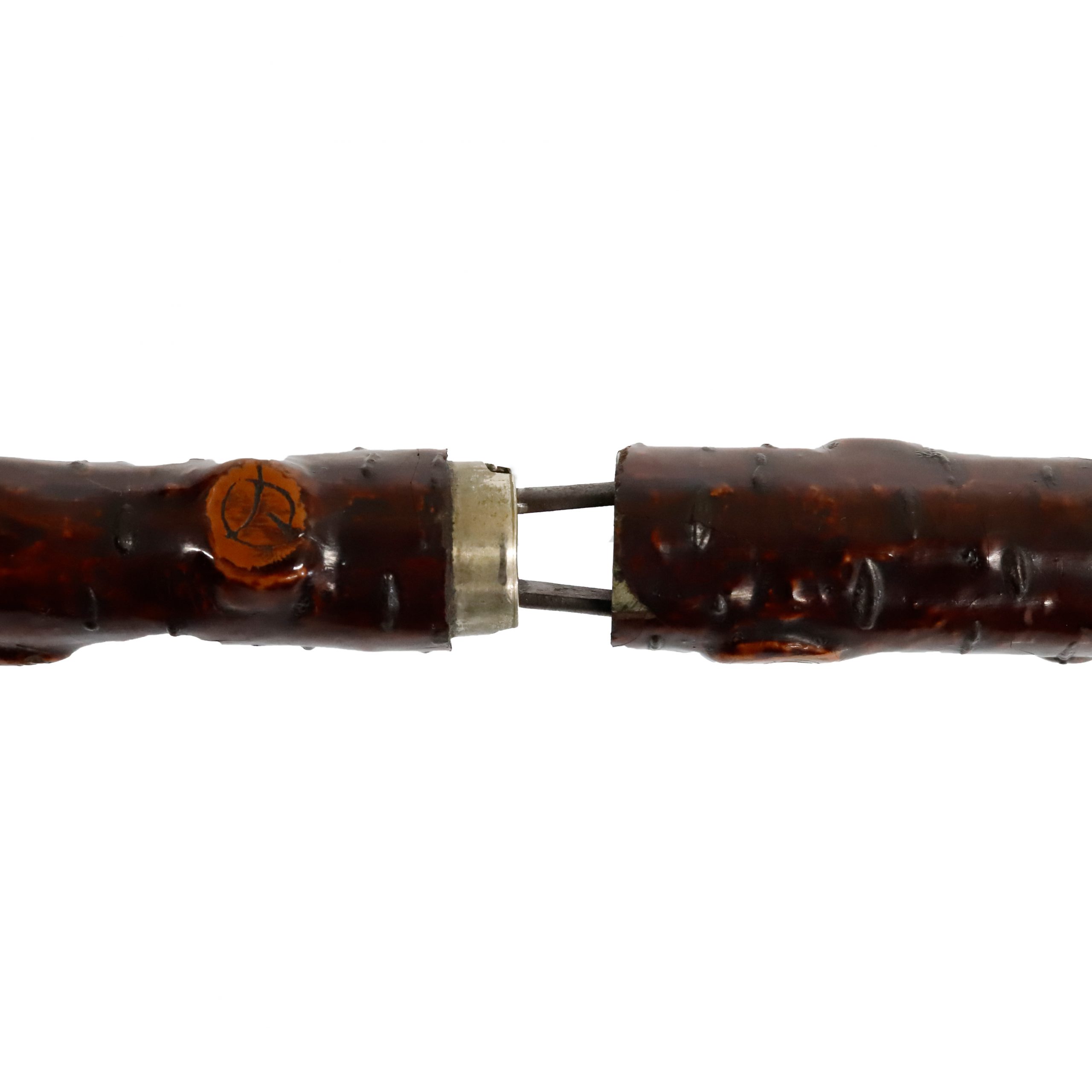
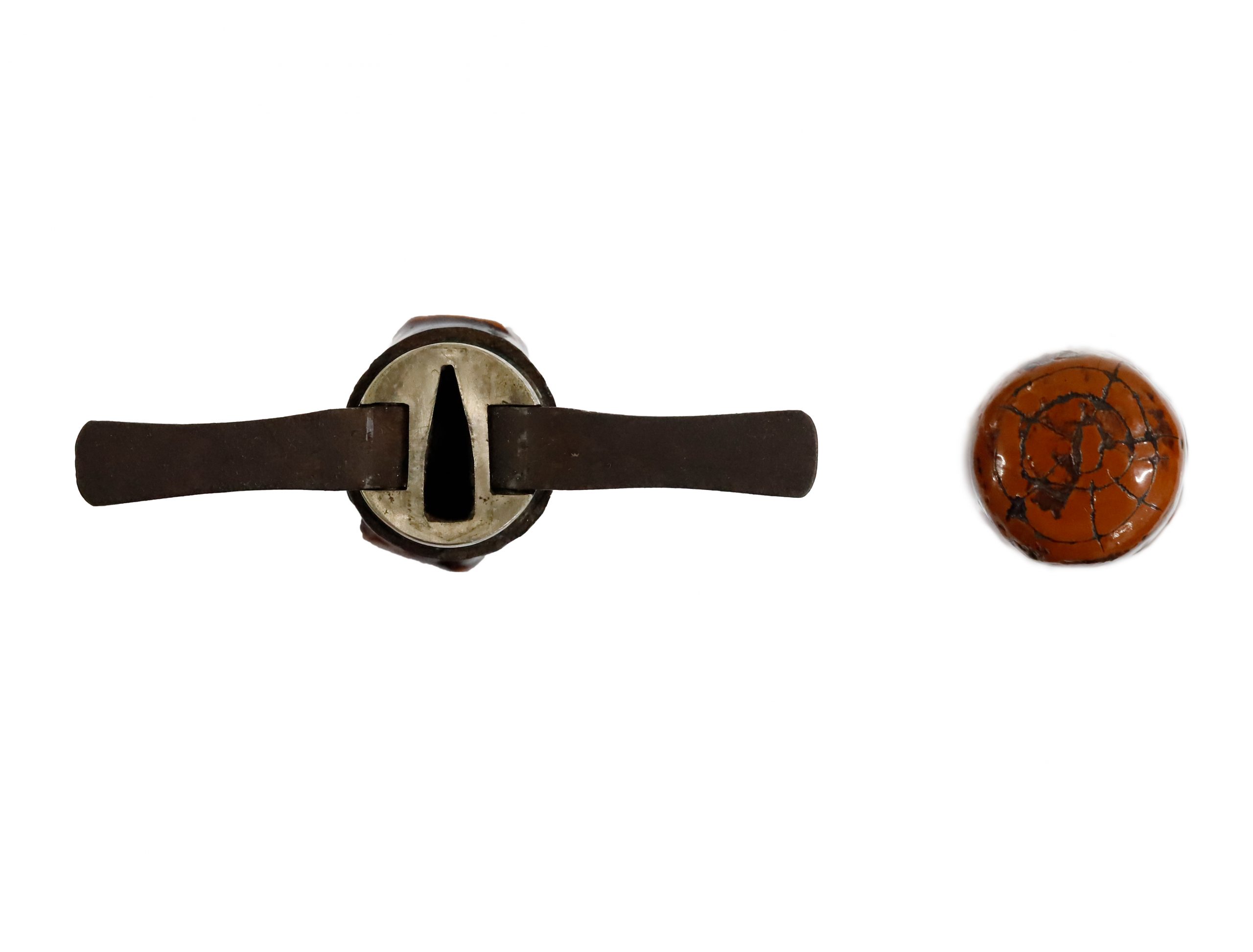
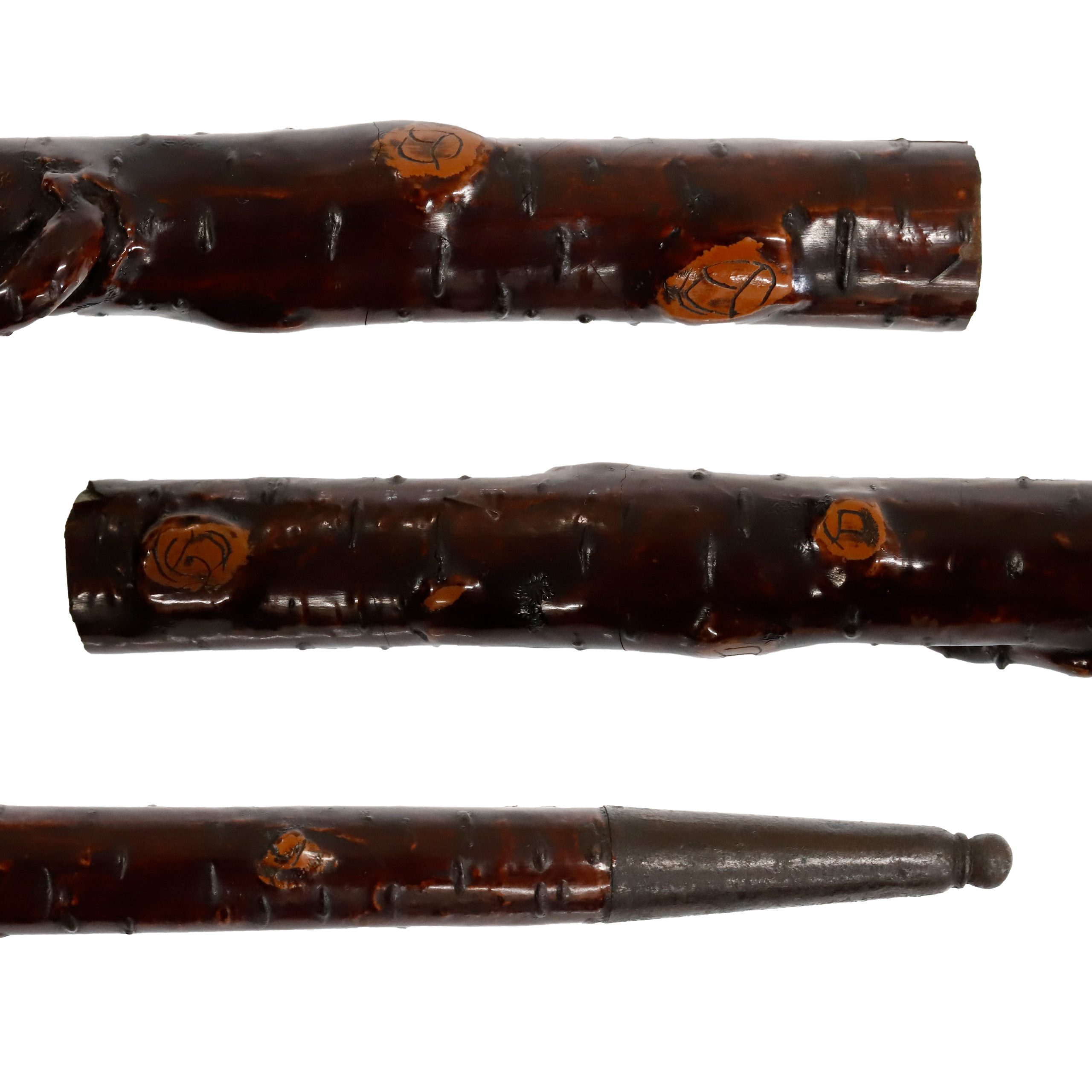
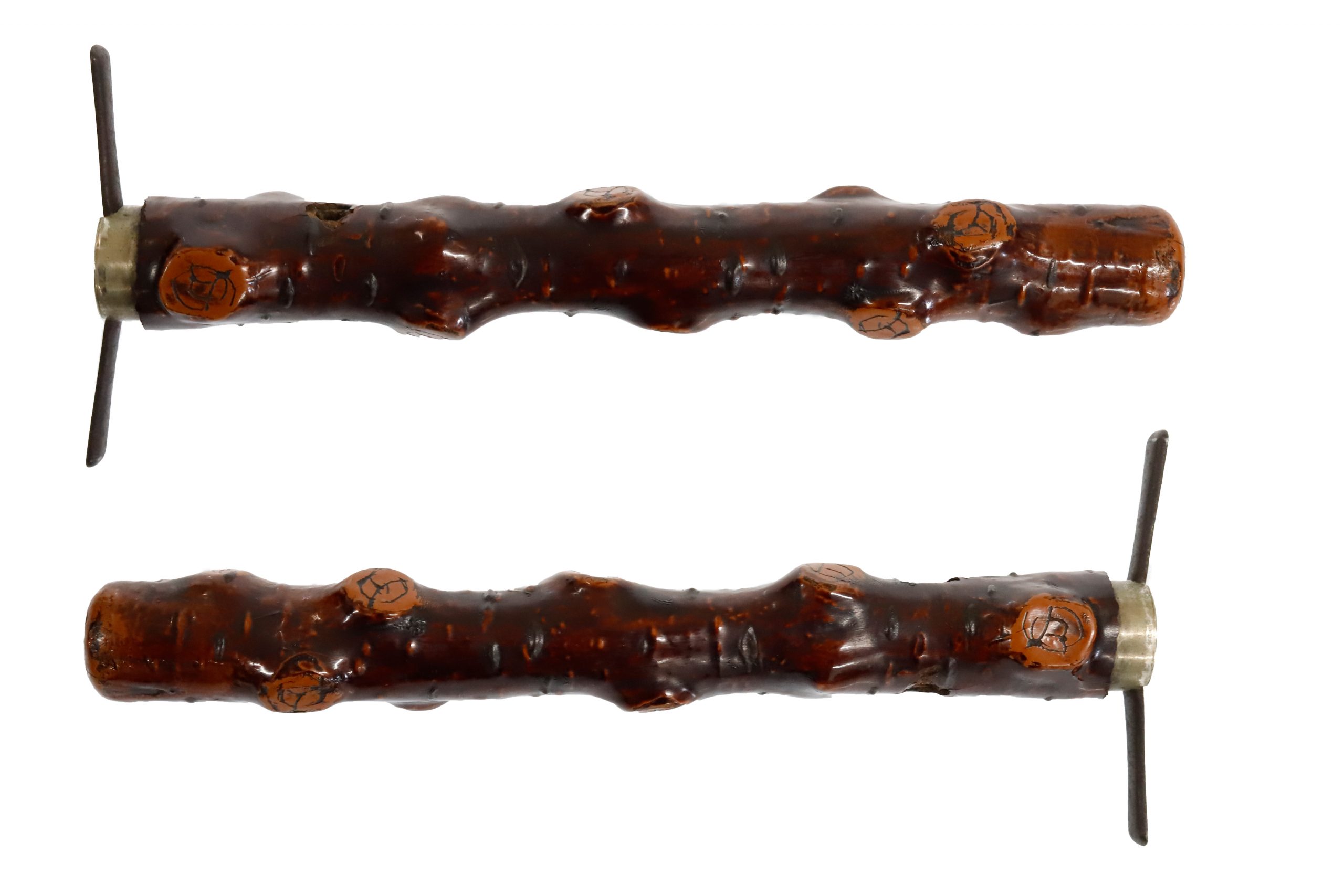
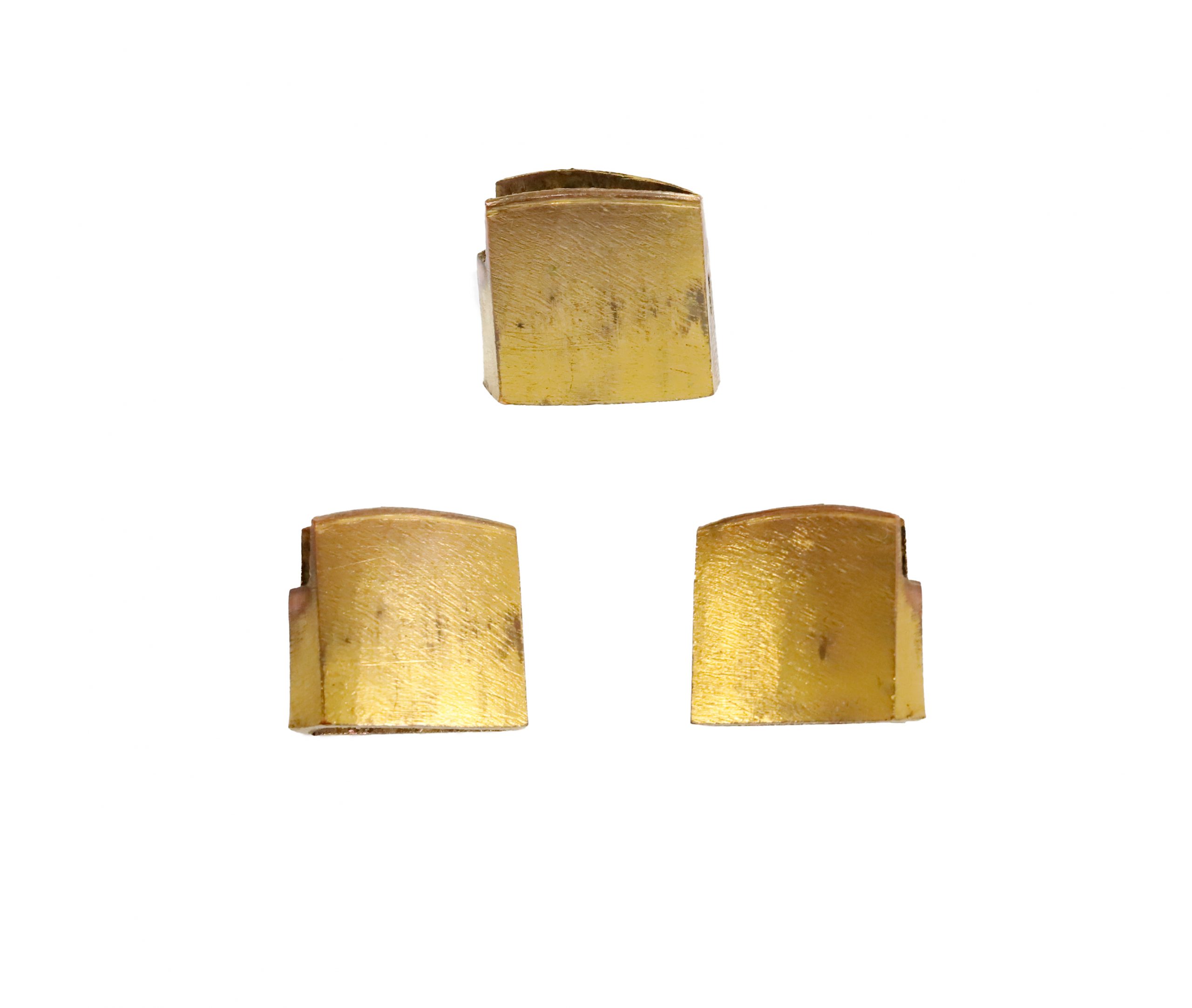
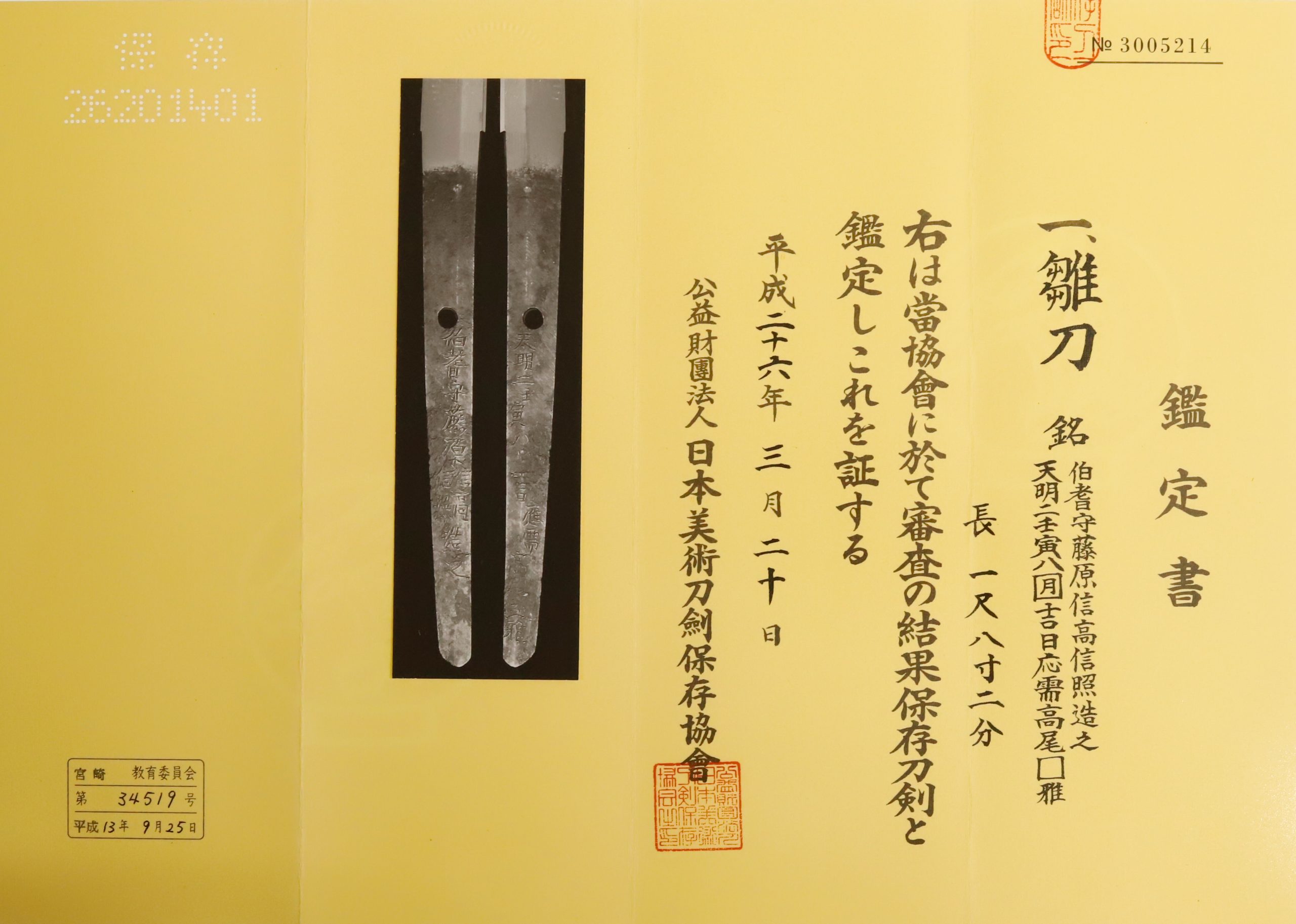
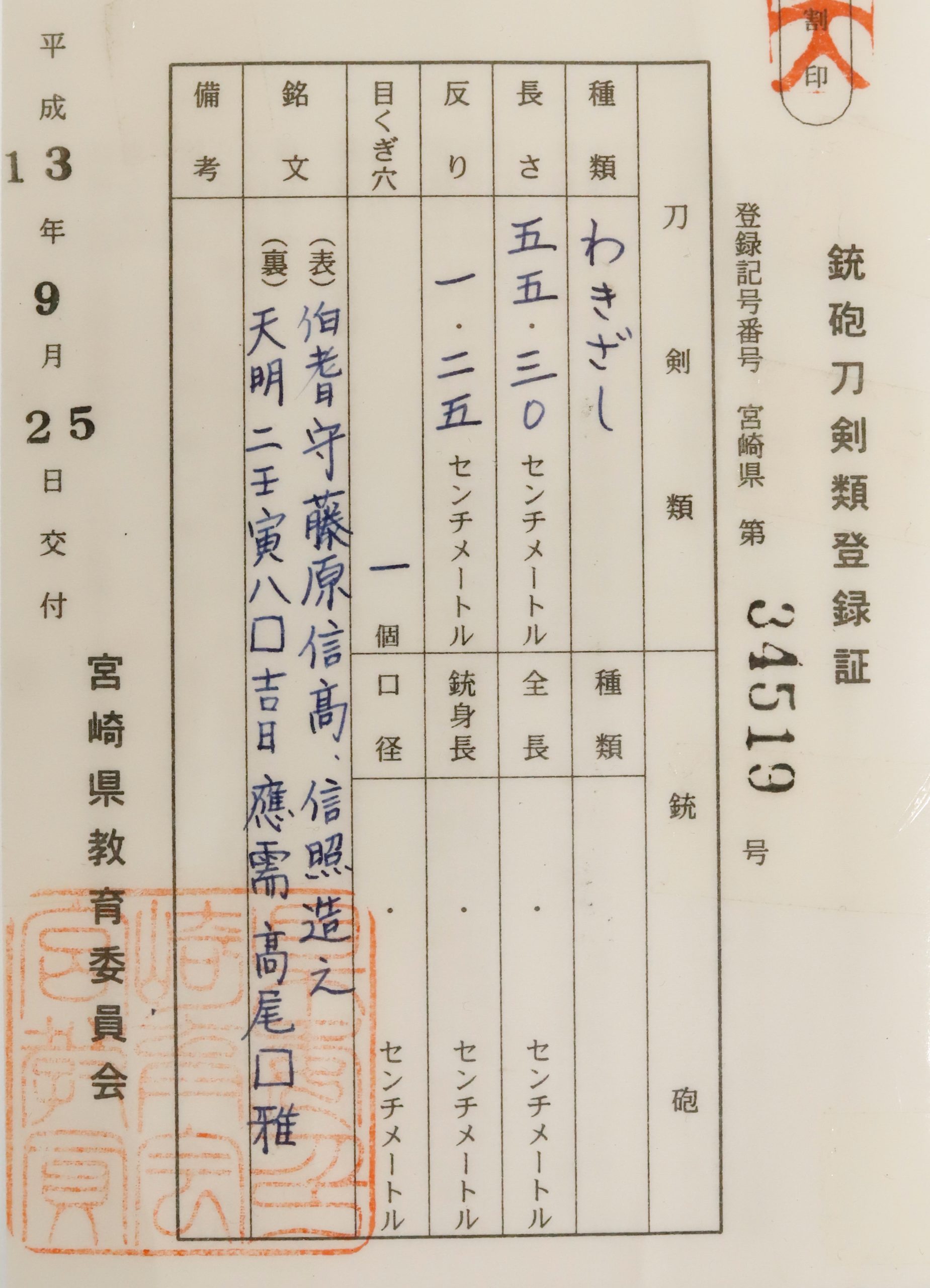
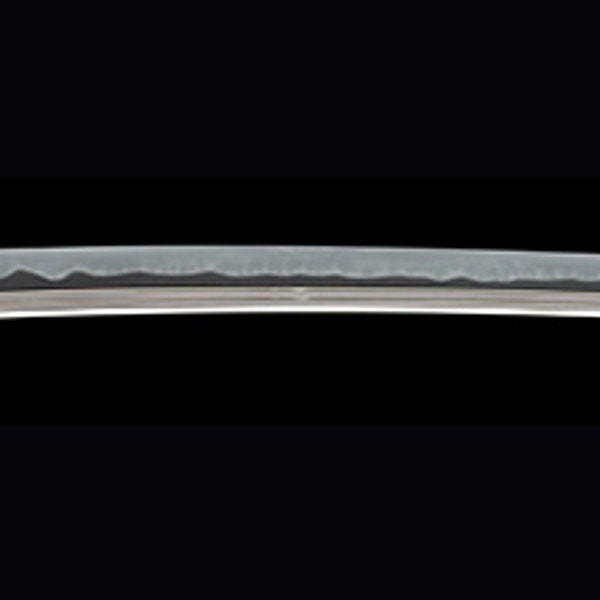
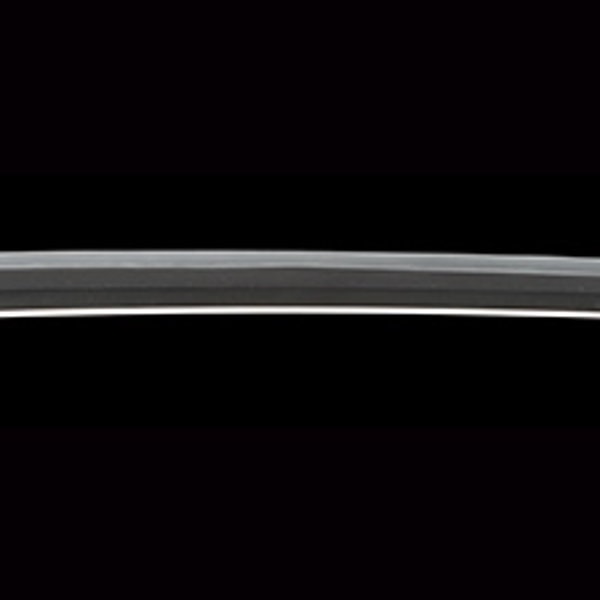
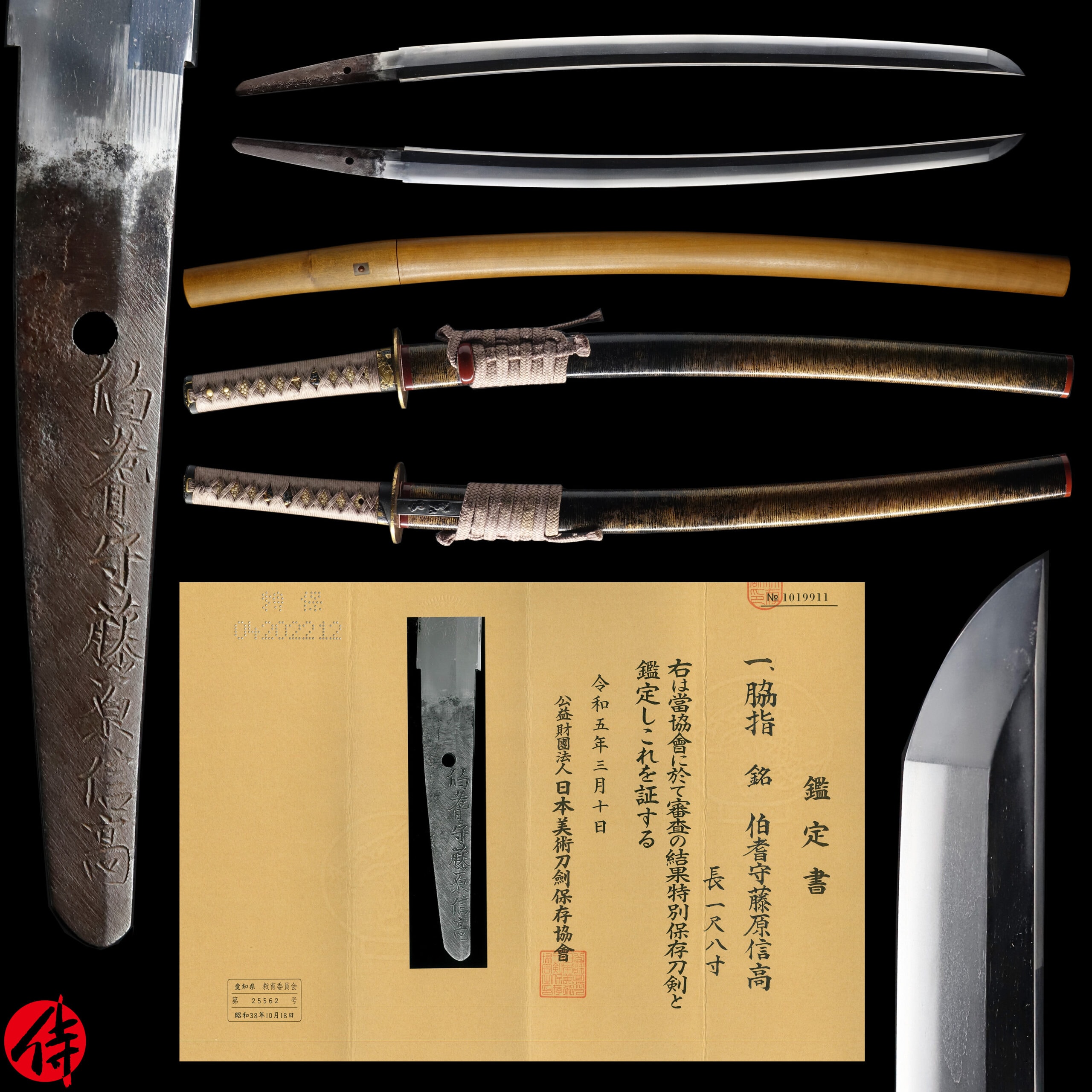
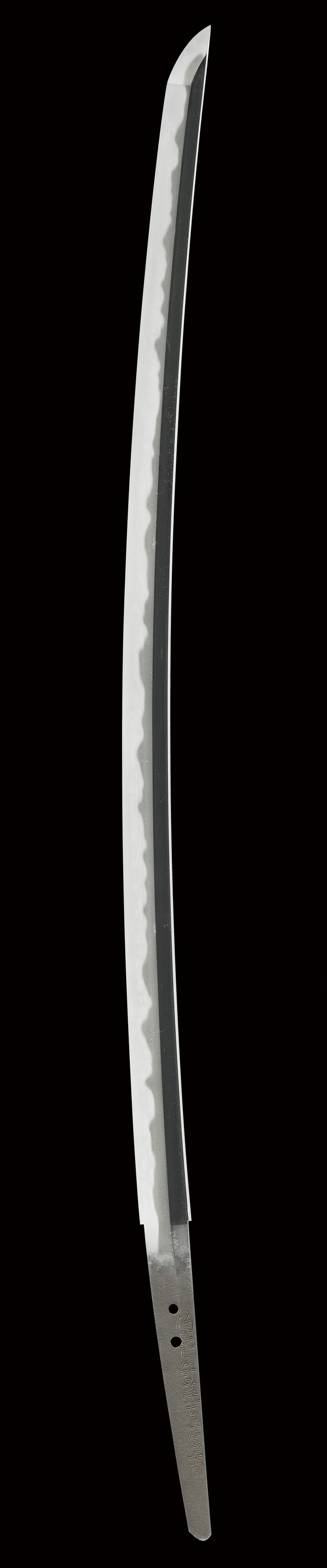
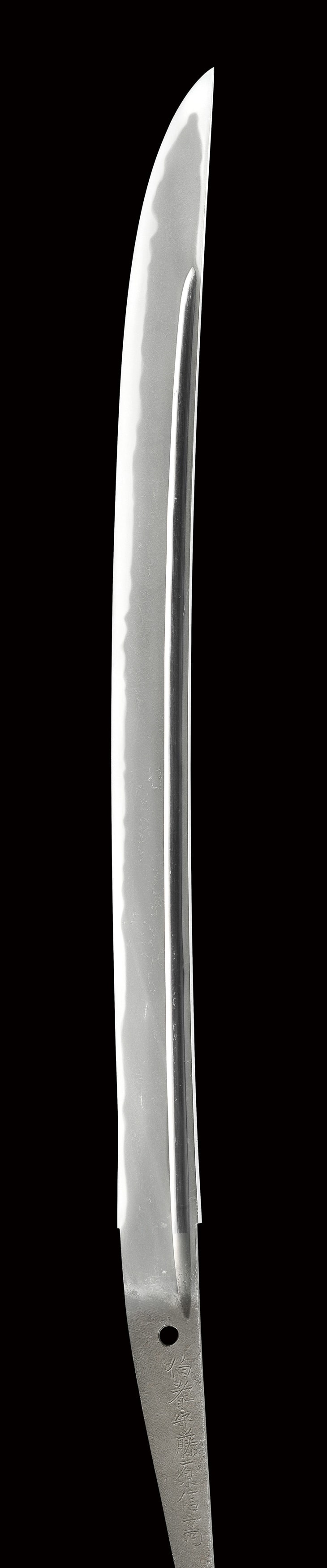
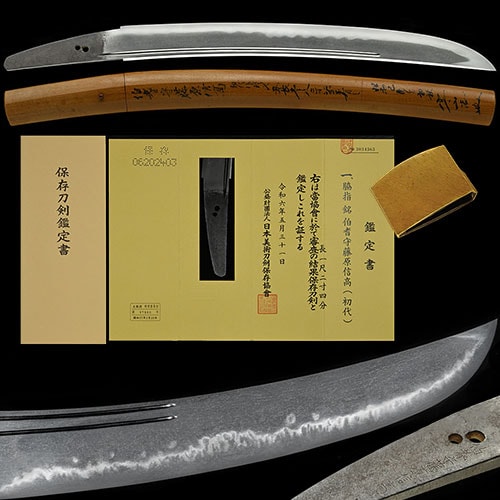
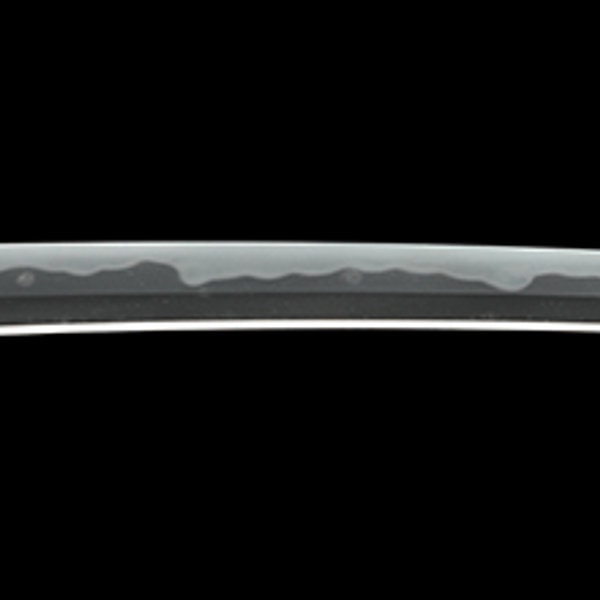
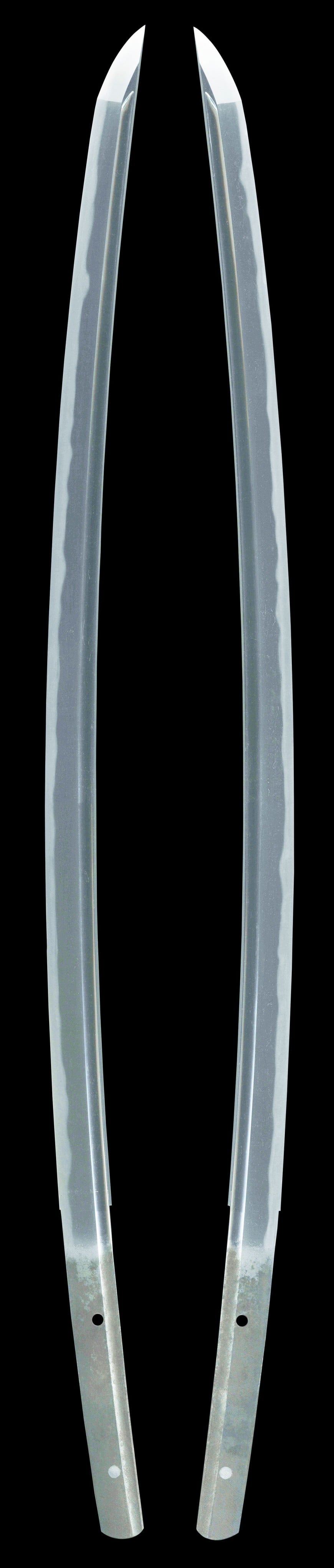
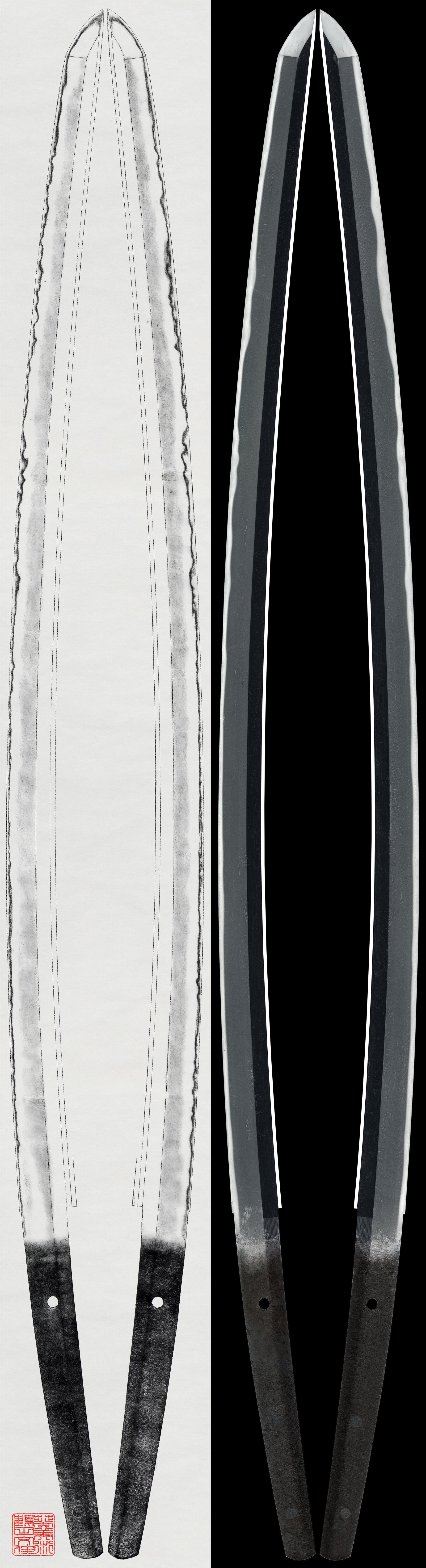
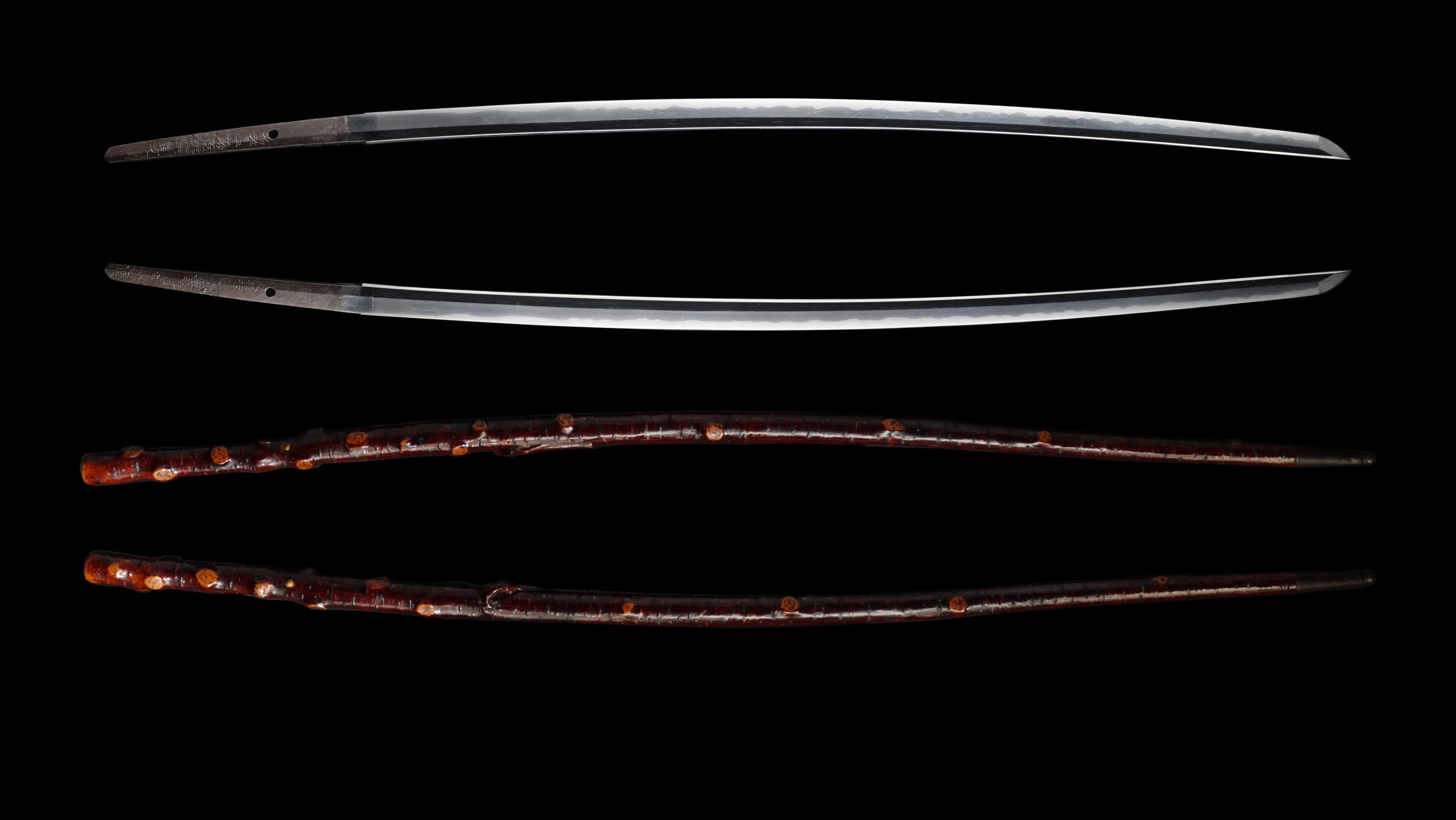
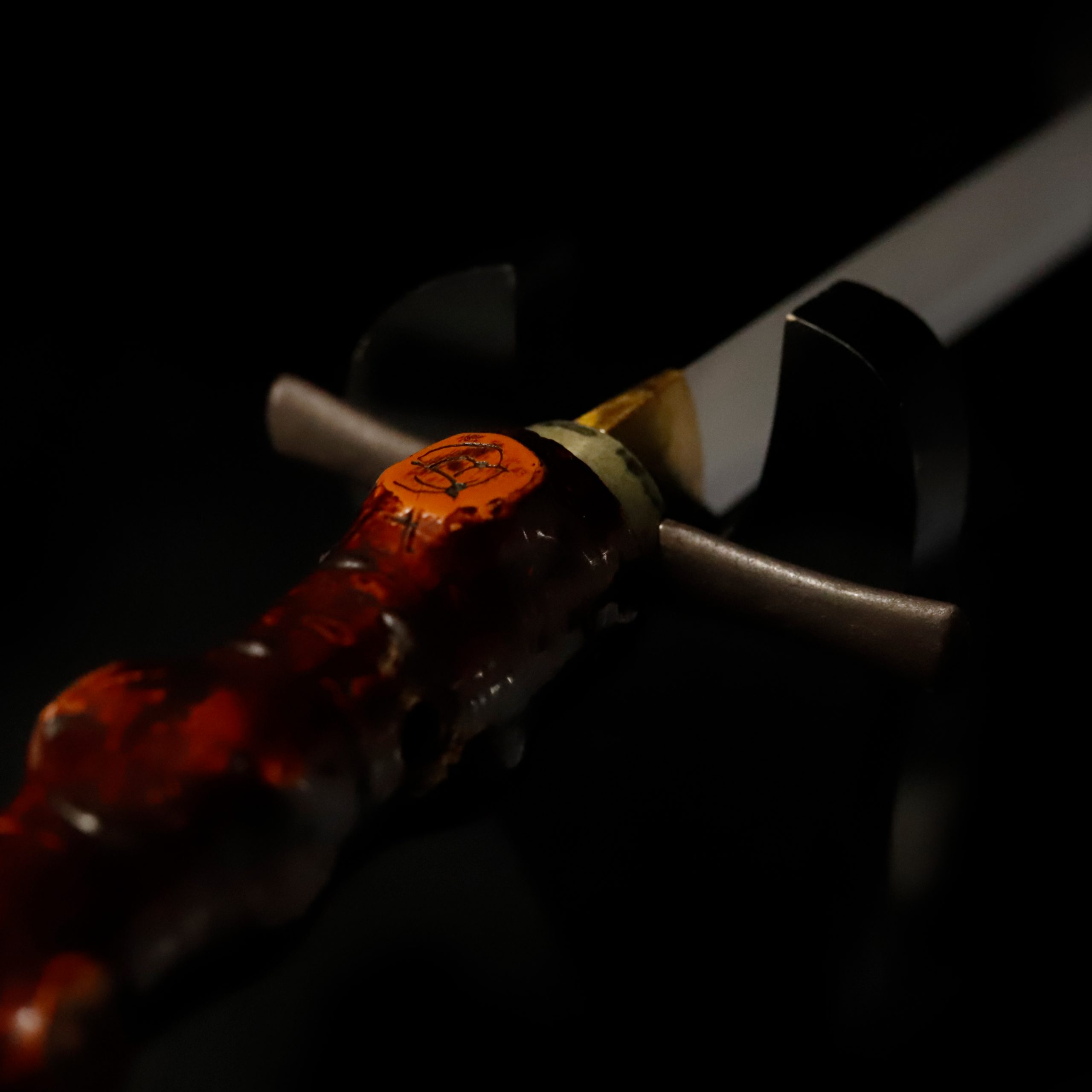
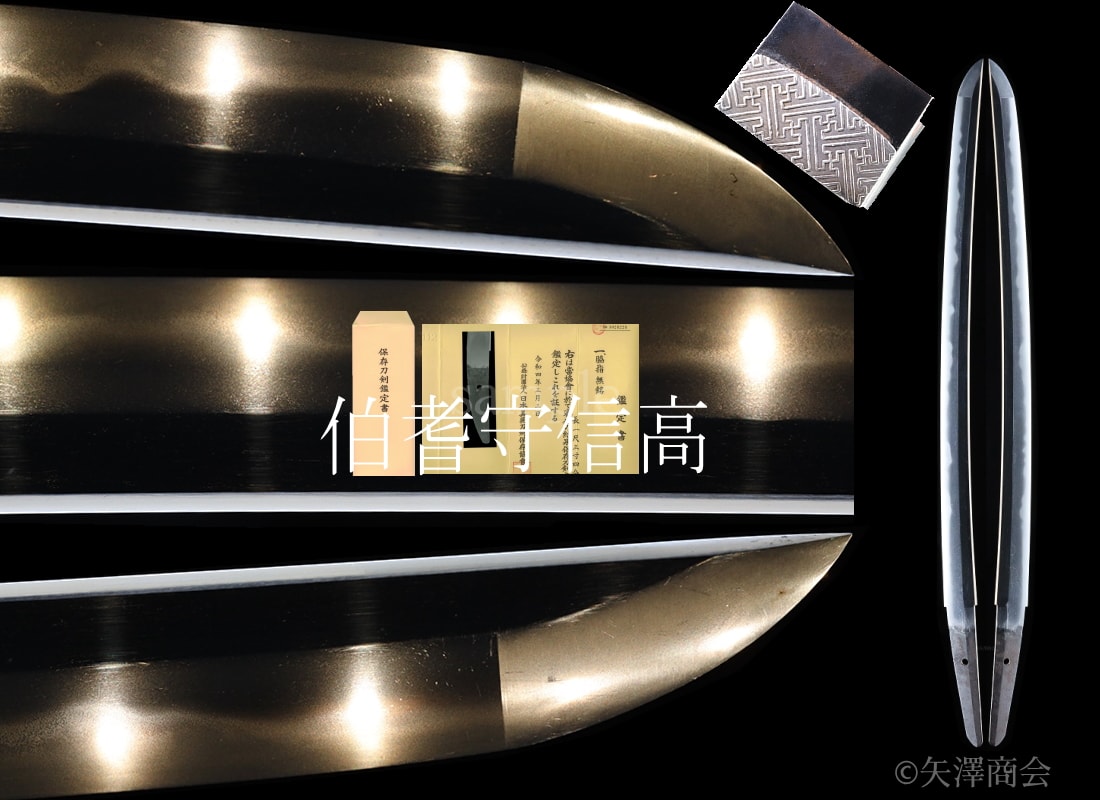
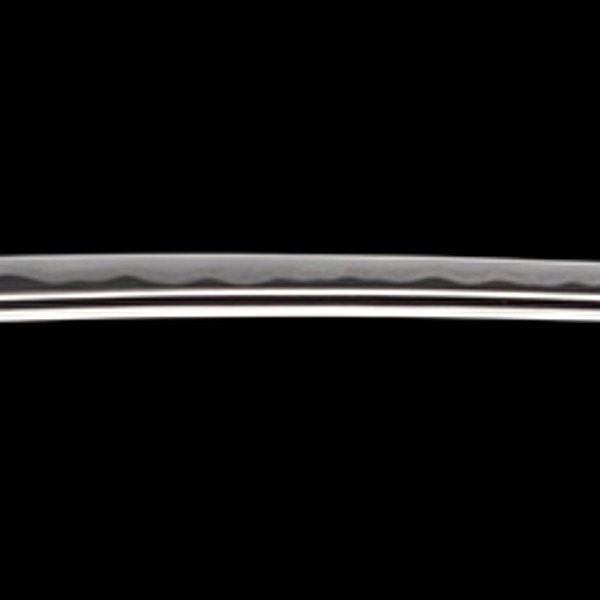
Antique Japanese Sword Wakizashi Signed by Nobutaka with NBTHK Hozon Certificate 【Description】 This Wakizashi blade was forged in the second year of the Tenmei era(1782) by Hoki no Kami Fujiwara Nobutaka and Nobuteru(伯耆守藤原信高、信照). We gathered this information from the signature on its tang. We believe the 5th-gen Nobutaka and his son(Nobuteru:6th-gen Nobutaka) forged this Wakizashi together, considering the age it was made. The first-gen Nobutaka was originally from Mino province, which is famous for Japanese sword tradition, MINO-DEN. He moved to Owari province(today’s Aichi prefecture) during the early Keicho era(1596-1615). The 1st-5th generation Nobutaka all received the title of Hoki no Kami. The name of Kami was given by an emperor to those who were excellent at sword making. The sword maker’s name Nobutaka is one of the most famous swordsmiths in Owari province in the Edo period. The signature also says that this blade was ordered by Mr. Takao (Last name). We presume this person was elderly because of its use. The width of this Wakizashi is extremely thin and was made to be stored in a cane shape Koshirae(sword mounting). This kind of sword is also known as cane-sword, which is considered a hidden weapon. In Japan, this kind of concealed or hidden weapon is called Shikomi Gatana (仕込み刀). We believe this person must have been a high-ranked person who was wealthy enough to order a wakizashi from the privileged sword maker, Nobutaka. He probably would carry this cane-sword as self-protection when he went out on the streets. It is possible that this Shikomi Koshirae is also from the same period(late Edo period). Once you draw the cane, the handguard part would appear from the sheath. This blade has a Hozon certificate issued by NBTHK. This authentication paper was only given to Japanese swords, worth preserving by Nihon Bijutsu Touken Hozon Kyokai(the Society for the Preservation of the Japan Art Sword). 【 Blade】 Cutting Edge Length(Nagasa) : 55.3 cm (21.77 inches) Curvature(Sori) : 1.25 cm( 0.49 inches) For more detailed measurement of the blade/sword mounting Hamon: The crystalline structure which forms along the cutting edge of a blade as a result of the hardening process Jimon(Jihada): visible steel surface pattern created by folding and hammering during forging process Nakago : Nakago is the tang of the Japanese sword. Japanese swordsmiths left the black rust on the tang on purpose to prevent red rust while the tang is in its handle. And the discoloration of the tang was created over time, which is a great indicator for a Japanese sword specialist to estimate when the sword was forged. Koshirae: Koshirae is the mounting of the Japanese sword. Shikomi Koshirae : Cane-shaped Koshirae Habaki : Habaki is the equipment to make the blade not touch its scabbard inside. It prevents the blade from getting rusty and chipped. Authentication Paper : NBTHK Hozon Certificate for the blade NBTHK , also known as Nihon Bijutsu Touken Hozon Kyokai (the Society for the Preservation of the Japan Art Sword), is one of the oldest Japanese sword appraising organizations in modern-day Japan. They authenticated the blade on March 20th in the 26th year of Heisei(2014). They appraised it as Hozon Touken, the blade worth preserving for Japanese society. The purchaser will receive this original certificate as well. We can also translate what is written into English and make a PDF file for your record if you request. Registration Number : Miyazaki 34519 The Board of Education in Miyazaki prefecture issued a registration paper for this sword . In order to obtain this paper, the sword needs to be traditionally hand forged. With this paper, its owner can legally own an authentic Japanese sword in Japan. This paper will need to be returned to the board of education when the sword being shipped abroad but you can receive a copy of it. —————————————————————– 【About us】 Samurai Museum is located in Tokyo, Japan, exhibiting antique artifacts related to the

NihontoWatch MonNihontoWatch
MarketEncyclopediaKantei
刀剣›美濃伝›三阿弥›信高›Antique Japanese Sword Shikomi Wakizashi Signed by Nobutaka NBTHK Hozon Certificate
脇差保存
信高

Antique Japanese Sword Shikomi Wakizashi Signed by Nobutaka NBTHK Hozon Certificate

在銘 · 寛永 · 長さ 55.3cm · 反り 1.25cm
売却済
信高 · 寛永販売中 2点 →
脇差保存
刀身だけで刀工を見抜けますか? 本日の鑑定 →
信高 — 1 of 17
信高 — 2 of 17
信高 — 3 of 17
信高 — 4 of 17
信高 — 5 of 17
信高 — 6 of 17
信高 — 7 of 17
信高 — 8 of 17
信高 — 9 of 17
信高 — 10 of 17
信高 — 11 of 17
信高 — 12 of 17
信高 — 13 of 17
信高 — 14 of 17
信高 — 15 of 17
信高 — 16 of 17
信高 — 17 of 17
1 / 17
1 / 17
信高 — 1 of 17信高 — 2 of 17信高 — 3 of 17信高 — 4 of 17信高 — 5 of 17信高 — 6 of 17信高 — 7 of 17信高 — 8 of 17信高 — 9 of 17信高 — 10 of 17信高 — 11 of 17信高 — 12 of 17信高 — 13 of 17信高 — 14 of 17信高 — 15 of 17信高 — 16 of 17信高 — 17 of 17
信高 · 寛永販売中 2点 →
脇差保存
刀身だけで刀工を見抜けますか? 本日の鑑定 →
法量・詳細
刀工
信高
種別
脇差
流派
三阿弥
活動期
1624–1644年頃(寛永)
国
尾張
銘
在銘(在銘率 100%)
法量
長さ 55.3cm反り 1.25cm
説明

Antique Japanese Sword Wakizashi Signed by Nobutaka with NBTHK Hozon Certificate 【Description】 This Wakizashi blade was forged in the second year of the Tenmei era(1782) by Hoki no Kami Fujiwara Nobutaka and Nobuteru(伯耆守藤原信高、信照). We gathered this information from the signature on its tang. We believe the 5th-gen Nobutaka and his son(Nobuteru:6th-gen Nobutaka) forged this Wakizashi together, considering the age it was made. The first-gen Nobutaka was originally from Mino province, which is famous for Japanese sword tradition, MINO-DEN. He moved to Owari province(today’s Aichi prefecture) during the early Keicho era(1596-1615). The 1st-5th generation Nobutaka all received the title of Hoki no Kami. The name of Kami was given by an emperor to those who were excellent at sword making. The sword maker’s name Nobutaka is one of the most famous swordsmiths in Owari province in the Edo period. The signature also says that this blade was ordered by Mr. Takao (Last name). We presume this person was elderly because of its use. The width of this Wakizashi is extremely thin and was made to be stored in a cane shape Koshirae(sword mounting). This kind of sword is also known as cane-sword, which is considered a hidden weapon. In Japan, this kind of concealed or hidden weapon is called Shikomi Gatana (仕込み刀). We believe this person must have been a high-ranked person who was wealthy enough to order a wakizashi from the privileged sword maker, Nobutaka. He probably would carry this cane-sword as self-protection when he went out on the streets. It is possible that this Shikomi Koshirae is also from the same period(late Edo period). Once you draw the cane, the handguard part would appear from the sheath. This blade has a Hozon certificate issued by NBTHK. This authentication paper was only given to Japanese swords, worth preserving by Nihon Bijutsu Touken Hozon Kyokai(the Society for the Preservation of the Japan Art Sword). 【 Blade】 Cutting Edge Length(Nagasa) : 55.3 cm (21.77 inches) Curvature(Sori) : 1.25 cm( 0.49 inches) For more detailed measurement of the blade/sword mounting Hamon: The crystalline structure which forms along the cutting edge of a blade as a result of the hardening process Jimon(Jihada): visible steel surface pattern created by folding and hammering during forging process Nakago : Nakago is the tang of the Japanese sword. Japanese swordsmiths left the black rust on the tang on purpose to prevent red rust while the tang is in its handle. And the discoloration of the tang was created over time, which is a great indicator for a Japanese sword specialist to estimate when the sword was forged. Koshirae: Koshirae is the mounting of the Japanese sword. Shikomi Koshirae : Cane-shaped Koshirae Habaki : Habaki is the equipment to make the blade not touch its scabbard inside. It prevents the blade from getting rusty and chipped. Authentication Paper : NBTHK Hozon Certificate for the blade NBTHK , also known as Nihon Bijutsu Touken Hozon Kyokai (the Society for the Preservation of the Japan Art Sword), is one of the oldest Japanese sword appraising organizations in modern-day Japan. They authenticated the blade on March 20th in the 26th year of Heisei(2014). They appraised it as Hozon Touken, the blade worth preserving for Japanese society. The purchaser will receive this original certificate as well. We can also translate what is written into English and make a PDF file for your record if you request. Registration Number : Miyazaki 34519 The Board of Education in Miyazaki prefecture issued a registration paper for this sword . In order to obtain this paper, the sword needs to be traditionally hand forged. With this paper, its owner can legally own an authentic Japanese sword in Japan. This paper will need to be returned to the board of education when the sword being shipped abroad but you can receive a copy of it. —————————————————————– 【About us】 Samurai Museum is located in Tokyo, Japan, exhibiting antique artifacts related to the

作者について

信高

美濃伝 · 尾張 · 1624-1644頃

藤代 Jo saku · 刀剣大鑑 上位37%

現在2点販売中

›

歴史的重要度

信高の位置づけを、日本刀全体および伝統・時代・時期ごとに示します。各位(随一・屈指・有数・著名)は、NBTHK および文化庁による指定に加え、三作や名物帳などの歴史的栄誉を加味したものです。

随一
随一
屈指
屈指
有数
有数
著名
著名

各項目を選ぶと評価方法が表示されます。

指定の実績
指定1口
重要刀剣
1
信高の作 2点が現在販売中→
信高 — 詳細美濃伝派

この作者について学ぶ →

流派について

三阿弥

美濃伝 · 美濃

現在9点販売中

›

三阿弥は美濃国に興った刀工の一派で、説示に拠れば関七流の一つに数えられ、その頭領が兼則であったと伝える。兼則は古伝書や銘鑑に南北朝末期から室町初期の応永にかけて存在したことが記され、現存する作例の最古とみられる太刀は作風と銘字の書風から応永を降らぬものと鑑せられている。同派の兼国は、その遠祖を南北朝時代の直江兼友門とも、大和兼国あるいは兼則の子ともいうが、そこまで時代の溯る作は未だ見られず、室町期に入って同銘数工におよび、末関に至るまで栄えた。兼則は兼元・兼定らと共に末関を代表する刀工に位置づけられる。下って桃山から江戸初期には、三阿弥兼国の子孫と伝える伯耆守藤原信高が出る。初代信高は永禄六年に美濃国上有知(現美濃町)に生まれ、河村左衛門と称し、天正九年十九歳で伯耆守を受領し、のち尾州清洲を経て徳川義直に従い慶長十五・六年頃に名古屋へ移った。寛永十年に隠居して入道銘を慶遊といい、同十三年に七十六歳で歿している。鍛えや帽子に美濃伝の見どころを残しつつ、活動の地は美濃から尾張へと移っている。 作風は時代と工により振幅が大きい。兼則・兼国ら室町期の作は、小板目あるいは板目がよくつみ、処々流れごころとなって地沸が細かにつき、白けごころをまじえる鍛えに、匂口の締まった直刃を基調とし、小互の目や角ばる刃、尖り刃を交え、足が入り、処々ほつれて飛焼がかかり、帽子は直ぐに小丸、あるいは尖りごころに返って掃きかけるものがある。兼国の優作は地鉄ともども冴えて明るく、一見善定兼吉の出来を思わせると評される。信高に至ると姿は一変し、室町最末期から桃山期にかけての幅広・大鋒の堂々たる豪壮な体配を示し、広直刃を基調に浅くのたれ、裏は小のたれに互の目ごころの刃を交え、匂深く沸がよくつき、部分的に荒めの沸をまじえて焼頭が沸崩れ、処々ほつれて喰違刃風となり、砂流し・金筋・湯走り・飛焼が鎬地にまたがって頻りにかかり、上半は皆焼風となる。帽子を焼き深く大胆に一枚風として長く返らせ、板目に流れ肌をまじえる鍛えや帽子の地蔵風に出身たる美濃伝の名残を窺わせる。見分けには、室町期の締まった直刃と冴えた地鉄、信高の沸づき変化に富む放胆な刃取りと豪壮な姿という時代差が手がかりとなる。 鑑定の要点は、兼則の「兼」の字の第四画目の鏨がしゃくれるところで、これは康応や応永年紀の兼吉にも見られ、南北朝末から応永にかけての銘の特徴とされる。信高には初代と二代があり、二代は初代の子で寛永十年に伯耆守を受領、寛文二年六十歳で入道し、元禄二年八十七歳で歿した。その技倆は父に劣らず、現存作中の優秀作は多くがこの二代の手になるという。伝来の明らかな作も多く、兼則には山之内家伝来の太刀、兼国には相模国小田原藩主大久保家の旧蔵で大久保忠成が九十三歳で指料とした旨を金象嵌に刻む一口があり、いずれも資料性が高い。信高には天正九年伯耆守受領直後の作で稲葉江写しとして名高い一口や、尾張刀工に多い槍のうちでも稀な長大作があって、その技を伝える。美濃に発し関七流の一角を占めた一派が、末関を経て尾張へ伝統を運んだ流れを、これらの作は示している。 詳しく見る →

5名の刀工指定7口
主要刀工
刀工時代指定
信高1581-16153
兼國1455-14571
兼則1370-13721
信高1624-16441
信高1673-16811
三阿弥流派を見る →

歴史的背景

江戸時代

›

二世紀半の泰平のあいだ、刀は武器である以上に武士の身分の標章であった。江戸の実証と大坂の華やぎのように都市ごとの作風が育ち、時代の末には需要も細っていく。

江戸時代 →

NBTHK鑑定書
保存刀剣Hozon Tōken
›

銘が正しい、または無銘でも年代・国・系統を確実に指摘できる、保存に値する真正の作と鑑定されたものです。

NBTHKについて›

日本美術刀剣保存協会(NBTHK)は、1948年に設立され、文化庁の監督を受ける公益財団法人で、東京・刀剣博物館に本部を置きます。専門の審査員が出品作を直接審査し、美術的・歴史的価値に応じた鑑定書を発行します。NBTHKの鑑定書は、日本刀および刀装具の真正性を示す最も広く認知された基準です。

NBTHK公式サイト→
販売店
サ
サムライミュージアム
🇯🇵日本から発送
›
✓認証販売店samuraimuseum.jp
✓海外発送可✓英語対応PayPalクレジットカード
返品ポリシー

Returns/exchanges limited to defects caused by shipping (except willful misconduct or gross negligence by the company); customers must contact within 72 hours of receiving the product.

サムライミュージアムの出品一覧を見る→販売店サイトでこの商品を見る→

信高の他の作

すべて見る →
矢澤商会
保存
Wakizashi - Hozon - 作 信高 - 身幅32ミリ超え 伯耆守信高(R6.12月保存審査合格)生ぶなかご 研ぎ減り少なく健全 江戸時代前期Wakizashi - Hozon - 作 信高 - 身幅32ミリ超え 伯耆守信高(R6.12月保存審査合格)生ぶなかご 研ぎ減り少なく健全 江戸時代前期

脇差

作信高
53.2cm·寛永
¥300,000
銀座長州屋
Katana - 作 信高 - 銘 前伯州信高入道Katana - 作 信高 - 銘 前伯州信高入道

刀

作信高
江戸
お問い合わせ

信高の売約済み

すべて見る →
葵美術
Wakizashi - 作 信高 - 無題Wakizashi - 作 信高 - 無題
売切れ

脇差

作信高
54.2cm·新刀
売却済
銀座誠友堂
特別保存
Katana - Tokuho - 作 信高 - 刀[前白州信高入道]日本美術刀剣保存協会 特別保存刀剣Katana - Tokuho - 作 信高 - 刀[前白州信高入道]日本美術刀剣保存協会 特別保存刀剣
売切れ

刀

作信高
70.5cm·慶長
売却済
Tozando
特別貴重
Katana - Tokubetsu Kichō - 作 信高 - 真刀 刀 無銘(信高)新刀 伝来 NBTHK 特別貴重刀剣認定書付 | 東山堂Katana - Tokubetsu Kichō - 作 信高 - 真刀 刀 無銘(信高)新刀 伝来 NBTHK 特別貴重刀剣認定書付 | 東山堂
売切れ

刀

作信高
73.1cm·寛永
売却済
銀座長州屋
Katana - 作 信高 - 銘 伯耆守藤原信高(二代)Katana - 作 信高 - 銘 伯耆守藤原信高(二代)
売切れ

刀

作信高
寛永
売却済
銀座長州屋
Katana - 作 信高 - 銘 前伯州信高入道Katana - 作 信高 - 銘 前伯州信高入道
売切れ

刀

作信高
江戸
売却済
Unique Japan
Wakizashi - 作 信高 - 脇差 伯耆守信高(二代)Wakizashi - 作 信高 - 脇差 伯耆守信高(二代)
売切れ

脇差

作信高
51.5cm·寛永
売却済
サムライミュージアム
特別保存
Wakizashi - Tokuho - 作 信高 - 日本刀 脇差 伯耆守信高 特別重要刀剣(NBTHK 特別保存刀剣鑑定書付)Wakizashi - Tokuho - 作 信高 - 日本刀 脇差 伯耆守信高 特別重要刀剣(NBTHK 特別保存刀剣鑑定書付)
売切れ

脇差

作信高
54.6cm·新刀
売却済
銀座長州屋
特別保存
Katana - Tokuho - 作 信高 - 刀 銘 伯耆守藤原信高(二代)Katana - Tokuho - 作 信高 - 刀 銘 伯耆守藤原信高(二代)
売切れ

刀

作信高
67.6cm·寛永
売却済

三阿弥派の作

すべて見る →
コレクション情報
特別保存
Katana - Tokuho - 作 信高 - 刀(父子合作刀) 伯耆守藤原信高(三代) 前伯州信高入道Katana - Tokuho - 作 信高 - 刀(父子合作刀) 伯耆守藤原信高(三代) 前伯州信高入道

刀

作信高
70.8cm·延宝
¥1,580,000
銀座長州屋
特別保存
Katana - Tokuho - 作 信高 - 刀 銘 前伯州信高入道Katana - Tokuho - 作 信高 - 刀 銘 前伯州信高入道

刀

作信高
73.93cm·江戸
お問い合わせ
コレクション情報
保存
Wakizashi - Hozon - 作 信高 - 脇差し 伯耆守藤原信高(初代) Katana:Ouminokami TsuguhiraWakizashi - Hozon - 作 信高 - 脇差し 伯耆守藤原信高(初代) Katana:Ouminokami Tsuguhira

脇差

作信高
41.9cm·新刀
¥498,000
Nihontocraft
特別保存
Wakizashi - Tokuho - 作 信高 - 尾張三代伯耆守信高 脇差Wakizashi - Tokuho - 作 信高 - 尾張三代伯耆守信高 脇差

脇差

作信高
54.6cm·延宝
お問い合わせ
永楽堂
保存
Wakizashi - Hozon - 作 三阿弥派 - 信高 脇差 保存刀剣Wakizashi - Hozon - 作 三阿弥派 - 信高 脇差 保存刀剣

脇差

作三阿弥派
37.8cm·新刀
¥700,000
刀剣小町
保存
Wakizashi - Hozon - 作 三阿弥派 - 脇差 白鞘入りWakizashi - Hozon - 作 三阿弥派 - 脇差 白鞘入り

脇差

作三阿弥派
54.7cm·新刀
¥800,000
銀座長州屋
Wakizashi - 作 信高 - 銘 伯耆守藤原信高(三代)Wakizashi - 作 信高 - 銘 伯耆守藤原信高(三代)

脇差

作信高
延宝
¥800,000

美濃の伝統

すべて見る →
和敬堂
特別保存
Katana - Tokuho - 作 直江志津派 - 刀 無銘 直江志津Katana - Tokuho - 作 直江志津派 - 刀 無銘 直江志津

刀

作直江志津派
63.4cm·南北朝
¥1,500,000
刀剣杉田
特別保存
Wakizashi - Tokuho - 作 兼元 - 兼元(美濃)(東山道) (二代孫六)Wakizashi - Tokuho - 作 兼元 - 兼元(美濃)(東山道) (二代孫六)

脇差

作兼元
38cm·室町
¥3,200,000
和敬堂
特別保存
Katana - Tokuho - 作 氏房 - 刀 若狭守藤原氏房作Katana - Tokuho - 作 氏房 - 刀 若狭守藤原氏房作

刀

作氏房
74.3cm·室町
¥2,800,000
銀座長州屋
特別保存
Katana - Tokuho - 作 直江志津派 - 大磨上無銘 伝直江志津Katana - Tokuho - 作 直江志津派 - 大磨上無銘 伝直江志津

刀

作直江志津派
69.39cm·南北朝
お問い合わせ
永楽堂
特別保存
Katana - Tokuho - 作 兼定 - 和泉守兼定 刀 特別保存刀剣Katana - Tokuho - 作 兼定 - 和泉守兼定 刀 特別保存刀剣

刀

作兼定
67.1cm·室町
¥5,000,000
兵左衛門百観音堂
特別保存
Katana - Tokuho - 作 兼定 - 兼之(和泉守兼定)二代兼定Katana - Tokuho - 作 兼定 - 兼之(和泉守兼定)二代兼定

刀

作兼定
71.5cm·室町
お問い合わせ
葵美術
重要
Katana - Jūyō - 作 大和志津派 - 刀:無銘(大和志津)(第16回重要刀剣)Katana - Jūyō - 作 大和志津派 - 刀:無銘(大和志津)(第16回重要刀剣)

刀

作大和志津派
68cm·南北朝
¥2,700,000
葵美術
特別保存
Katana - Tokuho - 作 大和志津派 - 刀:大和志津兼氏(金象嵌銘)本阿弥(花押)(光遜)日本美術刀剣保存協会 特別保存刀剣Katana - Tokuho - 作 大和志津派 - 刀:大和志津兼氏(金象嵌銘)本阿弥(花押)(光遜)日本美術刀剣保存協会 特別保存刀剣

刀

作大和志津派
69.2cm·南北朝
¥2,300,000

刀剣

  • 刀
  • 脇差
  • 短刀
  • 太刀
  • 薙刀
  • 槍
  • 日本刀の販売
  • サムライソード

刀装具

  • 鍔
  • 縁頭
  • 小柄
  • 目貫
  • 鍔(ソードガード)

甲冑武具

  • 兜
  • 甲冑
  • 甲冑・武具一覧

鑑定別

  • 特重
  • 重要
  • 特別保存
  • 保存

リソース

  • 刀剣商一覧
  • 刀工一覧
  • 誌上鑑定
  • すべて見る
Nihontowatch© 2026
利用規約プライバシーCookie運営者情報
売切れ

説明

Antique Japanese Sword Wakizashi Signed by Nobutaka with NBTHK Hozon Certificate 【Description】 This Wakizashi blade was forged in the second year of the Tenmei era(1782) by Hoki no Kami Fujiwara Nobutaka and Nobuteru(伯耆守藤原信高、信照). We gathered this information from the signature on its tang. We believe the 5th-gen Nobutaka and his son(Nobuteru:6th-gen Nobutaka) forged this Wakizashi together, considering the age it was made. The first-gen Nobutaka was originally from Mino province, which is famous for Japanese sword tradition, MINO-DEN. He moved to Owari province(today’s Aichi prefecture) during the early Keicho era(1596-1615). The 1st-5th generation Nobutaka all received the title of Hoki no Kami. The name of Kami was given by an emperor to those who were excellent at sword making. The sword maker’s name Nobutaka is one of the most famous swordsmiths in Owari province in the Edo period. The signature also says that this blade was ordered by Mr. Takao (Last name). We presume this person was elderly because of its use. The width of this Wakizashi is extremely thin and was made to be stored in a cane shape Koshirae(sword mounting). This kind of sword is also known as cane-sword, which is considered a hidden weapon. In Japan, this kind of concealed or hidden weapon is called Shikomi Gatana (仕込み刀). We believe this person must have been a high-ranked person who was wealthy enough to order a wakizashi from the privileged sword maker, Nobutaka. He probably would carry this cane-sword as self-protection when he went out on the streets. It is possible that this Shikomi Koshirae is also from the same period(late Edo period). Once you draw the cane, the handguard part would appear from the sheath. This blade has a Hozon certificate issued by NBTHK. This authentication paper was only given to Japanese swords, worth preserving by Nihon Bijutsu Touken Hozon Kyokai(the Society for the Preservation of the Japan Art Sword). 【 Blade】 Cutting Edge Length(Nagasa) : 55.3 cm (21.77 inches) Curvature(Sori) : 1.25 cm( 0.49 inches) For more detailed measurement of the blade/sword mounting Hamon: The crystalline structure which forms along the cutting edge of a blade as a result of the hardening process Jimon(Jihada): visible steel surface pattern created by folding and hammering during forging process Nakago : Nakago is the tang of the Japanese sword. Japanese swordsmiths left the black rust on the tang on purpose to prevent red rust while the tang is in its handle. And the discoloration of the tang was created over time, which is a great indicator for a Japanese sword specialist to estimate when the sword was forged. Koshirae: Koshirae is the mounting of the Japanese sword. Shikomi Koshirae : Cane-shaped Koshirae Habaki : Habaki is the equipment to make the blade not touch its scabbard inside. It prevents the blade from getting rusty and chipped. Authentication Paper : NBTHK Hozon Certificate for the blade NBTHK , also known as Nihon Bijutsu Touken Hozon Kyokai (the Society for the Preservation of the Japan Art Sword), is one of the oldest Japanese sword appraising organizations in modern-day Japan. They authenticated the blade on March 20th in the 26th year of Heisei(2014). They appraised it as Hozon Touken, the blade worth preserving for Japanese society. The purchaser will receive this original certificate as well. We can also translate what is written into English and make a PDF file for your record if you request. Registration Number : Miyazaki 34519 The Board of Education in Miyazaki prefecture issued a registration paper for this sword . In order to obtain this paper, the sword needs to be traditionally hand forged. With this paper, its owner can legally own an authentic Japanese sword in Japan. This paper will need to be returned to the board of education when the sword being shipped abroad but you can receive a copy of it. —————————————————————– 【About us】 Samurai Museum is located in Tokyo, Japan, exhibiting antique artifacts related to the

NihontoWatch MonNihontoWatch
MarketEncyclopediaKantei
刀剣›美濃伝›三阿弥›信高›Antique Japanese Sword Shikomi Wakizashi Signed by Nobutaka NBTHK Hozon Certificate
脇差保存
信高

Antique Japanese Sword Shikomi Wakizashi Signed by Nobutaka NBTHK Hozon Certificate

在銘 · 寛永 · 長さ 55.3cm · 反り 1.25cm
売却済
信高 · 寛永販売中 2点 →
脇差保存
刀身だけで刀工を見抜けますか? 本日の鑑定 →
信高 — 1 of 17
信高 — 2 of 17
信高 — 3 of 17
信高 — 4 of 17
信高 — 5 of 17
信高 — 6 of 17
信高 — 7 of 17
信高 — 8 of 17
信高 — 9 of 17
信高 — 10 of 17
信高 — 11 of 17
信高 — 12 of 17
信高 — 13 of 17
信高 — 14 of 17
信高 — 15 of 17
信高 — 16 of 17
信高 — 17 of 17
1 / 17
1 / 17
信高 — 1 of 17信高 — 2 of 17信高 — 3 of 17信高 — 4 of 17信高 — 5 of 17信高 — 6 of 17信高 — 7 of 17信高 — 8 of 17信高 — 9 of 17信高 — 10 of 17信高 — 11 of 17信高 — 12 of 17信高 — 13 of 17信高 — 14 of 17信高 — 15 of 17信高 — 16 of 17信高 — 17 of 17
信高 · 寛永販売中 2点 →
脇差保存
刀身だけで刀工を見抜けますか? 本日の鑑定 →
法量・詳細
刀工
信高
種別
脇差
流派
三阿弥
活動期
1624–1644年頃(寛永)
国
尾張
銘
在銘(在銘率 100%)
法量
長さ 55.3cm反り 1.25cm
説明

Antique Japanese Sword Wakizashi Signed by Nobutaka with NBTHK Hozon Certificate 【Description】 This Wakizashi blade was forged in the second year of the Tenmei era(1782) by Hoki no Kami Fujiwara Nobutaka and Nobuteru(伯耆守藤原信高、信照). We gathered this information from the signature on its tang. We believe the 5th-gen Nobutaka and his son(Nobuteru:6th-gen Nobutaka) forged this Wakizashi together, considering the age it was made. The first-gen Nobutaka was originally from Mino province, which is famous for Japanese sword tradition, MINO-DEN. He moved to Owari province(today’s Aichi prefecture) during the early Keicho era(1596-1615). The 1st-5th generation Nobutaka all received the title of Hoki no Kami. The name of Kami was given by an emperor to those who were excellent at sword making. The sword maker’s name Nobutaka is one of the most famous swordsmiths in Owari province in the Edo period. The signature also says that this blade was ordered by Mr. Takao (Last name). We presume this person was elderly because of its use. The width of this Wakizashi is extremely thin and was made to be stored in a cane shape Koshirae(sword mounting). This kind of sword is also known as cane-sword, which is considered a hidden weapon. In Japan, this kind of concealed or hidden weapon is called Shikomi Gatana (仕込み刀). We believe this person must have been a high-ranked person who was wealthy enough to order a wakizashi from the privileged sword maker, Nobutaka. He probably would carry this cane-sword as self-protection when he went out on the streets. It is possible that this Shikomi Koshirae is also from the same period(late Edo period). Once you draw the cane, the handguard part would appear from the sheath. This blade has a Hozon certificate issued by NBTHK. This authentication paper was only given to Japanese swords, worth preserving by Nihon Bijutsu Touken Hozon Kyokai(the Society for the Preservation of the Japan Art Sword). 【 Blade】 Cutting Edge Length(Nagasa) : 55.3 cm (21.77 inches) Curvature(Sori) : 1.25 cm( 0.49 inches) For more detailed measurement of the blade/sword mounting Hamon: The crystalline structure which forms along the cutting edge of a blade as a result of the hardening process Jimon(Jihada): visible steel surface pattern created by folding and hammering during forging process Nakago : Nakago is the tang of the Japanese sword. Japanese swordsmiths left the black rust on the tang on purpose to prevent red rust while the tang is in its handle. And the discoloration of the tang was created over time, which is a great indicator for a Japanese sword specialist to estimate when the sword was forged. Koshirae: Koshirae is the mounting of the Japanese sword. Shikomi Koshirae : Cane-shaped Koshirae Habaki : Habaki is the equipment to make the blade not touch its scabbard inside. It prevents the blade from getting rusty and chipped. Authentication Paper : NBTHK Hozon Certificate for the blade NBTHK , also known as Nihon Bijutsu Touken Hozon Kyokai (the Society for the Preservation of the Japan Art Sword), is one of the oldest Japanese sword appraising organizations in modern-day Japan. They authenticated the blade on March 20th in the 26th year of Heisei(2014). They appraised it as Hozon Touken, the blade worth preserving for Japanese society. The purchaser will receive this original certificate as well. We can also translate what is written into English and make a PDF file for your record if you request. Registration Number : Miyazaki 34519 The Board of Education in Miyazaki prefecture issued a registration paper for this sword . In order to obtain this paper, the sword needs to be traditionally hand forged. With this paper, its owner can legally own an authentic Japanese sword in Japan. This paper will need to be returned to the board of education when the sword being shipped abroad but you can receive a copy of it. —————————————————————– 【About us】 Samurai Museum is located in Tokyo, Japan, exhibiting antique artifacts related to the

作者について

信高

美濃伝 · 尾張 · 1624-1644頃

藤代 Jo saku · 刀剣大鑑 上位37%

現在2点販売中

›

歴史的重要度

信高の位置づけを、日本刀全体および伝統・時代・時期ごとに示します。各位(随一・屈指・有数・著名)は、NBTHK および文化庁による指定に加え、三作や名物帳などの歴史的栄誉を加味したものです。

随一
随一
屈指
屈指
有数
有数
著名
著名

各項目を選ぶと評価方法が表示されます。

指定の実績
指定1口
重要刀剣
1
信高の作 2点が現在販売中→
信高 — 詳細美濃伝派

この作者について学ぶ →

流派について

三阿弥

美濃伝 · 美濃

現在9点販売中

›

三阿弥は美濃国に興った刀工の一派で、説示に拠れば関七流の一つに数えられ、その頭領が兼則であったと伝える。兼則は古伝書や銘鑑に南北朝末期から室町初期の応永にかけて存在したことが記され、現存する作例の最古とみられる太刀は作風と銘字の書風から応永を降らぬものと鑑せられている。同派の兼国は、その遠祖を南北朝時代の直江兼友門とも、大和兼国あるいは兼則の子ともいうが、そこまで時代の溯る作は未だ見られず、室町期に入って同銘数工におよび、末関に至るまで栄えた。兼則は兼元・兼定らと共に末関を代表する刀工に位置づけられる。下って桃山から江戸初期には、三阿弥兼国の子孫と伝える伯耆守藤原信高が出る。初代信高は永禄六年に美濃国上有知(現美濃町)に生まれ、河村左衛門と称し、天正九年十九歳で伯耆守を受領し、のち尾州清洲を経て徳川義直に従い慶長十五・六年頃に名古屋へ移った。寛永十年に隠居して入道銘を慶遊といい、同十三年に七十六歳で歿している。鍛えや帽子に美濃伝の見どころを残しつつ、活動の地は美濃から尾張へと移っている。 作風は時代と工により振幅が大きい。兼則・兼国ら室町期の作は、小板目あるいは板目がよくつみ、処々流れごころとなって地沸が細かにつき、白けごころをまじえる鍛えに、匂口の締まった直刃を基調とし、小互の目や角ばる刃、尖り刃を交え、足が入り、処々ほつれて飛焼がかかり、帽子は直ぐに小丸、あるいは尖りごころに返って掃きかけるものがある。兼国の優作は地鉄ともども冴えて明るく、一見善定兼吉の出来を思わせると評される。信高に至ると姿は一変し、室町最末期から桃山期にかけての幅広・大鋒の堂々たる豪壮な体配を示し、広直刃を基調に浅くのたれ、裏は小のたれに互の目ごころの刃を交え、匂深く沸がよくつき、部分的に荒めの沸をまじえて焼頭が沸崩れ、処々ほつれて喰違刃風となり、砂流し・金筋・湯走り・飛焼が鎬地にまたがって頻りにかかり、上半は皆焼風となる。帽子を焼き深く大胆に一枚風として長く返らせ、板目に流れ肌をまじえる鍛えや帽子の地蔵風に出身たる美濃伝の名残を窺わせる。見分けには、室町期の締まった直刃と冴えた地鉄、信高の沸づき変化に富む放胆な刃取りと豪壮な姿という時代差が手がかりとなる。 鑑定の要点は、兼則の「兼」の字の第四画目の鏨がしゃくれるところで、これは康応や応永年紀の兼吉にも見られ、南北朝末から応永にかけての銘の特徴とされる。信高には初代と二代があり、二代は初代の子で寛永十年に伯耆守を受領、寛文二年六十歳で入道し、元禄二年八十七歳で歿した。その技倆は父に劣らず、現存作中の優秀作は多くがこの二代の手になるという。伝来の明らかな作も多く、兼則には山之内家伝来の太刀、兼国には相模国小田原藩主大久保家の旧蔵で大久保忠成が九十三歳で指料とした旨を金象嵌に刻む一口があり、いずれも資料性が高い。信高には天正九年伯耆守受領直後の作で稲葉江写しとして名高い一口や、尾張刀工に多い槍のうちでも稀な長大作があって、その技を伝える。美濃に発し関七流の一角を占めた一派が、末関を経て尾張へ伝統を運んだ流れを、これらの作は示している。 詳しく見る →

5名の刀工指定7口
主要刀工
刀工時代指定
信高1581-16153
兼國1455-14571
兼則1370-13721
信高1624-16441
信高1673-16811
三阿弥流派を見る →

歴史的背景

江戸時代

›

二世紀半の泰平のあいだ、刀は武器である以上に武士の身分の標章であった。江戸の実証と大坂の華やぎのように都市ごとの作風が育ち、時代の末には需要も細っていく。

江戸時代 →

NBTHK鑑定書
保存刀剣Hozon Tōken
›

銘が正しい、または無銘でも年代・国・系統を確実に指摘できる、保存に値する真正の作と鑑定されたものです。

NBTHKについて›

日本美術刀剣保存協会(NBTHK)は、1948年に設立され、文化庁の監督を受ける公益財団法人で、東京・刀剣博物館に本部を置きます。専門の審査員が出品作を直接審査し、美術的・歴史的価値に応じた鑑定書を発行します。NBTHKの鑑定書は、日本刀および刀装具の真正性を示す最も広く認知された基準です。

NBTHK公式サイト→
販売店
サ
サムライミュージアム
🇯🇵日本から発送
›
✓認証販売店samuraimuseum.jp
✓海外発送可✓英語対応PayPalクレジットカード
返品ポリシー

Returns/exchanges limited to defects caused by shipping (except willful misconduct or gross negligence by the company); customers must contact within 72 hours of receiving the product.
サムライミュージアムの出品一覧を見る→販売店サイトでこの商品を見る→

信高の他の作

すべて見る →
矢澤商会
保存
Wakizashi - Hozon - 作 信高 - 身幅32ミリ超え 伯耆守信高(R6.12月保存審査合格)生ぶなかご 研ぎ減り少なく健全 江戸時代前期Wakizashi - Hozon - 作 信高 - 身幅32ミリ超え 伯耆守信高(R6.12月保存審査合格)生ぶなかご 研ぎ減り少なく健全 江戸時代前期

脇差

作信高
53.2cm·寛永
¥300,000
銀座長州屋
Katana - 作 信高 - 銘 前伯州信高入道Katana - 作 信高 - 銘 前伯州信高入道

刀

作信高
江戸
お問い合わせ

信高の売約済み

すべて見る →
葵美術
Wakizashi - 作 信高 - 無題Wakizashi - 作 信高 - 無題
売切れ

脇差

作信高
54.2cm·新刀
売却済
銀座誠友堂
特別保存
Katana - Tokuho - 作 信高 - 刀[前白州信高入道]日本美術刀剣保存協会 特別保存刀剣Katana - Tokuho - 作 信高 - 刀[前白州信高入道]日本美術刀剣保存協会 特別保存刀剣
売切れ

刀

作信高
70.5cm·慶長
売却済
Tozando
特別貴重
Katana - Tokubetsu Kichō - 作 信高 - 真刀 刀 無銘(信高)新刀 伝来 NBTHK 特別貴重刀剣認定書付 | 東山堂Katana - Tokubetsu Kichō - 作 信高 - 真刀 刀 無銘(信高)新刀 伝来 NBTHK 特別貴重刀剣認定書付 | 東山堂
売切れ

刀

作信高
73.1cm·寛永
売却済
銀座長州屋
Katana - 作 信高 - 銘 伯耆守藤原信高(二代)Katana - 作 信高 - 銘 伯耆守藤原信高(二代)
売切れ

刀

作信高
寛永
売却済
銀座長州屋
Katana - 作 信高 - 銘 前伯州信高入道Katana - 作 信高 - 銘 前伯州信高入道
売切れ

刀

作信高
江戸
売却済
Unique Japan
Wakizashi - 作 信高 - 脇差 伯耆守信高(二代)Wakizashi - 作 信高 - 脇差 伯耆守信高(二代)
売切れ

脇差

作信高
51.5cm·寛永
売却済
サムライミュージアム
特別保存
Wakizashi - Tokuho - 作 信高 - 日本刀 脇差 伯耆守信高 特別重要刀剣(NBTHK 特別保存刀剣鑑定書付)Wakizashi - Tokuho - 作 信高 - 日本刀 脇差 伯耆守信高 特別重要刀剣(NBTHK 特別保存刀剣鑑定書付)
売切れ

脇差

作信高
54.6cm·新刀
売却済
銀座長州屋
特別保存
Katana - Tokuho - 作 信高 - 刀 銘 伯耆守藤原信高(二代)Katana - Tokuho - 作 信高 - 刀 銘 伯耆守藤原信高(二代)
売切れ

刀

作信高
67.6cm·寛永
売却済

三阿弥派の作

すべて見る →
コレクション情報
特別保存
Katana - Tokuho - 作 信高 - 刀(父子合作刀) 伯耆守藤原信高(三代) 前伯州信高入道Katana - Tokuho - 作 信高 - 刀(父子合作刀) 伯耆守藤原信高(三代) 前伯州信高入道

刀

作信高
70.8cm·延宝
¥1,580,000
銀座長州屋
特別保存
Katana - Tokuho - 作 信高 - 刀 銘 前伯州信高入道Katana - Tokuho - 作 信高 - 刀 銘 前伯州信高入道

刀

作信高
73.93cm·江戸
お問い合わせ
コレクション情報
保存
Wakizashi - Hozon - 作 信高 - 脇差し 伯耆守藤原信高(初代) Katana:Ouminokami TsuguhiraWakizashi - Hozon - 作 信高 - 脇差し 伯耆守藤原信高(初代) Katana:Ouminokami Tsuguhira

脇差

作信高
41.9cm·新刀
¥498,000
Nihontocraft
特別保存
Wakizashi - Tokuho - 作 信高 - 尾張三代伯耆守信高 脇差Wakizashi - Tokuho - 作 信高 - 尾張三代伯耆守信高 脇差

脇差

作信高
54.6cm·延宝
お問い合わせ
永楽堂
保存
Wakizashi - Hozon - 作 三阿弥派 - 信高 脇差 保存刀剣Wakizashi - Hozon - 作 三阿弥派 - 信高 脇差 保存刀剣

脇差

作三阿弥派
37.8cm·新刀
¥700,000
刀剣小町
保存
Wakizashi - Hozon - 作 三阿弥派 - 脇差 白鞘入りWakizashi - Hozon - 作 三阿弥派 - 脇差 白鞘入り

脇差

作三阿弥派
54.7cm·新刀
¥800,000
銀座長州屋
Wakizashi - 作 信高 - 銘 伯耆守藤原信高(三代)Wakizashi - 作 信高 - 銘 伯耆守藤原信高(三代)

脇差

作信高
延宝
¥800,000

美濃の伝統

すべて見る →
和敬堂
特別保存
Katana - Tokuho - 作 直江志津派 - 刀 無銘 直江志津Katana - Tokuho - 作 直江志津派 - 刀 無銘 直江志津

刀

作直江志津派
63.4cm·南北朝
¥1,500,000
刀剣杉田
特別保存
Wakizashi - Tokuho - 作 兼元 - 兼元(美濃)(東山道) (二代孫六)Wakizashi - Tokuho - 作 兼元 - 兼元(美濃)(東山道) (二代孫六)

脇差

作兼元
38cm·室町
¥3,200,000
和敬堂
特別保存
Katana - Tokuho - 作 氏房 - 刀 若狭守藤原氏房作Katana - Tokuho - 作 氏房 - 刀 若狭守藤原氏房作

刀

作氏房
74.3cm·室町
¥2,800,000
銀座長州屋
特別保存
Katana - Tokuho - 作 直江志津派 - 大磨上無銘 伝直江志津Katana - Tokuho - 作 直江志津派 - 大磨上無銘 伝直江志津

刀

作直江志津派
69.39cm·南北朝
お問い合わせ
永楽堂
特別保存
Katana - Tokuho - 作 兼定 - 和泉守兼定 刀 特別保存刀剣Katana - Tokuho - 作 兼定 - 和泉守兼定 刀 特別保存刀剣

刀

作兼定
67.1cm·室町
¥5,000,000
兵左衛門百観音堂
特別保存
Katana - Tokuho - 作 兼定 - 兼之(和泉守兼定)二代兼定Katana - Tokuho - 作 兼定 - 兼之(和泉守兼定)二代兼定

刀

作兼定
71.5cm·室町
お問い合わせ
葵美術
重要
Katana - Jūyō - 作 大和志津派 - 刀:無銘(大和志津)(第16回重要刀剣)Katana - Jūyō - 作 大和志津派 - 刀:無銘(大和志津)(第16回重要刀剣)

刀

作大和志津派
68cm·南北朝
¥2,700,000
葵美術
特別保存
Katana - Tokuho - 作 大和志津派 - 刀:大和志津兼氏(金象嵌銘)本阿弥(花押)(光遜)日本美術刀剣保存協会 特別保存刀剣Katana - Tokuho - 作 大和志津派 - 刀:大和志津兼氏(金象嵌銘)本阿弥(花押)(光遜)日本美術刀剣保存協会 特別保存刀剣

刀

作大和志津派
69.2cm·南北朝
¥2,300,000

刀剣

  • 刀
  • 脇差
  • 短刀
  • 太刀
  • 薙刀
  • 槍
  • 日本刀の販売
  • サムライソード

刀装具

  • 鍔
  • 縁頭
  • 小柄
  • 目貫
  • 鍔(ソードガード)

甲冑武具

  • 兜
  • 甲冑
  • 甲冑・武具一覧

鑑定別

  • 特重
  • 重要
  • 特別保存
  • 保存

リソース

  • 刀剣商一覧
  • 刀工一覧
  • 誌上鑑定
  • すべて見る
Nihontowatch© 2026
利用規約プライバシーCookie運営者情報
売切れ
NihontoWatch MonNihontoWatch
マーケット
事典
鑑定
NihontoWatch MonNihontoWatch
マーケット
事典
鑑定