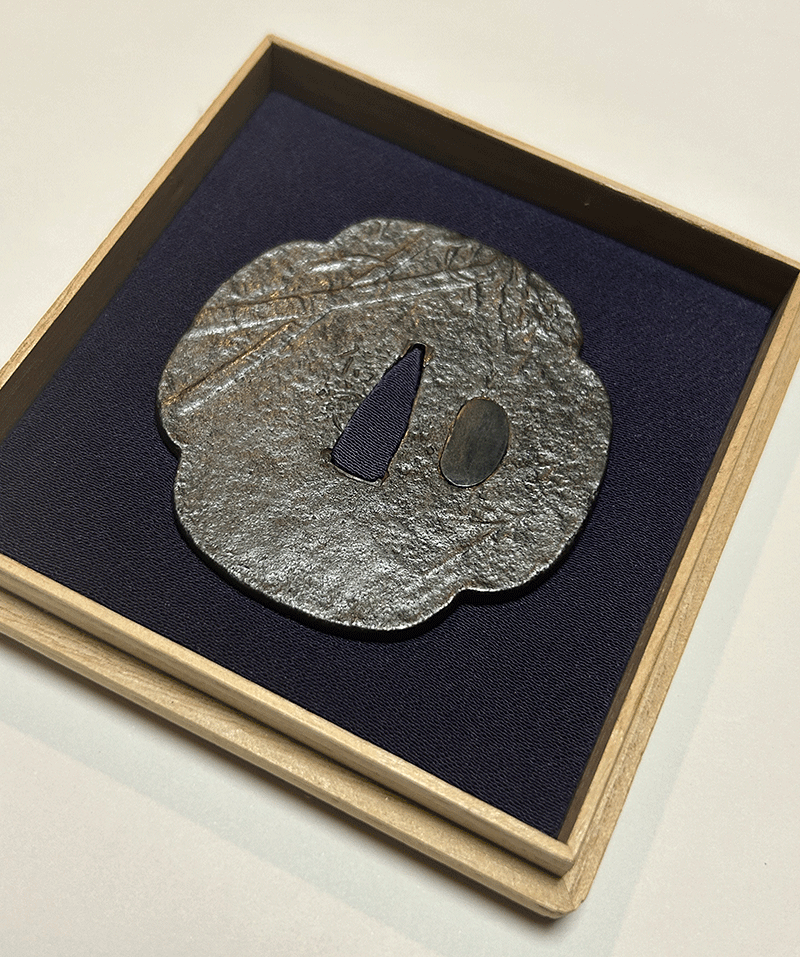
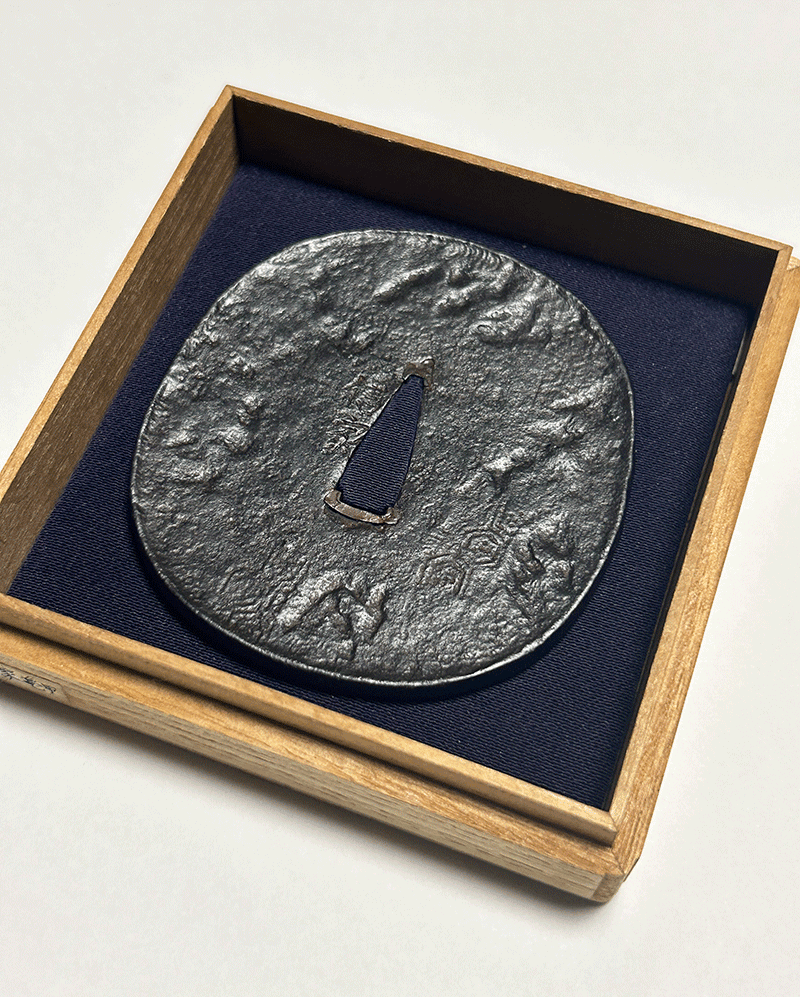
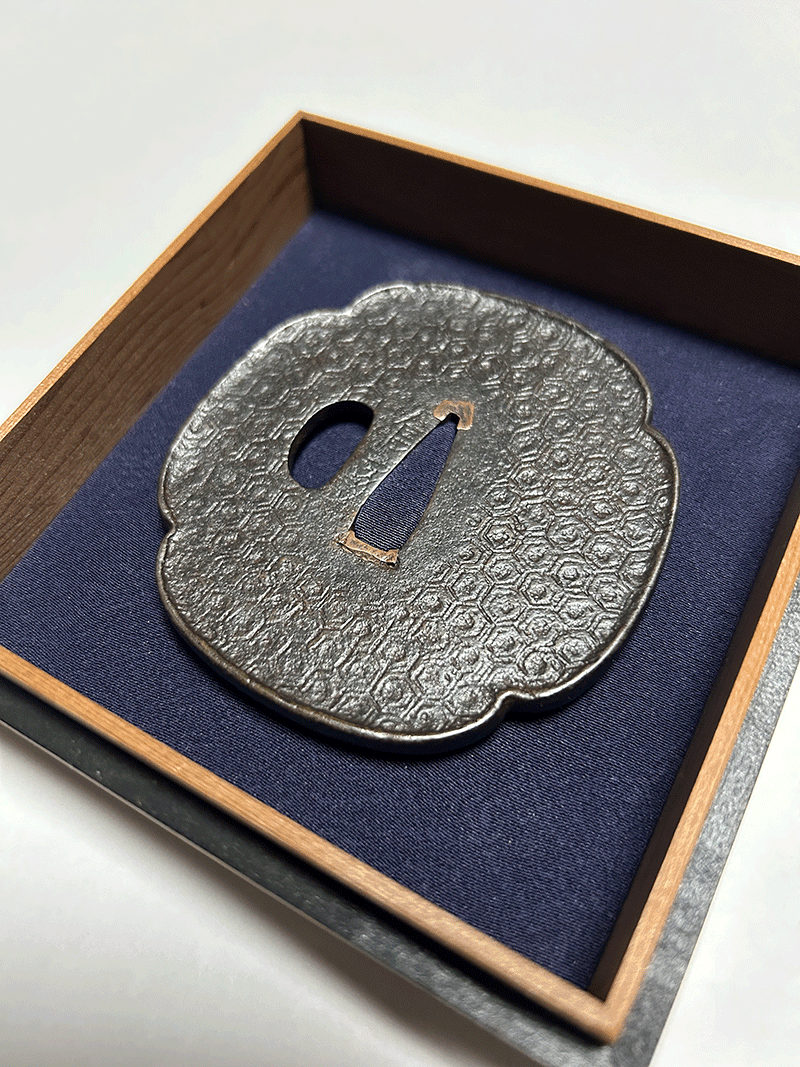
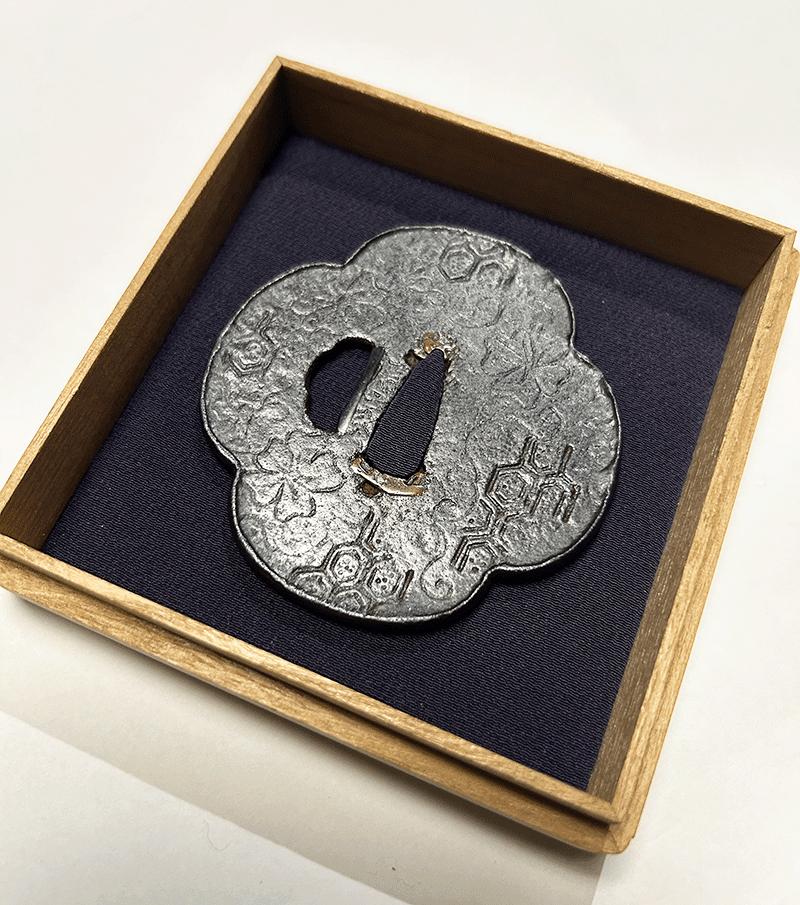
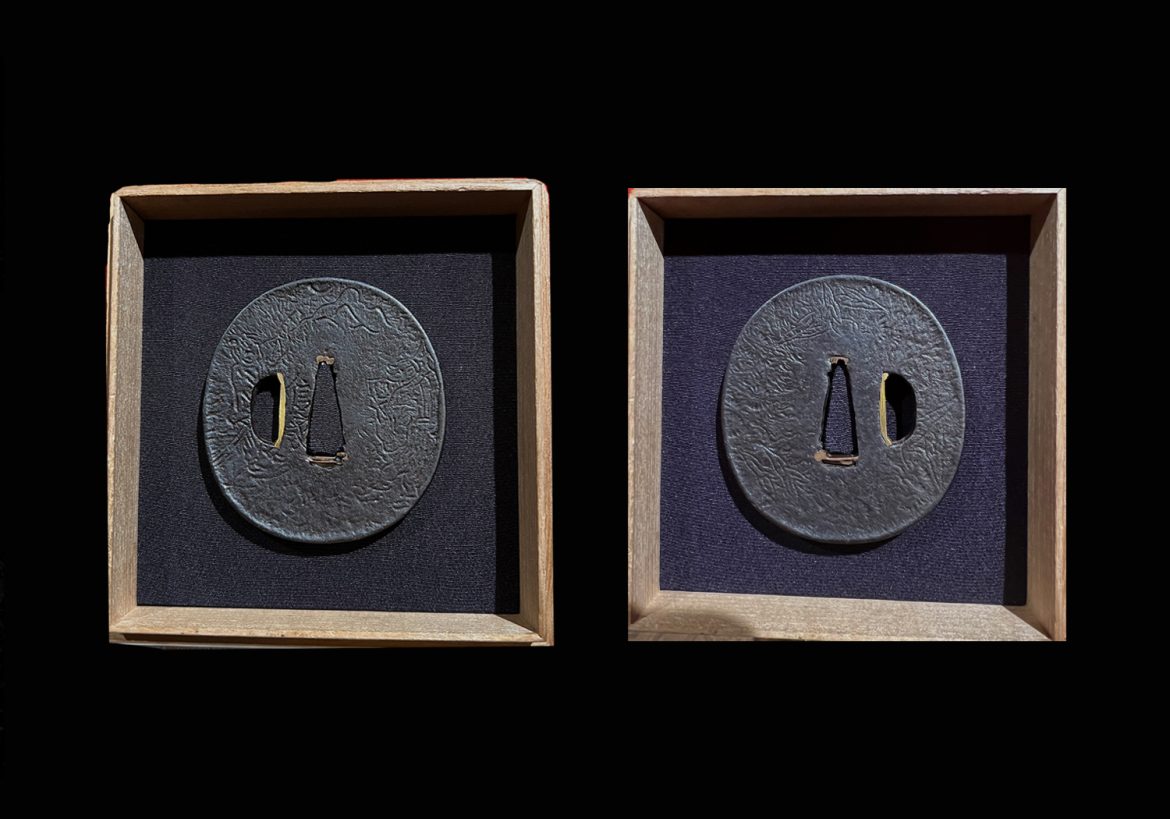
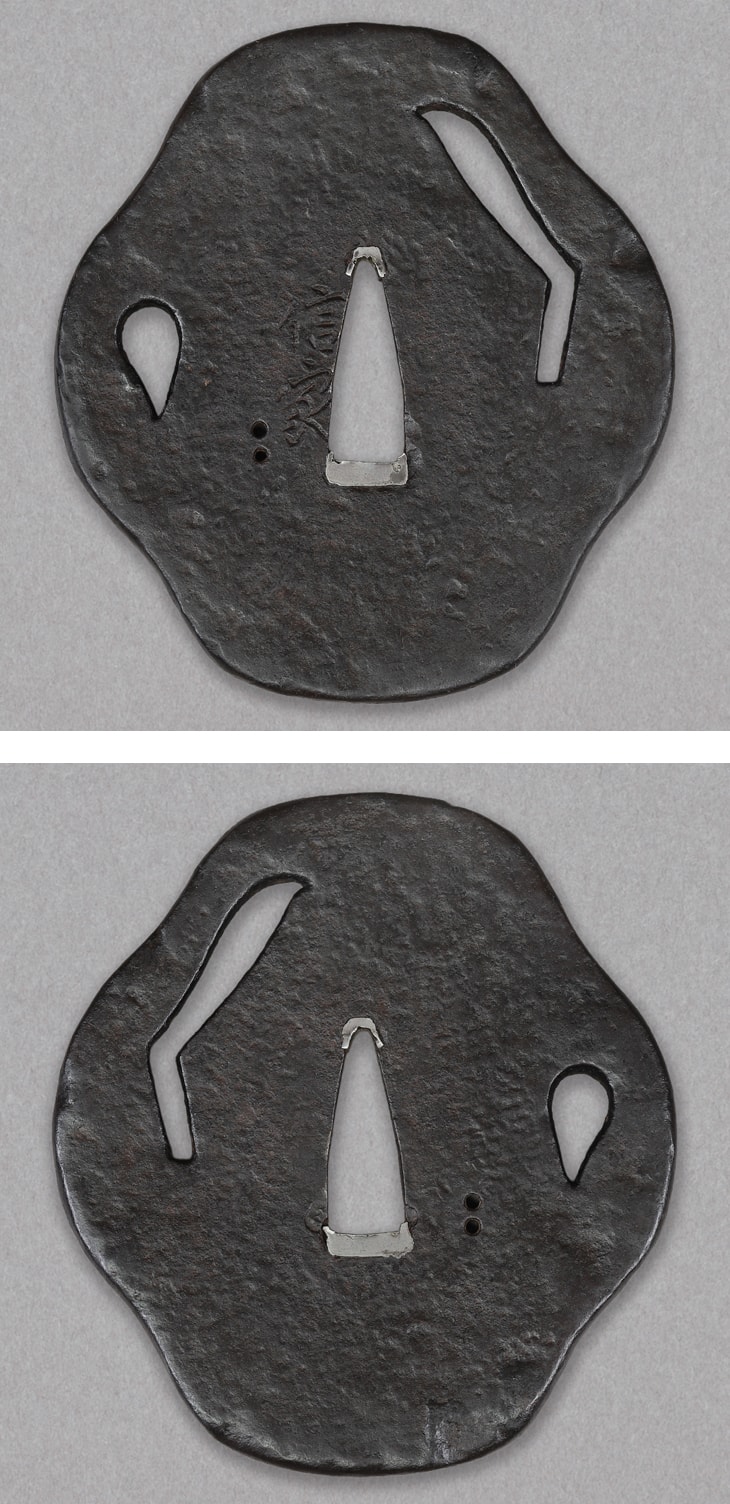
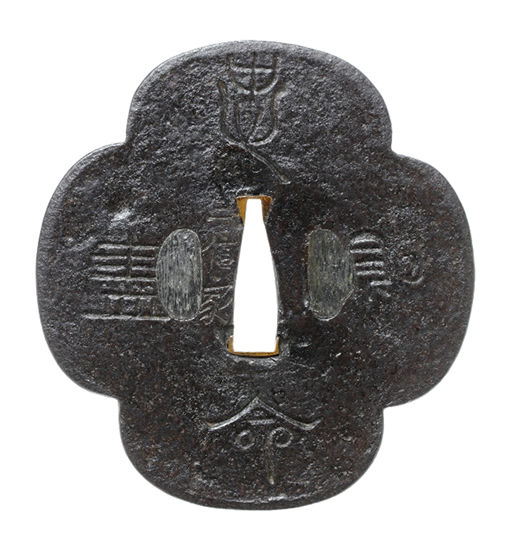
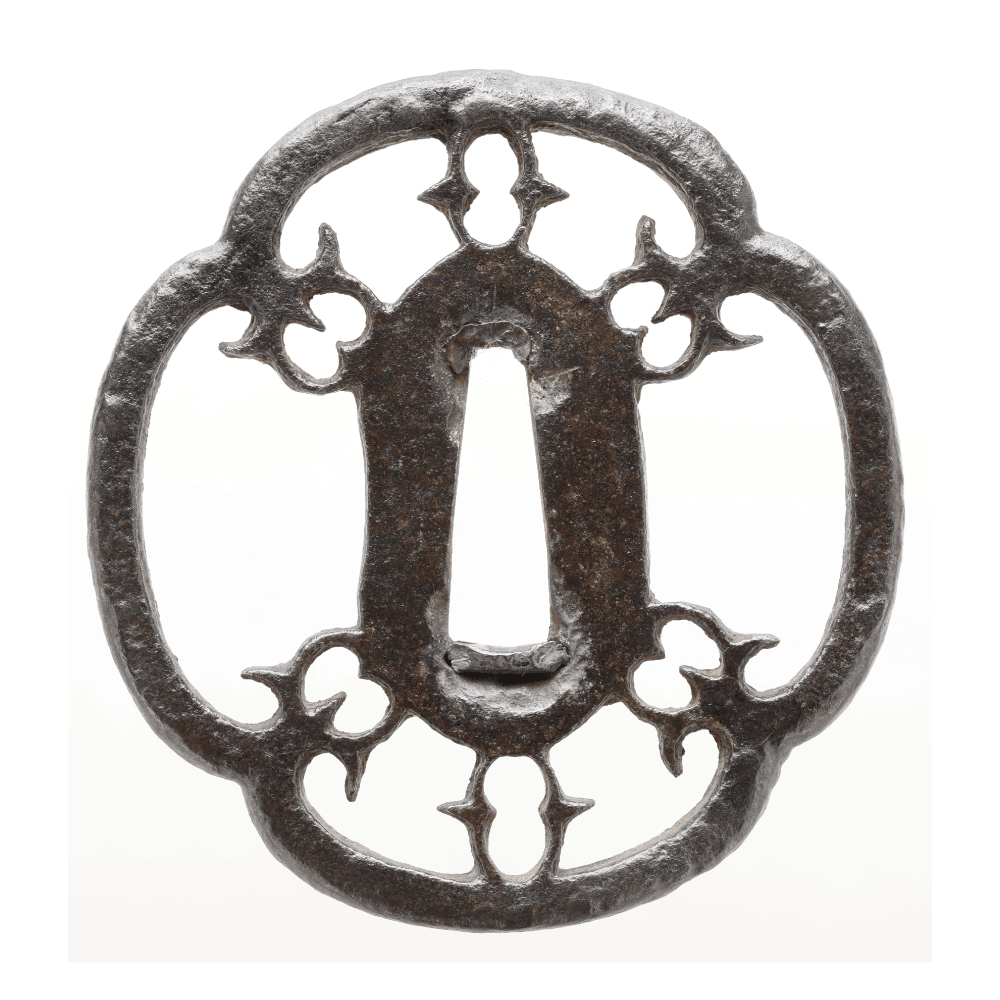
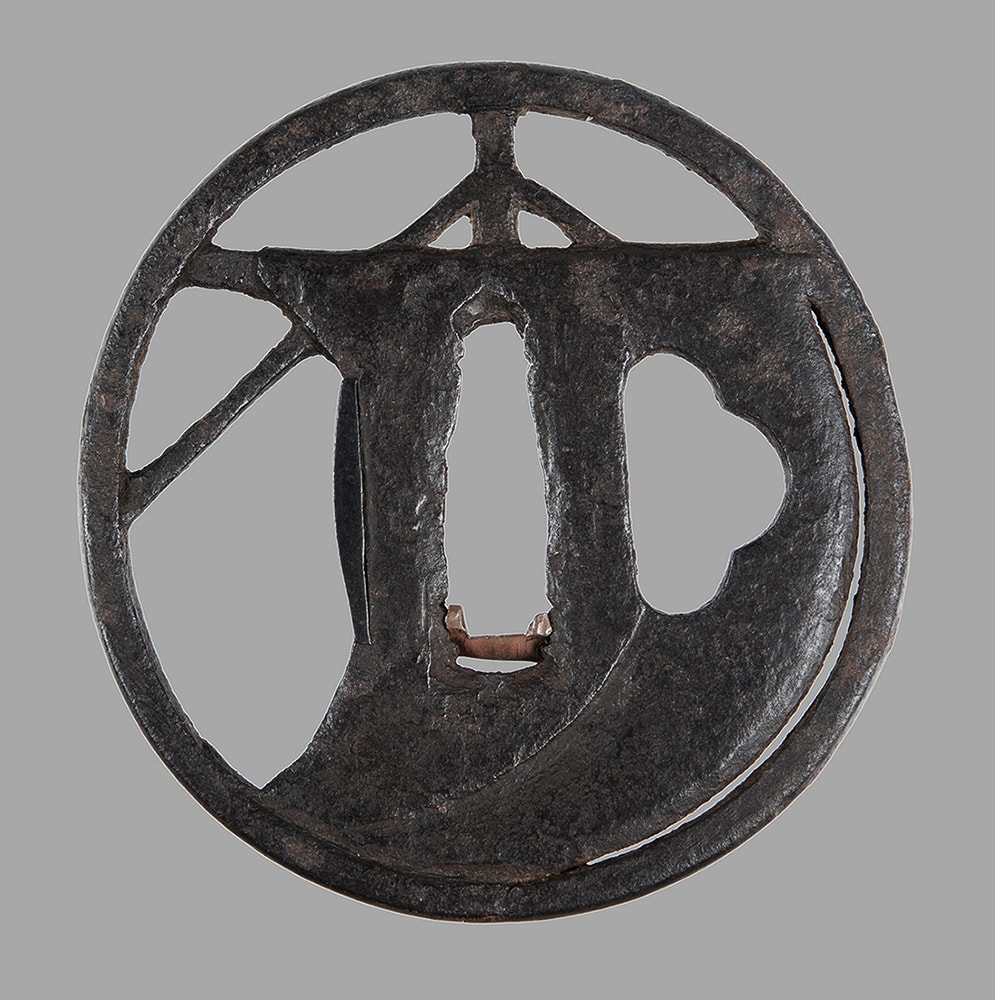
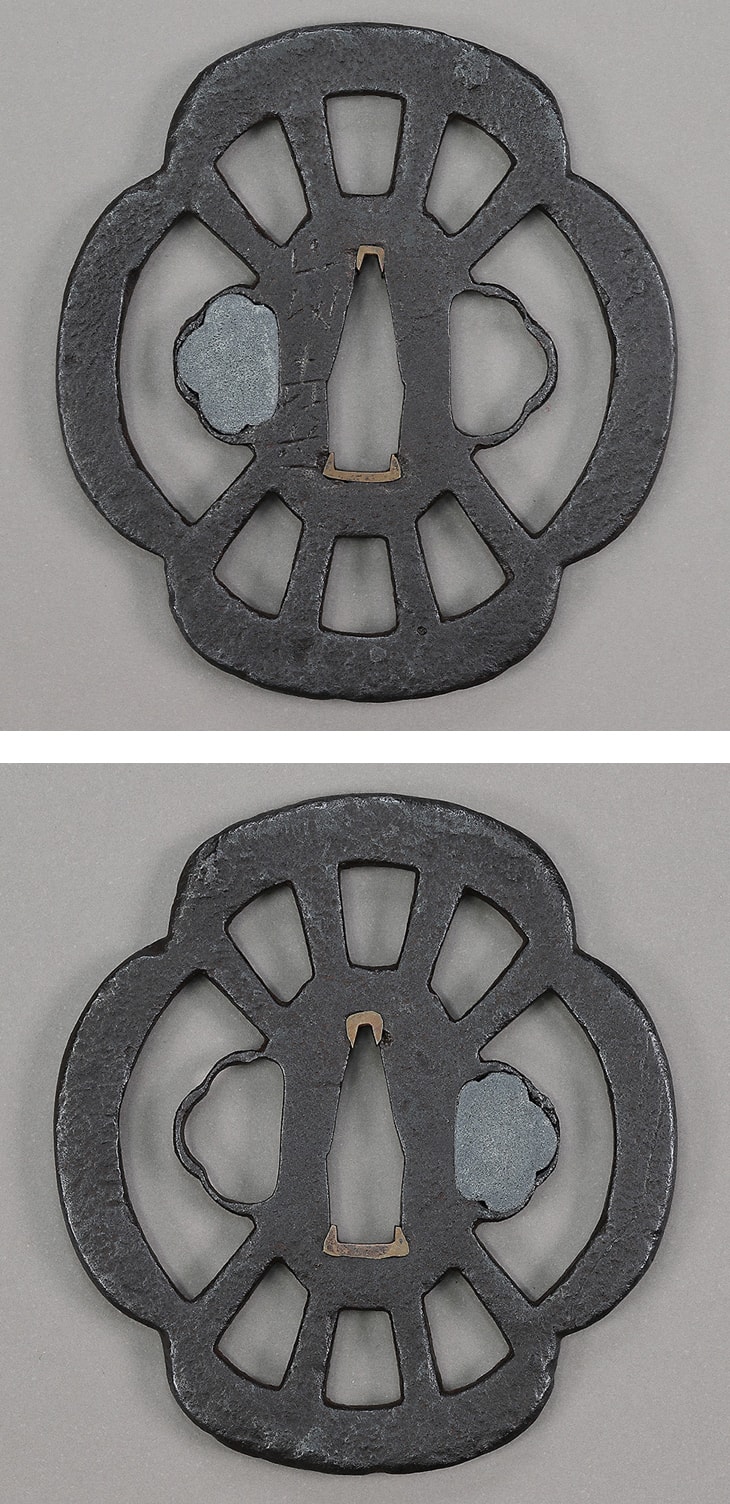
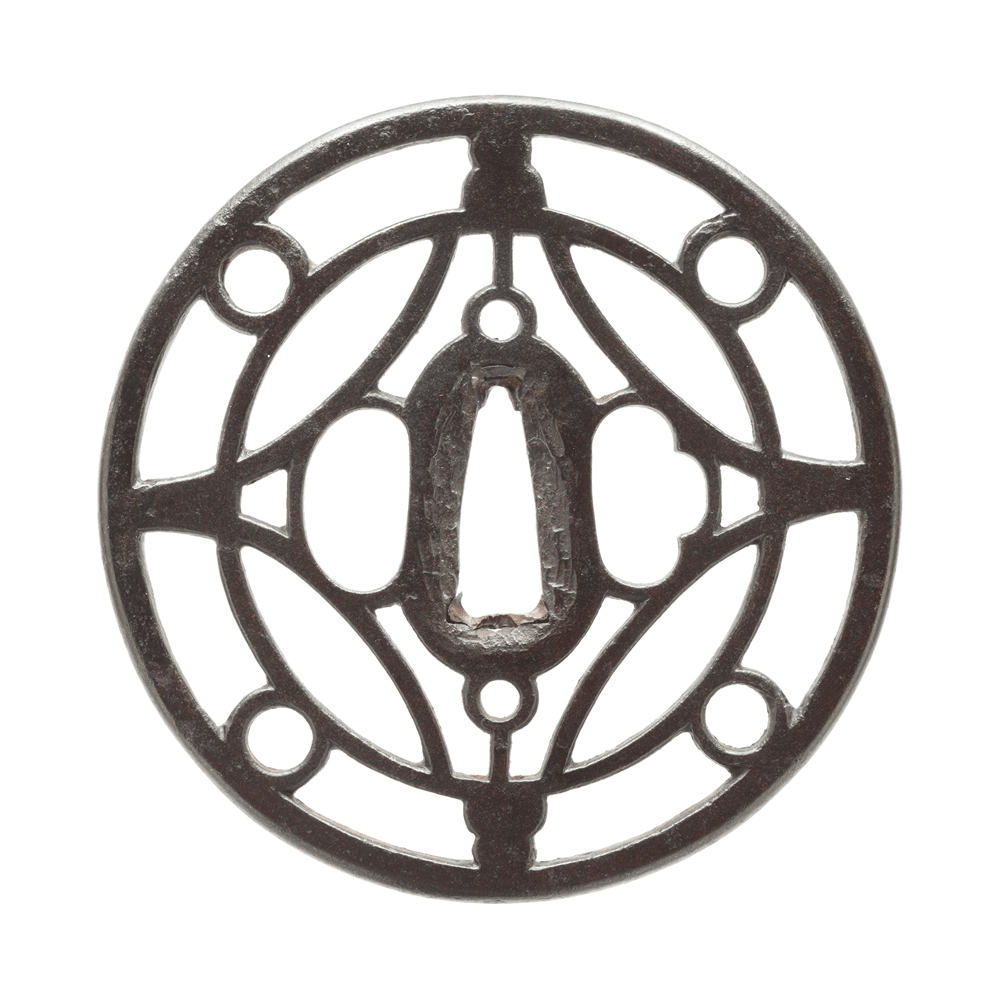
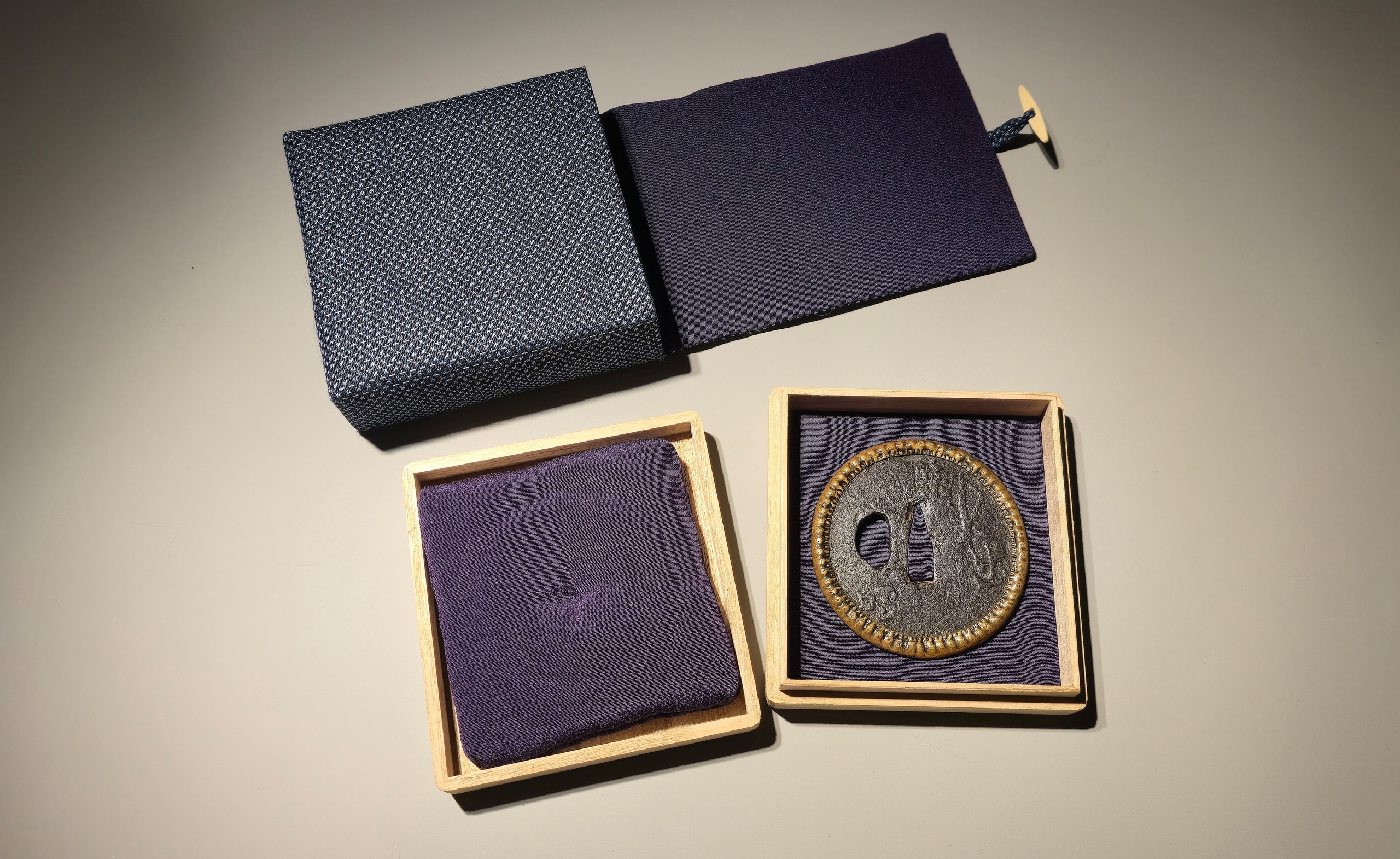
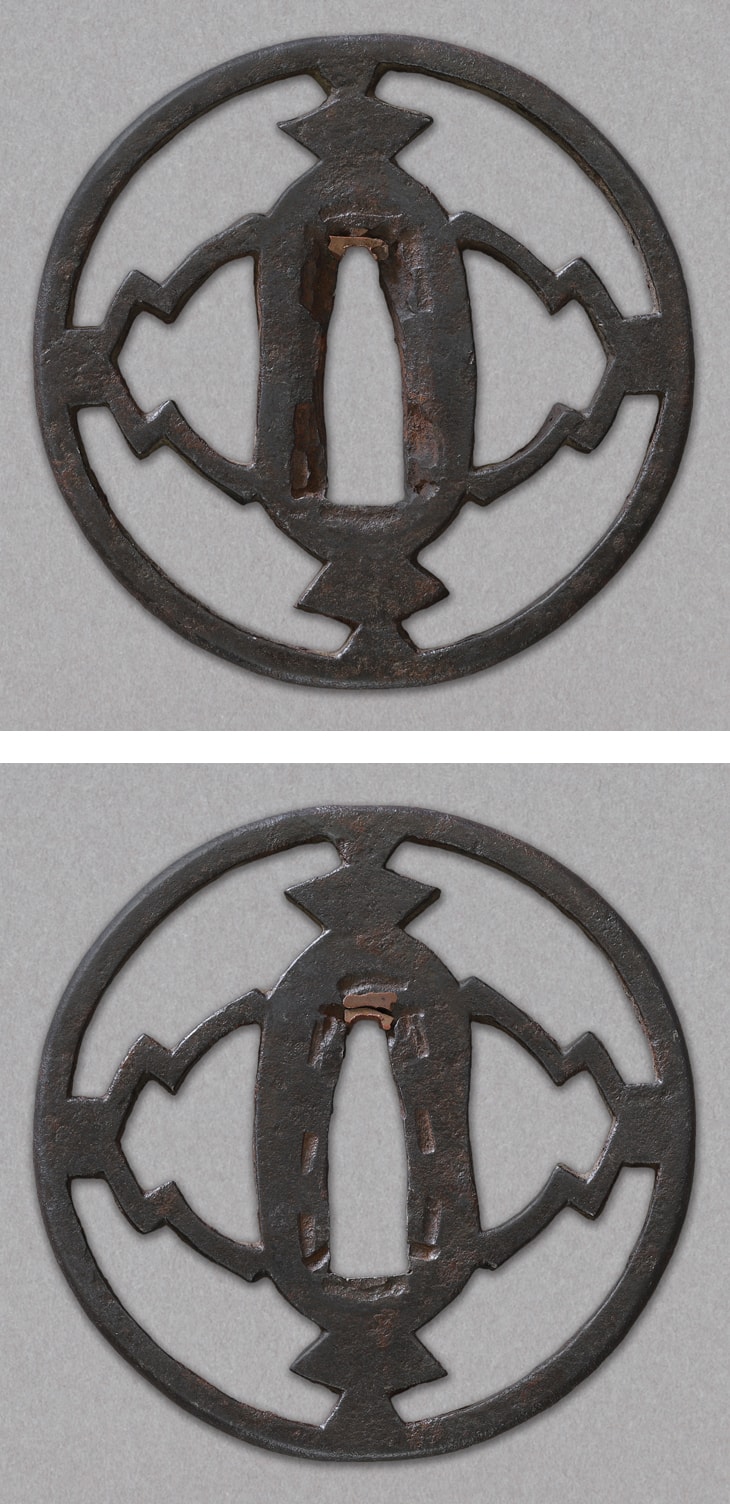
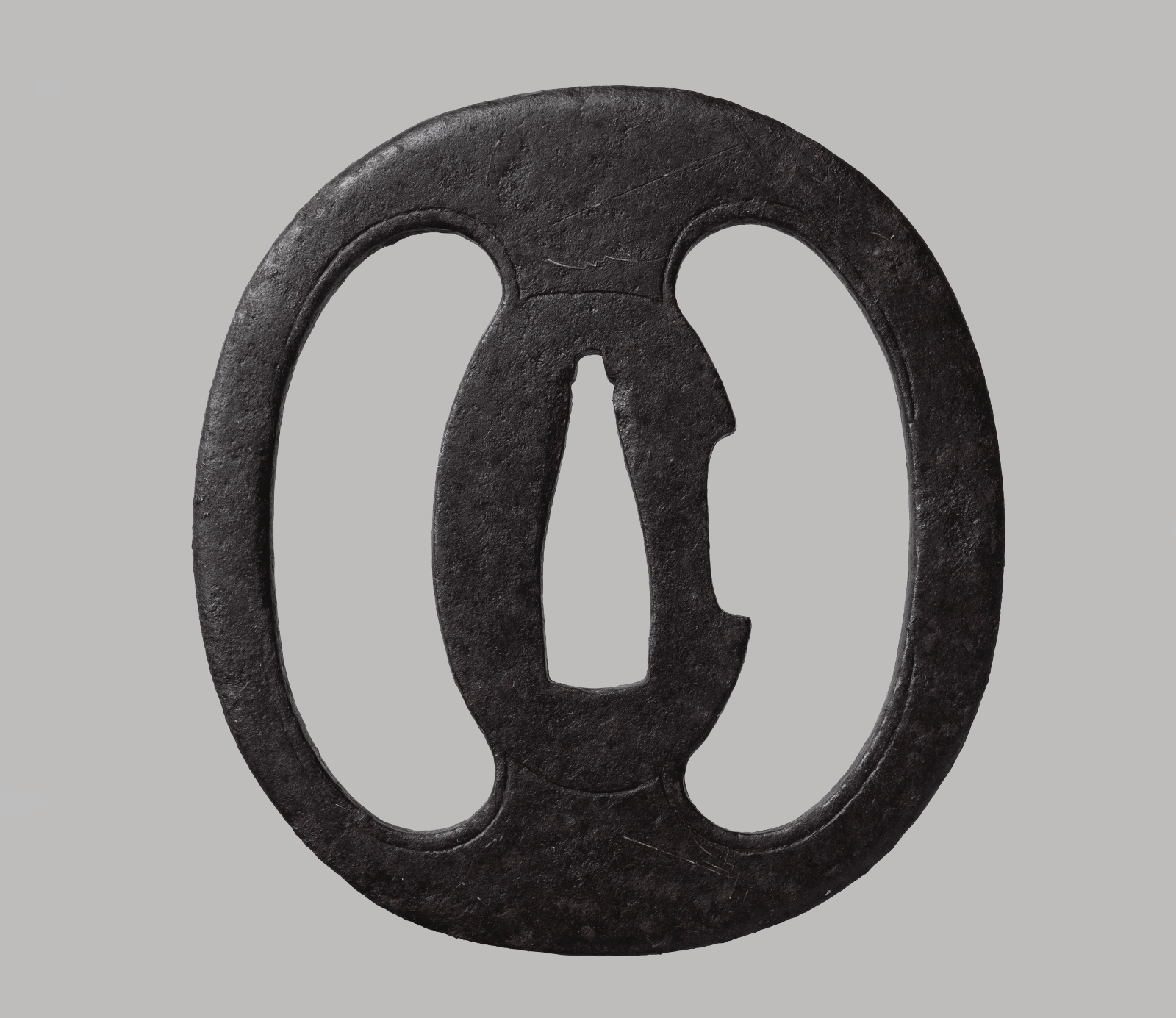
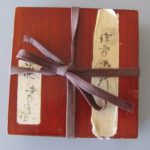
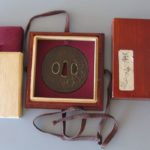
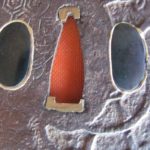
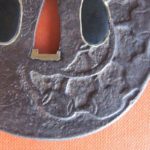
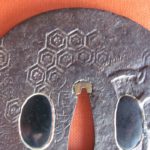
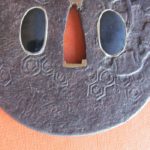
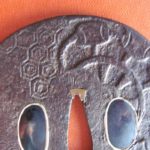
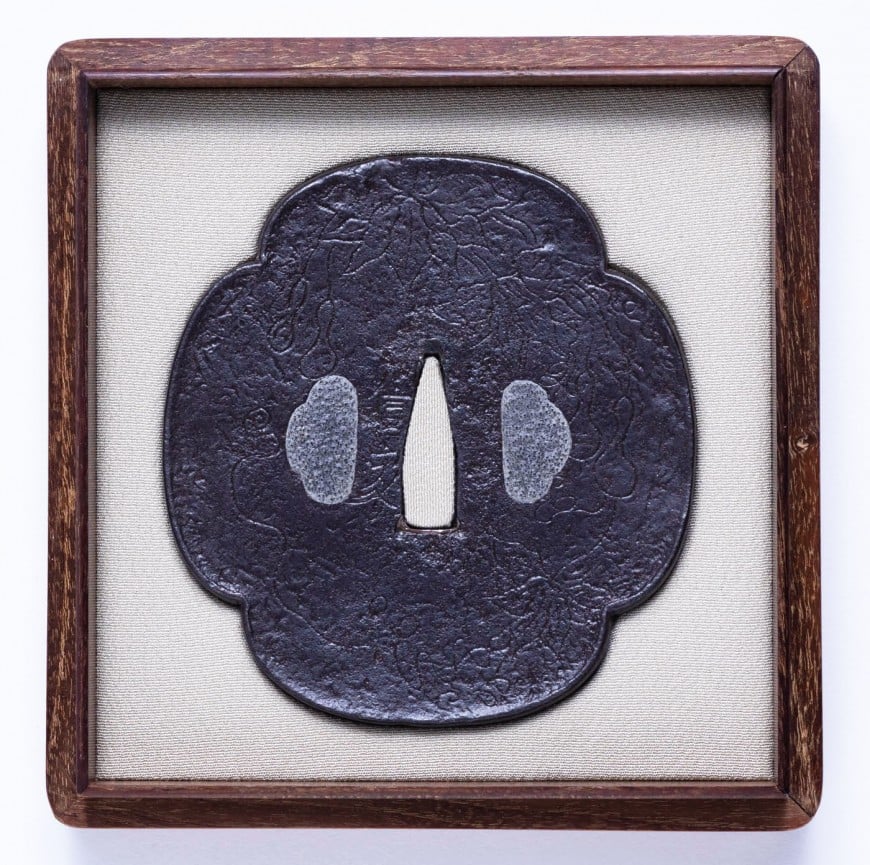
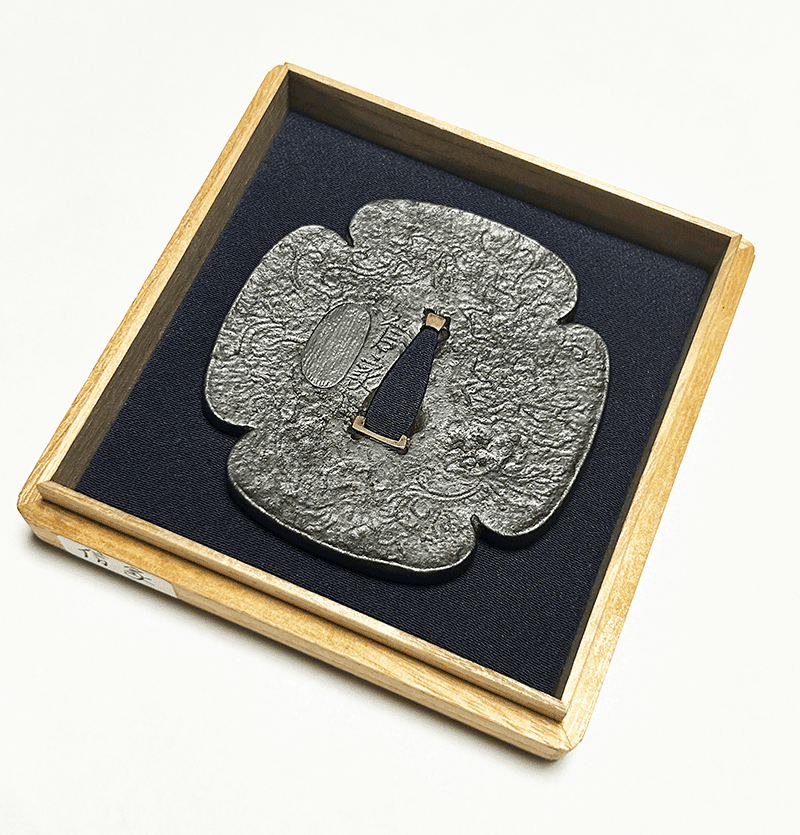
T497. 鉄地水車亀甲文鐔 寸法:縦 8.6cm × 横 8.4cm、耳厚 0.4cm(僅かに土手耳風) 茎孔:0.8cm × 2.6cm 両小柄・馬針孔:上質な赤銅地金着せにて埋め 銘:信家 世に「信家」銘の鐔は数多存在し、その殆どが後作や写し、あるいは門人による仕事ですが、本作は正真正銘、真銘の一枚です。 本作には、専用の落とし込み桐箱(箱掛付)が付属し、さらにそれが紙札の貼られた漆塗の外箱に収められています。著名な日本人コレクターより譲り受けた際の外箱の解説(翻訳済)も写真にて掲載しております。 また、2018年付の日本美術刀剣保存協会(NBTHK)による「特別保存刀装具」鑑定書(銘:信家)が付属します。 信家ほど重要かつ高名な鐔工は他に類を見ません。彼は刀装具の世界において、自らの作に銘を刻み始めた最初期の先駆者の一人です。活躍期は室町後期から桃山時代(約500年前)と推定されています。かつては甲冑師が転向したものと考えられていましたが、現在では尾張を本拠とした刀装具専業の金工師であったという説が有力です。しかしながら、その人物像については未だ謎に包まれている部分が多いのも事実です。 状態は極めて健全で、特筆すべき欠点は一切ありません。製作された当時から今日に至るまで、大切に伝来してきたことが一目で分かります。掲載写真は自然光の下で撮影しており、現物の質感を忠実に再現するよう努めました。 なお、耳の周囲に剥離(フクレ)のように見える箇所があるとの指摘を受けましたが、これは欠陥ではなく、意図的に残された鍛えの跡(折り返し鍛錬の痕跡)であり、地板の随所に見受けられます。 これ以上の説明は不要でしょう。この鐔そのものが、その格の高さを雄弁に物語っています。 価格:お問い合わせください(真剣にご検討いただける方のみ、お願いいたします)
 NihontoWatch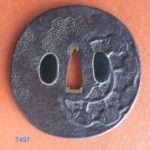
鐔工 · 尾張
現在11点販売中
尾張国信家は、室町時代末期から桃山時代にかけて活躍した鐔工である。京伏見の金家と共に鉄鐔の双璧と称され、鉄鐔の分野において卓越した地位を確立した。信家の出自や師弟関係については明確な記録は残されていないが、その作風から尾張の地で独自の鍛冶技術を磨き、発展させたと考えられている。同時代の刀工との関係も明らかではないが、その作品は当時の武士階級に広く愛用され、実用性と美術性を兼ね備えた鐔として高く評価された。
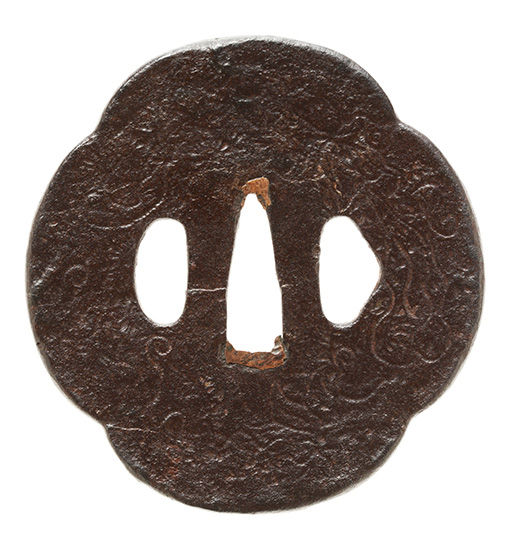
信家鐔の特色は、何と言ってもその鉄の鍛えにある。「鉄の鍛えが無類によく、地文の景色が豊富で雅趣に富み、打刀拵に最も良く映る鐔である」と評されるように、地鉄はよく錬れており、槌目地を基調とした鍛え肌には独特の景色が見られる。形は木瓜形や丸形が多く、稀に蹴鞠形や下辺が張り出した障泥形などがある。板鐔と透鐔の両手があり、透鐔においては車透や水玉透など、意匠を凝らした作例が見られる。図柄は草花文、道歌、神号など多岐にわたり、毛彫、鋤出彫などの技法を駆使して表現されている。耳の造形も特徴的で、角耳小肉、土手耳、打返耳などが見られ、力強い意匠を特徴とする。銘は殆どが二字銘であり、「放れ銘」と「太字銘」の二種類に大別される。放れ銘は小振りで引き締まった銘振りが特徴であり、太字銘は力強い鏨運びが特徴である。
信家鐔は、「室町時代末期から桃山時代に於ける鉄鐔の魅力を最大限に味わえる作品」[[c:1]]として高く評価されている。その作風は、鉄味の力強さと意匠の雅趣を兼ね備え、戦国時代の武士の精神性を象徴するものとして捉えられている。特に、「打刀拵によく映る鐔」[[c:2]]として実用性が重視された点も、信家鐔の大きな魅力の一つである。現代においても、信家鐔は古雅な風趣と格調高い作風が高く評価され、刀装具愛好家垂涎の的となっている。
信家の位置づけを、日本刀全体および伝統・時代・時期ごとに示します。各位(随一・屈指・有数・著名)は、NBTHK および文化庁による指定に加え、三作や名物帳などの歴史的栄誉を加味したものです。
各項目を選ぶと評価方法が表示されます。
鐔工 · 尾張
現在93点販売中
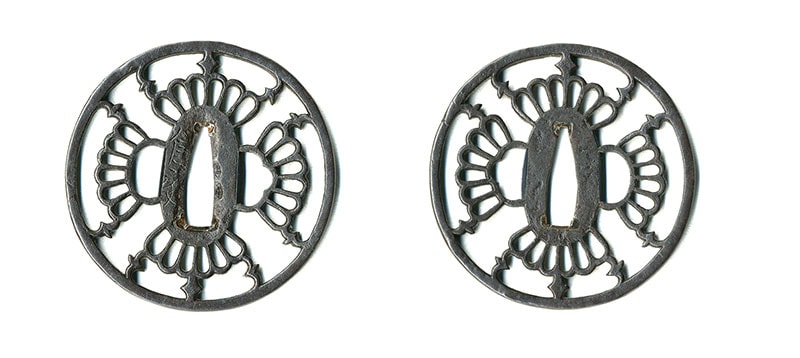
尾張透鐔は京透鐔と共に透鐔の双璧と称され、室町時代前期から中期頃にその制作が始まり、江戸時代まで長きに亘って制作が続いた。尾張国(現在の愛知県西部)を本拠とするこの鐔工集団は、室町時代末期から桃山時代にかけて最盛期を迎え、格調高い鉄透鐔の優品を数多く世に送り出した。代表的な作者として山吉(山坂吉兵衛)や法安が知られ、銘文には「山坂吉兵へ」「山吉兵へ」等と刻されたものがあり、数代に亘って名跡が継承されたと推される。江戸時代に入る頃から次第に本来の尾張鐔の良さが失われていくが、成熟期の作品には透鐔の王者と賞賛されるに相応しい風格が認められる。 尾張透鐔の作風は、京透鐔の繊細優美に対し、力強さを秘めた風雅を持味とする。鉄の鍛えが勝れ、焼手仕上げによる深く厚い紫錆が実に美しく、耳には粒状・塊状・線状のあらゆる鉄骨が頻りに働いて独特の雅味を醸し出す。肉置は僅かに中窪とし、中低外高の造形に貫禄があり、角耳小肉の耳にあらわれた鉄骨も重要な見どころである。意匠には大別して二系統があり、花弁・松葉・沢瀉茗荷・蕨手など文様透鐔と、鯰図・宇津の山図・蟹図など切羽台を取り入れた大胆な絵風透鐔が制作された。絵風尾張鐔では鯰を下半にどっしりと置き、上半は髭と水藻を軽やかに配するなど、風格と瓢逸味を兼備した構図の妙が絶賛される。 尾張透鐔の優品は堂々とした大振りの造り込みを特徴とし、槌目風の平地に雁金と環、抱茗荷と柊・杏葉、網目文など変化に富んだ透かしを施す。櫃孔は大きく円形に取られ力強く、太目の耳と透しの文様の細い線との釣り合いがよい。鉄味の妙味と共に野趣に富み、枯淡な趣を醸し出す作風は、単に幾何学的な透しにも洗練味が認められ、他の追随を許さない独壇場を築いた。とろけるような焼手を施した堅実な鍛えの鉄味は、時に非況の作と評される大胆な意匠と相俟って、数寄者に広く歓迎される所以となっている。尾張透の洗練された格調高さは、鉄透鐔における最高峰の一角を占める。 詳しく見る →
| 刀工 | 時代 | 指定 |
|---|---|---|
| 信家 | — | 56 |
| 彦右衛門 | — | 0 |
| 克明 | — | 0 |
| 重正 | — | 0 |
| 則亮 (Norisuke/Koreyoshi | — | 0 |
保存刀装具のうち、出来・保存状態が一層優れ、銘文や作風に資料的価値の高いものと認められたものです。
日本美術刀剣保存協会(NBTHK)は、1948年に設立され、文化庁の監督を受ける公益財団法人で、東京・刀剣博物館に本部を置きます。専門の審査員が出品作を直接審査し、美術的・歴史的価値に応じた鑑定書を発行します。NBTHKの鑑定書は、日本刀および刀装具の真正性を示す最も広く認知された基準です。
NBTHK公式サイト3-day return window from receipt.
![Tsuba - Tokuho - 作 信家 - 刀装具 鑑定書内容:財)日本美術刀剣保存協会 特別保存刀装具[N.B.T.H.K]Tokubetsu Hozon Tousougu NO.B220 銘文:信家](/_next/image?url=https%3A%2F%2Fitbhfhyptogxcjbjfzwx.supabase.co%2Fstorage%2Fv1%2Fobject%2Fpublic%2Flisting-images%2Fiida-koendo%2FL01804%2F00.png&w=2560&q=90)