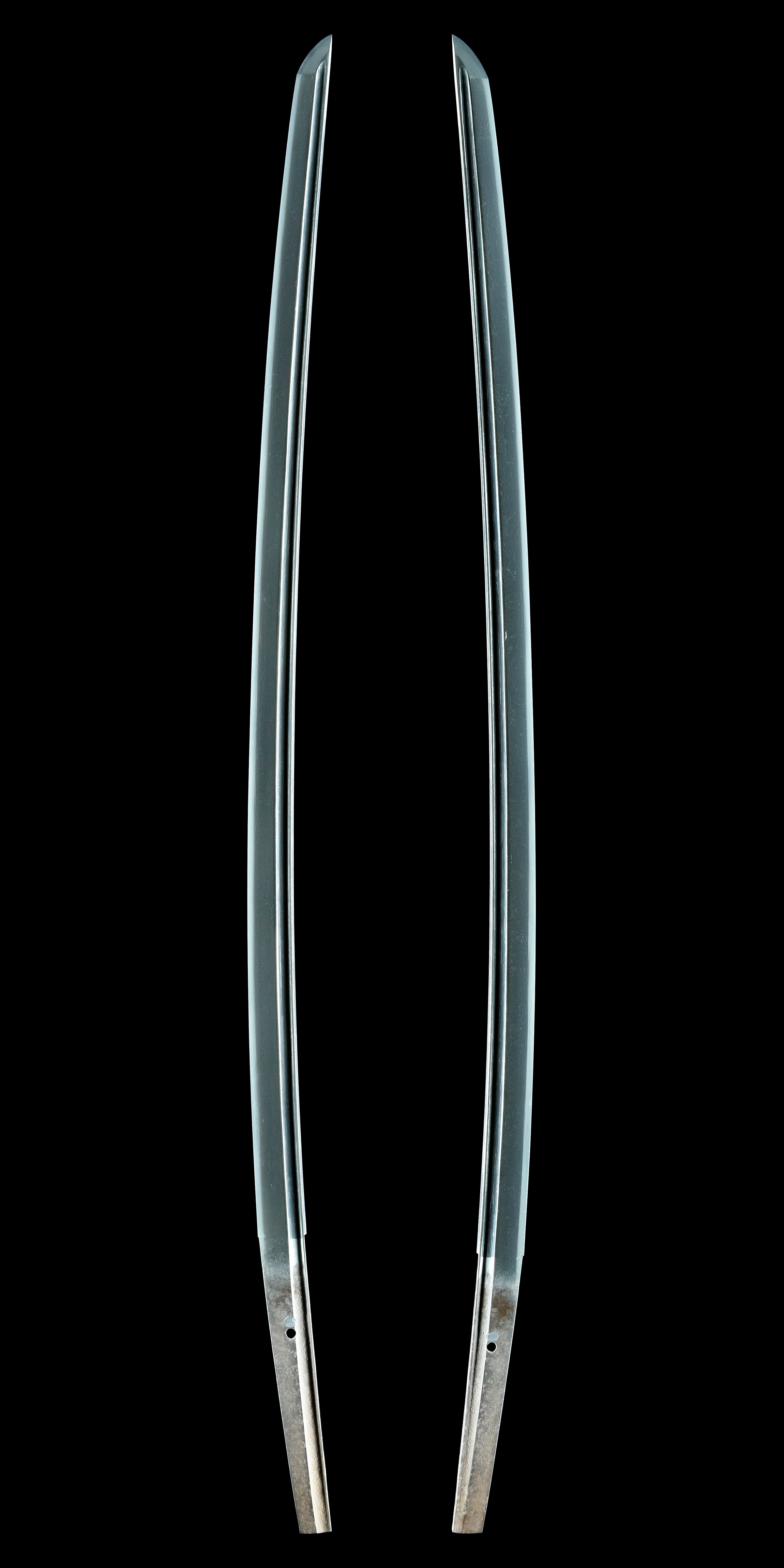
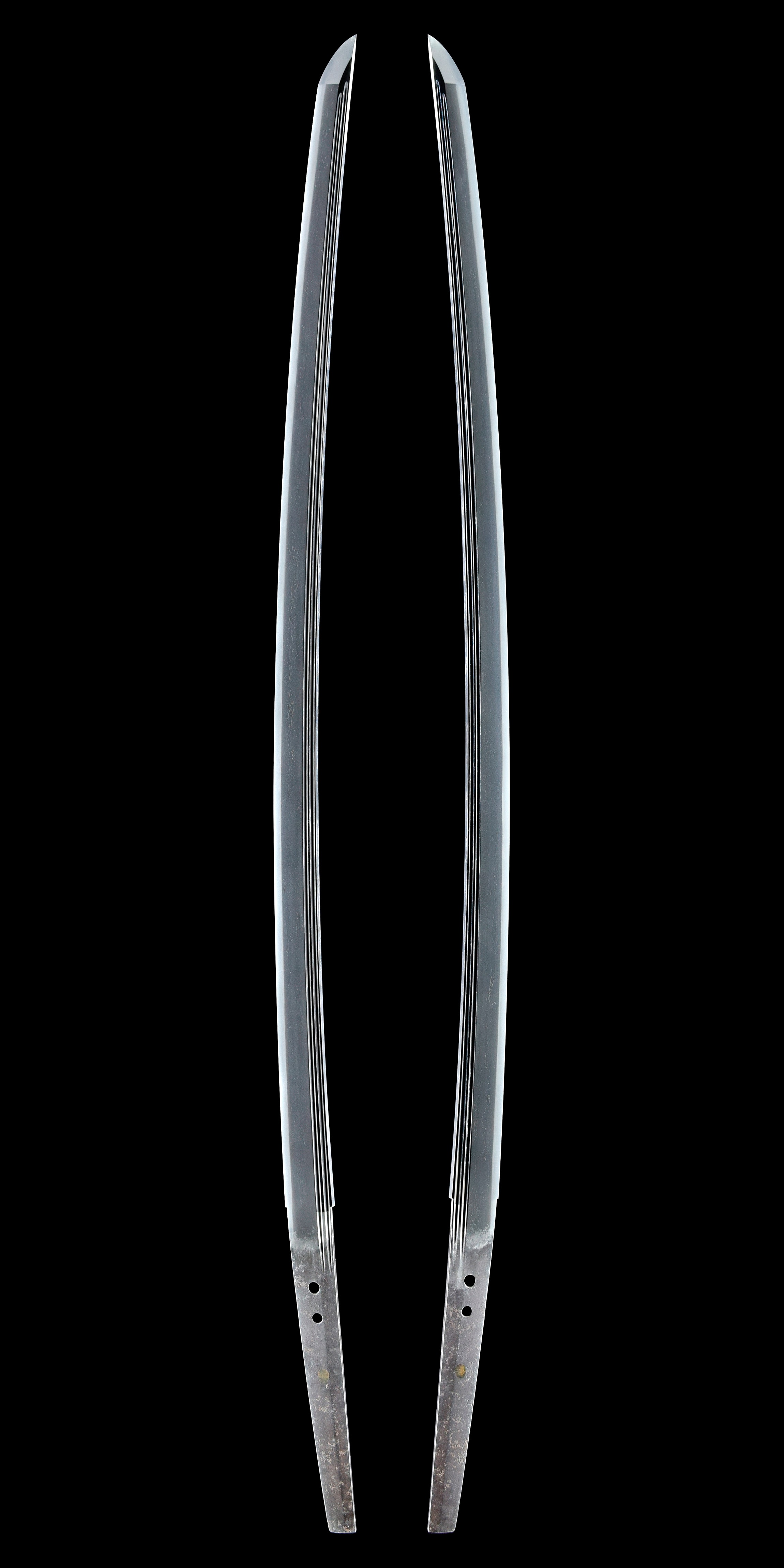
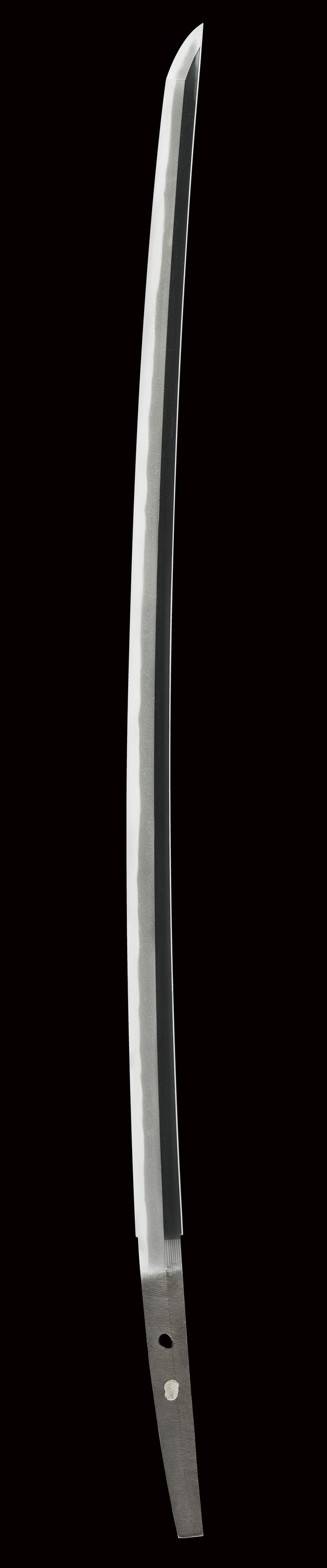
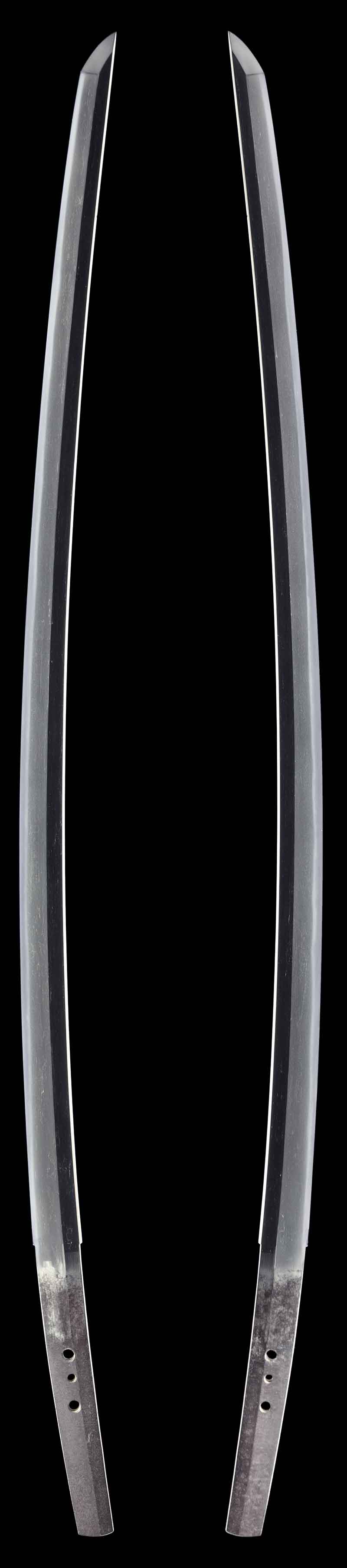
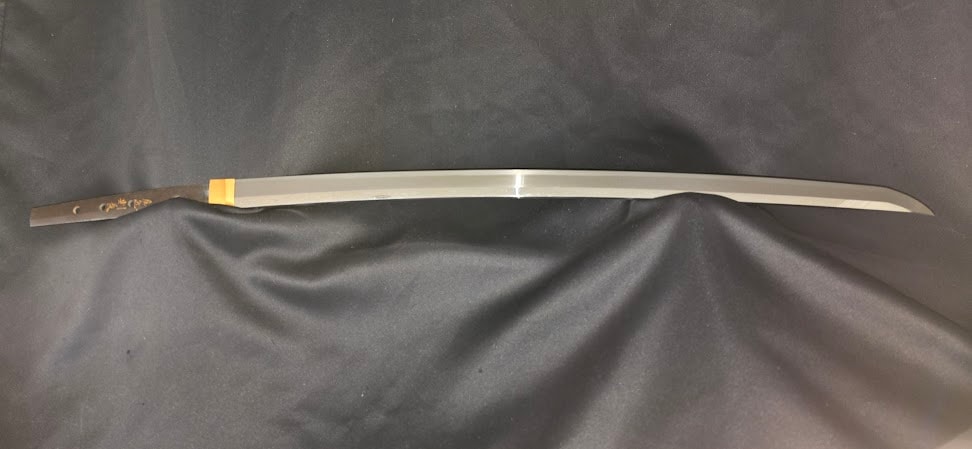
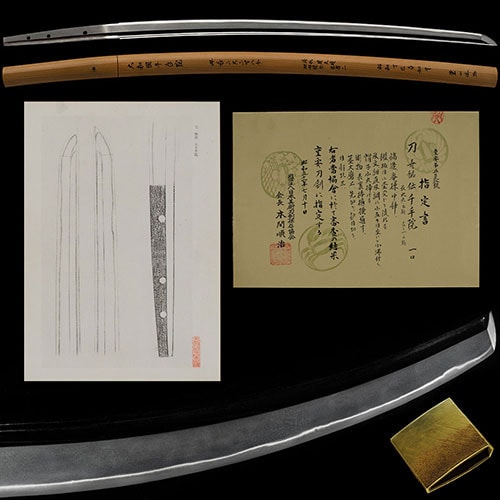
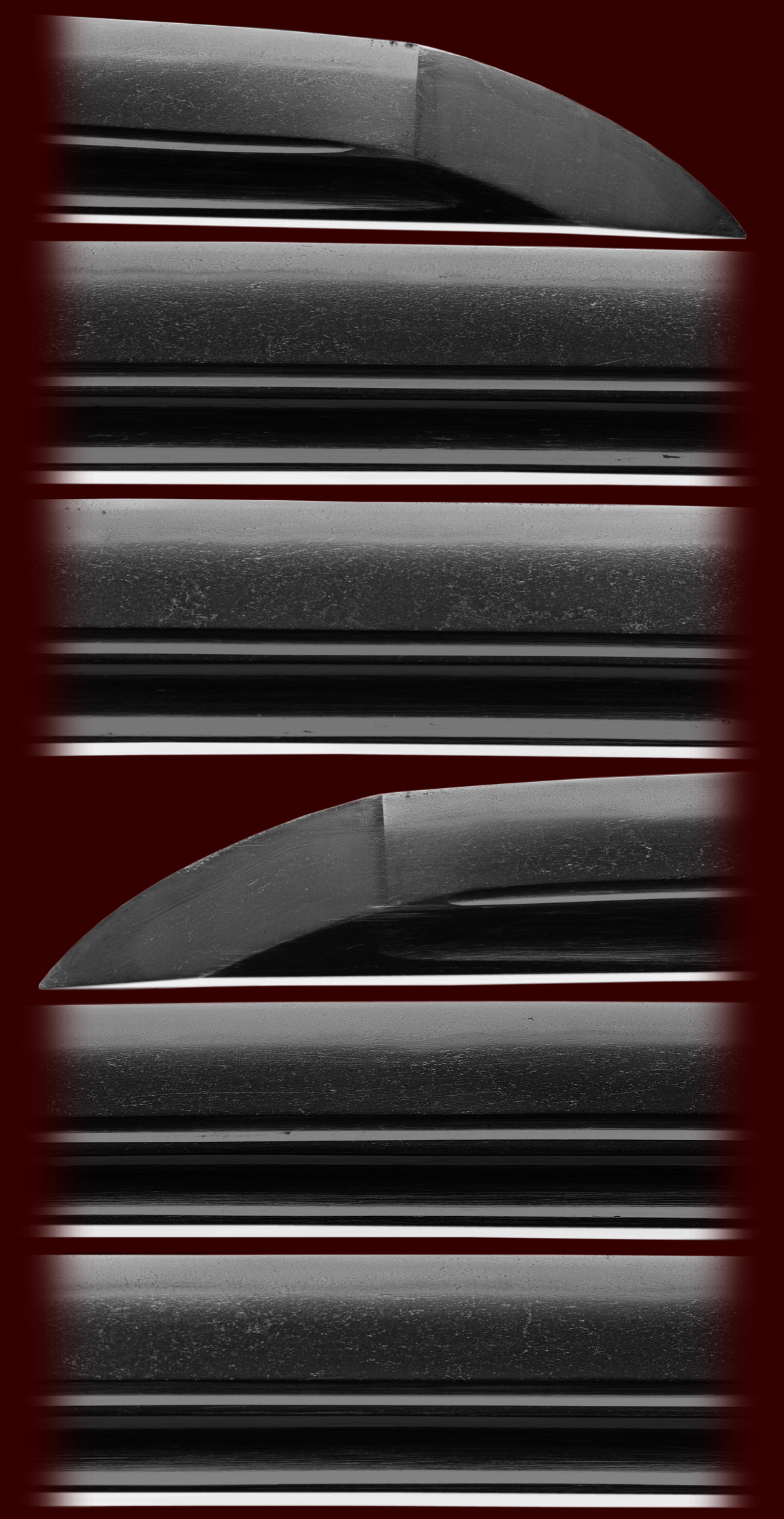
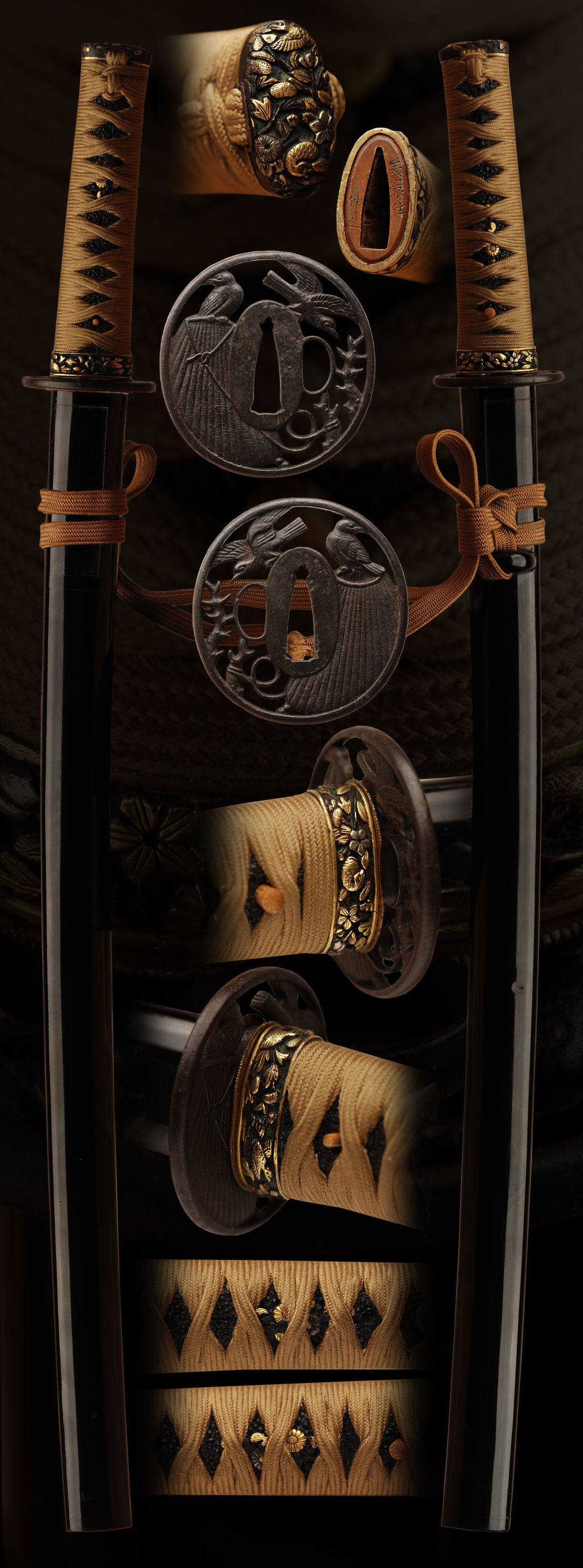
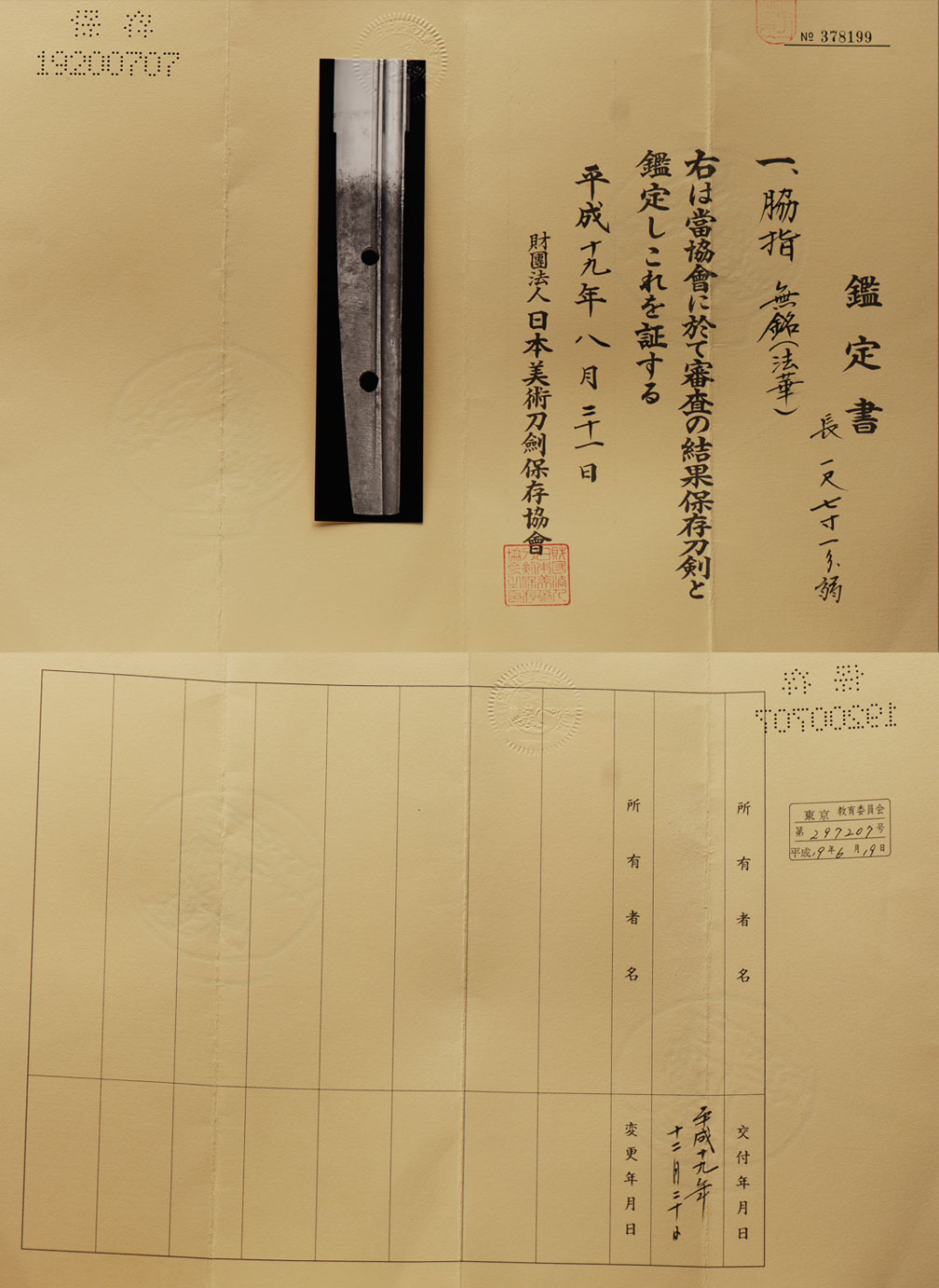
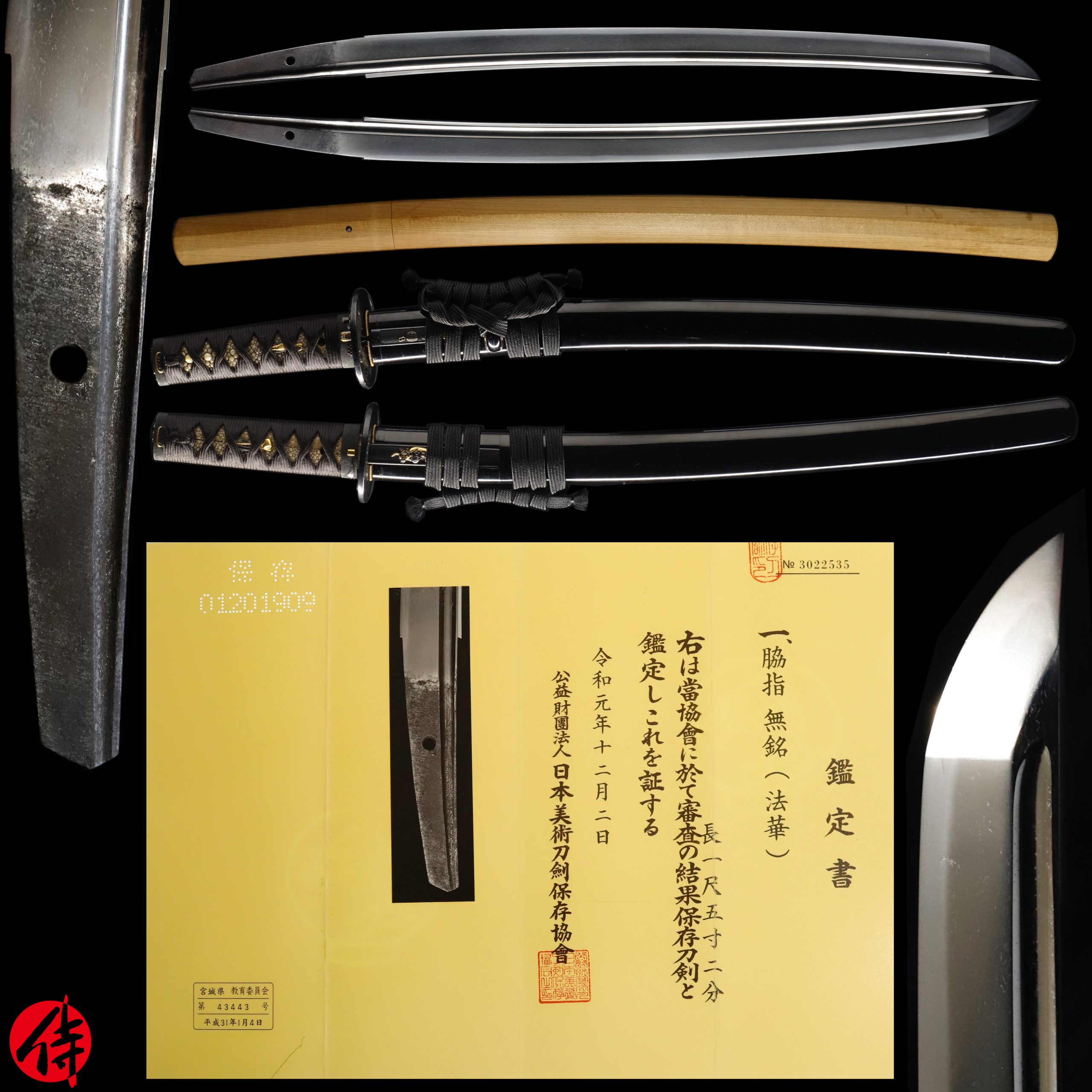
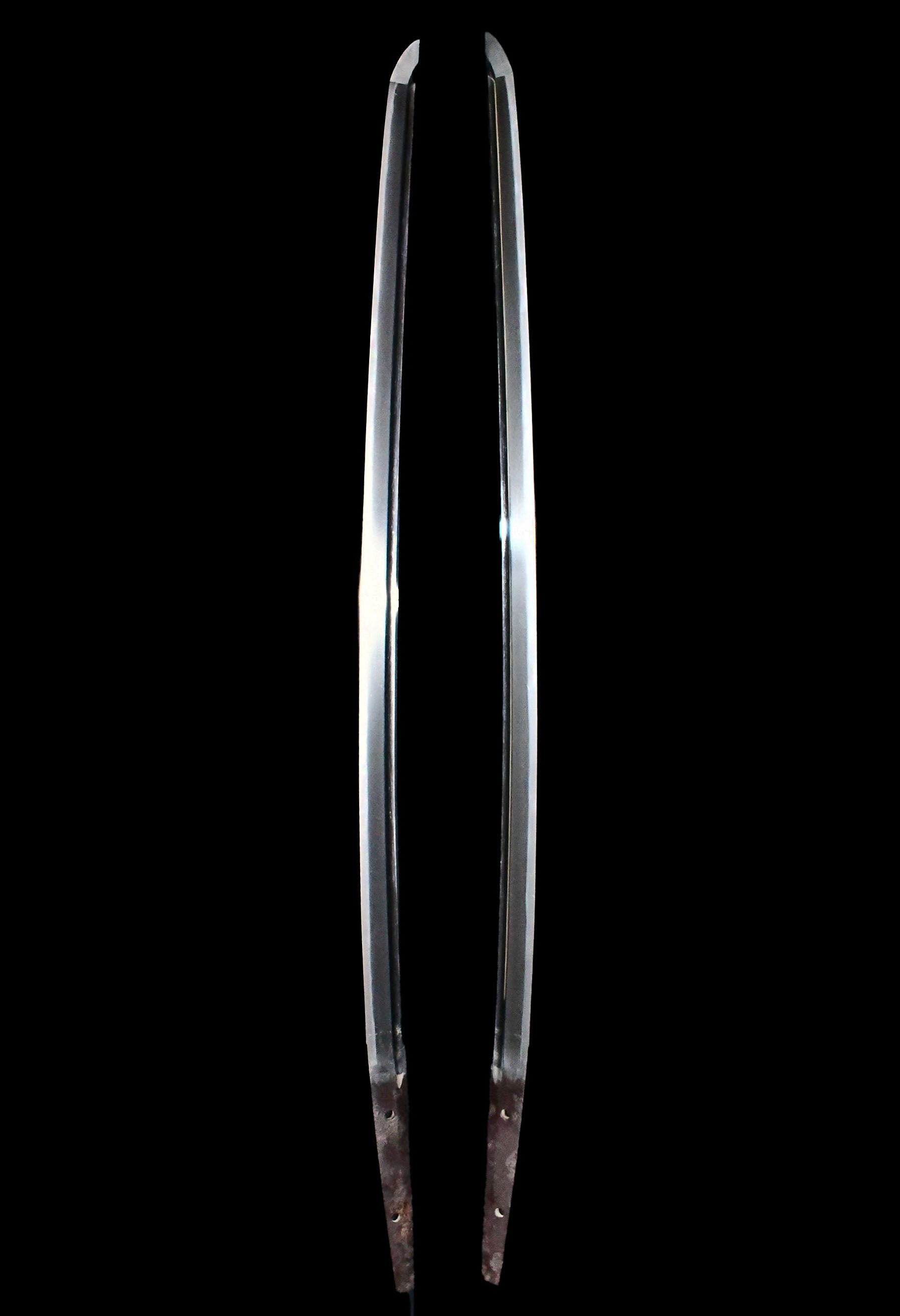
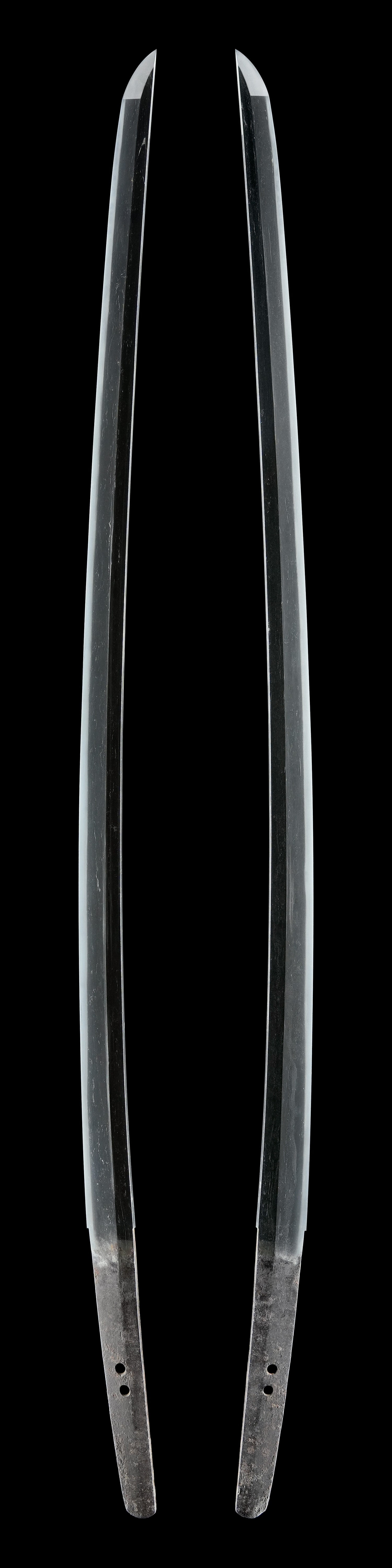
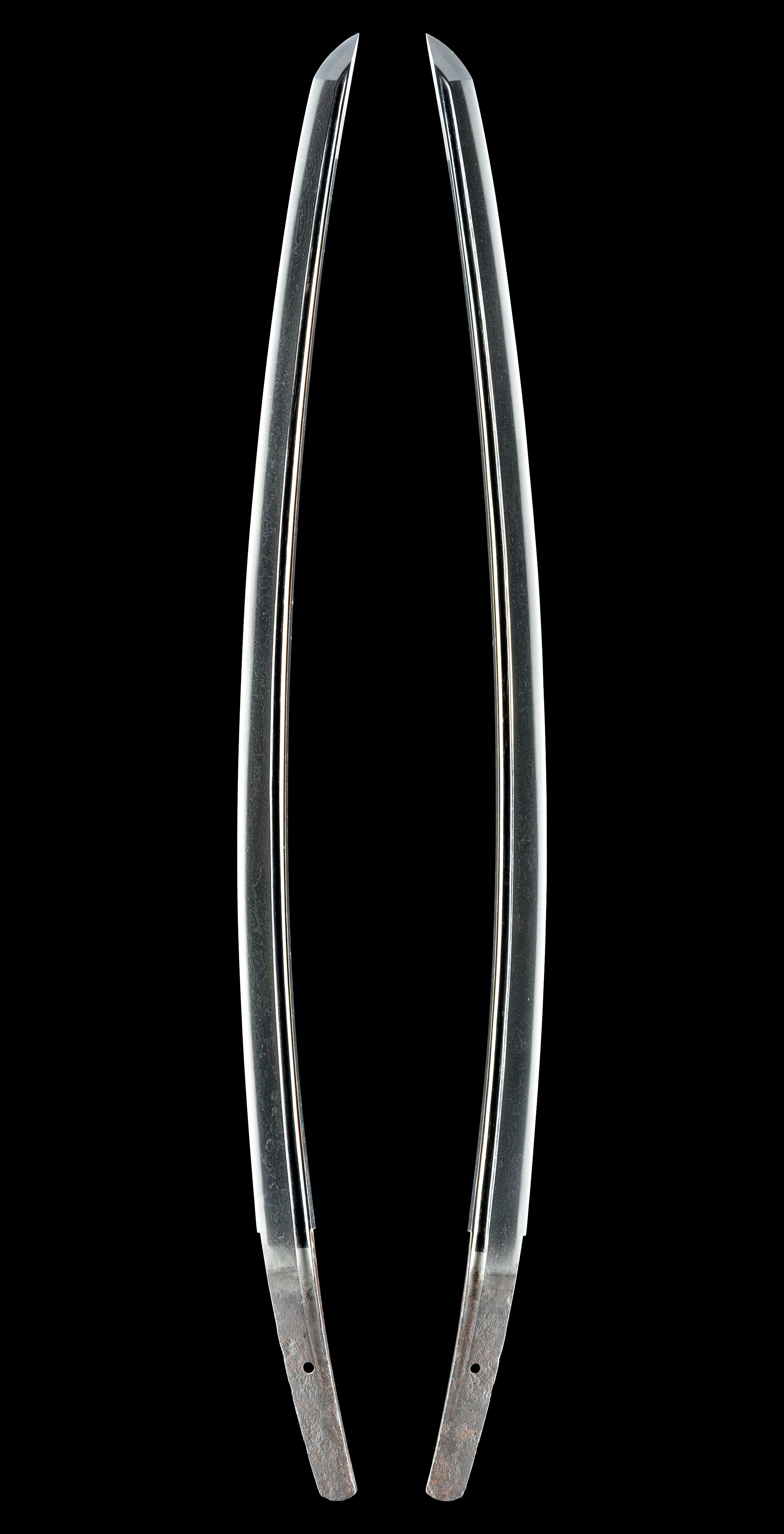
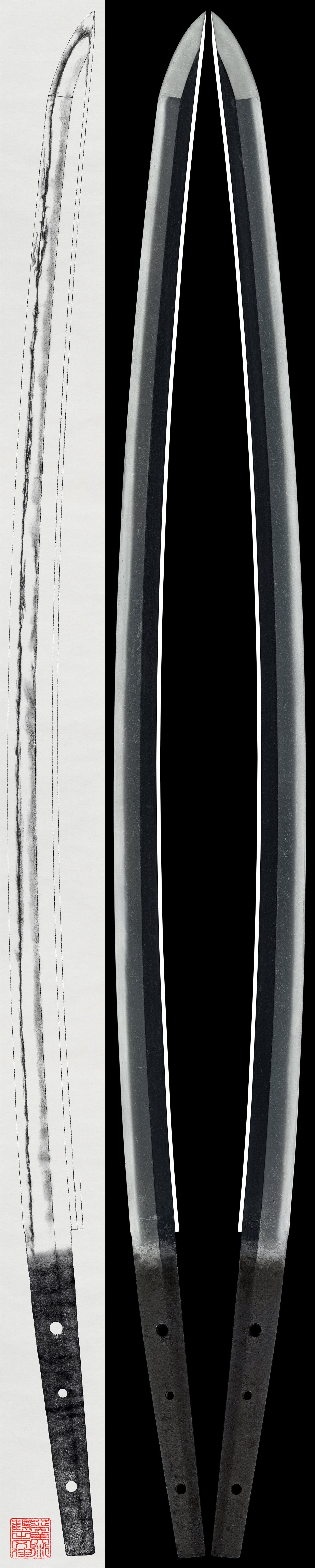
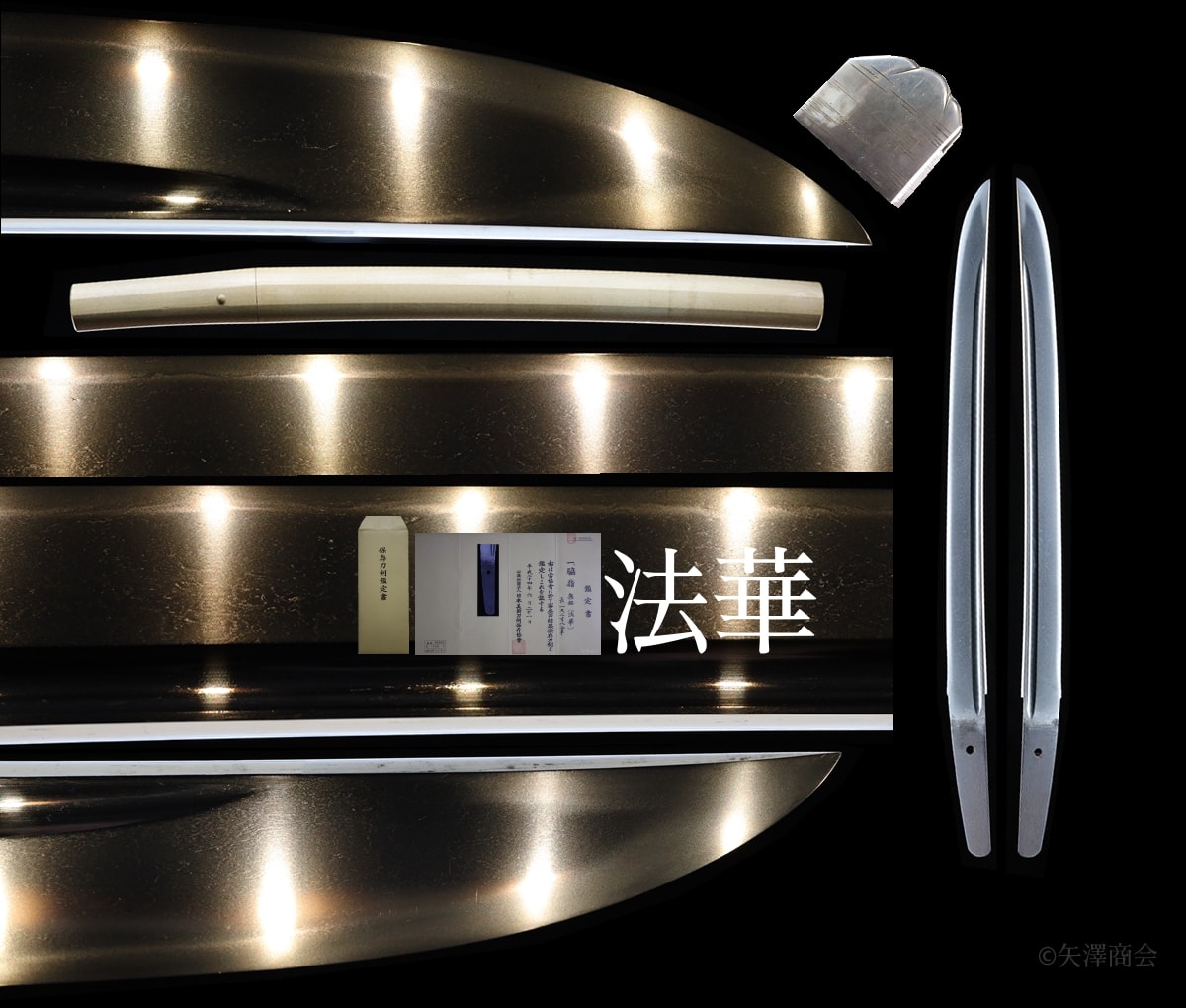
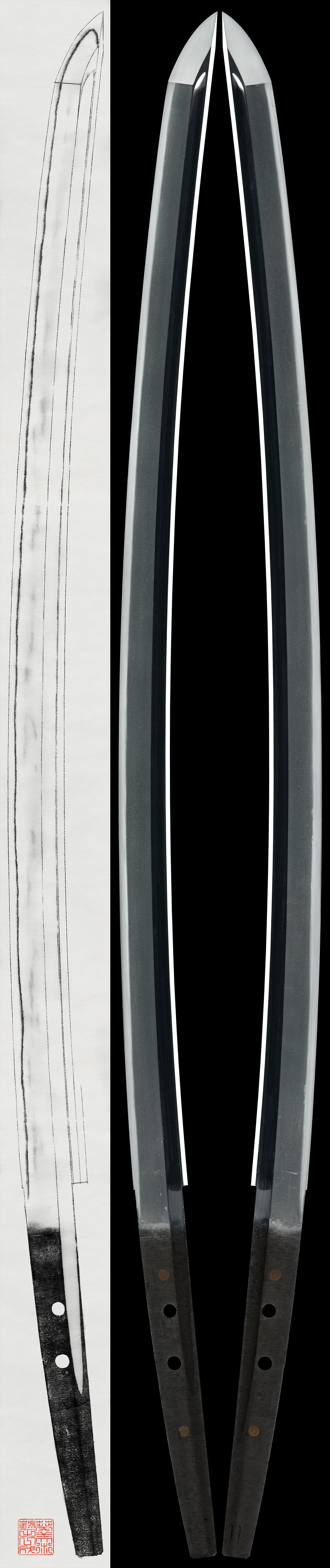
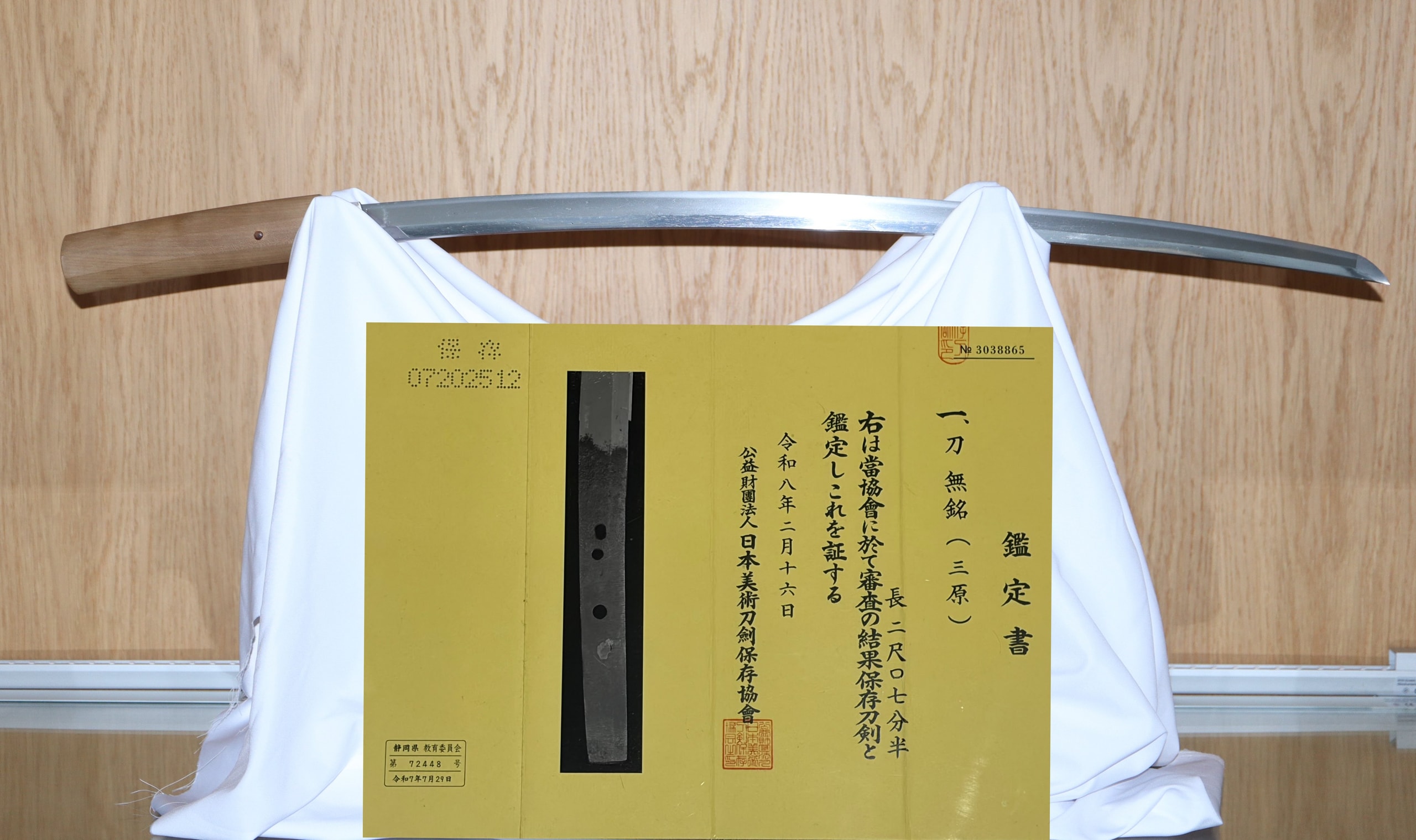
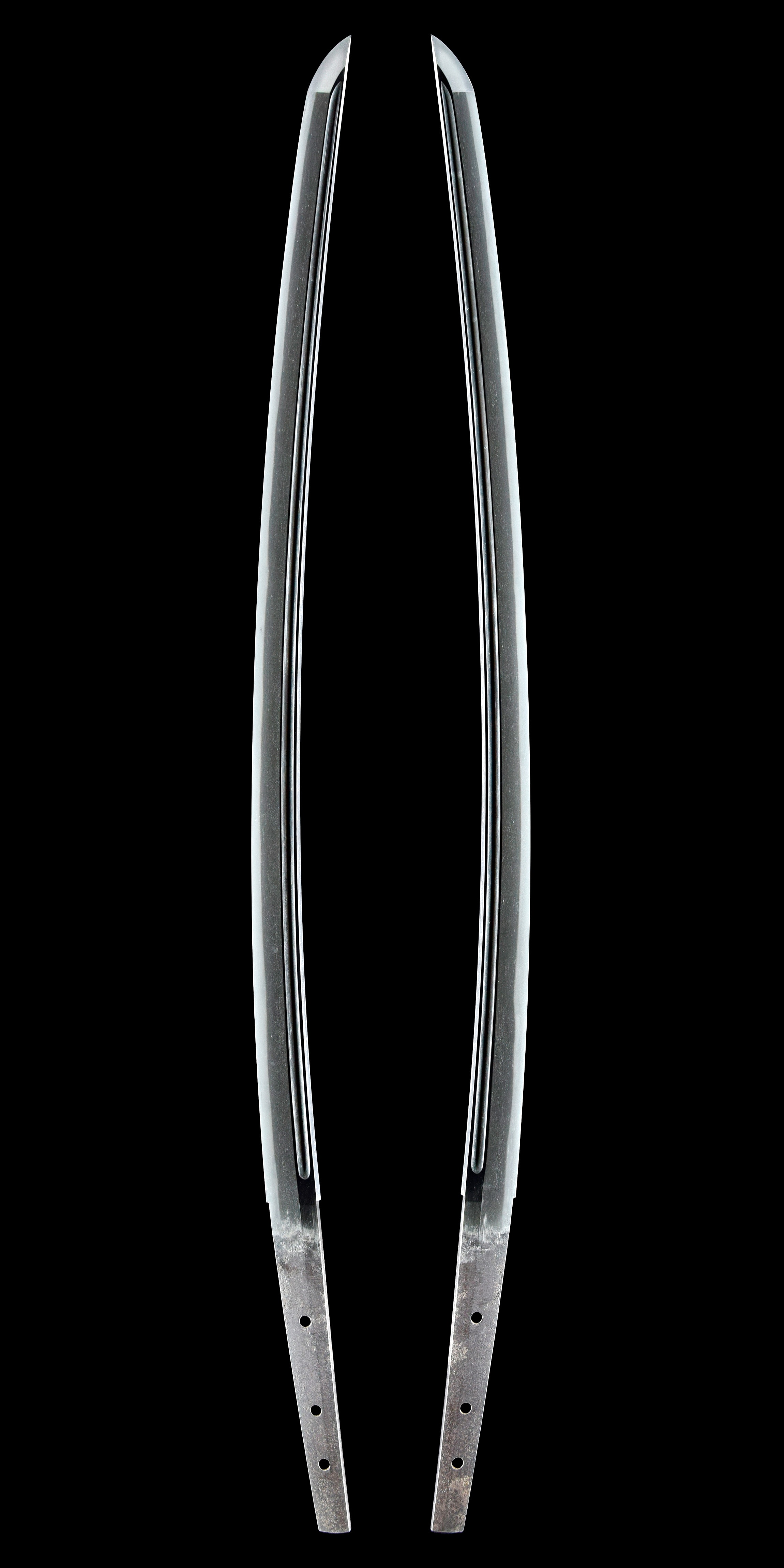
本作は南北朝時代(1300年代)まで遡る、大磨上の見事な脇差です。日本美術刀剣保存協会(NBTHK)の保存刀剣鑑定書が付帯しており、法華伝と極められています。 刀身は造り込みが良く、茎まで掻き通された見事な棒樋と添樋が施されています。切先はこの年代のものとしては非常に力強く、全体の姿は優美です。刃味は非常に鋭く、肌は澄んで所々に地沸がついています。刃文は働きに富んだ乱れ気味の直刃で、写真での再現は難しいですが、実物は写真以上に美しく豊かな表情を見せています。 外装もまた、同一の意匠で統一された非常に優れた拵が付属します。縁頭には銘があり、縁頭および目貫には花々の繊細な彫刻と象嵌が施されています。銀、銅、金が用いられており、鍔は透かし彫りの意匠です。鍔には籠に止まる小鳥が精巧かつ鮮明に彫り込まれています。 刀身の状態は非常に良好です。研ぎは古いものですが依然として良い状態を保っており、拵も健全ですが、これほどの年代物ですので鞘には僅かな傷みが見られます。NBTHKの保存鑑定書によって作者と品質が保証された、外装共々非常に優れた一振りです。 【法華鍛冶について】 備州兼安は応安(1368年)頃に活動した鍛冶です。藤代義雄氏の著書では「中上作(和歌物)」に列せられています。法華派の祖は鎌倉時代の助国であり、兼安は一条兼行の門人とされます。ホーレー氏の著書(KAN2929)では75点の評価を得ています。三原グループに属し、「法華兼安」として知られています。 法華の作品は現存数が少なく希少であるため、コレクターにとっても非常に魅力的な一振りと言えるでしょう。 銘:無銘(法華) 時代:応安頃(1368年) 長さ:51.7cm(20 3/8インチ) 反り:6.0mm 元幅:28.1mm 先幅:20.8mm 重ね:6.2mm 造り:鎬造 棟:庵棟 茎:磨上 鍛え:柾目交じり木目肌 刃文:互の目 帽子:丸 状態:良好(古研ぎ) 【最新情報をご希望の方へ】 Nihonto Antiquesのメールマガジンにご登録いただくと、最新の入荷情報やニュースをお届けします。 ご登録ありがとうございます。 ※メールアドレスは厳重に管理され、当サイトからの更新情報の送信以外には使用されません。
 NihontoWatch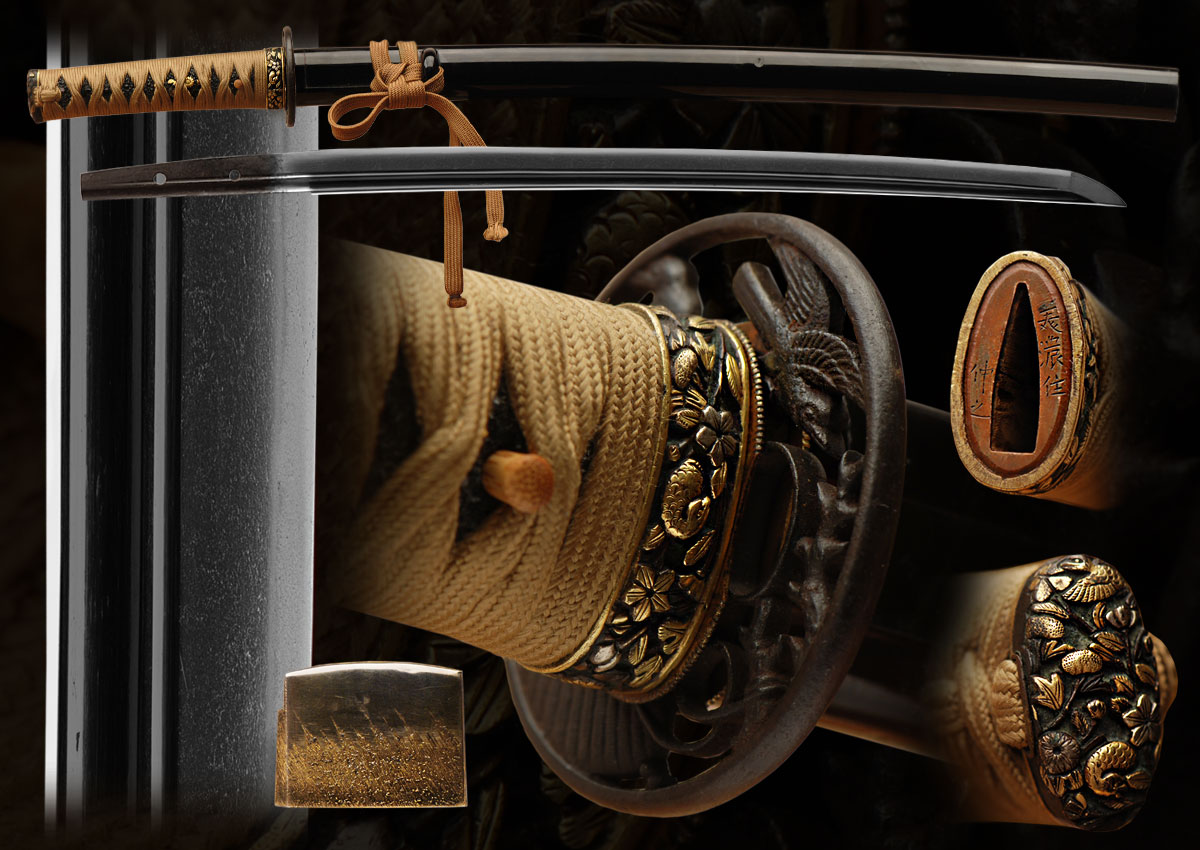

大和伝 · 備後
現在9点販売中
法華派は備後国葦田郡を本拠とした一群の刀工で、南北朝時代より室町期にかけて活躍した。『古今銘尽大全』に拠れば、同じ備後の三原物とは別系の葦田郡物に属し、その流祖を助国とする。一乗の号を冠する工が多く、三原正家の子と伝える一乗を祖として同名数代が室町に及び、銘は「法華一乗」「法華作」「一乗作」あるいは「一」の字のみ[[c:2]]、さらに一の下に個銘を加えるものや個名だけのものなど多様である。現存する作の銘から、一乗のほか兼安、行吉、重安、重家、信兼、重吉、重康、季次、親次、吉次といった工が知られ、室町期には草戸千軒の地に金次が活躍した例も確認される。草戸は中世に栄えた都市であり、ここに法華一乗派の作例が認められることは、一派の広がりを示すものである。 作風は説示に共通して記される。鍛えは板目に杢や流れ肌を交え、刃寄りはしばしば柾がかって総体に肌立ち、地沸がつき地景が入って、かねは白け、白け映りないし映り風が立つ。ややねっとりとした粘り気のある肌合を呈する作と、荒く肌立つ作とがある。刃文は焼の低い穏やかな直刃、あるいは直刃調に小互の目が連れて交じるものを基調とし、足・葉が入り、匂勝ちに小沸がついて、刃縁にほつれ・打のけ・喰違刃などを交え、砂流し・金筋がかかる。匂口は沈みごころとなるのが常で、締まりごころのものもある。帽子には二様があり、直ぐ調ないし乱れ込んで先を焼詰める大和気質の窺えるものと、先が尖って長く返るものとが見られる。彫物は棒樋や添樋を掻き流すことが多い。これらは板目の流れる地鉄、白け映り、沈みごころの匂口に大和の特色を示しつつ、備後物らしい趣を備える。 鑑定の要点は近隣の作との見分けにある。地刃に三原を思わせるところがありながら、沸が一段と強くつき、帽子が尖って深く返る点に法華の独自性が窺える。また直刃調に小丁子・小互の目を交え匂勝ちに小沸のつく出来は一見青江派さながらであるが、鎬の高い造り込みや細かに掃きかける帽子に大和気質が看取され、備後物に見られる大和気質と青江風の混在として理解される。「備州住」と居住地をきる銘は鎌倉末より南北朝にかけて多く備後国を指し、銘鑑に載らぬ工もこの作域から同派と判断される。代表的な遺品には正平・応安・貞治・明徳の年紀を帯びた在銘作があり、なかでも生ぶ茎在銘年紀入りの太刀は南北朝最盛期の遺例として貴重とされる。光忠が無銘の一刀を一乗と極めた例も伝わり、後世の鑑定における同派の位置づけを示している。 詳しく見る →
銘が正しい、または無銘でも年代・国・系統を確実に指摘できる、保存に値する真正の作と鑑定されたものです。
日本美術刀剣保存協会(NBTHK)は、1948年に設立され、文化庁の監督を受ける公益財団法人で、東京・刀剣博物館に本部を置きます。専門の審査員が出品作を直接審査し、美術的・歴史的価値に応じた鑑定書を発行します。NBTHKの鑑定書は、日本刀および刀装具の真正性を示す最も広く認知された基準です。
NBTHK公式サイトWe offer a 48 hour inspection period for all Antique items shipped within the United States only. If the item is not to your satisfaction, we will gladly refund your money less any shipping and handling fees. All sales are final after the 48 hour inspection period. Please note that all discounted items are a final sale and not returnable.









![Tanto - Jūyō - 作 正廣 - 日本刀 刀 短刀 銘 正広 第[回]重要刀剣指定品(日本美術刀剣保存協会)](/_next/image?url=https%3A%2F%2Fitbhfhyptogxcjbjfzwx.supabase.co%2Fstorage%2Fv1%2Fobject%2Fpublic%2Flisting-images%2Fsamurai-museum%2FL396744%2F06.jpg&w=2560&q=90)