NihontoWatch MonNihontoWatchBETA
MarketEncyclopedia
NihontoWatch Mon

NihontoWatchBETA

Market
Encyclopedia
Overview·Kantei·Designations·Provenance·Blade Forms·Signatures·Lineage
OverviewKanteiDesignationsProvenanceBlade FormsSignaturesLineage
  1. Schools
  2. Shikkake
  3. Norinaga

Shikkake Norinaga

則長

Tokujū
Vol. 9, No. 13 · Tachi

Shikkake Norinaga

則長

46 ranked works

ProvinceYamatoEraBunpo (1317–1319)PeriodKamakuraSchoolShikkakeTraditionYamato-denGeneration1stFujishiroJo sakuToko Taikan1,800(top 3%)TypeSwordsmithCodeNOR237
5Jūyō Bunkazai
3Jūyō Bijutsuhin
2Gyobutsu
6Tokubetsu Jūyō30Jūyō Tōken

Overview

Two fix Norinaga in time with a precision rare for a medieval smith: one dated Bunpo 3 (1319) adds his age of forty-eight, another dated Ryakuo 3 (1340) his age of sixty-nine, and from these the published sources compute a birth in Bun'ei 9 (1272). An of Ryakuo 1 (1338) supplies a third date, and a Gentoku date is recorded in the Kozan . He worked at Shikkake in Yamato, one of the five lineages of the province beside Senjuin, , Hosho and , and the published record opens text after text with the sentence: the Shikkake school "flourished with Norinaga as its de facto founder" (則長を事実上の祖として栄えた). The registers name his father Norihiro as the founder, but no authenticated work of Norihiro survives, and the papers settle the school on the son. The name itself continued from the end of the period through the period, carried by successors whose separation, the writes, remains an open question.

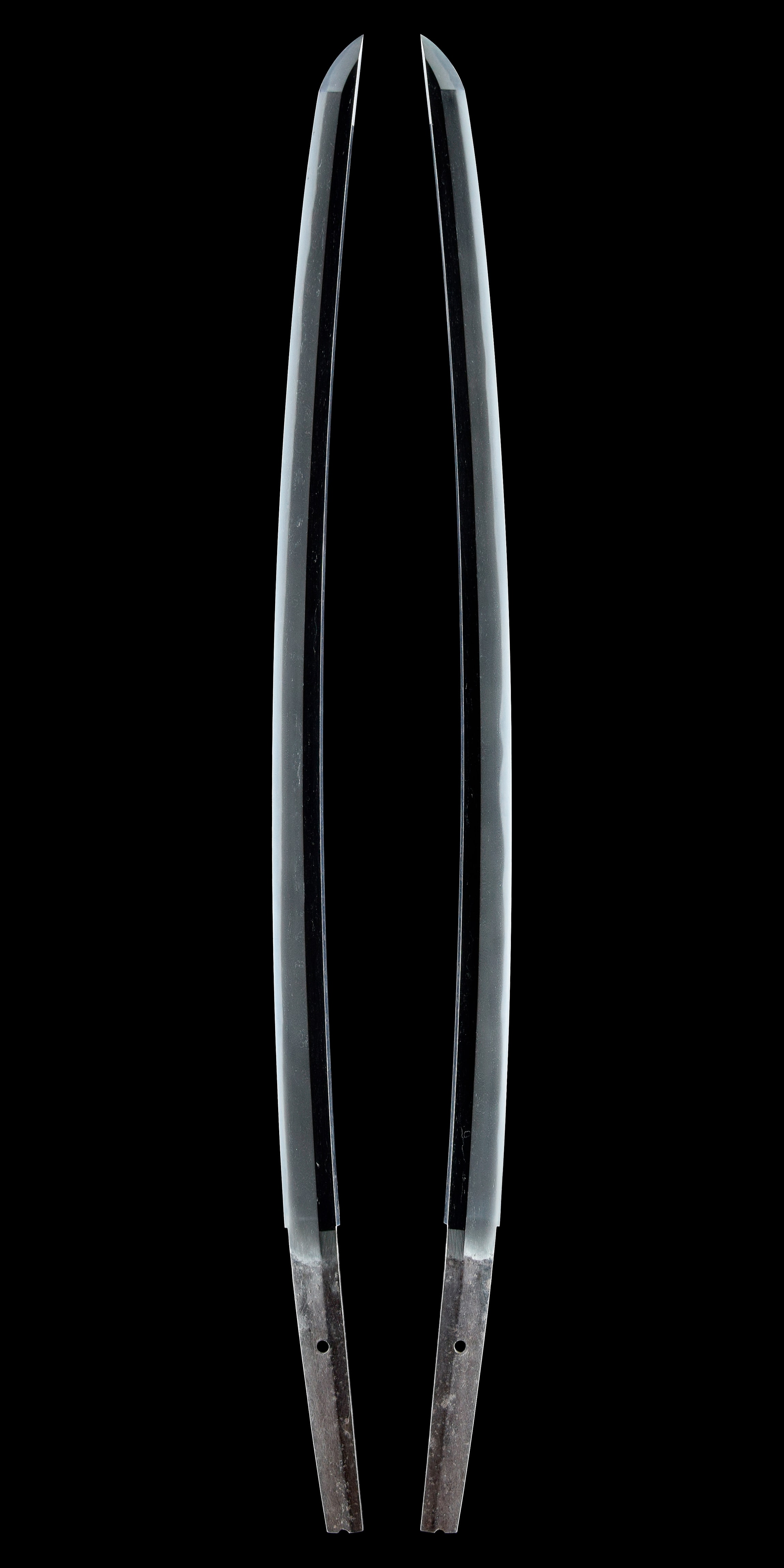
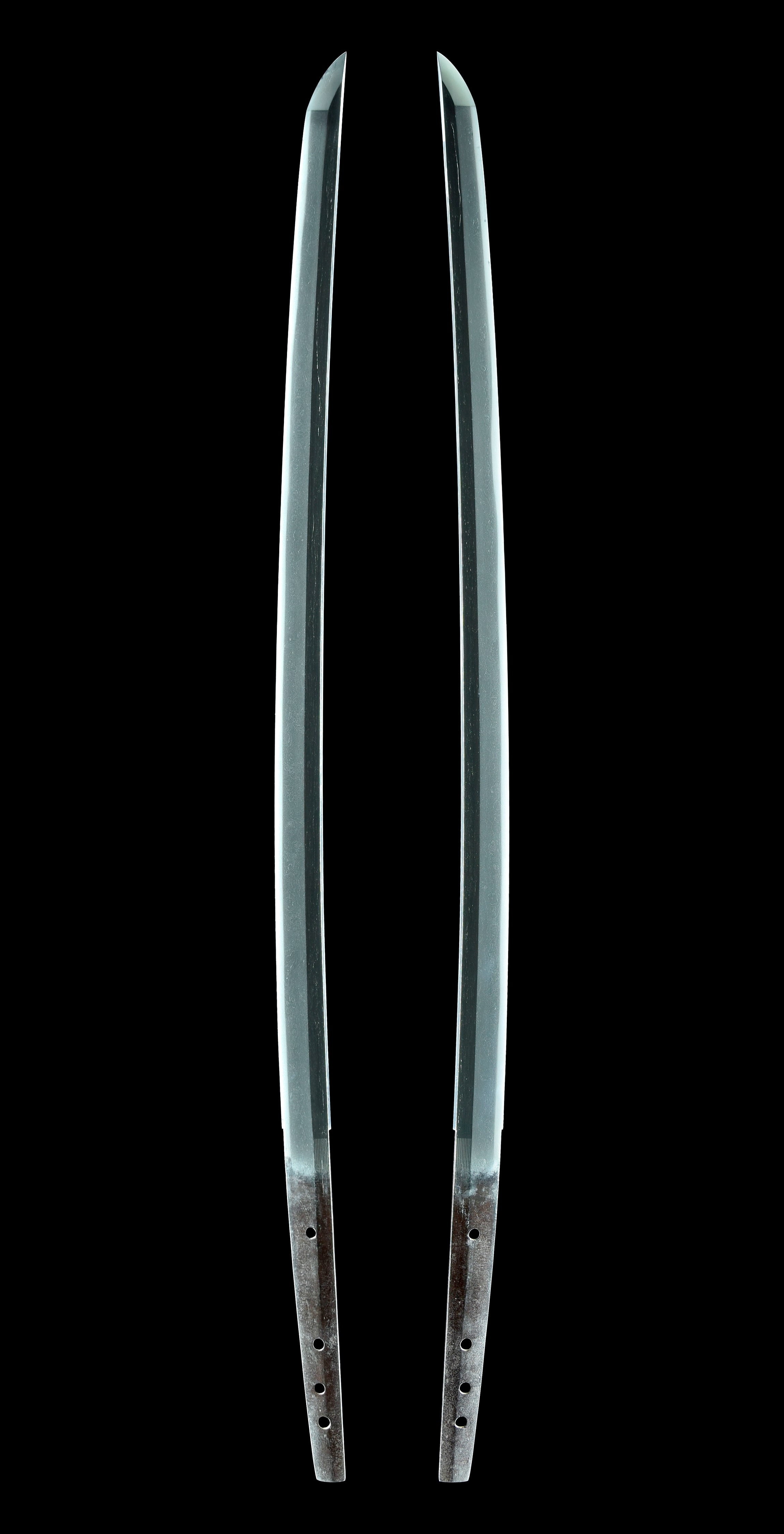
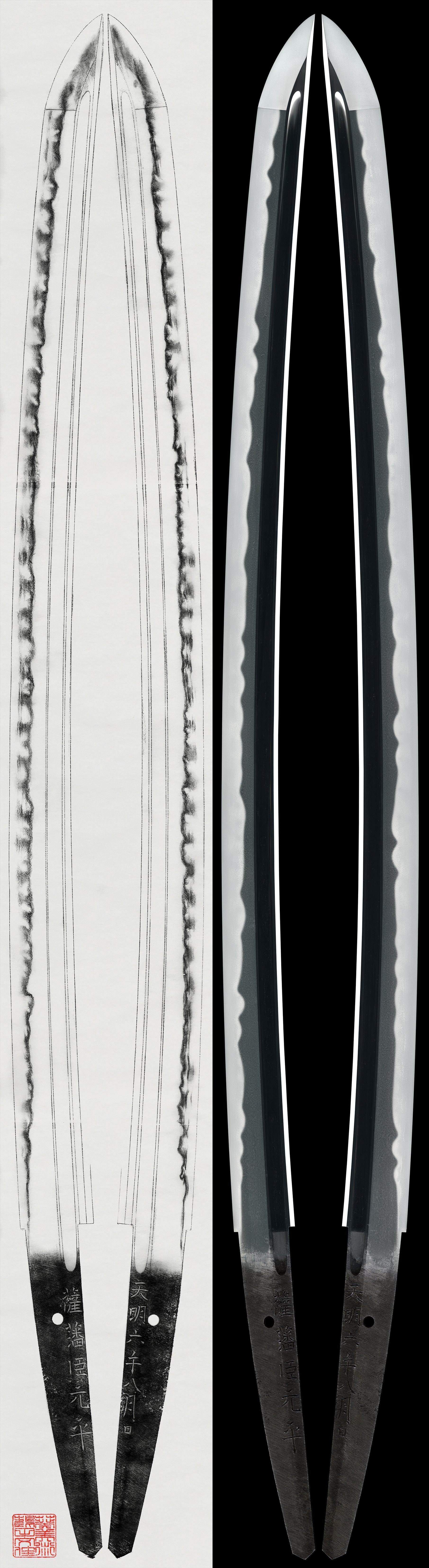
His hand is among the most readily named in Yamato. The published formula first gives the school the shared frame of the tradition, a high with a wide , an forging with a flowing tendency, and a fundamentally of , and then states the tell: the distinction lies in tempering small strung in series within the (刃中に小互の目を連れて焼く点に特色). One text raises this to a ranking: "among the works of the five Yamato schools, those in which the stand out most are the works of the Shikkake school, and among them the most technically accomplished is Norinaga" (最も技術の優れているものが則長). On his classic blades the strung runs from base to tip. The edge frays into , and ; sits thick, at times rough above the ; and sweep through. The is and strongly swept with , closing or with a feeling, on one blade becoming flame-like. The sources add a quieter mark, that "the subdued tendency of the is also a point not to be overlooked" (匂口の沈みごころの点も見のがせない).

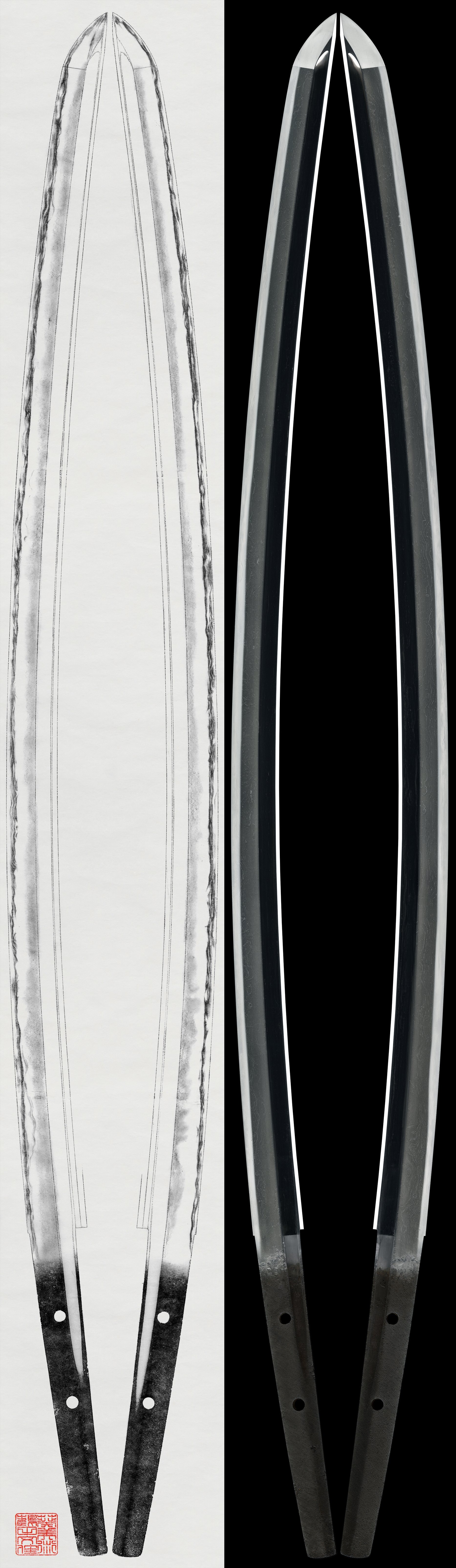
The beneath this temper is an that flows overall and leans to , thick in with fine , in places standing. On the finest blades a clear rises, and one shows steel that runs slightly blackish. The of the twenty-fourth session is described in terms the sources reserve for his best work: a densely packed , bright in iron color and well refined, on which the band of adheres thickly, "beautifully luminous, bright and penetratingly clear" (光美しい刃沸が厚くついて明るく冴え渡り). The strength of that steel is itself a discriminator within the school: the Jubi handed down from Tokugawa Yorinobu is singled out because "the is stronger than usual Shikkake work, and the in the is also stronger" (常の尻懸より地鉄が強く、刃中の沸も強い).

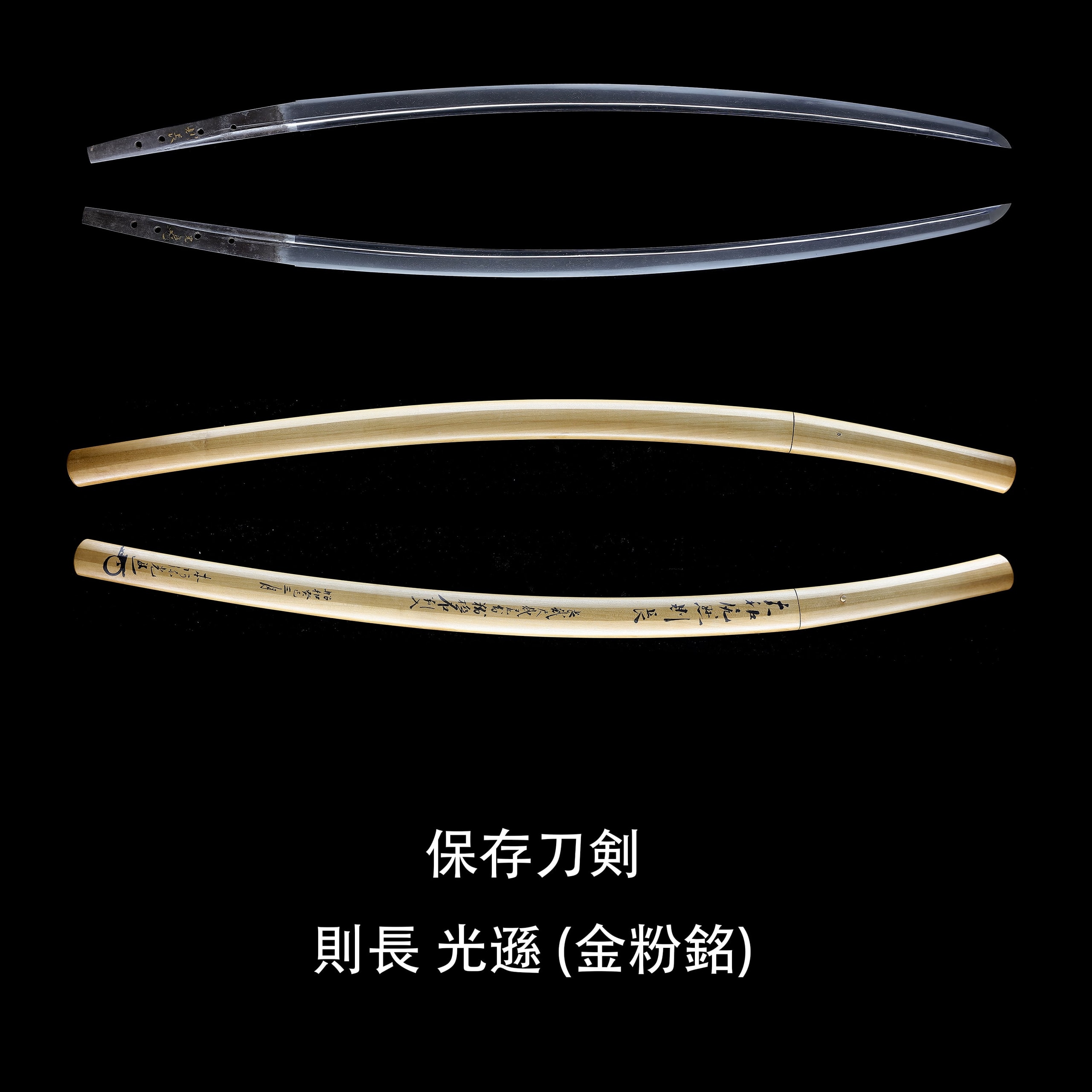
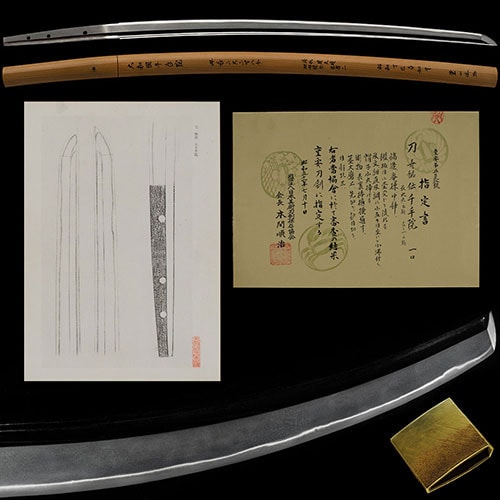
His work falls into clear registers. With Kanenaga he is the Yamato smith of comparatively many signed works, the long taking the forms Yamato Norinaga , Yamato Shikkake-ju Norinaga and Yamato Sakon-no-jo Norinaga , and the sources note that "among those judged the first generation there are no two-character signatures" (初代と鑑せられるものに二字銘はない). His mostly survive with the signature left near the tip on the side, while the are with the long at center; twenty-five of his designated blades are signed against twelve unsigned. The register carries the seals of the Honami: a of Koshitsu, whose inlaid attributions are called extremely few, a of Kojo with an of Tenna 3 (1683) at twenty , kinpun and attributions of Koson, and a lost of 'ei 12 (1635) read as the hand of Koshitsu or Koon. The formula itself reserves a further register, works in pure : a naoshi that once bore an old attribution to Sairen, the quiet of Ryakuo 1 made at sixty-six, and the of Ryakuo 3 at sixty-nine, on which the strung can scarcely be seen. The pole arms are a school specialty; the Ryakuo 1 survives with an inscription the sources call precious as a document, the rest were shortened into , and on them the with its companion is "powerfully cut" (薙刀樋に添樋も力強く), showing the character of Yamato carving. The generations remain unsettled. The old rule reads without the Shikkake prefix as the first generation and prefixed long as the second and after, takes the Sakon-no-jo signature as a second generation around Ryakuo, and the registers give a third at Oei and a fourth at Eikyo. Yet the of the forty-seventh session, dated Ryakuo 3 at sixty-nine and still signed with the prefix, makes the judges hesitate before that rule, and they call it "precious material urging further examination of the generational division" (則長の代別について、さらなる検討を促す貴重な資料). An early successor signs the Kasuga dedication at sixty-two.

The published sources place him by his neighbors. Against , the old connoisseur text quoted in the ninth session warns that Shikkake work is mostly a temper easily confused with , "but the is not as tight as 's and the is thinner, and by the inferiority of rank one should know it as Shikkake" (当麻ほどは地つまらずしてしほ相うすく、位のおとるを以て尻懸と知べし). Against the rank is stated plainly: his "technique is second to Kanenaga" (技術も手掻包永につぐものがある), and the differences are itemized, that his forging stands more in the and falls short of Kanenaga's clarity (則長の方が鍛が肌立つて冴えが足りず), that the stands out far more in his , and that Kanenaga signs only with two characters while Norinaga leaves long . What Kanenaga is to , then, Norinaga is to Shikkake: the smith on whom the school's technique and its signed record both rest, distinguished from every other Yamato hand by the strung in a frame.

He is Jo in Fujishiro's grading, with forty-six designated works on record. Five are Important Cultural Properties, patrimony preserved outside the market; beneath them stand six and thirty , thirty-six blades across the two tiers, with three more on the Bijutsuhin rolls. Twelve blades carry recorded provenance through the great houses: a of the former shogunal collection, recorded as a gift of the tenth shogun Ieharu in 1774 and later held by Tokugawa Iesato; the granted by shogun Tsunayoshi in Genroku 11 (1698) to Matsudaira Yoshiyuki, founder of the Takasu branch, and handed down in that house; the rare Sakon-no-jo transmitted in the Maeda house of with its ; the kept as the sword of Tokugawa Yorinobu of , treasured by its later owner as a with the shogunal ; a formerly of the Mori house; and a gold inlay recording the possession of Honda Nakatsukasa Shoyu Tadakoku. The Date family and the Imperial Family also appear among recorded owners. Of recorded whereabouts today, examples rest with Jingu, the Tokyo and Kyoto National Museums, Seikado Bunko, the Kurokawa Research Institute and the Museum of Fine Arts, Boston. For the collector the arithmetic is sober: most of the and blades are held rather than traded, and an attributed with the strung appears on the market only from time to time. A signed piece, of which roughly two dozen are designated and many sit in institutions or long-held collections, is a genuine rarity, and a dated one is rarer still.

Kantei

one classic manner, suguha-cho with strung ko-gunome over a masame-leaning itame (signed and mumei registers), plus the quiet suguha-deki register the formula itself reserves, the naginata and naginata-naoshi forms with the Yamato naginata-hi carving, and the namesake continuation (Sakon-no-jo read as the second generation; later works into early Muromachi)

Norinaga, born Bun'ei 9 (1272) by the arithmetic of two inscribed with his age (Bunpo 3, 1319, at forty-eight; Ryakuo 3, 1340, at sixty-nine), is the de facto founder of the Shikkake school, one of the five Yamato lineages: the registers name his father Norihiro as founder, but no authenticated work of Norihiro survives. His is the most -marked hand of the Yamato five: over a high, wide and an that flows into with thick , a into which run strung in series (22% of his texts, unseen in Kunitoshi), fraying into , and , deep in with and , the strongly swept with and often closing . With Kanenaga he is the Yamato smith of comparatively many signed works, the long usually left at the tip on the side of a shortened ; the ranks his technique second to Kanenaga, and namesakes carry the name into the period.

Diagnostic discriminators

22% of his works · 22.0× vs Shizu Kaneuji (Yamato-trained, turned to Soshu)

36% of his works · 3.3× vs Rai Kunitoshi (the Kyoto contrast)

76% of his works · 3.2× vs Rai Kunitoshi

with Kanenaga the Yamato smith of comparatively many signed works; the long mei forms are Yamato Norinaga saku, Yamato Shikkake-ju Norinaga saku and Yamato Sakon-no-jo Norinaga saku, and no niji-mei is allowed to the first generation; two tanto inscribed with his age (Bunpo 3 at forty-eight, Ryakuo 3 at sixty-nine) fix the birth at Bun'ei 9 (1272)

Observation by phase

The classic manner: ko-gunome strung through a suguha-cho ha (his signature)

The defining manner, stated as the school formula in text after text. The carries a high and wide ; the is an that flows overall and leans to , thick in with fine , in places standing, and on the finest blades a bright stands clearly. The is a base, shallowly undulating, into which run strung in series from to ; the frays into , and , sits thick and at times rough, and and sweep through. The is , strongly swept with , ending or in a feeling. The judges call the strung within the the great viewing point that separates Shikkake from the rest of Yamato, and on the it is what carries the attribution.

Sugata 姿
Jigane 地鉄
Hamon 刃文
Bōshi 帽子
Osuriage mumei katana with Honami attributions— mumei on 18 of 45, with kinzogan (7), kinpun (3) and shu-mei (3) attributions by the Honami: Koshitsu (whose kinzogan are called extremely few), Kojo and Koson, and a Koon origami
Signed work: tachi with the long mei surviving at the nakago tip, ubu tanto— the long mei forms 大和則長作, 大和尻懸住則長作 and 大和左近允則長作 (long mei on 12 of 45, ubu nakago on 11); tachi are mostly suriage with the mei kept near the tip, mune side, while tanto are ubu with the long mei at center

The quiet suguha-deki register (the formula's own reservation)

Nearly every paper closes the school formula with the reservation that pure works also exist. In the corpus these are a naoshi that once carried an old attribution to Sairen, the dated Ryakuo 1 (1338) showing a quiet at age sixty-six, and the of Ryakuo 3 (1340) at sixty-nine, on which the judges note the strung can scarcely be seen. The two dated examples fall in his documented last years, though the papers stop short of drawing a chronology from it.

Hamon 刃文

Naginata and naginata-naoshi: the school's pole arms

one ubu naginata dated Ryakuo 1 (1338) and four naoshi blades converted to wakizashi; the naginata-hi with companion soe-hi recurs

Old of the late period survive only in the rarest case, the Ryakuo 1 (1338) piece whose inscription is called precious as a document; the rest were shortened into . The with companion is cut strongly, and one paper points to it as showing the character of Yamato carving. The Jubi naoshi handed down as the sashiryo of Tokugawa Yorinobu of is noted for a and in the stronger than usual Shikkake work, and the two naoshi of session 62 carry the strung of his classic manner at a wider than his usual.

Hamon 刃文

The namesake continuation: Sakon-no-jo and the later generations

less firmly establishedthe Sakon-no-jo long mei (two tachi in the corpus), read by the old account as the second generation around Ryakuo; pieces judged mid and late Nanbokucho; an early Muromachi dedication tanto

The papers repeat that the name continued from the end of through . The old account makes without the Shikkake prefix the first generation and those carrying it the second and after, reads the Sakon-no-jo signature as the second generation around Ryakuo, and the Kaji- Hayamidashi sets a third generation at Oei and a fourth at Eikyo. The corpus carries the question into the work: a with Honami is placed a little later than the , a Kasuga dedication with and squarish , signed at age sixty-two by a successor, is set in early , and signed pieces are read into mid and late . Yet the session 47 , dated Ryakuo 3 at sixty-nine and still signed with the Shikkake prefix, makes the judges hesitate before the old prefix rule, and they call the generational division a matter for further study.

Hamon 刃文
Scholarship

Two tanto inscribed with his age, Bunpo 3 (1319) at forty-eight and Ryakuo 3 (1340) at sixty-nine, let the papers compute the birth year, Bun'ei 9 (1272); an ubu naginata of Ryakuo 1 (1338) adds a third date, and a Gentoku date is recorded in the Kozan oshigata.

The old rule reads mei without the Shikkake prefix as the first generation and prefixed long mei as the second and after; but the session 47 tanto, dated Ryakuo 3 at sixty-nine yet signed with the prefix, makes the rule doubtful, and the NBTHK calls the generational division a question demanding further study.

The register dates are unsettled: the first generation is set variously at Ocho and Gentoku, or at Shoo, but extant work is judged to reach back earlier; dated pieces are scarce and the papers repeat that the generations are hard to separate.

Mumei attributions carry the seals of the Honami: kinzogan by Koshitsu, called extremely few, kinzogan by Kojo with a Tenna 3 (1683) origami, kinpun and kinzogan by Koson, and a lost Kan'ei 12 (1635) origami read as the work of Koshitsu or Koon.

Designations

Kokuhō—
Jūyō Bunkazai5
Jūyō Bijutsuhin3
Gyobutsu2
Tokubetsu Jūyō6
Jūyō Tōken30

Elite Standing

0.69 across 46 designated works

Top 4% among smiths

Provenance

16 documented provenances across certified works by Norinaga

Provenance Standing

9 works held in elite collections across 16 documented provenances

Top 6% among smiths

Raw score: 2.89 / 10

Blade Forms

Distribution across 46 ranked works

Signatures

Signature types across 46 ranked works

Currently Available

Lineage

Norinaga
Students (4)
  1. 1.Norinaga則長
  2. 2.Norinaga則長
  3. 3.Norinaga則長
  4. 4.Norimitsu教光