後世のほとんどの権威が、鎌倉を日本刀の黄金時代と呼ぶ。最初の武家政権が注文主となり、諸伝統が同時に最盛期を迎え、伝えでは諸国の名工が後鳥羽上皇の御所に月番で伺候した。
 NihontoWatchNihontoWatch
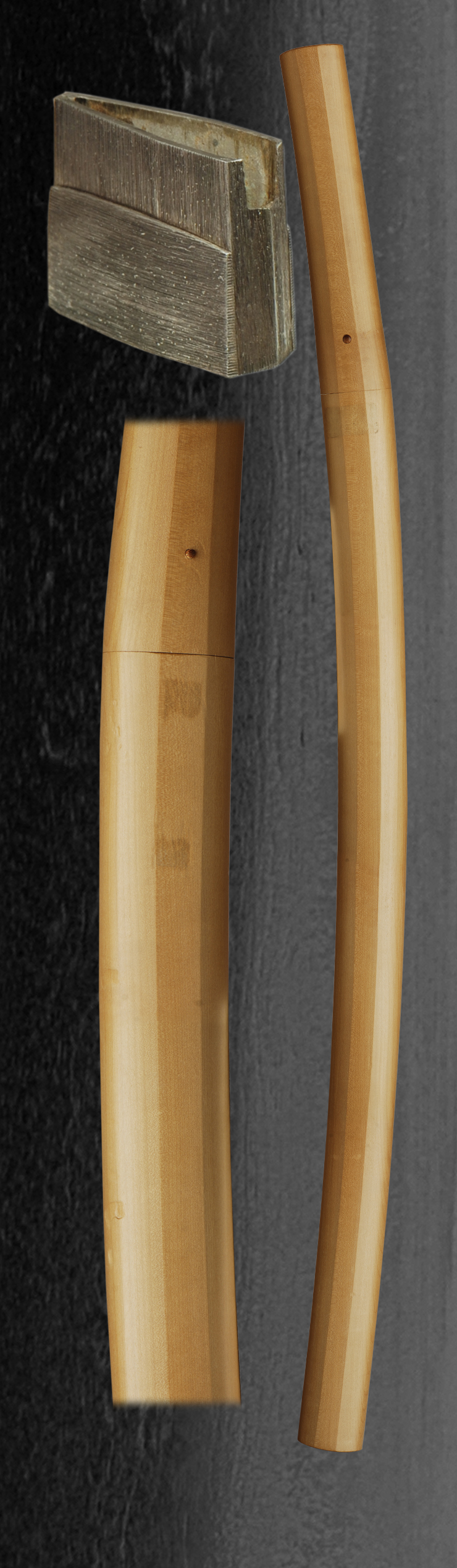
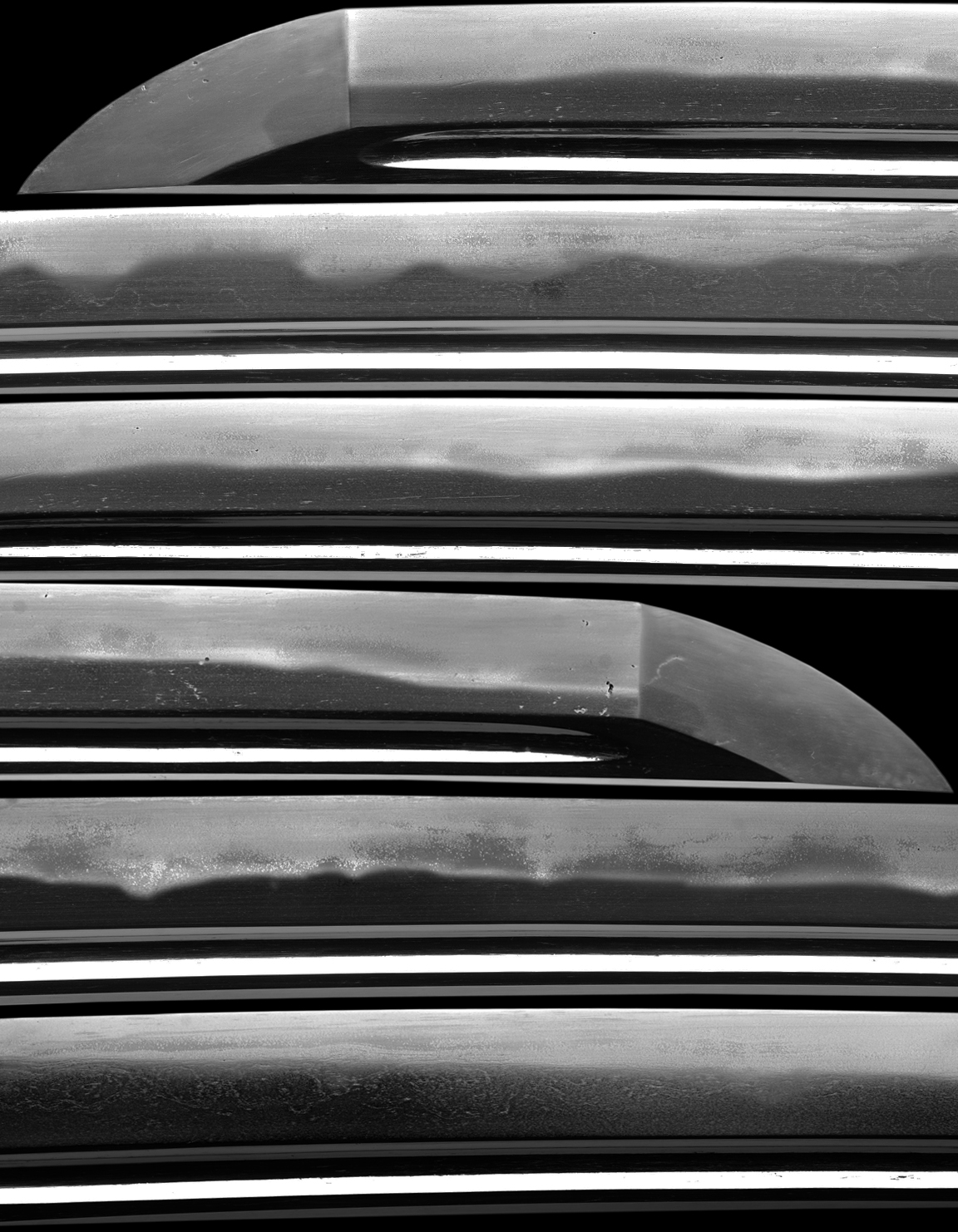
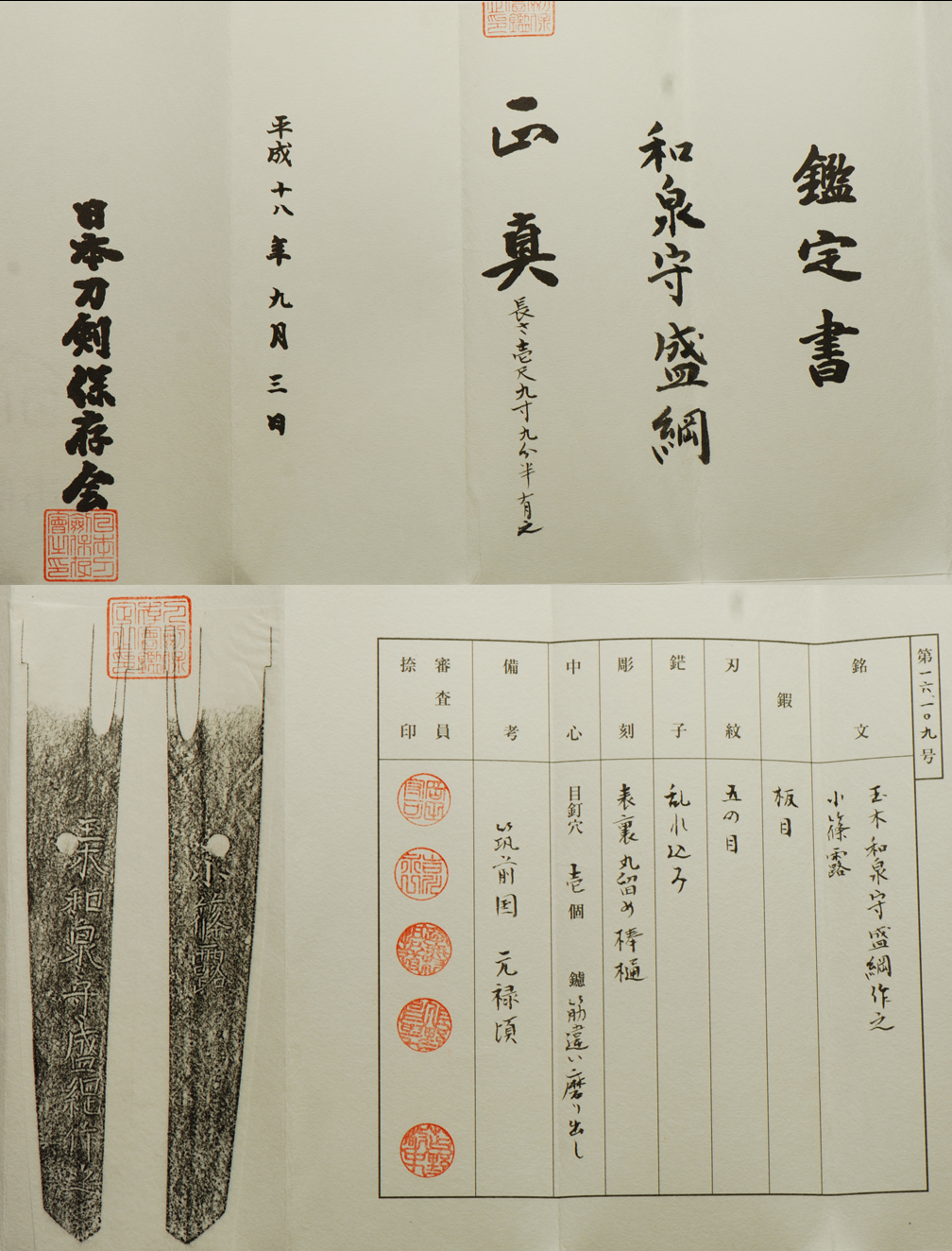
This is a very interesting Katana in the Chikuzen tradition. It is in an original polish with slight pinhole size pittings left from the original polisher. The overall sugata of this sword is impressive and the hamon is loaded with activity. The hamon contains a profuse amount of ara-nie and ko-nie. There is a mixture of erratic size and shaped gunome. The hada has a milky slick looking finish and forged very well with some areas of O- hada mixed in. This blade comes in its original shirasaya. These papers were issued by the NTHK and have 5 stamps attesting to its quality and varacity of its signature. There is a silver 2 piece habaki very nicely done. The blade has Bohi which adds to the balance that this blade possesses. The signature reads: Tamaki Izumi no Kami Moritsuna kore o saku. There is also a very rare name inscribed for the sword on the opposite side of the blade. It reads: Koshinotsuyu (“dew on small bamboo grass”). This type of inscription or naming is usually found on blades that were cherished by the owner or Samurai and a rare treat to possess a blade with this.Moritsuna was active around Genroku in Chikuzen province and had been a student of Awataguchi Ikkanshi Tadatsuna in Osaka. One of his blades, an o-wakizashi with a flamboyant choji, is featured in the 1974 publication Showa Meibutsu Cho.There were a few small pinhole sized pits left on the blade by the last polisher. A new fresh polish would take care of most of this and greatly enhance the blade. The size of the blade indicates it may have been made for a single handed style of swordsmenship and has a great feel and balance in hand. The blade is powerful and wide. Mei:Tamaki Izumi no Kami Moritsuna kore o saku(玉木和泉守盛綱作之, “made by Tamaki Izumi no Kami Moritsuna”)Koshinotsuyu (小篠露, lit. “dew on small bamboo grass”)Date:Genroku (1688-1704)Nagasa:23-3/4 inchesSori:15.0 mmWidth at the ha-machi:32.7 mmWidth at the yokote:23.5 mmThickness at the mune-machi:7.1 mmConstruction:Shinogi zukuriMune:IoriNakago:UbuKitae:ItameHamon:GunomeBoshi:Midare-komiCondition:older polish kantei-sho (鑑定書) – Certificate Izumi no Kami Moritsuna (和泉守盛綱)shôshin (正真) – Authenticnagasa 1 shaku 9 sun 9 bu han kore ari (長さ壱尺九寸九分半有之) – Blade length ~ 60.4 cmHeisei 18 nen 9 gatsu 3 nichi (平成十八年九月三日) – September 3rd 2006 Nihon Tôken Hozon Kai (日本刀剣保存会) – NTHKNo 16,109meibun (銘文) – Signature:Tamaki Izumi no Kami Moritsuna kore o saku (玉木和泉守盛綱作之, “made by Tamaki Izumi no Kami Moritsuna”)Koshinotsuyu (小篠露, lit. “dew on small bamboo grass”)kitae (鍛) – Foging: itamehamon (刃紋) – Hardening: gunomebôshi (鋩子) – Hardening in tip: midare-komichôkoku (彫刻) – Engravings: on both sides a bôhi which ends in marudomenakago (中心) – Tang: mekugi-ana (目釘穴) 1, yasurime (鑢): sujikai with prominent start of file marksbikô (備考) – Remarks: Chikuzen province, around Genroku (元禄, 1688-1704)shinsa’in natsu’in (審査員捺印) – Seals of Judges: 5 seals Subscribe for the Latest Updates!Join our mailing list to receive the latest News & Updates fromNihonto Antiques.SUBSCRIBEYou have Successfully Subscribed!Your email address will be kept private & will only be used to send updates from this site! Mike Canada collector will take $2500.00
NihontoWatch取扱店 Nihonto Antiques

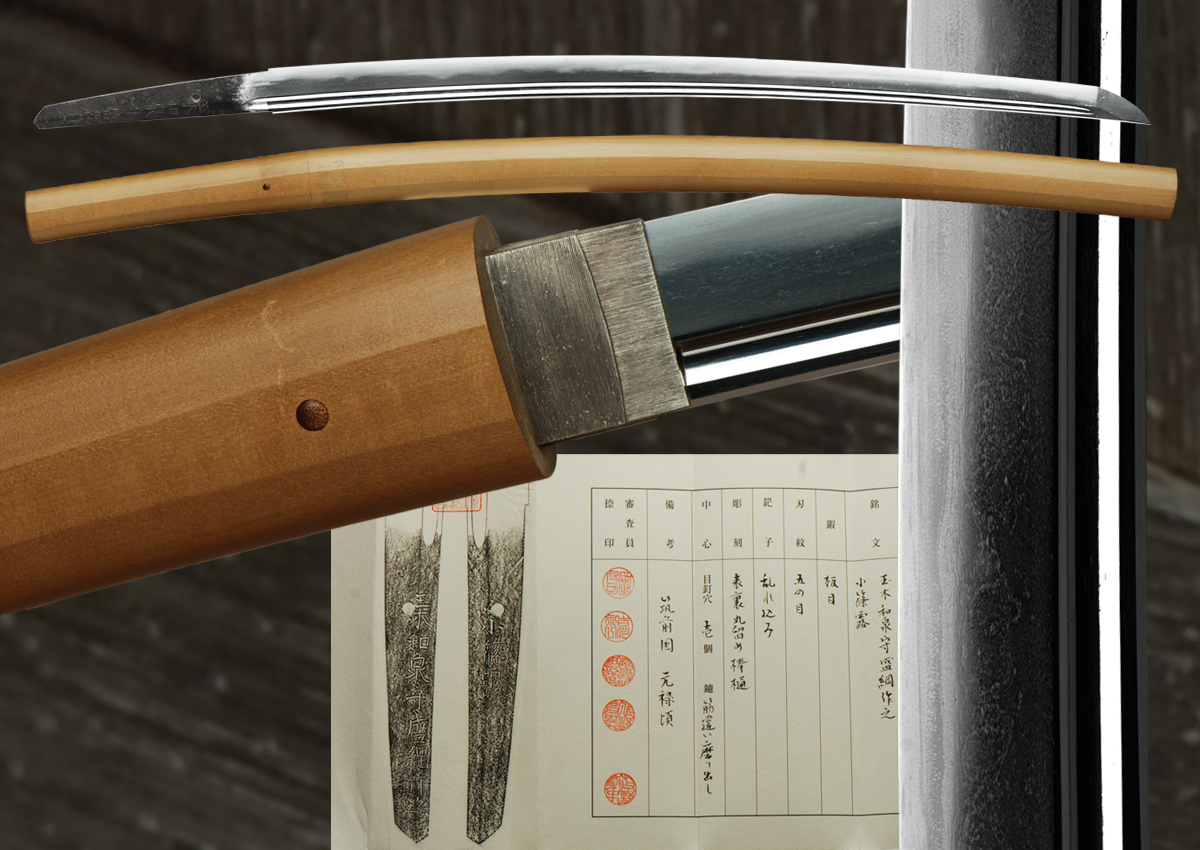

脇物 · 筑前 · 1321-1324頃
刀剣大鑑 上位26%
脇物 · 筑前
時期区分: 古金剛兵衛· 1200–1393
現在11点販売中
古金剛兵衛は、筑前金剛兵衛派の最も早い時期、すなわち鎌倉末期から南北朝期にかけての一群を指す。設示の伝えるところでは、南北朝期の筑前国には左文字派と金剛兵衛派の両派が並び立ち、後者は寺院ゆかりの一門として知られた。その祖と目されるのが初代金剛兵衛盛高であり、盛高には正平四年紀を有する作が現存するものの、その作の多くは室町時代以降に降る。この南北朝期に位置する有銘の刀工として、同派の系列に冷泉貞盛がおり、貞盛には「筑州冷泉貞盛 正平廿五一月日」と銘じた短刀が残り、後代の極めに際しての貴重な規範となっている。盛高を祖とし、貞盛のごとき初期工がこれに連なるのが、この区分の輪郭である。 作風の核心は、地刃にうかがわれる大和気質にある。鍛えは板目に杢を交え、刃寄りに流れて柾がかり、処々肌立ち、地沸がつき、地景がしきりに入る。かな色はやや黒みがかって少しく濁りを帯び、白け映りが立つことが多い。刃文は刃幅の狭い直刃を基調とし、匂口は締まりごころで小沸がよくつき、刃縁にほつれ、処々に打のけや二重刃を交え、金筋・砂流しが地刃にまたがって働く。脇指のごとく身幅広く、のたれに互の目を交えて足や葉のよく入る変化に富んだ作もあるが、これは正平廿五年紀の刃幅の狭い直刃とは趣を異にする一面である。彫物には棒樋や二筋樋、喰違樋、薙刀樋状の樋など多様な意匠が見られる。こうした締まった直刃と九州独特のかな味に特色のある初期の作域は、室町時代に降って盛高の主たる作が展開する末金剛兵衛とは、おのずとその時代色を分かつものである。 古金剛兵衛の鑑定にあたっては、板目に流れ柾を交えた肌立ちごころの地鉄、黒みを帯びて地景の頼りとなるかね、そして締まりごころの細直刃に、ほつれ・打のけ・二重刃や金筋・砂流しの働きを読み取ることが要点となる。帽子が掃きかけて尖りごころに返る点にも、この一派らしい野趣がうかがわれる。主要工としては祖たる盛高と、有銘短刀を規範として名を残す冷泉貞盛が挙げられ、後者の在銘作は稀有であるため、その短刀がこの区分を極める拠りどころとされてきた。伝来する古作の多くは大磨上げの無銘で「古金剛兵衛」あるいは「冷泉貞盛」と極められたものであり、身幅広く反り浅く中鋒の延びた南北朝の体配をとどめて、筑前鍛冶の作域を今に伝えている。 詳しく見る →
鎌倉時代
後世のほとんどの権威が、鎌倉を日本刀の黄金時代と呼ぶ。最初の武家政権が注文主となり、諸伝統が同時に最盛期を迎え、伝えでは諸国の名工が後鳥羽上皇の御所に月番で伺候した。
NTHKの中心的な鑑定書で、相応の出来を備えた作に発行されます。在銘作は銘の正真を、無銘作は審査員による刀工・流派の極めを示します。点数を記す詳細な審査表が付されます。
NTHK(日本刀剣保存会)は、NBTHK(1948年設立)に先立つ1910年に創立された、日本で最も古い刀剣鑑定団体です。長く会を率いた会長の没後、NTHKとNTHK-NPOの二つに分かれ、いずれも審査を続けています。NTHKの鑑定書は、点数と審査員の所見を併記する詳細な審査表が特徴で、特に無銘作の極めに定評があります。
We offer a 48 hour inspection period for all Antique items shipped within the United States only. If the item is not to your satisfaction, we will gladly refund your money less any shipping and handling fees. All sales are final after the 48 hour inspection period. Please note that all discounted items are a final sale and not returnable.