NihontoWatch MonNihontoWatchBETA
MarketEncyclopedia
NihontoWatch Mon

NihontoWatchBETA

Market
Encyclopedia
Overview·Kantei·Designations·Provenance·Blade Forms·Signatures·School
OverviewKanteiDesignationsProvenanceBlade FormsSignaturesSchool
  1. Schools
  2. Kongobyoe
  3. Ko-Kongobyoe
  4. Sadamori

Kongobyoe Sadamori

貞盛

Tokujū
Vol. 28, No. 18 · Wakizashi

Kongobyoe Sadamori

貞盛

24 ranked works

ProvinceChikuzenEraTeiwa (1345–1350)PeriodNanbokuchōSchoolKongobyoeTraditionWakimonoToko Taikan500(top 26%)TypeSwordsmithCodeSAD523
2Jūyō Bijutsuhin
1Tokubetsu Jūyō21Jūyō Tōken

Overview

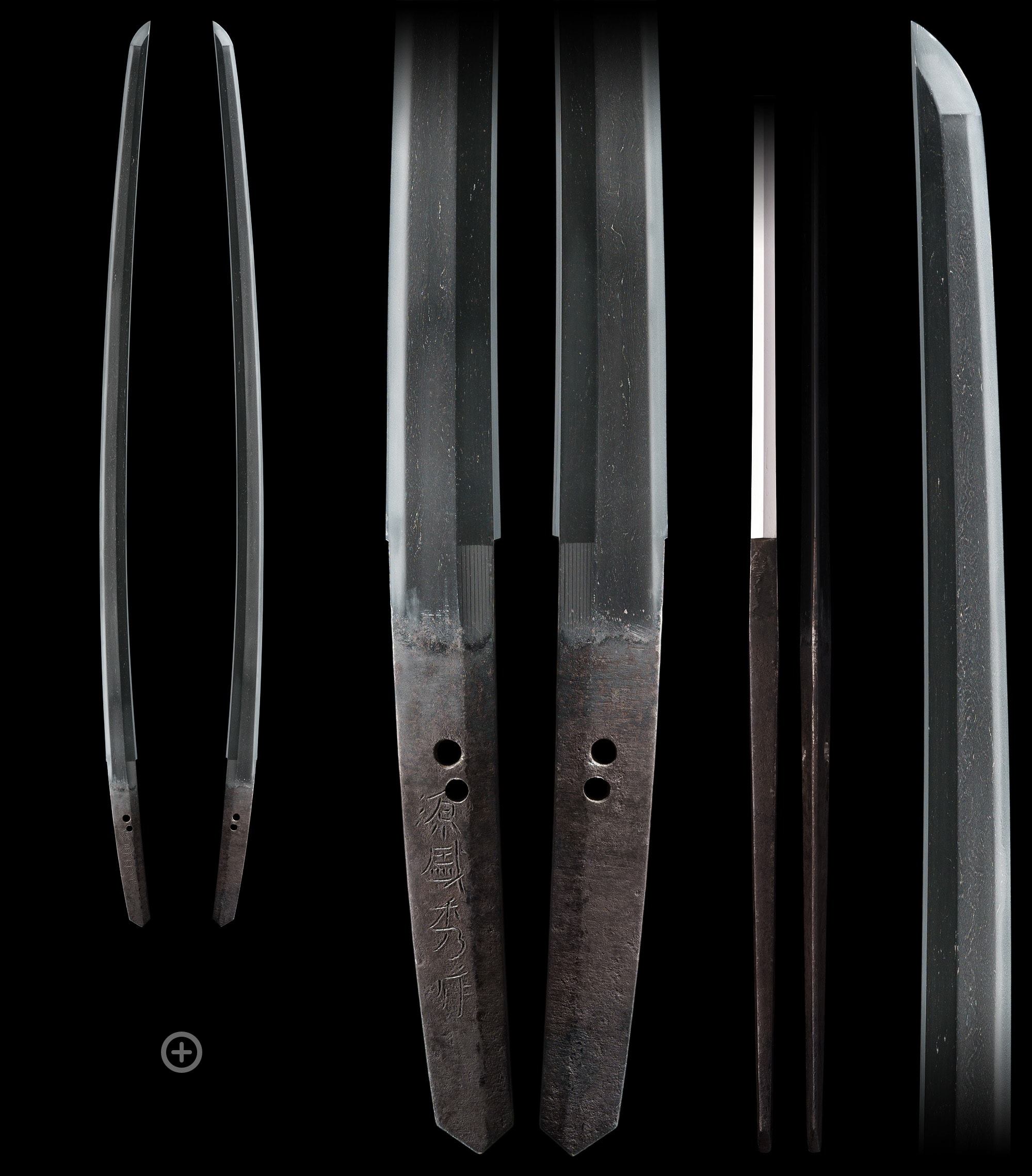
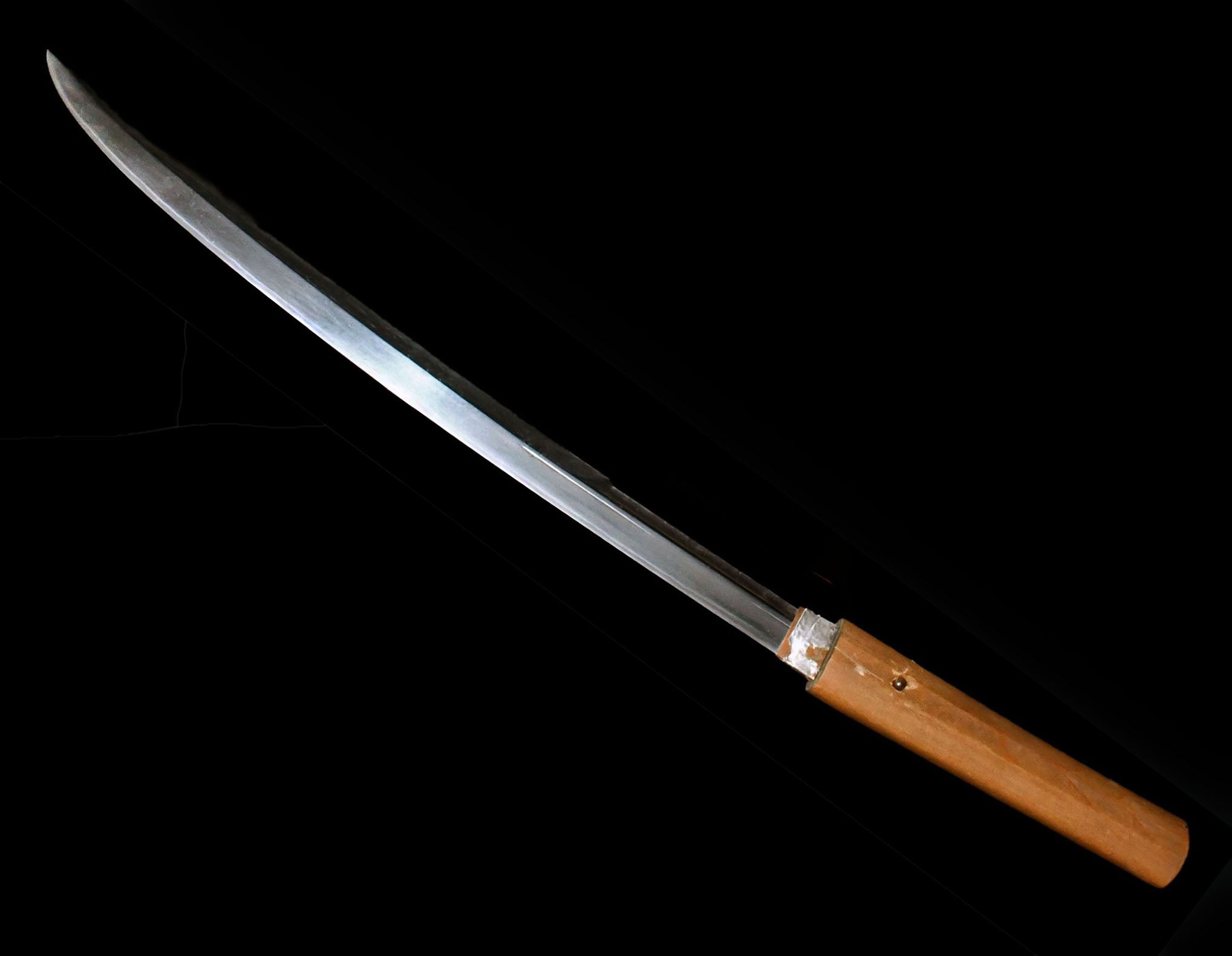
Reizei Sadamori worked in during the period, and the firmest anchor for his name is a single small , signed and dated on the tang "Chikushu Reizei Sadamori, a day in the first month of Shohei 25" (筑州冷泉貞盛 正平廿五一月日), that is, the year 1370. The published sources return to this one blade in nearly every entry on the smith, because signed work by him is so rare that the dated has become the touchstone against which every other attribution is measured. They place him within the Kongobyoe line, traced back to the first-generation Kongobyoe Moritaka, and set him beside the school as the second of the two groups then forging in the province. What separates his line from the more famous school, the published sources say, is temperament: his is read as a Yamato hand carried into Kyushu steel.

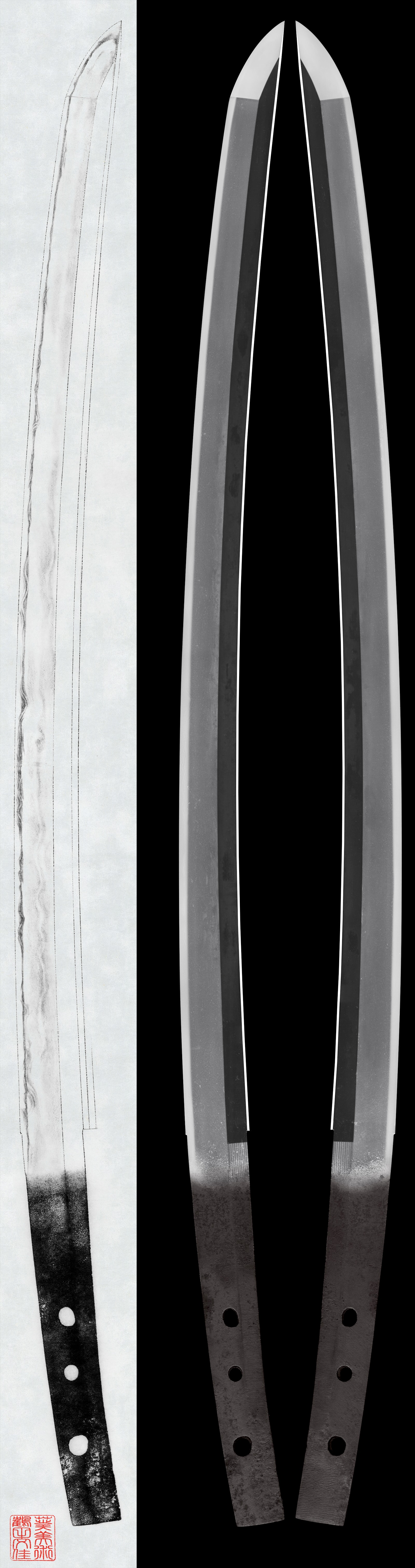
The greater part of his record is not signed at all. It consists of , broad of body, thin in the , with an extended , the shape of a long blade cut down and judged to his hand. Over these the is an that flows and leans toward , especially toward the edge, the grain standing, with adhering thickly and entering frequently; the steel takes a clouded, blackish , and a faint whitish stands in the surface. Over that he tempers a low, narrow , the tight, with , fine , and a tendency to near the , and running thinly within. The goes straight to a small with at the point, at times finishing in . This restrained, austere manner, not flamboyance, is the published sources' named point of interest in his work.

The is the constant of the attribution. The flowing, -inclined steel, the standing grain, the dark and the whitish recur on blade after blade, and it is from these that the judges read his Yamato temperament. The published commentary calls the Kyushu coloration strongly present in his work, describing one as a richly flavored piece "in which the coloration characteristic of Kyushu swords is strongly expressed" (九州物の色彩が色濃く表示されており). The sources are candid about the difficulty of the reading: on one shortened blade they note that such Yamato features also appear in works like , yet conclude that "from the standing texture of the , the appraisal to Reizei Sadamori is the superior one" (肌立った地がねから、 冷泉貞盛の鑑定は一段とまさるものがある). The narrow and the dark, standing together carry the name where no signature remains.

Against this quiet standard stand his few signed blades, which break the pattern. The signed "Reizei Sadamori, resident of Chikushu" and the signed simply "Sadamori" abandon the narrow for a mixed with and , wider in the temper, with and entering, , abundant and , and a with strong . The published sources draw the distinction within his own work explicitly: of the signed they observe that, "unlike the style of the Shohei 25 dated piece" (正平廿五年紀の作とは異なり), it shows a wider temper combining into a broader , a richly varied workmanship. The smith thus worked in more than one manner, and the signed examples, precisely because they depart from the standard, are prized for the study of his range.

What sets him apart is therefore named by the judges themselves rather than borrowed from a neighbor. He is read against the school by lineage and against the wider Yamato tradition by province: his bright, dark, -inclined , his tight low , and the Kyushu cast of his steel are the features the published sources name as his own, and the dated is the document that holds them together. Within the Kongobyoe and Reizei line his is the name the school's shortened, unsigned most often carry, judged to him from that one dated standard, from the era, and from the manner of the group, the commentary cautioning on some blades that there is no decisive proof the hand must be his while still affirming the appraisal from the Yamato-toned and the narrow edge.

For the collector he is a thinly recorded but genuine name, valued for documentary weight as much as for display. He has no National Treasures and no Important Cultural Properties; his record runs instead through one and a score of blades, with the Shohei 25 dated and a recognized in the prewar Bijutsuhin. Provenance is sparsely recorded, held in private hands rather than institutions, the dated once in the Koizumi collection and the early Sadamori with Morotomi Yoshio of Fukuoka. Most of his blades are the of the tier, and these come to light only from time to time; a signed Reizei Sadamori is rarer still, and one of the published sources calls the signed a precious work "by which the range of the seldom-signed Reizei Sadamori may be apprehended." A privately held example, signed or , is a document of how a Yamato hand worked in , and a thing a collector encounters seldom.

Kantei

one Kongo-Hyoe hand in two registers grounded by a single dated standard: the prevailing o-suriage mumei katana in a low, narrow Yamato-toned suguha over a flowing itame-masame jigane with blackish kanairo and whitish utsuri, set against the few ubu signed blades that break into a wider notare-gunome with sunagashi and a midare-komi boshi

Reizei Sadamori is a -period smith of the Kongo-Hyoe line, set by the published sources beside the school as the second of the two groups working in the province; his hand is read as carrying a Yamato temperament into Kyushu steel. His recognized standard is a single signed and dated , the Chikushu Reizei Sadamori piece dated Shohei 25, which the sources treat as the touchstone for the attribution, since signed work is exceedingly rare and most of his record survives as judged to him. The typical work is a flowing and , the grain standing, with , frequent , a faint whitish and a clouded, blackish , over which he tempers a low, narrow with a tight , fine , and kinzuji along the edge, the straight to a with . Against this quiet standard stand his few signed blades, which break from the into a mixed with , wider in temper, with abundant and a , a second manner the published sources note is unlike the Shohei-25 dated work.

Diagnostic discriminators

unique vs his own signed blades (notare-gunome, not suguha)

shared with his Kongo-Hyoe line

Kyushu coloration of his steel

Observation by phase

The o-suriage mumei suguha katana (his typical work)

The body of his record is the attributed to him, the shape preserved in shortening: wide in body or of standard width, the often thin, the an extended , several keeping a deep . The is an that flows and tends to , especially toward the edge, the grain standing, with thickly adhering and entering frequently; the is clouded and blackish and a faint whitish stands, with patches of on some. Over it the temper is a low, narrow with the tight, adhering, fine , and a tendency to near the , with and kinzuji running thinly within. The is straight to a , the point showing , at times finishing in . Most carry a or carved through. The published sources read a Yamato temperament in both and and call this the point of interest of the smith, affirming the attributions from the dated standard, the era and the school rather than from a personal tell.

Sugata 姿
Jigane 地鉄
Hamon 刃文
Bōshi 帽子

The ubu signed blades (the wider notare register)

His few signed pieces form a second register the published sources mark off from the dated standard. They are and small, a signed Reizei Sadamori, resident of Chikushu, and a signed Sadamori, both wide in body with comparatively deep , the slightly elongated and without curvature. Over an mixed with , strongly flowing and -inclined, the grain standing, with , , a blackish whitish and , the temper here is not the narrow but a mixed with and , wider in width, with and entering, , abundant and kinzuji, and showing . The enters , the with strong , turning back in a long . The carries a - worked in a manner and in takekurabe, the a . The Shohei-25 remains the dated standard against which these are read; the sources note this wider manner is unlike that dated work and prize the signed examples for their documentary value.

Sugata 姿
Jigane 地鉄
Hamon 刃文
Bōshi 帽子
Scholarship

The published sources name the dated tanto, Chikushu Reizei Sadamori, Shohei 25, first month, as the indispensable touchstone for the attribution, since signed work is exceedingly rare; from it the mumei katana are judged by their Yamato-toned ji and tight narrow suguha. On one shortened blade the sources caution that such features also appear in works like Mihara, but hold that the standing texture of the jigane makes the appraisal to Reizei Sadamori the superior reading.

On the Juyo 68 signed tanto the published sources distinguish his own work from itself, noting that this wider notare mixed with gunome is unlike the Shohei-25 dated piece, evidence that the smith worked in more than one manner and a reason the signed examples are prized for study.

Designations

Kokuhō—
Jūyō Bunkazai—
Jūyō Bijutsuhin2
Gyobutsu—
Tokubetsu Jūyō1
Jūyō Tōken21

Elite Standing

0.17 across 24 designated works

Top 13% among smiths

Provenance

2 documented provenances across certified works by Sadamori

Provenance Standing

0 works held in elite collections across 2 documented provenances

Top 48% among smiths

Raw score: 2.00 / 10

Blade Forms

Distribution across 24 ranked works

Tachi
14%

Signatures

Signature types across 24 ranked works

Currently Available

Kongobyoe School

Other artisans of the Kongobyoe school

  1. 1.Morimasa盛匡1designated
  2. 2.Moritoshi盛利1designated
  3. 3.Moritaka盛高2designated