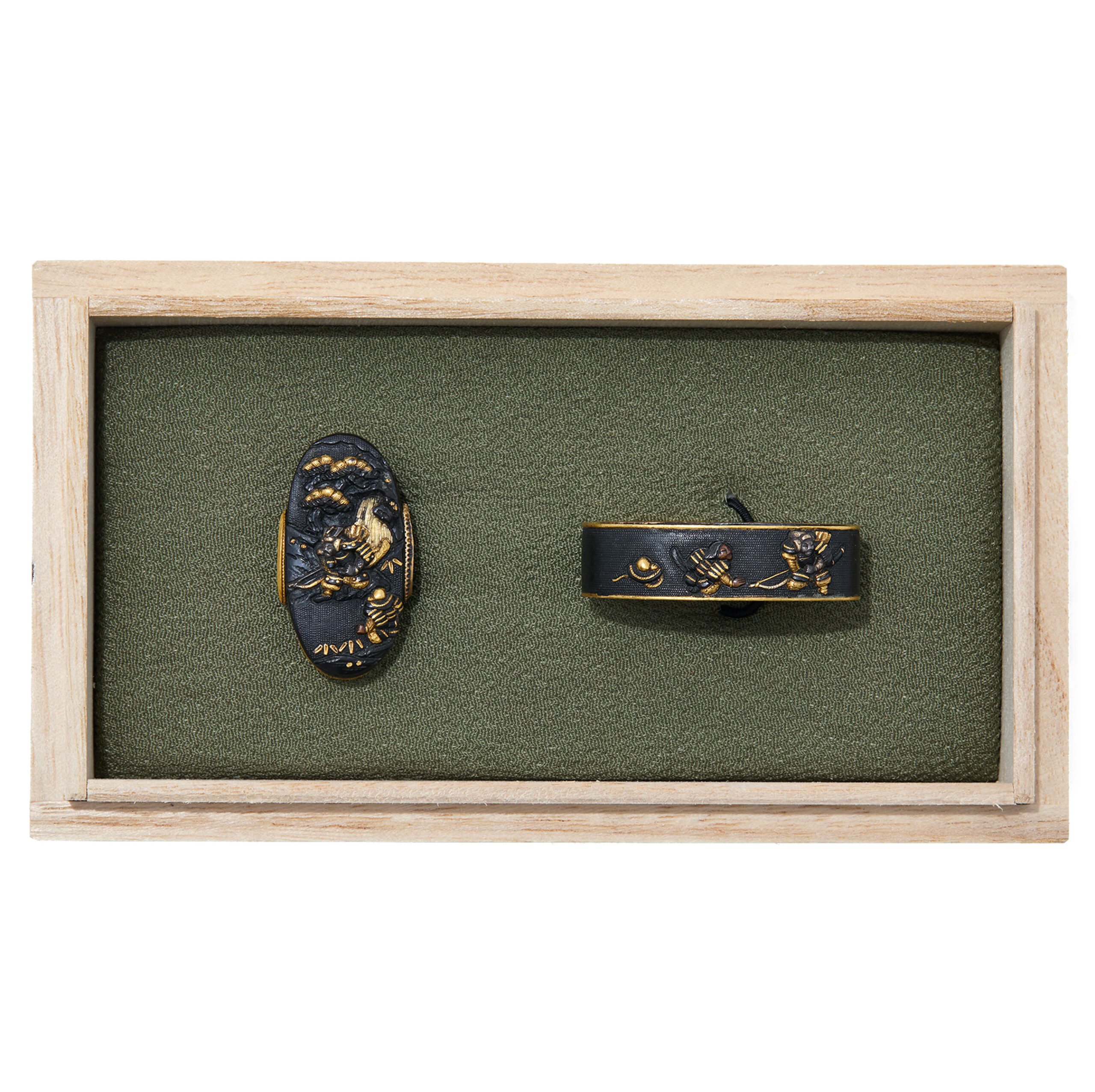
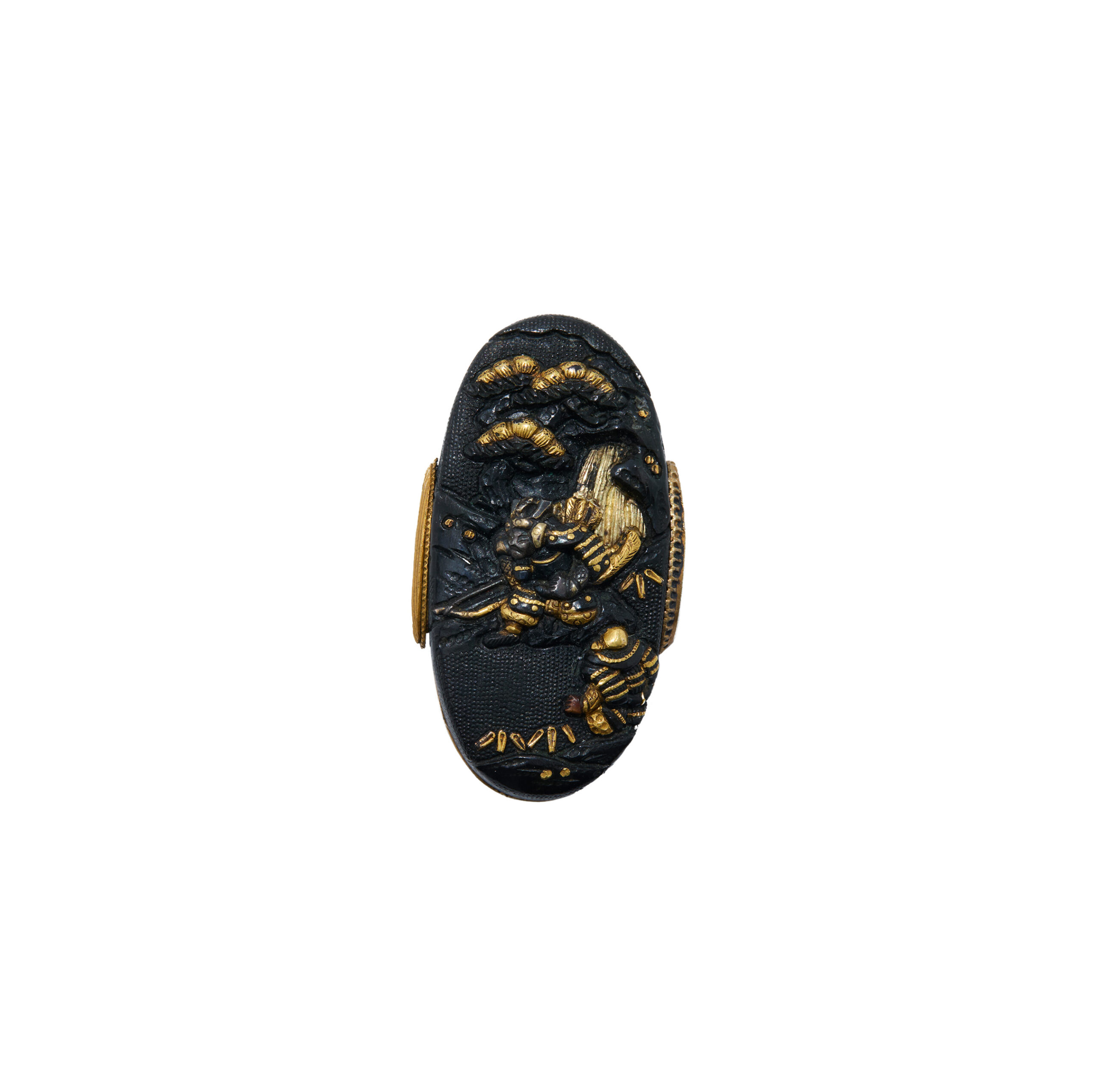
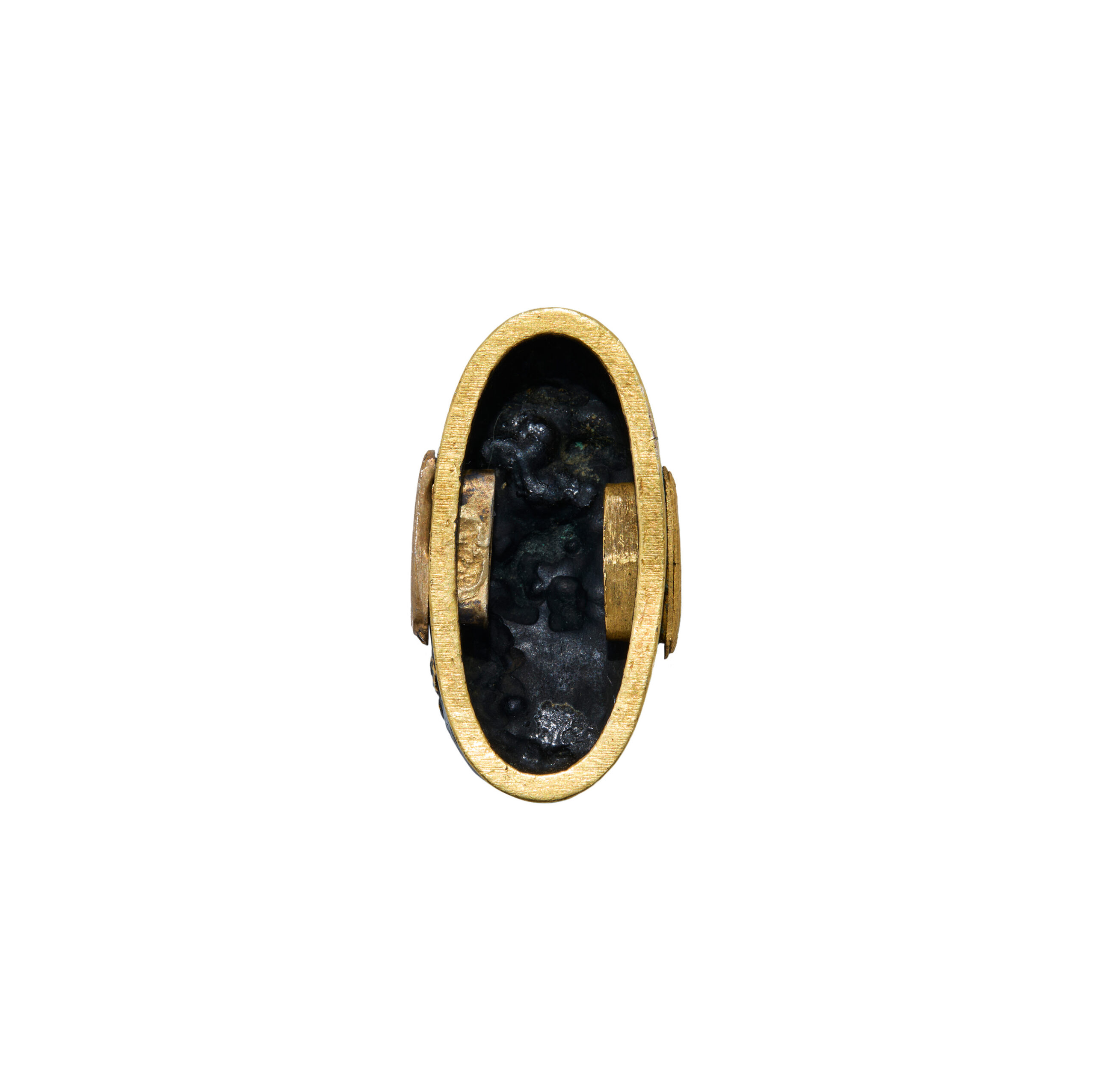
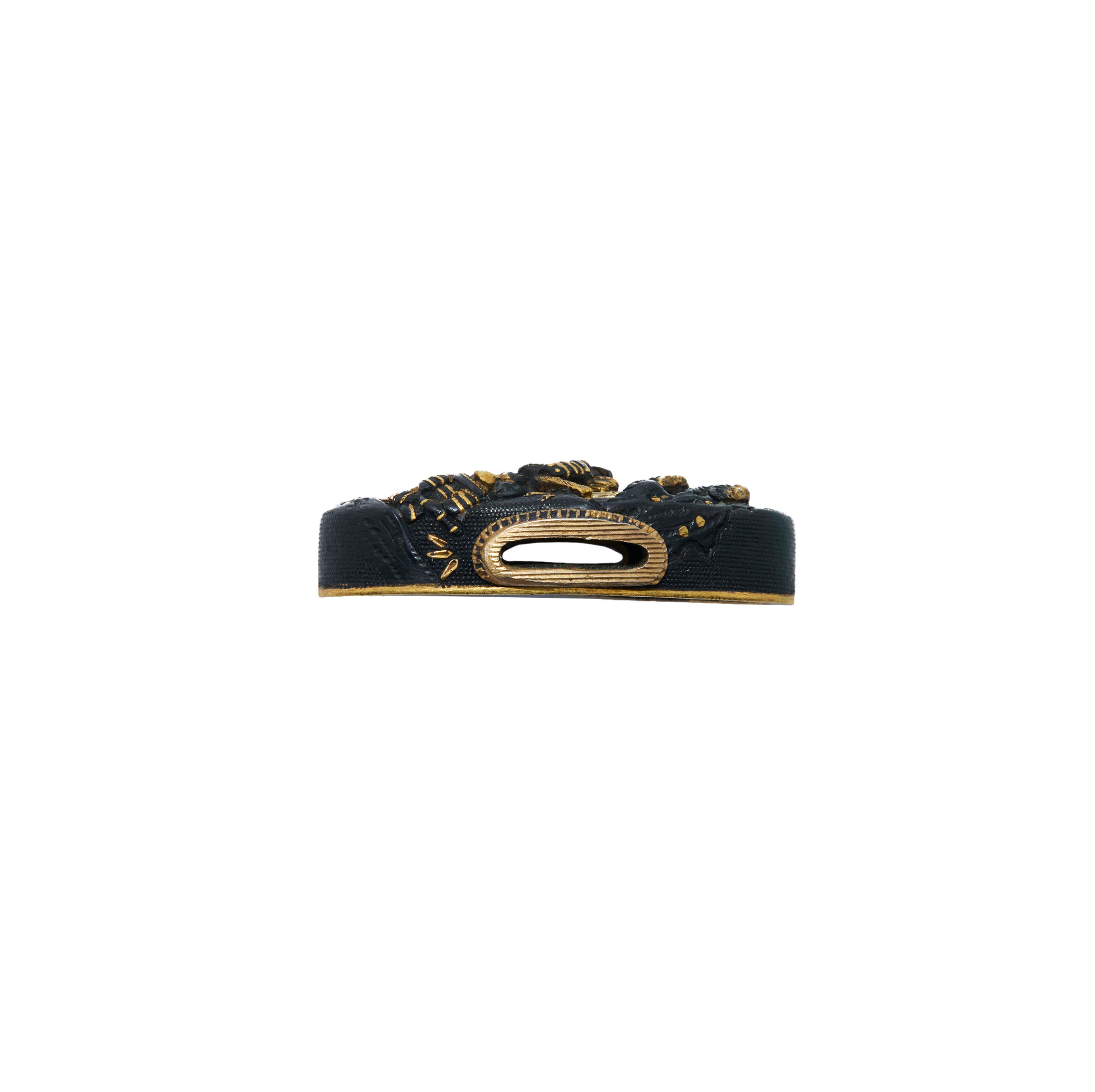
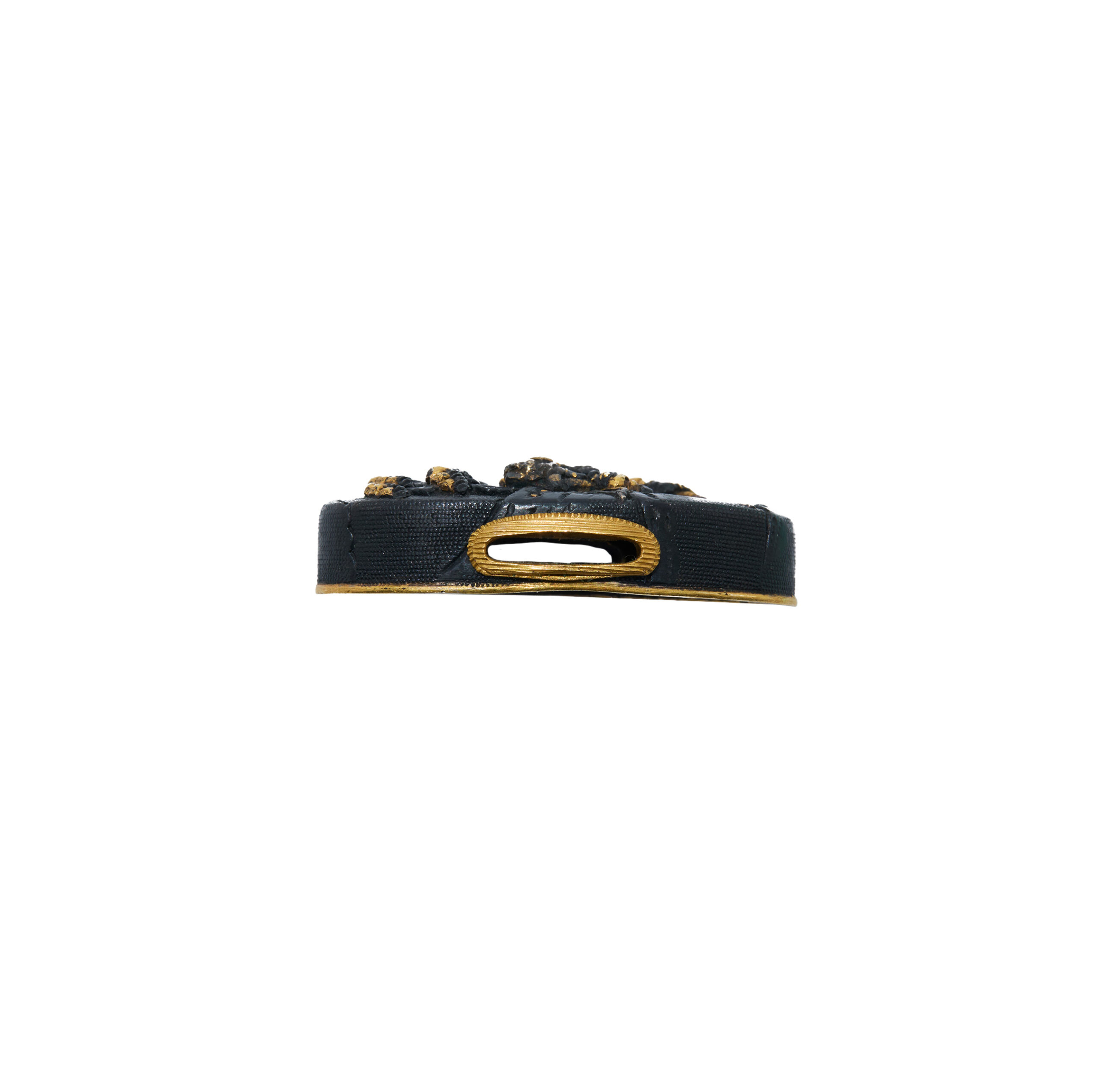
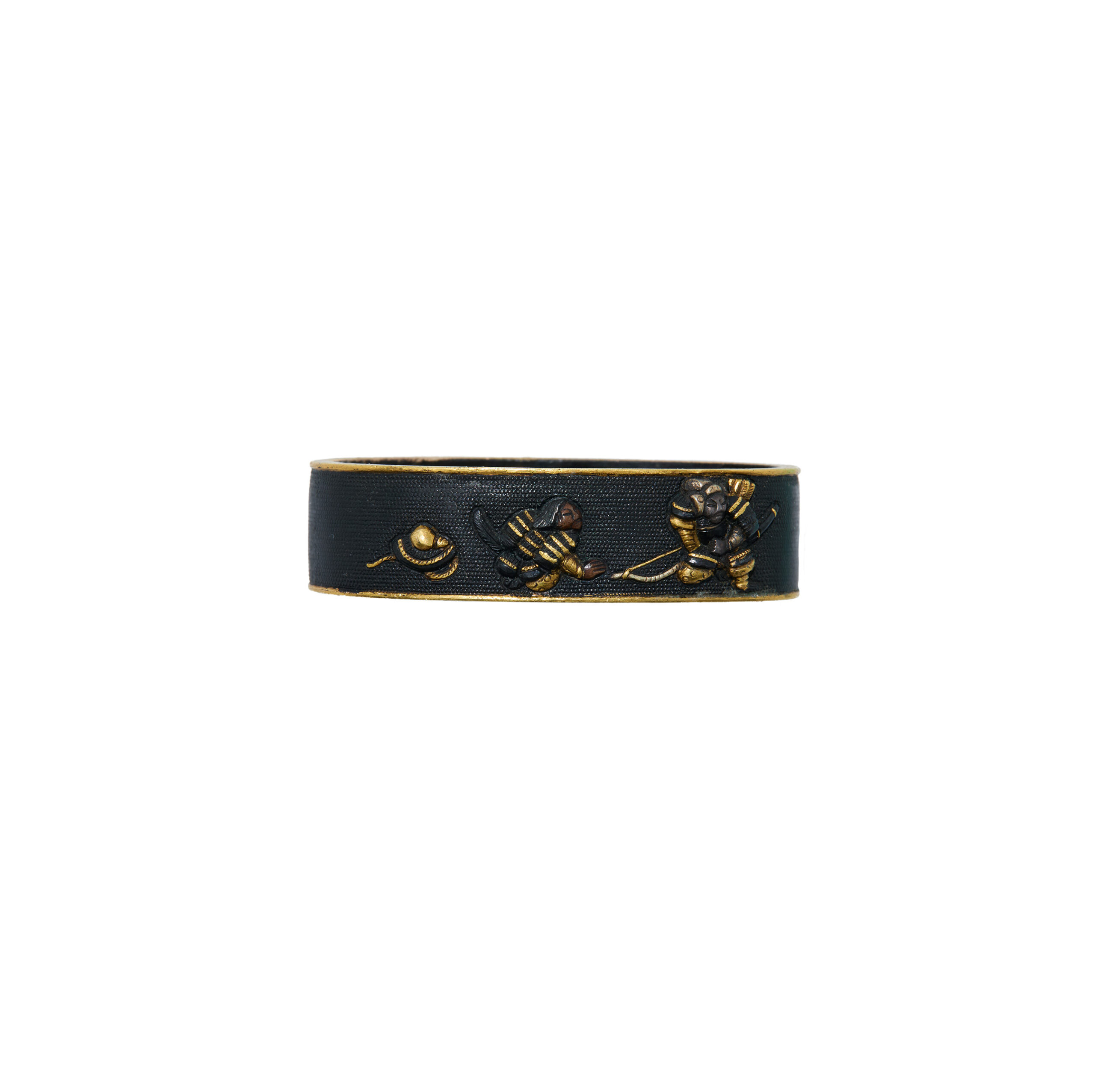
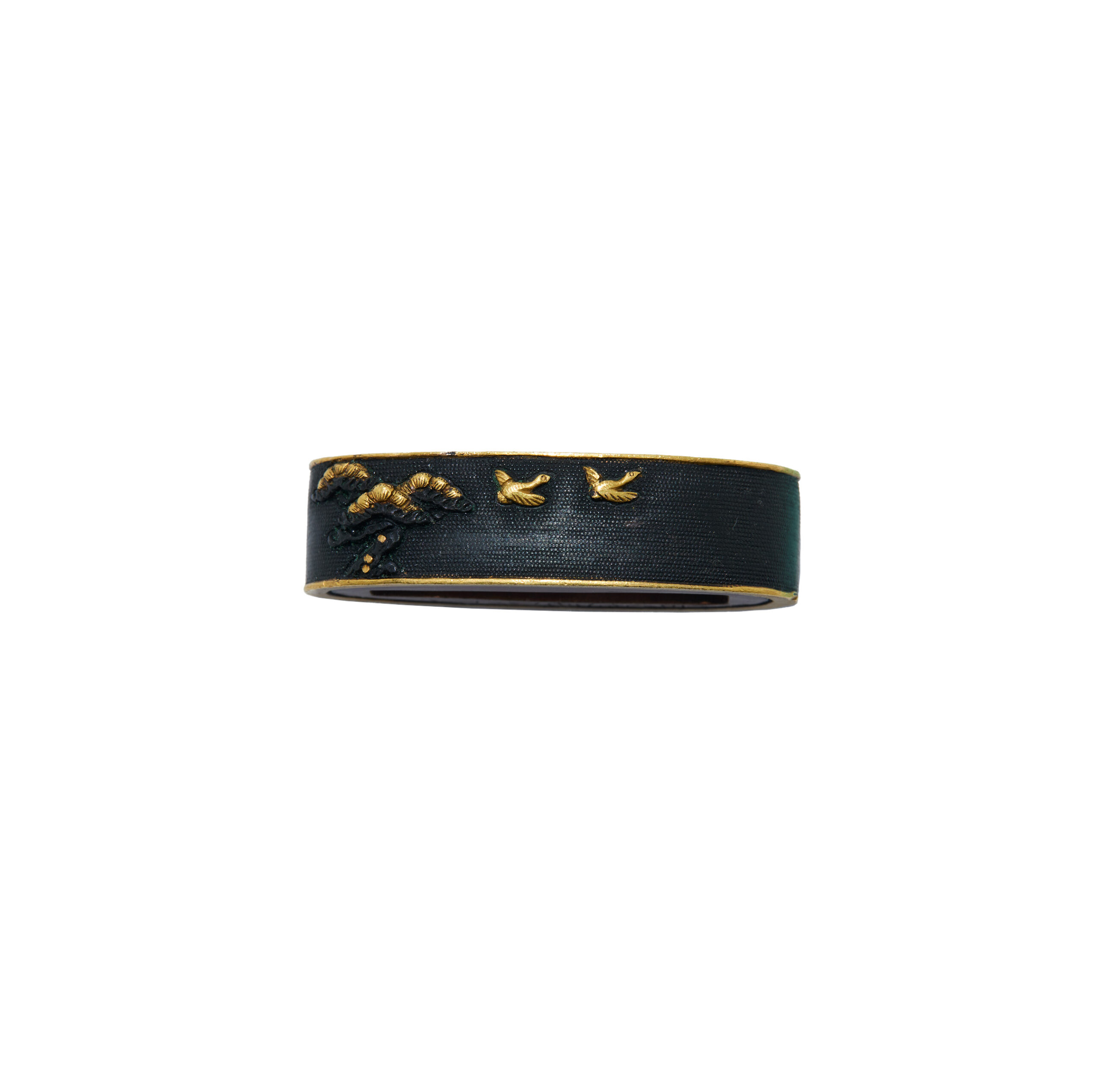
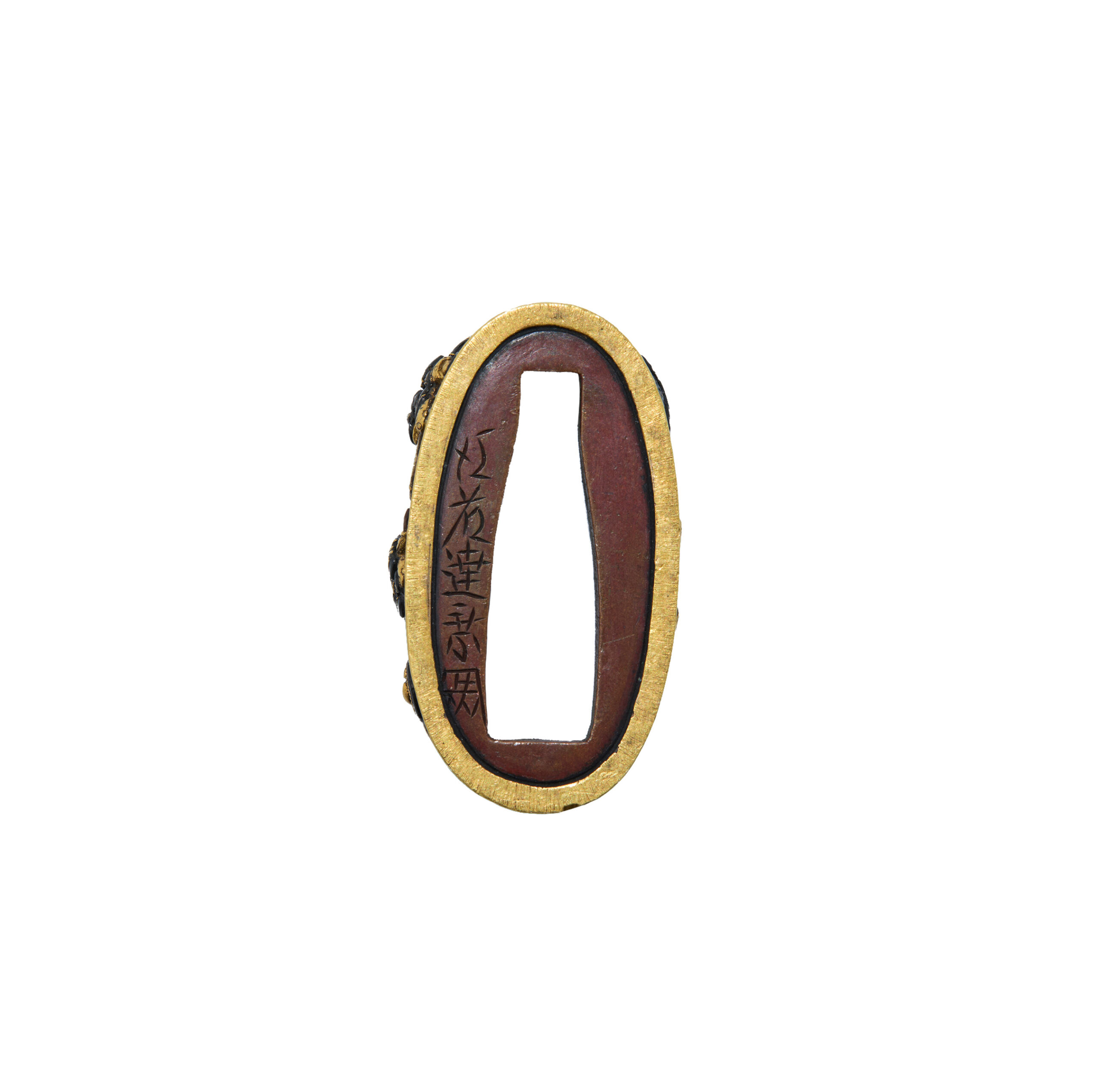
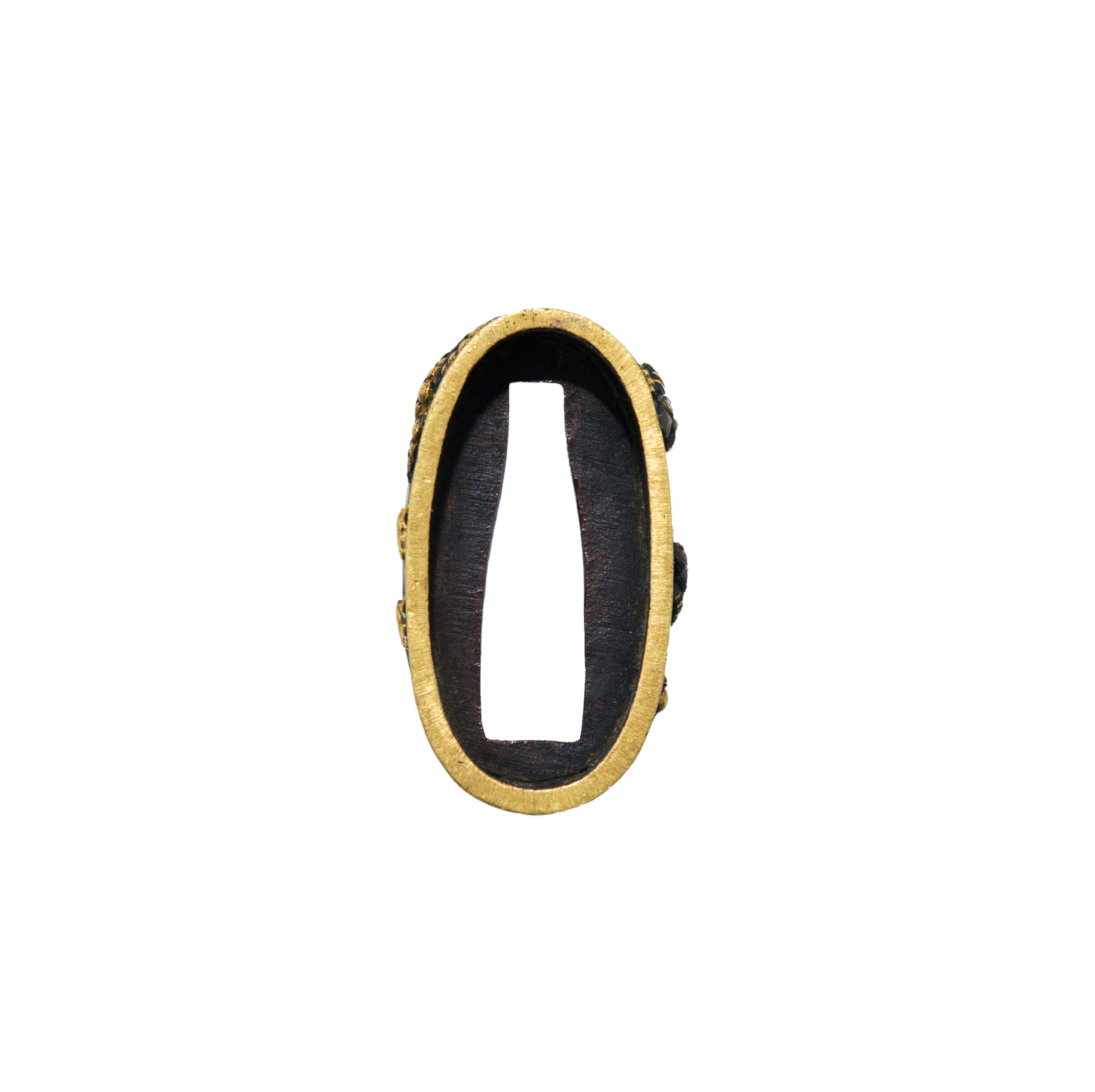
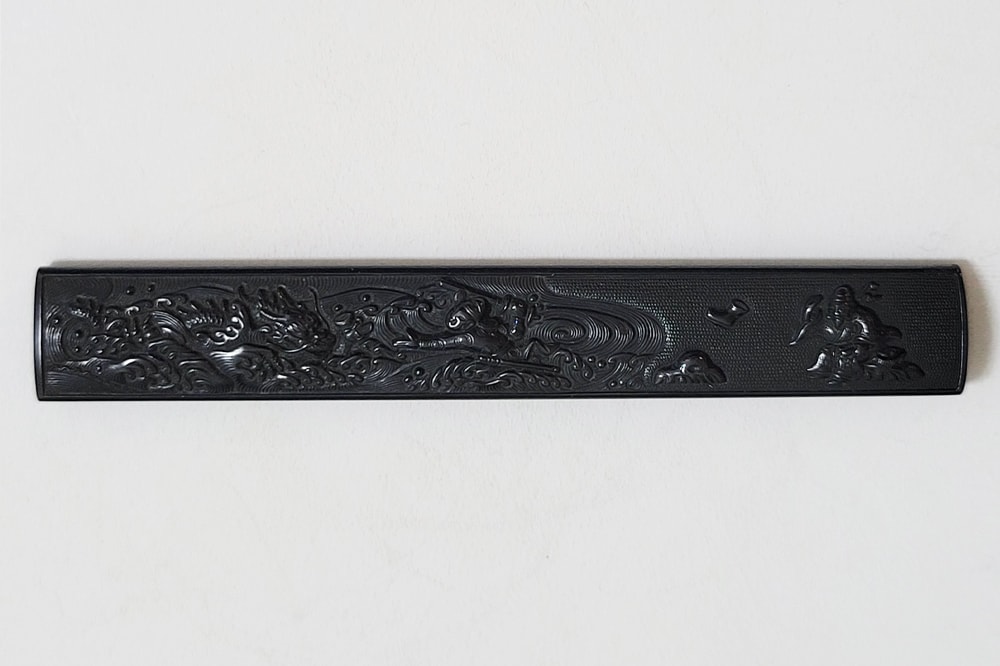
演目:合戦図 【解説】 本作の縁頭は、武士たちの勇壮な姿を描いた「合戦図」を主題としています。 甲冑に身を包み、腰に刀を差し、あるいは弓を手にし、背に箙(えびら)を背負った武者たちの躍動感あふれる姿が、緻密に彫り込まれた松の木を背景に鮮やかに表現されています。日本の文化において、常緑の松は「不変」「長寿」「名誉」の象徴であり、勇猛な武士の姿を彩るにふさわしい意匠といえます。 地金には伝統的な装飾技法である「魚々子地(ななこじ)」が施されています。これは小さな鏨(たがね)を用いて、金属の表面に無数の微細な粒を均一に打ち出す技法です。この丹念な手仕事により、洗練された煌めきと質感が生まれ、高彫りの意匠にさらなる奥行きとコントラストを与えています。 ※アンティーク品につき、状態については各写真にて詳細をご確認ください。 【縁頭(ふちがしら)とは】 縁頭は日本刀の柄(つか)の強度を高めるための金具です。柄の鍔側に装着する「縁(ふち)」と、柄の先端に被せる「頭(かしら)」の二つで一組となります。実用的な補強具としてだけでなく、日本刀を飾る美術品としても発展を遂げました。 【刀装具が武士にとって重要であった理由】 日本刀の外装(拵)には、鍔、目貫、縁頭など、多種多様な装飾が施されています。日本刀は武器であると同時に、持ち主の身分や人格、信念を象徴するものでもありました。現代で例えるなら、スマートフォンの装飾に近い感覚かもしれません。 ぜひ、写真を拡大してご覧ください。そこには鉄や銅、金、銀、四分一(しぶいち)などを用いた、日本の卓越した金工技術が凝縮されています。刀本体と共に時代を歩んできたこれらの装飾品は、刀剣そのものに匹敵する価値を持つこともあります。一見、目立たない細部ではありますが、こうした細部にまでこだわりを持つことこそが、真の「侍」の嗜みであり、目利きへの第一歩といえるでしょう。 【運営元について】 サムライミュージアムは東京に位置し、侍の歴史に関する古美術品を展示しています。当オンラインショップでは、日本文化や職人技に興味をお持ちの方へ向けて、刀剣、甲冑、伝統工芸品などを取り扱っております。 【お支払い方法】 Stripe(クレジットカード)、PayPal、Apple Pay、Google Payをご利用いただけます。いずれも安全な決済方法です。Stripeでの決済にはアカウント作成は不要です。その他の決済方法をご希望の場合はお問い合わせください。 日本円(JPY)のほか、米ドル(USD)、豪ドル(AUD)、加ドル(CAD)、ユーロ(EUR)、スイスフラン(CHF)、英ポンド(GBP)での決済が可能です。価格は日本円を基準とし、最新のレートで自動計算されます。 【配送について】 通常、日本郵便のEMS(国際スピード郵便)にて発送いたします。ご注文からお届けまで、通常5日〜14日ほど要します。配送日数は目安であり、天候や繁忙期、税関の状況により前後する場合がございます。 EMSでの発送が可能な地域については、送料無料で承ります。他の配送業者をご希望の場合は、事前にお問い合わせください。 発送後、追跡番号をメールにてお知らせいたします。メールアドレスに誤りがないかご確認ください。 ※社会情勢等により配送に遅延が生じる場合がございます。お住まいの国への配送可否については、お気軽にお問い合わせください。 【状態の確認方法について】 本品はアンティーク品(骨董品)です。状態を詳細にご確認いただけるよう、高解像度の写真を掲載しております。追加の写真をご希望の場合は、お気軽にご連絡ください。
 NihontoWatch
江戸
在銘
家彫 · 山城
現在325点販売中
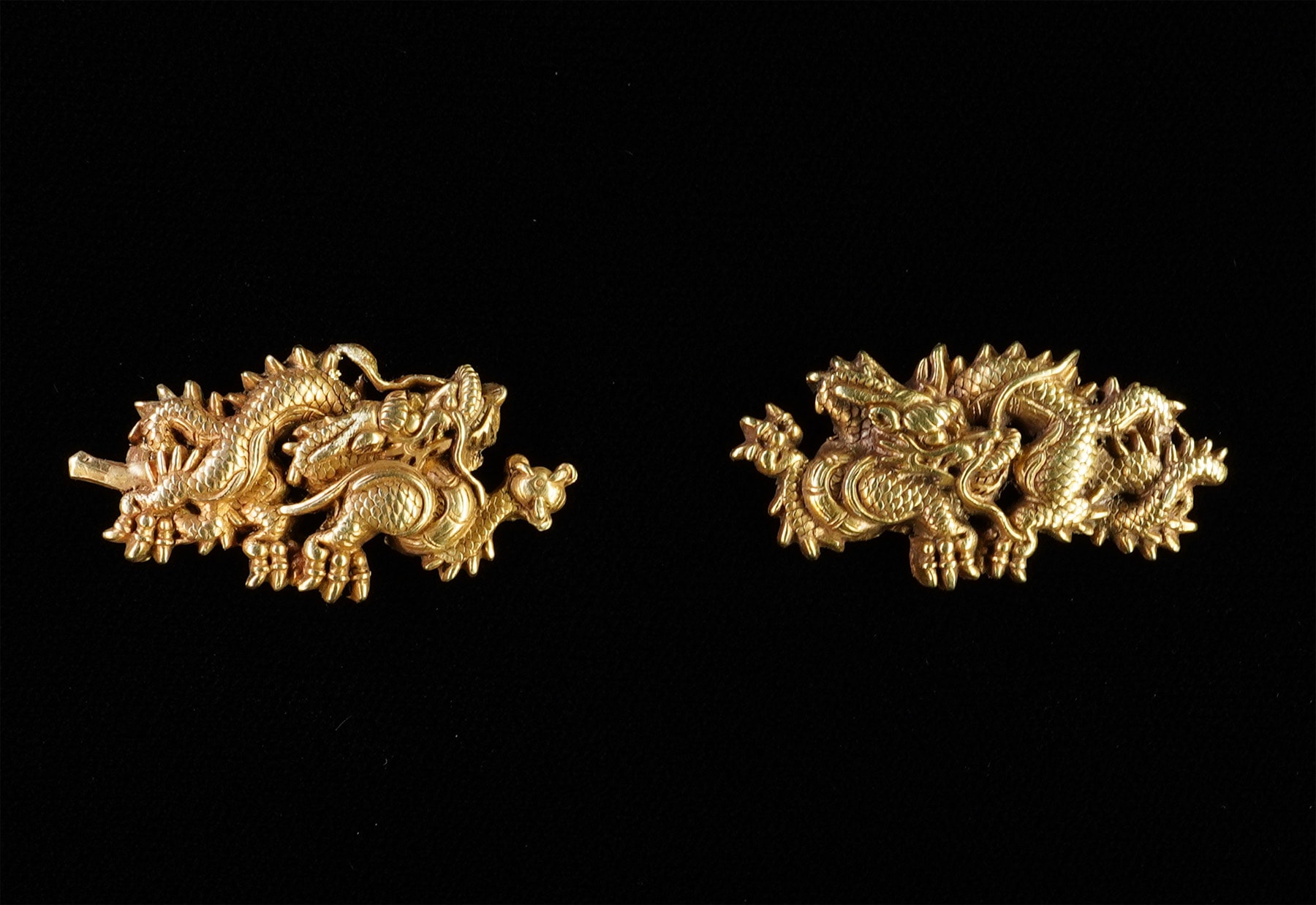
後藤派は、室町時代中期に初代祐乗が将軍足利義政に仕えて創始した彫金の宗家であり、「日本彫物の元祖」と仰がれ、「古今独歩の鏨師」と賞賛される祐乗を祖として十五代にわたり嫡流の技を継承した。祐乗の作品は東山御物として数多く取り上げられ、後世に名を残した名工は挙って後藤家の祐乗に範をとっている。四代光乗・五代徳乗は織田信長、次いで豊臣秀吉に仕え、大判・分銅・彫物の三役を担い、桃山時代の豪華美を格調高く表示した。幕末には一乗が「後藤家の掉尾を飾る名工」として家風を大成し、門下の荒木東明・中川一勝らが一派の技を継承した。 後藤派の作域は三所物・縁頭・鐔・揃金具と多岐にわたり、赤銅魚子地を基調とした高彫金色絵を家風の根幹とする。金紋裏哺金仕立の小柄笄、金無垢地容彫の目貫など、素材と技法の選択に一貫した格式が認められる。三代乗真は「大振りで力強く、量感の豊かな彫技」[[c:1]]を特徴とし、紋の肉取りが豊かで鏨使いが手強く、赤銅の色相も漆黒で麗わしい。桃山期の作には鋤出高彫に金・銀・素銅の象嵌色絵を駆使した豪華絢爛の大名道具が見られ、近世には四分一磨地や朧銀地に甲鋤毛彫・平象嵌を組み合わせた多彩な表現も展開された。龍・獅子・鶏・犀・鯰といった動物意匠から、松竹梅・桐紋・粟穂・四季草花に至るまで画題は広範であり、各代が武家好みの吉祥意匠を格調高く仕上げている。 後藤派に帰せられる作品には「気品があって格調が高く」[[c:2]]「力漲る」と評される一貫した品格が通底する。歴代の折紙制度によって初代祐乗以来の作が厳格に鑑定・伝承され、「家彫の誇りは確実に後代に伝わっている」[[c:3]]と繰り返し認められる。後藤流に熟達した門弟の作が「後藤家御家彫と見紛うまでの出来」[[c:4]]と称されることからも、その規範性の高さが窺える。日本金工史において、後藤派は赤銅魚子地高彫金色絵という技法体系を確立し、室町から明治に至る四百余年の間、彫金の最高規範として君臨した一門である。 詳しく見る →
販売店の出品ページで鑑定書を確認できませんでした。日本刀および刀装具は通常、NBTHK(または NTHK)の鑑定を受けます。鑑定書がない場合、極めは販売店の見解にとどまり、第三者による確認は行われていません。ご購入前に販売店へ鑑定書の有無をお問い合わせのうえ、慎重にご判断ください。
Returns/exchanges limited to defects caused by shipping (except willful misconduct or gross negligence by the company); customers must contact within 72 hours of receiving the product.
演目:合戦図 【解説】 本作の縁頭は、武士たちの勇壮な姿を描いた「合戦図」を主題としています。 甲冑に身を包み、腰に刀を差し、あるいは弓を手にし、背に箙(えびら)を背負った武者たちの躍動感あふれる姿が、緻密に彫り込まれた松の木を背景に鮮やかに表現されています。日本の文化において、常緑の松は「不変」「長寿」「名誉」の象徴であり、勇猛な武士の姿を彩るにふさわしい意匠といえます。 地金には伝統的な装飾技法である「魚々子地(ななこじ)」が施されています。これは小さな鏨(たがね)を用いて、金属の表面に無数の微細な粒を均一に打ち出す技法です。この丹念な手仕事により、洗練された煌めきと質感が生まれ、高彫りの意匠にさらなる奥行きとコントラストを与えています。 ※アンティーク品につき、状態については各写真にて詳細をご確認ください。 【縁頭(ふちがしら)とは】 縁頭は日本刀の柄(つか)の強度を高めるための金具です。柄の鍔側に装着する「縁(ふち)」と、柄の先端に被せる「頭(かしら)」の二つで一組となります。実用的な補強具としてだけでなく、日本刀を飾る美術品としても発展を遂げました。 【刀装具が武士にとって重要であった理由】 日本刀の外装(拵)には、鍔、目貫、縁頭など、多種多様な装飾が施されています。日本刀は武器であると同時に、持ち主の身分や人格、信念を象徴するものでもありました。現代で例えるなら、スマートフォンの装飾に近い感覚かもしれません。 ぜひ、写真を拡大してご覧ください。そこには鉄や銅、金、銀、四分一(しぶいち)などを用いた、日本の卓越した金工技術が凝縮されています。刀本体と共に時代を歩んできたこれらの装飾品は、刀剣そのものに匹敵する価値を持つこともあります。一見、目立たない細部ではありますが、こうした細部にまでこだわりを持つことこそが、真の「侍」の嗜みであり、目利きへの第一歩といえるでしょう。 【運営元について】 サムライミュージアムは東京に位置し、侍の歴史に関する古美術品を展示しています。当オンラインショップでは、日本文化や職人技に興味をお持ちの方へ向けて、刀剣、甲冑、伝統工芸品などを取り扱っております。 【お支払い方法】 Stripe(クレジットカード)、PayPal、Apple Pay、Google Payをご利用いただけます。いずれも安全な決済方法です。Stripeでの決済にはアカウント作成は不要です。その他の決済方法をご希望の場合はお問い合わせください。 日本円(JPY)のほか、米ドル(USD)、豪ドル(AUD)、加ドル(CAD)、ユーロ(EUR)、スイスフラン(CHF)、英ポンド(GBP)での決済が可能です。価格は日本円を基準とし、最新のレートで自動計算されます。 【配送について】 通常、日本郵便のEMS(国際スピード郵便)にて発送いたします。ご注文からお届けまで、通常5日〜14日ほど要します。配送日数は目安であり、天候や繁忙期、税関の状況により前後する場合がございます。 EMSでの発送が可能な地域については、送料無料で承ります。他の配送業者をご希望の場合は、事前にお問い合わせください。 発送後、追跡番号をメールにてお知らせいたします。メールアドレスに誤りがないかご確認ください。 ※社会情勢等により配送に遅延が生じる場合がございます。お住まいの国への配送可否については、お気軽にお問い合わせください。 【状態の確認方法について】 本品はアンティーク品(骨董品)です。状態を詳細にご確認いただけるよう、高解像度の写真を掲載しております。追加の写真をご希望の場合は、お気軽にご連絡ください。
NihontoWatch江戸
在銘
家彫 · 山城
現在325点販売中
後藤派は、室町時代中期に初代祐乗が将軍足利義政に仕えて創始した彫金の宗家であり、「日本彫物の元祖」と仰がれ、「古今独歩の鏨師」と賞賛される祐乗を祖として十五代にわたり嫡流の技を継承した。祐乗の作品は東山御物として数多く取り上げられ、後世に名を残した名工は挙って後藤家の祐乗に範をとっている。四代光乗・五代徳乗は織田信長、次いで豊臣秀吉に仕え、大判・分銅・彫物の三役を担い、桃山時代の豪華美を格調高く表示した。幕末には一乗が「後藤家の掉尾を飾る名工」として家風を大成し、門下の荒木東明・中川一勝らが一派の技を継承した。 後藤派の作域は三所物・縁頭・鐔・揃金具と多岐にわたり、赤銅魚子地を基調とした高彫金色絵を家風の根幹とする。金紋裏哺金仕立の小柄笄、金無垢地容彫の目貫など、素材と技法の選択に一貫した格式が認められる。三代乗真は「大振りで力強く、量感の豊かな彫技」[[c:1]]を特徴とし、紋の肉取りが豊かで鏨使いが手強く、赤銅の色相も漆黒で麗わしい。桃山期の作には鋤出高彫に金・銀・素銅の象嵌色絵を駆使した豪華絢爛の大名道具が見られ、近世には四分一磨地や朧銀地に甲鋤毛彫・平象嵌を組み合わせた多彩な表現も展開された。龍・獅子・鶏・犀・鯰といった動物意匠から、松竹梅・桐紋・粟穂・四季草花に至るまで画題は広範であり、各代が武家好みの吉祥意匠を格調高く仕上げている。 後藤派に帰せられる作品には「気品があって格調が高く」[[c:2]]「力漲る」と評される一貫した品格が通底する。歴代の折紙制度によって初代祐乗以来の作が厳格に鑑定・伝承され、「家彫の誇りは確実に後代に伝わっている」[[c:3]]と繰り返し認められる。後藤流に熟達した門弟の作が「後藤家御家彫と見紛うまでの出来」[[c:4]]と称されることからも、その規範性の高さが窺える。日本金工史において、後藤派は赤銅魚子地高彫金色絵という技法体系を確立し、室町から明治に至る四百余年の間、彫金の最高規範として君臨した一門である。 詳しく見る →
販売店の出品ページで鑑定書を確認できませんでした。日本刀および刀装具は通常、NBTHK(または NTHK)の鑑定を受けます。鑑定書がない場合、極めは販売店の見解にとどまり、第三者による確認は行われていません。ご購入前に販売店へ鑑定書の有無をお問い合わせのうえ、慎重にご判断ください。
Returns/exchanges limited to defects caused by shipping (except willful misconduct or gross negligence by the company); customers must contact within 72 hours of receiving the product.
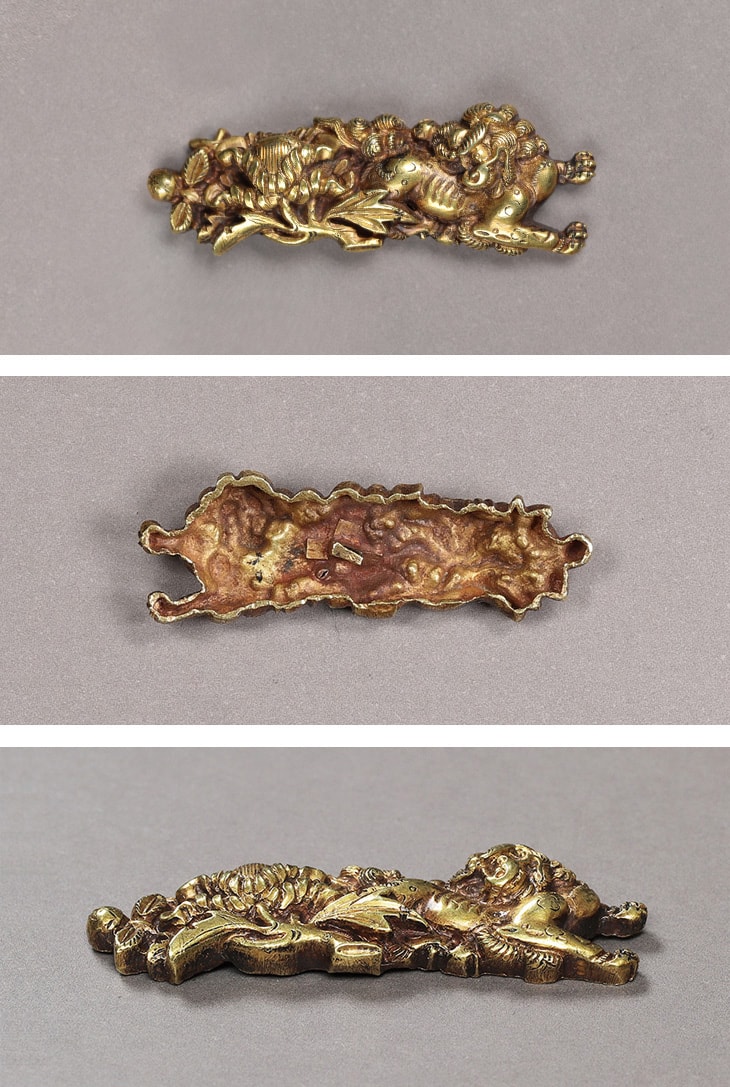
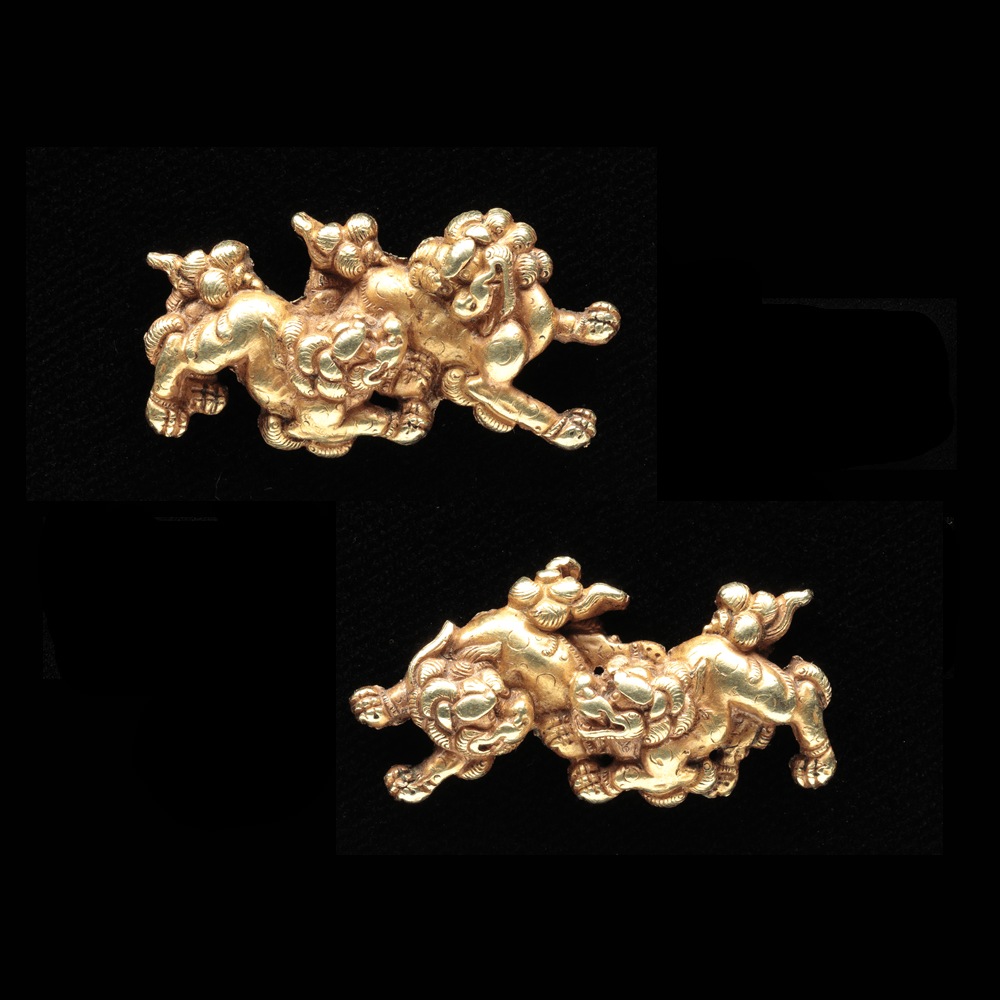


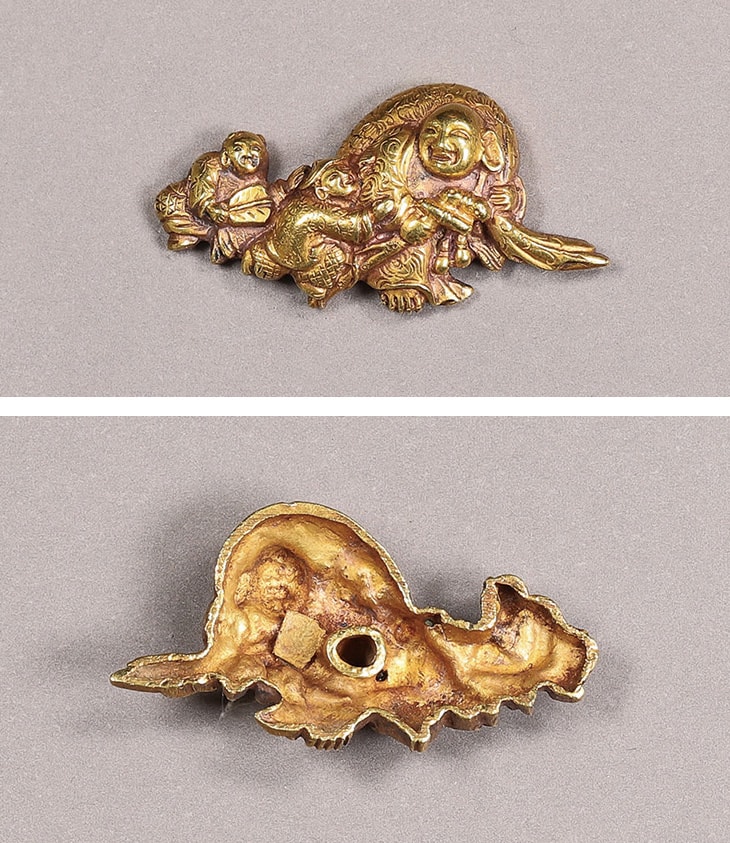
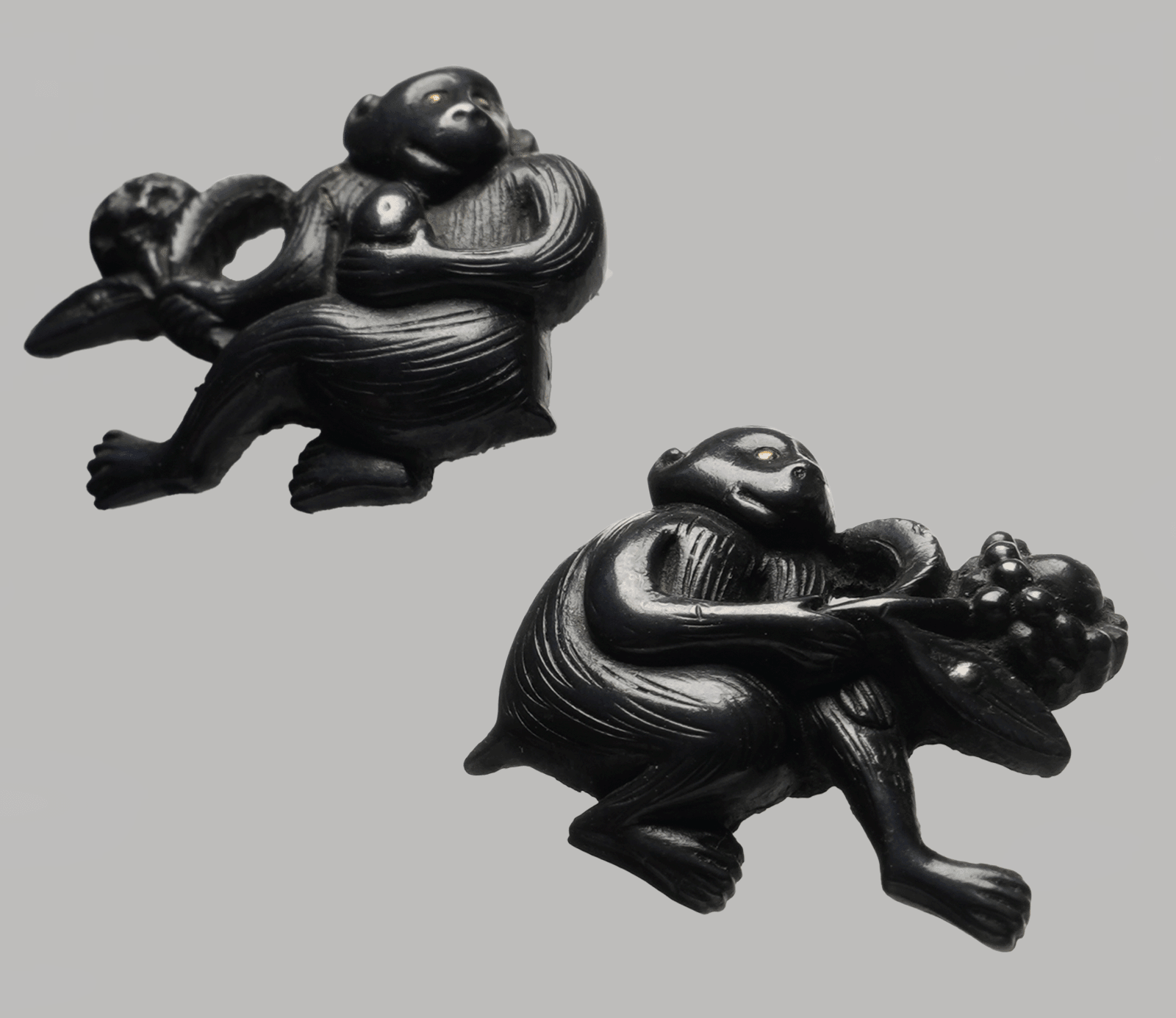
![Menuki - Tokuho - 作 後藤派 - Menuki[Kogotou Makiuri-zu Menuki][N.B.T.H.K] Tokubetsu Hozon Tousougu](/_next/image?url=https%3A%2F%2Fitbhfhyptogxcjbjfzwx.supabase.co%2Fstorage%2Fv1%2Fobject%2Fpublic%2Flisting-images%2Fworld-seiyudo%2FL33052%2F00.jpg&w=2560&q=90)