室町は刀剣業を産業に変えた。徒歩の集団戦とともに打刀が興り、長船と関は数打ち物と注文打ちを並行して産し、勘合貿易は日本刀を数万振の単位で海外へ運んだ。
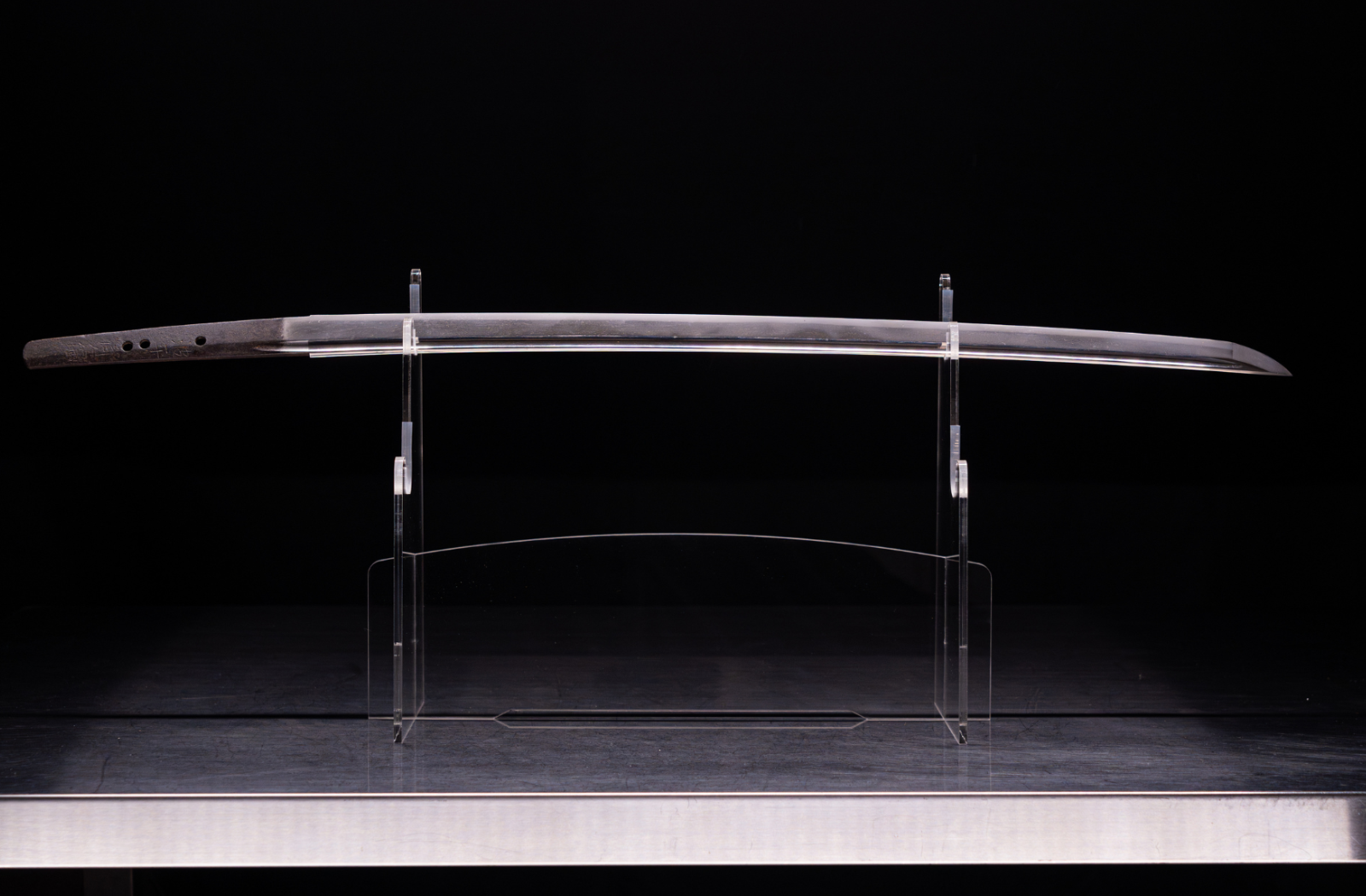
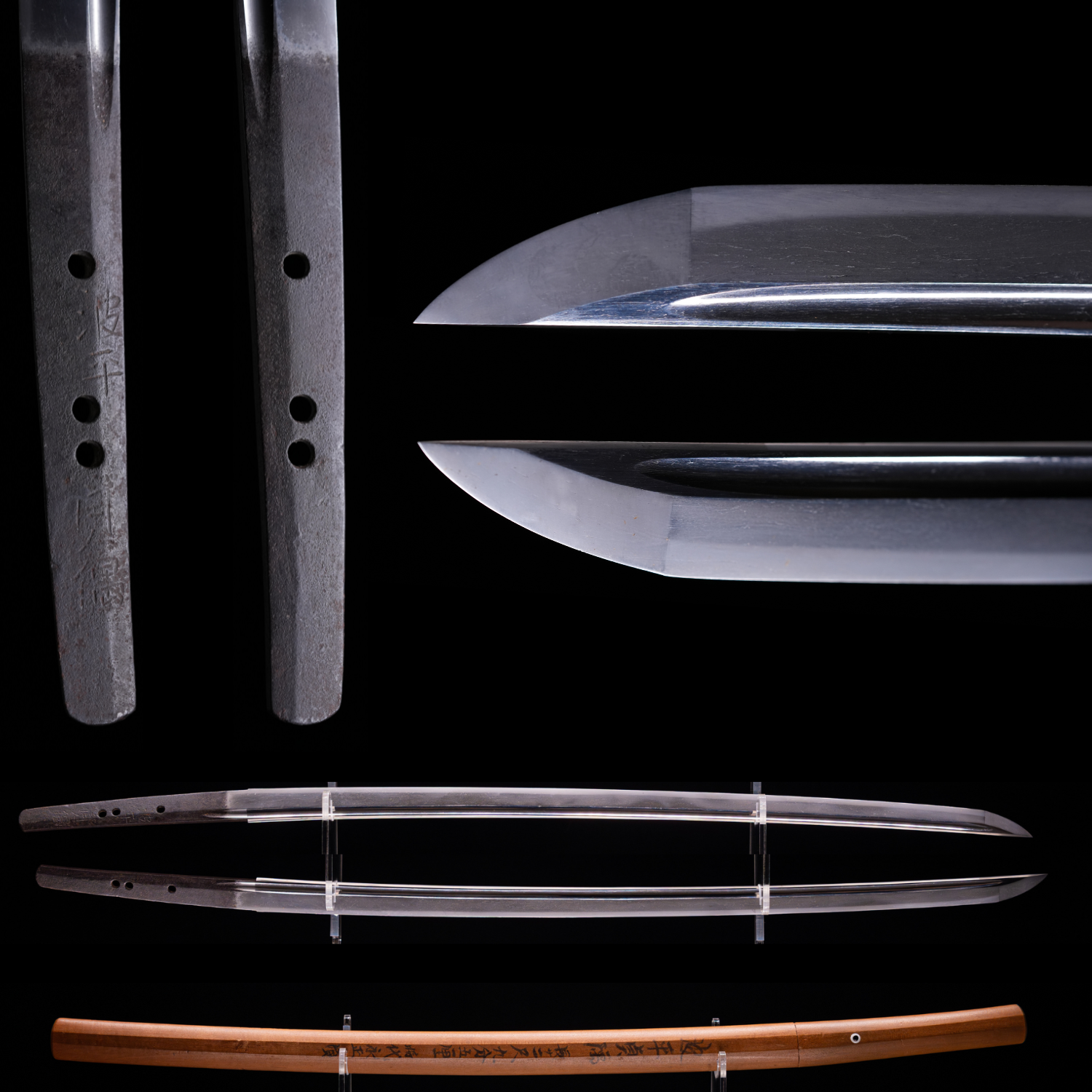
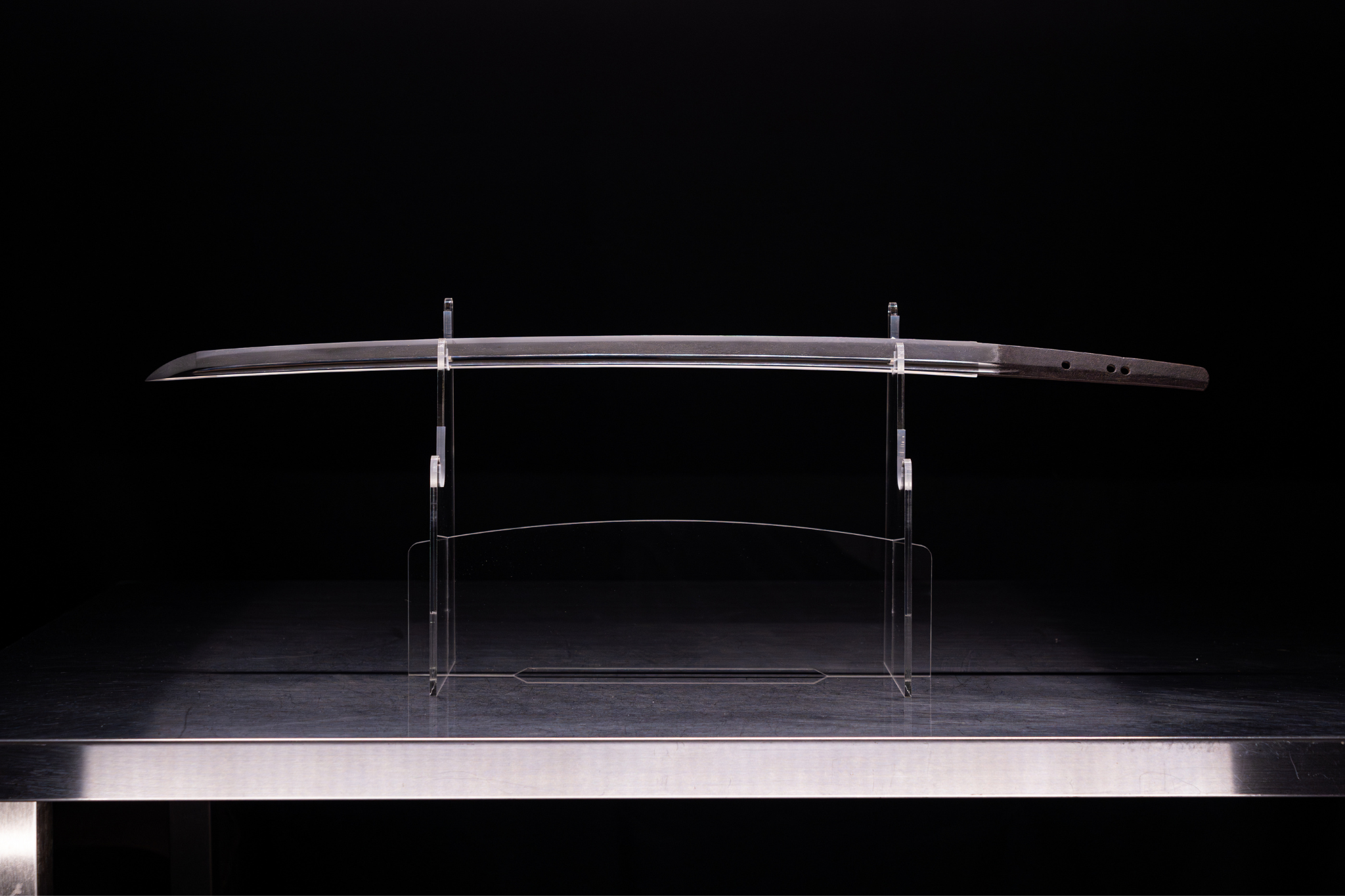
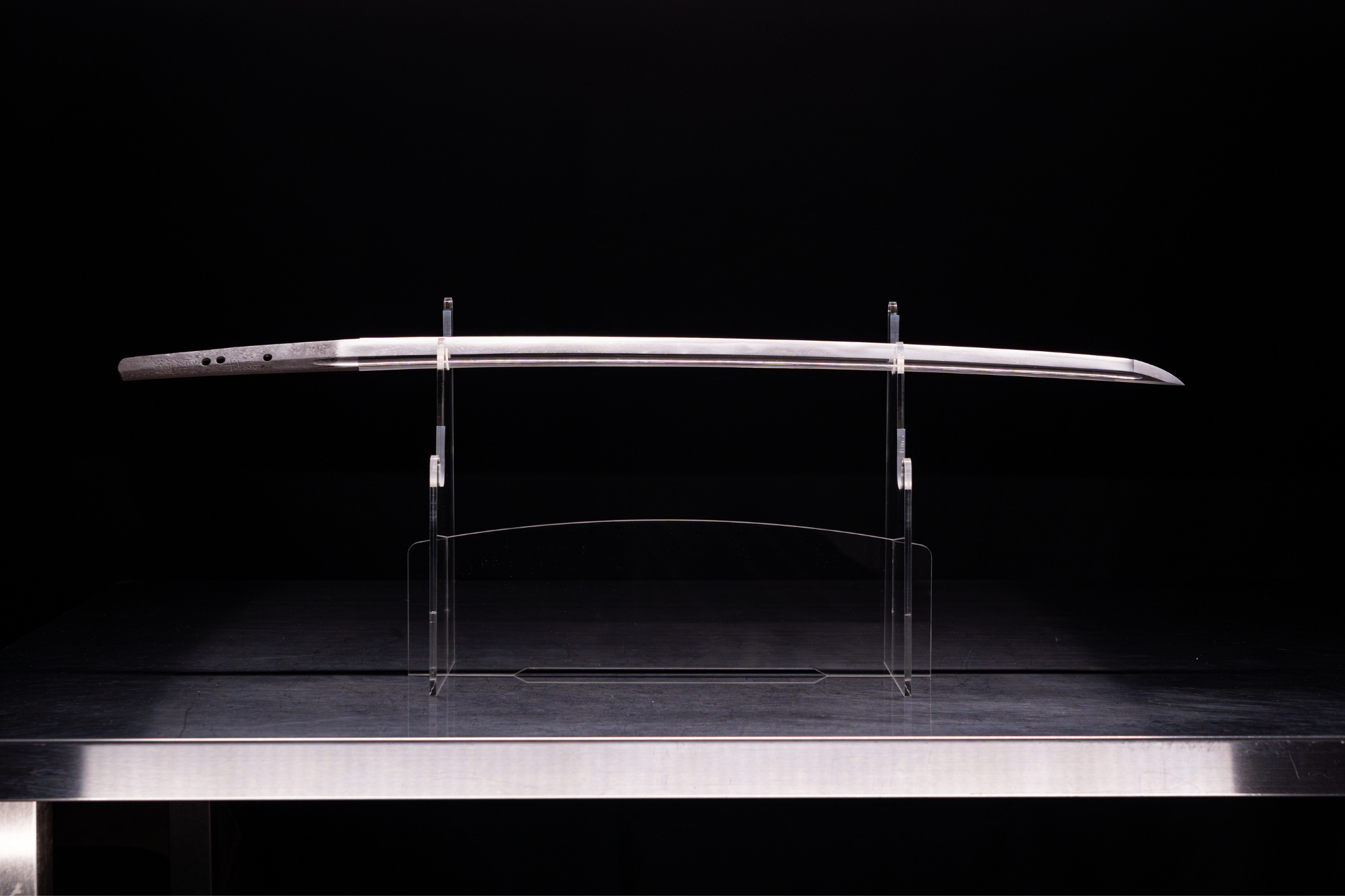
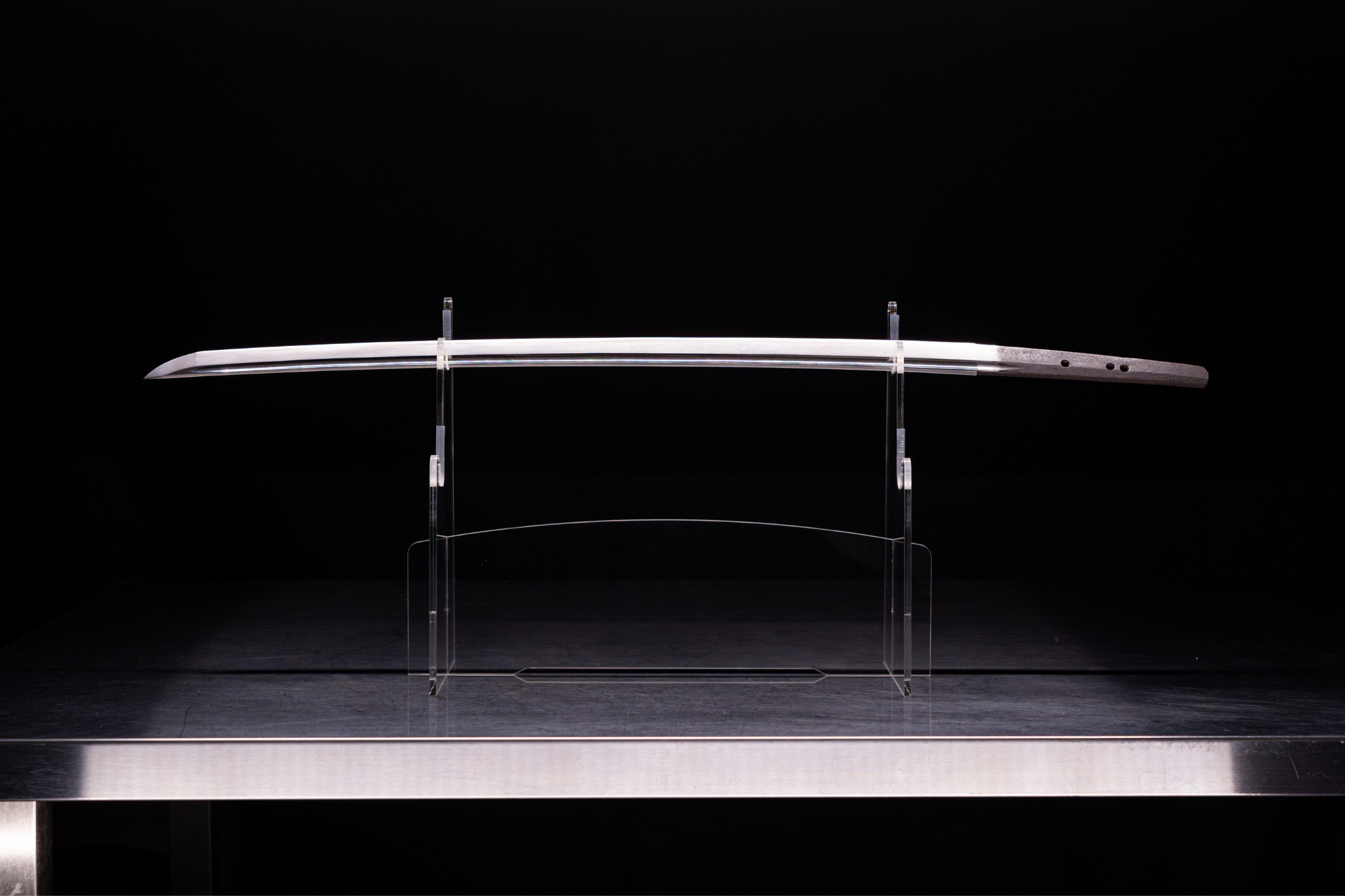
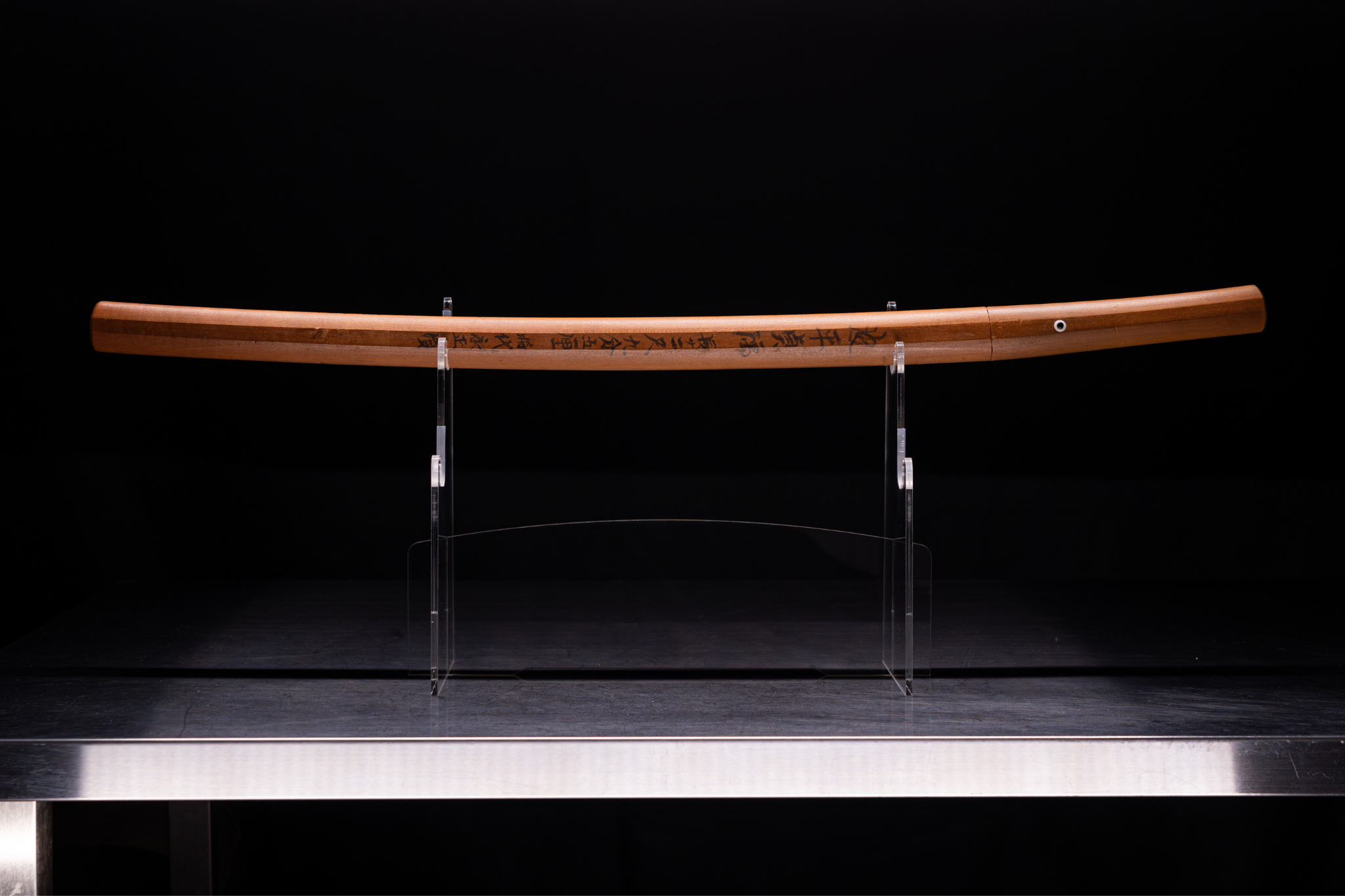
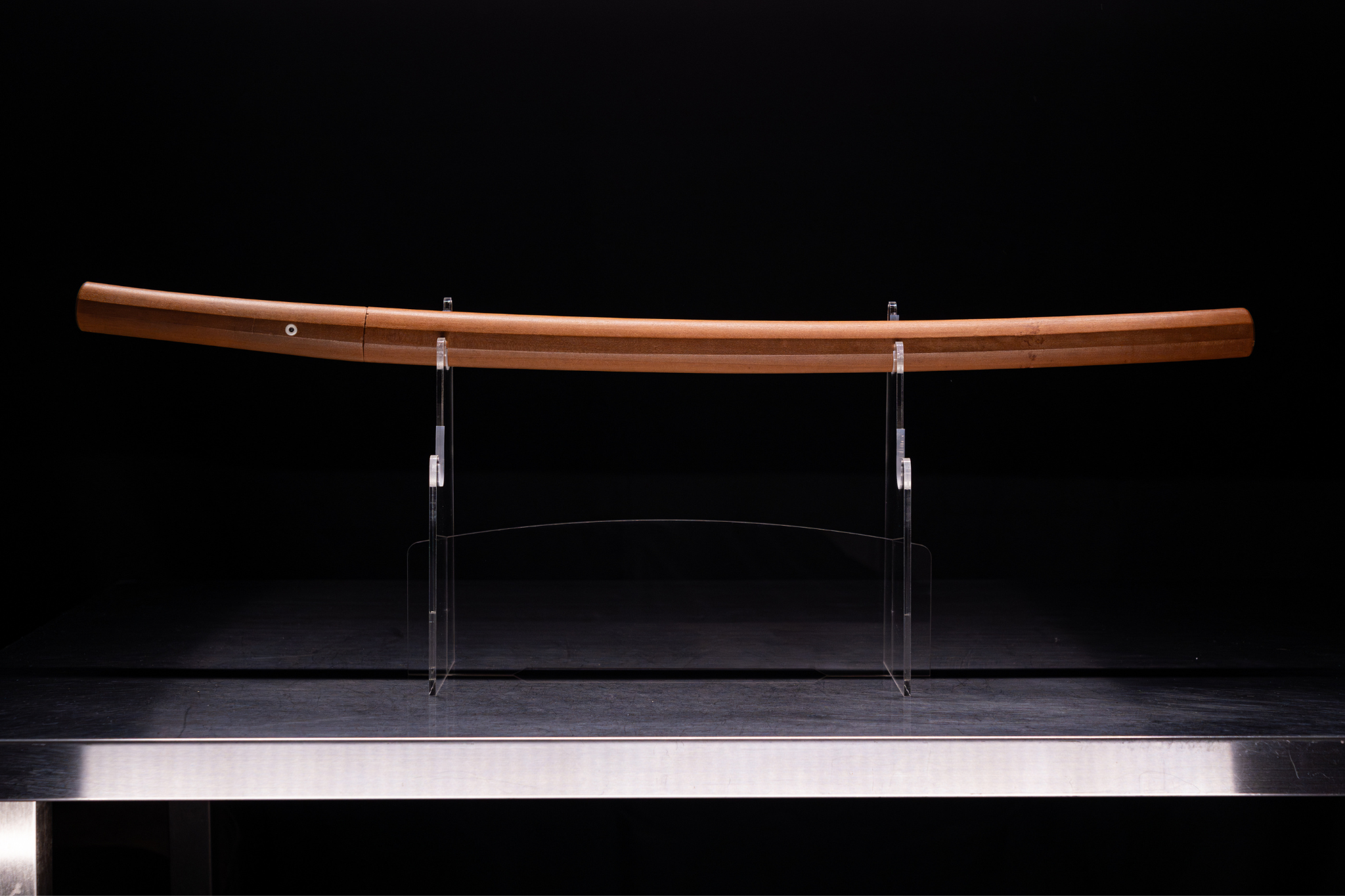
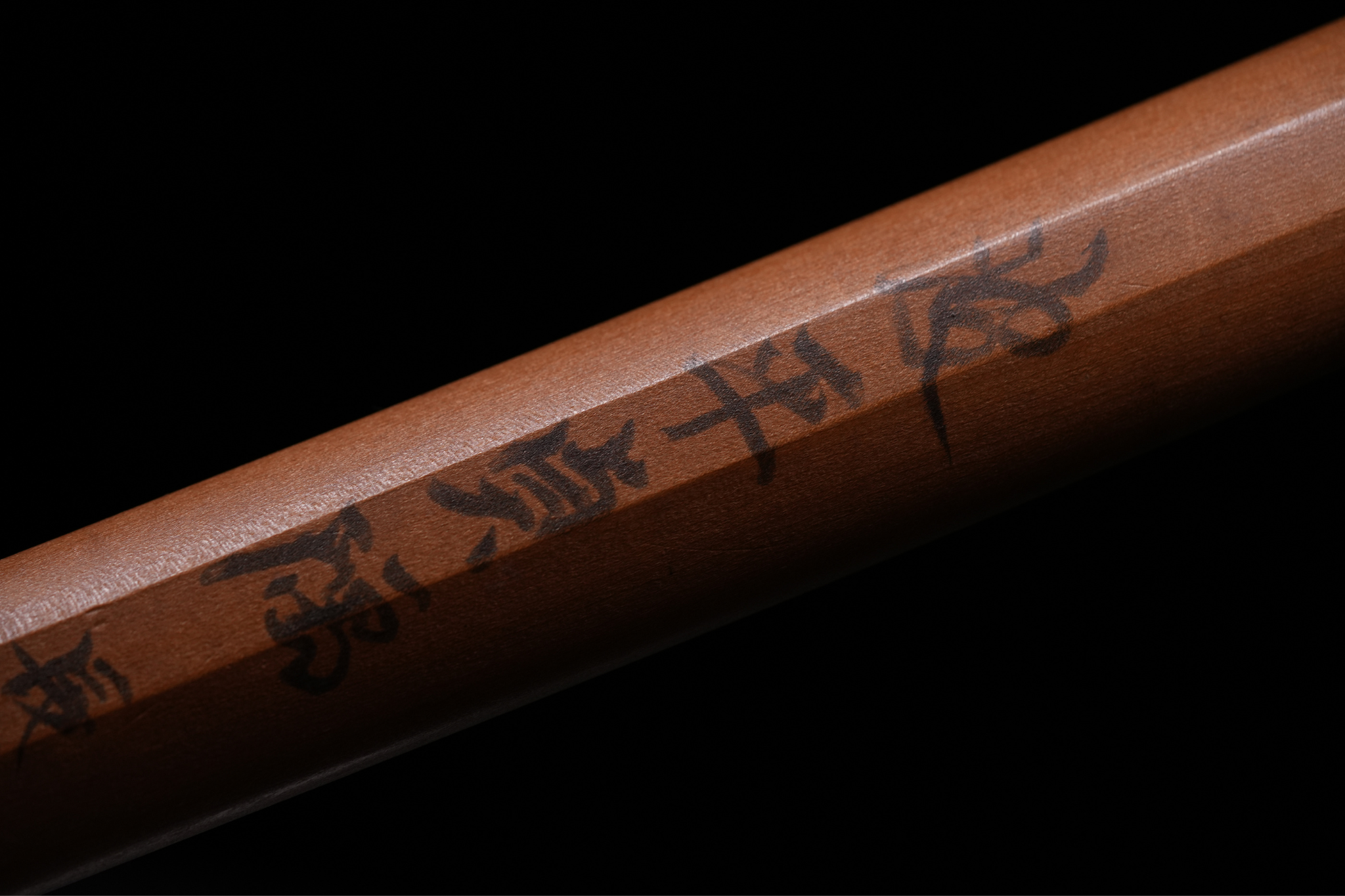
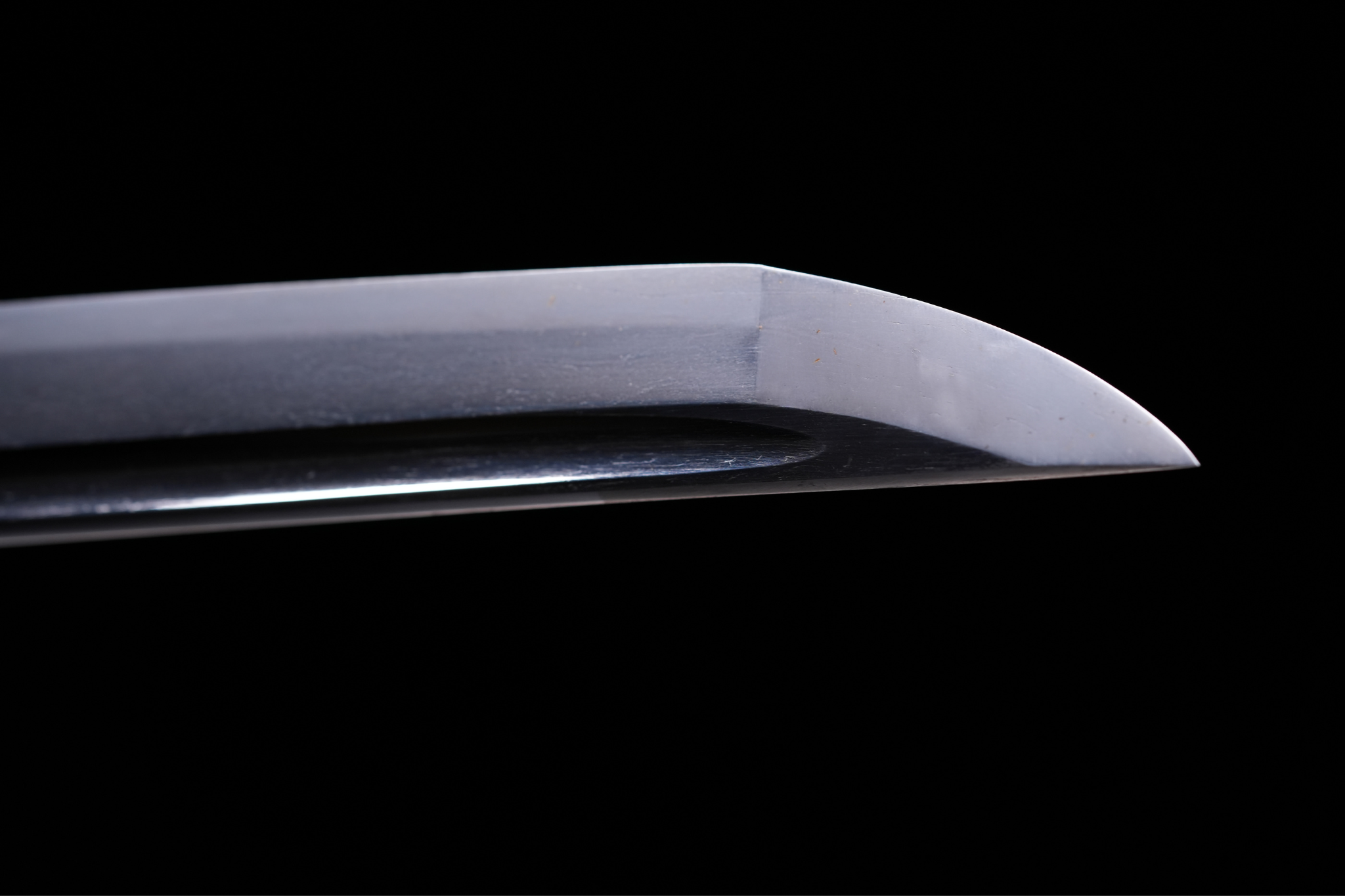
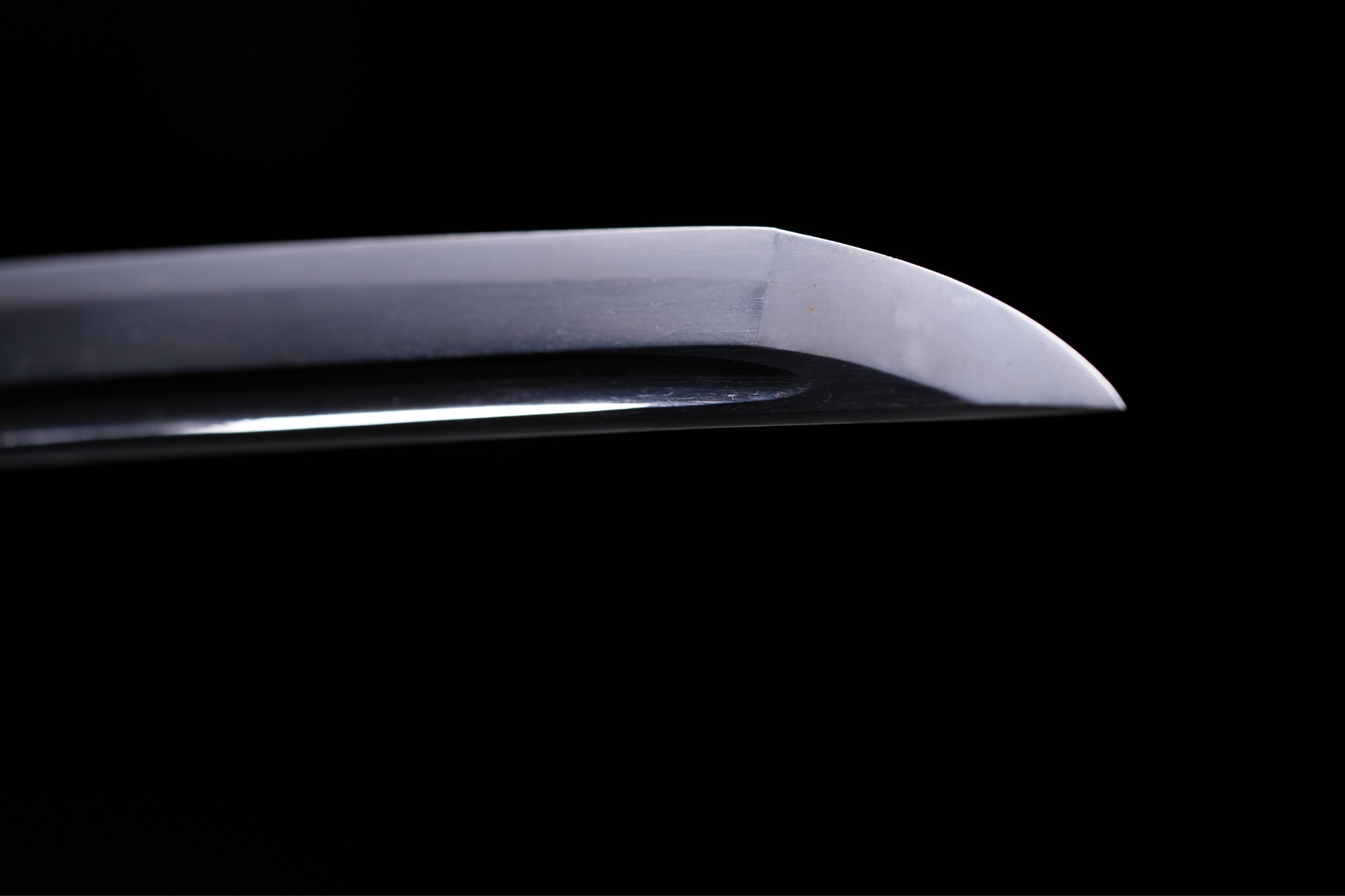
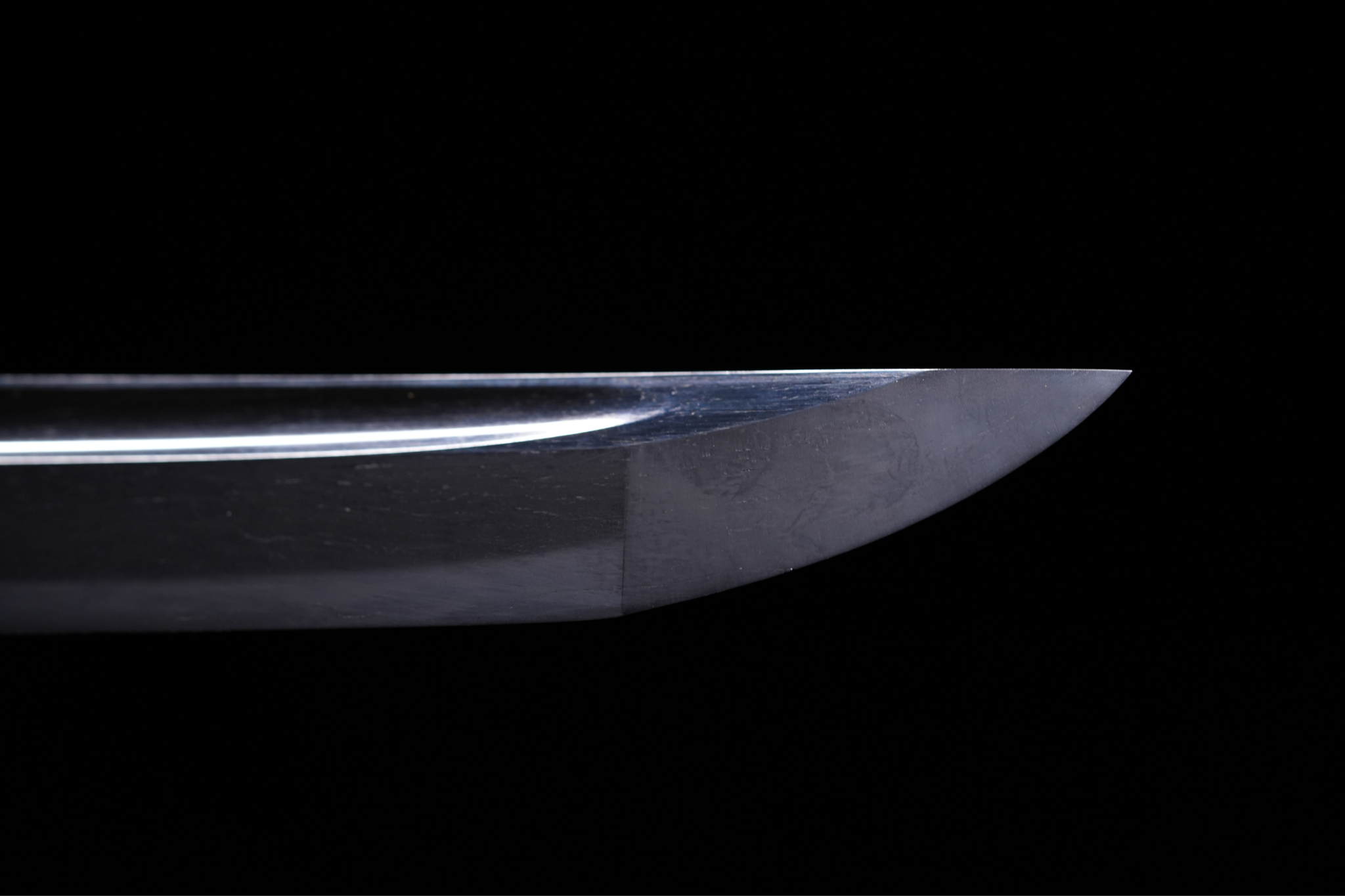
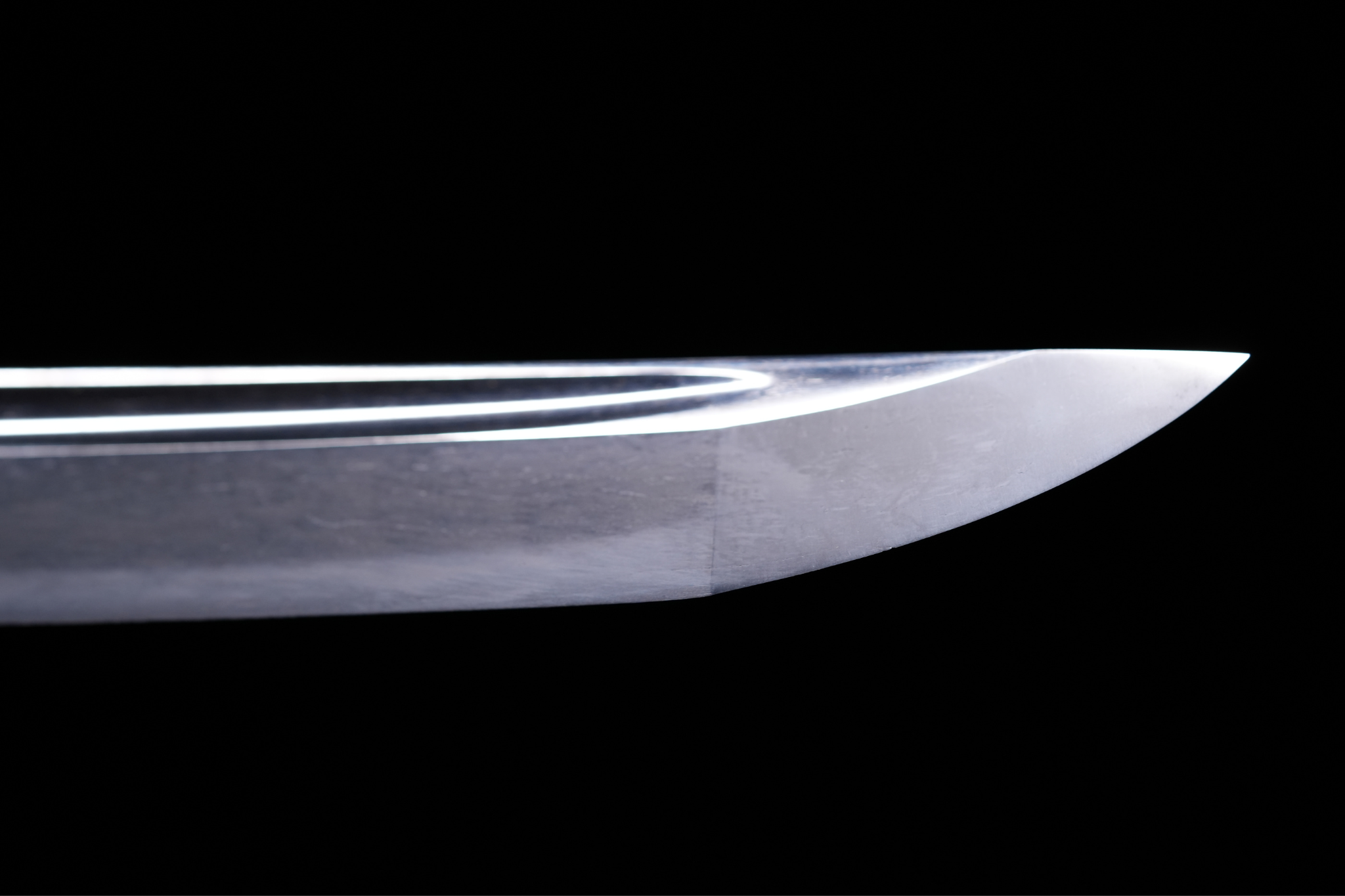
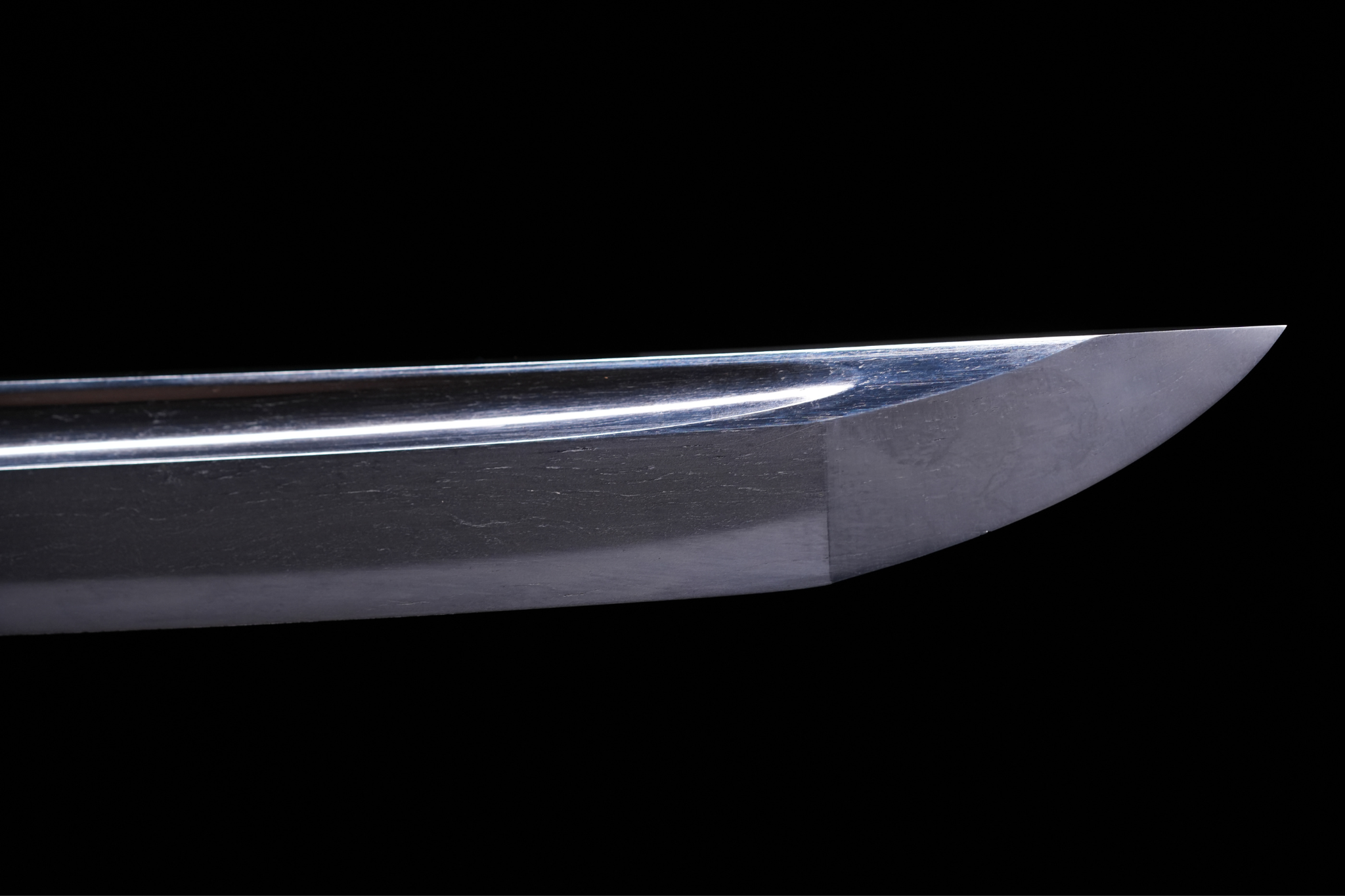
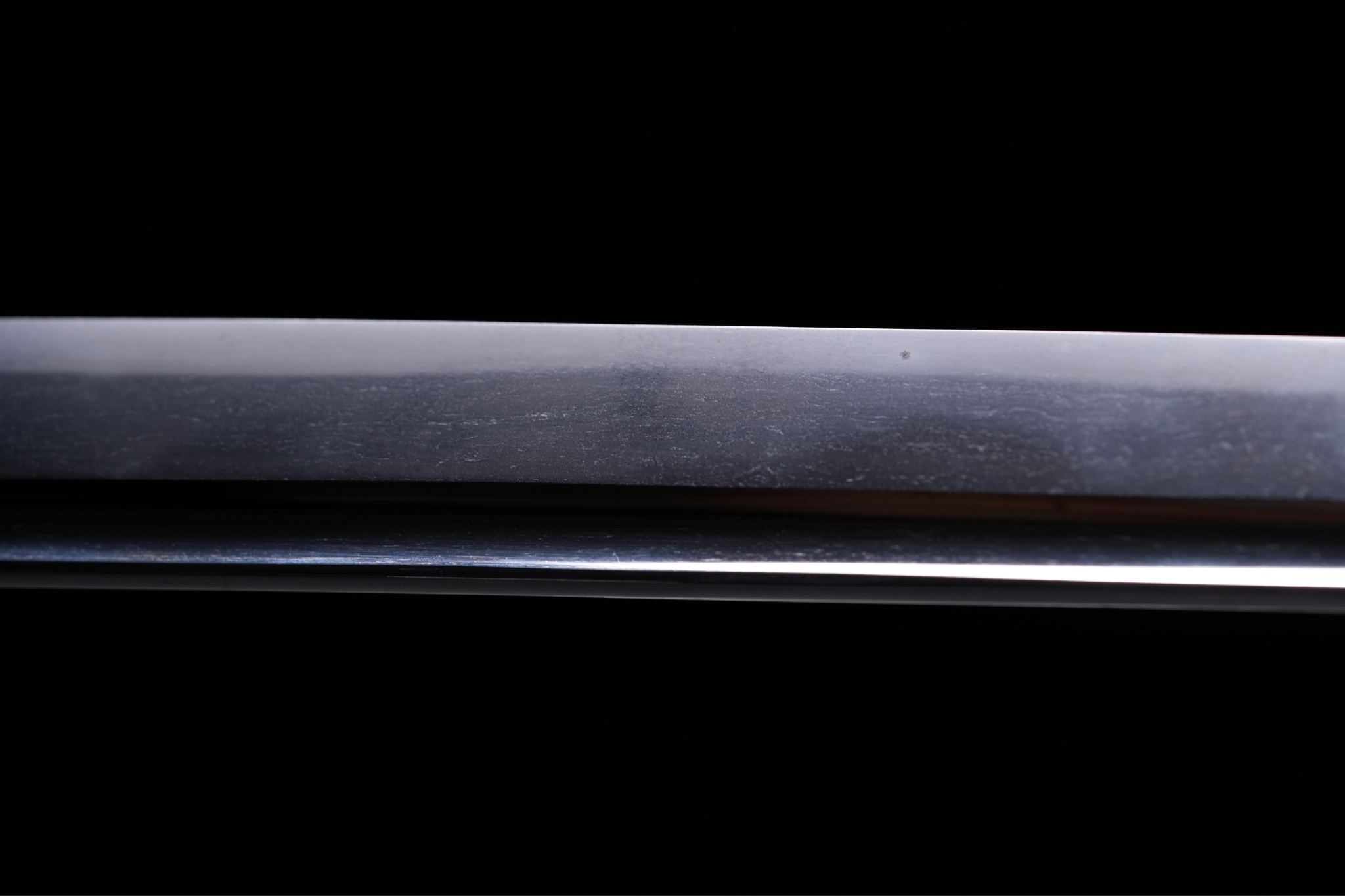
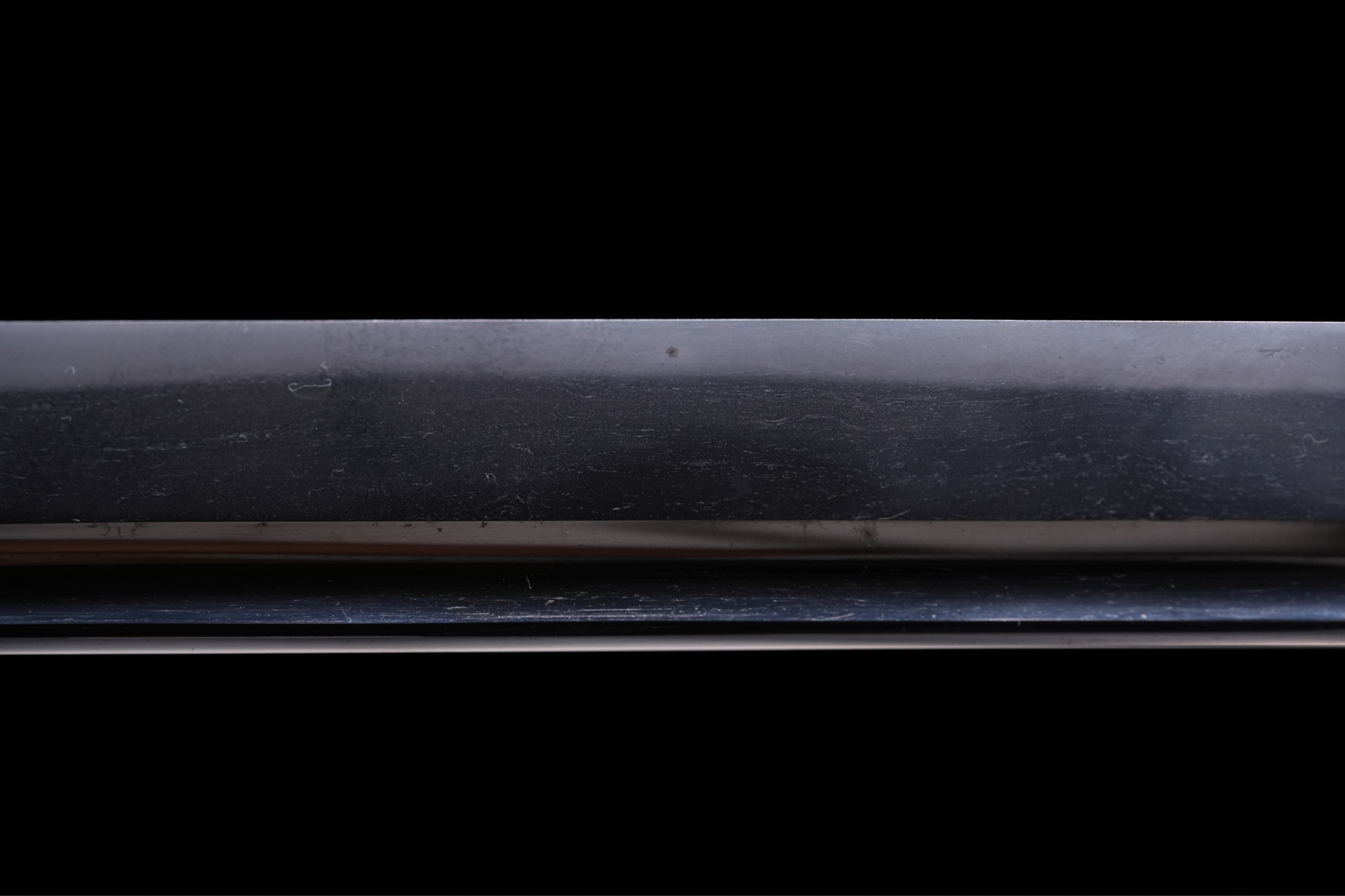
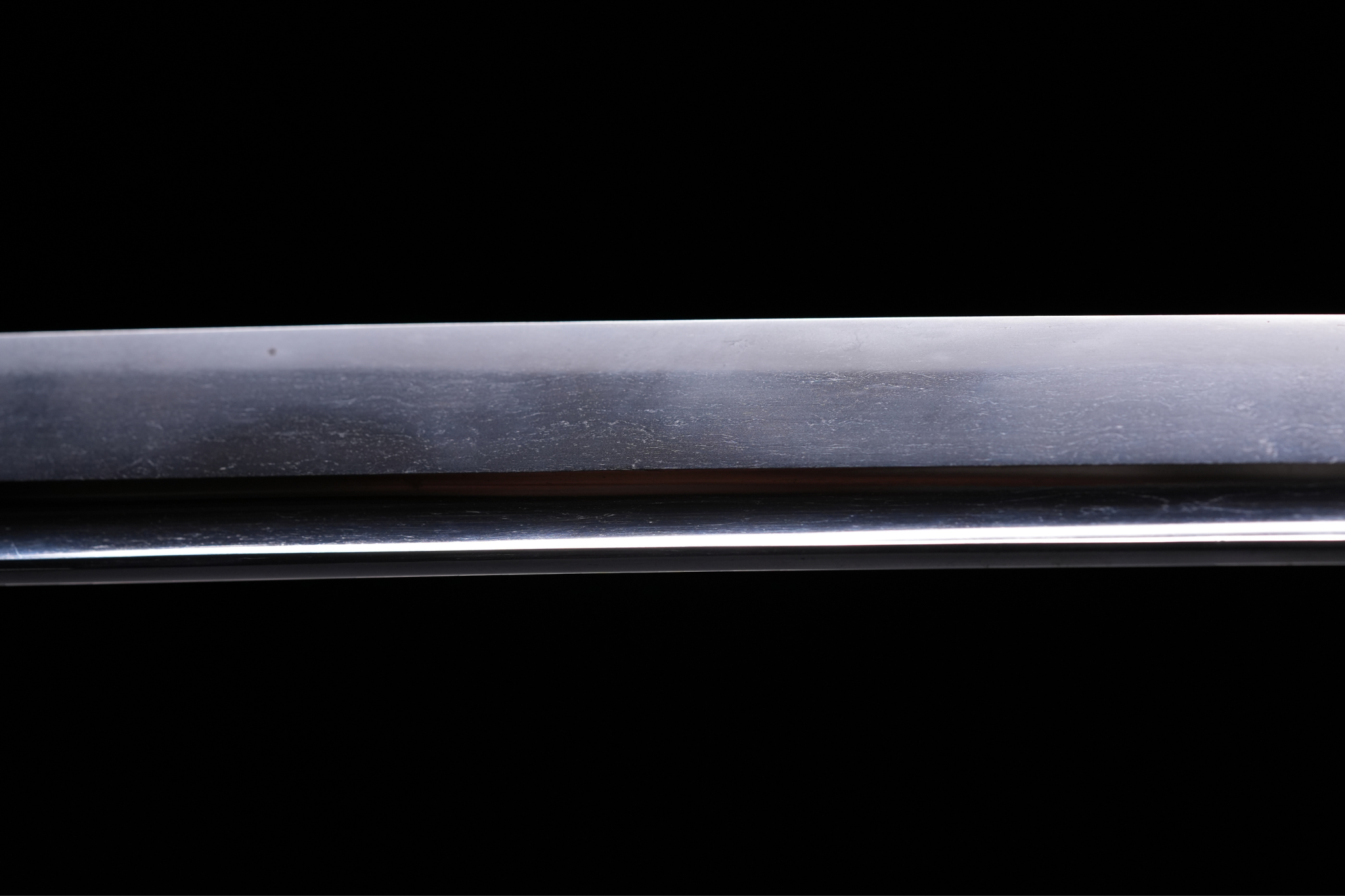
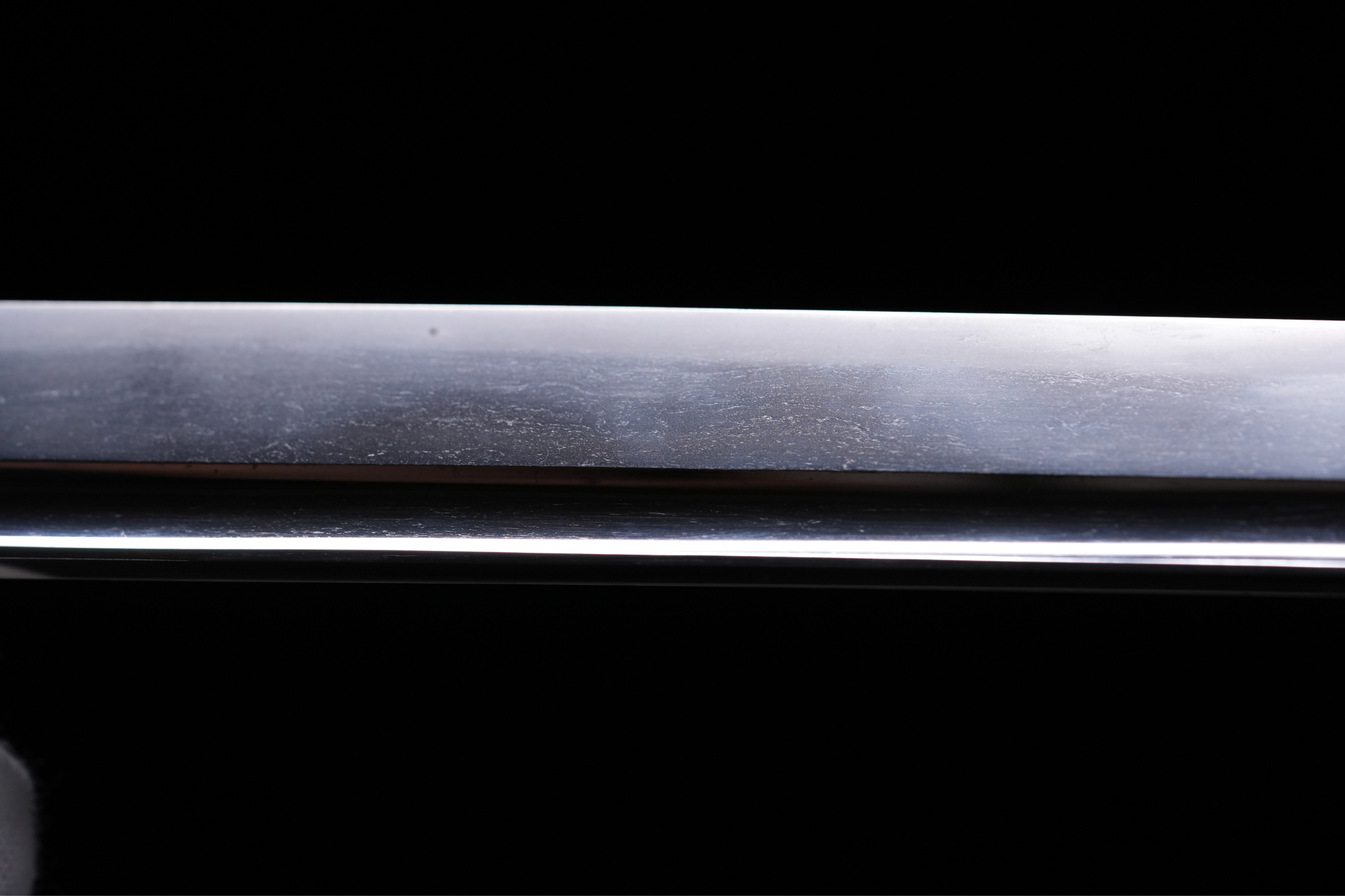
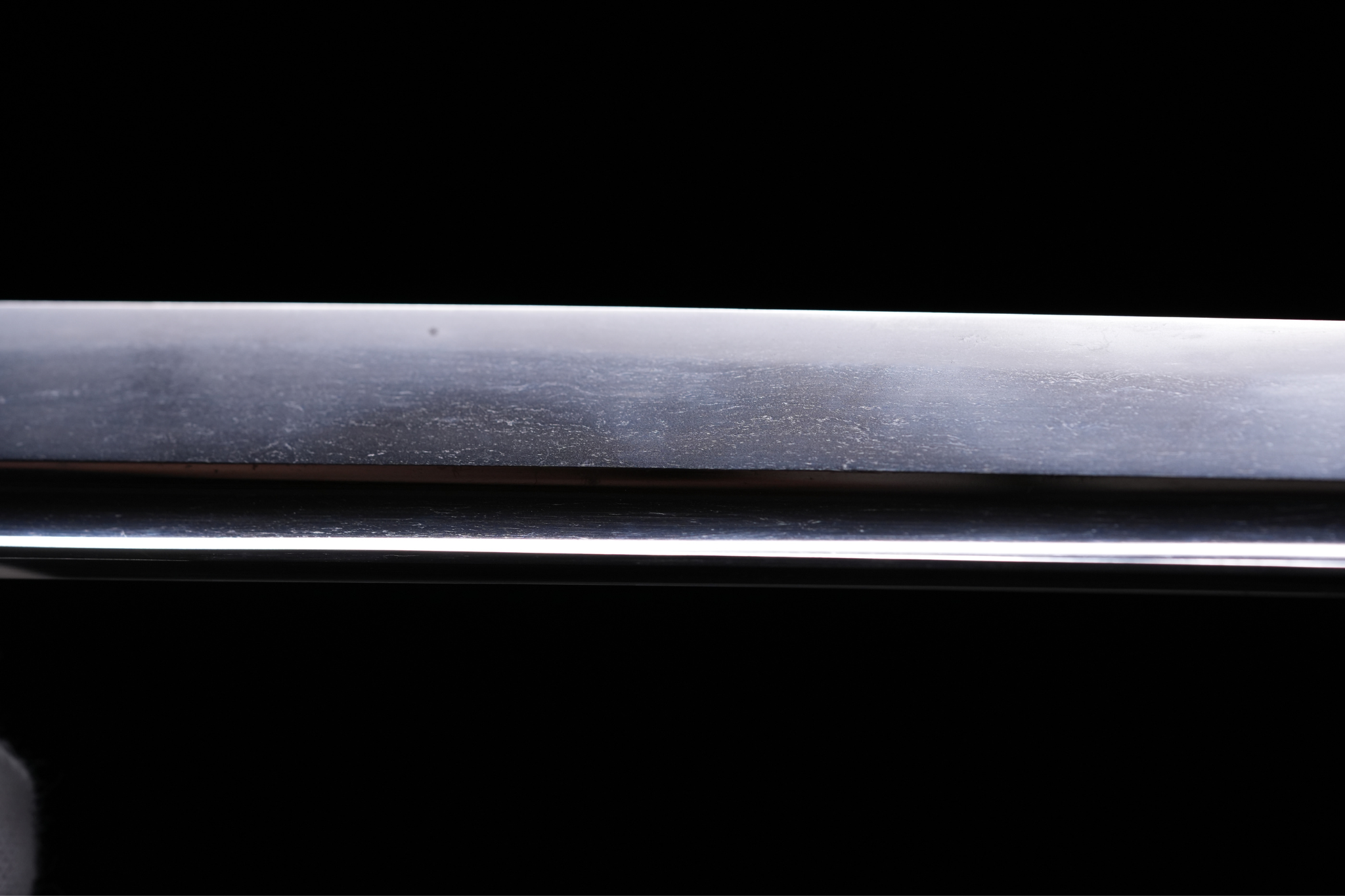
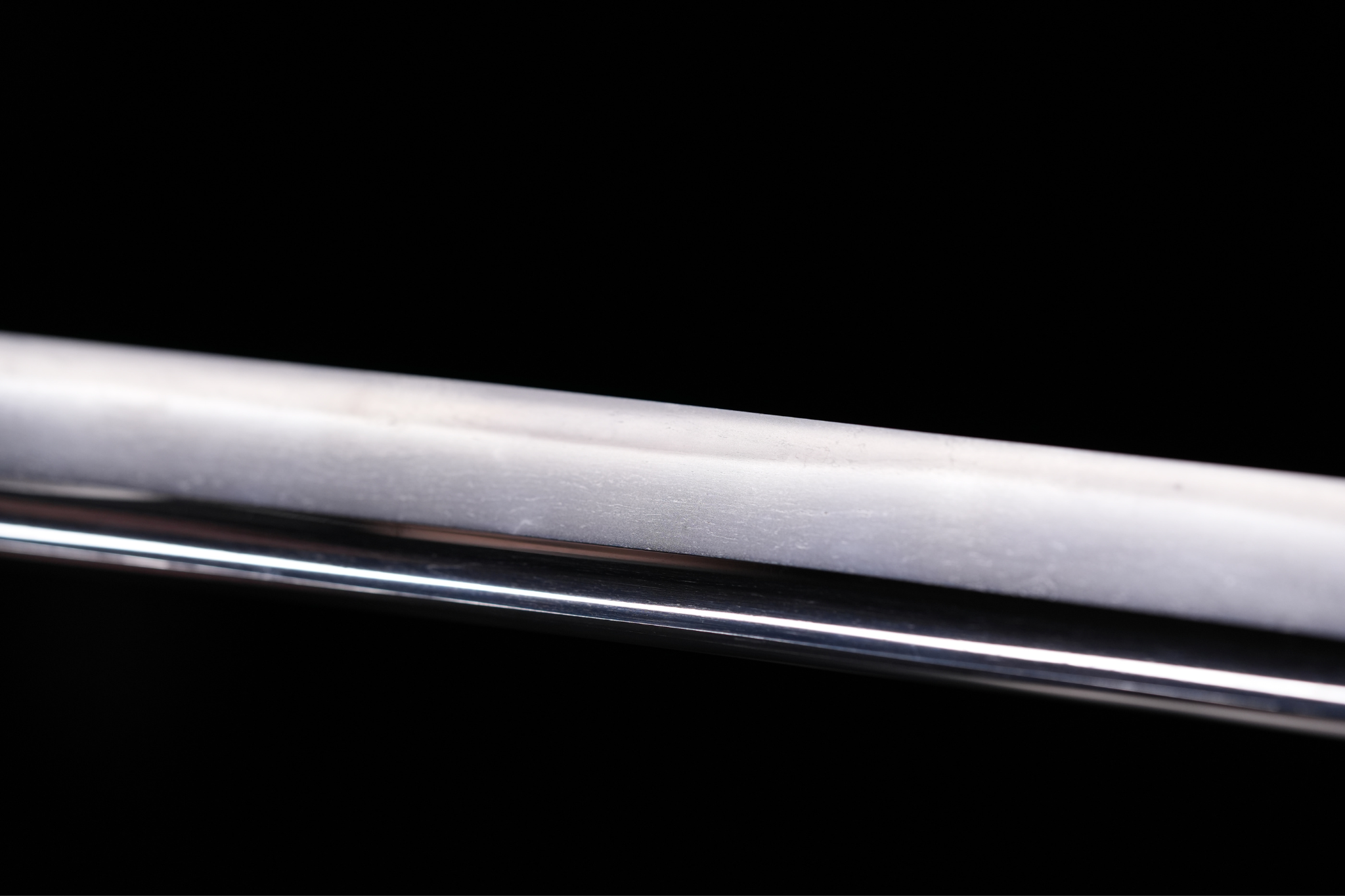
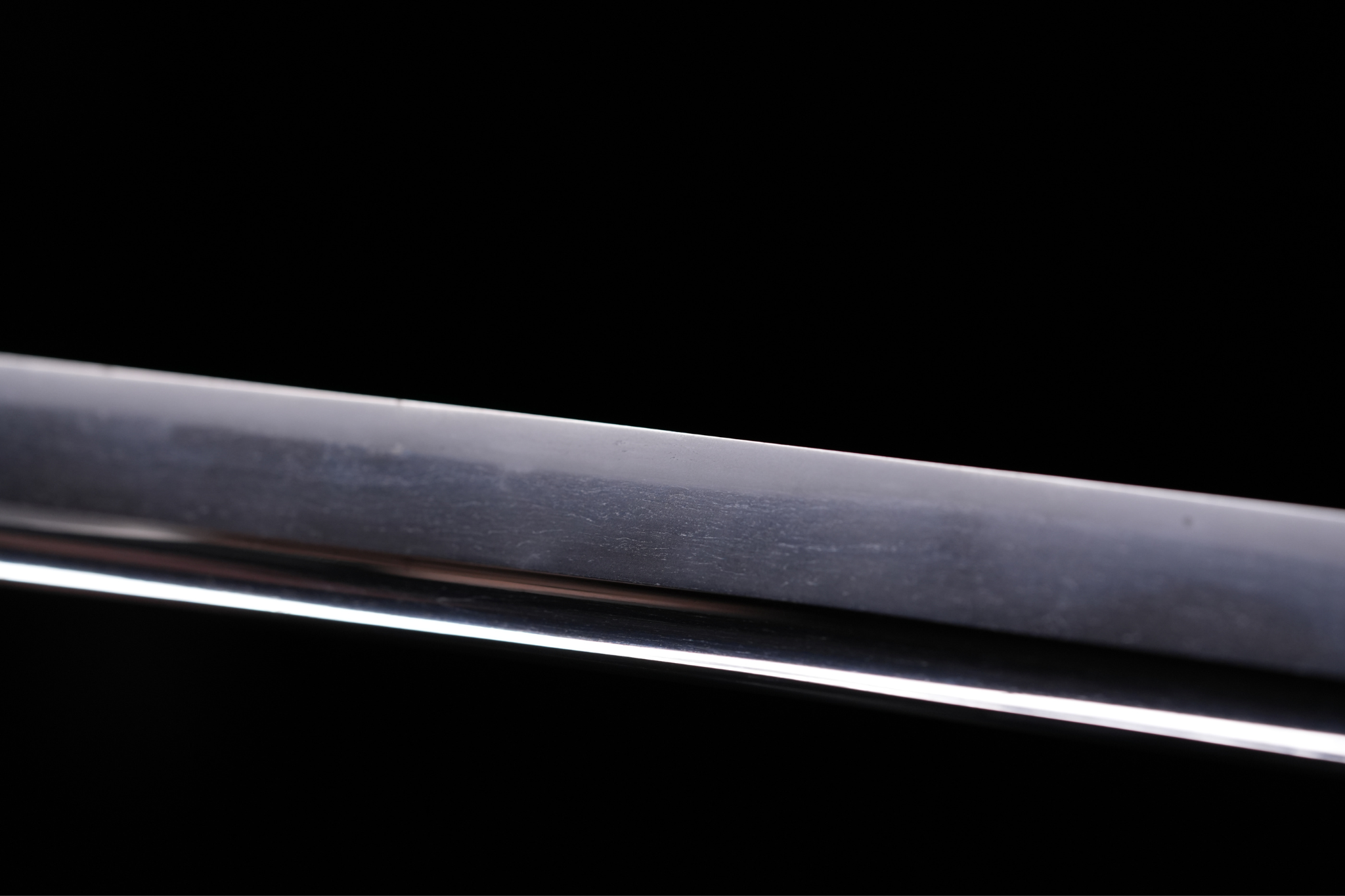
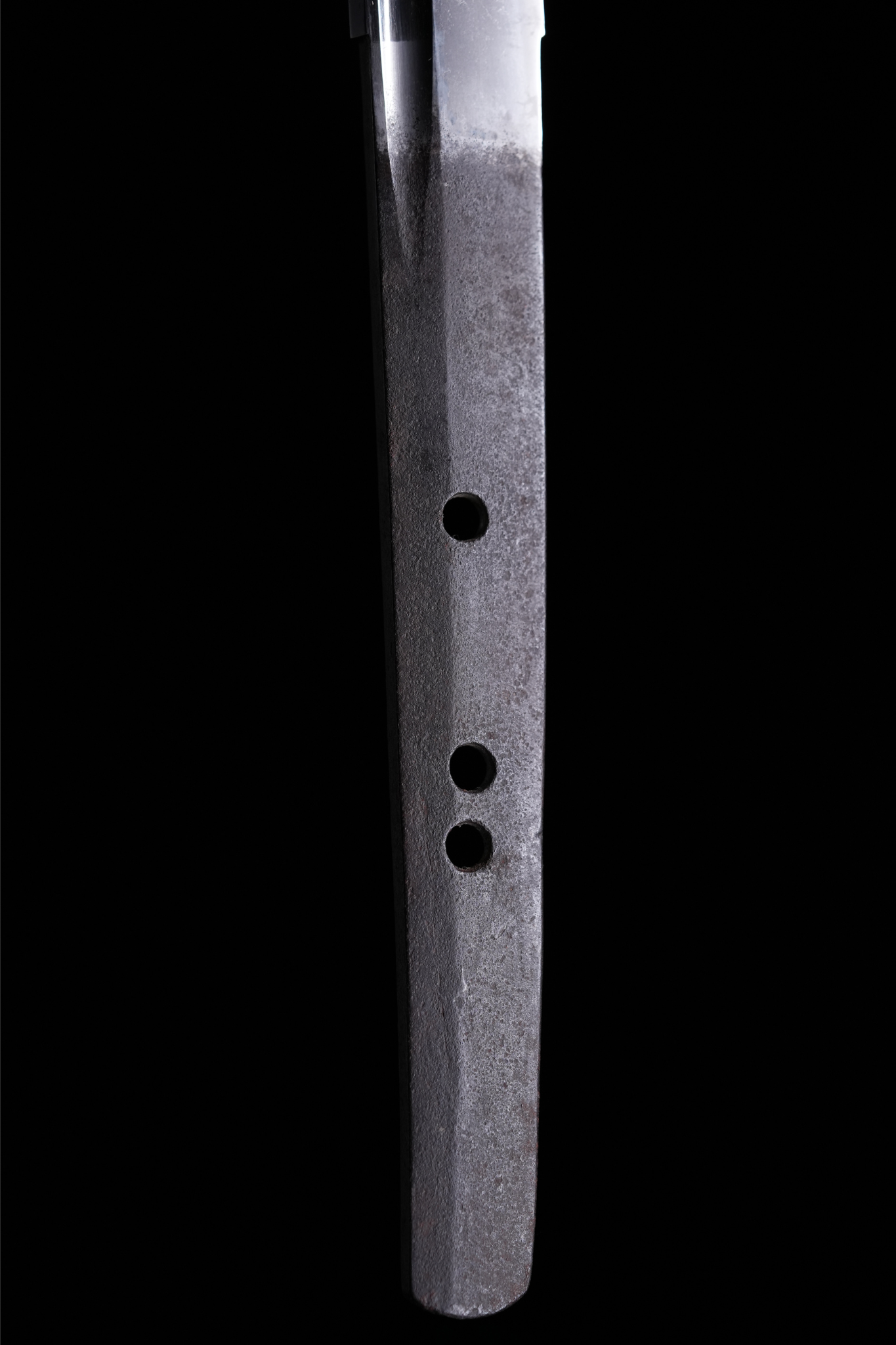
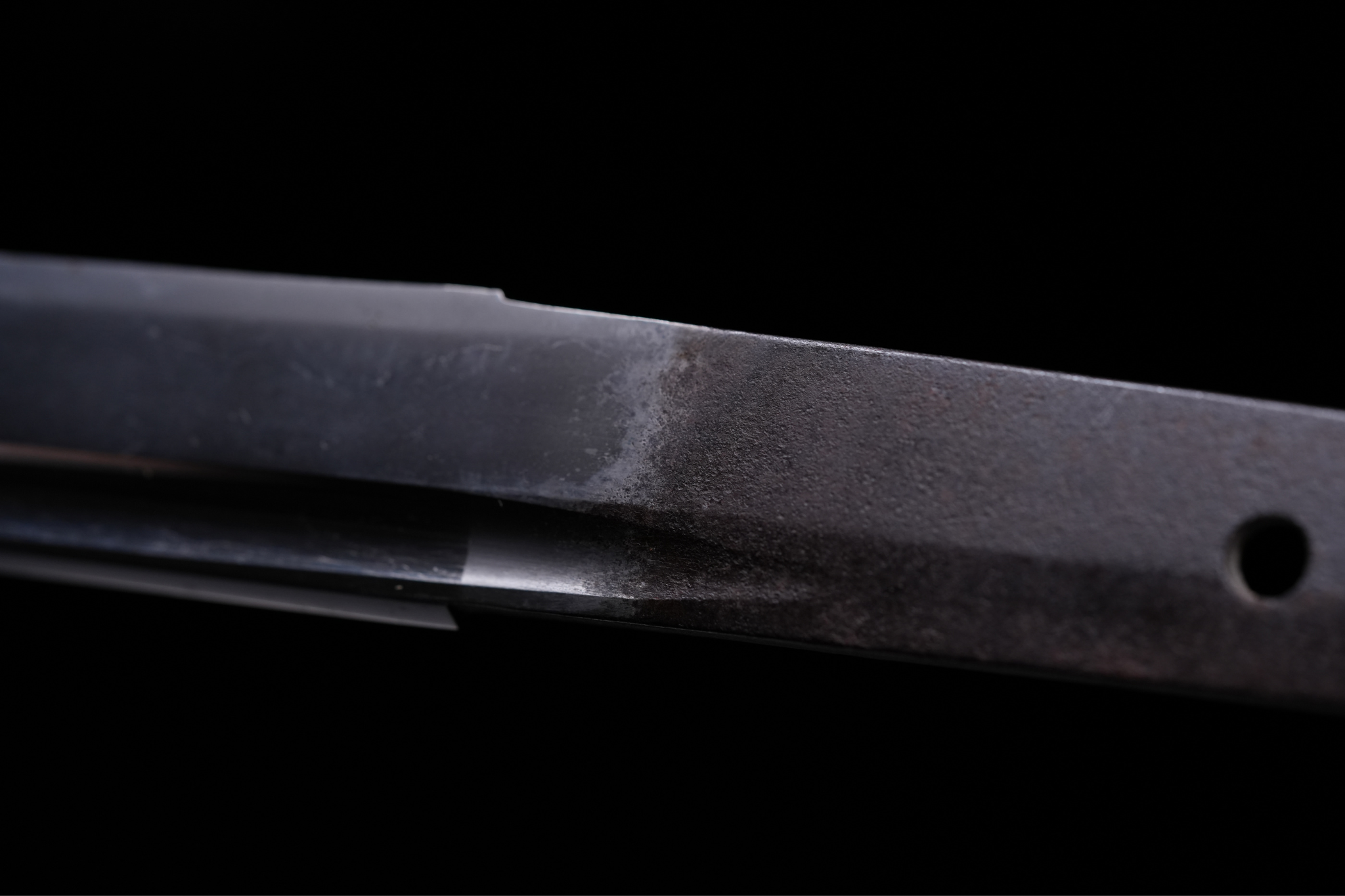
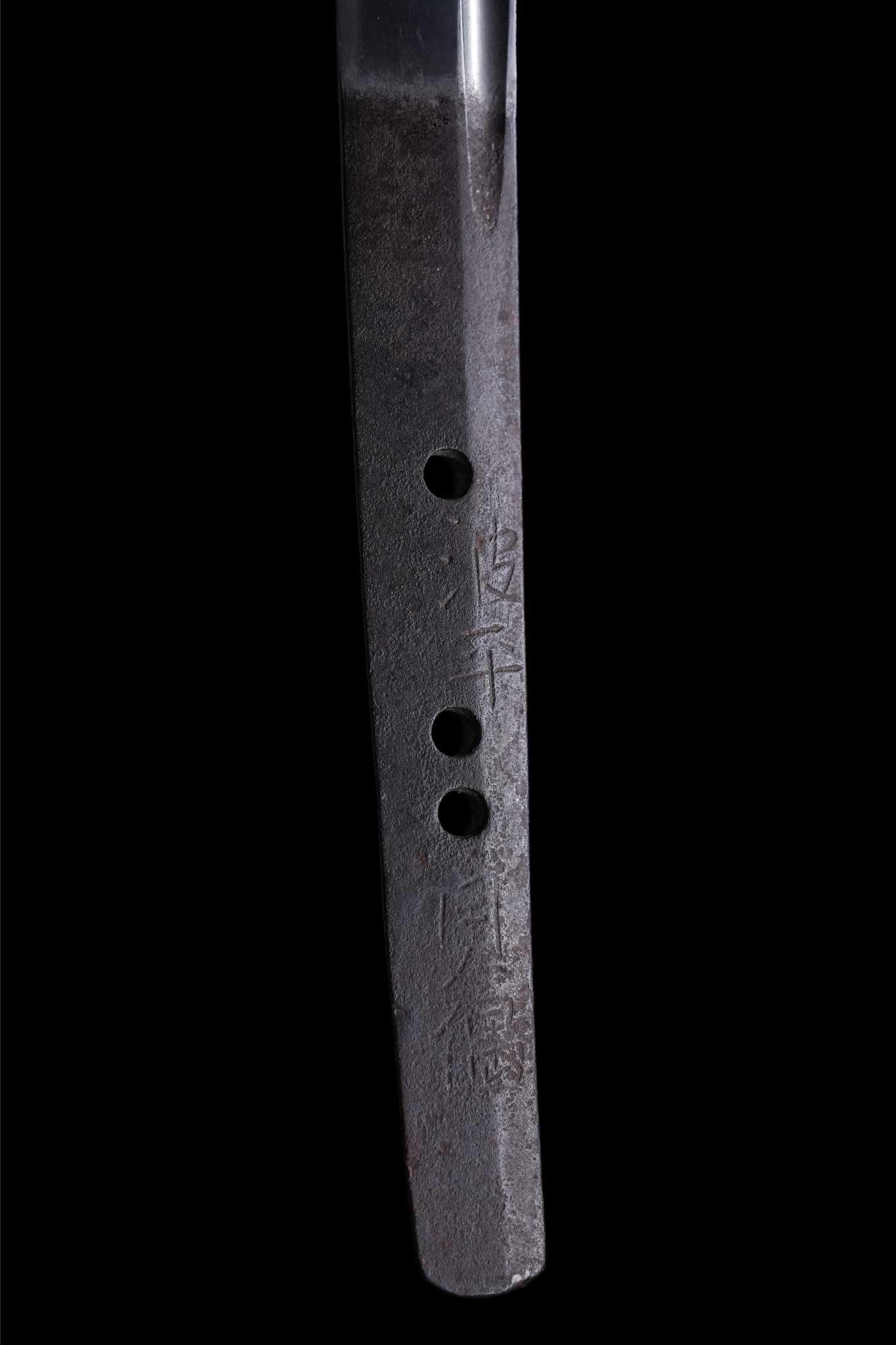
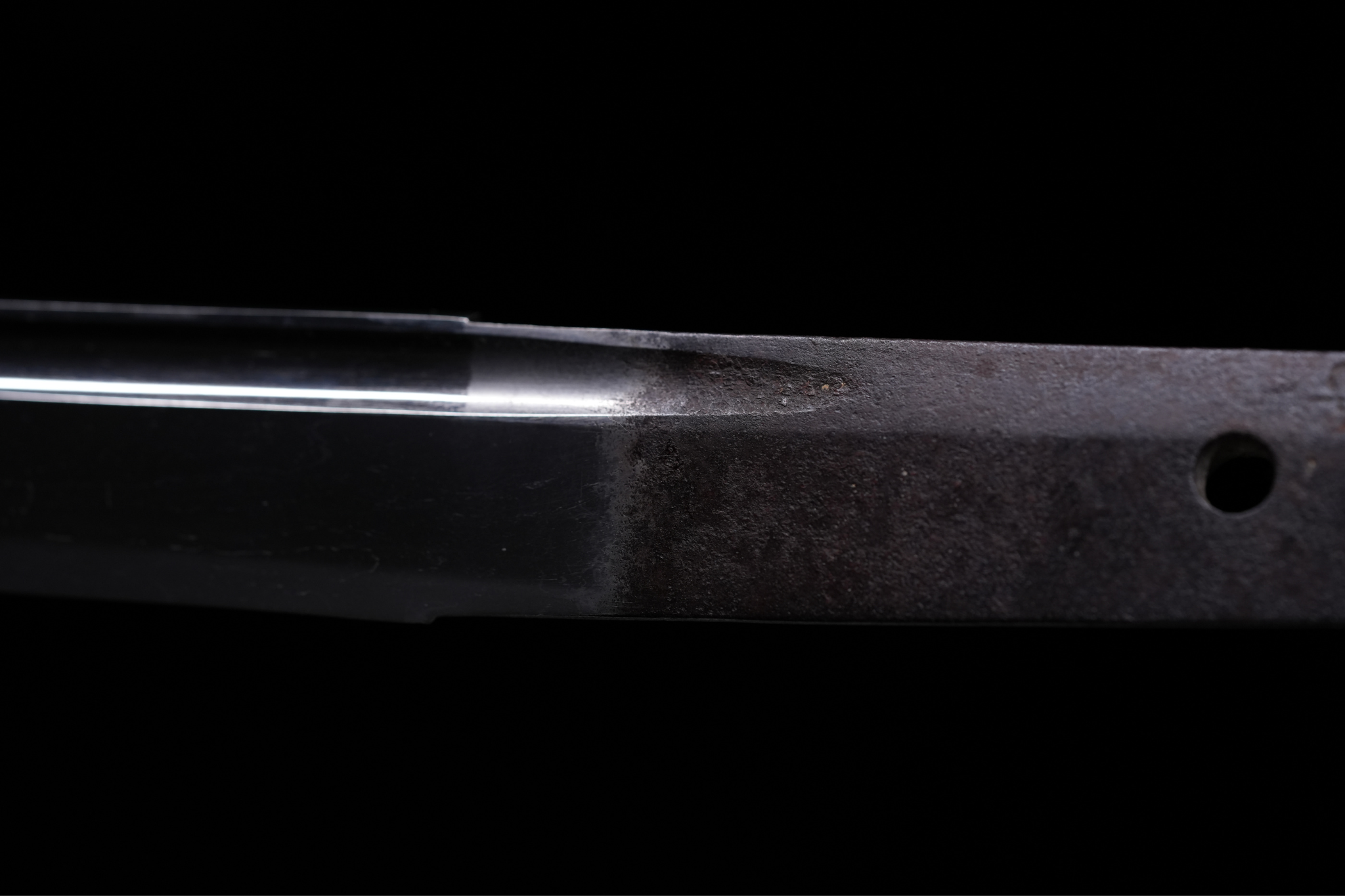
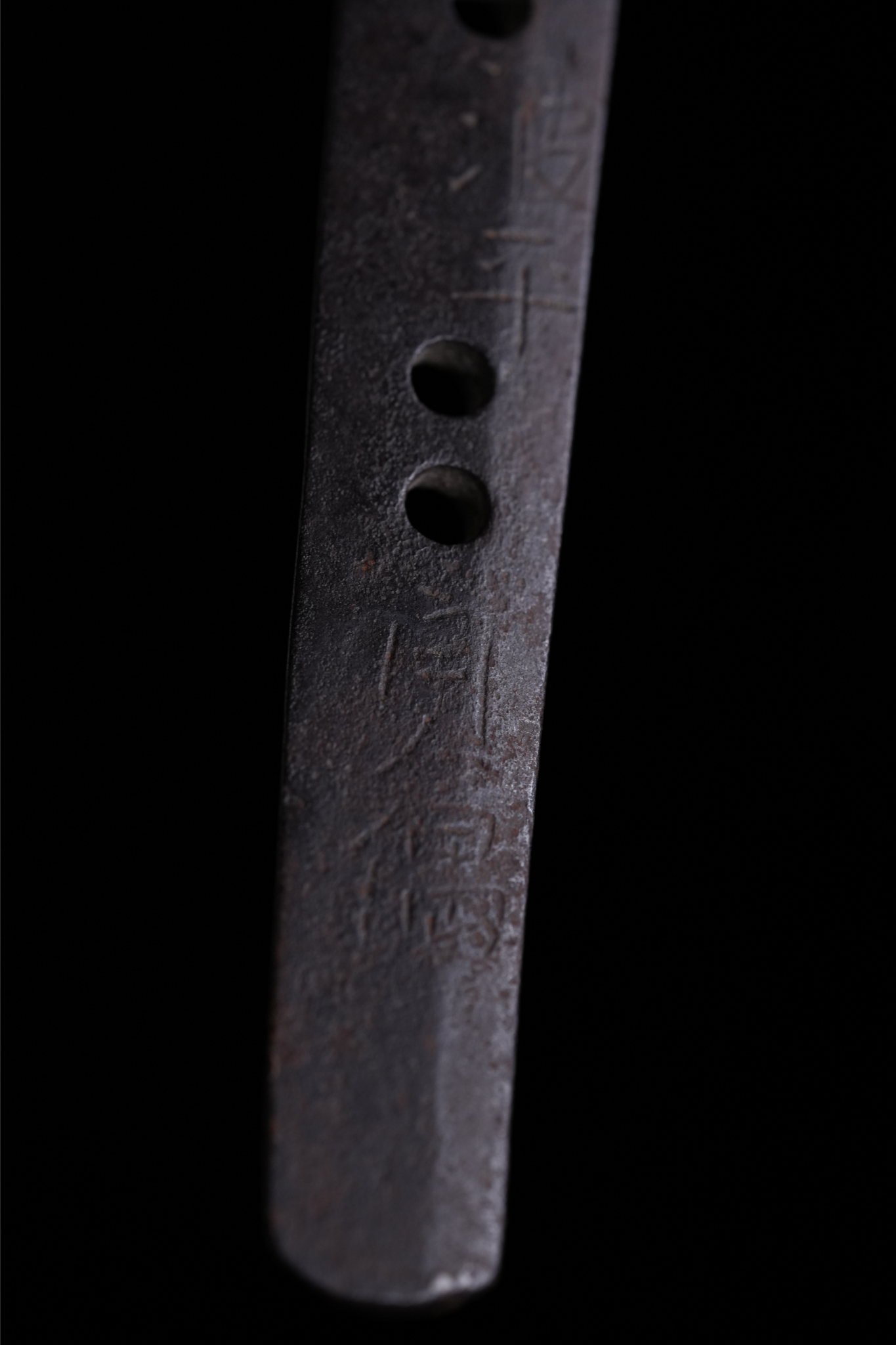
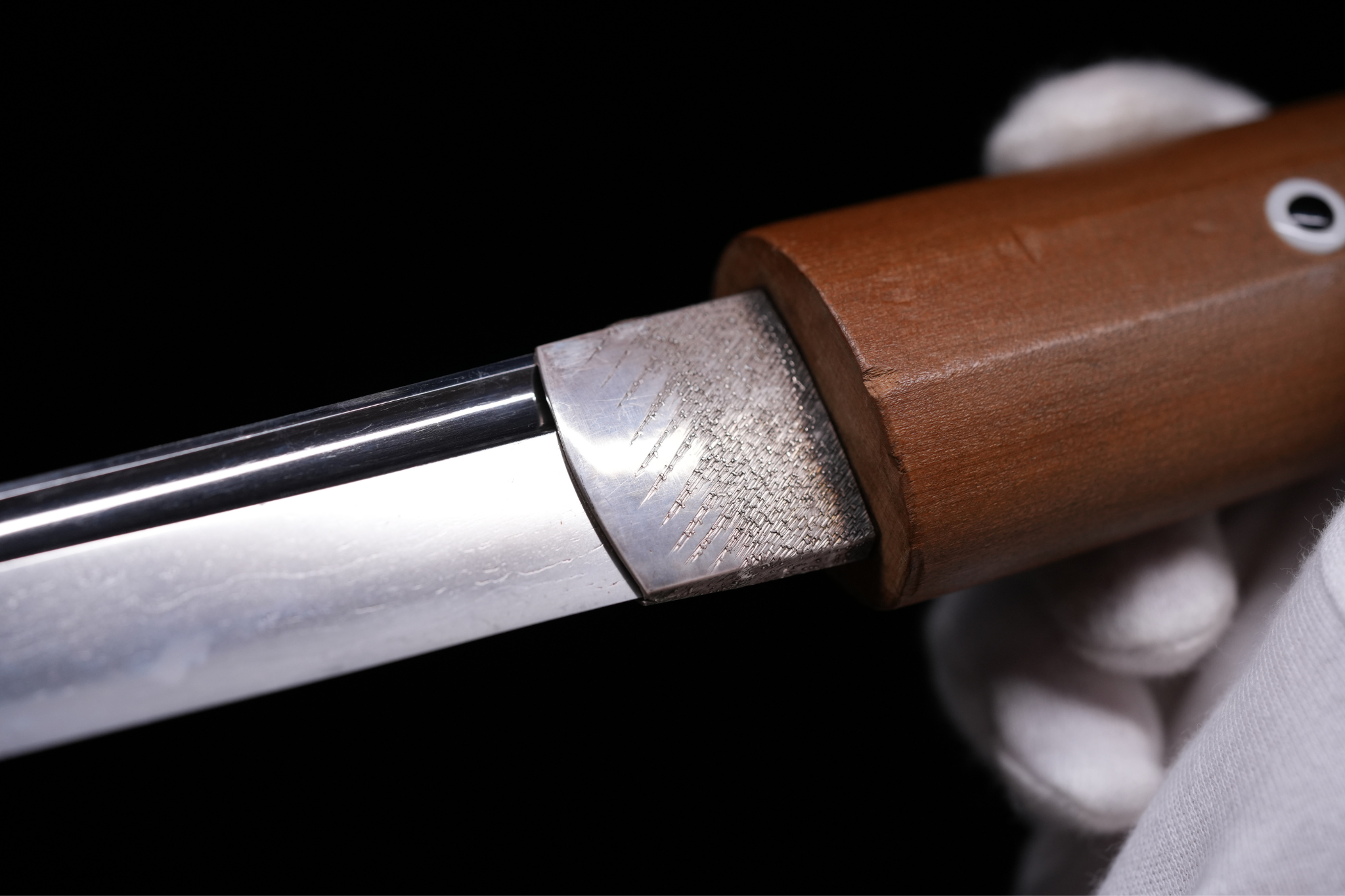
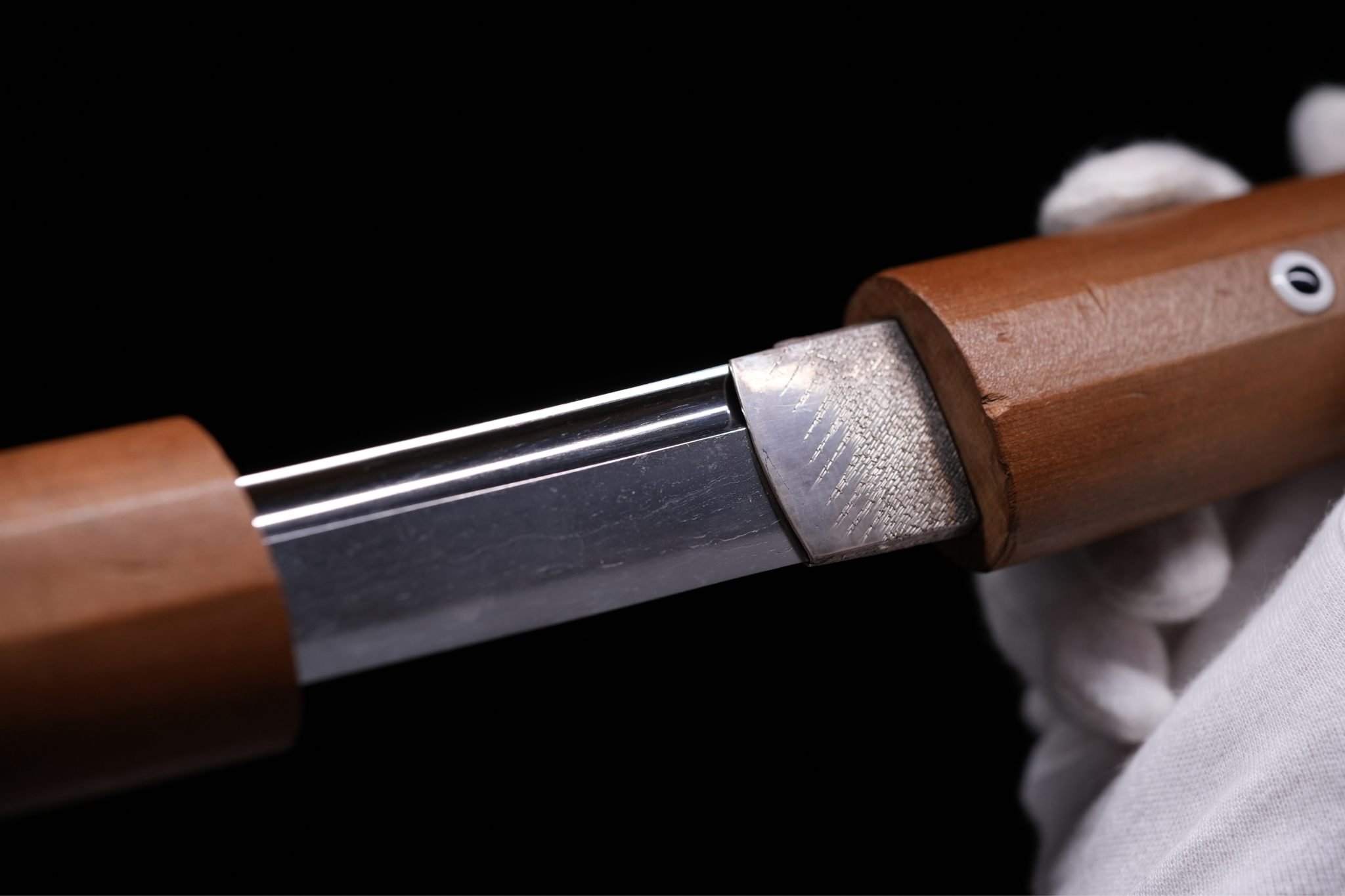
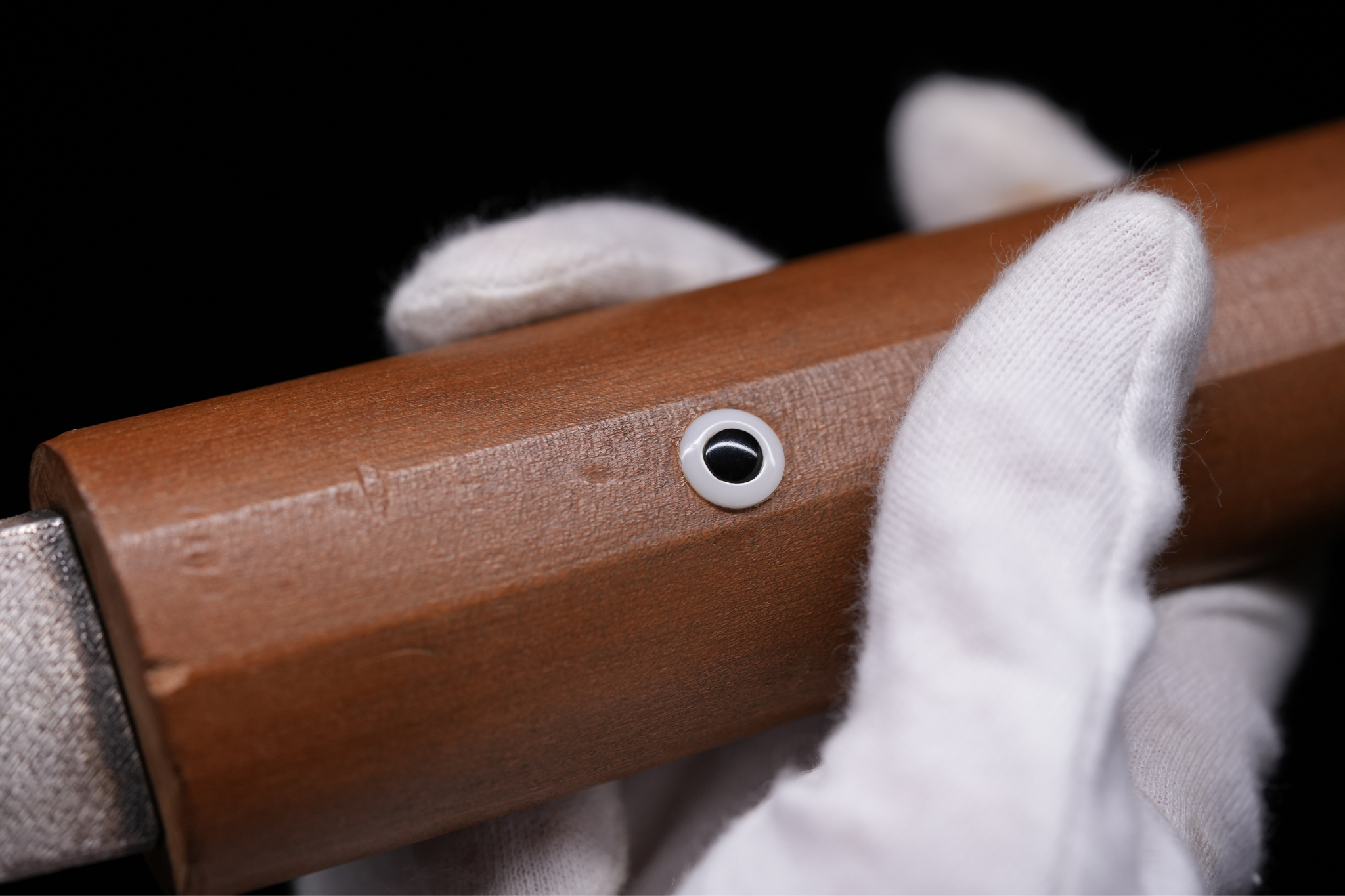
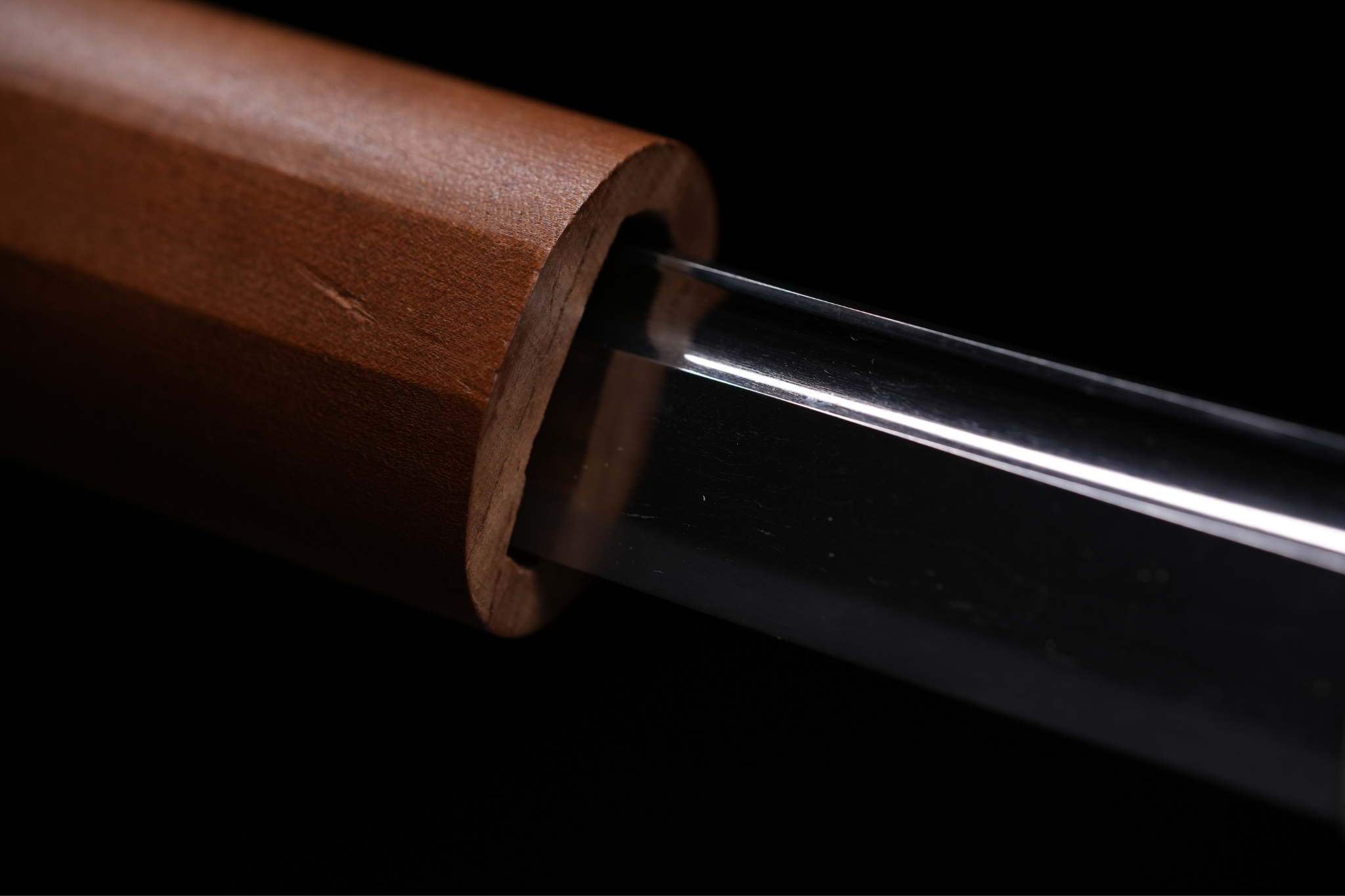
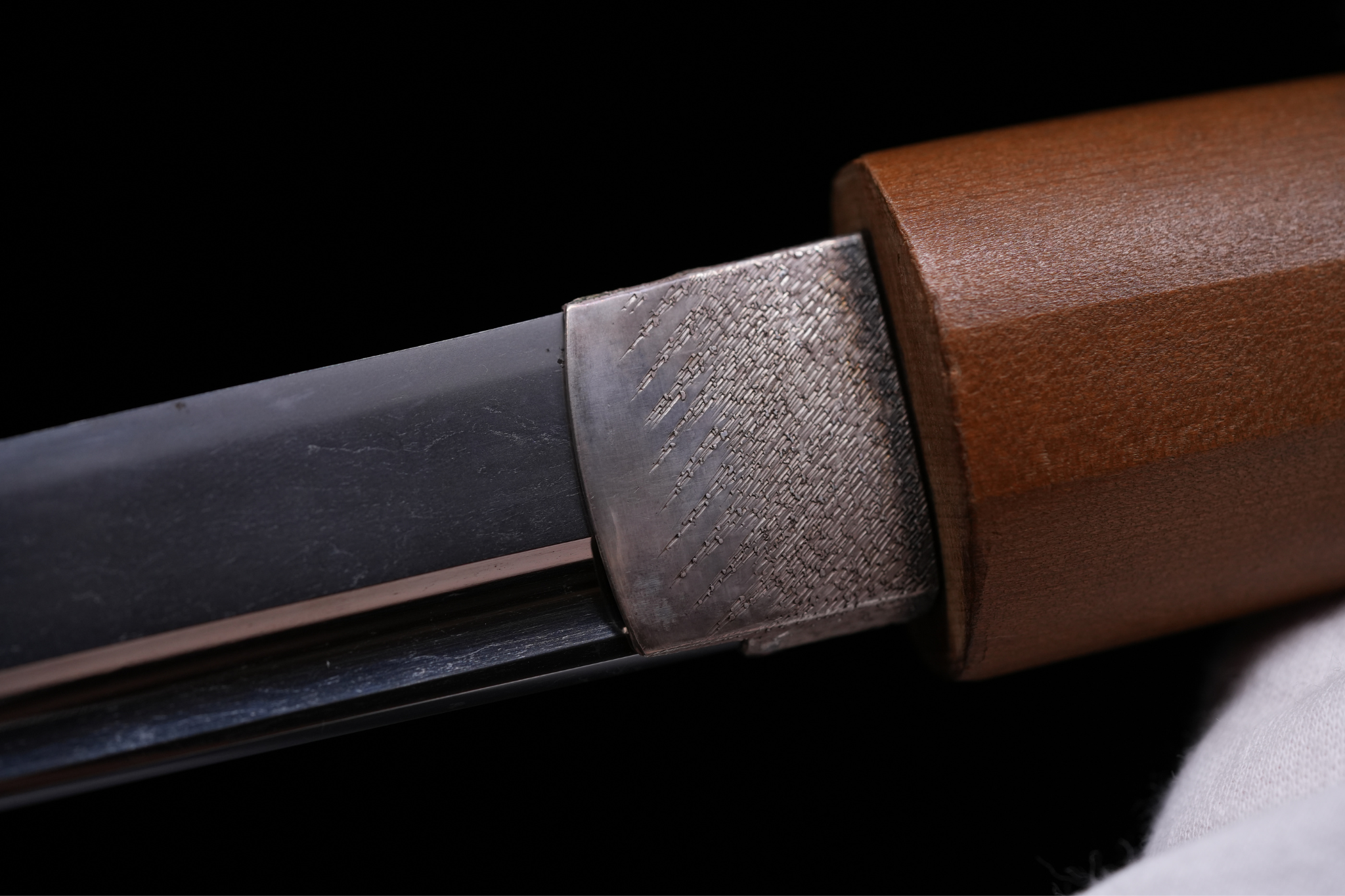
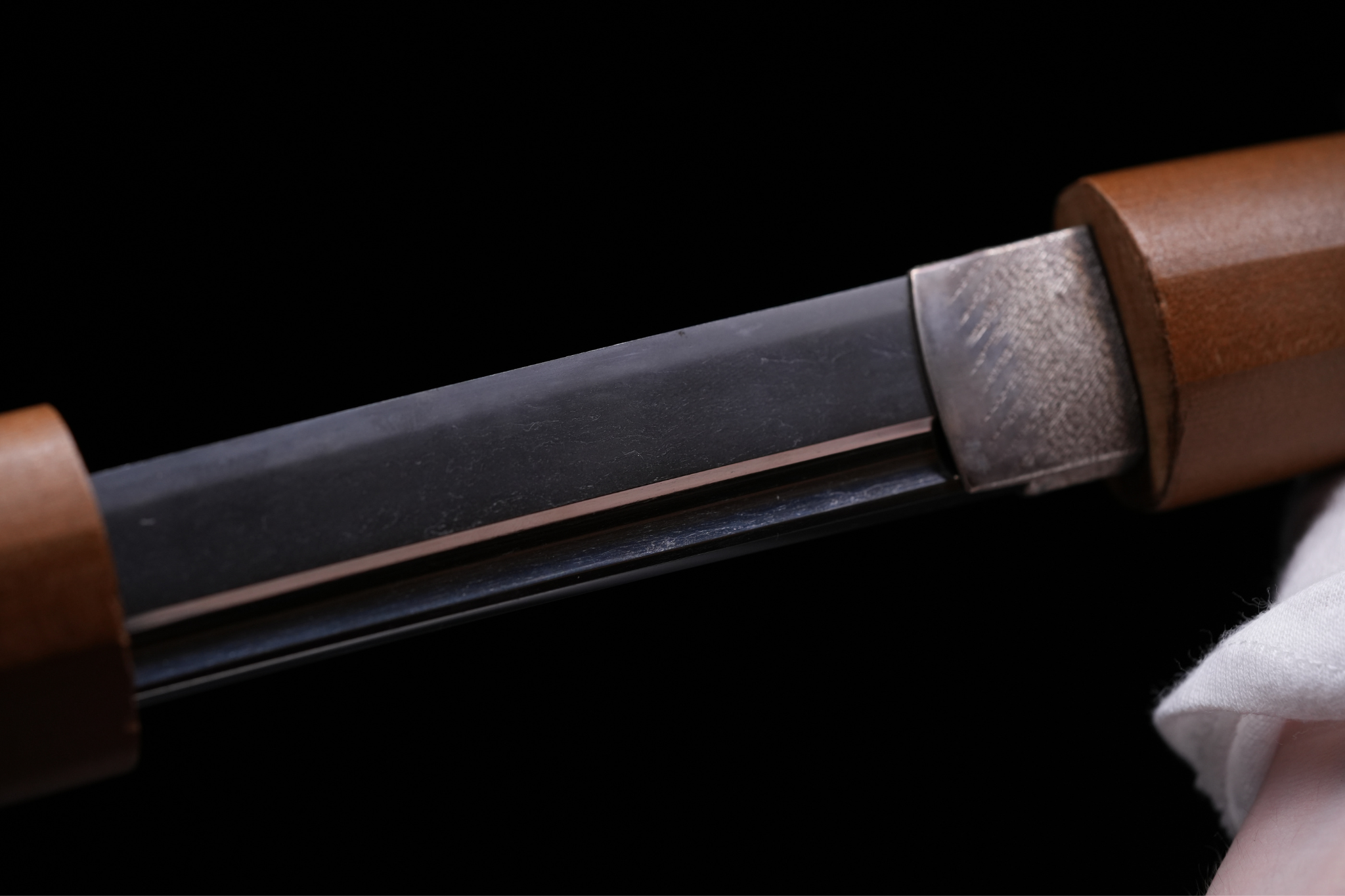
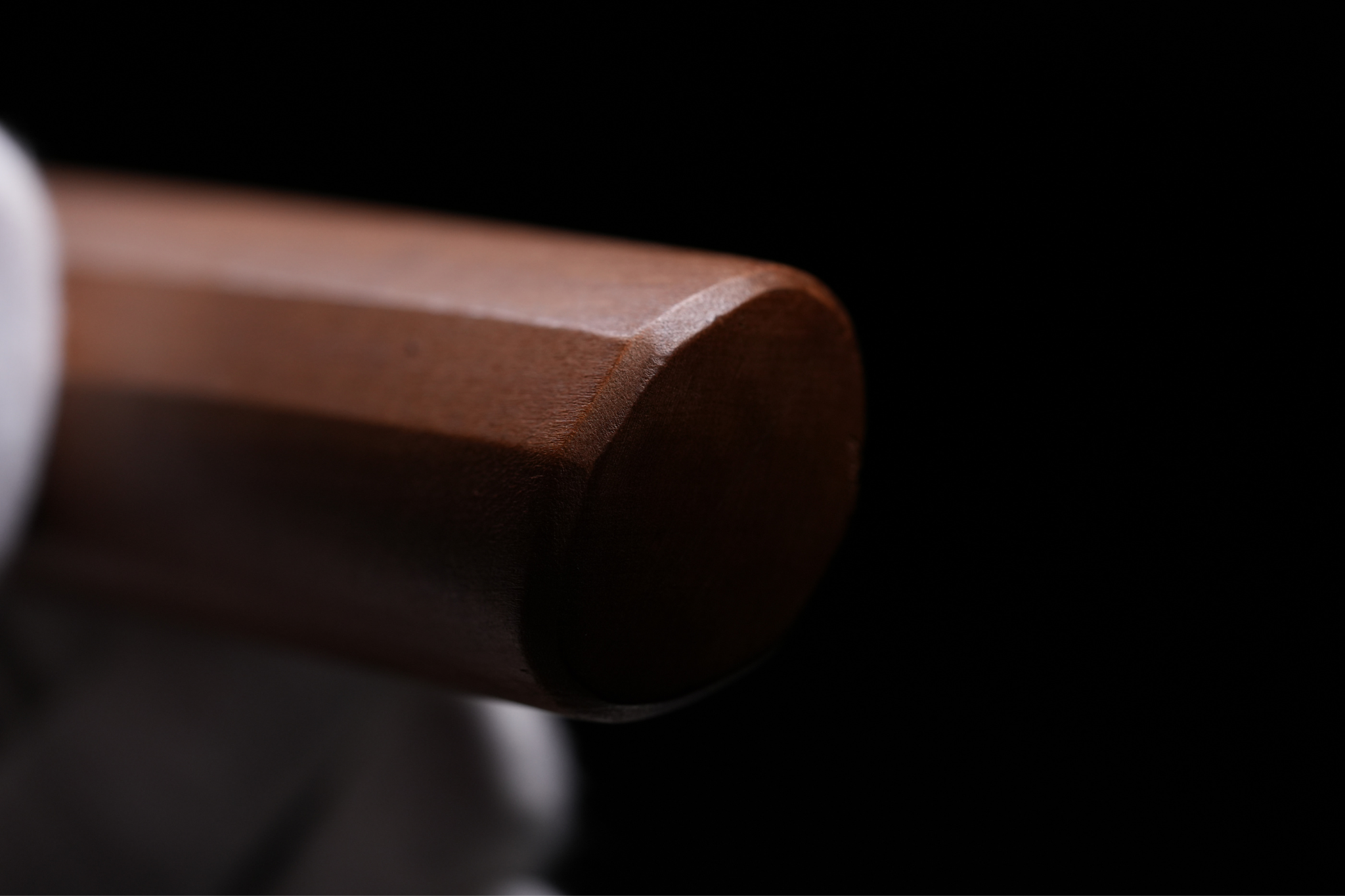
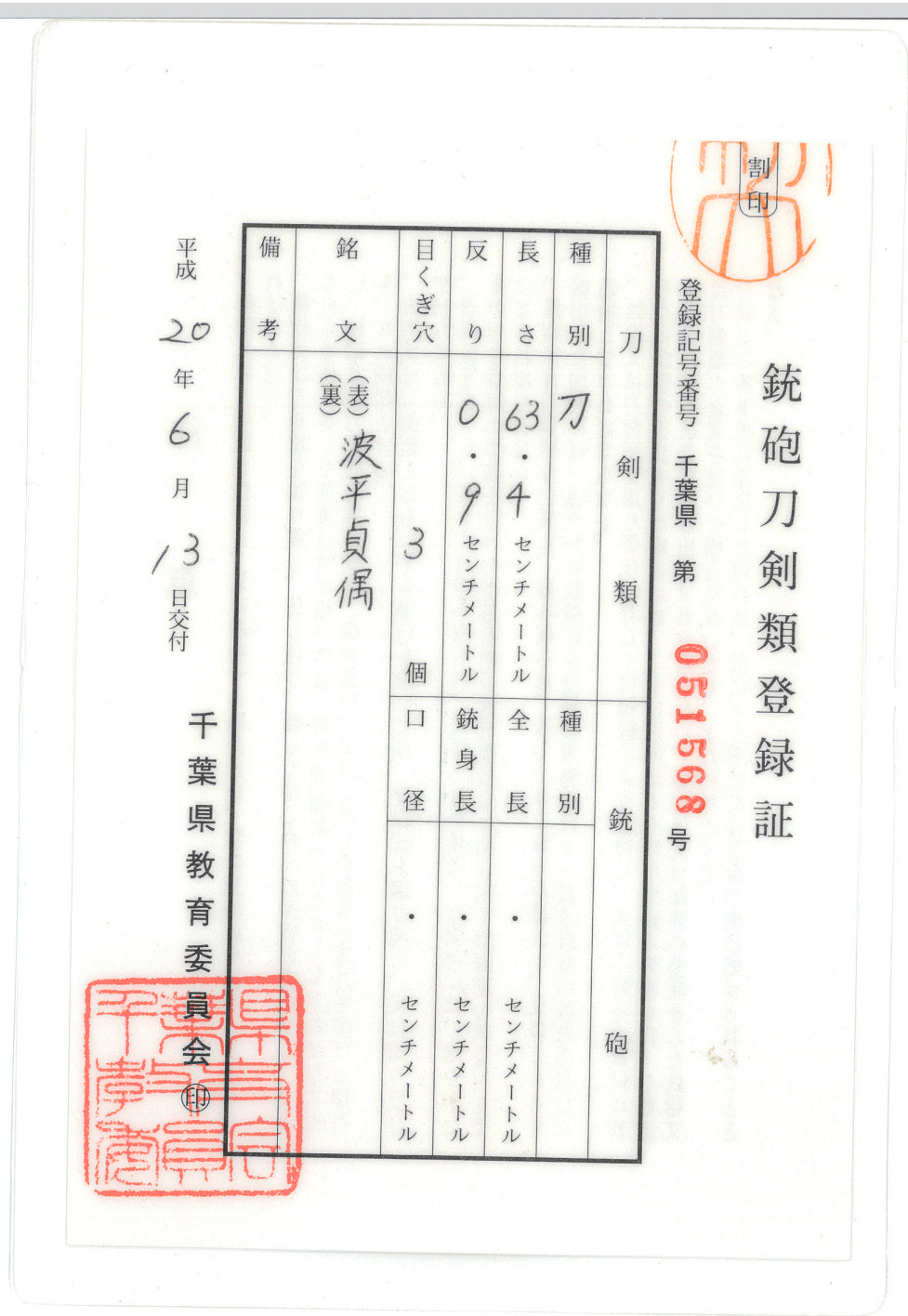
Specifications : Mei (Signature) : 波平貞偶 (Naminohira Sadaku) Type : Katana Period : late Muromachi With BO-HI Blade Length : 63.4 cm Curvature (Sori) : 0.9 cm Width at the Kissaki : 39mm Motohaba (Width at the base) : 28.5mm Motokasane (Thickness at the base) : 7mm Blade's Total Length : 81.4 cm Total Sheath (Saya) Length : 89.5 cm Blade Weight : 531g Total Weight (including sheath) : 872g Description: The blade presents a signature of Naminohira Sadaku. The ji-hada (texture of the blade's surface) displays a beautifully crafted masame-hada, which resembles straight grain patterns. The steel's texture (jigane) has a refined quality, demonstrating a well-forged luminous foundation. The hamon (temper pattern) reveals a straight pattern (suguha) with a shallow wave (notare), which is subtly interspersed with small irregularities (ko-midare). The boshi (temper line in the tip or kissaki area) appears to be in a swept manner (hakikake) with a slight turn-back. The nakago (tang) appears to be polished (mune is polished), with three mekugi-ana (peg holes). The yasurime (file marks on the tang) are in a slanting pattern, known as sujikai. The blade seems to be in an old polish but is still in a condition appreciable for collectors. The sword comes with a white saya (sheath), which bears an inscription, likely referring to its attribution to the Eisho era during the late Muromachi period. Historical Context: The Naminohira school, originating from the Satsuma province, has a history that spans several centuries. While not as renowned as the major sword-making traditions like Bizen or Soshu, the Naminohira smiths produced a significant number of quality swords, especially during the Kamakura and Muromachi periods. Naminohira Sadaku would have been one of the smiths from this school, producing blades during the tumultuous late Muromachi period, a time of significant warfare and social upheaval in Japan. The period is marked by the rise of powerful daimyo (feudal lords) who woul
在銘 · Naminohira · 室町 · 長さ 63.4cm · 反り 0.9cm


脇物 · 薩摩
現在13点販売中
波平派は、平安時代後期に正国なる刀工が大和より薩摩国谷山郡波平の地に来住して開祖となったと伝えられる。その子を行安といい、以後その門流は南北朝時代を経て幕末新々刀期にまで綿々と続いた。同派の中でも南北朝期を降らぬ刀工及びその作刀群を総称して古波平と呼び、波平安次の名跡は鎌倉中期から室町期にかけて継承されている。一説に安次は行安の門とも伝えられ、在銘作は数少なく資料的に極めて貴重である。 古波平の作風は大和気質の強く窺えるものであるが、鍛えは板目に流れ肌が目立って交じり、ねっとりとして軟らか味をおびた肌合を呈し、地沸がよくつき太い地景が随処に入る。刃文は細直刃を基調として匂口がうるみごころとなり、小沸がつき、刃縁にほつれが見られ、腰元を焼き落すなどの諸点に特色がある。帽子は直ぐに焼詰め、或いは丸く浅く返る。姿は腰反りのついた古様な太刀姿を呈し、南北朝期には身幅がやや広く元先の幅差が目立たず大鋒に結ぶなど時代色が現れる。 新刀期に入ると、延宝八年生まれの一平安代が同派の代表工となる。通称を玉置小市といい、初め父安貞について学び、のちに波平本家の大和守安国の門にも学んだ。享保六年正月、同国の正清と共に八代将軍吉宗に召されて江戸で鍛刀し、その技を認められて幕府から一葉葵紋を茎に切ることを許され、さらに帰途朝廷より主馬首に任ぜられた。安代は穏やかな直刃調浅くのたれた刃取りを得意とし、匂が深く沸が厚く強くつき、荒沸を交え、金筋・沸筋・砂流しがさかんに入るなど、働き豊富な作風を示している。 詳しく見る →
室町は刀剣業を産業に変えた。徒歩の集団戦とともに打刀が興り、長船と関は数打ち物と注文打ちを並行して産し、勘合貿易は日本刀を数万振の単位で海外へ運んだ。
販売店の出品ページで鑑定書を確認できませんでした。日本刀および刀装具は通常、NBTHK(または NTHK)の鑑定を受けます。鑑定書がない場合、極めは販売店の見解にとどまり、第三者による確認は行われていません。ご購入前に販売店へ鑑定書の有無をお問い合わせのうえ、慎重にご判断ください。
Returns/exchanges only for manufactured defects or incorrect products; notify within 72 hours of delivery. Cancellation only within 2 hours of placing. Customer pays return shipping. Refund within 3 business days of package arrival.
Specifications : Mei (Signature) : 波平貞偶 (Naminohira Sadaku) Type : Katana Period : late Muromachi With BO-HI Blade Length : 63.4 cm Curvature (Sori) : 0.9 cm Width at the Kissaki : 39mm Motohaba (Width at the base) : 28.5mm Motokasane (Thickness at the base) : 7mm Blade's Total Length : 81.4 cm Total Sheath (Saya) Length : 89.5 cm Blade Weight : 531g Total Weight (including sheath) : 872g Description: The blade presents a signature of Naminohira Sadaku. The ji-hada (texture of the blade's surface) displays a beautifully crafted masame-hada, which resembles straight grain patterns. The steel's texture (jigane) has a refined quality, demonstrating a well-forged luminous foundation. The hamon (temper pattern) reveals a straight pattern (suguha) with a shallow wave (notare), which is subtly interspersed with small irregularities (ko-midare). The boshi (temper line in the tip or kissaki area) appears to be in a swept manner (hakikake) with a slight turn-back. The nakago (tang) appears to be polished (mune is polished), with three mekugi-ana (peg holes). The yasurime (file marks on the tang) are in a slanting pattern, known as sujikai. The blade seems to be in an old polish but is still in a condition appreciable for collectors. The sword comes with a white saya (sheath), which bears an inscription, likely referring to its attribution to the Eisho era during the late Muromachi period. Historical Context: The Naminohira school, originating from the Satsuma province, has a history that spans several centuries. While not as renowned as the major sword-making traditions like Bizen or Soshu, the Naminohira smiths produced a significant number of quality swords, especially during the Kamakura and Muromachi periods. Naminohira Sadaku would have been one of the smiths from this school, producing blades during the tumultuous late Muromachi period, a time of significant warfare and social upheaval in Japan. The period is marked by the rise of powerful daimyo (feudal lords) who woul
在銘 · Naminohira · 室町 · 長さ 63.4cm · 反り 0.9cm


脇物 · 薩摩
現在13点販売中
波平派は、平安時代後期に正国なる刀工が大和より薩摩国谷山郡波平の地に来住して開祖となったと伝えられる。その子を行安といい、以後その門流は南北朝時代を経て幕末新々刀期にまで綿々と続いた。同派の中でも南北朝期を降らぬ刀工及びその作刀群を総称して古波平と呼び、波平安次の名跡は鎌倉中期から室町期にかけて継承されている。一説に安次は行安の門とも伝えられ、在銘作は数少なく資料的に極めて貴重である。 古波平の作風は大和気質の強く窺えるものであるが、鍛えは板目に流れ肌が目立って交じり、ねっとりとして軟らか味をおびた肌合を呈し、地沸がよくつき太い地景が随処に入る。刃文は細直刃を基調として匂口がうるみごころとなり、小沸がつき、刃縁にほつれが見られ、腰元を焼き落すなどの諸点に特色がある。帽子は直ぐに焼詰め、或いは丸く浅く返る。姿は腰反りのついた古様な太刀姿を呈し、南北朝期には身幅がやや広く元先の幅差が目立たず大鋒に結ぶなど時代色が現れる。 新刀期に入ると、延宝八年生まれの一平安代が同派の代表工となる。通称を玉置小市といい、初め父安貞について学び、のちに波平本家の大和守安国の門にも学んだ。享保六年正月、同国の正清と共に八代将軍吉宗に召されて江戸で鍛刀し、その技を認められて幕府から一葉葵紋を茎に切ることを許され、さらに帰途朝廷より主馬首に任ぜられた。安代は穏やかな直刃調浅くのたれた刃取りを得意とし、匂が深く沸が厚く強くつき、荒沸を交え、金筋・沸筋・砂流しがさかんに入るなど、働き豊富な作風を示している。 詳しく見る →
室町は刀剣業を産業に変えた。徒歩の集団戦とともに打刀が興り、長船と関は数打ち物と注文打ちを並行して産し、勘合貿易は日本刀を数万振の単位で海外へ運んだ。
販売店の出品ページで鑑定書を確認できませんでした。日本刀および刀装具は通常、NBTHK(または NTHK)の鑑定を受けます。鑑定書がない場合、極めは販売店の見解にとどまり、第三者による確認は行われていません。ご購入前に販売店へ鑑定書の有無をお問い合わせのうえ、慎重にご判断ください。
Returns/exchanges only for manufactured defects or incorrect products; notify within 72 hours of delivery. Cancellation only within 2 hours of placing. Customer pays return shipping. Refund within 3 business days of package arrival.