NihontoWatch MonNihontoWatchBETA
MarketEncyclopedia
NihontoWatch Mon

NihontoWatchBETA

Market
Encyclopedia
Overview·Kantei·Designations·Provenance·Blade Forms·Signatures·Lineage·School
OverviewKanteiDesignationsProvenanceBlade FormsSignaturesLineageSchool
  1. Schools
  2. Naminohira
  3. Ko-Naminohira
  4. Yukiyasu

Naminohira Yukiyasu

行安

Tokujū
Vol. 26, No. 39 · Tachi

Naminohira Yukiyasu

行安

10 ranked works

ProvinceSatsumaEraEnkei (1308–1311)PeriodKamakuraSchoolNaminohiraTraditionWakimonoGeneration1stFujishiroJo-jo sakuToko Taikan800(top 14%)TypeSwordsmithCodeYUK609
1Jūyō Bunkazai
1Jūyō Bijutsuhin
2Tokubetsu Jūyō6Jūyō Tōken

Overview

The oldest sword attributed to Yukiyasu is the preserved at Sanage Shrine in Aichi, an Important Cultural Property the published sources reach for as the earliest surviving example of the name. Yukiyasu is the chief name of the Ko-Naminohira school of Satsuma, the southern Kyushu line whose origin the published record traces to a smith called Masakuni, said to have come from Yamato to Naminohira in Taniyama District in the late period. No securely attributable work of Masakuni himself survives; his son Yukiyasu is the founder of the working line, and the name was then inherited generation after generation down into the late- era. The line is held to draw on the Yamato Senjuin tradition, and the published sources affirm that descent from the style of the work itself. The Yukiyasu under this entry is thus the early head of a centuries-long succession rather than one man, and the term Ko-Naminohira gathers the smiths and works of the school no later than the period.

His characteristic steel is an that flows and turns to a strong toward the edge, a viscous, soft the published sources call , with fine gathered thickly and entering, and a whitish, misty rising in the rather than the bright patterned reflection of . The old works of the school, the sources note, show a that runs to with an flavor. Over that the temper is restrained: a narrow , frayed at the with , run in with and frequent , fine and threading the edge, the clouded in an softness. The most telling departure from the Yamato manner the school otherwise resembles is at the base, where the temper drops markedly in a ; one early has it 'dropped greatly at the base' (元を大きく焼落す), and the runs straight to a with little turnback.

The is the constant across his every form and period. On the early signed the steel is dense and soft, one piece described with the steel having 'a , viscous feeling' (ねっとりした感がある); on the later broad work it stands a little more, somewhat blackish, the still rising. The narrow over it stays the school's quiet signature: an early compared with typical Naminohira shows less and richer activity within the edge, while the broad late pieces let the gather into a small in the lower half, mixing and , with the streak-like running intermittently from base to tip. Restraint, not display, is the rule; the published sources call one such blade 'restrained and deeply flavored in manner' (枯淡で味わい深い作柄).

His record divides cleanly into two faces of the one hand. The first is the slender, classical early- signed , small in , the high and wide, deep with marked , a thoroughly archaic silhouette whose four-character signature is cut crisply with a thick chisel on the upper . The second is the broad, powerful late- to work, long and wide with a high curvature, surviving or shortened. Beyond the the record carries a few other forms that confirm the hand: a signed in a long inscription and dated Kareki 2 (1327), with a plain carved on the , and a fully preserved , one of the school's few surviving examples. Dated and long-signed Yukiyasu being rare, these pieces are valued as documentary material as much as for their workmanship. The central scholarly difficulty is that the school's manner changes little with period; on the shortened attributions there is no single feature that must mean Yukiyasu, and the published commentary is candid that, as a general principle, 'the manner does not change with the age, and this is a point of recognition for this smith and his school' (作風が原則的に、年代によって変化しないのがこの工並びに一派の見処である).

What sets him apart he shares, in part, with his neighbours. The narrow , the soft steel, the and the at the base give his work an archaic Kyushu fragrance, and the published sources are careful to say it is not the school's alone: 'many show a at the , and all carry an antique fragrance,' a quality that 'is shared as well by other Kyushu classical hands such as Yukihira and Miike Mitsuyo' (此の派だけでなく行平や三池光世など他の九州古典派の作にも通じる). Against mainstream Yamato he is told by that dropped base; against by the absence of a bright patterned and by his whitish . His is a deliberately plain manner, and the judges name it as such: of one representative shortened they write that it is 'without flamboyance, yet a savor-worthy masterpiece firmly attributable to this smith, displaying a dignified presence' (派手やかさこそないものの堂々たる貫禄を示した滋味掬すべき同工極めの白眉).

For the collector Yukiyasu is a rare early Kyushu name, graded Jo-jo by Fujishiro. He has no National Treasures; his designated record runs instead through Important Cultural Property, the prewar Bijutsuhin, and the modern and tiers, eight blades in all standing in the and ranks. The two highest examples are an early signed and a later broad , the latter held the representative work of the school. Of recorded whereabouts, the earliest is preserved at Sanage Shrine, and the celebrated called Sasanuki passed in the Kabayama family, a branch of the Shimazu of Satsuma, so the school's history is bound up with its home province and its house. Surviving Yukiyasu are few and dated ones rarer still, so a signed Ko-Naminohira Yukiyasu comes to light only seldom; a privately held example, carrying the soft steel and dropped base and antique fragrance the published sources prize, is a notable thing for a collector to encounter, a document of how swordmaking began in the far south of Japan.
Kantei

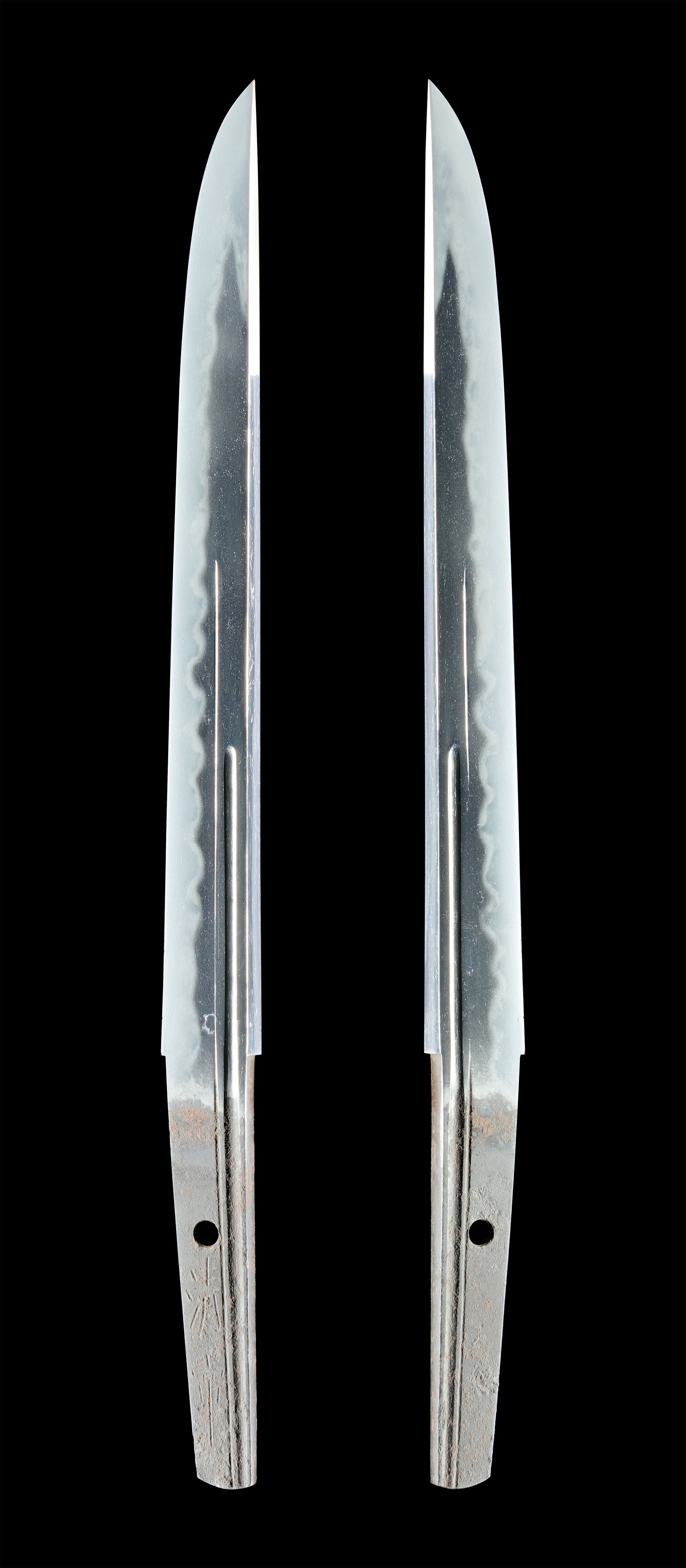
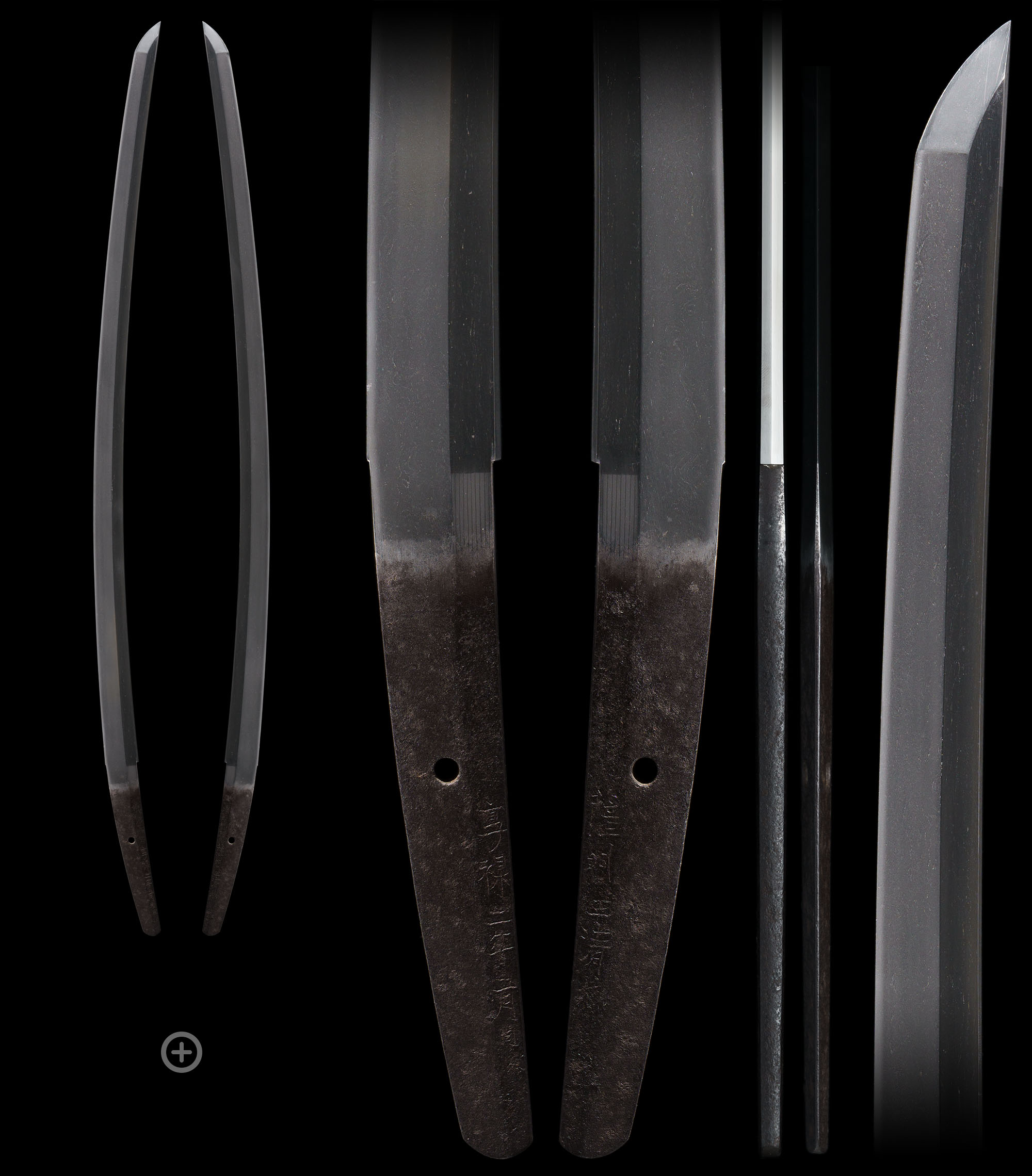
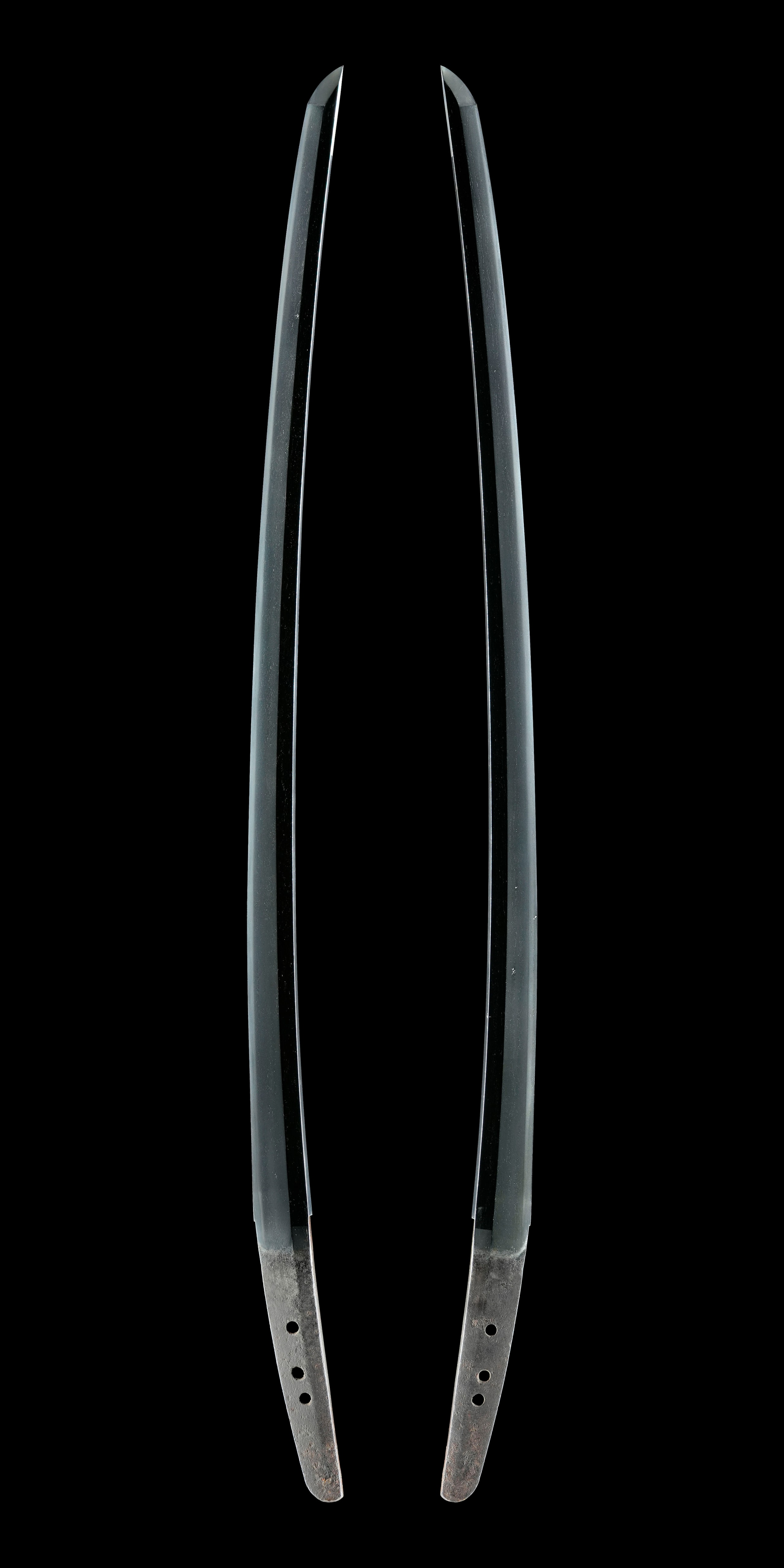
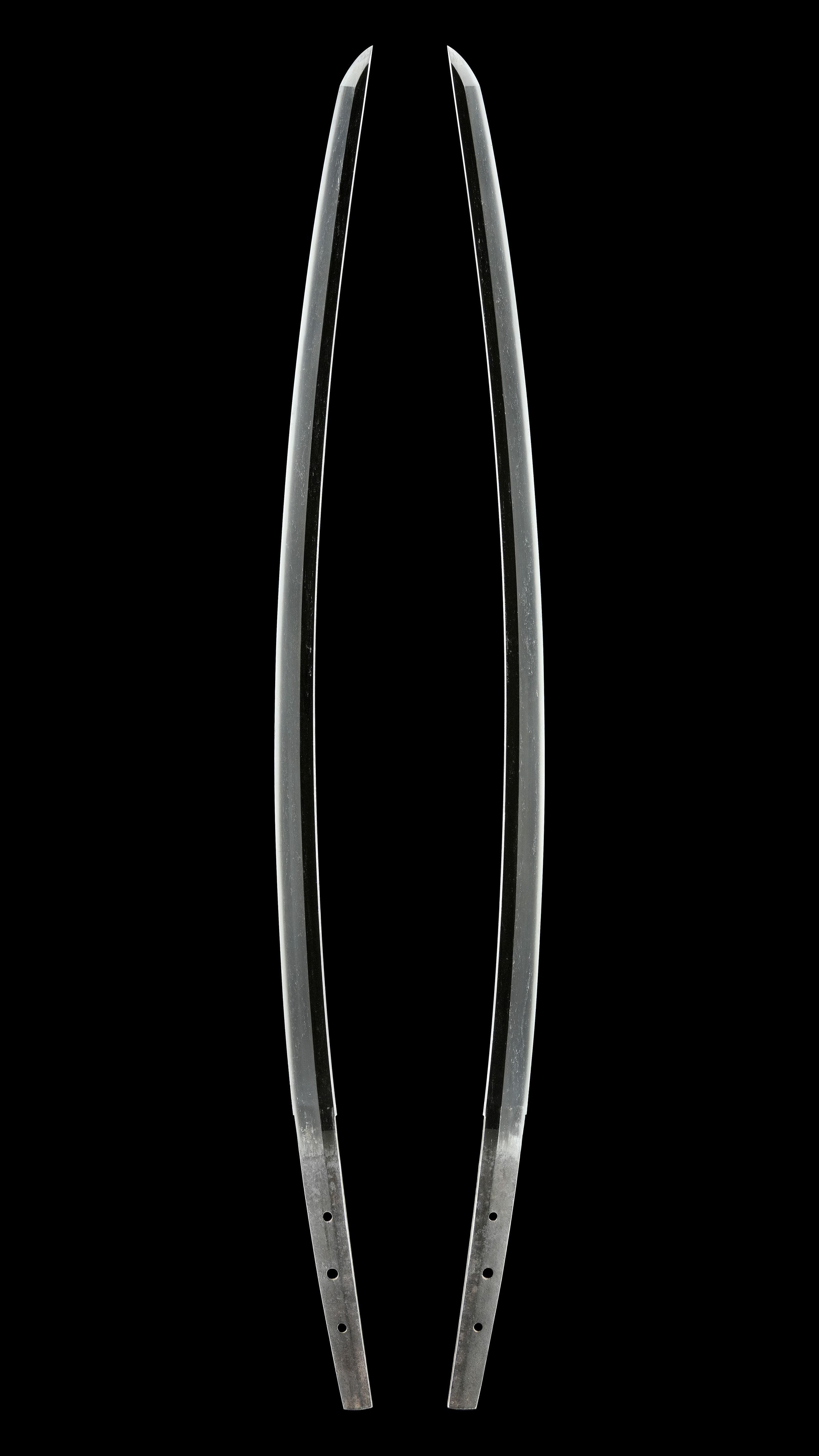
two faces of one Ko-Naminohira hand over the same Yamato-rooted ground: the slender, classical early-Kamakura ubu signed tachi in a narrow suguha with marked yakiotoshi, set against the broad, powerful late-Kamakura to Nanbokucho works, mumei or shortened, whose chu-suguha widens into a small midare with shirake-utsuri

Yukiyasu is the chief name of the Ko-Naminohira school of Satsuma, the southern Kyushu line that the published sources trace from a smith named Masakuni, said to have come from Yamato to Naminohira in Taniyama District in the late period; his son Yukiyasu is the founder of the working line, and the name was inherited down into the era, so the Yukiyasu of this code is the early head of a centuries-long succession rather than one man. The school's manner stays close to Yamato across periods, which makes precise dating hard: over an that flows into a strong toward the edge, the steel takes a viscous, soft feeling with and and a whitish , and the temper is a narrow , frayed with , running with frequent , fine and , the clouded in , and the base markedly dropped in a . The published sources hold these traits to be shared with other Kyushu classical hands such as Bungo Yukihira and Miike Mitsuyo. His record divides into the slender, classical early- signed and the broad, powerful late- to works; the oldest example is the Important Cultural Property at Sanage Shrine, and the celebrated Sasanuki of the Kabayama house is another.

Diagnostic discriminators

unique vs mainstream Yamato (Senjuin / Taima)

unique vs Bizen midare-utsuri (bright, patterned)

Observation by phase

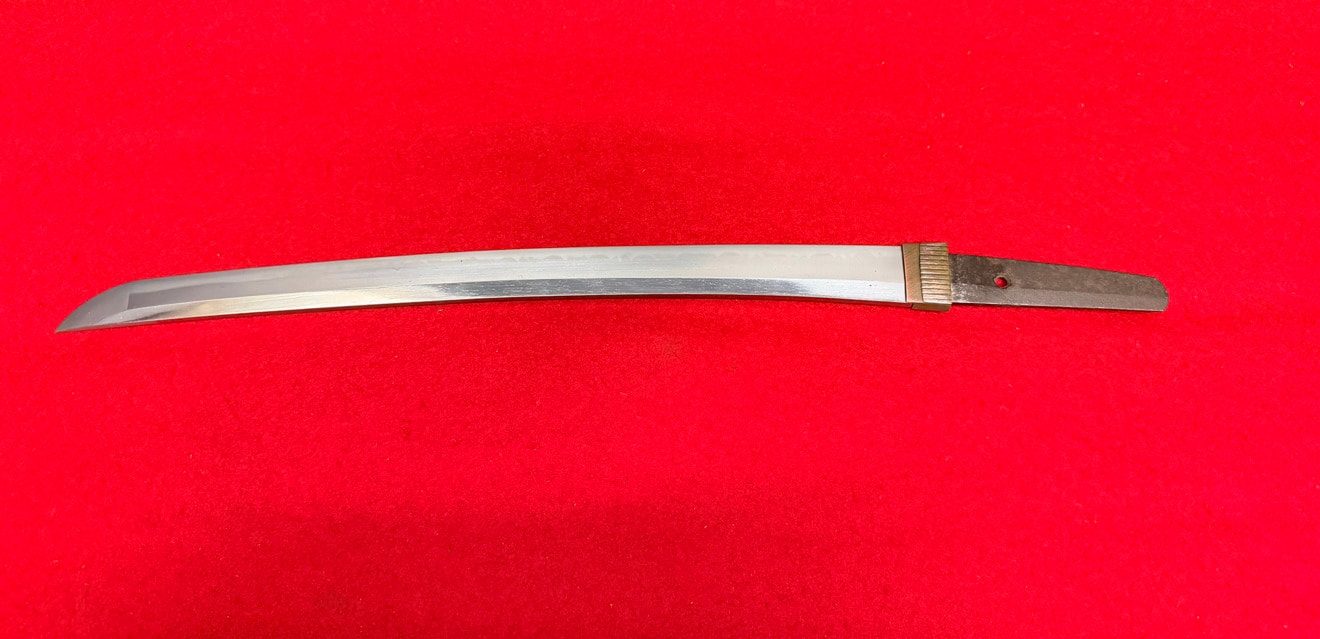
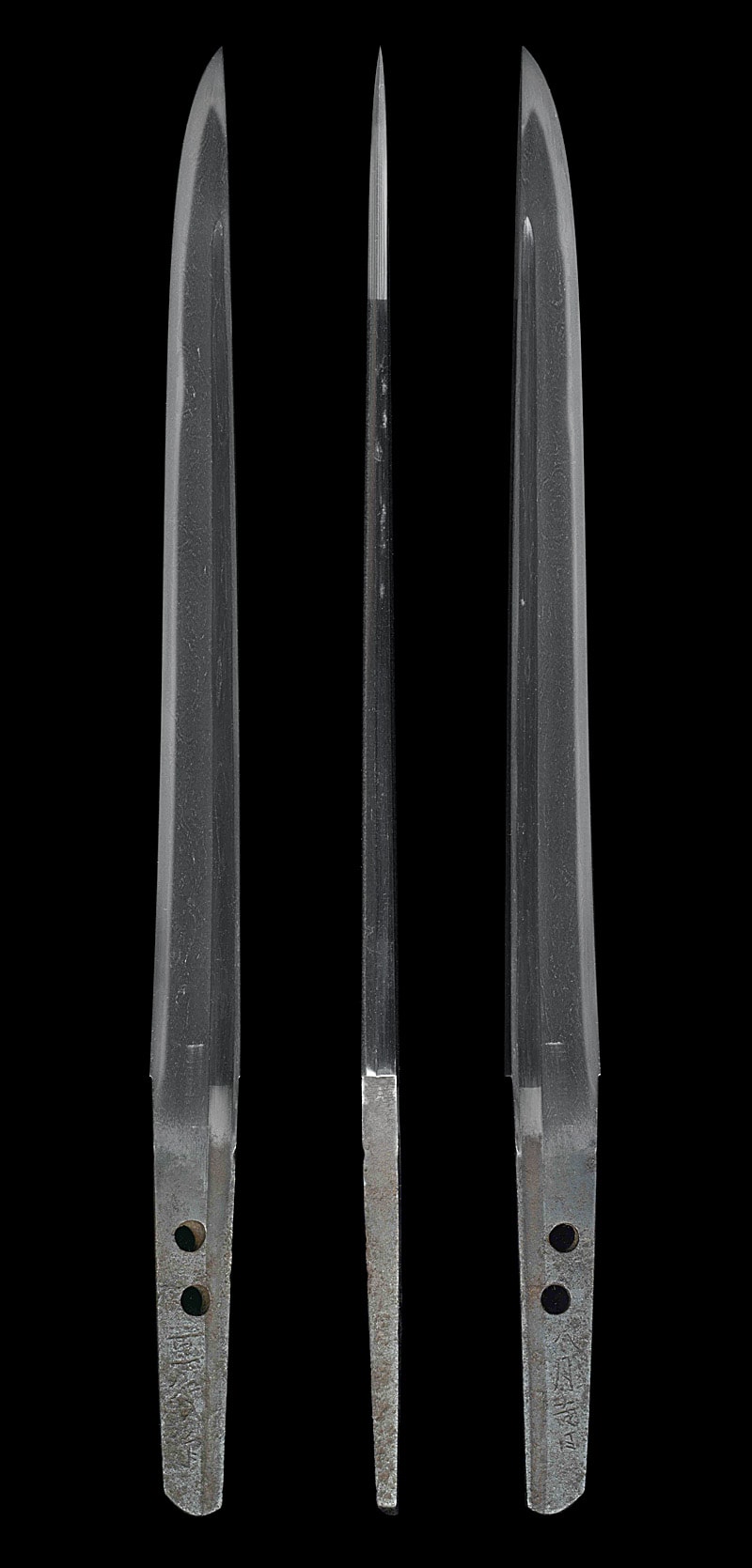
The classical early-Kamakura ubu signed tachi

His earliest recognized manner is the , signed , slender with a small , the shinogi high and wide, deep with marked and a slightly downturned tendency toward the tip, a thoroughly archaic silhouette. The ground is an that flows and becomes strongly toward the edge, the steel feeling , viscous and soft, with fine, thickly gathered and . Over it the temper is a narrow , well in with and sparkling round , frayed with , carrying and fine and , the base dropped markedly in a and the running to a . The published sources read this as classical work that does not descend later than the period, expressing the Yamato tradition in both and , and note that on the finest of them the shows less than usual while the activity within the edge is rich. The crisp clarity of the four-character signature, cut with a thick chisel on the upper , is itself prized.

Sugata 姿
Jigane 地鉄
Hamon 刃文
Bōshi 帽子

The broad late-Kamakura to Nanbokucho works (mumei and shortened)

The other face of his record is the broad, powerful late work: long blades, wide in body with little taper, thick in , a high curvature and a slightly compact . Over an whose grain stands a little, mixing some , the steel keeps the soft feeling with and a whitish . The temper is a that drops markedly in a at the base and gathers into a small in the lower half, with and entering, , , the streak-like activity running intermittently from base to tip, fine and in places, the clouded in . The attributed to him belongs here, a -based temper with small and small over a flowing, standing , carved through. The published sources affirm these from every point as Ko-Naminohira, dignified and well-forged, and judge the finest of them a representative work of the school, plain and unflamboyant yet of deep, savoring interest.

Sugata 姿
Jigane 地鉄
Hamon 刃文
Bōshi 帽子

Tanto and naginata, and the dated documentary pieces

Beyond the the record carries a few other forms that confirm the hand. A with , signed in a long inscription and dated Kareki 2 (1327), forges a flowing into with a that frays at the and drops in a about one above the , a plain carved on the ; the published sources prize its signature and date as documentary material. A fully preserved , signed, runs an mixed with and standing grain, a blackish steel with and a -based shallow , the clouded in , with a raised carved within the groove, and is called an exceptionally precious surviving example of the school's few . Dated and long-signed Yukiyasu being rare, these pieces are valued less for any new manner than for fixing the school's traits to a name and a year.

Sugata 姿
Jigane 地鉄
Hamon 刃文
Bōshi 帽子
Scholarship

The published sources affirm Yukiyasu and the Naminohira line as drawing on the Yamato Senjuin tradition and note that, as a general principle, the school's manner shows little change with period, which is exactly why precise dating is difficult and why mumei work is placed by form rather than by a personal tell. They caution that on the o-suriage attributions there is no single feature that must mean Yukiyasu, the judgment resting on era and school.

The school's distinctive points, the published sources state, are a viscous, soft nettori steel, an urumi-tending nioiguchi, and a marked yakiotoshi at the base, features that an archaic Kyushu fragrance shares with other classical Kyushu hands such as Bungo Yukihira and Miike Mitsuyo, not the school alone.

Designations

Kokuhō—
Jūyō Bunkazai1
Jūyō Bijutsuhin1
Gyobutsu—
Tokubetsu Jūyō2
Jūyō Tōken6

Elite Standing

0.22 across 10 designated works

Top 11% among smiths

Provenance

1 documented provenance across certified works by Yukiyasu

Provenance Standing

0 works held in elite collections across 1 documented provenances

Top 48% among smiths

Raw score: 2.00 / 10

Blade Forms

Distribution across 10 ranked works

Signatures

Signature types across 10 ranked works

Currently Available

Lineage

Yukiyasu
Students (3)
  1. 1.Yasutsugu安次1designated
  2. 2.Yukiyasu行安
  3. 3.Yukiyasu行安1 for sale

Naminohira School

Other artisans of the Naminohira school

  1. 1.Atsukura篤倉1designated
  2. 2.Haruyuki治行1designated
  3. 3.Sadakiyo貞清1designated
  4. 4.Sadatsugu貞次1designated
  5. 5.Chikayasu近安1designated
  6. 6.Ieyasu家安1designated
  7. 7.Naminohira Sadayasu波平貞安1designated
  8. 8.Yasuyuki安行1designated
  9. 9.Yasutsugu安次1designated
  10. 10.Yasutsugu安次1designated
  11. 11.Yukimasa行正1designated
  12. 12.Naminohira Yoshiyasu波平吉安1designated