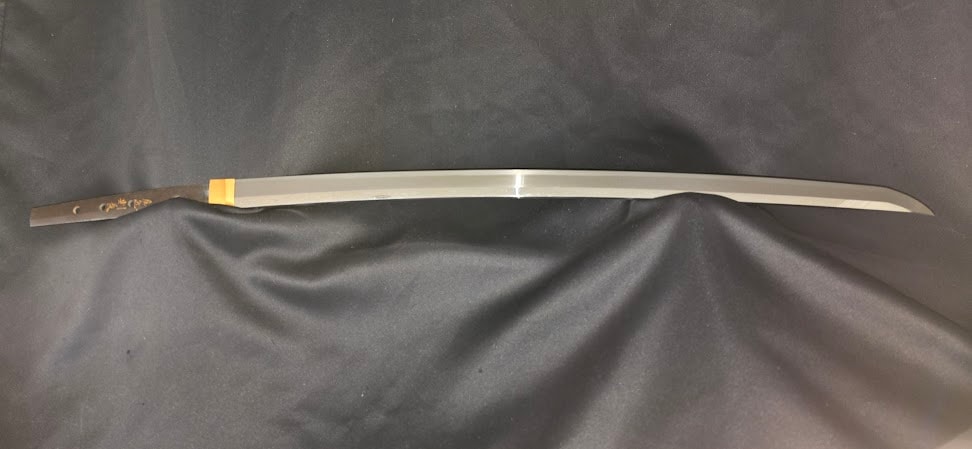
三人の天下人が戦国の世紀を終わらせ、刀は新しい秩序の道具となった。1588年の刀狩は刀を武士の標章とし、名刀は条約のごとく家々の間を行き交い、鑑定は以後この境で古刀と新刀を分かつ。
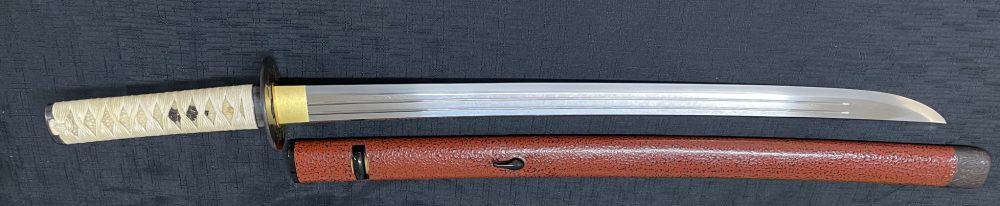
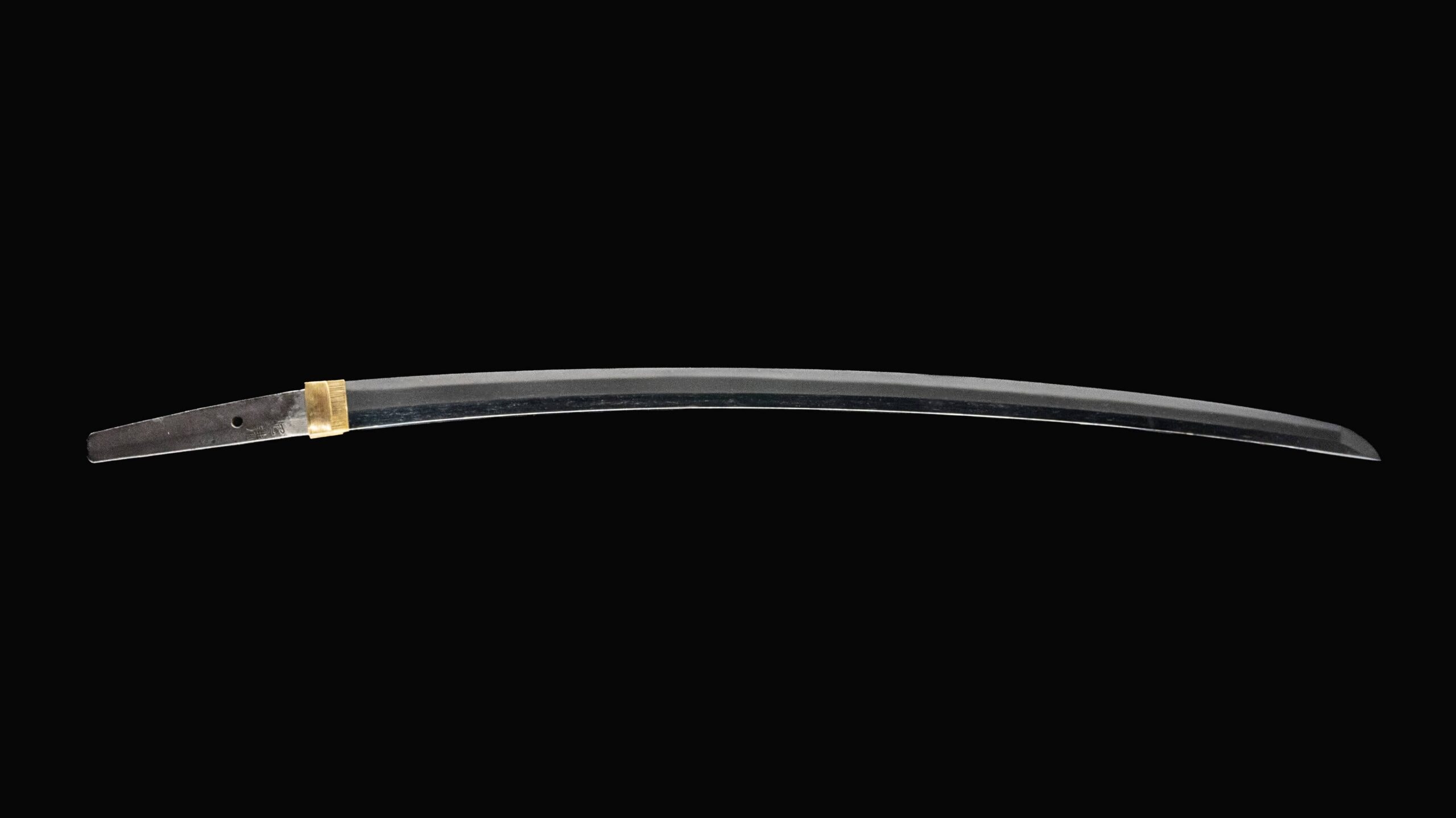
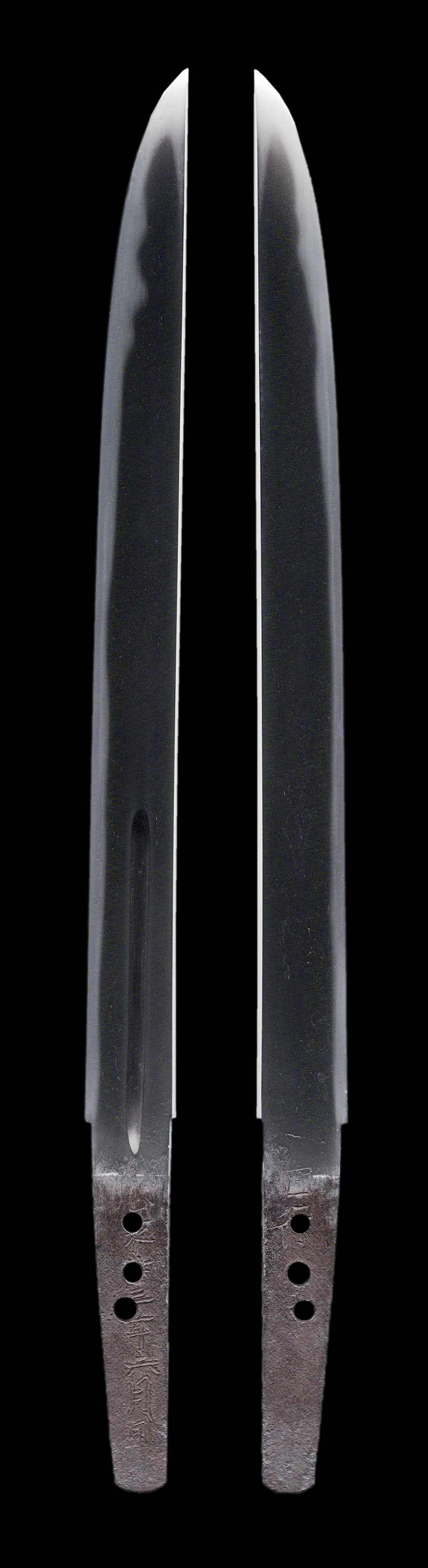
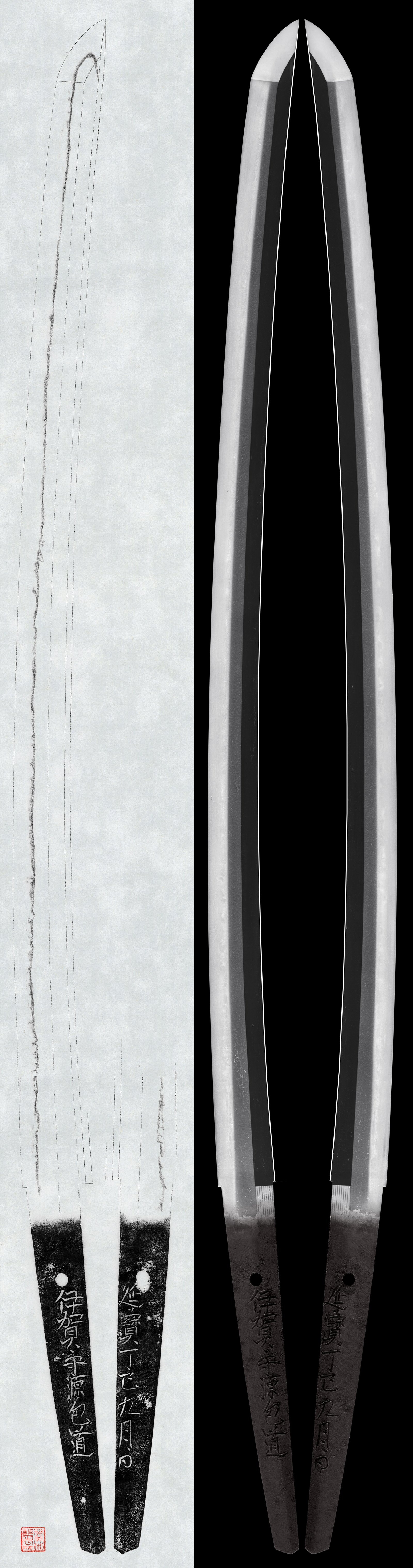
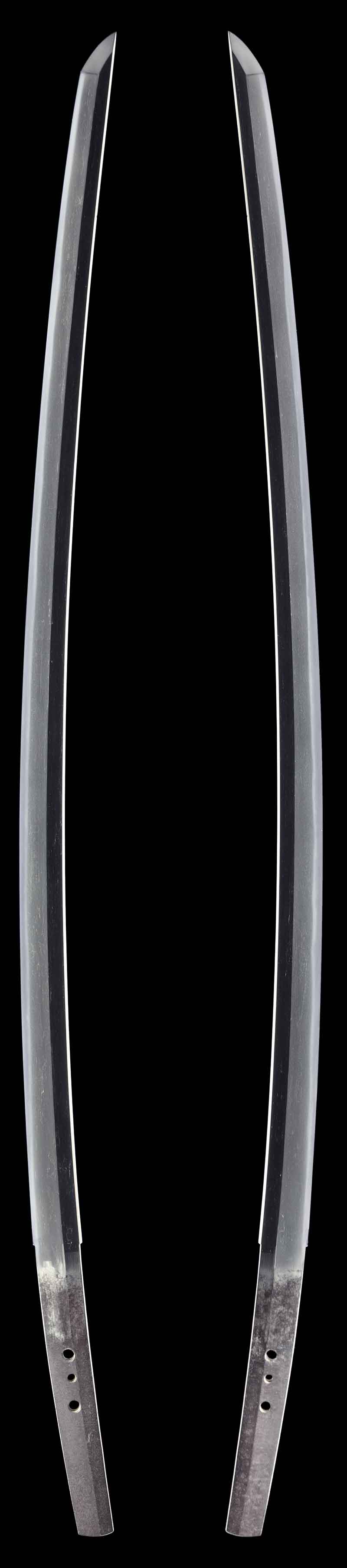
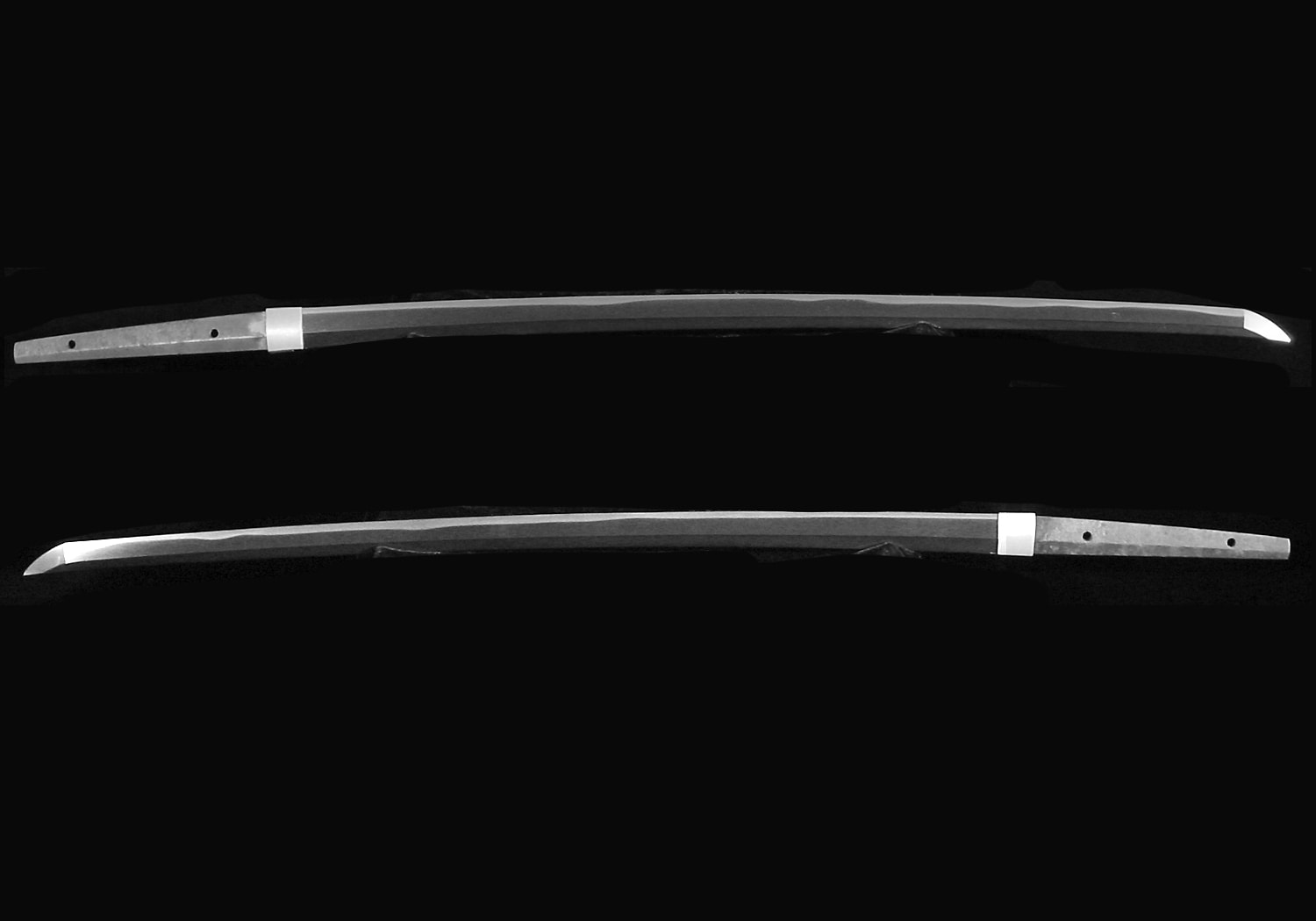
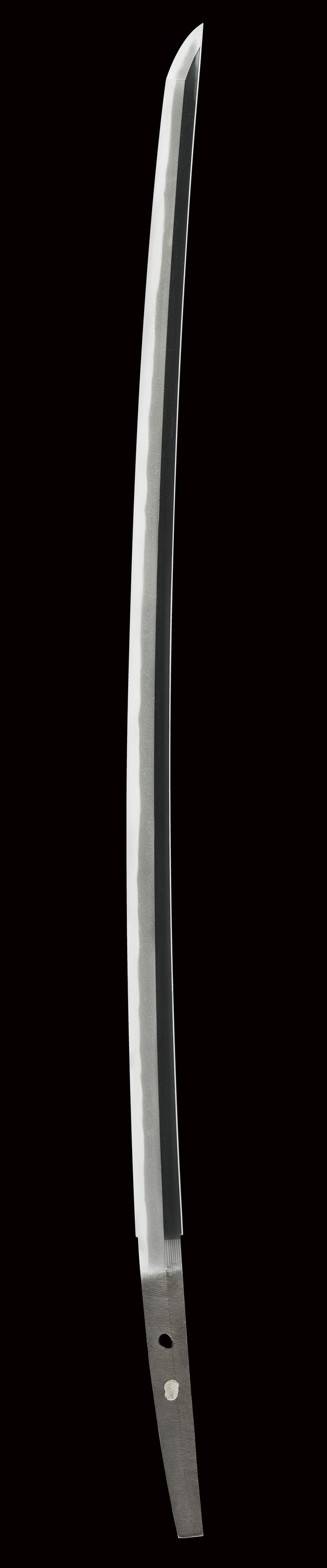
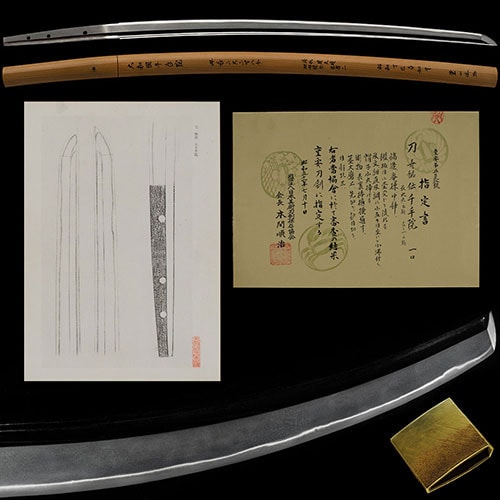
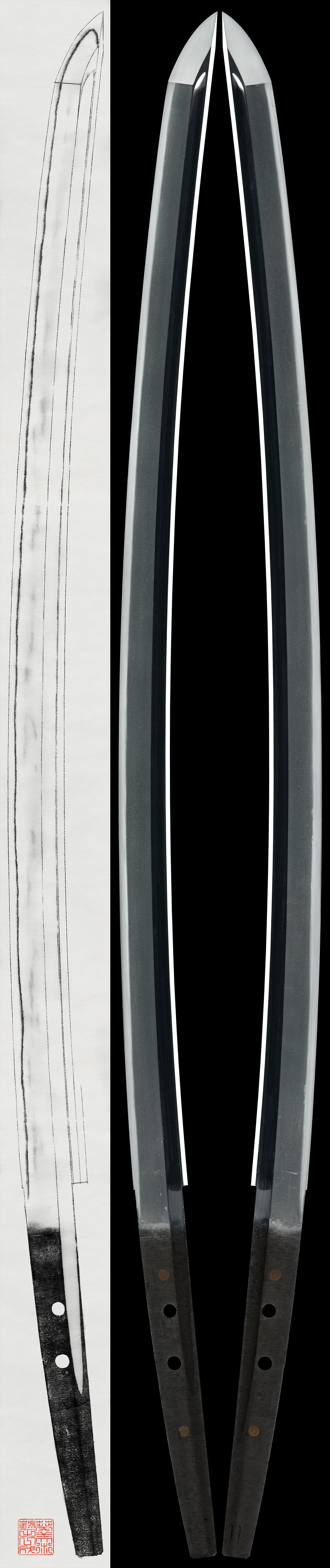
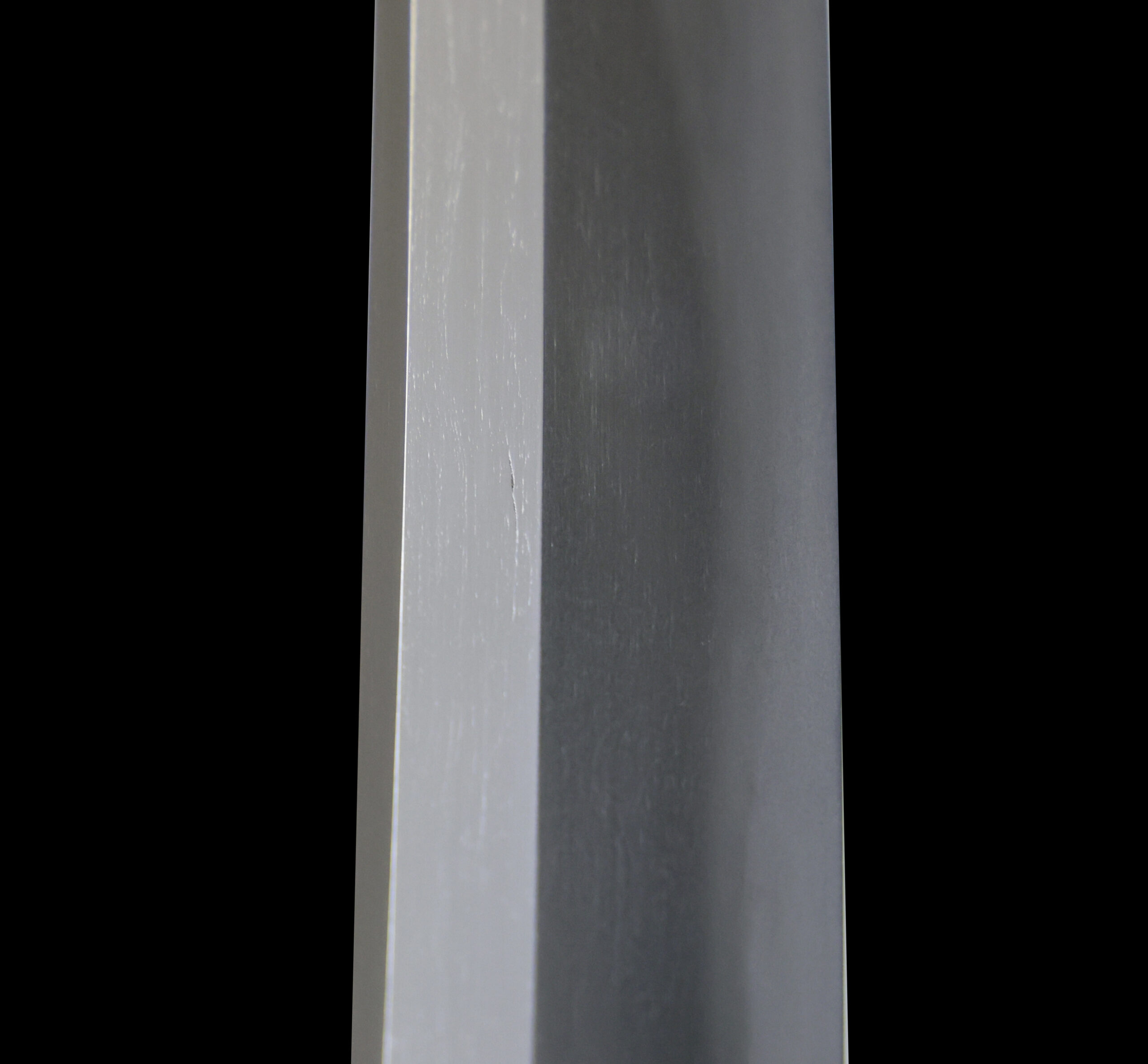
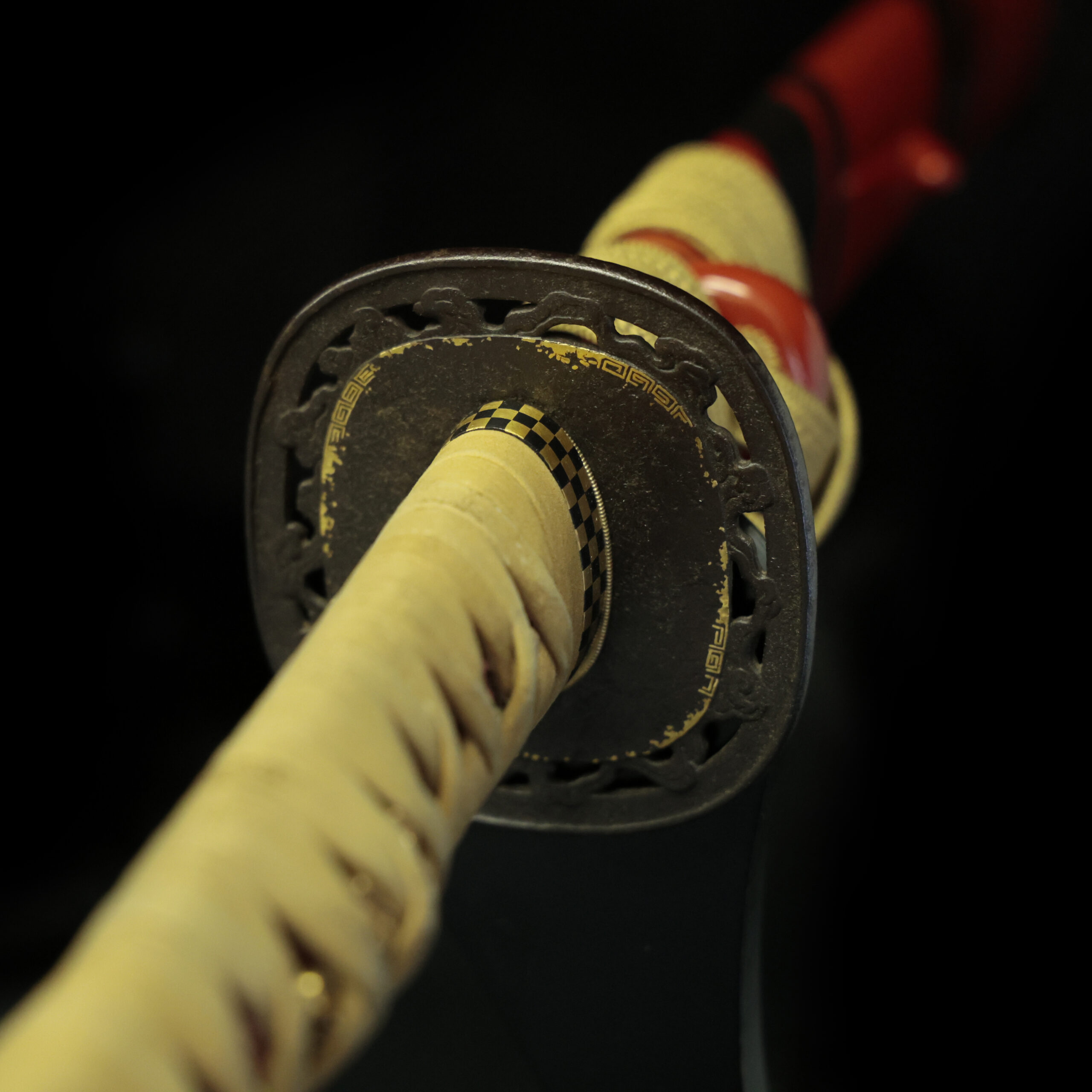
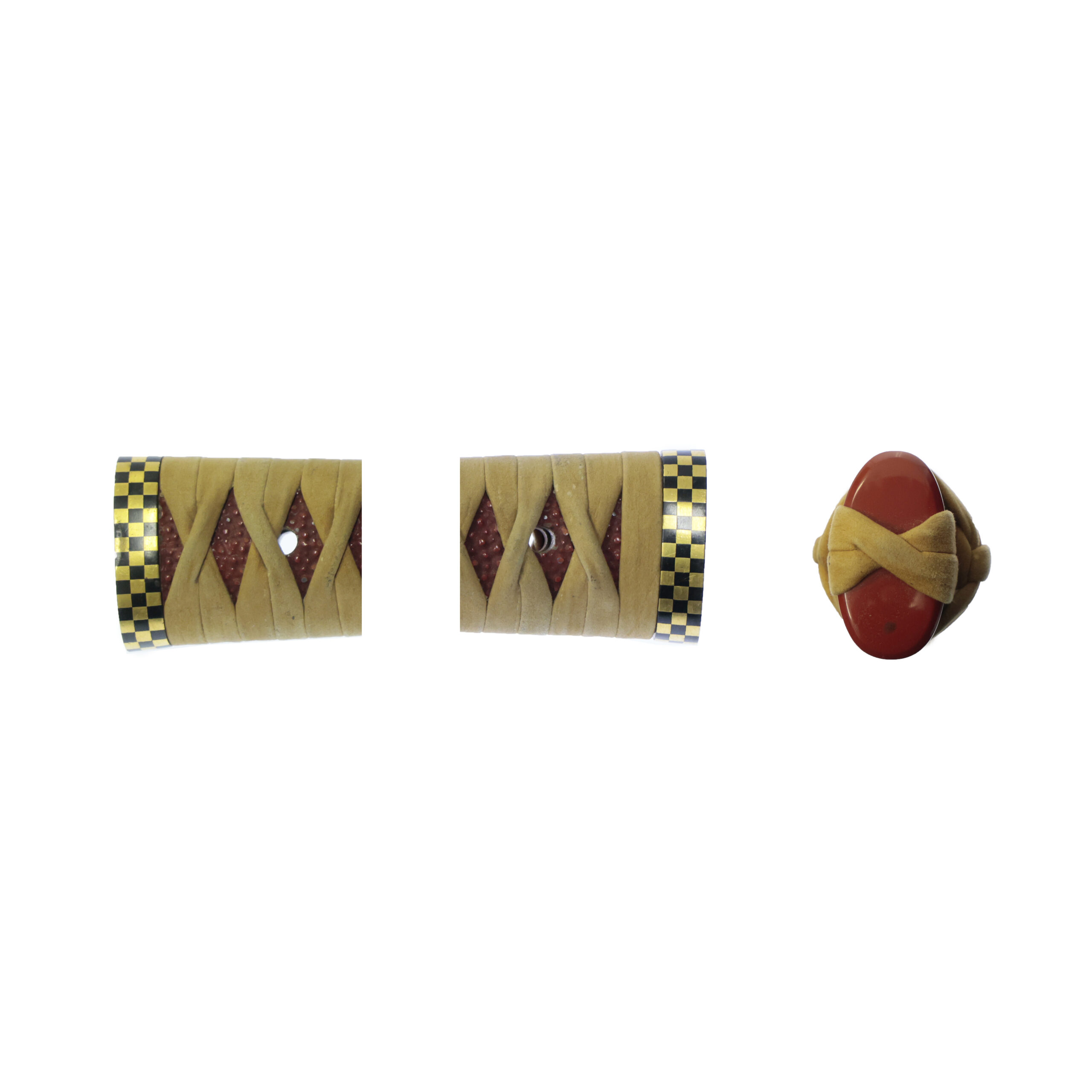
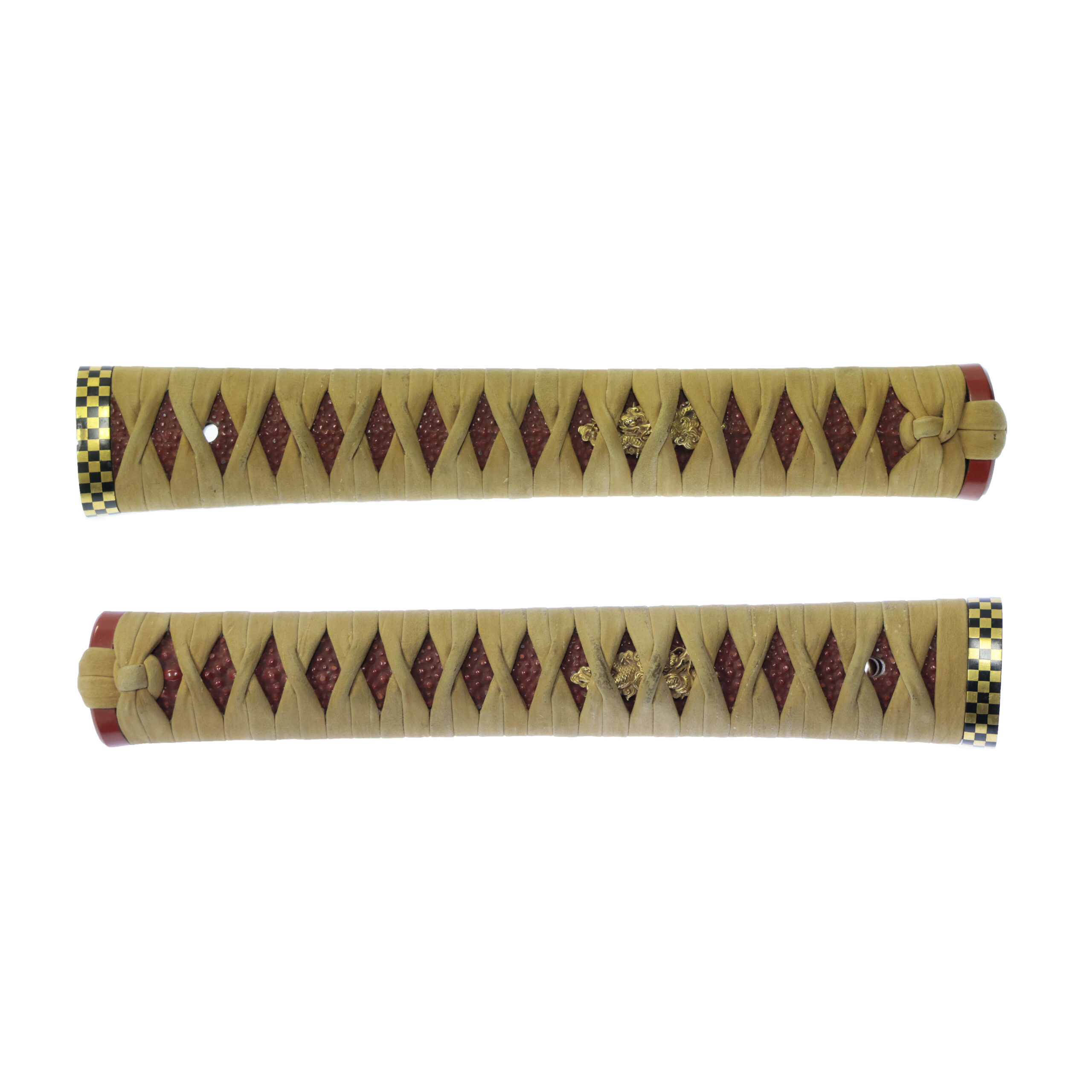
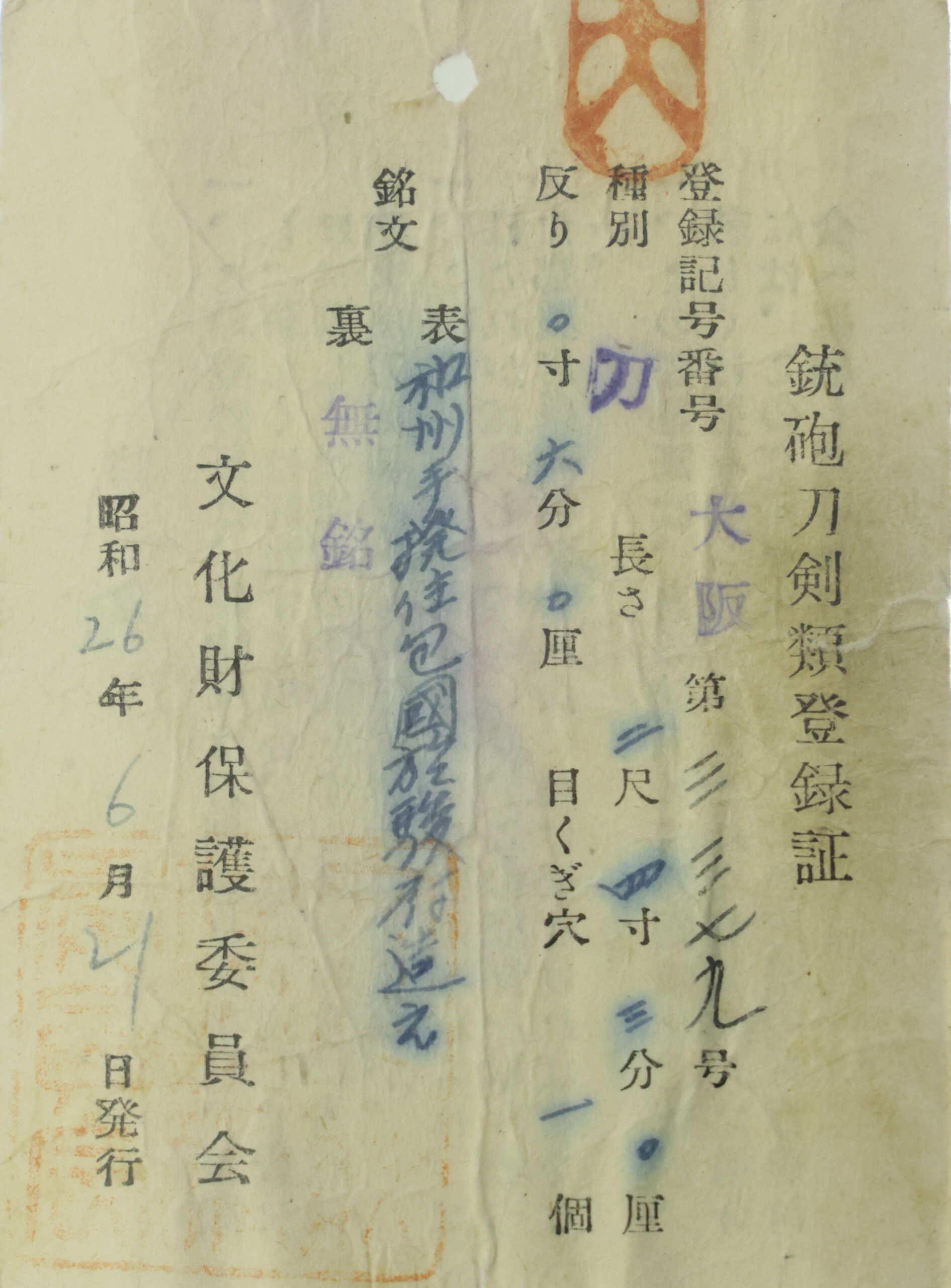
重要刀剣 和州手掻住包国(駿府打ち) 【解説】 本刀は、鎌倉時代の名工・手掻包永を祖とし、江戸時代まで連綿と続く大和手掻派の正系、五代目包国による傑作です。 慶長年間(1596-1615年)に活躍した五代目包国(文殊九郎三郎)は、名工として名高い南紀重国の実兄にあたります。本作には包国の銘と共に、徳川家康公が隠居城とした駿府にて打たれたことを示す銘が刻まれています。これらは「和州手掻住包国於駿府造之」などと銘じられ、いわゆる「駿府打ち」として珍重されています。 包国と弟の重国は、慶長15年(1610年)頃、徳川家康公に召し抱えられ駿府へと移りました。彼らは越前康継らと共に、元和5年(1619年)頃まで駿府御用鍛冶として仕え、その後、家康公の十男・徳川頼宣卿に従って紀州和歌山へと移住しました。 包国・重国の兄弟は「駿河文殊」と称され、慶長新刀期を代表する名工として高く評価されています。大和手掻派の伝統的な鍛法を継承しつつ、新刀期の力強さを兼ね備えた彼らの作風は、江戸初期における最高峰の技術を示すものです。家康公没後も紀州徳川家の抱え鍛冶として重用され、新刀屈指の傑作を数多く残しました。 【大和伝について】 鎌倉時代から室町時代初期にかけて、大和国(現在の奈良県)では五つの有力な流派が繁栄しました。これらは「大和五派」と呼ばれ、千手院、尻懸、当麻、保昌、そして手掻派を指します。これらの流派は東大寺をはじめとする奈良の有力寺院と密接に結びつき、当時政治・軍事的に大きな影響力を持っていた僧兵たちの需要に応えて刀剣を制作していました。 寺院間の争いが頻発した時代背景から、実戦に耐えうる強靭で信頼性の高い刀剣が求められました。手掻派を含む大和五派は、こうした厳しい要求に応えることで名声を高め、全盛期には武士の間でも広く愛用されるようになりました。 大和伝の特色は、精緻に鍛え上げられた地鉄(じがね)と、気品ある直刃(すぐは)の焼出しにあります。本作においても、大和伝の真髄とも言える美しい地肌と直刃の刃文が見事に表現されています。なお、本作は茎(なかご)の形状から、後年に磨上げ(すりあげ)が行われたことが伺え、元来はさらに長大な太刀であったと推測されます。 【鑑定】 本刀は、公益財団法人 日本美術刀剣保存協会(NBTHK)により「重要刀剣」に指定されています。重要刀剣とは、特に保存状態が良く、資料的価値および芸術的価値が極めて高い名刀に対してのみ与えられる格付けです。これは「特別保存刀剣」の上位ランクであり、厳格な審査を経た極めて稀少な逸品であることを証明するものです。国内外の愛刀家にとって、重要刀剣の指定を受けた刀を所蔵することは最高の栄誉の一つとされています。 【刀身諸元】 長さ(Nagasa):73.5 cm 反り(Sori):2.0 cm 刃文(Hamon):焼入れによって刃先に現れる結晶構造。 地肌(Jihada):鍛錬の過程で現れる鋼の表面模様。 切先(Kissaki):刀身の先端部分。
包国の初代は大和手搔派の末葉で、駿府に移住しているが、その作風、銘振りがあまりにも南紀重国に近似している ことから、古来重国同人とされていたが、重国の紀州和歌山移住後の寛永年間に包国の駿州打ちがあり、別人であること は明白である。また包国を以て重国の父とする説は、拠るべき資料がなく、今後の研究に待つものである。ただ同派の同 時代の刀工であることは間違いない。この刀は初代包国傑出の一口で、地刃よく沸づき、伝統を保っている。
 NihontoWatch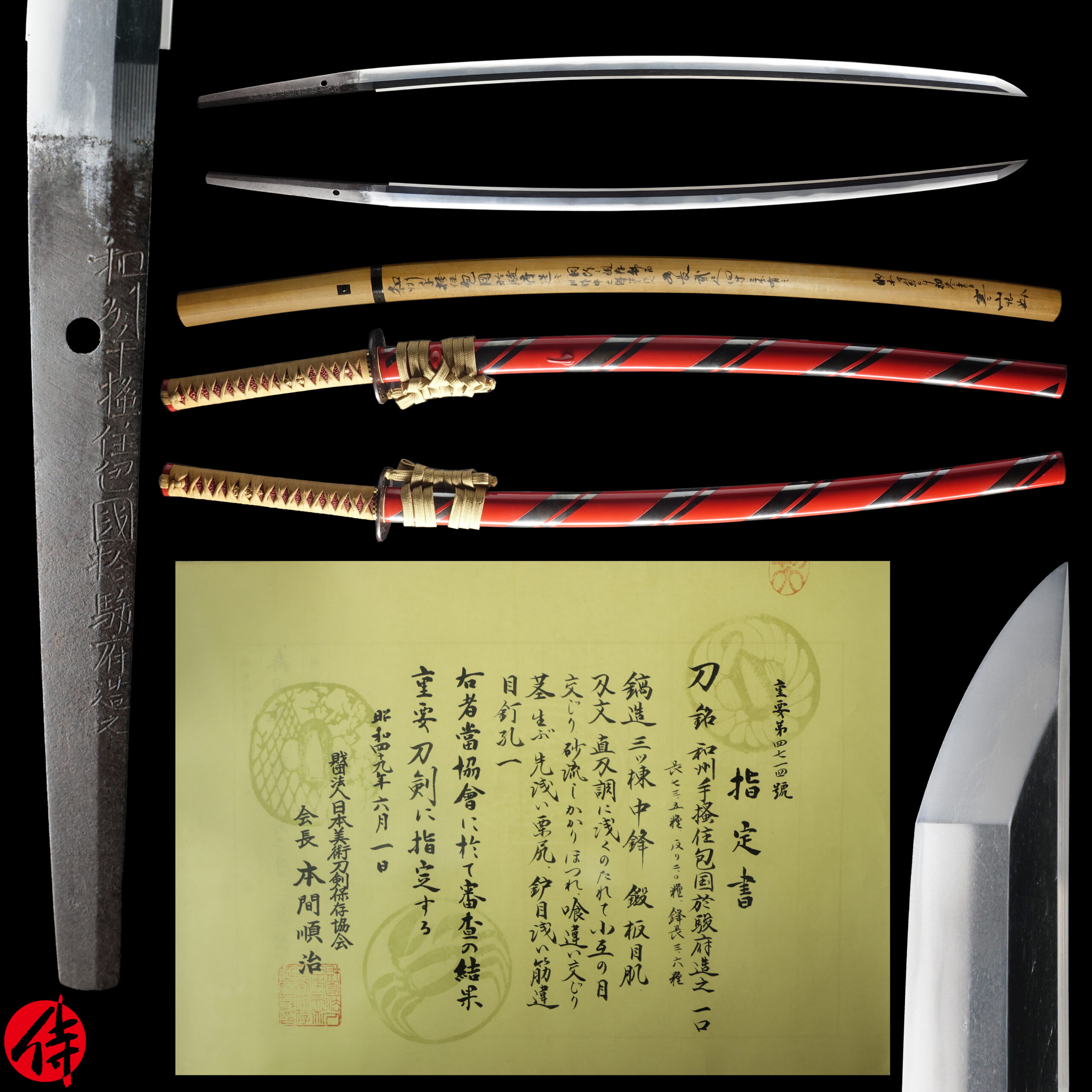
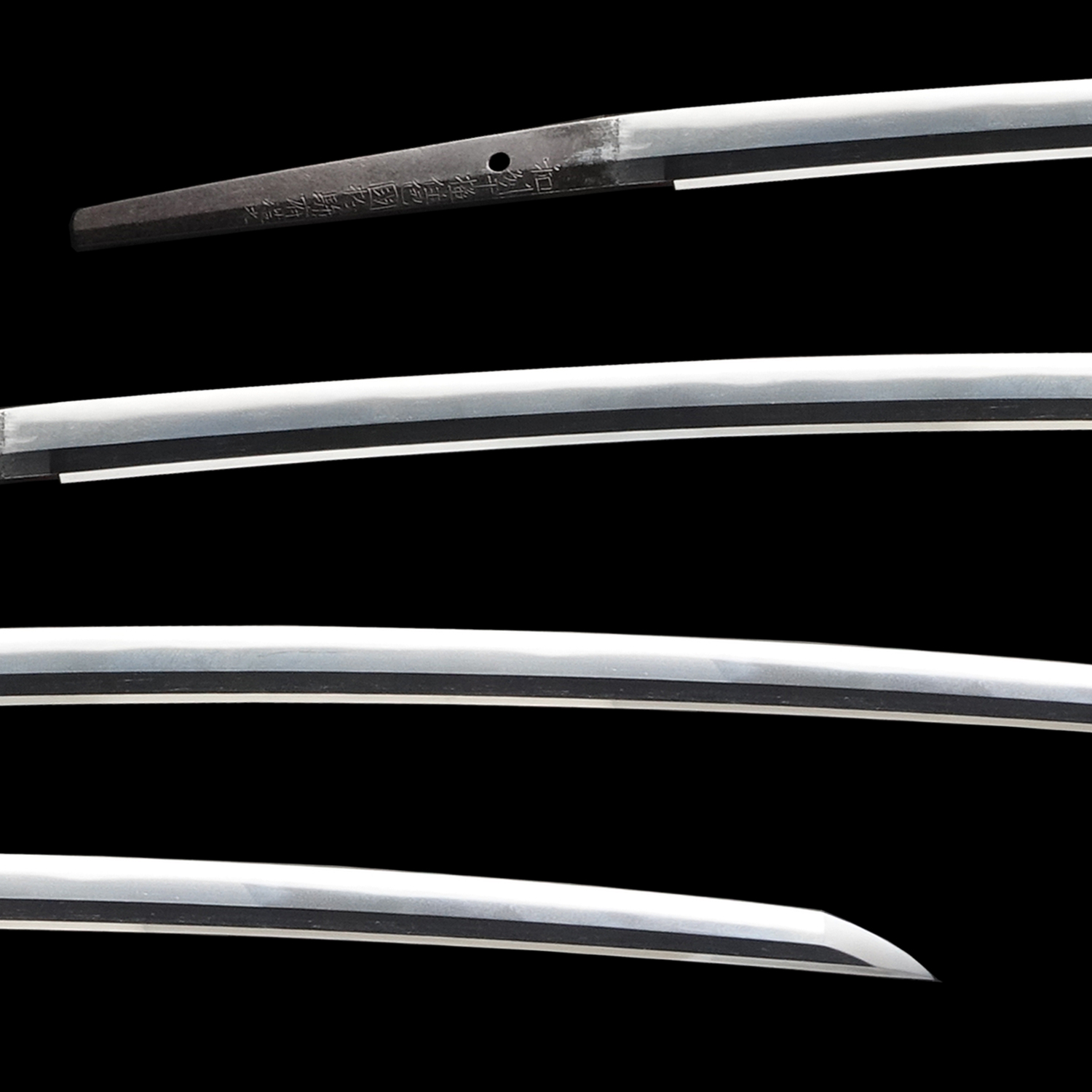
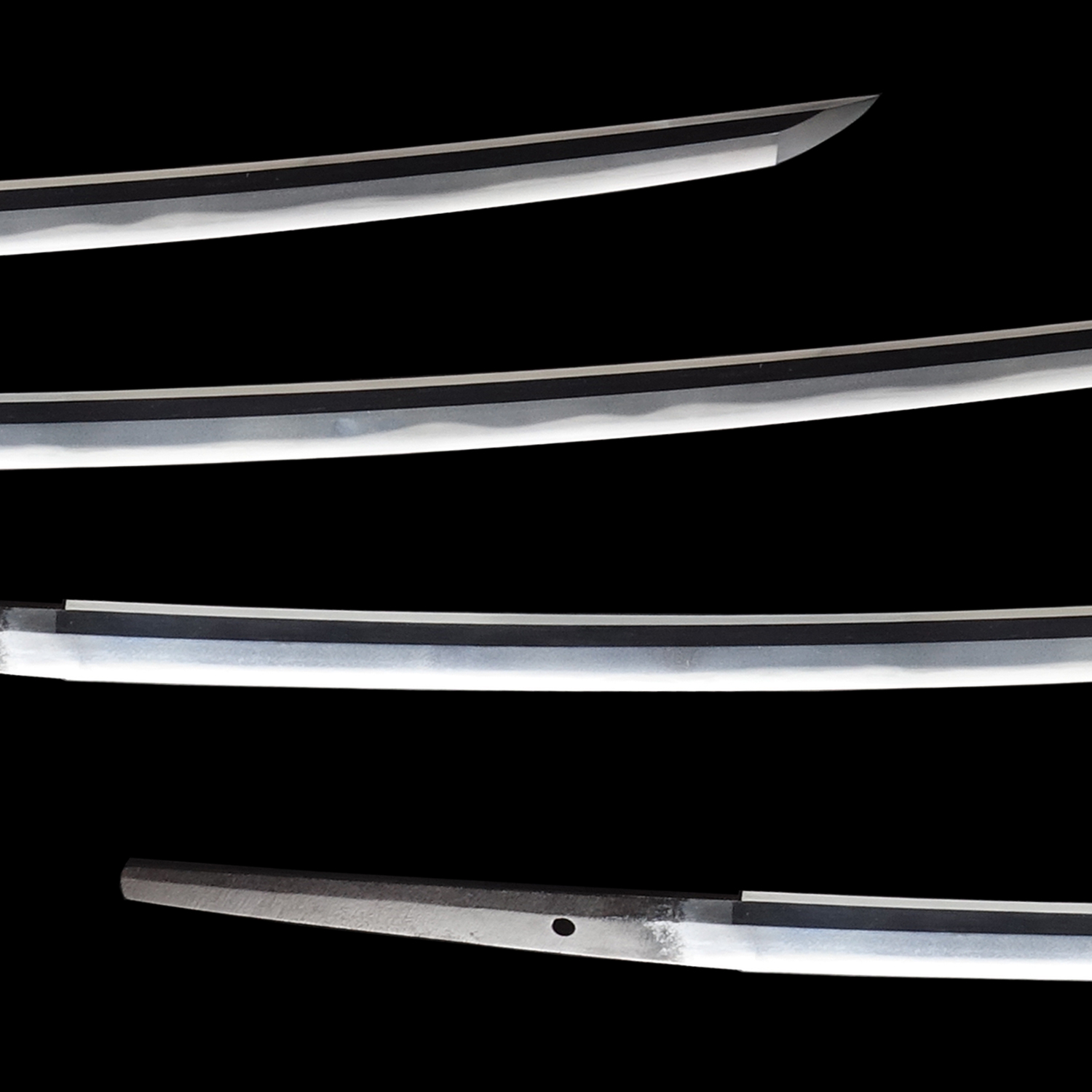


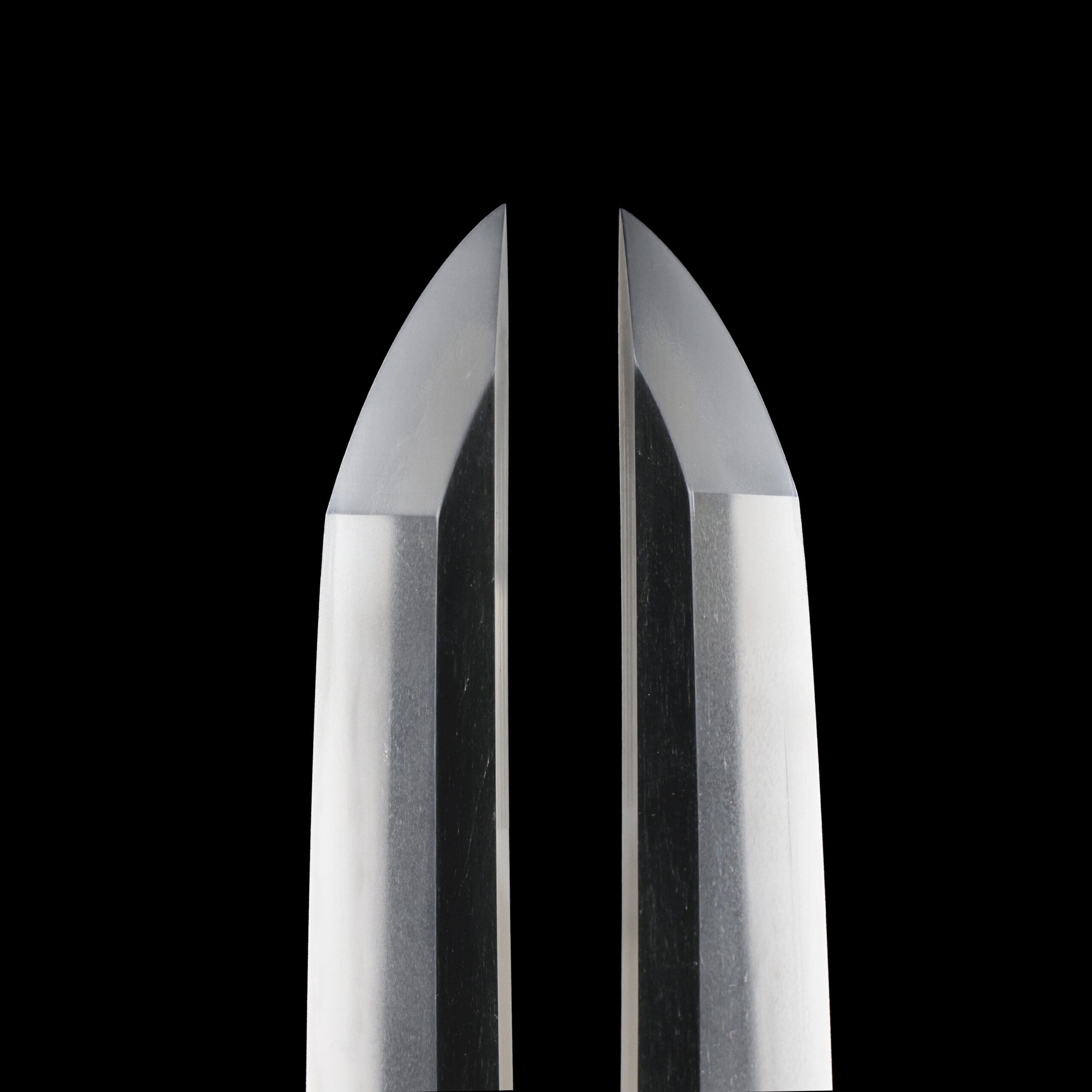
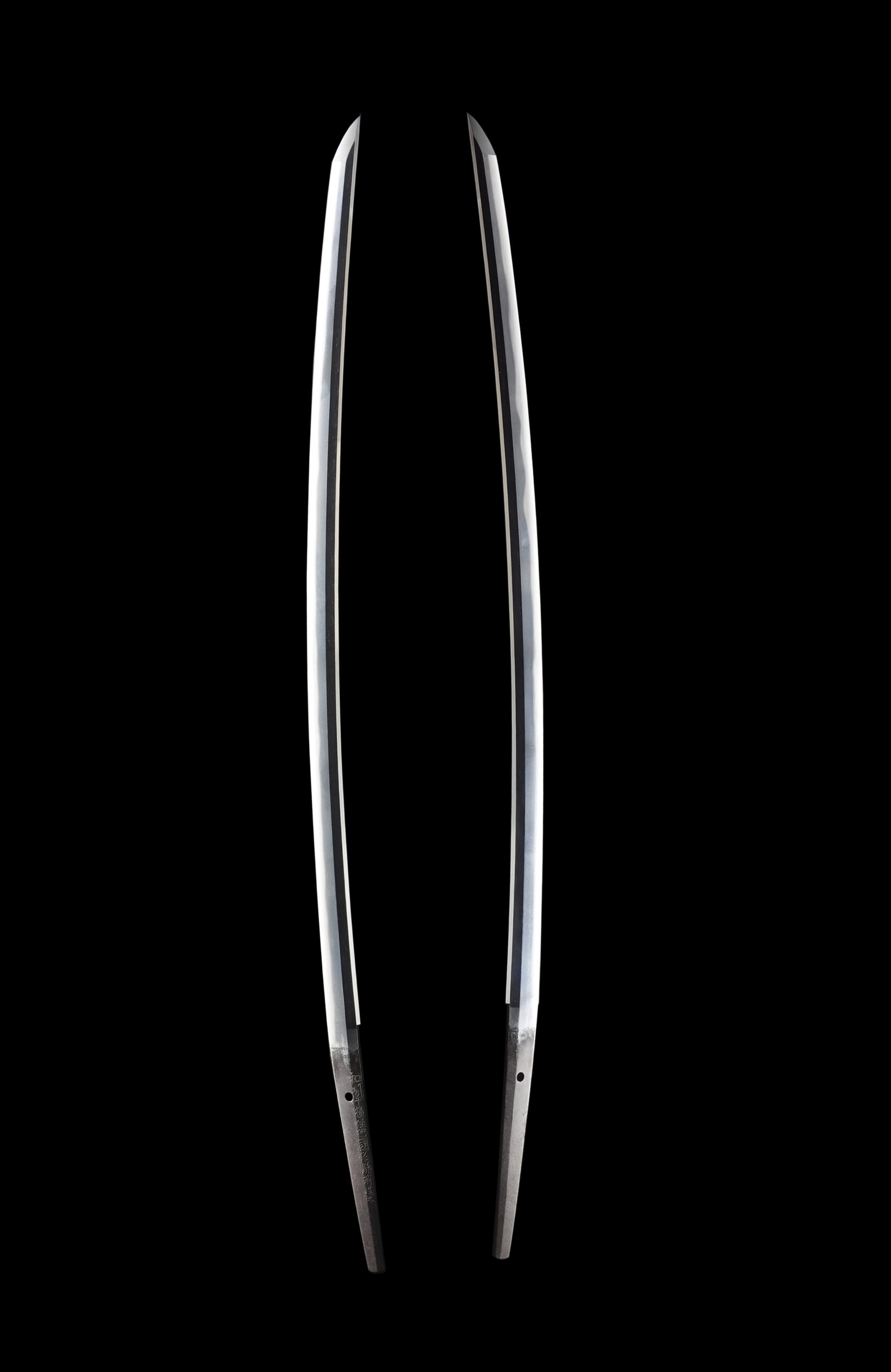
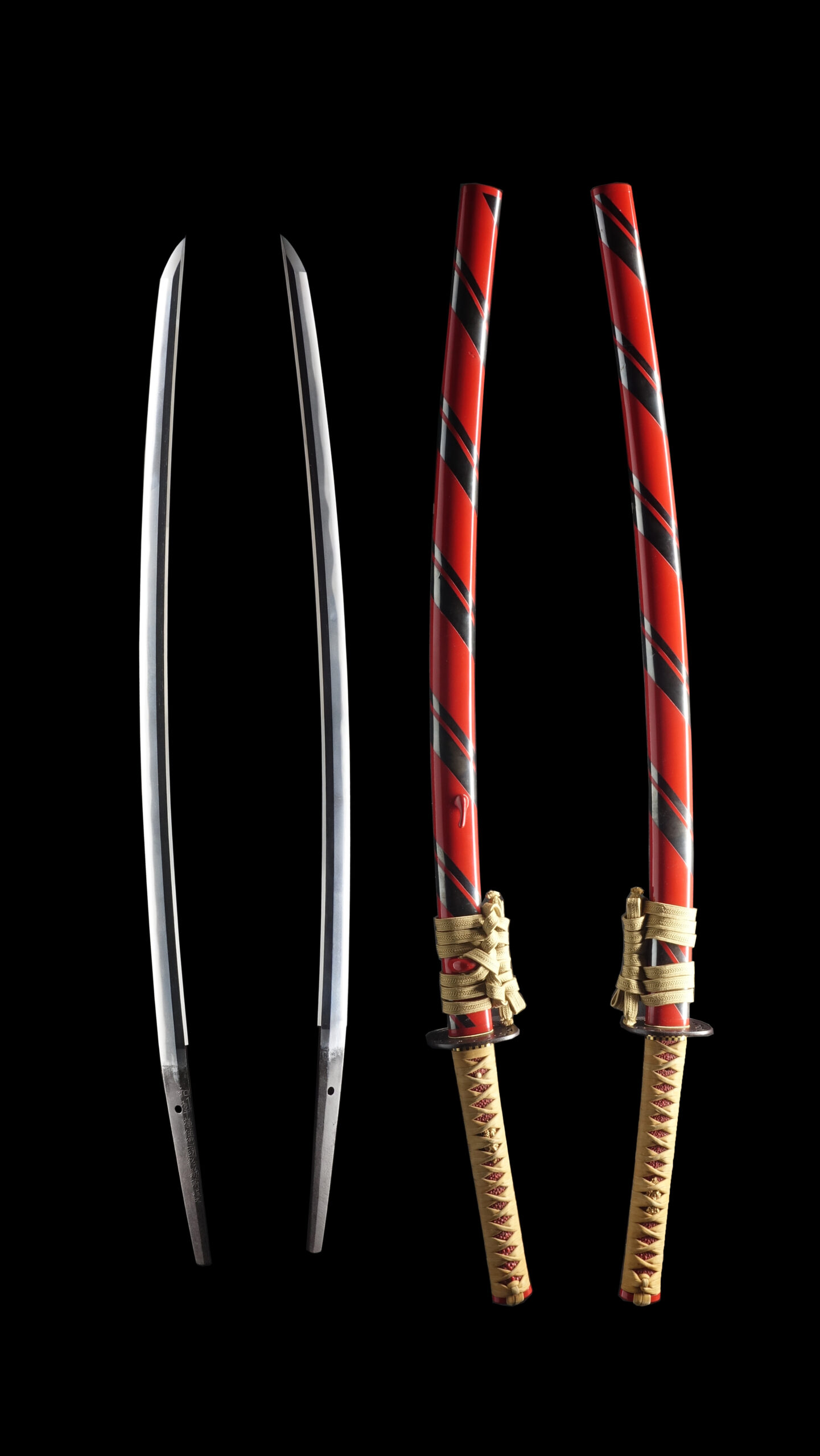
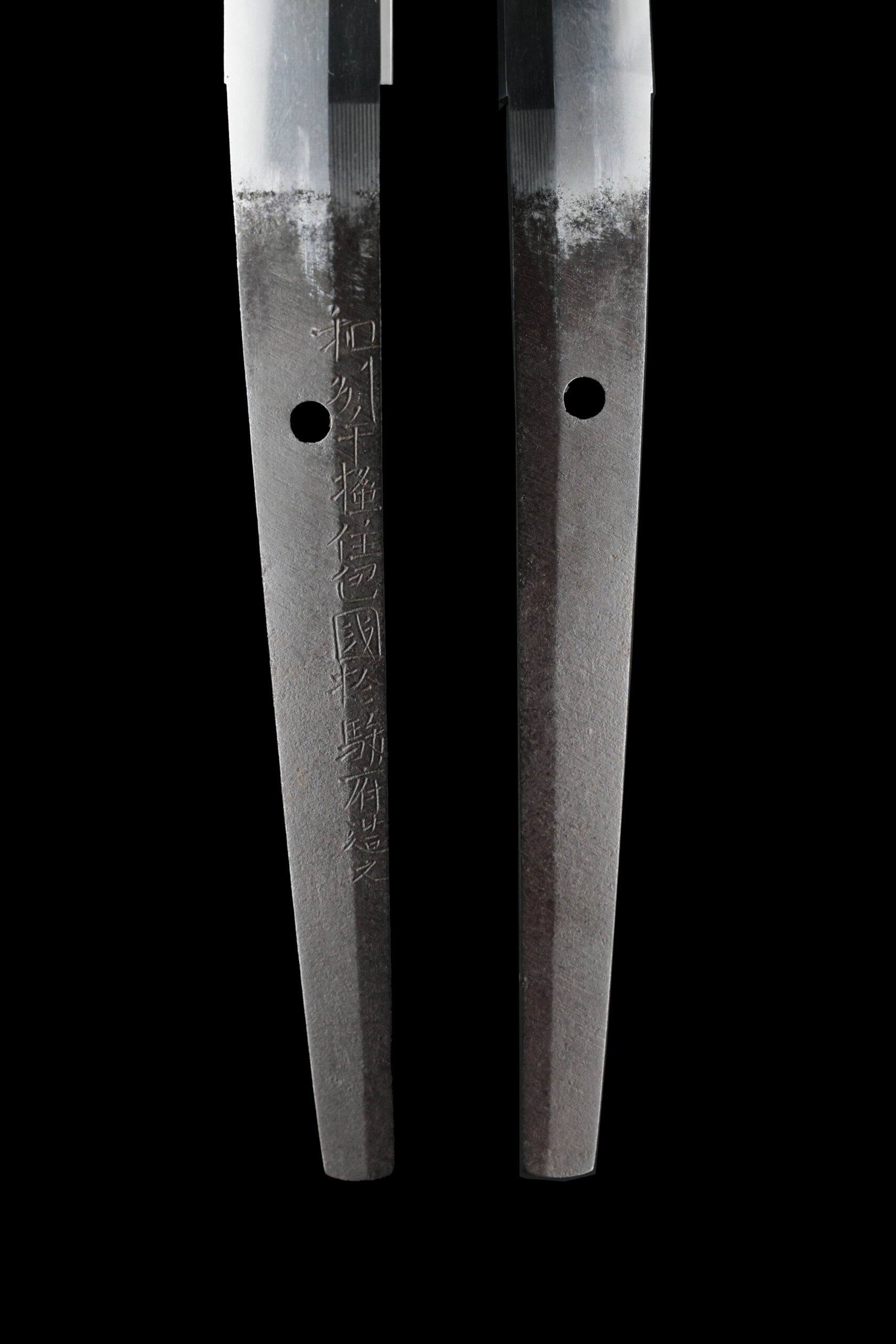
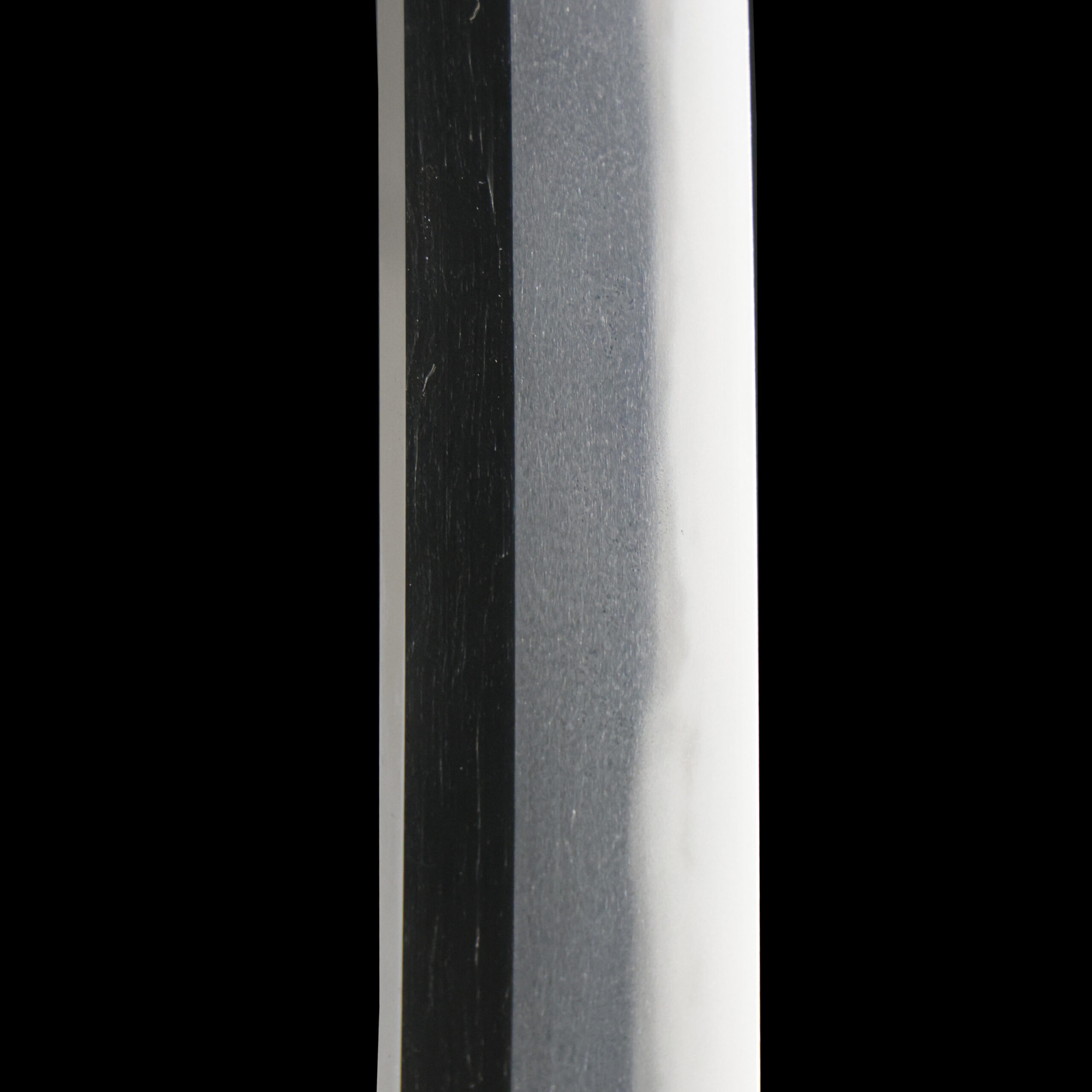
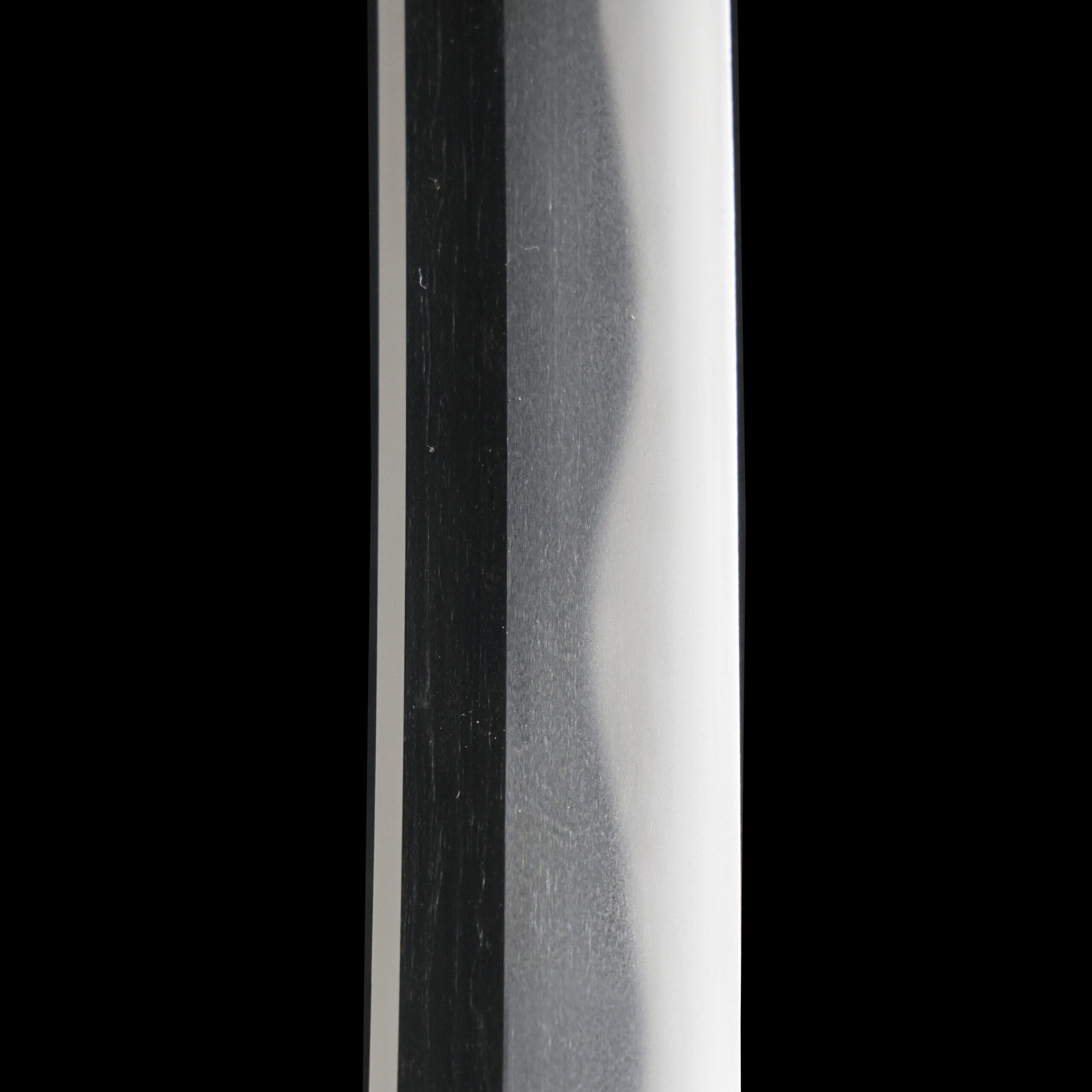
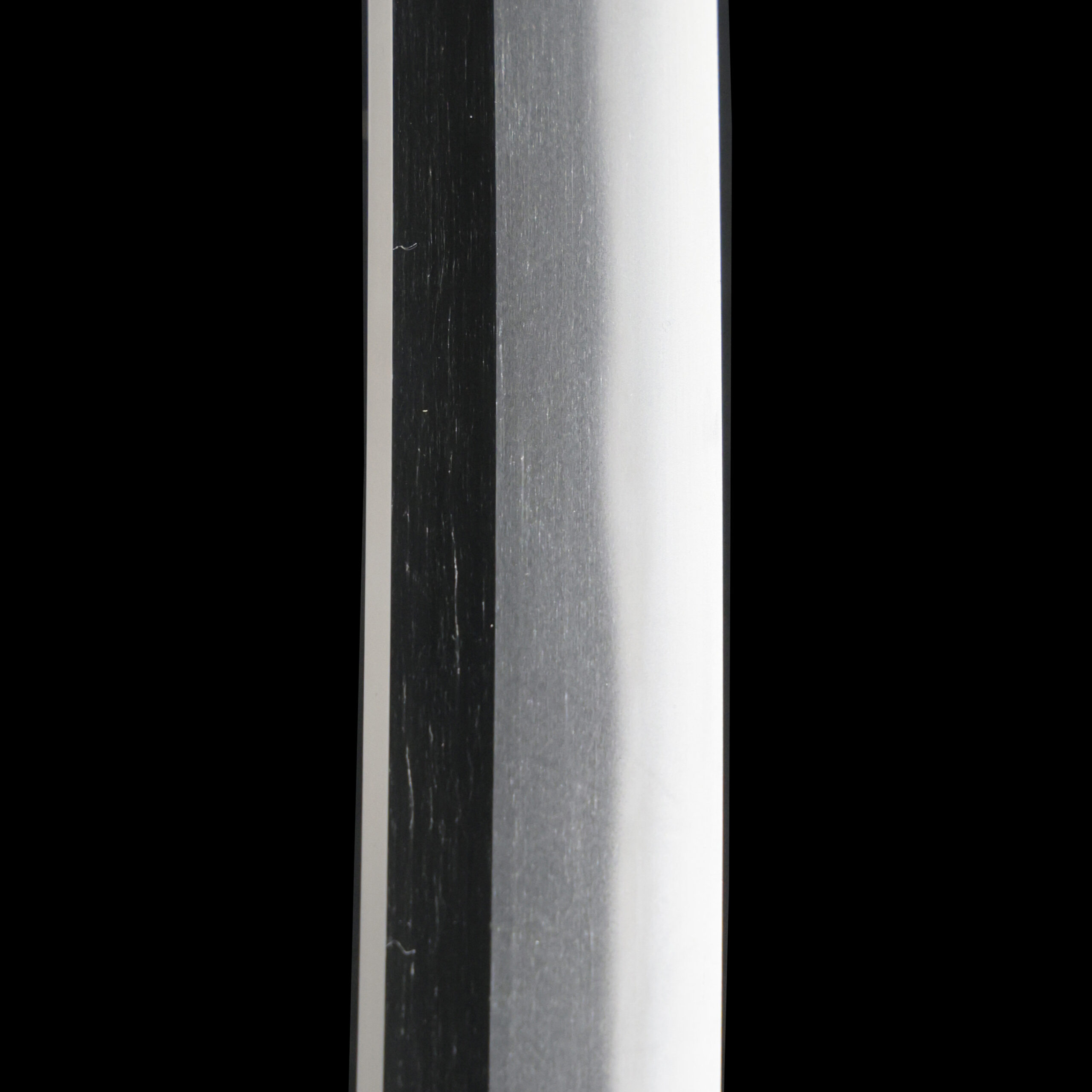
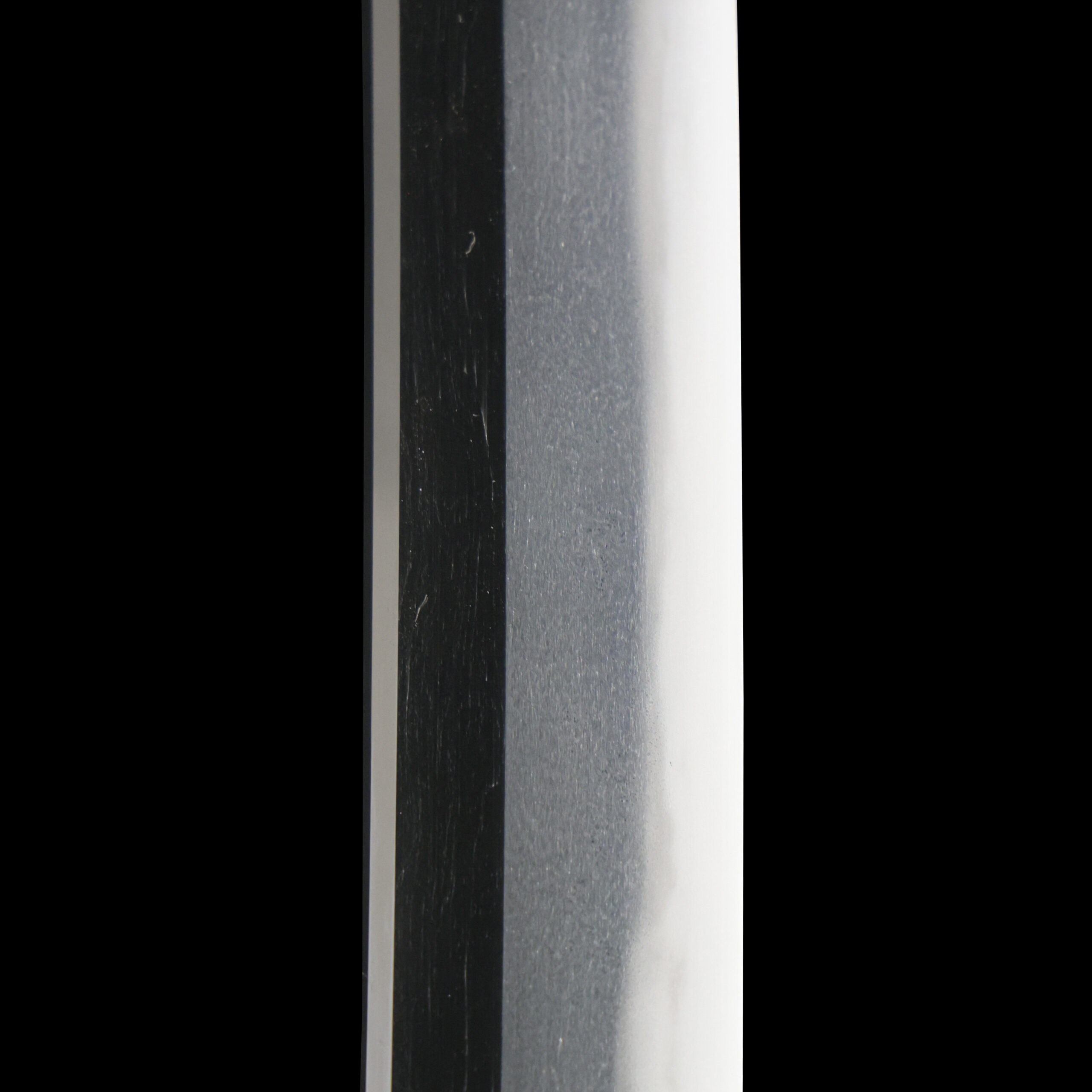
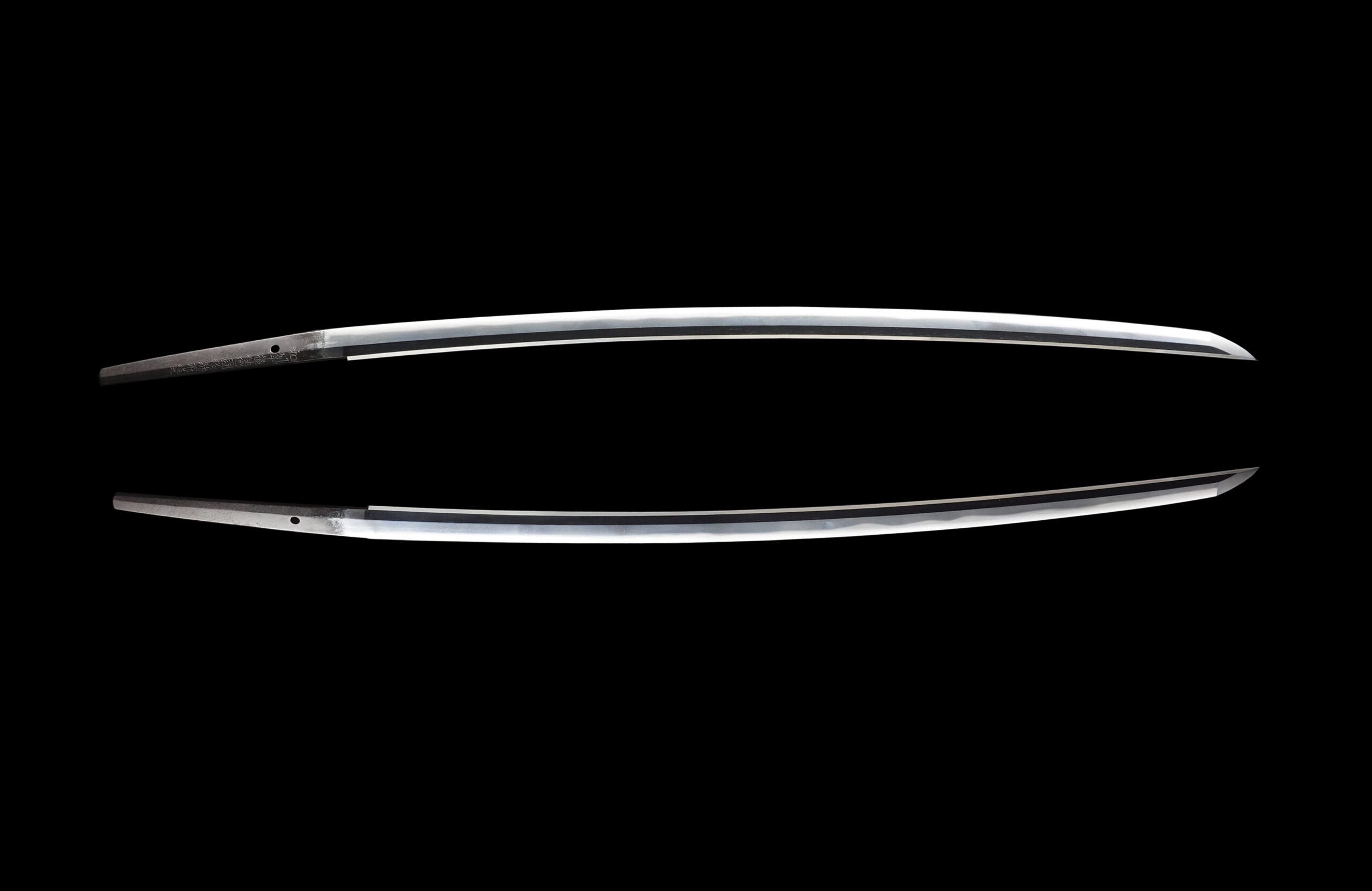
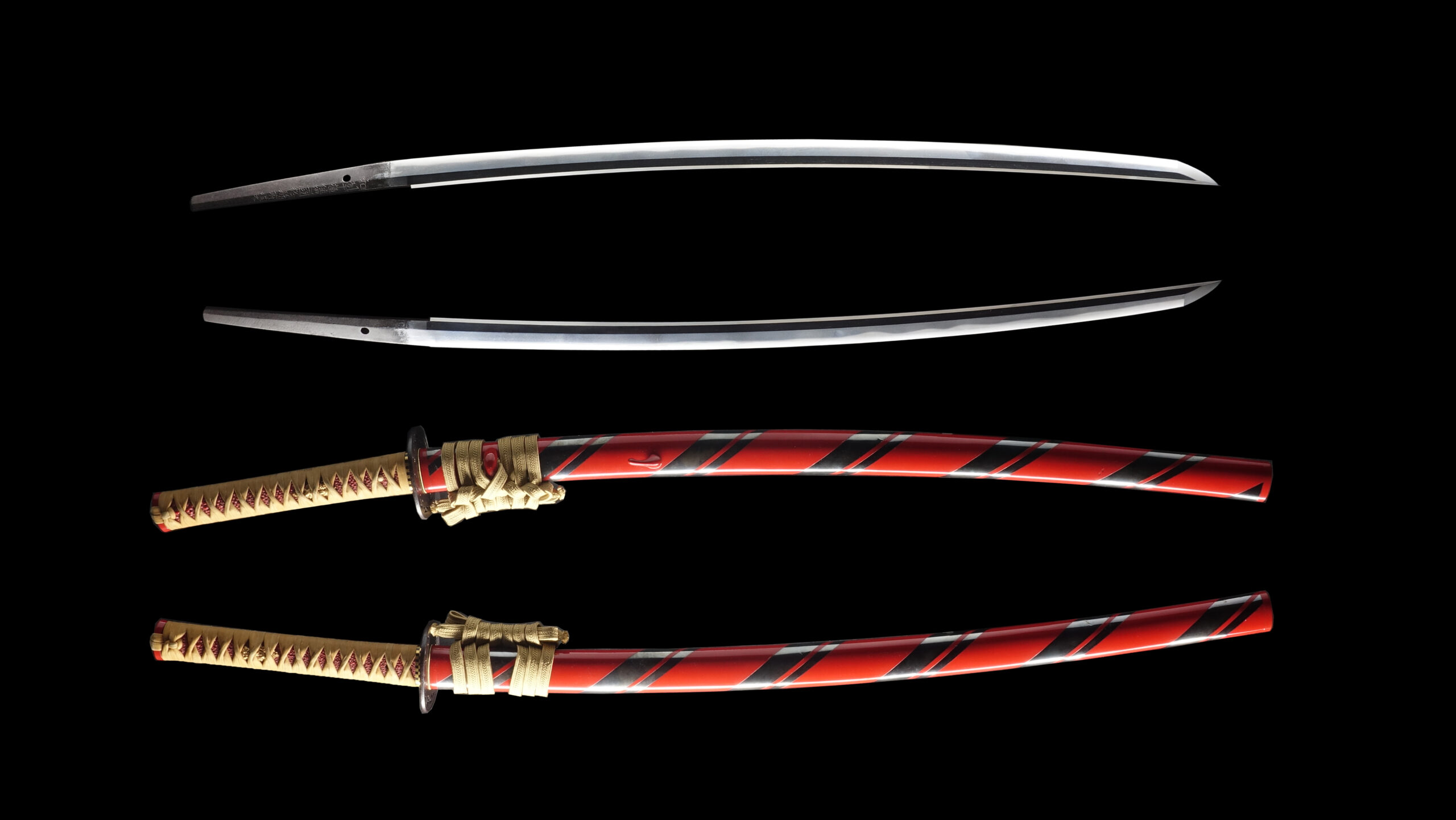
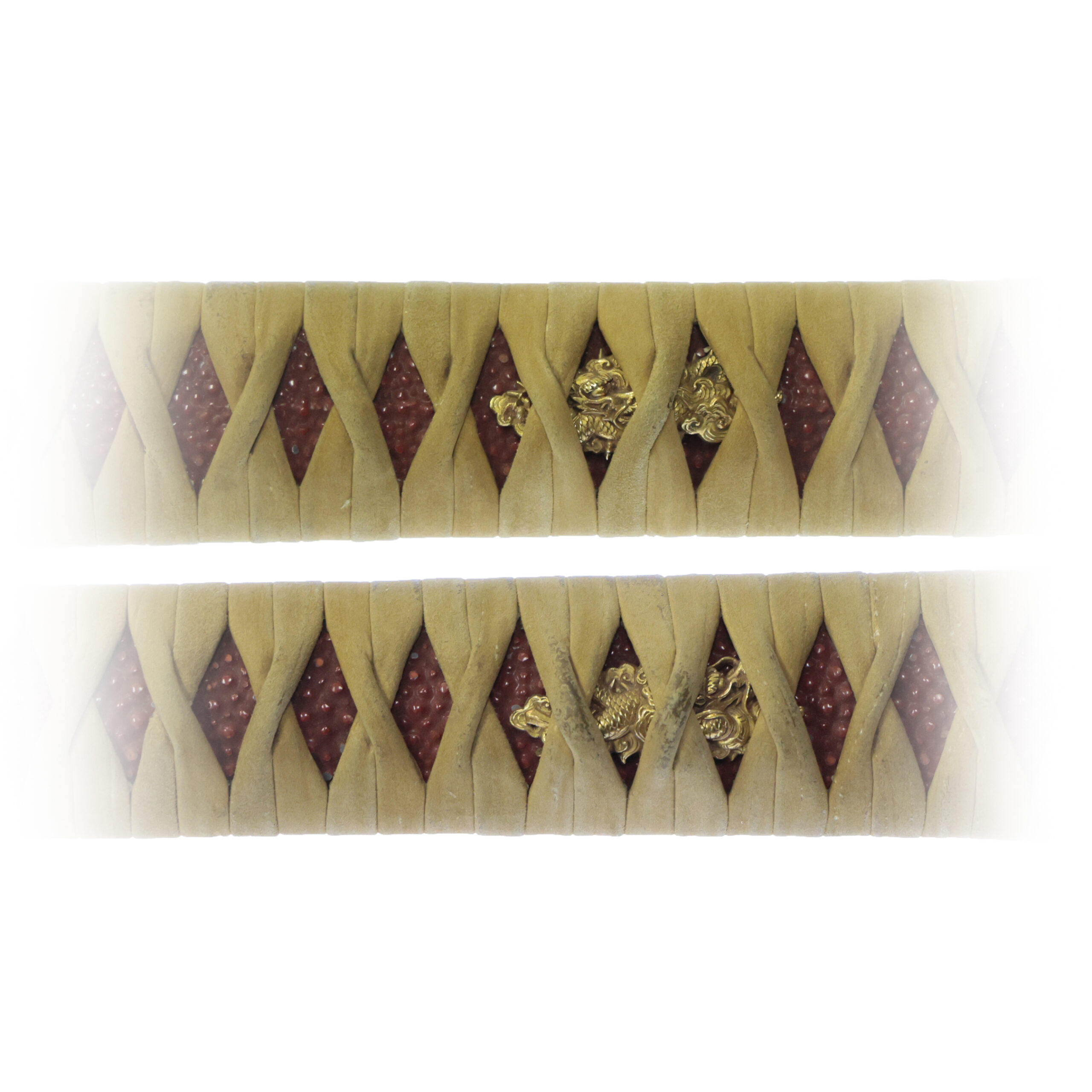
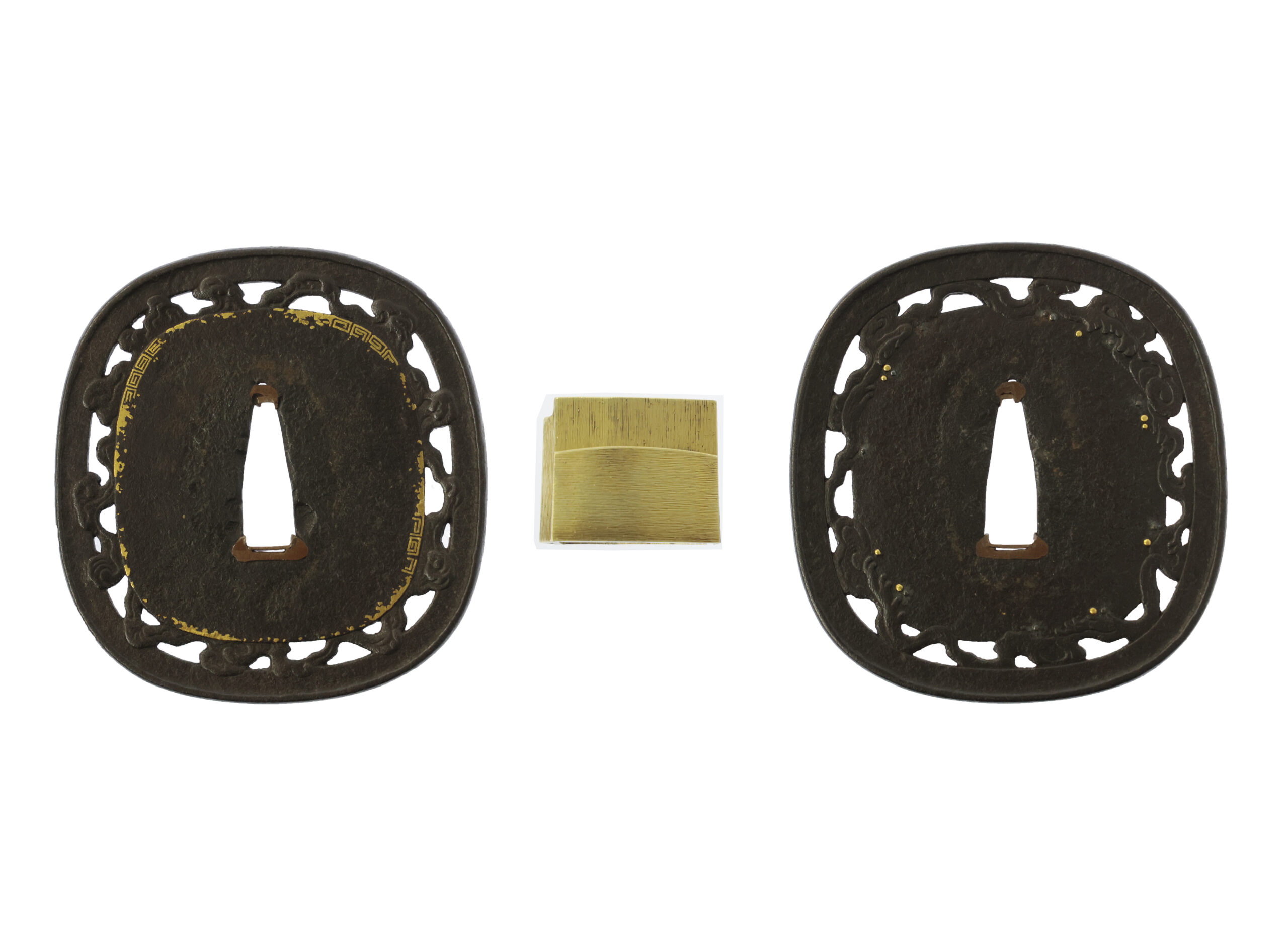
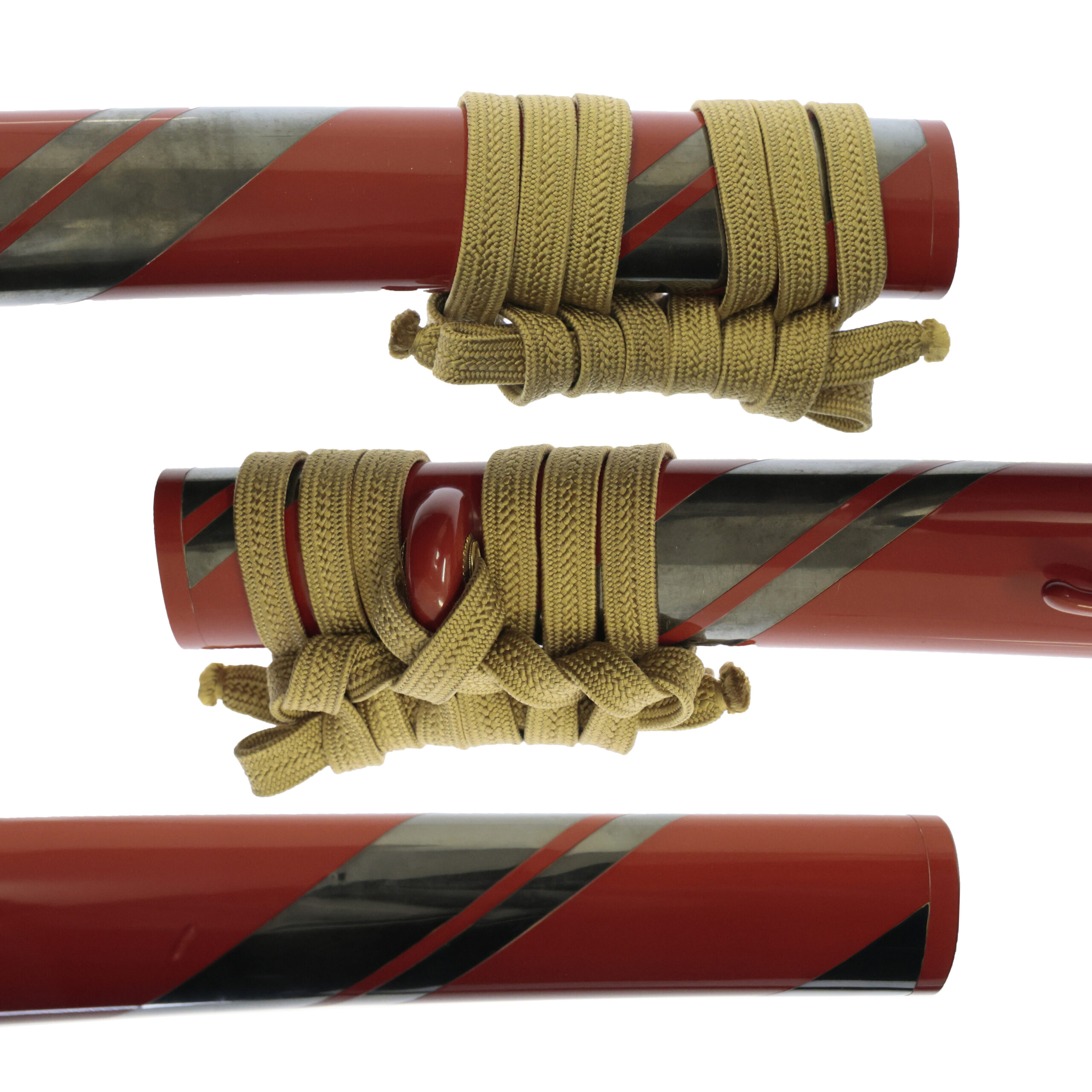
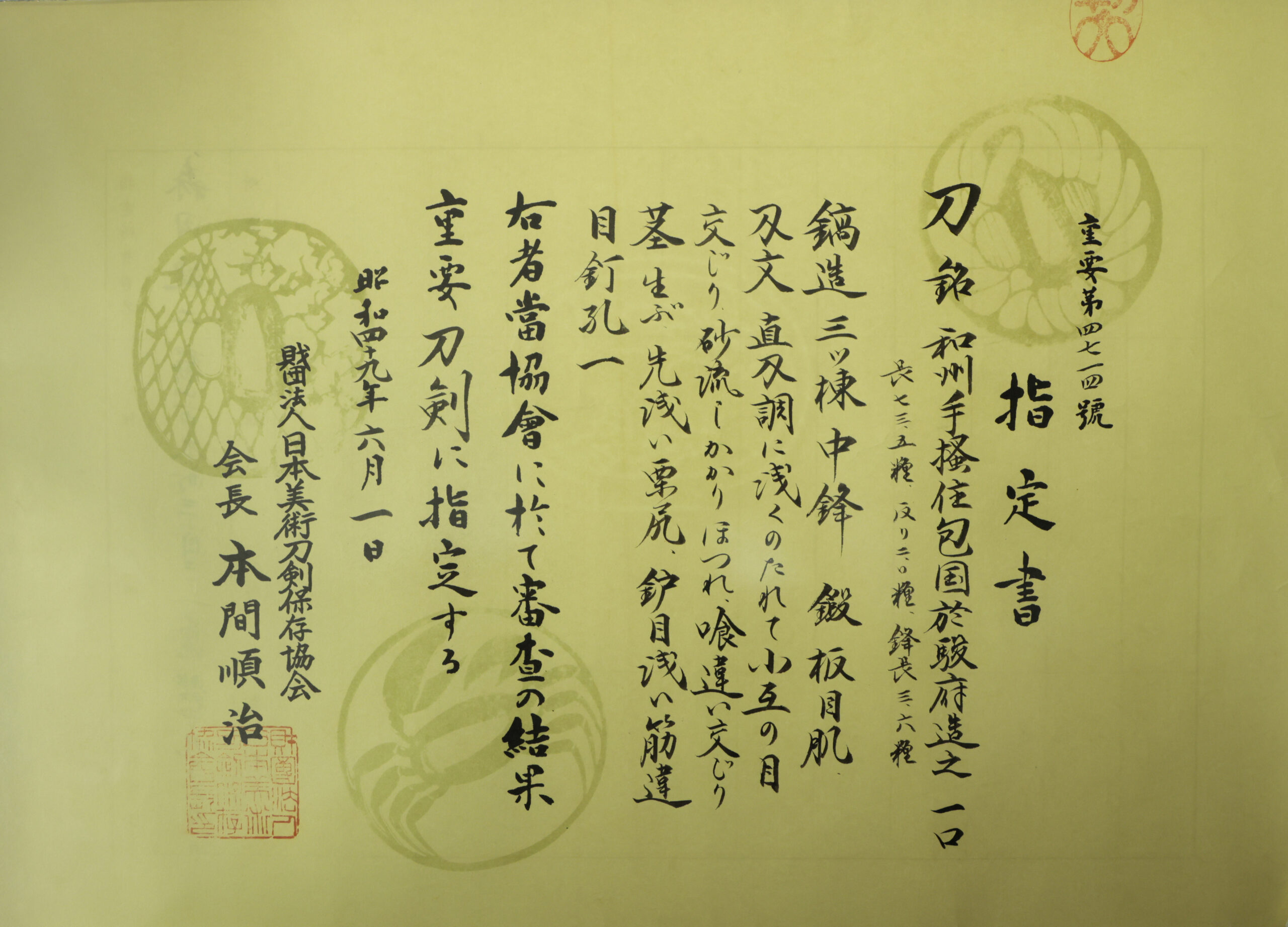
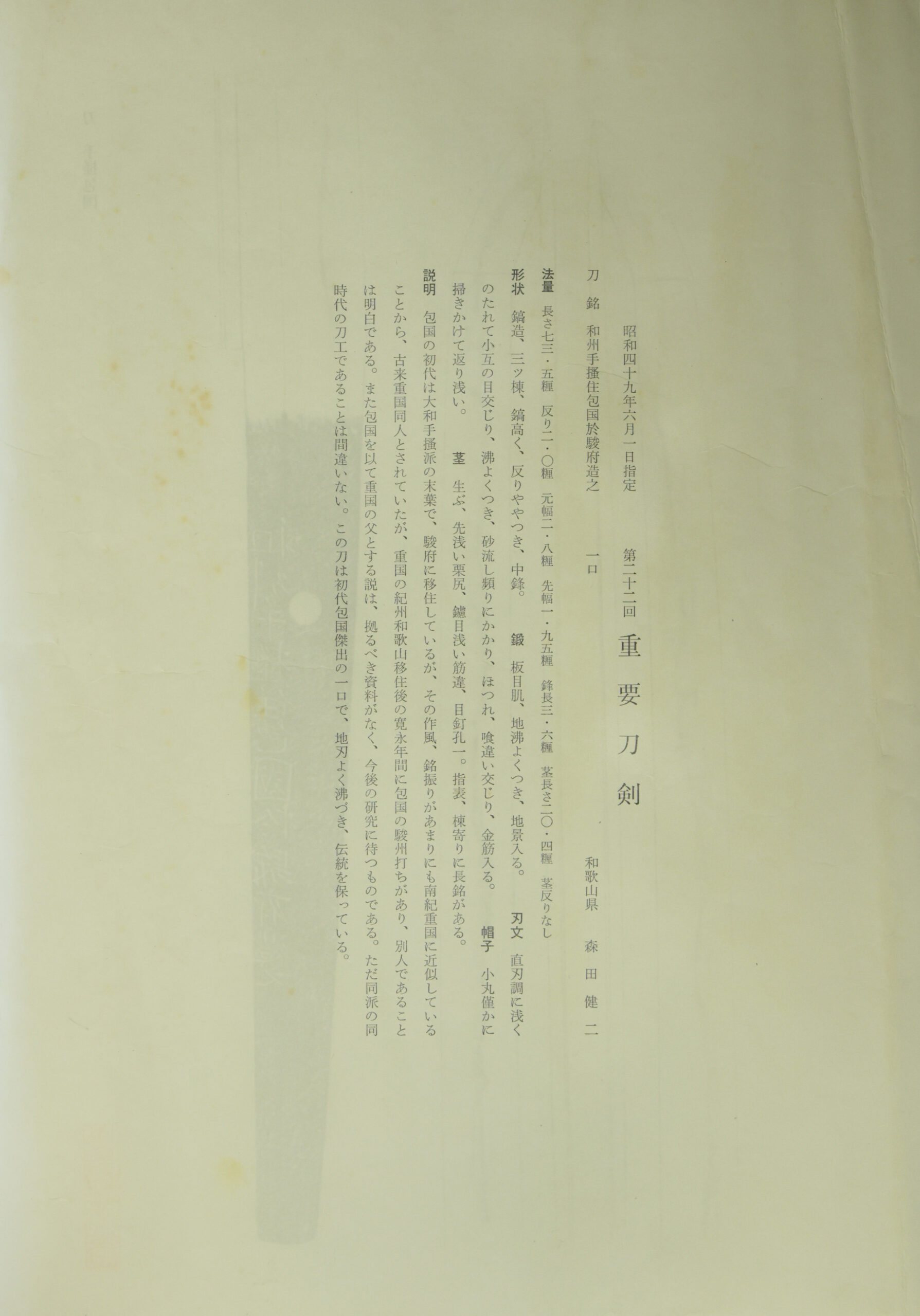
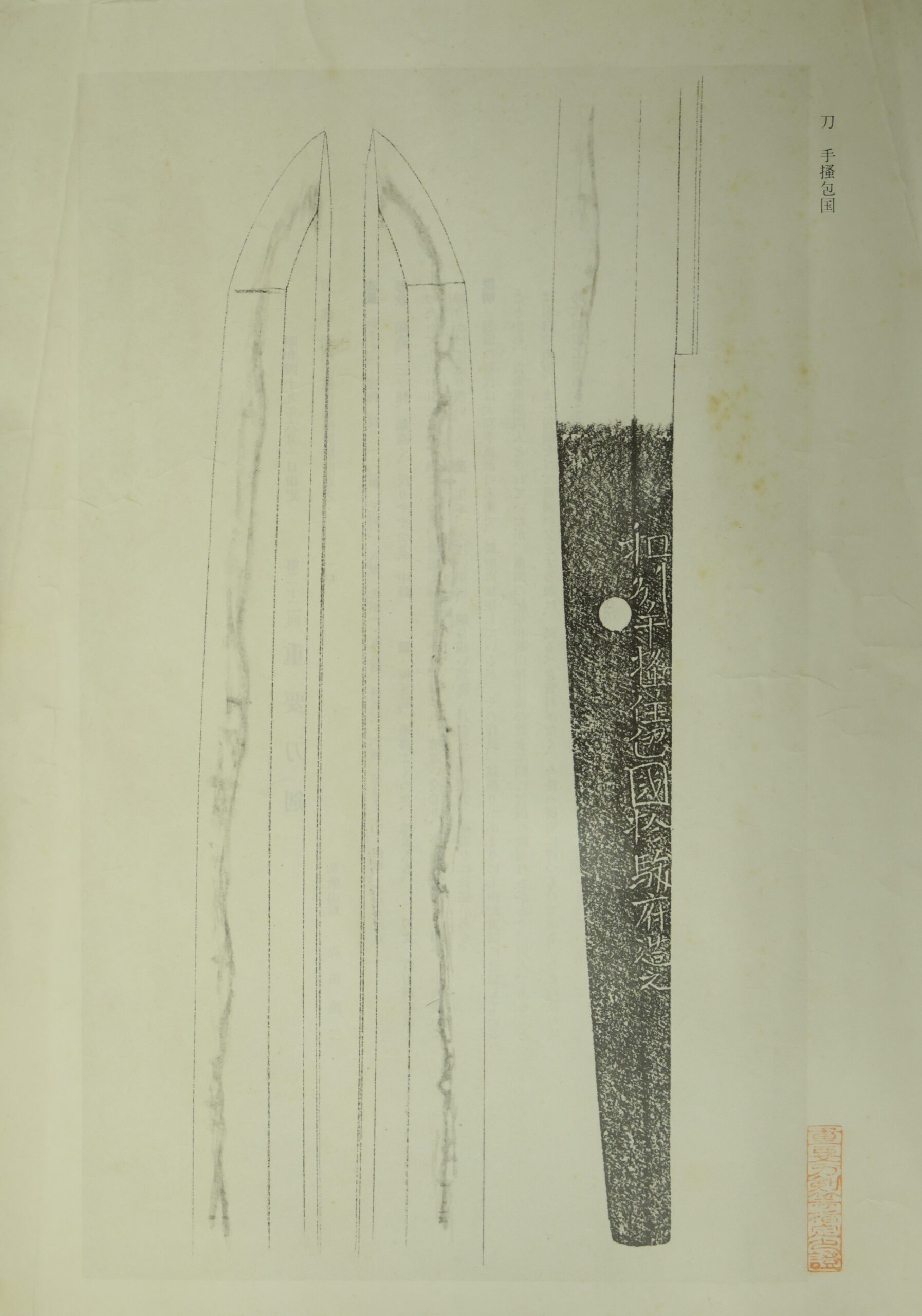
包国の初代は大和手搔派の末葉で、駿府に移住しているが、その作風、銘振りがあまりにも南紀重国に近似している ことから、古来重国同人とされていたが、重国の紀州和歌山移住後の寛永年間に包国の駿州打ちがあり、別人であること は明白である。また包国を以て重国の父とする説は、拠るべき資料がなく、今後の研究に待つものである。ただ同派の同 時代の刀工であることは間違いない。この刀は初代包国傑出の一口で、地刃よく沸づき、伝統を保っている。
大和伝 · 大和 · 1596-1615頃
藤代 Jo saku · 刀剣大鑑 上位31%
現在3点販売中
包國の位置づけを、日本刀全体および伝統・時代・時期ごとに示します。各位(随一・屈指・有数・著名)は、NBTHK および文化庁による指定に加え、三作や名物帳などの歴史的栄誉を加味したものです。
各項目を選ぶと評価方法が表示されます。
大和伝 · 大和
時期区分: 末手掻· 1390–1700
現在33点販売中
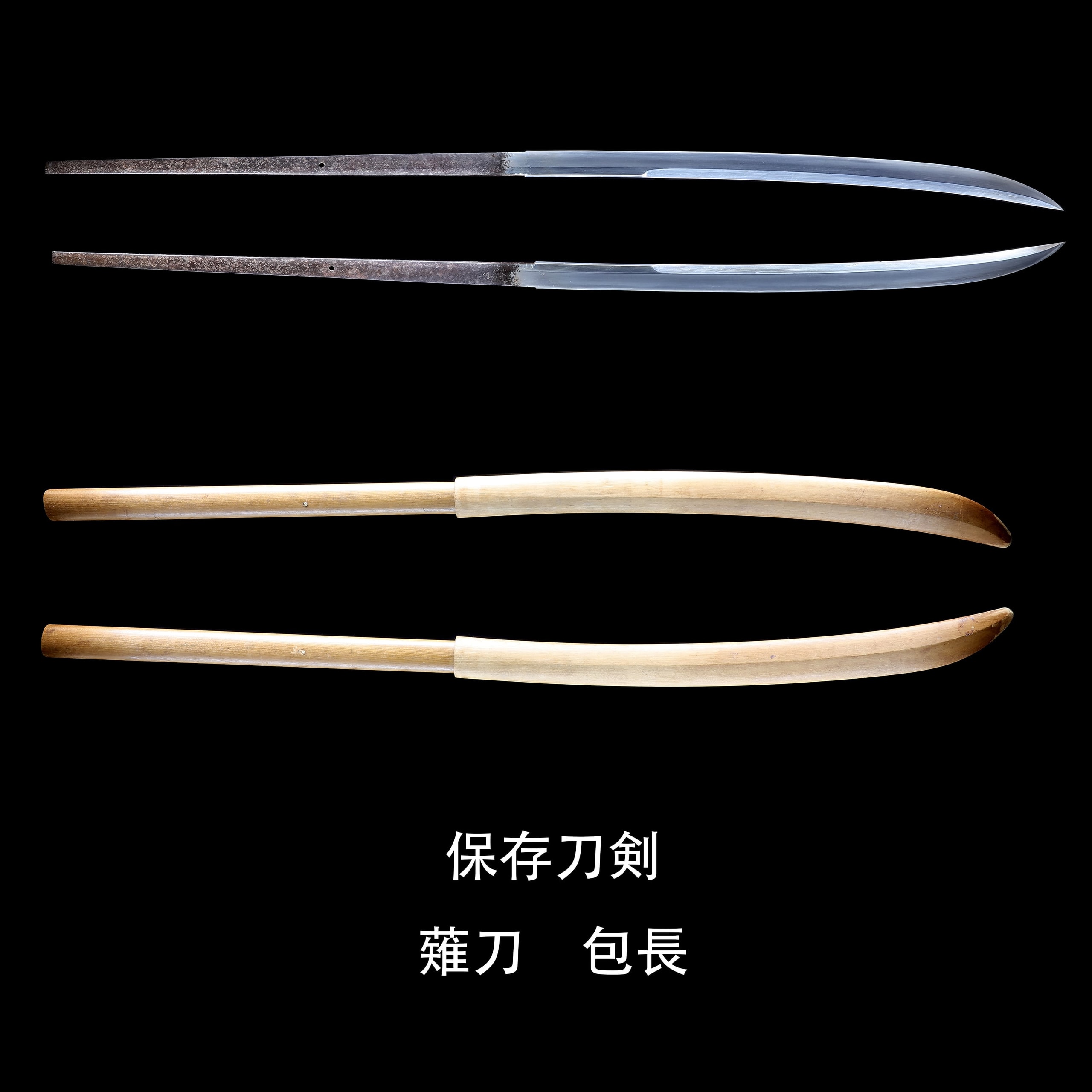
末手掻は、大和五派のうち最大の流派である手掻派の後期、すなわち室町時代に展開した一作風期を指す呼称である。手掻派は東大寺の西の正面たる転害門の外辺に居住して鍛刀したことからこの名がおこったと伝え、その祖を包永とし、年代は鎌倉時代後期の正応頃と伝えている。同派は南北朝時代を経て室町時代に至るまで連綿と栄え、応永頃を境として古手掻の古調から室町色を帯びた作域へと移行する。この室町期の作者群が末手掻であり、鎌倉草創期の包永一門と画然と区別される。在銘の代表的刀工としては包真・包清・包行をはじめ、包宗・包吉・包光・包貞・包久らがあり、いずれも同銘が何代か継承されて室町末期の文亀・天文の頃にまで及んでいる。伊勢国雲林院に移住して活躍した包長のごとく、他国へ展開して末手掻の面影を伝えた者もある。 作風は、鎌倉以来の大和伝を継承しつつ、これを締めて穏やかにした趣を示す。鍛えは板目に杢目を交え、総体に流れて柾がかり、地沸がつき地景の入るものが本領で、しばしば白気映り、ないし淡く白けごころを呈する点が末手掻の標識となる。刃文は匂口の締まりごころに小沸のついた直刃調を基本とし、細直刃から広直刃まで幅があり、浅くのたれて小互の目を交え、刃縁にはほつれ・喰違刃・二重刃・打のけ・湯走りといった大和物特有の働きが現れ、金筋・砂流しを交える。帽子は直ぐに小丸となって掃きかけ、やや長く返るものが多い。姿は内反りの平造短刀を主体とし、室町後期には先反りのついた打刀の姿も加わる。茎の鑢目は檜垣を通例とする点が著しい診断要素であり、鷹の羽鑢を伴う作もある。 評価としては、地刃の冴えと古色を併せ持ち、一見南北朝期を降らぬかと思わせる出来栄えの優品もある一方、総じて個性の発露は乏しく、伝統の家風を忠実に守り伝えた保守的な作域とみなされる。在銘品は二字銘が多く、在所地や年紀、藤原姓を冠した長銘を伴うものは資料的に貴重とされる。室町初期在銘の太刀は現存稀少であり、両刃造や年紀作とともに、手掻派研究上重要な遺品として珍重される。末手掻は、大和の正統を室町の世まで律儀に伝えた一群として位置づけられている。 詳しく見る →
桃山時代
三人の天下人が戦国の世紀を終わらせ、刀は新しい秩序の道具となった。1588年の刀狩は刀を武士の標章とし、名刀は条約のごとく家々の間を行き交い、鑑定は以後この境で古刀と新刀を分かつ。
特別保存刀剣の中から、特に出来が優れ、国認定の重要美術品に準ずると判断された名品です。年に一度の重要刀剣審査で選ばれます。
極めて選別的で、日本に登録された約250万口の刀剣のうち、重要刀剣に達したものは12,357口(約202口に1口)にすぎません。
日本美術刀剣保存協会(NBTHK)は、1948年に設立され、文化庁の監督を受ける公益財団法人で、東京・刀剣博物館に本部を置きます。専門の審査員が出品作を直接審査し、美術的・歴史的価値に応じた鑑定書を発行します。NBTHKの鑑定書は、日本刀および刀装具の真正性を示す最も広く認知された基準です。
NBTHK公式サイトReturns/exchanges limited to defects caused by shipping (except willful misconduct or gross negligence by the company); customers must contact within 72 hours of receiving the product.