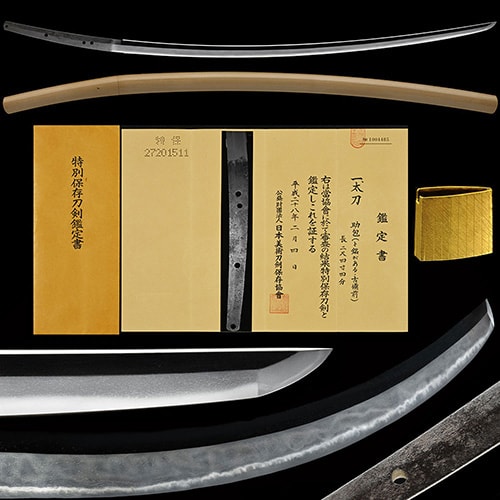
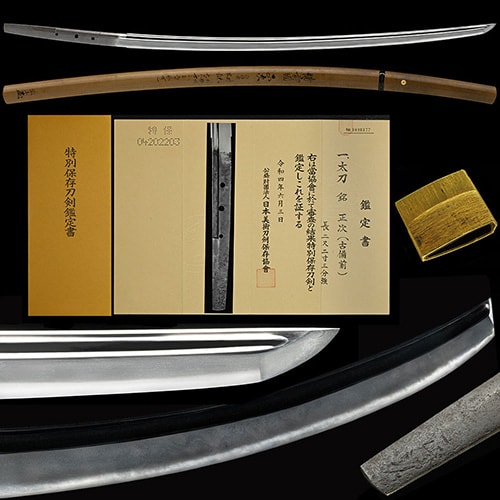
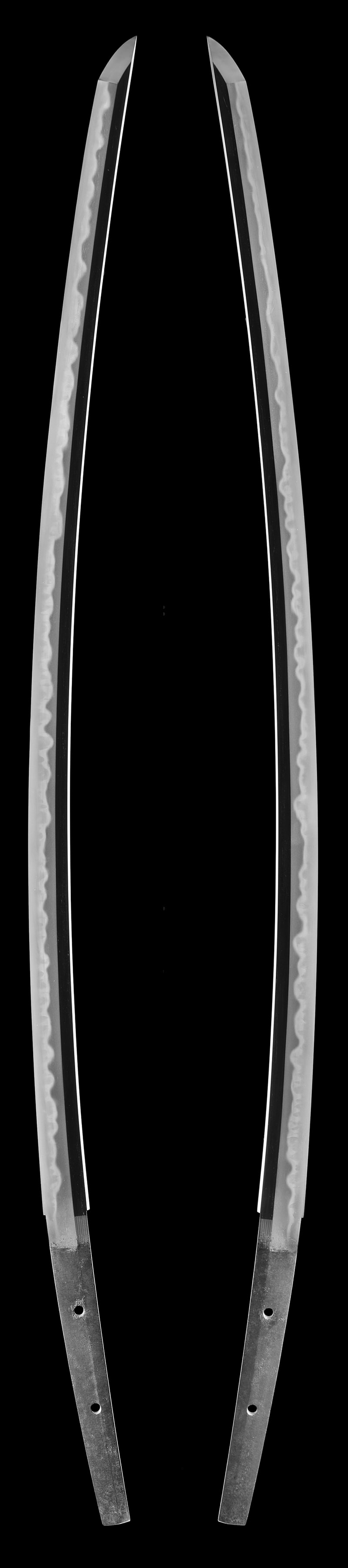
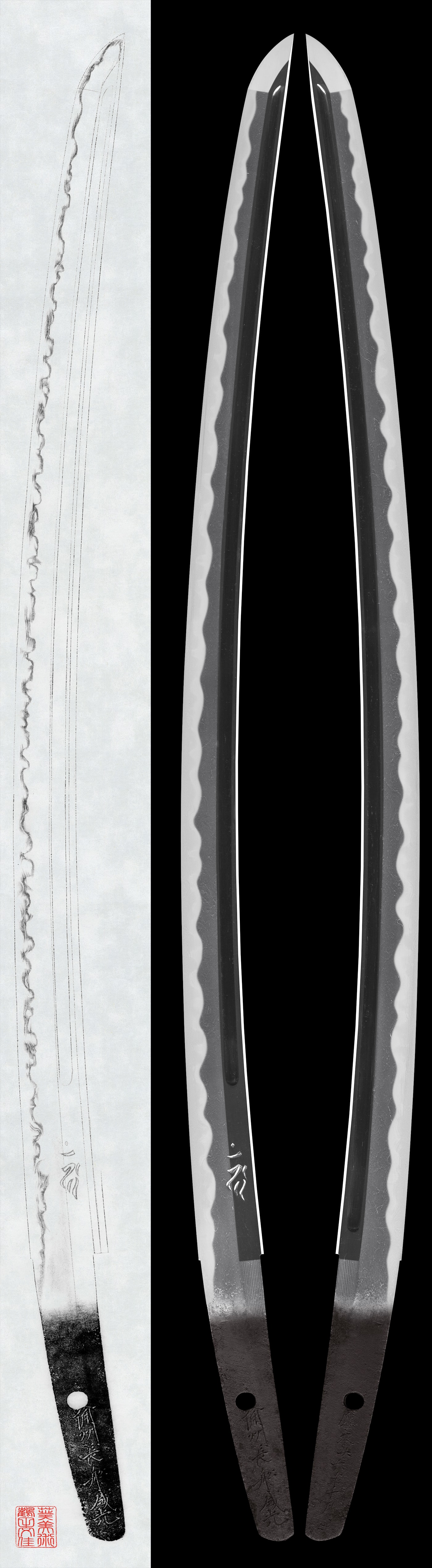
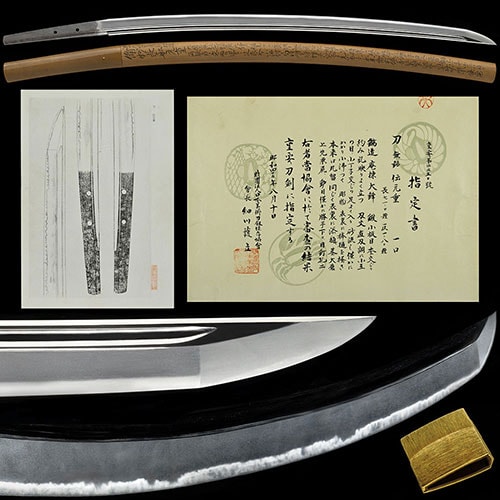
Sanetoshi (真利) is a smith of the group in Province, traditionally transmitted as belonging to the lineage of Sadazane (貞真). Signature references list smiths reading "Mari" or "Sanetoshi" among the , Fukuoka , Katayama , and lineages, making definitive attribution on the basis of the signature alone difficult. The designation records appraise works bearing this name variously as proper and as Ko-, reflecting the overlapping stylistic territory these early schools occupied during the late through early periods. His era of activity is recorded around Jōei (1232--1233).
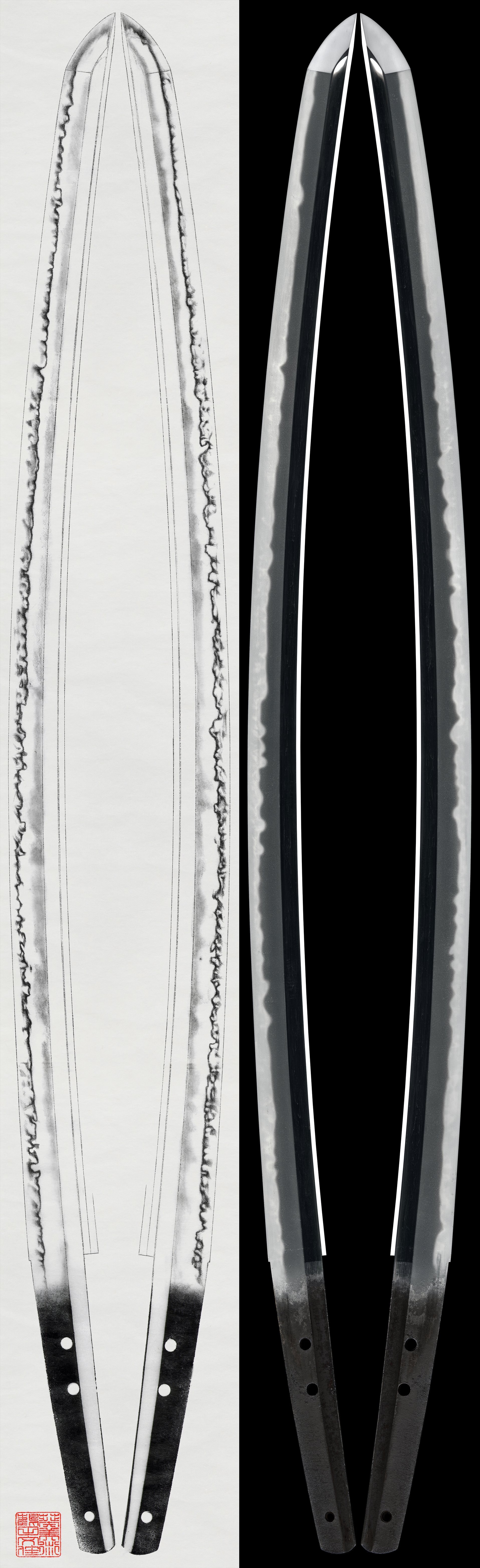
Sanetoshi's forging is described as powerful with adhering thickly and appearing within the ground; a faint, standing is observed on certain works. The is typically a small mixed with and a tendency, with and entering and abundant activity within the tempered area. On blades appraised as Ko- work, the temper pattern takes on a character mixed with and , displaying a more restrained and archaic elegance when compared with the bolder expressions of mid- . The tends toward with a turnback, and appears frequently.
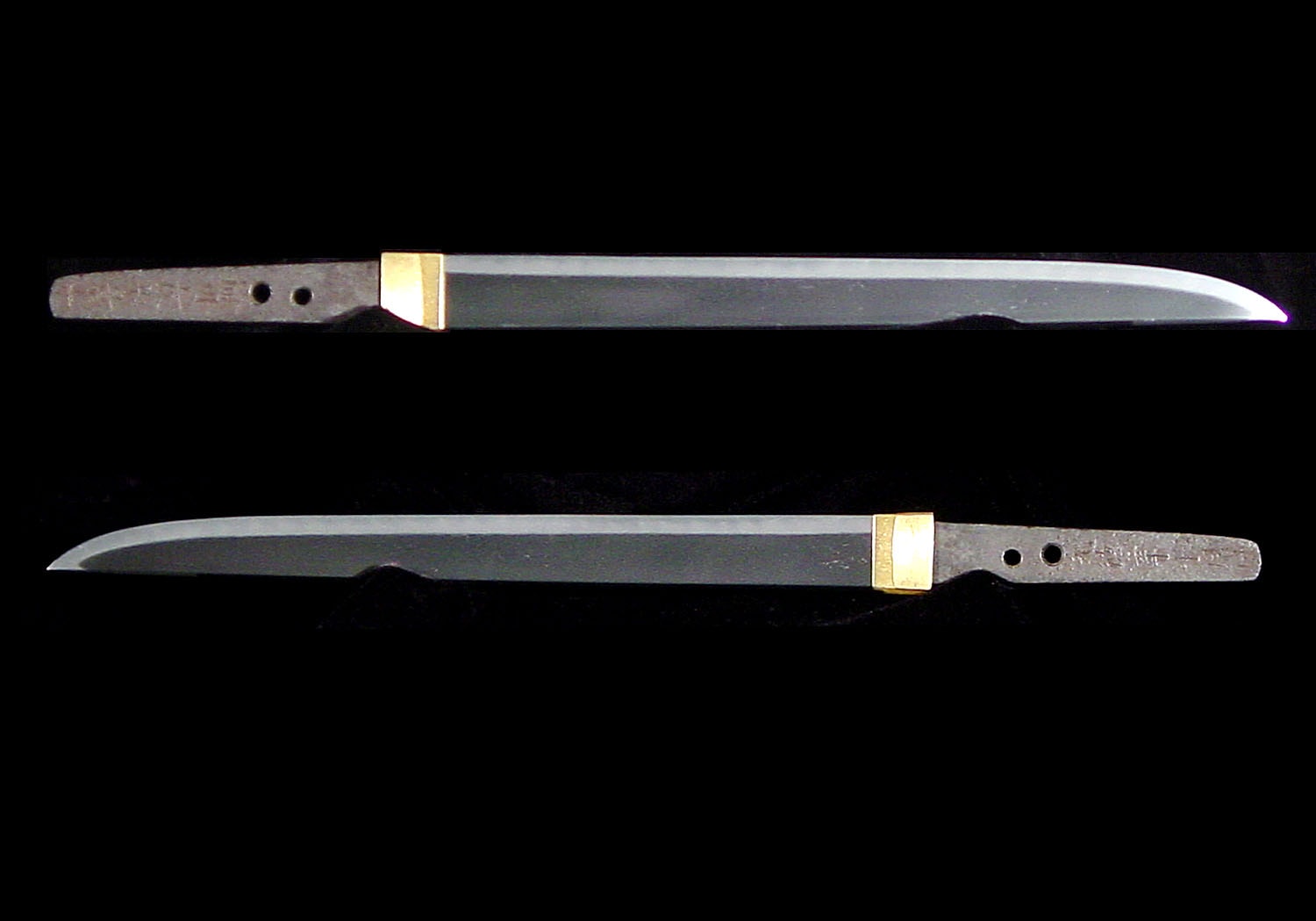
Sanetoshi occupies a position at the junction of the and early traditions, and his surviving works offer valuable evidence for understanding the transition between these closely related schools. The designation records note that the quality of both and in his work well displays the distinctive qualities of Ko- craftsmanship, while the slender proportions with pronounced clearly manifest the formal characteristics of early production. One designated blade retains an with sharply preserved signature characters, making it an especially important documentary source for the study of this smith and the broader milieu.