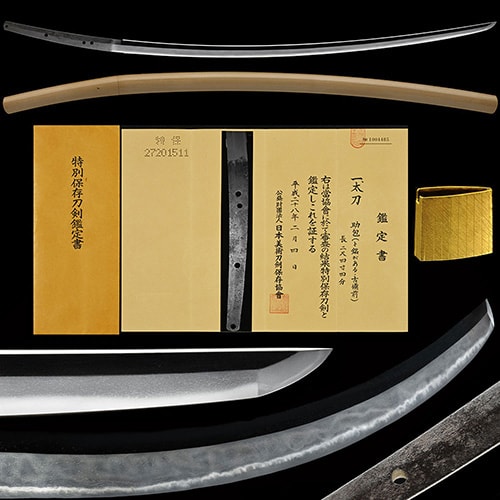
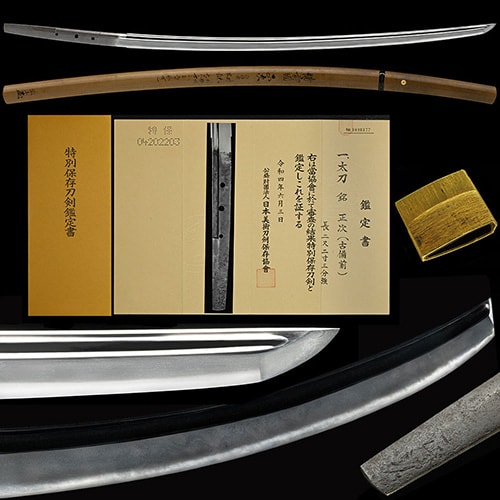
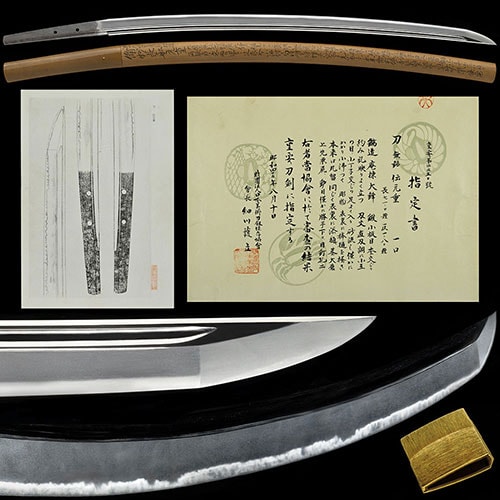
Ietada is a smith whose period and lineage remain incompletely established. The sword reference books record smiths using this name in association with both the school and the Fukuoka group during the early period, with proposed dates ranging from the Bunji era (1185–1190) to around the Joo era (1222–1224). The sole dated reference in the is a blade inscribed " Einin" together with "made by Ietada," yet no extant work bears a date inscription, and because the question cannot be resolved by signature style alone, the observes that the establishment of a definitive chronology and the determination of which lineage these works belong to must await future research. What is consistently affirmed is that signed blades by Ietada are exceedingly few — a circumstance that invests each surviving example with considerable documentary weight.
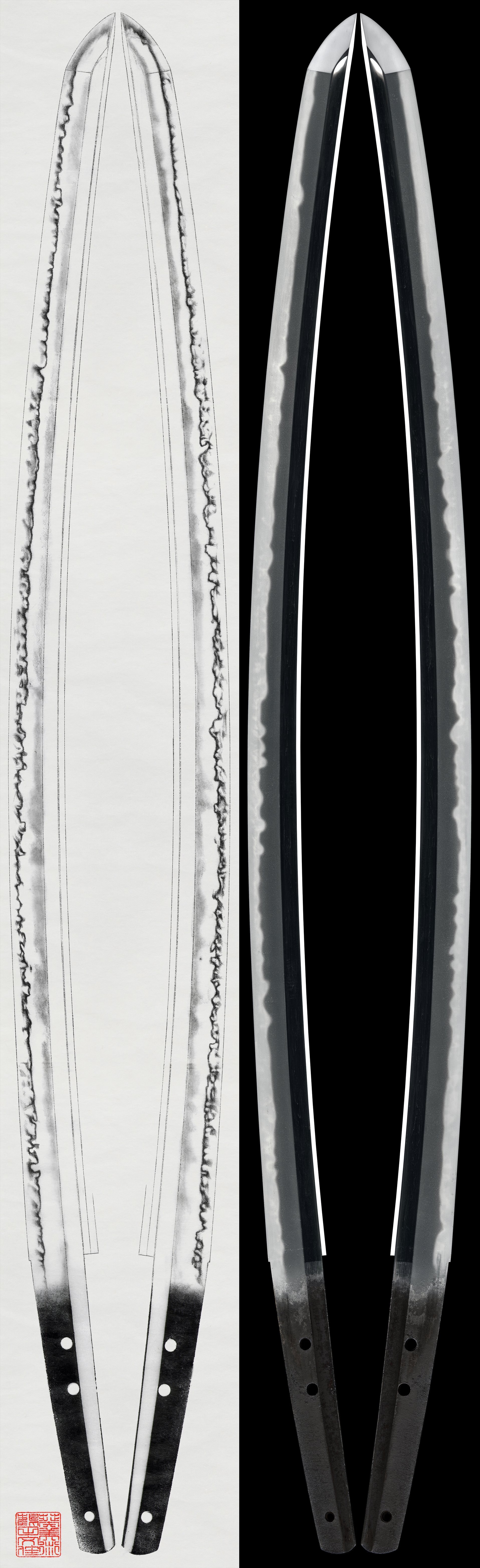
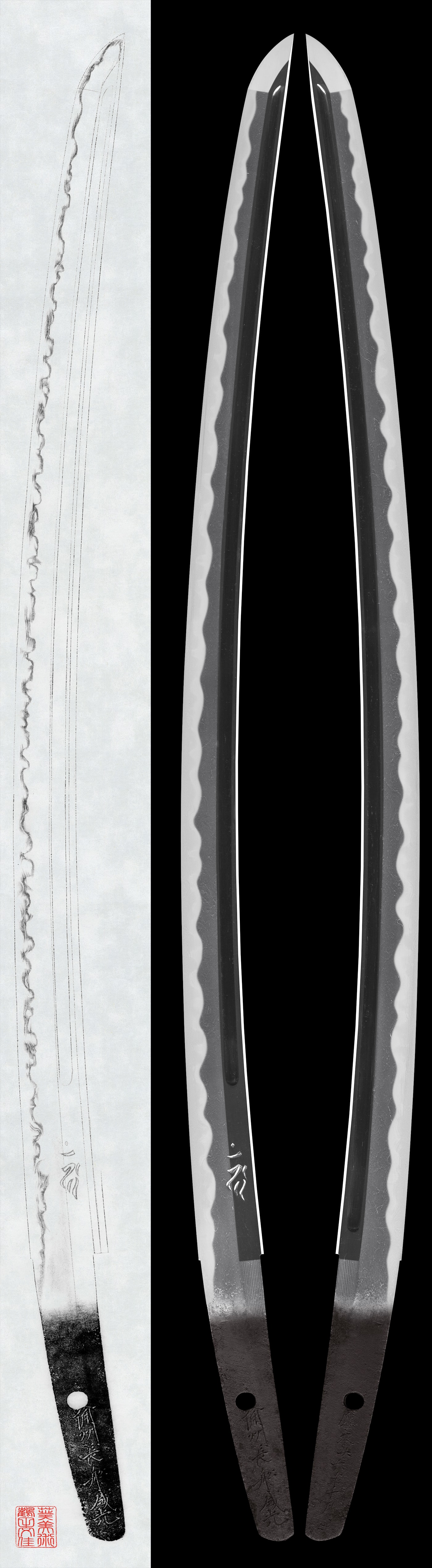
Across the examined works, the technical character is remarkably cohesive. The presents , in the finest examples well-forged and well-kneaded to convey what the describes as a soft feeling, with adhering throughout and fine entering well. or -like appears distinctly. The is consistently built upon a -like pattern mixed with and , with and entering frequently — a temper in which the undulations and openings remain hardly conspicuous, yielding what the characterizes as an uncontrived, antique elegance. The typically enters in or runs straight, turning back in , at times showing , with and appearing in the return. The is slender, retaining even through , and concluding in — presenting a graceful figure in good state of preservation.
The appraises Ietada's workmanship as displaying the characteristic features of the group, noting that the archaic and classically elegant manner of these blades places them no later than the early period. The recurring evaluative emphasis falls upon the restraint and antiquity of the work: irregularities remain gentle, technical effects are subdued rather than assertive, and the overall impression is one of quiet dignity. The appraisal states that this single example alone attests to Ietada's high technical ability, and that the blade should be admired as one that enhances the estimation of this smith — a judgement that, given the extreme scarcity of signed works, underscores the importance of each surviving piece to the study of early swordmaking.