NihontoWatch Mon

NihontoWatch

MarketAuctions
Encyclopedia
NihontoWatch Mon

NihontoWatch

MarketAuctions
Encyclopedia

Description

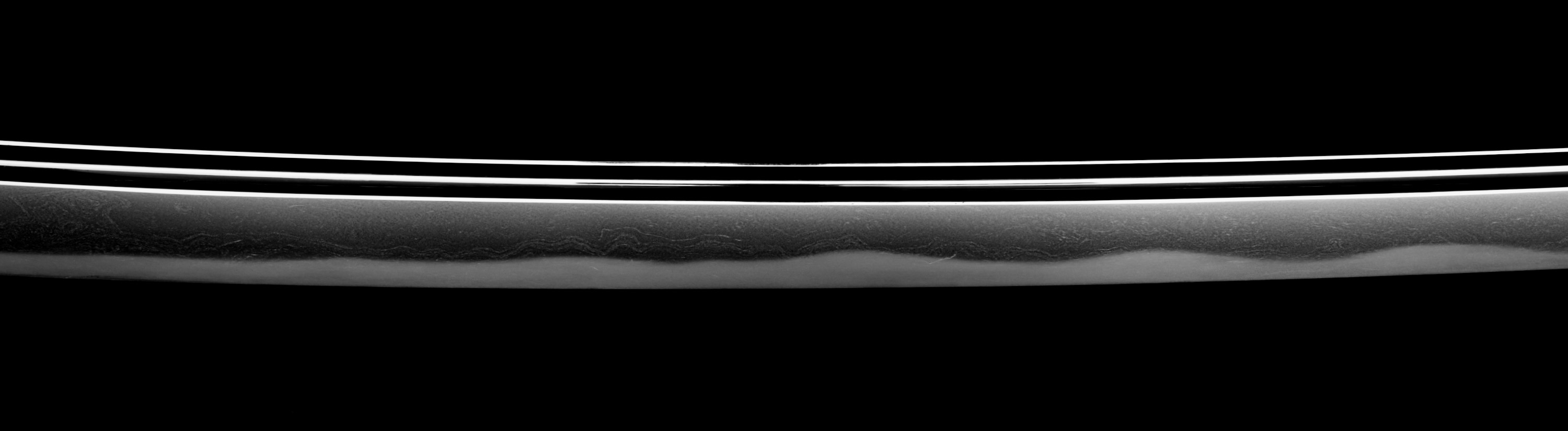
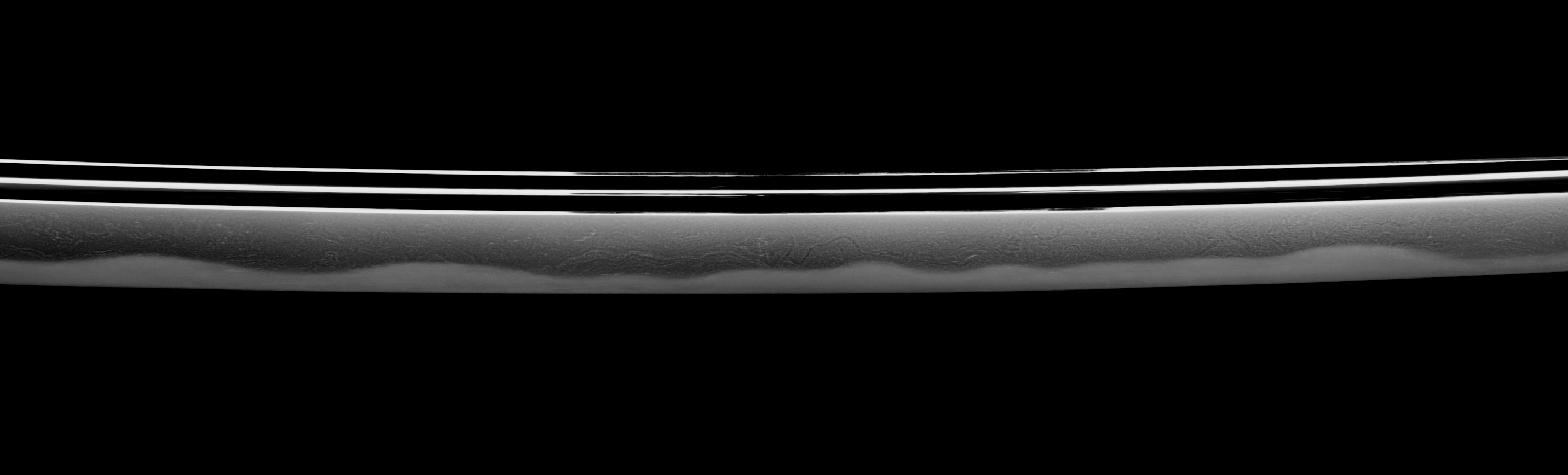
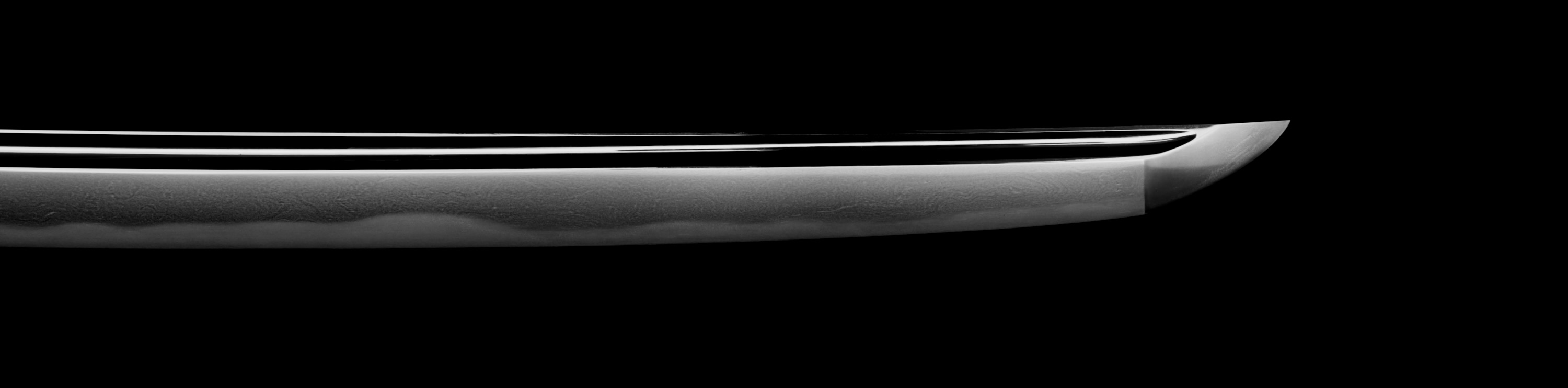
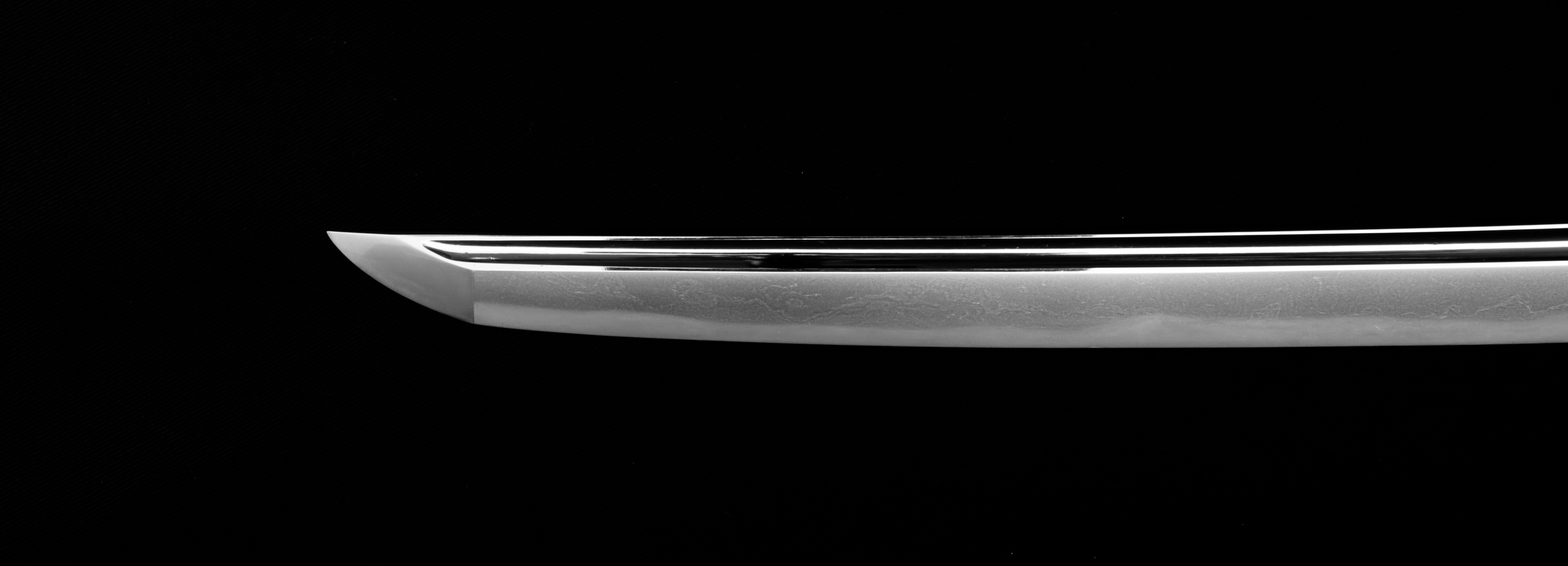
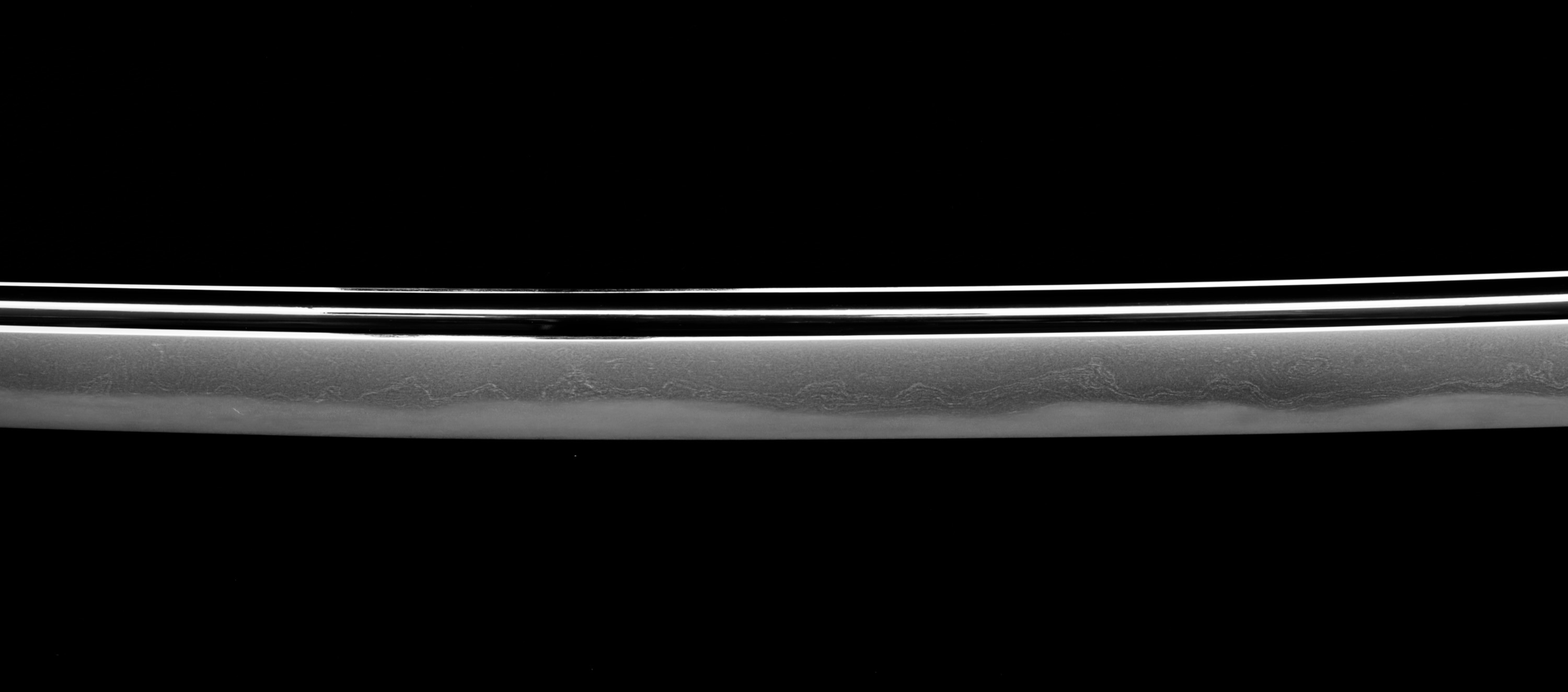
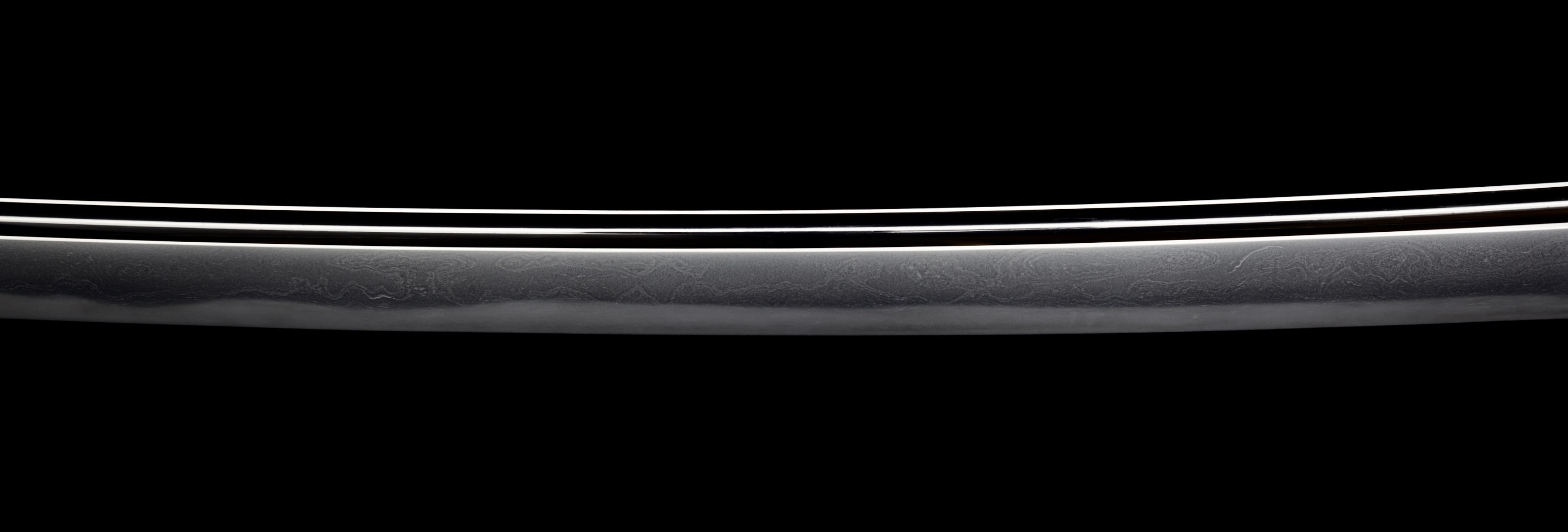
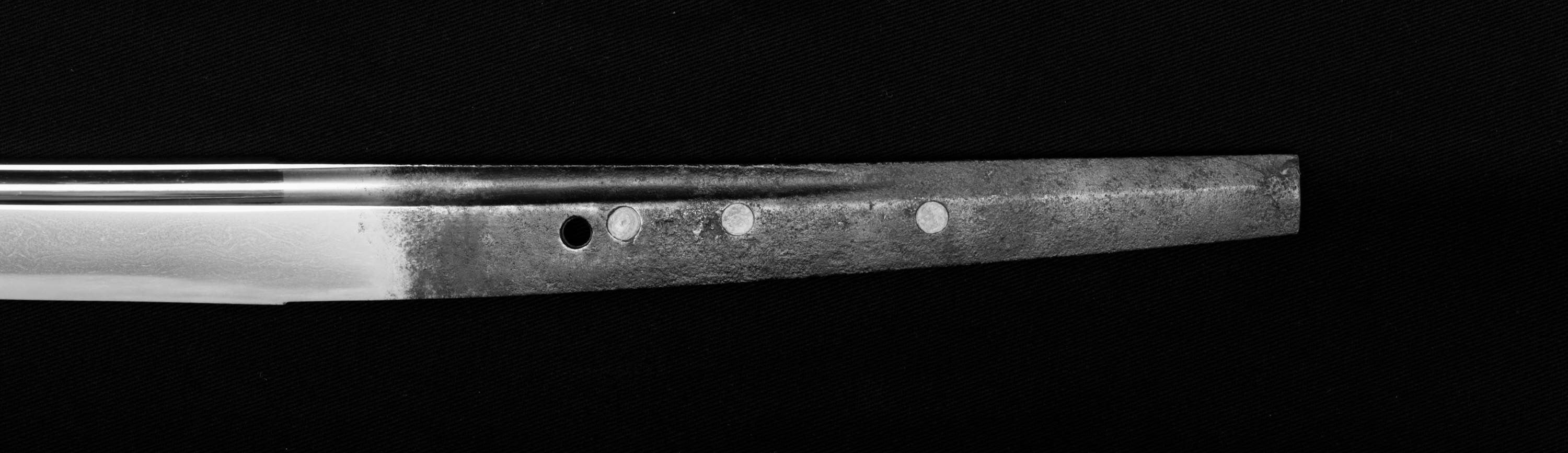
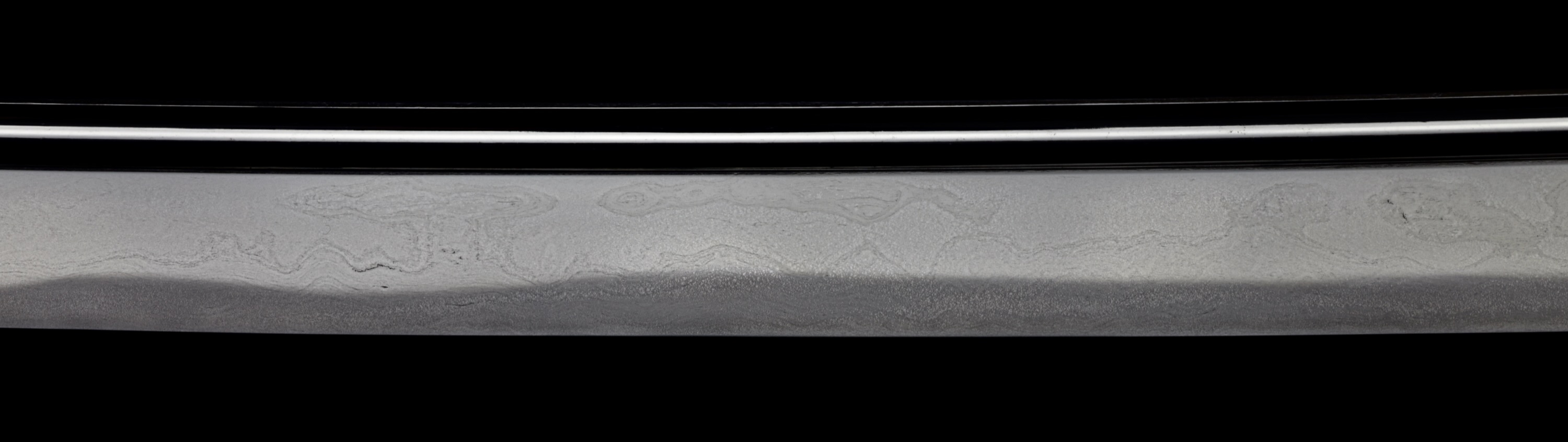
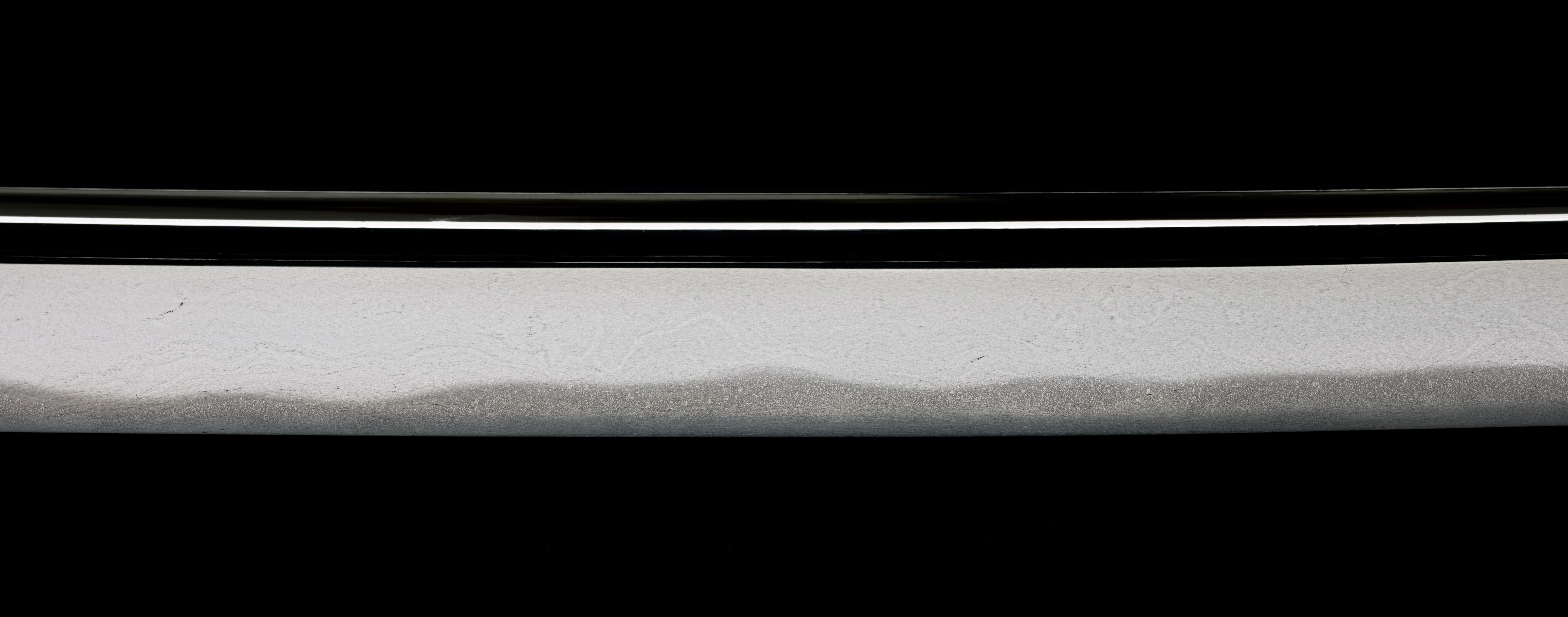
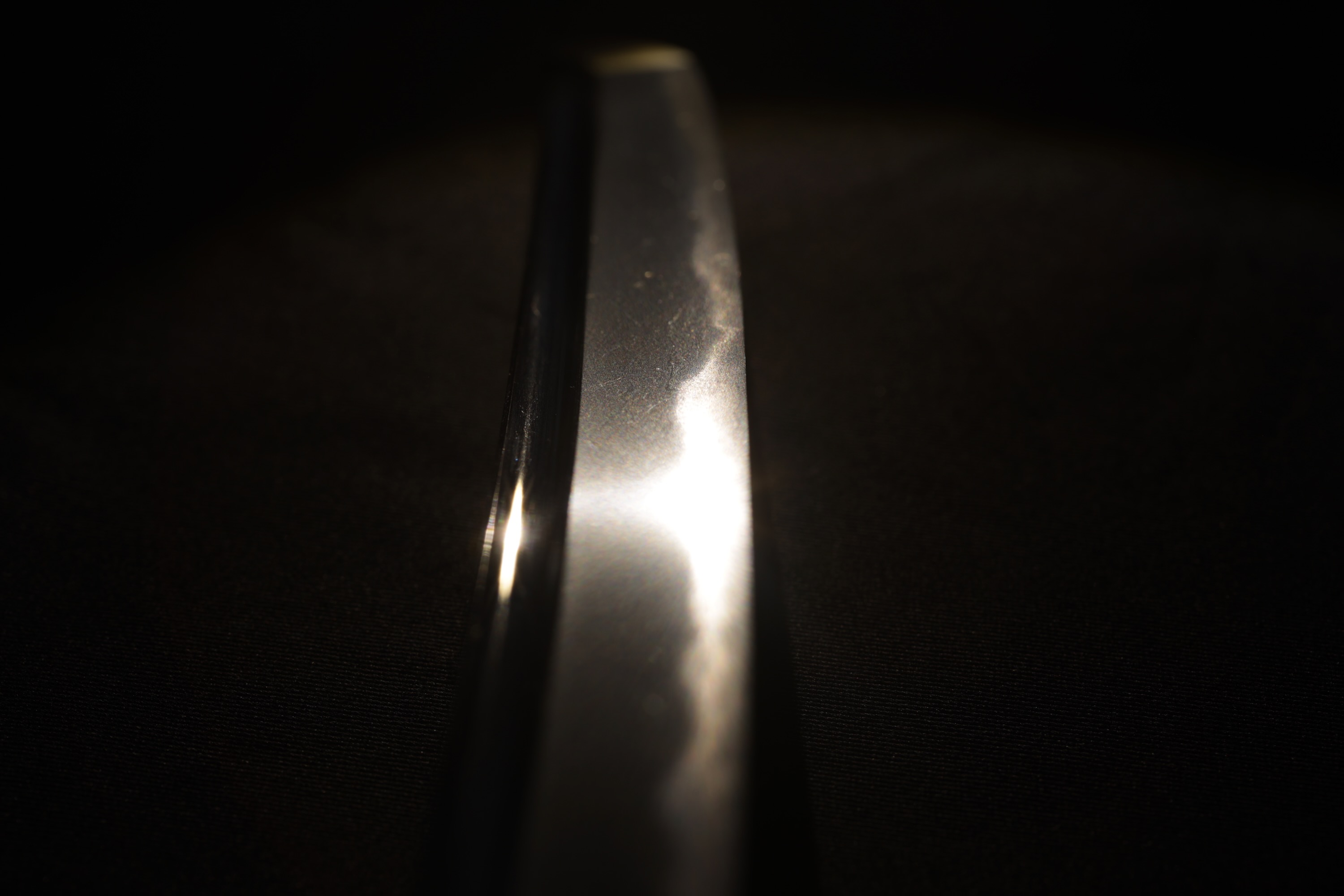
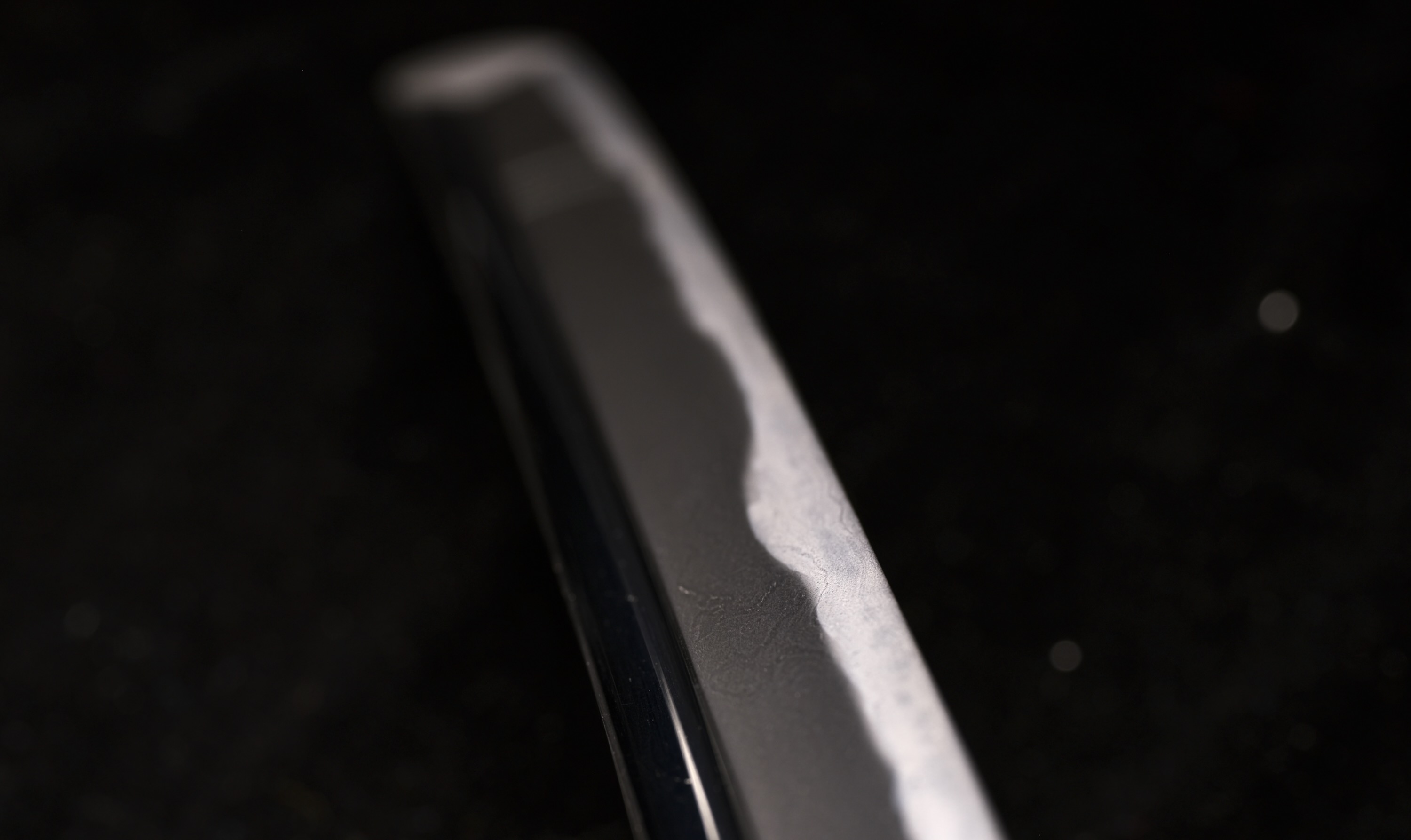
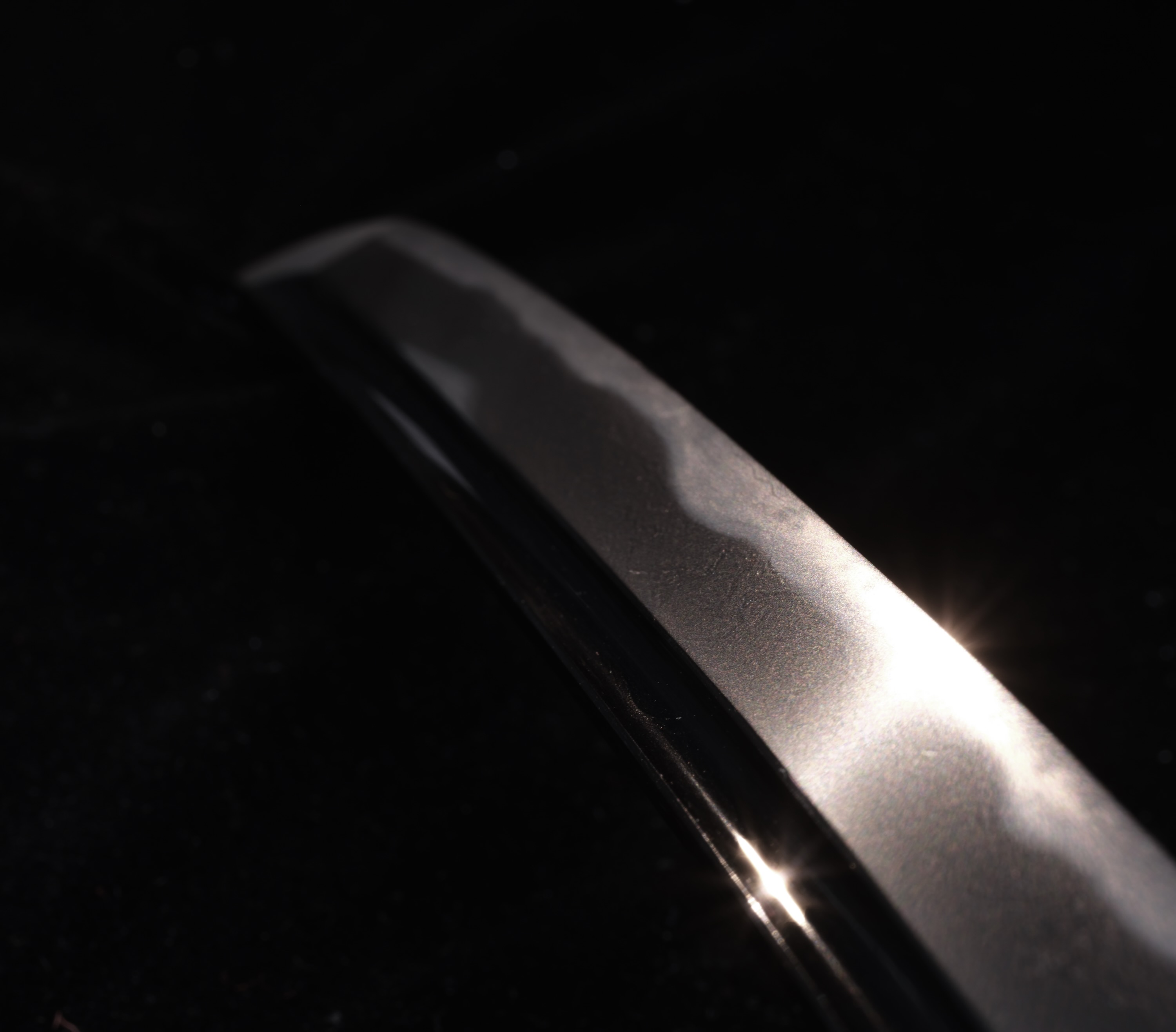
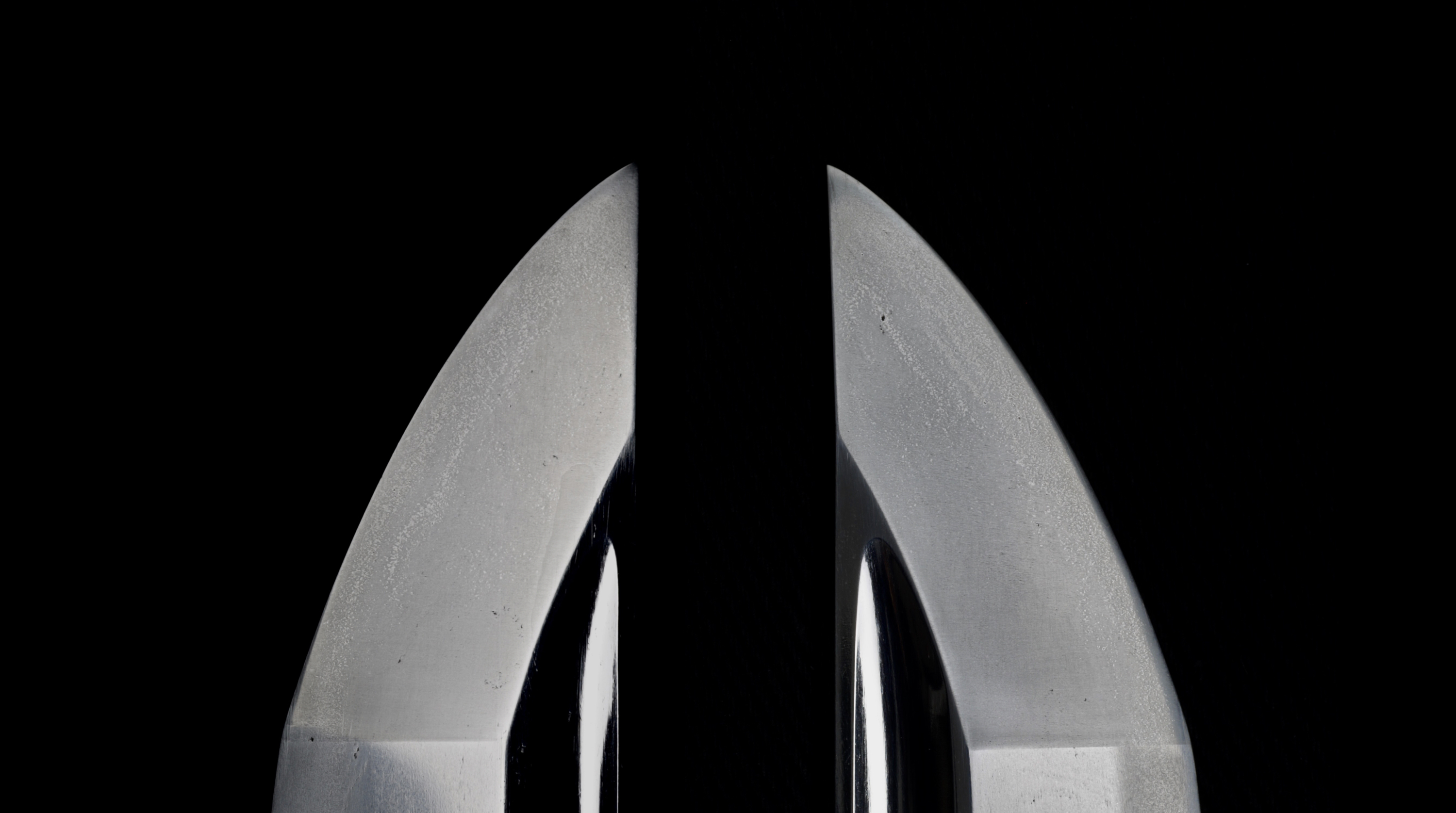
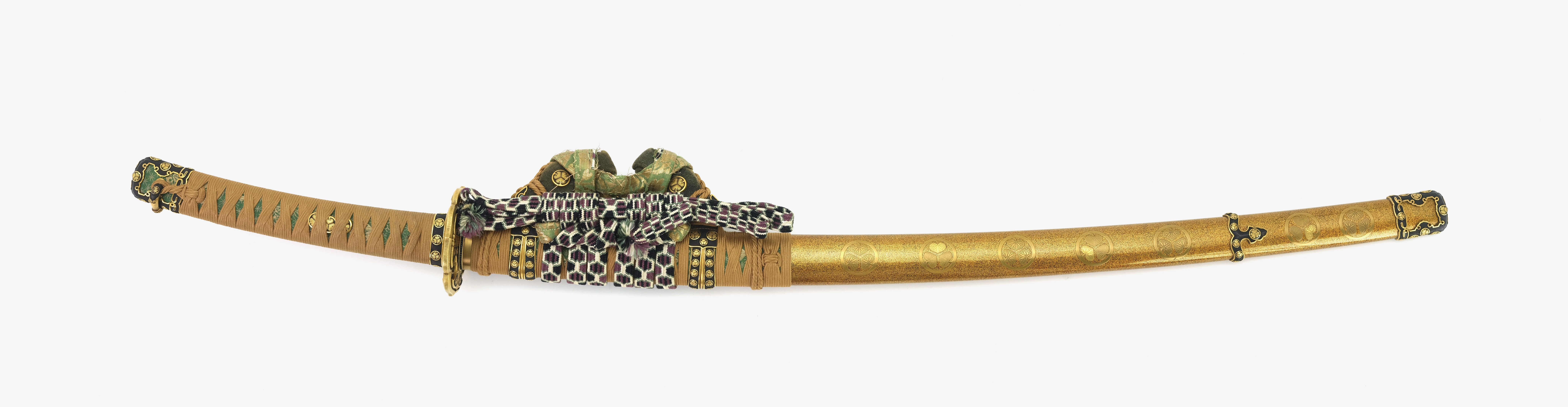
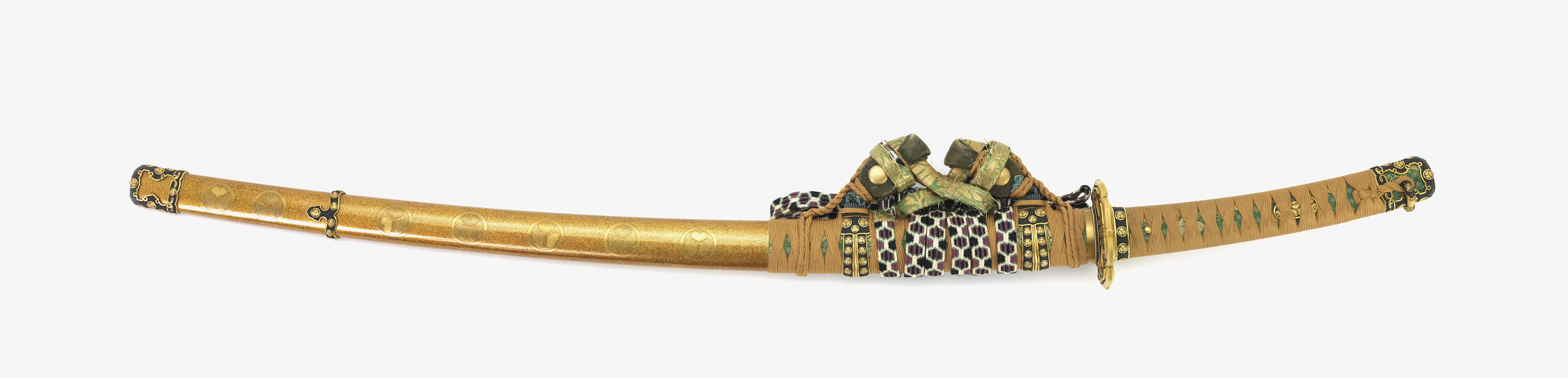
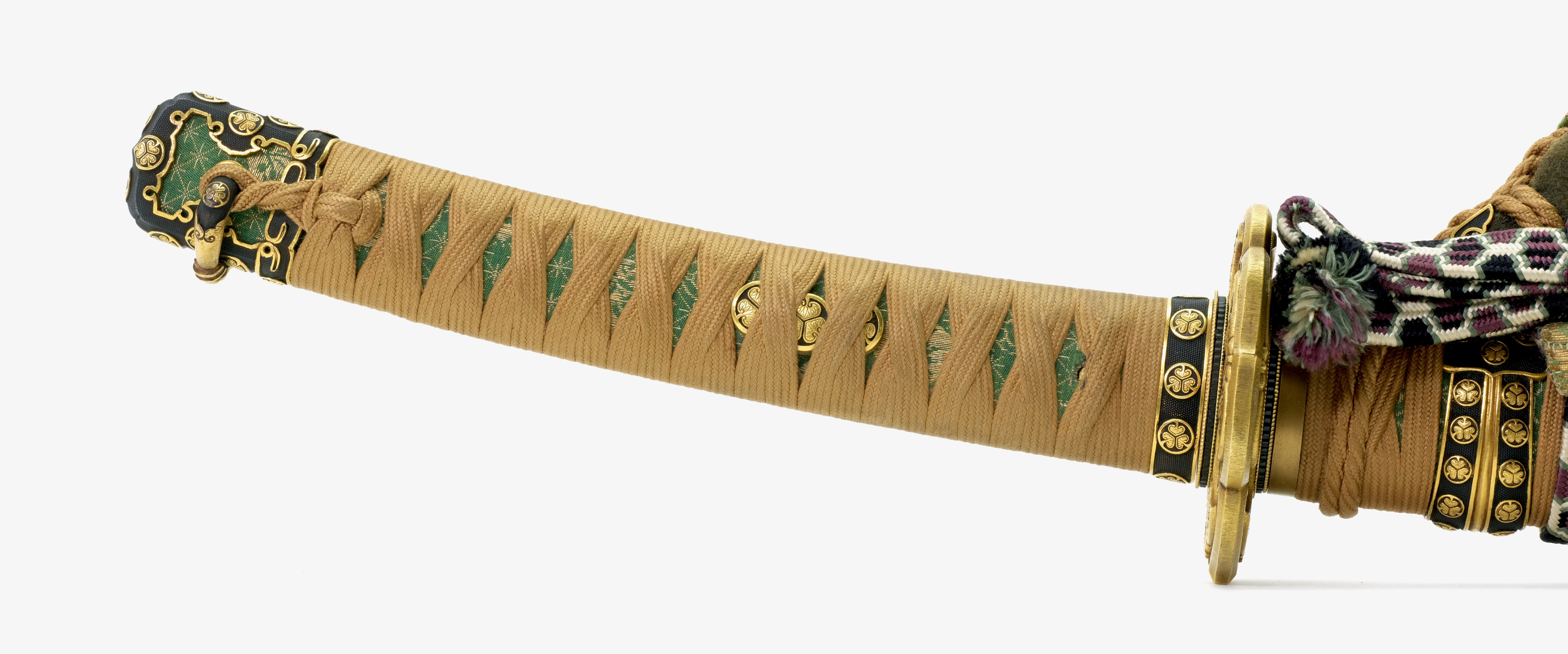
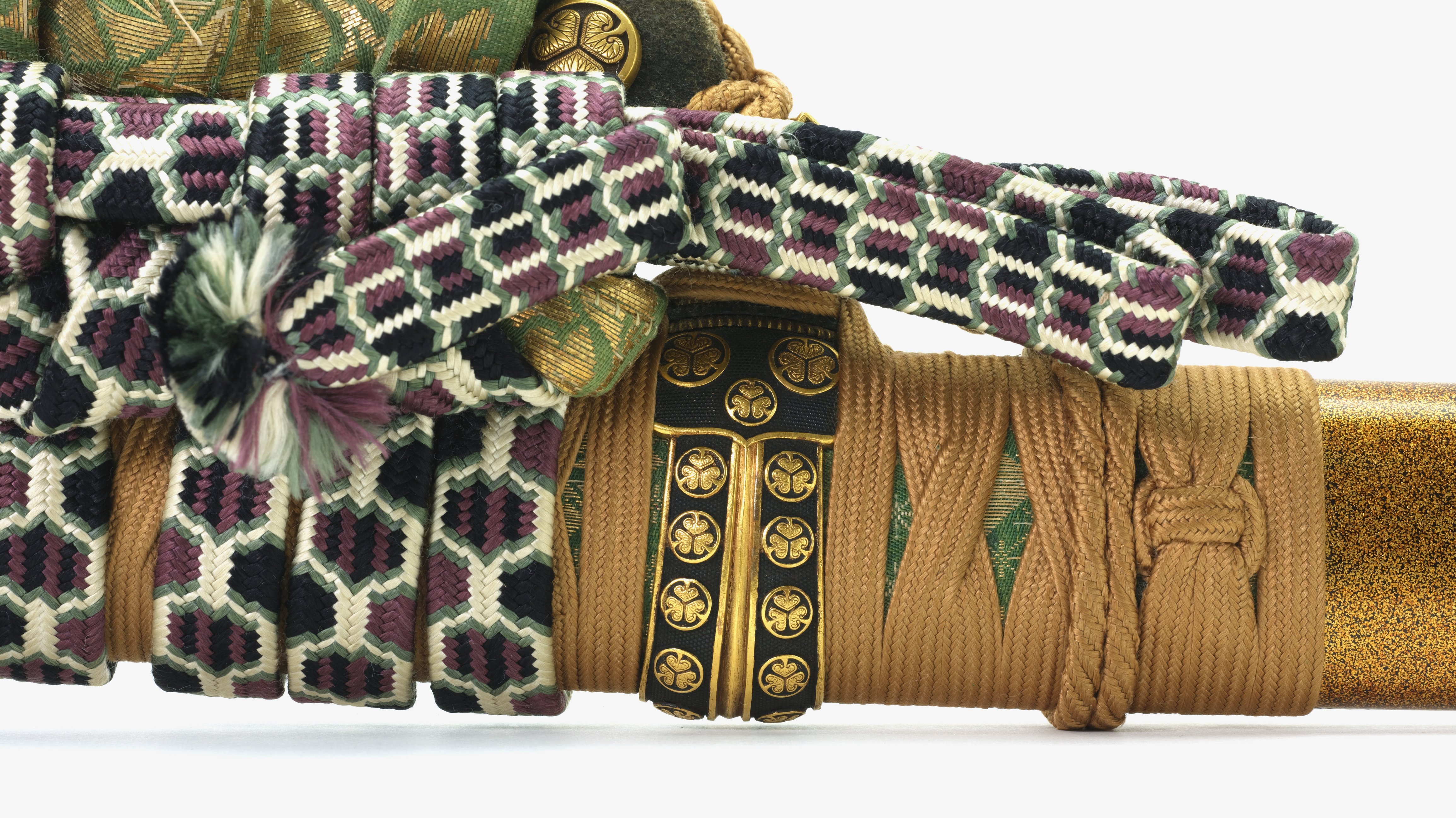
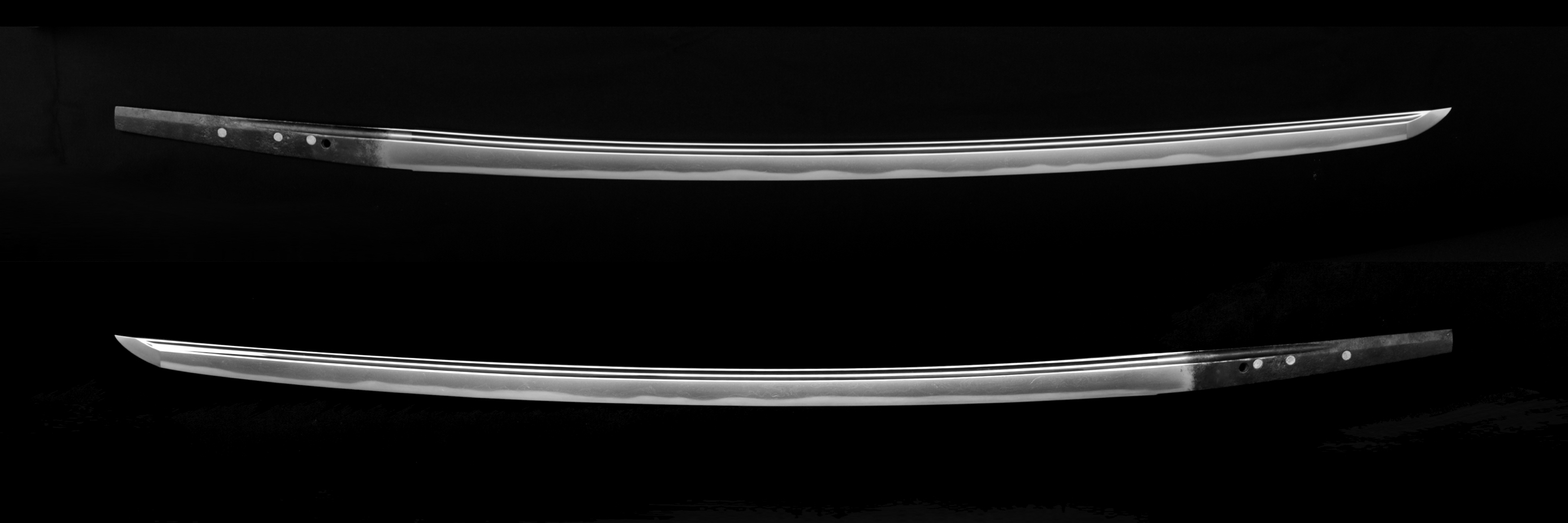
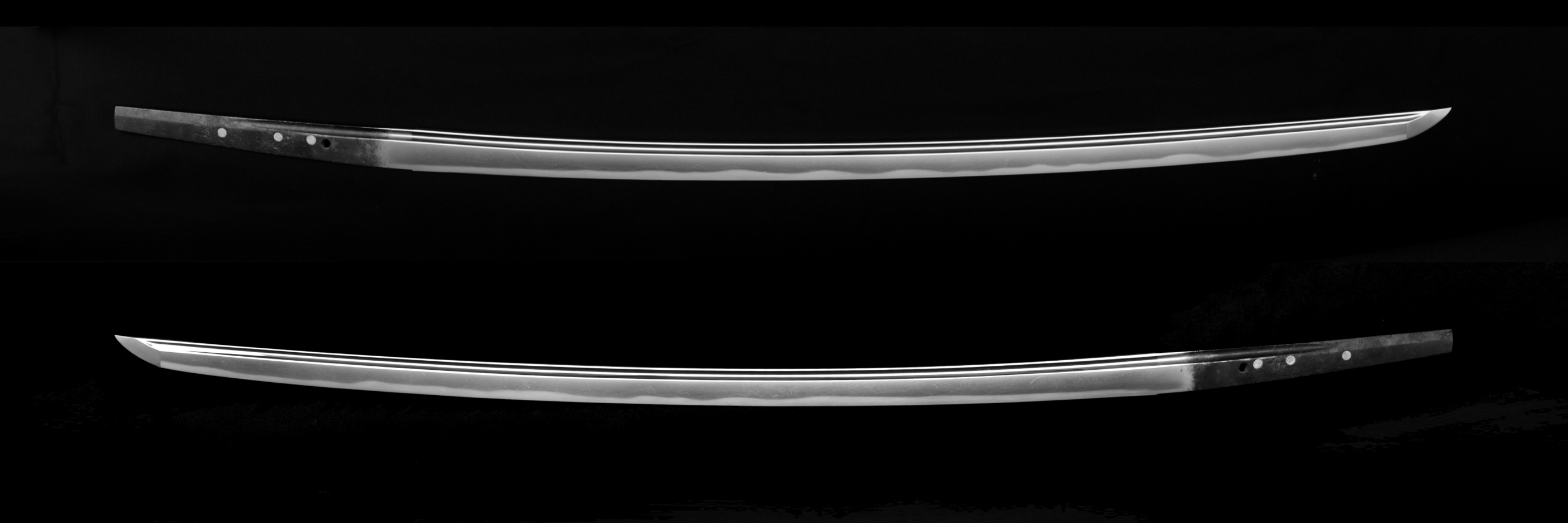
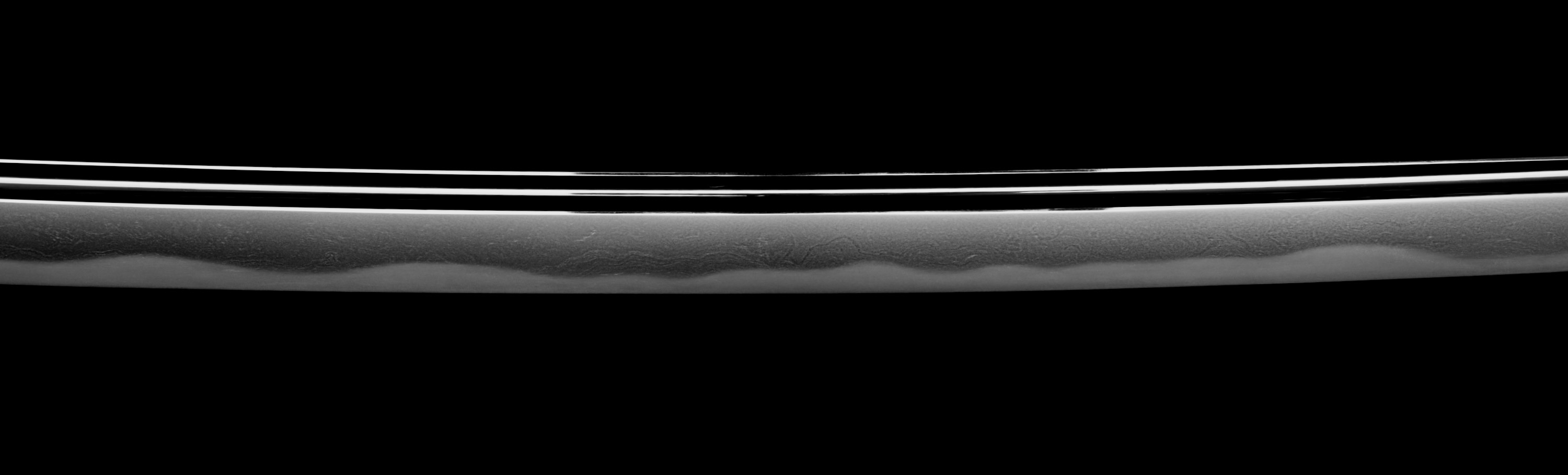
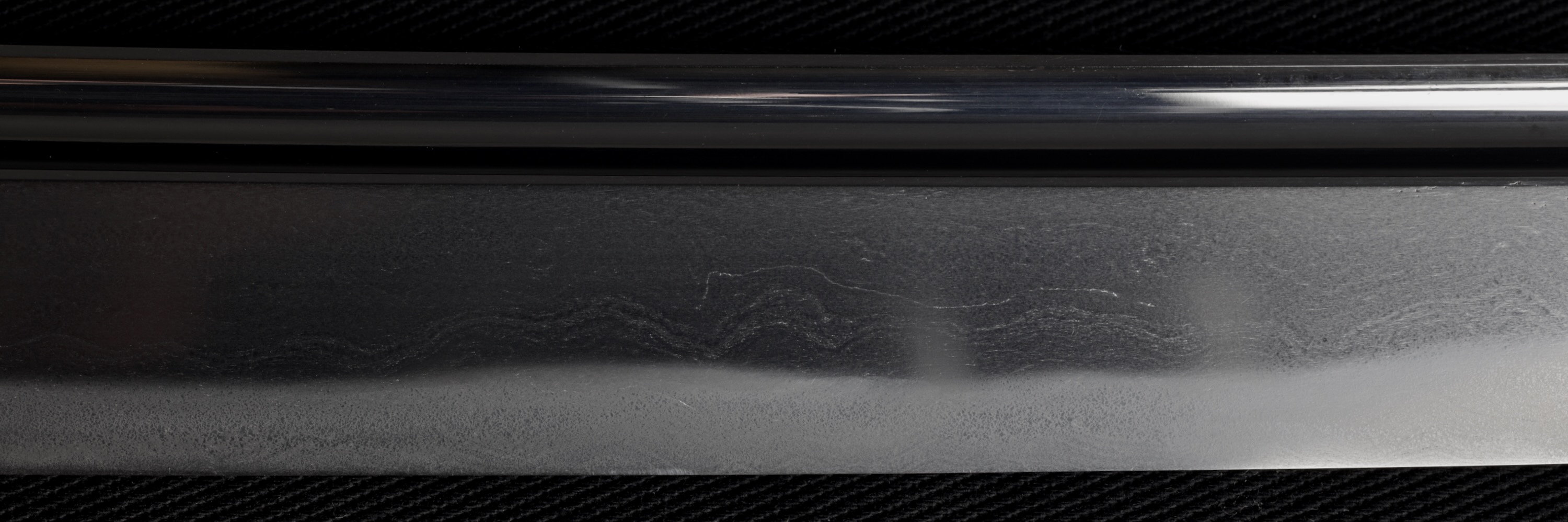
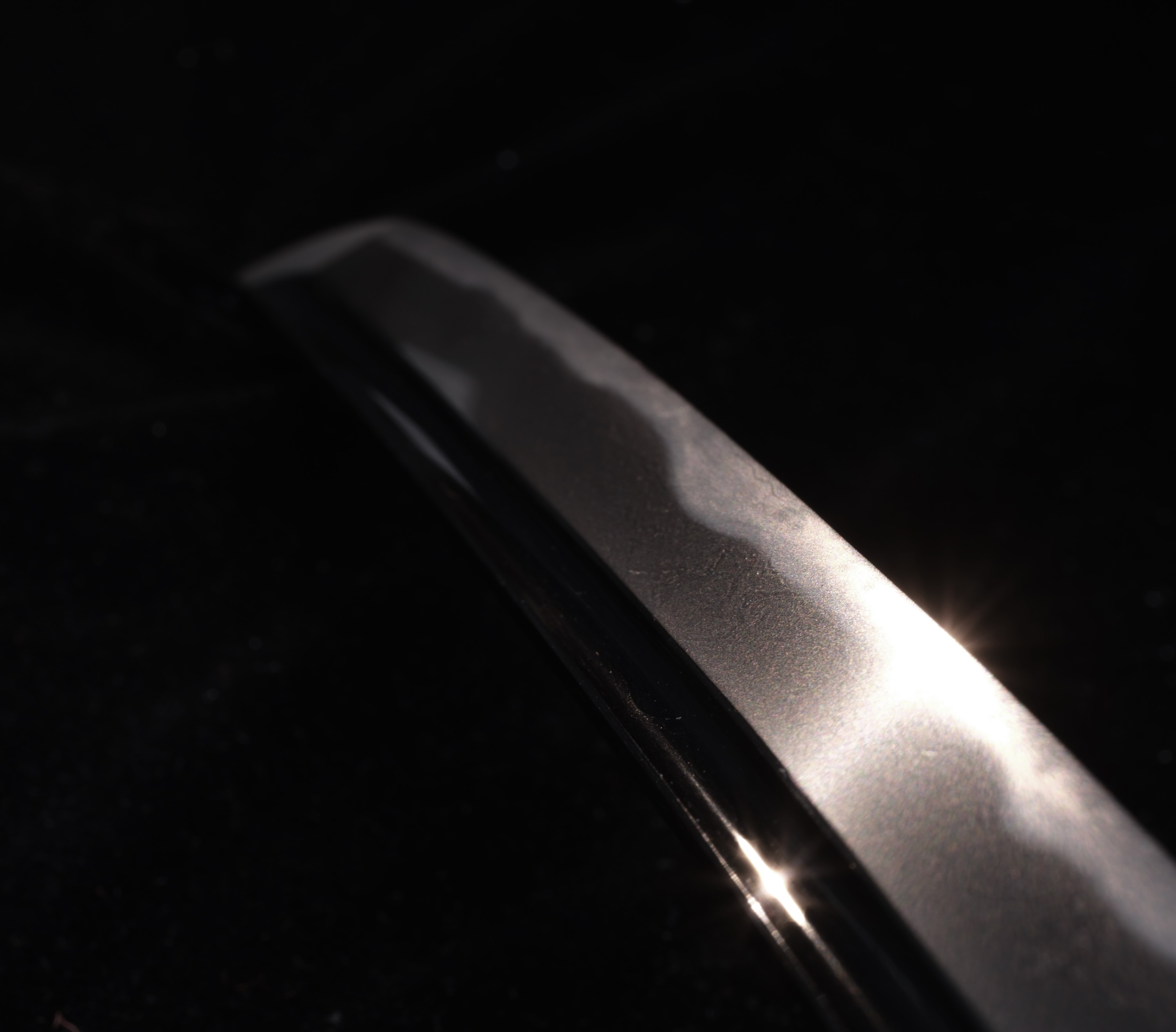
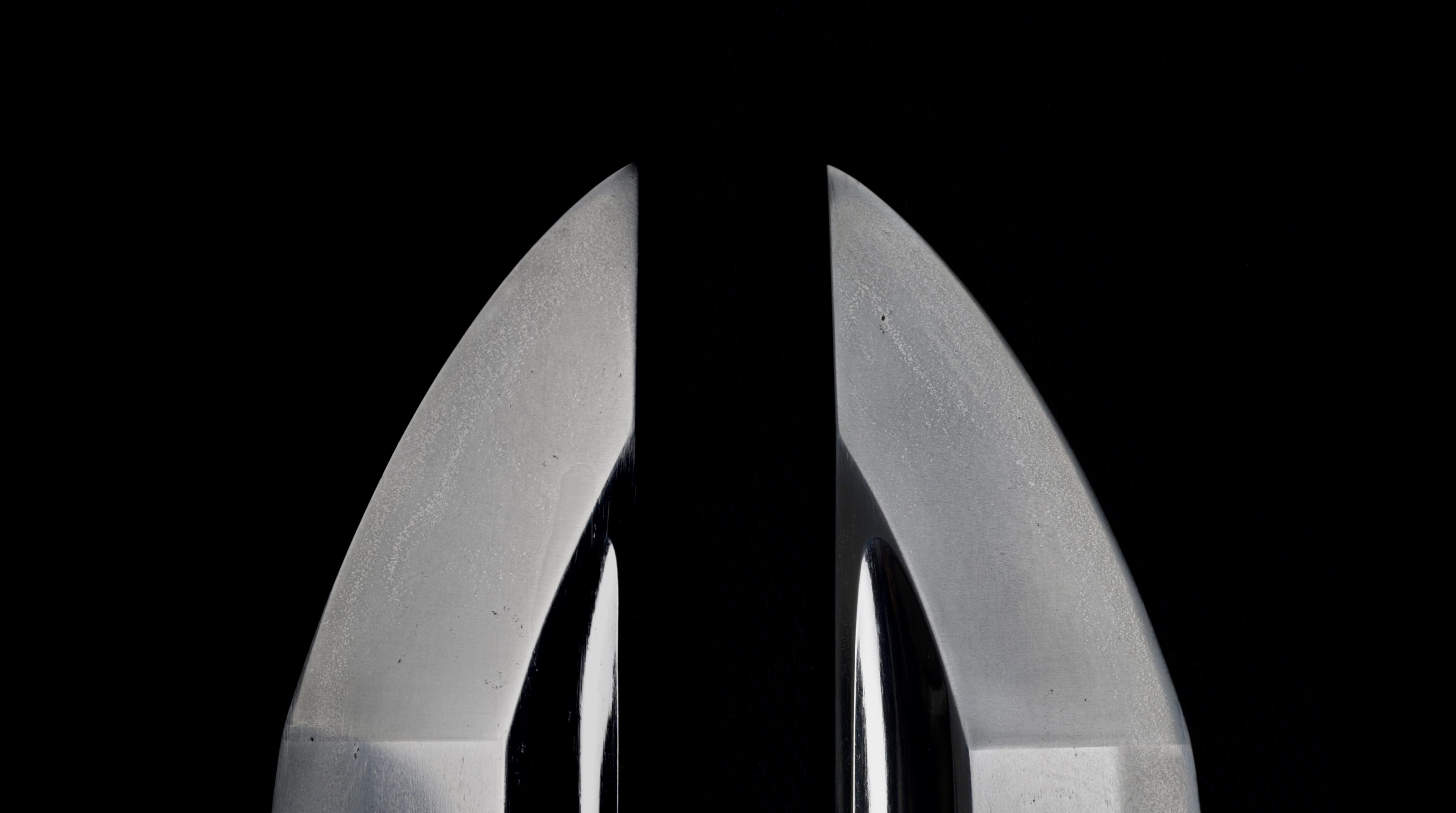
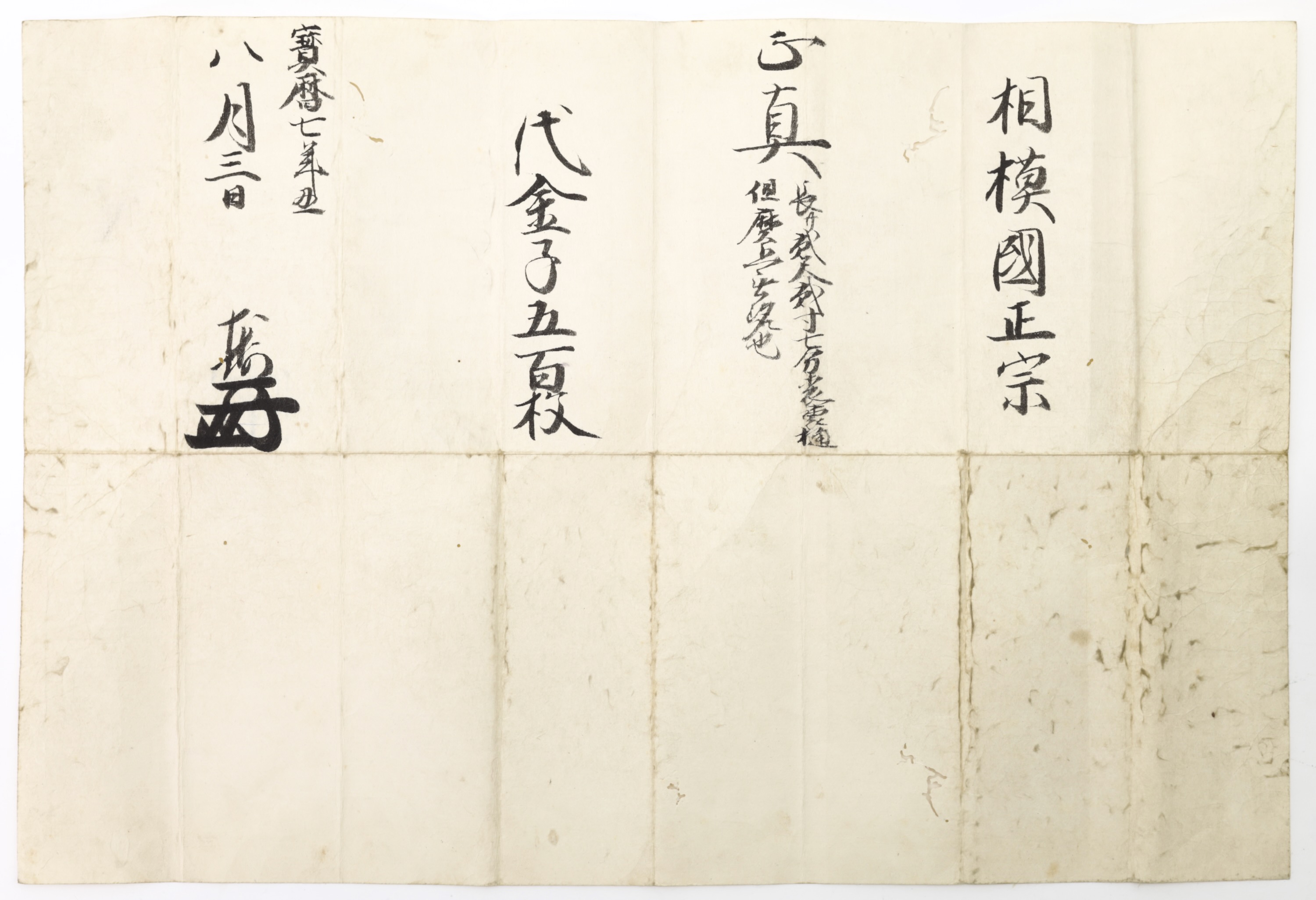
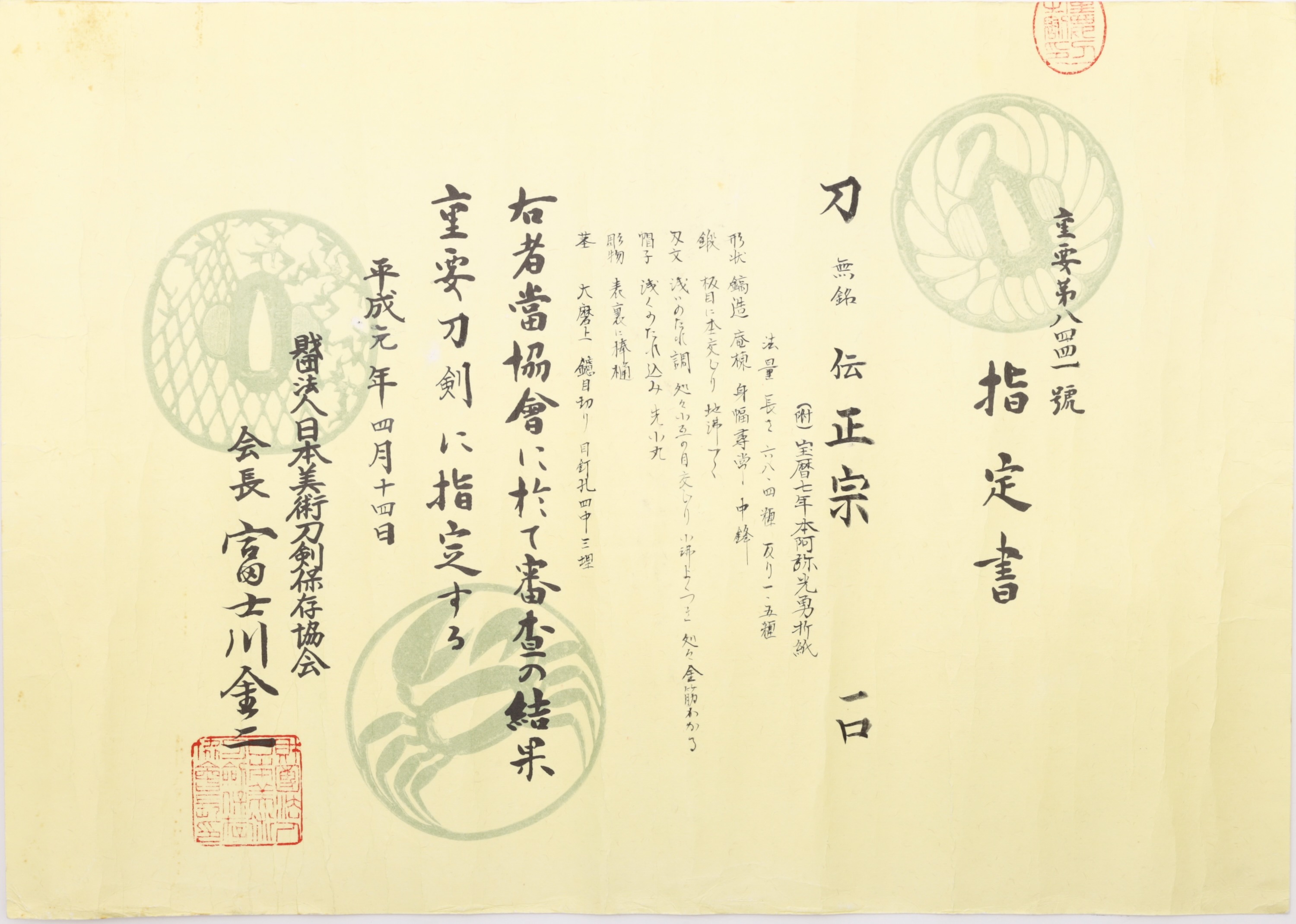
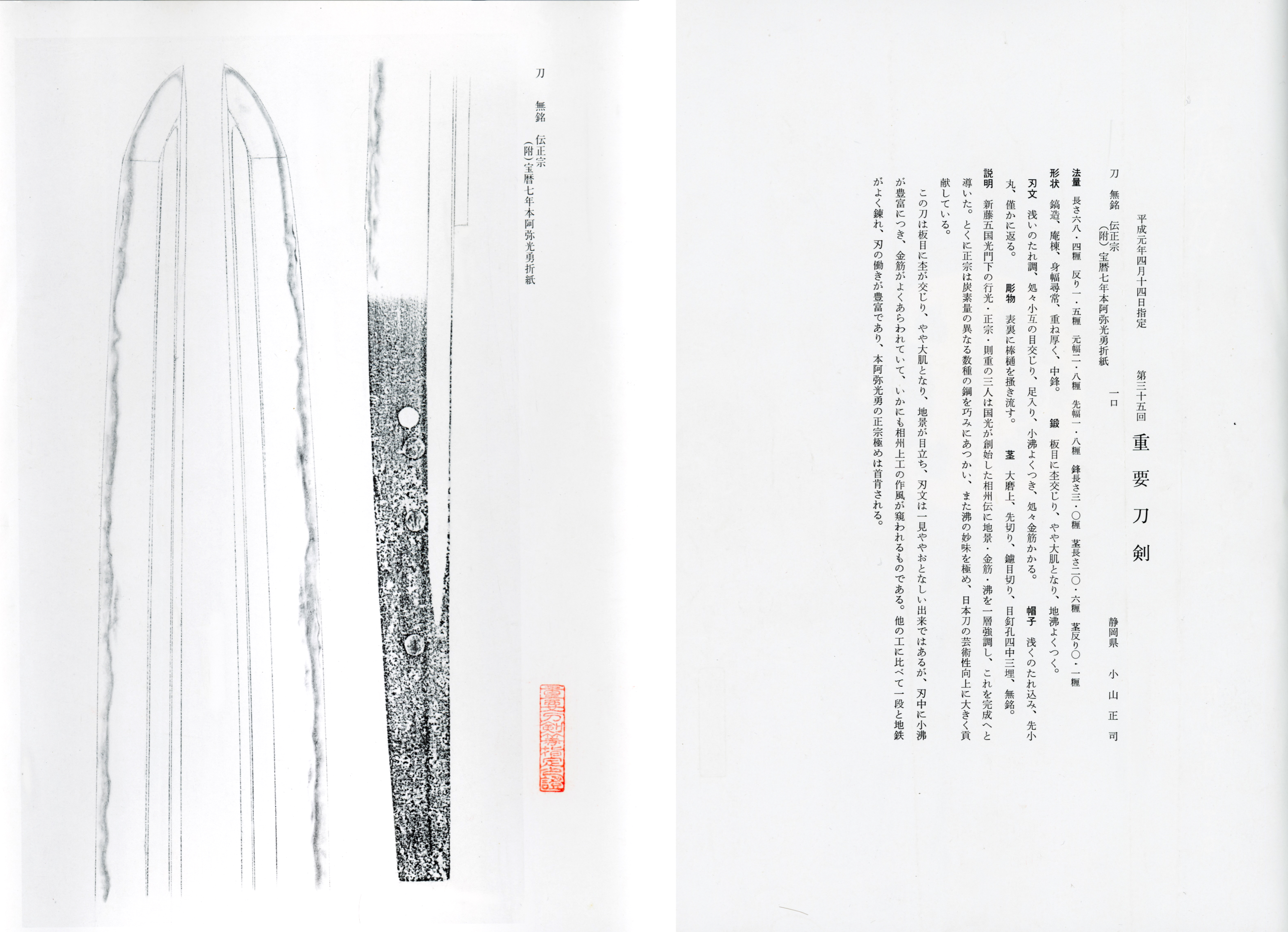
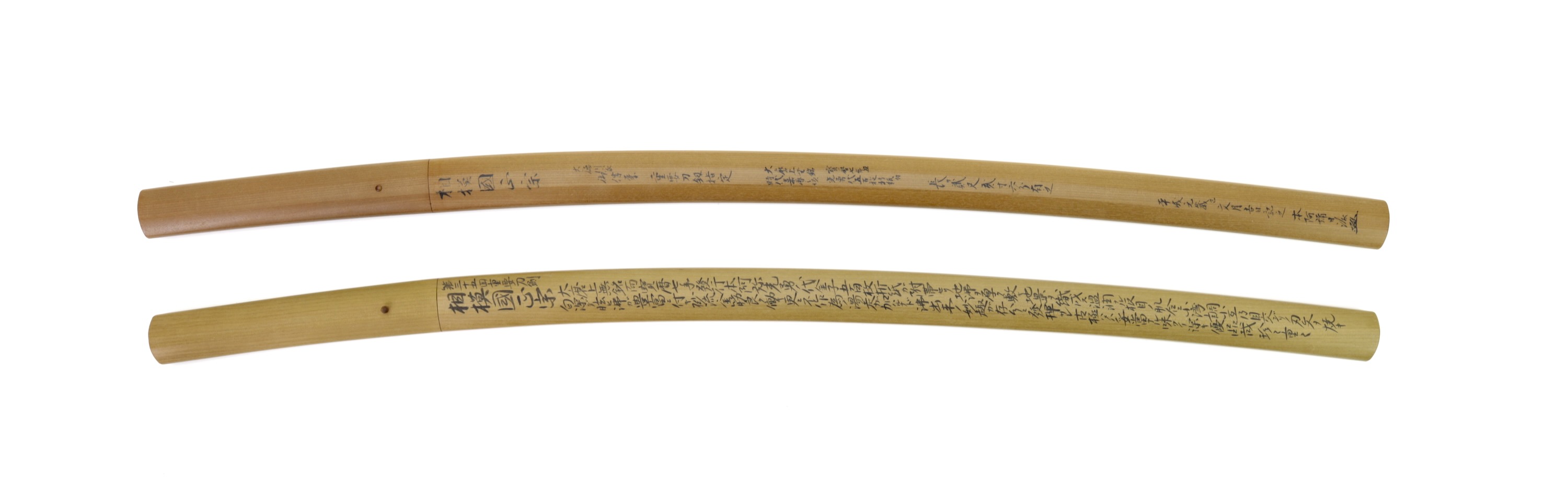
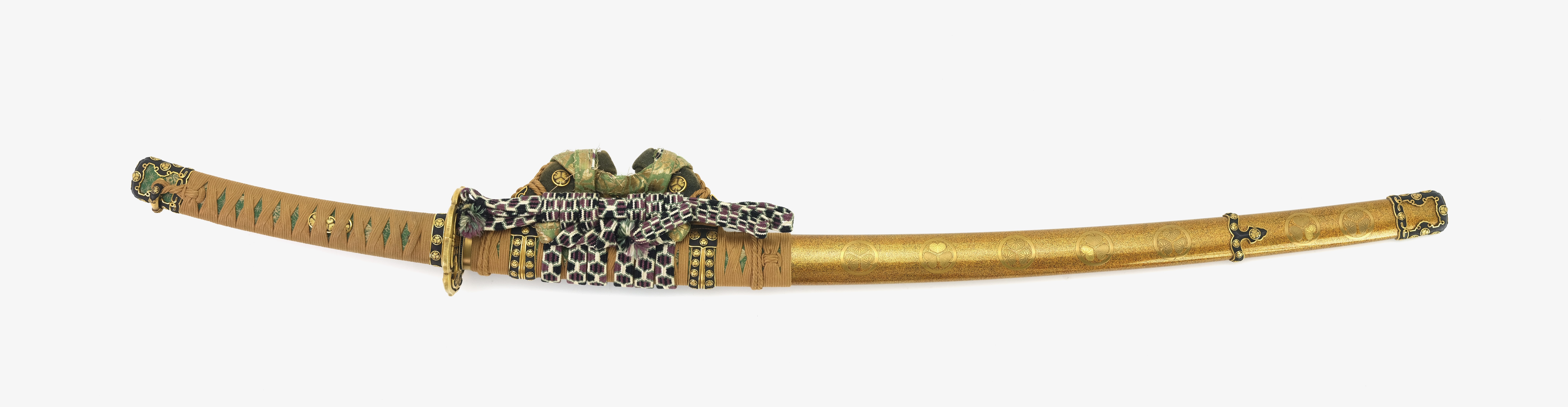
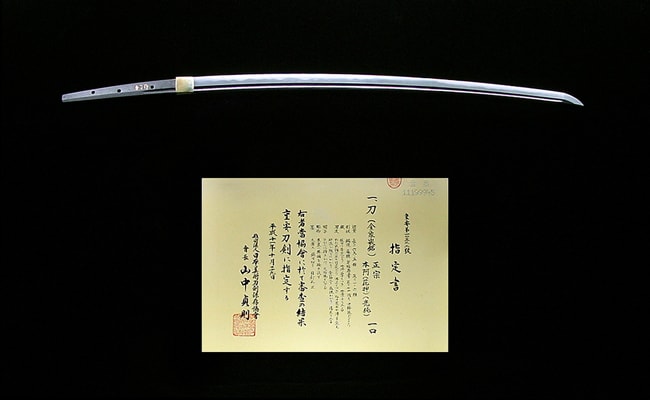
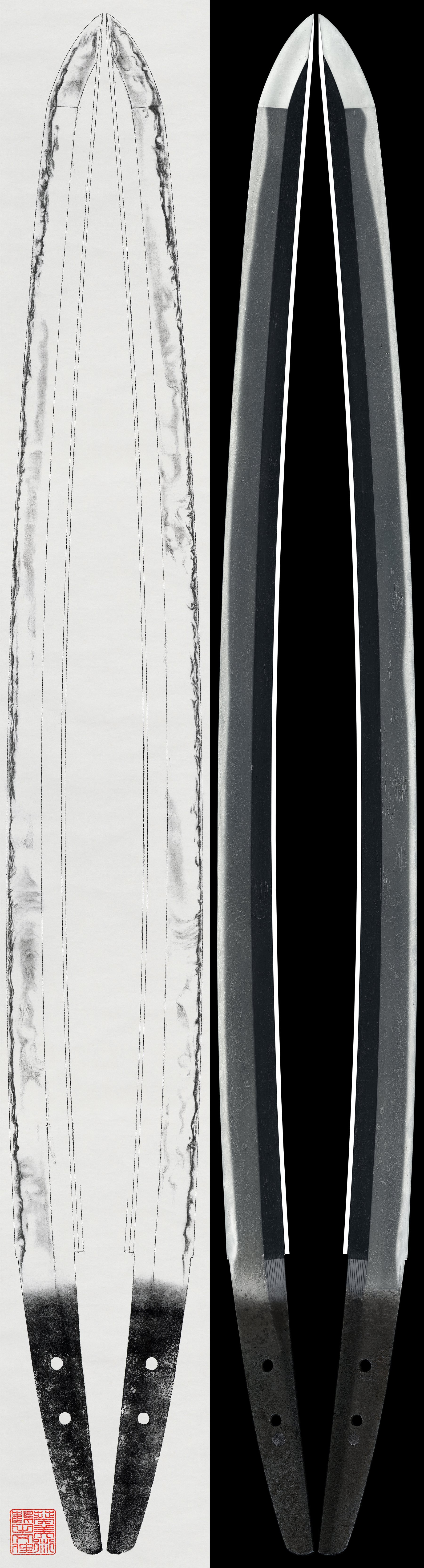
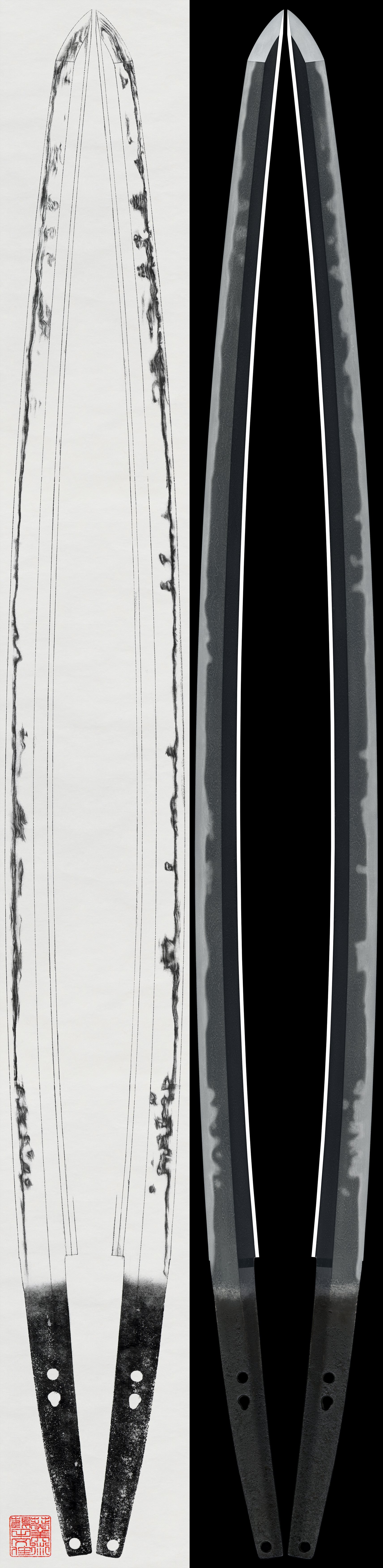
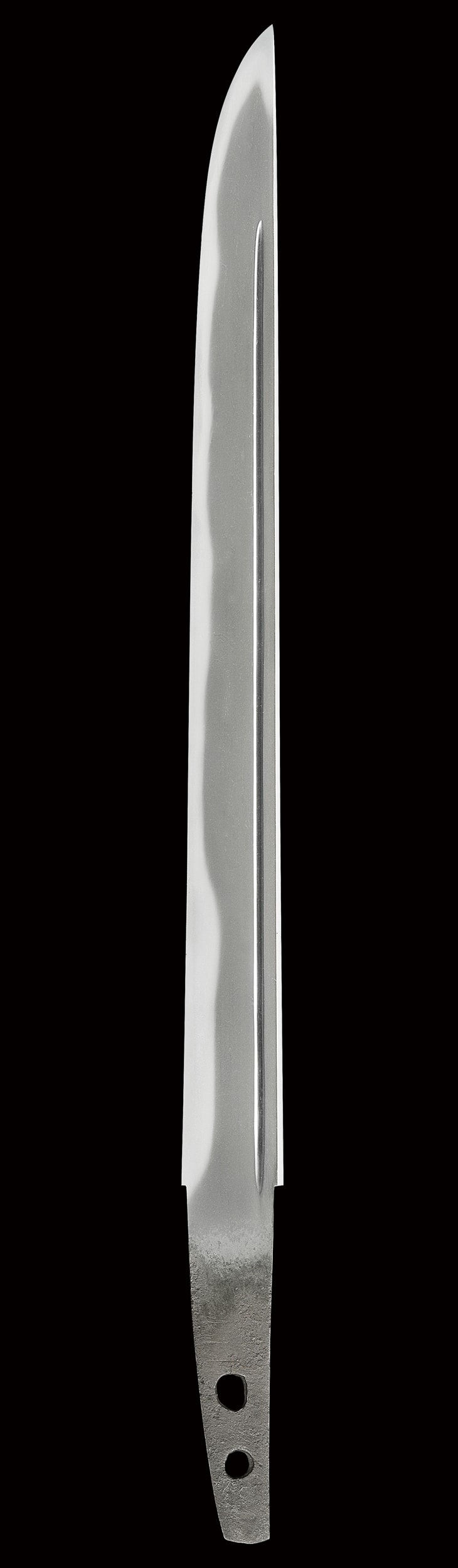
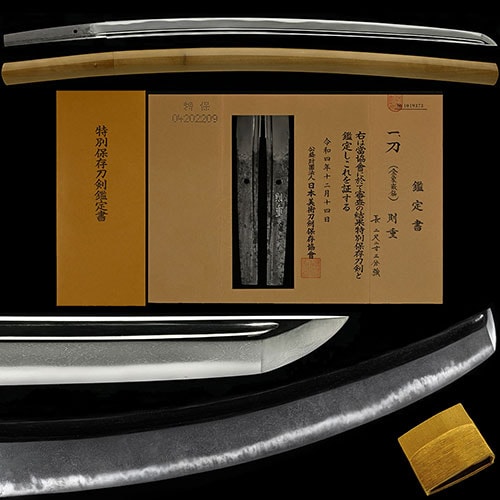
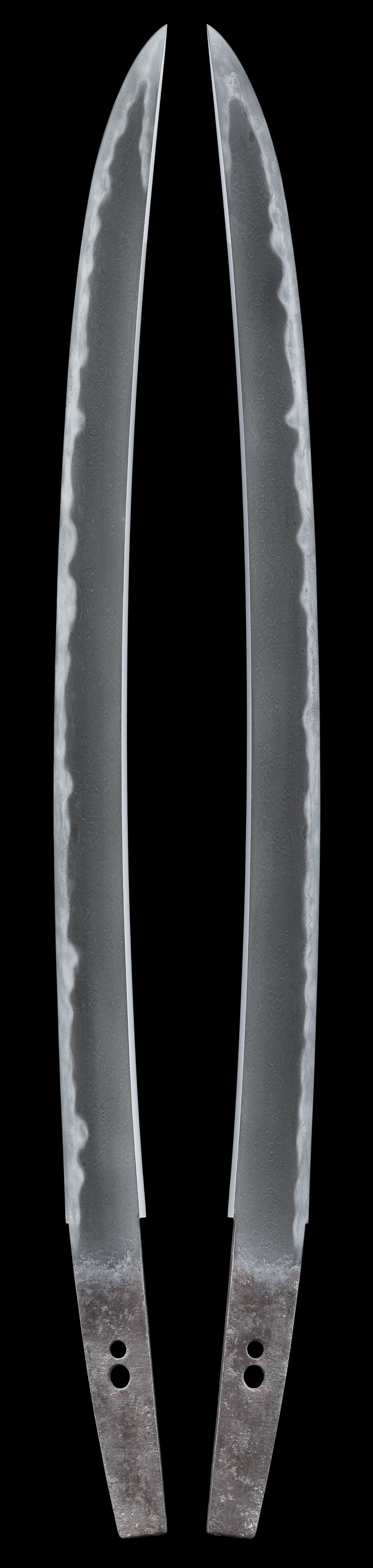
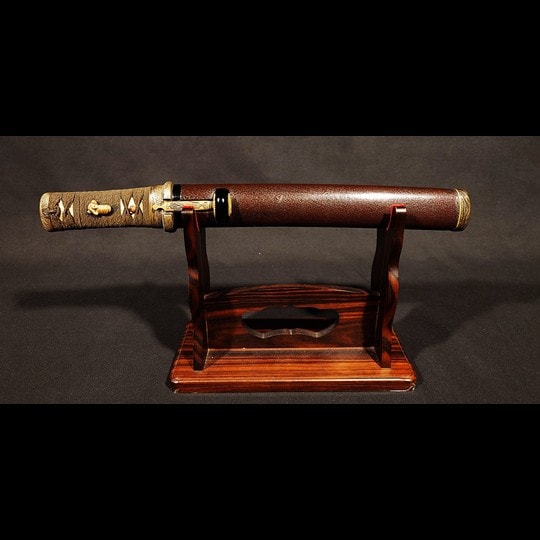
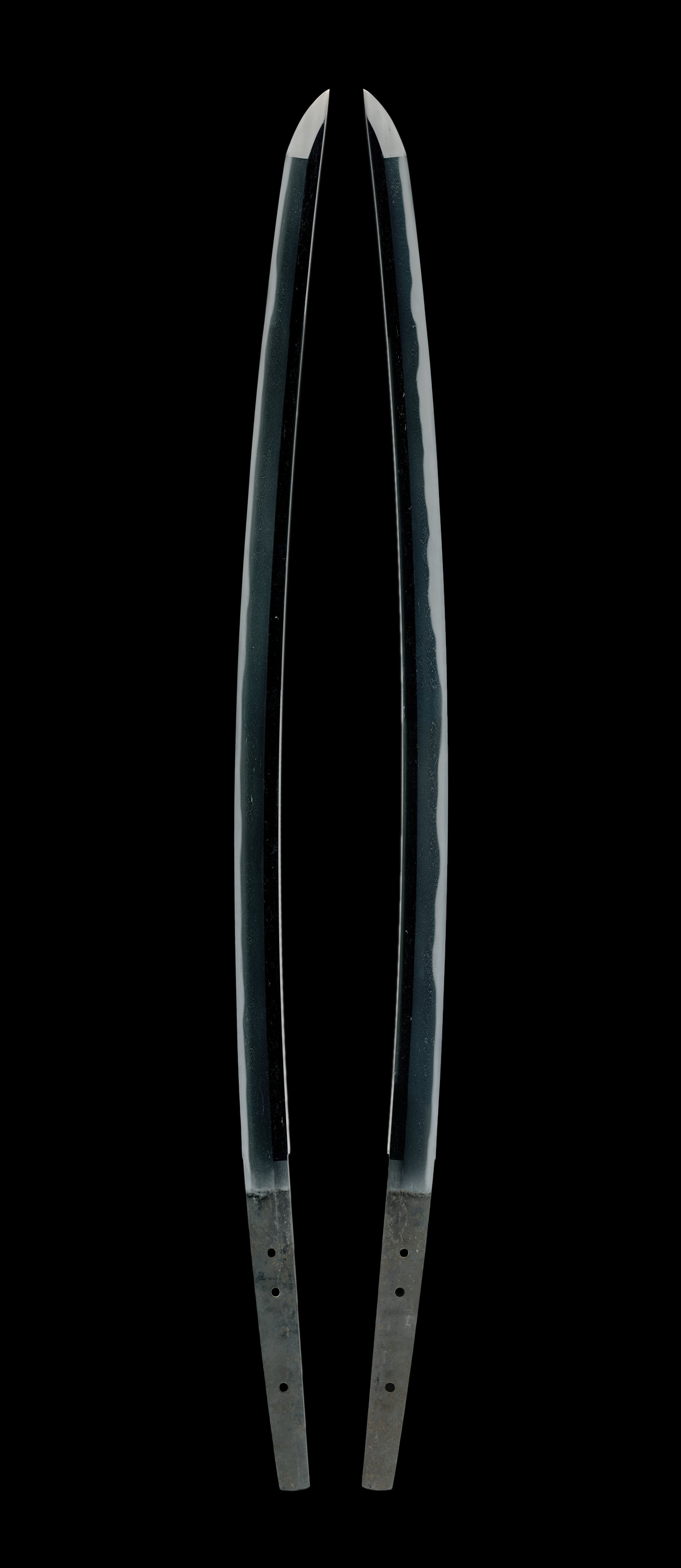
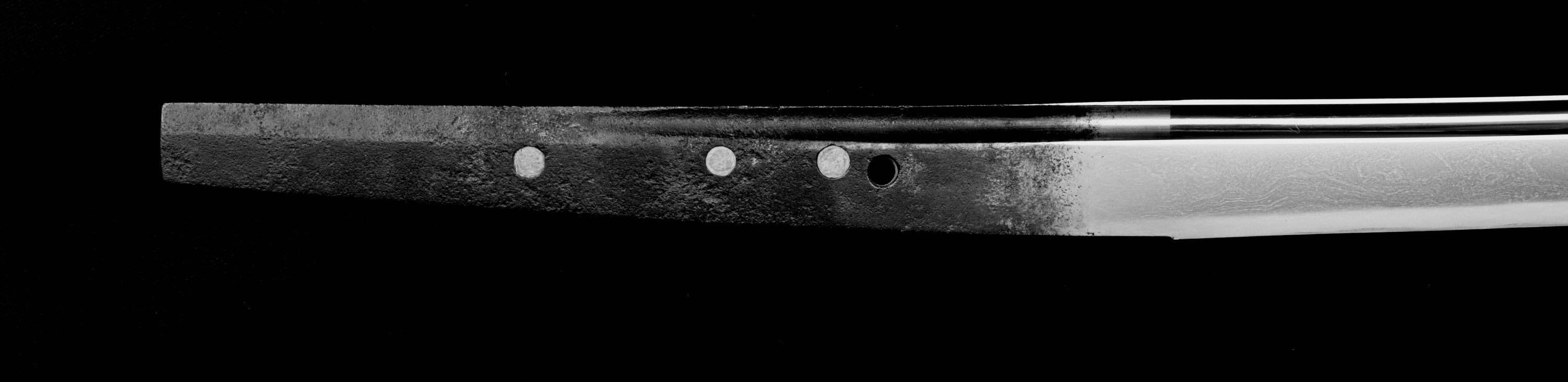
This is a Jūyō designated tachi by the famous smith Masamune from the Sōshū school, dating to the Nanbokucho period. The blade has a prominent hada with angular elements and is covered with fine nie, showing yubashiri. It has a long history of appraisal and is in remarkable condition for its age.

NBTHK Setsumei

新藤五国光門下の行光・正宗則重の三人は国光が創始した相州伝に地景・金筋・沸を一層強調し、これを完成へと 導いた。とくに正宗は炭素量の異なる数種の鋼を巧みにあつかい、また沸の妙味を極め、日本刀の芸術性向上に大きく貢 献している。 この刀は板目に杢が交じり、やや大肌となり、地景が目立ち、刃文は一見ややおとなしい出来ではあるが、刃中に小沸 が豊富につき、金筋がよくあらわれていて、いかにも相州上工の作風が窺われるものである。 他の工に比べて一段と地鉄 がよく錬れ、刃の働きが豊富であり、本阿弥光勇の正宗極めは首肯される。

NihontoWatch MonNihontoWatch
MarketAuctionsEncyclopedia
Swords›Sōshū-den›Soshu›Masamune›Jūyō Tachi by Masamune
tachiJūyō
Soshu Masamune

Jūyō Tachi by Masamune

mumei · Sōshū · Nanbokucho · nagasa 68.4cm · sori 1.5cm

SOLD
Soshu Masamune — 1 of 30
Soshu Masamune — 2 of 30
Soshu Masamune — 3 of 30
Soshu Masamune — 4 of 30
Soshu Masamune — 5 of 30
Soshu Masamune — 6 of 30
Soshu Masamune — 7 of 30
Soshu Masamune — 8 of 30
Soshu Masamune — 9 of 30
Soshu Masamune — 10 of 30
Soshu Masamune — 11 of 30
Soshu Masamune — 12 of 30
Soshu Masamune — 13 of 30
Soshu Masamune — 14 of 30
Soshu Masamune — 15 of 30
Soshu Masamune — 16 of 30
Soshu Masamune — 17 of 30
Soshu Masamune — 18 of 30
Soshu Masamune — 19 of 30
Soshu Masamune — 20 of 30
Soshu Masamune — 21 of 30
Soshu Masamune — 22 of 30
Soshu Masamune — 23 of 30
Soshu Masamune — 24 of 30
Soshu Masamune — 25 of 30
Soshu Masamune — 26 of 30
Soshu Masamune — 27 of 30
Soshu Masamune — 28 of 30
Soshu Masamune — 29 of 30
Soshu Masamune — 30 of 30
1 / 30
1 / 30
Soshu Masamune — 1 of 30Soshu Masamune — 2 of 30Soshu Masamune — 3 of 30Soshu Masamune — 4 of 30Soshu Masamune — 5 of 30Soshu Masamune — 6 of 30Soshu Masamune — 7 of 30Soshu Masamune — 8 of 30Soshu Masamune — 9 of 30Soshu Masamune — 10 of 30Soshu Masamune — 11 of 30Soshu Masamune — 12 of 30Soshu Masamune — 13 of 30Soshu Masamune — 14 of 30Soshu Masamune — 15 of 30Soshu Masamune — 16 of 30Soshu Masamune — 17 of 30Soshu Masamune — 18 of 30Soshu Masamune — 19 of 30Soshu Masamune — 20 of 30Soshu Masamune — 21 of 30Soshu Masamune — 22 of 30Soshu Masamune — 23 of 30Soshu Masamune — 24 of 30Soshu Masamune — 25 of 30Soshu Masamune — 26 of 30Soshu Masamune — 27 of 30Soshu Masamune — 28 of 30Soshu Masamune — 29 of 30Soshu Masamune — 30 of 30
Measurements & details
Smith
Soshu Masamune
Type
Tachi
School
Soshu
Period
Around 1288–1293(Shoo)
Province
Sagami
Signature
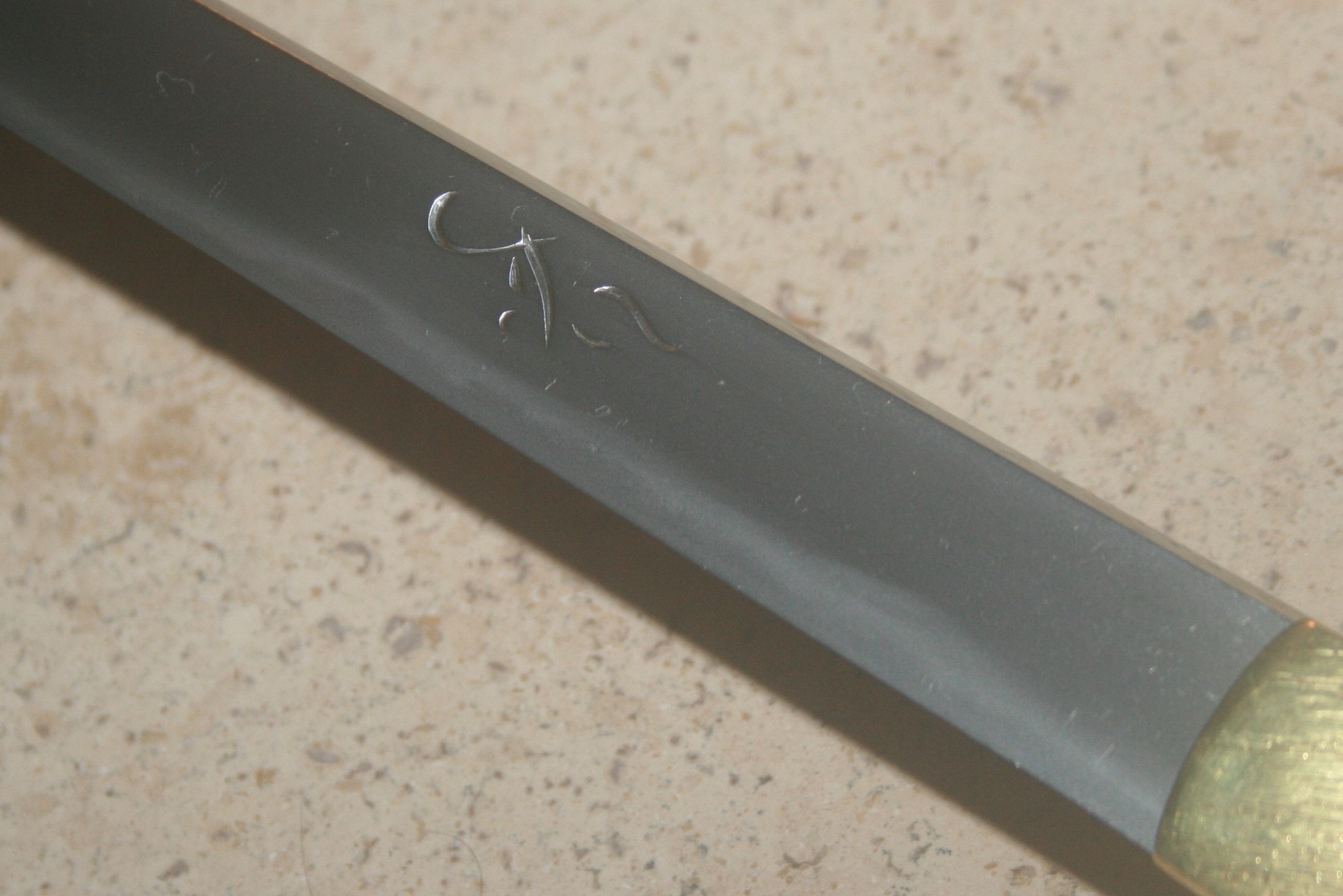
Unsigned(5% of this smith's designated works are signed)
Measurements
Nagasa 68.4cmSori 1.5cmMotohaba 2.8cmSakihaba 1.8cmKasane 0.8cm
Description

This is a Jūyō designated tachi by the famous smith Masamune from the Sōshū school, dating to the Nanbokucho period. The blade has a prominent hada with angular elements and is covered with fine nie, showing yubashiri. It has a long history of appraisal and is in remarkable condition for its age.

About the maker

Masamune

正宗

Soshu (Sagami) · Sagami · around 1288-1293

Fujishiro Sai-jo saku · Tōken Taikan top 1%

›

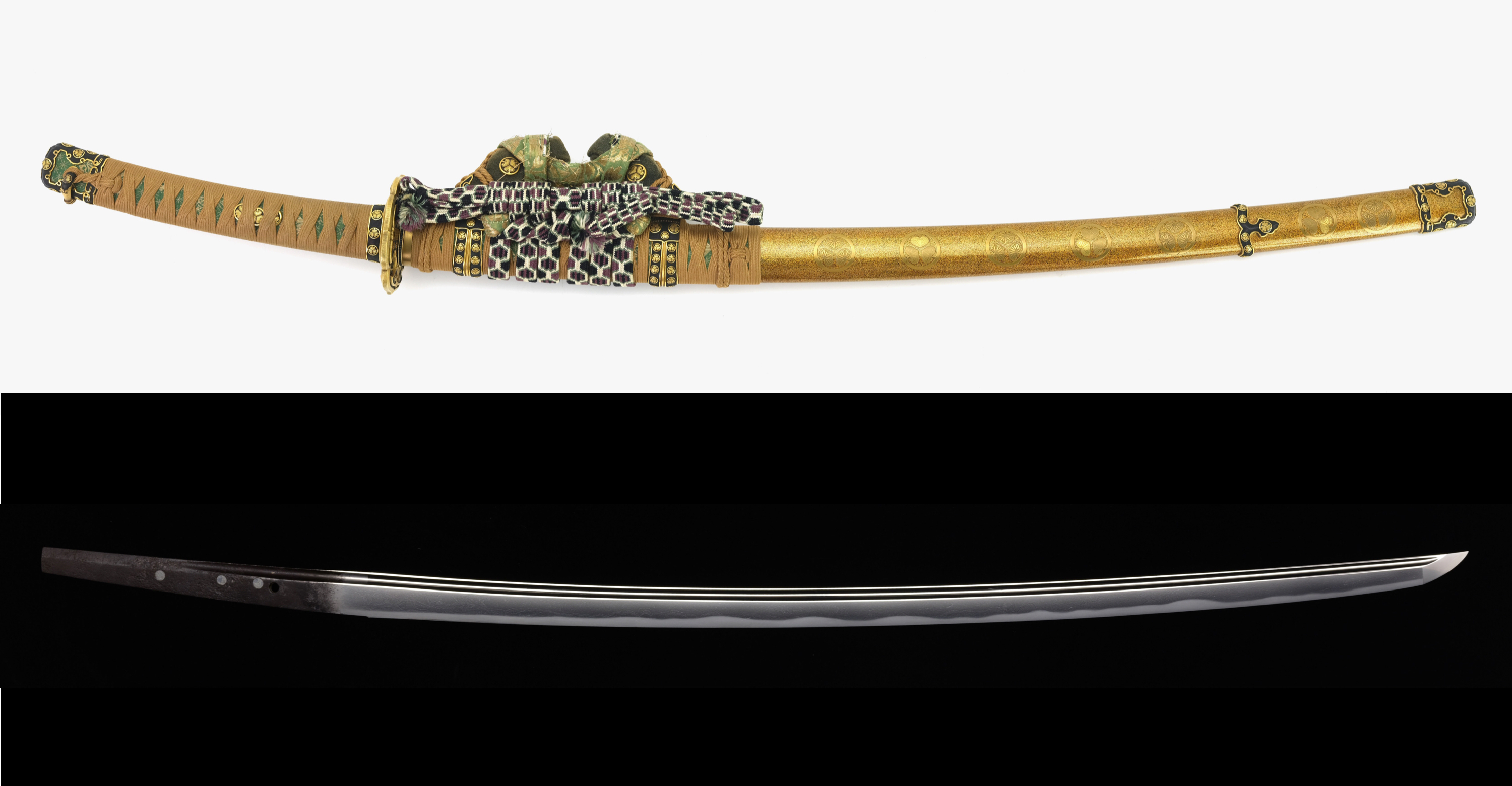
The published sources place Masamune of Sagami among the disciples of Shintogo Kunimitsu, the three smiths Yukimitsu, Norishige and Masamune who further emphasized chikei, kinsuji and nie within the Soshu tradition (Soshu-den) that Kunimitsu had founded, and led it toward completion. Masamune in particular, the NBTHK writes, handled several kinds of steel of differing carbon content with skill, and, by bringing the subtleties of nie to their highest refinement, did much to elevate the artistic quality of the Japanese sword. Among the three the same notes return again to a single judgment: that his ji and ha are "the most refined"[[c:1]], and that he stands at the very summit of the tradition.

The characteristic manner the published descriptions assign to him is a midareba whose main tone is notare, over which the temper rises intensely active: the nie becomes dense and breaks and clots, kinsuji leap and move, nie that spills into the ji forms yubashiri, and conspicuous chikei are woven throughout the jigane. This, the sources say, is a richly varied manner that may be called "Masamune's own invention"[[c:2]], and they return to one image for it: the impression of viewing haboku (破墨) splashed-ink landscape painting. The forging is itame mixed with mokume, with a standing tendency in places, ji-nie thick and chikei frequent; the boshi runs midare-komi, at times flame-like on one face. It is in this freedom that "the exquisiteness of nie"[[c:3]] reaches its limit.

The published record describes his work in two broad modes: one that, like Norishige, appears to take its models from old Ko-Hoki and Ko-Bizen pieces, and the notare-based nie mode above. Where his manner approaches Norishige the notes mark the kinship plainly, writing of one blade whose large chikei and thick yubashiri "recall the matsukawa-hada"[[c:4]] of Etchu Norishige; yet on close examination, the same source records, the jigane shows neither the blackish tone nor the clouded iron color of Norishige, the nie surpasses his in brilliance, and the nakago, tapering toward the tip rather than flared at the kurijiri, decides the appraisal for Masamune.

As to form, the published sources record that his katana run either to standard mihaba with chu-kissaki or to a broader width with a slightly extended chu-kissaki, while his tanto tend to the eight-sun range with shallow uchizori. From these points his principal period is reckoned the late Kamakura period, the lower limit reaching the beginning of Nanbokucho, so that the old account that he died in Koei 2 (1343) cannot, the notes say, be dismissed out of hand.

He is Sai-jo saku in Fujishiro's grading, and the weight of designation behind his name is the heaviest in the field: seven of his blades are National Treasures, the most of any smith, with twelve Important Cultural Properties, and beneath them twenty-three Tokubetsu Juyo and thirty-four Juyo. Almost all that survives is osuriage-mumei attribution, accepted as the work of a high-rank Soshu master (Soshu joko); signed pieces are exceedingly rare, four blades in the official record against fifty-six unsigned: three tanto, and the Meibutsu Kinoshita Masamune, the tachi of which the published sources write that among Masamune's rare ubu tachi it is the only one whose signature cannot be denied. The Meibutsu Ashiya Masamune and the Meibutsu Ikeda Masamune carry shu-mei, red-lacquer attribution inscriptions added by later appraisers, not the smith's own signature.

The provenance recorded against his blades is exceptional, sixty-five works carrying a history through the men who held the country: Oda Nobunaga, Toyotomi Hideyoshi, Tokugawa Ieyasu, Ishida Mitsunari, Honda Heihachiro Tadakatsu, Kobayakawa Takakage, the Maeda Family, the Owari Tokugawa Family and the Imperial Family. Ten of his blades are locked forever in the National Treasure and Important Cultural Property tiers and can never trade; the rest are held largely by the Tokyo National Museum, the Kyoto National Museum, the Tokugawa Art Museum, the Maeda Foundation, Eisei Bunko and Atsuta Jingu. A Masamune coming into open hands is among the rarest events in the field.

Historical importance

Where Masamune stands among comparable artisans: across all of nihontō, and within tradition, era, and period. The tiers (Foremost · Leading · Major · Notable) weigh official designations from the NBTHK and Japan's Agency for Cultural Affairs, together with historical honors of lasting repute such as the Sansaku and Meibutsu-chō.

随一
Foremost
屈指
Leading
有数
Major
著名
Notable

Select a lens to see how it's measured.

Designation record
84 designated works
Kokuhō (National Treasure)
7
Jūyō Bunkazai
12
Jūyō Bijutsuhin
7
Gyobutsu (Imperial)
2
Tokubetsu Jūyō
23
Jūyō
33
Masamune — full profileSoshu (Sagami) school
About the school

Soshu

相州

Soshu-den · Sagami

Phase: Sōshū相州· 1288–1385

46 pieces on the market now

›

Steel "bright and clear," with thick ji-nie and chikei entering frequently, is the constant the NBTHK returns to in nearly every blade of this phase, and it marks the moment the Soshu tradition reached its summit in Sagami. Learn more →

34 recorded smiths840 designated works
Leading smiths
SmithEraDesignated
Masamune正宗1288-129384
Sadamune貞宗1329-133186
Go Yoshihiro義弘1299-130254
Akihiro秋廣1346-137027
Kunimitsu國光1293-132269
Explore the Soshu school →
NBTHK Certificate
Jūyō Tōken重要刀剣
Important Sword
›

A blade of top-grade workmanship and condition, formally judged to rank with a nationally recognized Important Art Object (Jūyō Bijutsuhin). Awarded only at the NBTHK’s competitive annual examination.

Of Japan’s roughly 2.5 million registered swords, only 12,307 (about 1 in 203) have ever attained Jūyō.

About the NBTHK›

The NBTHK (Nihon Bijutsu Tōken Hozon Kyōkai, the Society for the Preservation of Japanese Art Swords) is a public-interest incorporated foundation founded in 1948 and supervised by Japan’s Agency for Cultural Affairs (Bunkachō); it is based at the Japanese Sword Museum in Tokyo. Its expert panels physically examine each submitted work (shinsa) and issue a certificate (kanteishō) ranking it by artistic and historical merit. NBTHK papers are the most widely recognized standard of authentication for Japanese swords and fittings.

NBTHK official site→
Seller
M
Mandarin Mansion
Established 2005 · 21 yrs on the market
🇳🇱Ships from Netherlands
›
✓Verified dealermandarinmansion.com
✓Ships worldwide✓English supportWire transferPayPal
Return policy

Returns accepted on items ordered from the site when an item does not appear to be as depicted and described; buyer must notify via email within 7 days of receipt. Refund covers purchase price minus shipping, bank fees, and currency conversion. Sales on items paid in terms are final, as are sales of items personally inspected.

View all of Mandarin Mansion’s listings→View this item on the dealer’s site→

Previously sold by Soshu Masamune

Seikeido
Jūyō
Jūyō - by Soshu Masamune - OtherJūyō - by Soshu Masamune - Other
Sold

Other

BySoshu Masamune
SOLD
Aoi Art
Tokuho
Katana - Tokuho - by Soshu Masamune - Mumei (transmitted as Masamune)Katana - Tokuho - by Soshu Masamune - Mumei (transmitted as Masamune)
Sold

Katana

BySoshu Masamune
SOLD

More from the Soshu school

View all →
Samurai Nippon
Jūyō
Katana - Jūyō - by Soshu Norishige - Mumei (Attributed to Norishige)Katana - Jūyō - by Soshu Norishige - Mumei (Attributed to Norishige)

Katana

BySoshu Norishige
Ask
Nihon Art
Jūyō
Katana - Jūyō - by Soshu Norishige - Juyo Etchu Norishige Katana with Kochu KinzoganmeiKatana - Jūyō - by Soshu Norishige - Juyo Etchu Norishige Katana with Kochu Kinzoganmei

Katana

BySoshu Norishige
Ask
Eirakudo
Tokuho
Katana - Tokuho - by Shintogo Kunimitsu - Shintogo Kunimitsu - Tokubetsu Hozon TokenKatana - Tokuho - by Shintogo Kunimitsu - Shintogo Kunimitsu - Tokubetsu Hozon Token

Katana

ByShintogo Kunimitsu
¥7,500,000
Aoi Art
Tokuho
Katana - Tokuho - by Gō Yoshihiro - Mumei (Unsigned) Den Go YoshihiroKatana - Tokuho - by Gō Yoshihiro - Mumei (Unsigned) Den Go Yoshihiro

Katana

ByGō Yoshihiro
¥35,000,000
Tsuruginoya
Tokujū
Katana - Tokuju - by Soshu Yukimitsu - Soshu YukimitsuKatana - Tokuju - by Soshu Yukimitsu - Soshu Yukimitsu

Katana

BySoshu Yukimitsu
Ask
Eirakudo
Jūyō
Tanto - Jūyō - by Soshu Yukimitsu - Soshu Yukimitsu - Juyo TokenTanto - Jūyō - by Soshu Yukimitsu - Soshu Yukimitsu - Juyo Token

Tantō

BySoshu Yukimitsu
Ask
Choshuya
Jūyō
Tanto - Jūyō - by Soshu Norishige - Ubu-nakago Mumei NorishigeTanto - Jūyō - by Soshu Norishige - Ubu-nakago Mumei Norishige

Tantō

BySoshu Norishige
¥6,500,000
Eirakudo
Tokuho
Katana - Tokuho - by Soshu Norishige - Norishige - Tokubetsu Hozon TokenKatana - Tokuho - by Soshu Norishige - Norishige - Tokubetsu Hozon Token

Katana

BySoshu Norishige
¥6,500,000

More from the Sōshū tradition

View all →
Toukentakarado
Tokuho
Wakizashi - Tokuho - by Sa Kunihiro - Mumei Attributed to Den Sa KunihiroWakizashi - Tokuho - by Sa Kunihiro - Mumei Attributed to Den Sa Kunihiro

Wakizashi

BySa Kunihiro
¥1,500,000
Katana Yamadaiya
Tokuho
Katana - Tokuho - by Sa Kunihiro - Tokubetsu Hozon Token: Mumei (Attributed to Sakunihiro)Katana - Tokuho - by Sa Kunihiro - Tokubetsu Hozon Token: Mumei (Attributed to Sakunihiro)

Katana

BySa Kunihiro
¥1,650,000
Samurai Nippon
Jūyō
Tanto - Jūyō - by Soshu Yukimitsu - Soshu Yukimitsu (Ubu Mumei)Tanto - Jūyō - by Soshu Yukimitsu - Soshu Yukimitsu (Ubu Mumei)

Tantō

BySoshu Yukimitsu
¥6,700,000
Nihon Art
Tokuho
Tanto - Tokuho - by Shintogo Kunimitsu - Shintogo Kunimitsu TantoTanto - Tokuho - by Shintogo Kunimitsu - Shintogo Kunimitsu Tanto

Tantō

ByShintogo Kunimitsu
Ask
Choshuya
Tokuho
Katana - Tokuho - by Soshu Norishige - Unsigned (O-suriage) NorishigeKatana - Tokuho - by Soshu Norishige - Unsigned (O-suriage) Norishige

Katana

BySoshu Norishige
Ask
Token-Net
Jūyō
Tachi - Jūyō - by Naotsuna - Sekishu Dewan Naotsuna Saku (Iwami)Tachi - Jūyō - by Naotsuna - Sekishu Dewan Naotsuna Saku (Iwami)

Tachi

ByNaotsuna
¥5,800,000
Onihonto
Tokuho
Tanto - Tokuho - by Sa Yasuyoshi - YasuyoshiTanto - Tokuho - by Sa Yasuyoshi - Yasuyoshi

Tantō

BySa Yasuyoshi
¥16,000
Aoi Art
Tokuho
Katana - Tokuho - by Sa Sadayoshi - Unsigned (Attributed to Sa Sadayoshi)Katana - Tokuho - by Sa Sadayoshi - Unsigned (Attributed to Sa Sadayoshi)

Katana

BySa Sadayoshi
Starting Bid¥1,300,000

Swords

  • Katana
  • Wakizashi
  • Tantō
  • Tachi
  • Naginata
  • Yari

Fittings

  • Tsuba
  • Fuchi-Kashira
  • Kozuka
  • Menuki

By Certification

  • Tokujū
  • Jūyō
  • Tokuho
  • Hozon

Resources

  • Dealer Directory
  • Artist Directory
  • Glossary
  • Browse All
Nihontowatch© 2026
TermsPrivacyCookiesAbout

Description

This is a Jūyō designated tachi by the famous smith Masamune from the Sōshū school, dating to the Nanbokucho period. The blade has a prominent hada with angular elements and is covered with fine nie, showing yubashiri. It has a long history of appraisal and is in remarkable condition for its age.

NBTHK Setsumei

新藤五国光門下の行光・正宗則重の三人は国光が創始した相州伝に地景・金筋・沸を一層強調し、これを完成へと 導いた。とくに正宗は炭素量の異なる数種の鋼を巧みにあつかい、また沸の妙味を極め、日本刀の芸術性向上に大きく貢 献している。 この刀は板目に杢が交じり、やや大肌となり、地景が目立ち、刃文は一見ややおとなしい出来ではあるが、刃中に小沸 が豊富につき、金筋がよくあらわれていて、いかにも相州上工の作風が窺われるものである。 他の工に比べて一段と地鉄 がよく錬れ、刃の働きが豊富であり、本阿弥光勇の正宗極めは首肯される。

NihontoWatch MonNihontoWatch
MarketAuctionsEncyclopedia
Swords›Sōshū-den›Soshu›Masamune›Jūyō Tachi by Masamune
tachiJūyō
Soshu Masamune

Jūyō Tachi by Masamune

mumei · Sōshū · Nanbokucho · nagasa 68.4cm · sori 1.5cm

SOLD
Soshu Masamune — 1 of 30
Soshu Masamune — 2 of 30
Soshu Masamune — 3 of 30
Soshu Masamune — 4 of 30
Soshu Masamune — 5 of 30
Soshu Masamune — 6 of 30
Soshu Masamune — 7 of 30
Soshu Masamune — 8 of 30
Soshu Masamune — 9 of 30
Soshu Masamune — 10 of 30
Soshu Masamune — 11 of 30
Soshu Masamune — 12 of 30
Soshu Masamune — 13 of 30
Soshu Masamune — 14 of 30
Soshu Masamune — 15 of 30
Soshu Masamune — 16 of 30
Soshu Masamune — 17 of 30
Soshu Masamune — 18 of 30
Soshu Masamune — 19 of 30
Soshu Masamune — 20 of 30
Soshu Masamune — 21 of 30
Soshu Masamune — 22 of 30
Soshu Masamune — 23 of 30
Soshu Masamune — 24 of 30
Soshu Masamune — 25 of 30
Soshu Masamune — 26 of 30
Soshu Masamune — 27 of 30
Soshu Masamune — 28 of 30
Soshu Masamune — 29 of 30
Soshu Masamune — 30 of 30
1 / 30
1 / 30
Soshu Masamune — 1 of 30Soshu Masamune — 2 of 30Soshu Masamune — 3 of 30Soshu Masamune — 4 of 30Soshu Masamune — 5 of 30Soshu Masamune — 6 of 30Soshu Masamune — 7 of 30Soshu Masamune — 8 of 30Soshu Masamune — 9 of 30Soshu Masamune — 10 of 30Soshu Masamune — 11 of 30Soshu Masamune — 12 of 30Soshu Masamune — 13 of 30Soshu Masamune — 14 of 30Soshu Masamune — 15 of 30Soshu Masamune — 16 of 30Soshu Masamune — 17 of 30Soshu Masamune — 18 of 30Soshu Masamune — 19 of 30Soshu Masamune — 20 of 30Soshu Masamune — 21 of 30Soshu Masamune — 22 of 30Soshu Masamune — 23 of 30Soshu Masamune — 24 of 30Soshu Masamune — 25 of 30Soshu Masamune — 26 of 30Soshu Masamune — 27 of 30Soshu Masamune — 28 of 30Soshu Masamune — 29 of 30Soshu Masamune — 30 of 30
Measurements & details
Smith
Soshu Masamune
Type
Tachi
School
Soshu
Period
Around 1288–1293(Shoo)
Province
Sagami
Signature
Unsigned(5% of this smith's designated works are signed)
Measurements
Nagasa 68.4cmSori 1.5cmMotohaba 2.8cmSakihaba 1.8cmKasane 0.8cm
Description

This is a Jūyō designated tachi by the famous smith Masamune from the Sōshū school, dating to the Nanbokucho period. The blade has a prominent hada with angular elements and is covered with fine nie, showing yubashiri. It has a long history of appraisal and is in remarkable condition for its age.

About the maker

Masamune

正宗

Soshu (Sagami) · Sagami · around 1288-1293

Fujishiro Sai-jo saku · Tōken Taikan top 1%

›

The published sources place Masamune of Sagami among the disciples of Shintogo Kunimitsu, the three smiths Yukimitsu, Norishige and Masamune who further emphasized chikei, kinsuji and nie within the Soshu tradition (Soshu-den) that Kunimitsu had founded, and led it toward completion. Masamune in particular, the NBTHK writes, handled several kinds of steel of differing carbon content with skill, and, by bringing the subtleties of nie to their highest refinement, did much to elevate the artistic quality of the Japanese sword. Among the three the same notes return again to a single judgment: that his ji and ha are "the most refined"[[c:1]], and that he stands at the very summit of the tradition.

The characteristic manner the published descriptions assign to him is a midareba whose main tone is notare, over which the temper rises intensely active: the nie becomes dense and breaks and clots, kinsuji leap and move, nie that spills into the ji forms yubashiri, and conspicuous chikei are woven throughout the jigane. This, the sources say, is a richly varied manner that may be called "Masamune's own invention"[[c:2]], and they return to one image for it: the impression of viewing haboku (破墨) splashed-ink landscape painting. The forging is itame mixed with mokume, with a standing tendency in places, ji-nie thick and chikei frequent; the boshi runs midare-komi, at times flame-like on one face. It is in this freedom that "the exquisiteness of nie"[[c:3]] reaches its limit.

The published record describes his work in two broad modes: one that, like Norishige, appears to take its models from old Ko-Hoki and Ko-Bizen pieces, and the notare-based nie mode above. Where his manner approaches Norishige the notes mark the kinship plainly, writing of one blade whose large chikei and thick yubashiri "recall the matsukawa-hada"[[c:4]] of Etchu Norishige; yet on close examination, the same source records, the jigane shows neither the blackish tone nor the clouded iron color of Norishige, the nie surpasses his in brilliance, and the nakago, tapering toward the tip rather than flared at the kurijiri, decides the appraisal for Masamune.

As to form, the published sources record that his katana run either to standard mihaba with chu-kissaki or to a broader width with a slightly extended chu-kissaki, while his tanto tend to the eight-sun range with shallow uchizori. From these points his principal period is reckoned the late Kamakura period, the lower limit reaching the beginning of Nanbokucho, so that the old account that he died in Koei 2 (1343) cannot, the notes say, be dismissed out of hand.

He is Sai-jo saku in Fujishiro's grading, and the weight of designation behind his name is the heaviest in the field: seven of his blades are National Treasures, the most of any smith, with twelve Important Cultural Properties, and beneath them twenty-three Tokubetsu Juyo and thirty-four Juyo. Almost all that survives is osuriage-mumei attribution, accepted as the work of a high-rank Soshu master (Soshu joko); signed pieces are exceedingly rare, four blades in the official record against fifty-six unsigned: three tanto, and the Meibutsu Kinoshita Masamune, the tachi of which the published sources write that among Masamune's rare ubu tachi it is the only one whose signature cannot be denied. The Meibutsu Ashiya Masamune and the Meibutsu Ikeda Masamune carry shu-mei, red-lacquer attribution inscriptions added by later appraisers, not the smith's own signature.

The provenance recorded against his blades is exceptional, sixty-five works carrying a history through the men who held the country: Oda Nobunaga, Toyotomi Hideyoshi, Tokugawa Ieyasu, Ishida Mitsunari, Honda Heihachiro Tadakatsu, Kobayakawa Takakage, the Maeda Family, the Owari Tokugawa Family and the Imperial Family. Ten of his blades are locked forever in the National Treasure and Important Cultural Property tiers and can never trade; the rest are held largely by the Tokyo National Museum, the Kyoto National Museum, the Tokugawa Art Museum, the Maeda Foundation, Eisei Bunko and Atsuta Jingu. A Masamune coming into open hands is among the rarest events in the field.
Historical importance

Where Masamune stands among comparable artisans: across all of nihontō, and within tradition, era, and period. The tiers (Foremost · Leading · Major · Notable) weigh official designations from the NBTHK and Japan's Agency for Cultural Affairs, together with historical honors of lasting repute such as the Sansaku and Meibutsu-chō.


随一
Foremost
屈指
Leading
有数
Major
著名
Notable

Select a lens to see how it's measured.

Designation record
84 designated works
Kokuhō (National Treasure)
7
Jūyō Bunkazai
12
Jūyō Bijutsuhin
7
Gyobutsu (Imperial)
2
Tokubetsu Jūyō
23
Jūyō
33
Masamune — full profileSoshu (Sagami) school
About the school

Soshu

相州

Soshu-den · Sagami

Phase: Sōshū相州· 1288–1385

46 pieces on the market now

›

Steel "bright and clear," with thick ji-nie and chikei entering frequently, is the constant the NBTHK returns to in nearly every blade of this phase, and it marks the moment the Soshu tradition reached its summit in Sagami. Learn more →

34 recorded smiths840 designated works
Leading smiths
SmithEraDesignated
Masamune正宗1288-129384
Sadamune貞宗1329-133186
Go Yoshihiro義弘1299-130254
Akihiro秋廣1346-137027
Kunimitsu國光1293-132269
Explore the Soshu school →
NBTHK Certificate
Jūyō Tōken重要刀剣
Important Sword
›

A blade of top-grade workmanship and condition, formally judged to rank with a nationally recognized Important Art Object (Jūyō Bijutsuhin). Awarded only at the NBTHK’s competitive annual examination.

Of Japan’s roughly 2.5 million registered swords, only 12,307 (about 1 in 203) have ever attained Jūyō.

About the NBTHK›

The NBTHK (Nihon Bijutsu Tōken Hozon Kyōkai, the Society for the Preservation of Japanese Art Swords) is a public-interest incorporated foundation founded in 1948 and supervised by Japan’s Agency for Cultural Affairs (Bunkachō); it is based at the Japanese Sword Museum in Tokyo. Its expert panels physically examine each submitted work (shinsa) and issue a certificate (kanteishō) ranking it by artistic and historical merit. NBTHK papers are the most widely recognized standard of authentication for Japanese swords and fittings.

NBTHK official site→
Seller
M
Mandarin Mansion
Established 2005 · 21 yrs on the market
🇳🇱Ships from Netherlands
›
✓Verified dealermandarinmansion.com
✓Ships worldwide✓English supportWire transferPayPal
Return policy

Returns accepted on items ordered from the site when an item does not appear to be as depicted and described; buyer must notify via email within 7 days of receipt. Refund covers purchase price minus shipping, bank fees, and currency conversion. Sales on items paid in terms are final, as are sales of items personally inspected.

View all of Mandarin Mansion’s listings→View this item on the dealer’s site→

Previously sold by Soshu Masamune

Seikeido
Jūyō
Jūyō - by Soshu Masamune - OtherJūyō - by Soshu Masamune - Other
Sold

Other

BySoshu Masamune
SOLD
Aoi Art
Tokuho
Katana - Tokuho - by Soshu Masamune - Mumei (transmitted as Masamune)Katana - Tokuho - by Soshu Masamune - Mumei (transmitted as Masamune)
Sold

Katana

BySoshu Masamune
SOLD

More from the Soshu school

View all →
Samurai Nippon
Jūyō
Katana - Jūyō - by Soshu Norishige - Mumei (Attributed to Norishige)Katana - Jūyō - by Soshu Norishige - Mumei (Attributed to Norishige)

Katana

BySoshu Norishige
Ask
Nihon Art
Jūyō
Katana - Jūyō - by Soshu Norishige - Juyo Etchu Norishige Katana with Kochu KinzoganmeiKatana - Jūyō - by Soshu Norishige - Juyo Etchu Norishige Katana with Kochu Kinzoganmei

Katana

BySoshu Norishige
Ask
Eirakudo
Tokuho
Katana - Tokuho - by Shintogo Kunimitsu - Shintogo Kunimitsu - Tokubetsu Hozon TokenKatana - Tokuho - by Shintogo Kunimitsu - Shintogo Kunimitsu - Tokubetsu Hozon Token

Katana

ByShintogo Kunimitsu
¥7,500,000
Aoi Art
Tokuho
Katana - Tokuho - by Gō Yoshihiro - Mumei (Unsigned) Den Go YoshihiroKatana - Tokuho - by Gō Yoshihiro - Mumei (Unsigned) Den Go Yoshihiro

Katana

ByGō Yoshihiro
¥35,000,000
Tsuruginoya
Tokujū
Katana - Tokuju - by Soshu Yukimitsu - Soshu YukimitsuKatana - Tokuju - by Soshu Yukimitsu - Soshu Yukimitsu

Katana

BySoshu Yukimitsu
Ask
Eirakudo
Jūyō
Tanto - Jūyō - by Soshu Yukimitsu - Soshu Yukimitsu - Juyo TokenTanto - Jūyō - by Soshu Yukimitsu - Soshu Yukimitsu - Juyo Token

Tantō

BySoshu Yukimitsu
Ask
Choshuya
Jūyō
Tanto - Jūyō - by Soshu Norishige - Ubu-nakago Mumei NorishigeTanto - Jūyō - by Soshu Norishige - Ubu-nakago Mumei Norishige

Tantō

BySoshu Norishige
¥6,500,000
Eirakudo
Tokuho
Katana - Tokuho - by Soshu Norishige - Norishige - Tokubetsu Hozon TokenKatana - Tokuho - by Soshu Norishige - Norishige - Tokubetsu Hozon Token

Katana

BySoshu Norishige
¥6,500,000

More from the Sōshū tradition

View all →
Toukentakarado
Tokuho
Wakizashi - Tokuho - by Sa Kunihiro - Mumei Attributed to Den Sa KunihiroWakizashi - Tokuho - by Sa Kunihiro - Mumei Attributed to Den Sa Kunihiro

Wakizashi

BySa Kunihiro
¥1,500,000
Katana Yamadaiya
Tokuho
Katana - Tokuho - by Sa Kunihiro - Tokubetsu Hozon Token: Mumei (Attributed to Sakunihiro)Katana - Tokuho - by Sa Kunihiro - Tokubetsu Hozon Token: Mumei (Attributed to Sakunihiro)

Katana

BySa Kunihiro
¥1,650,000
Samurai Nippon
Jūyō
Tanto - Jūyō - by Soshu Yukimitsu - Soshu Yukimitsu (Ubu Mumei)Tanto - Jūyō - by Soshu Yukimitsu - Soshu Yukimitsu (Ubu Mumei)

Tantō

BySoshu Yukimitsu
¥6,700,000
Nihon Art
Tokuho
Tanto - Tokuho - by Shintogo Kunimitsu - Shintogo Kunimitsu TantoTanto - Tokuho - by Shintogo Kunimitsu - Shintogo Kunimitsu Tanto

Tantō

ByShintogo Kunimitsu
Ask
Choshuya
Tokuho
Katana - Tokuho - by Soshu Norishige - Unsigned (O-suriage) NorishigeKatana - Tokuho - by Soshu Norishige - Unsigned (O-suriage) Norishige

Katana

BySoshu Norishige
Ask
Token-Net
Jūyō
Tachi - Jūyō - by Naotsuna - Sekishu Dewan Naotsuna Saku (Iwami)Tachi - Jūyō - by Naotsuna - Sekishu Dewan Naotsuna Saku (Iwami)

Tachi

ByNaotsuna
¥5,800,000
Onihonto
Tokuho
Tanto - Tokuho - by Sa Yasuyoshi - YasuyoshiTanto - Tokuho - by Sa Yasuyoshi - Yasuyoshi

Tantō

BySa Yasuyoshi
¥16,000
Aoi Art
Tokuho
Katana - Tokuho - by Sa Sadayoshi - Unsigned (Attributed to Sa Sadayoshi)Katana - Tokuho - by Sa Sadayoshi - Unsigned (Attributed to Sa Sadayoshi)

Katana

BySa Sadayoshi
Starting Bid¥1,300,000

Swords

  • Katana
  • Wakizashi
  • Tantō
  • Tachi
  • Naginata
  • Yari

Fittings

  • Tsuba
  • Fuchi-Kashira
  • Kozuka
  • Menuki

By Certification

  • Tokujū
  • Jūyō
  • Tokuho
  • Hozon

Resources

  • Dealer Directory
  • Artist Directory
  • Glossary
  • Browse All
Nihontowatch© 2026
TermsPrivacyCookiesAbout
NihontoWatch Mon

NihontoWatch

MarketAuctions
Encyclopedia
NihontoWatch Mon

NihontoWatch

MarketAuctions
Encyclopedia