Sōshū was born in a boomtown: Kamakura, seat of the warrior government, dense with elite patrons. Tradition holds that master smiths were summoned east to serve it, and from their students came Shintōgo Kunimitsu and then Masamune.
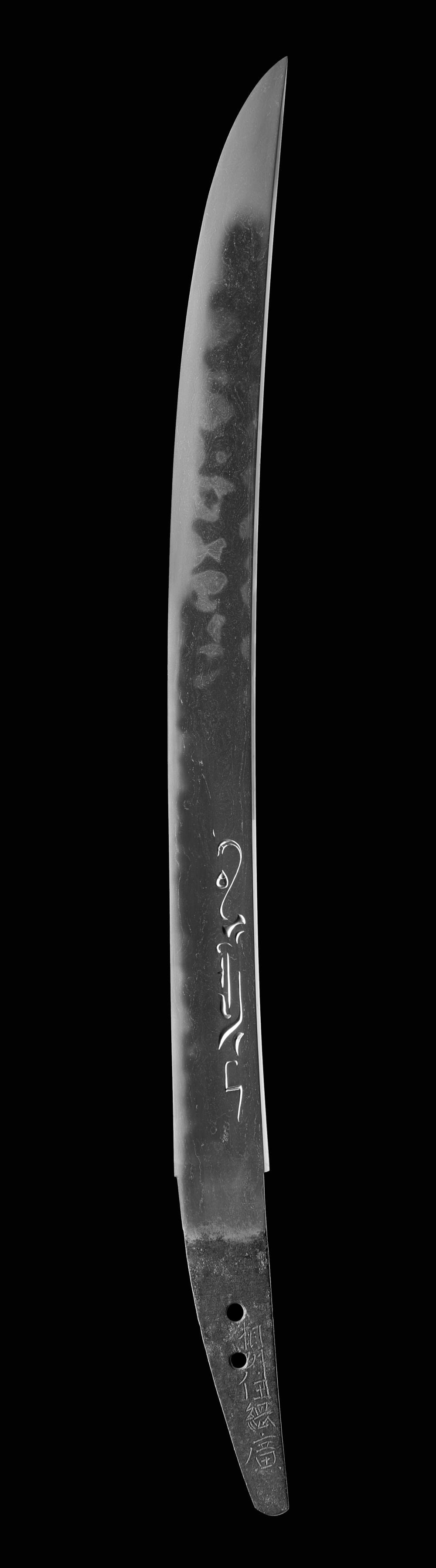
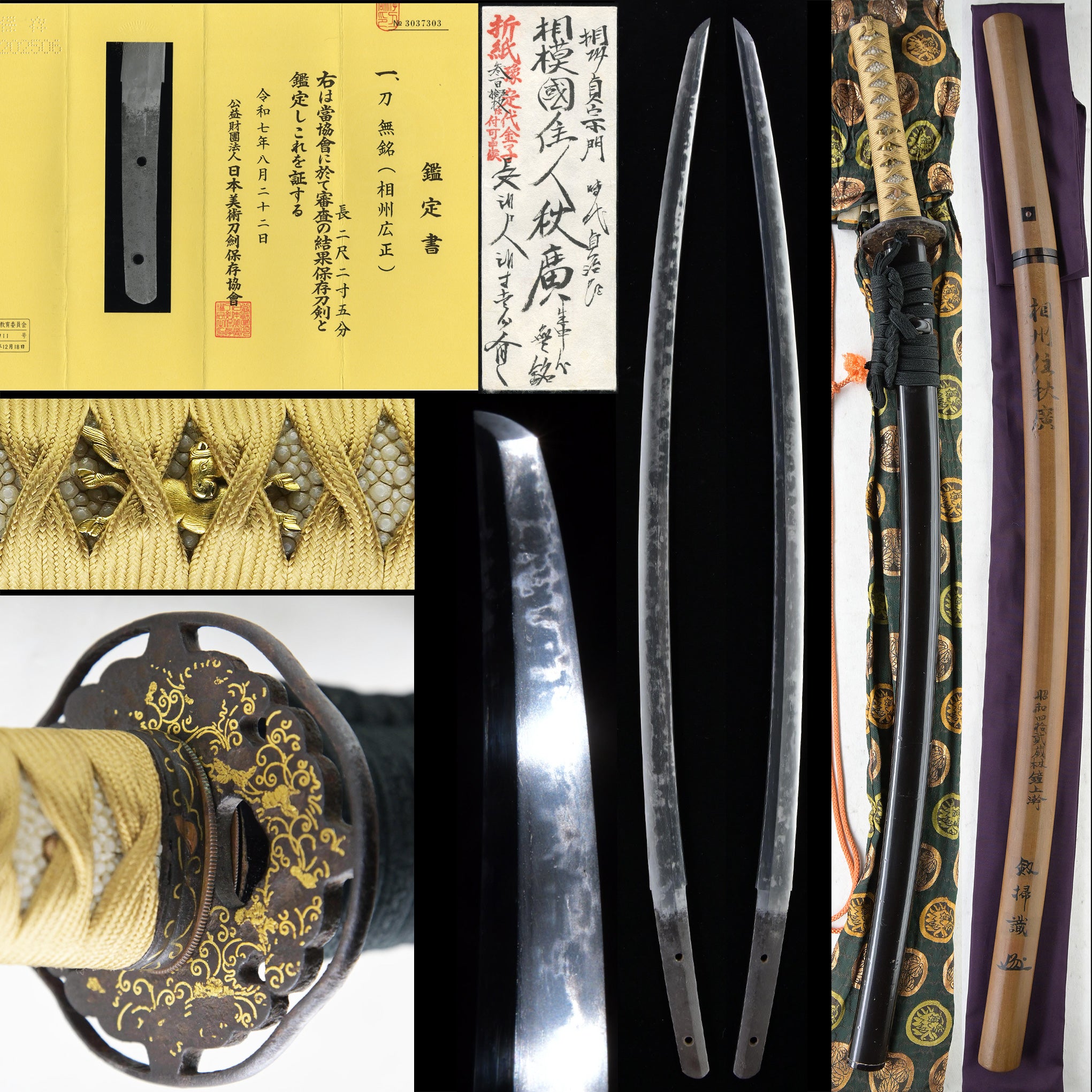
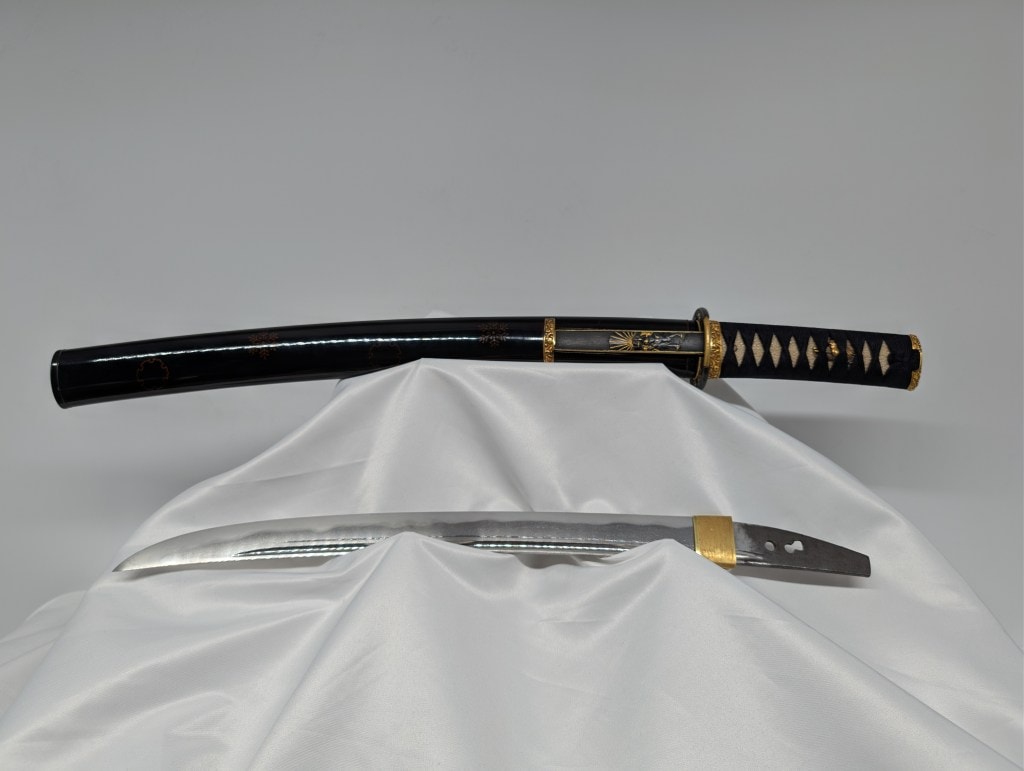
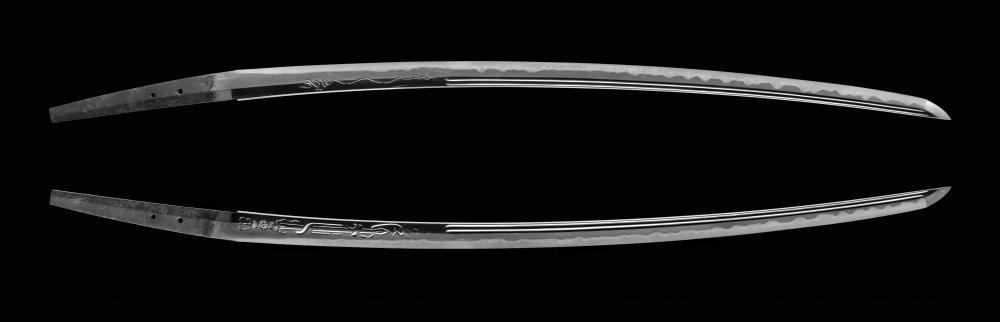
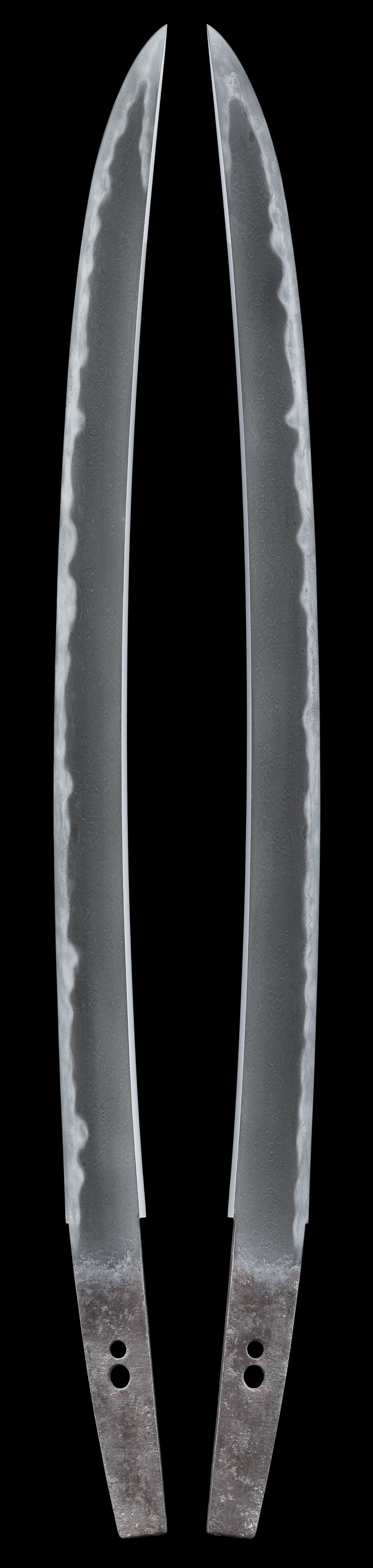
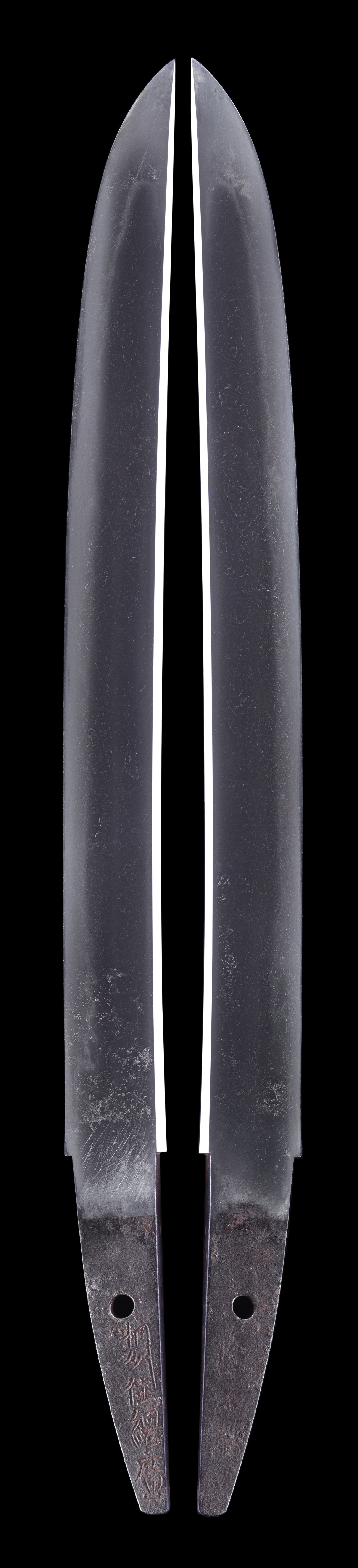
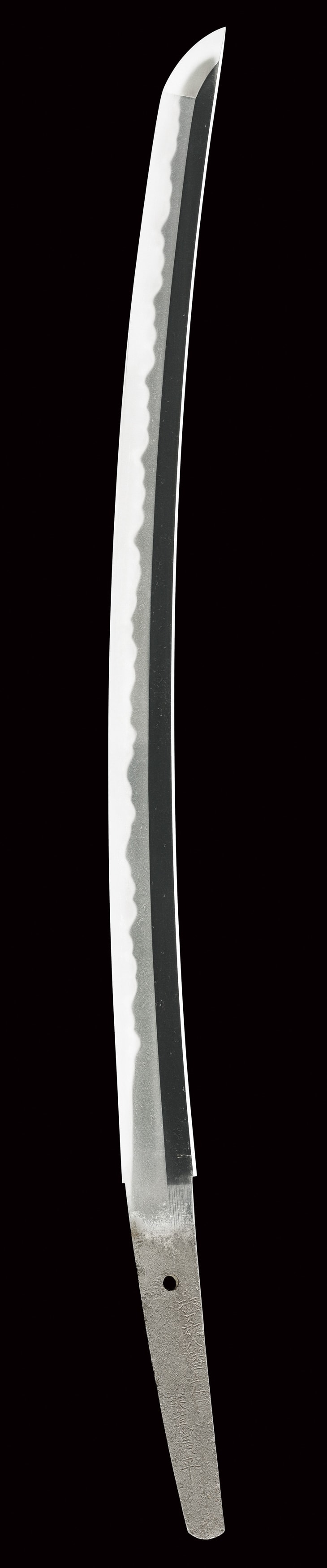
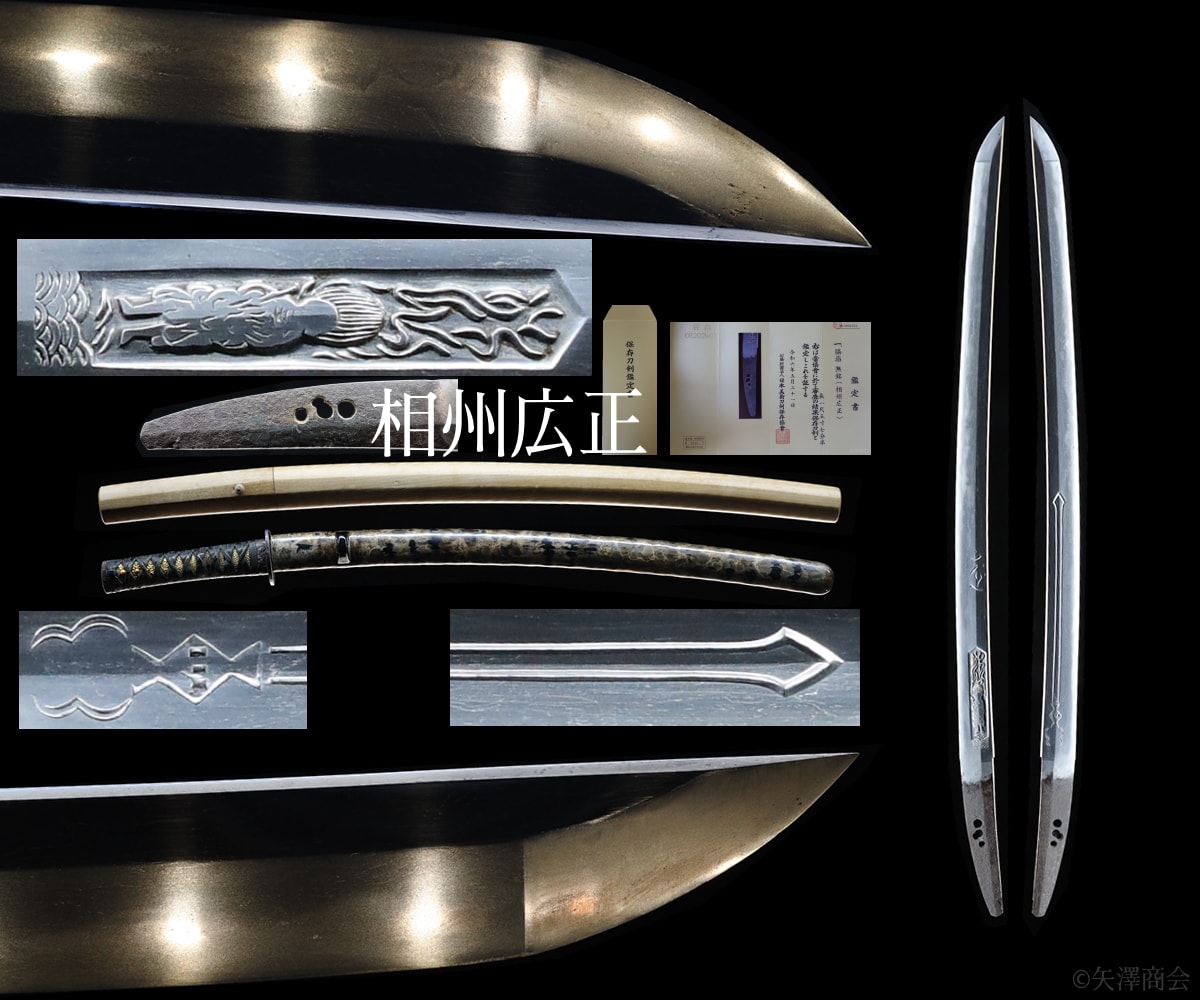
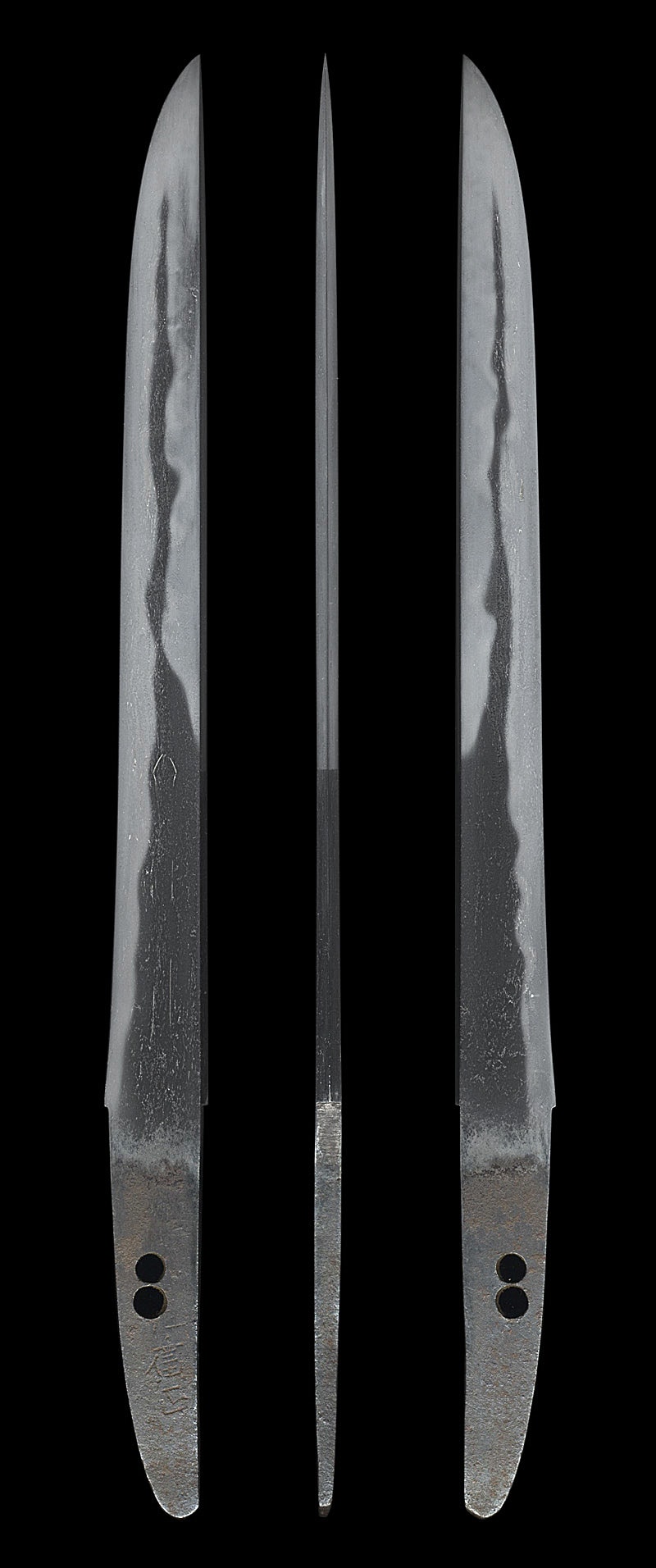
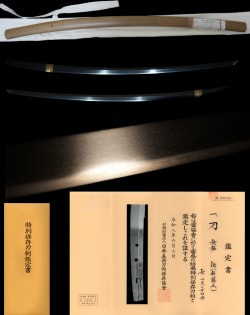
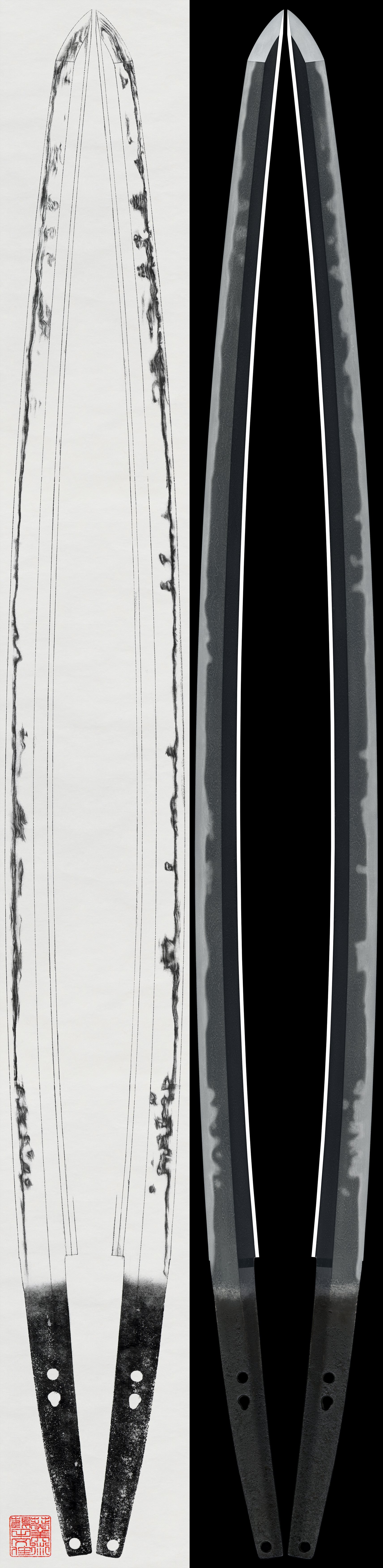
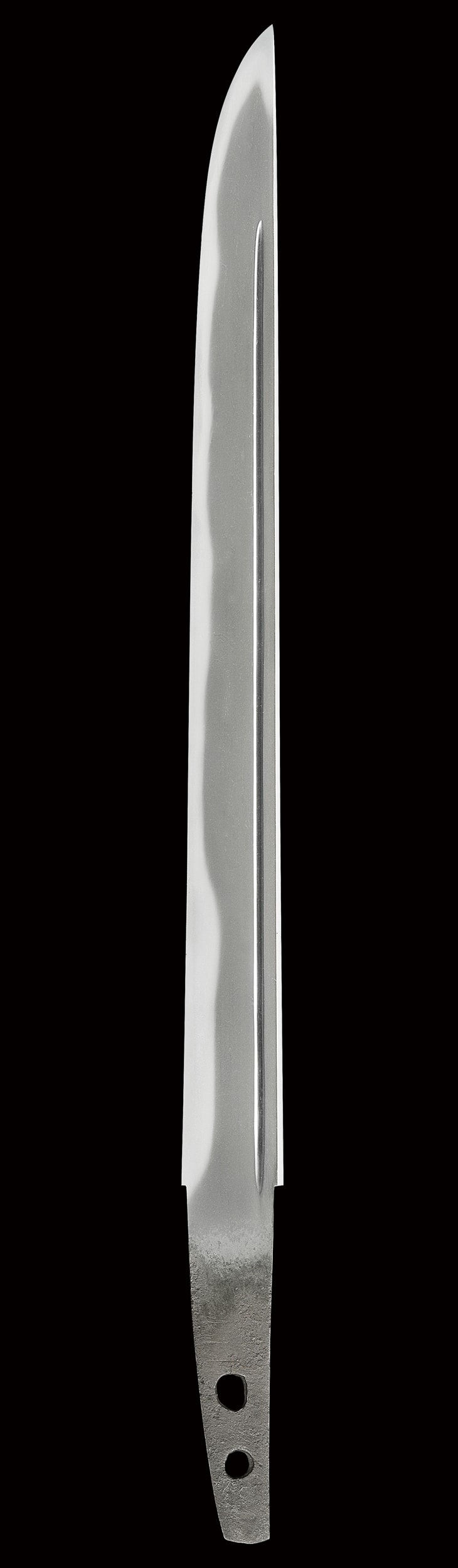
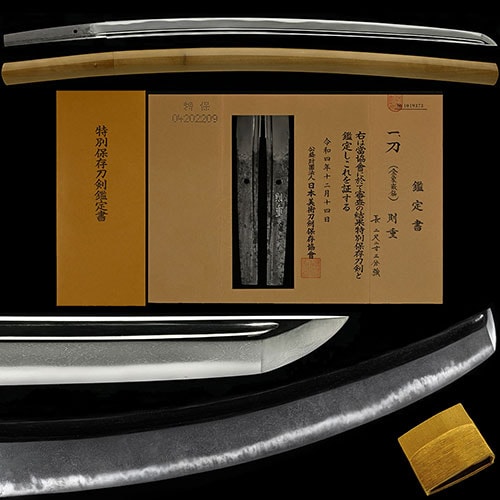
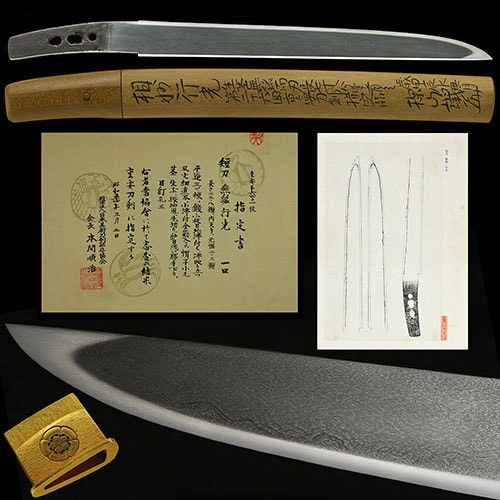
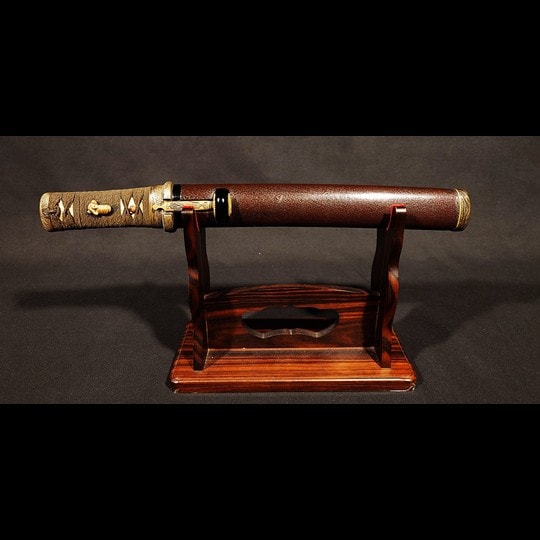
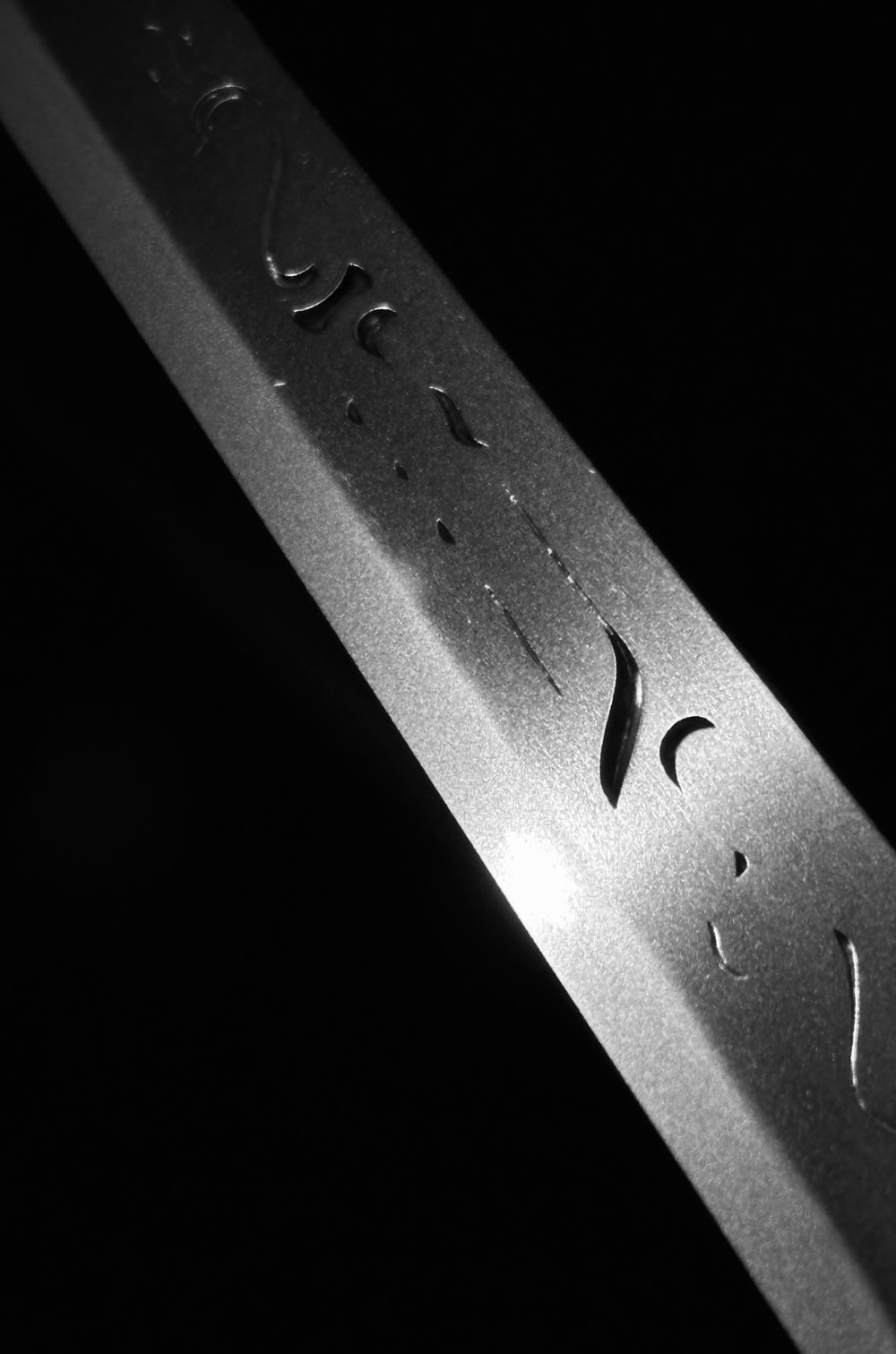
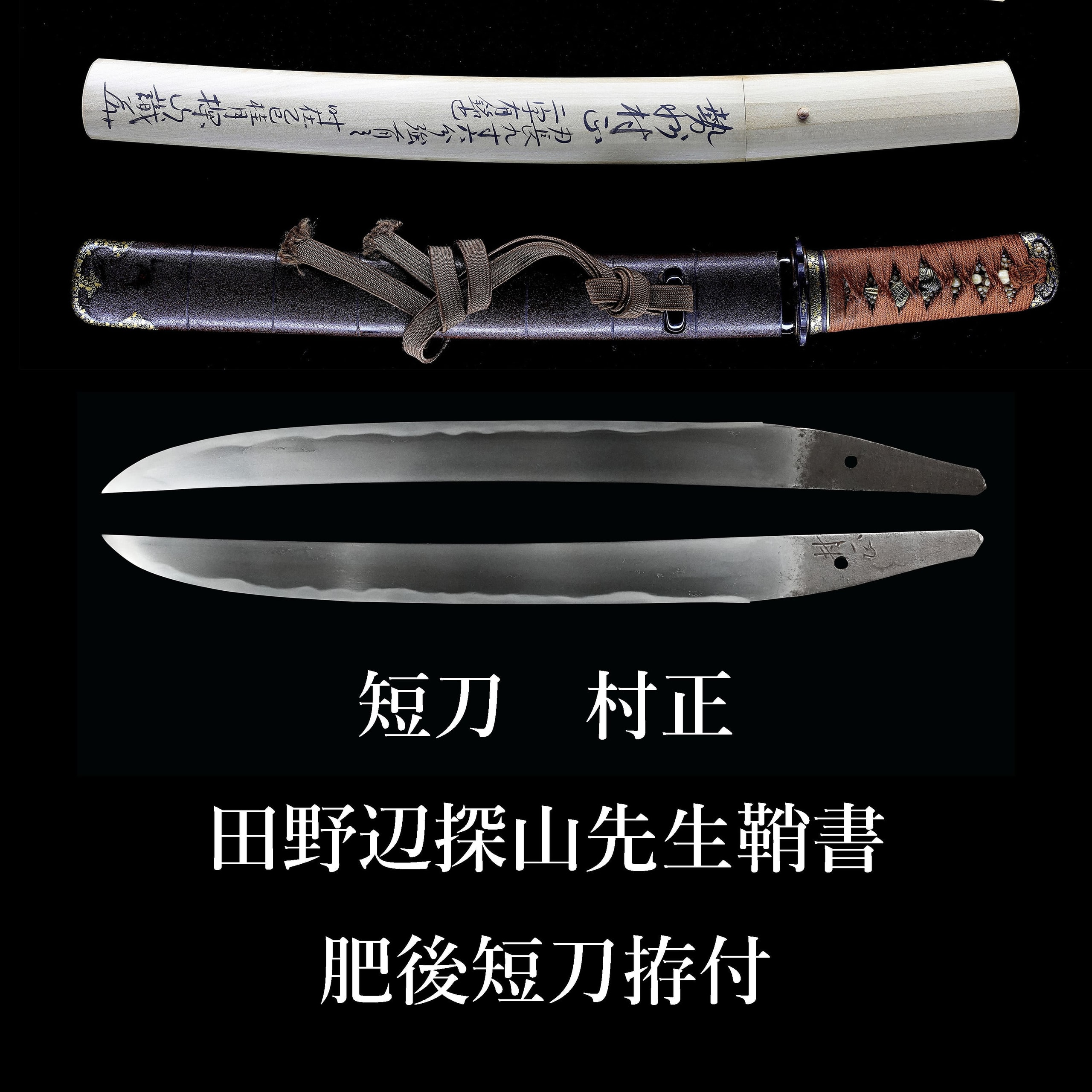
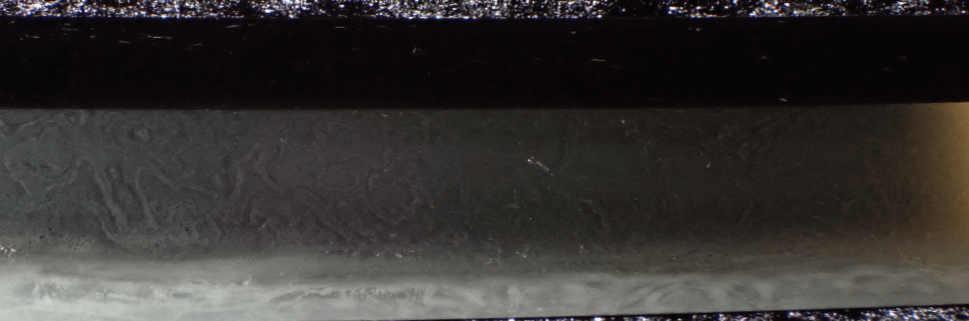
This work features a flamboyant hitatsura with abundant ji-nie, and the interior of the ha is filled with active kinsuji and sunagashi. It is a masterpiece of intense workmanship that can be called the pinnacle of Soden (Soshu tradition), inheriting the style of the masters. The habaki is an elaborate piece featuring the Maru-ni-Katabami mon on both sides. It is a magnificent blade worthy of becoming a family heirloom. Soshu Hirotsugu was a swordsmith who resided in Kamakura, Soshu. Following the Nanbokucho period, he belonged to the orthodox lineage representing Soshu smiths after Masamune and Sadamune, and is a representative master in the line of Hiromitsu, Hirotsugu, and Hiromasa. 0 Yen (Tax included)
 NihontoWatch
Soshu · Kamakura · nagasa 28.4cm · sori 0.2cm
Soshu-den · Sagami
22 pieces on the market now
Within the province of Sagami, where Masamune and his successors had set the Soshu-den on its course, a late body of smiths carried that workmanship forward through the Muromachi period after the classic Nanbokucho masters had passed. These are the Sue-Soshu (末相州), the late Sagami line that took up the manner of Hiromitsu and Akihiro and worked it into the sixteenth century under the patronage of the Later Hojo of Odawara. The published sources draw a division within the group: one body of smiths remained at Kamakura while a separate circle lived at Odawara under the Hojo, the latter collectively called the Odawara-Soshu. The Tsunahiro line anchors the whole, its shodai transmitted as a descendant of Hiromasa who first signed Masahiro, summoned by Hojo Ujitsuna to Odawara and granted the character tsuna; the name then passed as a workshop title through several generations into the Edo period. Around it stand Tsunaie, a retained smith of the Hojo regarded among the more skilled of the late line; Fusamune, the Odawara smith whose carving carries a long reputation; the mid-Muromachi Hiromasa, transmitted as the third generation of his name; Masahiro, a Sagami lineage of four or five generations said to descend from a younger son of Masamune; and Hirotsugu of Kamakura, who also bears Tenbun-era inscriptions tying him to Suruga. The shared vocabulary of the school is read off temper, steel, and carving together. The jigane is an itame mixed with mokume and nagare-hada that tends to stand and open rather than gather tightly, ji-nie adhering across it with chikei entering, the Odawara hands (Fusamune above all) tightening this toward a packed ko-itame. Over that ground the smiths temper a gunome-midare into which choji, togariba, the arrow-notch yahazu tooth, and ko-notare enter, the ha widening as it rises; nie attaches with sunagashi and kinsuji, and tobiyaki with muneyaki are then carried across the ji until the whole becomes hitatsura, the full-temper manner the sources name as the inheritance from Hiromitsu and Akihiro.
The Odawara face leans angular and compound, gunome heads breaking into doubled and koshi-biraki structures over a tight, nioi-dominant nioiguchi, while the Kamakura face of Tsunahiro keeps the broader, yahazu-laced midare. Devotional carving recurs throughout, true and grass kurikara, bonji on a lotus rendai, sanko-ken and gomabashi in raised relief, and incised invocations such as Hachiman Daibosatsu. Set against the classic Soshu-den apex, the divergence is one of register rather than kind: where the Kamakura and Nanbokucho masters reached great depth of nie and clarity of steel, the late line works a flatter, more demonstrative hitatsura over a standing grain, the steel less deep and the nie less profound, the flamboyance of full temper standing in for the restrained command of the founders. For kantei, the Sue-Soshu blade announces itself by the Muromachi sugata (compact hira-zukuri tanto with uchizori, or sun-nobi wakizashi of wide mihaba with sakizori) carrying full hitatsura over an open, standing itame, with the dense devotional horimono the sources treat as a defining mark of Sagami work of the era; the absence of the deep, lucid nie and the midare-utsuri-free clarity of the Kamakura masters separates it from classic Soshu. The Odawara hand is told from the Kamakura hand by its tighter steel, its angular and koshi-biraki gunome, and Fusamune's exceptionally refined relief carving. Among the members, Tsunahiro is the first name of the group, the smith who closes the tradition, the published sources naming him well known and highly skilled within the group, with Tsunaie and Fusamune as the next most accomplished; Hiromasa and Masahiro furnish the dated, ubu-signed documents on which the divided generations are anchored. Provenance, where it survives, is real and distinguished: a Tsunahiro wakizashi bears the ownership inscription of the Hojo retainer Sakurai Daigaku and later passed to Okubo Ichio, while one of his blades descends into the Imperial collection; most members, however, carry no recorded daimyo or temple history, their standing resting on the rarity of a signed late-Sagami blade and the carving and steel the sources praise on each. A signed Sue-Soshu work, seldom met yet not locked away as national patrimony, offers the student the Muromachi register of the Soshu-den read whole. Learn more →
| Smith | Era | Designated |
|---|---|---|
| Fusamune總宗 | 1504-1521 | 5 |
| Tsunahiro綱廣 | 1532-1555 | 12 |
| Hiromasa廣正 | 1444-1456 | 4 |
| Tsunaie綱家 | 1532-1555 | 3 |
| Kiyohira清平 | 1673-1681 | 4 |
Sōshū in the Kamakura period
Sōshū was born in a boomtown: Kamakura, seat of the warrior government, dense with elite patrons. Tradition holds that master smiths were summoned east to serve it, and from their students came Shintōgo Kunimitsu and then Masamune.
A Hozon-certified blade judged to show notably superior workmanship and a better state of preservation. The bar is higher: re-tempered blades and most unsigned Muromachi/Edo works are excluded.
The NBTHK (Nihon Bijutsu Tōken Hozon Kyōkai, the Society for the Preservation of Japanese Art Swords) is a public-interest incorporated foundation founded in 1948 and supervised by Japan’s Agency for Cultural Affairs (Bunkachō); it is based at the Japanese Sword Museum in Tokyo. Its expert panels physically examine each submitted work (shinsa) and issue a certificate (kanteishō) ranking it by artistic and historical merit. NBTHK papers are the most widely recognized standard of authentication for Japanese swords and fittings.
NBTHK official sitePlease notify us of your intention to return, by email or fax, no later than the day after the item's arrival. Return shipping, insurance, and refund transfer fees are the customer's responsibility.
This work features a flamboyant hitatsura with abundant ji-nie, and the interior of the ha is filled with active kinsuji and sunagashi. It is a masterpiece of intense workmanship that can be called the pinnacle of Soden (Soshu tradition), inheriting the style of the masters. The habaki is an elaborate piece featuring the Maru-ni-Katabami mon on both sides. It is a magnificent blade worthy of becoming a family heirloom. Soshu Hirotsugu was a swordsmith who resided in Kamakura, Soshu. Following the Nanbokucho period, he belonged to the orthodox lineage representing Soshu smiths after Masamune and Sadamune, and is a representative master in the line of Hiromitsu, Hirotsugu, and Hiromasa. 0 Yen (Tax included)
NihontoWatchSoshu · Kamakura · nagasa 28.4cm · sori 0.2cm
Soshu-den · Sagami
22 pieces on the market now
Within the province of Sagami, where Masamune and his successors had set the Soshu-den on its course, a late body of smiths carried that workmanship forward through the Muromachi period after the classic Nanbokucho masters had passed. These are the Sue-Soshu (末相州), the late Sagami line that took up the manner of Hiromitsu and Akihiro and worked it into the sixteenth century under the patronage of the Later Hojo of Odawara. The published sources draw a division within the group: one body of smiths remained at Kamakura while a separate circle lived at Odawara under the Hojo, the latter collectively called the Odawara-Soshu. The Tsunahiro line anchors the whole, its shodai transmitted as a descendant of Hiromasa who first signed Masahiro, summoned by Hojo Ujitsuna to Odawara and granted the character tsuna; the name then passed as a workshop title through several generations into the Edo period. Around it stand Tsunaie, a retained smith of the Hojo regarded among the more skilled of the late line; Fusamune, the Odawara smith whose carving carries a long reputation; the mid-Muromachi Hiromasa, transmitted as the third generation of his name; Masahiro, a Sagami lineage of four or five generations said to descend from a younger son of Masamune; and Hirotsugu of Kamakura, who also bears Tenbun-era inscriptions tying him to Suruga. The shared vocabulary of the school is read off temper, steel, and carving together. The jigane is an itame mixed with mokume and nagare-hada that tends to stand and open rather than gather tightly, ji-nie adhering across it with chikei entering, the Odawara hands (Fusamune above all) tightening this toward a packed ko-itame. Over that ground the smiths temper a gunome-midare into which choji, togariba, the arrow-notch yahazu tooth, and ko-notare enter, the ha widening as it rises; nie attaches with sunagashi and kinsuji, and tobiyaki with muneyaki are then carried across the ji until the whole becomes hitatsura, the full-temper manner the sources name as the inheritance from Hiromitsu and Akihiro.
The Odawara face leans angular and compound, gunome heads breaking into doubled and koshi-biraki structures over a tight, nioi-dominant nioiguchi, while the Kamakura face of Tsunahiro keeps the broader, yahazu-laced midare. Devotional carving recurs throughout, true and grass kurikara, bonji on a lotus rendai, sanko-ken and gomabashi in raised relief, and incised invocations such as Hachiman Daibosatsu. Set against the classic Soshu-den apex, the divergence is one of register rather than kind: where the Kamakura and Nanbokucho masters reached great depth of nie and clarity of steel, the late line works a flatter, more demonstrative hitatsura over a standing grain, the steel less deep and the nie less profound, the flamboyance of full temper standing in for the restrained command of the founders. For kantei, the Sue-Soshu blade announces itself by the Muromachi sugata (compact hira-zukuri tanto with uchizori, or sun-nobi wakizashi of wide mihaba with sakizori) carrying full hitatsura over an open, standing itame, with the dense devotional horimono the sources treat as a defining mark of Sagami work of the era; the absence of the deep, lucid nie and the midare-utsuri-free clarity of the Kamakura masters separates it from classic Soshu. The Odawara hand is told from the Kamakura hand by its tighter steel, its angular and koshi-biraki gunome, and Fusamune's exceptionally refined relief carving. Among the members, Tsunahiro is the first name of the group, the smith who closes the tradition, the published sources naming him well known and highly skilled within the group, with Tsunaie and Fusamune as the next most accomplished; Hiromasa and Masahiro furnish the dated, ubu-signed documents on which the divided generations are anchored. Provenance, where it survives, is real and distinguished: a Tsunahiro wakizashi bears the ownership inscription of the Hojo retainer Sakurai Daigaku and later passed to Okubo Ichio, while one of his blades descends into the Imperial collection; most members, however, carry no recorded daimyo or temple history, their standing resting on the rarity of a signed late-Sagami blade and the carving and steel the sources praise on each. A signed Sue-Soshu work, seldom met yet not locked away as national patrimony, offers the student the Muromachi register of the Soshu-den read whole. Learn more →
| Smith | Era | Designated |
|---|---|---|
| Fusamune總宗 | 1504-1521 | 5 |
| Tsunahiro綱廣 | 1532-1555 | 12 |
| Hiromasa廣正 | 1444-1456 | 4 |
| Tsunaie綱家 | 1532-1555 | 3 |
| Kiyohira清平 | 1673-1681 | 4 |
Sōshū in the Kamakura period
Sōshū was born in a boomtown: Kamakura, seat of the warrior government, dense with elite patrons. Tradition holds that master smiths were summoned east to serve it, and from their students came Shintōgo Kunimitsu and then Masamune.
A Hozon-certified blade judged to show notably superior workmanship and a better state of preservation. The bar is higher: re-tempered blades and most unsigned Muromachi/Edo works are excluded.
The NBTHK (Nihon Bijutsu Tōken Hozon Kyōkai, the Society for the Preservation of Japanese Art Swords) is a public-interest incorporated foundation founded in 1948 and supervised by Japan’s Agency for Cultural Affairs (Bunkachō); it is based at the Japanese Sword Museum in Tokyo. Its expert panels physically examine each submitted work (shinsa) and issue a certificate (kanteishō) ranking it by artistic and historical merit. NBTHK papers are the most widely recognized standard of authentication for Japanese swords and fittings.
NBTHK official sitePlease notify us of your intention to return, by email or fax, no later than the day after the item's arrival. Return shipping, insurance, and refund transfer fees are the customer's responsibility.