NihontoWatch MonNihontoWatch
Market
Encyclopedia
Kantei
NihontoWatch MonNihontoWatch
Market
Encyclopedia
Kantei

Description

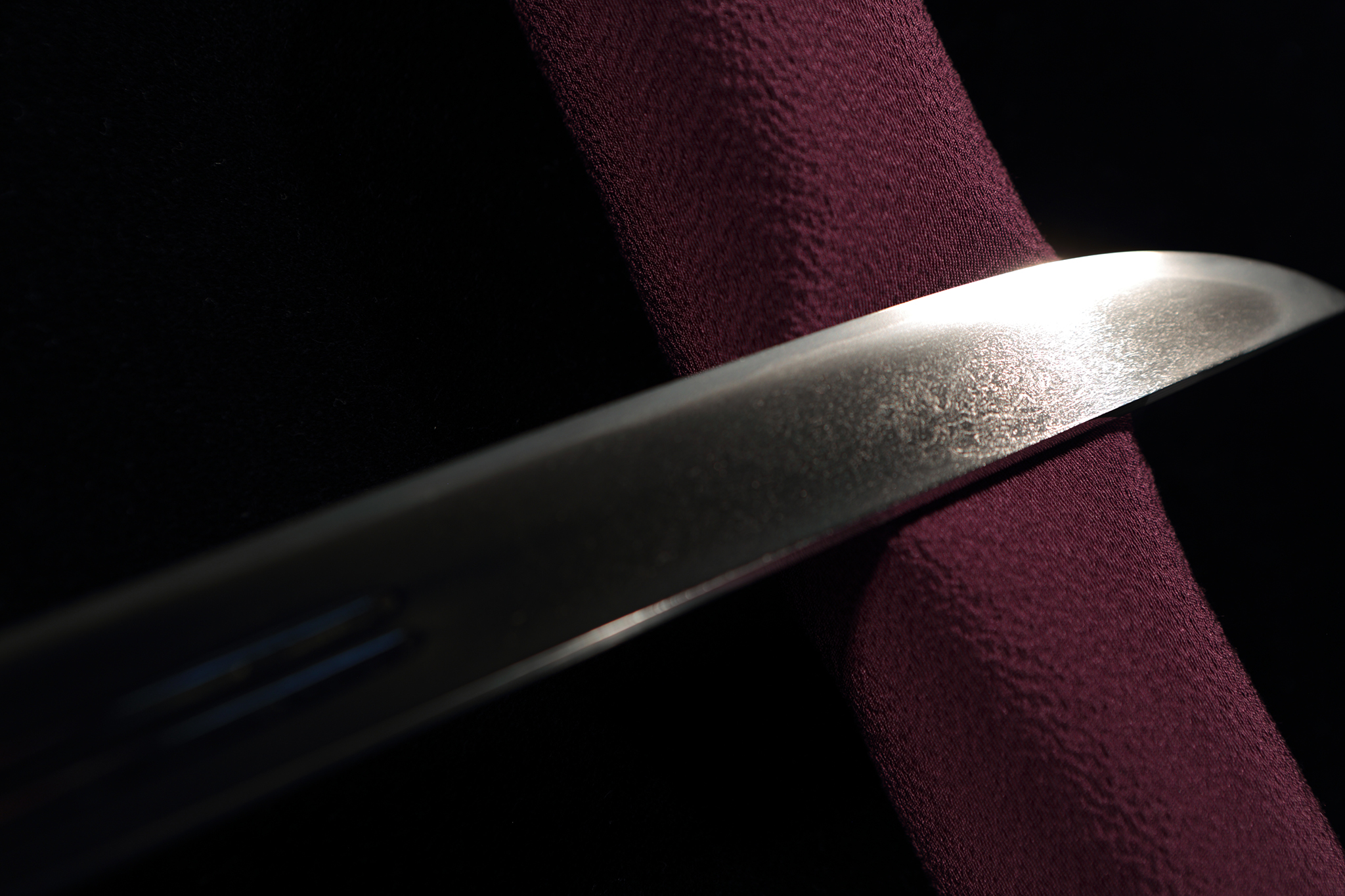
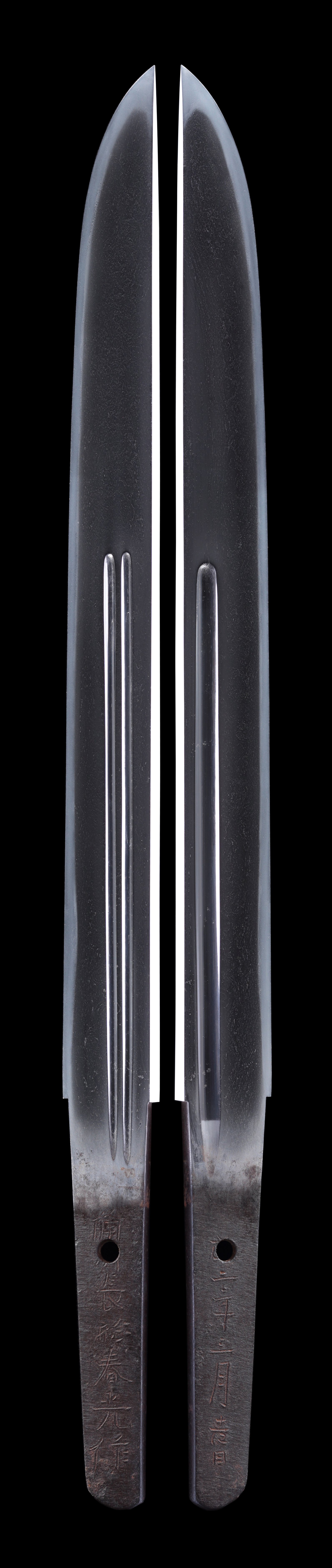
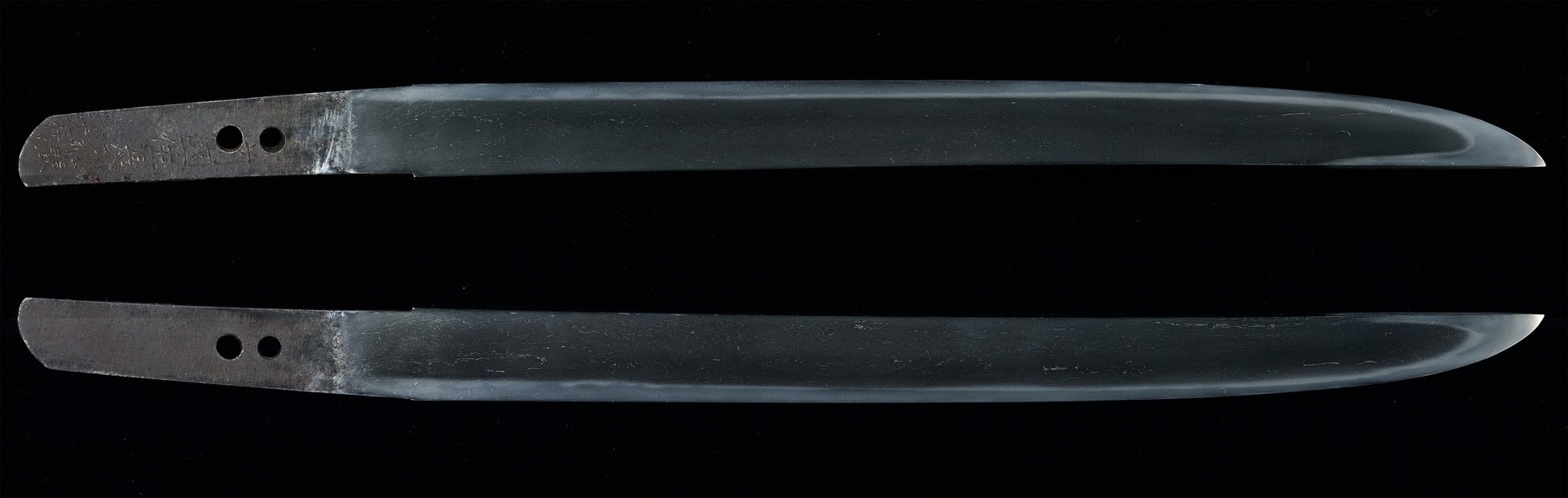
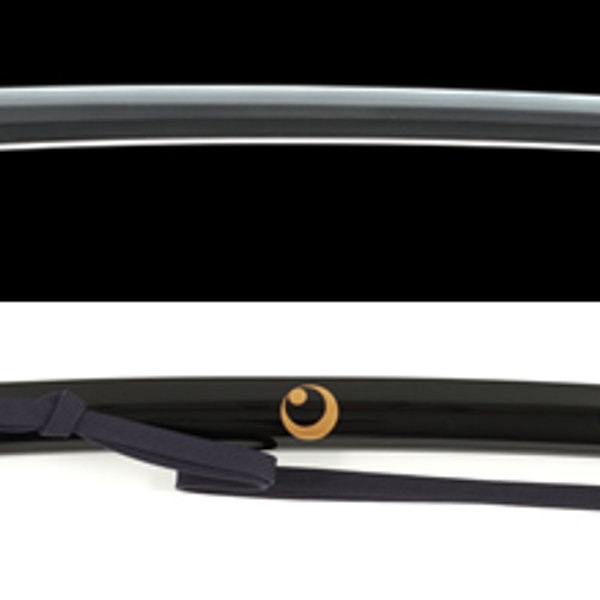
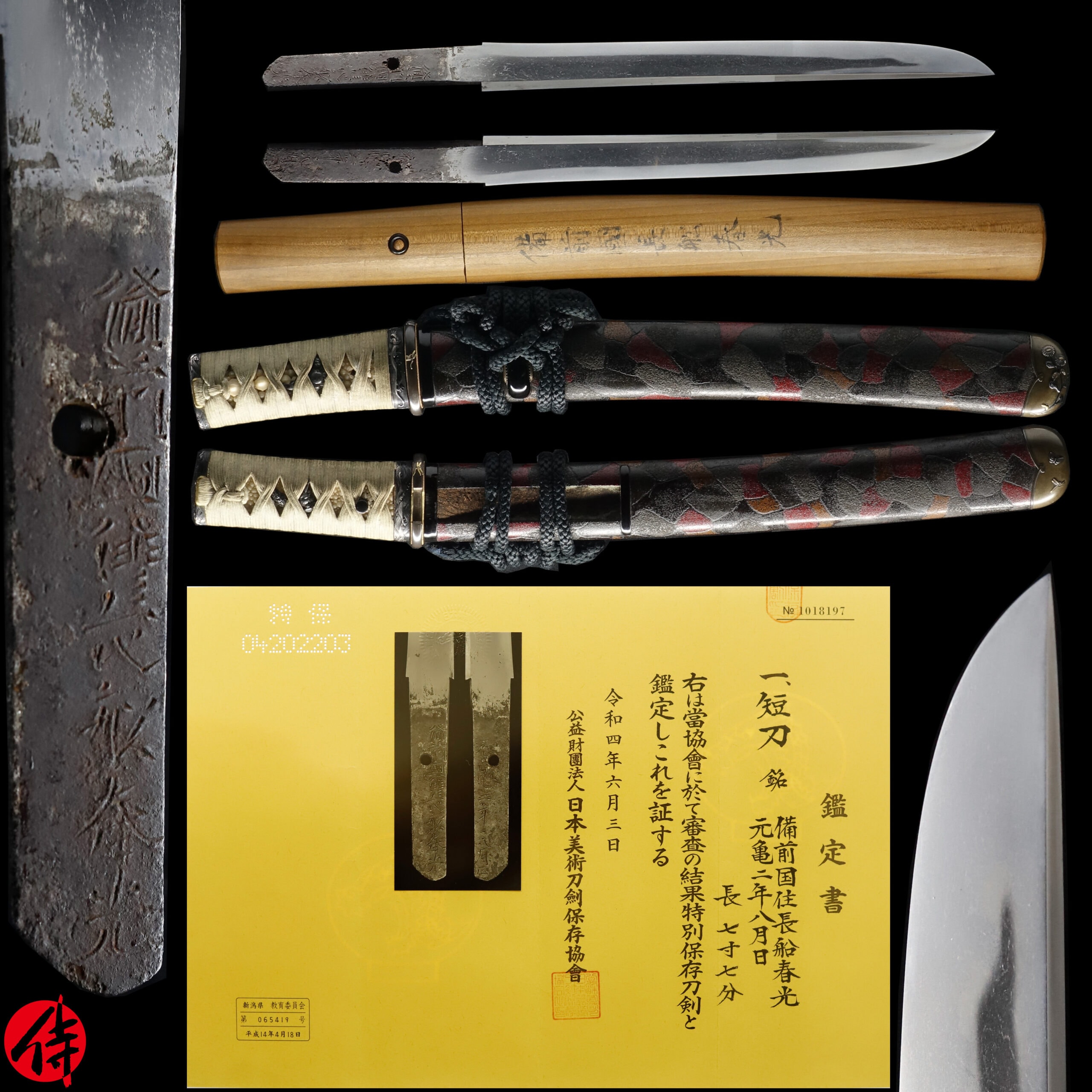
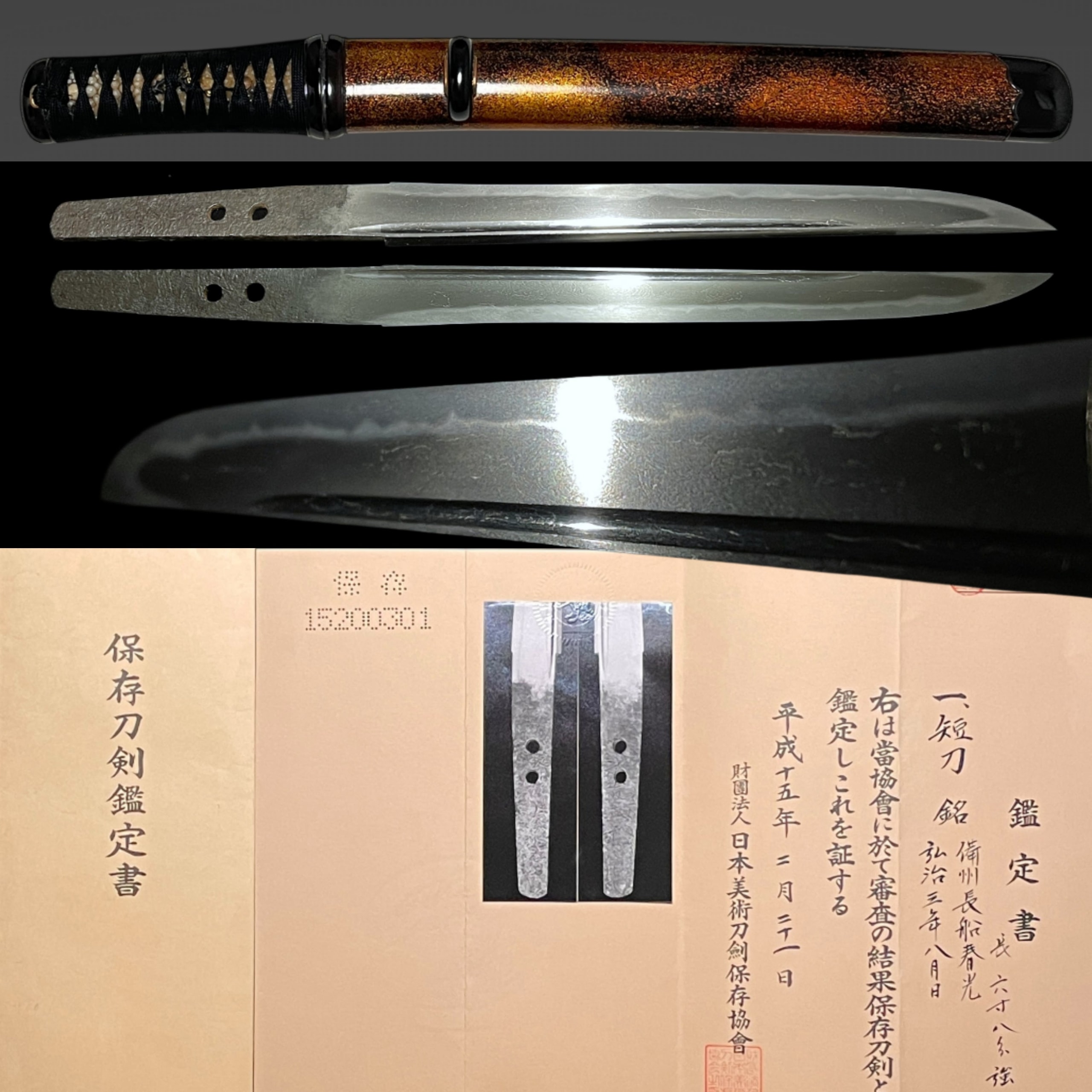
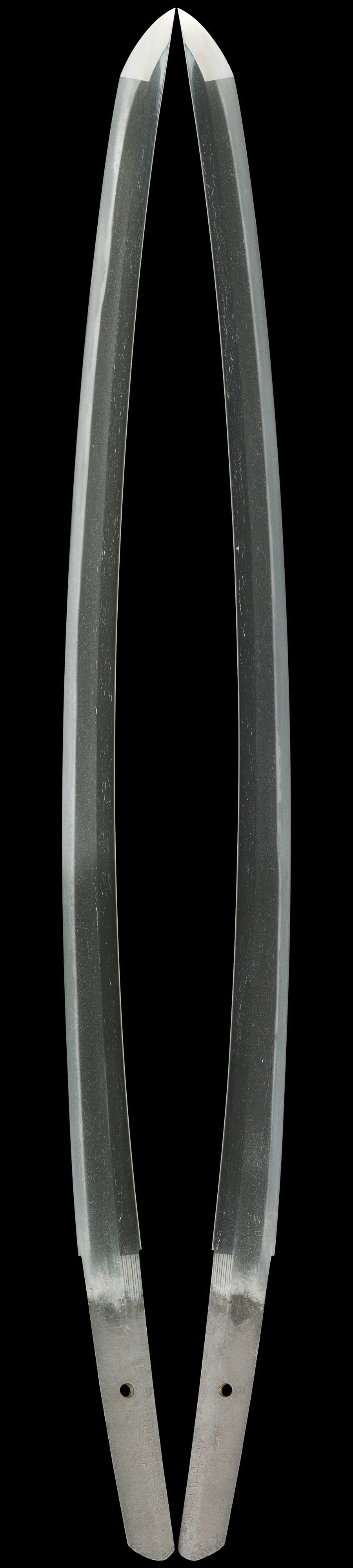
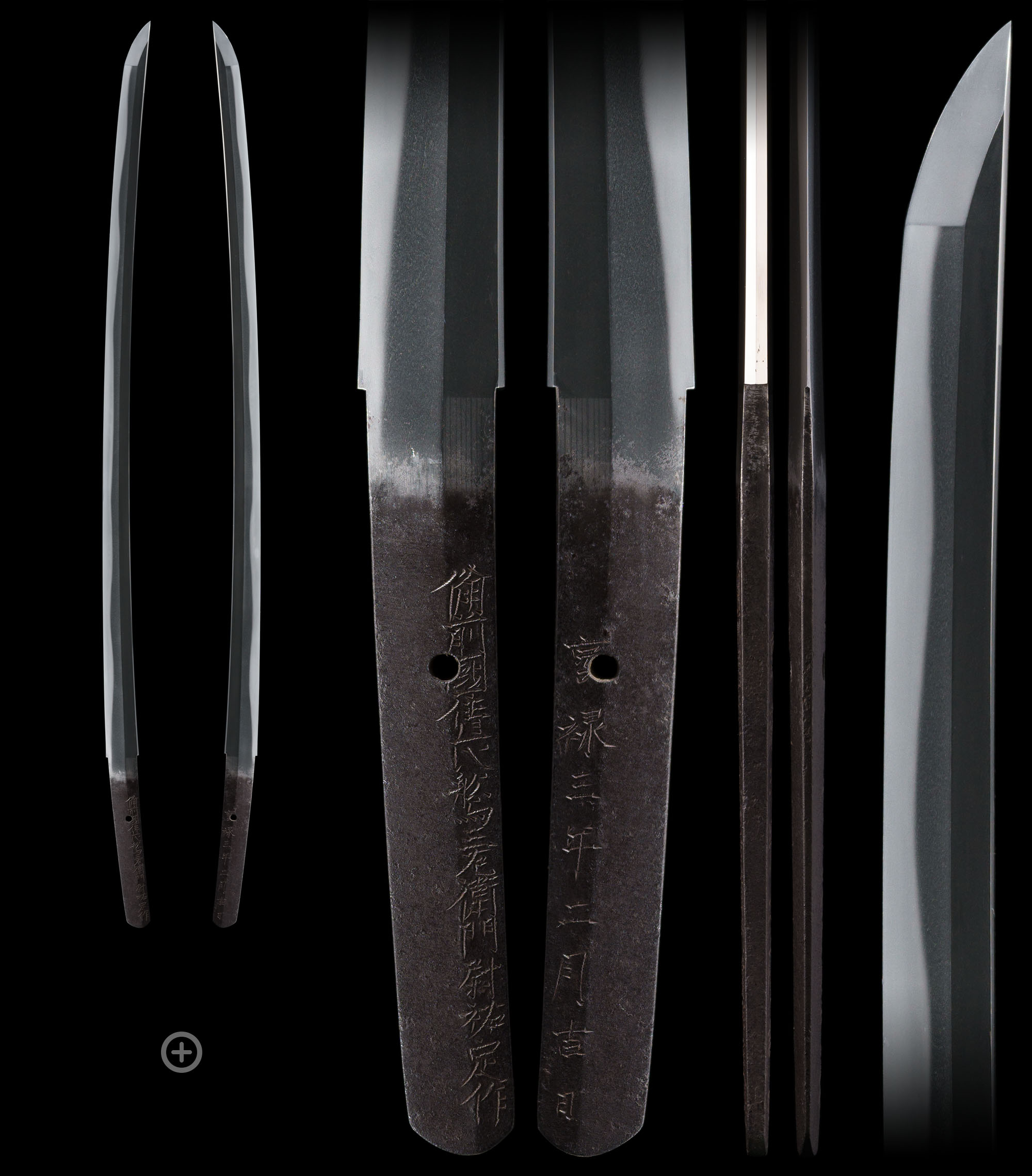
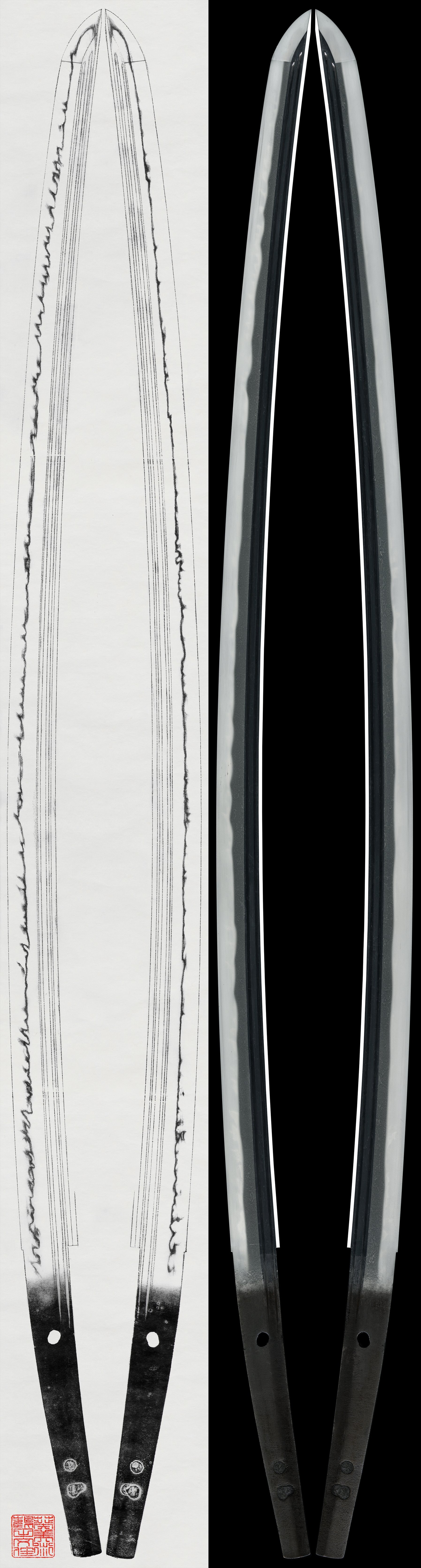
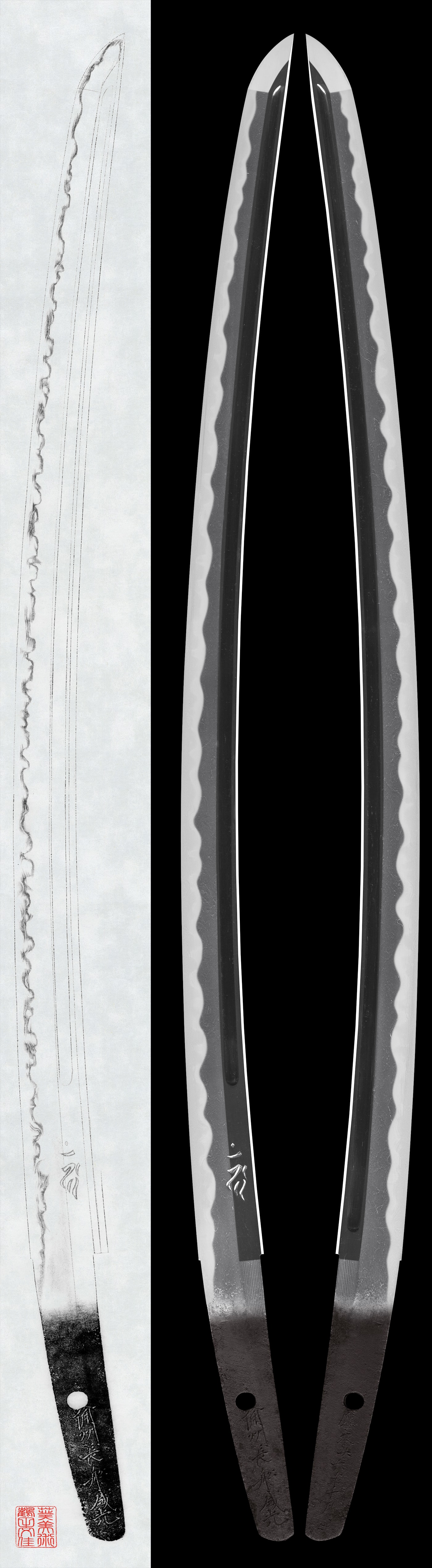
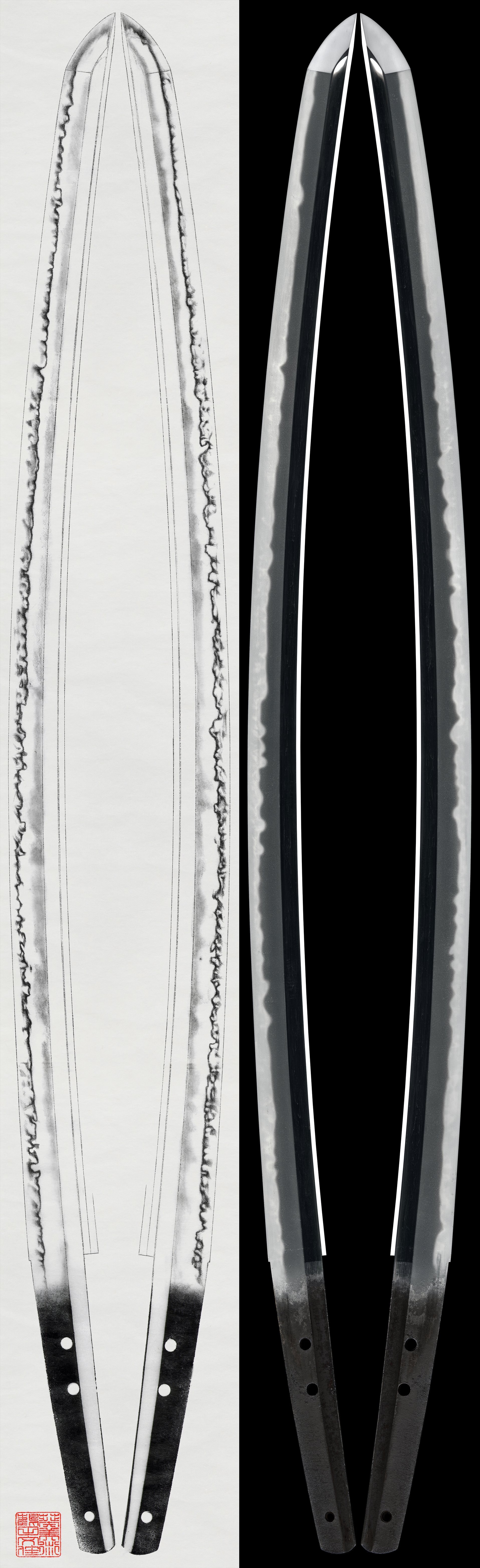
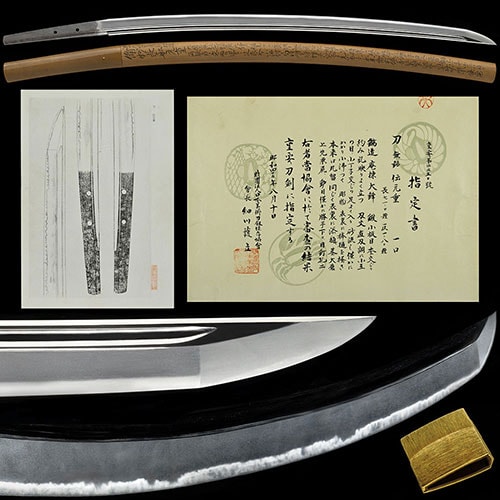
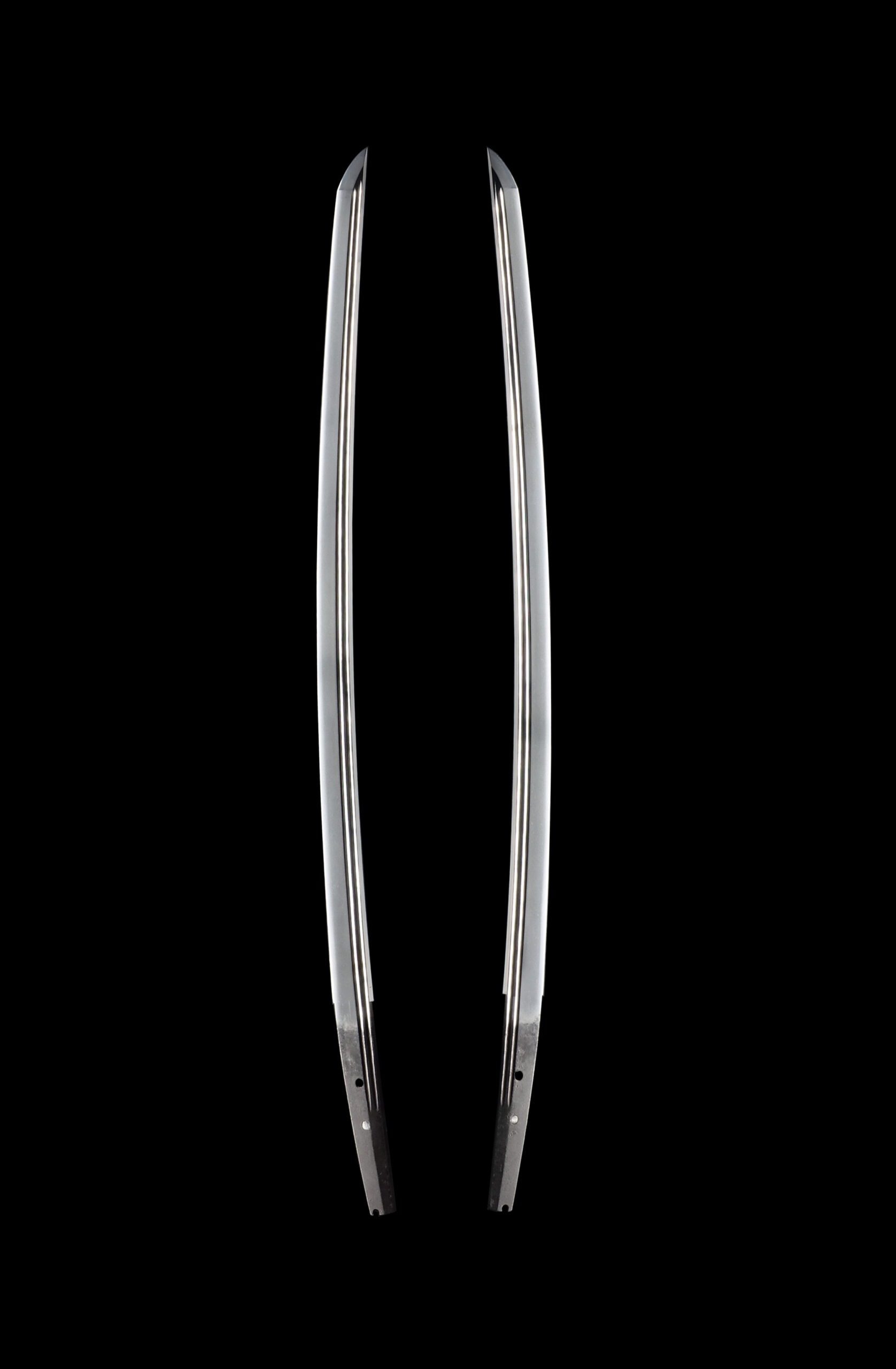
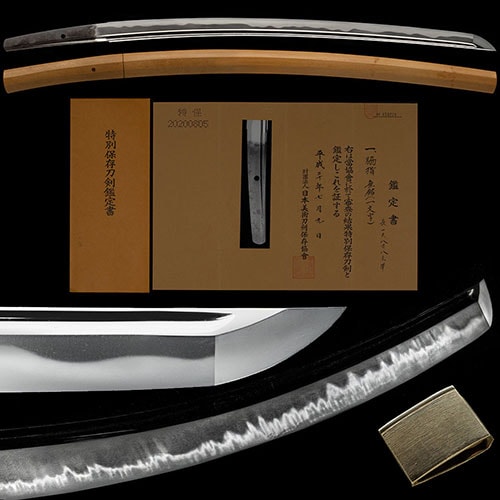
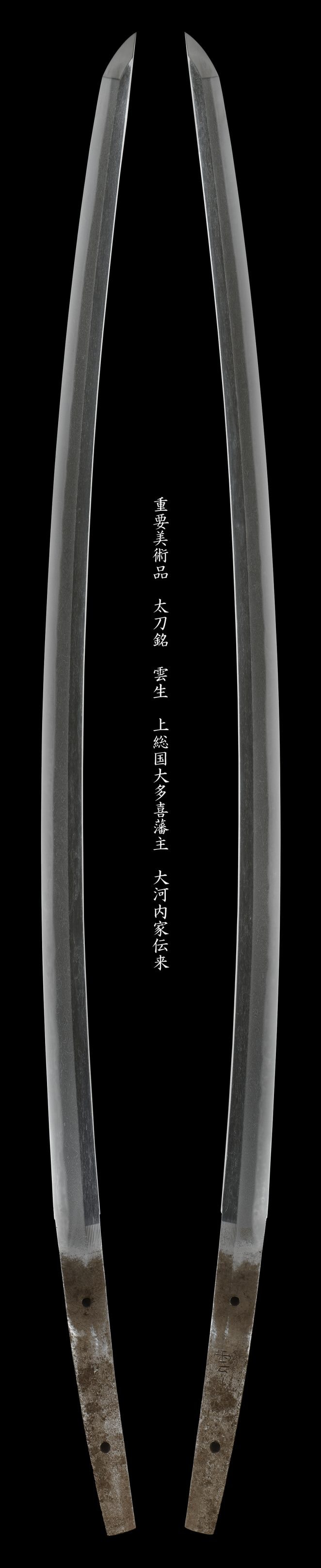
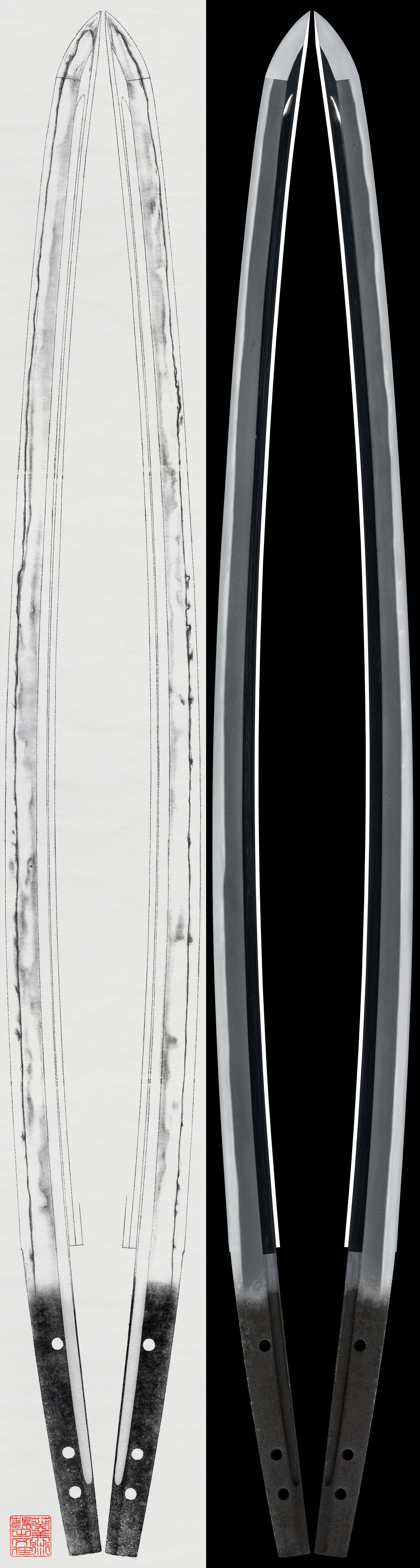
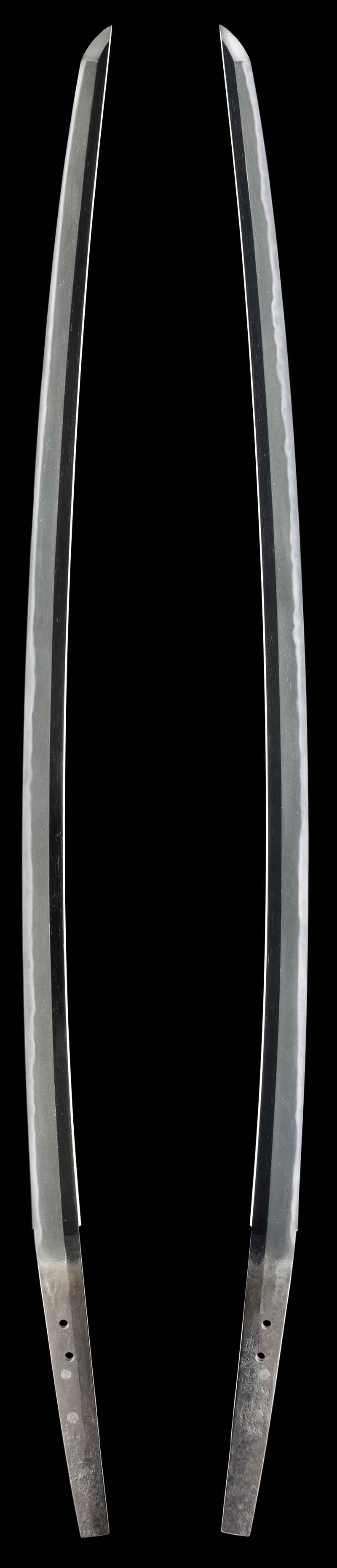
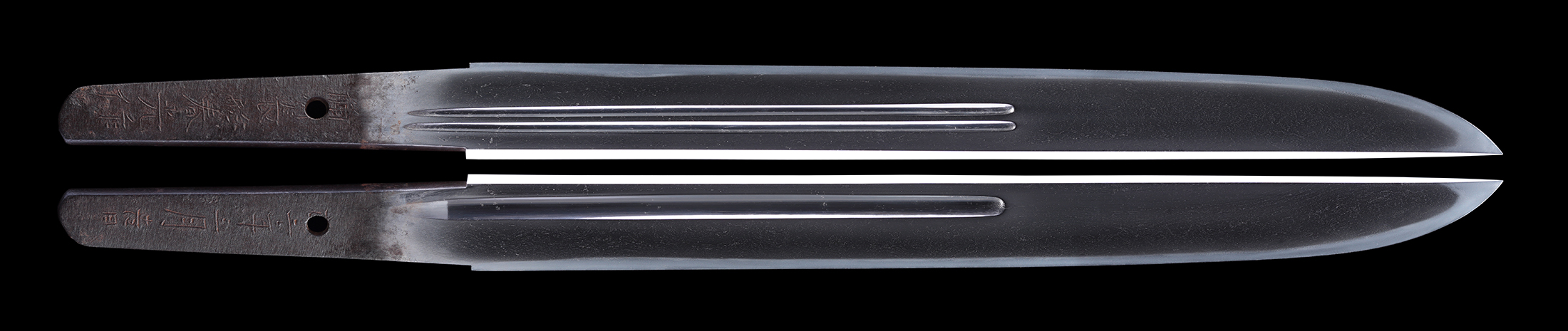
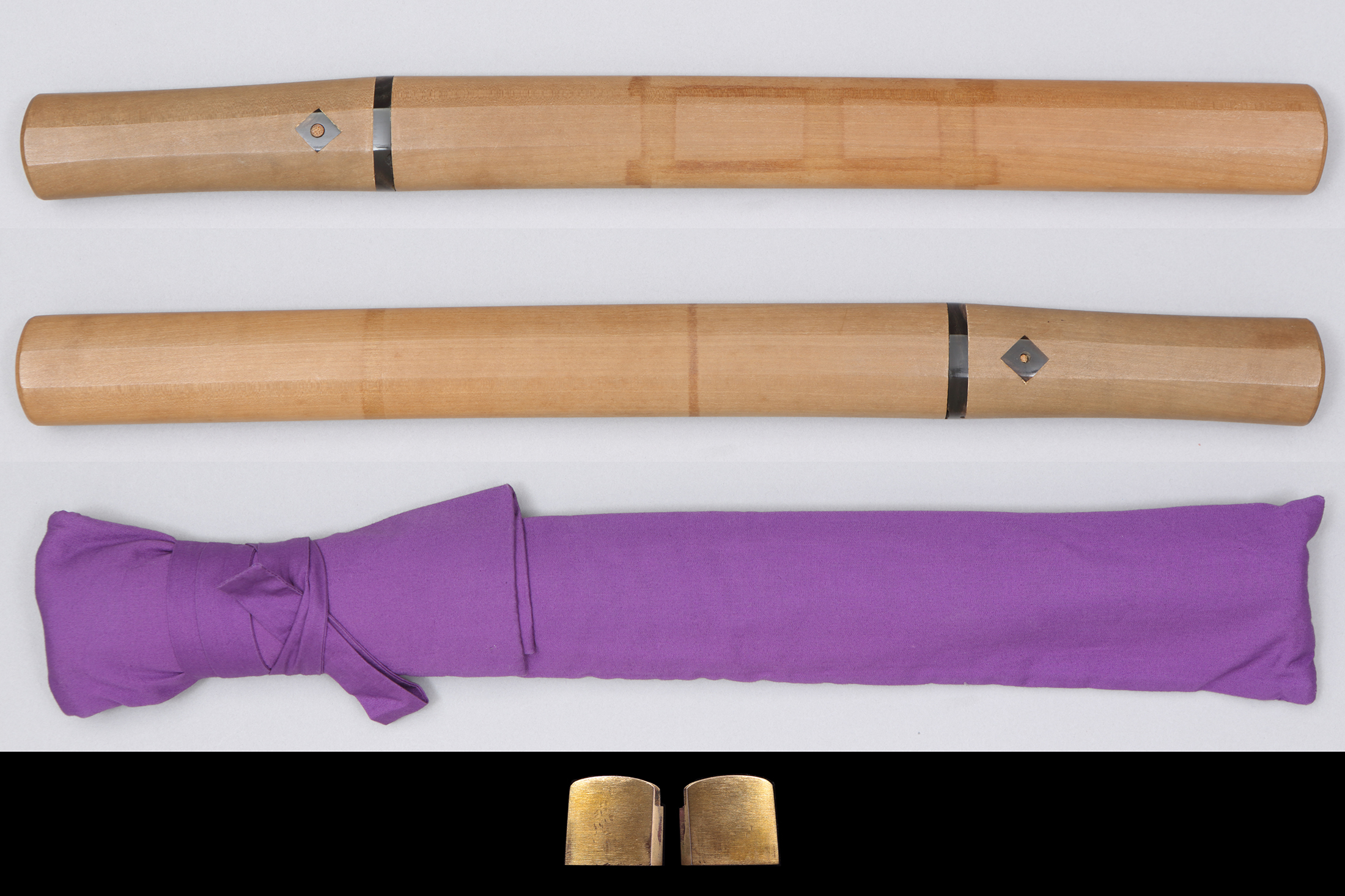
This is a tanto by Osafune Harumitsu from the late Muromachi period. The blade features a wide body with no sori, and a fine straight hamon with double lines and activities. It comes with a shirasaya and NBTHK Hozon certificate.

NihontoWatch MonNihontoWatch
MarketEncyclopediaKantei
Swords›Bizen-den›Osafune›Sue-Bizen›Harumitsu›Tanto: Osafune Harumitsu
tantoNTHK
Osafune Harumitsu

Tanto: Osafune Harumitsu

mei · Osafune · Muromachi · nagasa 28.1cm

SOLD
Osafune Harumitsu (春光) · Osafune · Muromachi1 work for sale →
Tanto
Could you name the smith from the blade alone? Today’s kantei →
Osafune Harumitsu — 1 of 4
Osafune Harumitsu — 2 of 4
Osafune Harumitsu — 3 of 4
Osafune Harumitsu — 4 of 4
1 / 4
1 / 4
Osafune Harumitsu — 1 of 4Osafune Harumitsu — 2 of 4Osafune Harumitsu — 3 of 4Osafune Harumitsu — 4 of 4
Osafune Harumitsu (春光) · Osafune · Muromachi1 work for sale →
Tanto
Could you name the smith from the blade alone? Today’s kantei →
Measurements & details
Smith
Osafune Harumitsu
Type
Tanto
School
Osafune
Period
Around 1533–1570(Tenmon)
Province
Bizen
Signature
Signed(100% of this smith's designated works are signed)
Measurements
Nagasa 28.1cmMotohaba 2.69cmKasane 0.62cmWeight 227g
Description

This is a tanto by Osafune Harumitsu from the late Muromachi period. The blade features a wide body with no sori, and a fine straight hamon with double lines and activities. It comes with a shirasaya and NBTHK Hozon certificate.

About the maker

Harumitsu

春光

Bizen Osafune (Sue-Bizen) · Bizen · around 1533-1570

1 piece on the market now

›

Osafune Harumitsu signed his blades 春光 and styled himself Jurozaemon-no-jo, and the published sources place him by name at the head of a crowded field. Several Sue-Bizen smiths bore the name Harumitsu, signing also with the personal names Saemon-no-jo, Gorozaemon-no-jo, Magojuro, Jirozaemon-no-jo, Gozaemon-no-jo and Saemon-shichiro, the name running chronologically from the Bunmei era through the Bunroku era; among them the published sources record that 「その中で十郎左衛門の名が最も知られ」[[c:1]], the Jurozaemon Harumitsu being the best known of all. His own dated work is concrete and tightly clustered in the mid-sixteenth century: a katana of Tenbun 2 (1533), a katana of Tenbun 16 (1547), a katana of Tenbun 24 (1555), and a katana of Eiroku 4 (1561), every one of them an ubu, long-signed blade carrying both the smith's signature and a date inscription. He worked in the Osafune workshops in their late-Muromachi phase, the period the trade calls Sue-Bizen, when the village smiths shared a single idiom and cut the day and month of their making into the tang.

His recognized hand divides into two registers the published sources themselves describe, and the first is the koshi-hiraki gunome-midare that is the hallmark of the group. On the Tenbun 24 katana the temper is a gunome-midare into which the waist-opened gunome enters, the pattern falling overall into a small-scale midare with ashi entering and ko-nie adhering, and on the Tenbun 2 katana that opened gunome widens and gathers force: small gunome are mixed in, tobiyaki appears, the temper is nie-deki and in places the nie collapses into the ji, with kinsuji and sunagashi running slightly. The published sources name this 「末備前特有の腰開きの互の目」[[c:2]], the waist-opened gunome characteristic of Sue-Bizen, and it is the first thing by which his blades are known. The boshi follows the temper into a midare-komi turning back in ko-maru with hakikake on his fullest blade, or is tempered deep in an ichimai-like manner with a long kaeri.

Set against this flamboyant face is a quieter suguha register, and it is here that the jigane shows most clearly. The Eiroku 4 katana is forged in a tightly packed ko-itame, the grain well consolidated, with ji-nie adhering finely and a midare-utsuri standing over the surface, an old Bizen reflection uncommon on a Sue-Bizen blade; its temper is a chu-suguha with gunome tempered around the koshi, ko-ashi entering and the nioiguchi tight. The Tenbun 16 katana carries a wide suguha-cho with a slight admixture of small gunome, ko-ashi and yo appearing within the edge, over an itame well kneaded with a moist look and thick ji-nie. Across both registers the forging is the constant: a well-worked itame, at times the tighter ko-itame, with ji-nie throughout and chikei entering on the Tenbun 2 blade. The boshi in this quieter manner runs deep and straight and turns in ko-maru with a long kaeri.

The two registers are not phases of a career so much as two manners the same smith kept in hand across the same two decades, the dated blades running back and forth between them. The published sources read the Tenbun 24 katana as 「十郎左衛門尉春光の代表作」[[c:3]], a representative work of the smith, its forging a well-packed itame with ji-nie adhering. They count the Tenbun 2 katana, its waist-opened gunome-midare full and its workmanship good overall, among 「春光の傑作の部類の一口」[[c:4]], the masterwork class of his production. Of the Tenbun 16 katana, the calmer of the suguha pieces, they single out the forging in particular, recording that 「とくに鍛えの優れた点が特筆される」[[c:5]], that its especially superior forging is what is most worthy of note. The shorter Eiroku 4 blade, compact in its proportions, they read as of comparatively good workmanship among the smith's works in both jigane and hamon.

Harumitsu is best understood within the Sue-Bizen succession rather than against it. The published sources for the line record the Jurozaemon Harumitsu as the son of Jirobei-no-jo Harumitsu, himself the son of Jirozaemon-no-jo Katsumitsu, placing him within the principal Osafune descent alongside the Sukesada and Kiyomitsu houses that carried the village through the sixteenth century. He works the koshi-hiraki gunome the sources call the group's characteristic temper, the small gunome mixed into both his midare and his suguha giving the finely-broken, small-scale pattern that distinguishes the late hand from the broad choji of the older Osafune mainstream. What lifts his designated blades above the routine Sue-Bizen production is the forging: the well-kneaded itame with ji-nie adhering thickly, the quality the sources reserve their praise for, and on the Eiroku 4 katana the survival of an old Bizen midare-utsuri that the late group only rarely kept.

Harumitsu's surviving designated record is small and entirely signed, four katana among the Important Sword sessions from the 15th through the 37th, with no National Treasures or Important Cultural Properties among them and none yet raised to Tokubetsu Juyo. All four carry long signatures and date inscriptions across the Tenbun and Eiroku eras, so that the small body of work is unusually legible: every blade dated, every one ubu, the smith's hand readable across a quarter-century. One provenance of note is recorded, the Tenbun 16 katana having been 「海軍元帥東郷平八郎の遺愛の一口」[[c:6]], a cherished possession of Navy Marshal Togo Heihachiro, the victor of Tsushima. He is the kind of named Sue-Bizen master a collector encounters from time to time rather than rarely, the dated and signed katana the documentary heart of his work; the fullest of them, with the waist-opened gunome-midare full and the forging worked to the level the published sources call the masterwork class, is a blade of comparatively good standing among the late Osafune hands, and one comes to market only now and then, with patience.

Historical importance

Where Harumitsu stands among comparable artisans: across all of nihontō, and within tradition, era, and period. The tiers (Foremost · Leading · Major · Notable) weigh official designations from the NBTHK and Japan's Agency for Cultural Affairs, together with historical honors of lasting repute such as the Sansaku and Meibutsu-chō.

随一
Foremost
屈指
Leading
有数
Major
著名
Notable

Select a lens to see how it's measured.

Designation record
4 designated works
Jūyō
4
1 work by Harumitsu on the market→
Harumitsu — full profileBizen Osafune (Sue-Bizen) school

Dated Works

Years he was demonstrably active, proven by signed-and-dated blades

Active period
1533–1561Editorial estimate: 1533–1570
4 of 4 designated works carry a date
1530
1540
1550
1560
1570

Study this maker →

About the school

Osafune

長船

Bizen-den · Bizen

Phase: Sue-Bizen末備前· 1441–1596

237 pieces on the market now

›

The last great chapter of Osafune unfolds in the Eisho and Tenbun years of the late Muromachi, when the riverside workshop turned its accumulated craft toward an age of constant war. Where Oei-Bizen had looked backward, reviving the tachi shape and the choji temper of the Kamakura masters under Yasumitsu and Morimitsu, Sue-Bizen faces forward into Sengoku demand. The leading hands carry the same family characters one generation further: the Sukesada group, headed by Yosazaemon-no-jo Sukesada and the Hikobee-jo Sukesada said to be his father, alongside Katsumitsu (often Jirozaemon-no-jo), Munemitsu, Tadamitsu of the Heiroemon-jo line, and the Kiyomitsu smiths Magoemon-no-jo and Gorozaemon-no-jo. The setsumei draw a sharp line through their output. Commissioned blades, chumon-uchi, were signed with full zokumyo, dated, and frequently inscribed with the name of the ordering party, as on the Katsumitsu and Sadamitsu naginata of Meio 8 made for the Miyake of Kojima, a house that fed into the Ukita. Below them ran the bulk trade of kazu-uchimono, the arms that supplied the warring provinces, and it is the chumon-uchi masters that the designations preserve. What the steel does in this window is distinct from every earlier Osafune register. The shape is the uchigatana: wide mihaba with thick kasane, pronounced sakizori, an extended chu-kissaki or o-kissaki, and a short nakago suited to the katate-uchi one-handed draw, a body unlike the koshizori tachi of Ko-Osafune or the broad Nanbokucho profile of Soden-Bizen. The forging tightens into ko-itame over which a midare-utsuri stands faintly rather than vividly, weaker than the bright reflection of the founding generation.

The signature temper is the open-waisted koshi-no-hiraita gunome, splitting at the heads into fukushiki compound midare and mixed with togariba and choji; it is nioi-based with ko-nie and a bright nioiguchi, with ashi, yo, kinsuji and small tobiyaki worked through. Against this, Soden-Bizen had pushed Soshu nie and notare, while the founders had tempered flamboyant choji over a vivid utsuri. Two specialties branch off the gunome base: the Kiyomitsu and Tadamitsu suguha, calm and tightly forged, and the hitatsura of high-tempered pieces with long muneyaki and yubashiri, seen in the warlord-smiths Akamatsu Masanori and Ishikawa Yukihisa. To kantei a Sue-Bizen blade is to read the body first and the temper second. The compact uchigatana sugata with thick kasane and a short tang fixes the late-Muromachi date; the faint utsuri over dense ko-itame keeps it in Bizen; the open-waisted compound gunome names the group. The masters then separate by hand: Katsumitsu is set apart by the abundant choji he folds into the gunome, yielding a more florid, brilliant dekiguchi than his peers; Tadamitsu and the Kiyomitsu smiths are read out by their suguha, with Magoemon-no-jo's itame standing in mokume to distinguish his ground. The cutting reputation is documented directly, as on the Hikobee-jo Sukesada katana of Keicho 5 carrying a tameshi inscription naming the tester Ichihara Hachibee. Provenance threads through the supplementary signatures: Masanori's reward blades cut for his retainers, the Miyake names tying the workshop to the Ukita, and the Shinjuro Sukesada whose few large works may have ended in the Tensho flood. The horimono carried from the mainline, bonji with rendai, Fudo Myoo, and shrine dedications, persist on these blades as a final mark of the line. Learn more →

113 recorded smiths2013 designated works
Leading smiths
SmithEraDesignated
Mitsutada光忠1238-123960
Nagamitsu長光1274-1304244
Kagemitsu景光1303-1336143
Kanemitsu兼光1323-1370231
Sanenaga眞長1299-130964
Explore the Osafune school →

Historical context

Bizen in the Muromachi period

›

Muromachi Osafune was an export industry: the Ming tally trade carried some 128,000 Japanese blades abroad, and Sengoku armies bought at home. Custom orders, often inscribed with the patron’s own name, were forged beside the bundle swords of the ranks.

Bizen in the Muromachi period →

NTHK Appraisal
Kanteishō鑑定書
NTHK Appraisal Certificate
›

The NTHK’s principal certificate, issued for a blade of considerable quality. It confirms a genuine signature, or, for an unsigned (mumei) work, records the judges’ attribution to a smith or school. The paper carries a detailed worksheet with a numerical point score.

About the NTHK›

The NTHK (Nihon Tōken Hozon Kai, the Society for the Preservation of the Japanese Sword) is the oldest of Japan’s sword-appraisal bodies, founded in 1910, decades before the NBTHK. After the death of its long-serving head it divided into two successor societies, the NTHK and the NTHK-NPO, both of which continue to hold shinsa. NTHK certificates are known for a detailed worksheet that records a numerical point score alongside the judges’ written opinion, and the society is especially respected for its attribution of unsigned (mumei) work.

Seller
T
Touken Komachi
Established 2009 · 17 yrs on the market
🇯🇵Ships from Japan
›
✓Verified dealertoukenkomachi.com
✓Ships worldwide✓English supportWire transferPayPal
Return policy

If you judge that the condition of the delivered item differs significantly from the photos or description on our site, a return is possible. However, the return shipping cost is the customer's responsibility. To use cooling-off, please apply in writing by postal mail within one week of the item's arrival. The return shipping cost is the customer's responsibility.

View all of Touken Komachi’s listings→View this item on the dealer’s site→

More works by Osafune Harumitsu

View all →
Supein Nihonto
Hozon
Tanto - Hozon - by Osafune Harumitsu - NBTHK Hozon Tanto by Bizen Osafune HarumitsuTanto - Hozon - by Osafune Harumitsu - NBTHK Hozon Tanto by Bizen Osafune Harumitsu

Tantō

ByOsafune Harumitsu
¥7,800

Previously sold by Osafune Harumitsu

View all →
Choshuya
Katana - by Osafune Harumitsu - Bizen Osafune Jurozaemonjo Harumitsu saku, Tenbun 23rd year, 2nd month, auspicious day (Wazamono)Katana - by Osafune Harumitsu - Bizen Osafune Jurozaemonjo Harumitsu saku, Tenbun 23rd year, 2nd month, auspicious day (Wazamono)
Sold

Katana

ByOsafune Harumitsu
SOLD
World Seiyudo
Jūyō
Katana - Jūyō - by Osafune Harumitsu - Bizen Osafune Harumitsu - NBTHK Juyo TokenKatana - Jūyō - by Osafune Harumitsu - Bizen Osafune Harumitsu - NBTHK Juyo Token
Sold

Katana

ByOsafune Harumitsu
SOLD
Samurai Museum
Tokuho
Tanto - Tokuho - by Osafune Harumitsu - Antique Japanese Sword Tanto Signed by Harumitsu NBTHK Tokubetsu Hozon CertificateTanto - Tokuho - by Osafune Harumitsu - Antique Japanese Sword Tanto Signed by Harumitsu NBTHK Tokubetsu Hozon Certificate
Sold

Tantō

ByOsafune Harumitsu
SOLD
Tokyo Sword
Tanto - by Osafune Harumitsu - Bishu Osafune Harumitsu - August 1557, Aikuchi KoshiraeTanto - by Osafune Harumitsu - Bishu Osafune Harumitsu - August 1557, Aikuchi Koshirae
Sold

Tantō

ByOsafune Harumitsu
SOLD

More Sue-Bizen works

View all →
Touken Matsumoto
Tokuho
Katana - Tokuho - by Sukesada School - Bishu Osafune SukesadaKatana - Tokuho - by Sukesada School - Bishu Osafune Sukesada

Katana

BySukesada School
¥650,000
Touken Matsumoto
Hozon
Wakizashi - Hozon - by Sukesada School - Bishu Osafune Sukesada, Eisho Juninen NigatsujitsuWakizashi - Hozon - by Sukesada School - Bishu Osafune Sukesada, Eisho Juninen Nigatsujitsu

Wakizashi

BySukesada School
¥650,000
Samurai Nippon
Jūyō
Katana - Jūyō - by Sukesada - Bizen Osafune Yosazaemonnojo SukesadaKatana - Jūyō - by Sukesada - Bizen Osafune Yosazaemonnojo Sukesada

Katana

BySukesada
Ask
Aoi Art
Hozon
Tanto - Hozon - by Katsumitsu - Bishu Osafune Katsumitsu - Dated February, Bunki 3Tanto - Hozon - by Katsumitsu - Bishu Osafune Katsumitsu - Dated February, Bunki 3

Tantō

ByKatsumitsu
Starting Bid¥800,000
Winners Auction
Tokuho
Tanto - Tokuho - by Kiyomitsu School - Gorozaemonjo KiyomitsuTanto - Tokuho - by Kiyomitsu School - Gorozaemonjo Kiyomitsu

Tantō

ByKiyomitsu School
Starting Bid¥950,000
Token-Net
Tokuho
Katana - Tokuho - by Sukesada - Bizen Osafune Sosaemonjo SukesadaKatana - Tokuho - by Sukesada - Bizen Osafune Sosaemonjo Sukesada

Katana

BySukesada
¥1,650,000
Asahi Token
Jūyō
Katana - Jūyō - by Sukesada - Bizen no Kuni ju Osafune Yosozaemonjo Sukesada saku, Kyoroku San-nen Ni-gatsu KichijitsuKatana - Jūyō - by Sukesada - Bizen no Kuni ju Osafune Yosozaemonjo Sukesada saku, Kyoroku San-nen Ni-gatsu Kichijitsu

Katana

BySukesada
Ask
Giheiya
Hozon
Katana - Hozon - by Sukesada School - Bizen Kuni Ju Osafune Sukesada with KoshiraeKatana - Hozon - by Sukesada School - Bizen Kuni Ju Osafune Sukesada with Koshirae

Katana

BySukesada School
¥750,000

More from the Osafune school

View all →
Aoi Art
Jūyō
Katana - Jūyō - by Osafune Shigezane - Mumei (Attributed to Shigezane) - 27th NBTHK Juyo TokenKatana - Jūyō - by Osafune Shigezane - Mumei (Attributed to Shigezane) - 27th NBTHK Juyo Token

Katana

ByOsafune Shigezane
Starting Bid¥4,600,000
Aoi Art
Tokuho
Wakizashi - Tokuho - by Oei-Bizen Morimitsu - Bishū Osafune Morimitsu, dated Ōei 26 (1419) - NBTHK Tokubetsu Hozon TokenWakizashi - Tokuho - by Oei-Bizen Morimitsu - Bishū Osafune Morimitsu, dated Ōei 26 (1419) - NBTHK Tokubetsu Hozon Token

Wakizashi

ByOei-Bizen Morimitsu
Starting Bid¥1,500,000
Aoi Art
Jūyō Bijutsuhin
Daisho - Jubi - by Osafune Nagamitsu - Dai Sho: Katana (Important Art Object): Mumei (Attributed to Nagamitsu) / Wakizashi: Mumei (Attributed to Sekishu Naotsuna)Daisho - Jubi - by Osafune Nagamitsu - Dai Sho: Katana (Important Art Object): Mumei (Attributed to Nagamitsu) / Wakizashi: Mumei (Attributed to Sekishu Naotsuna)

Daishō

ByOsafune Nagamitsu
Ask
Eirakudo
Jūyō
Katana - Jūyō - by Motoshige - Motoshige - Juyo TokenKatana - Jūyō - by Motoshige - Motoshige - Juyo Token

Katana

ByMotoshige
¥6,000,000
Samurai Museum
Tokuho
Wakizashi - Tokuho - by Osafune Kagemitsu - Antique Japanese Sword Wakizashi Attributed to Den Osafune Kagemitsu NBTHK Tokubetsu Hozon CertificateWakizashi - Tokuho - by Osafune Kagemitsu - Antique Japanese Sword Wakizashi Attributed to Den Osafune Kagemitsu NBTHK Tokubetsu Hozon Certificate

Wakizashi

ByOsafune Kagemitsu
¥3,200,000
Nihonto.com
Jūyō
Tanto - Jūyō - by Osafune Kagemitsu - Juyo Tanto by Bizen KagemitsuTanto - Jūyō - by Osafune Kagemitsu - Juyo Tanto by Bizen Kagemitsu

Tantō

ByOsafune Kagemitsu
¥89,500
Hyozaemon
Tokuho
Tachi - Tokuho - by Osafune School - Mumei (Osafune Shigezane) - Tokubetsu HozonTachi - Tokuho - by Osafune School - Mumei (Osafune Shigezane) - Tokubetsu Hozon

Tachi

ByOsafune School
¥1,250,000
Goushuya
Tokujū
Tachi - Tokuju - by Oei-Bizen Morimitsu - Morimitsu - Tokubetsu Juyo TokenTachi - Tokuju - by Oei-Bizen Morimitsu - Morimitsu - Tokubetsu Juyo Token

Tachi

ByOei-Bizen Morimitsu
Ask

More from the Bizen tradition

View all →
Hyozaemon
Tokuho
Tokuho - by Fukuoka Ichimonji Yoshifusa - Naginata Naoshi Wakizashi by Fukuoka Ichimonji Yoshifusa, a Master of IchimonjiTokuho - by Fukuoka Ichimonji Yoshifusa - Naginata Naoshi Wakizashi by Fukuoka Ichimonji Yoshifusa, a Master of Ichimonji

Naginata Naoshi Wakizashi by Fukuoka Ichimonji Yoshifusa, a Master of Ichimonji

ByFukuoka Ichimonji Yoshifusa
Ask
Eirakudo
Tokuho
Katana - Tokuho - by Katayama Ichimonji School - Katayama Ichimonji - Tokubetsu Hozon TokenKatana - Tokuho - by Katayama Ichimonji School - Katayama Ichimonji - Tokubetsu Hozon Token

Katana

ByKatayama Ichimonji School
¥4,500,000
Eirakudo
Tokuho
Wakizashi - Tokuho - by Ichimonji School - Fukuoka Ichimonji Wakizashi Tokubetsu Hozon TokenWakizashi - Tokuho - by Ichimonji School - Fukuoka Ichimonji Wakizashi Tokubetsu Hozon Token

Wakizashi

ByIchimonji School
¥3,500,000
Goushuya
Jūyō Bijutsuhin
Tachi - Jubi - by Ukai Unsho - Kumoio - From the collection of the Okouchi family, lord of Otaki Domain, Kazusa ProvinceTachi - Jubi - by Ukai Unsho - Kumoio - From the collection of the Okouchi family, lord of Otaki Domain, Kazusa Province

Tachi

ByUkai Unsho
Ask
Tsuruginoya
Jūyō
Katana - Jūyō - by Fukuoka Ichimonji School - Mumei Fukuoka IchimonjiKatana - Jūyō - by Fukuoka Ichimonji School - Mumei Fukuoka Ichimonji

Katana

ByFukuoka Ichimonji School
Ask
Aoi Art
Jūyō
Katana - Jūyō - by Aoe School - Mumei (Aoe school)Katana - Jūyō - by Aoe School - Mumei (Aoe school)

Katana

ByAoe School
¥3,200,000
Hyozaemon
Tokuho
Tachi - Tokuho - by Ko-Aoe Yoritsugu - Ko-Aoe YoritsuguTachi - Tokuho - by Ko-Aoe Yoritsugu - Ko-Aoe Yoritsugu

Tachi

ByKo-Aoe Yoritsugu
¥5,800,000
Tsuruginoya
Jūyō
Tachi - Jūyō - by Hatakeda Sanemori - Hatakeda Sanemori - Formerly owned by General Sadao ArakiTachi - Jūyō - by Hatakeda Sanemori - Hatakeda Sanemori - Formerly owned by General Sadao Araki

Tachi

ByHatakeda Sanemori
¥14,500,000

Swords

  • Katana
  • Wakizashi
  • Tantō
  • Tachi
  • Naginata
  • Yari
  • Japanese Swords
  • Samurai Swords

Fittings

  • Tsuba
  • Fuchi-Kashira
  • Kozuka
  • Menuki
  • Sword Guards (Tsuba)

Armor

  • Kabuto
  • Samurai Armor
  • All Samurai Armor

By Certification

  • Tokujū
  • Jūyō
  • Tokuho
  • Hozon

Resources

  • Dealer Directory
  • Artist Directory
  • The Daily Kantei
  • Glossary
  • Browse All
Nihontowatch© 2026
TermsPrivacyCookiesAbout
Sold

Description

This is a tanto by Osafune Harumitsu from the late Muromachi period. The blade features a wide body with no sori, and a fine straight hamon with double lines and activities. It comes with a shirasaya and NBTHK Hozon certificate.

NihontoWatch MonNihontoWatch
MarketEncyclopediaKantei
Swords›Bizen-den›Osafune›Sue-Bizen›Harumitsu›Tanto: Osafune Harumitsu
tantoNTHK
Osafune Harumitsu

Tanto: Osafune Harumitsu

mei · Osafune · Muromachi · nagasa 28.1cm

SOLD
Osafune Harumitsu (春光) · Osafune · Muromachi1 work for sale →
Tanto
Could you name the smith from the blade alone? Today’s kantei →
Osafune Harumitsu — 1 of 4
Osafune Harumitsu — 2 of 4
Osafune Harumitsu — 3 of 4
Osafune Harumitsu — 4 of 4
1 / 4
1 / 4
Osafune Harumitsu — 1 of 4Osafune Harumitsu — 2 of 4Osafune Harumitsu — 3 of 4Osafune Harumitsu — 4 of 4
Osafune Harumitsu (春光) · Osafune · Muromachi1 work for sale →
Tanto
Could you name the smith from the blade alone? Today’s kantei →
Measurements & details
Smith
Osafune Harumitsu
Type
Tanto
School
Osafune
Period
Around 1533–1570(Tenmon)
Province
Bizen
Signature
Signed(100% of this smith's designated works are signed)
Measurements
Nagasa 28.1cmMotohaba 2.69cmKasane 0.62cmWeight 227g
Description

This is a tanto by Osafune Harumitsu from the late Muromachi period. The blade features a wide body with no sori, and a fine straight hamon with double lines and activities. It comes with a shirasaya and NBTHK Hozon certificate.

About the maker

Harumitsu

春光

Bizen Osafune (Sue-Bizen) · Bizen · around 1533-1570

1 piece on the market now

›

Osafune Harumitsu signed his blades 春光 and styled himself Jurozaemon-no-jo, and the published sources place him by name at the head of a crowded field. Several Sue-Bizen smiths bore the name Harumitsu, signing also with the personal names Saemon-no-jo, Gorozaemon-no-jo, Magojuro, Jirozaemon-no-jo, Gozaemon-no-jo and Saemon-shichiro, the name running chronologically from the Bunmei era through the Bunroku era; among them the published sources record that 「その中で十郎左衛門の名が最も知られ」[[c:1]], the Jurozaemon Harumitsu being the best known of all. His own dated work is concrete and tightly clustered in the mid-sixteenth century: a katana of Tenbun 2 (1533), a katana of Tenbun 16 (1547), a katana of Tenbun 24 (1555), and a katana of Eiroku 4 (1561), every one of them an ubu, long-signed blade carrying both the smith's signature and a date inscription. He worked in the Osafune workshops in their late-Muromachi phase, the period the trade calls Sue-Bizen, when the village smiths shared a single idiom and cut the day and month of their making into the tang.

His recognized hand divides into two registers the published sources themselves describe, and the first is the koshi-hiraki gunome-midare that is the hallmark of the group. On the Tenbun 24 katana the temper is a gunome-midare into which the waist-opened gunome enters, the pattern falling overall into a small-scale midare with ashi entering and ko-nie adhering, and on the Tenbun 2 katana that opened gunome widens and gathers force: small gunome are mixed in, tobiyaki appears, the temper is nie-deki and in places the nie collapses into the ji, with kinsuji and sunagashi running slightly. The published sources name this 「末備前特有の腰開きの互の目」[[c:2]], the waist-opened gunome characteristic of Sue-Bizen, and it is the first thing by which his blades are known. The boshi follows the temper into a midare-komi turning back in ko-maru with hakikake on his fullest blade, or is tempered deep in an ichimai-like manner with a long kaeri.

Set against this flamboyant face is a quieter suguha register, and it is here that the jigane shows most clearly. The Eiroku 4 katana is forged in a tightly packed ko-itame, the grain well consolidated, with ji-nie adhering finely and a midare-utsuri standing over the surface, an old Bizen reflection uncommon on a Sue-Bizen blade; its temper is a chu-suguha with gunome tempered around the koshi, ko-ashi entering and the nioiguchi tight. The Tenbun 16 katana carries a wide suguha-cho with a slight admixture of small gunome, ko-ashi and yo appearing within the edge, over an itame well kneaded with a moist look and thick ji-nie. Across both registers the forging is the constant: a well-worked itame, at times the tighter ko-itame, with ji-nie throughout and chikei entering on the Tenbun 2 blade. The boshi in this quieter manner runs deep and straight and turns in ko-maru with a long kaeri.

The two registers are not phases of a career so much as two manners the same smith kept in hand across the same two decades, the dated blades running back and forth between them. The published sources read the Tenbun 24 katana as 「十郎左衛門尉春光の代表作」[[c:3]], a representative work of the smith, its forging a well-packed itame with ji-nie adhering. They count the Tenbun 2 katana, its waist-opened gunome-midare full and its workmanship good overall, among 「春光の傑作の部類の一口」[[c:4]], the masterwork class of his production. Of the Tenbun 16 katana, the calmer of the suguha pieces, they single out the forging in particular, recording that 「とくに鍛えの優れた点が特筆される」[[c:5]], that its especially superior forging is what is most worthy of note. The shorter Eiroku 4 blade, compact in its proportions, they read as of comparatively good workmanship among the smith's works in both jigane and hamon.

Harumitsu is best understood within the Sue-Bizen succession rather than against it. The published sources for the line record the Jurozaemon Harumitsu as the son of Jirobei-no-jo Harumitsu, himself the son of Jirozaemon-no-jo Katsumitsu, placing him within the principal Osafune descent alongside the Sukesada and Kiyomitsu houses that carried the village through the sixteenth century. He works the koshi-hiraki gunome the sources call the group's characteristic temper, the small gunome mixed into both his midare and his suguha giving the finely-broken, small-scale pattern that distinguishes the late hand from the broad choji of the older Osafune mainstream. What lifts his designated blades above the routine Sue-Bizen production is the forging: the well-kneaded itame with ji-nie adhering thickly, the quality the sources reserve their praise for, and on the Eiroku 4 katana the survival of an old Bizen midare-utsuri that the late group only rarely kept.

Harumitsu's surviving designated record is small and entirely signed, four katana among the Important Sword sessions from the 15th through the 37th, with no National Treasures or Important Cultural Properties among them and none yet raised to Tokubetsu Juyo. All four carry long signatures and date inscriptions across the Tenbun and Eiroku eras, so that the small body of work is unusually legible: every blade dated, every one ubu, the smith's hand readable across a quarter-century. One provenance of note is recorded, the Tenbun 16 katana having been 「海軍元帥東郷平八郎の遺愛の一口」[[c:6]], a cherished possession of Navy Marshal Togo Heihachiro, the victor of Tsushima. He is the kind of named Sue-Bizen master a collector encounters from time to time rather than rarely, the dated and signed katana the documentary heart of his work; the fullest of them, with the waist-opened gunome-midare full and the forging worked to the level the published sources call the masterwork class, is a blade of comparatively good standing among the late Osafune hands, and one comes to market only now and then, with patience.
Historical importance

Where Harumitsu stands among comparable artisans: across all of nihontō, and within tradition, era, and period. The tiers (Foremost · Leading · Major · Notable) weigh official designations from the NBTHK and Japan's Agency for Cultural Affairs, together with historical honors of lasting repute such as the Sansaku and Meibutsu-chō.

随一
Foremost
屈指
Leading
有数
Major
著名
Notable

Select a lens to see how it's measured.

Designation record
4 designated works
Jūyō
4
1 work by Harumitsu on the market→
Harumitsu — full profileBizen Osafune (Sue-Bizen) school

Dated Works

Years he was demonstrably active, proven by signed-and-dated blades

Active period
1533–1561Editorial estimate: 1533–1570
4 of 4 designated works carry a date
1530
1540
1550
1560
1570

Study this maker →

About the school

Osafune

長船

Bizen-den · Bizen

Phase: Sue-Bizen末備前· 1441–1596

237 pieces on the market now

›

The last great chapter of Osafune unfolds in the Eisho and Tenbun years of the late Muromachi, when the riverside workshop turned its accumulated craft toward an age of constant war. Where Oei-Bizen had looked backward, reviving the tachi shape and the choji temper of the Kamakura masters under Yasumitsu and Morimitsu, Sue-Bizen faces forward into Sengoku demand. The leading hands carry the same family characters one generation further: the Sukesada group, headed by Yosazaemon-no-jo Sukesada and the Hikobee-jo Sukesada said to be his father, alongside Katsumitsu (often Jirozaemon-no-jo), Munemitsu, Tadamitsu of the Heiroemon-jo line, and the Kiyomitsu smiths Magoemon-no-jo and Gorozaemon-no-jo. The setsumei draw a sharp line through their output. Commissioned blades, chumon-uchi, were signed with full zokumyo, dated, and frequently inscribed with the name of the ordering party, as on the Katsumitsu and Sadamitsu naginata of Meio 8 made for the Miyake of Kojima, a house that fed into the Ukita. Below them ran the bulk trade of kazu-uchimono, the arms that supplied the warring provinces, and it is the chumon-uchi masters that the designations preserve. What the steel does in this window is distinct from every earlier Osafune register. The shape is the uchigatana: wide mihaba with thick kasane, pronounced sakizori, an extended chu-kissaki or o-kissaki, and a short nakago suited to the katate-uchi one-handed draw, a body unlike the koshizori tachi of Ko-Osafune or the broad Nanbokucho profile of Soden-Bizen. The forging tightens into ko-itame over which a midare-utsuri stands faintly rather than vividly, weaker than the bright reflection of the founding generation.

The signature temper is the open-waisted koshi-no-hiraita gunome, splitting at the heads into fukushiki compound midare and mixed with togariba and choji; it is nioi-based with ko-nie and a bright nioiguchi, with ashi, yo, kinsuji and small tobiyaki worked through. Against this, Soden-Bizen had pushed Soshu nie and notare, while the founders had tempered flamboyant choji over a vivid utsuri. Two specialties branch off the gunome base: the Kiyomitsu and Tadamitsu suguha, calm and tightly forged, and the hitatsura of high-tempered pieces with long muneyaki and yubashiri, seen in the warlord-smiths Akamatsu Masanori and Ishikawa Yukihisa. To kantei a Sue-Bizen blade is to read the body first and the temper second. The compact uchigatana sugata with thick kasane and a short tang fixes the late-Muromachi date; the faint utsuri over dense ko-itame keeps it in Bizen; the open-waisted compound gunome names the group. The masters then separate by hand: Katsumitsu is set apart by the abundant choji he folds into the gunome, yielding a more florid, brilliant dekiguchi than his peers; Tadamitsu and the Kiyomitsu smiths are read out by their suguha, with Magoemon-no-jo's itame standing in mokume to distinguish his ground. The cutting reputation is documented directly, as on the Hikobee-jo Sukesada katana of Keicho 5 carrying a tameshi inscription naming the tester Ichihara Hachibee. Provenance threads through the supplementary signatures: Masanori's reward blades cut for his retainers, the Miyake names tying the workshop to the Ukita, and the Shinjuro Sukesada whose few large works may have ended in the Tensho flood. The horimono carried from the mainline, bonji with rendai, Fudo Myoo, and shrine dedications, persist on these blades as a final mark of the line. Learn more →

113 recorded smiths2013 designated works
Leading smiths
SmithEraDesignated
Mitsutada光忠1238-123960
Nagamitsu長光1274-1304244
Kagemitsu景光1303-1336143
Kanemitsu兼光1323-1370231
Sanenaga眞長1299-130964
Explore the Osafune school →

Historical context

Bizen in the Muromachi period

›

Muromachi Osafune was an export industry: the Ming tally trade carried some 128,000 Japanese blades abroad, and Sengoku armies bought at home. Custom orders, often inscribed with the patron’s own name, were forged beside the bundle swords of the ranks.

Bizen in the Muromachi period →

NTHK Appraisal
Kanteishō鑑定書
NTHK Appraisal Certificate
›

The NTHK’s principal certificate, issued for a blade of considerable quality. It confirms a genuine signature, or, for an unsigned (mumei) work, records the judges’ attribution to a smith or school. The paper carries a detailed worksheet with a numerical point score.

About the NTHK›

The NTHK (Nihon Tōken Hozon Kai, the Society for the Preservation of the Japanese Sword) is the oldest of Japan’s sword-appraisal bodies, founded in 1910, decades before the NBTHK. After the death of its long-serving head it divided into two successor societies, the NTHK and the NTHK-NPO, both of which continue to hold shinsa. NTHK certificates are known for a detailed worksheet that records a numerical point score alongside the judges’ written opinion, and the society is especially respected for its attribution of unsigned (mumei) work.

Seller
T
Touken Komachi
Established 2009 · 17 yrs on the market
🇯🇵Ships from Japan
›
✓Verified dealertoukenkomachi.com
✓Ships worldwide✓English supportWire transferPayPal
Return policy

If you judge that the condition of the delivered item differs significantly from the photos or description on our site, a return is possible. However, the return shipping cost is the customer's responsibility. To use cooling-off, please apply in writing by postal mail within one week of the item's arrival. The return shipping cost is the customer's responsibility.

View all of Touken Komachi’s listings→View this item on the dealer’s site→

More works by Osafune Harumitsu

View all →
Supein Nihonto
Hozon
Tanto - Hozon - by Osafune Harumitsu - NBTHK Hozon Tanto by Bizen Osafune HarumitsuTanto - Hozon - by Osafune Harumitsu - NBTHK Hozon Tanto by Bizen Osafune Harumitsu

Tantō

ByOsafune Harumitsu
¥7,800

Previously sold by Osafune Harumitsu

View all →
Choshuya
Katana - by Osafune Harumitsu - Bizen Osafune Jurozaemonjo Harumitsu saku, Tenbun 23rd year, 2nd month, auspicious day (Wazamono)Katana - by Osafune Harumitsu - Bizen Osafune Jurozaemonjo Harumitsu saku, Tenbun 23rd year, 2nd month, auspicious day (Wazamono)
Sold

Katana

ByOsafune Harumitsu
SOLD
World Seiyudo
Jūyō
Katana - Jūyō - by Osafune Harumitsu - Bizen Osafune Harumitsu - NBTHK Juyo TokenKatana - Jūyō - by Osafune Harumitsu - Bizen Osafune Harumitsu - NBTHK Juyo Token
Sold

Katana

ByOsafune Harumitsu
SOLD
Samurai Museum
Tokuho
Tanto - Tokuho - by Osafune Harumitsu - Antique Japanese Sword Tanto Signed by Harumitsu NBTHK Tokubetsu Hozon CertificateTanto - Tokuho - by Osafune Harumitsu - Antique Japanese Sword Tanto Signed by Harumitsu NBTHK Tokubetsu Hozon Certificate
Sold

Tantō

ByOsafune Harumitsu
SOLD
Tokyo Sword
Tanto - by Osafune Harumitsu - Bishu Osafune Harumitsu - August 1557, Aikuchi KoshiraeTanto - by Osafune Harumitsu - Bishu Osafune Harumitsu - August 1557, Aikuchi Koshirae
Sold

Tantō

ByOsafune Harumitsu
SOLD

More Sue-Bizen works

View all →
Touken Matsumoto
Tokuho
Katana - Tokuho - by Sukesada School - Bishu Osafune SukesadaKatana - Tokuho - by Sukesada School - Bishu Osafune Sukesada

Katana

BySukesada School
¥650,000
Touken Matsumoto
Hozon
Wakizashi - Hozon - by Sukesada School - Bishu Osafune Sukesada, Eisho Juninen NigatsujitsuWakizashi - Hozon - by Sukesada School - Bishu Osafune Sukesada, Eisho Juninen Nigatsujitsu

Wakizashi

BySukesada School
¥650,000
Samurai Nippon
Jūyō
Katana - Jūyō - by Sukesada - Bizen Osafune Yosazaemonnojo SukesadaKatana - Jūyō - by Sukesada - Bizen Osafune Yosazaemonnojo Sukesada

Katana

BySukesada
Ask
Aoi Art
Hozon
Tanto - Hozon - by Katsumitsu - Bishu Osafune Katsumitsu - Dated February, Bunki 3Tanto - Hozon - by Katsumitsu - Bishu Osafune Katsumitsu - Dated February, Bunki 3

Tantō

ByKatsumitsu
Starting Bid¥800,000
Winners Auction
Tokuho
Tanto - Tokuho - by Kiyomitsu School - Gorozaemonjo KiyomitsuTanto - Tokuho - by Kiyomitsu School - Gorozaemonjo Kiyomitsu

Tantō

ByKiyomitsu School
Starting Bid¥950,000
Token-Net
Tokuho
Katana - Tokuho - by Sukesada - Bizen Osafune Sosaemonjo SukesadaKatana - Tokuho - by Sukesada - Bizen Osafune Sosaemonjo Sukesada

Katana

BySukesada
¥1,650,000
Asahi Token
Jūyō
Katana - Jūyō - by Sukesada - Bizen no Kuni ju Osafune Yosozaemonjo Sukesada saku, Kyoroku San-nen Ni-gatsu KichijitsuKatana - Jūyō - by Sukesada - Bizen no Kuni ju Osafune Yosozaemonjo Sukesada saku, Kyoroku San-nen Ni-gatsu Kichijitsu

Katana

BySukesada
Ask
Giheiya
Hozon
Katana - Hozon - by Sukesada School - Bizen Kuni Ju Osafune Sukesada with KoshiraeKatana - Hozon - by Sukesada School - Bizen Kuni Ju Osafune Sukesada with Koshirae

Katana

BySukesada School
¥750,000

More from the Osafune school

View all →
Aoi Art
Jūyō
Katana - Jūyō - by Osafune Shigezane - Mumei (Attributed to Shigezane) - 27th NBTHK Juyo TokenKatana - Jūyō - by Osafune Shigezane - Mumei (Attributed to Shigezane) - 27th NBTHK Juyo Token

Katana

ByOsafune Shigezane
Starting Bid¥4,600,000
Aoi Art
Tokuho
Wakizashi - Tokuho - by Oei-Bizen Morimitsu - Bishū Osafune Morimitsu, dated Ōei 26 (1419) - NBTHK Tokubetsu Hozon TokenWakizashi - Tokuho - by Oei-Bizen Morimitsu - Bishū Osafune Morimitsu, dated Ōei 26 (1419) - NBTHK Tokubetsu Hozon Token

Wakizashi

ByOei-Bizen Morimitsu
Starting Bid¥1,500,000
Aoi Art
Jūyō Bijutsuhin
Daisho - Jubi - by Osafune Nagamitsu - Dai Sho: Katana (Important Art Object): Mumei (Attributed to Nagamitsu) / Wakizashi: Mumei (Attributed to Sekishu Naotsuna)Daisho - Jubi - by Osafune Nagamitsu - Dai Sho: Katana (Important Art Object): Mumei (Attributed to Nagamitsu) / Wakizashi: Mumei (Attributed to Sekishu Naotsuna)

Daishō

ByOsafune Nagamitsu
Ask
Eirakudo
Jūyō
Katana - Jūyō - by Motoshige - Motoshige - Juyo TokenKatana - Jūyō - by Motoshige - Motoshige - Juyo Token

Katana

ByMotoshige
¥6,000,000
Samurai Museum
Tokuho
Wakizashi - Tokuho - by Osafune Kagemitsu - Antique Japanese Sword Wakizashi Attributed to Den Osafune Kagemitsu NBTHK Tokubetsu Hozon CertificateWakizashi - Tokuho - by Osafune Kagemitsu - Antique Japanese Sword Wakizashi Attributed to Den Osafune Kagemitsu NBTHK Tokubetsu Hozon Certificate

Wakizashi

ByOsafune Kagemitsu
¥3,200,000
Nihonto.com
Jūyō
Tanto - Jūyō - by Osafune Kagemitsu - Juyo Tanto by Bizen KagemitsuTanto - Jūyō - by Osafune Kagemitsu - Juyo Tanto by Bizen Kagemitsu

Tantō

ByOsafune Kagemitsu
¥89,500
Hyozaemon
Tokuho
Tachi - Tokuho - by Osafune School - Mumei (Osafune Shigezane) - Tokubetsu HozonTachi - Tokuho - by Osafune School - Mumei (Osafune Shigezane) - Tokubetsu Hozon

Tachi

ByOsafune School
¥1,250,000
Goushuya
Tokujū
Tachi - Tokuju - by Oei-Bizen Morimitsu - Morimitsu - Tokubetsu Juyo TokenTachi - Tokuju - by Oei-Bizen Morimitsu - Morimitsu - Tokubetsu Juyo Token

Tachi

ByOei-Bizen Morimitsu
Ask

More from the Bizen tradition

View all →
Hyozaemon
Tokuho
Tokuho - by Fukuoka Ichimonji Yoshifusa - Naginata Naoshi Wakizashi by Fukuoka Ichimonji Yoshifusa, a Master of IchimonjiTokuho - by Fukuoka Ichimonji Yoshifusa - Naginata Naoshi Wakizashi by Fukuoka Ichimonji Yoshifusa, a Master of Ichimonji

Naginata Naoshi Wakizashi by Fukuoka Ichimonji Yoshifusa, a Master of Ichimonji

ByFukuoka Ichimonji Yoshifusa
Ask
Eirakudo
Tokuho
Katana - Tokuho - by Katayama Ichimonji School - Katayama Ichimonji - Tokubetsu Hozon TokenKatana - Tokuho - by Katayama Ichimonji School - Katayama Ichimonji - Tokubetsu Hozon Token

Katana

ByKatayama Ichimonji School
¥4,500,000
Eirakudo
Tokuho
Wakizashi - Tokuho - by Ichimonji School - Fukuoka Ichimonji Wakizashi Tokubetsu Hozon TokenWakizashi - Tokuho - by Ichimonji School - Fukuoka Ichimonji Wakizashi Tokubetsu Hozon Token

Wakizashi

ByIchimonji School
¥3,500,000
Goushuya
Jūyō Bijutsuhin
Tachi - Jubi - by Ukai Unsho - Kumoio - From the collection of the Okouchi family, lord of Otaki Domain, Kazusa ProvinceTachi - Jubi - by Ukai Unsho - Kumoio - From the collection of the Okouchi family, lord of Otaki Domain, Kazusa Province

Tachi

ByUkai Unsho
Ask
Tsuruginoya
Jūyō
Katana - Jūyō - by Fukuoka Ichimonji School - Mumei Fukuoka IchimonjiKatana - Jūyō - by Fukuoka Ichimonji School - Mumei Fukuoka Ichimonji

Katana

ByFukuoka Ichimonji School
Ask
Aoi Art
Jūyō
Katana - Jūyō - by Aoe School - Mumei (Aoe school)Katana - Jūyō - by Aoe School - Mumei (Aoe school)

Katana

ByAoe School
¥3,200,000
Hyozaemon
Tokuho
Tachi - Tokuho - by Ko-Aoe Yoritsugu - Ko-Aoe YoritsuguTachi - Tokuho - by Ko-Aoe Yoritsugu - Ko-Aoe Yoritsugu

Tachi

ByKo-Aoe Yoritsugu
¥5,800,000
Tsuruginoya
Jūyō
Tachi - Jūyō - by Hatakeda Sanemori - Hatakeda Sanemori - Formerly owned by General Sadao ArakiTachi - Jūyō - by Hatakeda Sanemori - Hatakeda Sanemori - Formerly owned by General Sadao Araki

Tachi

ByHatakeda Sanemori
¥14,500,000

Swords

  • Katana
  • Wakizashi
  • Tantō
  • Tachi
  • Naginata
  • Yari
  • Japanese Swords
  • Samurai Swords

Fittings

  • Tsuba
  • Fuchi-Kashira
  • Kozuka
  • Menuki
  • Sword Guards (Tsuba)

Armor

  • Kabuto
  • Samurai Armor
  • All Samurai Armor

By Certification

  • Tokujū
  • Jūyō
  • Tokuho
  • Hozon

Resources

  • Dealer Directory
  • Artist Directory
  • The Daily Kantei
  • Glossary
  • Browse All
Nihontowatch© 2026
TermsPrivacyCookiesAbout
Sold
NihontoWatch MonNihontoWatch
Market
Encyclopedia
Kantei
NihontoWatch MonNihontoWatch
Market
Encyclopedia
Kantei