In the Sengoku era the school served a second warrior court: the Later Hōjō at Odawara, whose patronage kept the Tsunahiro line forging hitatsura for the uchigatana age until the castle fell to Hideyoshi in 1590.
 NihontoWatchNihontoWatch
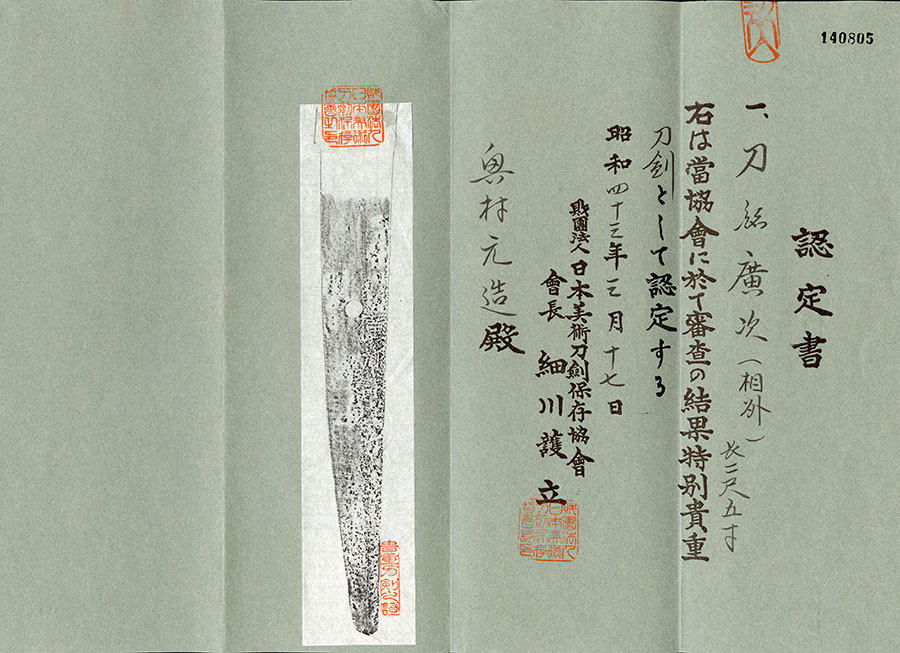
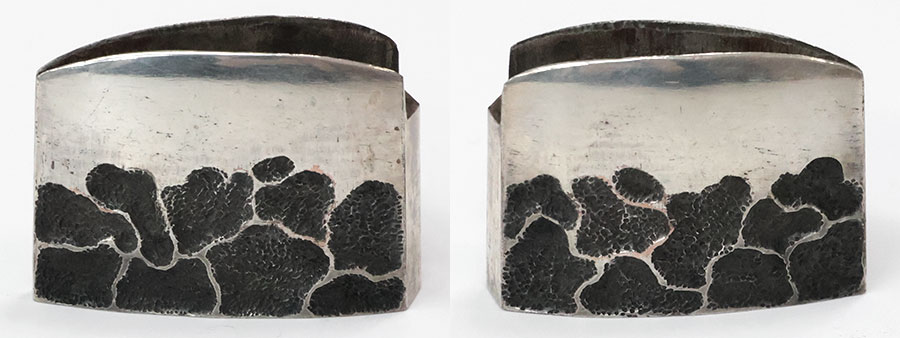
重量刀身のみ793gr 出ました出ました古来有名な相州綱廣の養父と言われ、刀剣界憧れの相州正宗とその弟子の貞宗に続く本廣次は、相州貞宗の子と言われる相州廣光の弟の相州住吉広の子であり貞宗の孫となるのが南北朝時代の初代相州住廣次です。しかし残念ながら廣次の初代,二代の作品が残っておらず本刀は室町時代大永頃(1524年)(502年前)丁度武田信玄や上杉謙信の父武田信虎と上杉慶房が戦っていたその頃の貴重な四代目にあたる相州廣次です。本刀の姿は奇跡的に健全で元に踏ん張りが有り腰反り高く元身幅広く先身幅も広い切っ先の延びた豪快な刀姿を現し。地金は良く詰んだ小板目肌に鍛え地には流れ柾肌も現し、刃紋は匂 い出来に沸の付いたのたれ乱れ刃に多くの互の目刃や多くの沸足を入れ刃中素晴らしく良く働きが有り棟にも深く棟焼きを入れて皆焼風(ひたつら風)となった大変覇気有る刃を焼いています。相州鍛冶の作品は戦国時代東海地方が多くの激闘の戦乱の地となったために相州鍛冶自体の制作された作品が少ないうえに戦いでの消耗もあり作品が少なく刀剣愛好者には相州刀工の作品をお持ちになりたいのですが持つ事出来ず、相州鍛冶の刀を持つことが憧れです。この度古い御数寄者様から自分も年を取りましたので貴重な豪壮な廣次の刀を大切にして頂ける方にお安くお譲り下さいとお預かりした為に一度は持ちたい相州鍛冶の貴重な廣次の名刀を特別に格安にてご提供いたします是非憧れの相州鍛冶の廣次の名刀をお楽しみ下さい。
NihontoWatchOffered by Nipponto






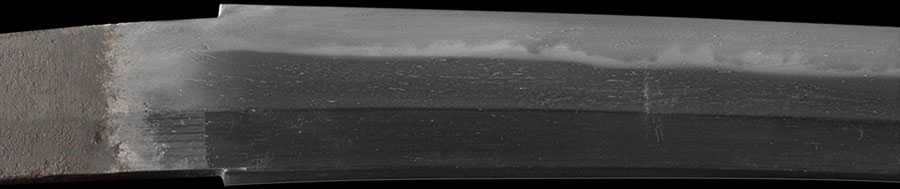





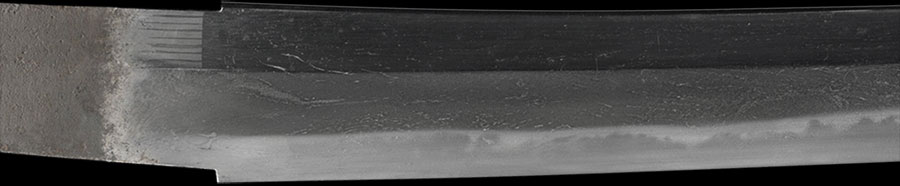

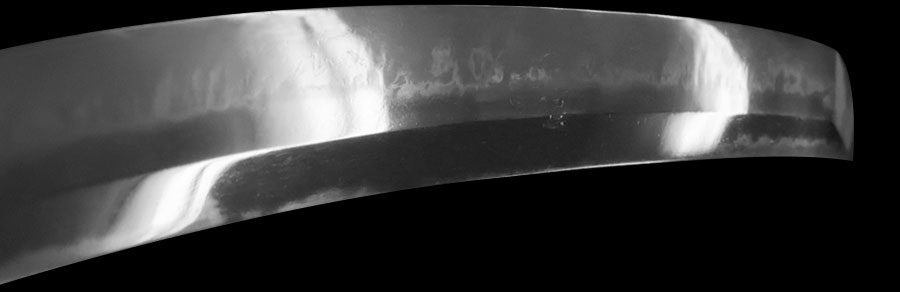
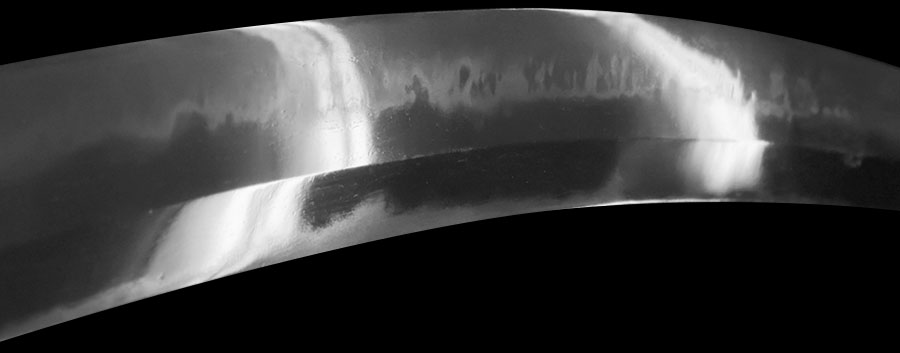
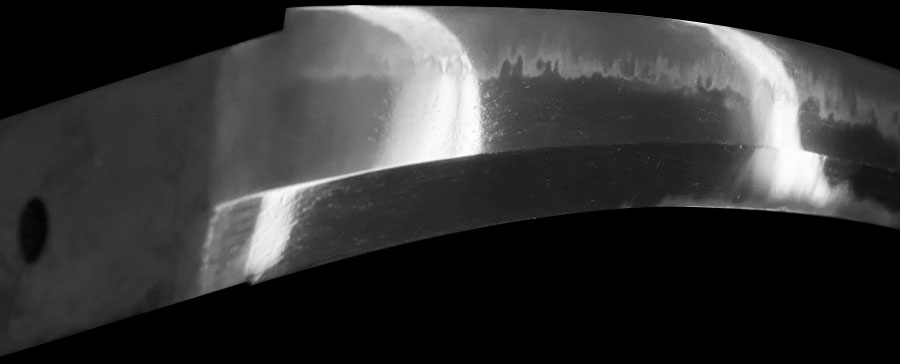
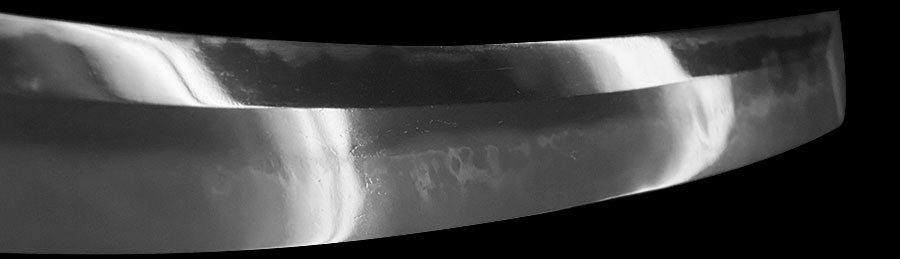
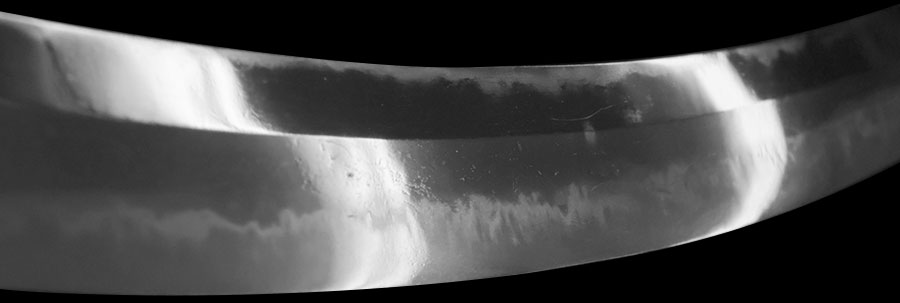
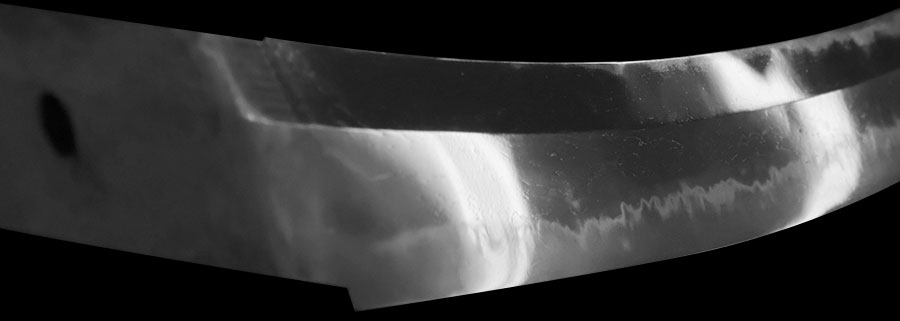
Soshu-den · Sagami · around 1532-1555
Tōken Taikan top 49%
2 pieces on the market now
Where Hirotsugu stands among comparable artisans: across all of nihontō, and within tradition, era, and period. The tiers (Foremost · Leading · Major · Notable) weigh official designations from the NBTHK and Japan's Agency for Cultural Affairs, together with historical honors of lasting repute such as the Sansaku and Meibutsu-chō.
Select a lens to see how it's measured.
Soshu-den · Sagami
Phase: Sue-Sōshū末相州· 1356–1868
18 pieces on the market now
When the great Kamakura masters had passed and the country slid into the wars of the late Muromachi, a residual Soshu-den held on in Sagami under a new patron. The Later Hojo, ruling from Odawara castle, kept smiths at hand, and it was from this orbit that the leading name of the window emerged: Tsunahiro, transmitted as a retained smith of the Odawara Hojo who took the character tsuna from Hojo Ujitsuna. The first generation's earliest dated works fall in the Tenbun era, and the line runs forward in the conventional reckoning through Tensho, Keicho, Kan'ei, and Manji, the third generation drawn west to Tsugaru by Tamenobu to forge daisho before returning home. Around him stood a wider Sagami population working the same idiom: Hirotsugu of Kamakura, whose strongest hands cluster near the Meio and Tenbun years; Hiromasa and Soso, names carried across several indistinct generations; Masahiro, reaching back toward Joji; and the Odawara group of Yasuharu, Yasukuni, and Fusamune, the last praised above all for his carving. These smiths inherited the manner of the Nanbokucho apex at a remove of generations rather than by direct descent from the mainline of Masamune and Sadamune. The signature of the phase is the open declaration of the full temper. The forging stays itame mixed with mokume, the grain inclined to stand (hadadachi-gokoro), with ji-nie and chikei; over it the smiths ran a notare-and-gunome ground that climbs the upper half into hitatsura, tobiyaki and muneyaki firing across ji and mune, sunagashi and kinsuji threading the ha. This is the hitatsura and o-midare learned from Hiromitsu and Akihiro, but pushed toward display: the Hirotsugu katana of the 61st Juyo runs its temper so high it reaches the shinogi, mixing choji, togariba, and yahazu-gata into a demonstrative yakidaka pattern.
The contrast with the classic apex is precise and the appraisers mark it. Where Masamune raised nie to its deepest refinement over a bright, clear steel, the Sue-Soshu ji tends to shirake, a whitish cast standing in for that clarity, and the nioiguchi inclines to shizumi, a sunken or subdued quality rather than depth. The 238th Jubi record states the point plainly for the first-generation Tsunahiro: the ji and ha carry abundant nie, yet the very shape of the hamon departs from that of Hiromitsu and Akihiro. The temper is broader and busier across the surface, but it lacks the quiet command and the leaping interior activity of the original. To kantei the window is to separate this demonstrative late temper from the classic Soshu-den it imitates: a standing itame with shirake, a wide hitatsura worked with yahazu and crescent tobiyaki, a nioiguchi that sinks rather than deepens, and signatures reading Soshu-ju with full given names rather than the o-suriage mumei of the great forebears. The named hands carry the distinctions, Fusamune through his dense, precise horimono of kurikara and bonji, Tsunahiro through his crescent tobiyaki and high monouchi fire, Hirotsugu through a hitatsura vigorous enough to recall Hasebe. Provenance keeps these blades close to power: several are recorded in Honma's inventory of the Imperial collection, one bearing the ownership inscription of Akimoto Yoshihide of Kozuke, another the Hachiman Daibosatsu invocation of a Sengoku warrior, the Tsunahiro commission tied by its dated nakago to the Tsugaru house. Learn more →
| Smith | Era | Designated |
|---|---|---|
| Tsunahiro綱廣 | 1532-1555 | 14 |
| Fusamune總宗 | 1504-1521 | 5 |
| Hiromasa廣正 | 1444-1456 | 4 |
| Hirotsugu廣次 | 1492-1501 | 4 |
| Tsunaie綱家 | 1532-1555 | 3 |
Sōshū in the Muromachi period
In the Sengoku era the school served a second warrior court: the Later Hōjō at Odawara, whose patronage kept the Tsunahiro line forging hitatsura for the uchigatana age until the castle fell to Hideyoshi in 1590.
This work carries older NBTHK “Kichō”-era papers, which the NBTHK no longer issues and largely disavows today. To confirm the attribution, submission to an official Japanese examination body (such as the NBTHK or NTHK) for modern certification could be considered.
For returns due to customer circumstances, the cost is the customer's responsibility. For returns due to our mis-shipment or a defective item, we bear the cost.