The Yamato schools grew up in the shadow of Nara’s great monasteries: Tegai took its name from a gate of Tōdaiji. Their austere masame and quiet suguha are a temple aesthetic, prized ever since for exactly that restraint.
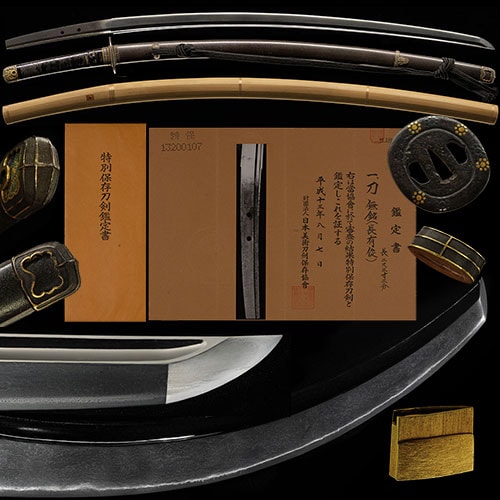
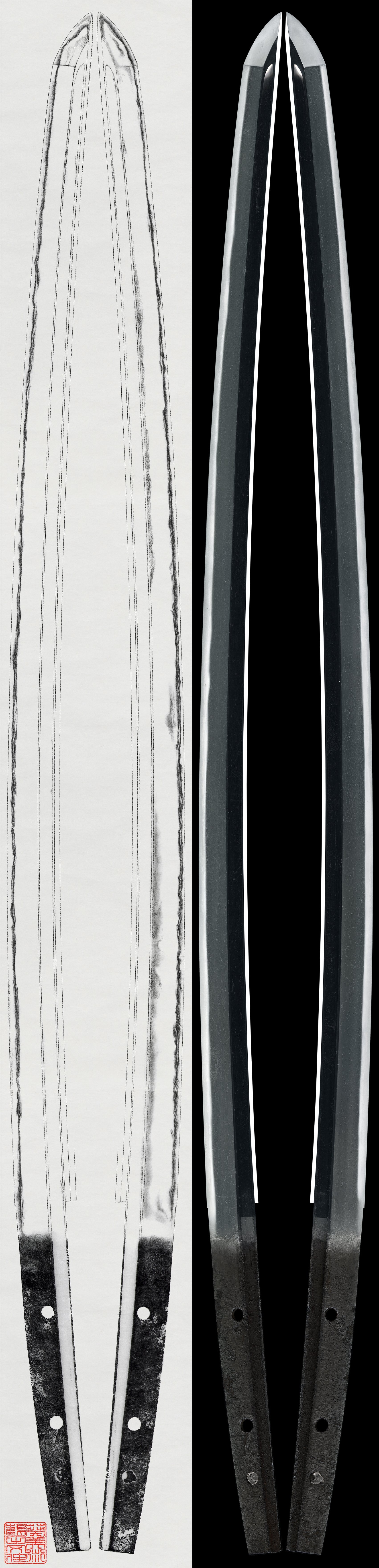
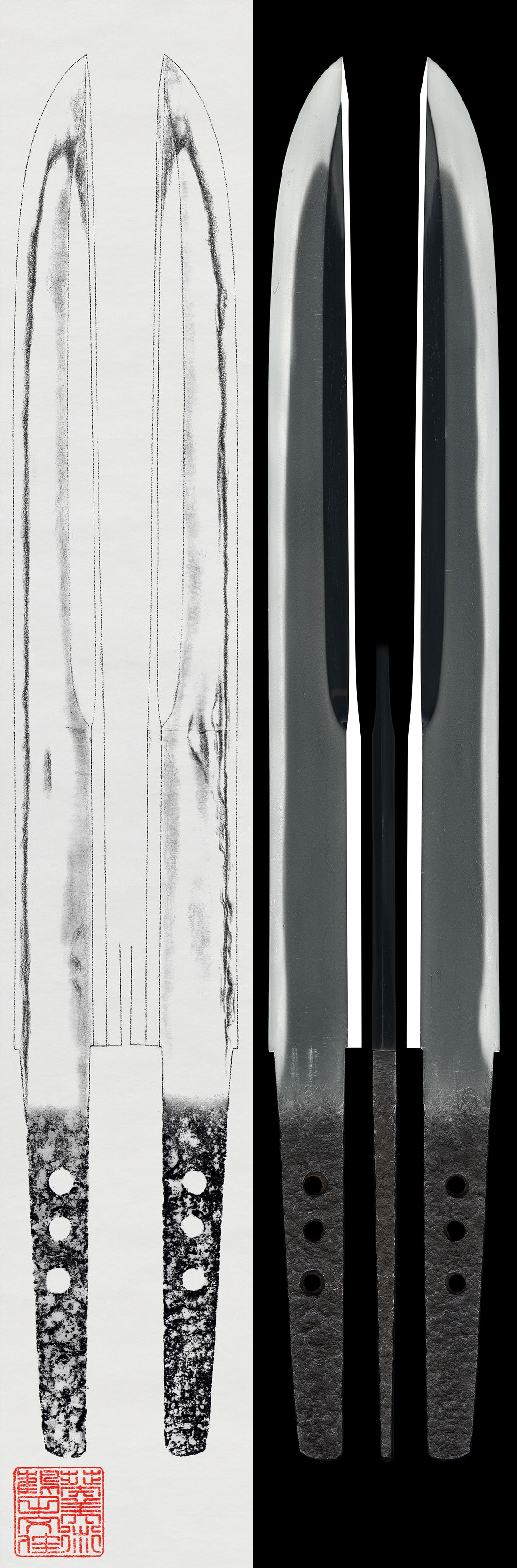
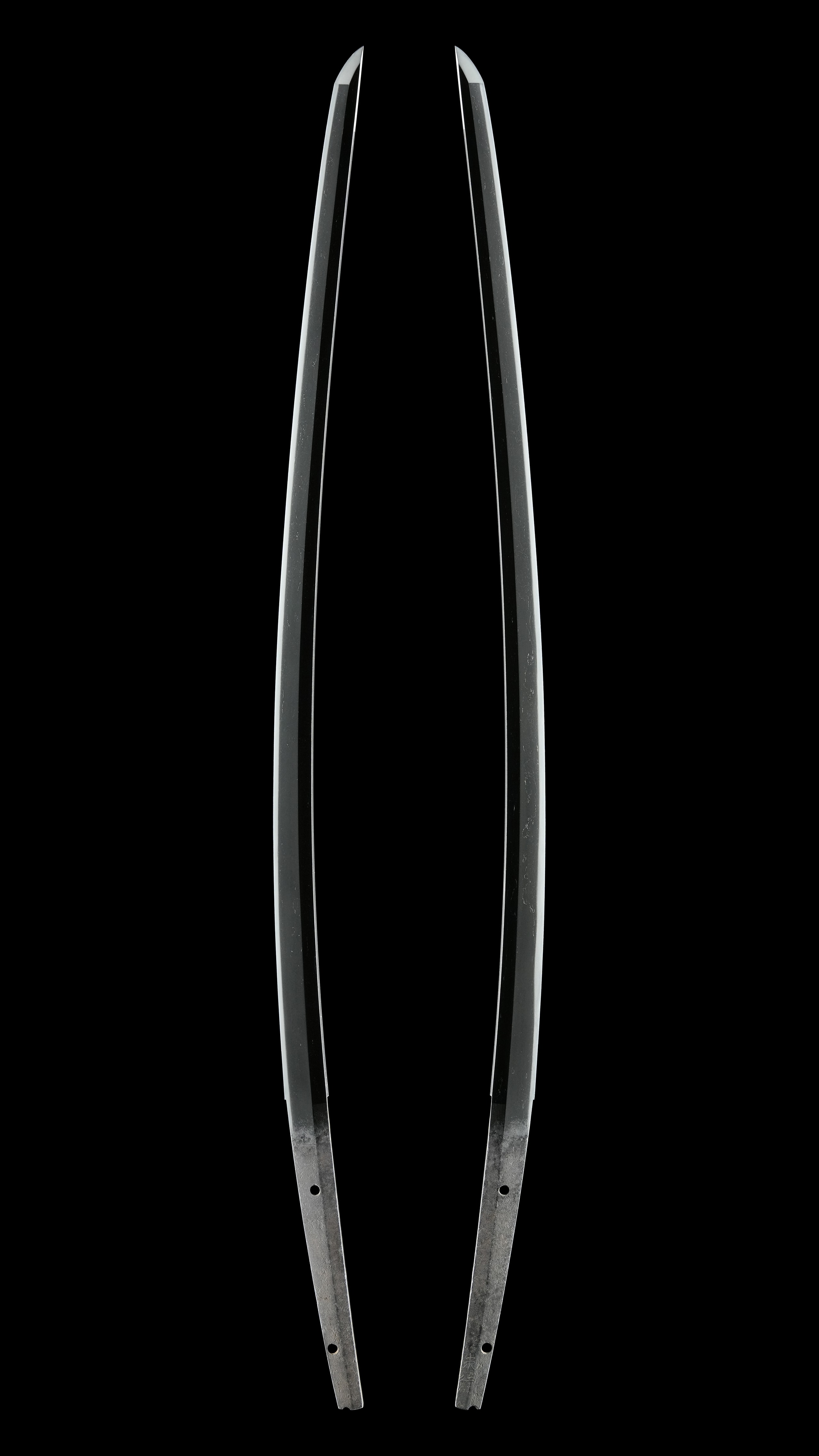
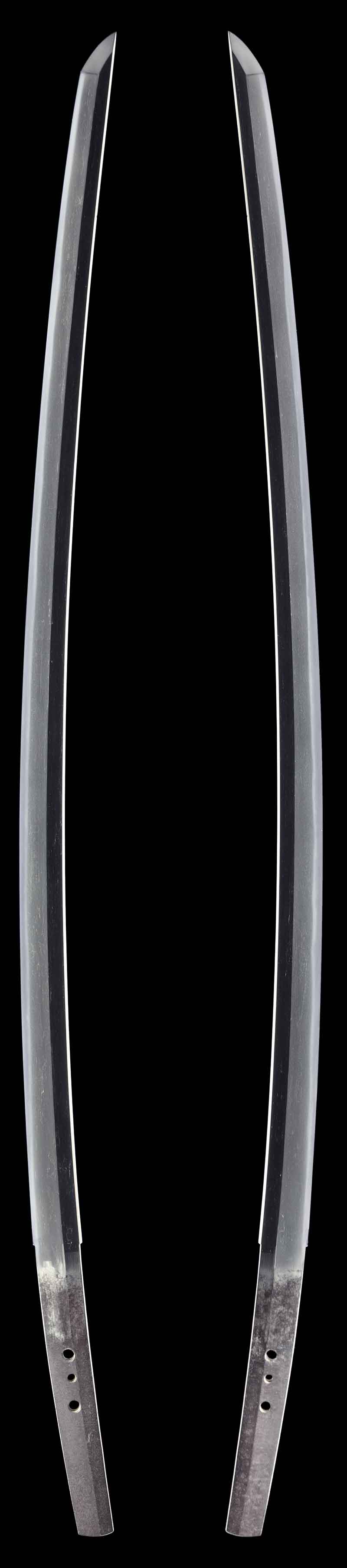
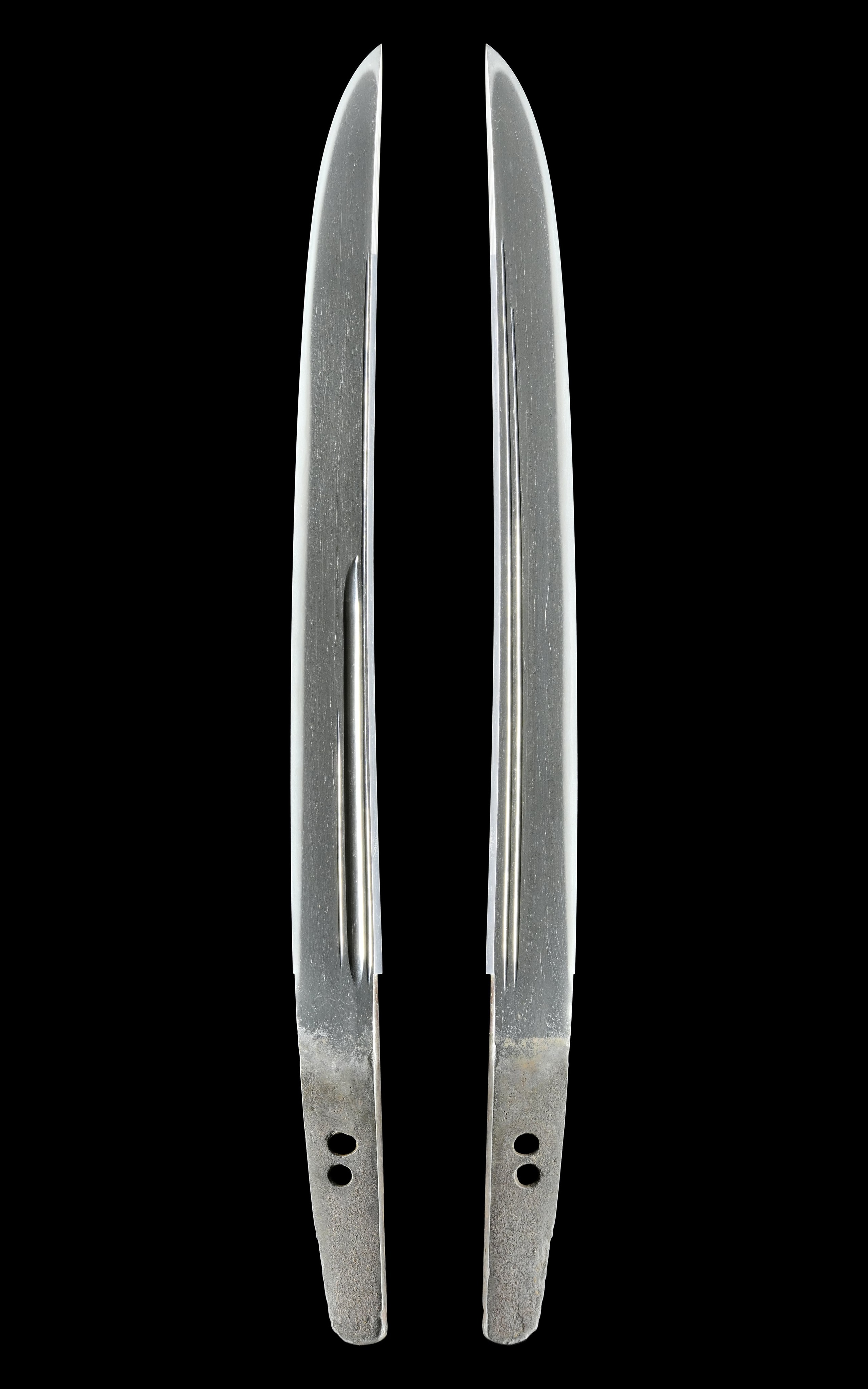
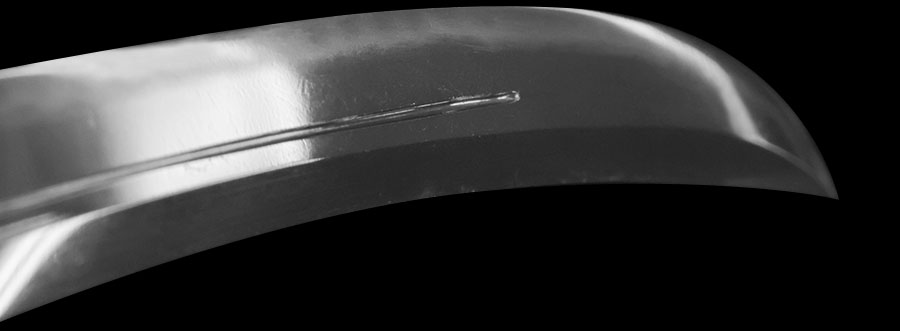
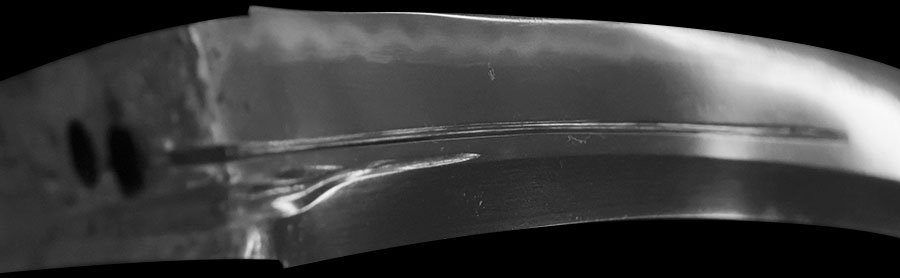
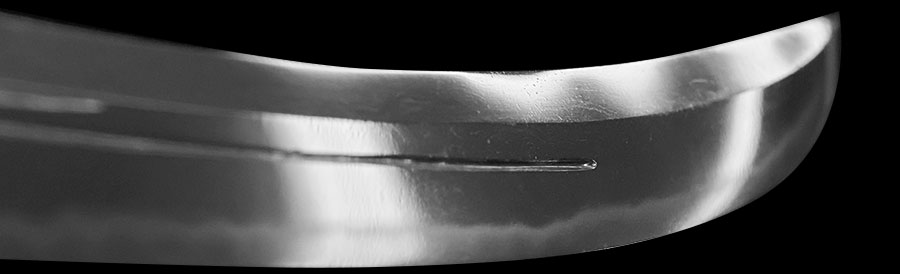
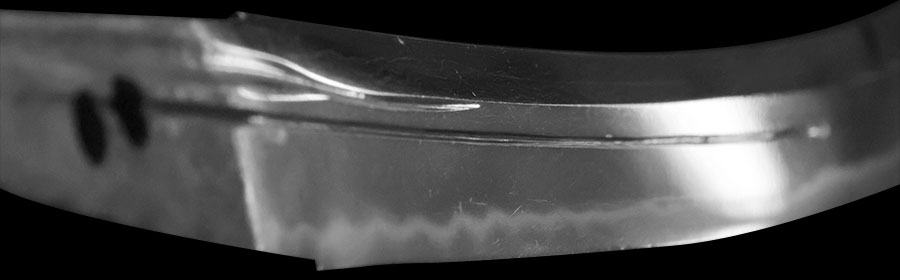
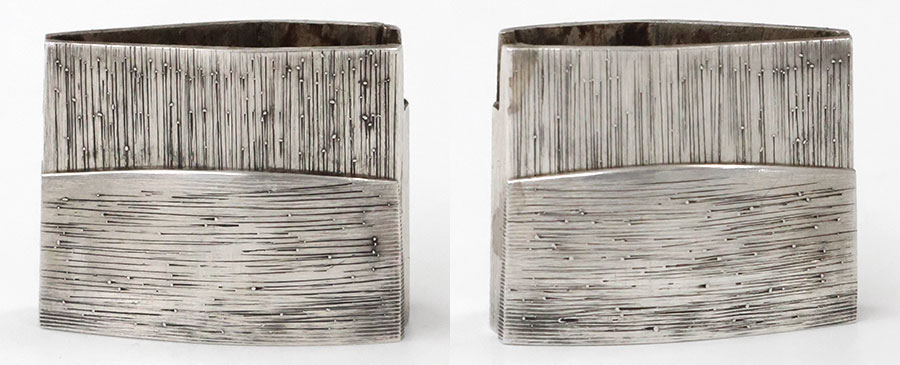
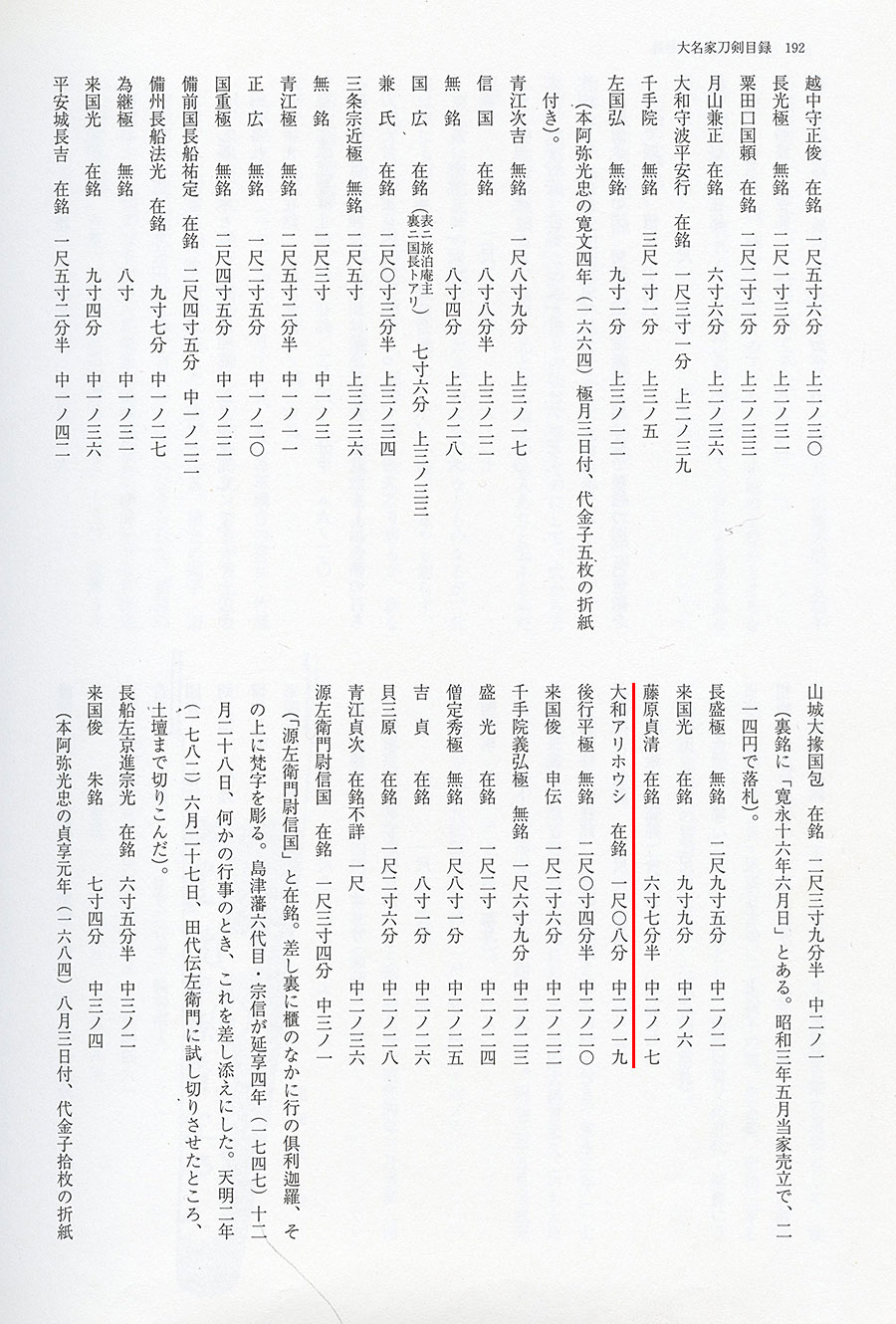
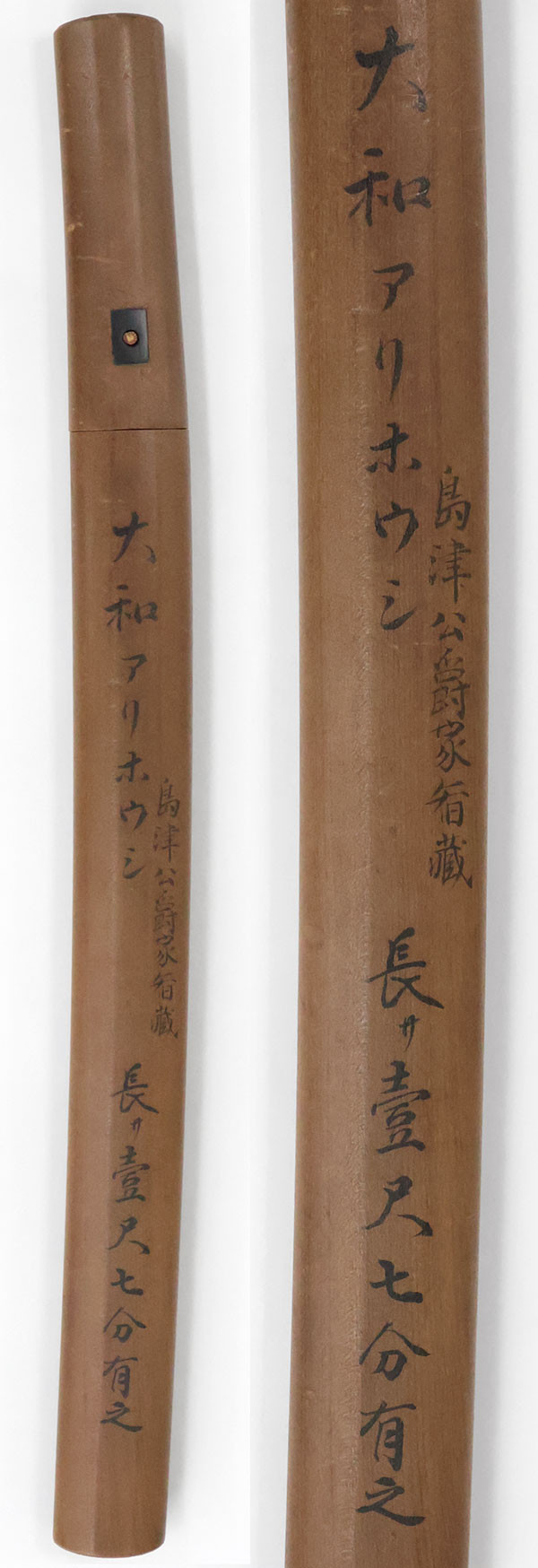
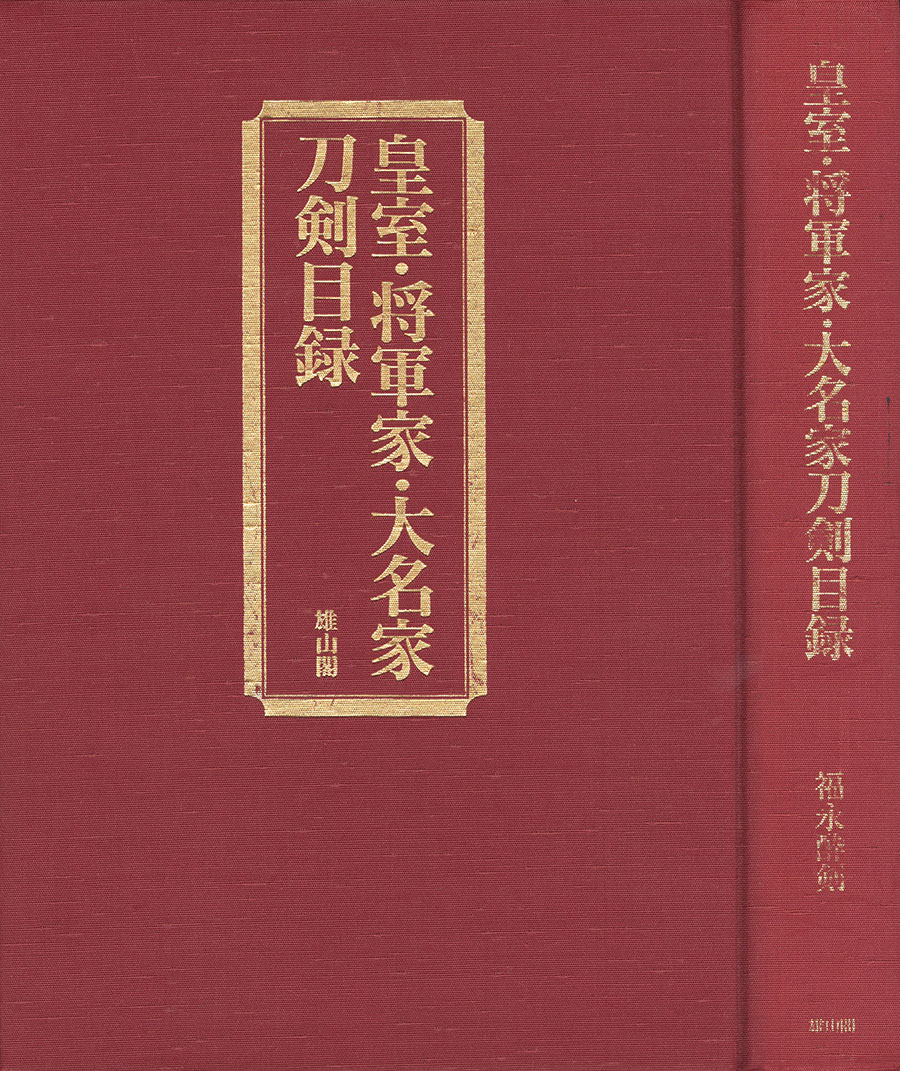
Weight: 175g (toushin only) It has appeared—the Arihoushi wakizashi handed down through the Shimazu family has appeared. Listed in the Shimazu Family Token Mokuroku under entry Ni-no-Juku (2-19) as "Yamato no Kuni Arihoushi," this wakizashi was cherished by the Satsuma Shimazu family alongside works such as a wakizashi by Rai Kunitoshi and a tanto by Rai Kunimitsu. Arihoushi is said to be the son of Tauma Tomokiyo (who was the son of Tauma Kuniyuki, the head smith of the Yamato Tauma school said to be subordinate to Taumadera temple since ancient times) and the younger brother of Tauma Tomoyuki. Although he was a tosho of the late Kamakura period around the Karyaku era (1326, 700 years ago), he is famous for signing his mei in katakana as "Ariyoushi" (アリホウシ); however, he is a legendary smith with virtually no extant works, making this a truly phantom wakizashi. The sugata of this wakizashi shows a sharp nagamaki-naoshi style reduced to wakizashi size, with a difference between the moto-mihaba and saki-mihaba and a shaved shinogi-ji with sori. The jigane is ko-itame hada mixed with masame hada, displaying chikei in the ji. The horimono consists of a naginata-hi and soe-hi at the moto, skillfully carved. The hamon is nioi-deki with ko-nie, starting with gunome-ba at the moto and transitioning to a suguha style toward the saki, with kinsuji appearing within the ha, creating a spirited blade. This Arihoushi wakizashi has been carefully preserved by an old family in Kagoshima. As they have grown older, they have entrusted it to us with the request to pass it on cheaply to someone who will treasure it. Therefore, we are offering this Yamato Arihoushi wakizashi—a piece from a daimyo family lineage of which no other extant works are said to exist—at a special bargain price for those who absolutely require a work with Shimazu family provenance. Please do enjoy this masterpiece.
 NihontoWatch
den · Bunei (1264-1275) · nagasa 32.4cm · sori 0.8cm








Yamato Taima (Tegai-related) · Yamato · around 1264-1275
Tōken Taikan top 14%
Aritoshi is a swordsmith of the Taima school of Yamato, working in the late Kamakura period. His real date is fixed not by the reference compendia, which place the name around the Bun'ei era, but by a surviving tachi dated Einin 6 (1298); the published sources note repeatedly that no Bun'ei-dated work has ever been seen, while the Einin piece makes his period of activity clear. The name is recorded across two generations. The first signs in two characters, Aritoshi, and the second in three, Naga Aritoshi, understood as an abbreviation of Nagahyoe-no-jo Aritoshi and placed around the Kenmu years at the threshold of Nanbokucho, with one account deriving the Naga from the Hasebe house. The published sources keep the division of the two generations open, calling it a matter that still requires study. He belongs to the same Yamato world as Tegai and the other Taima hands, a tradition of flowing steel and a nie suguha.
His is a suguha hand, but a particular one, and the particularity is its tell. Over and over the published commentary settles on the same edge: a suguha or suguha-cho, often with a shallow notare and a little ko-gunome set into it, into which run hotsure along the habuchi, kuichigai-ba, sunagashi and kinsuji, and, above all, a recurring nijuba, the doubled temper line, together with uchi-noke. On the Einin-dated first-generation work this doubling is almost continuous, and the judges single it out as unusual even within Yamato, one Taima katana being described as 「大和物でも珍らしい程に二重刃の著るしい作」[[c:1]], a piece in which the nijuba is conspicuous to a degree rare even among Yamato works. Of his manner as a whole the published sources say plainly that the tightly forged ko-itame, with masame not much in evidence, and the ko-nie suguha carrying its near-constant nijuba, make for a style 「当麻物としてはやや異風」[[c:2]], somewhat idiosyncratic for Taima work. That idiosyncrasy is precisely how he is known.
The jigane is the steady foundation beneath that edge. It is an itame that flows strongly and inclines toward masame, with thick ji-nie, fine chikei entering, and at times a nie-utsuri standing in the ji; where the forging tightens into ko-itame the grain stills and the masame recedes, as on the dated piece, while on the broader suriage blades the hada stands a little and the flow is more open. The construction is the Yamato one, a broad and rather high shinogi-ji, the sori often deep at the hips, and a bo-hi frequently carved through. Above this the boshi runs straight with vigorous hakikake, turning in a small ko-maru or finishing in a yakitsume, at times tending toward nie-kuzure, and the nijuba sometimes carries up into the point as well.
The record divides cleanly in two. On one side stand the few signed works, the documentary core, by which everything else is measured; the published sources prize them, calling the Tokubetsu Juyo signed tachi 「数少ない有俊在銘中の優品」[[c:3]], a fine example among the small number of signed Aritoshi works, and valuing even a gaku-mei fragment as precious reference material because signed Taima blades are so rare. On the other side stands the body of his record, the o-suriage mumei katana attributed to him from era, school and these Yamato tells. The two-generation question runs through the signed and unsigned alike: the manner of the signature differs from blade to blade, and the workmanship divides between a quieter, more archaic register and a busier one, so the judges leave the count of hands open for further study rather than forcing a single line.
Within Yamato he is set apart by exactly what the judges name when they confirm an attribution. His prominent nijuba and uchi-noke, riding a flowing itame-masame jigane, distinguish his suguha from the plainer Taima and Tegai hands, so that on an unsigned blade rich in those activities the commentary concludes 「有俊と鑑することが最も妥当」[[c:4]], that judging it Aritoshi is the most appropriate conclusion among Yamato makers. The same restraint cuts the other way: where the jiba is good but the edge quiet and without his doubled line, the attribution is offered only as plausible. The temper is calm and the impression subdued, and the published sources read that plainness as a virtue rather than a want, calling one Tokubetsu Juyo tachi a work that, 「いかにも大和物らしい地味な中に味わいの深い作風」[[c:5]], presents within an unmistakably Yamato plainness a deeply flavored and engaging style.
For the collector Aritoshi is a rare and quiet Yamato name rather than a celebrated one. He has no National Treasures and no Important Cultural Properties; the Toko Taikan places his value in the middle ranks. His designated record runs instead through the higher modern tiers, two blades at Tokubetsu Juyo and the rest, some forty in all, at Juyo, and within that number signed pieces can be counted on one hand. His blades are held in institutions with their own established provenance, among them the Chido Museum and the Tokugawa Art Museum, with the remainder in private hands of largely unrecorded whereabouts. Because so few were ever signed and so little of the record can trade, a signed Aritoshi comes to light only seldom; a suriage mumei katana papered to him is the more usual encounter, and a privately held example of either is a notable thing for a collector to meet, a document of how the Taima school worked at the close of the Kamakura age.
Where Aritoshi stands among comparable artisans: across all of nihontō, and within tradition, era, and period. The tiers (Foremost · Leading · Major · Notable) weigh official designations from the NBTHK and Japan's Agency for Cultural Affairs, together with historical honors of lasting repute such as the Sansaku and Meibutsu-chō.
Select a lens to see how it's measured.
Yamato-den · Yamato
10 pieces on the market now
At Taima-dera in Yamato Province, the temple from which the school takes its name, a body of swordsmiths gathered in the late Kamakura period under Kuniyuki, who is transmitted as the founder of the line. The Taima group is counted among the five schools of the Yamato-den, the others being Tegai, Senjuin, Shikkake, and Hosho, and like its siblings it grew out of a monastic milieu in which the smiths worked in dependence upon the temple. That dependent standing is itself a fact of the record, for the published sources tie the scarcity of signed Taima work directly to it; the smiths, attached to the temple, naturally left few signatures, so that the line comes down largely as unsigned pieces fixed by appraisal. Only a small number of signed blades survive, chiefly by Kuniyuki and by Aritoshi, whose dated tachi of Einin 6 (1298) fixes the antiquity of the line and places its production at the close of the Kamakura age. The school continued through the Nanbokucho era and on into the Muromachi period, a northern branch removing to Asako in Echizen under the collective title Asako Taima. The Taima smiths share the full Yamato-den vocabulary, worked in a register that leans further toward nie activity than that of its Yamato siblings. The jigane is a flowing itame that gathers toward the edge into masame, the steel standing somewhat open, with thick ji-nie laid over it and chikei entering the grain frequently; on the finest blades a nie-utsuri rises in the ji, a reflection that on these smiths is a product of nie rather than of the Bizen midare-utsuri. Over this foundation the temper is built on a quiet line, a suguha or suguha-cho waved shallowly into notare and mixed with ko-gunome, small ko-choji, and at times ko-midare, the disorder always slight and worked over the straight base rather than displacing it.
The habuchi frays into hotsure, breaks into kuichigai-ba, doubles into nijuba, and lifts into uchinoke, while within the tempered area the ha-nie lies thick and bright, ashi and yo entering, and kinsuji and sunagashi flashing through repeatedly. Above it the boshi runs straight and is then swept with hakikake, most often finishing in yakizume without a turnback or turning in a small ko-maru. The recurring traits cohere into a recognizable hand: the masame-rich itame, the abundant glittering nie, and the brushed point are the marks by which the school is read, and the school leans toward nie where Tegai and the others keep a tighter, calmer key. Individual smiths inflect the manner: Aritoshi is set apart by a near-constant nijuba unusual even within Yamato, while the Echizen Nobunaga carries an angular gunome-midare and a darkened steel into Hokuriku. Kantei of a Taima blade proceeds from this cluster of Yamato evidence, the masame-leaning itame, the hotsure and nijuba along the habuchi, and the swept hakikake boshi, laid over a suguha base; against the other Yamato schools the appraisers look for the heavier nie activity and the conspicuous ashi and yo within a bright edge that separate Taima from the plainer suguha of Tegai and Senjuin, the togariba tendency of Shikkake, and the dense masame of Hosho. Kuniyuki stands as the progenitor and defining voice of the line, his signed tachi prized as documentary anchors against which the rest is measured; below him Aritoshi, Toshinaga, Tomoyuki, and Tomokiyo are read each by his own grounded traits, their few signed survivals valued first as reference material because so little of the school was ever signed. The greater part of the record is o-suriage mumei, wide-bodied Nanbokucho katana cut greatly down, their attribution argued from the markedly elongated chu-kissaki and from the Taima activity at its strongest, the texts candid that on such a shortened blade no individuality singling out one smith can be discerned even while the piece is held a fine work of the school. Provenance is mostly thin, running through private hands rather than the daimyo houses, with a few institutional holdings and the occasional notable mounting, so that an unsigned Taima blade is the usual encounter and a signed one a landmark of Yamato-den work. Learn more →
| Smith | Era | Designated |
|---|---|---|
| Aritoshi有俊 | 1264-1275 | 41 |
| Nobunaga信長 | 1394-1428 | 6 |
| Tomokiyo友清 | 1319-1321 | 5 |
| Tomoyuki友行 | 1278-1288 | 5 |
| Toshinaga俊長 | 1352-1356 | 5 |
The Yamato schools grew up in the shadow of Nara’s great monasteries: Tegai took its name from a gate of Tōdaiji. Their austere masame and quiet suguha are a temple aesthetic, prized ever since for exactly that restraint.
We could not find an authenticity certificate on the seller’s listing. Japanese swords and fittings are normally papered by the NBTHK (or the NTHK). Without one, the attribution is the seller’s own assessment and has not been independently verified — treat it with caution and ask the dealer about certification before buying.
For returns due to customer circumstances, the cost is the customer's responsibility. For returns due to our mis-shipment or a defective item, we bear the cost.
Weight: 175g (toushin only) It has appeared—the Arihoushi wakizashi handed down through the Shimazu family has appeared. Listed in the Shimazu Family Token Mokuroku under entry Ni-no-Juku (2-19) as "Yamato no Kuni Arihoushi," this wakizashi was cherished by the Satsuma Shimazu family alongside works such as a wakizashi by Rai Kunitoshi and a tanto by Rai Kunimitsu. Arihoushi is said to be the son of Tauma Tomokiyo (who was the son of Tauma Kuniyuki, the head smith of the Yamato Tauma school said to be subordinate to Taumadera temple since ancient times) and the younger brother of Tauma Tomoyuki. Although he was a tosho of the late Kamakura period around the Karyaku era (1326, 700 years ago), he is famous for signing his mei in katakana as "Ariyoushi" (アリホウシ); however, he is a legendary smith with virtually no extant works, making this a truly phantom wakizashi. The sugata of this wakizashi shows a sharp nagamaki-naoshi style reduced to wakizashi size, with a difference between the moto-mihaba and saki-mihaba and a shaved shinogi-ji with sori. The jigane is ko-itame hada mixed with masame hada, displaying chikei in the ji. The horimono consists of a naginata-hi and soe-hi at the moto, skillfully carved. The hamon is nioi-deki with ko-nie, starting with gunome-ba at the moto and transitioning to a suguha style toward the saki, with kinsuji appearing within the ha, creating a spirited blade. This Arihoushi wakizashi has been carefully preserved by an old family in Kagoshima. As they have grown older, they have entrusted it to us with the request to pass it on cheaply to someone who will treasure it. Therefore, we are offering this Yamato Arihoushi wakizashi—a piece from a daimyo family lineage of which no other extant works are said to exist—at a special bargain price for those who absolutely require a work with Shimazu family provenance. Please do enjoy this masterpiece.
NihontoWatchden · Bunei (1264-1275) · nagasa 32.4cm · sori 0.8cm
Yamato Taima (Tegai-related) · Yamato · around 1264-1275
Tōken Taikan top 14%
Aritoshi is a swordsmith of the Taima school of Yamato, working in the late Kamakura period. His real date is fixed not by the reference compendia, which place the name around the Bun'ei era, but by a surviving tachi dated Einin 6 (1298); the published sources note repeatedly that no Bun'ei-dated work has ever been seen, while the Einin piece makes his period of activity clear. The name is recorded across two generations. The first signs in two characters, Aritoshi, and the second in three, Naga Aritoshi, understood as an abbreviation of Nagahyoe-no-jo Aritoshi and placed around the Kenmu years at the threshold of Nanbokucho, with one account deriving the Naga from the Hasebe house. The published sources keep the division of the two generations open, calling it a matter that still requires study. He belongs to the same Yamato world as Tegai and the other Taima hands, a tradition of flowing steel and a nie suguha.
His is a suguha hand, but a particular one, and the particularity is its tell. Over and over the published commentary settles on the same edge: a suguha or suguha-cho, often with a shallow notare and a little ko-gunome set into it, into which run hotsure along the habuchi, kuichigai-ba, sunagashi and kinsuji, and, above all, a recurring nijuba, the doubled temper line, together with uchi-noke. On the Einin-dated first-generation work this doubling is almost continuous, and the judges single it out as unusual even within Yamato, one Taima katana being described as 「大和物でも珍らしい程に二重刃の著るしい作」[[c:1]], a piece in which the nijuba is conspicuous to a degree rare even among Yamato works. Of his manner as a whole the published sources say plainly that the tightly forged ko-itame, with masame not much in evidence, and the ko-nie suguha carrying its near-constant nijuba, make for a style 「当麻物としてはやや異風」[[c:2]], somewhat idiosyncratic for Taima work. That idiosyncrasy is precisely how he is known.
The jigane is the steady foundation beneath that edge. It is an itame that flows strongly and inclines toward masame, with thick ji-nie, fine chikei entering, and at times a nie-utsuri standing in the ji; where the forging tightens into ko-itame the grain stills and the masame recedes, as on the dated piece, while on the broader suriage blades the hada stands a little and the flow is more open. The construction is the Yamato one, a broad and rather high shinogi-ji, the sori often deep at the hips, and a bo-hi frequently carved through. Above this the boshi runs straight with vigorous hakikake, turning in a small ko-maru or finishing in a yakitsume, at times tending toward nie-kuzure, and the nijuba sometimes carries up into the point as well.
The record divides cleanly in two. On one side stand the few signed works, the documentary core, by which everything else is measured; the published sources prize them, calling the Tokubetsu Juyo signed tachi 「数少ない有俊在銘中の優品」[[c:3]], a fine example among the small number of signed Aritoshi works, and valuing even a gaku-mei fragment as precious reference material because signed Taima blades are so rare. On the other side stands the body of his record, the o-suriage mumei katana attributed to him from era, school and these Yamato tells. The two-generation question runs through the signed and unsigned alike: the manner of the signature differs from blade to blade, and the workmanship divides between a quieter, more archaic register and a busier one, so the judges leave the count of hands open for further study rather than forcing a single line.
Within Yamato he is set apart by exactly what the judges name when they confirm an attribution. His prominent nijuba and uchi-noke, riding a flowing itame-masame jigane, distinguish his suguha from the plainer Taima and Tegai hands, so that on an unsigned blade rich in those activities the commentary concludes 「有俊と鑑することが最も妥当」[[c:4]], that judging it Aritoshi is the most appropriate conclusion among Yamato makers. The same restraint cuts the other way: where the jiba is good but the edge quiet and without his doubled line, the attribution is offered only as plausible. The temper is calm and the impression subdued, and the published sources read that plainness as a virtue rather than a want, calling one Tokubetsu Juyo tachi a work that, 「いかにも大和物らしい地味な中に味わいの深い作風」[[c:5]], presents within an unmistakably Yamato plainness a deeply flavored and engaging style.
For the collector Aritoshi is a rare and quiet Yamato name rather than a celebrated one. He has no National Treasures and no Important Cultural Properties; the Toko Taikan places his value in the middle ranks. His designated record runs instead through the higher modern tiers, two blades at Tokubetsu Juyo and the rest, some forty in all, at Juyo, and within that number signed pieces can be counted on one hand. His blades are held in institutions with their own established provenance, among them the Chido Museum and the Tokugawa Art Museum, with the remainder in private hands of largely unrecorded whereabouts. Because so few were ever signed and so little of the record can trade, a signed Aritoshi comes to light only seldom; a suriage mumei katana papered to him is the more usual encounter, and a privately held example of either is a notable thing for a collector to meet, a document of how the Taima school worked at the close of the Kamakura age.
Where Aritoshi stands among comparable artisans: across all of nihontō, and within tradition, era, and period. The tiers (Foremost · Leading · Major · Notable) weigh official designations from the NBTHK and Japan's Agency for Cultural Affairs, together with historical honors of lasting repute such as the Sansaku and Meibutsu-chō.
Select a lens to see how it's measured.
Yamato-den · Yamato
10 pieces on the market now
At Taima-dera in Yamato Province, the temple from which the school takes its name, a body of swordsmiths gathered in the late Kamakura period under Kuniyuki, who is transmitted as the founder of the line. The Taima group is counted among the five schools of the Yamato-den, the others being Tegai, Senjuin, Shikkake, and Hosho, and like its siblings it grew out of a monastic milieu in which the smiths worked in dependence upon the temple. That dependent standing is itself a fact of the record, for the published sources tie the scarcity of signed Taima work directly to it; the smiths, attached to the temple, naturally left few signatures, so that the line comes down largely as unsigned pieces fixed by appraisal. Only a small number of signed blades survive, chiefly by Kuniyuki and by Aritoshi, whose dated tachi of Einin 6 (1298) fixes the antiquity of the line and places its production at the close of the Kamakura age. The school continued through the Nanbokucho era and on into the Muromachi period, a northern branch removing to Asako in Echizen under the collective title Asako Taima. The Taima smiths share the full Yamato-den vocabulary, worked in a register that leans further toward nie activity than that of its Yamato siblings. The jigane is a flowing itame that gathers toward the edge into masame, the steel standing somewhat open, with thick ji-nie laid over it and chikei entering the grain frequently; on the finest blades a nie-utsuri rises in the ji, a reflection that on these smiths is a product of nie rather than of the Bizen midare-utsuri. Over this foundation the temper is built on a quiet line, a suguha or suguha-cho waved shallowly into notare and mixed with ko-gunome, small ko-choji, and at times ko-midare, the disorder always slight and worked over the straight base rather than displacing it.
The habuchi frays into hotsure, breaks into kuichigai-ba, doubles into nijuba, and lifts into uchinoke, while within the tempered area the ha-nie lies thick and bright, ashi and yo entering, and kinsuji and sunagashi flashing through repeatedly. Above it the boshi runs straight and is then swept with hakikake, most often finishing in yakizume without a turnback or turning in a small ko-maru. The recurring traits cohere into a recognizable hand: the masame-rich itame, the abundant glittering nie, and the brushed point are the marks by which the school is read, and the school leans toward nie where Tegai and the others keep a tighter, calmer key. Individual smiths inflect the manner: Aritoshi is set apart by a near-constant nijuba unusual even within Yamato, while the Echizen Nobunaga carries an angular gunome-midare and a darkened steel into Hokuriku. Kantei of a Taima blade proceeds from this cluster of Yamato evidence, the masame-leaning itame, the hotsure and nijuba along the habuchi, and the swept hakikake boshi, laid over a suguha base; against the other Yamato schools the appraisers look for the heavier nie activity and the conspicuous ashi and yo within a bright edge that separate Taima from the plainer suguha of Tegai and Senjuin, the togariba tendency of Shikkake, and the dense masame of Hosho. Kuniyuki stands as the progenitor and defining voice of the line, his signed tachi prized as documentary anchors against which the rest is measured; below him Aritoshi, Toshinaga, Tomoyuki, and Tomokiyo are read each by his own grounded traits, their few signed survivals valued first as reference material because so little of the school was ever signed. The greater part of the record is o-suriage mumei, wide-bodied Nanbokucho katana cut greatly down, their attribution argued from the markedly elongated chu-kissaki and from the Taima activity at its strongest, the texts candid that on such a shortened blade no individuality singling out one smith can be discerned even while the piece is held a fine work of the school. Provenance is mostly thin, running through private hands rather than the daimyo houses, with a few institutional holdings and the occasional notable mounting, so that an unsigned Taima blade is the usual encounter and a signed one a landmark of Yamato-den work. Learn more →
| Smith | Era | Designated |
|---|---|---|
| Aritoshi有俊 | 1264-1275 | 41 |
| Nobunaga信長 | 1394-1428 | 6 |
| Tomokiyo友清 | 1319-1321 | 5 |
| Tomoyuki友行 | 1278-1288 | 5 |
| Toshinaga俊長 | 1352-1356 | 5 |
The Yamato schools grew up in the shadow of Nara’s great monasteries: Tegai took its name from a gate of Tōdaiji. Their austere masame and quiet suguha are a temple aesthetic, prized ever since for exactly that restraint.
We could not find an authenticity certificate on the seller’s listing. Japanese swords and fittings are normally papered by the NBTHK (or the NTHK). Without one, the attribution is the seller’s own assessment and has not been independently verified — treat it with caution and ask the dealer about certification before buying.
For returns due to customer circumstances, the cost is the customer's responsibility. For returns due to our mis-shipment or a defective item, we bear the cost.