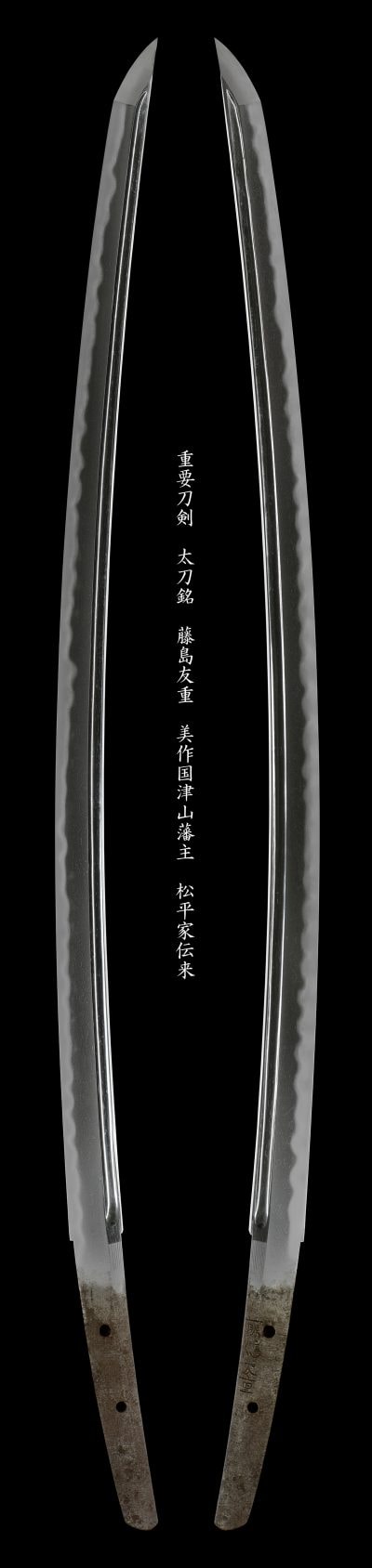
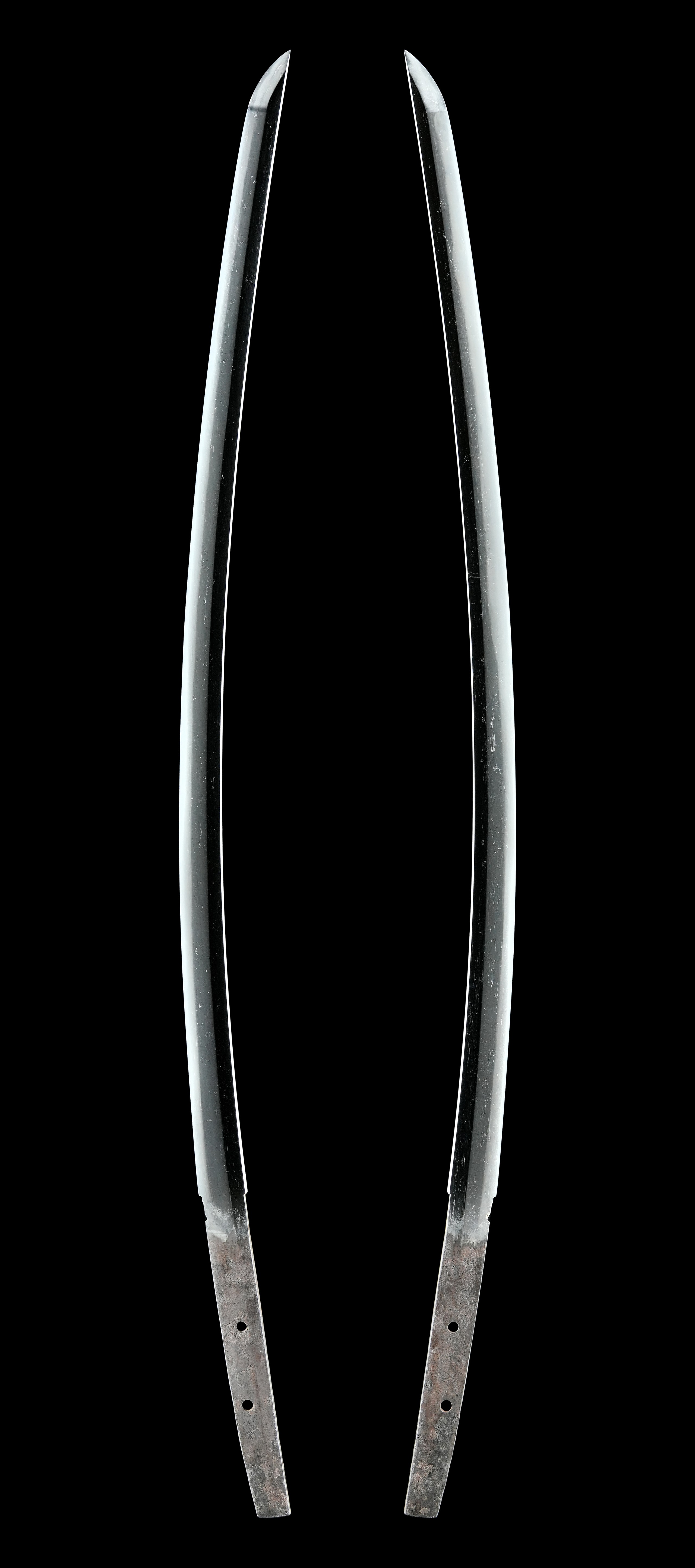
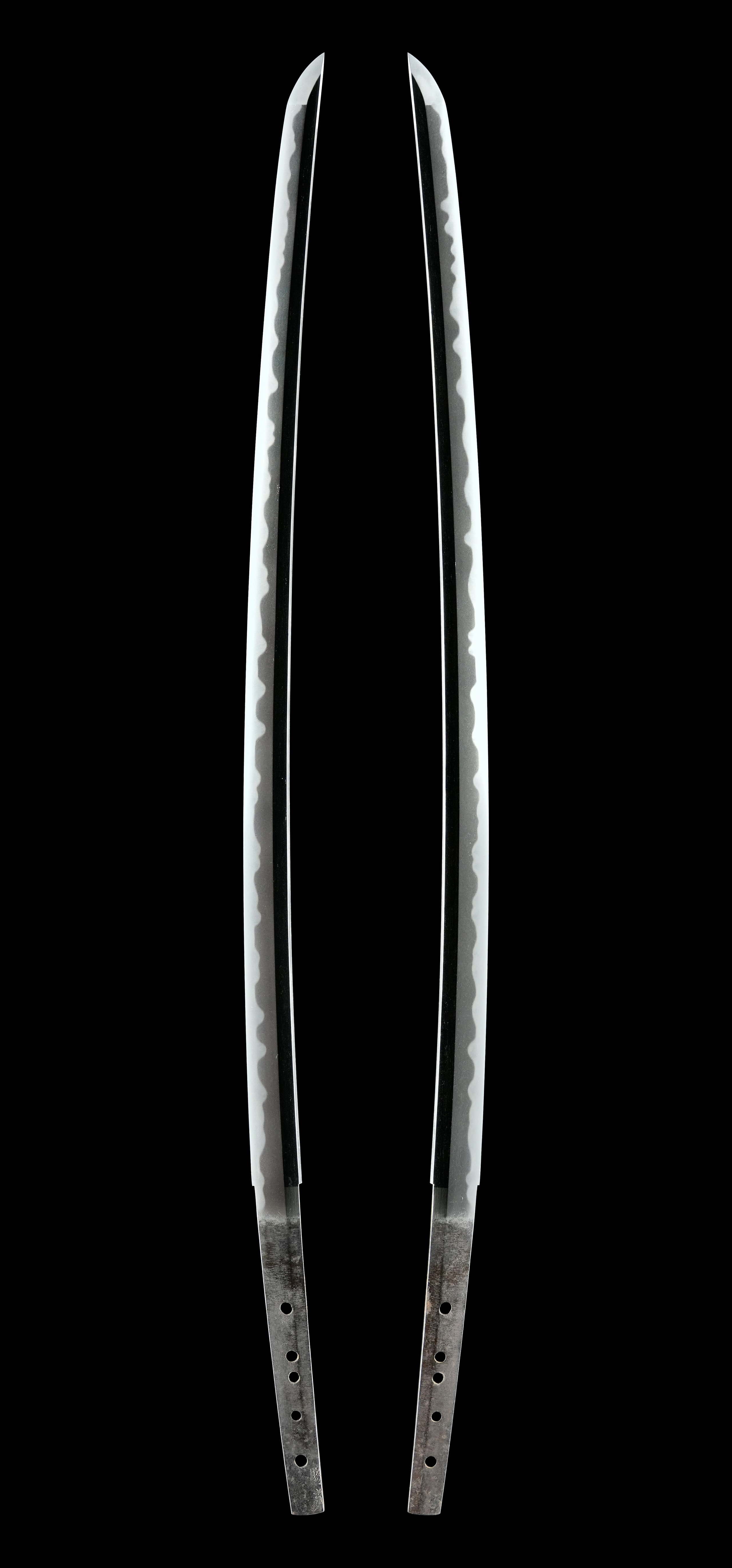
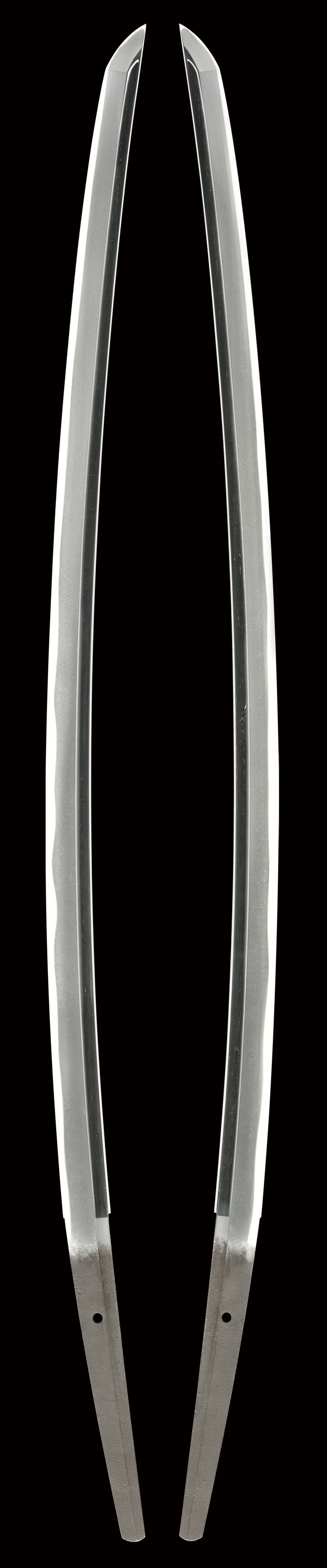
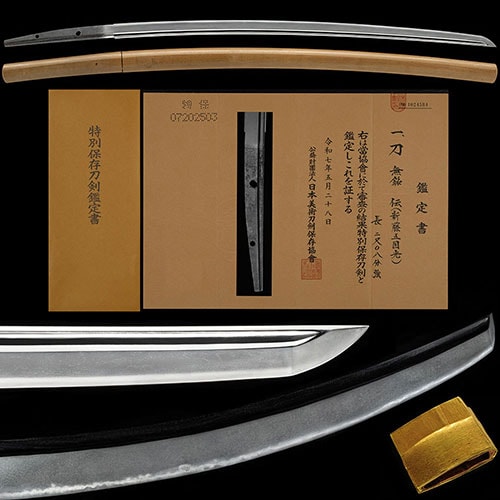
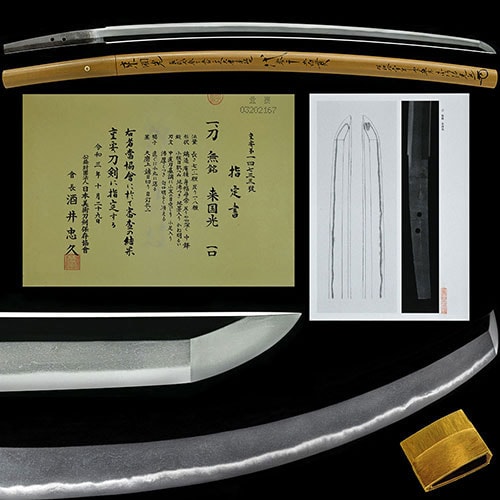
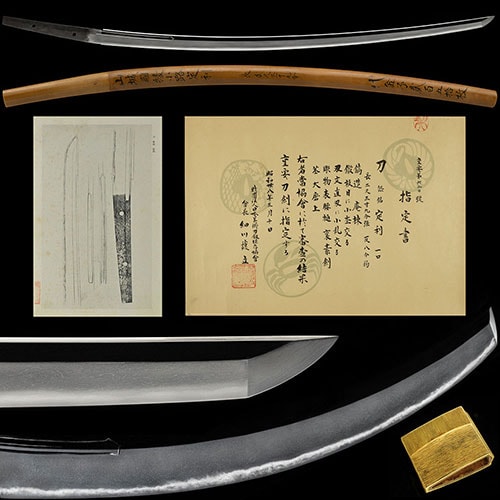
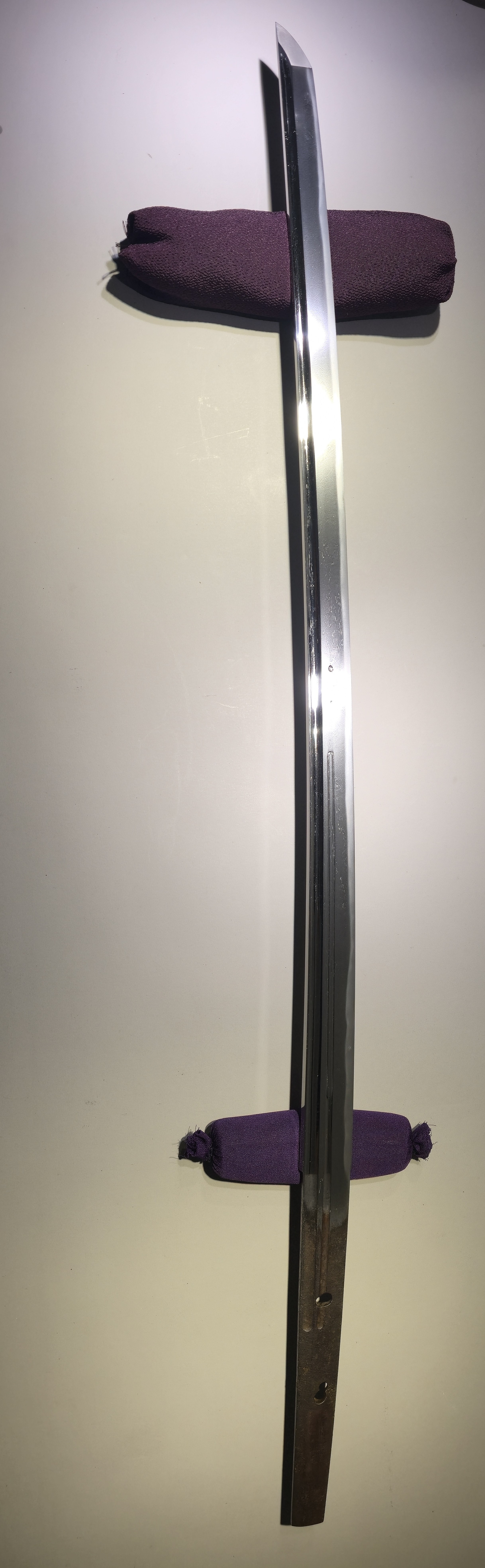
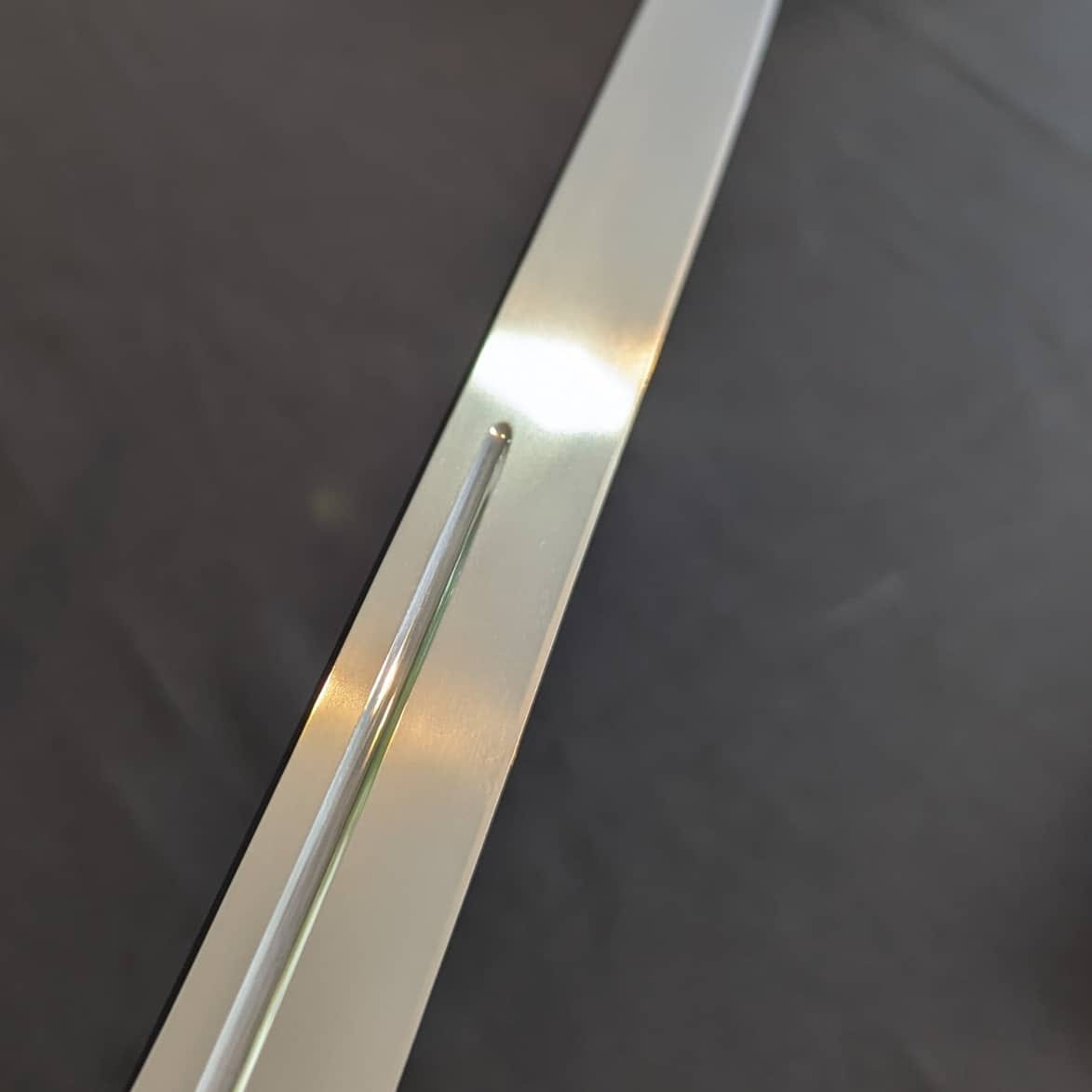
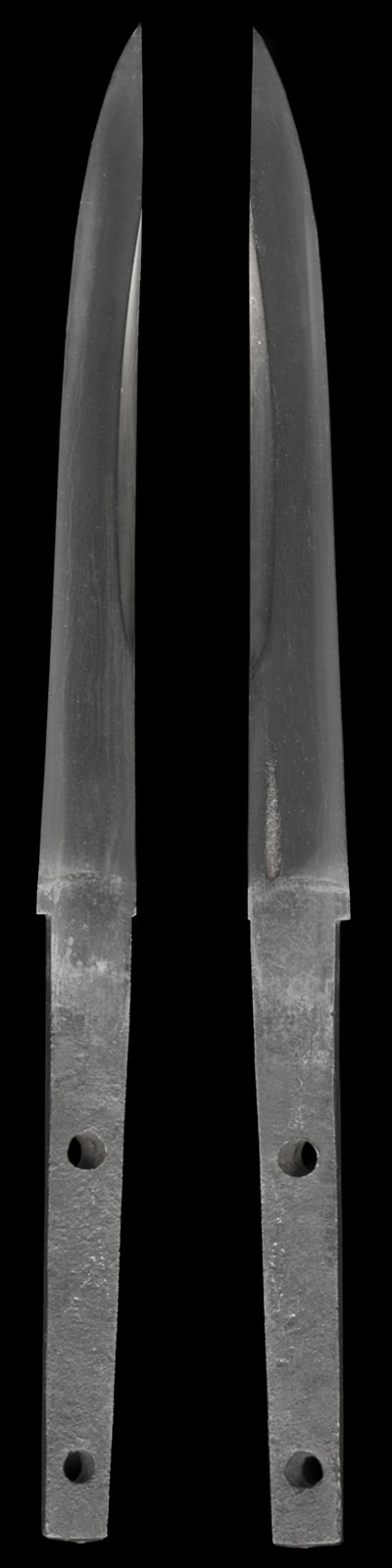
This is a wakizashi signed Yukimitsu (Kaga province). Dr. Honma Kunzan appraised it as being from the late Nanbokucho period (Shitoku era) and inscribed it on the saya, making it the oldest extant example among blades with the same signature. It features a wide body, shallow sori, and slightly thick kasane, typical of the late Nanbokucho period. The jigane and hamon show an antique appearance, similar to Tomoshige of Atsuta Shrine or Shinkei from the Sadaharu era, showcasing the excellent quality of the original Kaga Yukimitsu.
 NihontoWatch
Yamashiro-den · Kaga · around 1340-1346
Tōken Taikan top 31%
2 pieces on the market now
Yamashiro-den · Kaga
20 pieces on the market now
Among the provincial lineages of the Hokurikudo, the Fujishima school took its name and its base from the village of Fujishima in Kaga province, where Tomoshige stands as founder and the name he set down passed through several generations from the close of the Nanbokucho period across the Muromachi and on into the early-modern Shinto era. The members place the chronological anchor with care: the earliest firmly dated work is a tanto of Oei 2 (1395), and the NBTHK finds nothing among the surviving blades that goes back earlier than Nanbokucho. Learn more →
| Smith | Era | Designated |
|---|---|---|
| Tomoshige友重 | 1394-1428 | 15 |
| Tomoshige友重 | 1346-1370 | 5 |
| Tomoshige友重 | 1324-1326 | 5 |
| Fujishima藤島 | 1394-1428 | 4 |
| Yukimitsu行光 | 1340-1346 | 0 |
We could not find an authenticity certificate on the seller’s listing. Japanese swords and fittings are normally papered by the NBTHK (or the NTHK). Without one, the attribution is the seller’s own assessment and has not been independently verified — treat it with caution and ask the dealer about certification before buying.
If, due to our fault, the item differs significantly from its proper condition, the item may be returned. Cooling-off is within one week of the item's arrival.
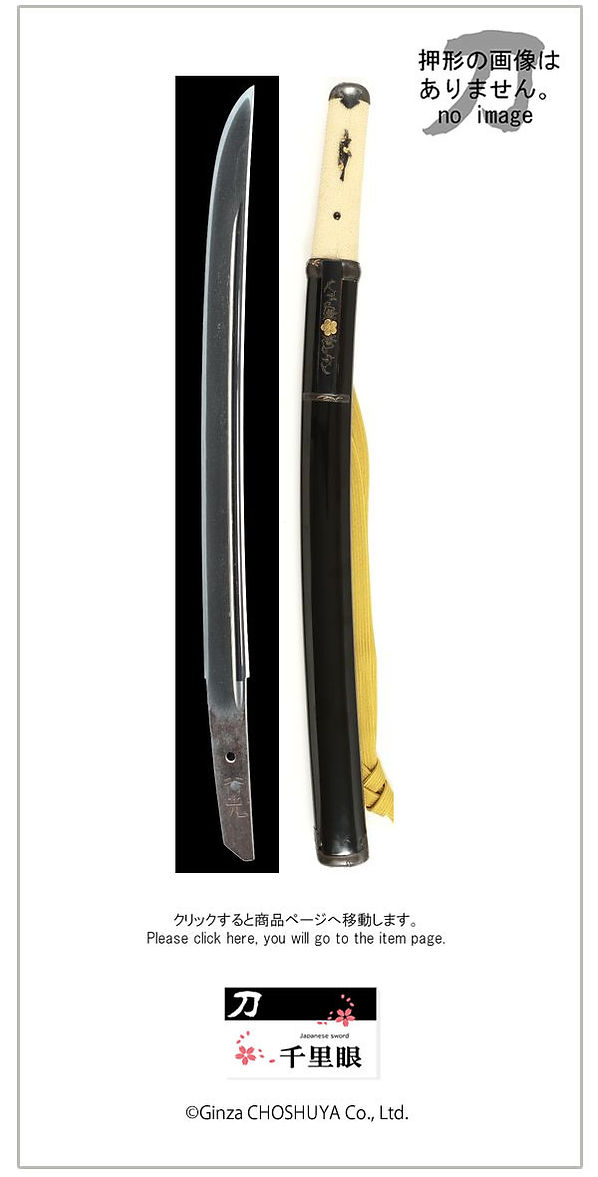
This is a wakizashi signed Yukimitsu (Kaga province). Dr. Honma Kunzan appraised it as being from the late Nanbokucho period (Shitoku era) and inscribed it on the saya, making it the oldest extant example among blades with the same signature. It features a wide body, shallow sori, and slightly thick kasane, typical of the late Nanbokucho period. The jigane and hamon show an antique appearance, similar to Tomoshige of Atsuta Shrine or Shinkei from the Sadaharu era, showcasing the excellent quality of the original Kaga Yukimitsu.
NihontoWatchYamashiro-den · Kaga · around 1340-1346
Tōken Taikan top 31%
2 pieces on the market now
Yamashiro-den · Kaga
20 pieces on the market now
Among the provincial lineages of the Hokurikudo, the Fujishima school took its name and its base from the village of Fujishima in Kaga province, where Tomoshige stands as founder and the name he set down passed through several generations from the close of the Nanbokucho period across the Muromachi and on into the early-modern Shinto era. The members place the chronological anchor with care: the earliest firmly dated work is a tanto of Oei 2 (1395), and the NBTHK finds nothing among the surviving blades that goes back earlier than Nanbokucho. Learn more →
| Smith | Era | Designated |
|---|---|---|
| Tomoshige友重 | 1394-1428 | 15 |
| Tomoshige友重 | 1346-1370 | 5 |
| Tomoshige友重 | 1324-1326 | 5 |
| Fujishima藤島 | 1394-1428 | 4 |
| Yukimitsu行光 | 1340-1346 | 0 |
We could not find an authenticity certificate on the seller’s listing. Japanese swords and fittings are normally papered by the NBTHK (or the NTHK). Without one, the attribution is the seller’s own assessment and has not been independently verified — treat it with caution and ask the dealer about certification before buying.
If, due to our fault, the item differs significantly from its proper condition, the item may be returned. Cooling-off is within one week of the item's arrival.