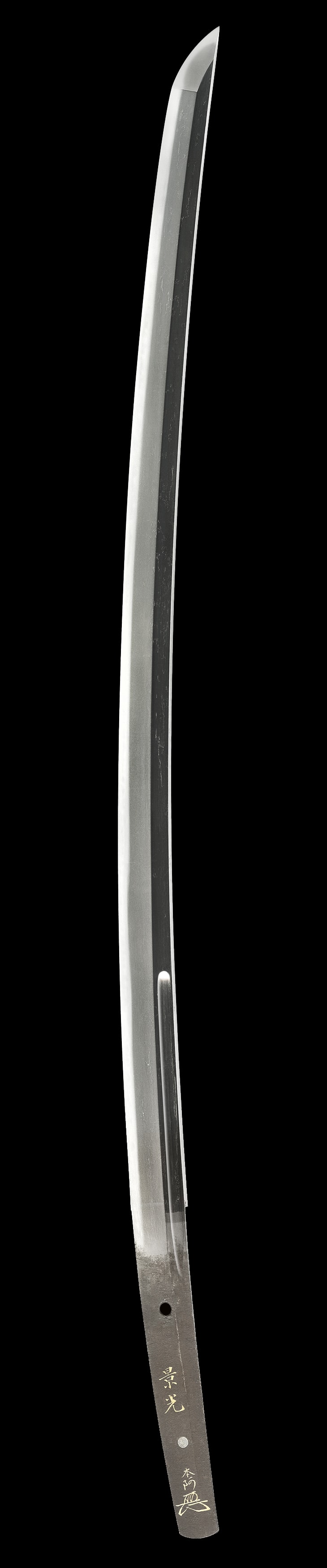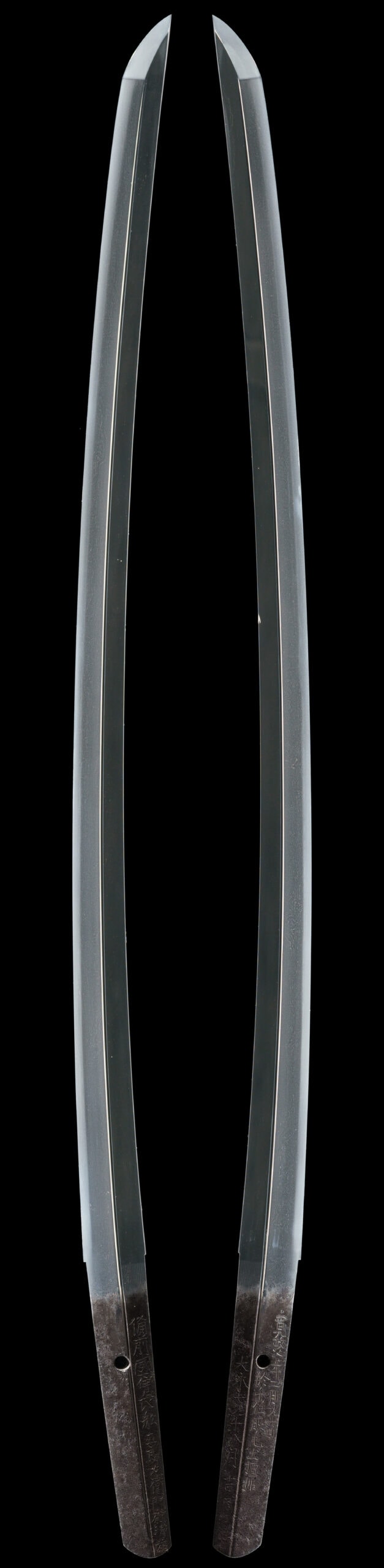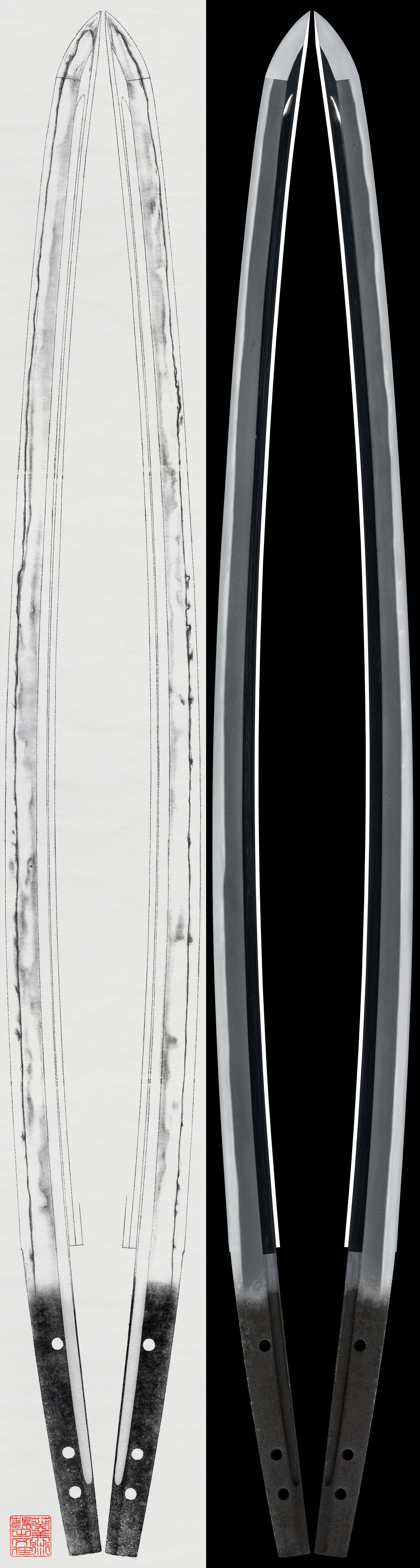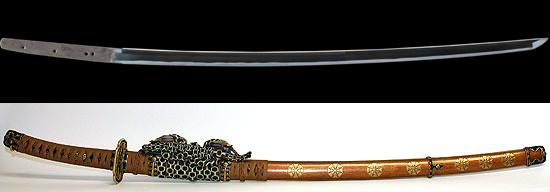
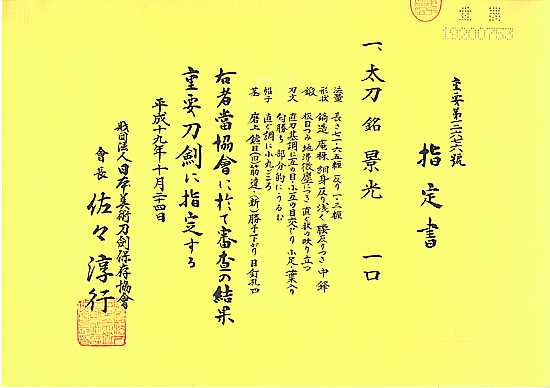


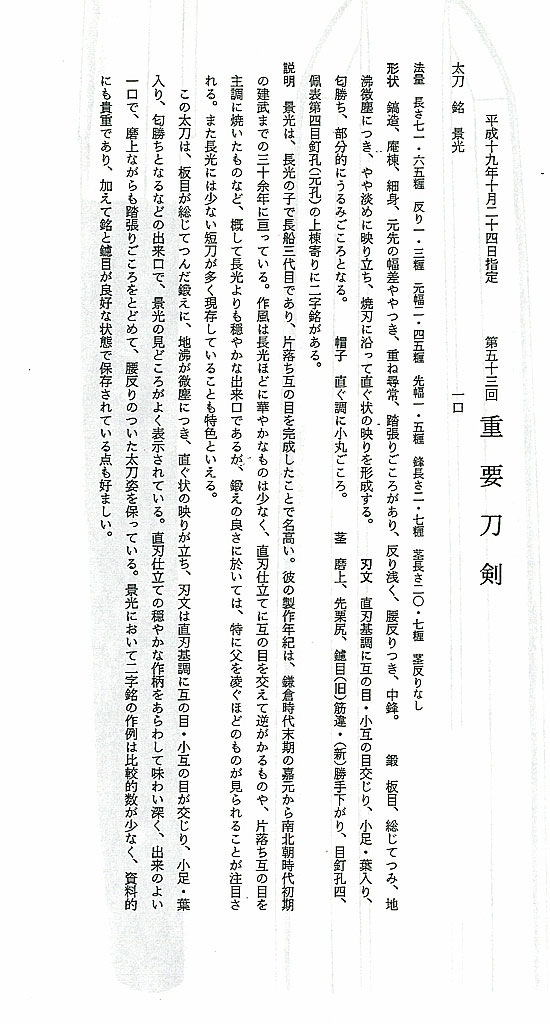
-, 53rd Session — Designated October 24, 2007
, : Kagemitsu (景光)
Measurements 71.65 cm, 1.3 cm, 2.45 cm, 1.5 cm, 2.7 cm, 20.7 cm, none
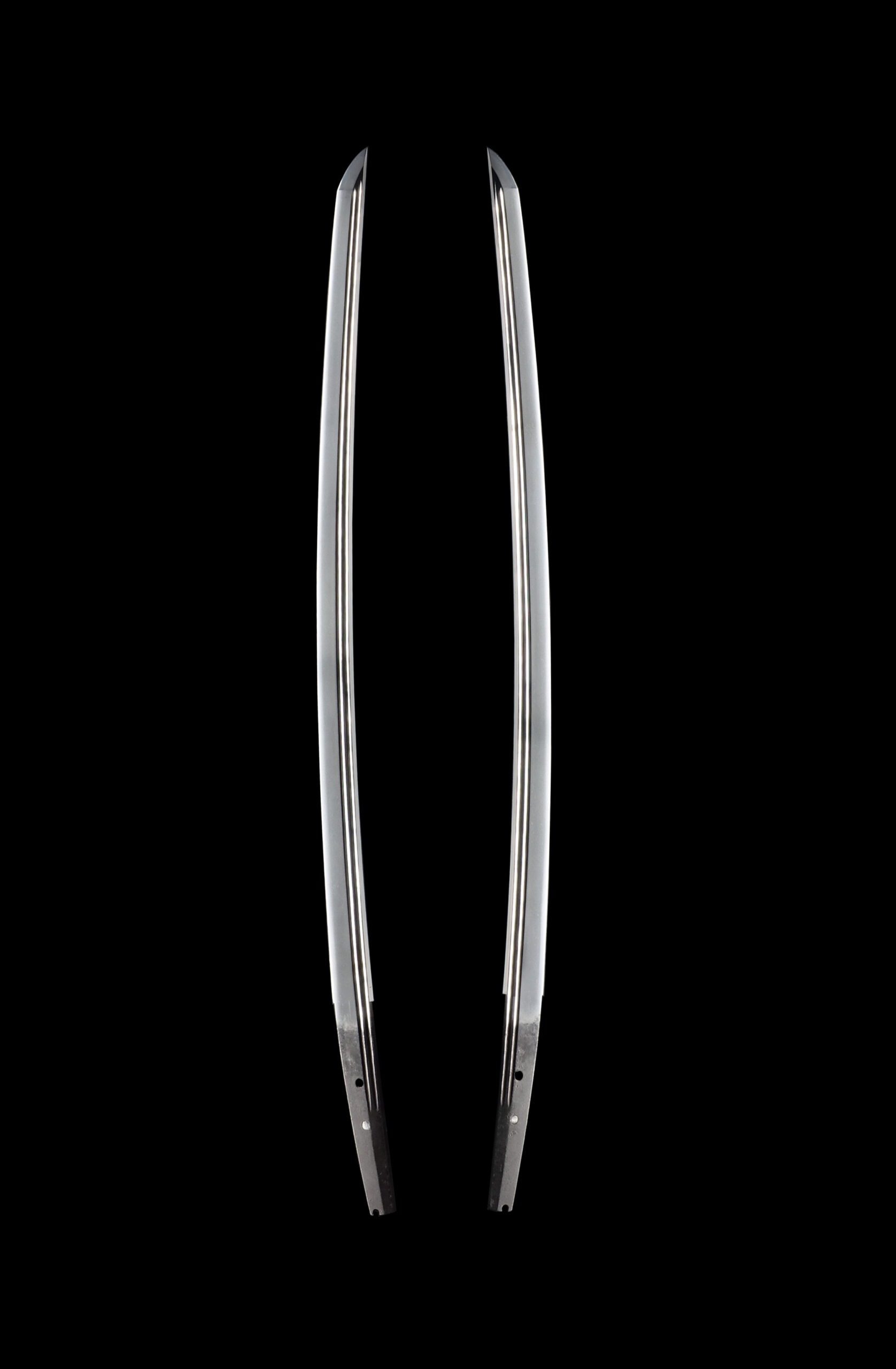
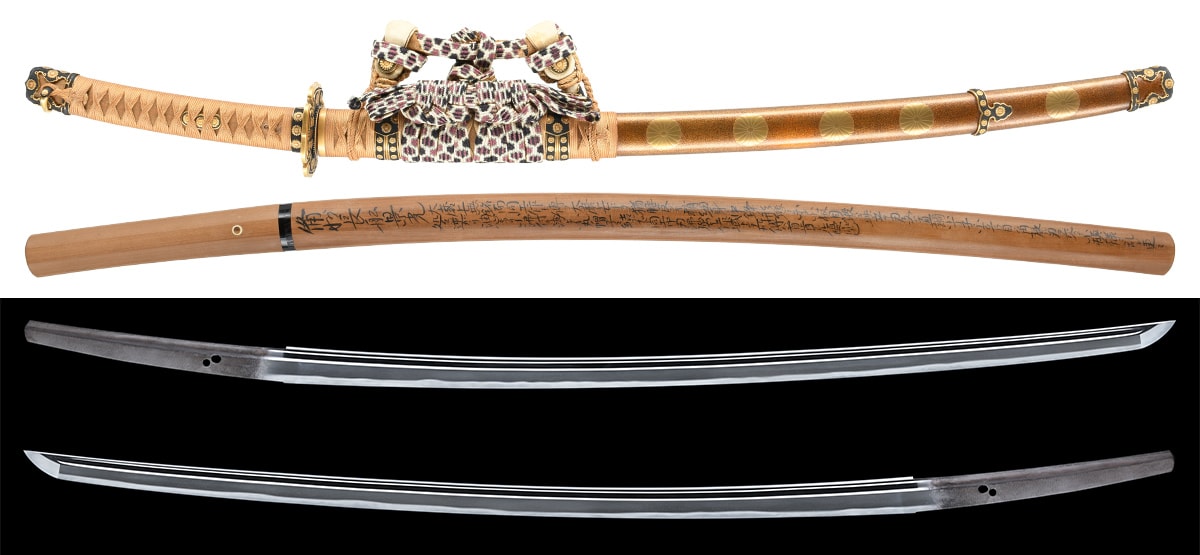
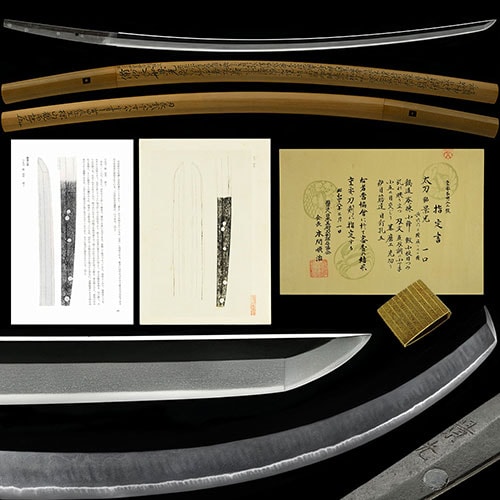
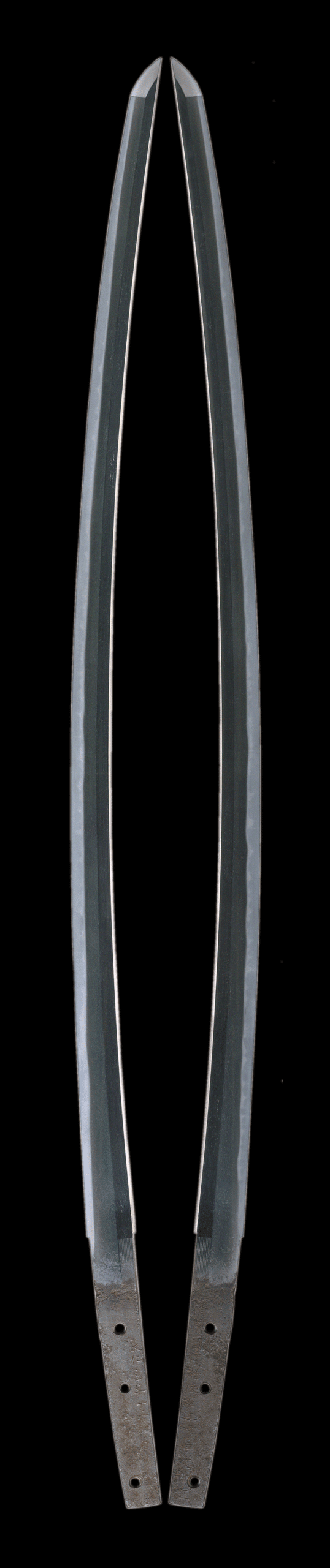
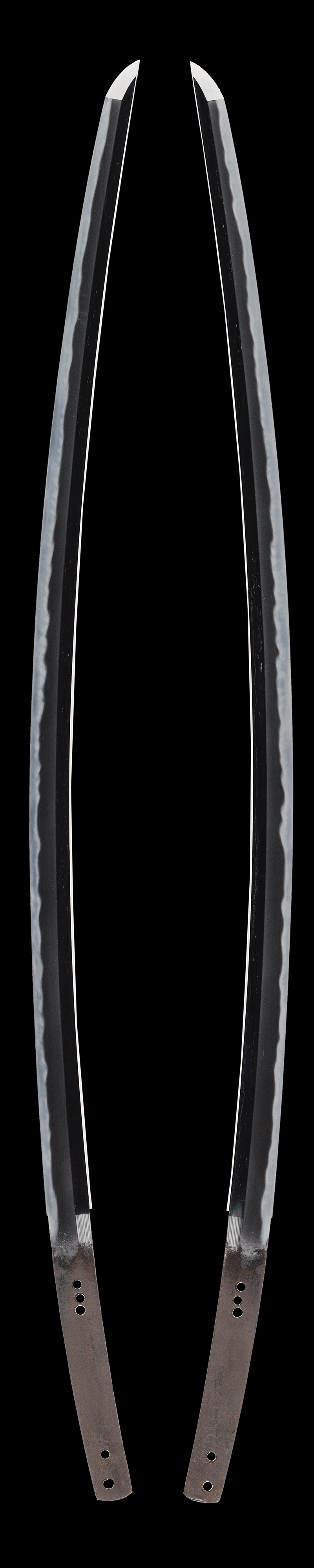
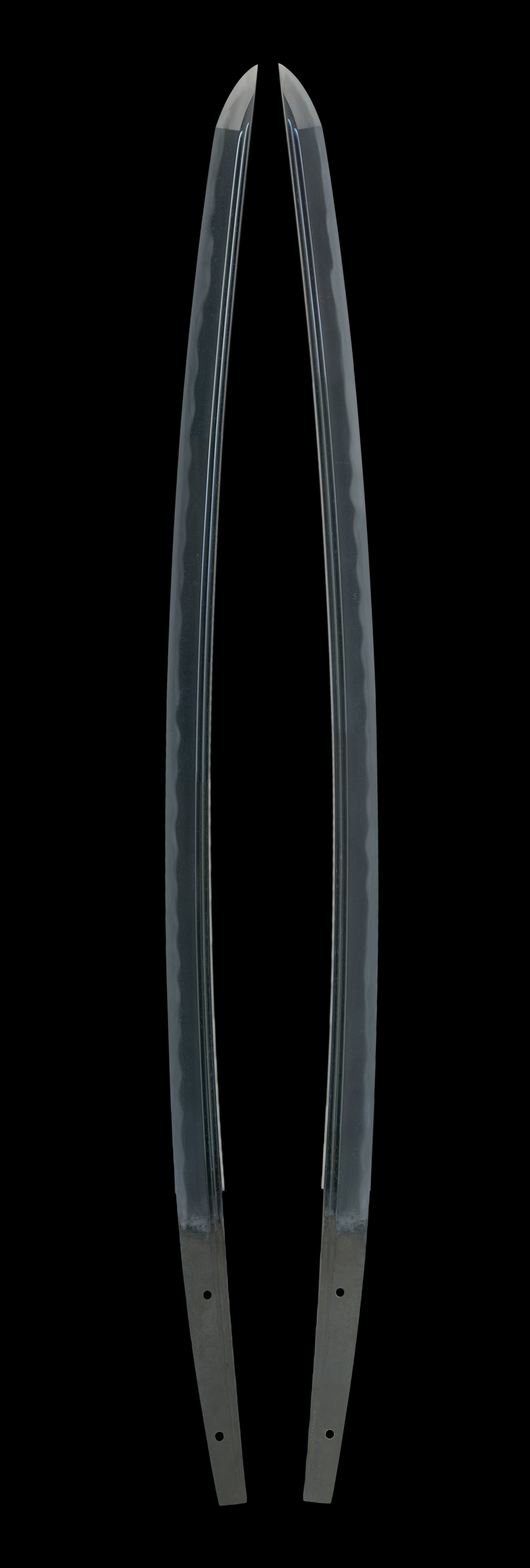
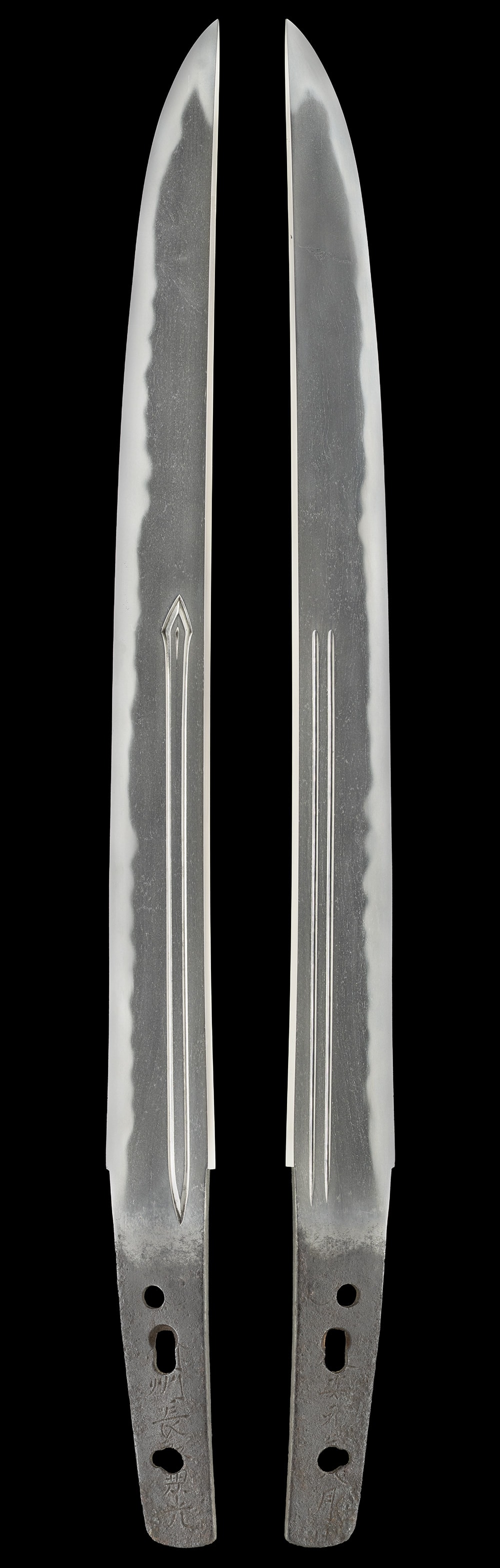
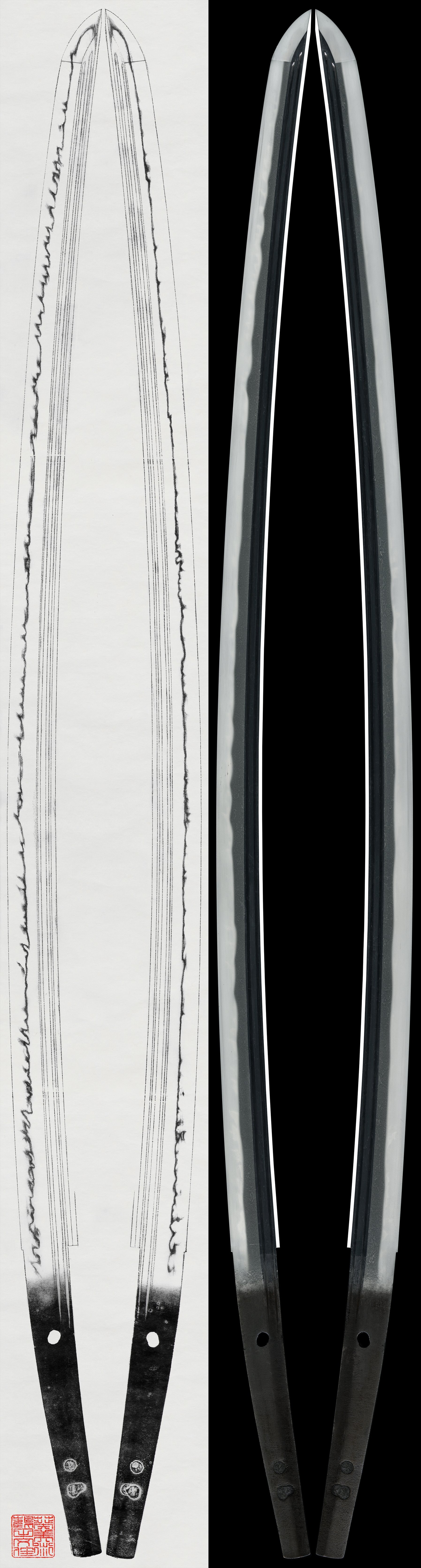
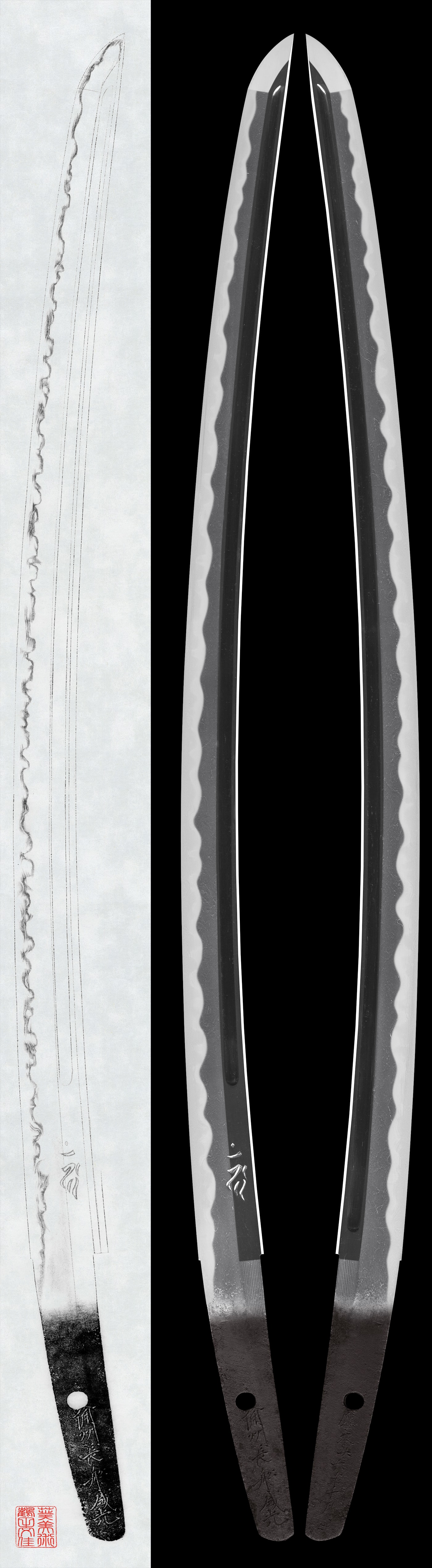
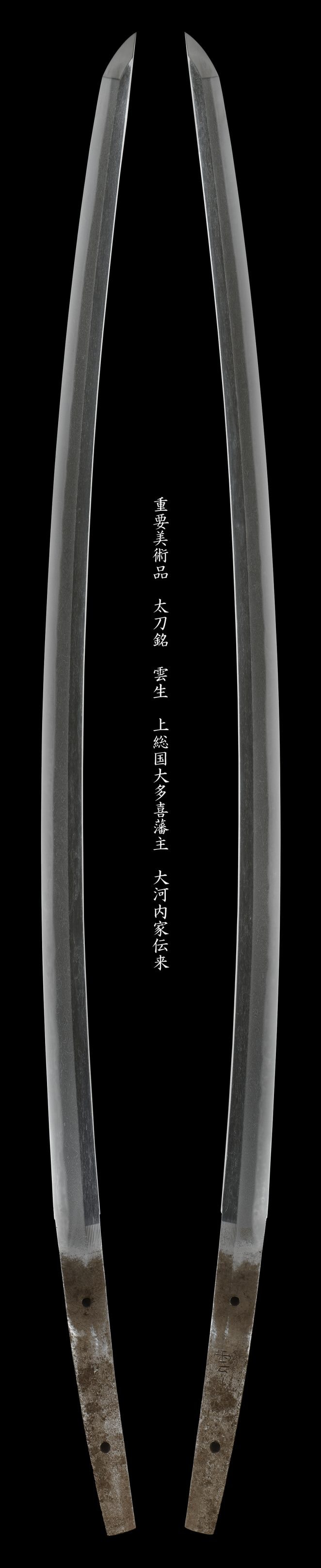
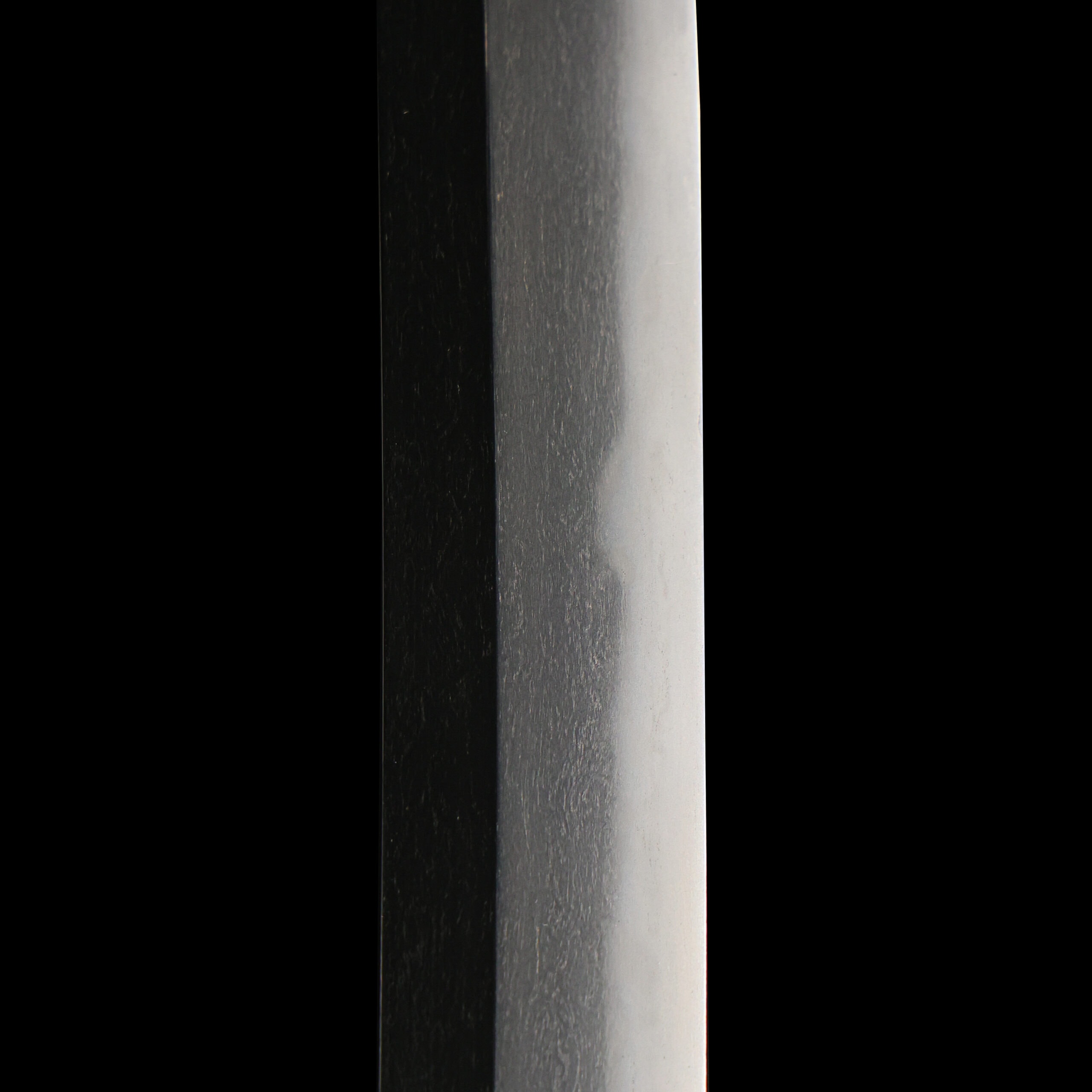
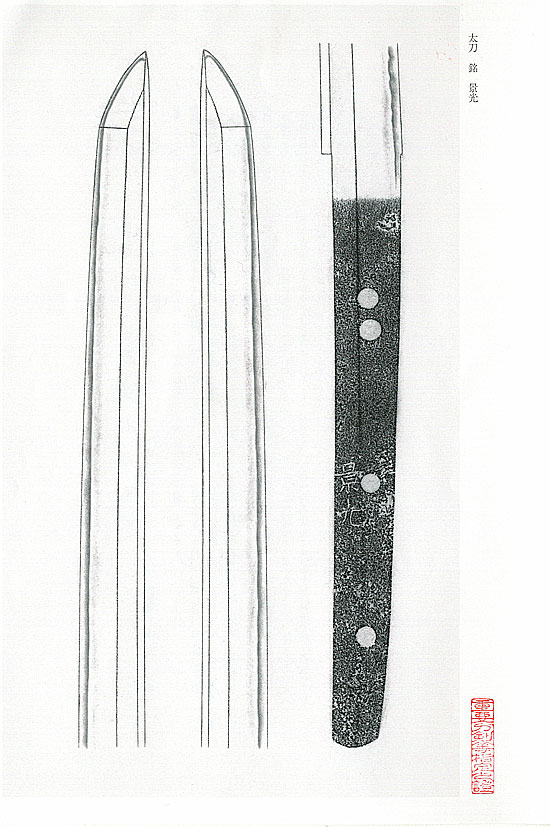
Description Keijō: , ; slender; the difference between and widths is somewhat pronounced; is standard; retains a sense of ; shallow with ; . : , generally tightly forged; fine adheres; appears somewhat pale overall, and, along the , forms a straight (-like) . : as the base, mixed with and ; with and ; , becoming partially -inclined () in places. : -chō with a tendency toward . : None. : ; tip ; file marks: (old) and (new) ; four ; on the , above the fourth (the original hole) and toward the , there is a two-character signature.
Artisan Kagemitsu (景光)
Era Late period (active from the Kagen era through Kenmu)
Explanation Kagemitsu was the son of Nagamitsu and the third-generation master of the line, renowned for perfecting . His dated works span more than thirty years, from Kagen in the late period through Kenmu in the early period. In terms of style, he produced fewer works as flamboyant as those of Nagamitsu; rather, he generally favored a calmer manner—such as -based tempering with mixed that tends to run in a slightly reverse inclination, or works in which is the principal theme. It is noteworthy, however, that in the quality of his forging there are examples that can surpass even his father. Another characteristic is that many survive, a form comparatively uncommon for Nagamitsu.
This shows a tightly forged with extremely fine , and a straight (-like) rising, while the is fundamentally mixed with and , with and , and a character—altogether clearly presenting the principal points of interest in Kagemitsu’s workmanship. The calm, -oriented style conveys a deep, tasteful flavor, and the blade is an excellent example. Although shortened (), it still preserves a sense of and maintains the silhouette with .
Among Kagemitsu’s works, examples bearing a two-character signature are relatively few; accordingly, this blade is also valuable as reference material. In addition, it is particularly desirable that both the inscription and the file marks are preserved in good condition.