Edo was the sword’s age of connoisseurship: the Hon’ami appraisers, the shogunal register of famous blades of 1719, and a thriving literature turned the sword into an object of study even as it ceased to be drawn in war.
 NihontoWatchNihontoWatch
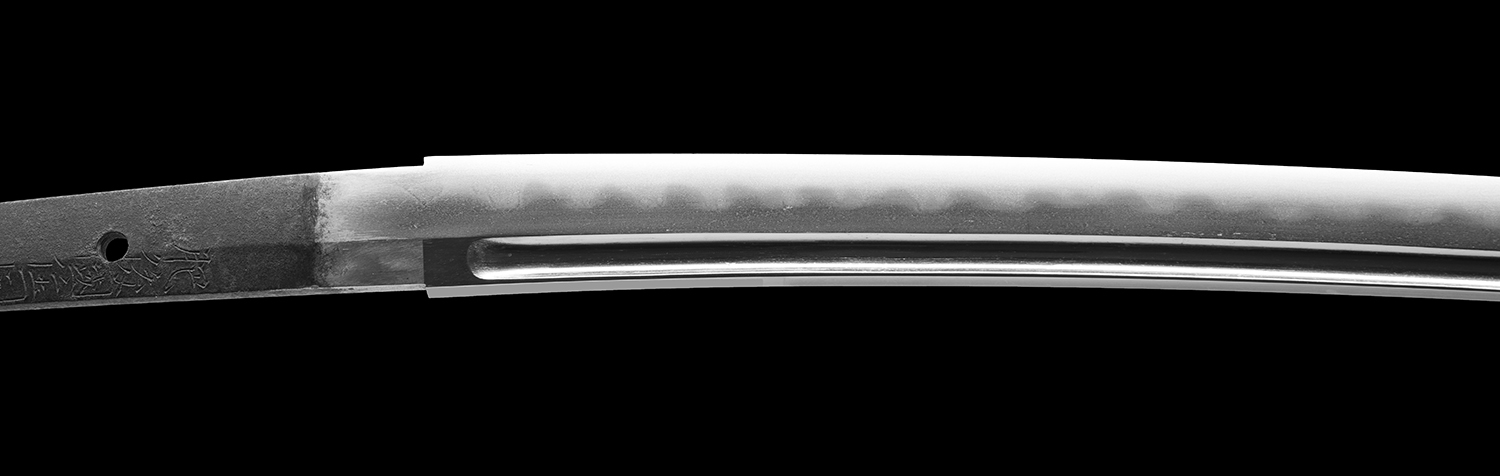
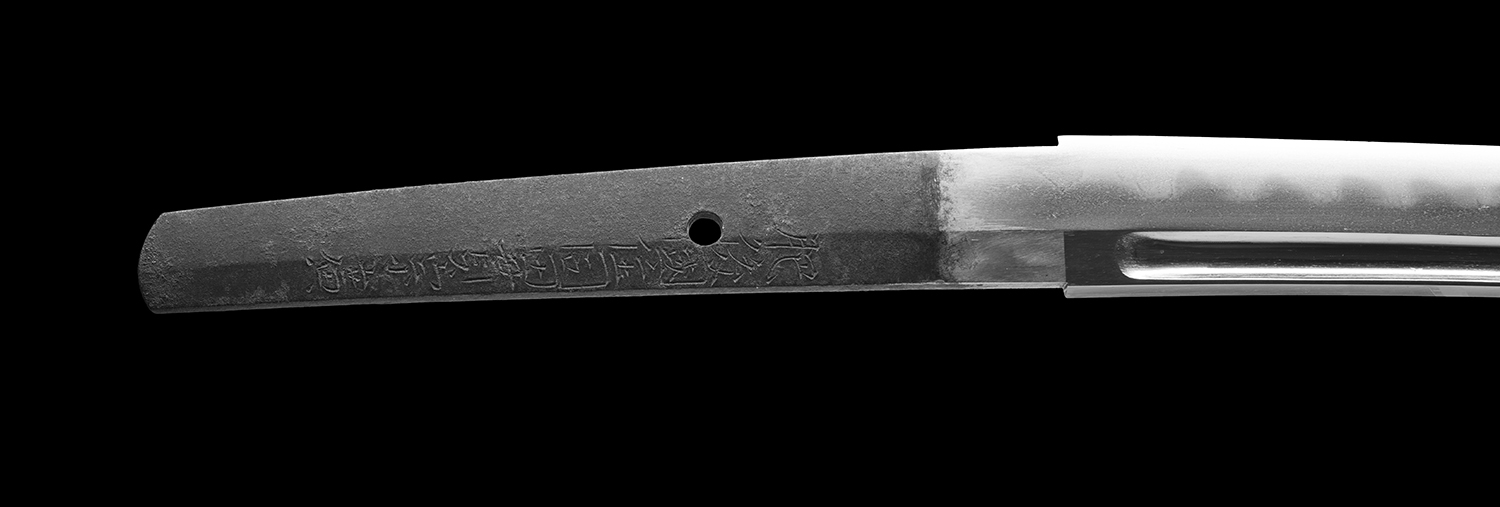
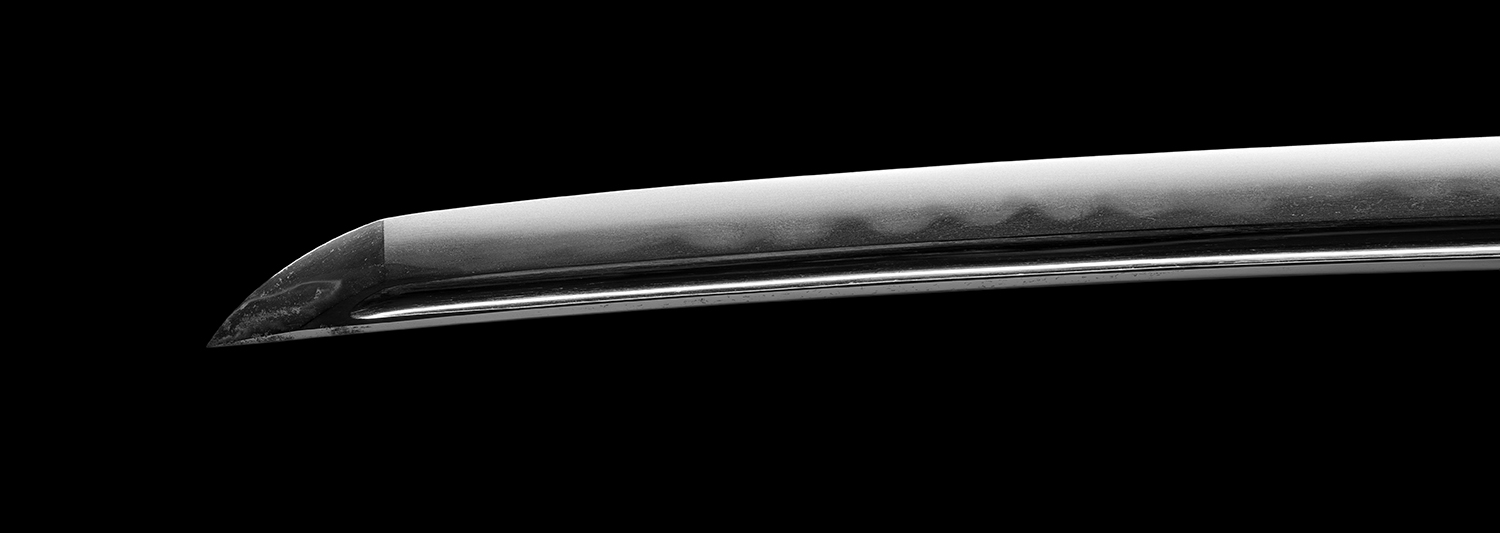
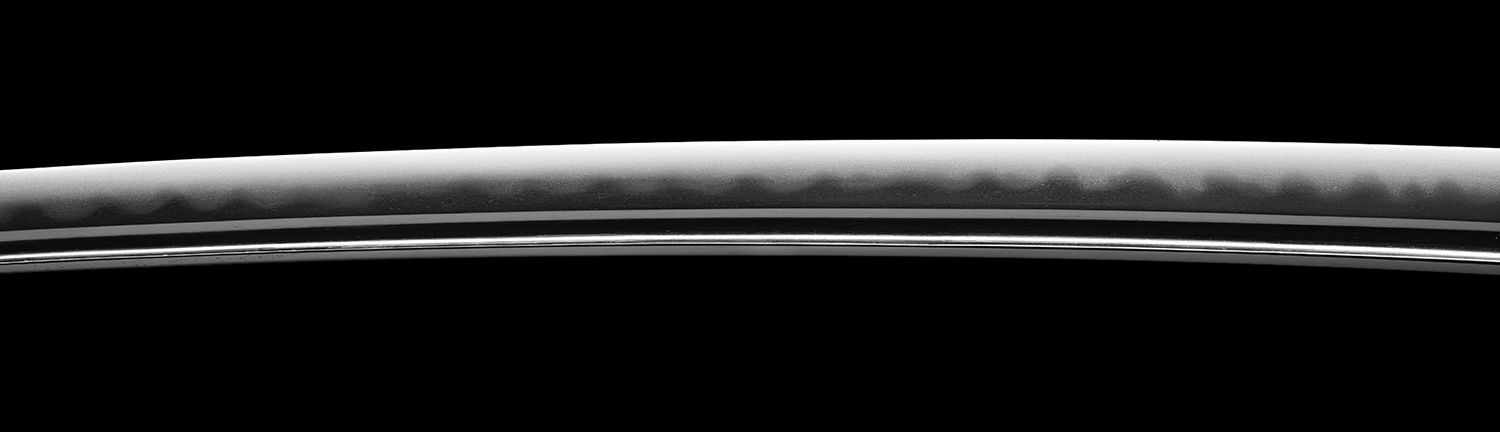
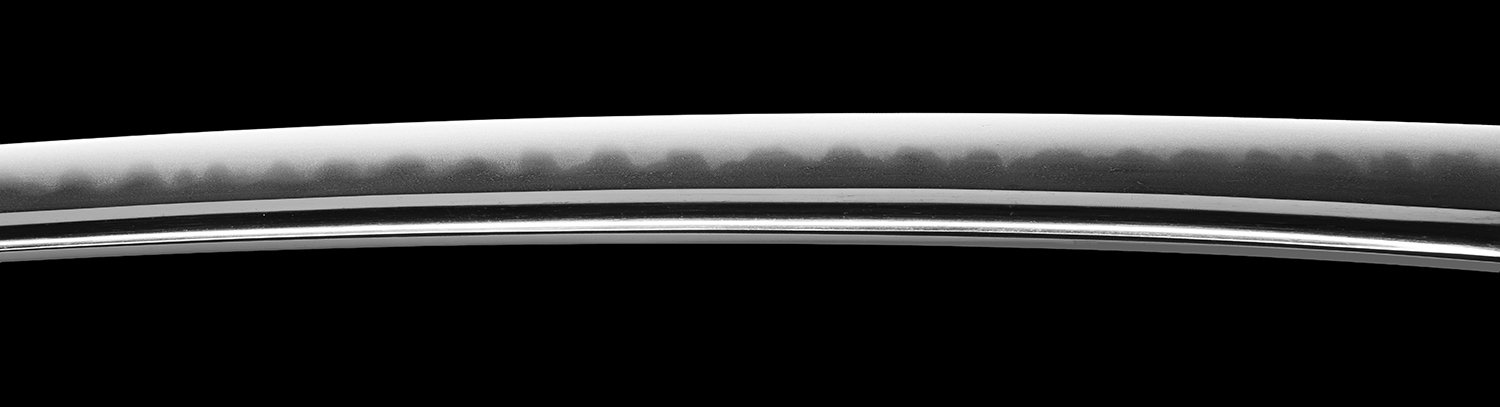
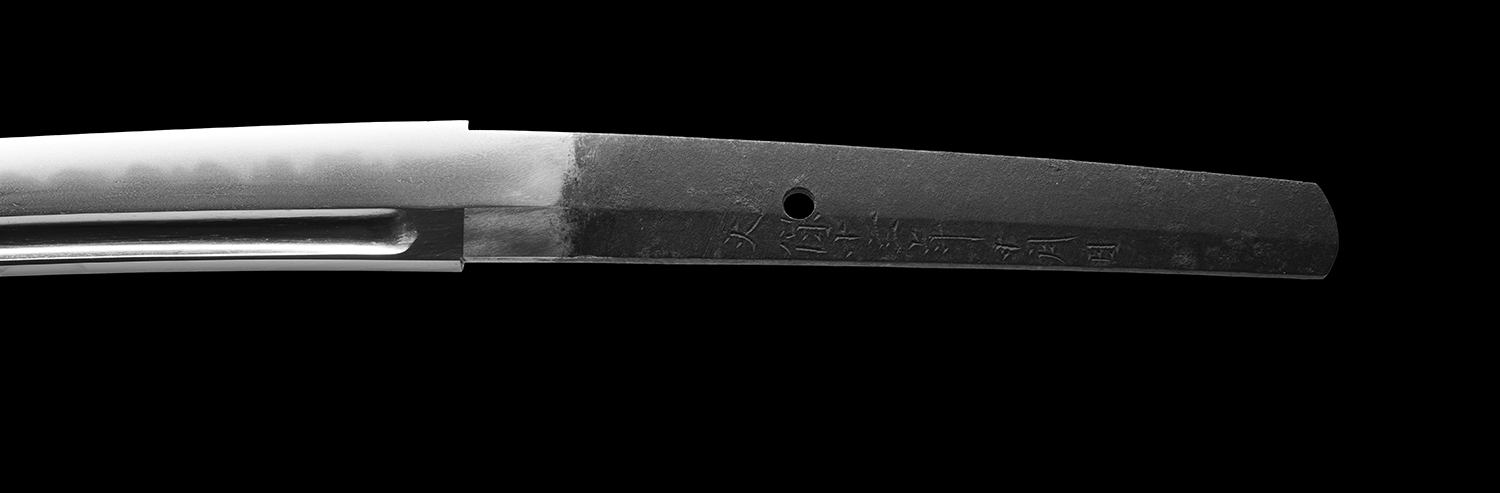
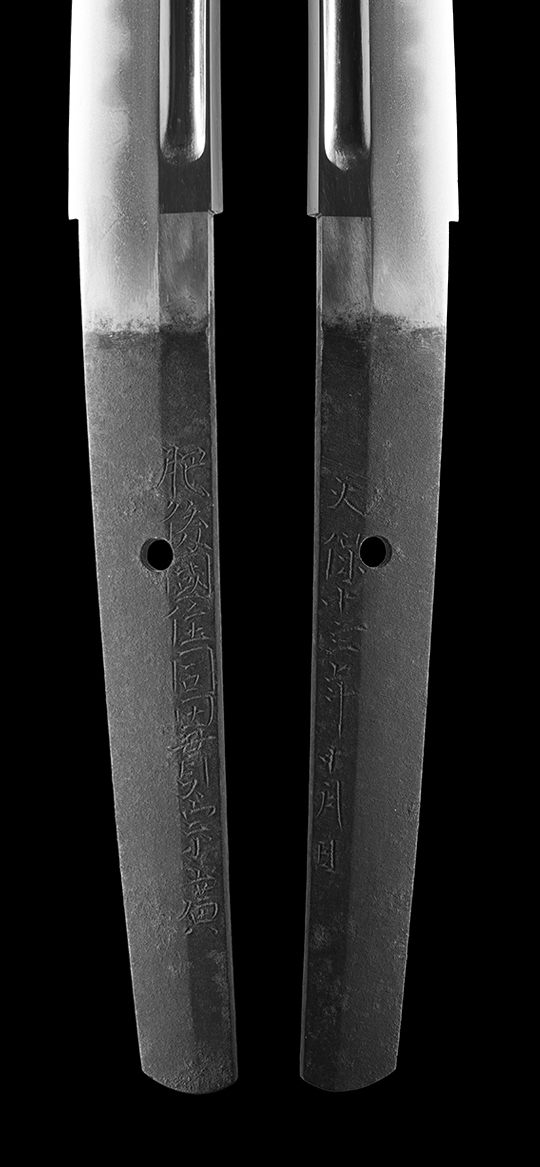
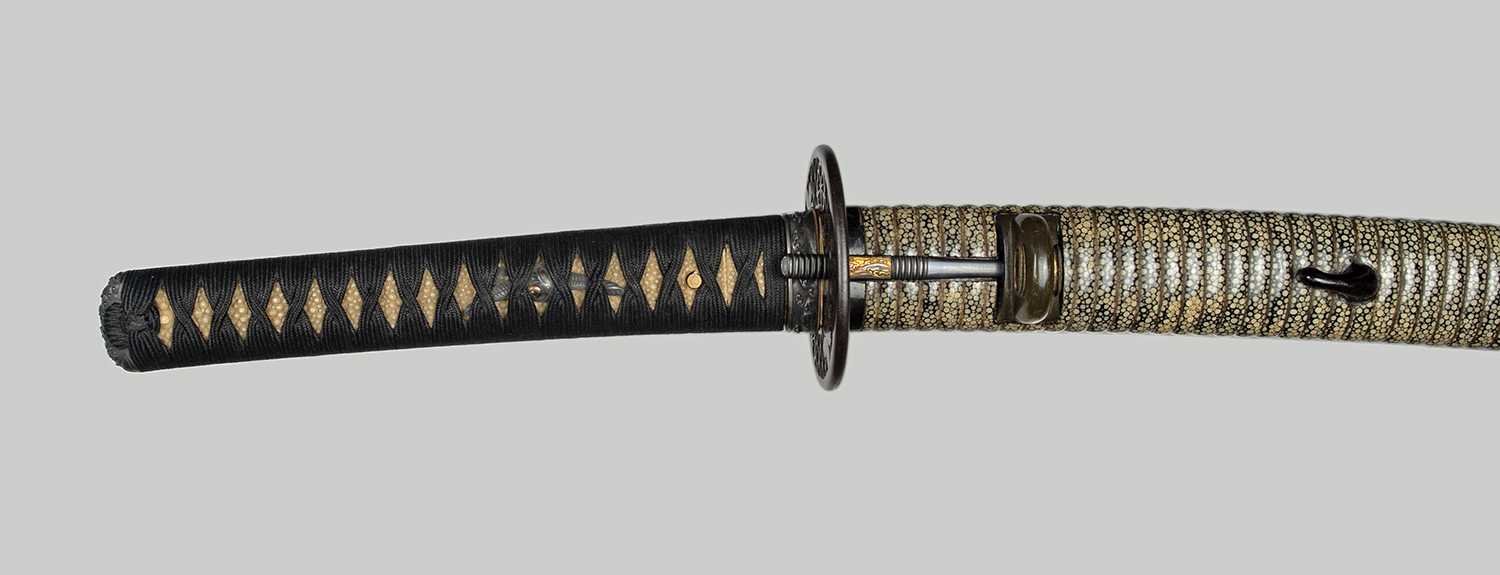
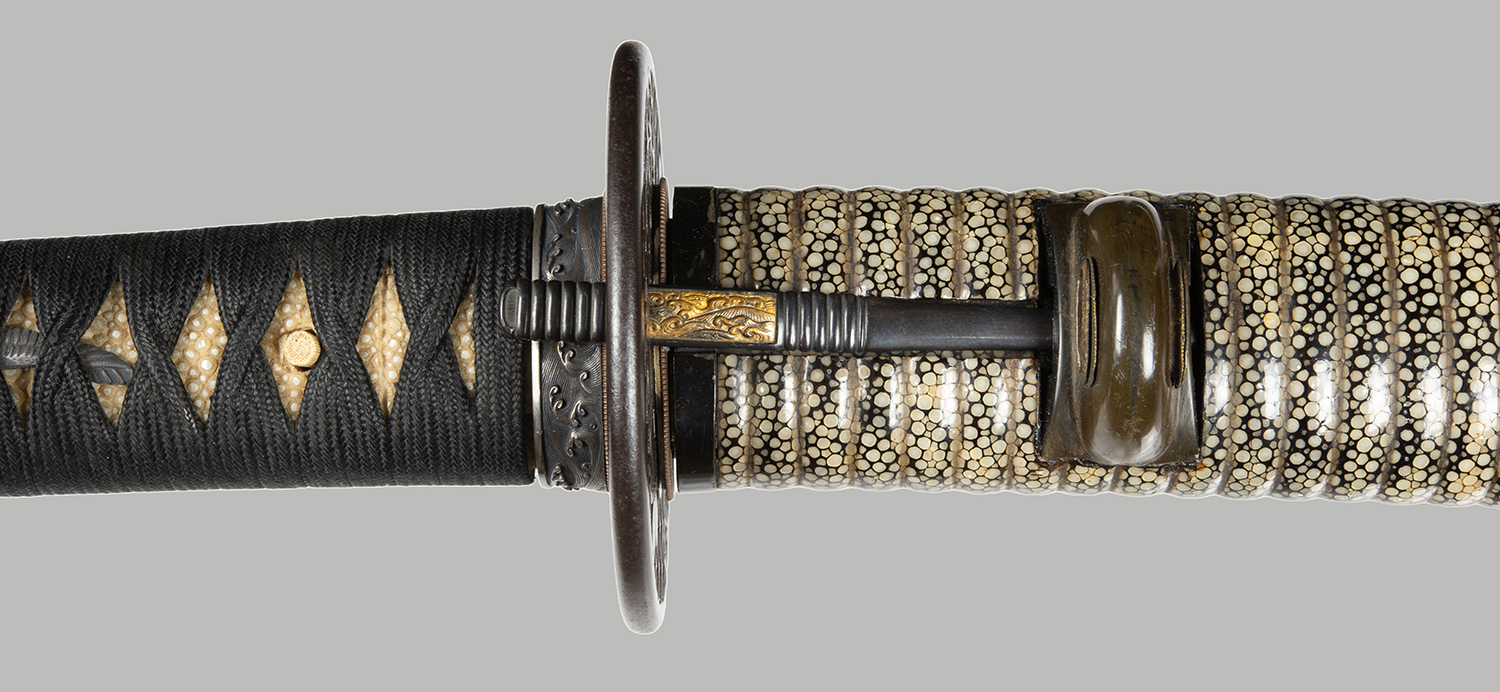
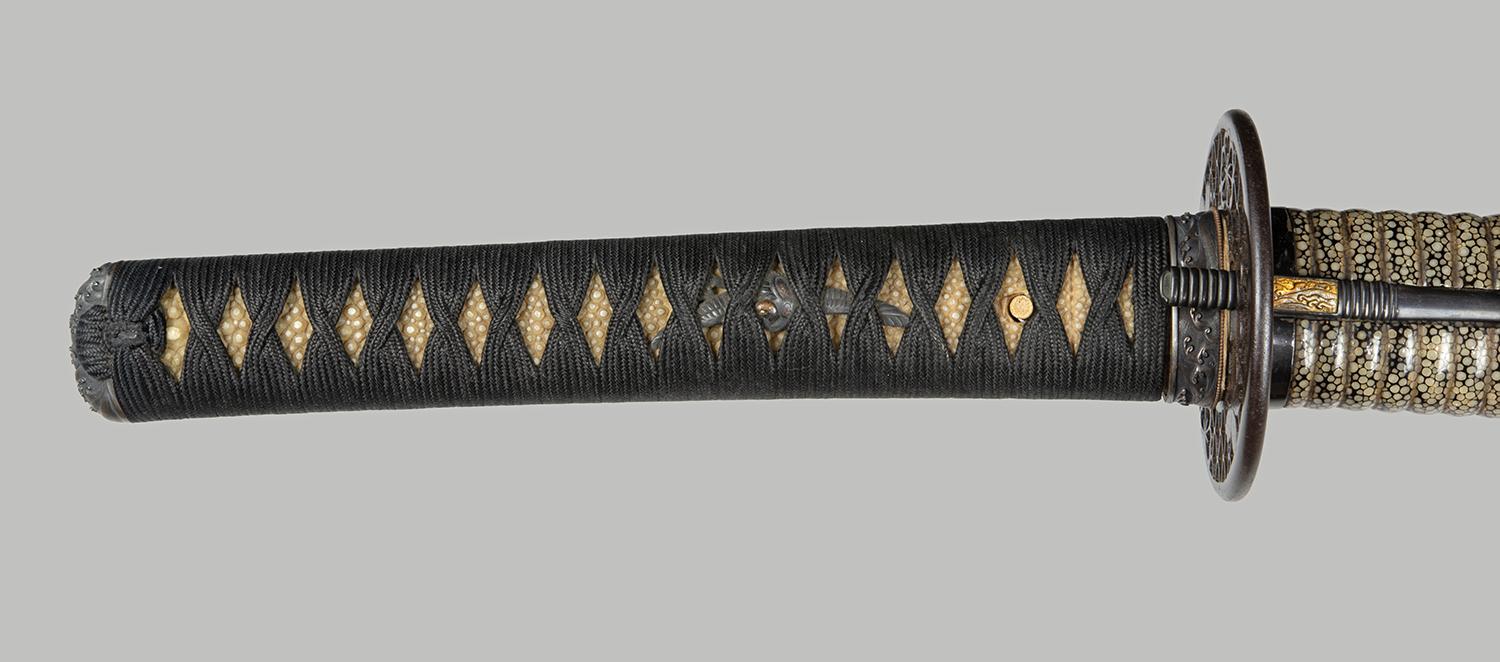
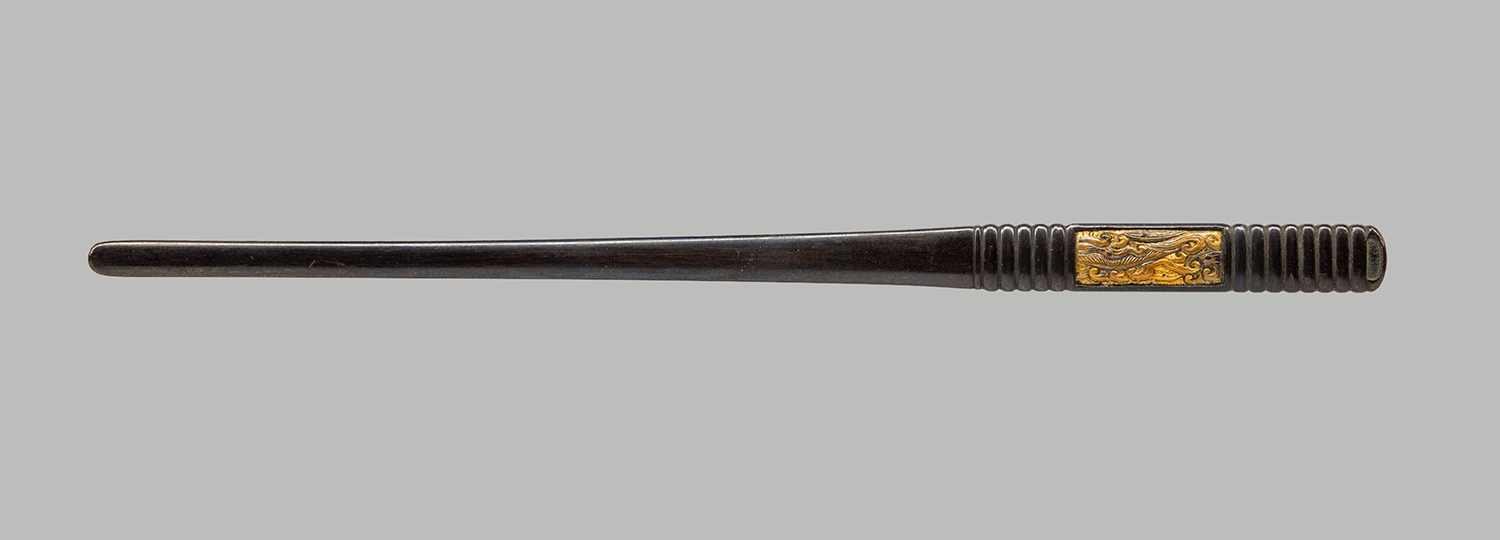
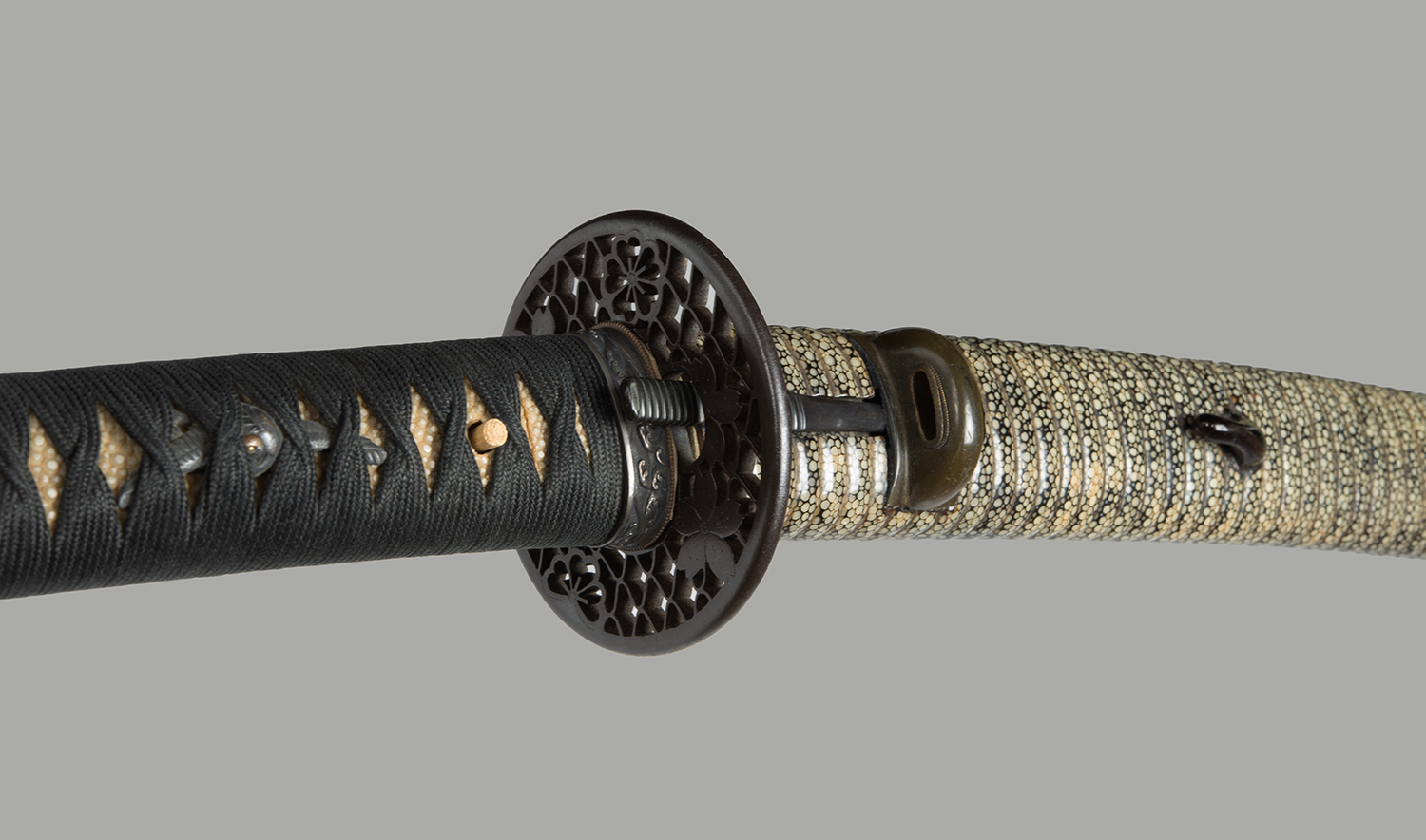
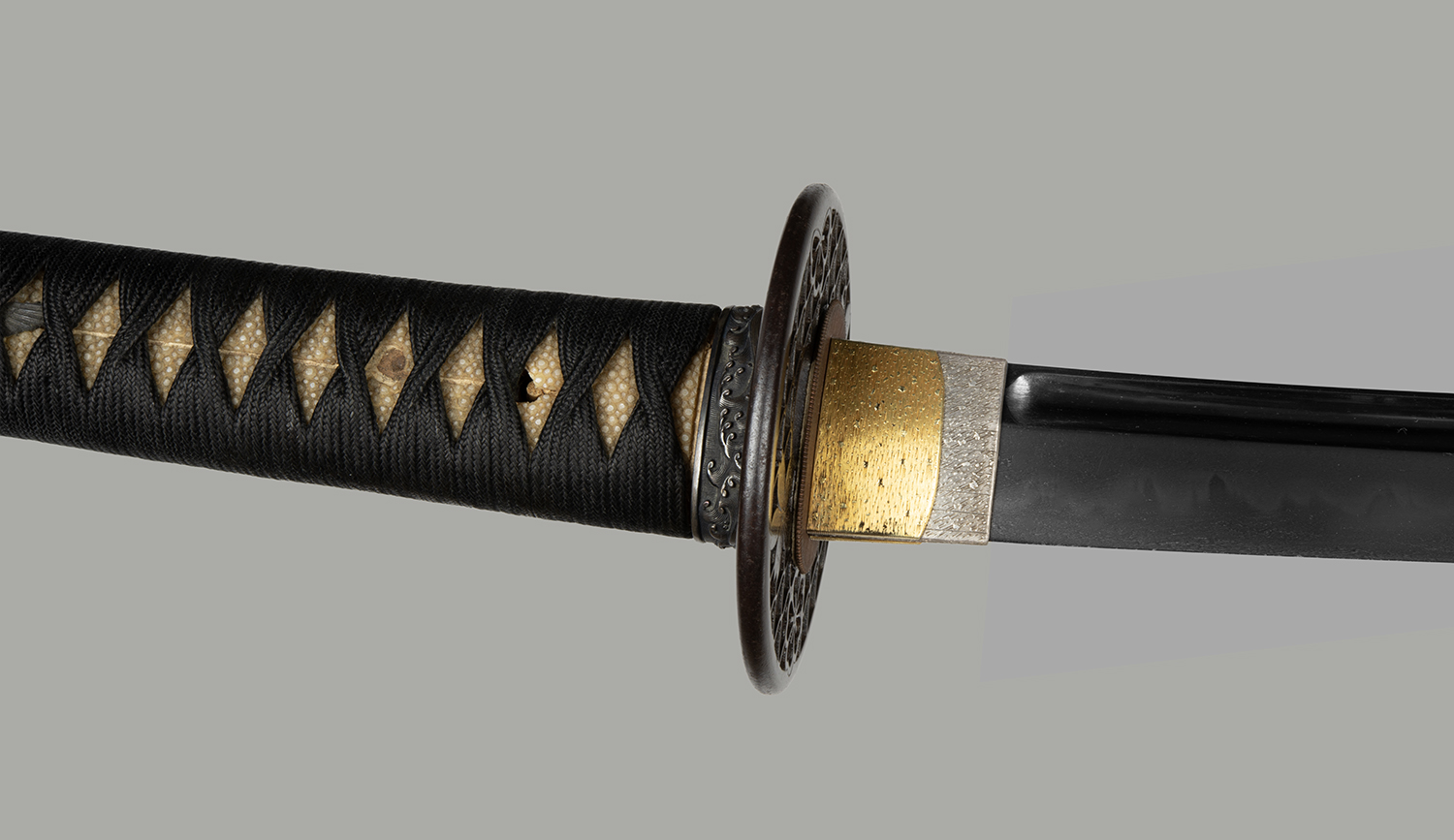
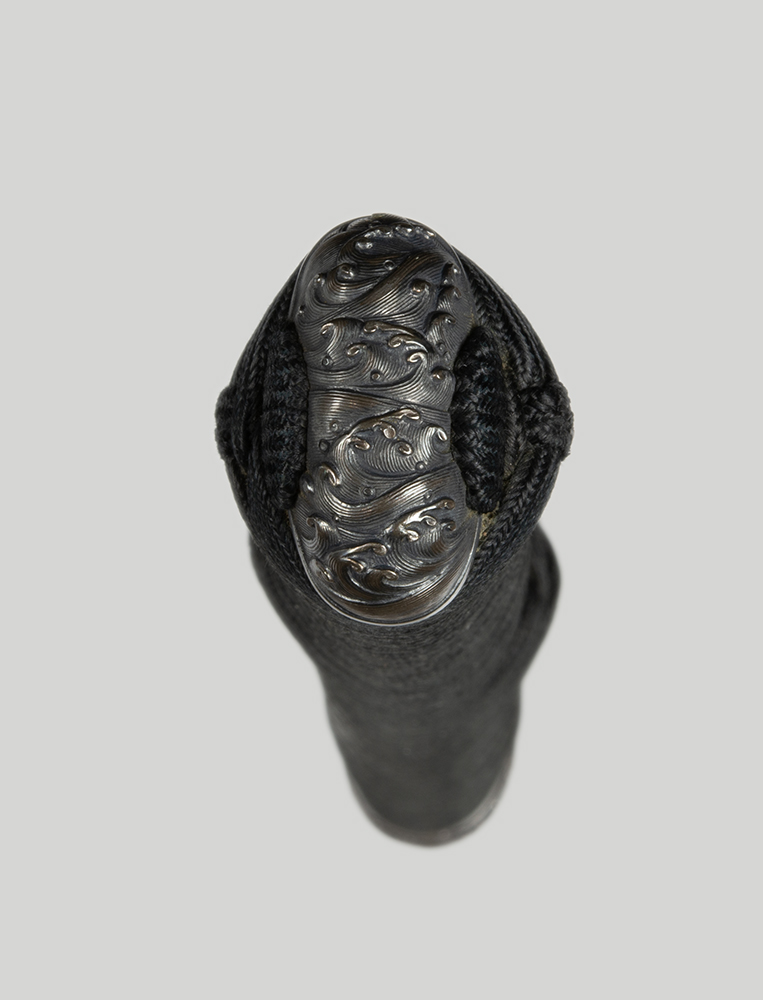
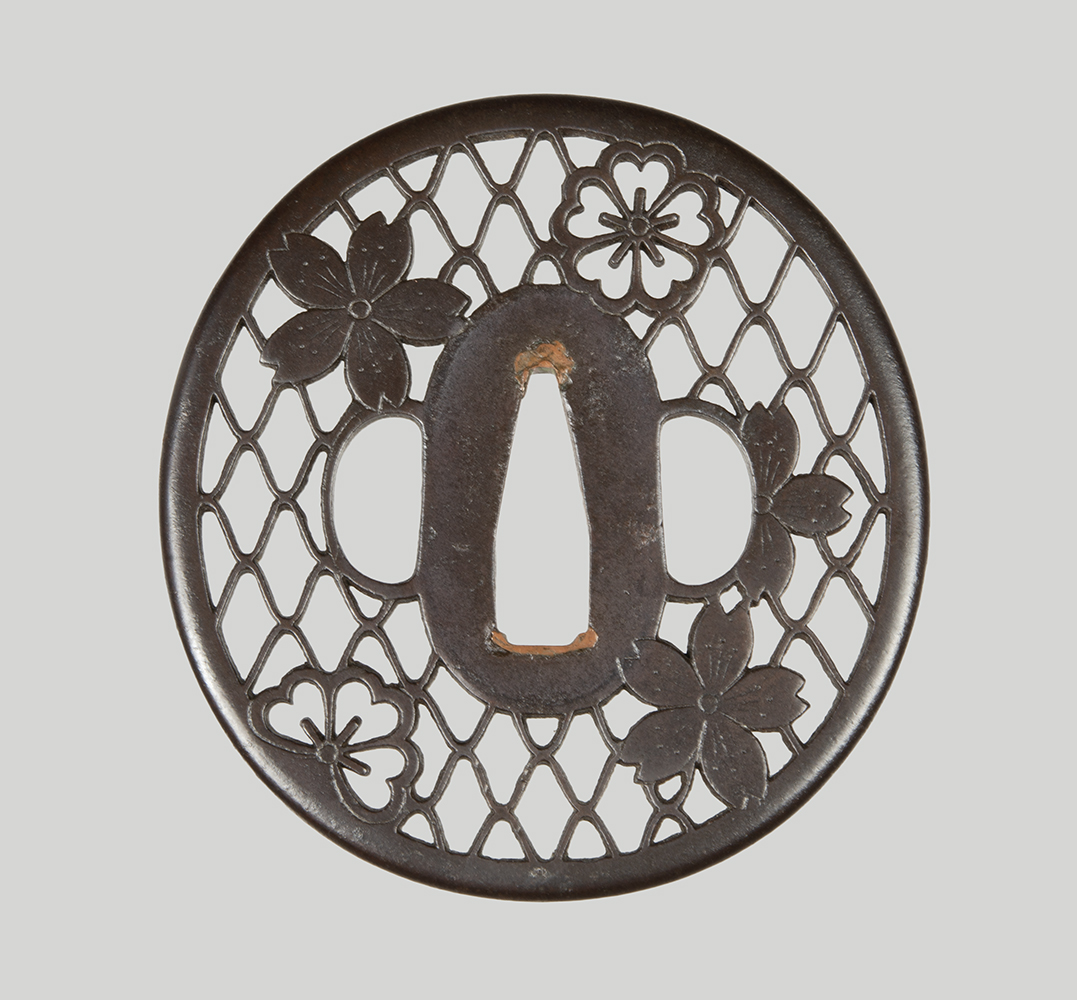
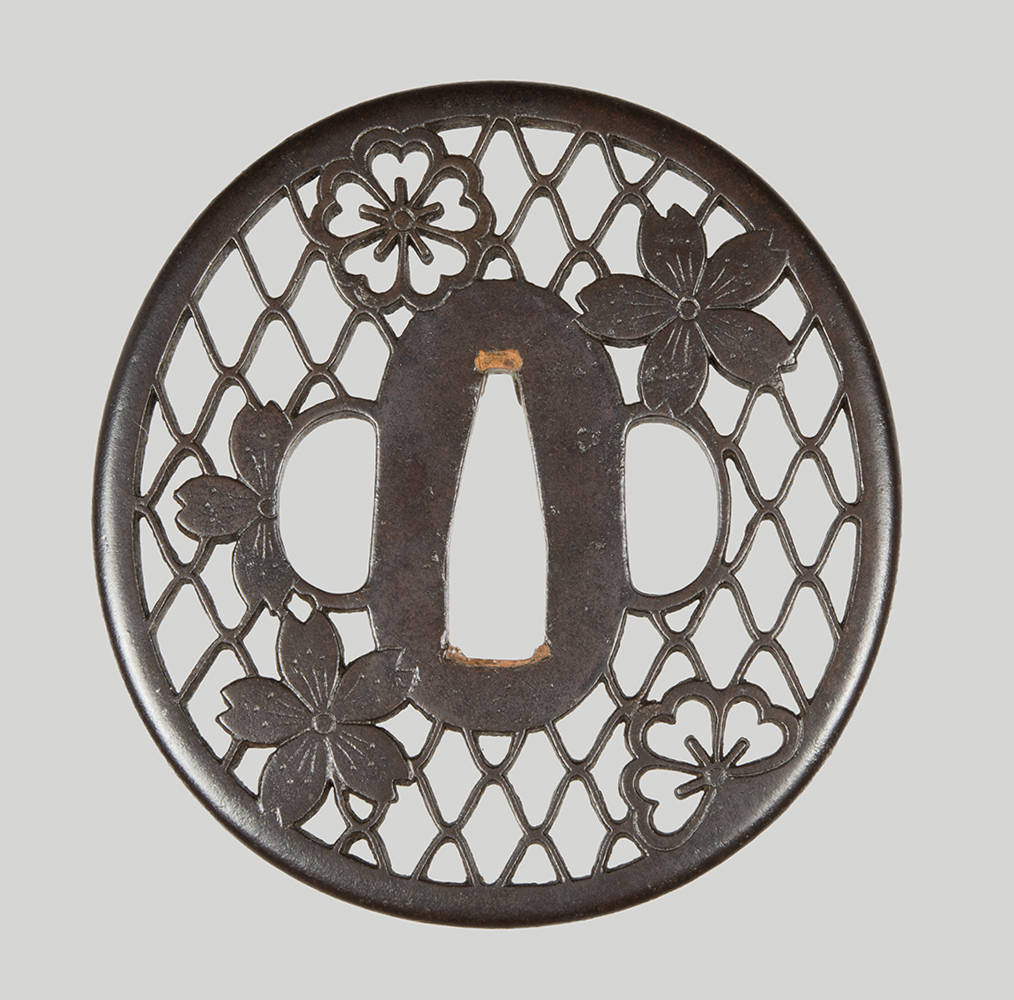
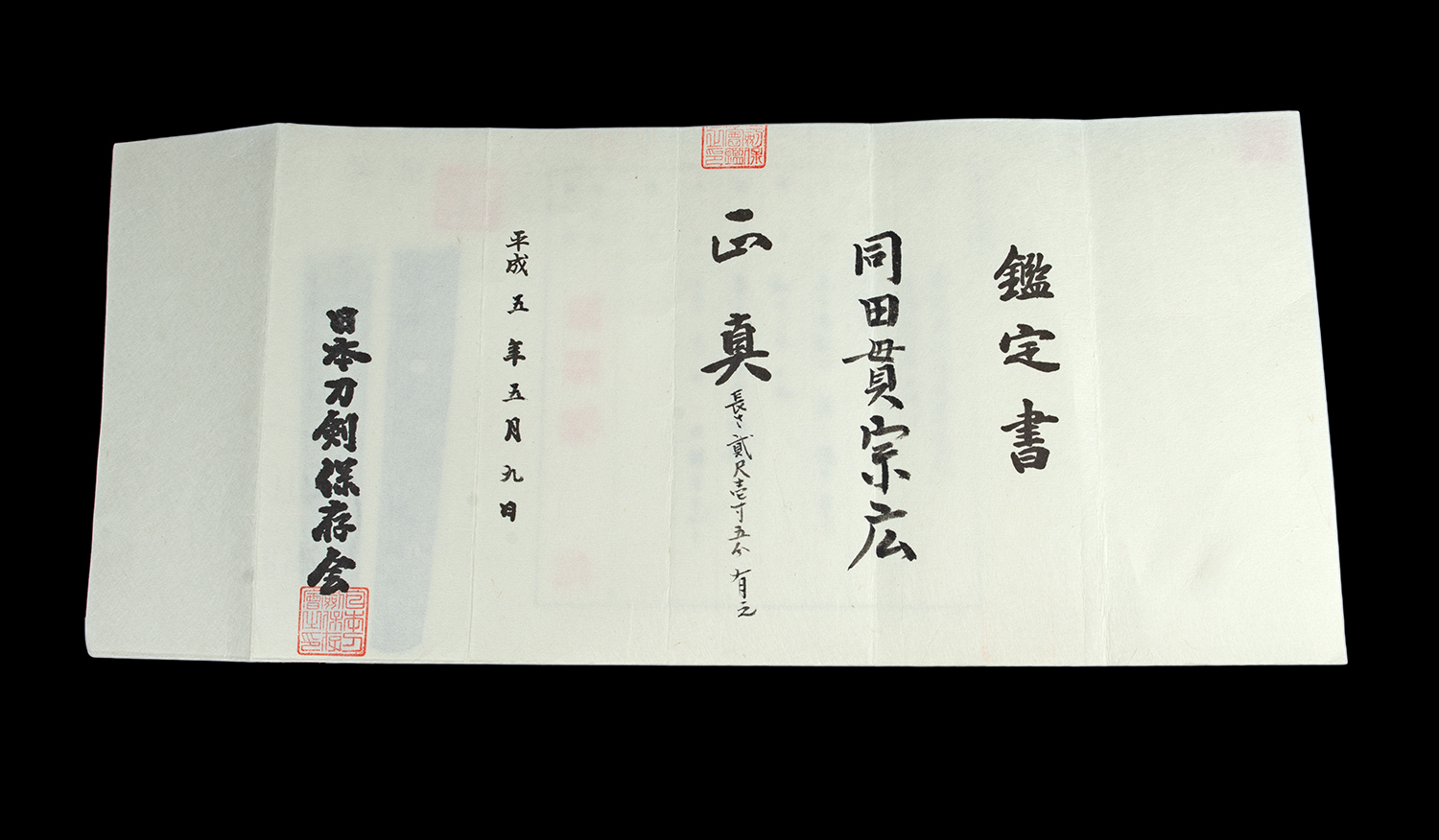
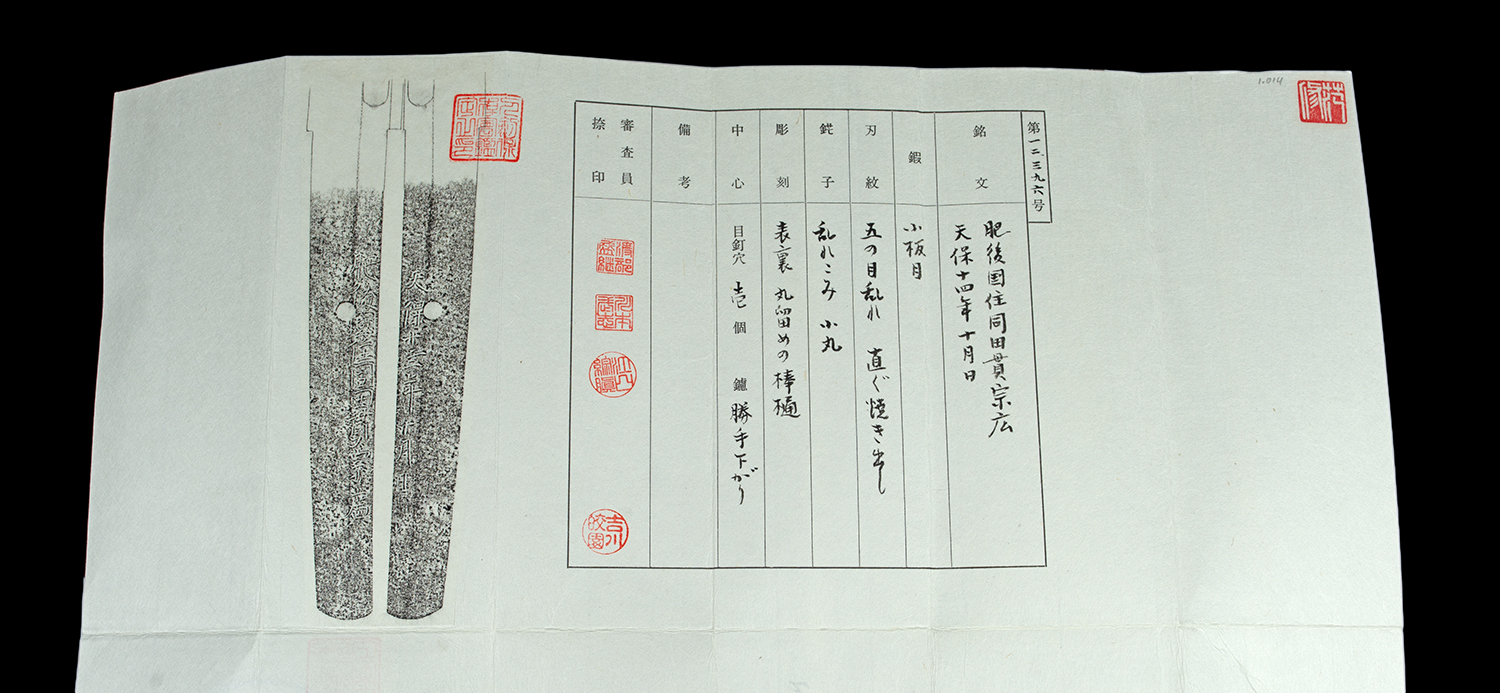
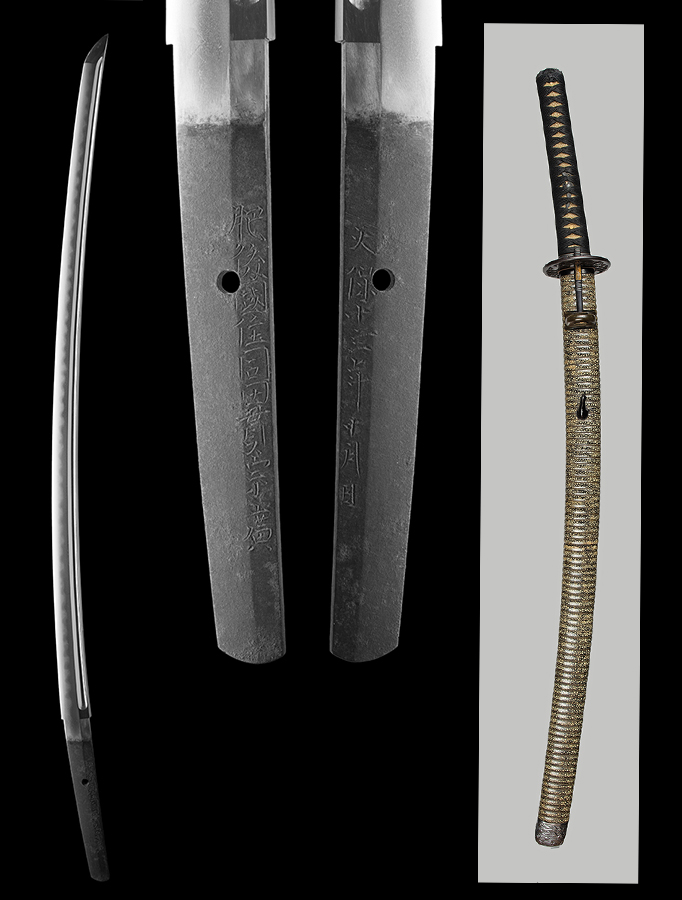
Shin-Shinto Katana with Higo Koshirae Hamon : Nie deki gunome midare in the koshi-no-hiraita style. There are ashi as well as yo. Some of the gunome heads spilt into choji shapes at the crests . Boshi : Midare komi that is deeply tempered. The return is short and togari. Kitae : Itame hada. The jigane is tightly forged and there is ji-nie. About this sword : This is a fine katana by Dotanuki Munehiro. The Higo Dotanuki school has its origins in Koto times. Their roots reach the Higo Enju school in the Kamakura period. The school flourished in the Muromachi/Momyama periods and again in Bakumatsu times. In general, the Dotanuki school has a reputation for making no-nonsense, highly effective swords that cut well and were durable. It is said that Kato Kiyomasa, one of Hideyoshi's generals, choose Dotanuki smiths to accompany his campaign to invade Korea due to the excellence of their products on the battlefield. Dotanuki Munehiro's mature period was around Tenpo (1830-1844). He signed some of his works as the 10th generation Higo Dotanuki Kazusa no Suke. He was a skilled smith and ranked as Chu Jo Saku by Fujishiro and 2 million yen in the Toko Taikan. His civilian name was Oyama Hisataro. He was a student of Suishinshi Masahide. He worked into the Meiji era. He passed away in 1871. This katana has no kizu and is in wonderful old polish. There is some light surface rust in the kissaki as shown in the photos. This katana comes with its fantastic Higo school koshirae. The saya is done in gorgeous samae-gawa. There is a pocket for an umabari on the omote and this contains a finely crafted shakudo umabari with a gold inlay panel of waves. The fuchi kashira are shakudo and of waves. The saya ko-jiri is silver and of waves. The meunki are of large waterfowl with copper details. The tsuba is a wonderful Higo iron sukashi example. The condition of the koshirae is outstanding and the visual impact is powerful. It looks especially striking on display. A rare opportunity to own a Dotanuki Munehiro with a fine period original Higo koshirae. Accompanied by a 70 point NTHK kanteisho paper issued by Yoshikawa Kentaro in 1993.
Offered by Nihontocraft

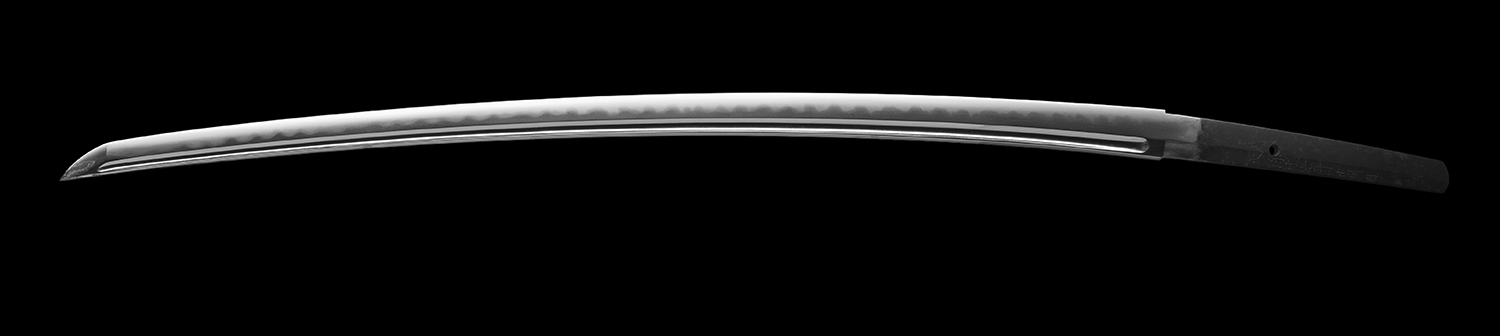


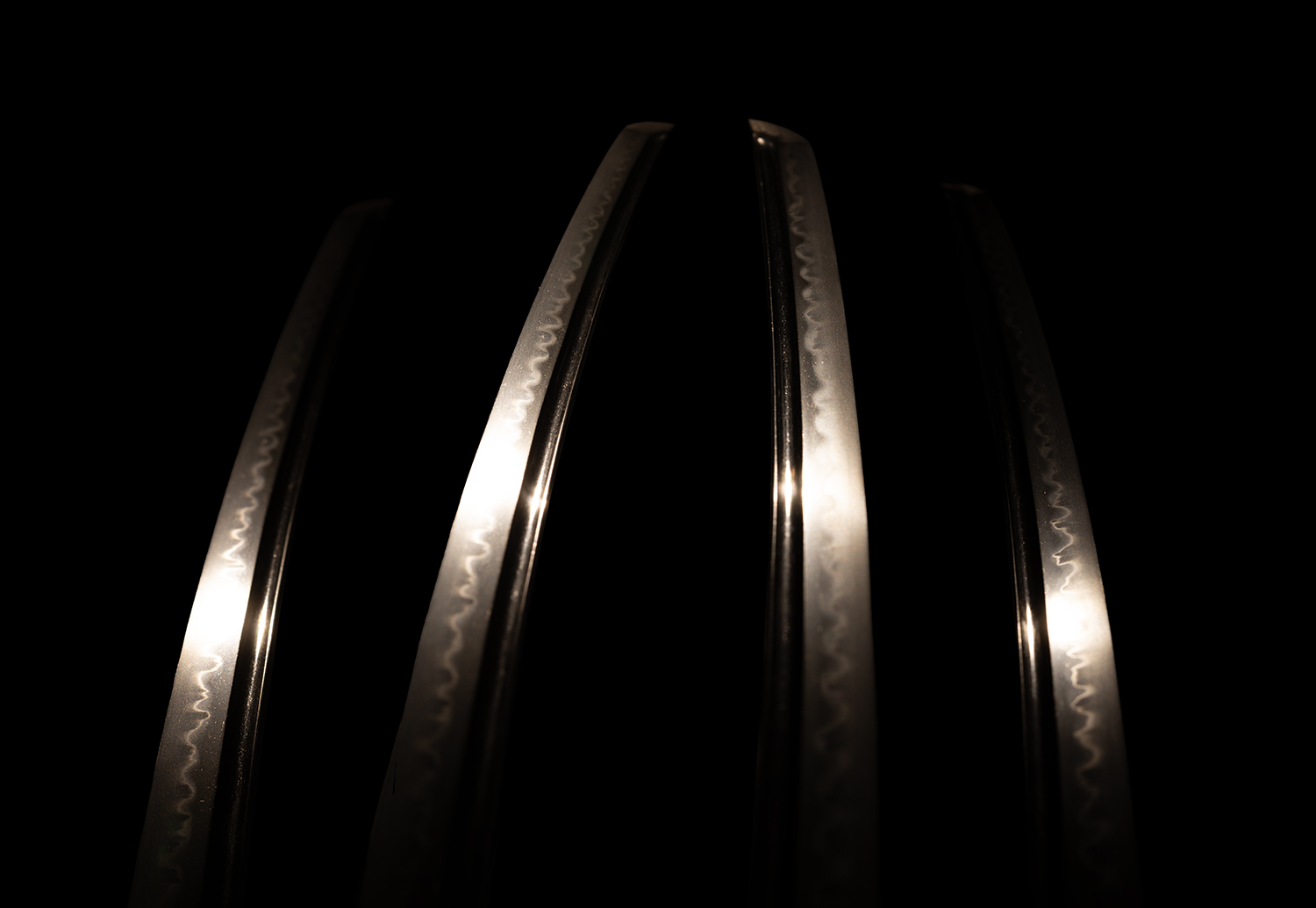
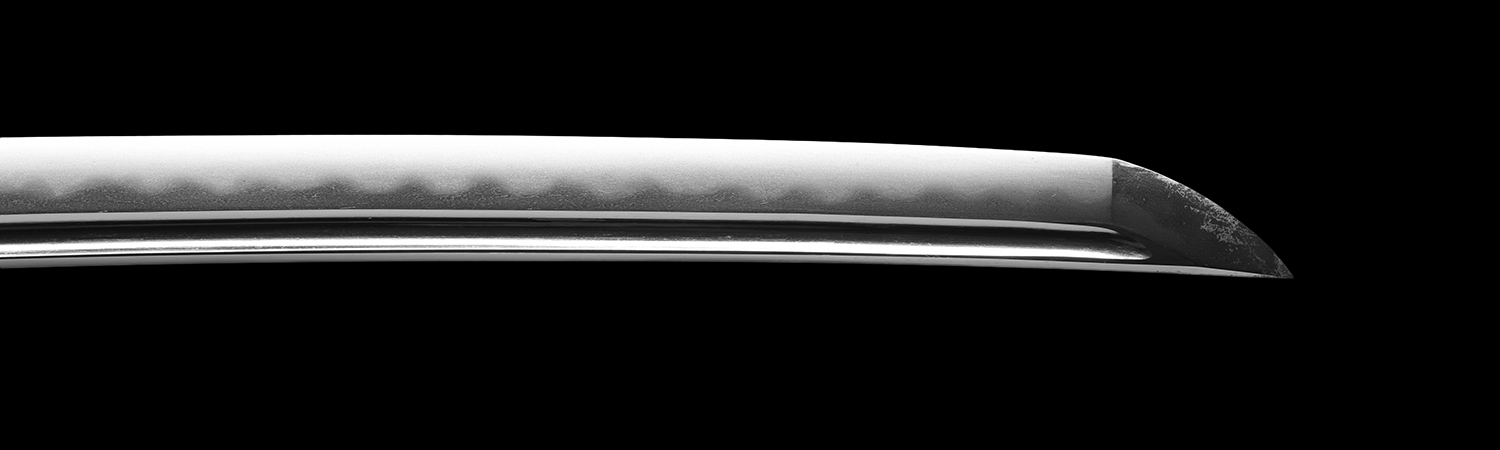
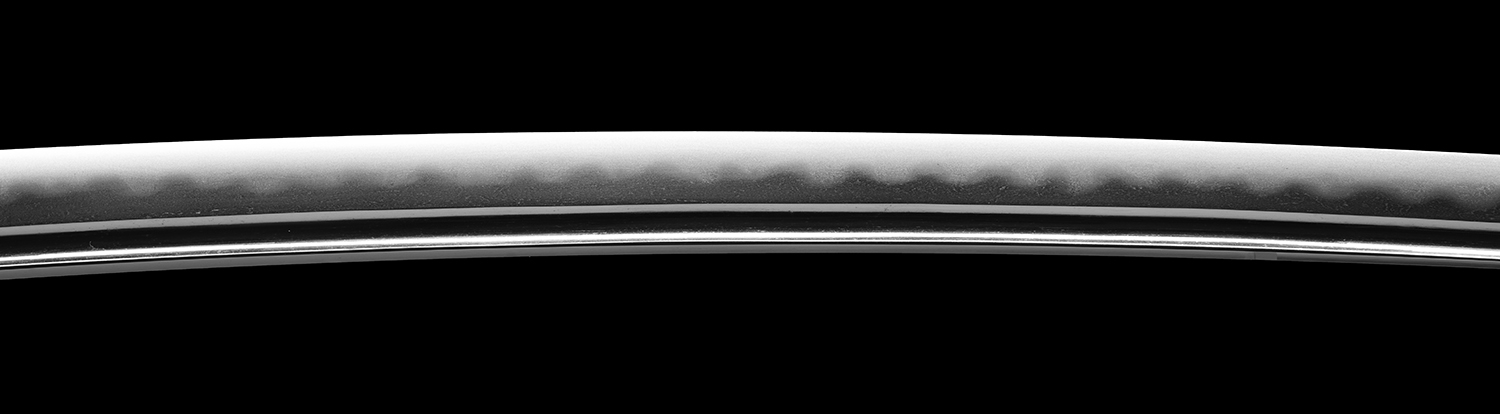
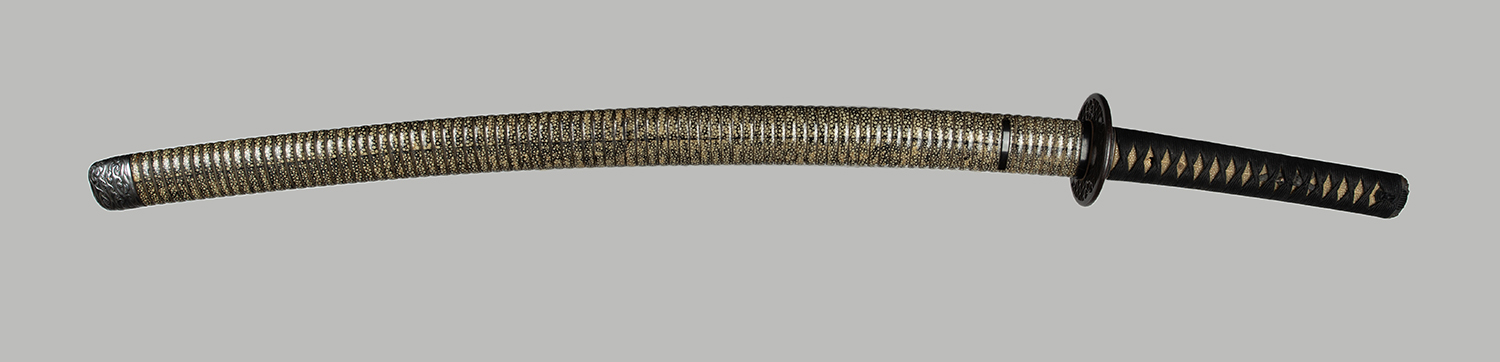
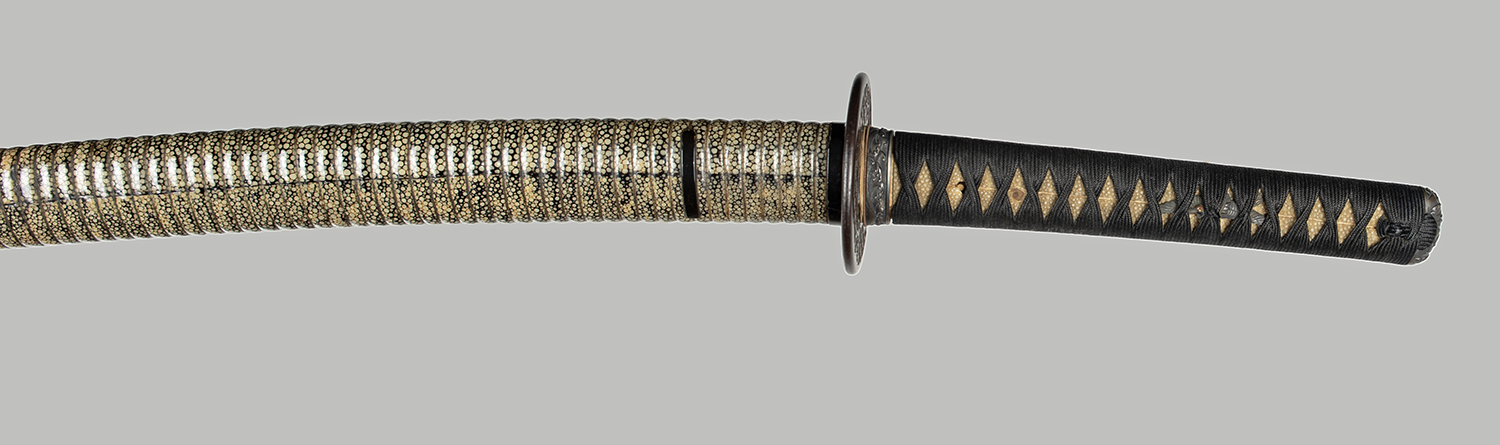
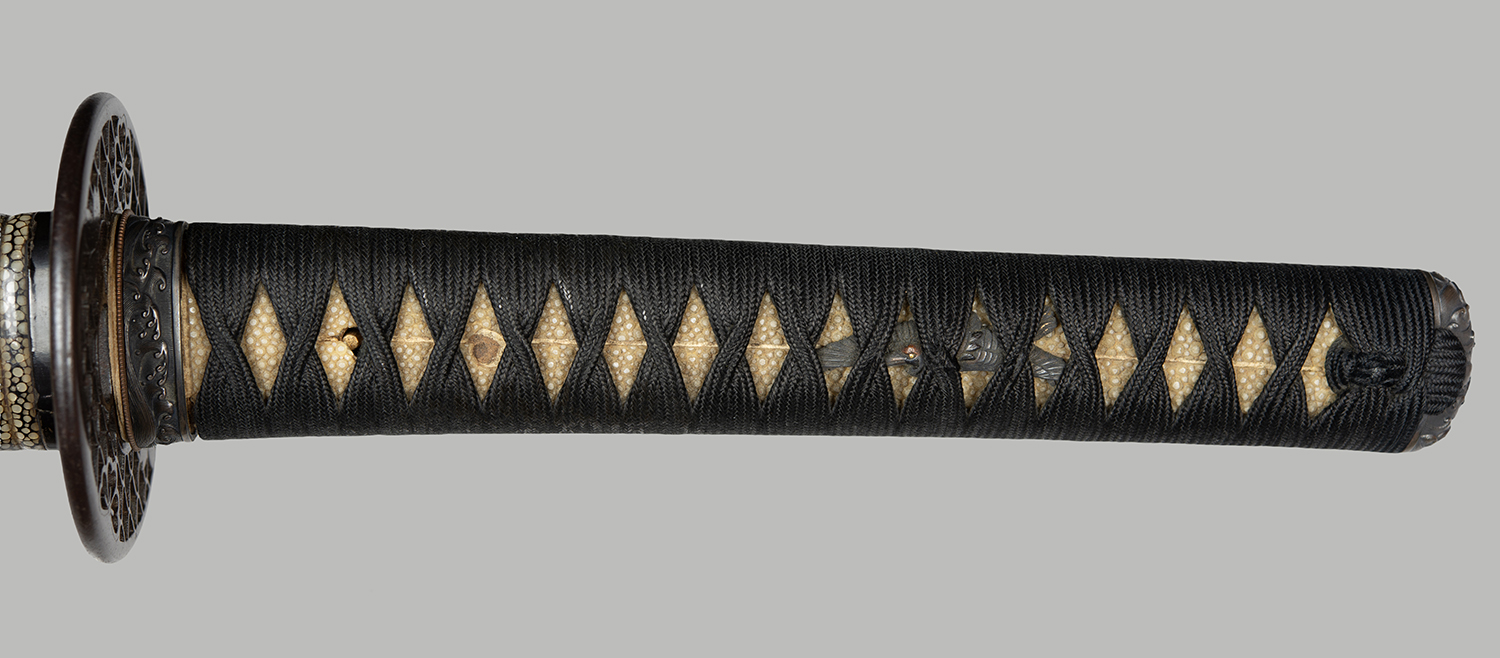
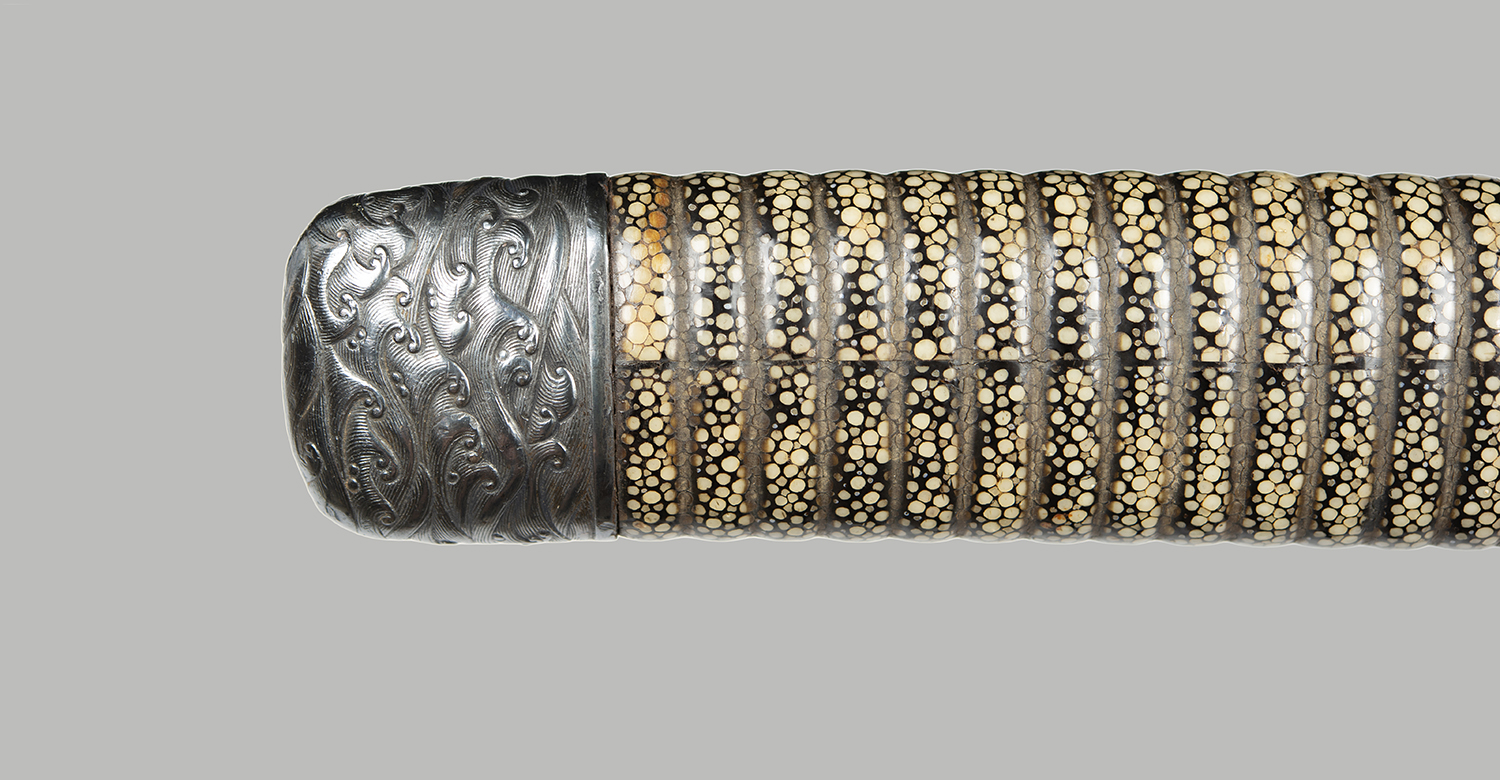
Bizen-den · Higo · around 1830-1868
Tōken Taikan top 87%
1 piece on the market now
Bizen-den · Higo
12 pieces on the market now
The Dōtanuki (同田貫) line took shape in Kikuchi District of Higo Province toward the close of the Muromachi period and carried its activity forward into the shintō era, spanning the Momoyama transition into early Edo. The setsumei of the group's own blades name several of its hands: Ueno no Suke, whose dated work runs from Tenshō through Keichō and who is therefore described as a maker active across the divide between old and new traditions; Fujiwara Masakuni, treated as a leading smith of the school; Masahiro, whose naginata the register notes is absent from the meikan and so supplements that omission; and Matahachi. The accounts further list Samanosuke, Hyōbu, Matahachizaemon, and Kunikatsu among the line's signing smiths. The group is repeatedly framed as a representative Kyūshū lineage of the period, working in the domain that would become the ground of Higo's later military culture. The shared vocabulary of the setsumei is plain and consistent. The sugata is described as sturdy and uncompromising, bukotsu, with wide mihaba, thick kasane, and ample hiraniku, and little difference between base and tip width; on swords the sakizori can be pronounced and the chū-kissaki extended, while the spears and large naginata show flaring, full heads. The kitae is itame, often with nagare and mokume mixed in and a tendency toward hada-dachi, with ji-nie adhering and chikei at times visible.
The hamon moves between two registers: a notare base mixed with ko-gunome, ko-chōji, and ko-togariba, and a quieter suguha with ko-ashi and yō; across both the nioiguchi tends to be tight, nie gathers densely, and sunagashi, kinsuji, tobiyaki, and muneyaki recur. The hand is recognized by this combination of robust unrefined build and a midareba whose tight nioiguchi and clustered nie read as rustic rather than ornamental. The register notes a shizumi-gokoro, a subdued tendency in both ji and ha, that lends a restrained austerity. " The setsumei return again and again to cutting power: the sharpness of these blades is highly praised, and they are recorded as practical weapons carried into use. Provenance survives in mounted form, including a naginata by Masakuni accompanied by a black lacquer mounting with gold maki-e judged contemporary with the blade, and a Matahachi naginata with its black-lacquered pole mounting. Within the line, individual works are singled out as superior examples that convey the school's character, the Ueno no Suke katana of Keichō 16 being read as exceptionally fine among its peers. The register places Dōtanuki as a Higo lineage whose unadorned strength and cutting reputation hold a recognized standing in the shintō-period record. Learn more →
| Smith | Era | Designated |
|---|---|---|
| Kozukenosuke上野介 | 1596-1615 | 0 |
| Muneharu宗春 | 1865-1868 | 0 |
| Kunikatsu國勝 | 1558-1570 | 0 |
| Kagemasa景和 | 1596-1615 | 0 |
| Masakuni正國 | 1573-1592 | 1 |
The Edo period (1615 to 1868)
Edo was the sword’s age of connoisseurship: the Hon’ami appraisers, the shogunal register of famous blades of 1719, and a thriving literature turned the sword into an object of study even as it ceased to be drawn in war.
The NTHK’s principal certificate, issued for a blade of considerable quality. It confirms a genuine signature, or, for an unsigned (mumei) work, records the judges’ attribution to a smith or school. The paper carries a detailed worksheet with a numerical point score.
The NTHK (Nihon Tōken Hozon Kai, the Society for the Preservation of the Japanese Sword) is the oldest of Japan’s sword-appraisal bodies, founded in 1910, decades before the NBTHK. After the death of its long-serving head it divided into two successor societies, the NTHK and the NTHK-NPO, both of which continue to hold shinsa. NTHK blade certificates are known for a detailed worksheet that records a numerical point score alongside the judges’ written opinion (fitting papers carry the judges’ opinion without a point score), and the society is especially respected for its attribution of unsigned (mumei) work.
3 day inspection period on all sales. Items can be returned for any reason for a full refund, less return shipping cost. Returned items must be in the same condition as when purchased.
$15,000