War at home and trade abroad made Muromachi Bizen the busiest forge region in Japan: a century of Sengoku demand after the Ōnin War, and export missions to Ming China carrying blades by the tens of thousands.
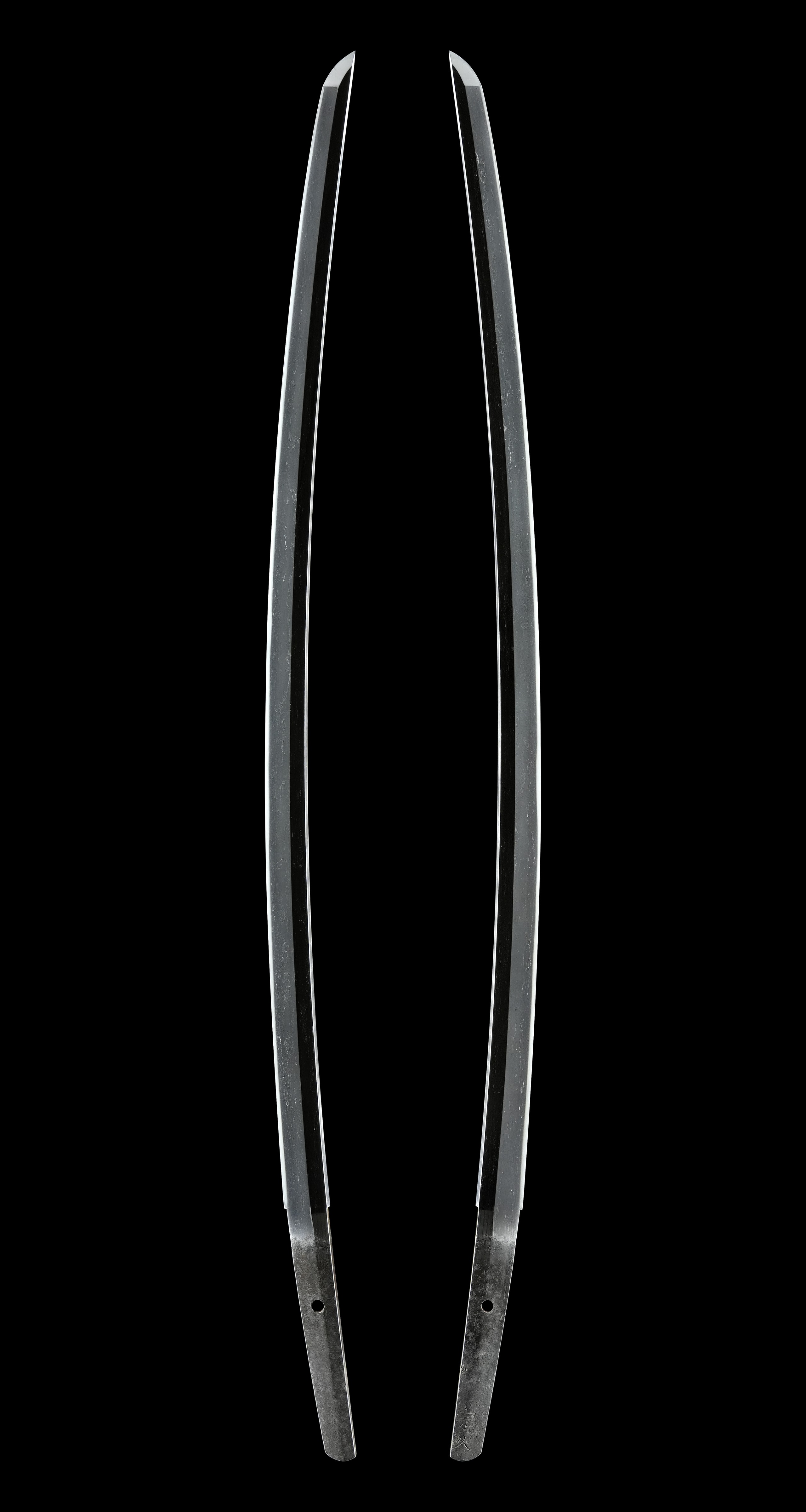
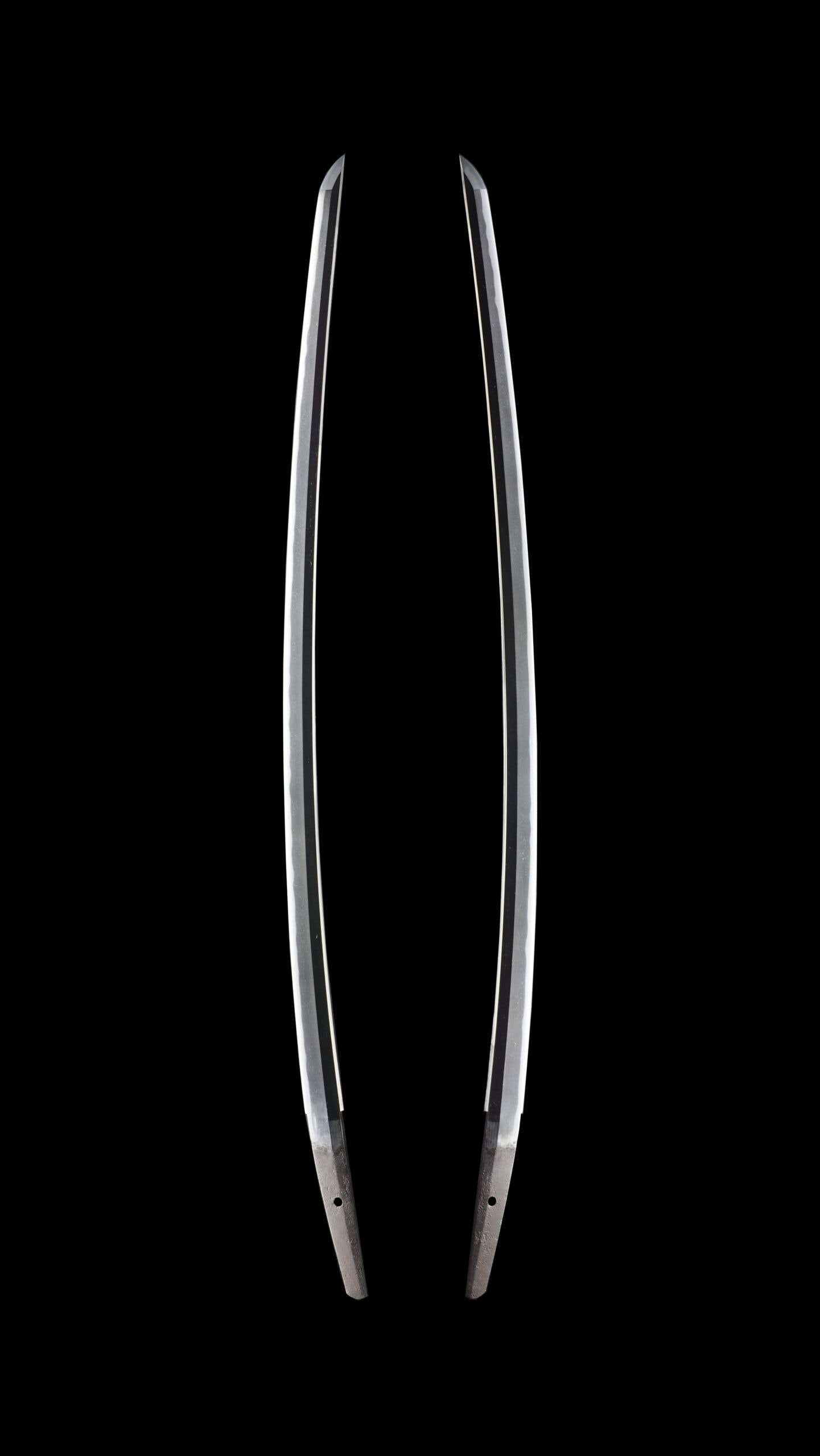
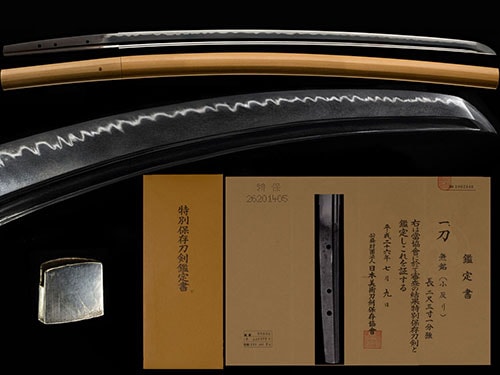
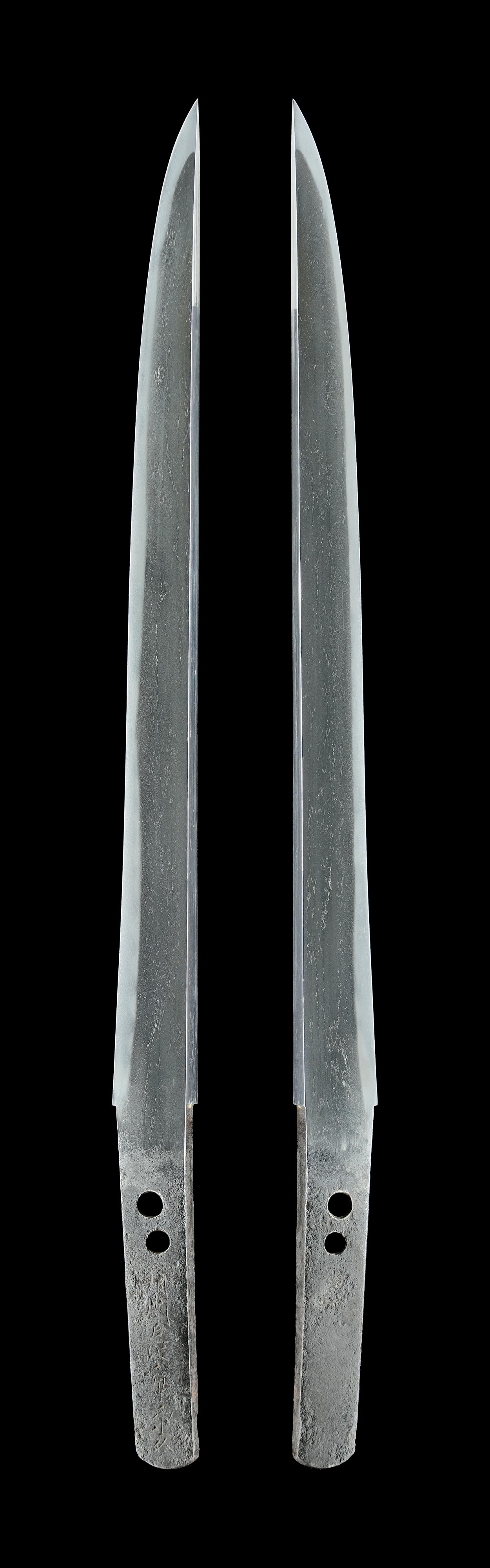
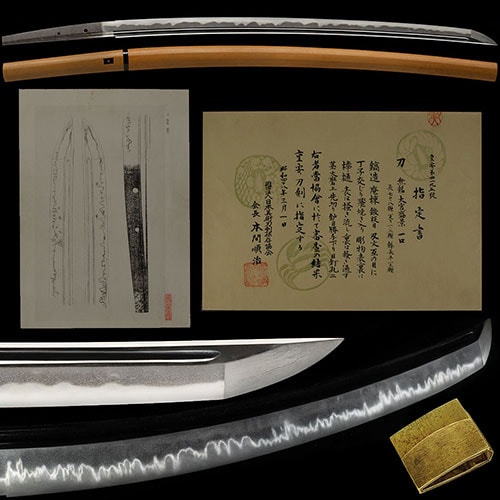
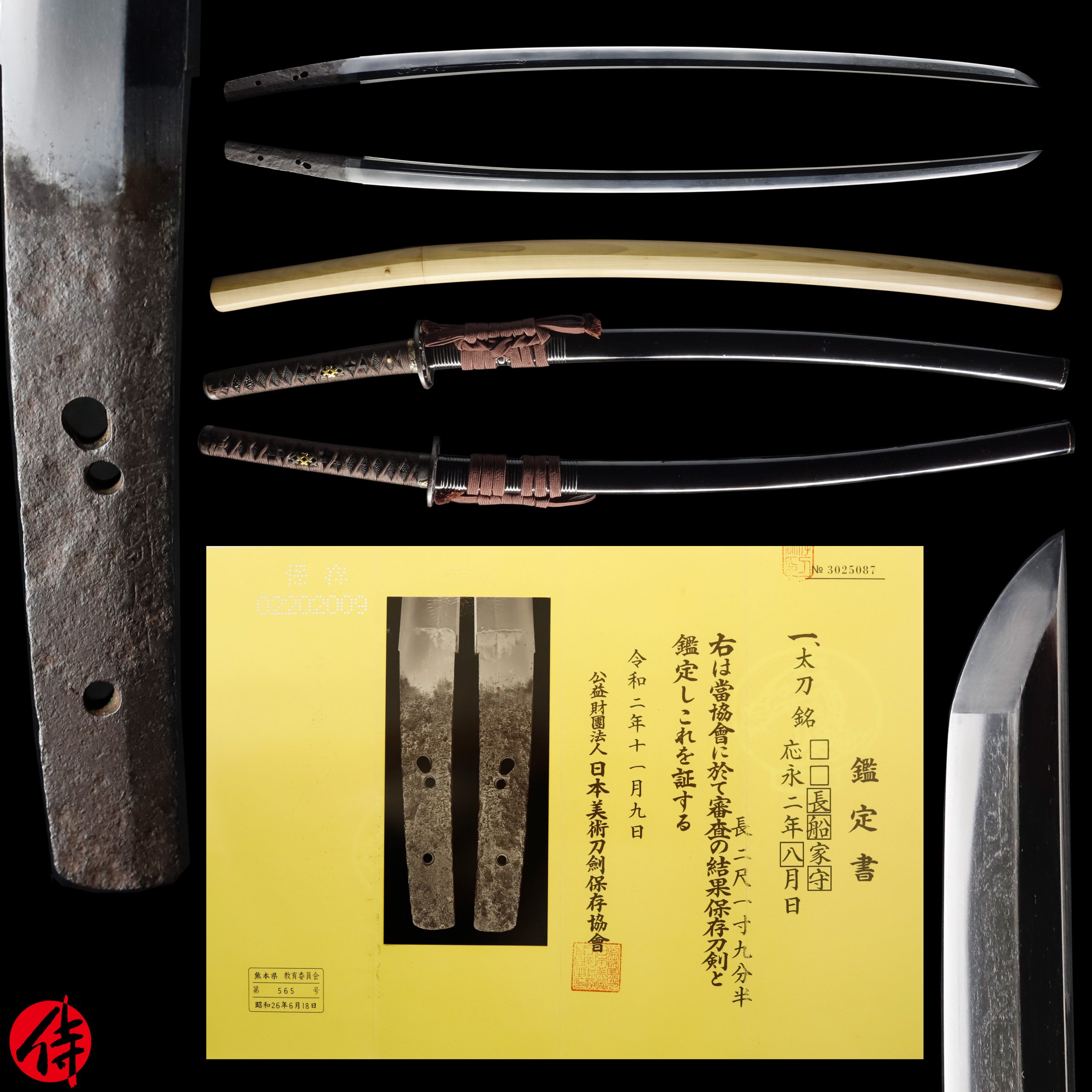
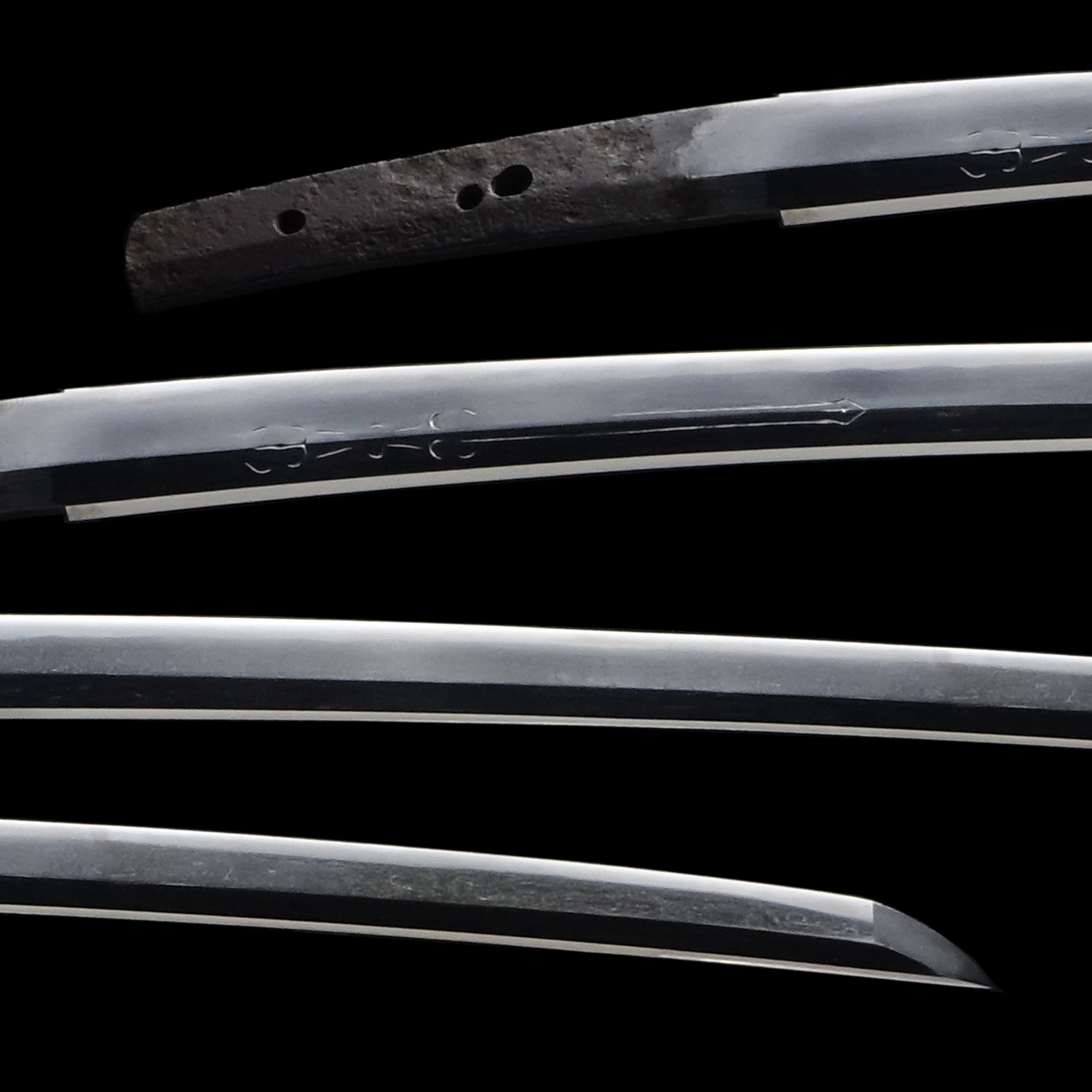
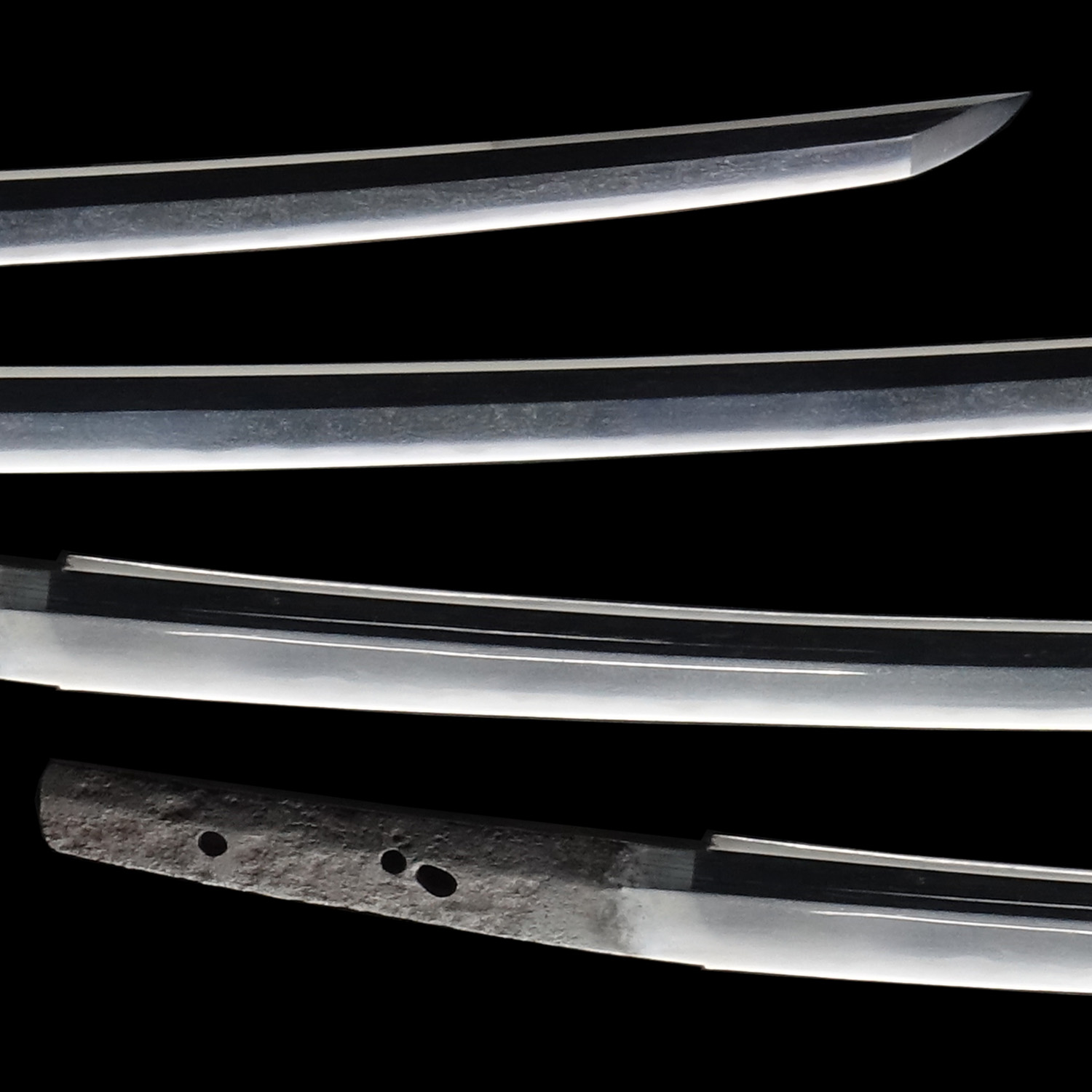
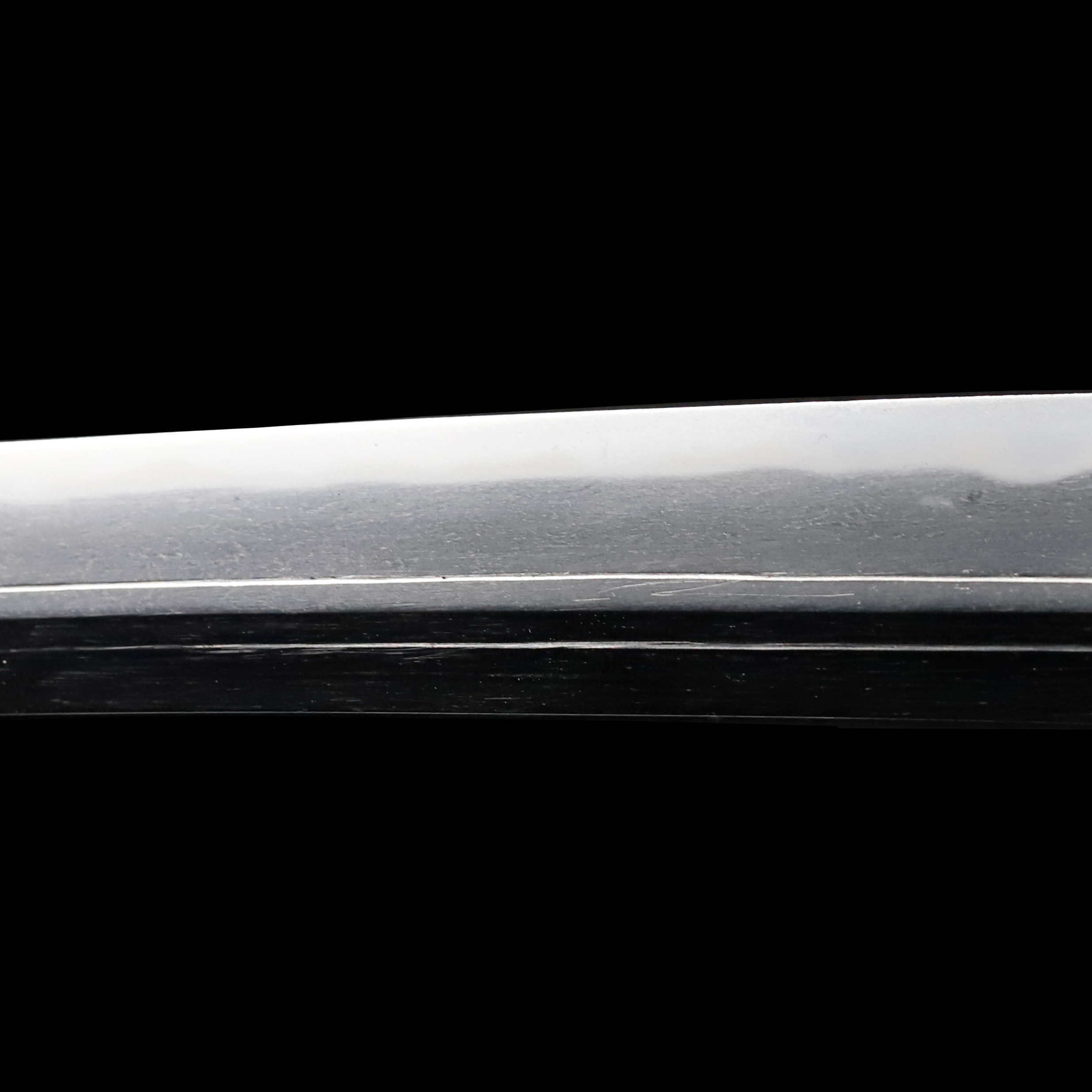
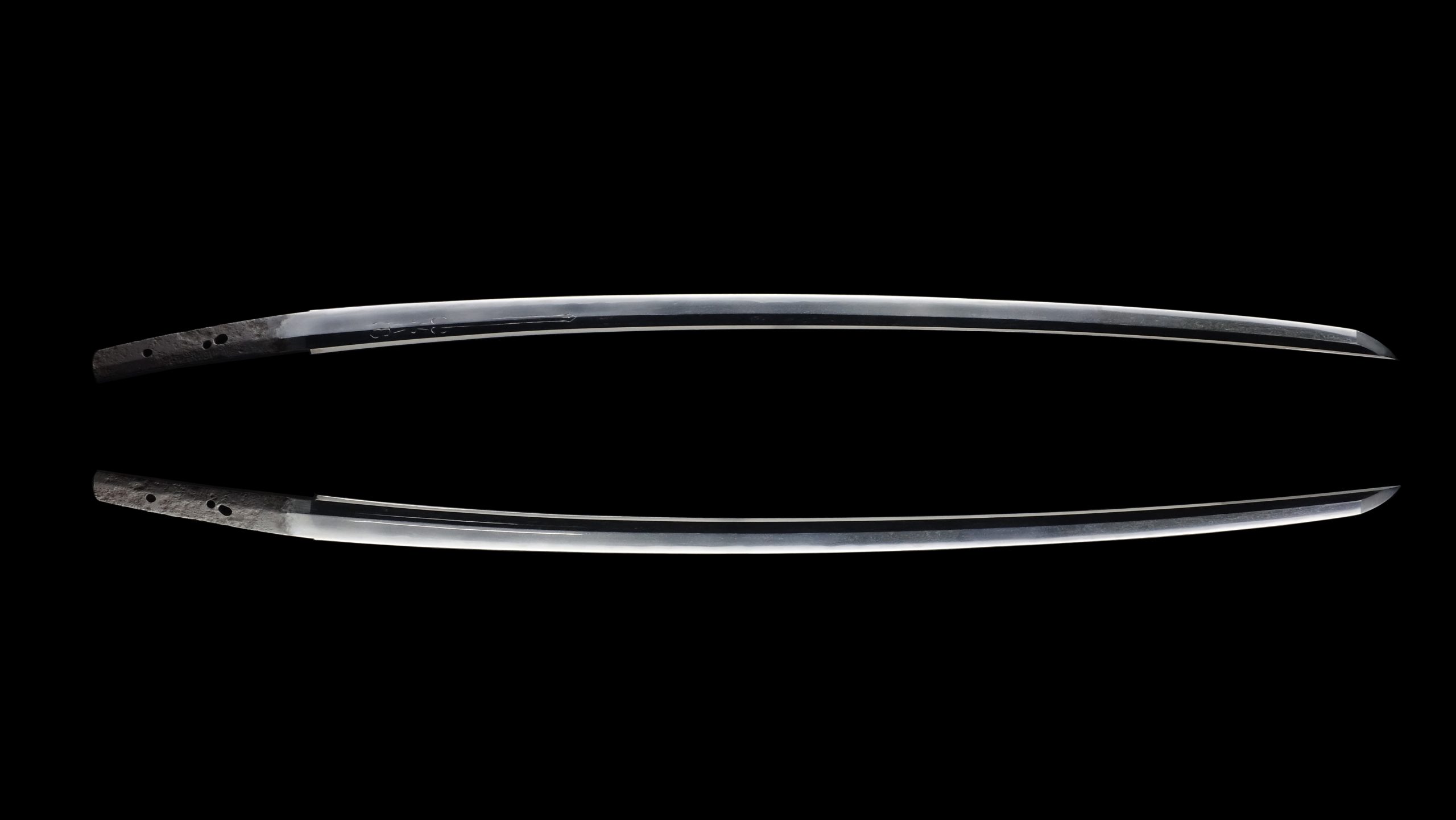
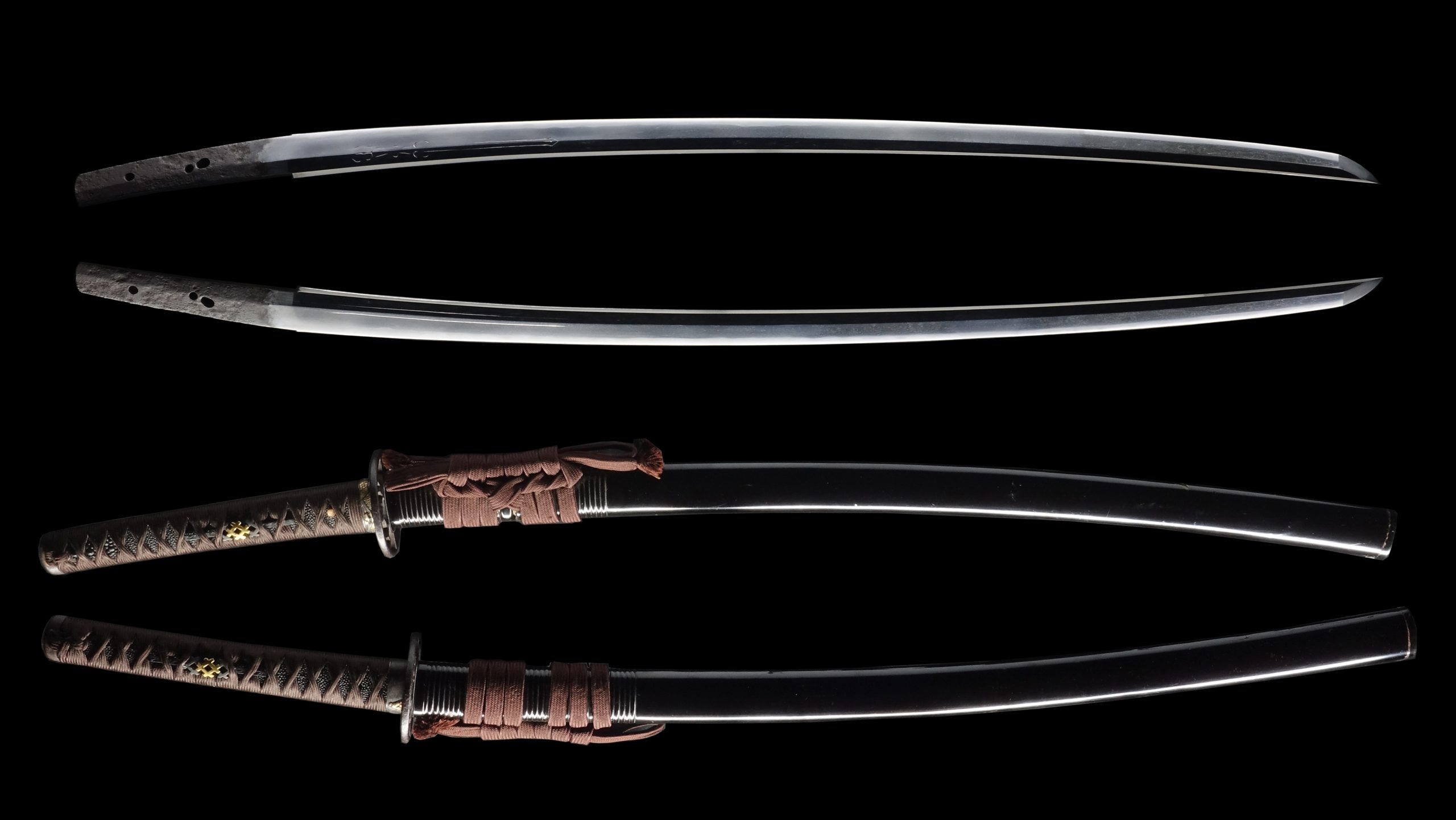
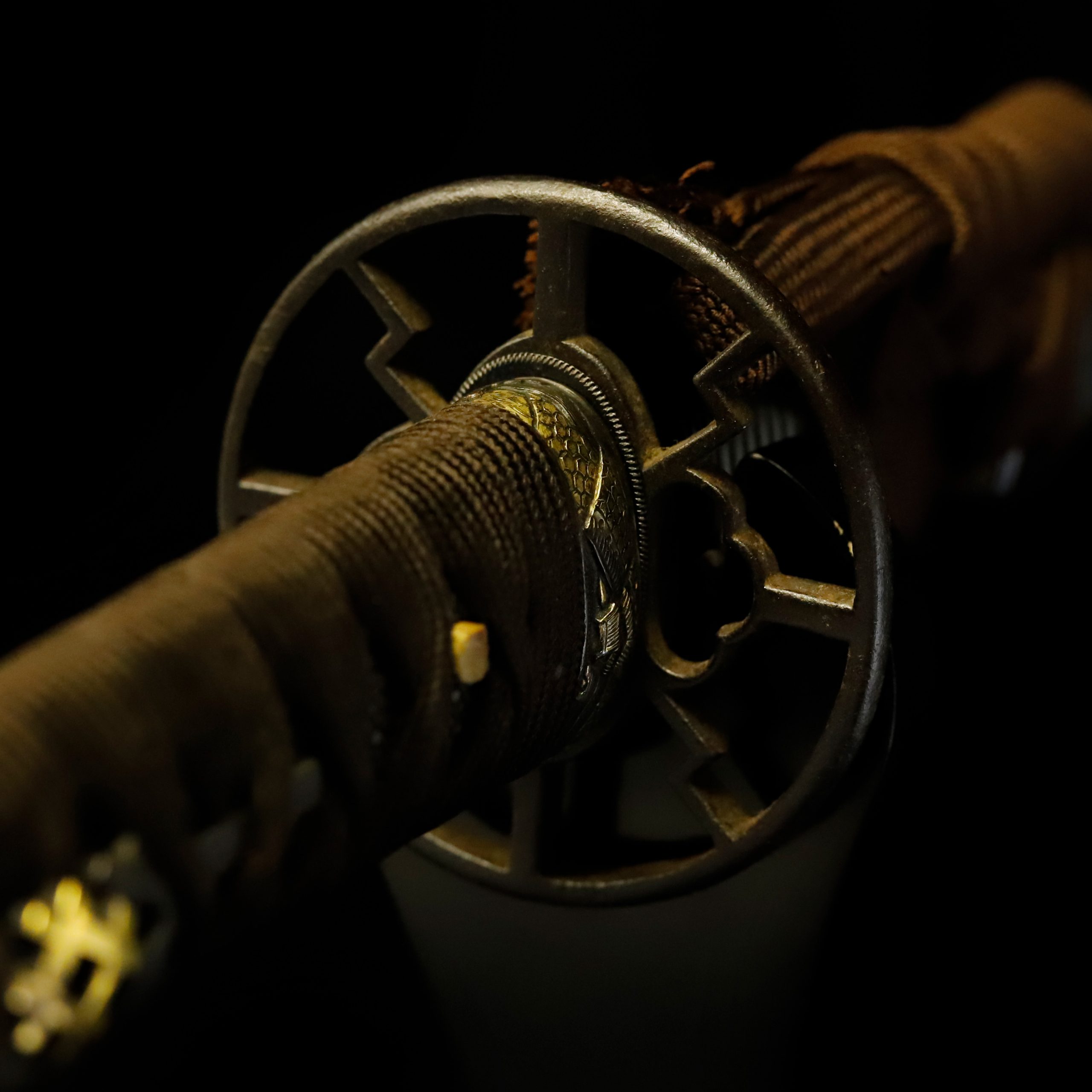
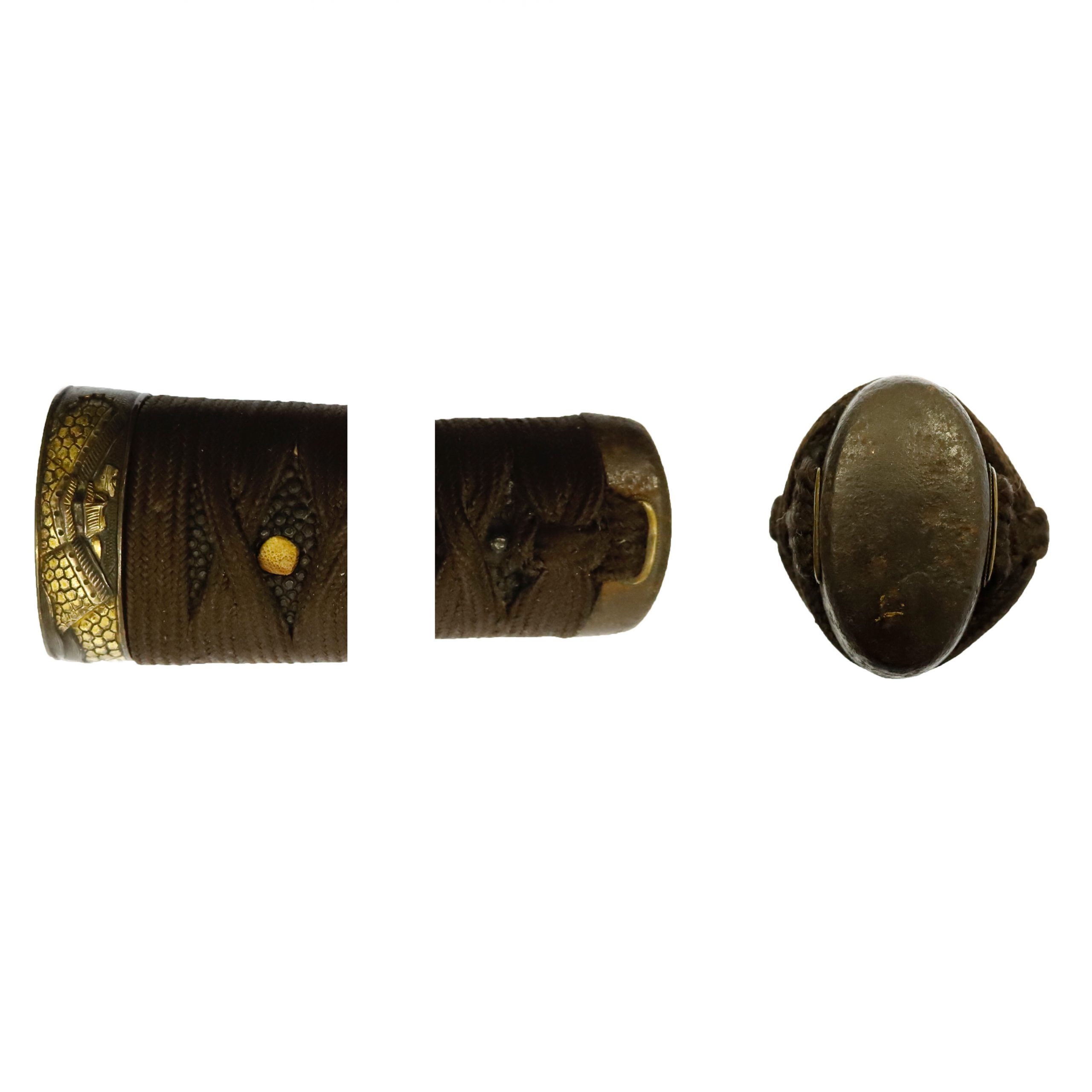
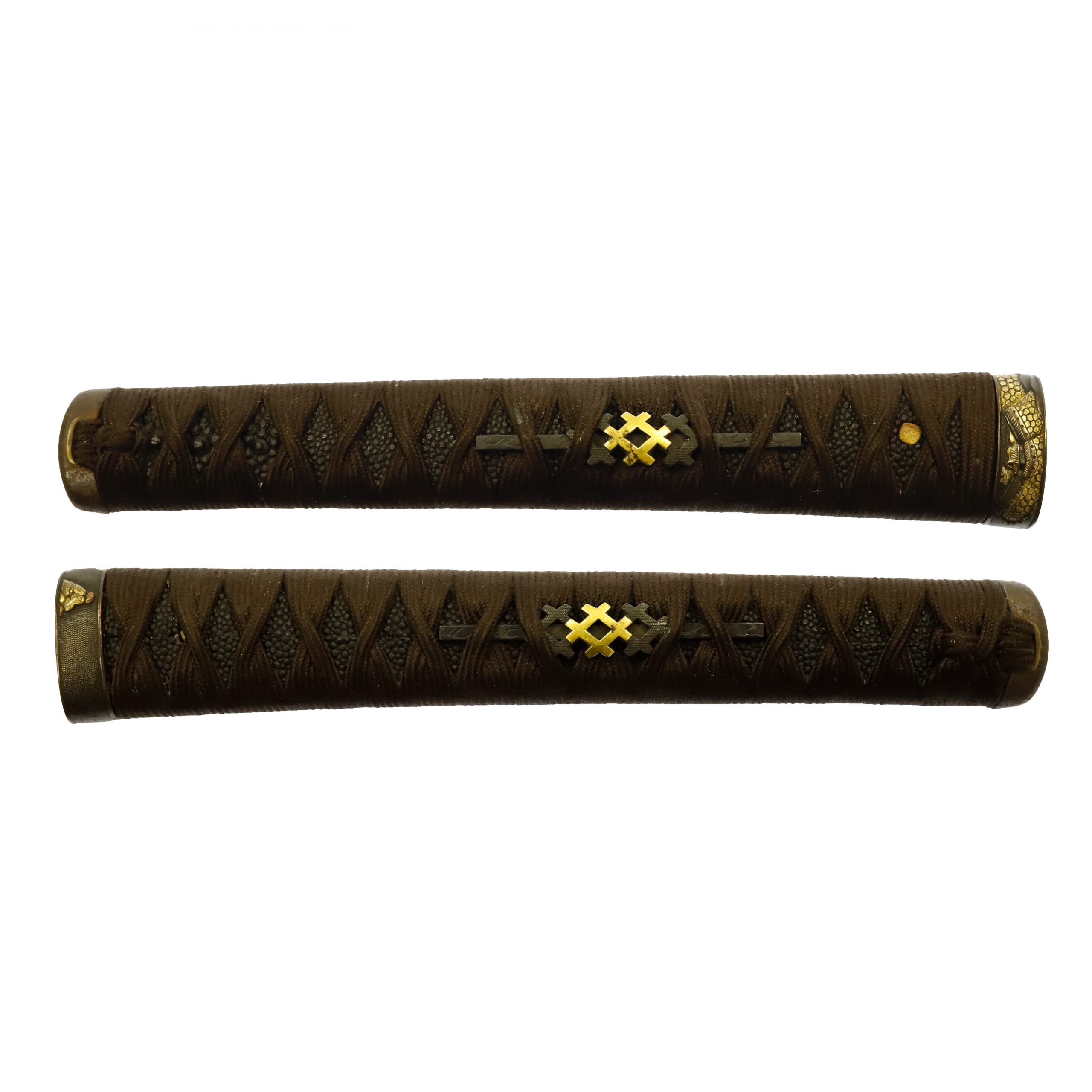
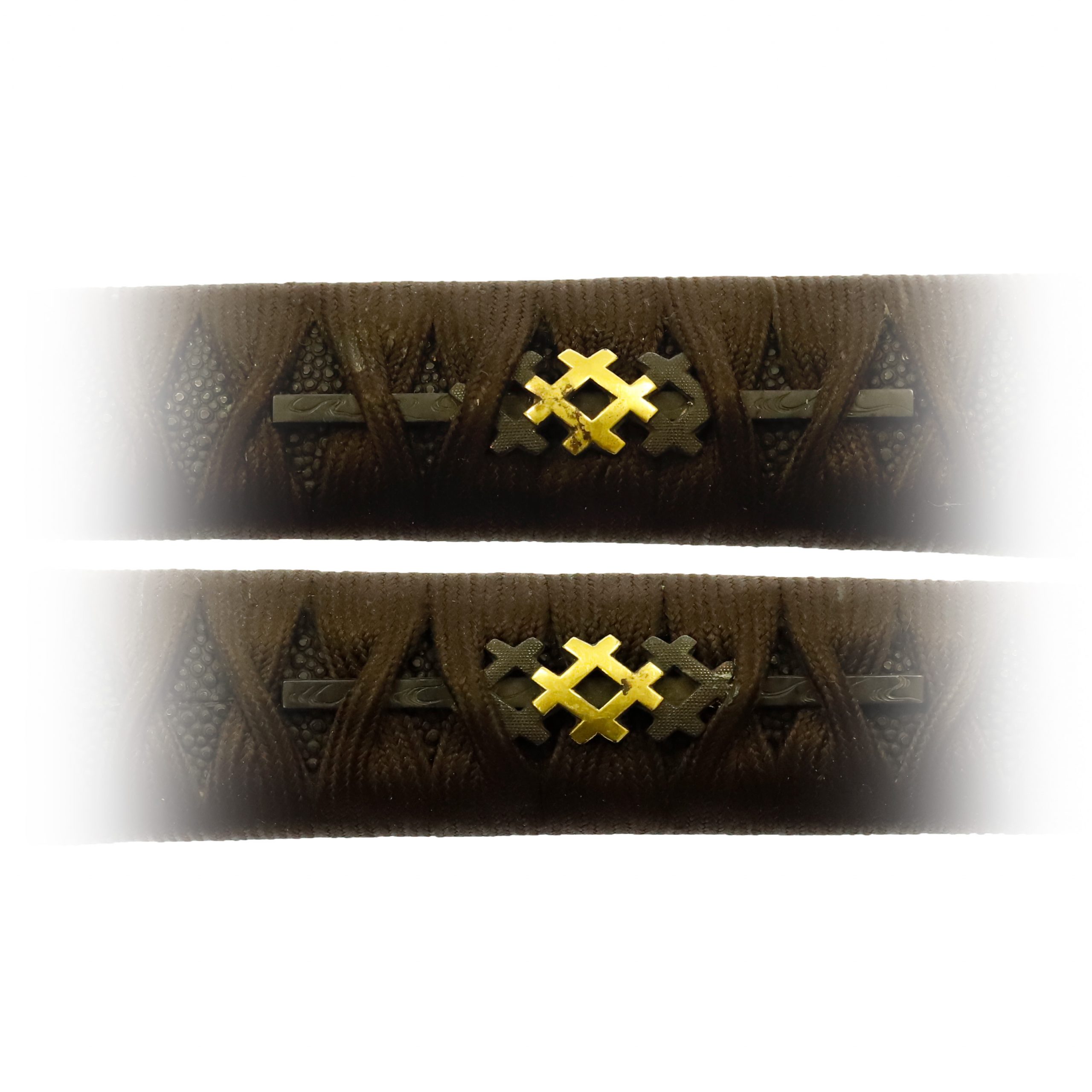
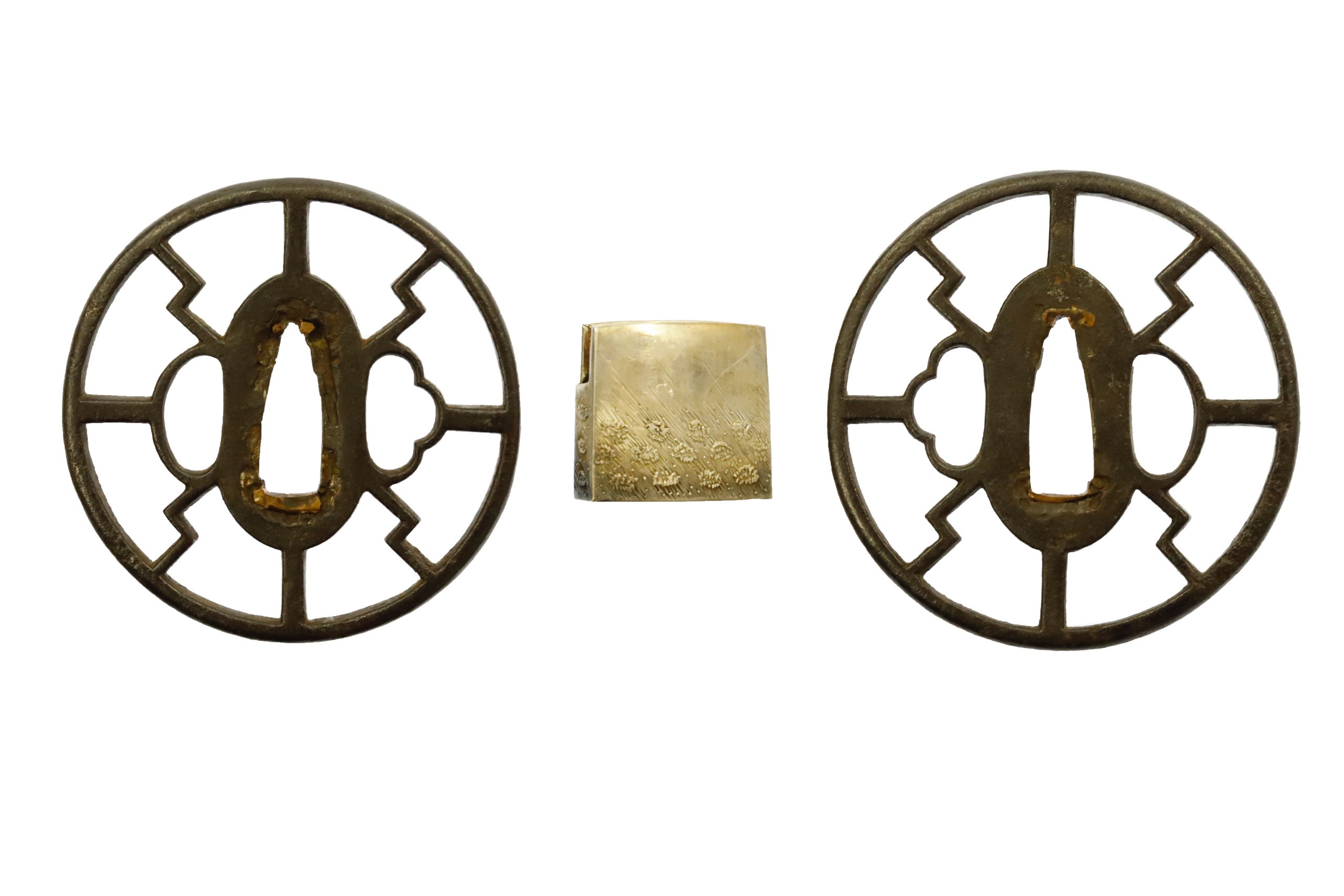
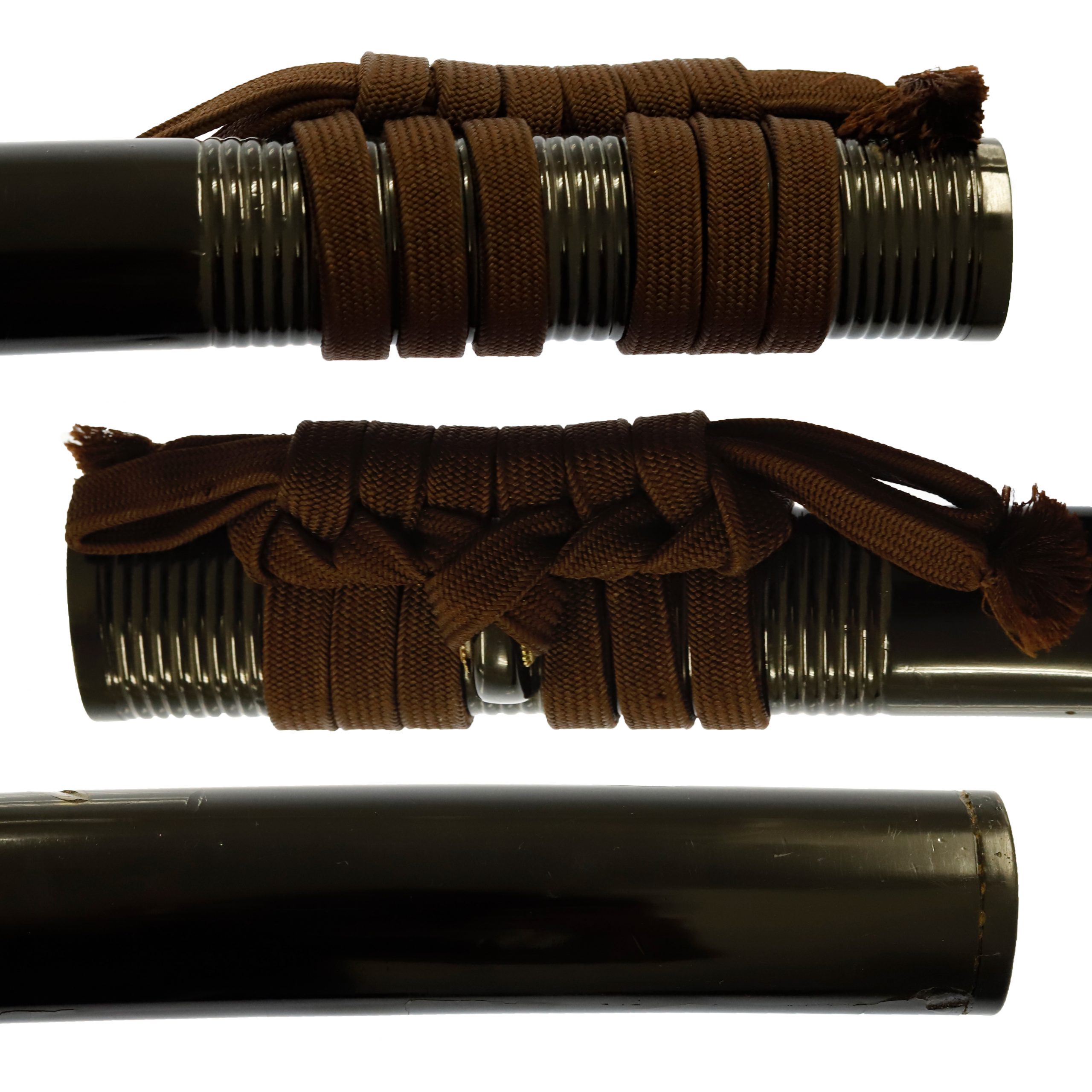
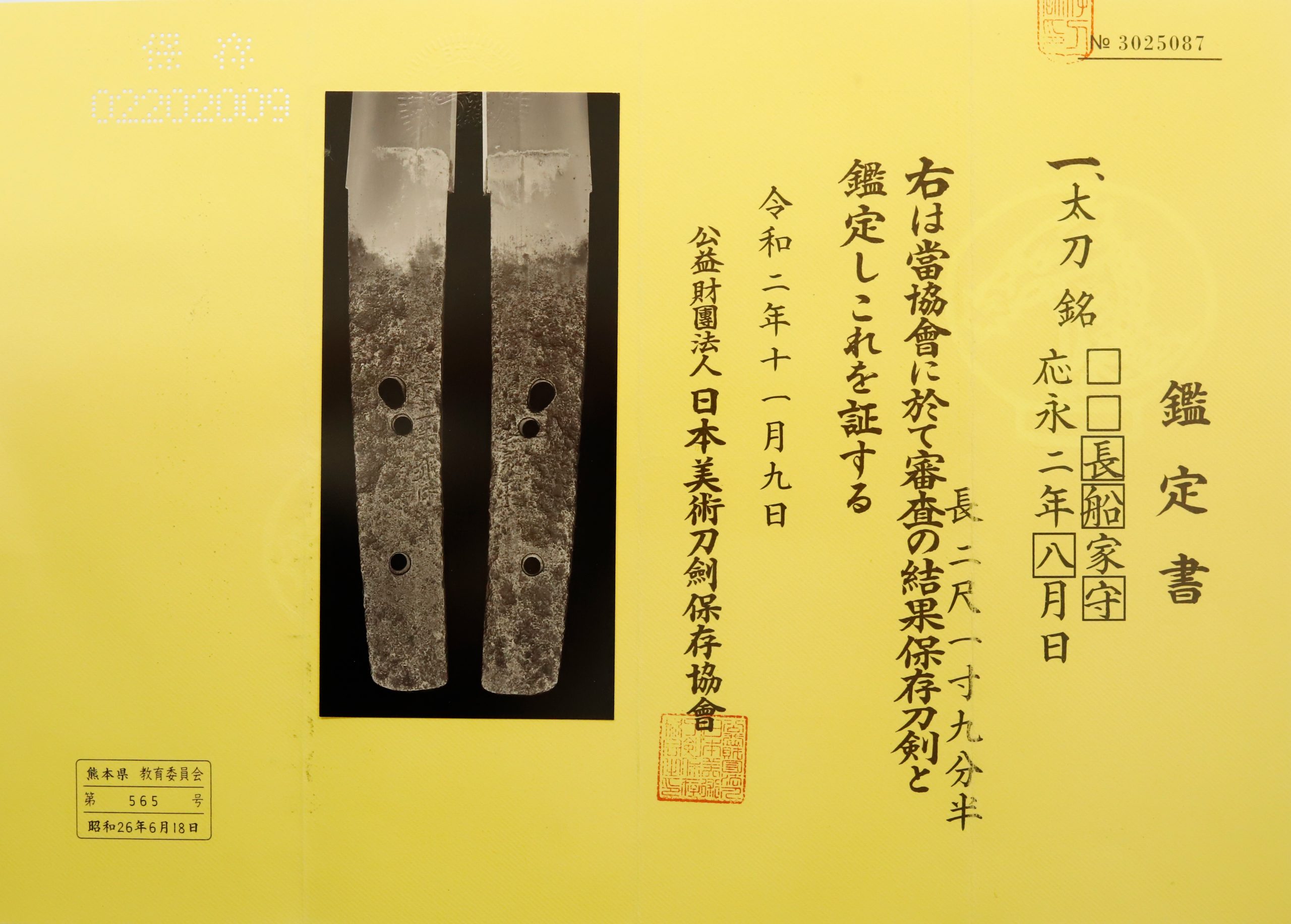
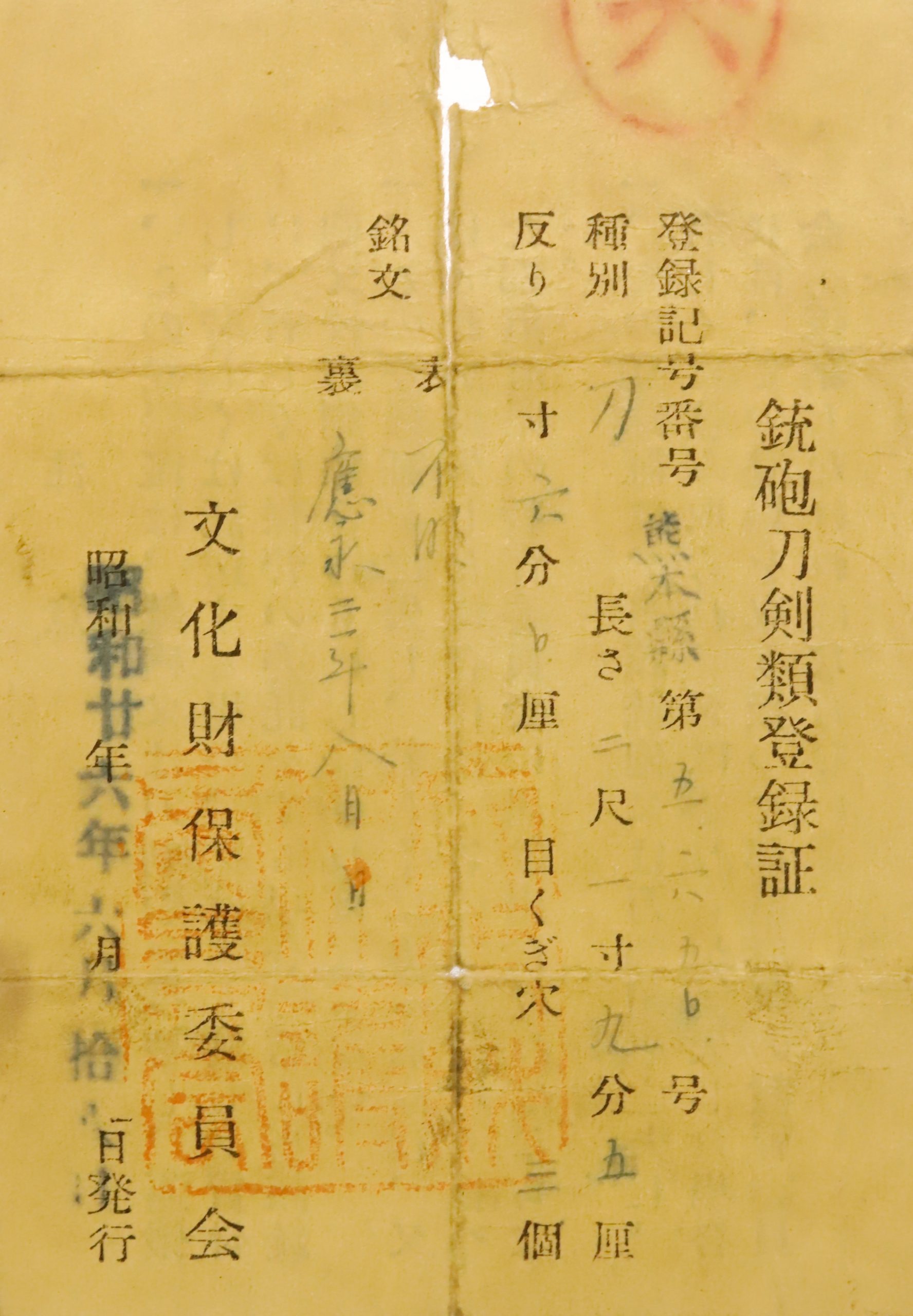
This katana is signed by Bizen Osafune Iemori, active in the early Muromachi period (1395). It features a Tsurugi (double-edged blade) Horimono, possibly Kurikaraken, and comes with a complete koshirae mounting. The blade is certified Hozon Token by the NBTHK, confirming its authenticity and artistic value.
 NihontoWatch
mei · Osafune · Muromachi · nagasa 66.5cm · sori 1.8cm
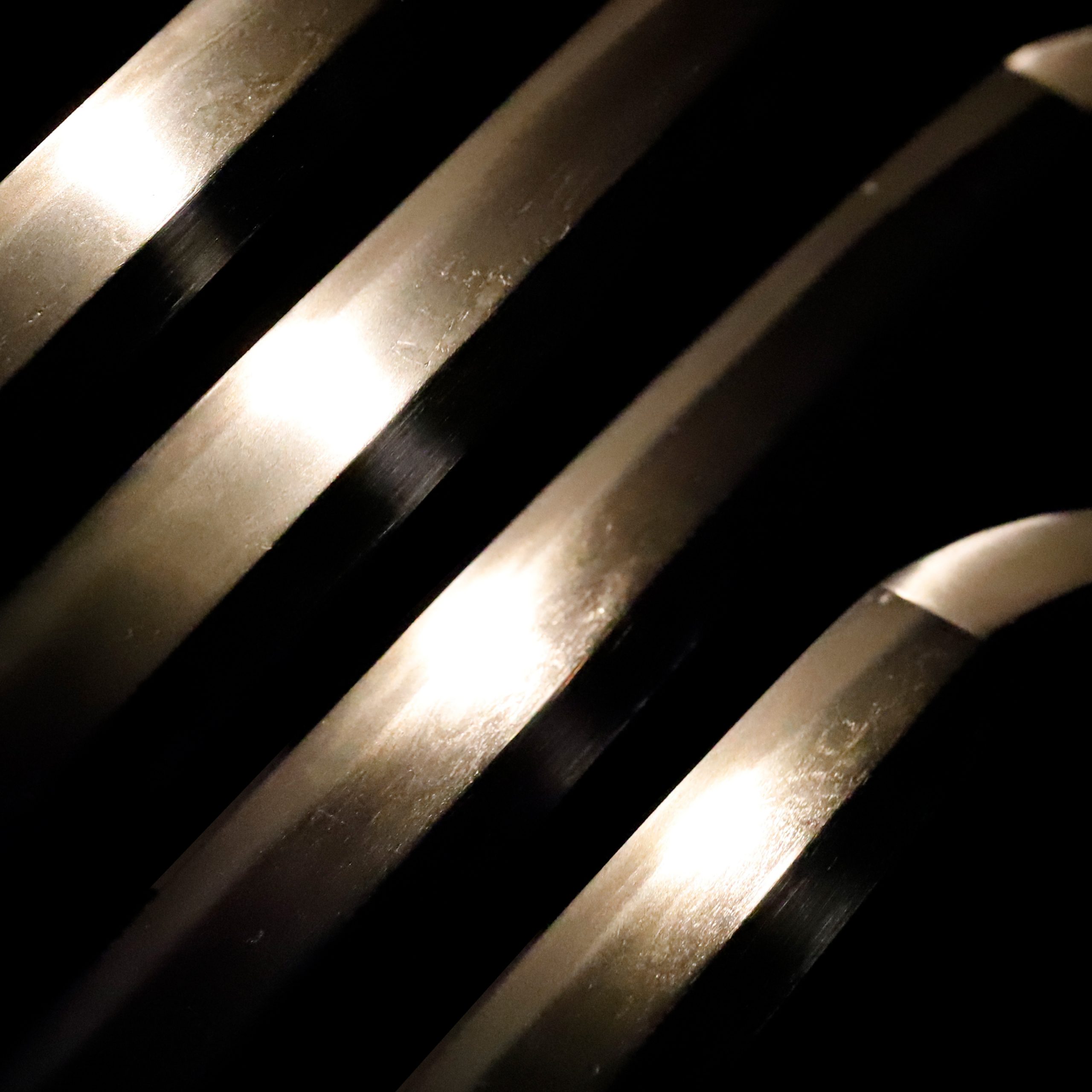
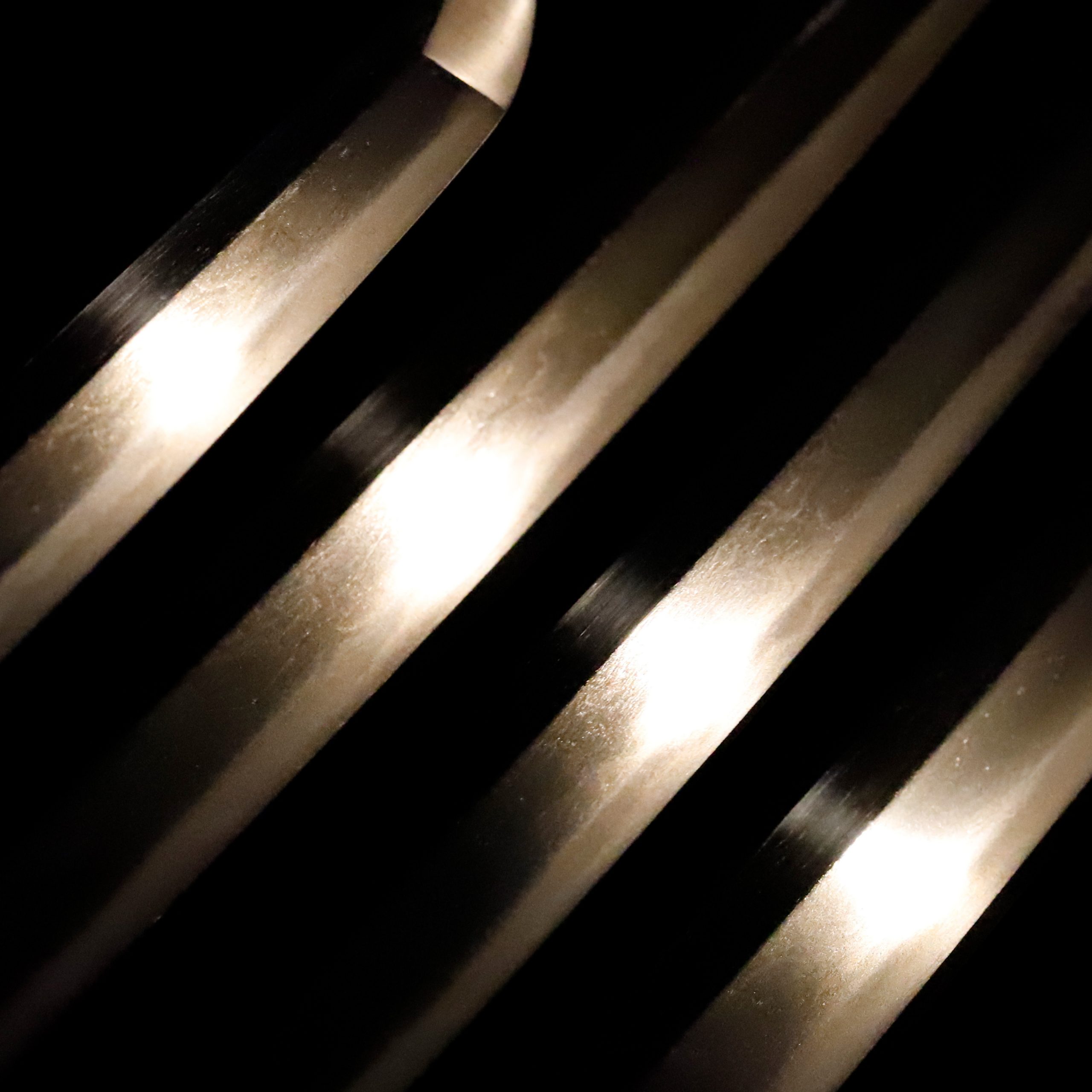
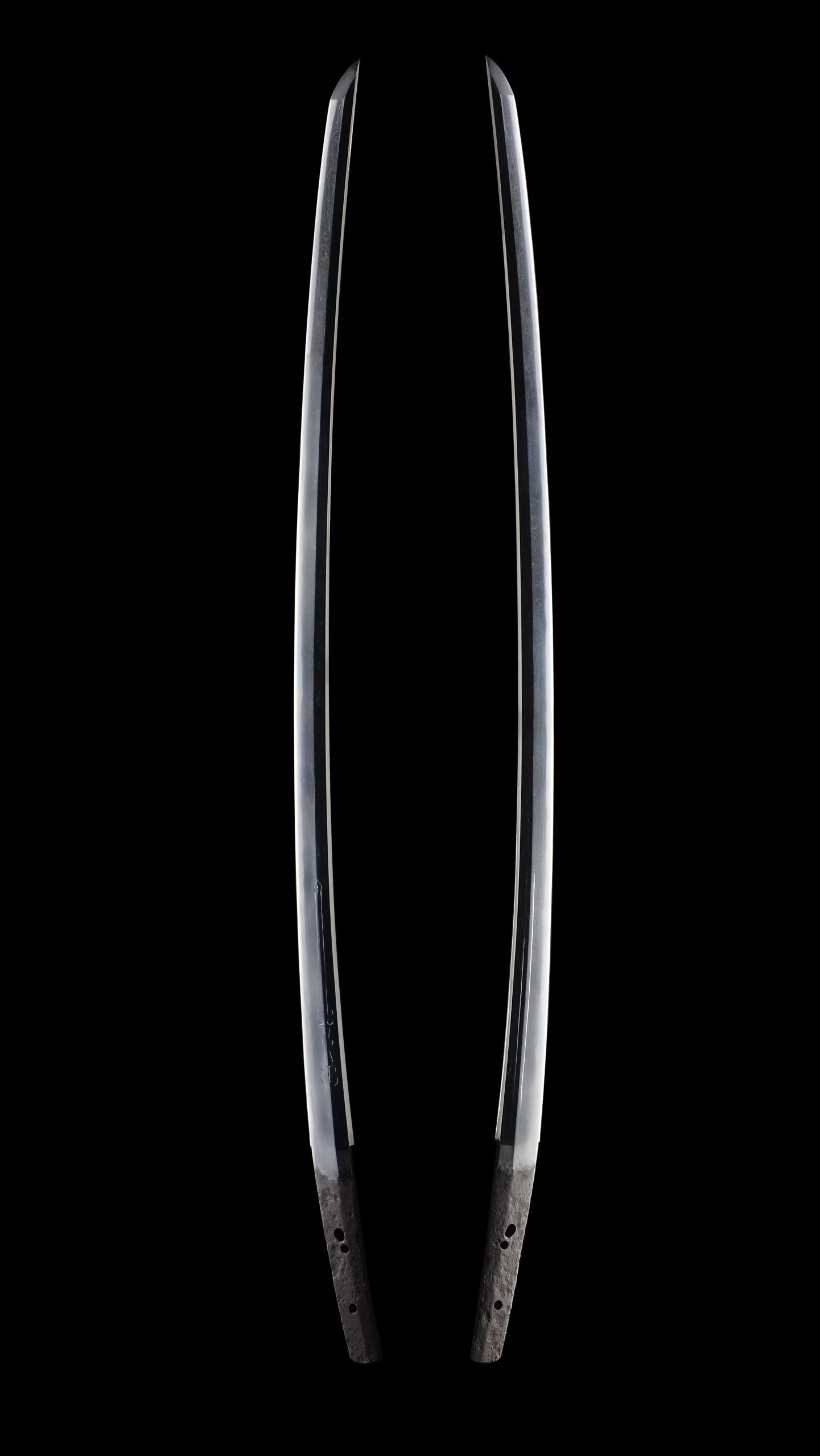
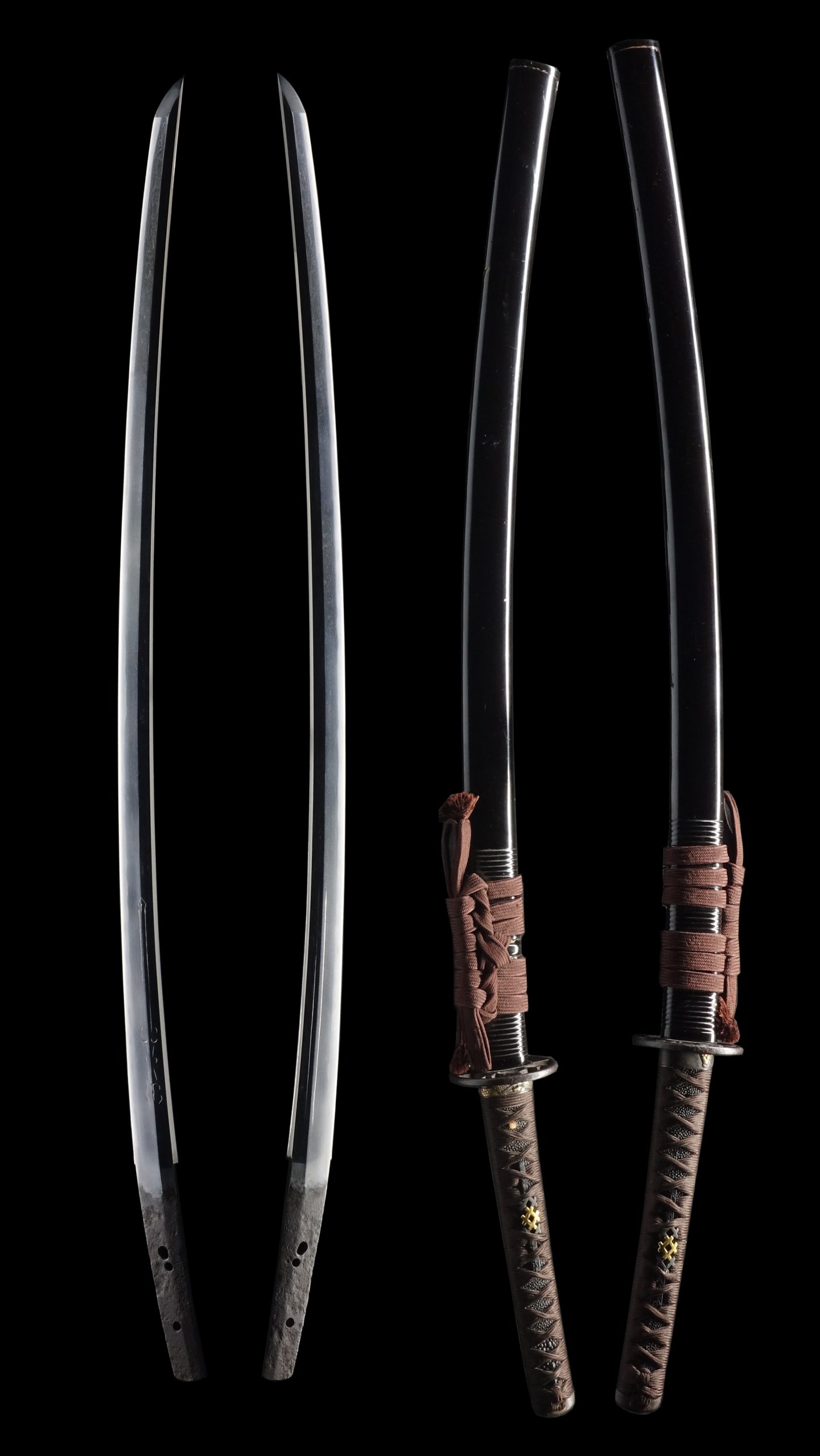
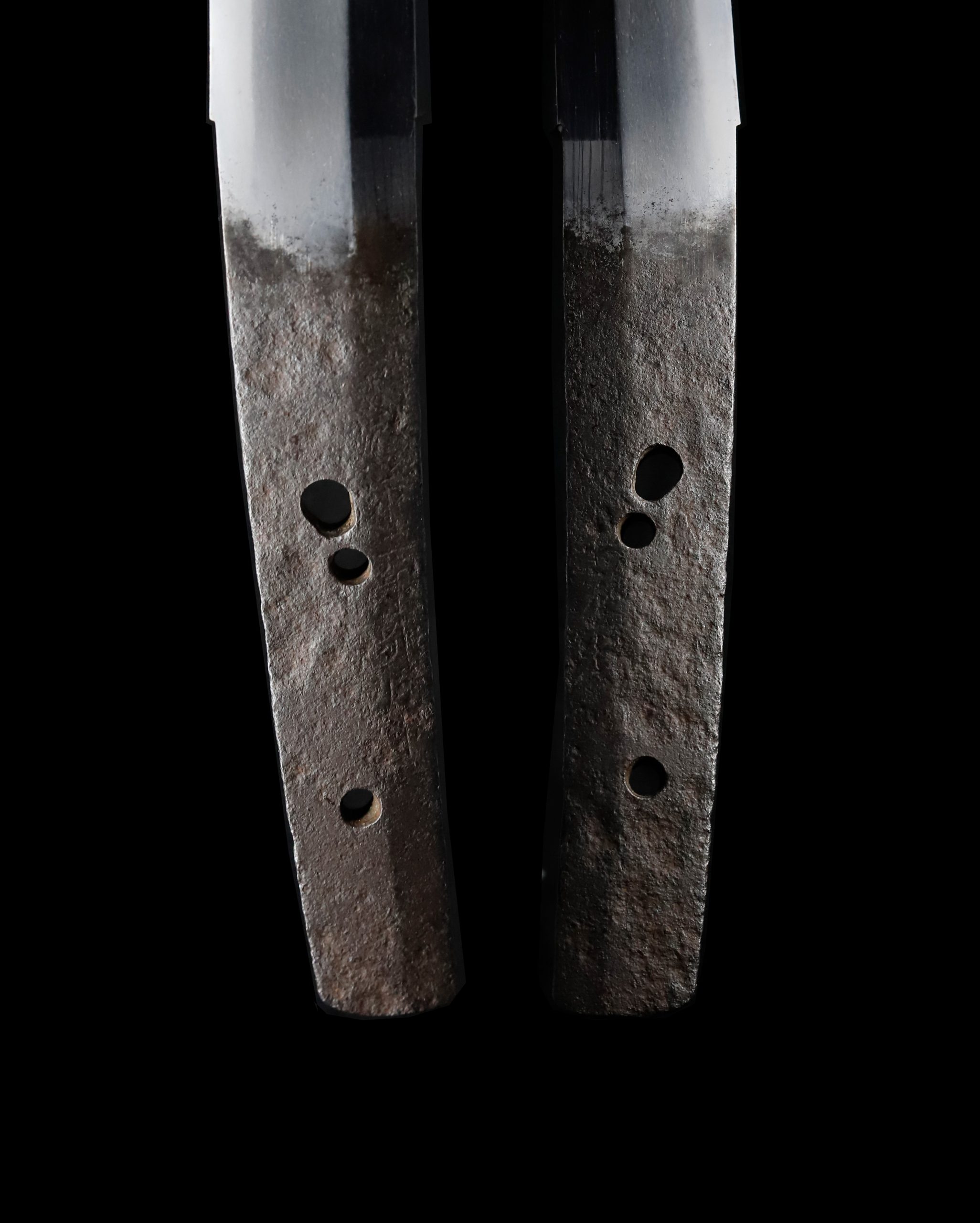
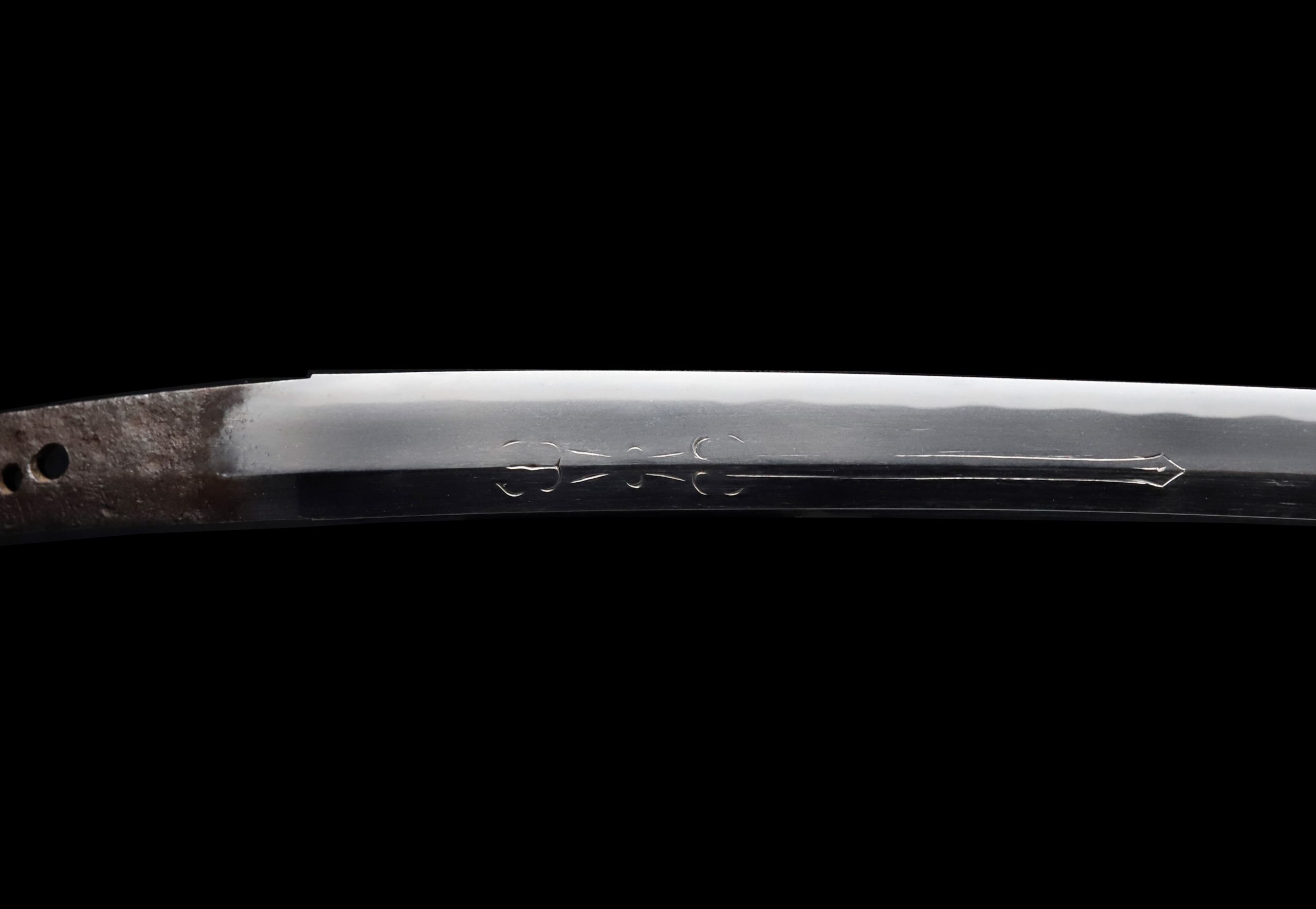
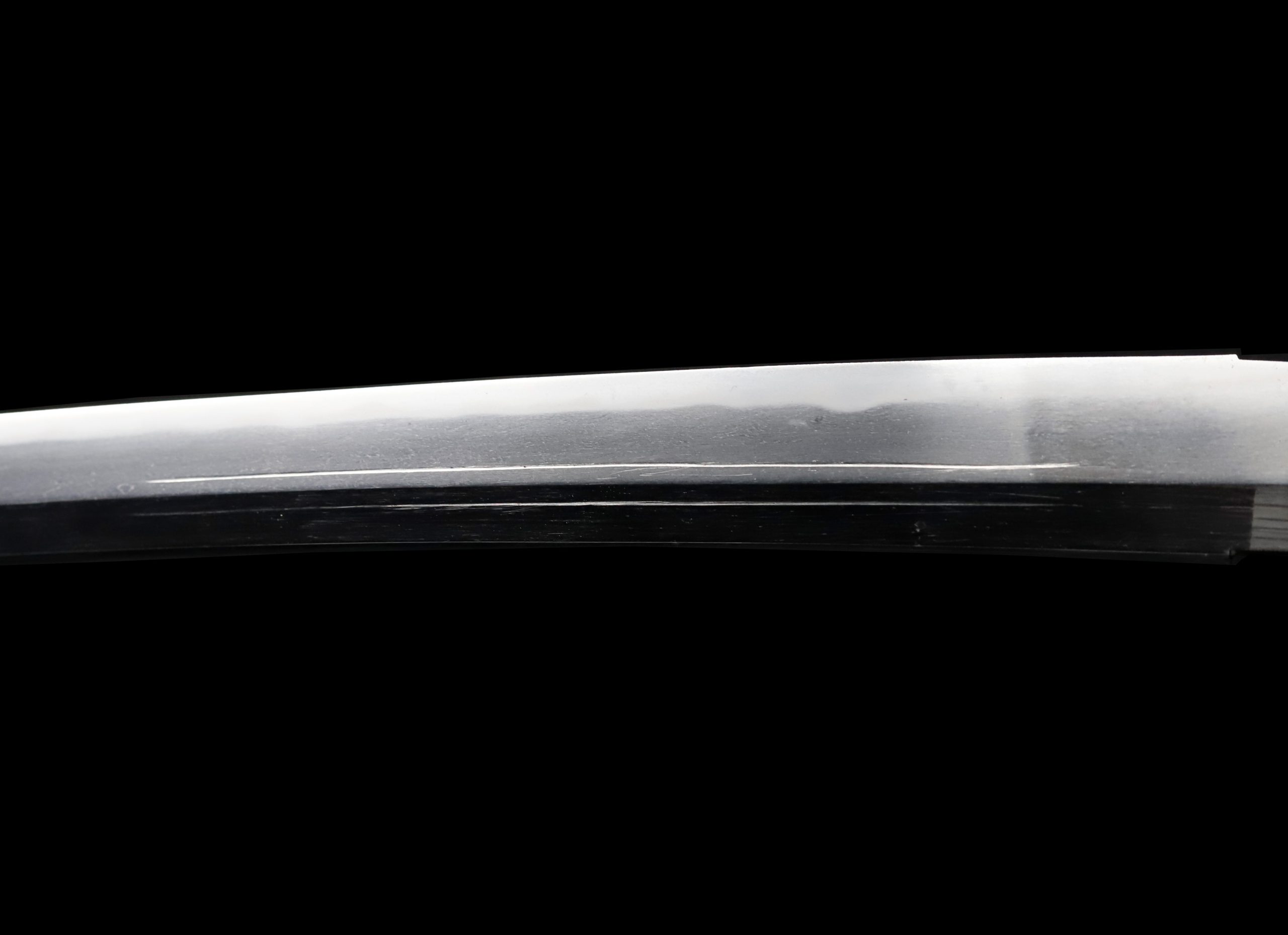
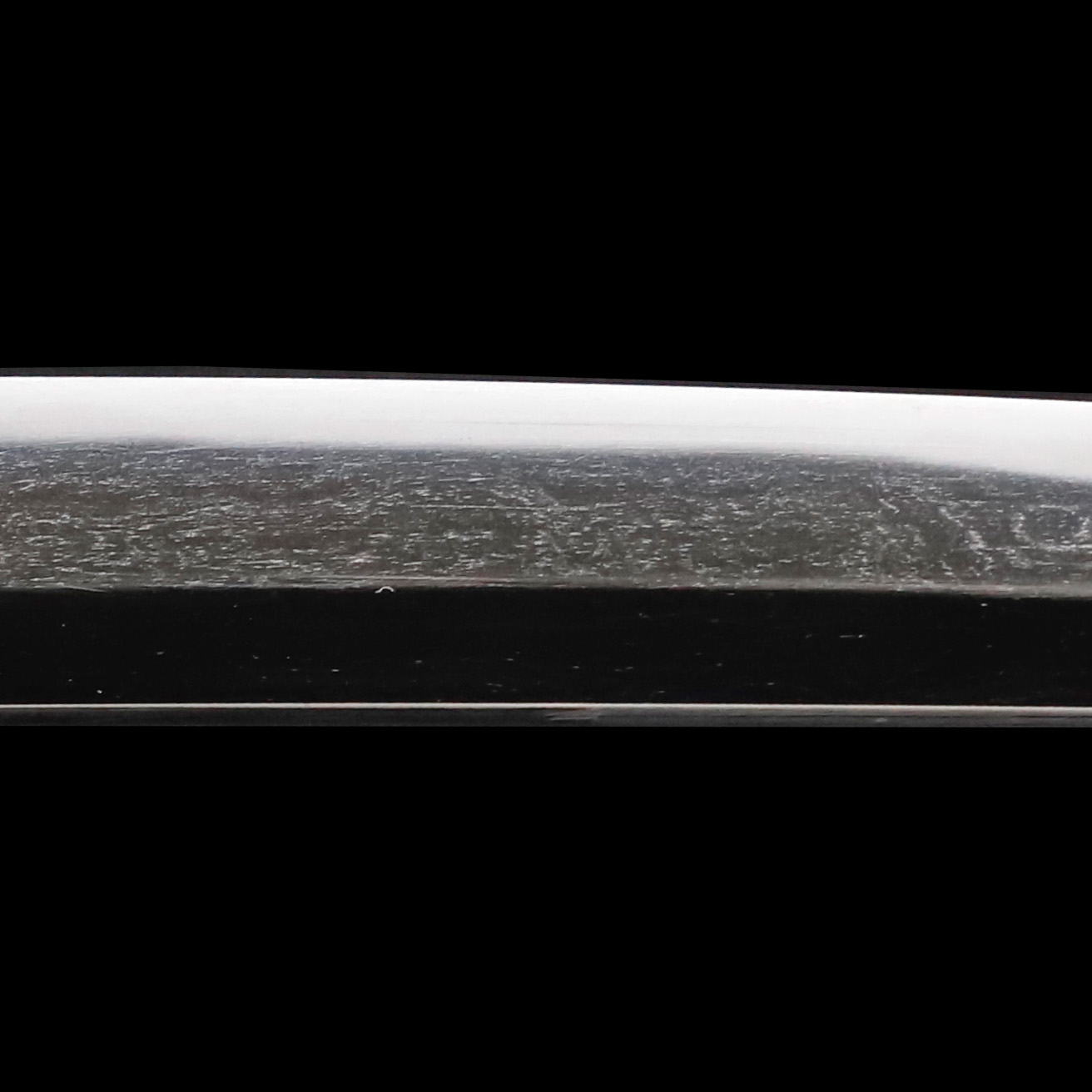
Bizen Osafune, Kozori group · Bizen · around 1377-1406
Fujishiro Chu-jo saku · Tōken Taikan top 21%
Iemori is a Bizen Osafune smith whose dated tachi run in an almost unbroken file from Eiwa and Koo through Meitoku into the single-digit Oei years, and the published record opens its account of him plainly: he is a swordsmith of the Oei-era Bizen group, of whom 「作品は少ない」, surviving works are few. He belongs to the loose body of late-Nanbokucho Osafune hands the literature calls Kozori, a category fixed by exclusion rather than by descent, the smiths who fall outside the specific lineages of Osafune Kanemitsu, Motoshige and Nagashige and are gathered under the one name. Iemori is counted within it alongside Hidemitsu, Mitsuhiro and Nariie, and the Meikan reads him in succession: a first generation placed in the Hatakeda group around the late Kamakura Gentoku era, whose work is scarcely ever seen, and the smith of the Koryaku-to-Oei dates counted the third of some four generations under the name. Earlier entries make him a pupil of Yoshikage, and the published sources resolve the disagreement by reading each surviving blade for its style and its year-date rather than assigning it firmly to a generation.
His hand is a small-patterned midare, and the recurring judgment that fixes him is one of scale. The published sources describe his manner as Kanemitsu-style, a ko-notare carrying gunome in the cutting edge, and add at once that 「作位は兼光に及ばない」, the level of execution does not reach that of Kanemitsu[[c:1]], while the features of this same group stand out clearly. Where the Kanemitsu line tempers a bolder gunome, Iemori reduces the same idea to a small ko-gunome that runs connected and threaded, mixed with angular and pointed elements and at the waist with an open koshi-hiraki gunome, the whole running small and subdued, what the reference texts call a ko-gunome-tsure tendency with kozumi. Ko-ashi and yo enter, the temper is nioi-dominant with ko-nie, and faint sunagashi and kinsuji play through it. The boshi answers the temper, a midare-komi that points at the tip with hakikake, or on the quieter blades a straight ko-maru passing into a yakizume.
The jigane is the Osafune steel reduced to the same modest register. He forges itame mixed with mokume and a flowing tendency, the grain standing so that the older descriptions call it hada-tachi, and over it lie ji-nie, fine chikei sunk dark within the steel, at times a jifu-like passage, and the midare-utsuri that places his work squarely in the Bizen tradition even where the temper runs quiet. On his best blades the iron tightens and the reflection rises clearly. The sugata is archaic for its date: a deep koshizori with marked funbari and a small point, the shape the published sources read as the period character of the late Nanbokucho into early Muromachi, and the signature is cut in the manner shared across the group, a small six-character mei or a longer signature set with a fine chisel toward the mune.
Read across his dated span the work shows a single hand turning slowly toward the next age. The Oei tachi grow heavy in the kasane and add sakizori, and the published sources read this thick-kasane, koshizori, small-pointed shape as the incipient features of the Oei-Bizen style; one Oei 2 tachi is described as forging itame with mokume, fine ji-nie and dark chikei-like lines, a prominent midare-utsuri and a koshi-hiraki gunome of small overall pattern that demonstrates the Kozori character outright. Yet the temper holds to the older vein, the connected gunome retaining, as one wakizashi is read, the lingering traces of the preceding era. A few pieces break the restraint: one wide Oei wakizashi is noted for a midare unusually florid for so early a date, signed with thick, distinctive chisel strokes, which the literature prizes as study material for the smith. The Meikan's four-generation succession and the absence of any securely first-generation work leave the strict generation-by-generation reading, in the words of the published sources, to await further research.
What sets Iemori apart within his group is told best by his own grounded traits rather than by comparison. His bright midare-utsuri and his subdued, small-patterned gunome with pointed and angular elements mark him as Osafune even as they keep him below the Kanemitsu mainstream, and his open koshi-hiraki gunome and heavy late sugata point him forward to Oei-Bizen, so that he stands on the threshold between the Nanbokucho Osafune file and the next age of the school. The published sources name his kinship plainly, the austere hamon 「師光・家助などにみる淋しい刃文」 seen in smiths such as Moromitsu and Iesuke[[c:2]], and they call his best work typical of the whole circle: in his finest dated tachi the jitetsu, hamon and boshi are read as typical for this smith and for his group, a piece they are willing to name 「家守の代表作の一口」, a representative example among Iemori's works[[c:3]]. On one folded-signature katana they go further, noting that in comparison with works of the same type 「鉄の鍛えがよく, 匂口も明るく冴え」, the forging of the steel is particularly good and the nioiguchi bright and clear[[c:4]], an excellent level of workmanship.
Iemori is rated Chu-jo saku, and his standing is that of a documentary hand more than a market name. His designated works on record number thirteen tachi and wakizashi in the Juyo rank, with no National Treasure or Important Cultural Property among them, so the ubu, signed and dated blades sound in ji and ha that recur in his record are valued as reference material for the Kozori group and for the working of Bizen at the turn into Oei-Bizen. Provenance is thin but real: one blade carries an Imperial line, others descend through the Hojo viscount house and from the collector Shida Sadashige, and recorded current whereabouts include the Hayashibara Museum of Art and the Tokyo and Kyoto National Museums. For the private collector this is a smith encountered chiefly through his dated Juyo tachi, which appear from time to time and with patience rather than readily, prized less for flamboyance than for the legibility of a clearly dated, well-forged blade standing at the edge of the Oei-Bizen age.
Where Iemori stands among comparable artisans: across all of nihontō, and within tradition, era, and period. The tiers (Foremost · Leading · Major · Notable) weigh official designations from the NBTHK and Japan's Agency for Cultural Affairs, together with historical honors of lasting repute such as the Sansaku and Meibutsu-chō.
Select a lens to see how it's measured.
Years he was demonstrably active, proven by signed-and-dated blades
Bizen-den · Bizen
28 pieces on the market now
The Kozori (小反り) form a loose body of Bizen smiths who worked at and around Osafune in the closing decades of the Nanbokucho period and on into early Muromachi, and the NBTHK defines them less by descent than by exclusion: they are the late-Osafune hands who fall outside the specific lineages of Kanemitsu, Chogi, Motoshige and the Omiya group, gathered under one name as a convenience. The reading of the name itself has been explained in several ways, and the published sources are candid that it resists a clean definition; the prevailing sense is the ko-sori, the slight or shallow reverse-curvature of the blades, the shape running to a deep koshizori with marked funbari and a small point in the older pieces and growing heavy in the kasane toward Oei. The body has no single founder. Smiths such as Moromitsu (師光), recorded as the father of the Oei master Morimitsu, anchor the group through dated tachi; Iesuke and Iemori carry Hatakeda blood; Nariie descends from Kagehide; Morisuke, Shigeyoshi, Tsunehiro, Hidemitsu, Motomasa and others fill out the periphery, several of whose lines run several generations and whose precise generation-by-generation reading the institution leaves to further study. Across these hands runs a shared vocabulary, and the recurring word for it is scale. The jigane is the constant: an itame mixed with mokume and nagare, the grain standing a little (hada-tachi), fine ji-nie attaching, dark chikei-toned and at times jifu-like passages crossing the steel, and over it the midare-utsuri (sometimes a bo-utsuri or straight sugu-utsuri) that places the group squarely in the Bizen-den. The temper is nioi-based with ko-nie, built on a shallow ko-notare into which the smiths set ko-gunome running connected and threaded, pointed togariba, angular squared elements, open-waisted koshi-biraki gunome and modest choji, the whole kept small and crowded (kozumu), with ko-ashi and yo entering and fine sunagashi and kinsuji playing through. The boshi answers in midare-komi, pointing or settling to a ko-maru with hakikake.
Within the shared idiom each hand has its tell: Moromitsu tempers the most subdued, low-lying midare; Nariie's gunome crowds where Kanemitsu's opens; Hidemitsu and Hidemitsu of the Koreha branch lean to a reverse-slanting saka-gakari and saka-ashi near the Aoe manner, and turn now and then to a quiet chu-suguha; Tsunehiro favours a kataochi-like gunome; Iesuke and Iemori, working into Oei, open the valleys toward the early-Muromachi pattern. A collector seeks Kozori for legibility rather than flourish. Many of the best survivors are ubu, signed and dated tachi, and that dated file (Joji, Oan, Eiwa, Shitoku, Eitoku, Meitoku into Oei) gives the late history of Osafune a year-by-year spine, prized as reference material for the period; the names also map a province pulled between the Northern and Southern courts, Morisuke's Joji dates reading as Northern Court alignment. To kantei the group is to read it against its neighbours: the small, crowded, nioi-toned midare and the standing itame with kawarigane chikei separate it from the bolder, more uniform gunome of the Kanemitsu mainline of the Nanbokucho height, while the open koshi-biraki valleys and the heavier, sakizori late sugata point forward to and distinguish it from the more decorative Oei-Bizen of Morimitsu and Yasumitsu (a threshold several Kozori blades, in NBTHK phrasing, already anticipate). Among the members the institution ranks Moromitsu and Nariie high (Nariie held equal to the Kanemitsu pupil Masamitsu), Iesuke beside the leading Oei names, and Hidemitsu the leading hand of the Koreha branch. Provenance, though thinly recorded for some, reaches real houses: blades descend through the Kuroda, Kaga Maeda, Shonai Sakai and Hojo families, with examples in the Hayashibara Museum and the national museums, and the occasional Imperial line. A signed, dated Kozori blade comes to hand only from time to time, a quiet, datable window onto Osafune as it closed its Nanbokucho age. Learn more →
| Smith | Era | Designated |
|---|---|---|
| Hidemitsu秀光 | 1375-1392 | 19 |
| Iesuke家助 | 1394-1428 | 11 |
| Iemori家守 | 1377-1406 | 15 |
| Nariie成家 | 1352-1362 | 21 |
| Moromitsu師光 | 1375-1390 | 7 |
Bizen in the Muromachi period
War at home and trade abroad made Muromachi Bizen the busiest forge region in Japan: a century of Sengoku demand after the Ōnin War, and export missions to Ming China carrying blades by the tens of thousands.
Certifies a genuine blade worth preserving: a signature confirmed correct, or, if unsigned, an era, province, and school that the NBTHK can reliably identify.
The NBTHK (Nihon Bijutsu Tōken Hozon Kyōkai, the Society for the Preservation of Japanese Art Swords) is a public-interest incorporated foundation founded in 1948 and supervised by Japan’s Agency for Cultural Affairs (Bunkachō); it is based at the Japanese Sword Museum in Tokyo. Its expert panels physically examine each submitted work (shinsa) and issue a certificate (kanteishō) ranking it by artistic and historical merit. NBTHK papers are the most widely recognized standard of authentication for Japanese swords and fittings.
NBTHK official siteReturns/exchanges limited to defects caused by shipping (except willful misconduct or gross negligence by the company); customers must contact within 72 hours of receiving the product.

This katana is signed by Bizen Osafune Iemori, active in the early Muromachi period (1395). It features a Tsurugi (double-edged blade) Horimono, possibly Kurikaraken, and comes with a complete koshirae mounting. The blade is certified Hozon Token by the NBTHK, confirming its authenticity and artistic value.
NihontoWatchmei · Osafune · Muromachi · nagasa 66.5cm · sori 1.8cm
Bizen Osafune, Kozori group · Bizen · around 1377-1406
Fujishiro Chu-jo saku · Tōken Taikan top 21%
Iemori is a Bizen Osafune smith whose dated tachi run in an almost unbroken file from Eiwa and Koo through Meitoku into the single-digit Oei years, and the published record opens its account of him plainly: he is a swordsmith of the Oei-era Bizen group, of whom 「作品は少ない」, surviving works are few. He belongs to the loose body of late-Nanbokucho Osafune hands the literature calls Kozori, a category fixed by exclusion rather than by descent, the smiths who fall outside the specific lineages of Osafune Kanemitsu, Motoshige and Nagashige and are gathered under the one name. Iemori is counted within it alongside Hidemitsu, Mitsuhiro and Nariie, and the Meikan reads him in succession: a first generation placed in the Hatakeda group around the late Kamakura Gentoku era, whose work is scarcely ever seen, and the smith of the Koryaku-to-Oei dates counted the third of some four generations under the name. Earlier entries make him a pupil of Yoshikage, and the published sources resolve the disagreement by reading each surviving blade for its style and its year-date rather than assigning it firmly to a generation.
His hand is a small-patterned midare, and the recurring judgment that fixes him is one of scale. The published sources describe his manner as Kanemitsu-style, a ko-notare carrying gunome in the cutting edge, and add at once that 「作位は兼光に及ばない」, the level of execution does not reach that of Kanemitsu[[c:1]], while the features of this same group stand out clearly. Where the Kanemitsu line tempers a bolder gunome, Iemori reduces the same idea to a small ko-gunome that runs connected and threaded, mixed with angular and pointed elements and at the waist with an open koshi-hiraki gunome, the whole running small and subdued, what the reference texts call a ko-gunome-tsure tendency with kozumi. Ko-ashi and yo enter, the temper is nioi-dominant with ko-nie, and faint sunagashi and kinsuji play through it. The boshi answers the temper, a midare-komi that points at the tip with hakikake, or on the quieter blades a straight ko-maru passing into a yakizume.
The jigane is the Osafune steel reduced to the same modest register. He forges itame mixed with mokume and a flowing tendency, the grain standing so that the older descriptions call it hada-tachi, and over it lie ji-nie, fine chikei sunk dark within the steel, at times a jifu-like passage, and the midare-utsuri that places his work squarely in the Bizen tradition even where the temper runs quiet. On his best blades the iron tightens and the reflection rises clearly. The sugata is archaic for its date: a deep koshizori with marked funbari and a small point, the shape the published sources read as the period character of the late Nanbokucho into early Muromachi, and the signature is cut in the manner shared across the group, a small six-character mei or a longer signature set with a fine chisel toward the mune.
Read across his dated span the work shows a single hand turning slowly toward the next age. The Oei tachi grow heavy in the kasane and add sakizori, and the published sources read this thick-kasane, koshizori, small-pointed shape as the incipient features of the Oei-Bizen style; one Oei 2 tachi is described as forging itame with mokume, fine ji-nie and dark chikei-like lines, a prominent midare-utsuri and a koshi-hiraki gunome of small overall pattern that demonstrates the Kozori character outright. Yet the temper holds to the older vein, the connected gunome retaining, as one wakizashi is read, the lingering traces of the preceding era. A few pieces break the restraint: one wide Oei wakizashi is noted for a midare unusually florid for so early a date, signed with thick, distinctive chisel strokes, which the literature prizes as study material for the smith. The Meikan's four-generation succession and the absence of any securely first-generation work leave the strict generation-by-generation reading, in the words of the published sources, to await further research.
What sets Iemori apart within his group is told best by his own grounded traits rather than by comparison. His bright midare-utsuri and his subdued, small-patterned gunome with pointed and angular elements mark him as Osafune even as they keep him below the Kanemitsu mainstream, and his open koshi-hiraki gunome and heavy late sugata point him forward to Oei-Bizen, so that he stands on the threshold between the Nanbokucho Osafune file and the next age of the school. The published sources name his kinship plainly, the austere hamon 「師光・家助などにみる淋しい刃文」 seen in smiths such as Moromitsu and Iesuke[[c:2]], and they call his best work typical of the whole circle: in his finest dated tachi the jitetsu, hamon and boshi are read as typical for this smith and for his group, a piece they are willing to name 「家守の代表作の一口」, a representative example among Iemori's works[[c:3]]. On one folded-signature katana they go further, noting that in comparison with works of the same type 「鉄の鍛えがよく, 匂口も明るく冴え」, the forging of the steel is particularly good and the nioiguchi bright and clear[[c:4]], an excellent level of workmanship.
Iemori is rated Chu-jo saku, and his standing is that of a documentary hand more than a market name. His designated works on record number thirteen tachi and wakizashi in the Juyo rank, with no National Treasure or Important Cultural Property among them, so the ubu, signed and dated blades sound in ji and ha that recur in his record are valued as reference material for the Kozori group and for the working of Bizen at the turn into Oei-Bizen. Provenance is thin but real: one blade carries an Imperial line, others descend through the Hojo viscount house and from the collector Shida Sadashige, and recorded current whereabouts include the Hayashibara Museum of Art and the Tokyo and Kyoto National Museums. For the private collector this is a smith encountered chiefly through his dated Juyo tachi, which appear from time to time and with patience rather than readily, prized less for flamboyance than for the legibility of a clearly dated, well-forged blade standing at the edge of the Oei-Bizen age.
Where Iemori stands among comparable artisans: across all of nihontō, and within tradition, era, and period. The tiers (Foremost · Leading · Major · Notable) weigh official designations from the NBTHK and Japan's Agency for Cultural Affairs, together with historical honors of lasting repute such as the Sansaku and Meibutsu-chō.
Select a lens to see how it's measured.
Years he was demonstrably active, proven by signed-and-dated blades
Bizen-den · Bizen
28 pieces on the market now
The Kozori (小反り) form a loose body of Bizen smiths who worked at and around Osafune in the closing decades of the Nanbokucho period and on into early Muromachi, and the NBTHK defines them less by descent than by exclusion: they are the late-Osafune hands who fall outside the specific lineages of Kanemitsu, Chogi, Motoshige and the Omiya group, gathered under one name as a convenience. The reading of the name itself has been explained in several ways, and the published sources are candid that it resists a clean definition; the prevailing sense is the ko-sori, the slight or shallow reverse-curvature of the blades, the shape running to a deep koshizori with marked funbari and a small point in the older pieces and growing heavy in the kasane toward Oei. The body has no single founder. Smiths such as Moromitsu (師光), recorded as the father of the Oei master Morimitsu, anchor the group through dated tachi; Iesuke and Iemori carry Hatakeda blood; Nariie descends from Kagehide; Morisuke, Shigeyoshi, Tsunehiro, Hidemitsu, Motomasa and others fill out the periphery, several of whose lines run several generations and whose precise generation-by-generation reading the institution leaves to further study. Across these hands runs a shared vocabulary, and the recurring word for it is scale. The jigane is the constant: an itame mixed with mokume and nagare, the grain standing a little (hada-tachi), fine ji-nie attaching, dark chikei-toned and at times jifu-like passages crossing the steel, and over it the midare-utsuri (sometimes a bo-utsuri or straight sugu-utsuri) that places the group squarely in the Bizen-den. The temper is nioi-based with ko-nie, built on a shallow ko-notare into which the smiths set ko-gunome running connected and threaded, pointed togariba, angular squared elements, open-waisted koshi-biraki gunome and modest choji, the whole kept small and crowded (kozumu), with ko-ashi and yo entering and fine sunagashi and kinsuji playing through. The boshi answers in midare-komi, pointing or settling to a ko-maru with hakikake.
Within the shared idiom each hand has its tell: Moromitsu tempers the most subdued, low-lying midare; Nariie's gunome crowds where Kanemitsu's opens; Hidemitsu and Hidemitsu of the Koreha branch lean to a reverse-slanting saka-gakari and saka-ashi near the Aoe manner, and turn now and then to a quiet chu-suguha; Tsunehiro favours a kataochi-like gunome; Iesuke and Iemori, working into Oei, open the valleys toward the early-Muromachi pattern. A collector seeks Kozori for legibility rather than flourish. Many of the best survivors are ubu, signed and dated tachi, and that dated file (Joji, Oan, Eiwa, Shitoku, Eitoku, Meitoku into Oei) gives the late history of Osafune a year-by-year spine, prized as reference material for the period; the names also map a province pulled between the Northern and Southern courts, Morisuke's Joji dates reading as Northern Court alignment. To kantei the group is to read it against its neighbours: the small, crowded, nioi-toned midare and the standing itame with kawarigane chikei separate it from the bolder, more uniform gunome of the Kanemitsu mainline of the Nanbokucho height, while the open koshi-biraki valleys and the heavier, sakizori late sugata point forward to and distinguish it from the more decorative Oei-Bizen of Morimitsu and Yasumitsu (a threshold several Kozori blades, in NBTHK phrasing, already anticipate). Among the members the institution ranks Moromitsu and Nariie high (Nariie held equal to the Kanemitsu pupil Masamitsu), Iesuke beside the leading Oei names, and Hidemitsu the leading hand of the Koreha branch. Provenance, though thinly recorded for some, reaches real houses: blades descend through the Kuroda, Kaga Maeda, Shonai Sakai and Hojo families, with examples in the Hayashibara Museum and the national museums, and the occasional Imperial line. A signed, dated Kozori blade comes to hand only from time to time, a quiet, datable window onto Osafune as it closed its Nanbokucho age. Learn more →
| Smith | Era | Designated |
|---|---|---|
| Hidemitsu秀光 | 1375-1392 | 19 |
| Iesuke家助 | 1394-1428 | 11 |
| Iemori家守 | 1377-1406 | 15 |
| Nariie成家 | 1352-1362 | 21 |
| Moromitsu師光 | 1375-1390 | 7 |
Bizen in the Muromachi period
War at home and trade abroad made Muromachi Bizen the busiest forge region in Japan: a century of Sengoku demand after the Ōnin War, and export missions to Ming China carrying blades by the tens of thousands.
Certifies a genuine blade worth preserving: a signature confirmed correct, or, if unsigned, an era, province, and school that the NBTHK can reliably identify.
The NBTHK (Nihon Bijutsu Tōken Hozon Kyōkai, the Society for the Preservation of Japanese Art Swords) is a public-interest incorporated foundation founded in 1948 and supervised by Japan’s Agency for Cultural Affairs (Bunkachō); it is based at the Japanese Sword Museum in Tokyo. Its expert panels physically examine each submitted work (shinsa) and issue a certificate (kanteishō) ranking it by artistic and historical merit. NBTHK papers are the most widely recognized standard of authentication for Japanese swords and fittings.
NBTHK official siteReturns/exchanges limited to defects caused by shipping (except willful misconduct or gross negligence by the company); customers must contact within 72 hours of receiving the product.