NihontoWatch MonNihontoWatch
MarketEncyclopediaKantei
NihontoWatch MonNihontoWatch
Market
Encyclopedia
Kantei
Overview·Historical importance·Designations·Kantei·Dated Works·Provenance·Blade Forms·Signatures·School
OverviewHistorical importanceDesignationsKanteiDated WorksProvenanceBlade FormsSignaturesSchool
  1. Schools
  2. Kozori
  3. Iemori

Kozori Iemori

家守

Jūyō
Vol. 47, No. 97 · Tachi

Kozori Iemori

家守

15 ranked works

Leading smith
ProvinceBizenEraMeitoku (1390–1394)PeriodMuromachiSchoolKozoriTraditionBizen-denFujishiroChu-jo sakuToko Taikan600(top 21%)TypeSwordsmithCodeIYE136
2Gyobutsu
13Jūyō Tōken

Overview

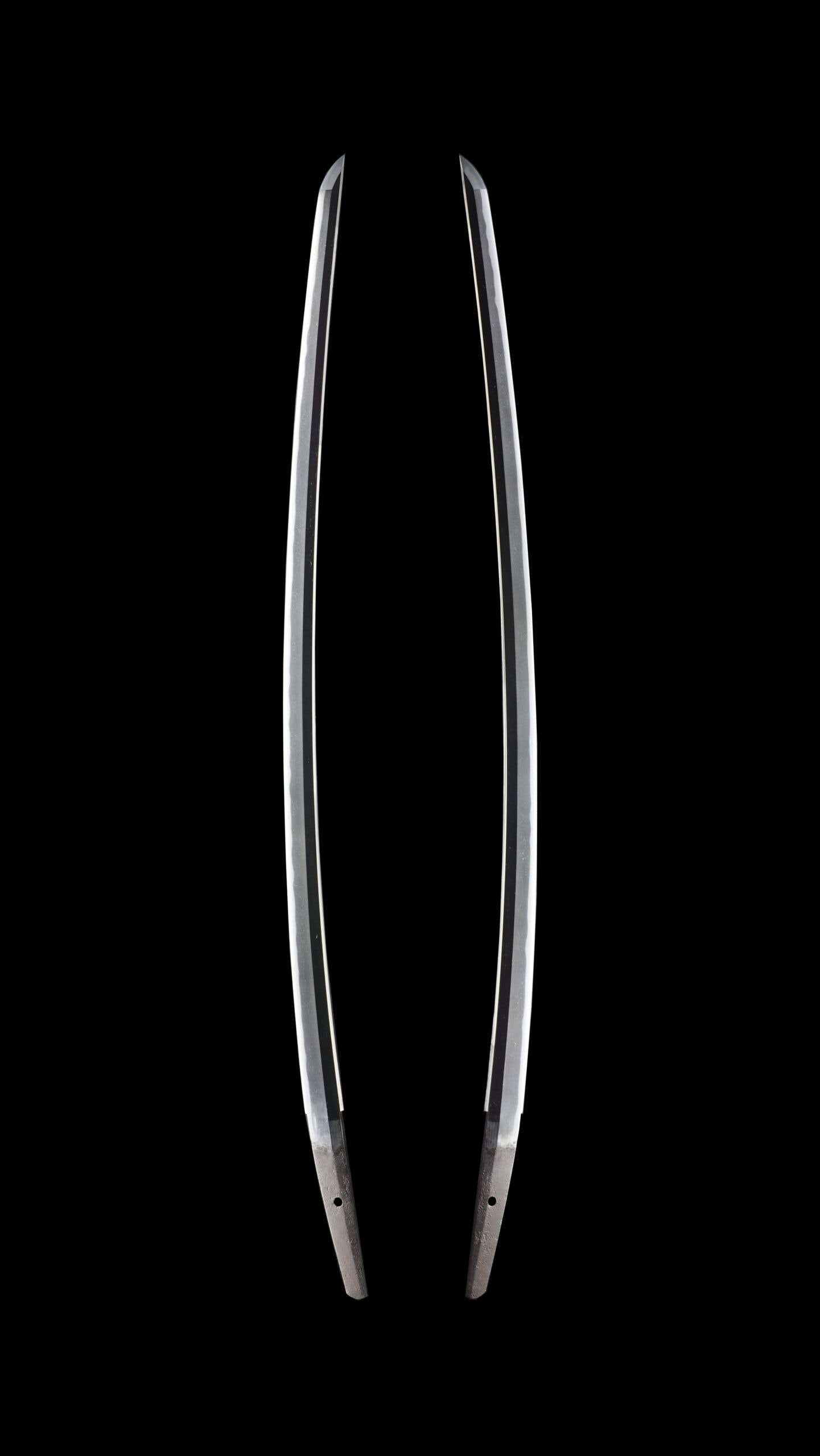
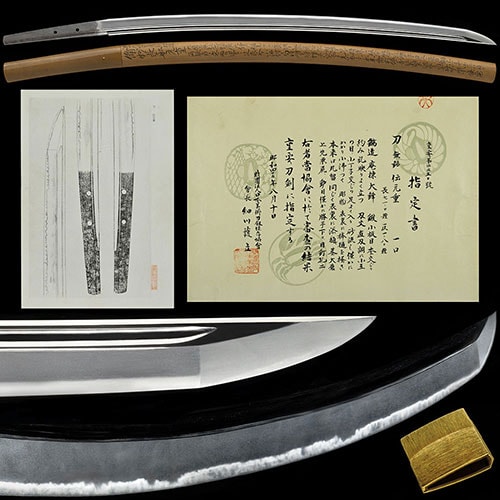
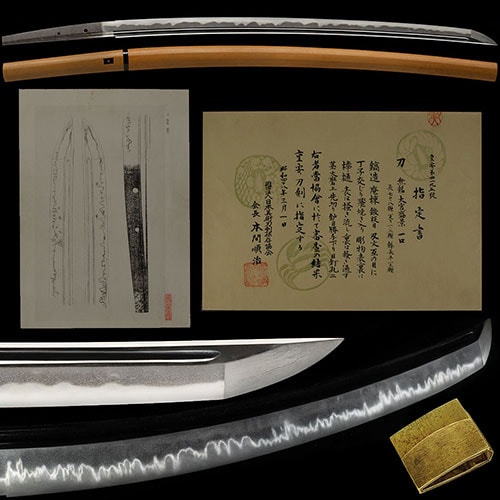
Iemori is a smith whose dated run in an almost unbroken file from Eiwa and Koo through Meitoku into the single-digit Oei years, and the published record opens its account of him plainly: he is a swordsmith of the Oei-era group, of whom 「作品は少ない」, surviving works are few. He belongs to the loose body of late- hands the literature calls , a category fixed by exclusion rather than by descent, the smiths who fall outside the specific lineages of Kanemitsu, Motoshige and Nagashige and are gathered under the one name. Iemori is counted within it alongside Hidemitsu, Mitsuhiro and Nariie, and the reads him in succession: a first generation placed in the group around the late Gentoku era, whose work is scarcely ever seen, and the smith of the Koryaku-to-Oei dates counted the third of some four generations under the name. Earlier entries make him a pupil of Yoshikage, and the published sources resolve the disagreement by reading each surviving blade for its style and its year-date rather than assigning it firmly to a generation.

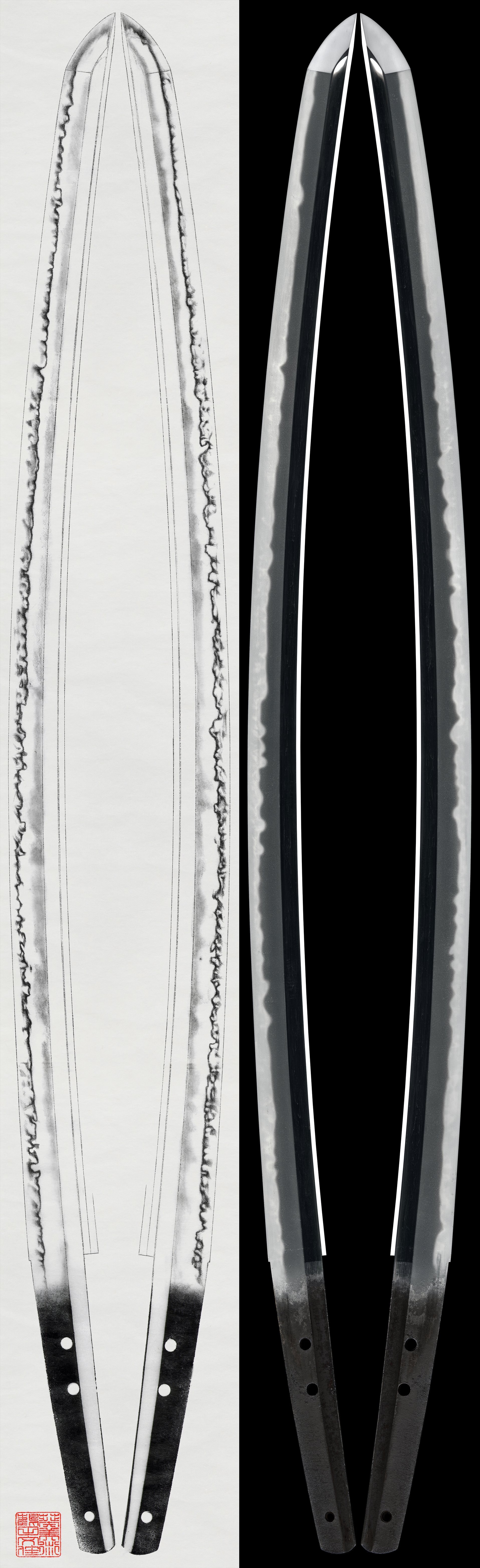
His hand is a small-patterned , and the recurring judgment that fixes him is one of scale. The published sources describe his manner as Kanemitsu-style, a carrying in the cutting edge, and add at once that 「作位は兼光に及ばない」, the level of execution does not reach that of Kanemitsu, while the features of this group stand out clearly. Where the Kanemitsu line tempers a bolder , Iemori reduces the idea to a small that runs connected and threaded, mixed with angular and pointed elements and at the waist with an open koshi-hiraki , the whole running small and subdued, what the reference texts call a - tendency with . and enter, the temper is -dominant with , and faint and play through it. The answers the temper, a that points at the tip with , or on the quieter blades a straight passing into a .

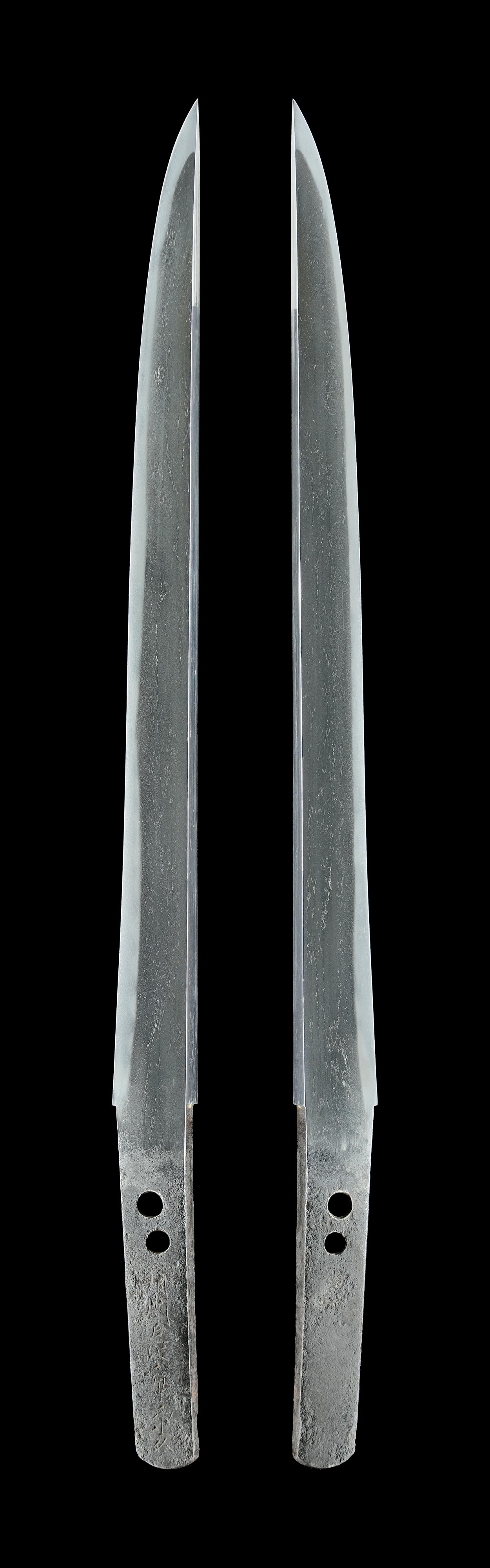
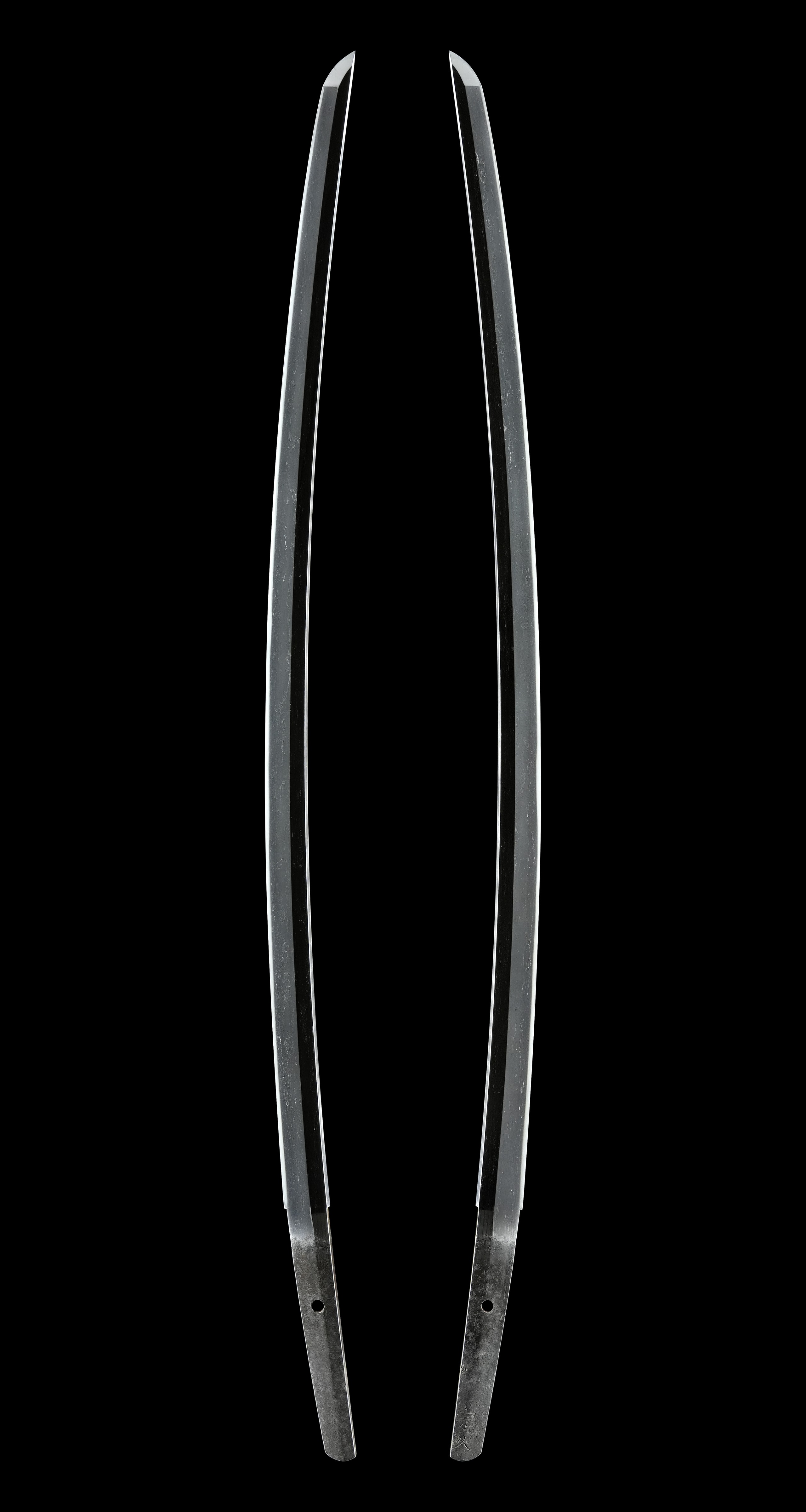
The is the steel reduced to the modest register. He forges mixed with and a flowing tendency, the grain standing so that the older descriptions call it , and over it lie , fine sunk dark within the steel, at times a -like passage, and the that places his work squarely in the tradition even where the temper runs quiet. On his best blades the iron tightens and the reflection rises clearly. The is archaic for its date: a deep with marked and a small point, the shape the published sources read as the period character of the late into early , and the signature is cut in the manner shared across the group, a small six-character or a longer signature set with a fine chisel toward the .

Read across his dated span the work shows a single hand turning slowly toward the next age. The Oei grow heavy in the and add , and the published sources read this thick-, , small-pointed shape as the incipient features of the Oei- style; one Oei 2 is described as forging with , fine and dark -like lines, a prominent and a koshi-hiraki of small overall pattern that demonstrates the character outright. Yet the temper holds to the older vein, the connected retaining, as one is read, the lingering traces of the preceding era. A few pieces break the restraint: one wide Oei is noted for a unusually florid for so early a date, signed with thick, distinctive chisel strokes, which the literature prizes as study material for the smith. The 's four-generation succession and the absence of any securely first-generation work leave the strict generation-by-generation reading, in the words of the published sources, to await further research.

What sets Iemori apart within his group is told best by his own grounded traits rather than by comparison. His bright and his subdued, small-patterned with pointed and angular elements mark him as even as they keep him below the Kanemitsu mainstream, and his open koshi-hiraki and heavy late point him forward to Oei-, so that he stands on the threshold between the file and the next age of the school. The published sources name his kinship plainly, the austere 「師光・家助などにみる淋しい刃文」 seen in smiths such as Moromitsu and Iesuke, and they call his best work typical of the whole circle: in his finest dated the , and are read as typical for this smith and for his group, a piece they are willing to name 「家守の代表作の一口」, a representative example among Iemori's works. On one folded-signature they go further, noting that in comparison with works of the type 「鉄の鍛えがよく、匂口も明るく冴え」, the forging of the steel is particularly good and the bright and clear, an excellent level of workmanship.

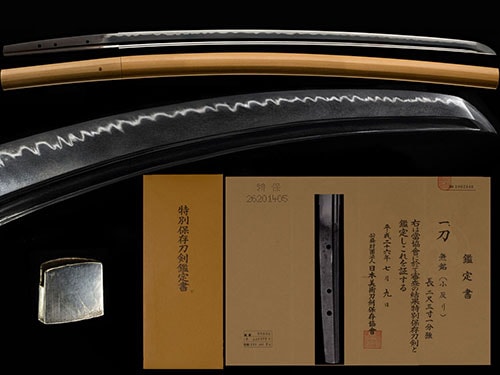
Iemori is rated Chu-jo , and his standing is that of a documentary hand more than a market name. His designated works on record number thirteen and in the rank, with no National Treasure or Important Cultural Property among them, so the , signed and dated blades sound in and that recur in his record are valued as reference material for the group and for the working of at the turn into Oei-. Provenance is thin but real: one blade carries an Imperial line, others descend through the Hojo viscount house and from the collector Shida Sadashige, and recorded current whereabouts include the Hayashibara Museum of Art and the Tokyo and Kyoto National Museums. For the private collector this is a smith encountered chiefly through his dated , which appear from time to time and with patience rather than readily, prized less for flamboyance than for the legibility of a clearly dated, well-forged blade standing at the edge of the Oei- age.

Historical importance

Where Iemori stands among comparable artisans: across all of nihontō, and within tradition, era, and period. The tiers (Foremost · Leading · Major · Notable) weigh official designations from the NBTHK and Japan's Agency for Cultural Affairs, together with historical honors of lasting repute such as the Sansaku and Meibutsu-chō.

随一
Foremost
屈指
Leading
有数
Major
著名
Notable

Select a lens to see how it's measured.

Designations

Kokuhō—
Jūyō Bunkazai—
Jūyō Bijutsuhin—
Gyobutsu2
Tokubetsu Jūyō—
Jūyō Tōken13

Elite Standing

Kantei

Dated Works

Provenance

Blade Forms

Distribution across 15 ranked works

Signatures

Signature types across 15 ranked works

Currently Available

Kozori School

Other artisans of the Kozori school

  1. 1.Hidemitsu秀光19designated
  2. 2.Iesuke家助11designated
  3. 3.Nariie成家2 for sale21designated
  4. 4.Moromitsu師光2 for sale7designated
  5. 5.Morisuke守助7designated
  6. 6.Tsunehiro恒弘4designated
  7. 7.Yukimitsu幸光3designated
  8. 8.Mitsukage光景1designated
  9. 9.Hidesuke秀助1 for sale1designated
  10. 10.Mitsumune光宗1designated
  11. 11.Iesuke家助1designated
  12. 12.Iemitsu家光1designated

More from the Kozori school

View all →
World Seiyudo
Jūyō
Katana - Jūyō - by Kozori Moromitsu - Bishu Osafune Moromitsu - NBTHK Juyo Token / Tokubetsu Hozon TosoguKatana - Jūyō - by Kozori Moromitsu - Bishu Osafune Moromitsu - NBTHK Juyo Token / Tokubetsu Hozon Tosogu

Katana

ByKozori Moromitsu
¥9,500,000
Toushin
Tokuho
Tachi - Tokuho - by Kozori Morihisa - Morihisa - 1-118Tachi - Tokuho - by Kozori Morihisa - Morihisa - 1-118

Tachi

ByKozori Morihisa
¥6,600,000
Token-Net
Tokuho
Katana - Tokuho - by Kozori Tsunehiro - Mumei (Osafune Tsunehiro) (Bizen) (Sanyodo)Katana - Tokuho - by Kozori Tsunehiro - Mumei (Osafune Tsunehiro) (Bizen) (Sanyodo)

Katana

ByKozori Tsunehiro
¥1,350,000
Samurai Museum
Hozon
Katana - Hozon - by Kozori Morihiro - Antique Japanese Sword Katana attributed to Osafune Morihiro NBTHK Hozon CertificateKatana - Hozon - by Kozori Morihiro - Antique Japanese Sword Katana attributed to Osafune Morihiro NBTHK Hozon Certificate

Katana

ByKozori Morihiro
¥17,491
Touken Komachi
Tachi - by Kozori Hidesuke - Bishu Osafune HidesukeTachi - by Kozori Hidesuke - Bishu Osafune Hidesuke

Tachi

ByKozori Hidesuke
¥600,000
Eirakudo
Tokuho
Katana - Tokuho - by Kozori School - Kozori Katana Tokubetsu Hozon TokenKatana - Tokuho - by Kozori School - Kozori Katana Tokubetsu Hozon Token

Katana

ByKozori School
¥1,350,000
Kanda Toukodo
Tokuho
Katana - Tokuho - by Kozori School - Mumei (Ko-zori)Katana - Tokuho - by Kozori School - Mumei (Ko-zori)

Katana

ByKozori School
¥780,000
Toushin
Tokuho
Tanto - Tokuho - by Kozori Morihisa - Bishu Osafune MorihisaTanto - Tokuho - by Kozori Morihisa - Bishu Osafune Morihisa

Tantō

ByKozori Morihisa
¥770,000

More from the Bizen tradition

View all →
Nihonto.com
Jūyō
Tanto - Jūyō - by Osafune Kagemitsu - Juyo Tanto by Bizen KagemitsuTanto - Jūyō - by Osafune Kagemitsu - Juyo Tanto by Bizen Kagemitsu

Tantō

ByOsafune Kagemitsu
¥89,500
Aoi Art
Jūyō Bijutsuhin
Daisho - Jubi - by Osafune Nagamitsu - Dai Sho: Katana (Important Art Object): Mumei (Attributed to Nagamitsu) / Wakizashi: Mumei (Attributed to Sekishu Naotsuna)Daisho - Jubi - by Osafune Nagamitsu - Dai Sho: Katana (Important Art Object): Mumei (Attributed to Nagamitsu) / Wakizashi: Mumei (Attributed to Sekishu Naotsuna)

Daishō

ByOsafune Nagamitsu
Ask
Tsuruginoya
Jūyō
Katana - Jūyō - by Fukuoka Ichimonji School - Mumei Fukuoka IchimonjiKatana - Jūyō - by Fukuoka Ichimonji School - Mumei Fukuoka Ichimonji

Katana

ByFukuoka Ichimonji School
Ask
Hyozaemon
Tokuho
Tokuho - by Fukuoka Ichimonji Yoshifusa - Naginata Naoshi Wakizashi by Fukuoka Ichimonji Yoshifusa, a Master of IchimonjiTokuho - by Fukuoka Ichimonji Yoshifusa - Naginata Naoshi Wakizashi by Fukuoka Ichimonji Yoshifusa, a Master of Ichimonji

Naginata Naoshi Wakizashi by Fukuoka Ichimonji Yoshifusa, a Master of Ichimonji

ByFukuoka Ichimonji Yoshifusa
Ask
Eirakudo
Tokuho
Katana - Tokuho - by Katayama Ichimonji School - Katayama Ichimonji - Tokubetsu Hozon TokenKatana - Tokuho - by Katayama Ichimonji School - Katayama Ichimonji - Tokubetsu Hozon Token

Katana

ByKatayama Ichimonji School
¥4,500,000
Eirakudo
Jūyō
Katana - Jūyō - by Motoshige - Motoshige - Juyo TokenKatana - Jūyō - by Motoshige - Motoshige - Juyo Token

Katana

ByMotoshige
¥6,000,000
Giheiya
Hozon
Katana - Hozon - by Takada School - Mumei (Hira Takada) - 72.1cm, with Koshirae and ShirasayaKatana - Hozon - by Takada School - Mumei (Hira Takada) - 72.1cm, with Koshirae and Shirasaya

Katana

ByTakada School
¥350,000
Eirakudo
Jūyō
Katana - Jūyō - by Omiya Morikage - Ohmiya Morikage - Juyo TokenKatana - Jūyō - by Omiya Morikage - Ohmiya Morikage - Juyo Token

Katana

ByOmiya Morikage
¥4,000,000

Iemori

Iemori(家守) was a Japanese swordsmith of the Kozori school in Bizen province, active during the Meitoku (1390-1394) ND period.

The work follows the Bizen-den tradition.

Designated works by Iemori include 13 Jūyō.