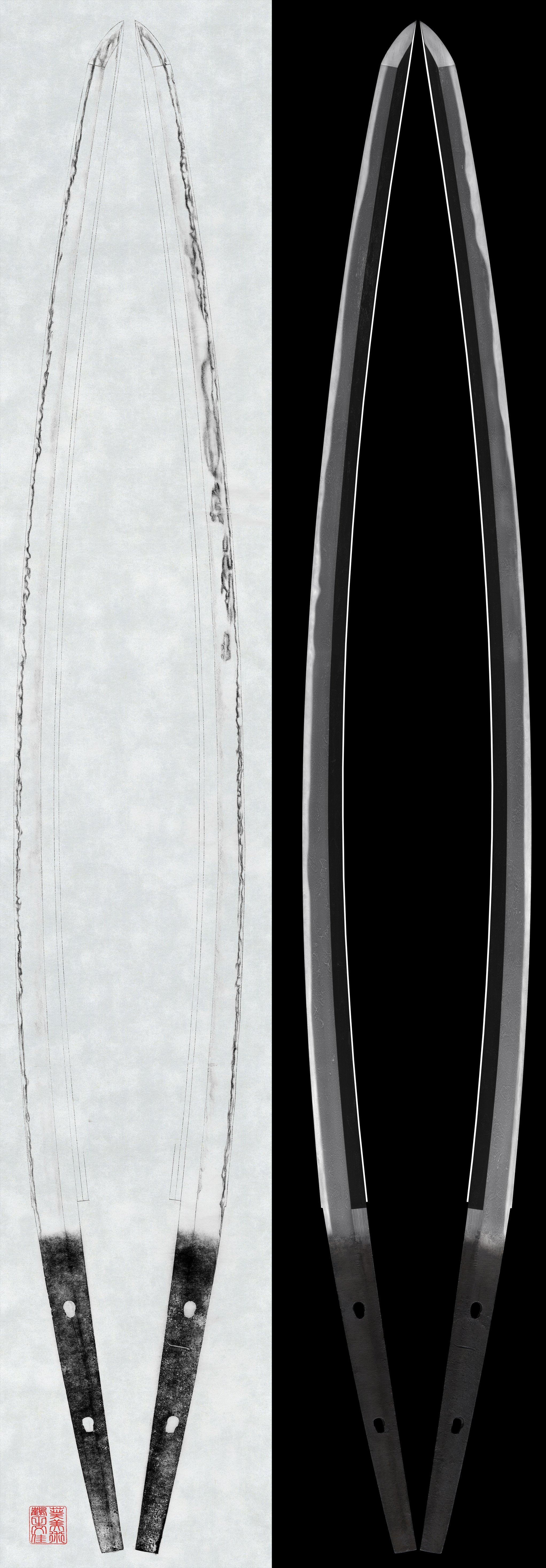
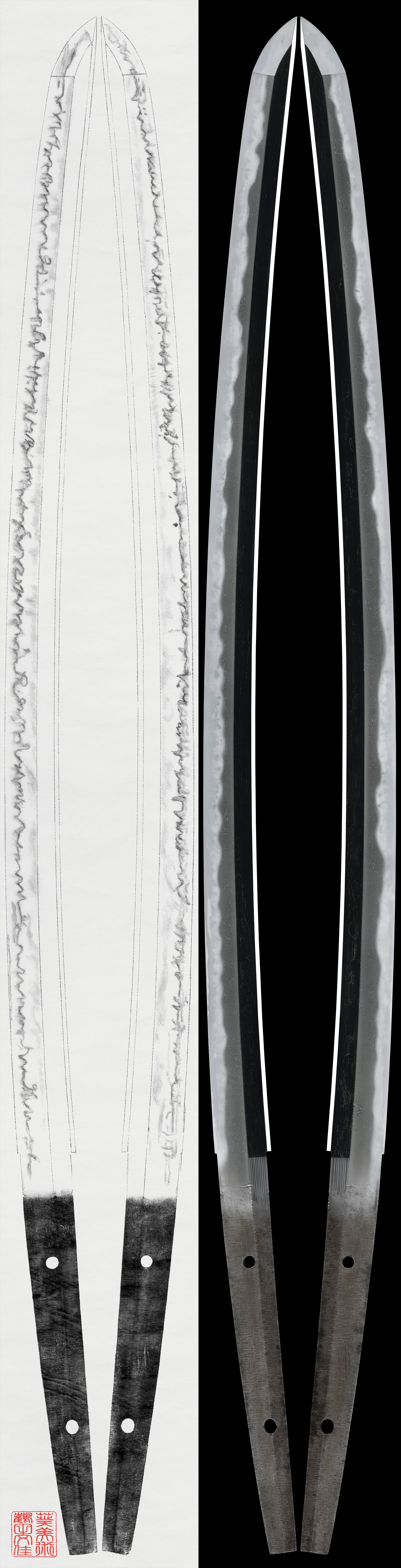
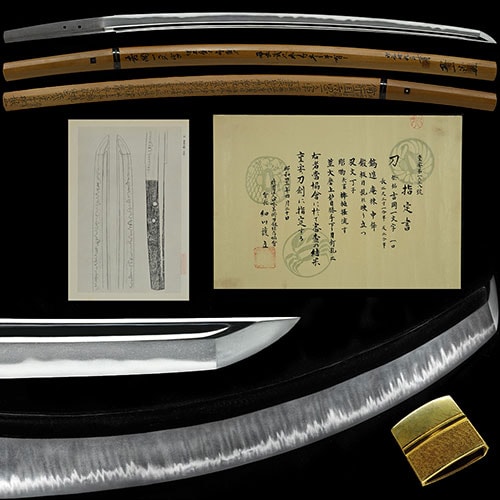
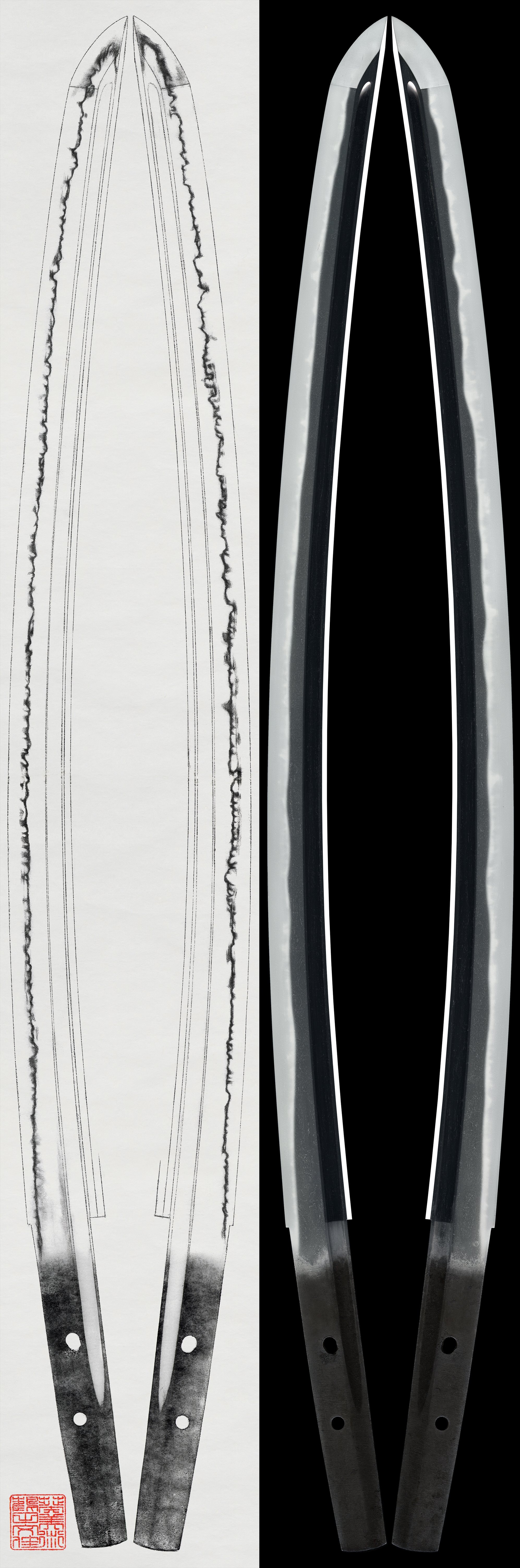
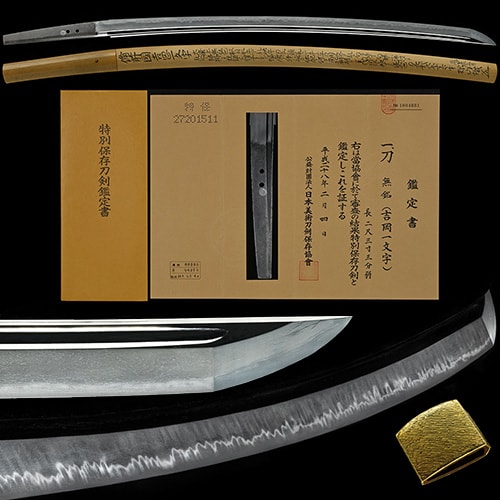
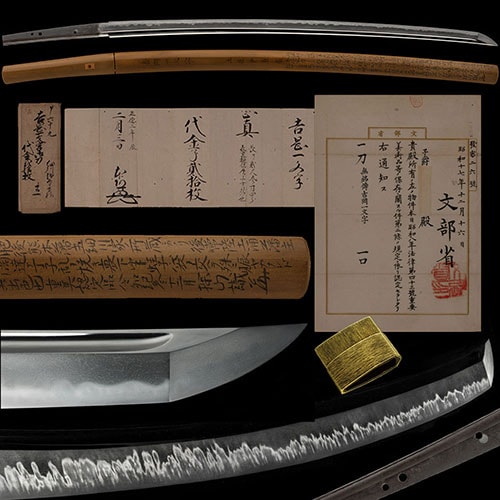
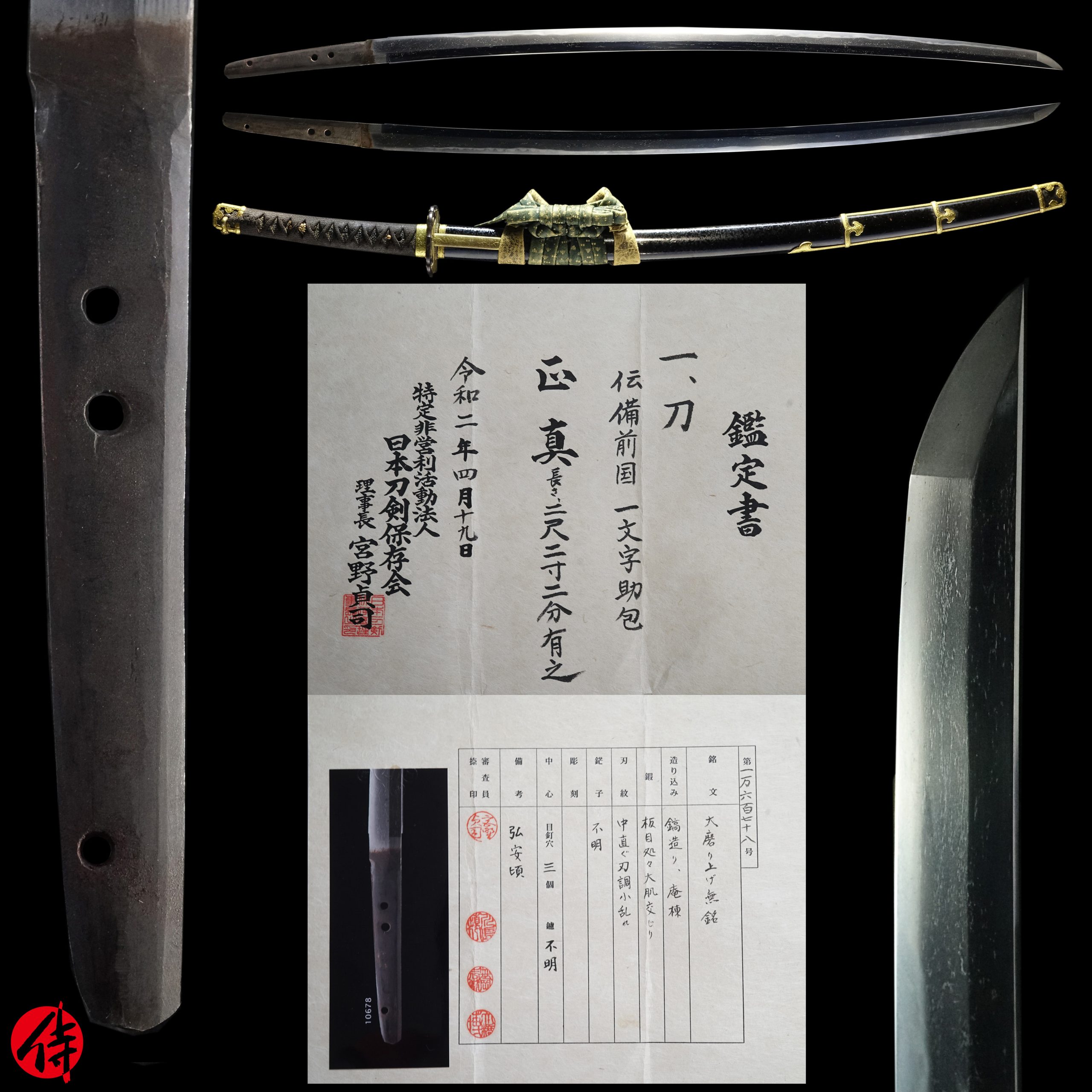
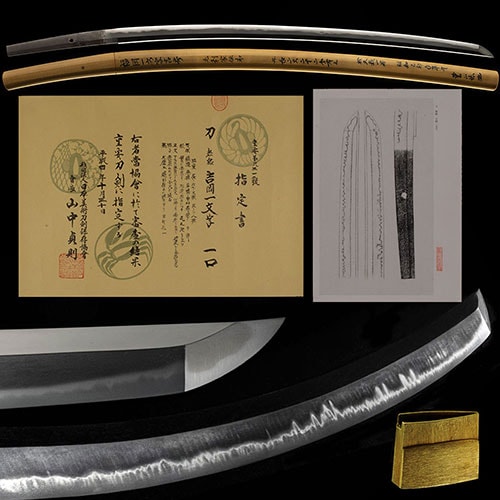
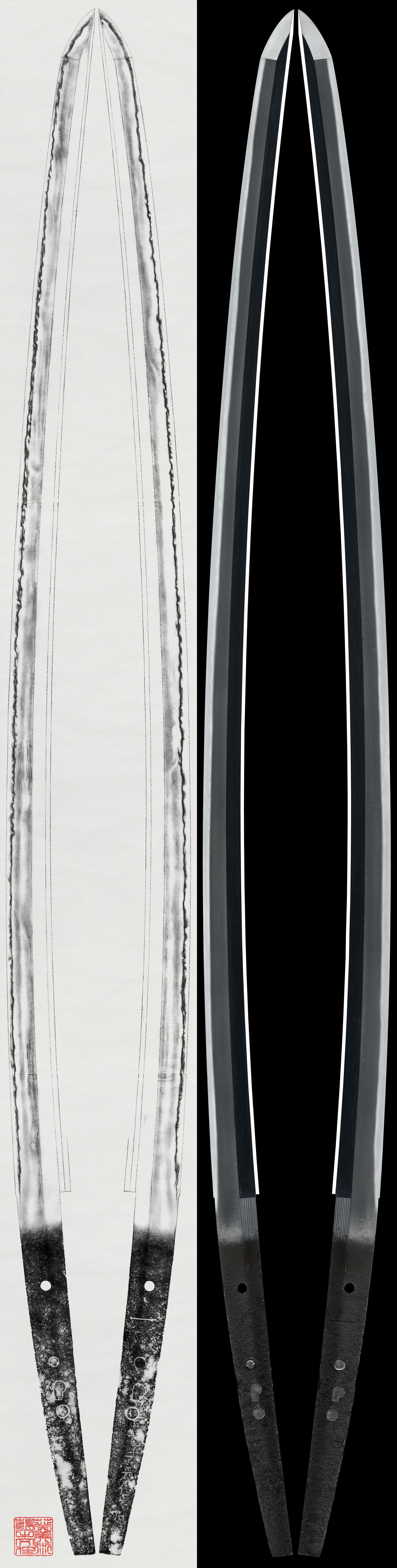
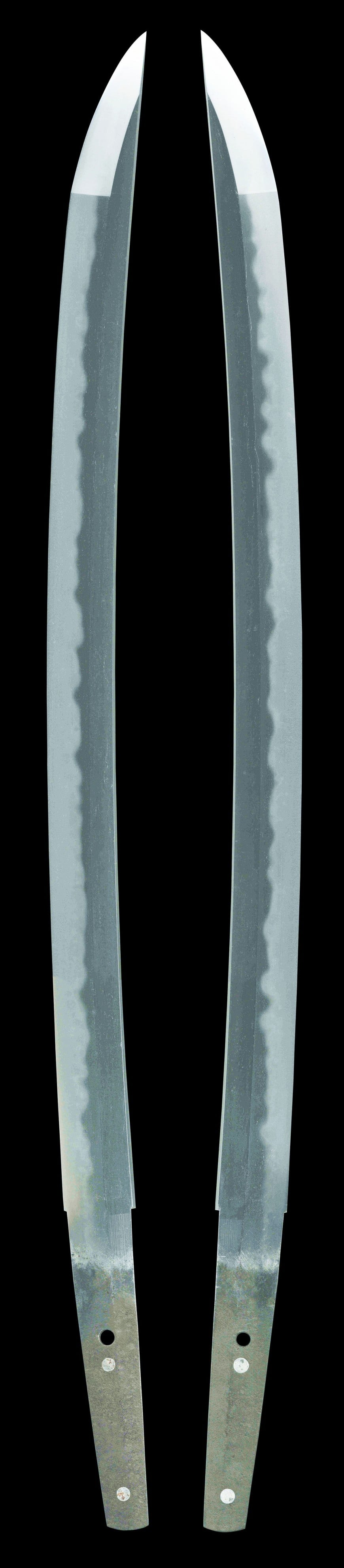
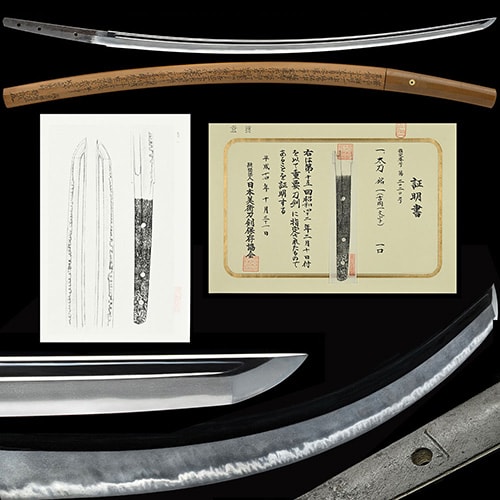
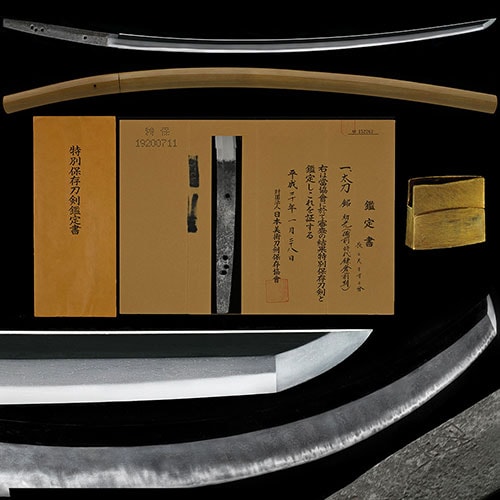
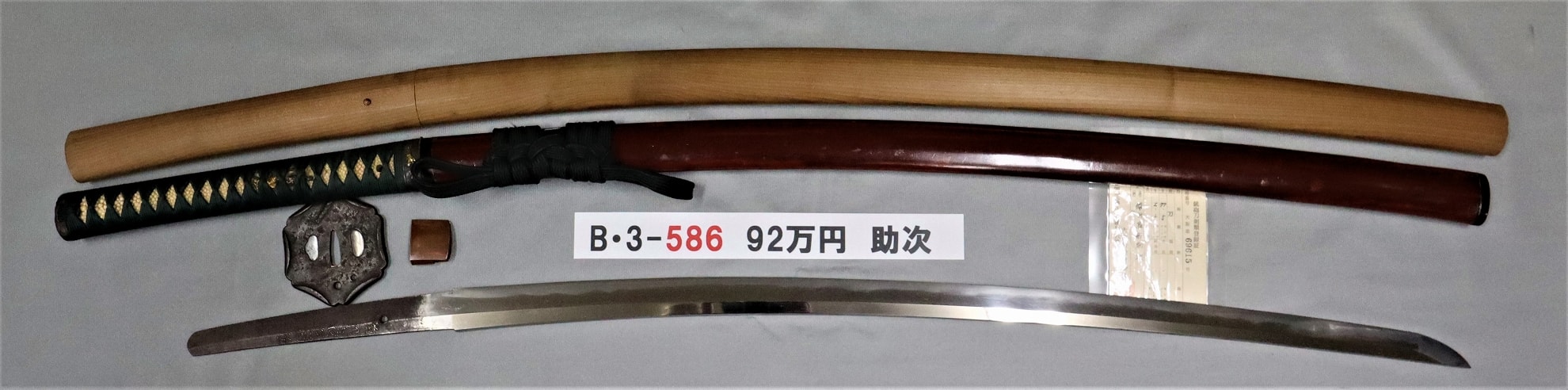
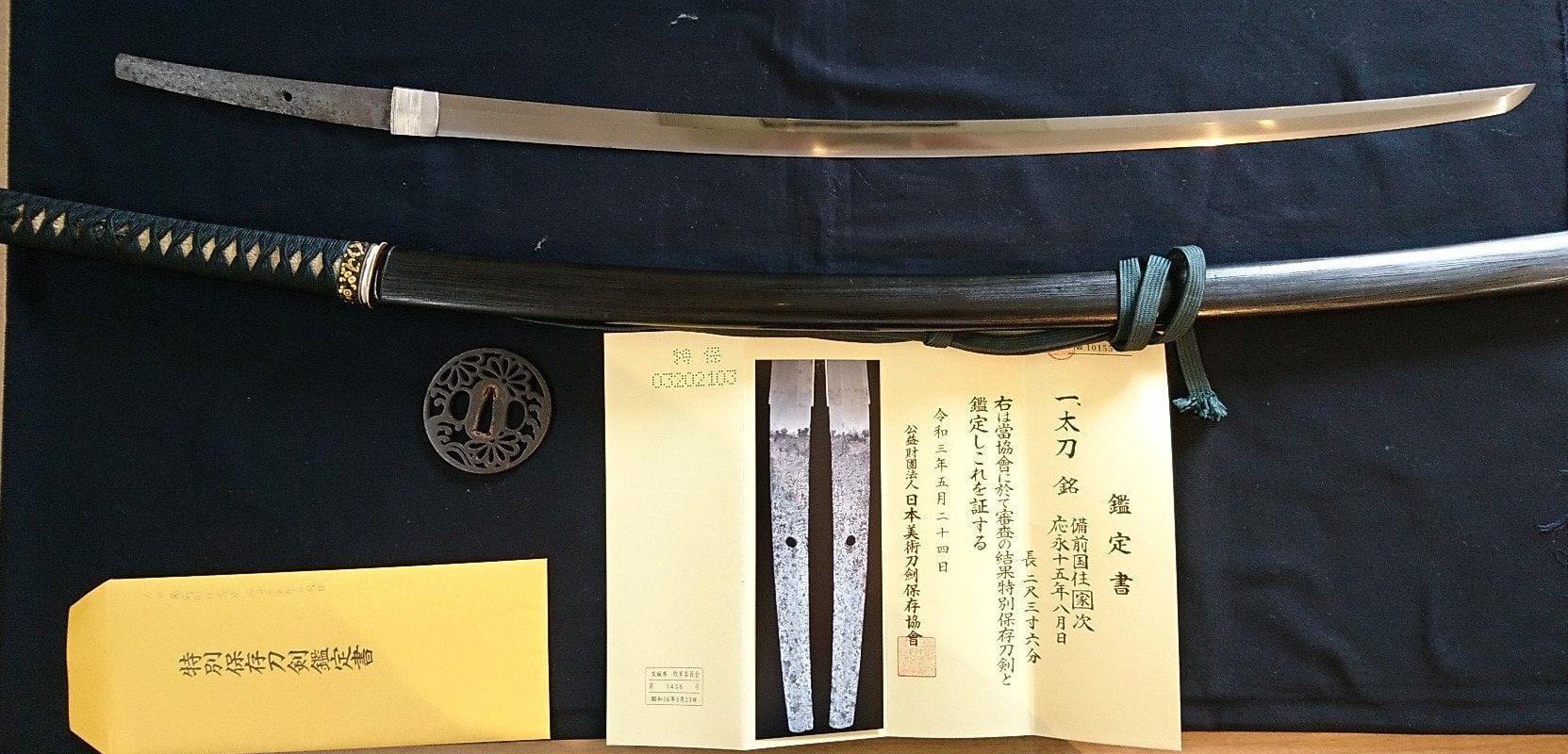
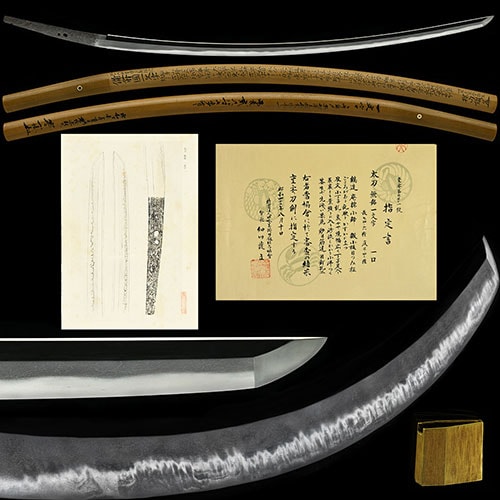
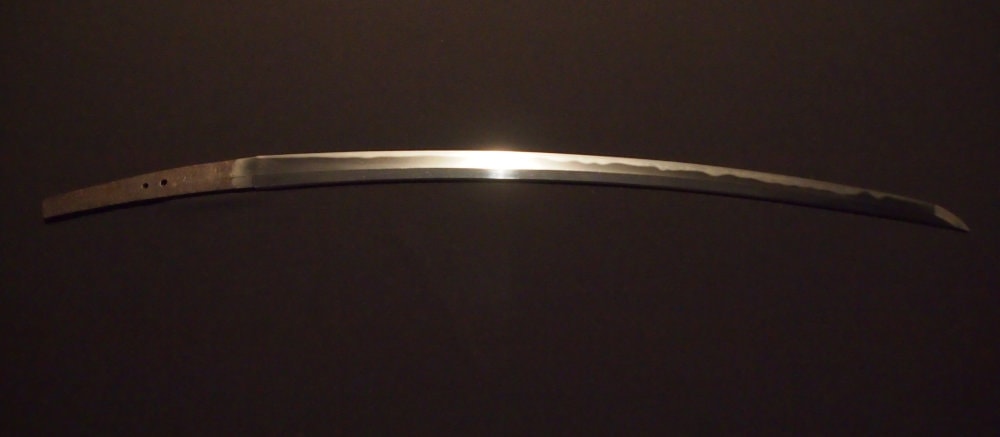
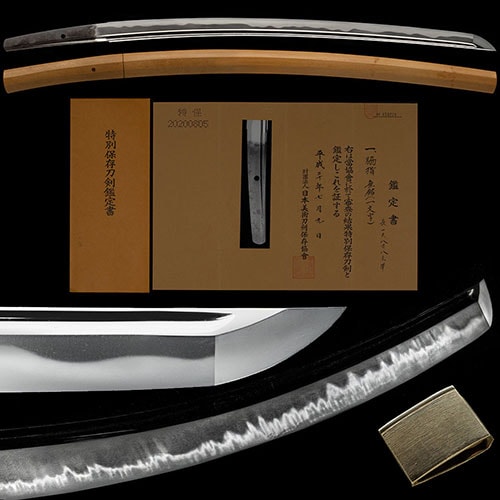
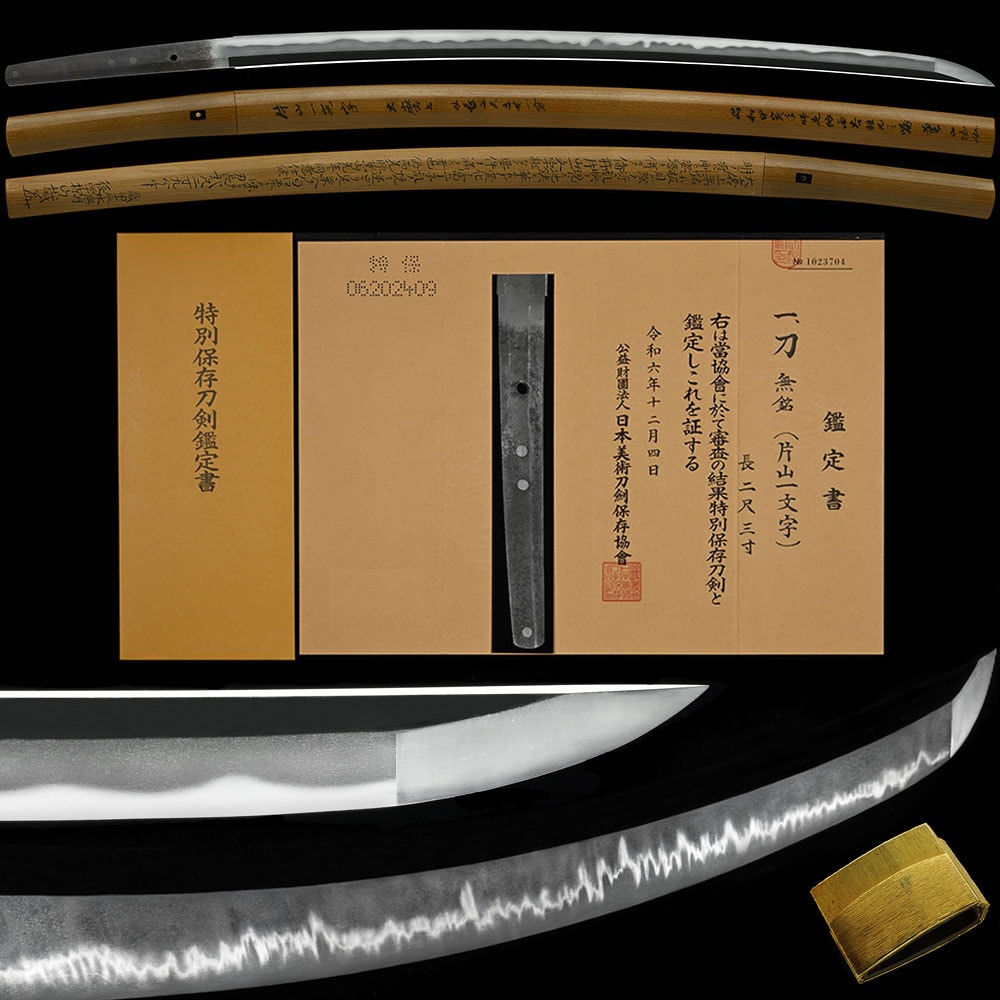
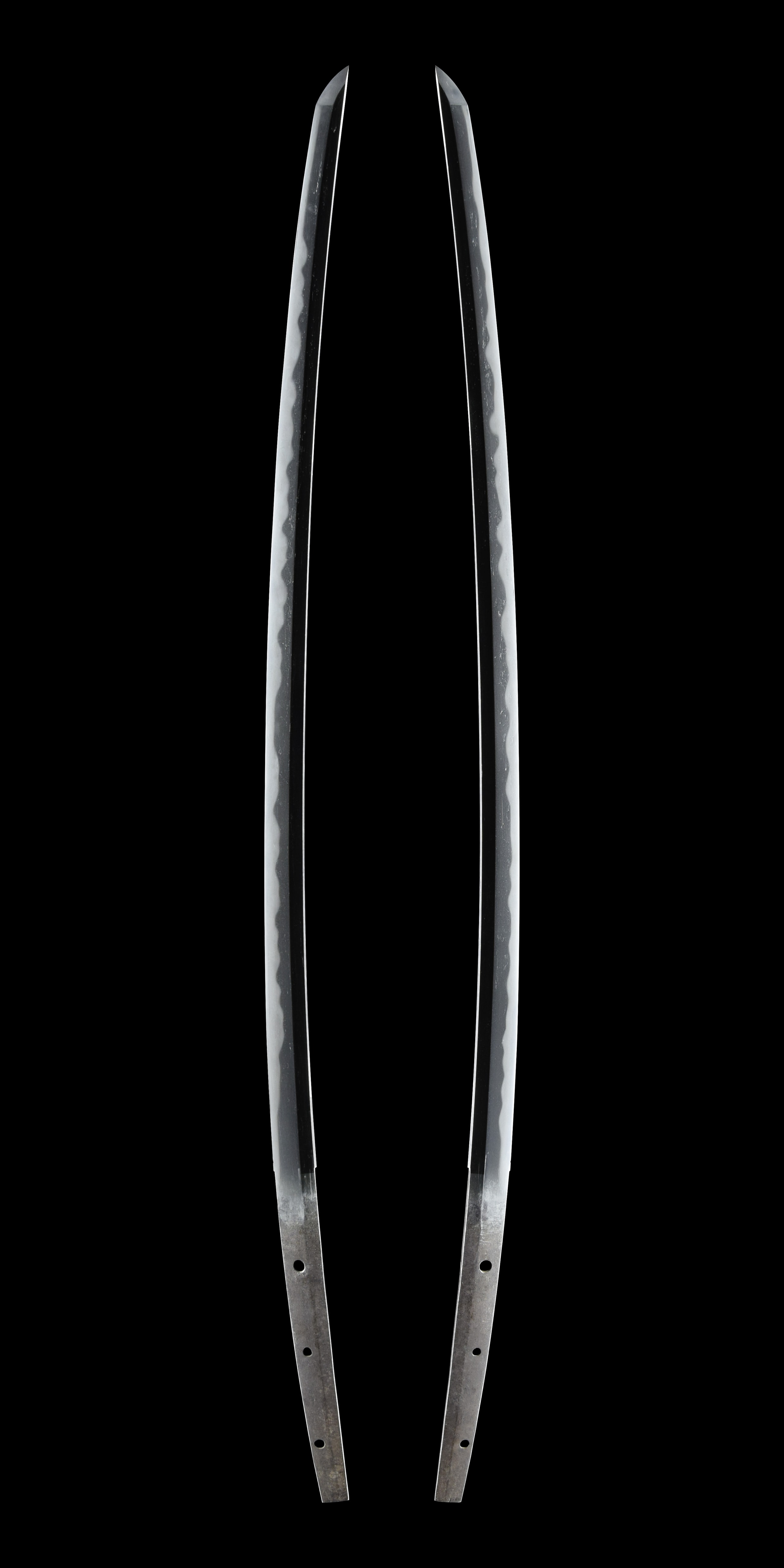
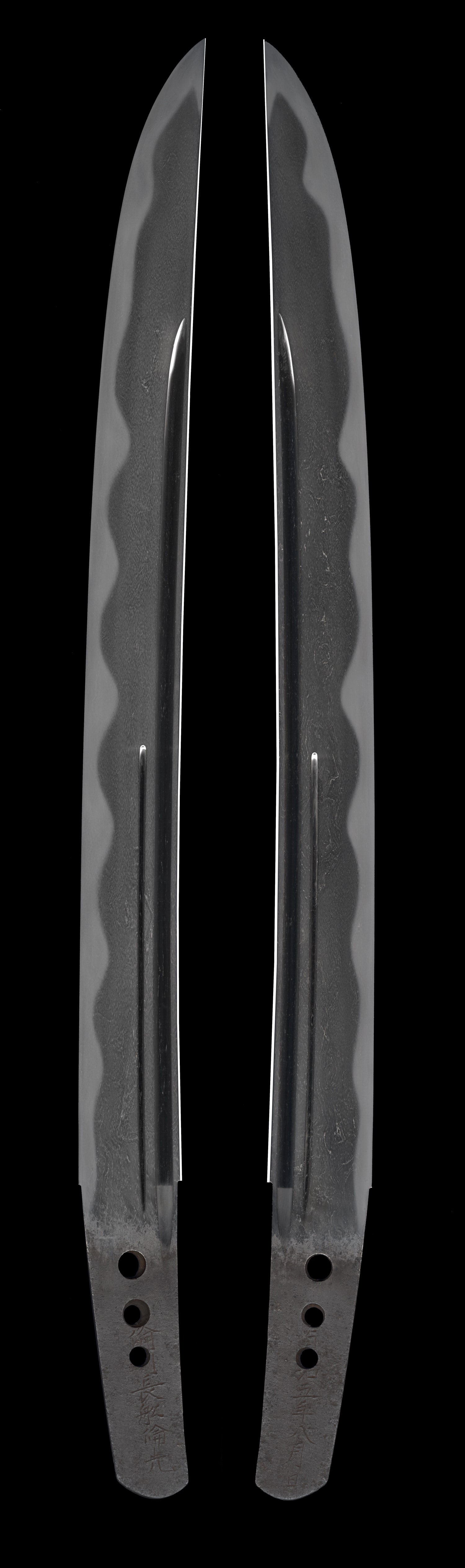
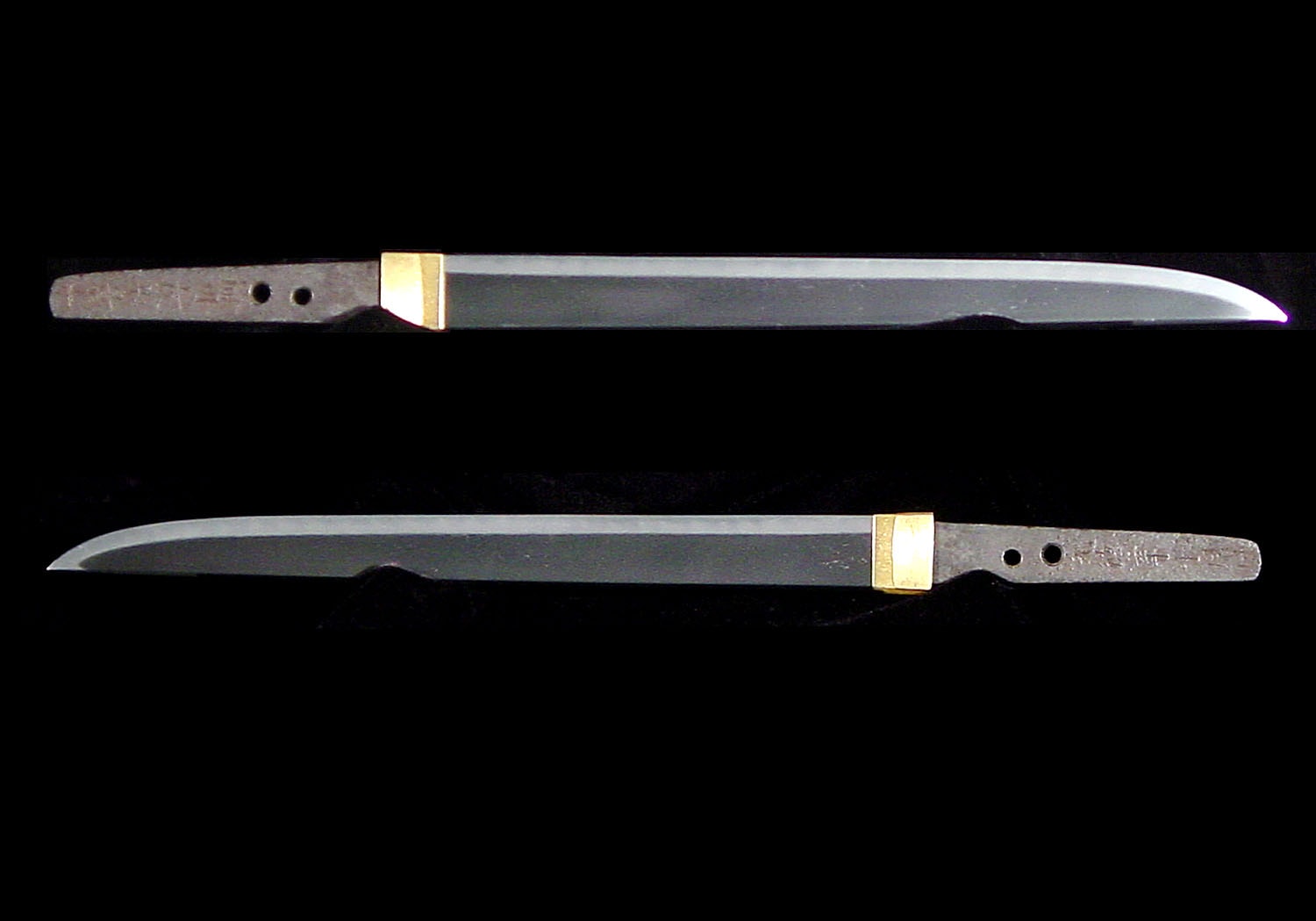
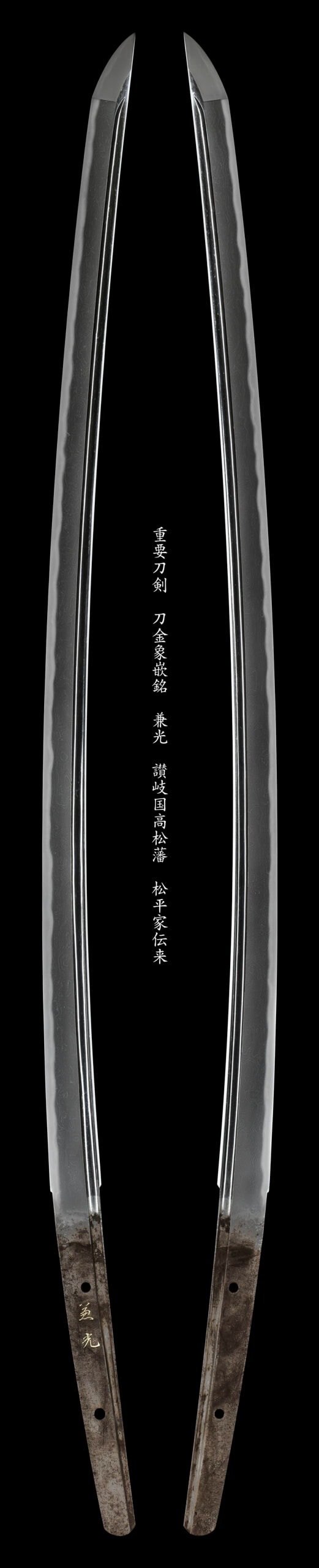
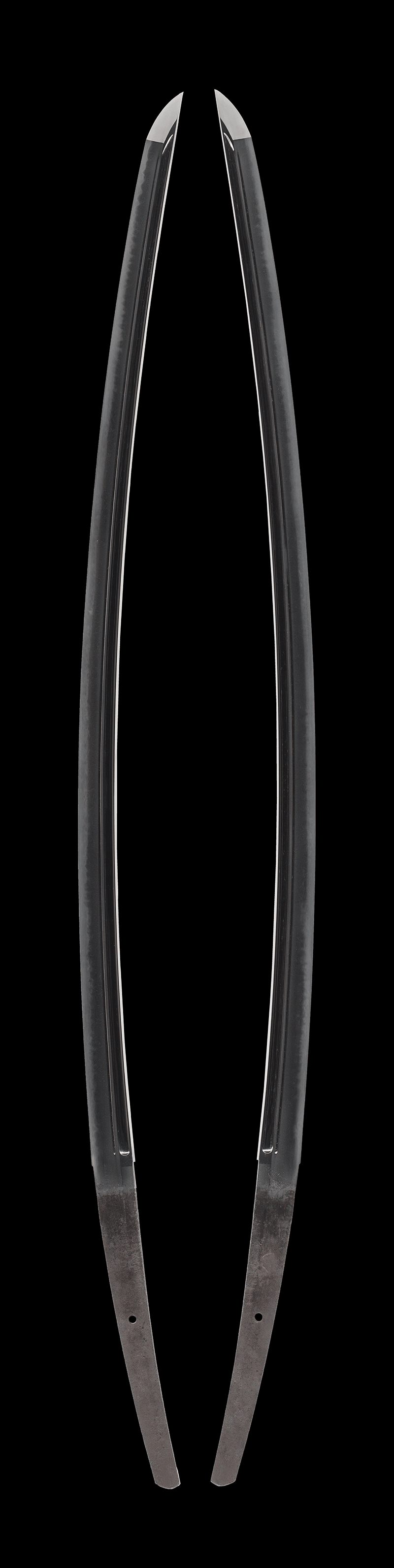
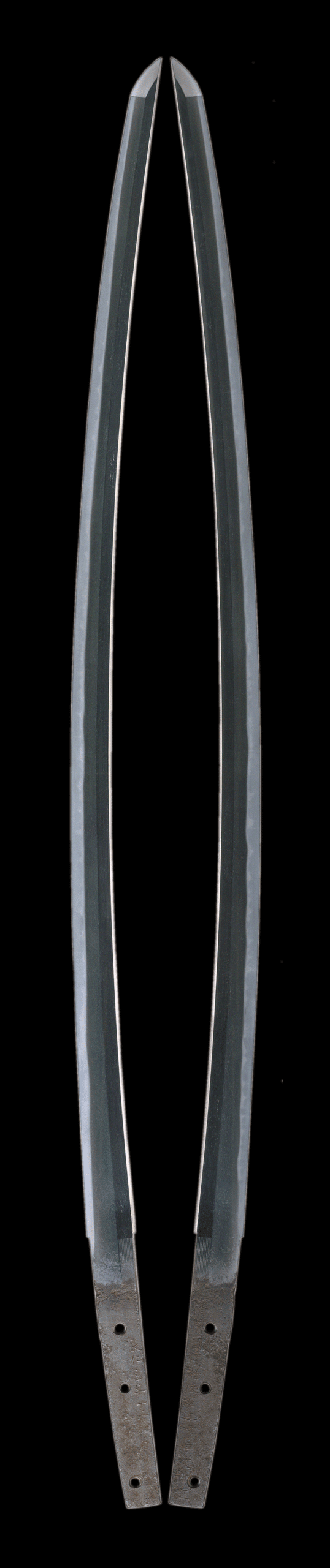
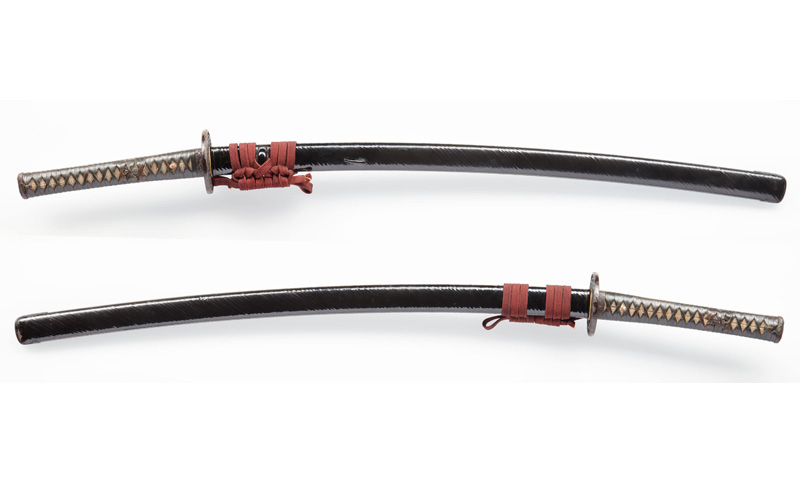
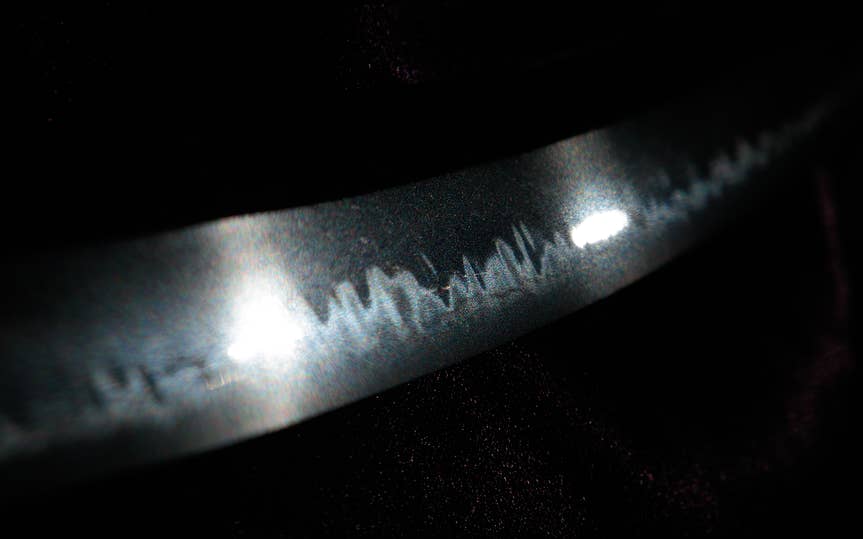
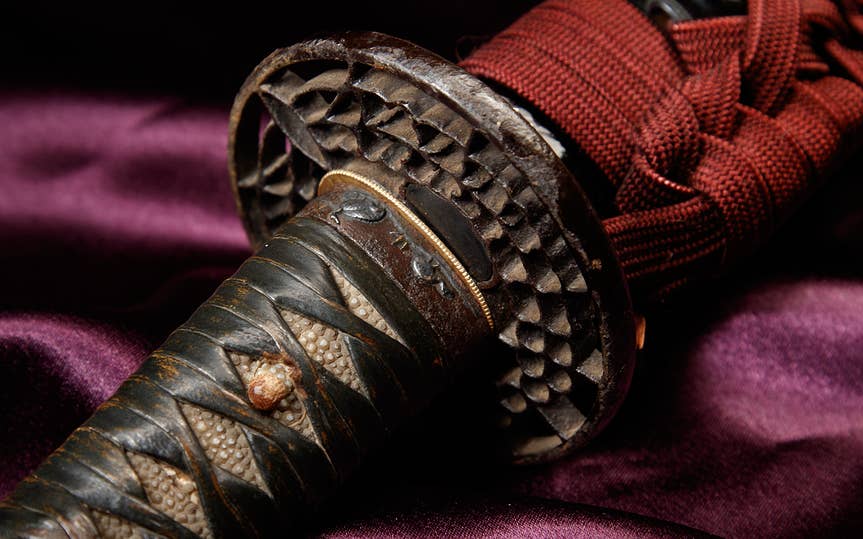
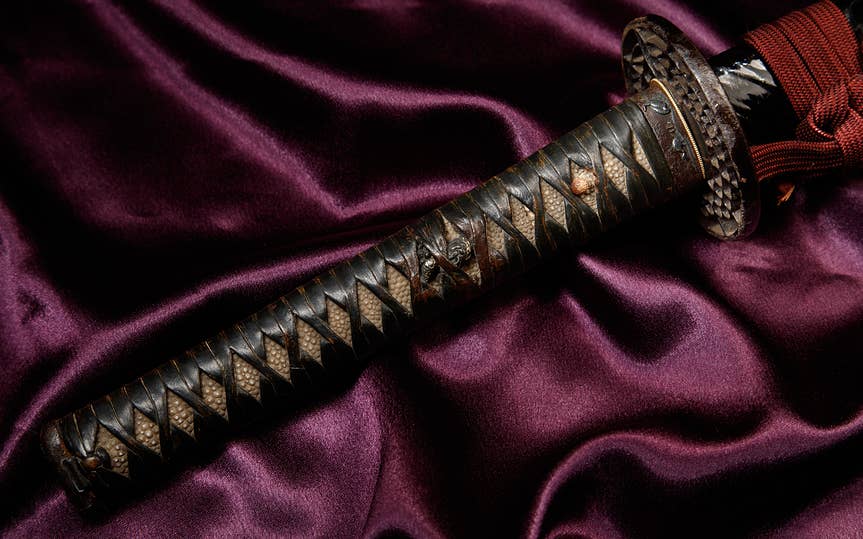
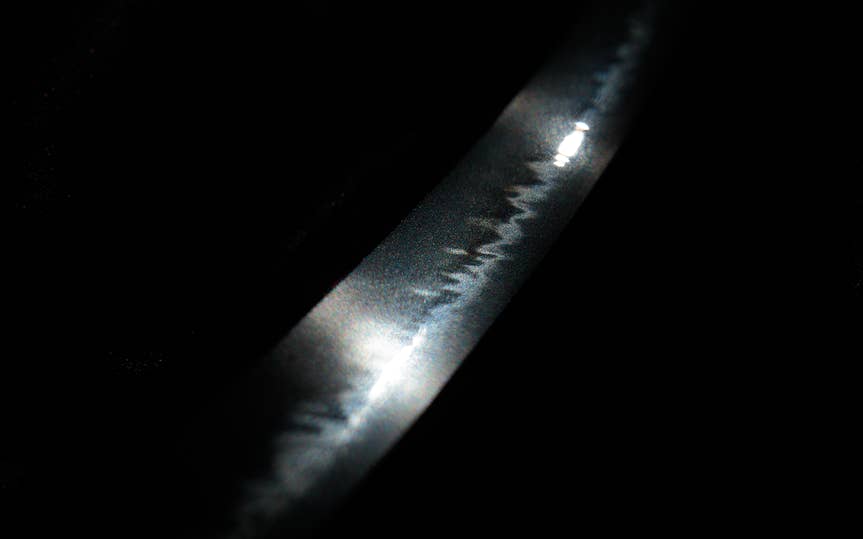
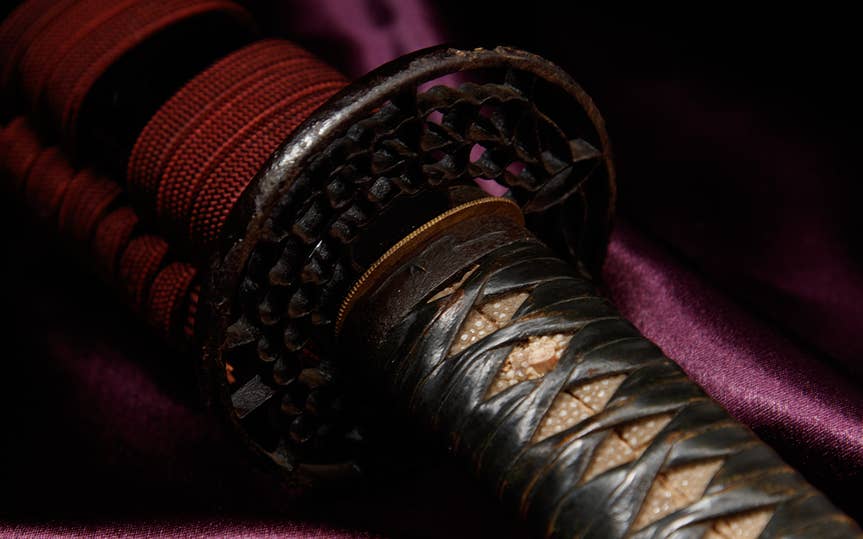
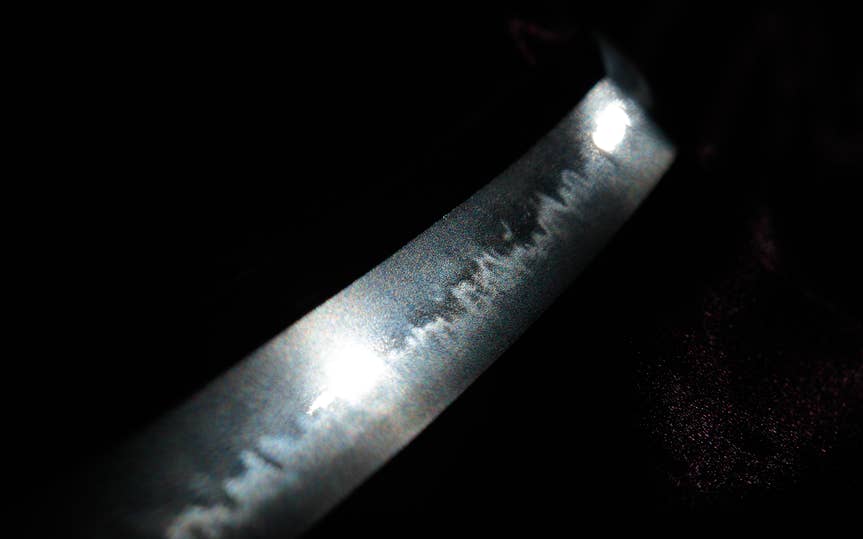
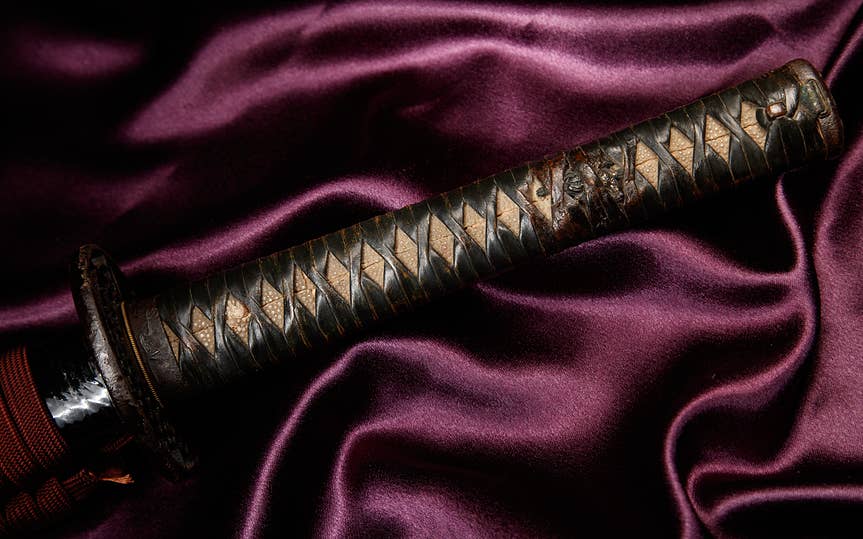
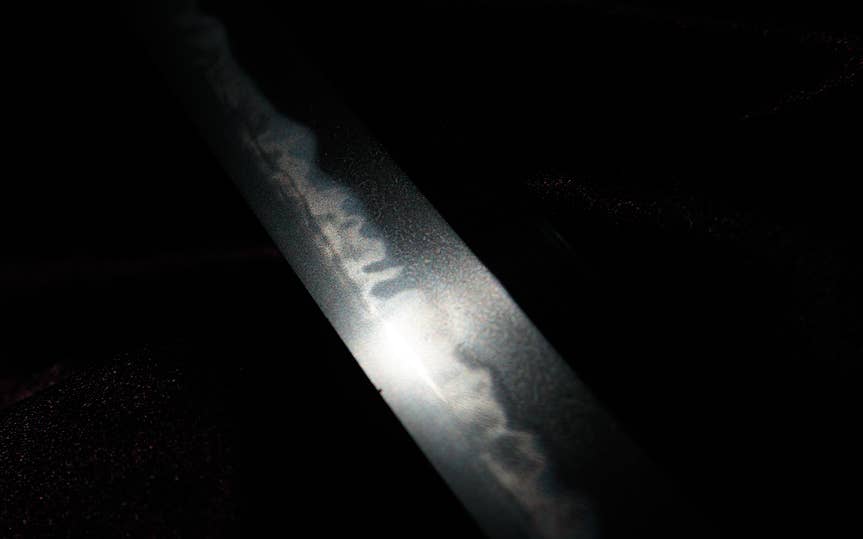
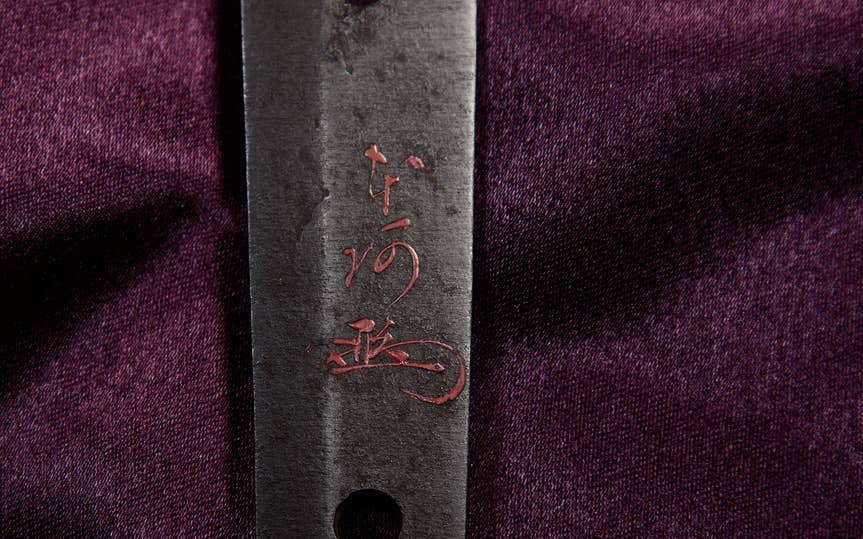
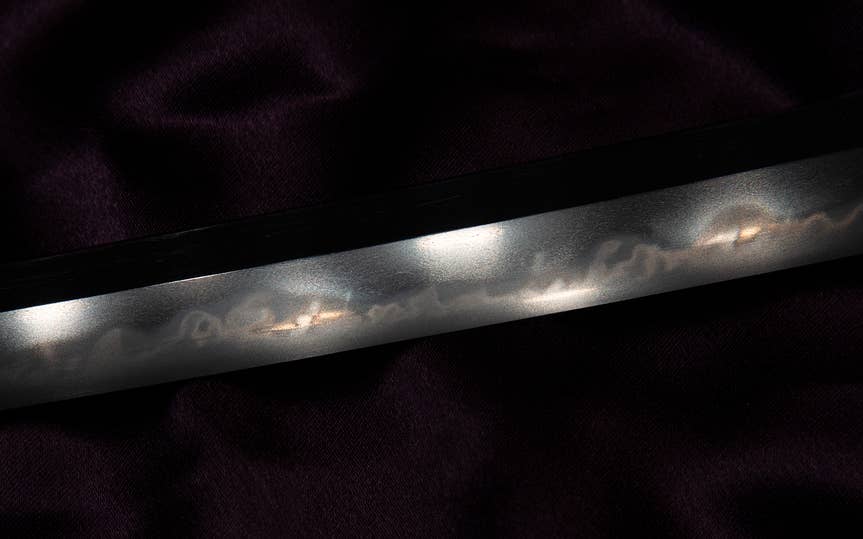
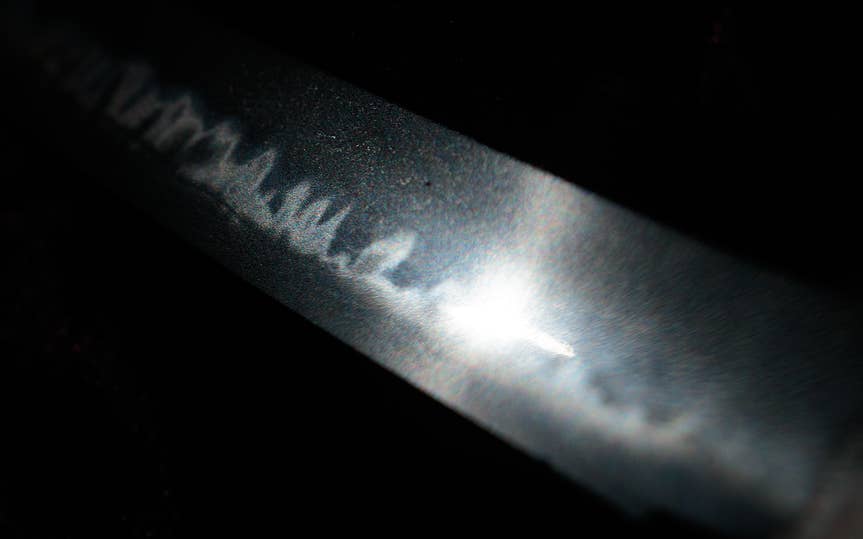
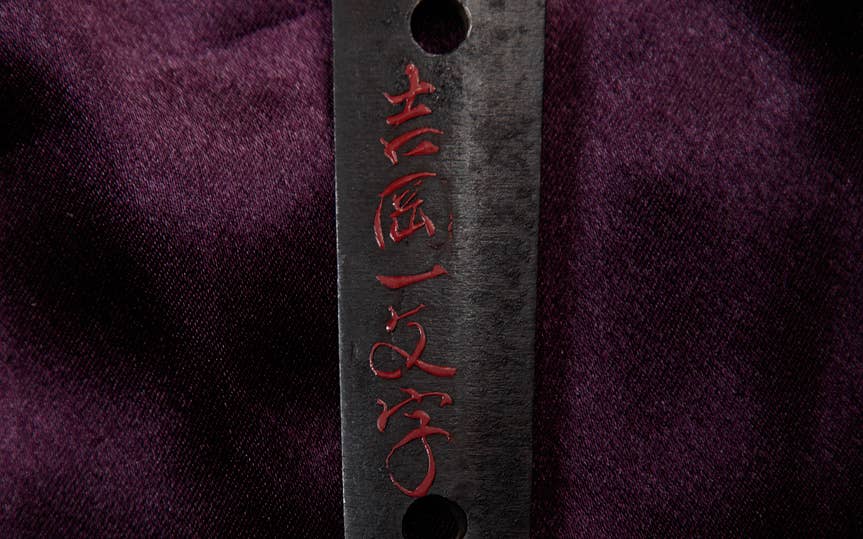
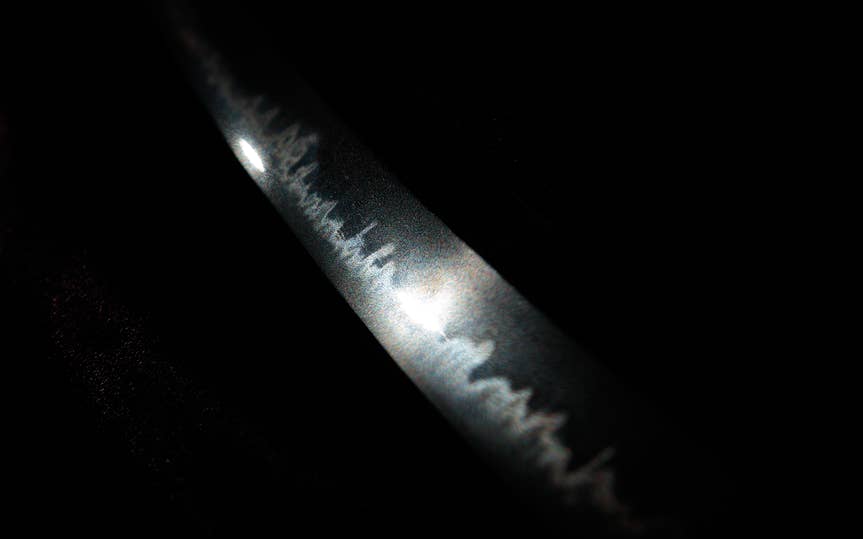
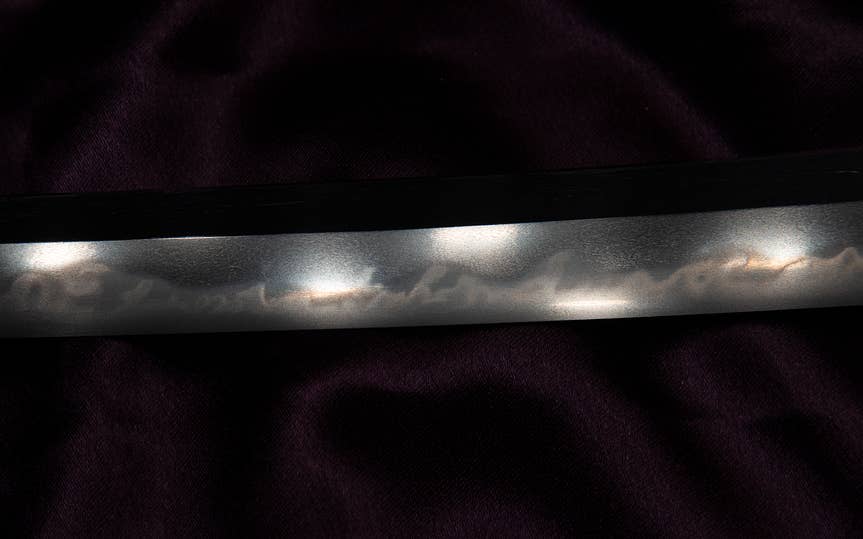
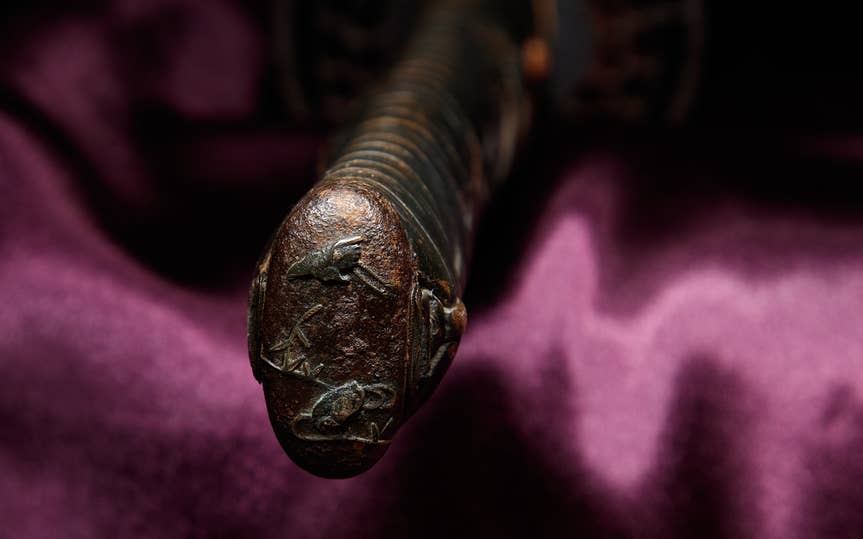
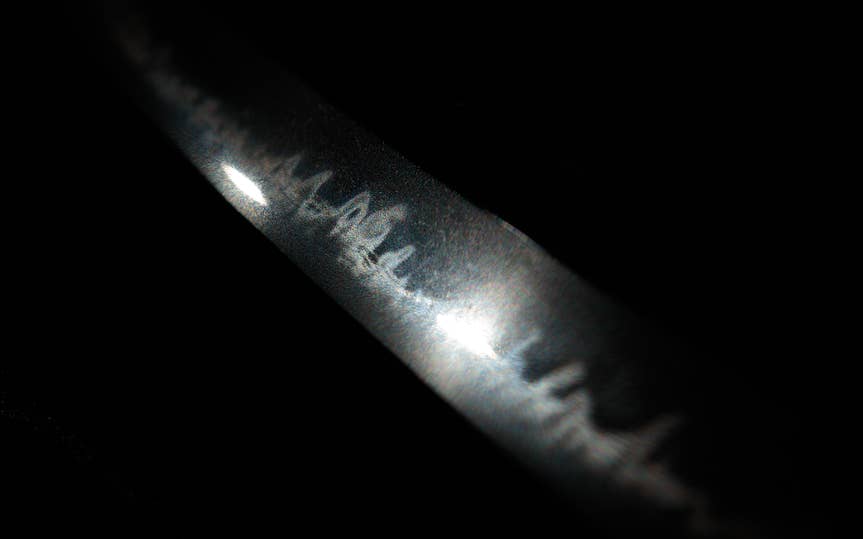
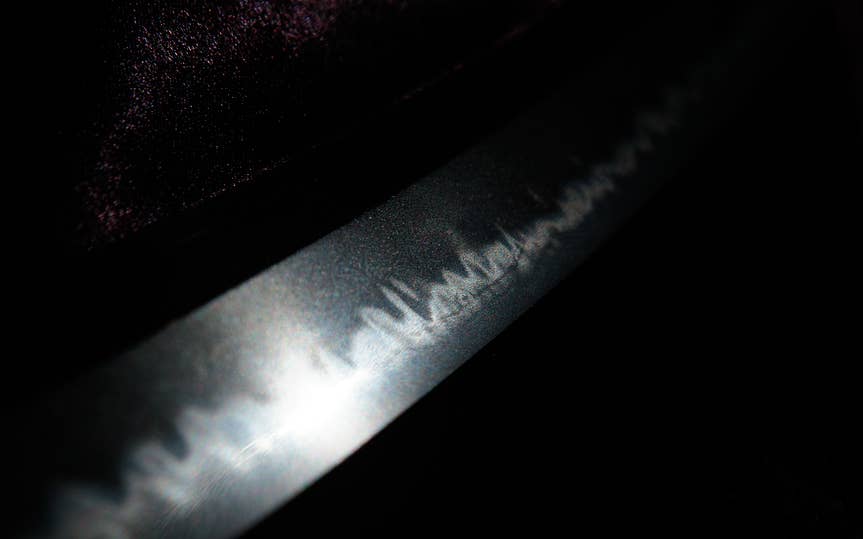
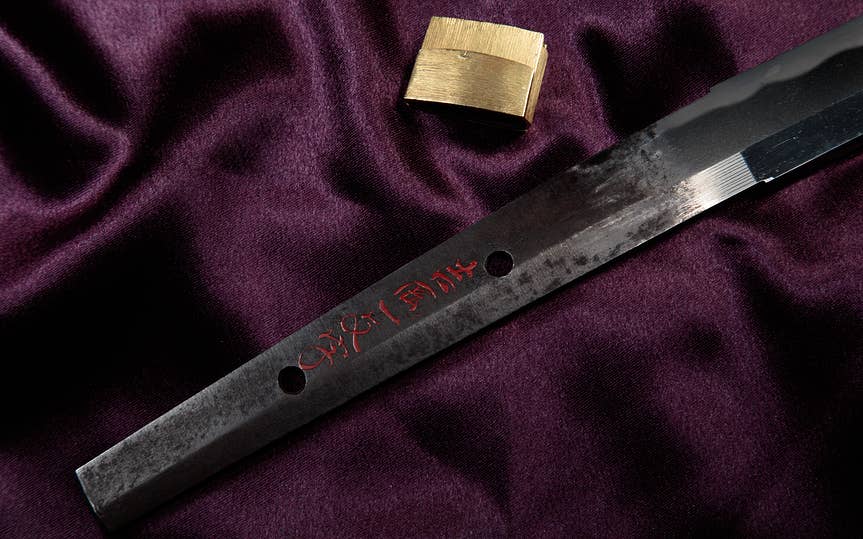
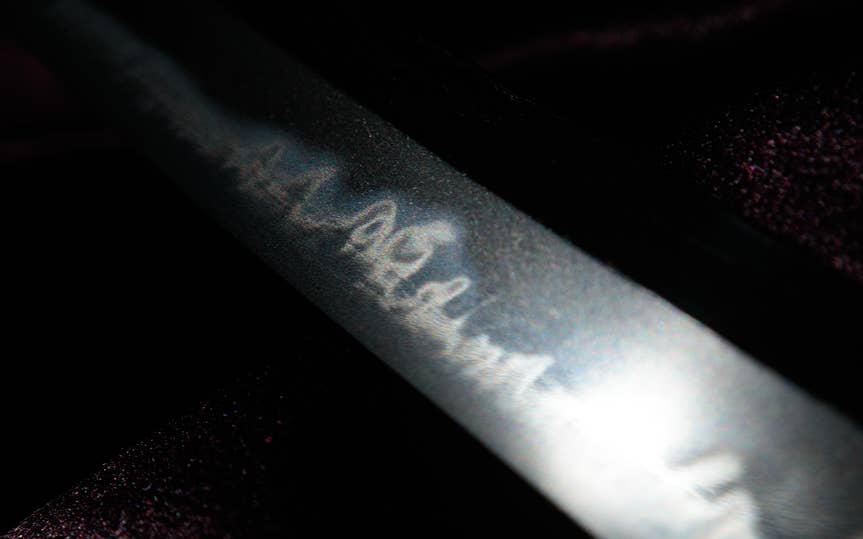
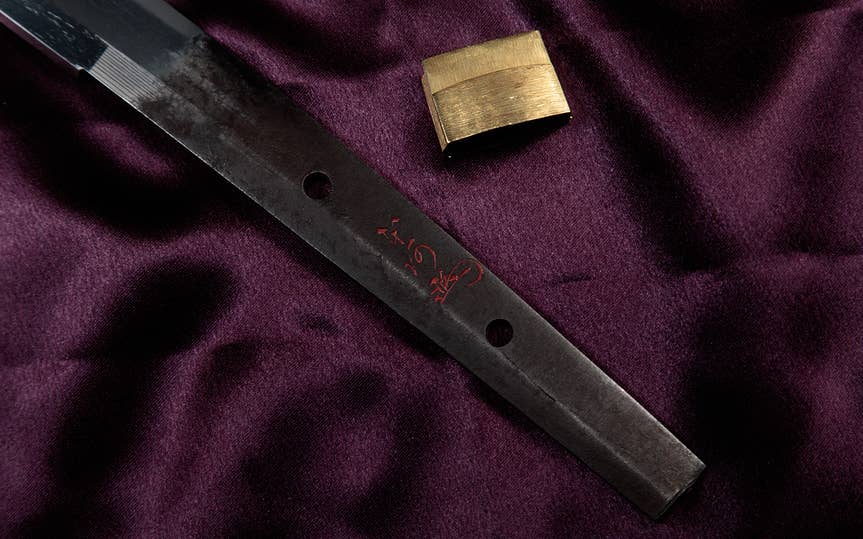
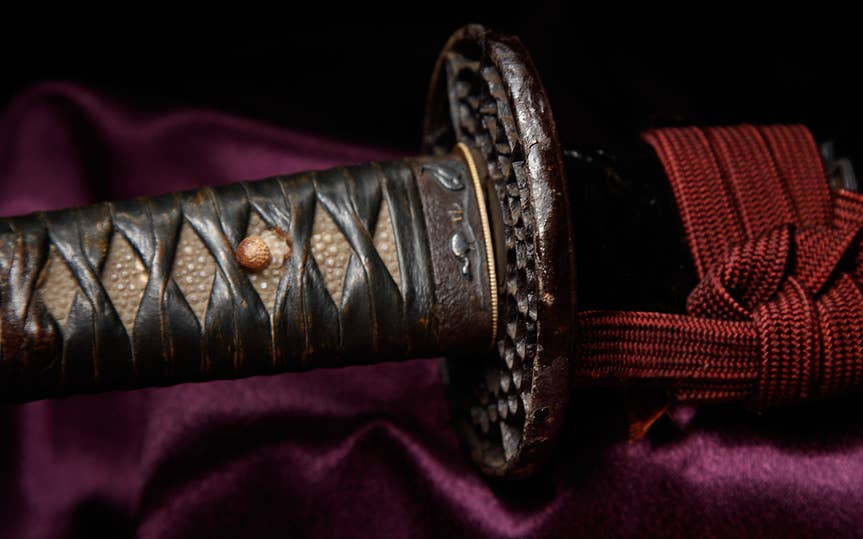
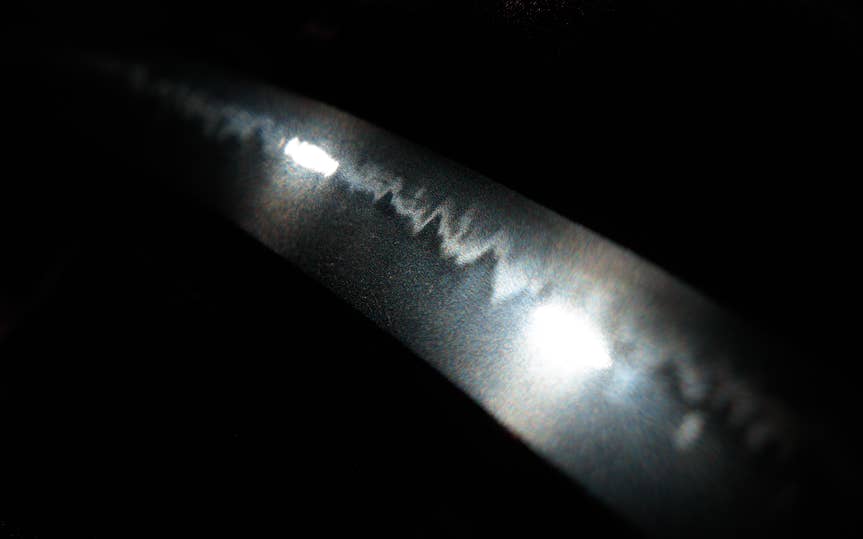
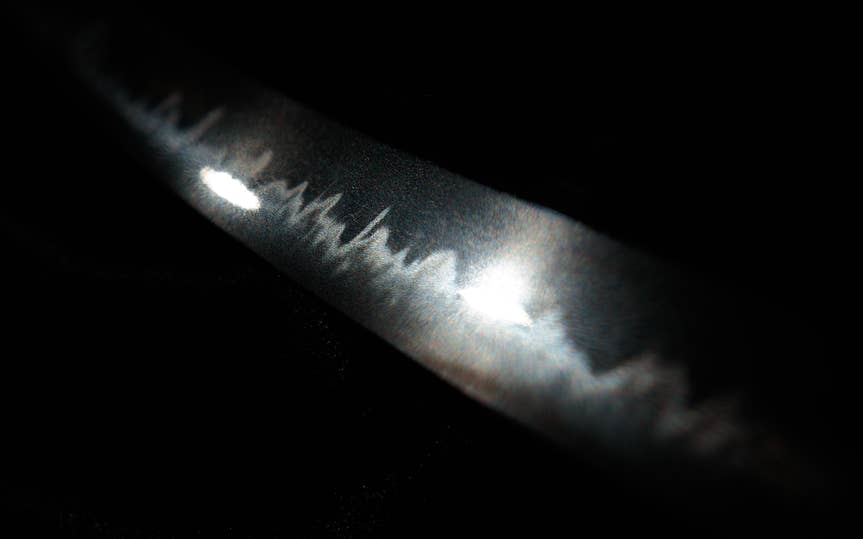
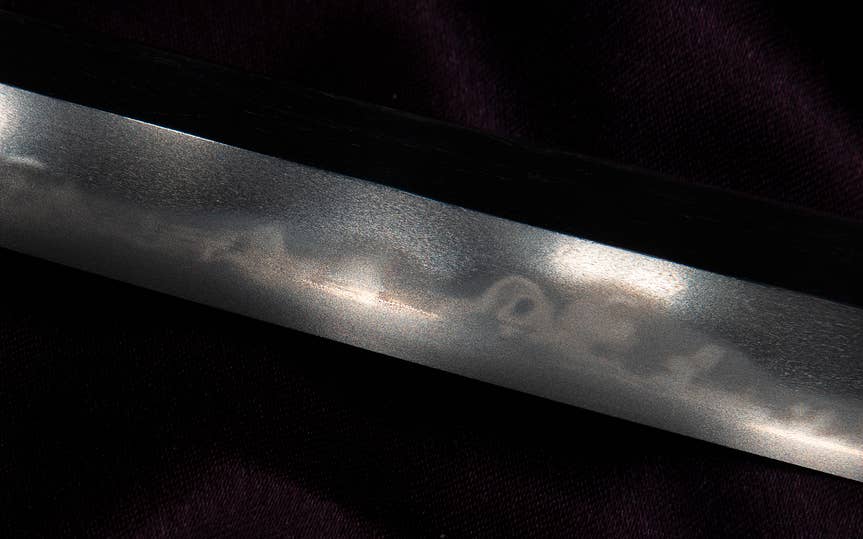
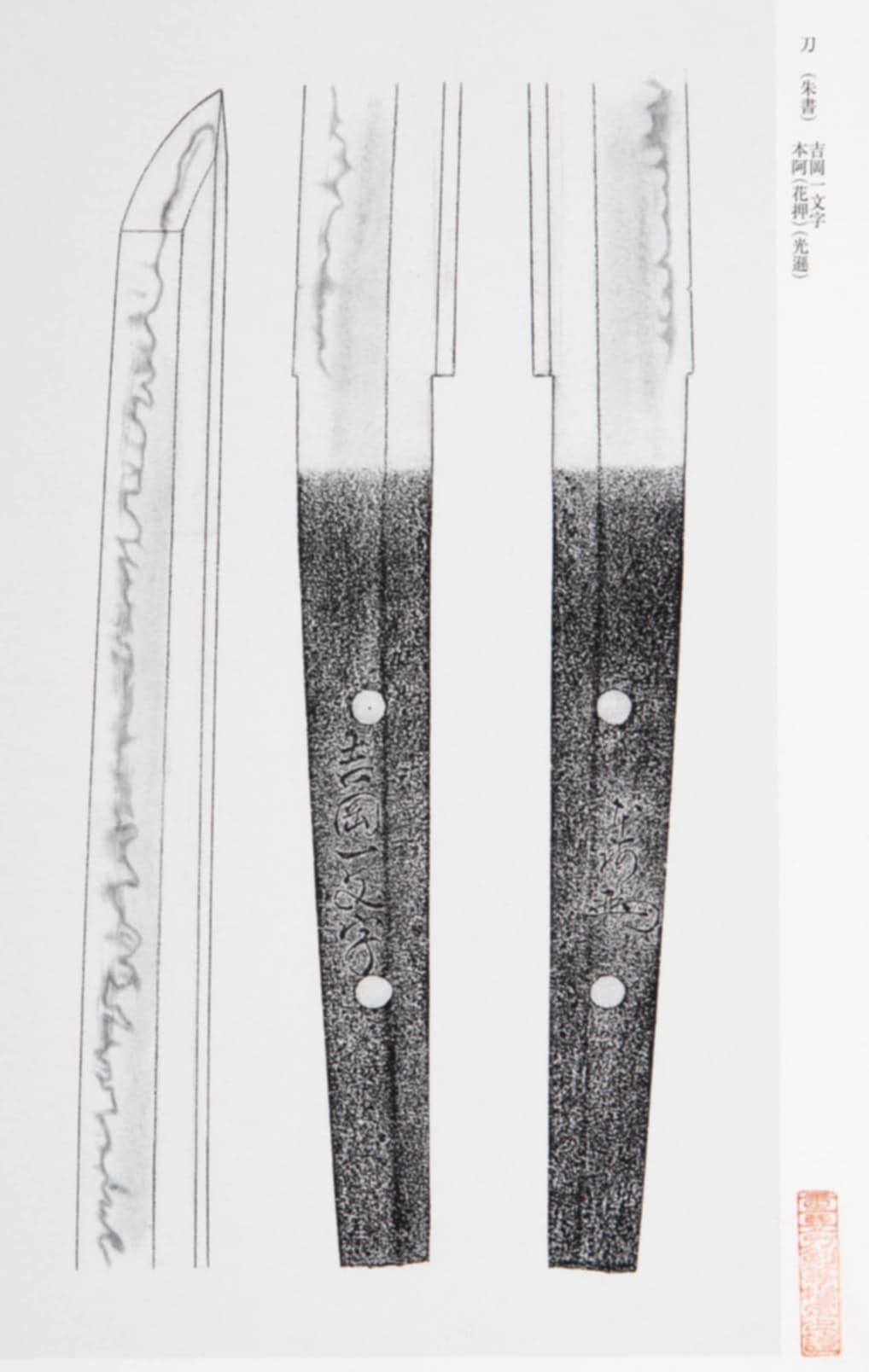
This is a Juyo Token katana attributed to the Yoshioka-Ichimonji school, dating back to the Kamakura period. The blade features a dense itame mixed with mokume kitae, a chōji-midare hamon, and a vibrant midare-utsuri. It bears a red lacquer attribution by Hon’ami Kōson and a sayagaki by Tanobe Michihiro, affirming its quality and lineage.
 NihontoWatch
suriage-mumei · Yoshioka-Ichimonji · Kamakura · nagasa 62.7cm

Bizen-den · Bizen
8 pieces on the market now
Working at Yoshioka in Bizen Province, this branch of the Ichimonji lineage arose toward the close of the Kamakura period (its dated works begin in the late thirteenth century) and carried the tradition forward into the Nanbokuchō era. It took shape as the successor to the Fukuoka Ichimonji once that earlier group had passed its apex, and the published sources rank it directly behind Fukuoka among the Ichimonji branches in both prosperity and quality. Learn more →
| Smith | Era | Designated |
|---|---|---|
| Sukemitsu助光 | 1299-1302 | 7 |
| Ichi一 | 1288-1293 | 3 |
| Sukeyoshi助吉 | 1303-1306 | 3 |
| Kageyasu景泰 | 1326-1329 | 0 |
| Tokisuke時助 | 1352-1356 | 0 |
A blade of top-grade workmanship and condition, formally judged to rank with a nationally recognized Important Art Object (Jūyō Bijutsuhin). Awarded only at the NBTHK’s competitive annual examination.
Of Japan’s roughly 2.5 million registered swords, only 12,307 (about 1 in 203) have ever attained Jūyō.
The NBTHK (Nihon Bijutsu Tōken Hozon Kyōkai, the Society for the Preservation of Japanese Art Swords) is a public-interest incorporated foundation founded in 1948 and supervised by Japan’s Agency for Cultural Affairs (Bunkachō); it is based at the Japanese Sword Museum in Tokyo. Its expert panels physically examine each submitted work (shinsa) and issue a certificate (kanteishō) ranking it by artistic and historical merit. NBTHK papers are the most widely recognized standard of authentication for Japanese swords and fittings.
NBTHK official site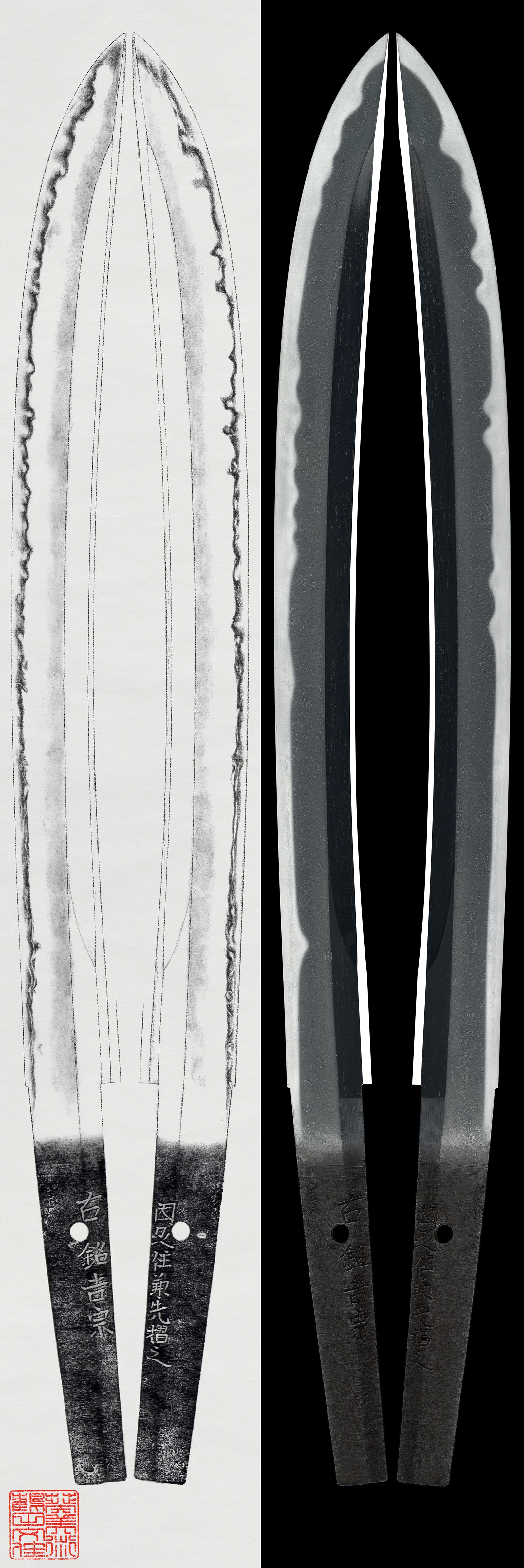
This is a Juyo Token katana attributed to the Yoshioka-Ichimonji school, dating back to the Kamakura period. The blade features a dense itame mixed with mokume kitae, a chōji-midare hamon, and a vibrant midare-utsuri. It bears a red lacquer attribution by Hon’ami Kōson and a sayagaki by Tanobe Michihiro, affirming its quality and lineage.
NihontoWatchsuriage-mumei · Yoshioka-Ichimonji · Kamakura · nagasa 62.7cm
Bizen-den · Bizen
8 pieces on the market now
Working at Yoshioka in Bizen Province, this branch of the Ichimonji lineage arose toward the close of the Kamakura period (its dated works begin in the late thirteenth century) and carried the tradition forward into the Nanbokuchō era. It took shape as the successor to the Fukuoka Ichimonji once that earlier group had passed its apex, and the published sources rank it directly behind Fukuoka among the Ichimonji branches in both prosperity and quality. Learn more →
| Smith | Era | Designated |
|---|---|---|
| Sukemitsu助光 | 1299-1302 | 7 |
| Ichi一 | 1288-1293 | 3 |
| Sukeyoshi助吉 | 1303-1306 | 3 |
| Kageyasu景泰 | 1326-1329 | 0 |
| Tokisuke時助 | 1352-1356 | 0 |
A blade of top-grade workmanship and condition, formally judged to rank with a nationally recognized Important Art Object (Jūyō Bijutsuhin). Awarded only at the NBTHK’s competitive annual examination.
Of Japan’s roughly 2.5 million registered swords, only 12,307 (about 1 in 203) have ever attained Jūyō.
The NBTHK (Nihon Bijutsu Tōken Hozon Kyōkai, the Society for the Preservation of Japanese Art Swords) is a public-interest incorporated foundation founded in 1948 and supervised by Japan’s Agency for Cultural Affairs (Bunkachō); it is based at the Japanese Sword Museum in Tokyo. Its expert panels physically examine each submitted work (shinsa) and issue a certificate (kanteishō) ranking it by artistic and historical merit. NBTHK papers are the most widely recognized standard of authentication for Japanese swords and fittings.
NBTHK official site