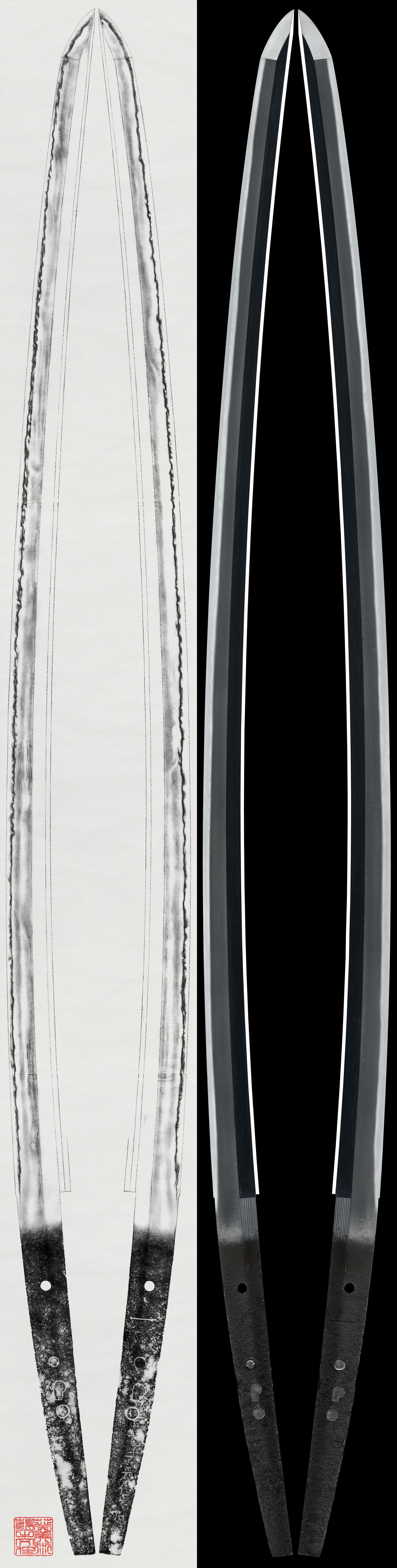
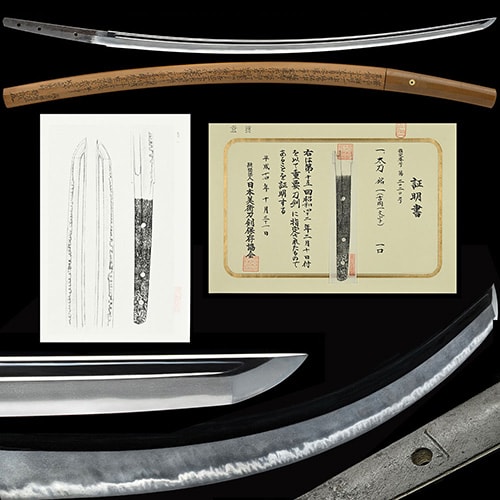
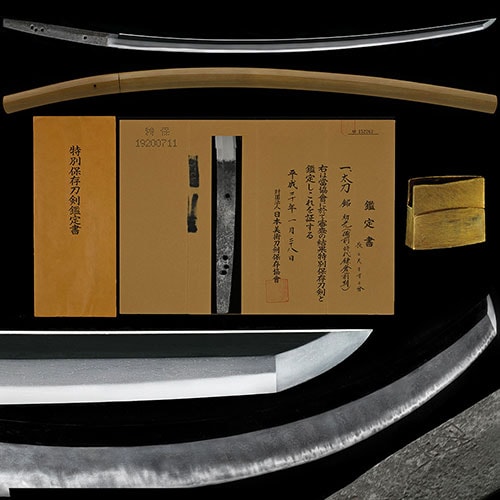
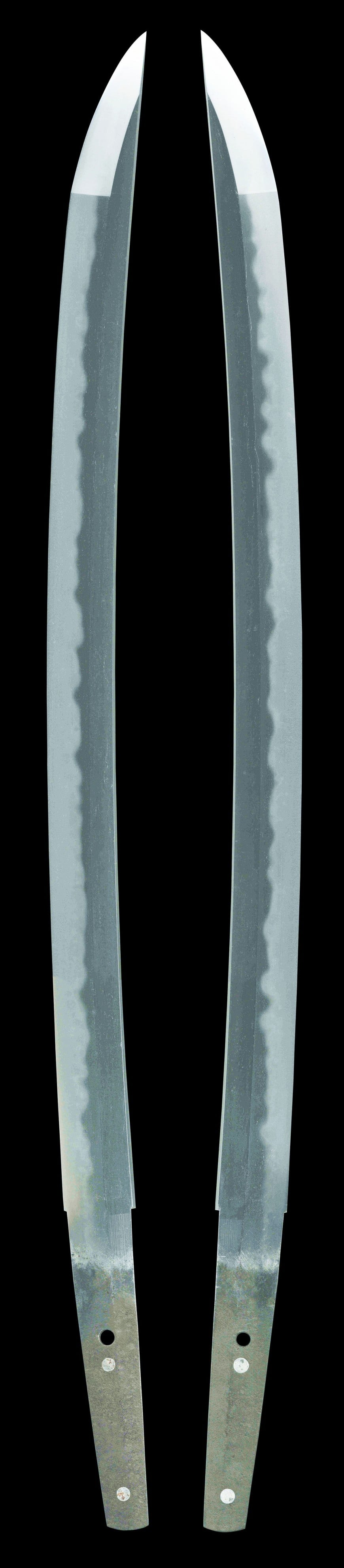
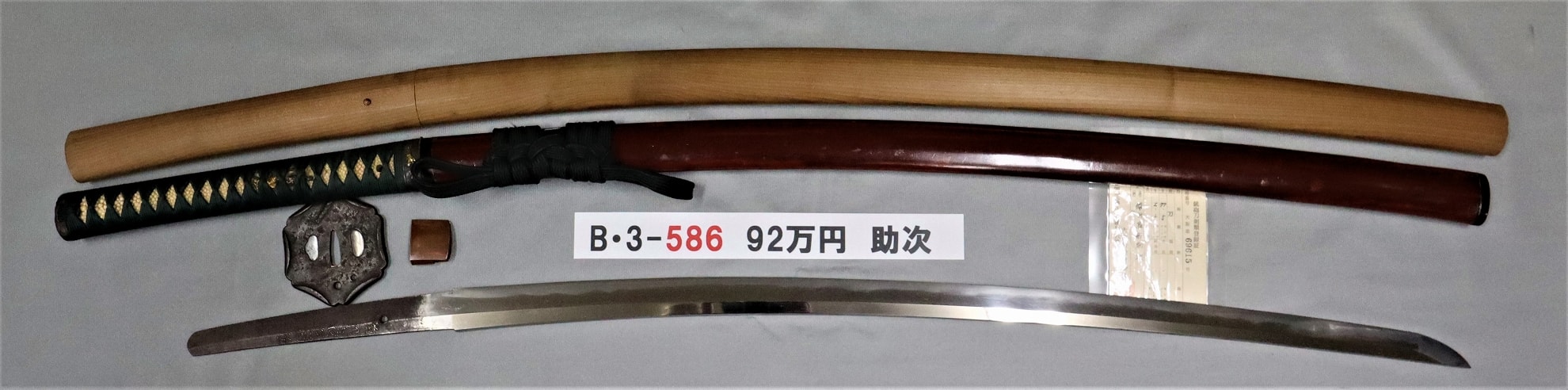
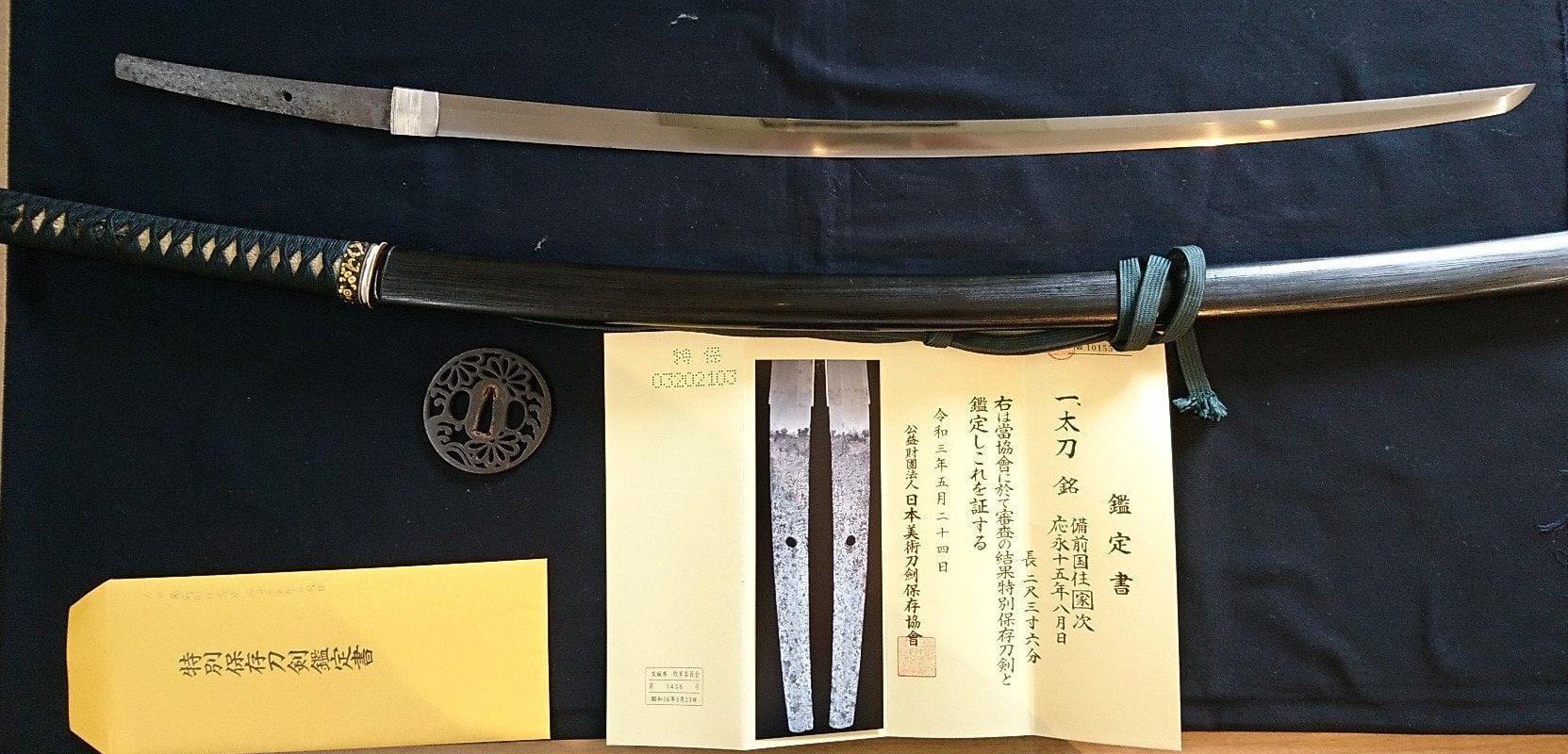
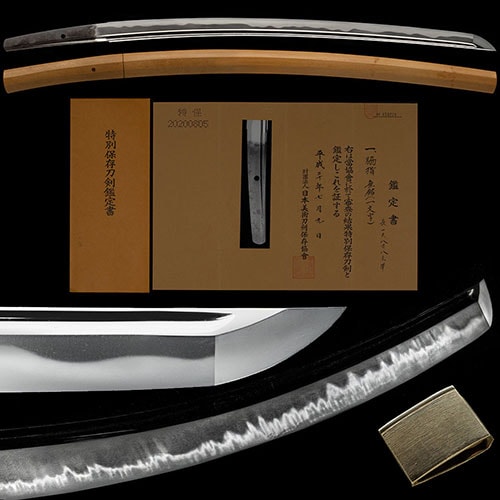
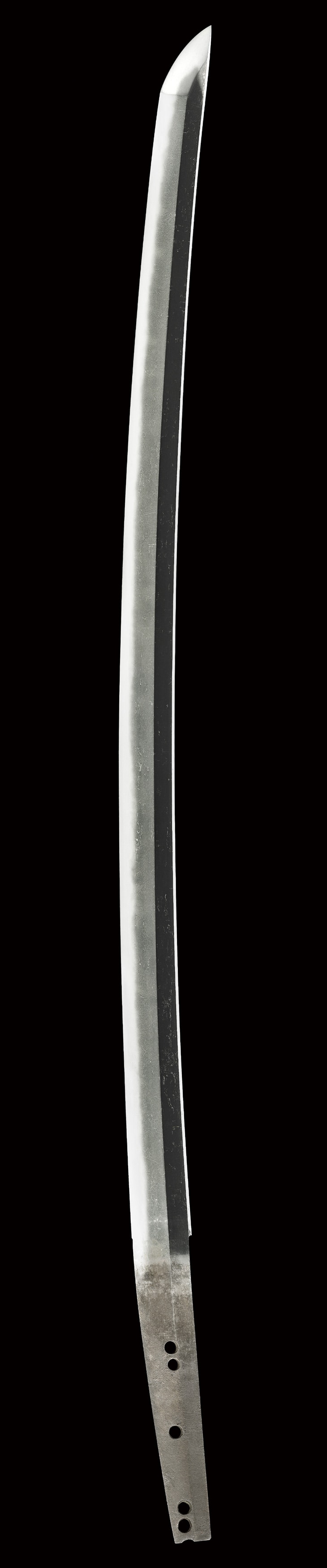
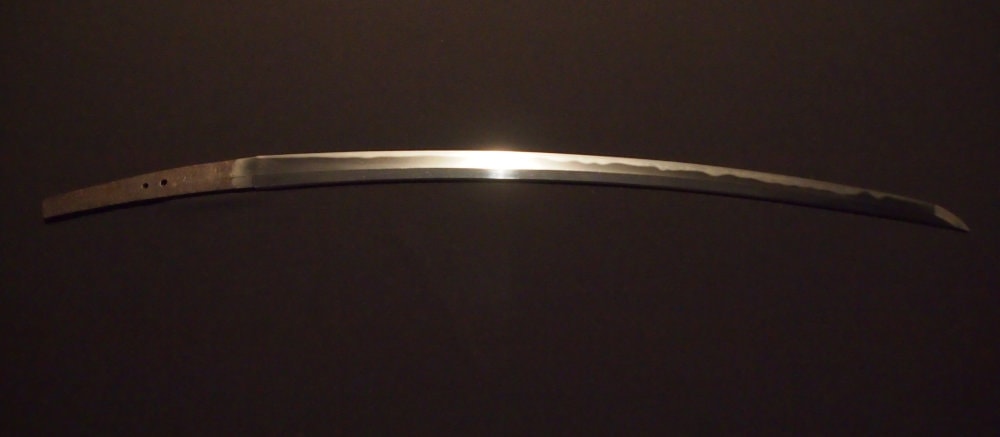
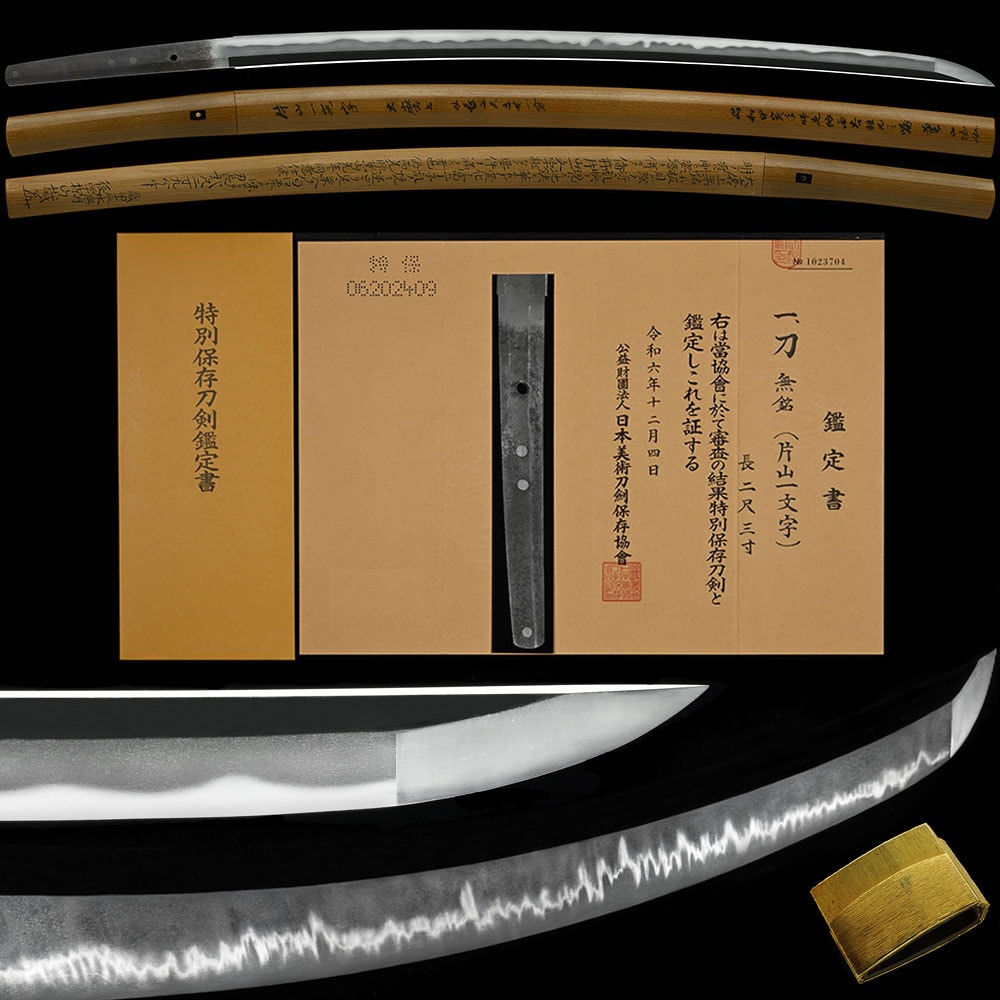
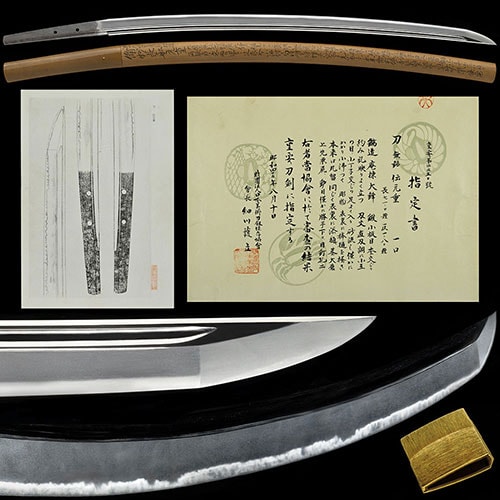
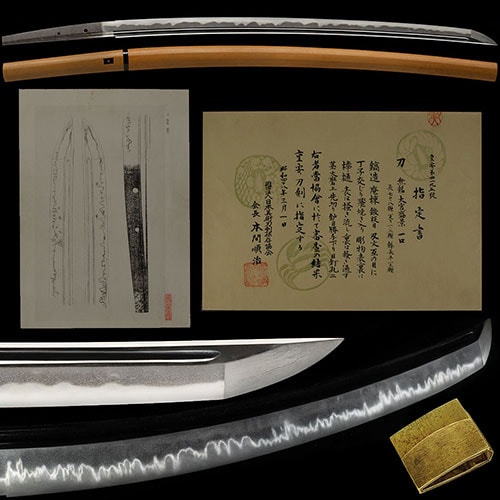
The name Sukeyoshi belongs to several smiths working across the tradition, spanning from the mid- period through the era. The most celebrated bearers of this name are found within both the Fukuoka and Yoshioka lineages. The Fukuoka Sukeyoshi, active in the mid- period, is associated with the brilliant, large-patterned - that defines the school's finest era. The Yoshioka Sukeyoshi, whose signed works bear dates such as Ryakuo 2 (1339) and Sadawa 5 (1349), flourished from the late into the period as the Yoshioka branch supplanted the earlier Fukuoka group. Reference works record that he was a son of Sukekichi, and he is also identified with the longer signature "Bishu Yoshioka-ju Saemonnojo Sukeyoshi." A separate Sukeyoshi is also associated with the Senjuin school of Yamato Province, one of the oldest among the five Yamato traditions, where signed works remain exceedingly scarce. Additionally, an Sukeyoshi is known from a blade bearing the six-character signature "Bishu Sukeyoshi."
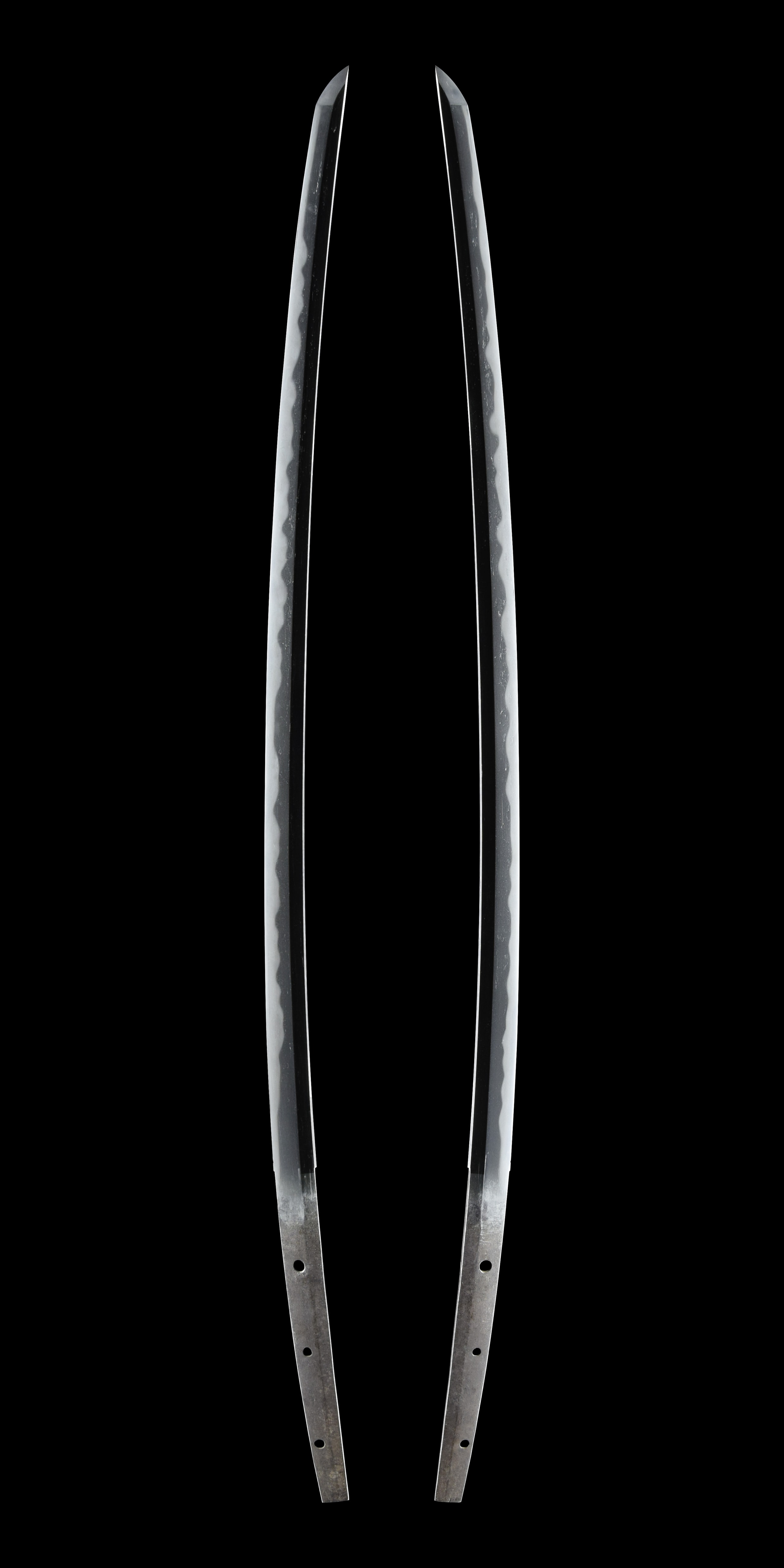
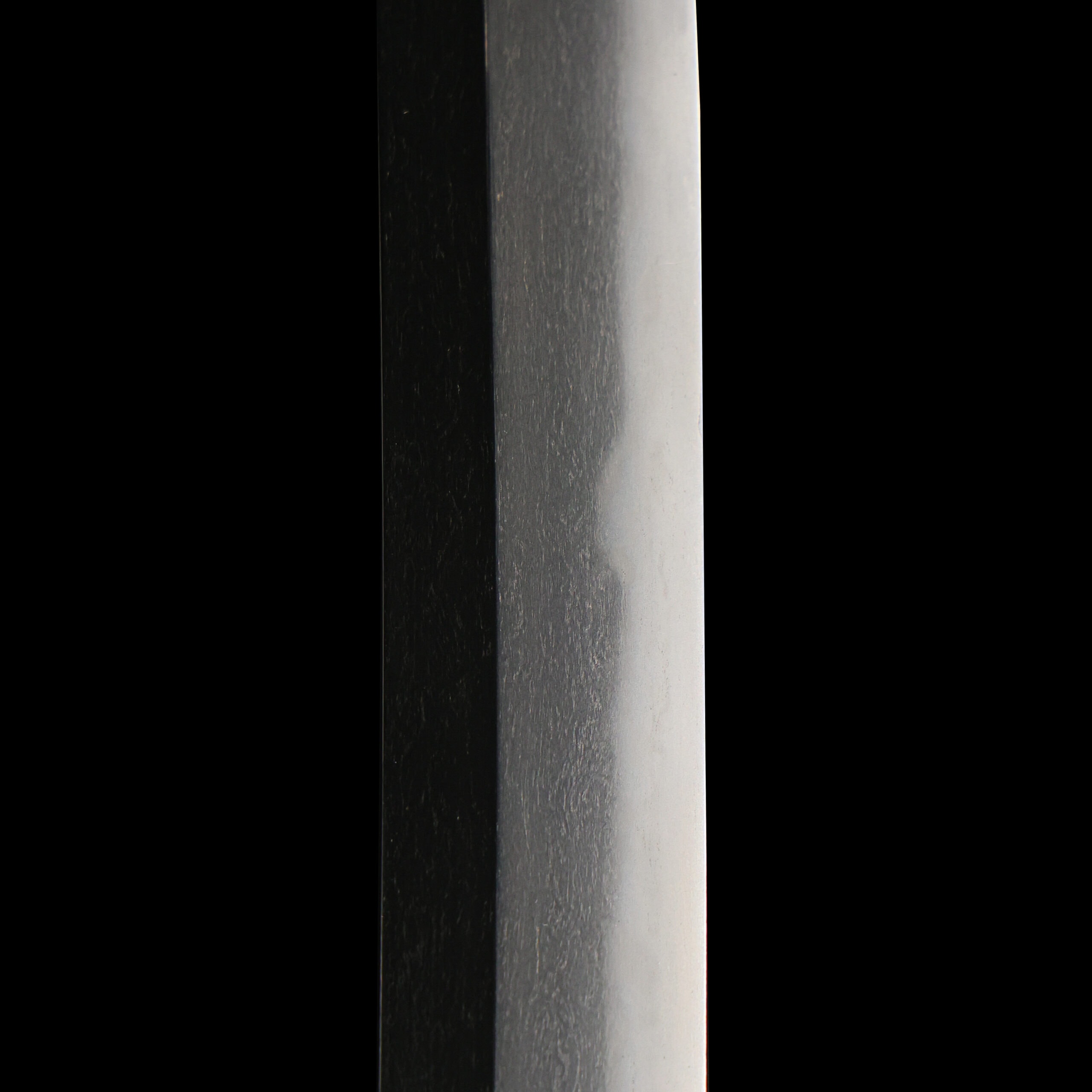
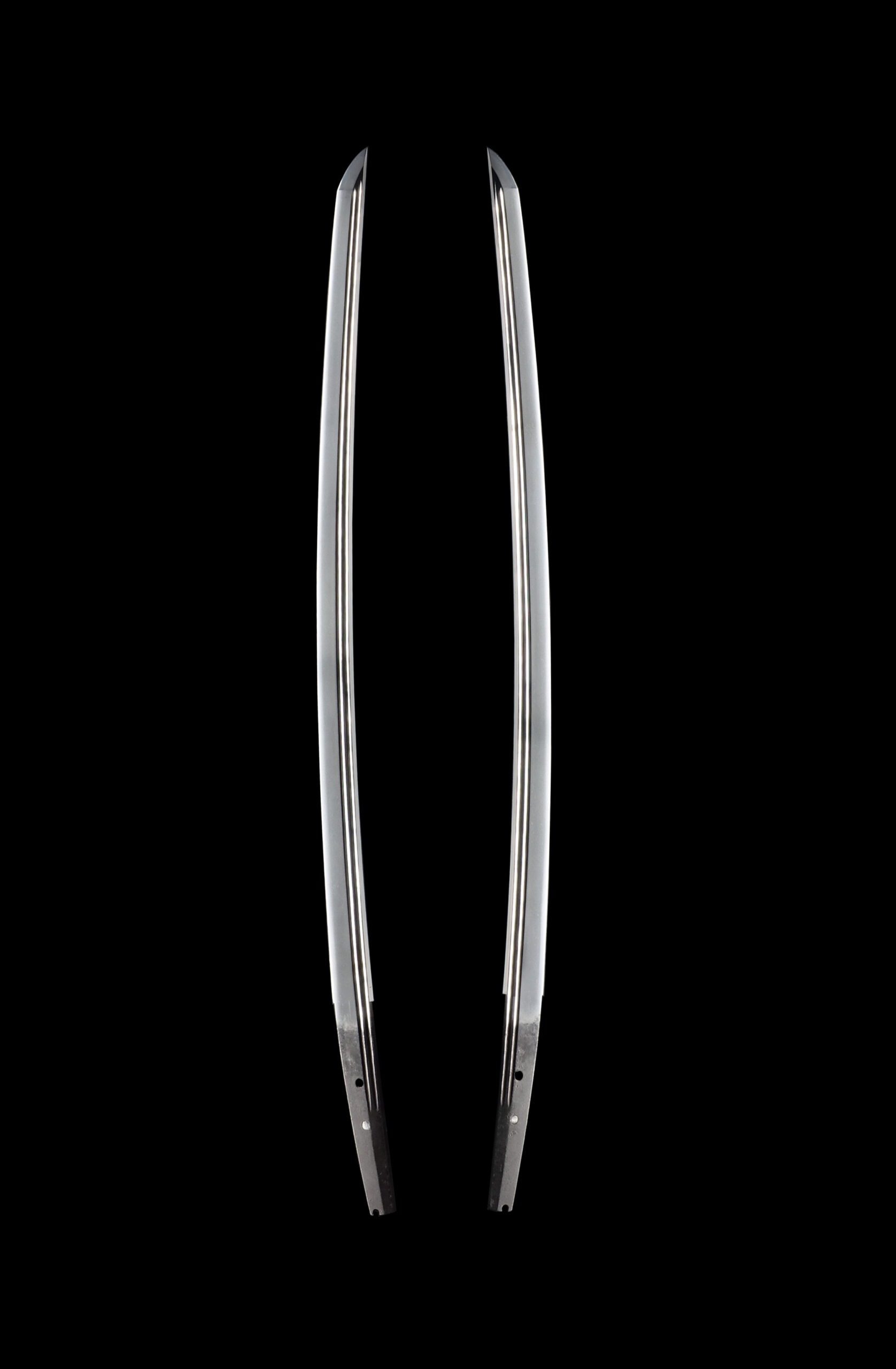
The Yoshioka Sukeyoshi's characteristic style, as the consistently observes, departs from the flamboyant brilliance of Fukuoka . Within the , stands out conspicuously, and places where the pattern inclines in reverse () or where a somewhat compact, subdued quality () enters the edge are noted as distinguishing points of appreciation. The typically shows with prominent , and the temper is -dominant with . The Fukuoka Sukeyoshi, by contrast, displays the school's celebrated large-patterned with , , and . The Senjuin Sukeyoshi exhibits flowing, piled with and an -like effect, with a richly complex interweaving , linked , , and in strongly -laden workmanship featuring , , and in the -- hallmarks of the Senjuin school.
Across these lineages, the designation records consistently emphasize the rarity and documentary value of signed Sukeyoshi works. The Senjuin example is praised as standing out among that school for its "stout, weighty, and powerfully masculine appearance" and its provenance through the Matsuura family of Hirado domain. The Yoshioka works, whether bearing the Ryakuo date inscription or the rare dated Gentoku 3 (1331), are valued both for their typicality as exemplars of the school and as precious reference material. Extant signed works of both traditions have remained scarce, and those that survive are recognized as important evidence for understanding the full breadth of the lineage across its several centuries of production.