War at home and trade abroad made Muromachi Bizen the busiest forge region in Japan: a century of Sengoku demand after the Ōnin War, and export missions to Ming China carrying blades by the tens of thousands.
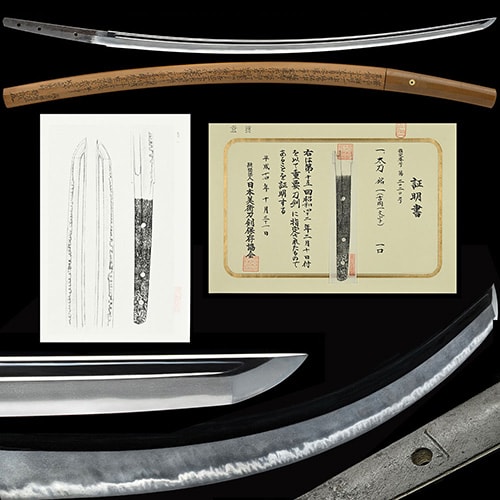
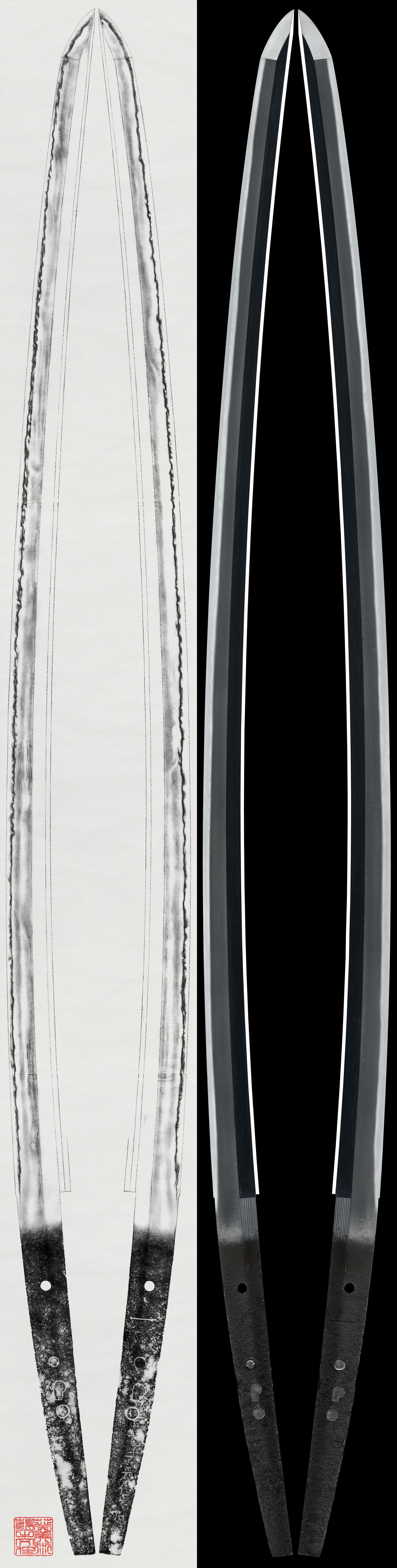
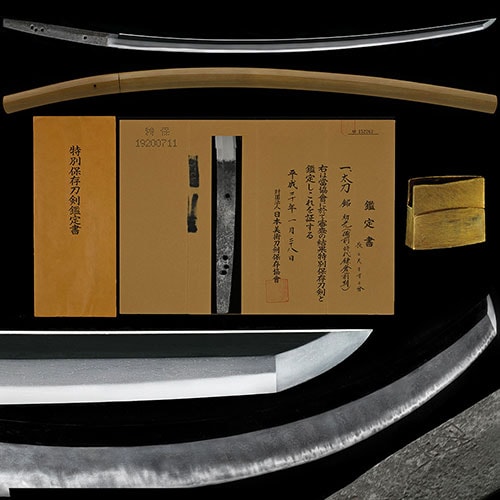
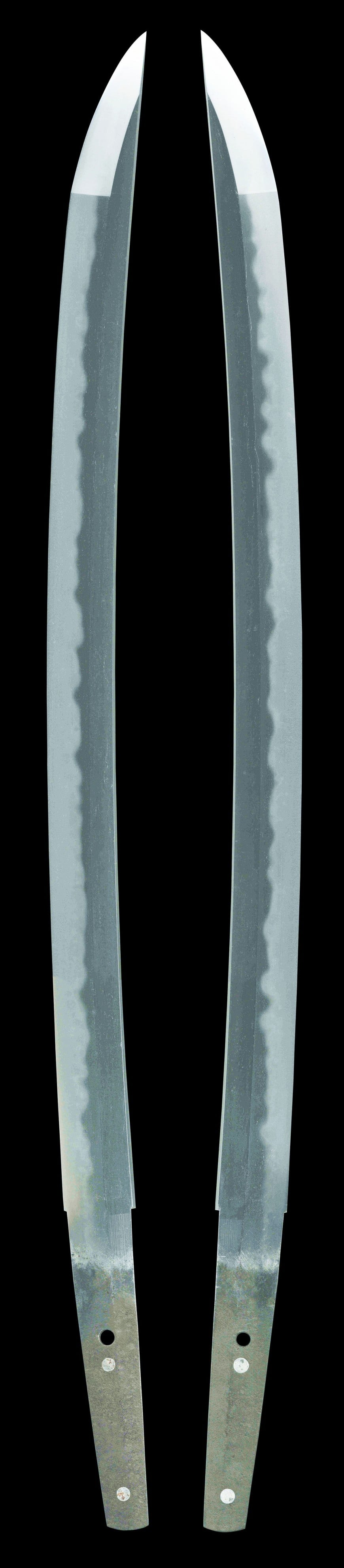
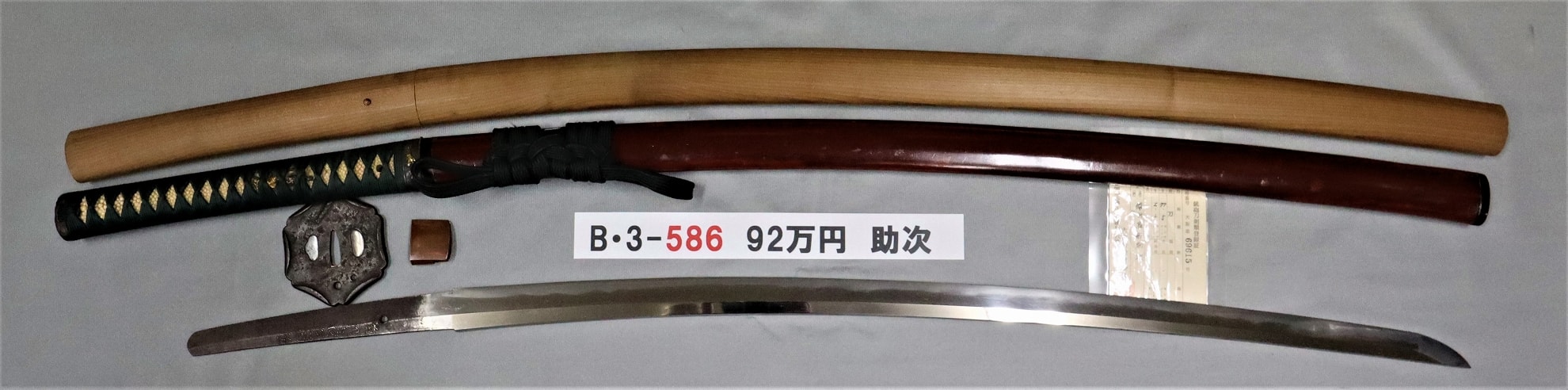
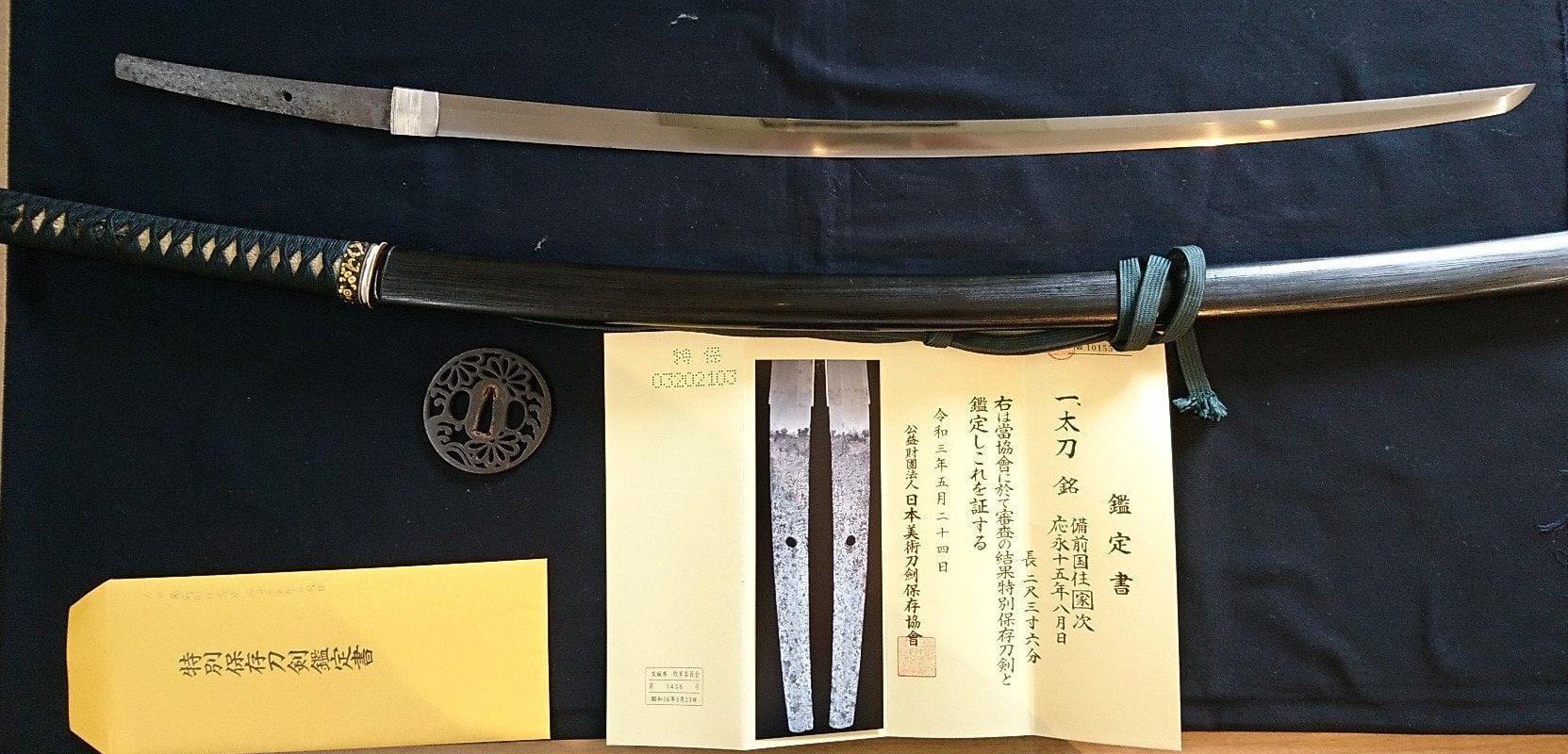
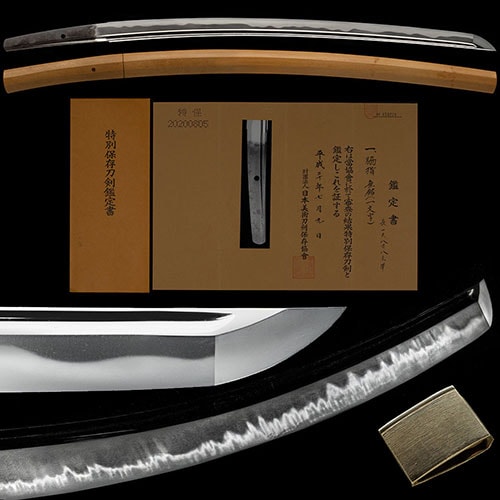
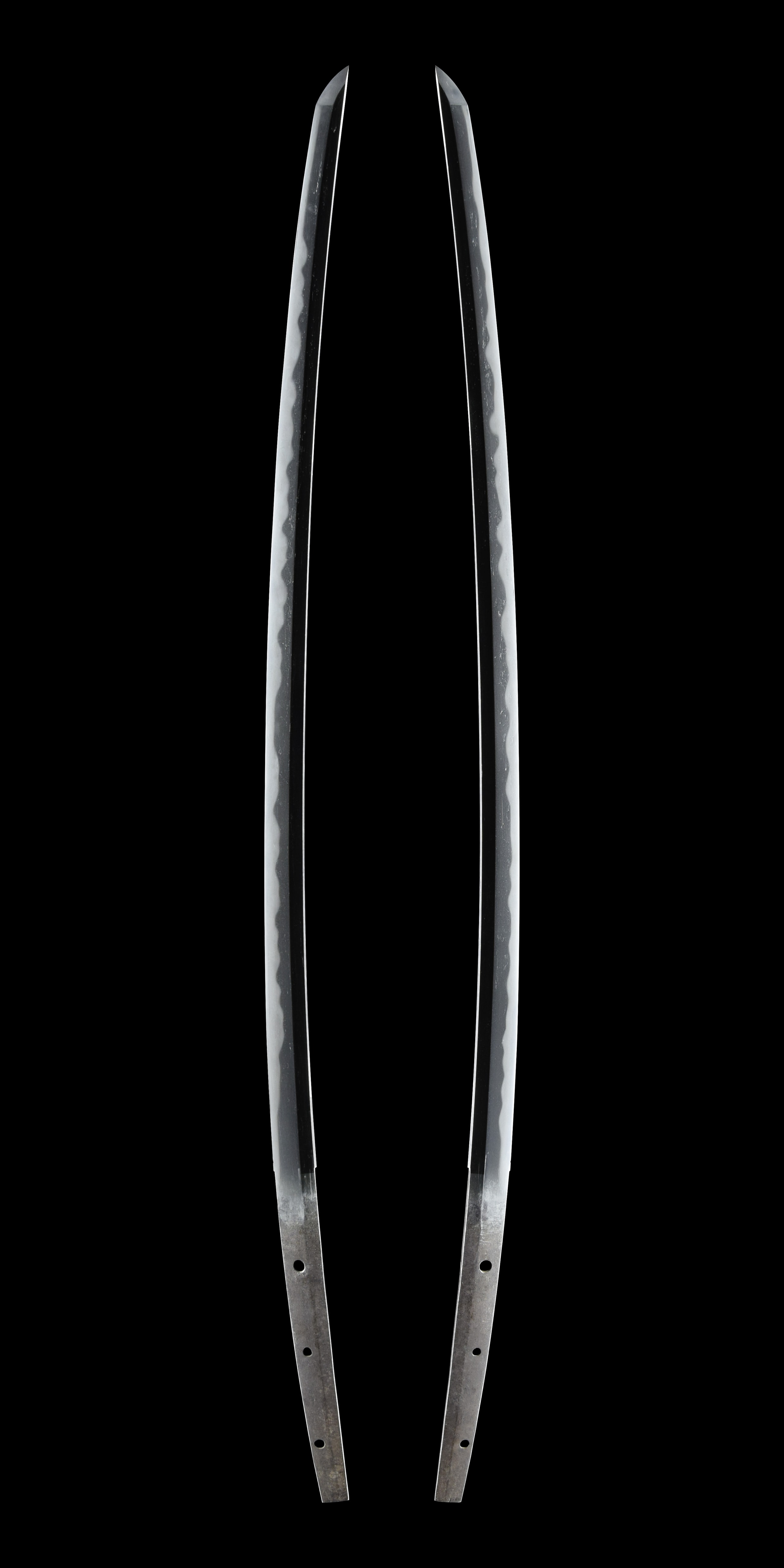
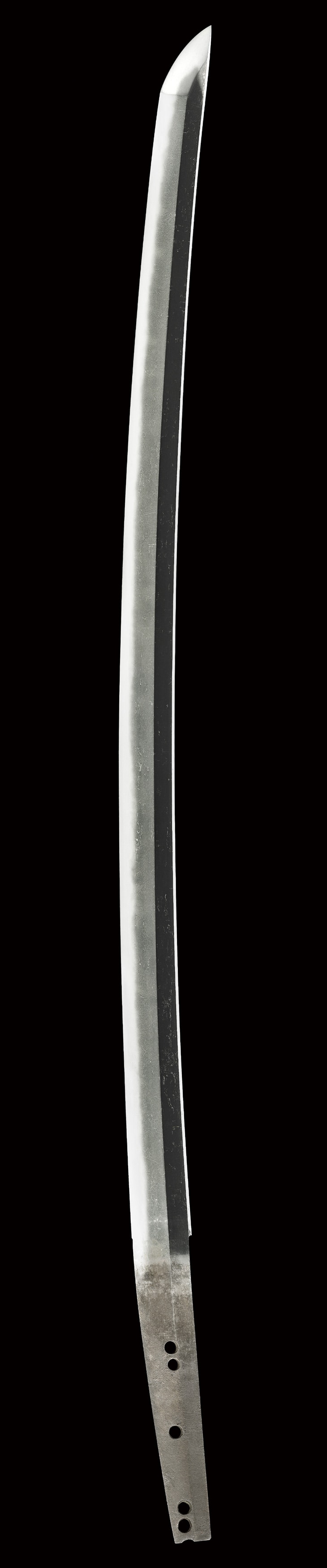
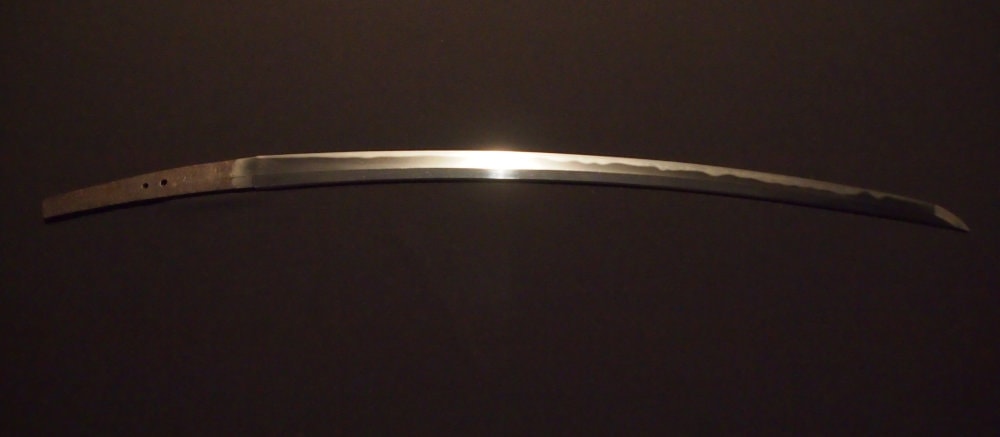
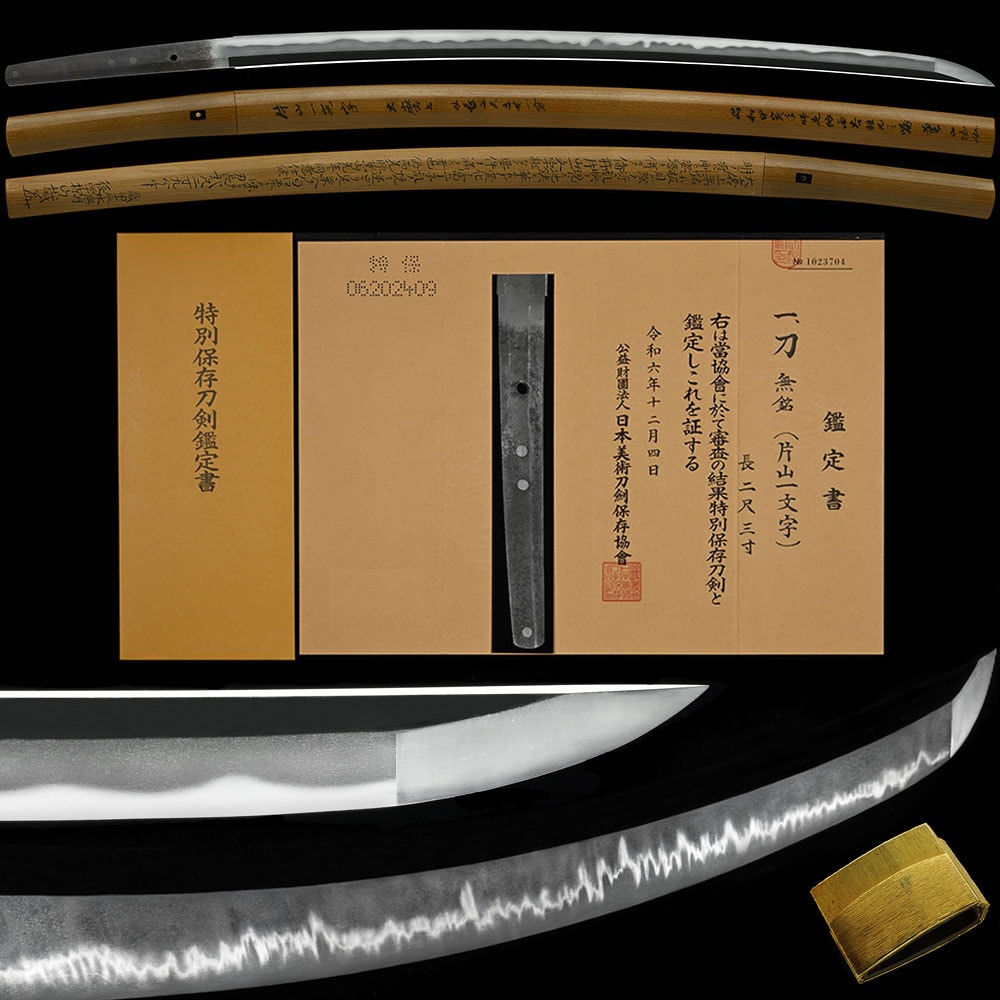
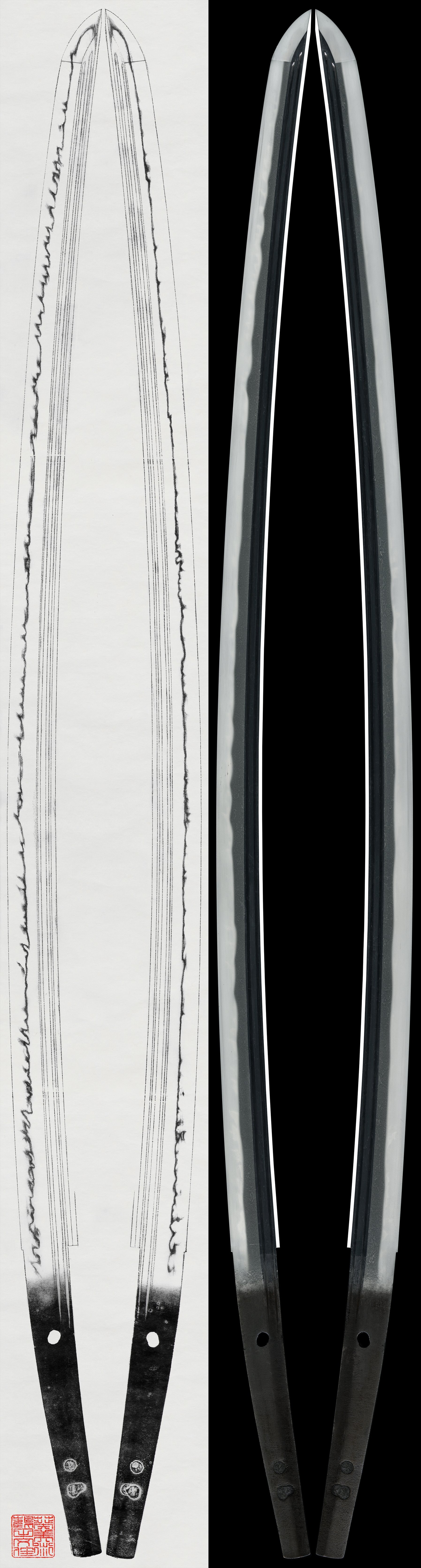
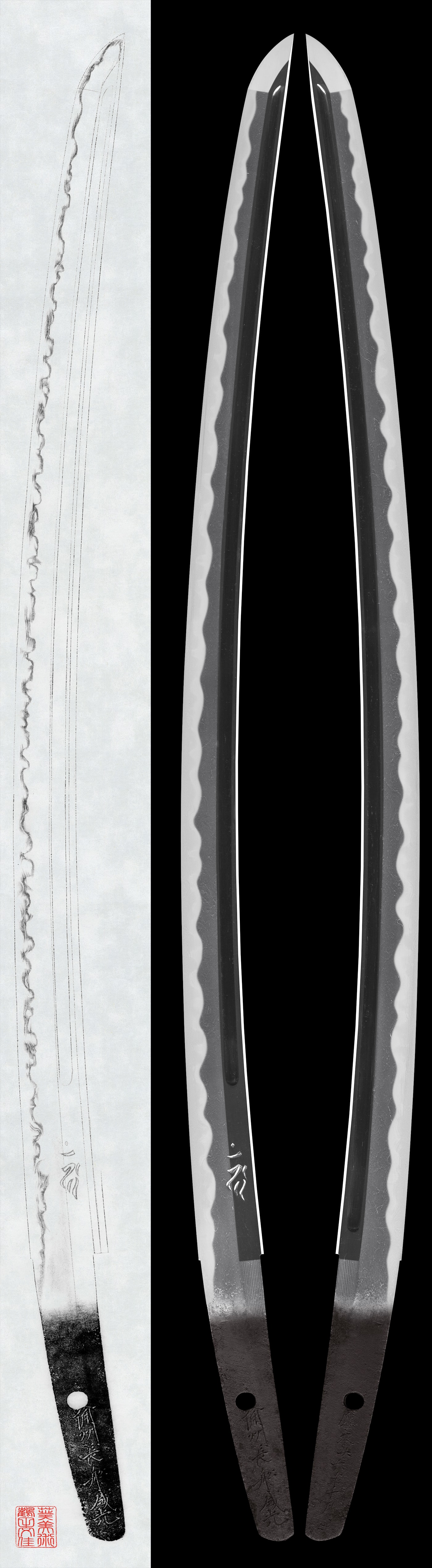
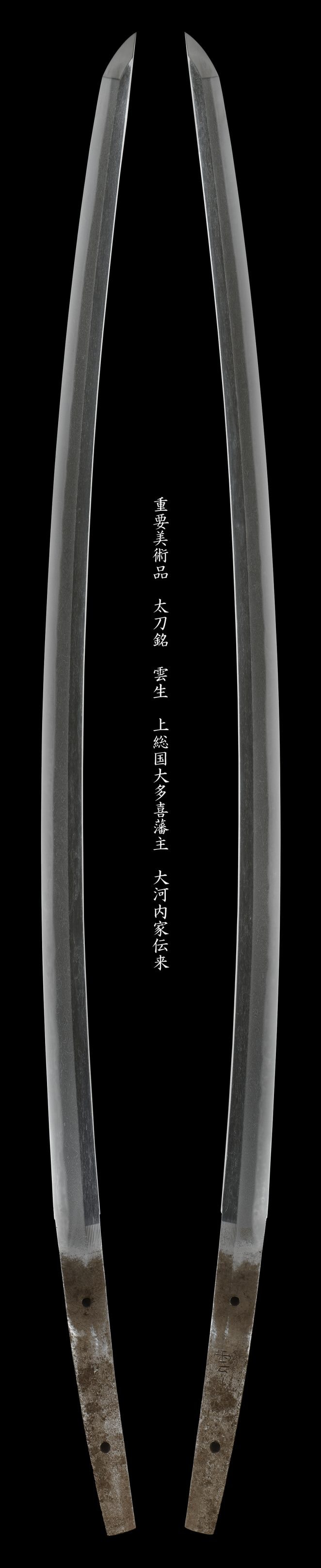
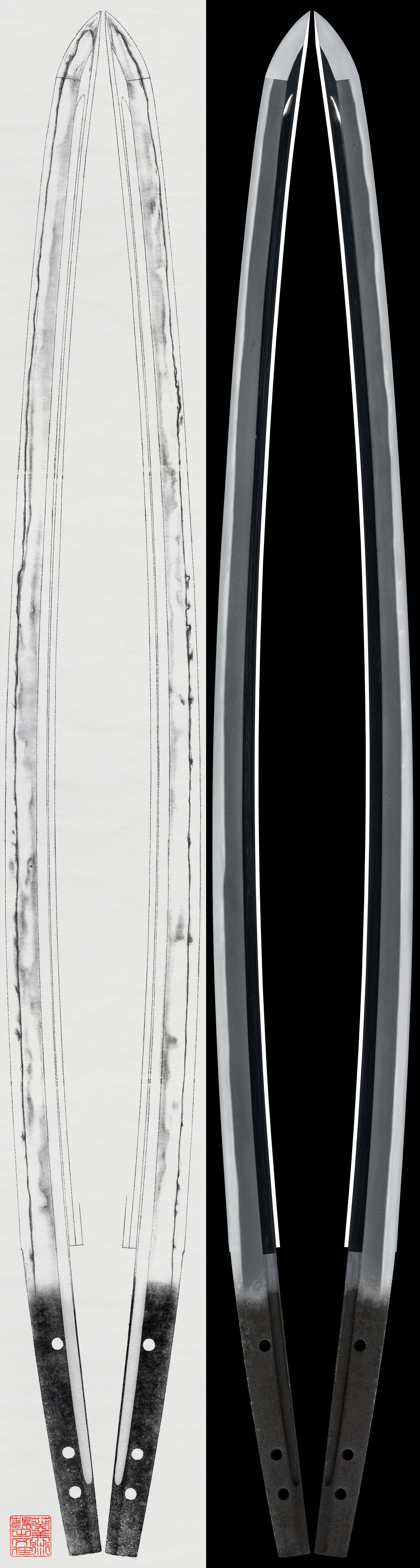
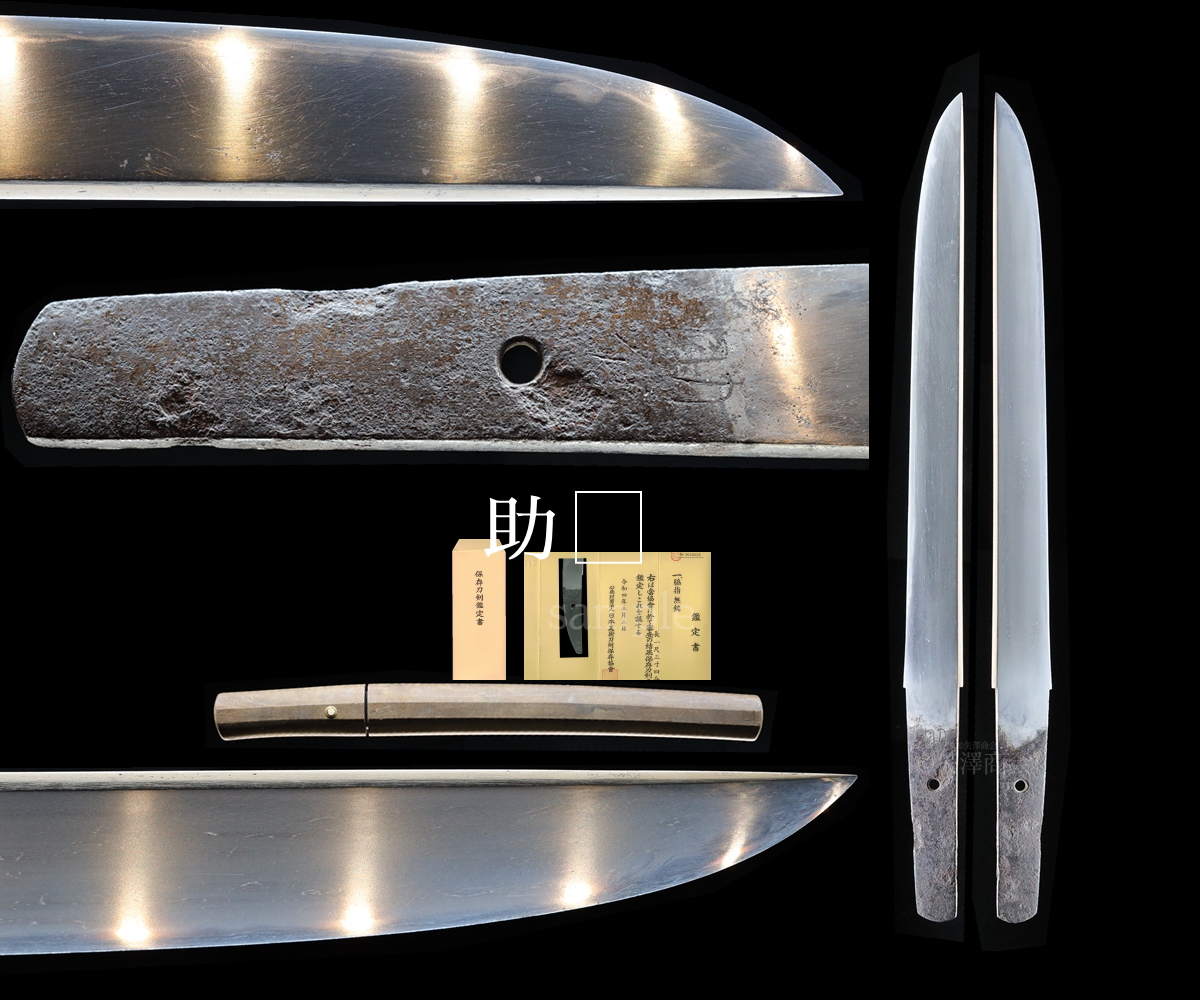
This is a rare tanto with a bottom mei (signature) by Suketsugu, featuring a Mitsumune (shin no mune) construction. It is attributed to the late Muromachi period, though the specific province is undetermined. The blade exhibits a straight hamon with subtle gunome and notare, and a flowing itame hada. It comes in a shirasaya.
 NihontoWatch
mei · Muromachi · nagasa 25.6cm



Bizen-den · Bizen · Late Nanbokucho
1 piece on the market now
Where Suketsugu stands among comparable artisans: across all of nihontō, and within tradition, era, and period. The tiers (Foremost · Leading · Major · Notable) weigh official designations from the NBTHK and Japan's Agency for Cultural Affairs, together with historical honors of lasting repute such as the Sansaku and Meibutsu-chō.
Select a lens to see how it's measured.
Bizen-den · Bizen
Phase: Yoshioka Ichimonji吉岡一文字· 1288–1394
8 pieces on the market now
When the Fukuoka workshops gave way at the close of the thirteenth century, the Ichimonji line carried on at Yoshioka in Bizen, and the setsumei place this branch "in place of the Fukuoka Ichimonji," flourishing from the end of Kamakura into the Nanbokuchō era. The Yoshioka smiths shared the character suke (助) as a generational element, and the records name Sukemitsu, Sukeyoshi, Sukeshige, Suketsugu, Sukeyuki, Sukehide, and a second Sukeyoshi (助義). Sukemitsu is identified as the leading hand of the group, with dated work surviving across the Einin, Gen'ō, Genkyō, and Karyaku eras; Sukeshige left blades dated to Enkyō and to Jōwa 2 (1346), and Sukehide a wakizashi dated Shōhei 18 (1363). Suketsugu, dated Eitoku 2 (1382), is the smith whose recorded move from Yoshioka to Osafune marks the point where this branch fed into the Osafune tradition. Allied groups resident nearby, the Iwato Ichimonji of Yoshiie and Muneuji and the Nitta-shō smith Chikatsugu, belong to the same late-period current. What separates Yoshioka work from the Fukuoka apex is a matter of scale and temperament. " A reverse-slanting (saka) tendency appears at times, and the temper often tightens toward the monouchi.
The forging is a tightly grained ko-itame, sometimes with nagare-hada, carrying fine ji-nie, chikei, and a clearly standing midare-utsuri. Where Fukuoka layered jūka-chōji and fukuro-chōji in flamboyant rise and fall, Yoshioka holds the pattern to a quieter register, and the setsumei repeatedly note that the bōshi in notare-komi with a round turn and the calm, regular tone "resemble contemporaneous Osafune work," the Osafune manner of the period drawing the branch toward kozumu regularity. The kantei value lies in reading that restraint correctly. Against Fukuoka, the discriminators are the reduced scale of the clove pattern, the gunome asserting itself within the midare, the suguha-leaning compositions with entering ashi, and the bright, nioi-dominant nioiguchi with accompanying ko-nie and occasional kinsuji and sunagashi. The named masters anchor these readings: Sukeyoshi's chōji mixed with gunome and narrowing temper, attested by a Hon'ami Chōshiki gold-inlaid kiwame; Sukemitsu's more flamboyant chōji-midare with togariba and tobiyaki, carried on an ō-suriage katana held by old tradition; Sukeshige's round-headed gunome with even undulation. Suketsugu's late tachi, hardening open, waisted gunome, points ahead to the Ōei-Bizen style that followed. Among the documented provenances, the Iwato smith Minamoto Yoshiie's tachi of Mototoku 2 (1330) was bestowed on Yoshikawa Hiroie as a memento of Toyotomi Hideyoshi, and several Yoshioka and Tsunetsugu blades carry Hon'ami origami, a reminder that earlier appraisal sometimes folded such work into "Aoe" before the modern separation of the two Tsunetsugu lines. Learn more →
| Smith | Era | Designated |
|---|---|---|
| Sukemitsu助光 | 1299-1302 | 7 |
| Ichi一 | 1288-1293 | 3 |
| Sukeyoshi助吉 | 1303-1306 | 3 |
| Kageyasu景泰 | 1326-1329 | 0 |
| Kagehide景秀 | 1329-1331 | 0 |
Bizen in the Muromachi period
War at home and trade abroad made Muromachi Bizen the busiest forge region in Japan: a century of Sengoku demand after the Ōnin War, and export missions to Ming China carrying blades by the tens of thousands.
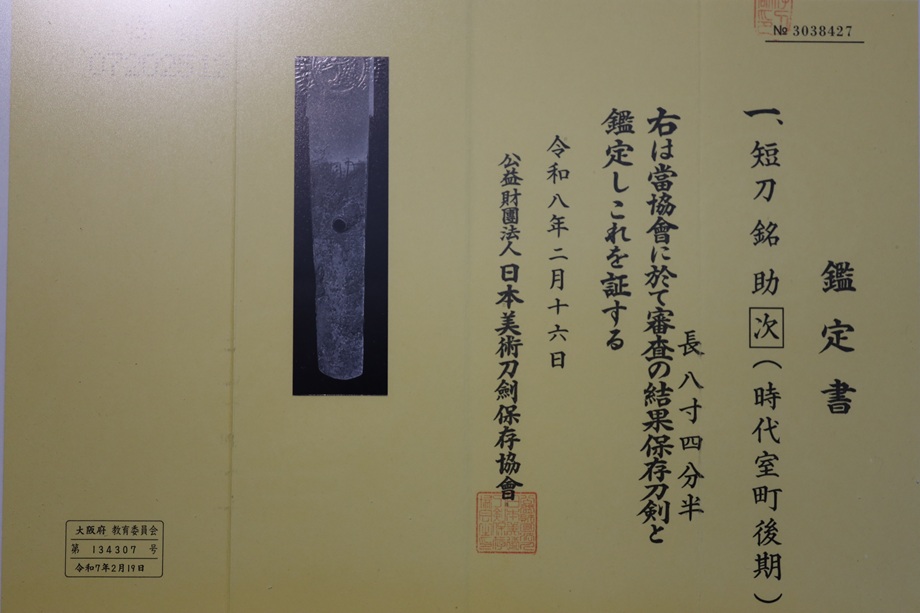
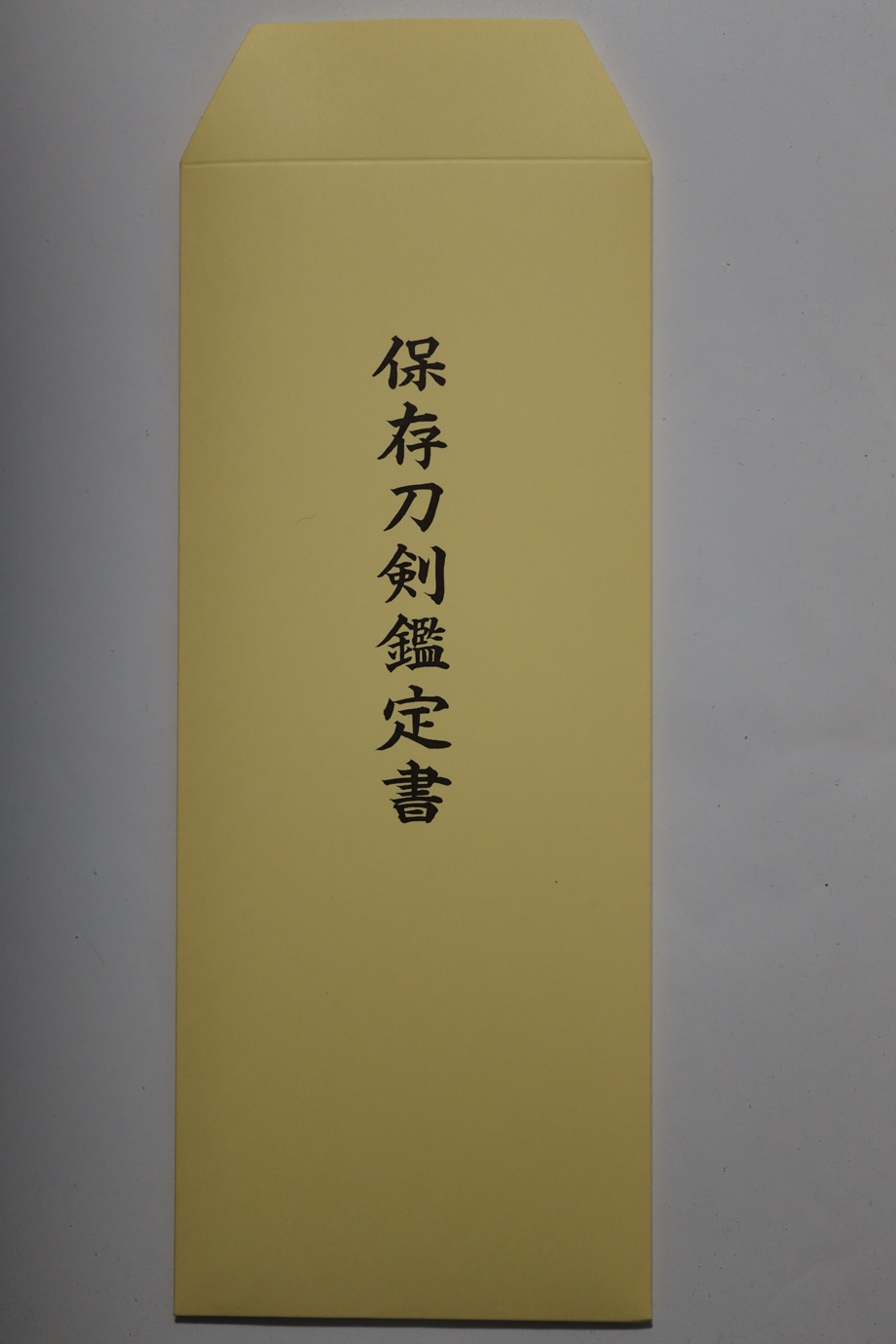
Certifies a genuine blade worth preserving: a signature confirmed correct, or, if unsigned, an era, province, and school that the NBTHK can reliably identify.
The NBTHK (Nihon Bijutsu Tōken Hozon Kyōkai, the Society for the Preservation of Japanese Art Swords) is a public-interest incorporated foundation founded in 1948 and supervised by Japan’s Agency for Cultural Affairs (Bunkachō); it is based at the Japanese Sword Museum in Tokyo. Its expert panels physically examine each submitted work (shinsa) and issue a certificate (kanteishō) ranking it by artistic and historical merit. NBTHK papers are the most widely recognized standard of authentication for Japanese swords and fittings.
NBTHK official site
¥135,000
This is a rare tanto with a bottom mei (signature) by Suketsugu, featuring a Mitsumune (shin no mune) construction. It is attributed to the late Muromachi period, though the specific province is undetermined. The blade exhibits a straight hamon with subtle gunome and notare, and a flowing itame hada. It comes in a shirasaya.
NihontoWatchmei · Muromachi · nagasa 25.6cm
Bizen-den · Bizen · Late Nanbokucho
1 piece on the market now
Where Suketsugu stands among comparable artisans: across all of nihontō, and within tradition, era, and period. The tiers (Foremost · Leading · Major · Notable) weigh official designations from the NBTHK and Japan's Agency for Cultural Affairs, together with historical honors of lasting repute such as the Sansaku and Meibutsu-chō.
Select a lens to see how it's measured.
Bizen-den · Bizen
Phase: Yoshioka Ichimonji吉岡一文字· 1288–1394
8 pieces on the market now
When the Fukuoka workshops gave way at the close of the thirteenth century, the Ichimonji line carried on at Yoshioka in Bizen, and the setsumei place this branch "in place of the Fukuoka Ichimonji," flourishing from the end of Kamakura into the Nanbokuchō era. The Yoshioka smiths shared the character suke (助) as a generational element, and the records name Sukemitsu, Sukeyoshi, Sukeshige, Suketsugu, Sukeyuki, Sukehide, and a second Sukeyoshi (助義). Sukemitsu is identified as the leading hand of the group, with dated work surviving across the Einin, Gen'ō, Genkyō, and Karyaku eras; Sukeshige left blades dated to Enkyō and to Jōwa 2 (1346), and Sukehide a wakizashi dated Shōhei 18 (1363). Suketsugu, dated Eitoku 2 (1382), is the smith whose recorded move from Yoshioka to Osafune marks the point where this branch fed into the Osafune tradition. Allied groups resident nearby, the Iwato Ichimonji of Yoshiie and Muneuji and the Nitta-shō smith Chikatsugu, belong to the same late-period current. What separates Yoshioka work from the Fukuoka apex is a matter of scale and temperament. " A reverse-slanting (saka) tendency appears at times, and the temper often tightens toward the monouchi.
The forging is a tightly grained ko-itame, sometimes with nagare-hada, carrying fine ji-nie, chikei, and a clearly standing midare-utsuri. Where Fukuoka layered jūka-chōji and fukuro-chōji in flamboyant rise and fall, Yoshioka holds the pattern to a quieter register, and the setsumei repeatedly note that the bōshi in notare-komi with a round turn and the calm, regular tone "resemble contemporaneous Osafune work," the Osafune manner of the period drawing the branch toward kozumu regularity. The kantei value lies in reading that restraint correctly. Against Fukuoka, the discriminators are the reduced scale of the clove pattern, the gunome asserting itself within the midare, the suguha-leaning compositions with entering ashi, and the bright, nioi-dominant nioiguchi with accompanying ko-nie and occasional kinsuji and sunagashi. The named masters anchor these readings: Sukeyoshi's chōji mixed with gunome and narrowing temper, attested by a Hon'ami Chōshiki gold-inlaid kiwame; Sukemitsu's more flamboyant chōji-midare with togariba and tobiyaki, carried on an ō-suriage katana held by old tradition; Sukeshige's round-headed gunome with even undulation. Suketsugu's late tachi, hardening open, waisted gunome, points ahead to the Ōei-Bizen style that followed. Among the documented provenances, the Iwato smith Minamoto Yoshiie's tachi of Mototoku 2 (1330) was bestowed on Yoshikawa Hiroie as a memento of Toyotomi Hideyoshi, and several Yoshioka and Tsunetsugu blades carry Hon'ami origami, a reminder that earlier appraisal sometimes folded such work into "Aoe" before the modern separation of the two Tsunetsugu lines. Learn more →
| Smith | Era | Designated |
|---|---|---|
| Sukemitsu助光 | 1299-1302 | 7 |
| Ichi一 | 1288-1293 | 3 |
| Sukeyoshi助吉 | 1303-1306 | 3 |
| Kageyasu景泰 | 1326-1329 | 0 |
| Kagehide景秀 | 1329-1331 | 0 |
Bizen in the Muromachi period
War at home and trade abroad made Muromachi Bizen the busiest forge region in Japan: a century of Sengoku demand after the Ōnin War, and export missions to Ming China carrying blades by the tens of thousands.
Certifies a genuine blade worth preserving: a signature confirmed correct, or, if unsigned, an era, province, and school that the NBTHK can reliably identify.
The NBTHK (Nihon Bijutsu Tōken Hozon Kyōkai, the Society for the Preservation of Japanese Art Swords) is a public-interest incorporated foundation founded in 1948 and supervised by Japan’s Agency for Cultural Affairs (Bunkachō); it is based at the Japanese Sword Museum in Tokyo. Its expert panels physically examine each submitted work (shinsa) and issue a certificate (kanteishō) ranking it by artistic and historical merit. NBTHK papers are the most widely recognized standard of authentication for Japanese swords and fittings.
NBTHK official site¥135,000