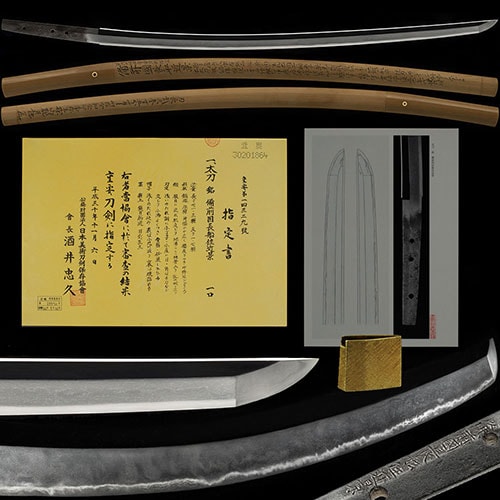
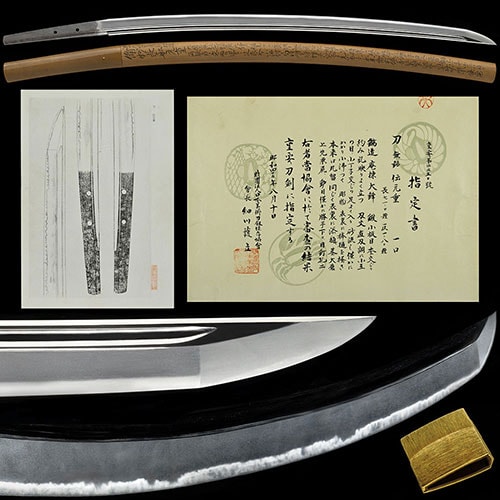
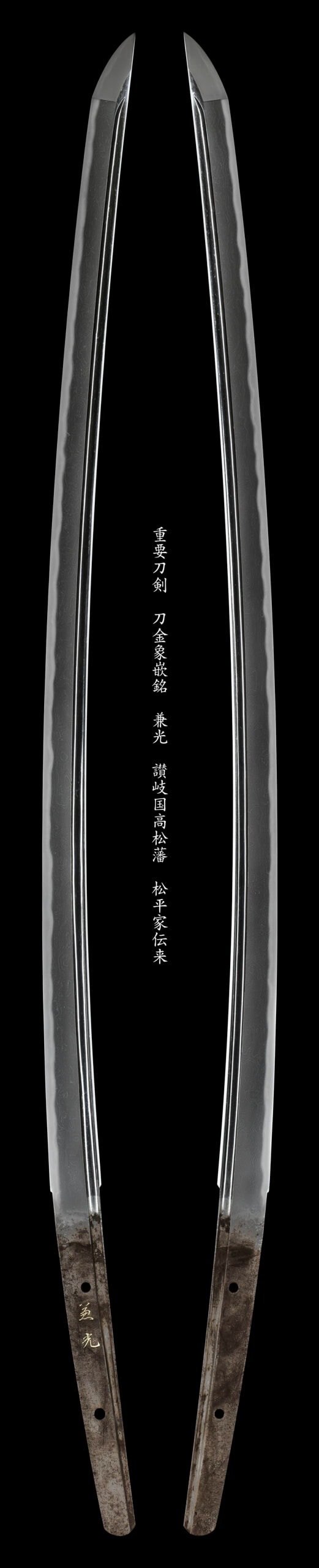
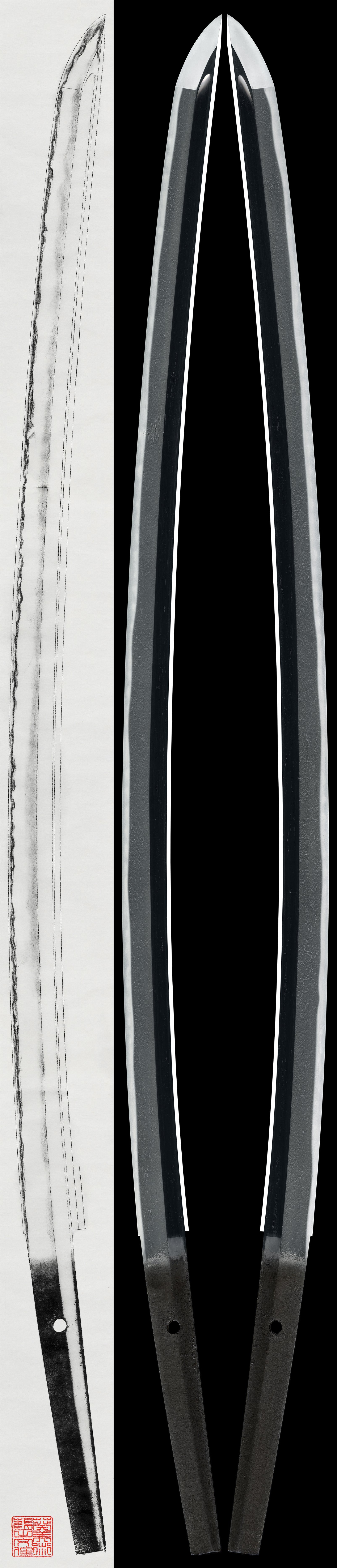
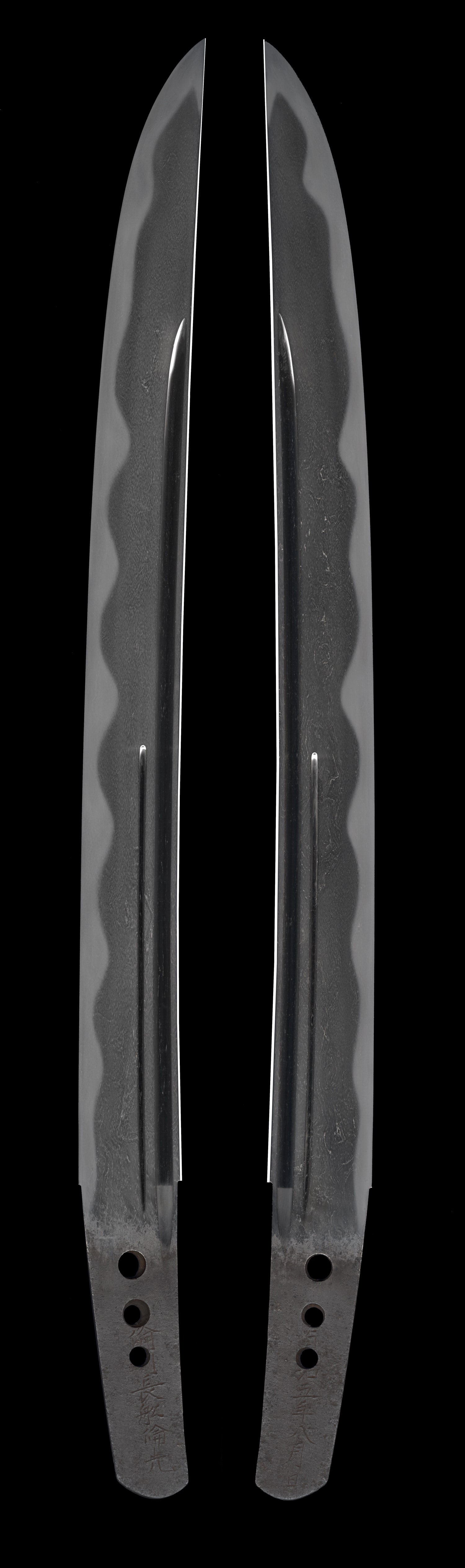
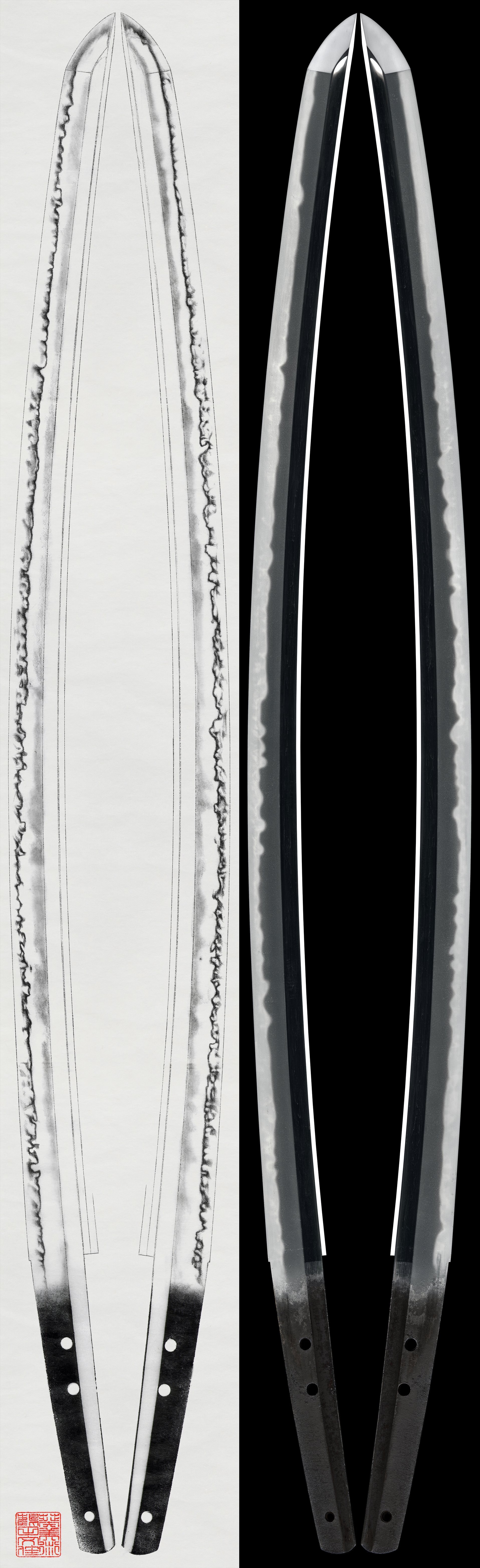
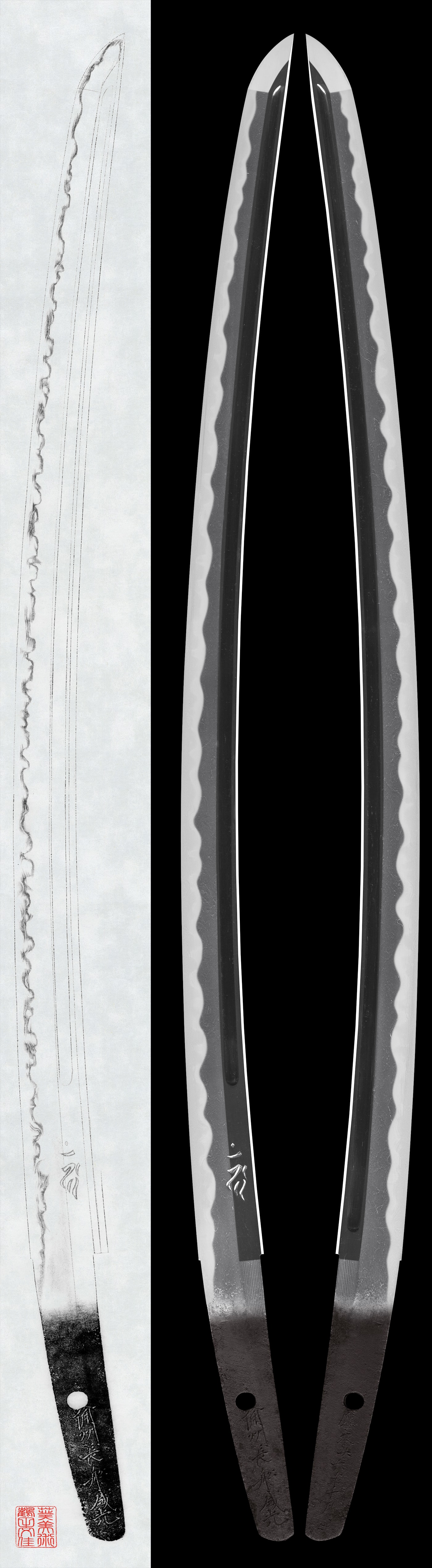
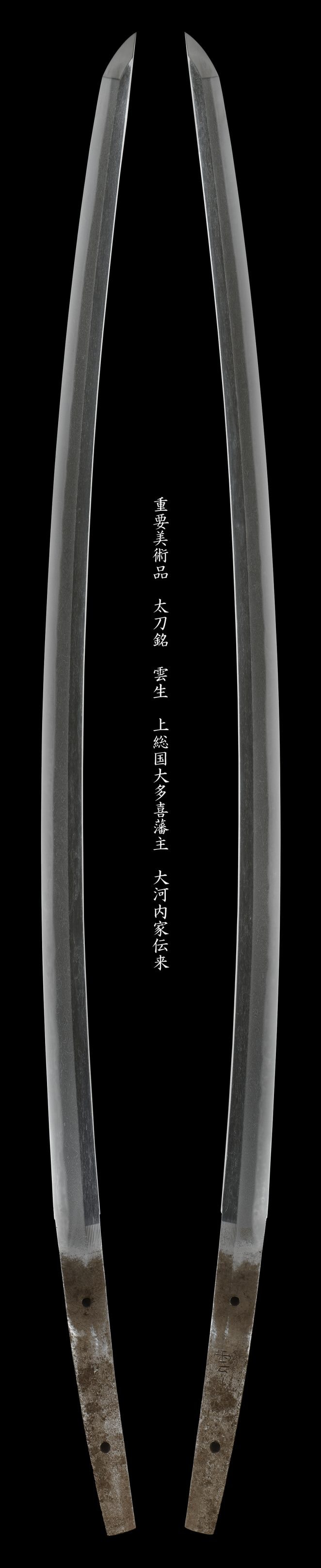
Chikakage is the Osafune smith who stands closest of all to Kagemitsu, and the published sources frame him exactly that way: traditionally a pupil of Nagamitsu[[c:1]], his dated work running from late Kamakura into the opening years of Nanbokucho, and so near the third Osafune master that pieces in Kagemitsu's own oeuvre are read as Chikakage daimei. The record returns again and again to the same judgment, that the relationship between the two was an extremely close one[[c:2]]. To learn Chikakage is therefore first to learn how, within a hair, he parts from the master he served.
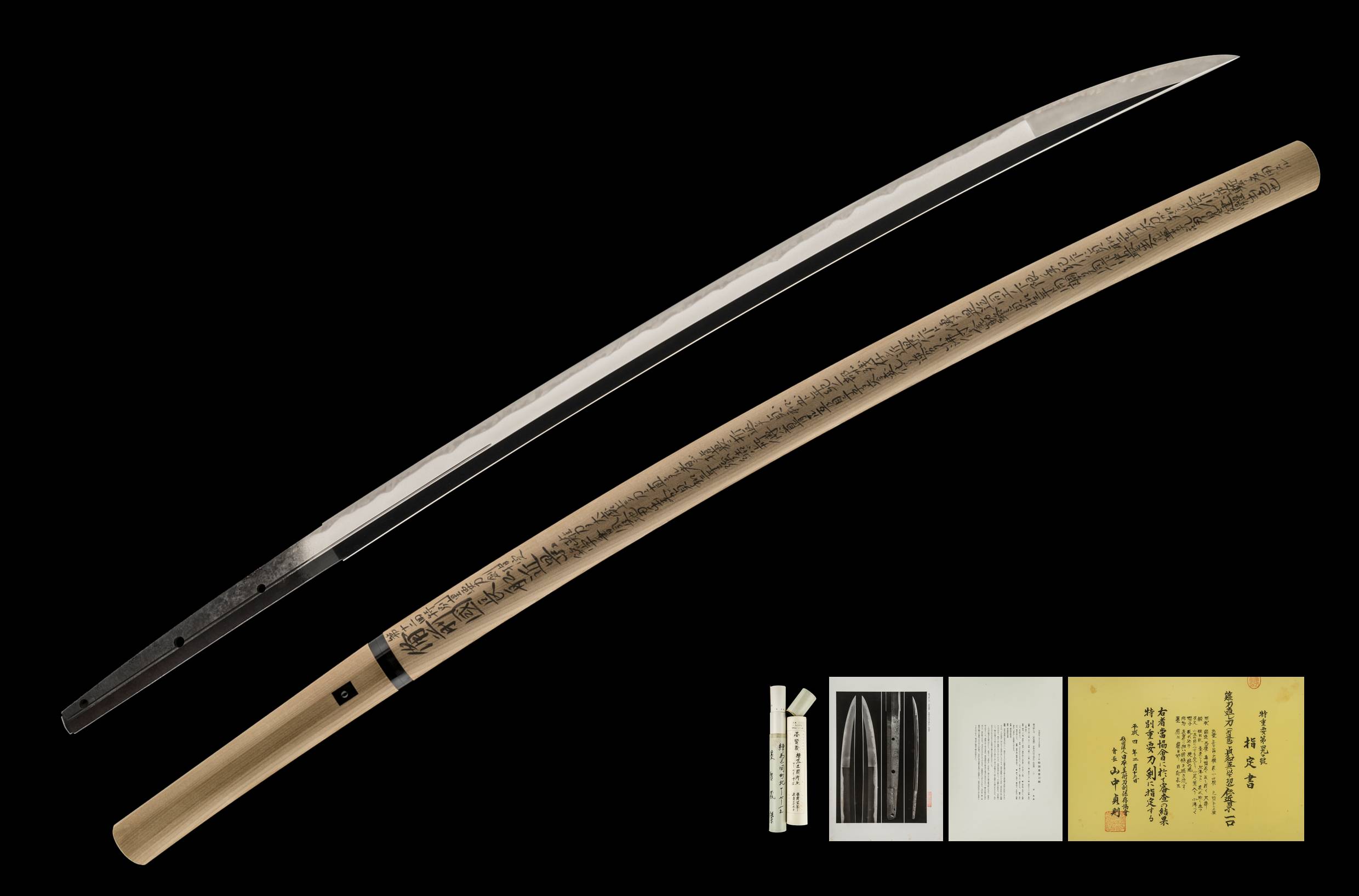
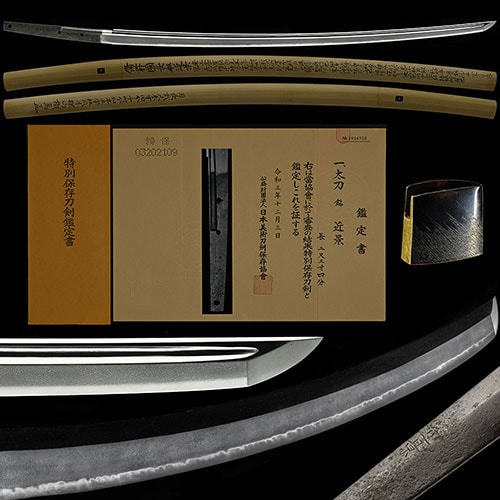
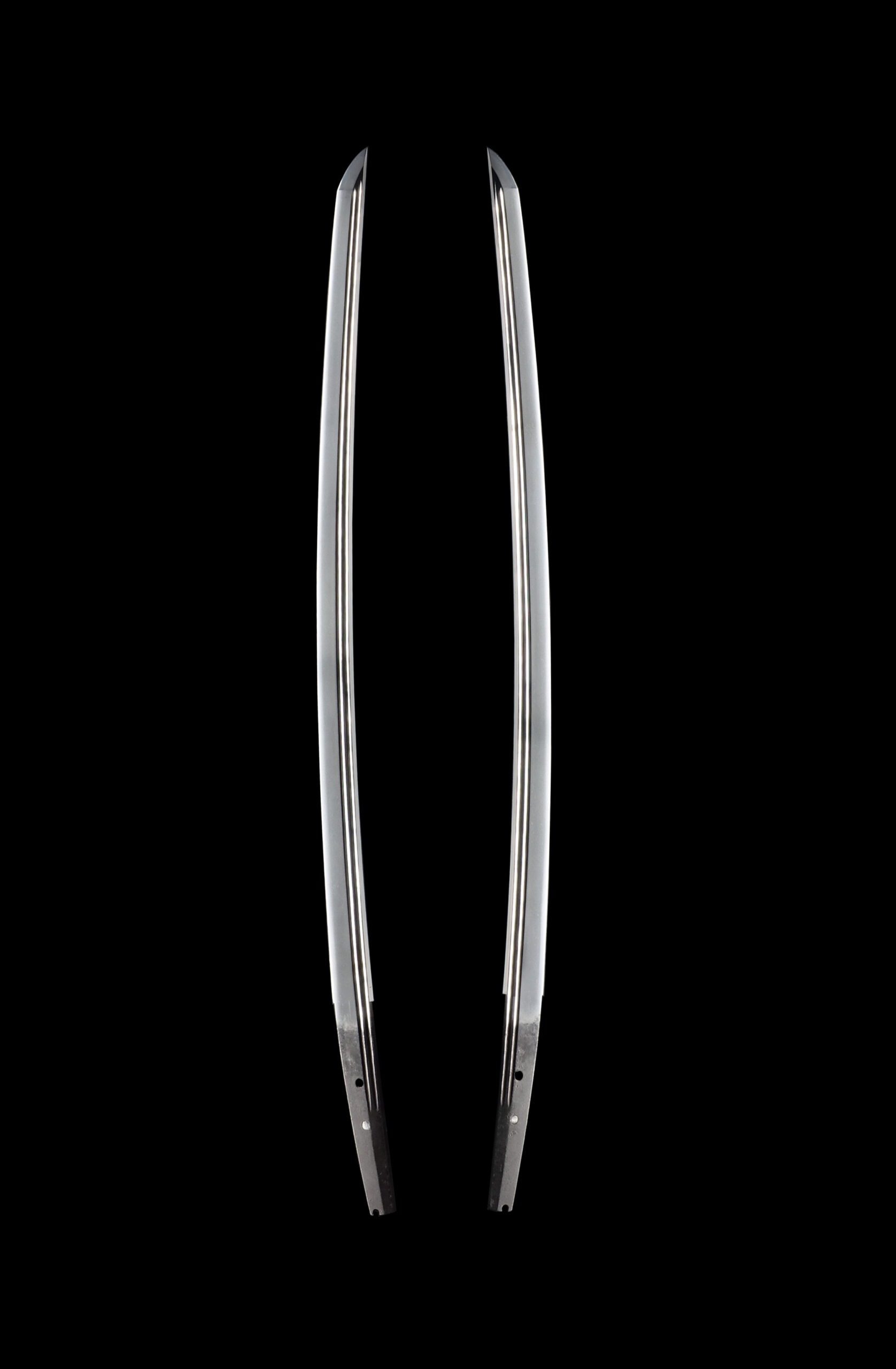
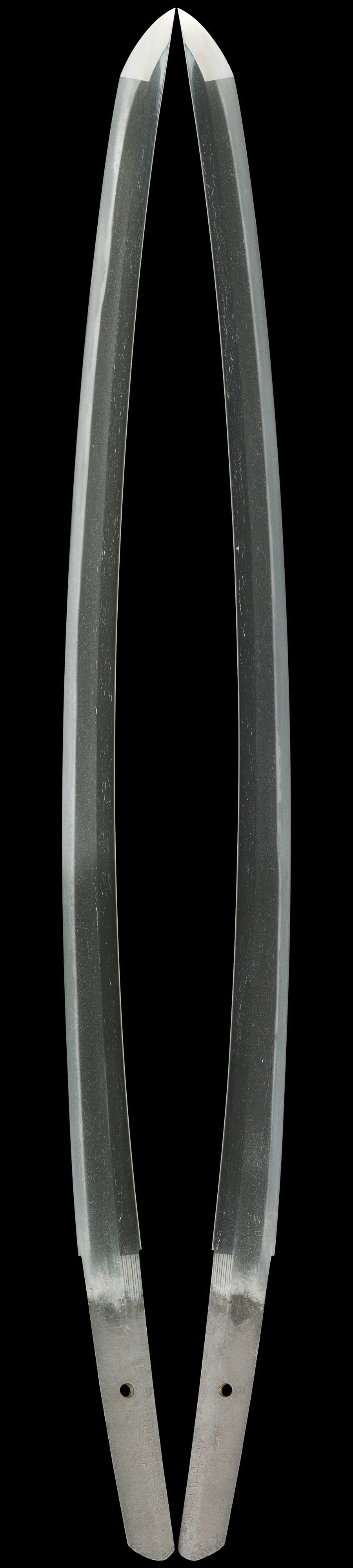
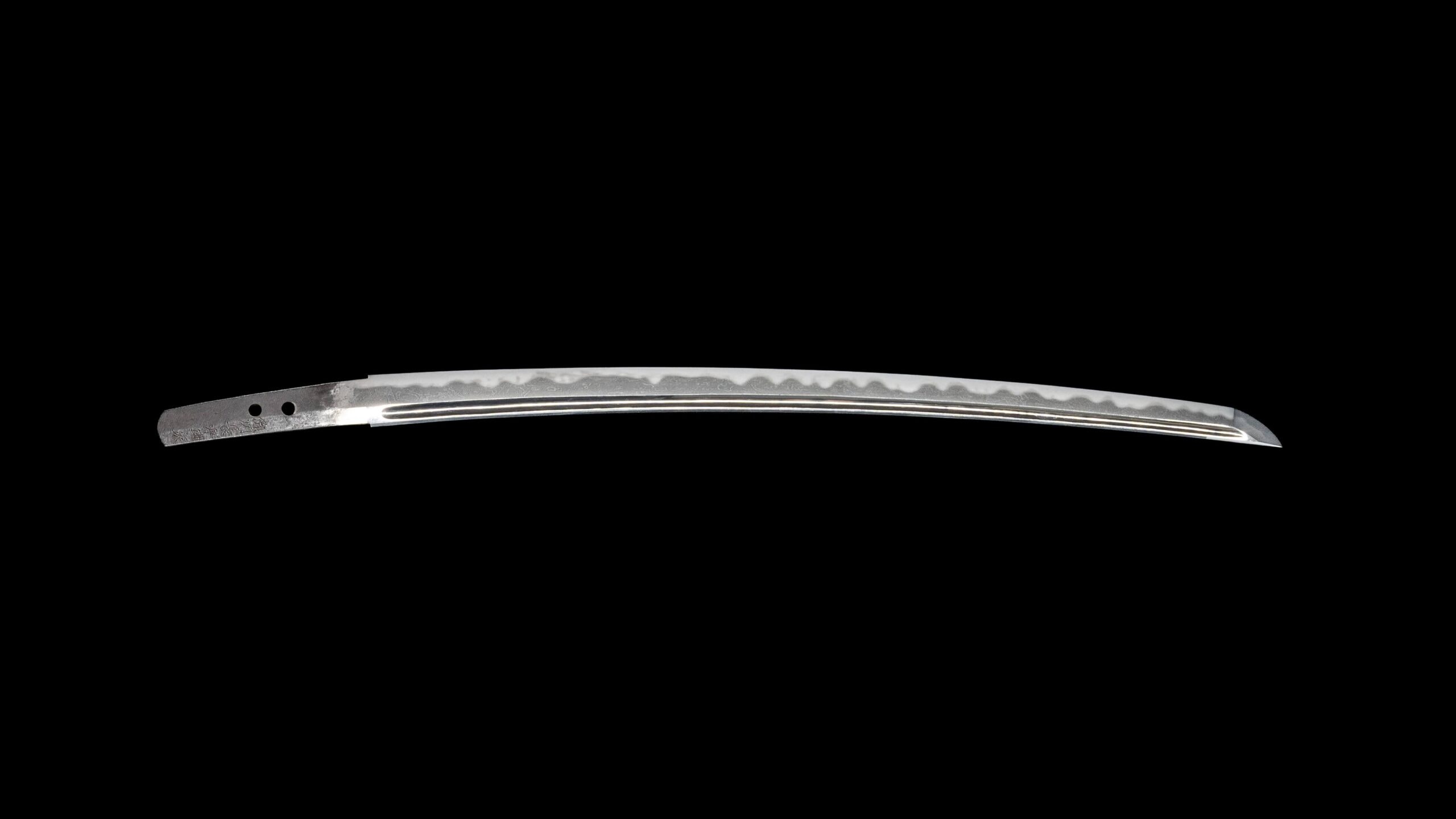
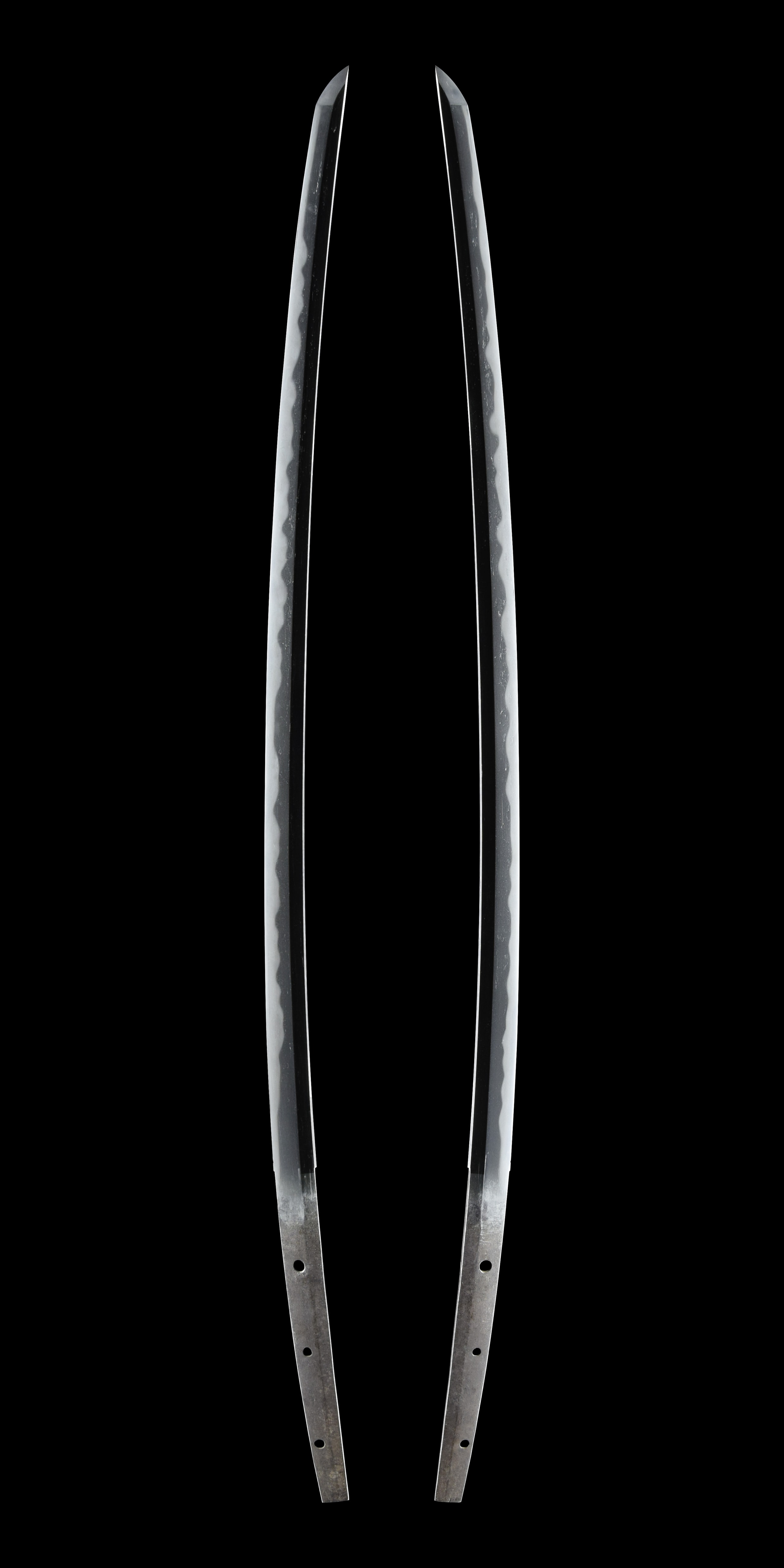
The shape is the late-Kamakura Bizen tachi the eye expects of this generation. Even shortened, the blades keep a high koshizori with the curvature carried toward the tip and a chu-kissaki, the mihaba standard to somewhat wide; the later, Nanbokucho-leaning pieces broaden into longer, wider forms and naginata-naoshi, one such carrying an o-kissaki on a thinned kasane. It is a body that reads as both old and dignified, and on the best of them the jigane is the quiet surprise the appraisers single out, a steel that comes up finer and more minutely worked than is usual for the line.
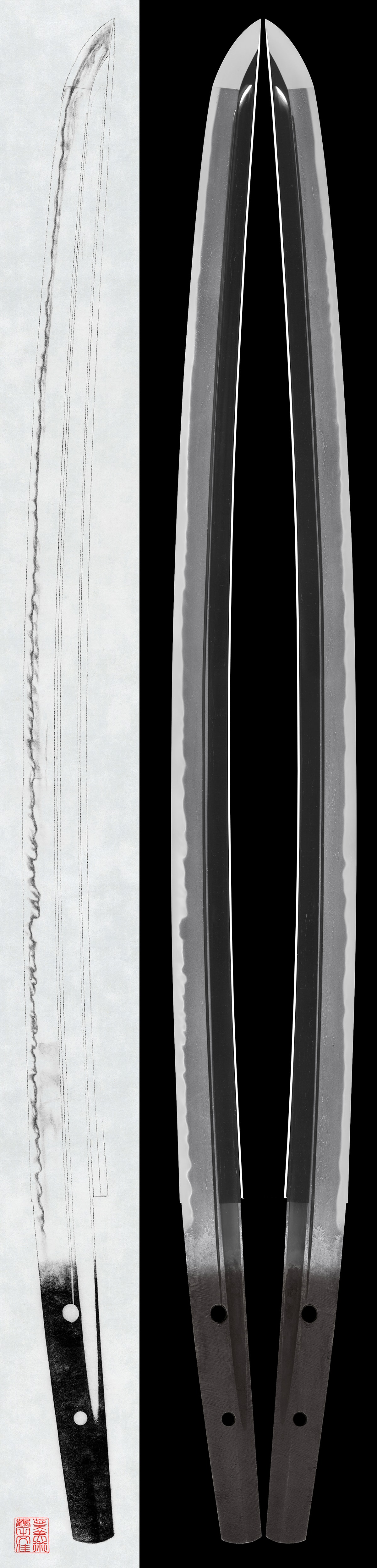
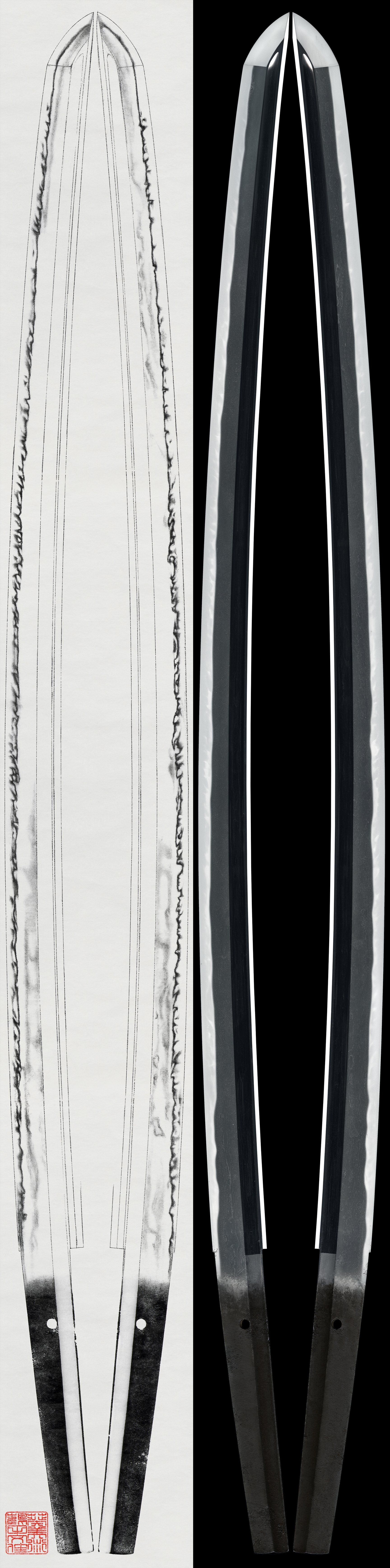
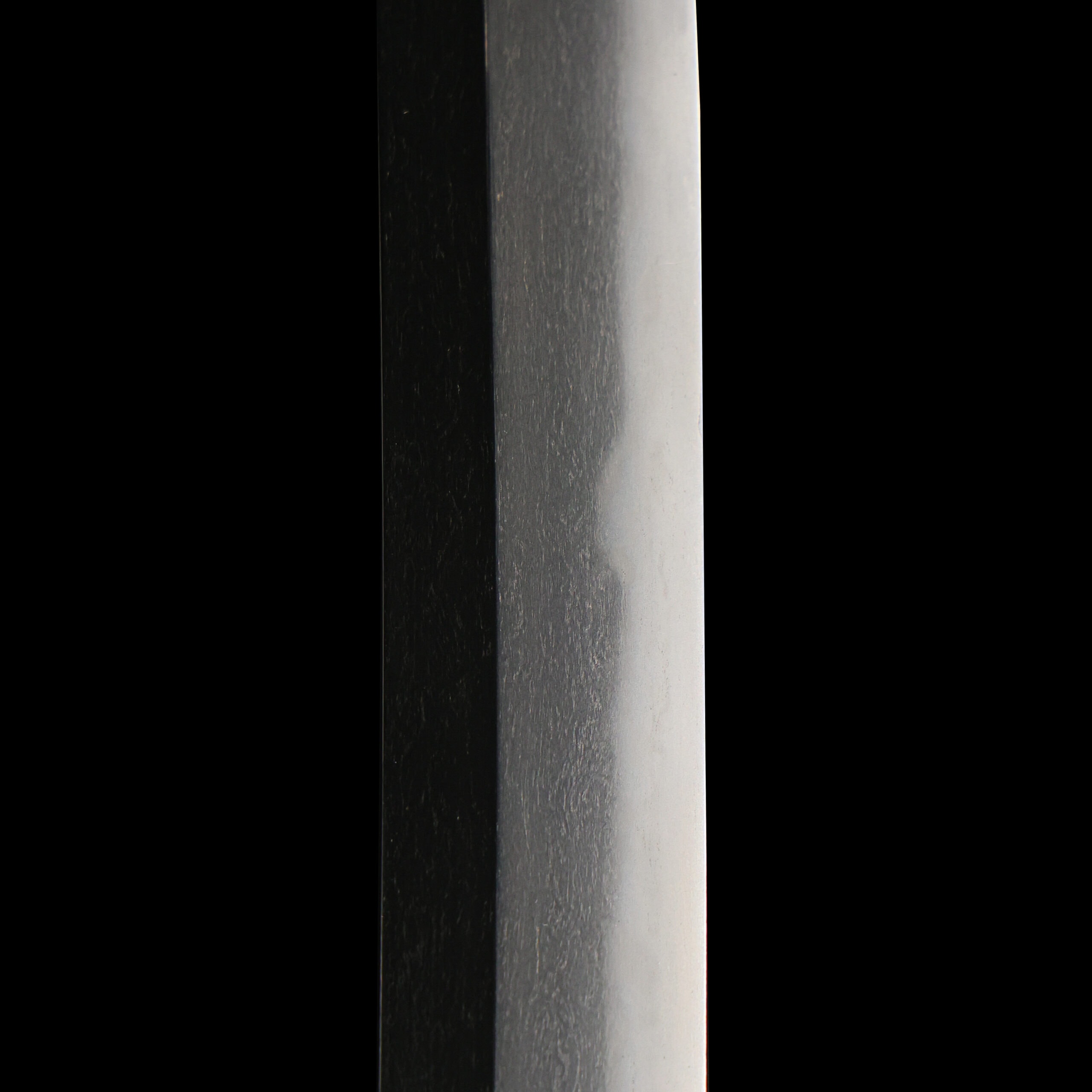
The jigane itself is an itame mixed with mokume and a touch of flowing nagare-hada, inclining to stand a little open. Fine ji-nie gathers thickly, chikei enter, and a vivid midare-utsuri rises across the surface; in places the steel takes on a ji-madara mottling. This is the first quiet separation from Kagemitsu, whose tightly refined, well-packed hada is the comparand the published sources hold up: against it Chikakage's grain stands more openly, sometimes mixing larger patches into a slightly uneven forging, even as his finest jigane can be, in the record's own words, fine and minutely worked[[c:3]].
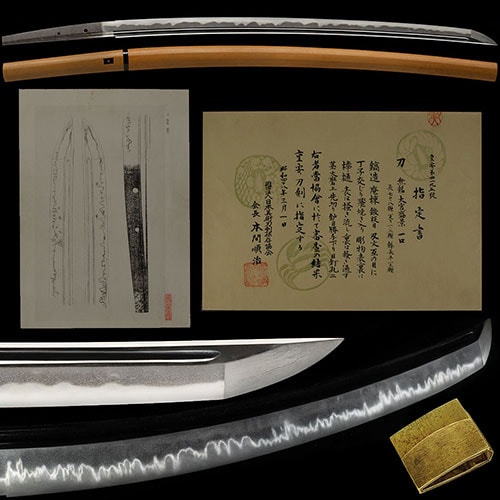
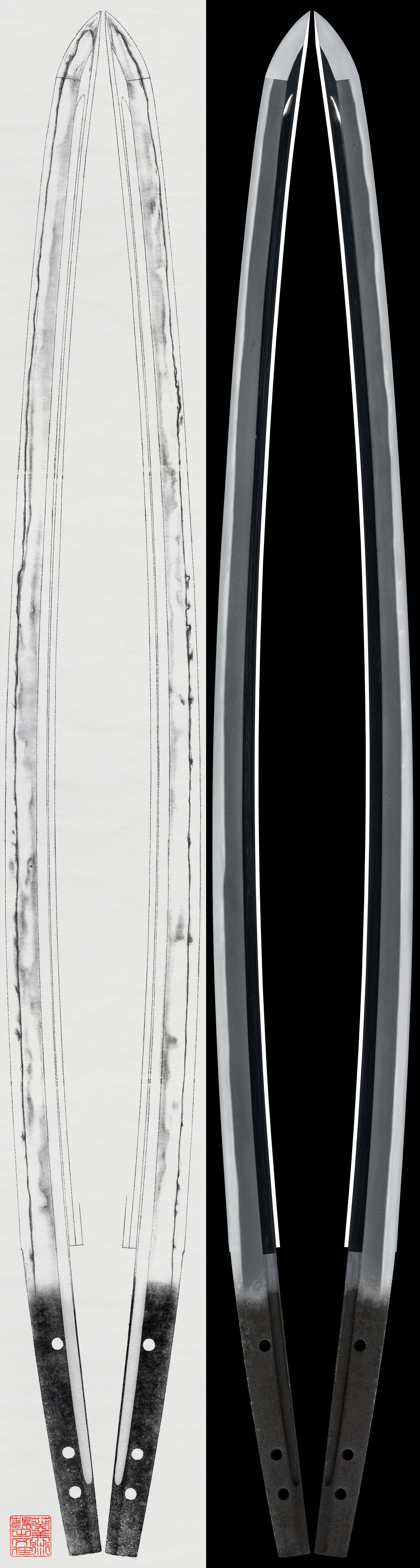
The hamon sits on a suguha or chu-suguha base carrying small choji, small gunome and the angular, kataochi-leaning gunome of the line, the whole tending to slant in saka-gakari. Ashi and yo enter busily, with reversed saka-ashi among them, the nioiguchi bright, ko-nie adhering, and kinsuji and sunagashi playing through the ji and ha; the temper can also open into a fuller choji-midare on the most ambitious blades. The slanting midare and reversed ashi, present on roughly two of every five of his swords against barely one in twenty-five elsewhere in the line, are shared with Kagemitsu, so on the ji and ha alone the two are genuinely hard to part.
The boshi is where the older profile went wrong, and where the corpus is in fact unambiguous. The dominant return is a ko-maru (小丸)[[c:4]], often rising at the yokote and then settling shallow, with a strong secondary tendency for the tip to run pointed (尖, the record's repeated note that the boshi tip becomes pointed)[[c:5]] and, on a notable share, to finish as yakizume or to enter in midare-komi (one naginata-naoshi recorded with the boshi entering in midare and becoming yakizume-like)[[c:6]]. What the older commentary called a single, exaggerated Sansaku turnback is at most a flourish on some pieces; the section-level truth is a ko-maru-led boshi with pointed, yakizume and midare-komi variants, and that is what a working kantei should carry.
For the collector the recognition runs in this order: a late-Kamakura Bizen tachi shape, an itame that stands a little open with thick fine ji-nie and vivid midare-utsuri, a saka-gakari suguha-to-ko-midare ha with busy reversed ashi, kinsuji and sunagashi, and above it a ko-maru boshi that tends to point, with yakizume and midare-komi seen. Two further tells close the identification: the stronger ha-nie, the record's note of nie beyond what is seen in Kagemitsu, and the documentary fingerprint of his signing, the reverse chisel whose heavy use the sources call typical of his hand[[c:7]]. Fujishiro grades him Jo-jo saku. The designated work is real and deep, with one National Treasure and three Important Cultural Properties on record beyond the seventy-eight blades carried at the Tokuju and Juyo tiers, and the named provenances reach the first houses of the realm, Uesugi Kenshin and the Uesugi, the Tokugawa shogunal house, and the Date among them. He is the indispensable shadow of Kagemitsu, the hand whose near-perfect echo of the master is itself the best measure of how tightly that great Osafune workshop worked.