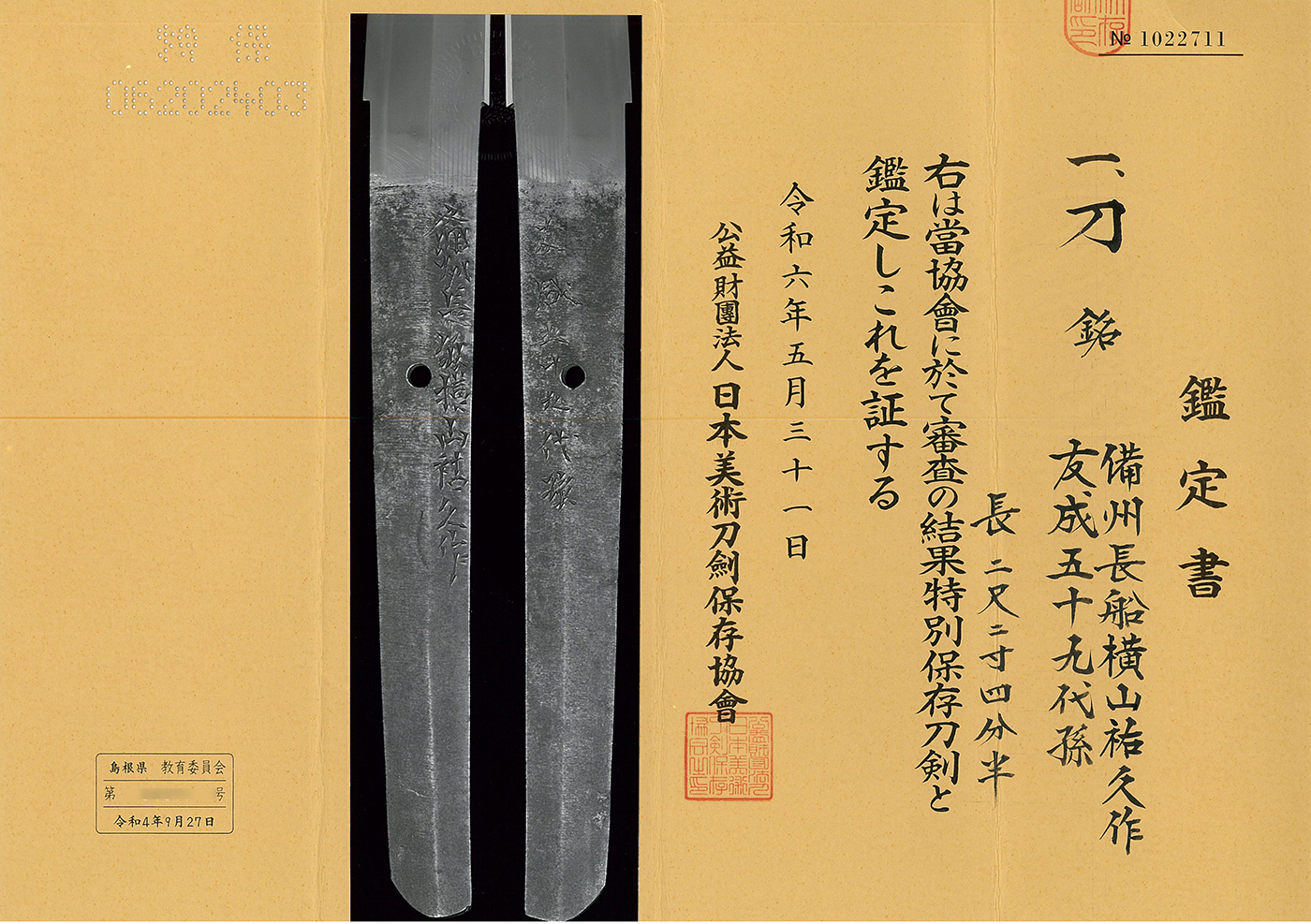
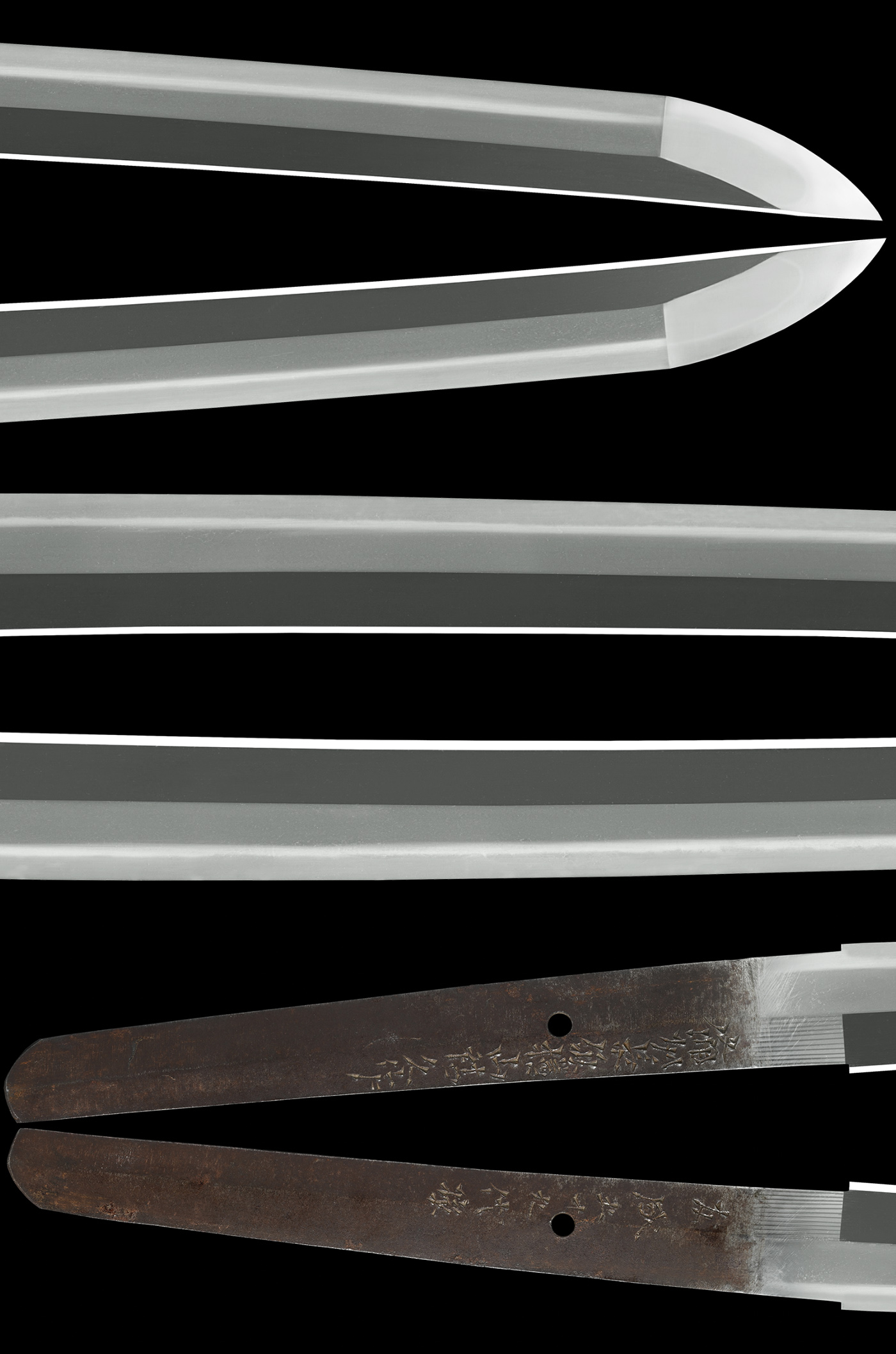
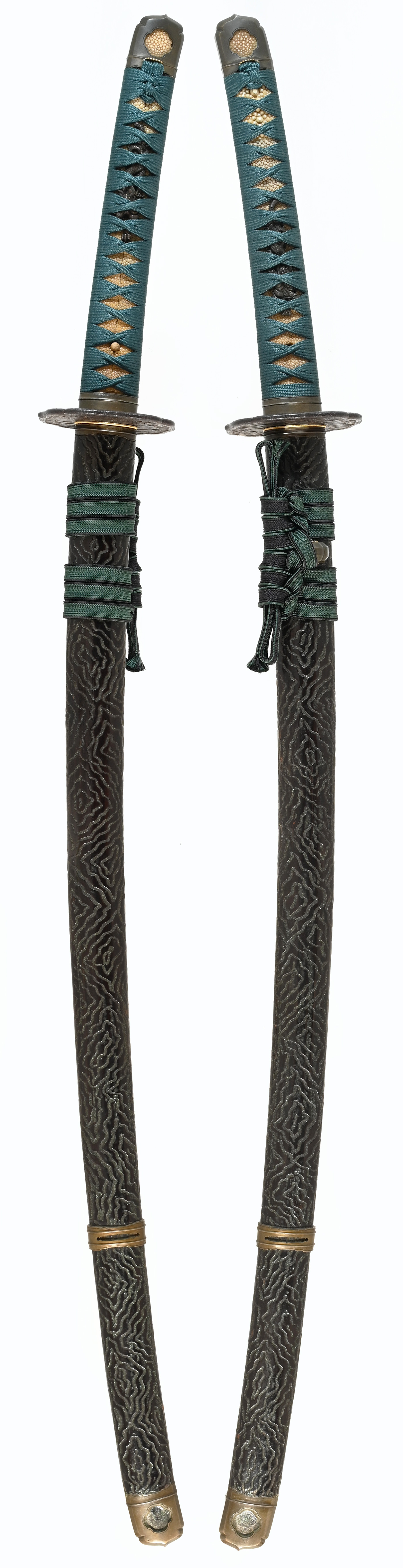
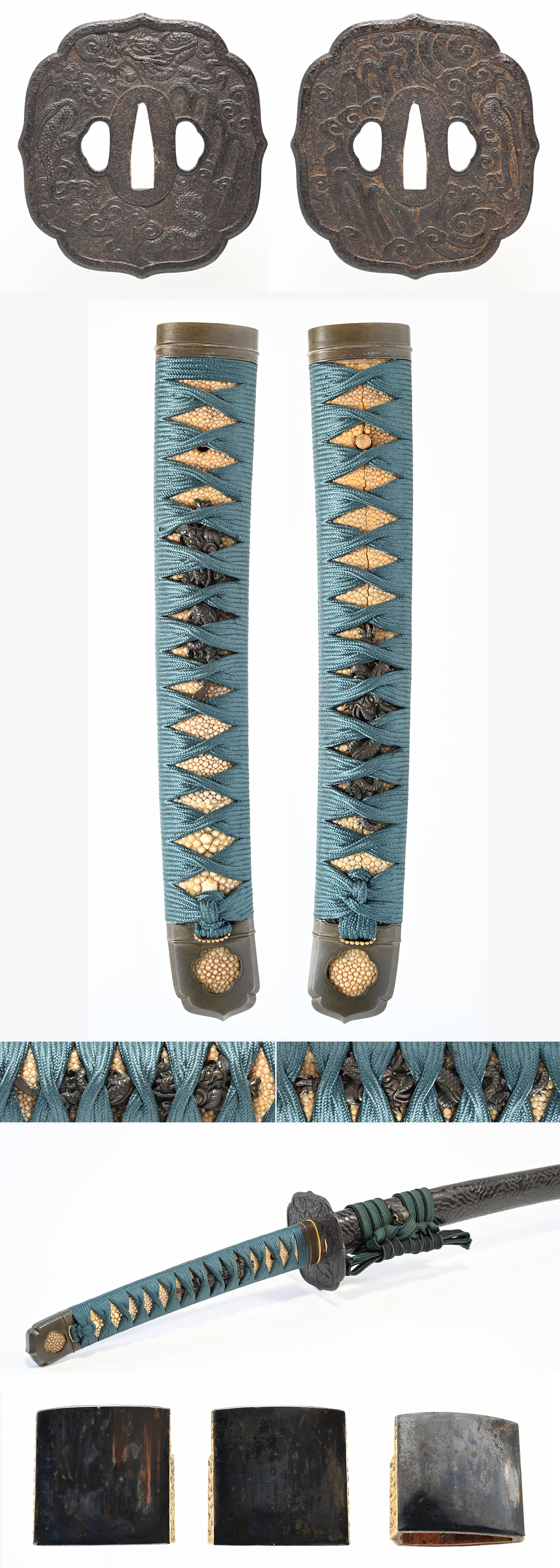
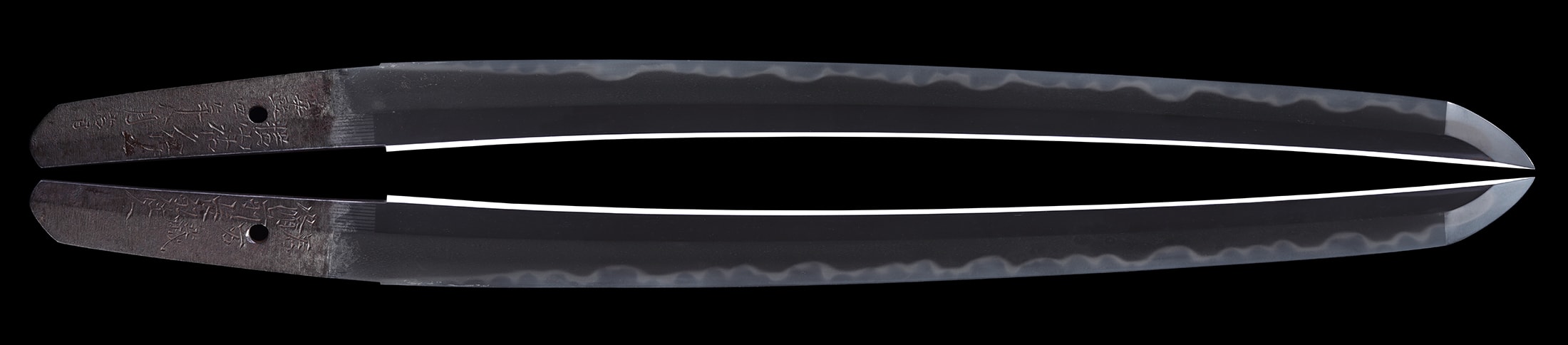
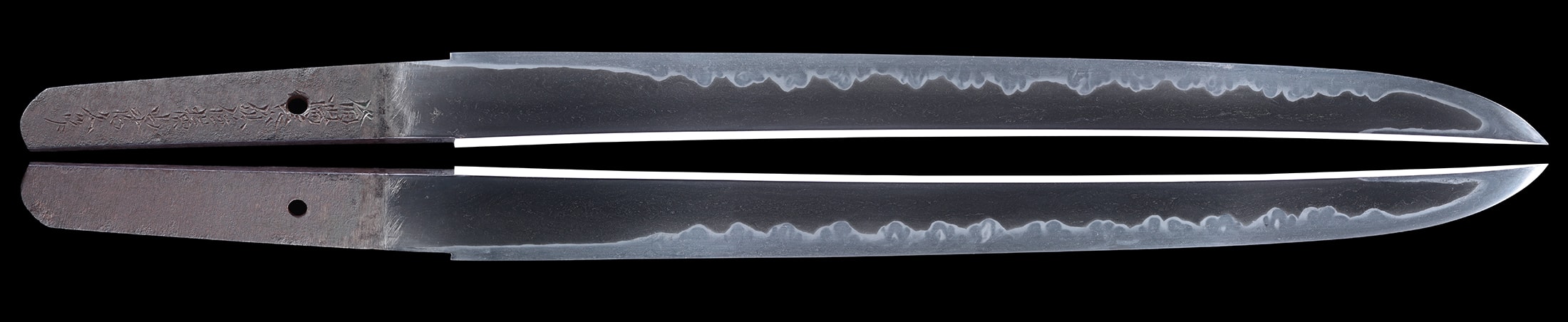
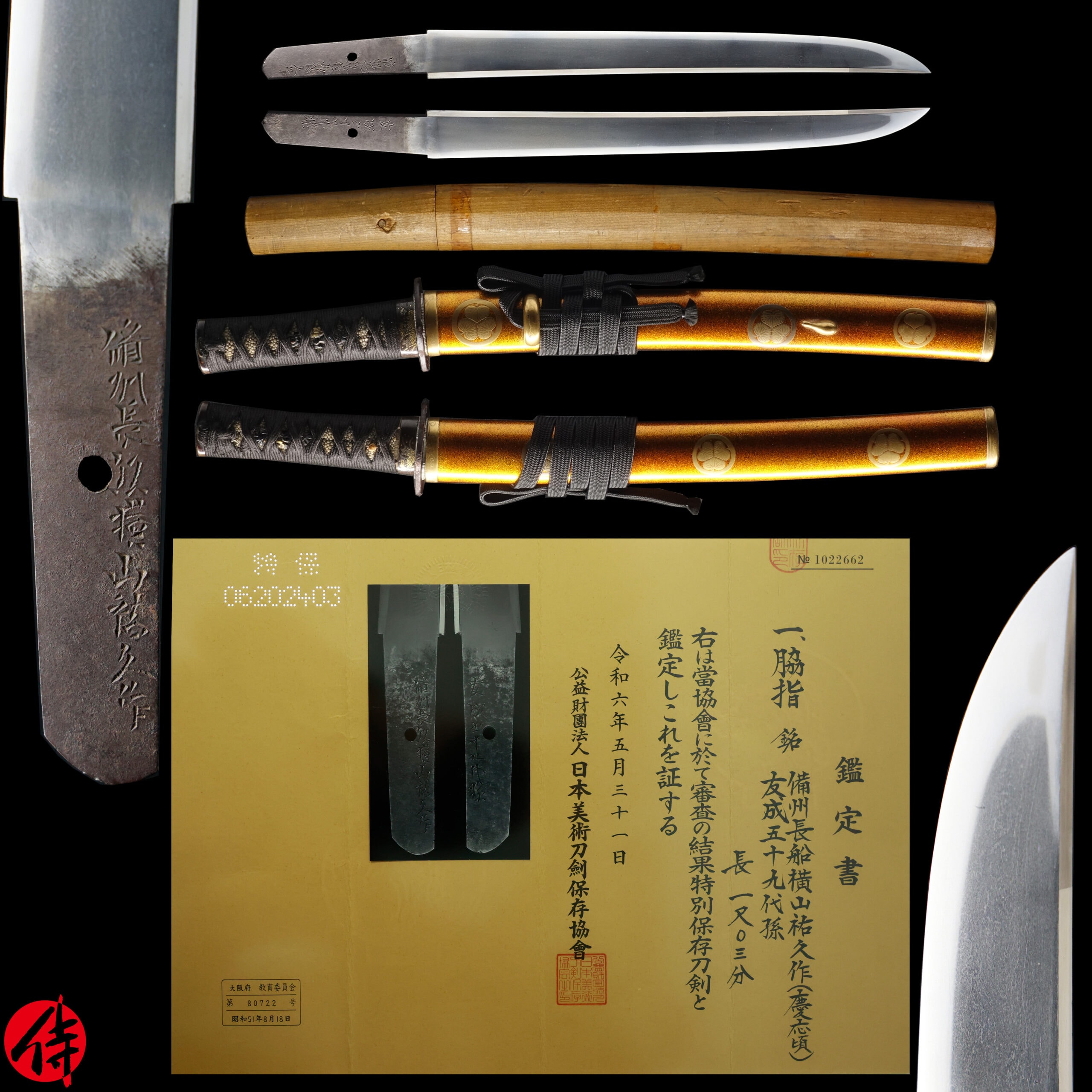
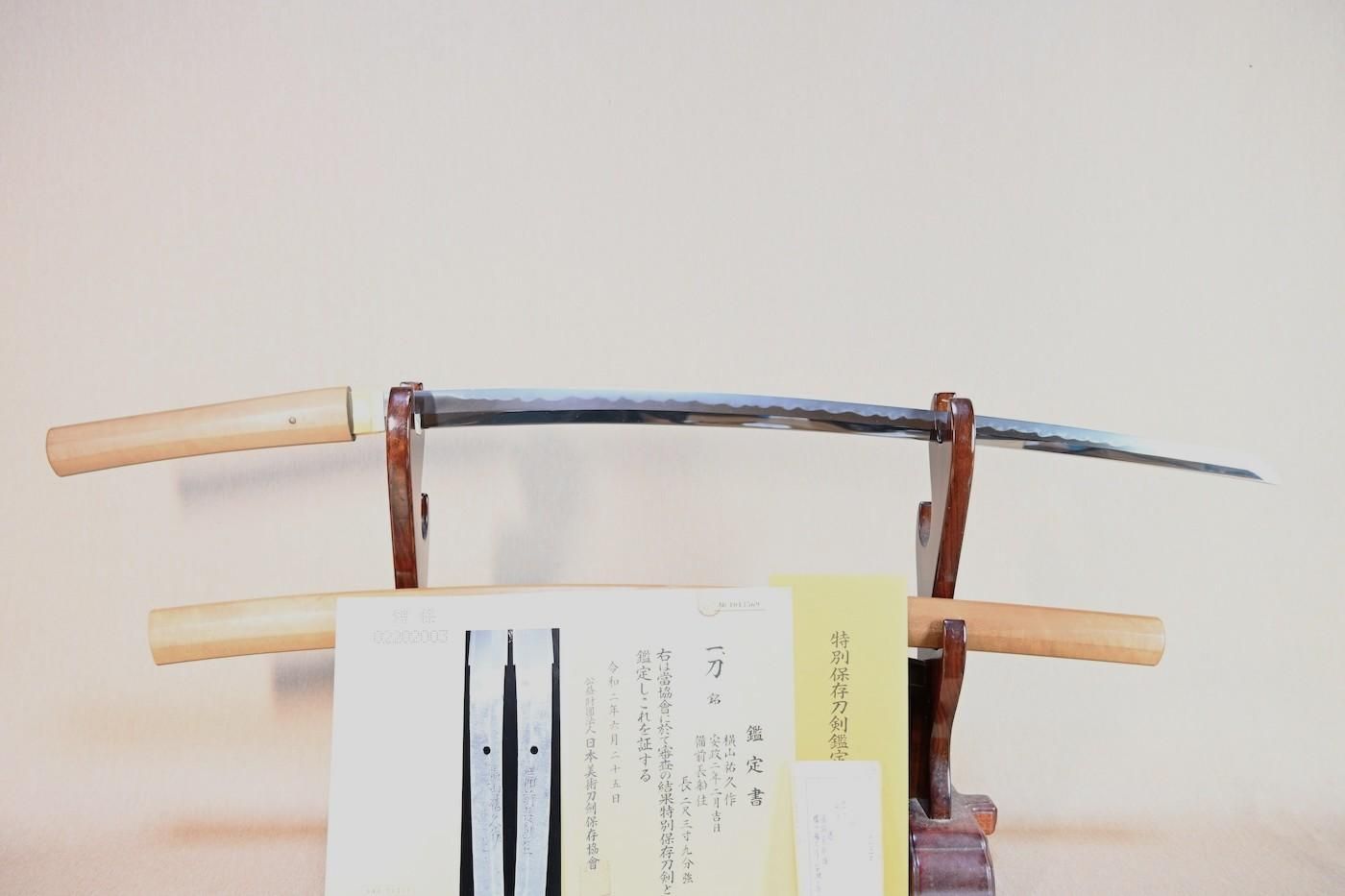
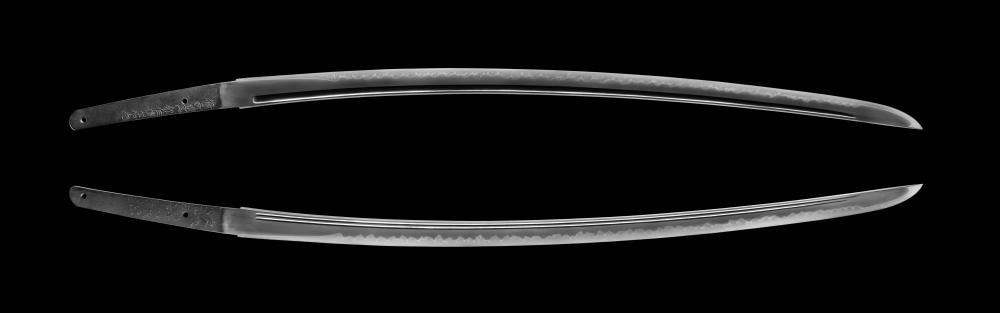
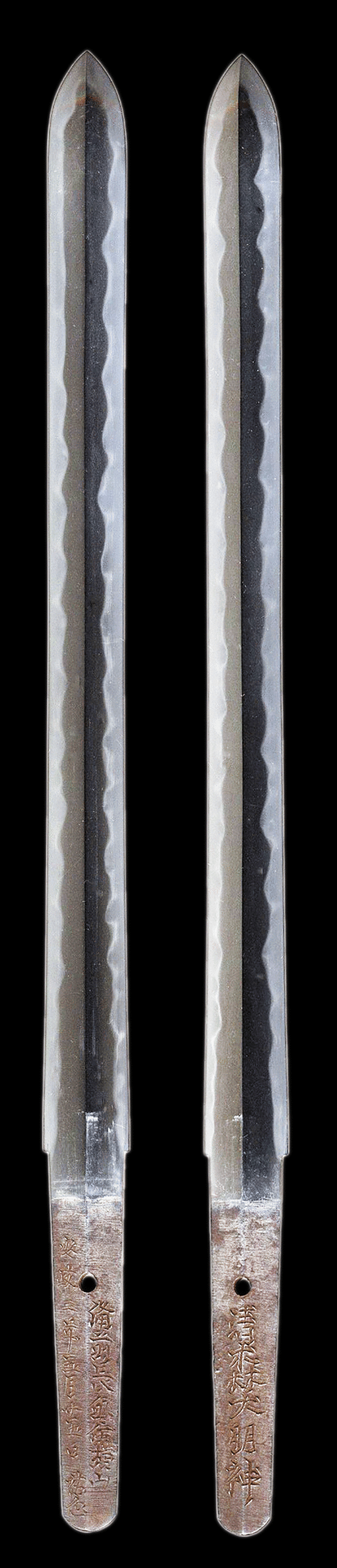
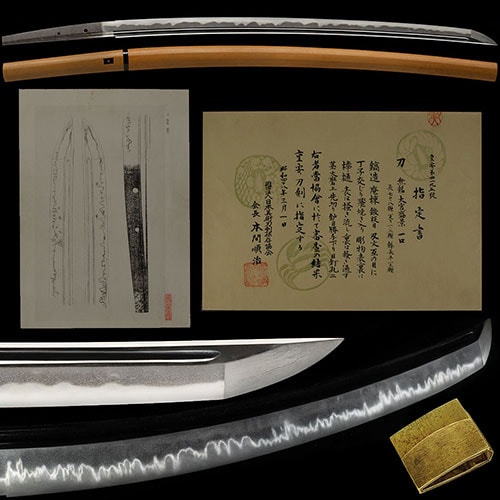
This is a katana made by Yokoyama Sukehisa of Bizen Osafune in the late Edo period (Keio era, 1865). Sukehisa was an adopted son of Yokoyama Sukenaga and received a stipend in 1852. He died in 1869. The blade is designated as Tokubetsu Hozon by the NBTHK.
mei · Osafune · Keio (1865-1868) · nagasa 68cm · sori 1.4cm


Bizen-den · Bizen · around 1865-1868
2 pieces on the market now
Bizen-den · Bizen
38 pieces on the market now
| Smith | Era | Designated |
|---|---|---|
| Sukenobu祐信 | 1830-1844 | 0 |
| Suketaka祐高 | 1865-1868 | 0 |
| Sukeharu祐春 | 1864-1865 | 0 |
| Sukehiro祐廣 | 1854-1860 | 0 |
| Sukekane祐包 | 1868-1912 | 0 |
A Hozon-certified blade judged to show notably superior workmanship and a better state of preservation. The bar is higher: re-tempered blades and most unsigned Muromachi/Edo works are excluded.
The NBTHK (Nihon Bijutsu Tōken Hozon Kyōkai, the Society for the Preservation of Japanese Art Swords) is a public-interest incorporated foundation founded in 1948 and supervised by Japan’s Agency for Cultural Affairs (Bunkachō); it is based at the Japanese Sword Museum in Tokyo. Its expert panels physically examine each submitted work (shinsa) and issue a certificate (kanteishō) ranking it by artistic and historical merit. NBTHK papers are the most widely recognized standard of authentication for Japanese swords and fittings.
NBTHK official siteReturns possible within 3 days of arrival. Customer pays return shipping and bank transfer fees. Excluded: condition differs from sale, 3+ days passed, overseas delivery, in-store purchases, and deposit transactions.
This is a katana made by Yokoyama Sukehisa of Bizen Osafune in the late Edo period (Keio era, 1865). Sukehisa was an adopted son of Yokoyama Sukenaga and received a stipend in 1852. He died in 1869. The blade is designated as Tokubetsu Hozon by the NBTHK.
mei · Osafune · Keio (1865-1868) · nagasa 68cm · sori 1.4cm


Bizen-den · Bizen · around 1865-1868
2 pieces on the market now
Bizen-den · Bizen
38 pieces on the market now
| Smith | Era | Designated |
|---|---|---|
| Sukenobu祐信 | 1830-1844 | 0 |
| Suketaka祐高 | 1865-1868 | 0 |
| Sukeharu祐春 | 1864-1865 | 0 |
| Sukehiro祐廣 | 1854-1860 | 0 |
| Sukekane祐包 | 1868-1912 | 0 |
A Hozon-certified blade judged to show notably superior workmanship and a better state of preservation. The bar is higher: re-tempered blades and most unsigned Muromachi/Edo works are excluded.
The NBTHK (Nihon Bijutsu Tōken Hozon Kyōkai, the Society for the Preservation of Japanese Art Swords) is a public-interest incorporated foundation founded in 1948 and supervised by Japan’s Agency for Cultural Affairs (Bunkachō); it is based at the Japanese Sword Museum in Tokyo. Its expert panels physically examine each submitted work (shinsa) and issue a certificate (kanteishō) ranking it by artistic and historical merit. NBTHK papers are the most widely recognized standard of authentication for Japanese swords and fittings.
NBTHK official siteReturns possible within 3 days of arrival. Customer pays return shipping and bank transfer fees. Excluded: condition differs from sale, 3+ days passed, overseas delivery, in-store purchases, and deposit transactions.