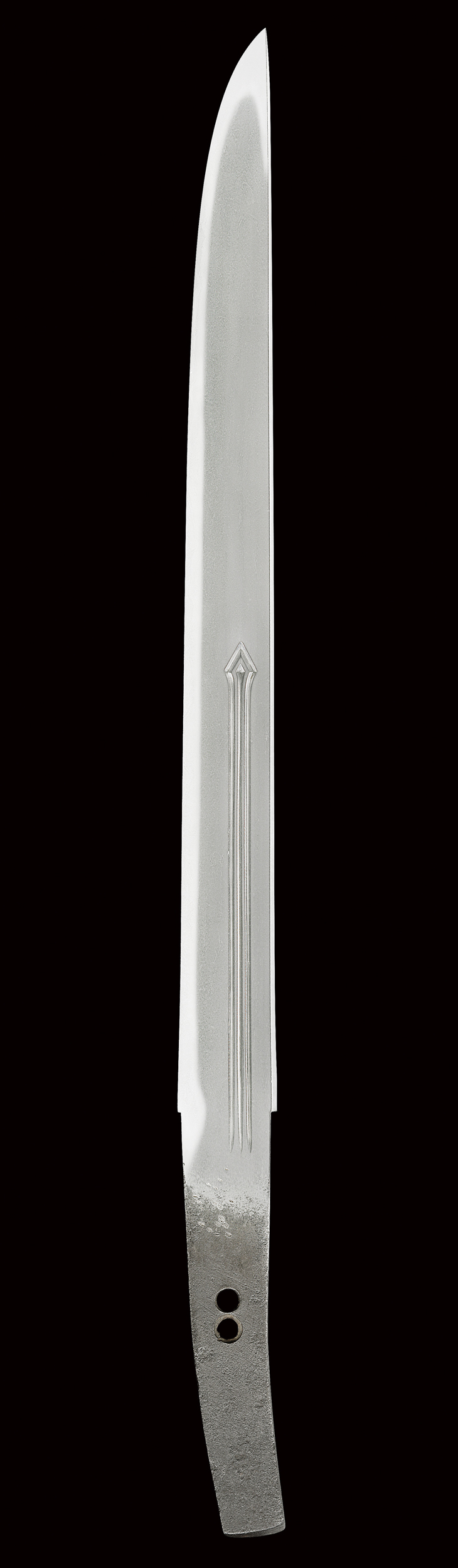
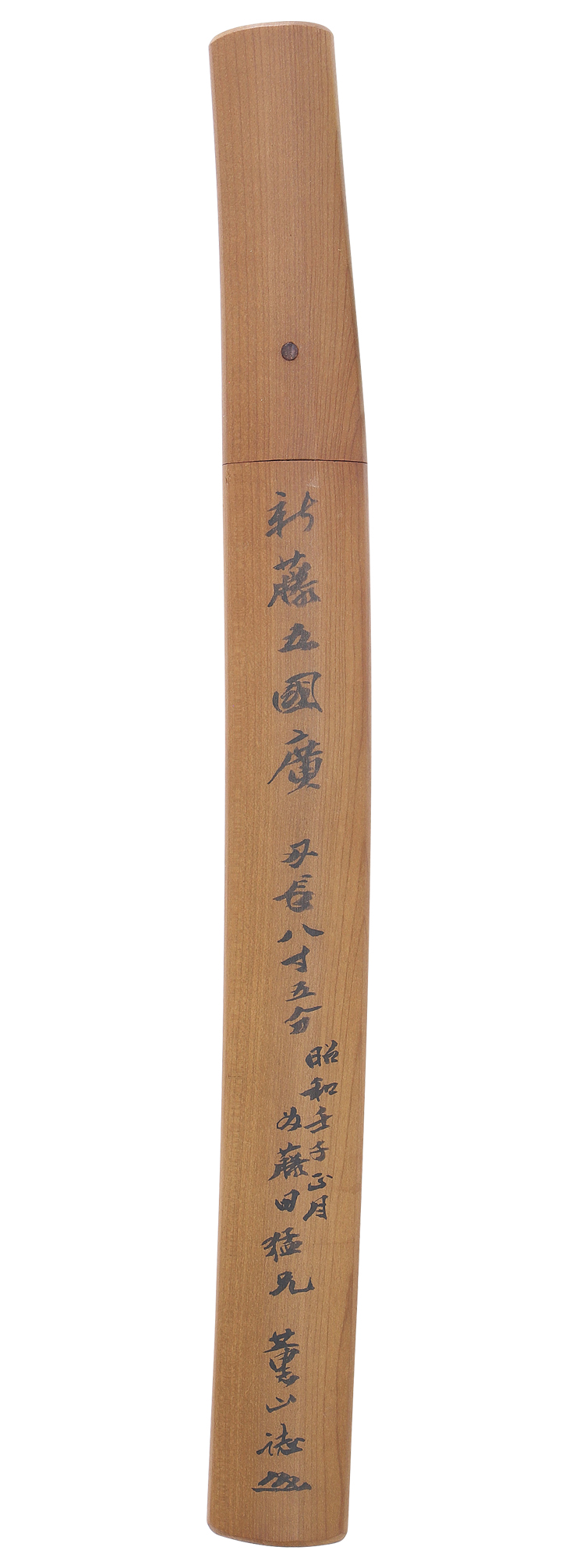
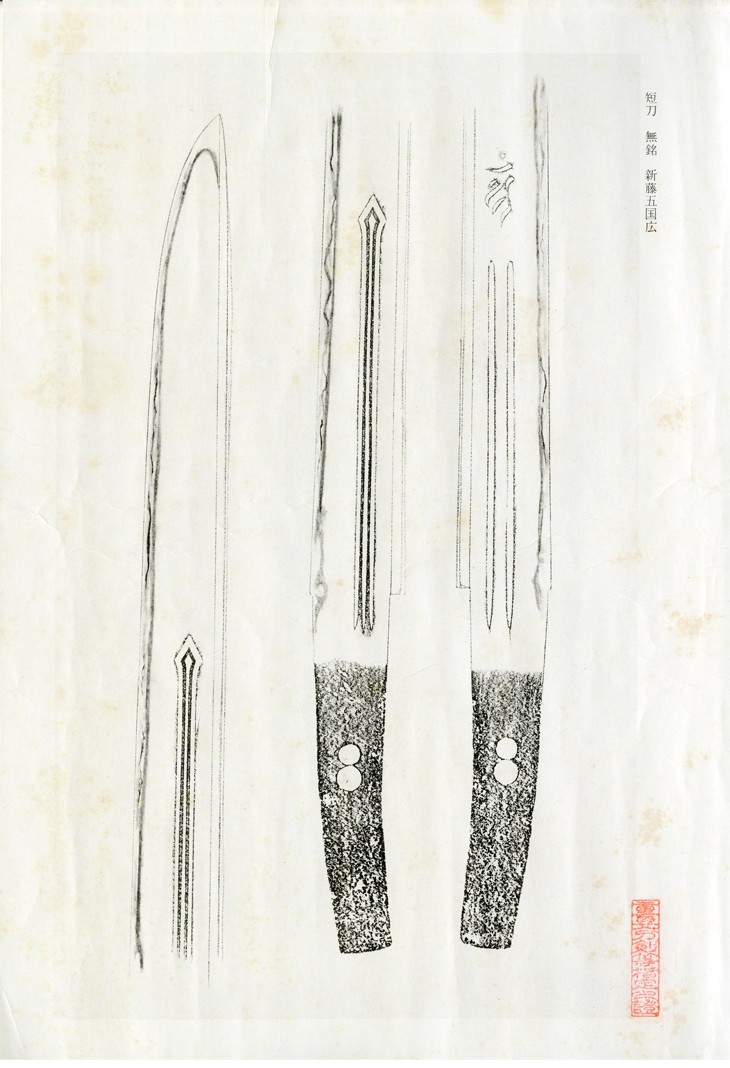
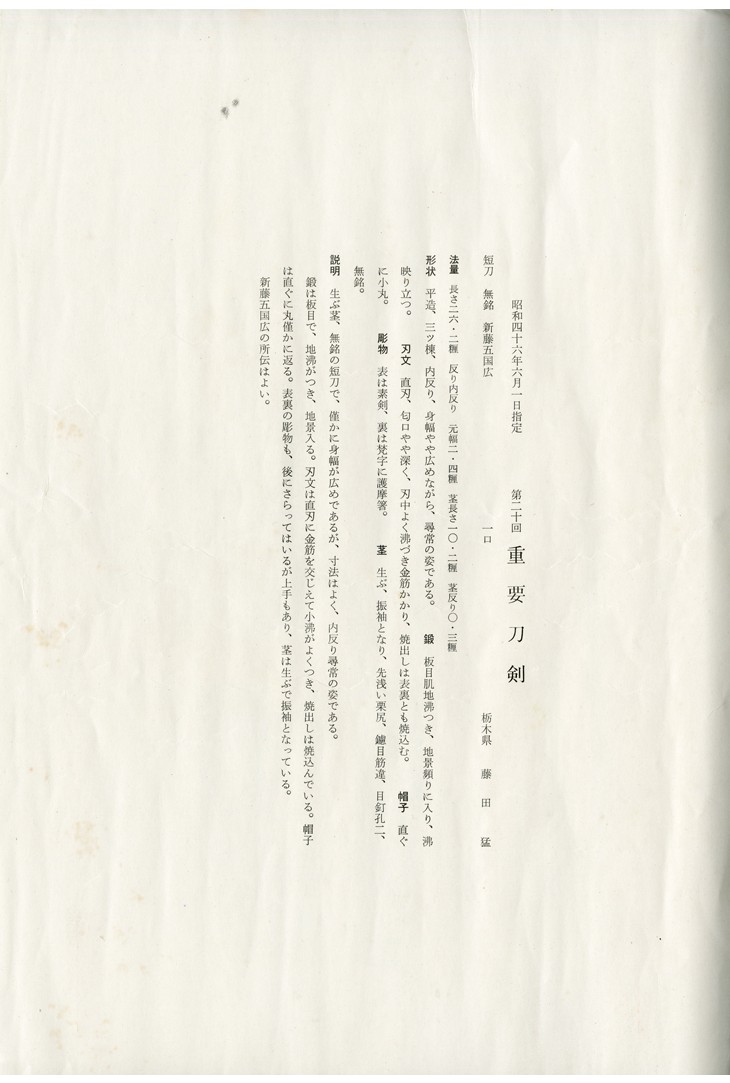
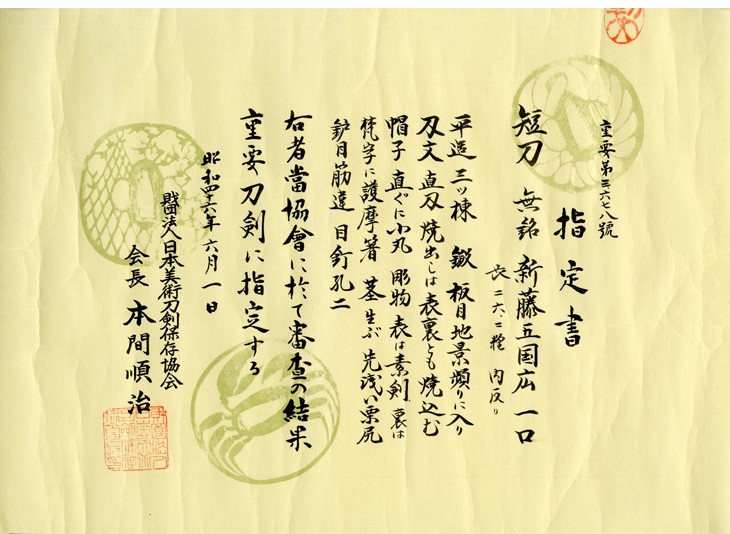
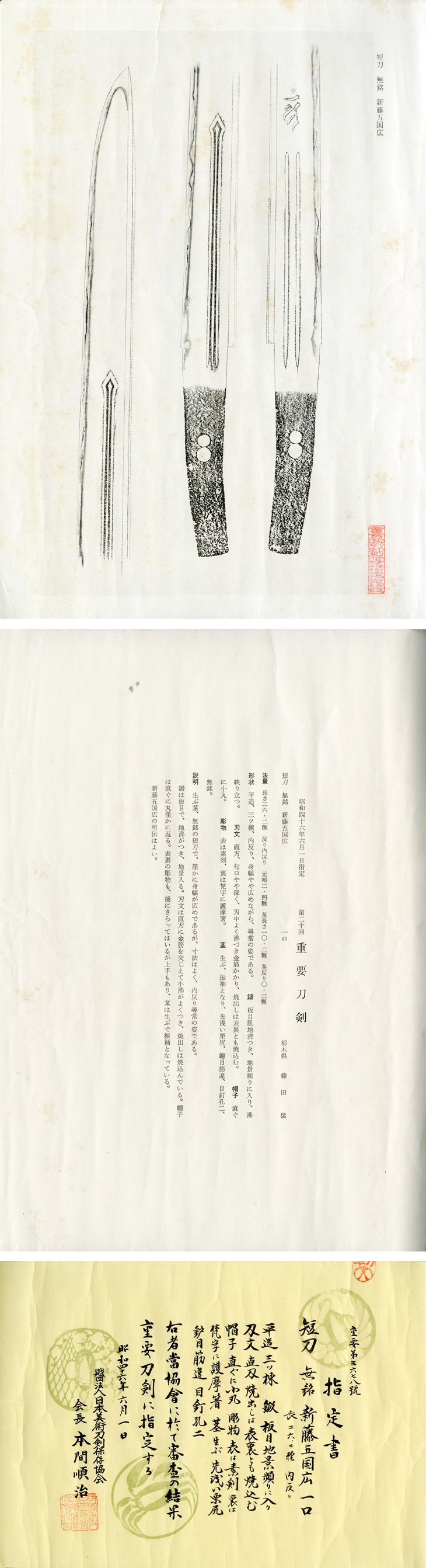
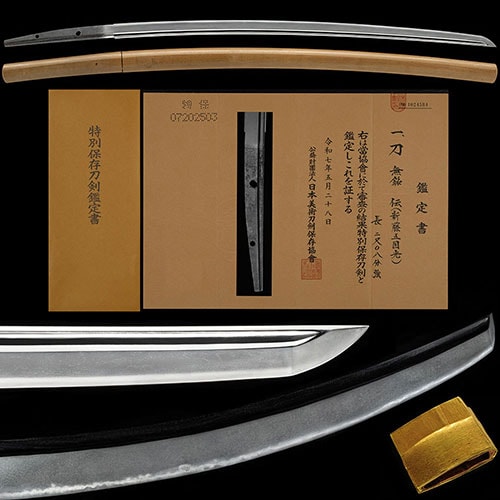
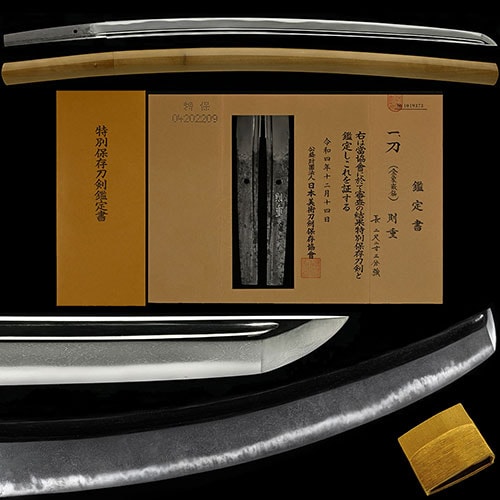
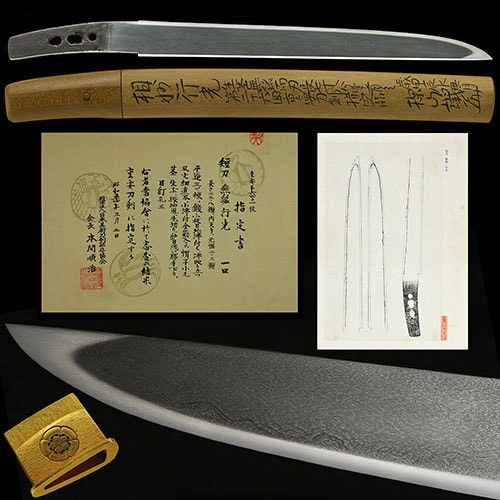
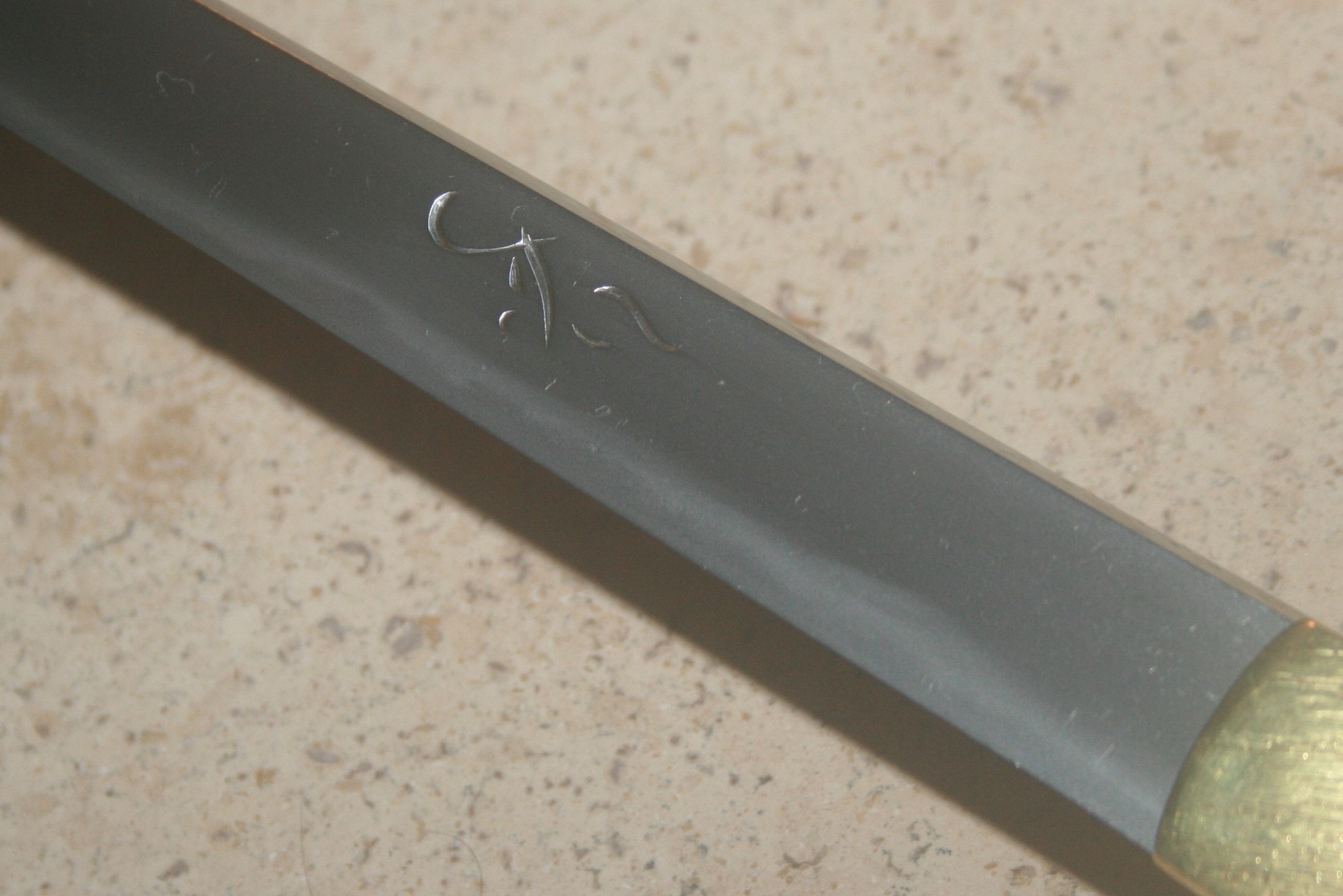
A signed tanto in the fifteenth Juyo session carries the two characters Kunihiro and, on its scabbard, an old Hon'ami note of fifty mai[[c:1]], and its published commentary opens with the line that has governed the smith ever since: that Shindogo Kunihiro is traditionally the son of Kunimitsu, and that old transmitted writings hold his works to show a longer boshi turnback than Kunimitsu's[[c:2]]. Kunihiro worked in Sagami at the very end of the Kamakura period, and signed pieces dated Bunpo 2 (1318) and Genko 4 (1324) fix his time. The published sources record that Shindogo Kunimitsu had three sons, Kunihiro, Kunishige and Kunitai, all said to have later signed Kunimitsu as their father did, but that of the three only Kunihiro survives in genuine work, no reliable signed blade being known for the other two. The whole of his recorded oeuvre is the small sword, the tanto and a single short wakizashi, and not one tachi is attributed to him.
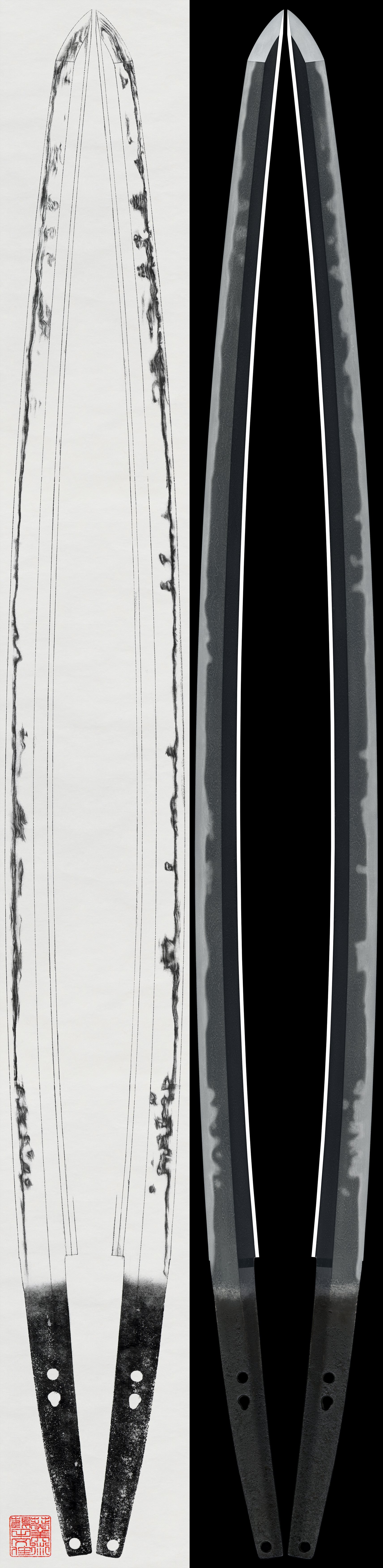
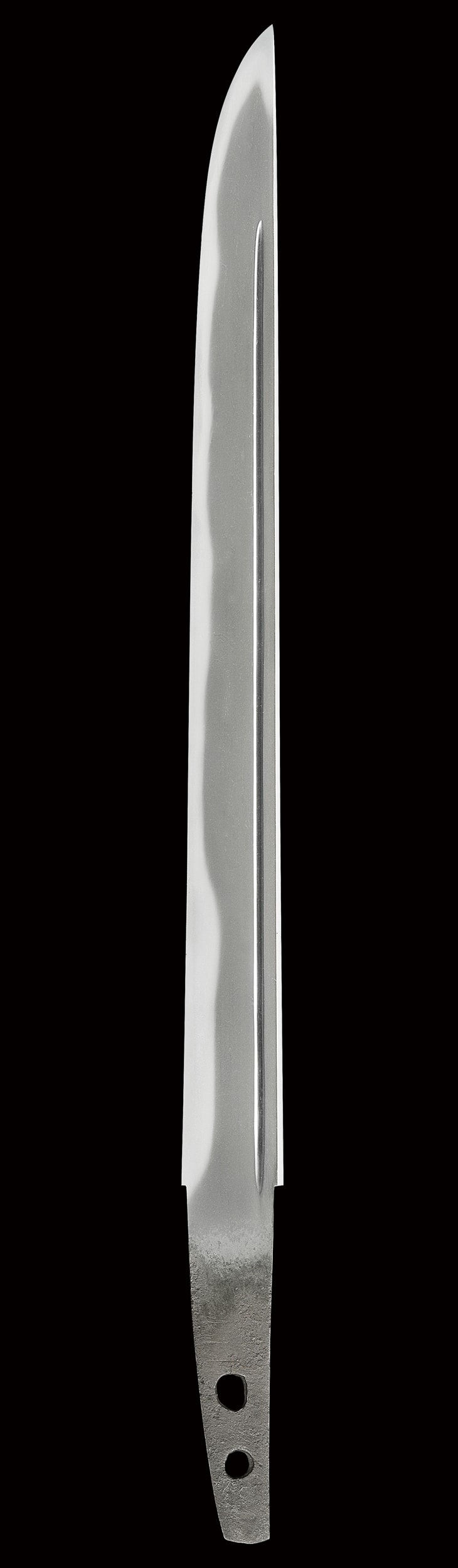
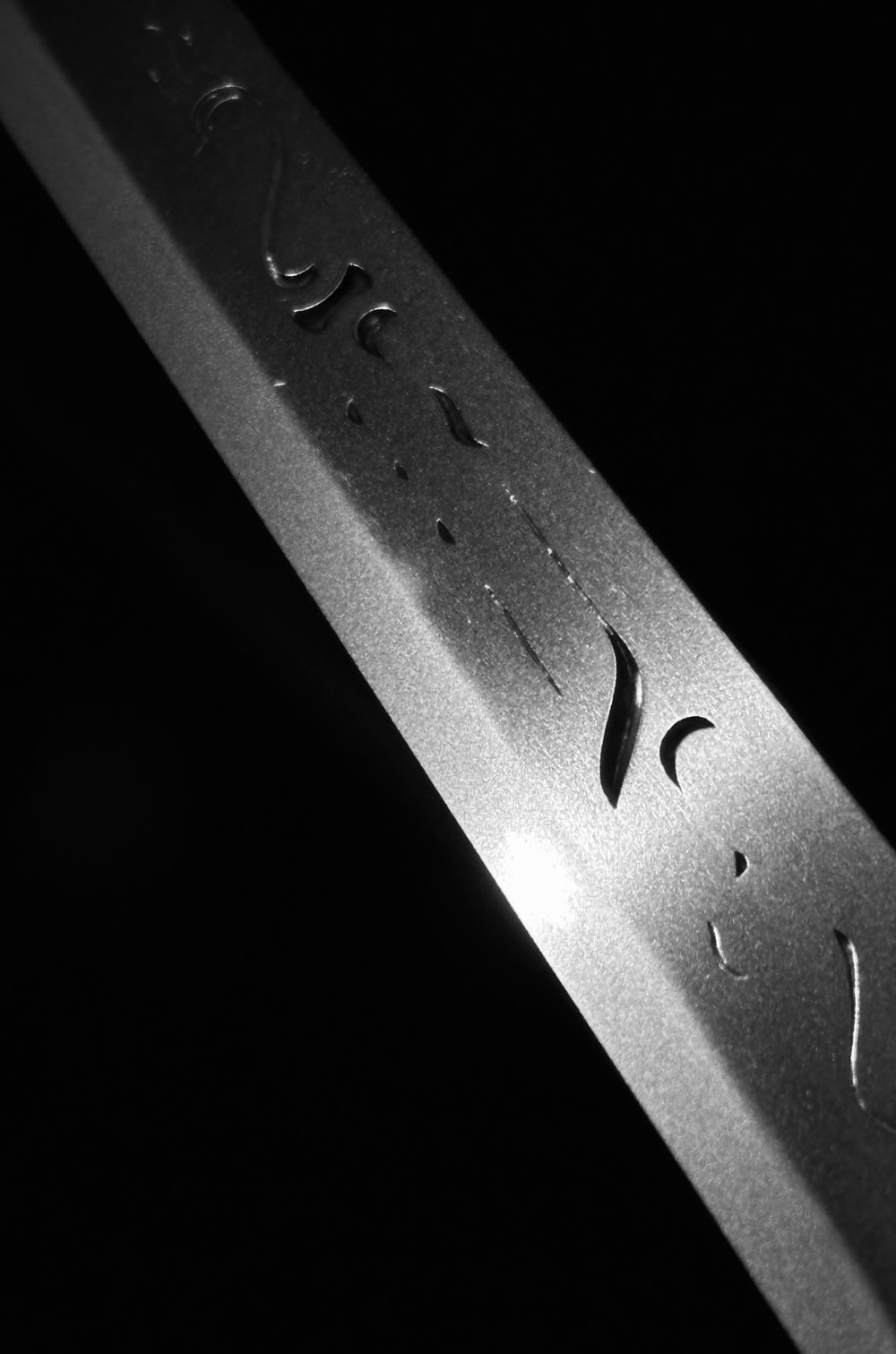
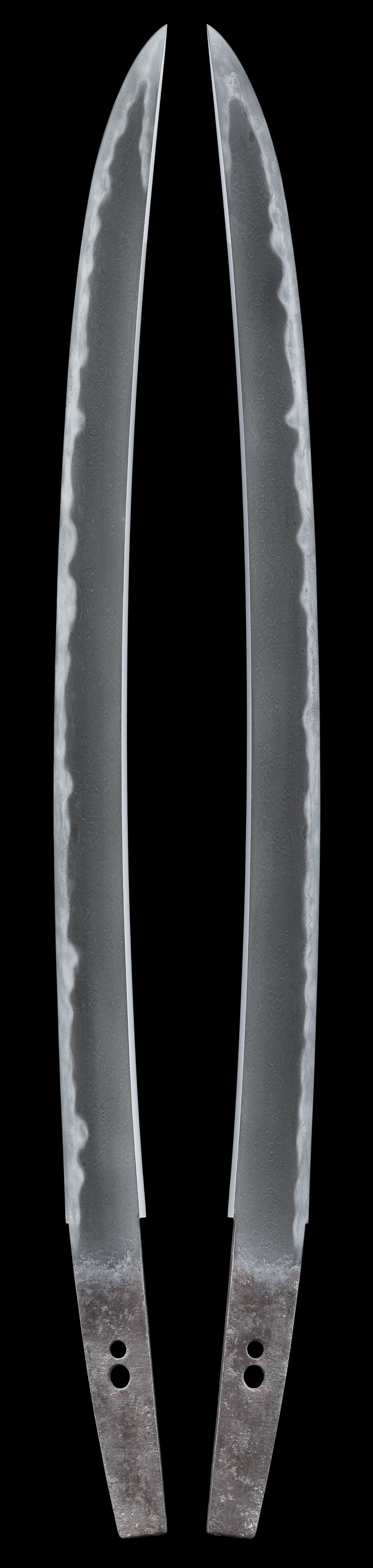
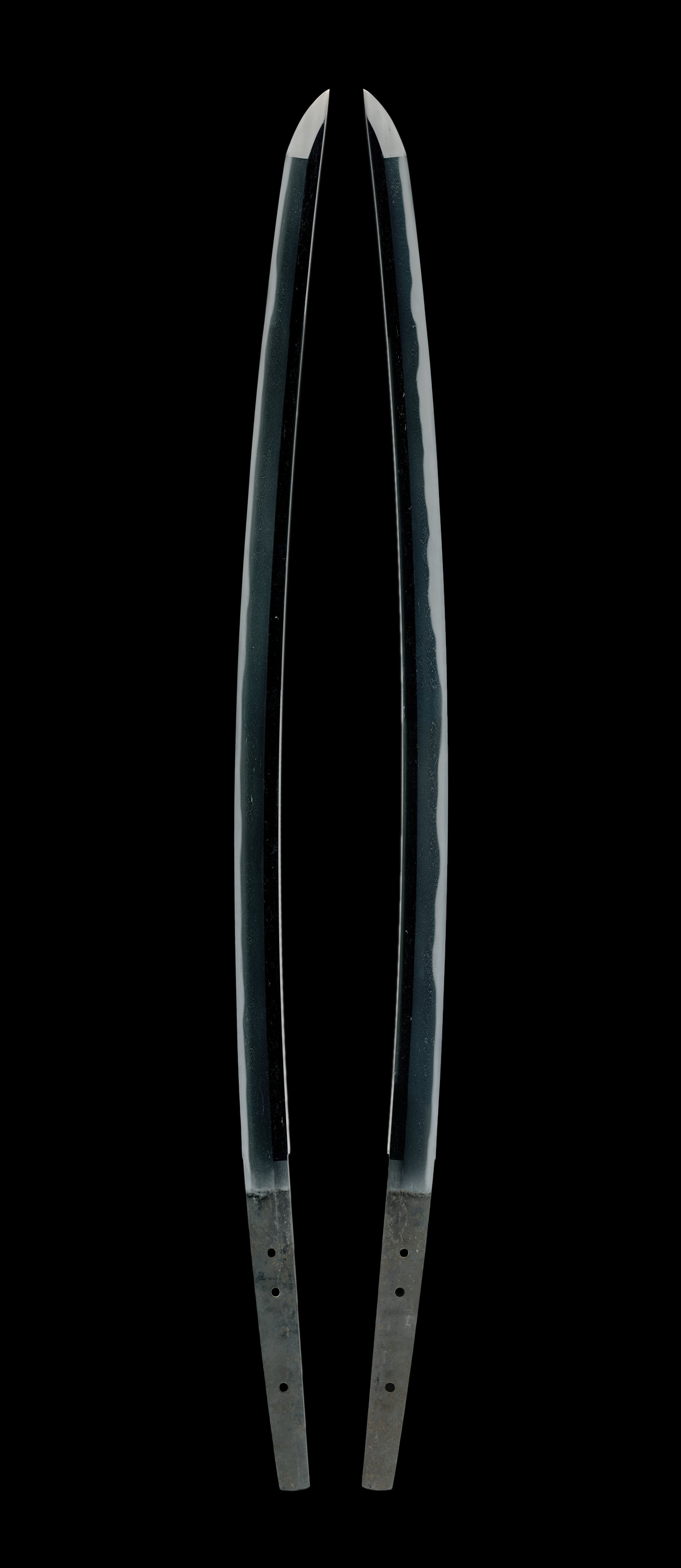
His is, before all else, the Shindogo hand received whole from his father. He excelled in well-constructed tanto and tempered suguha, the sources saying plainly that he produced skillful tanto and skillful suguha[[c:3]]. The temper is a fine suguha, hoso-suguha or a medium suguha, laid in nie with the nioiguchi bright and clear, fine kinsuji and sunagashi working within the ha, and in places kuichigai-ba, nijuba and nie-hotsure along the habuchi; here and there a faint ko-gunome or ko-notare enters the line, but the manner is the quiet straight temper throughout. Over this restraint the recognition rests on a second, contrary mark, the carving: at the base of the tanto he sets bonji with a suken and gomabashi, on the fifteenth-session piece a futasuji-hi, the devotional program of the Shindogo workshop, while the plainer pieces show only a katana-hi with an accompanying groove run as kaki-nagashi.
The jigane is the part that most binds him to Kunimitsu. He forges an itame, at times a ko-itame, well packed and minutely covered in thick ji-nie, chikei entering frequently, and over much of the work a nie-utsuri stands; on the sixty-sixth-session tanto the published commentary reads a nie-utsuri toward the mune and a straight-form utsuri nearer the edge. One late piece runs to a standing itame with mokume and flowing grain and a mottled ji, but the type is the bright, well-forged Shindogo steel. It is this reflection, the calm nie-utsuri of a closely kneaded ji rather than the midare-utsuri of Bizen, together with the nie suguha, that places his blades within his father's school at a glance, the deki on the best of them held to be not inferior to Kunimitsu[[c:4]].
The record divides cleanly into two registers of one form. A few ubu, two-character signed tanto anchor the smith and carry his dates; the larger body is the ubu mumei tanto judged Shindogo and then to Kunihiro in particular, several resting on old Hon'ami origami, one with a Genroku 8 (1695) paper by Hon'ami Mitsutsune. The shape is the orthodox uchizori hira-zukuri, with a tendency to furisode in the nakago, often slightly broad in width and at times sun-nobi. The tradition that Kunihiro and his brothers later signed Kunimitsu and worked as substitute hands for their father, the sources note, both explains why genuine Kunihiro signatures are so few and leaves room for further study, since some Kunihiro-dated pieces fall in the same years as Kunimitsu's own dated work.
Because the ji and ha sit so close to Kunimitsu, the kantei against the father is decided not in the steel but in the sugata and above all in the boshi. The published sources name the tell exactly: Kunihiro's tanto can be broader than the teacher's, and the turnback of the boshi is wider than anything seen in Kunimitsu[[c:5]], with a habit by which the kaeri leans slightly[[c:6]]. On one tanto judged at the twentieth session the round is even a little inferior and the kaeri somewhat long, and on a piece that at first glance looks like Shindogo Kunimitsu it is precisely the broader boshi on the reverse that decides it for Kunihiro. The published commentary on one mumei tanto states flatly that it cannot be appraised as the work of anyone but Kunihiro[[c:7]]. He stands one generation below the founder of Soshu, his father's line opening through Yukimitsu toward Masamune, so that his nie suguha tanto sit at the threshold of the tradition that would follow.
Fujishiro rates him Jo-jo saku. Two of his works are Important Cultural Properties, a wakizashi dated Bunpo 2 held at a shrine in Saga and a tanto dated Genko 4 with the added inscription of a Kamakura resident, and thirteen tanto stand at Juyo rank. The provenance that survives is distinguished out of proportion to the small number: one broad mumei tanto, sound and excellent in ji and ha, is recorded as a personal dagger worn by Toyotomi Hideyoshi, and another was formerly held by the main Tokugawa house[[c:8]]. For the collector almost none of this can be sought. The two Important Cultural Properties are patrimony outside the market, and a recorded example rests in the Tokyo National Museum. What may realistically be met is the Juyo tier, thirteen tanto in all, very often ubu mumei pieces resting on Hon'ami attribution, nearly all small and quiet suguha works in the Shindogo manner; such a blade reaches the market only rarely, and a signed, dated Kunihiro tanto, of which only a handful exist, is a landmark when it appears.