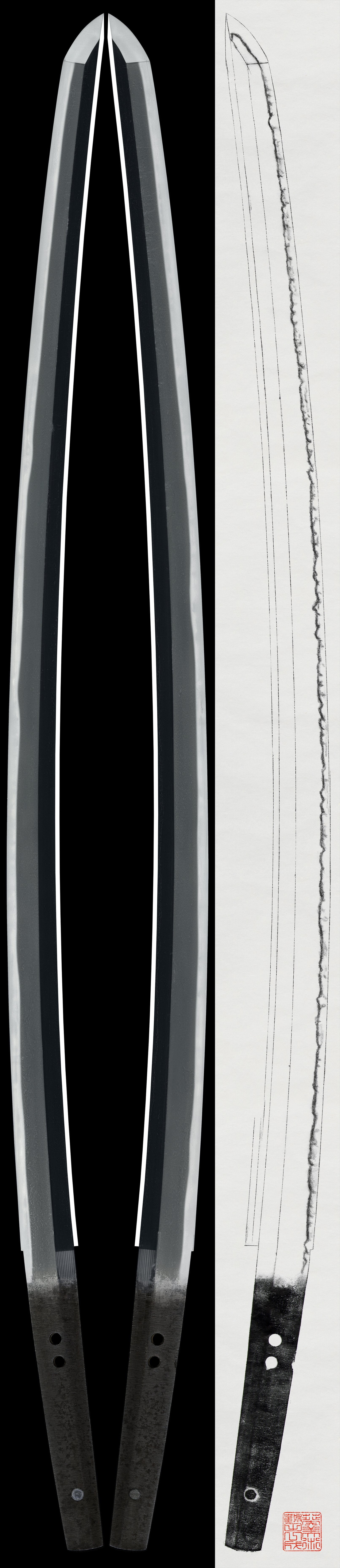
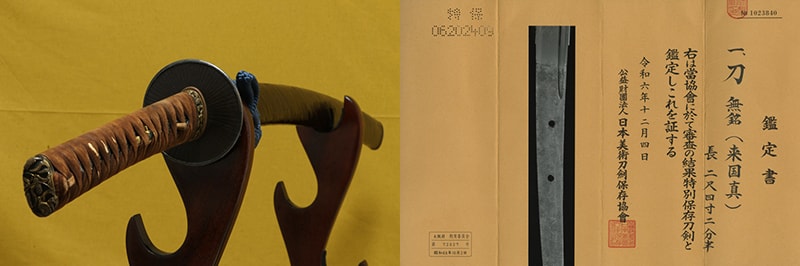
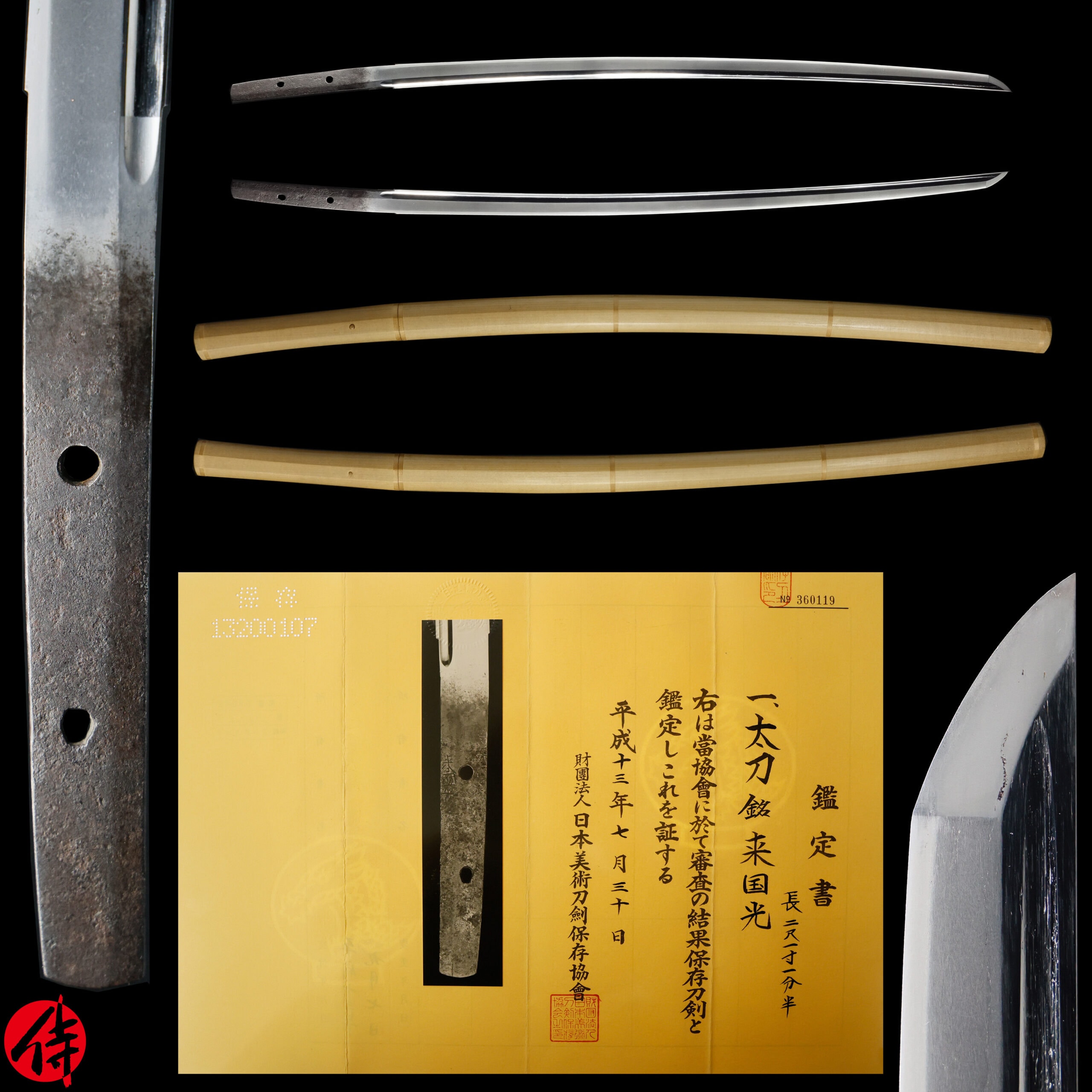
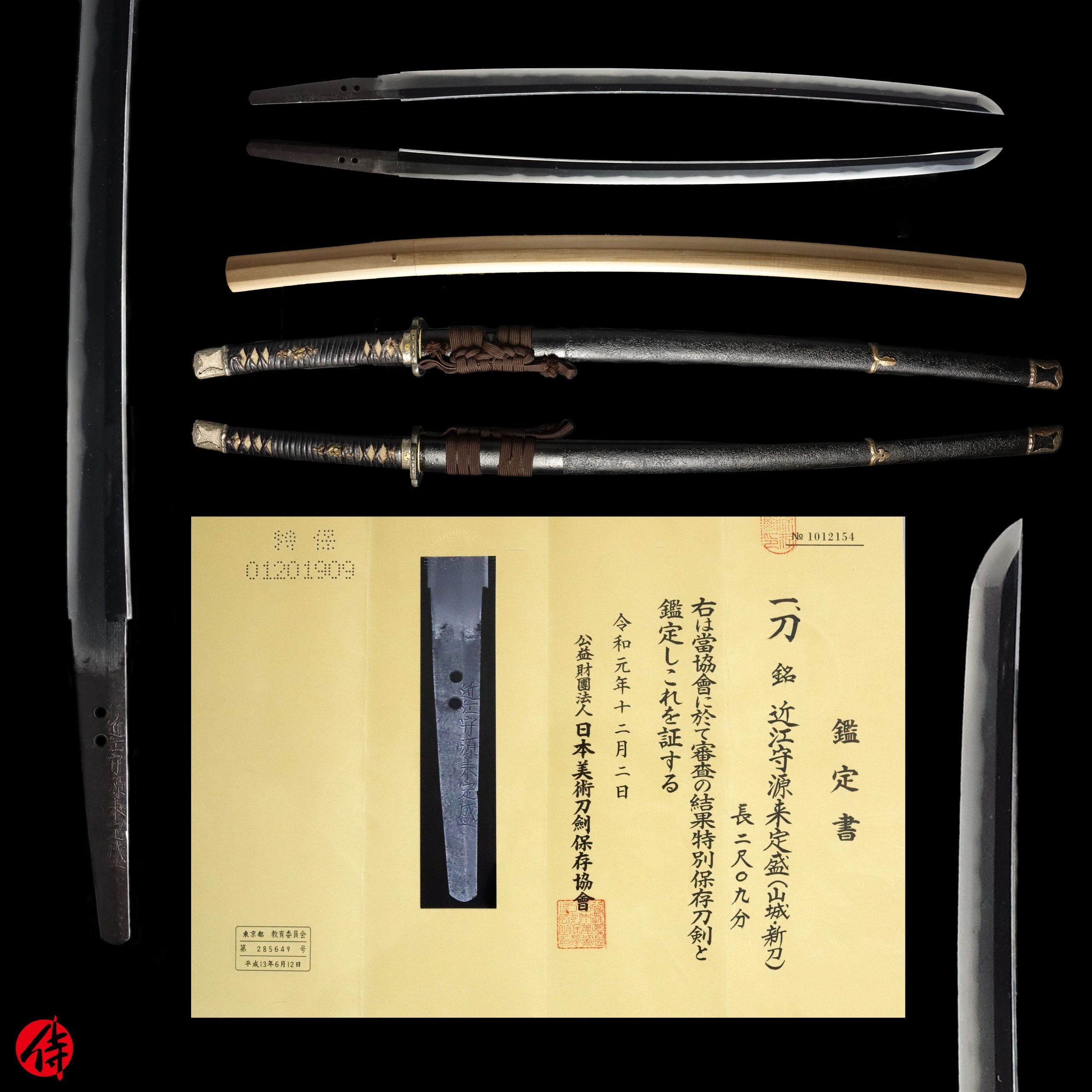
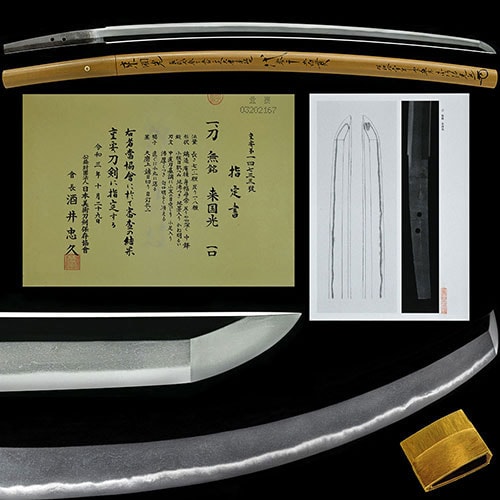
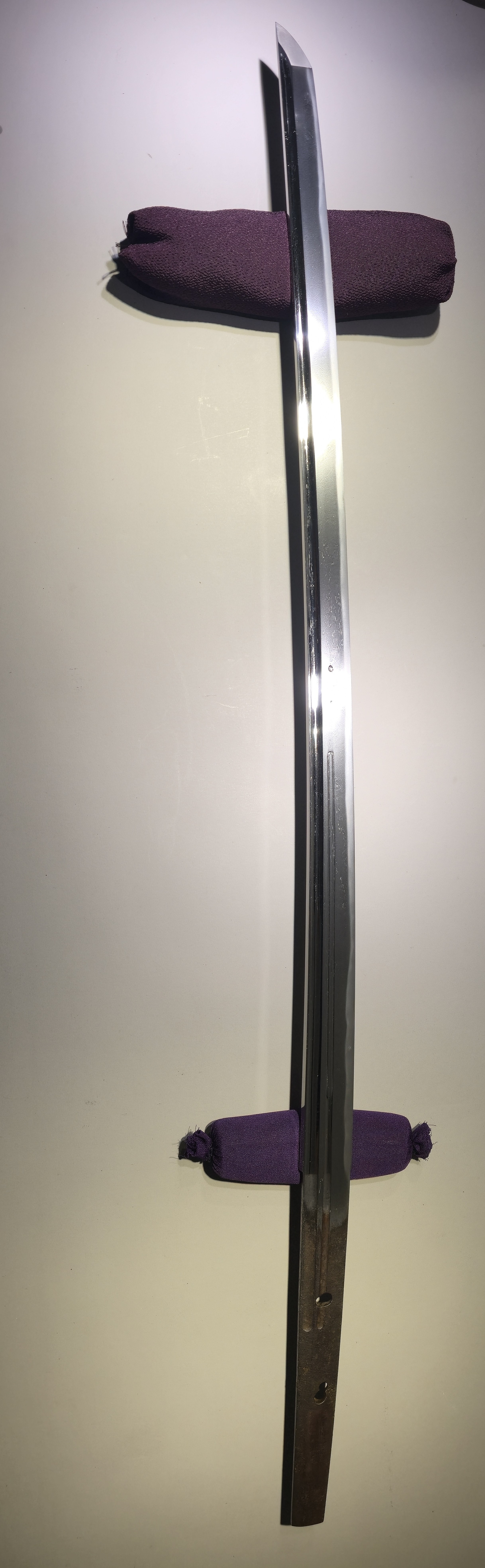
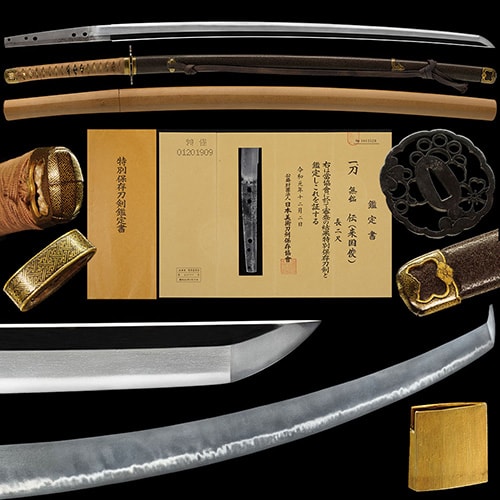
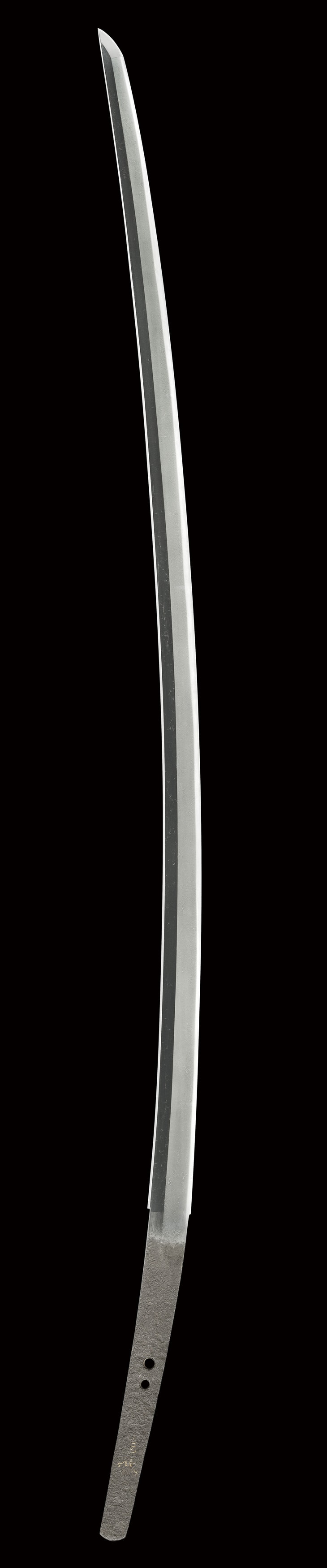
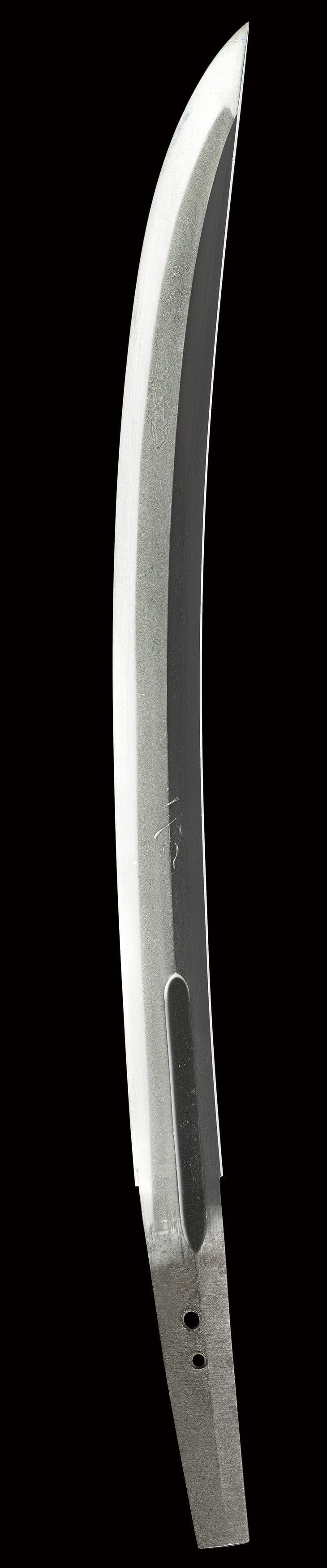
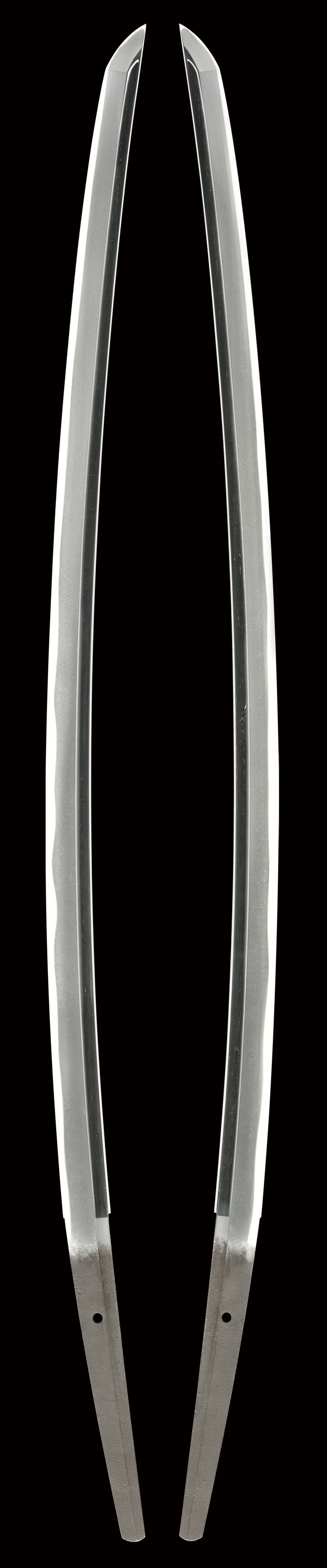
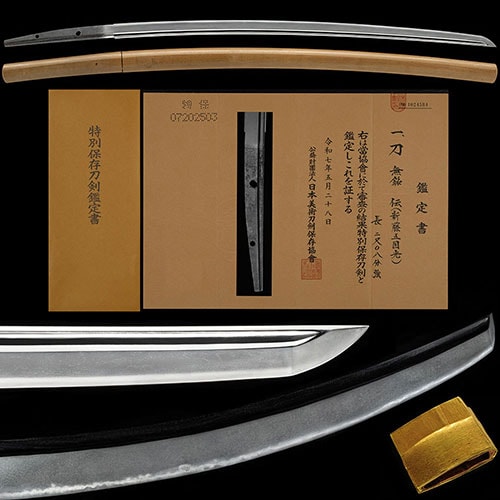
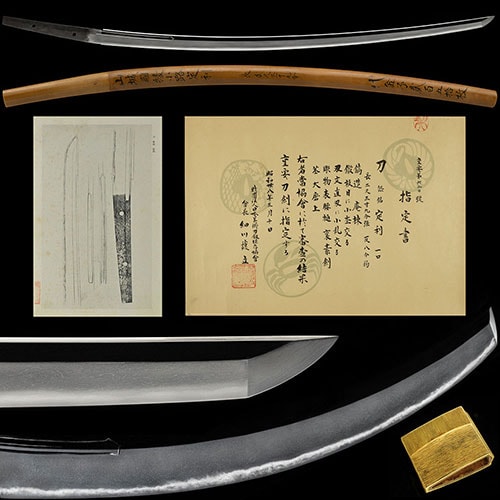
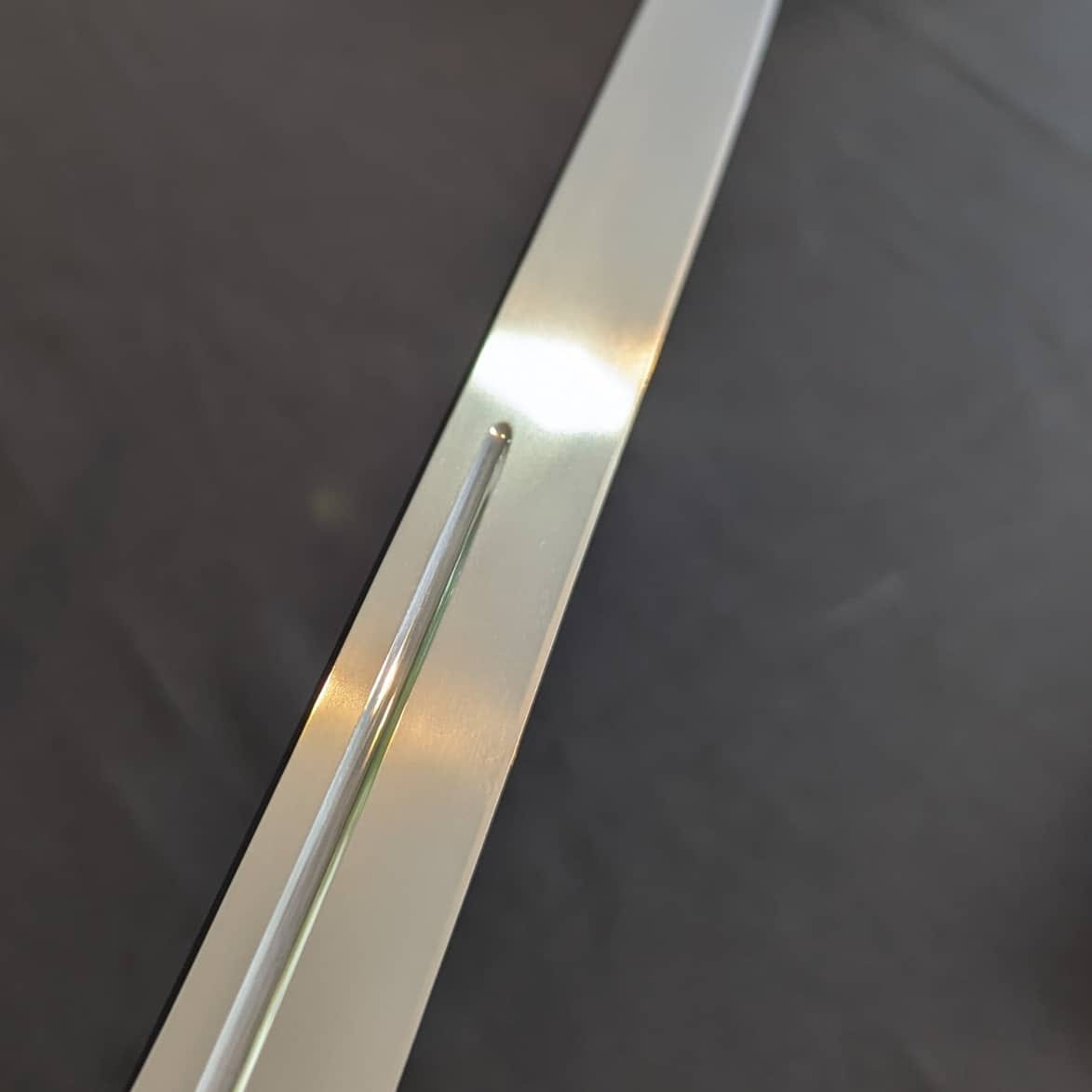
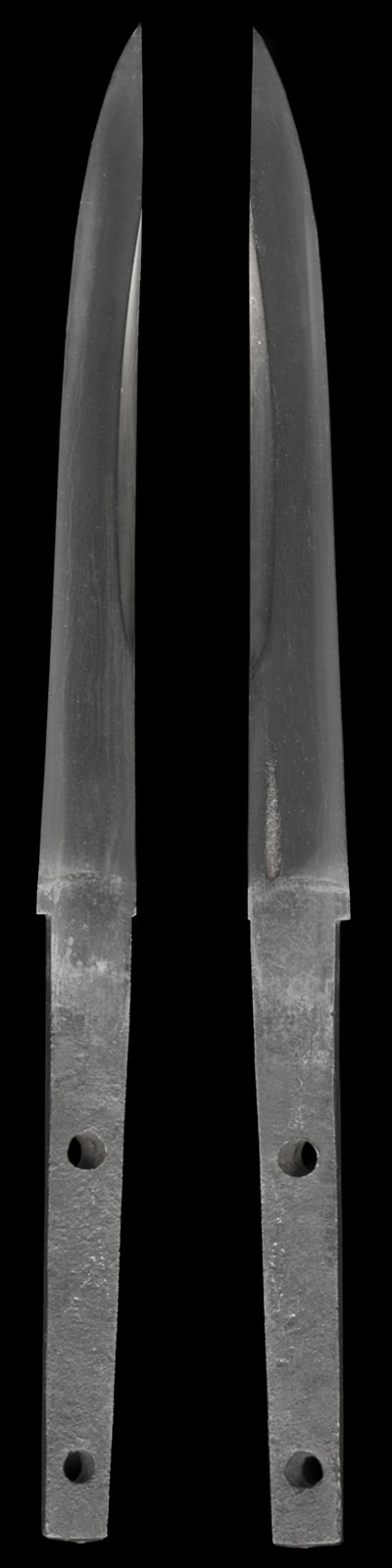
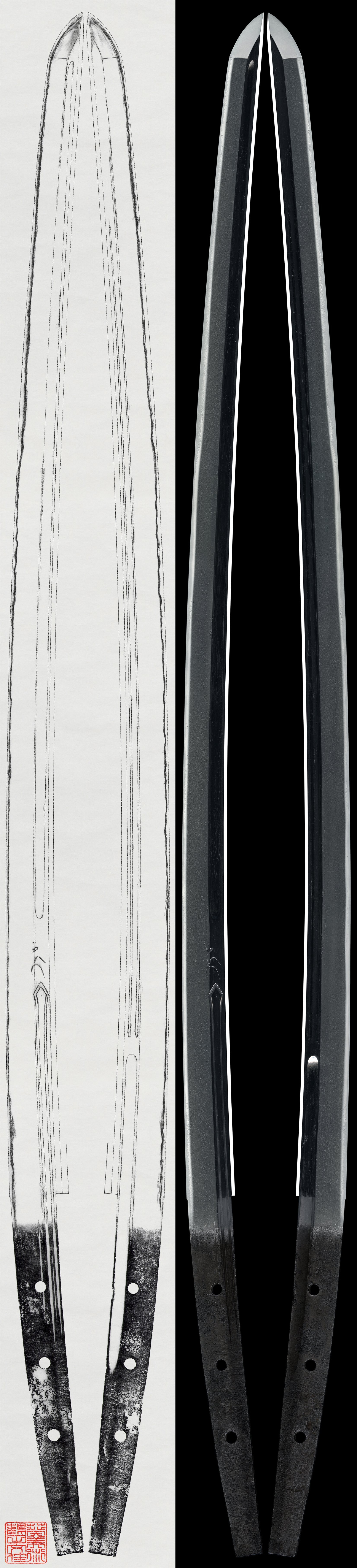
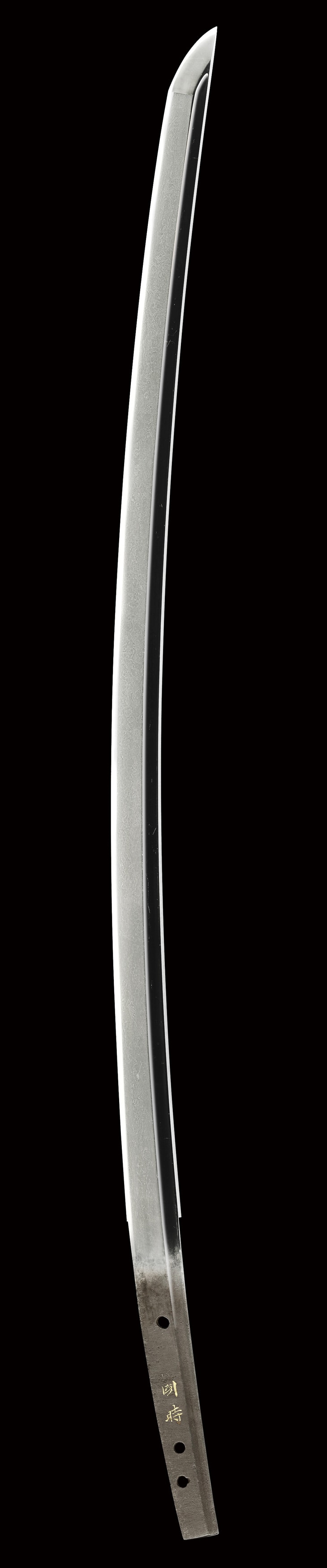
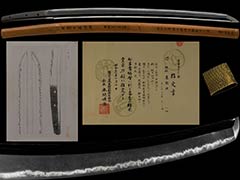
This is a katana by Raikunitsugu, a prominent smith of the Rai school in Yamashiro province during the late Kamakura period. The blade features a wide mihaba, thick ji-nie, and a vibrant hamon with gunome-chouji, kinsuji, and sunagashi. It is designated as a Juyo Token.
 NihontoWatch
mei · Rai · Kamakura · nagasa 64cm · sori 1cm
Yamashiro-den · Yamashiro
47 pieces on the market now
A calm, lustrous steel is the first thing the connoisseur's eye is meant to settle on with the Rai school: a finely forged ko-itame (小板目) worked until it is dense and refined, over which the ji-nie lies thickly in minute particles, fine chikei (地景) enter, and a nie-utsuri rises in the ji. This bright, refined jihada, the surface the trade reads as Rai-hada when its softer, looser patches intrude, is the constant beneath every manner the house produced. Learn more →
| Smith | Era | Designated |
|---|---|---|
| Kuniyuki國行 | 1259-1260 | 125 |
| Kunitoshi國俊 | 1278-1288 | 79 |
| Kunitsugu國次 | 1311-1327 | 65 |
| Kunimitsu國光 | 1326-1351 | 259 |
| Kunitoshi國俊 | 1288-1319 | 196 |
A blade of top-grade workmanship and condition, formally judged to rank with a nationally recognized Important Art Object (Jūyō Bijutsuhin). Awarded only at the NBTHK’s competitive annual examination.
Of Japan’s roughly 2.5 million registered swords, only 12,307 (about 1 in 203) have ever attained Jūyō.
The NBTHK (Nihon Bijutsu Tōken Hozon Kyōkai, the Society for the Preservation of Japanese Art Swords) is a public-interest incorporated foundation founded in 1948 and supervised by Japan’s Agency for Cultural Affairs (Bunkachō); it is based at the Japanese Sword Museum in Tokyo. Its expert panels physically examine each submitted work (shinsa) and issue a certificate (kanteishō) ranking it by artistic and historical merit. NBTHK papers are the most widely recognized standard of authentication for Japanese swords and fittings.
NBTHK official siteReturns/exchanges/cancellations not accepted after shipment except for significant defects; if defective, return/exchange possible within 3 days of arrival (return shipping paid by customer).
This is a katana by Raikunitsugu, a prominent smith of the Rai school in Yamashiro province during the late Kamakura period. The blade features a wide mihaba, thick ji-nie, and a vibrant hamon with gunome-chouji, kinsuji, and sunagashi. It is designated as a Juyo Token.
NihontoWatchmei · Rai · Kamakura · nagasa 64cm · sori 1cm
Yamashiro-den · Yamashiro
47 pieces on the market now
A calm, lustrous steel is the first thing the connoisseur's eye is meant to settle on with the Rai school: a finely forged ko-itame (小板目) worked until it is dense and refined, over which the ji-nie lies thickly in minute particles, fine chikei (地景) enter, and a nie-utsuri rises in the ji. This bright, refined jihada, the surface the trade reads as Rai-hada when its softer, looser patches intrude, is the constant beneath every manner the house produced. Learn more →
| Smith | Era | Designated |
|---|---|---|
| Kuniyuki國行 | 1259-1260 | 125 |
| Kunitoshi國俊 | 1278-1288 | 79 |
| Kunitsugu國次 | 1311-1327 | 65 |
| Kunimitsu國光 | 1326-1351 | 259 |
| Kunitoshi國俊 | 1288-1319 | 196 |
A blade of top-grade workmanship and condition, formally judged to rank with a nationally recognized Important Art Object (Jūyō Bijutsuhin). Awarded only at the NBTHK’s competitive annual examination.
Of Japan’s roughly 2.5 million registered swords, only 12,307 (about 1 in 203) have ever attained Jūyō.
The NBTHK (Nihon Bijutsu Tōken Hozon Kyōkai, the Society for the Preservation of Japanese Art Swords) is a public-interest incorporated foundation founded in 1948 and supervised by Japan’s Agency for Cultural Affairs (Bunkachō); it is based at the Japanese Sword Museum in Tokyo. Its expert panels physically examine each submitted work (shinsa) and issue a certificate (kanteishō) ranking it by artistic and historical merit. NBTHK papers are the most widely recognized standard of authentication for Japanese swords and fittings.
NBTHK official siteReturns/exchanges/cancellations not accepted after shipment except for significant defects; if defective, return/exchange possible within 3 days of arrival (return shipping paid by customer).