The divided-courts war impoverished the court society that had sustained Kyōto’s most refined work. With the last Rai masters the classic line effectively closed, while Hasebe and Nobukuni carried the new Sōshū manner into the capital.
 NihontoWatchNihontoWatch
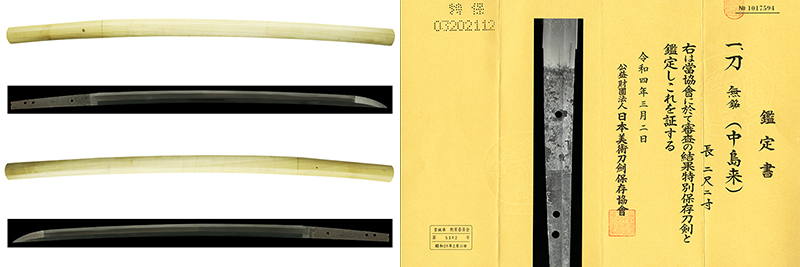
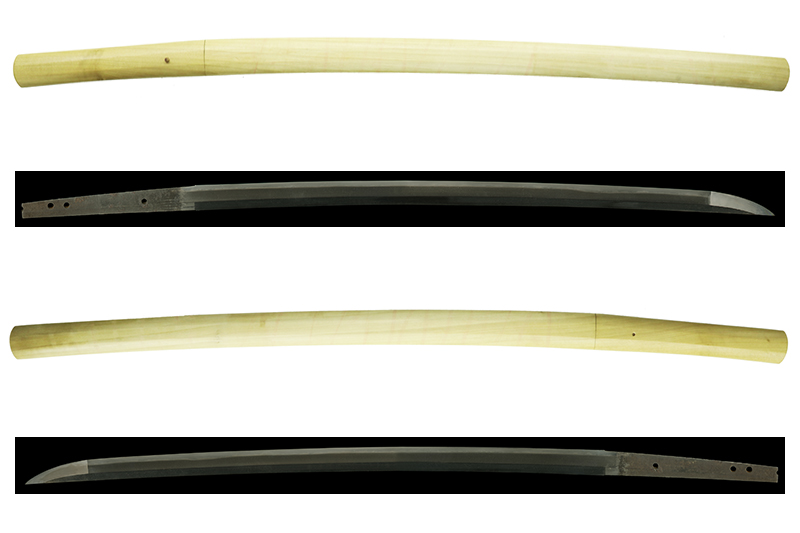
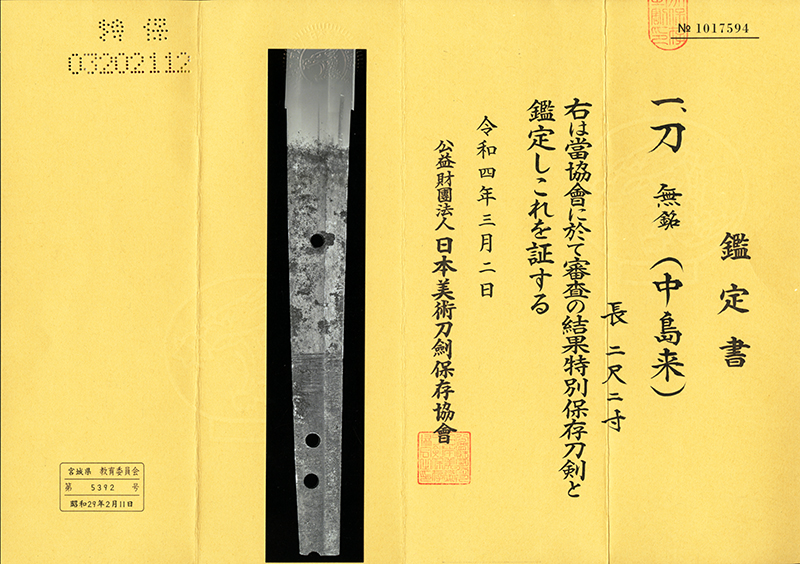
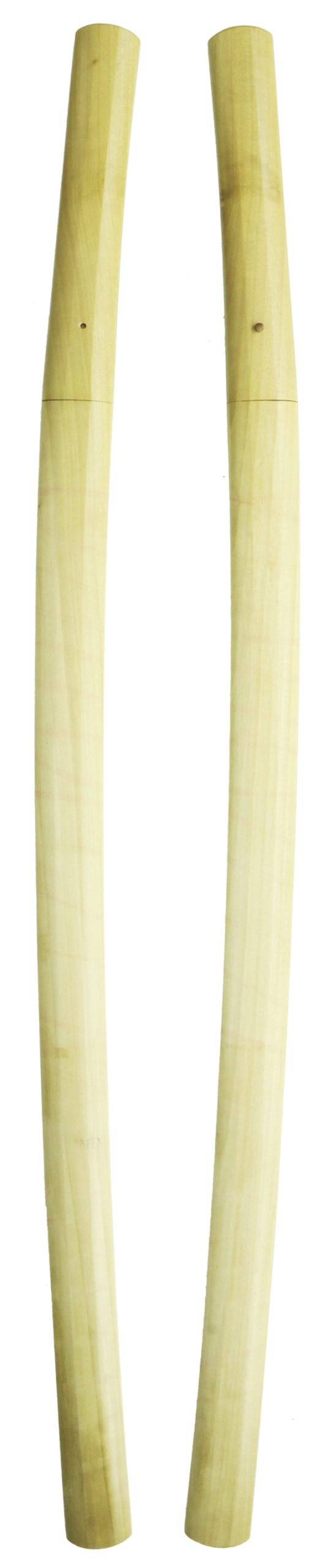
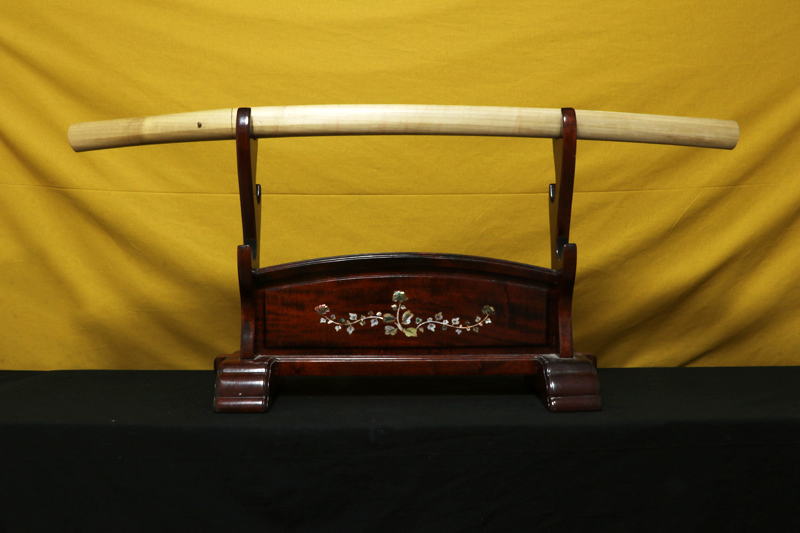
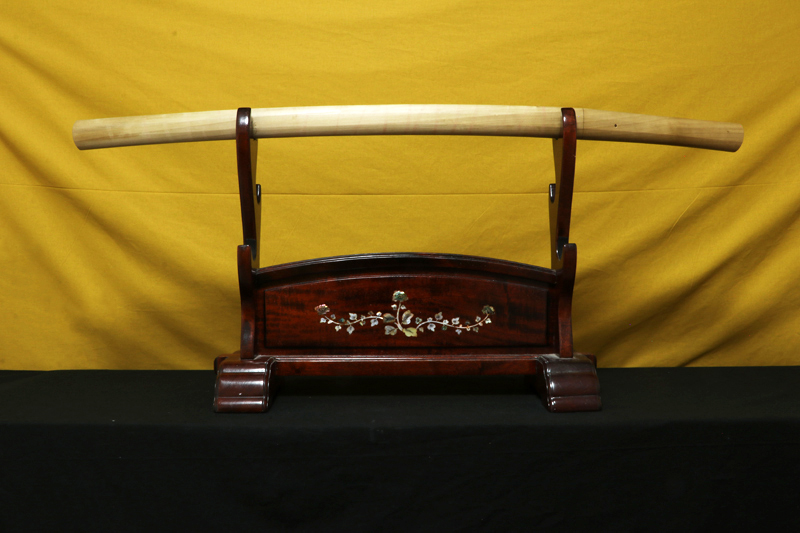
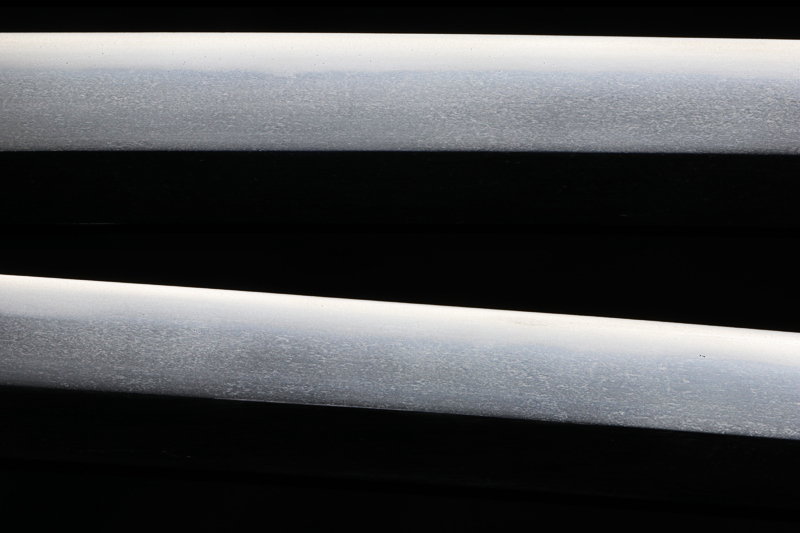
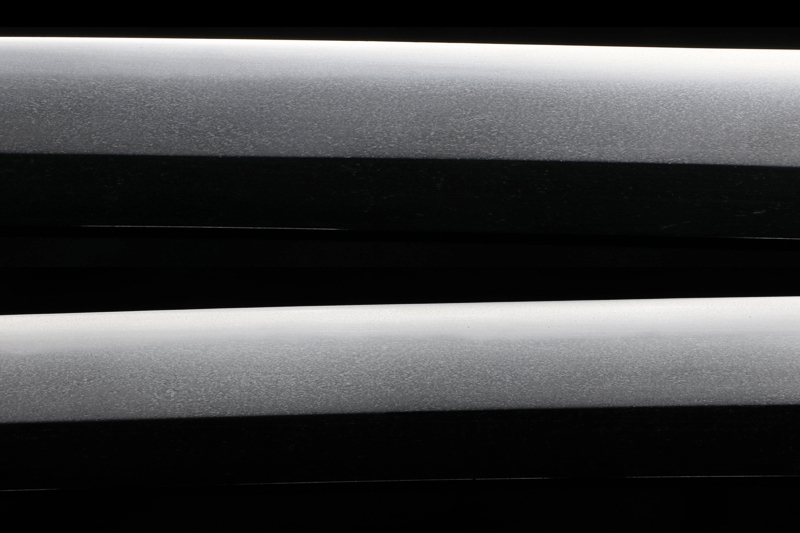
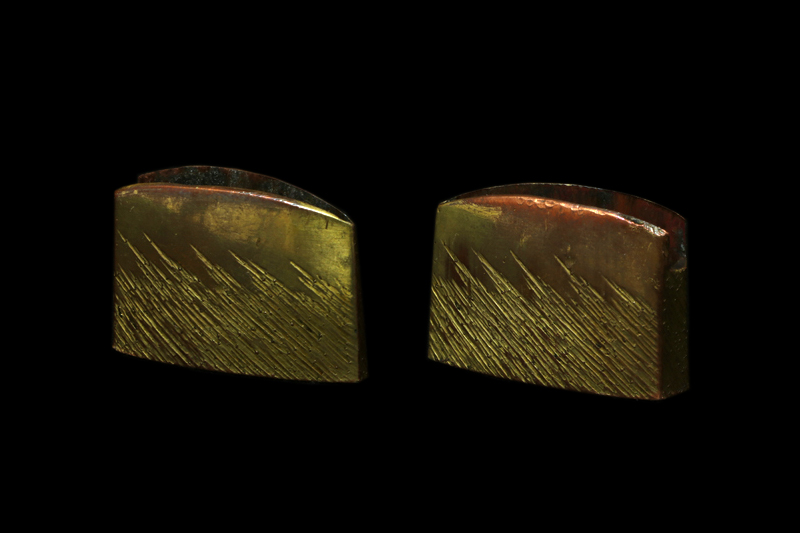
Tokubetsu Hozon Token Mumei Nakajima Rai with Shirosaya. 南北朝時代に作られた中島来の大段平を磨り揚げた太刀です。 鋒が大きく延び、身幅が広い豪壮な太刀姿が、その時代の証言者のようです。 This is a tachi crafted by Nakajima Rai during the Nanbokucho period, originally a Odanira that has been shortened (suriage). The extended, large kissaki and the broad blade with its magnificent appearance serve as a testament to the characteristics of that era. 「刀姿 sword figure」 体配は鎬造り庵棟、身幅やや太く重尋常、鳥居反り大鋒。茎は大磨り揚げで鑢目は切、茎尻は一文字に切られる。 「地鉄 jigane」 地鉄は板目肌に小板目が交じり良く練れて、ほのかに映りが立つ。 「刃紋 hamon」 刃紋は直刃調の互の目に小互の目が交じり、足入り、刃縁砂流しかかり。刃中に葉、金筋が入る。釯子は乱れ込み小丸に返る。 「特徴 detailed」 中島来とは、鎌倉時代後期に来國俊の門人である来國長が、京都から摂津国中島に移住したことに始まる来派の一分派を指します。この中島で作刀されたものを中島来と呼びます。 摂津国中島とは、神崎川と大川(旧淀川)に挟まれた地域を指し、現存しない中津川を境に北側を北中島、南側を南中島と呼びました。 南中島には有名な大阪天満宮があり、別名「中島天満宮」とも呼ばれます。また、聖武天皇の時代には摂津国分寺がこの地に建てられましたが、幾度も兵火により焼失し、その都度再建を繰り返して現在に至っています。この地域は古来より淀川の水運の港として栄え、人々の往来が絶えず、その賑わいは明治時代に鉄道が敷かれるまで続きました。豊臣秀吉が大坂城の城下町を建設するまでは、この地が大阪で最も栄えた場所でした。 本作は南北朝時代の中島来による太刀で、身幅が広く、大鋒を持つ豪壮な姿をしています。 Nakajima Rai refers to the branch of the Rai school that originated when Rai Kuninaga, a disciple of Rai Kunitoshi, moved from Kyoto to Nakajima in Settsu Province during the late Kamakura period. The swords forged by this group in Nakajima are known as Nakajima Rai. Nakajima in Settsu Province refers to the area between the Kanzaki River and Okawa (the old Yodo River). The area north of the Nakatsu River (which no longer exists) was called Kita-Nakajima, and the south was known as Minami-Nakajima. Minami-Nakajima is home to the famous Osaka Tenmangu Shrine, also known as Nakajima Tenmangu Shrine. During the reign of Emperor Shomu, the Settsu Kokubunji Temple was constructed in this area, although it was repeatedly burned and rebuilt over various eras. Additionally, this region prospered as a port for the Yodo River’s water transportation from ancient times. This bustling activity continued until the construction of railways in the Meiji period. Before Toyotomi Hideyoshi constructed the castle town of Osaka Castle, this area was the most prosperous part of Osaka. This piece is a Nakajima Rai tachi from the Nanbokucho period, featuring a broad blade and a large kissaki, giving it a magnificent and powerful appearance. 「拵 Koshirae」 ハバキ(habaki) :素銅地金鍍金。 鞘(Saya) :白鞘。 「刀剣の状態 condition of blade」 研:良好です。 傷:欠点に成るような傷は有りません。
Offered by Giheiya
This piece has sold
30 on the market
Get an email when new Rai School work hits the market.


As written by the shop
Yamashiro-den · Yamashiro
30 pieces on the market now
A calm, lustrous steel is the first thing the connoisseur's eye is meant to settle on with the Rai school: a finely forged ko-itame (小板目) worked until it is dense and refined, over which the ji-nie lies thickly in minute particles, fine chikei (地景) enter, and a nie-utsuri rises in the ji. This bright, refined jihada, the surface the trade reads as Rai-hada when its softer, looser patches intrude, is the constant beneath every manner the house produced. The school took shape in Kyoto in the mid-Kamakura period around the workshop of Rai Kuniyuki (來國行), the de facto founder of the line, whose chronology is reckoned from the Koan 1 (1278) tachi of his transmitted son. From Kuniyuki the Yamashiro-den tradition of late Kamakura was built, carried by Niji Kunitoshi, the two-character 國俊, traditionally his son and the nearest of the house to his hand; by the three-character Rai Kunitoshi, the first to crown his name with the character Rai, a practice all who followed took from him; and onward through Rai Kunimitsu (來國光), Rai Kunitsugu (來國次) and the lesser names Kunizane, Tomokuni, Kunihide and Mitsukane into the early Nanbokucho period. Whether the two Kunitoshi are one smith or two remains the classic open question of the school, argued from a span of dated work running about forty years from Koan 1 to Genko 1 (1321). What unites the house is a temper of restraint and activity at once, its life carried in the nie rather than in the height of the pattern. Against Kuniyuki's wide, suguha-toned ha and against the refined chu- or hoso-suguha of the three-character line, the smiths mix ko-choji, ko-gunome and small midare; ashi and yo enter densely, often as the Kyoto-style kyo-sakaashi (京逆足) that slants back toward the nakago, the opposite of the Bizen direction; the nioiguchi runs deep and bright, ko-nie attaches thickly, and kinsuji and sunagashi move through the body of the ha. The boshi is the school's most misjudged trait: a ko-maru drawn out by hakikake, the brushed nie of the point continuing the work of the ji below, often falling into midare-komi with a pointing tip. Muneyaki along the back recurs often enough that the records name it a habit of the Rai hand, and carving in the groove, suken or gomabashi with an added side hi, is a practice the texts call peculiar to Rai work. The strength of the nie within the ha, the utsuri rising as a nie-utsuri, and the kyo-sakaashi are precisely the marks that part Niji Kunitoshi's choji-dominant midare, which the old books said resembles the Bizen Ichimonji, from the Ichimonji itself.
Where the early masters keep this calm Kyoto register, the late line bends toward Soshu-den: Kunitsugu, counted among the Ten Brilliant Pupils of Masamune and named Kamakura-Rai, shows the strongest nie of ji and ha in the whole school, a notare mixed with gunome the earlier Rai never had. For a collector the house style is the recognition tool. An unsigned, o-suriage katana settles to Rai when the packed ko-itame, the fine nie over it, the standing utsuri and the kyo-sakaashi read together; the named smith is then fixed by degree. Niji Kunitoshi and the three-character Kunitoshi, both graded Sai-jo saku by Fujishiro, anchor the canon, the latter unusually approachable because his signed work is abundant and roughly half of it tanto, late Yamashiro work in its purest form. Kunimitsu, the most prolific and most versatile of the house, gives the impression of surpassing his father in force; Kunitsugu, graded Jo-jo saku, is the Soshu-facing edge whose signed tachi are scarce. Mitsukane, the Chudo Rai who withdrew to forge on Mt. Hiei, stands apart as the strong pole, his ji-nie laid thicker than Kunitoshi's or Kunimitsu's and likened upward to Awataguchi Yoshimitsu; the smaller Kunizane, Tomokuni and Kunihide carry the jigane a step into the Nanbokucho. The provenance roll is of the first rank, with blades worn by Ieyasu and held beside the Honjo Masamune, meibutsu such as the Aizen Kunitoshi, the Torikai Kunitsugu and the Midare-Mitsukane, and descent through the Owari and Kishu Tokugawa, the Maeda, Uesugi and Shimazu houses. Much sits locked as National Treasure and patrimony, yet the Juyo tier of the major names, and the whole record of the minor hands, remains a goal a serious collector can actually reach. Learn more →
| Smith | Era | Designated |
|---|---|---|
| Kunitoshi國俊 | 1278-1288 | 99 |
| Kuniyuki國行 | 1259-1260 | 126 |
| Kunimitsu國光 | 1326-1351 | 262 |
| Kunitsugu國次 | 1311-1327 | 65 |
| Kunitoshi國俊 | 1288-1319 | 193 |
Yamashiro in the Nanbokuchō period
The divided-courts war impoverished the court society that had sustained Kyōto’s most refined work. With the last Rai masters the classic line effectively closed, while Hasebe and Nobukuni carried the new Sōshū manner into the capital.
A Hozon-certified blade judged to show notably superior workmanship and a better state of preservation. The bar is higher: re-tempered blades and most unsigned Muromachi/Edo works are excluded.
The NBTHK (Nihon Bijutsu Tōken Hozon Kyōkai, the Society for the Preservation of Japanese Art Swords) is a public-interest incorporated foundation founded in 1948 and supervised by Japan’s Agency for Cultural Affairs (Bunkachō); it is based at the Japanese Sword Museum in Tokyo. Its expert panels physically examine each submitted work (shinsa) and issue a certificate (kanteishō) ranking it by artistic and historical merit. NBTHK papers are the most widely recognized standard of authentication for Japanese swords and fittings.
NBTHK official siteWithin 3 days of the item's arrival, we offer a refund or an exchange. Return shipping and the bank transfer fee for the refund are at the customer's expense.