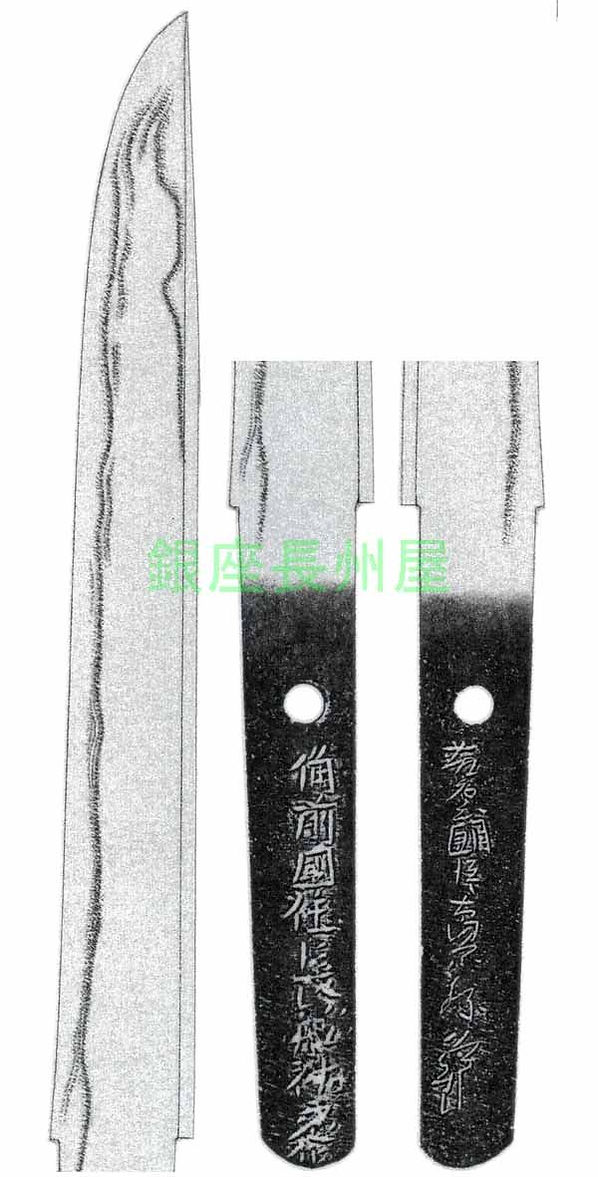
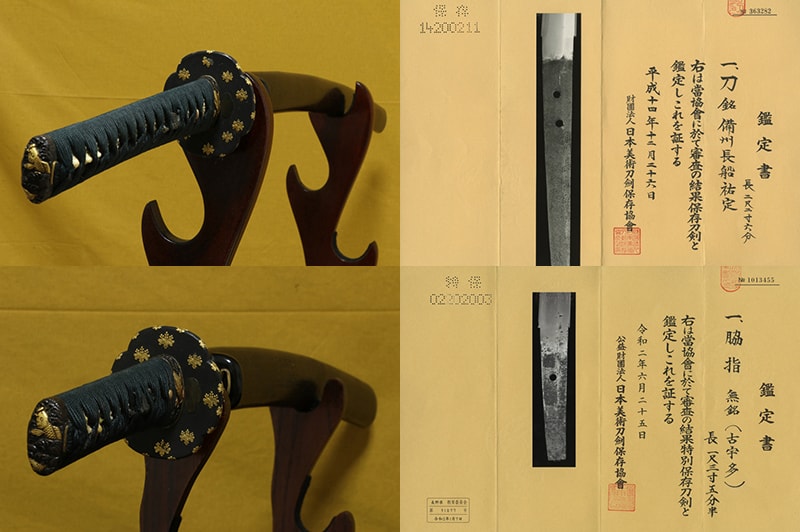
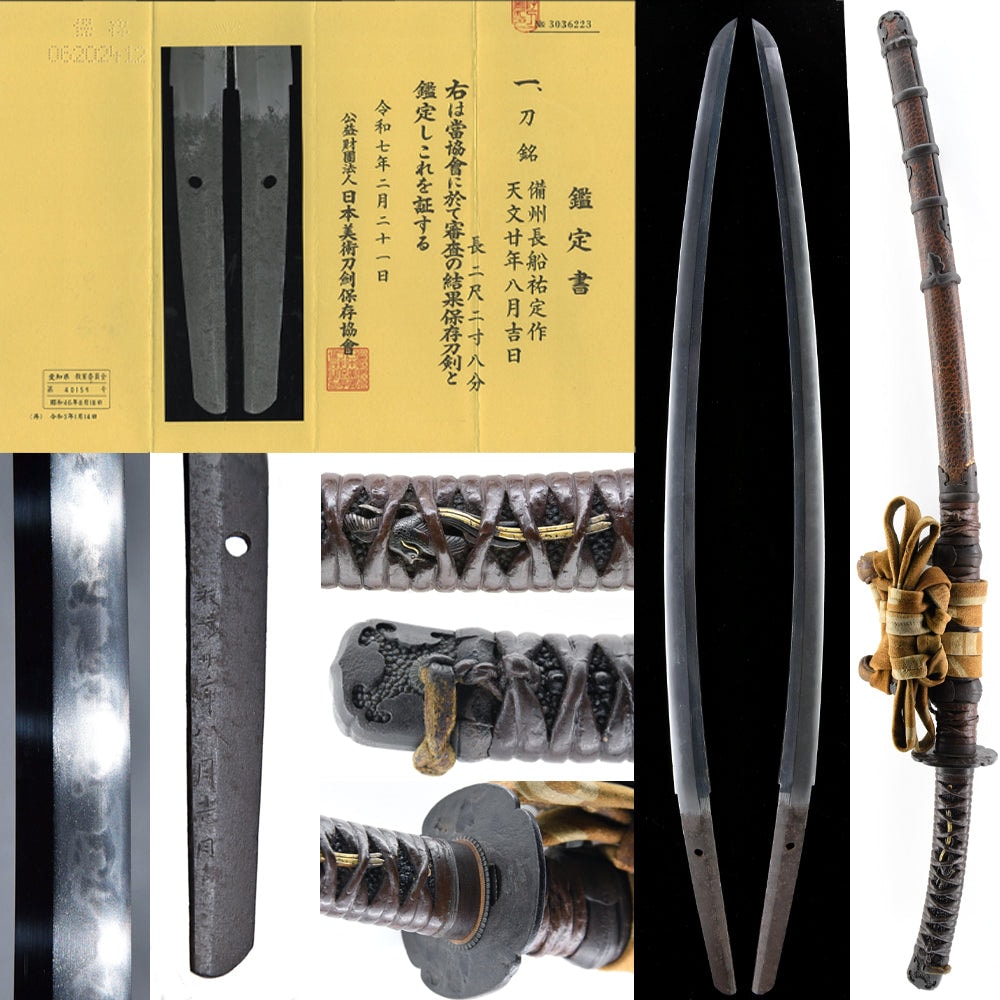
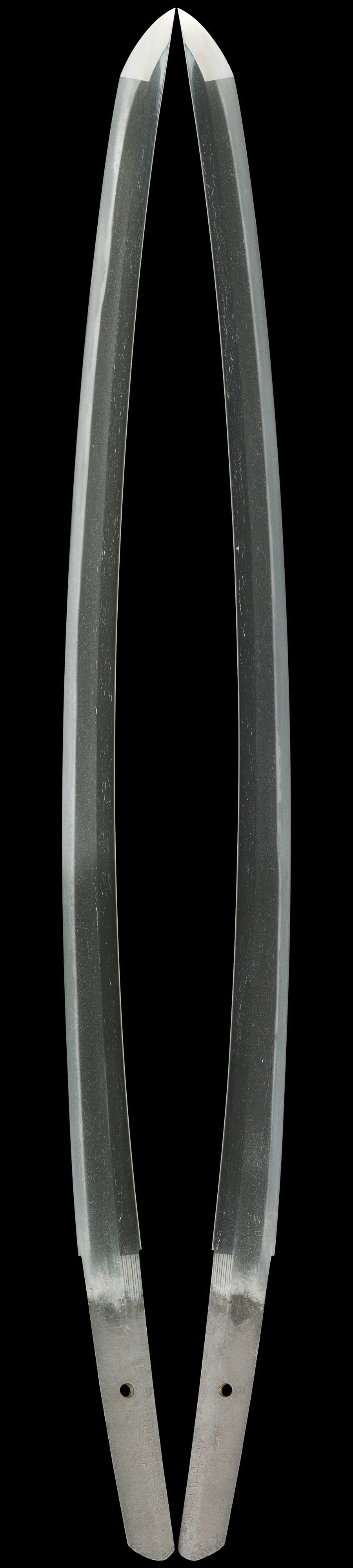
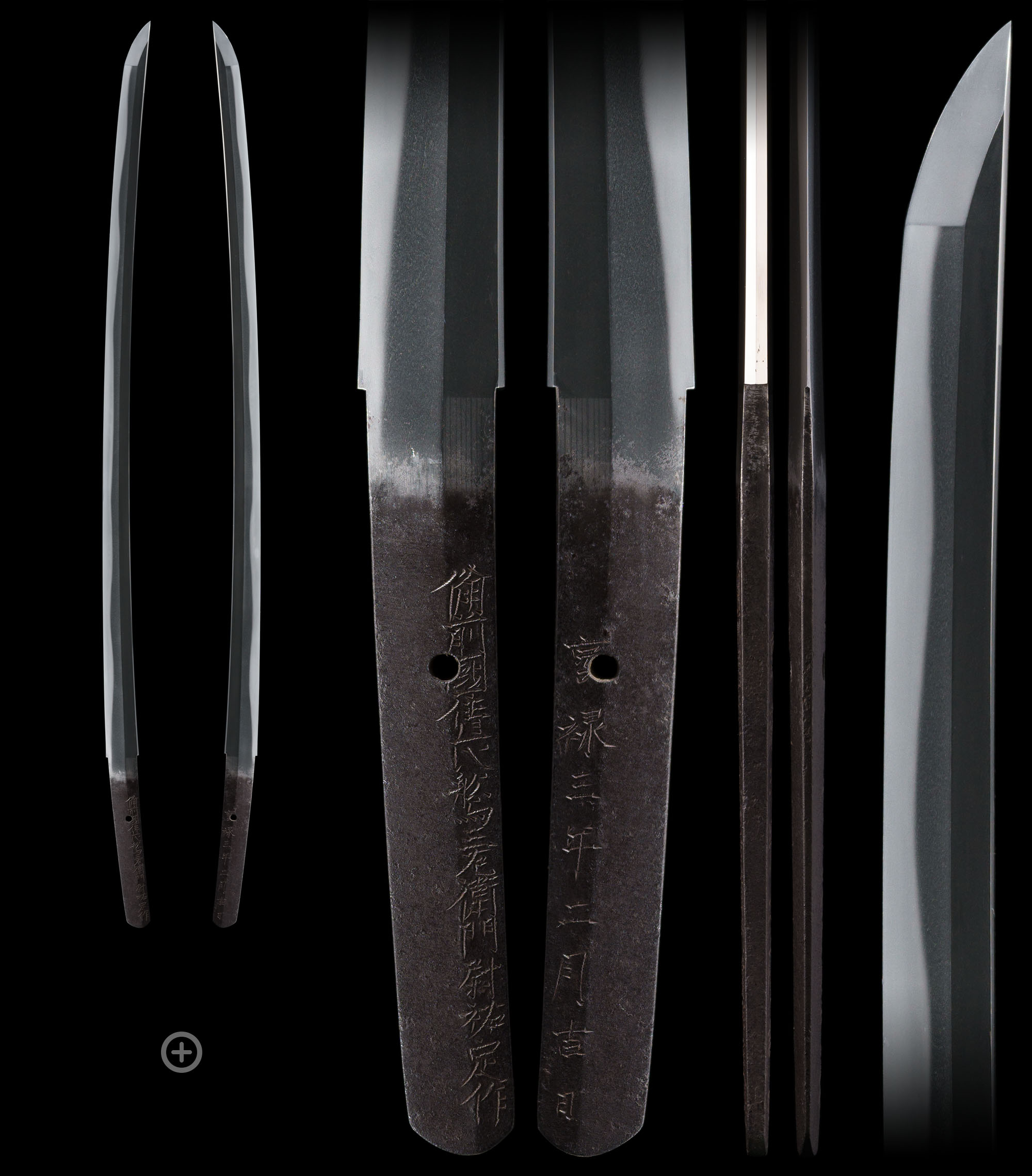
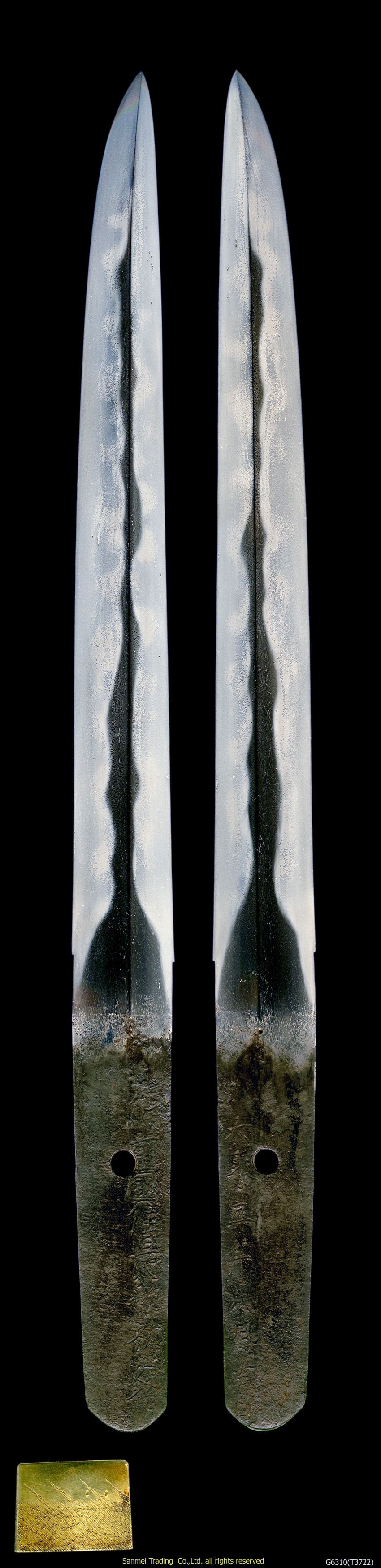
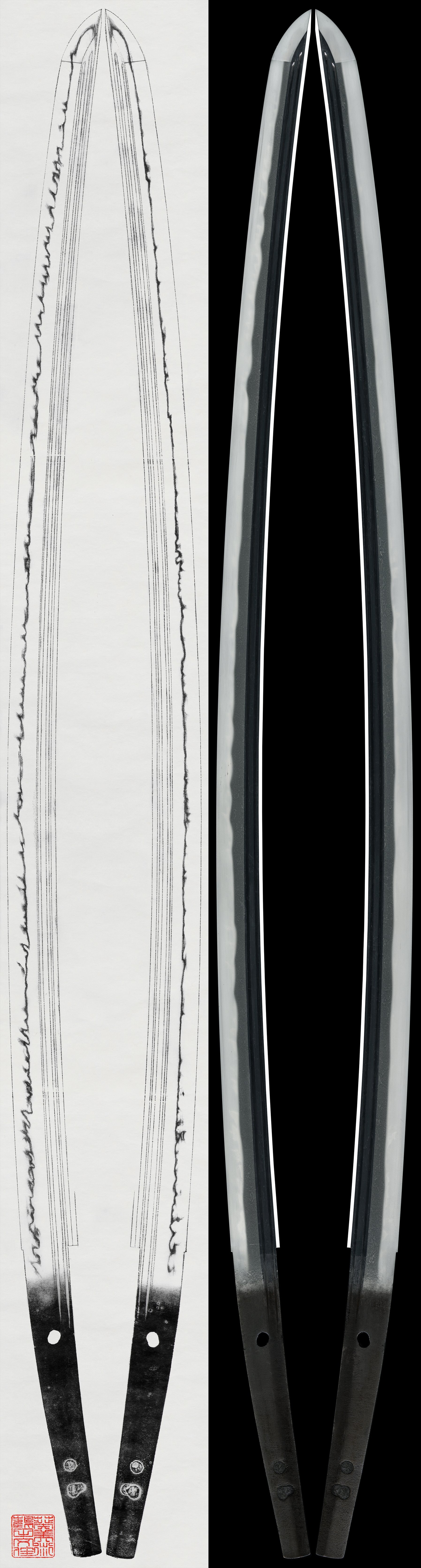
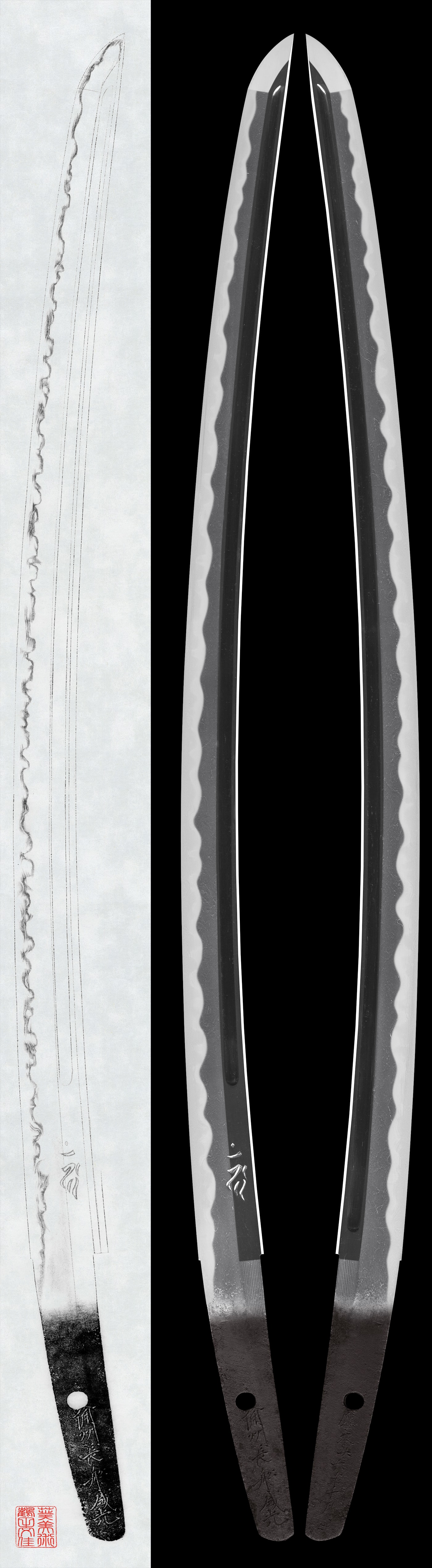
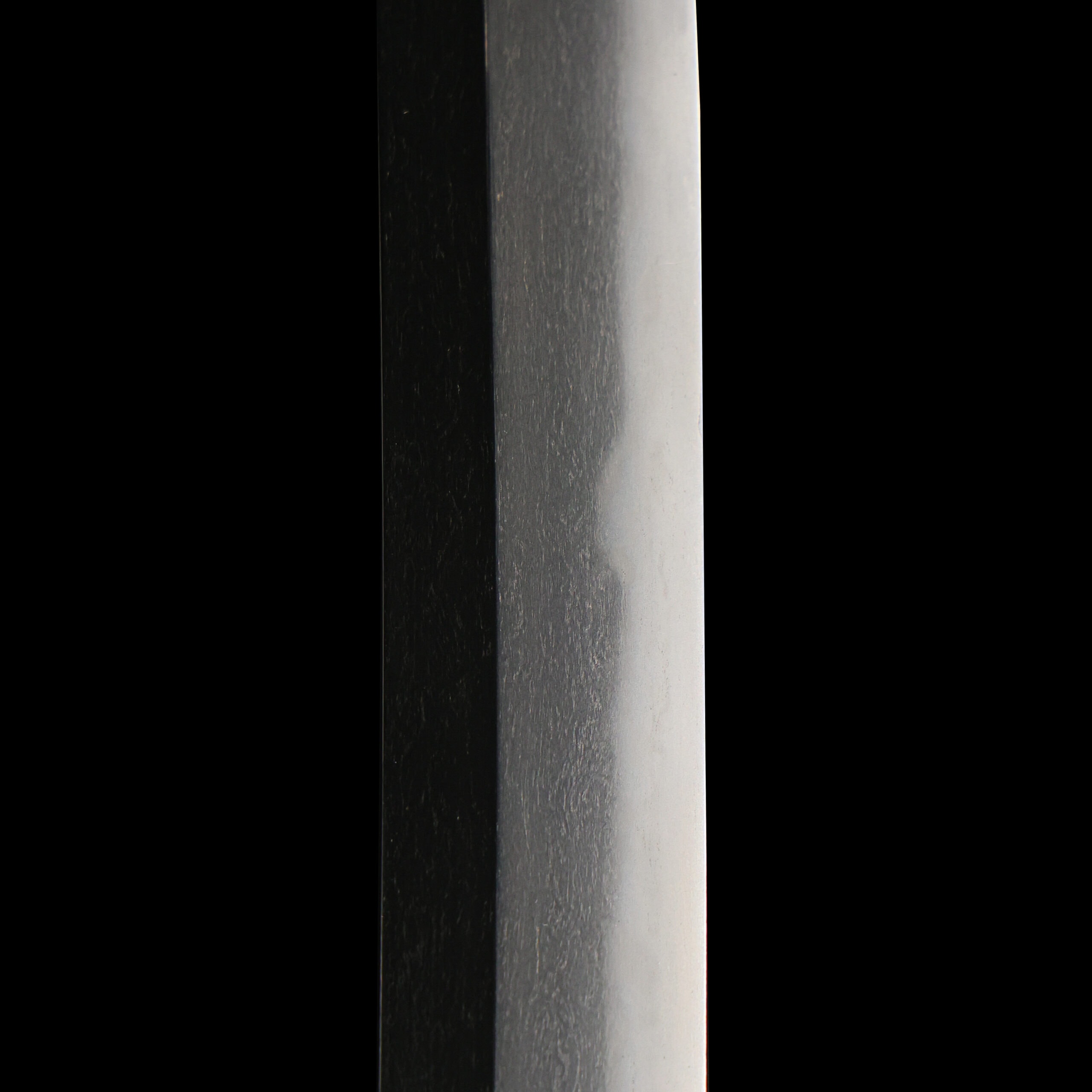
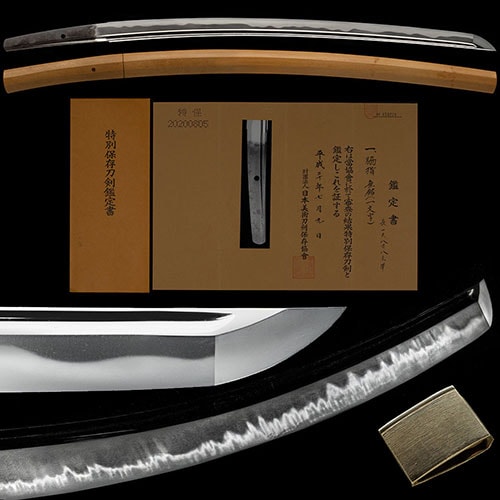
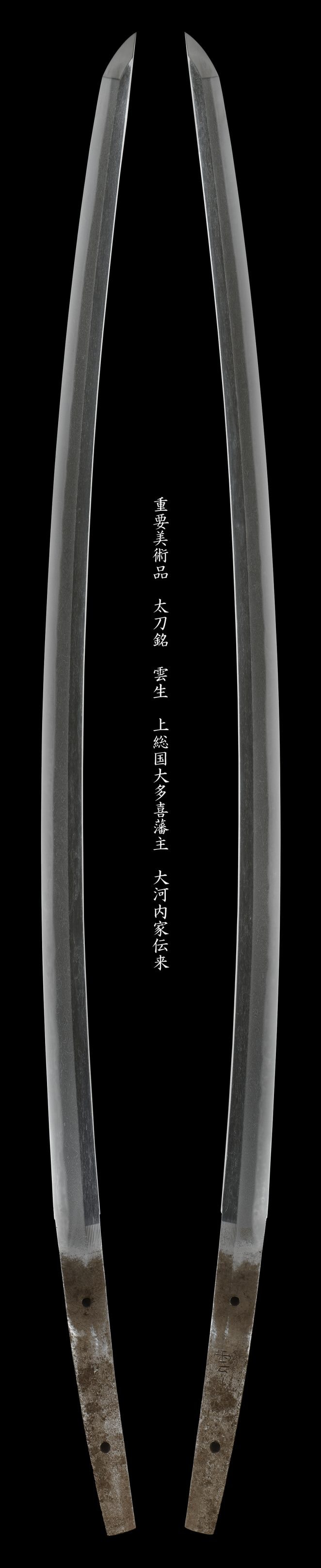
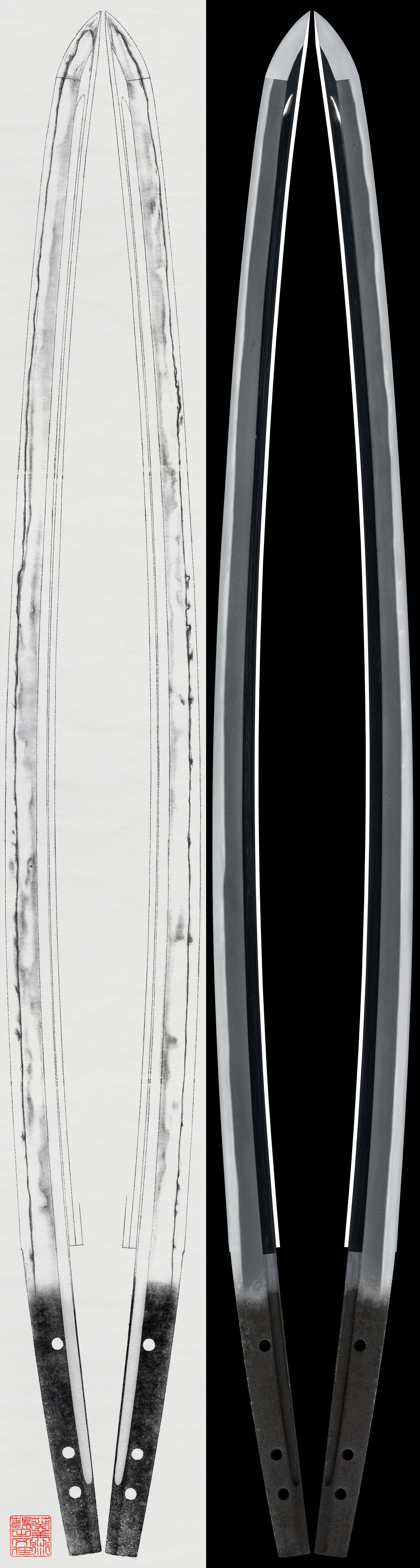
Sukesada (祐定) is the great name of late-Muromachi Osafune, the most prosperous of the Bizen forges that scholars group together as Sue-Bizen. The signature was carried by a body of smiths so large that the early-modern reference Hayami-dashi lists as many as twenty-one who appended a zokumyo (common name) to distinguish themselves, and the published commentary is blunt that of all the late-Osafune families the Sukesada line was the largest and most productive. Two registers of work issue from this single name. At the top stand the masters identified by their common-name titles, Yosozaemon-no-jo, Hikobei-no-jo, Genbei-no-jo, and Hikozaemon-no-jo, whose custom commissions (chumon-uchi) the sources distinguish sharply from the mass run; beneath them lies the great body of kazu-uchi-mono, the bulk production signed plainly Sukesada with no personal name, dated and placed to the house by era and quality. Hikobei-no-jo is recorded as the father of Yosozaemon-no-jo, who in turn heads the most distinguished branch, born in Onin 1 by back-count from a tanto inscribed at age seventy-one in Tenbun 6; the name then runs in same-signature generations down through the Eiroku and Tensho years. The shared vocabulary of the school is the temper the late Bizen workshops made their own. Over a jigane of tightly packed ko-itame, fine ji-nie settling like dust, chikei woven through, and a faint midare-utsuri rising near the shinogi (the thinned last trace of the bright reflection that filled the Osafune prime), the smiths build an open-waisted koshi-biraki gunome that develops into the doubled, compound fukushiki structure marking a Sue-Bizen blade above all else. Mixed into it run choji, ko-gunome, and pointed togariba, in places gathering into the double-flower juka and the crab's-claw formation called kani-no-tsume; the hamon is nioi-based with ko-nie adhering, ashi and yo entering richly, kinsuji and sunagashi trailing, the nioiguchi bright and clear. A second pole answers this flamboyance, the quiet hiro-suguha, broad and shallowly undulating with ko-gunome folded in, of which Genbei-no-jo in particular was the master, while a livelier hitatsura climbs the body with frequent tobiyaki and muneyaki on certain tanto, often in moroha-zukuri.
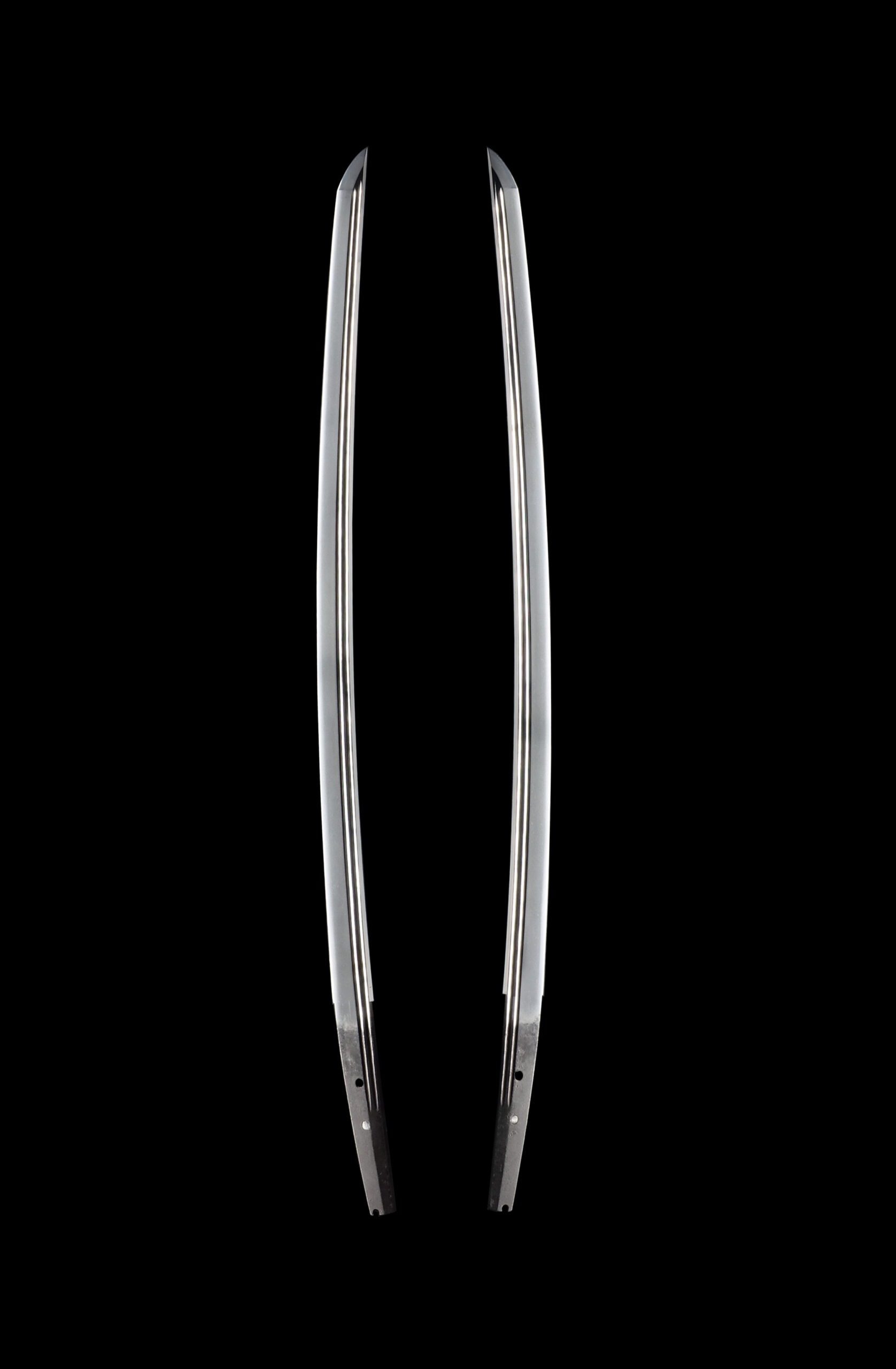
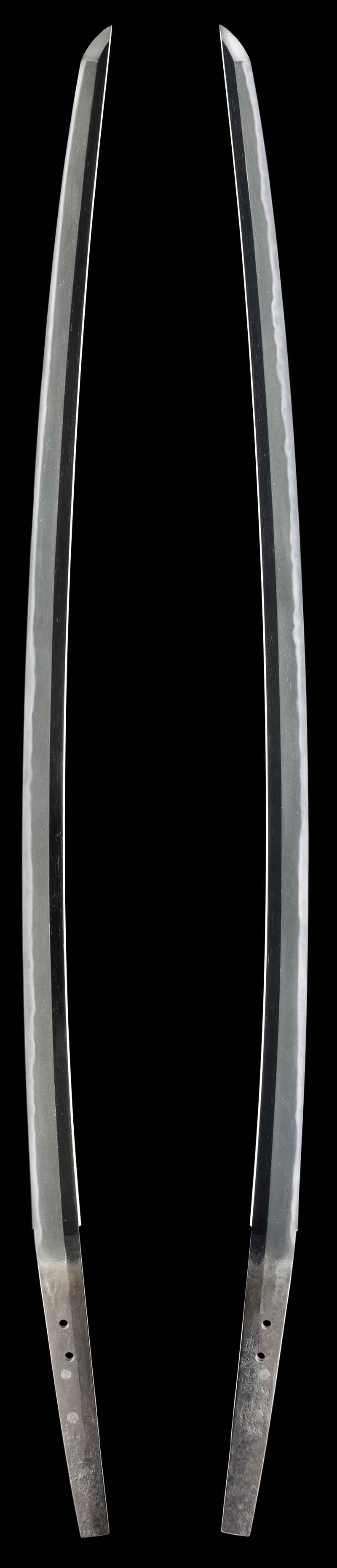
The blades take the robust late-Muromachi uchigatana form, wide in body with little taper, thick in kasane, deep in sori with sakizori and an extended chu-kissaki. The divergence between the masters and the general production is one of care rather than kind: Yosozaemon's bright, well-packed ko-itame and his command of all three registers, gunome, suguha, and hitatsura, set his typical work apart from the coarser bulk, and the commentary states plainly that it is precisely because such chumon-uchi exist that the Sue-Bizen name carries its high standing. To kantei a Sukesada blade is first to read the signature register, then the manner. A named master signs a long mei on the omote with the date on the ura, often over two columns and frequently with carving (bo-hi, a Kurikara dragon, a bonji, or the invocation Namu Hachiman Daibosatsu); the bulk kazu-uchi-mono sign Sukesada alone and are judged to the house by era and the Bizen-den keynote of koshi-biraki gunome on bright ko-itame. Yosozaemon-no-jo leads the name in renown and breadth, ranked beside the late-Osafune Kiyomitsu among the two great hands of the workshop's closing age, his blades transmitted in daimyo houses grounded in their own provenance, the Hachisuka, the Mori, and the Ii, with a wakizashi recorded to the warrior Yamanaka Shikanosuke and others in the Imperial collection. Genbei-no-jo and Hikobei-no-jo follow, their custom blades often carrying an owner inscription beside the date, and Hikozaemon-no-jo offers the approachable end of a famous name. The Sukesada cutting reputation runs through the whole body, the heavy sakizori uchigatana made to be worn and used two-handed as the tachi fell from use. For the collector this is the most attainable of the great Bizen names, never common at its summit yet, in a signed and dated example with the open-waisted gunome reading clearly down its edge, the surest single document of how Osafune worked in its last great generation. Learn more →