In the Sengoku era the school served a second warrior court: the Later Hōjō at Odawara, whose patronage kept the Tsunahiro line forging hitatsura for the uchigatana age until the castle fell to Hideyoshi in 1590.
 NihontoWatchNihontoWatch
Ginza Choshuya 東京都中央区銀座3-10-4 月–土 9:30–17:30 広次は南北朝初期に始まり、文和、延文、永徳の藤源次、室町初期永享の今九郎三郎、駿河島田でも打ったと伝える康正の広次、明応から永正の市川長兵衛、関東鍛冶目代と称し駿河、甲斐、伊��勢、武蔵、常陸にも駐鎚した天文の広次と続いた。
NihontoWatchOffered by Choshuya
This piece has sold
Get an email when a new Sue-Soshu Hirotsugu piece hits the market.
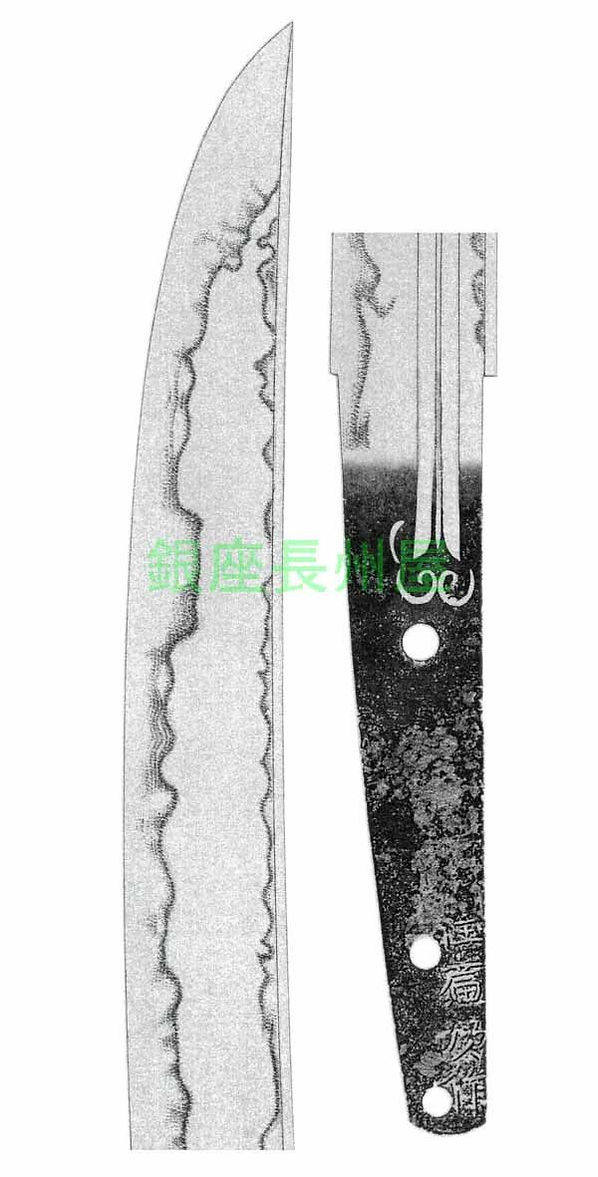
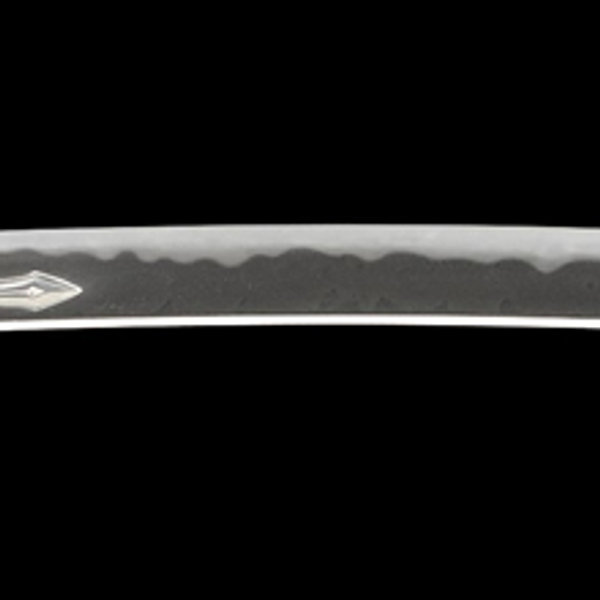
Soshu-den · Sagami · around 1492-1501
Fujishiro Jo saku · Tōken Taikan top 37%
4 pieces on the market now
Hirotsugu of Kamakura in Sagami is known from four designated works, three of them placed in the Meio era at the close of the fifteenth century and one in the late Muromachi period. The earliest anchor is a wakizashi recorded in Honma's inventory of the Imperial collection, signed Soshu-ju Hirotsugu saku and dated Meio 9 (1500). The published sources describe him in a single line: 「広次は相州鎌倉に住した刀工で, 銘鑑にはその初代を建武としているが, 現存するものでは室町時代中期を遡るものはなく室町時代後期を代表する相州鍛冶といえる」 (Hirotsugu lived at Kamakura in Soshu; the reference books put a first generation in Kenmu, but no surviving work predates the mid-Muromachi period, and he may be regarded as a representative Soshu smith of the late Muromachi period). Honma's inventory adds that of the works it had examined the Meio-dated pieces are the oldest, and that a Tenbun-dated blade signed as a resident of Shimada in Suruga is held to be by the same man.
Two of his Juyo katana are signed in two ways. The earlier designation, of 1971, bears a two-character mei, Hirotsugu, cut with a fine chisel beside the mekugi-ana. Its jigane is ko-itame with ji-nie and chikei, and the hamon is a gunome-midare with a choji feeling. The yakihaba is narrow in the lower half and widens from the middle upward into a flamboyant midare with tobiyaki, deep in nioi, with ashi, yo and sunagashi. The blade is carved with a kusa-kurikara on the omote and bonji, gomabashi and rendai on the ura. The published sources call it 「地刃の出来が優れ, 彫物も見事で, 室町時代の相州物の典型である」 (excellent in jigane and hamon, splendid in its carving, and a typical piece of Muromachi Soshu work).
The second katana, designated in 2015, has a six-character signature, Soshu-ju Hirotsugu saku, and is placed 「その銘振りや作風からおよそ明応年間の作と推されるものである」 (from the manner of the signature and the workmanship, to around the Meio era). It has a deep sori with sakizori and a thick kasane. The jigane is itame mixed with mokume and nagare-hada, with thick ji-nie, chikei and a faint utsuri. The temper runs high enough to reach the shinogi, mixing gunome with choji and togariba, with frequent kinsuji and sunagashi and uchinoke along the tops. The published sources close with 「匂口は締まりごころに明るく冴えるなど, 出色の出来映えを示している」 (the nioiguchi is inclined to tightness, bright and clear, showing outstanding workmanship).
The wakizashi of the Honma inventory shows a standing itame of whitish cast, a gunome-midare with sunagashi, a boshi with hakikake, and bo-hi with soe-hi above bonji and a lotus pedestal. Across the Meio works the constants are a gunome temper with sunagashi, carving in the Soshu manner, and that date.
The fourth work, a katana designated Juyo in 2021, is judged by its mei and build to be by a somewhat later Hirotsugu of the end of the Muromachi period, after the skilled makers of the name known around Meio or Tenbun. It is wide, with an extended chu-kissaki, and its itame mixed with mokume stands throughout, thick in ji-nie with frequent chikei. The temper runs high in notare with gunome, choji, togariba and yahazu-shaped elements, and with tobiyaki and muneyaki it becomes hitatsura, thick in nie, the nioiguchi bright, with frequent kinsuji and sunagashi. The published sources write that at first glance it recalls the Hasebe school of the Nanbokucho period[[c:1]], a powerful hitatsura strong in nie, and that it shows the high skill of this Hirotsugu.
Where Hirotsugu stands among comparable artisans: across all of nihontō, and within tradition, era, and period. The tiers (Foremost · Leading · Major · Notable) weigh official designations from the NBTHK and Japan's Agency for Cultural Affairs, together with historical honors of lasting repute such as the Sansaku and Meibutsu-chō.
Select a lens to see how it's measured.
Years he was demonstrably active, proven by signed-and-dated blades
Soshu-den · Sagami
Phase: Sue-Sōshū末相州· 1356–1868
20 pieces on the market now
When the great Kamakura masters had passed and the country slid into the wars of the late Muromachi, a residual Soshu-den held on in Sagami under a new patron. The Later Hojo, ruling from Odawara castle, kept smiths at hand, and it was from this orbit that the leading name of the window emerged: Tsunahiro, transmitted as a retained smith of the Odawara Hojo who took the character tsuna from Hojo Ujitsuna. The first generation's earliest dated works fall in the Tenbun era, and the line runs forward in the conventional reckoning through Tensho, Keicho, Kan'ei, and Manji, the third generation drawn west to Tsugaru by Tamenobu to forge daisho before returning home. Around him stood a wider Sagami population working the same idiom: Hirotsugu of Kamakura, whose strongest hands cluster near the Meio and Tenbun years; Hiromasa and Soso, names carried across several indistinct generations; Masahiro, reaching back toward Joji; and the Odawara group of Yasuharu, Yasukuni, and Fusamune, the last praised above all for his carving. These smiths inherited the manner of the Nanbokucho apex at a remove of generations rather than by direct descent from the mainline of Masamune and Sadamune. The signature of the phase is the open declaration of the full temper. The forging stays itame mixed with mokume, the grain inclined to stand (hadadachi-gokoro), with ji-nie and chikei; over it the smiths ran a notare-and-gunome ground that climbs the upper half into hitatsura, tobiyaki and muneyaki firing across ji and mune, sunagashi and kinsuji threading the ha. This is the hitatsura and o-midare learned from Hiromitsu and Akihiro, but pushed toward display: the Hirotsugu katana of the 61st Juyo runs its temper so high it reaches the shinogi, mixing choji, togariba, and yahazu-gata into a demonstrative yakidaka pattern.
The contrast with the classic apex is precise and the appraisers mark it. Where Masamune raised nie to its deepest refinement over a bright, clear steel, the Sue-Soshu ji tends to shirake, a whitish cast standing in for that clarity, and the nioiguchi inclines to shizumi, a sunken or subdued quality rather than depth. The 238th Jubi record states the point plainly for the first-generation Tsunahiro: the ji and ha carry abundant nie, yet the very shape of the hamon departs from that of Hiromitsu and Akihiro. The temper is broader and busier across the surface, but it lacks the quiet command and the leaping interior activity of the original. To kantei the window is to separate this demonstrative late temper from the classic Soshu-den it imitates: a standing itame with shirake, a wide hitatsura worked with yahazu and crescent tobiyaki, a nioiguchi that sinks rather than deepens, and signatures reading Soshu-ju with full given names rather than the o-suriage mumei of the great forebears. The named hands carry the distinctions, Fusamune through his dense, precise horimono of kurikara and bonji, Tsunahiro through his crescent tobiyaki and high monouchi fire, Hirotsugu through a hitatsura vigorous enough to recall Hasebe. Provenance keeps these blades close to power: several are recorded in Honma's inventory of the Imperial collection, one bearing the ownership inscription of Akimoto Yoshihide of Kozuke, another the Hachiman Daibosatsu invocation of a Sengoku warrior, the Tsunahiro commission tied by its dated nakago to the Tsugaru house. Learn more →
| Smith | Era | Designated |
|---|---|---|
| Fusamune總宗 | 1504-1521 | 5 |
| Tsunahiro綱廣 | 1532-1555 | 14 |
| Hiromasa廣正 | 1444-1456 | 4 |
| Tsunaie綱家 | 1532-1555 | 3 |
| Hirotsugu廣次 | 1492-1501 | 4 |
Sōshū in the Muromachi period
In the Sengoku era the school served a second warrior court: the Later Hōjō at Odawara, whose patronage kept the Tsunahiro line forging hitatsura for the uchigatana age until the castle fell to Hideyoshi in 1590.
If, due to our fault, the item differs significantly from its proper condition, the item may be returned. Cooling-off is within one week of the item's arrival.