Soshu Ju Tsunahiro is the professional name of a lineage of Soshu smiths that continued uninterrupted from the late Muromachi period to the end of the Edo period; the first generation had the family name Yamamura, signed his early mei as Masahiro, and is said to have later been summoned by Hojo Ujitsuna of Odawara, from whom he received the character "Tsuna" and changed his mei to Tsunahiro. Regarding the differentiation of the generations of Tsunahiro, there are many that are difficult to distinguish, but the Fujishiro Toko Jiten places the first generation around Tenbun, the second around Eiroku, and the third around Bunroku, and according to the Yamamura family tree and ancient documents, the transition between the first and second generations occurred between Tenbun 7 (1538) and Tenbun 10 (1541). The third generation Tsunahiro, called Yamamura Soemon, lived in Kamakura Ogigayatsu and is said to have later traveled to Tsugaru at the invitation of the Tsugaru daimyo and returned home in Keicho 11 (1606) after forging three hundred long and short swords; among his works, he left inscriptions such as "Tsugaru Shu Tame Nobu Soshu Tsunahiro Keicho 10 Kinoto-Tori 8 Gatsu Kichijitsu Sanbyaku-koshi no Uchi" and "Tsugaru Shu Tame Nobu Soshu Tsunahiro Yobikudashi Kore o Tsuku Keicho 10 Kinoto-Tori 8 Gatsu Kichijitsu". In this way, the Tsunahiro name, which inherited the traditions of medieval Soshu smiths, was passed down through the generations and flourished throughout the Edo period until the Bakumatsu.
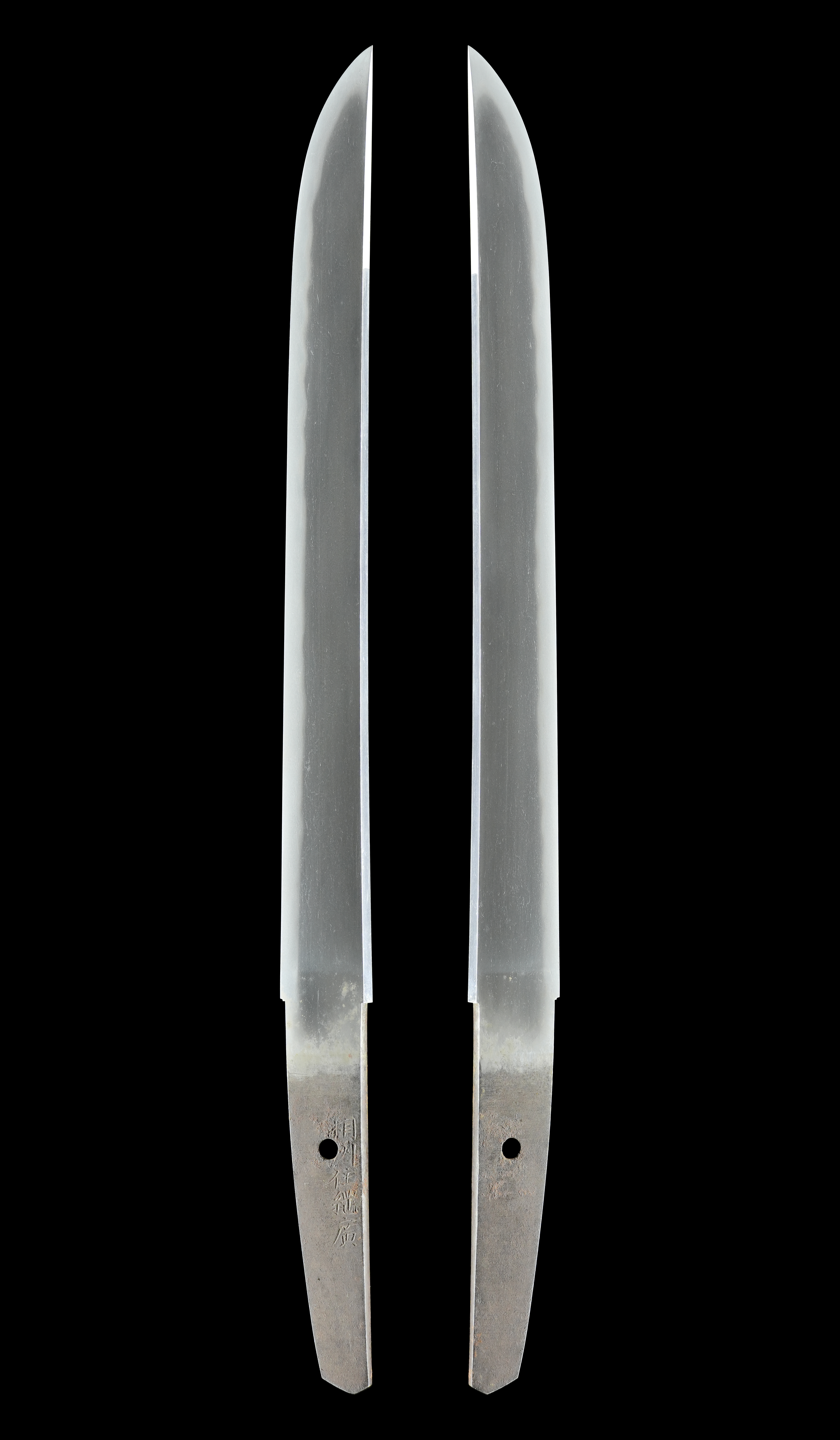
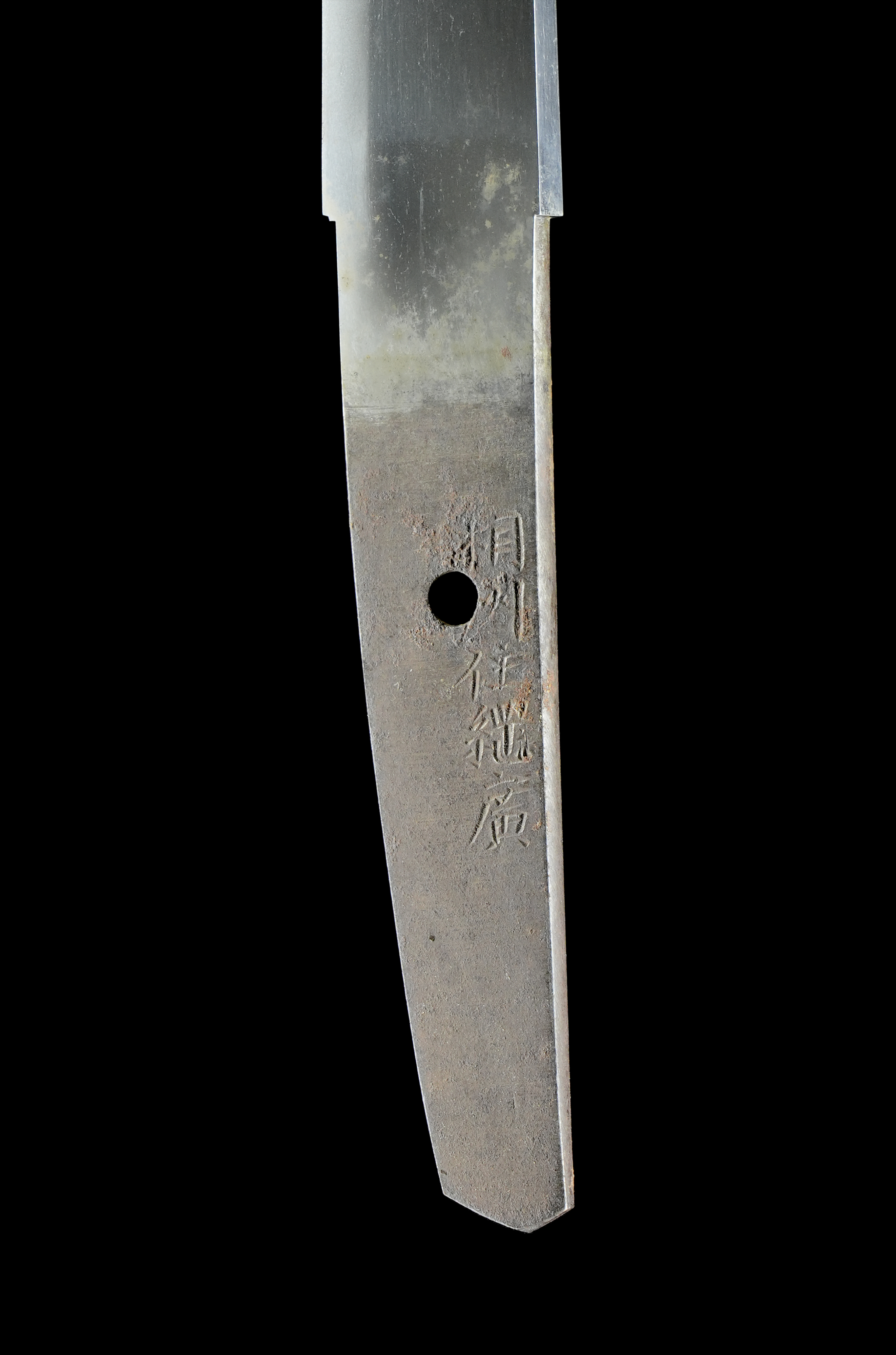
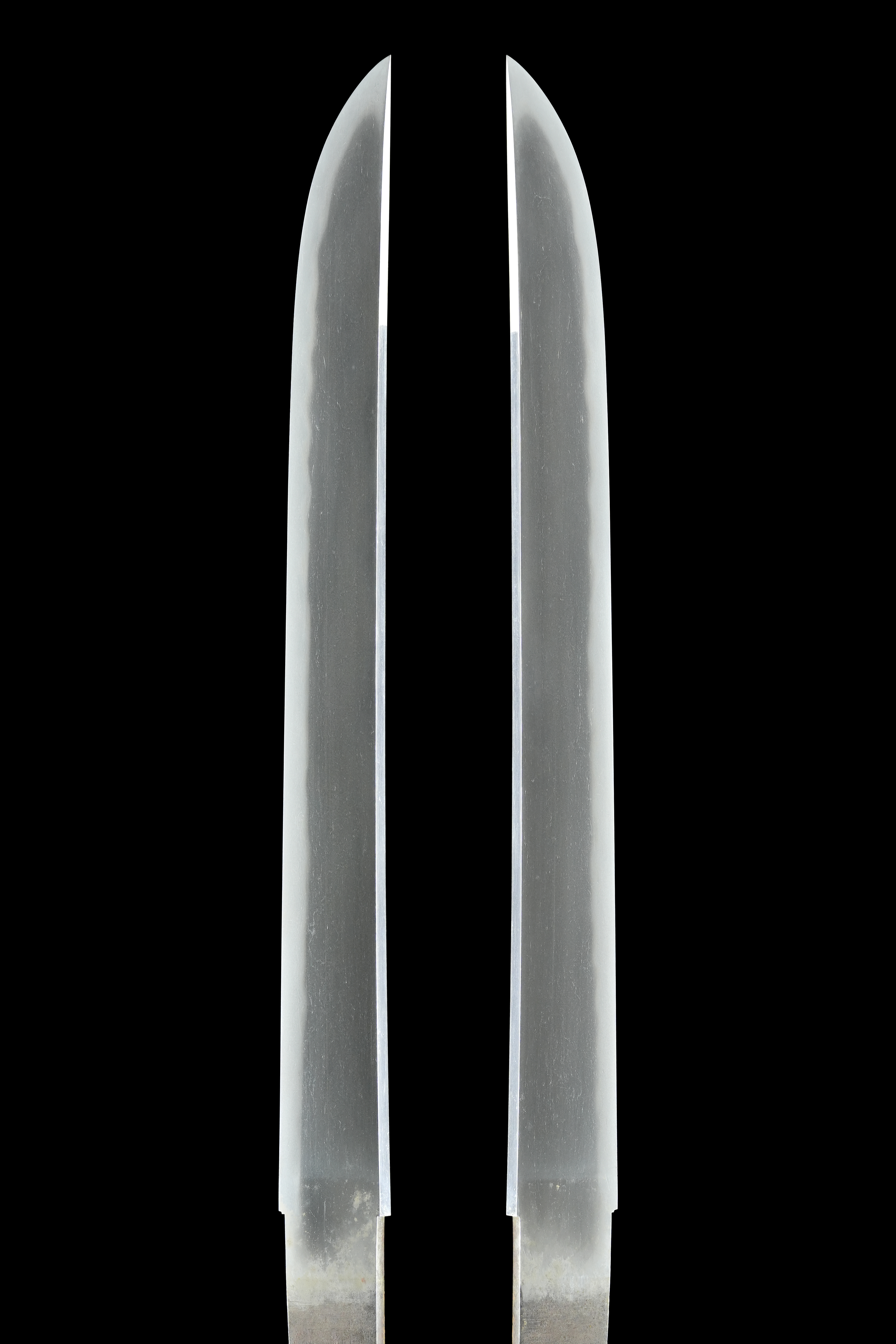
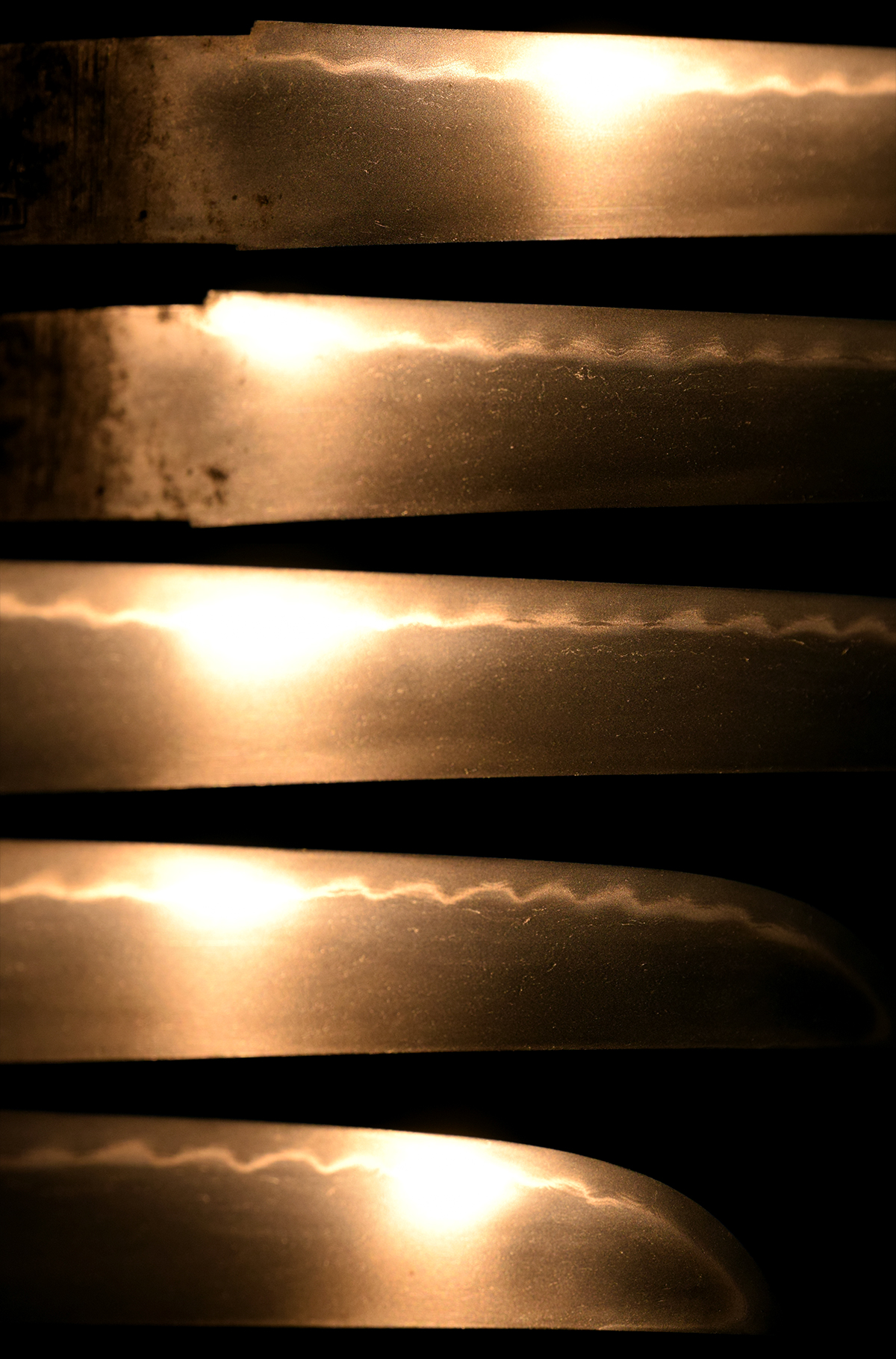
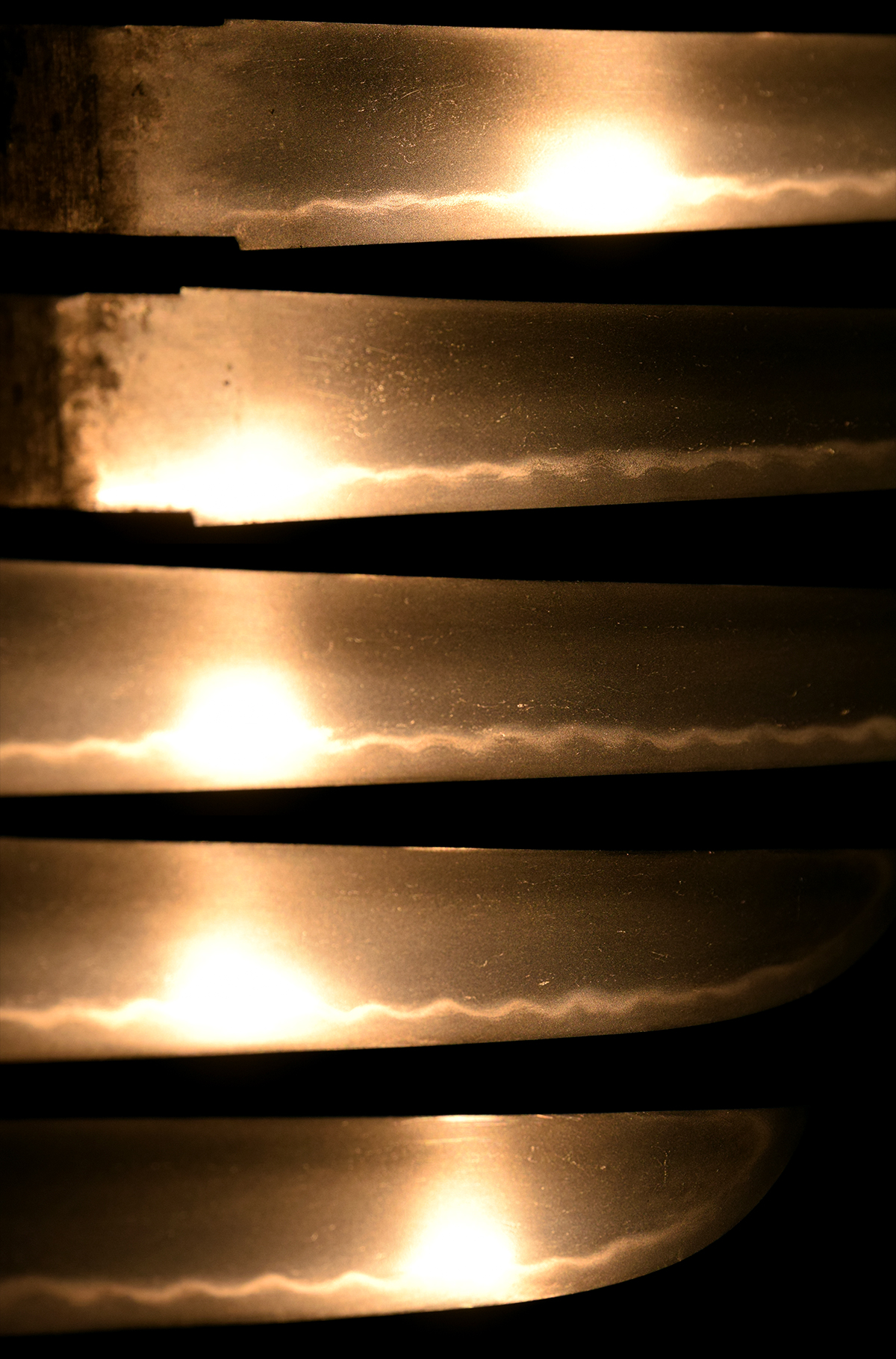
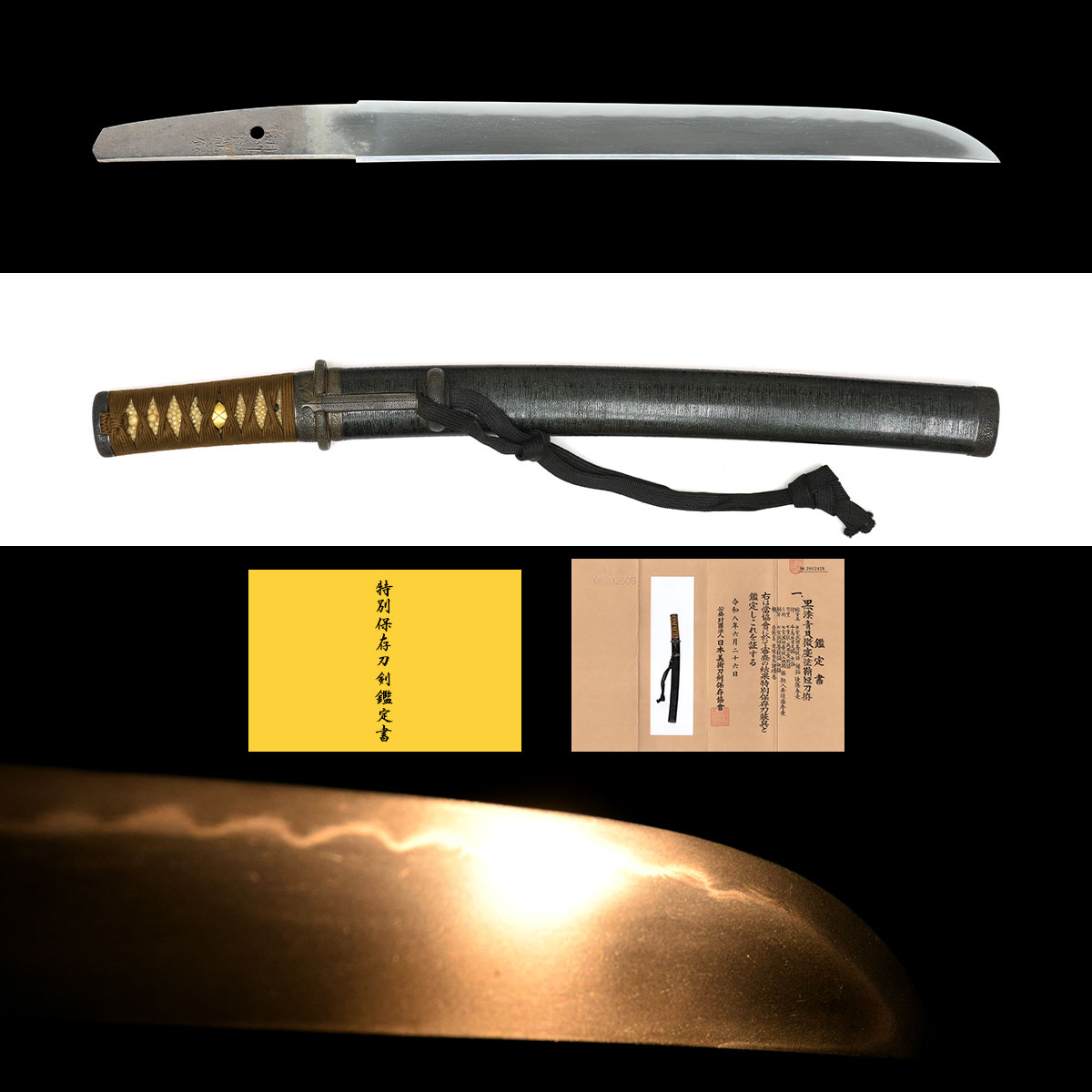
This work is a single sword by Tsunahiro forged during the Shinshinto period within that long lineage, exhibiting a sunobi shape in hira-zukuri with an iori-mune and a nagasa of 29.2 centimeters; the difference in width between the moto and saki is not conspicuously wide, and it has a solid body composition with a moto-kasane of 7.7 millimeters. The jigane is well-refined with mokume mixed into ko-itame, the hadame is tight with ji-nie, the hamon has a bright nioiguchi with small sunagashi running along the habuchi mixed with gunome and ko-notare, and the boshi enters sugu and returns with a maru tip; within its neat form, it shows the characteristic flavor of Tsunahiro inheriting the Soshu smith tradition. Without running into flashiness, both the ji and ha are composed without flaws, and its kenzen state, maintaining sufficient kasane and mihaba despite being sunobi, is also a major highlight of this work.
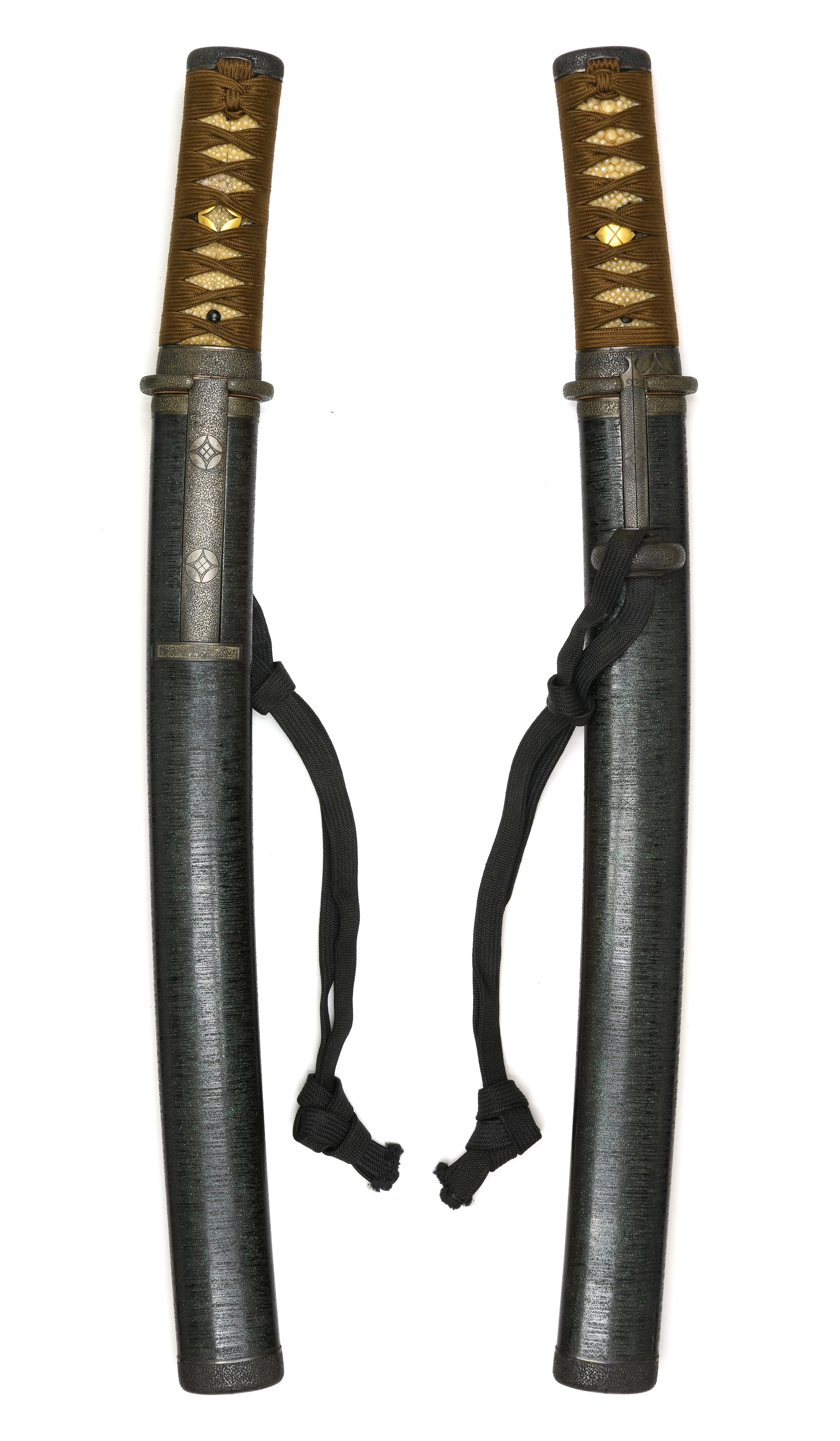
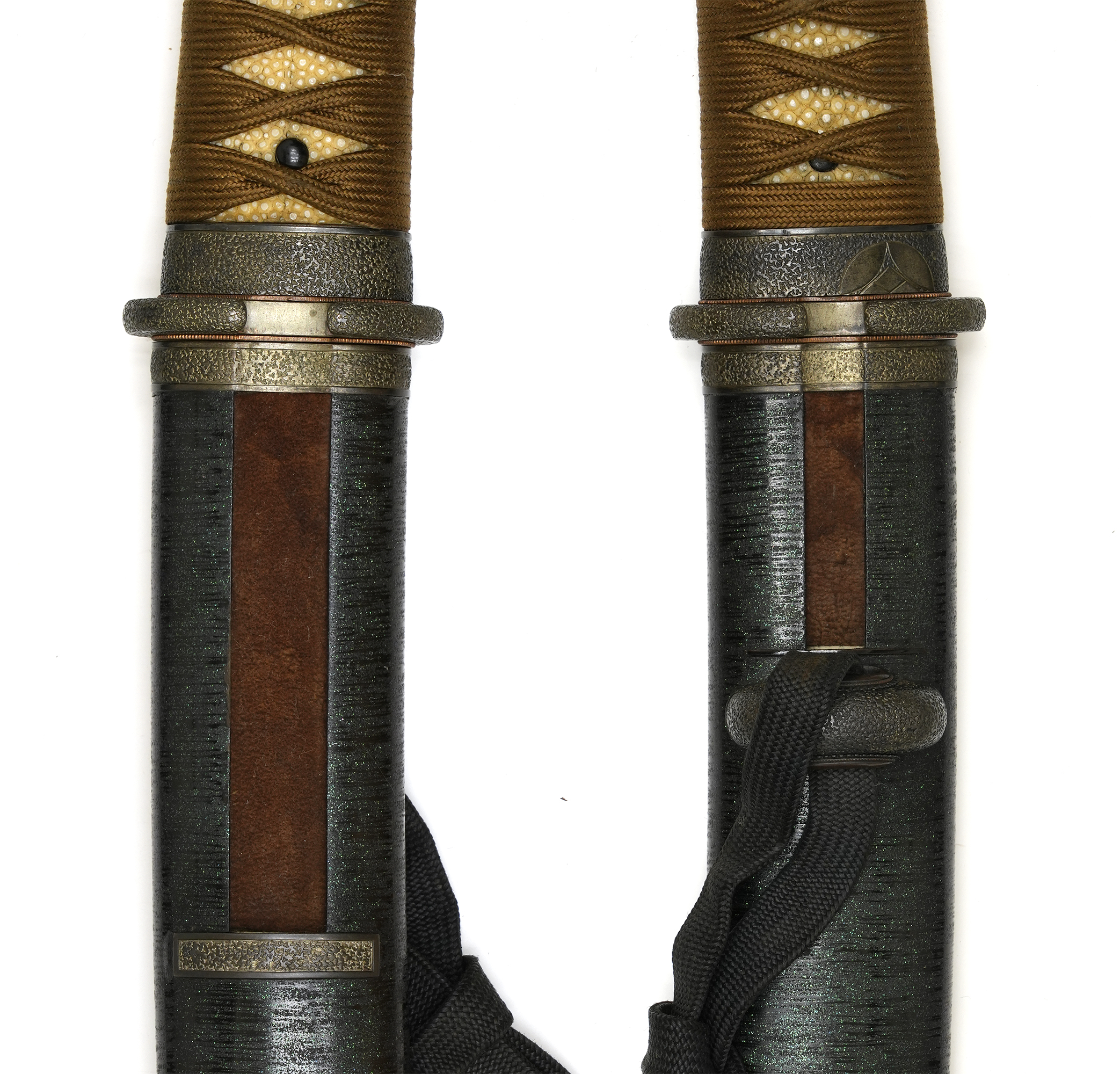
Furthermore, what greatly enhances the value of this work is the kuro-urushi aogai-mijin-nuri-saya tanto koshirae that has been handed down together with the blade.
Goto Shunjo was a sword fitting metalsmith of the Goto family born in the mid-Edo period who was active primarily in Kyoto during the late Edo period; he was first called Hyakujiro and, after inheriting the family headship, succeeded to the hereditary common name Shichiroemon. Born in Genbun 5 (1740) as the son of Setsujo, he died at the age of 83 on Bunsei 5 (1822) July 12, and is the same person as Mitsushina, serving as the 3rd generation head of the Shichiroemon family. The lineage continues from Yujo, Kenjo, the family founder Injo, Setsujo, Shunjo, to Jujo and Kyujo, and his grandsons include Ichijo, who is counted as one of the master craftsmen representing the Goto family. During the Bunka and Bunsei eras, he received a stipend from the Shogunate and, as an official in charge of the Kyoto office, was also engaged in the production of oban and koban; in addition to his excellent skill as a sword fitting metalsmith, he was a person who possessed high-level metalworking techniques for currency production and an official career.
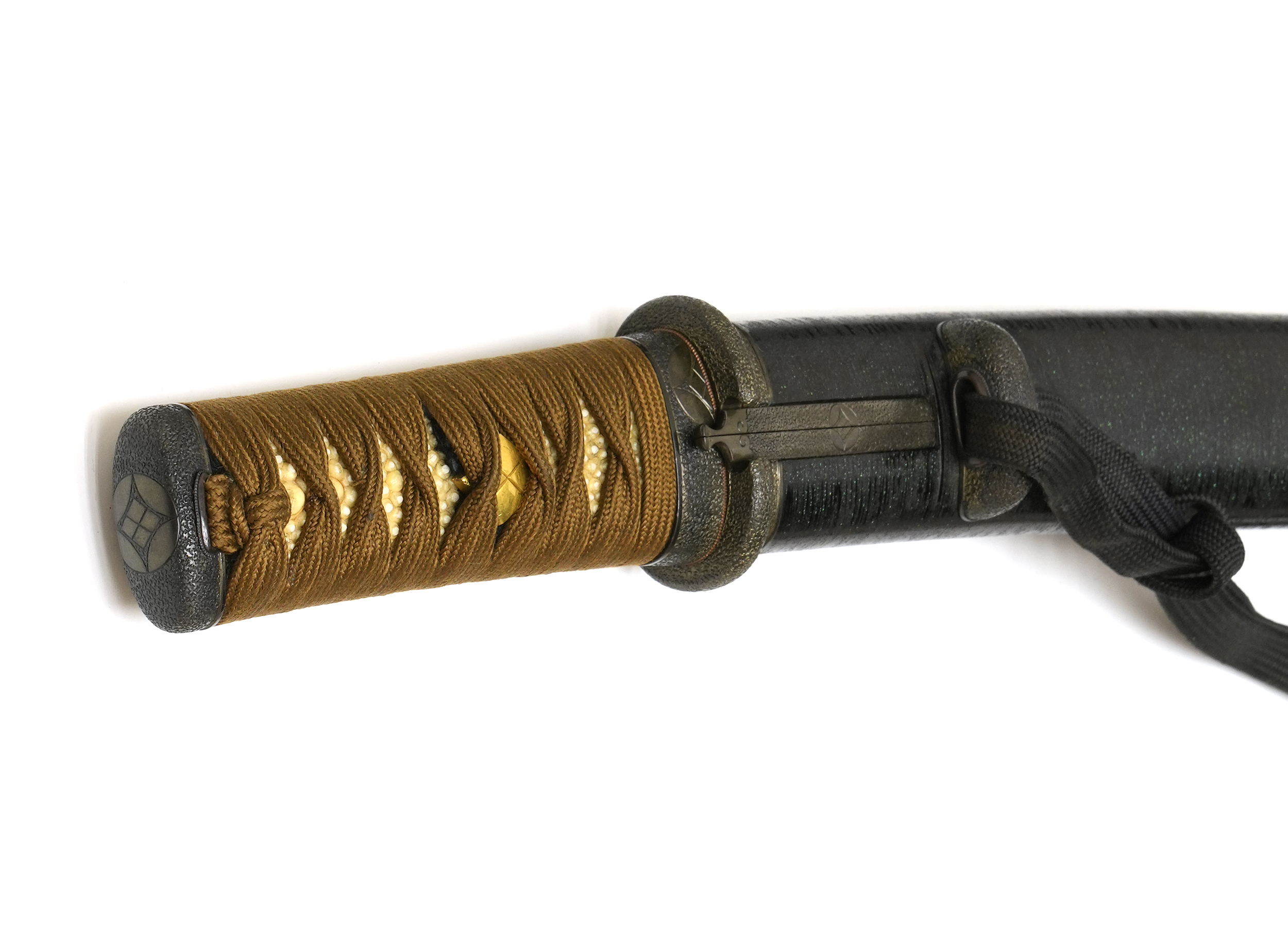
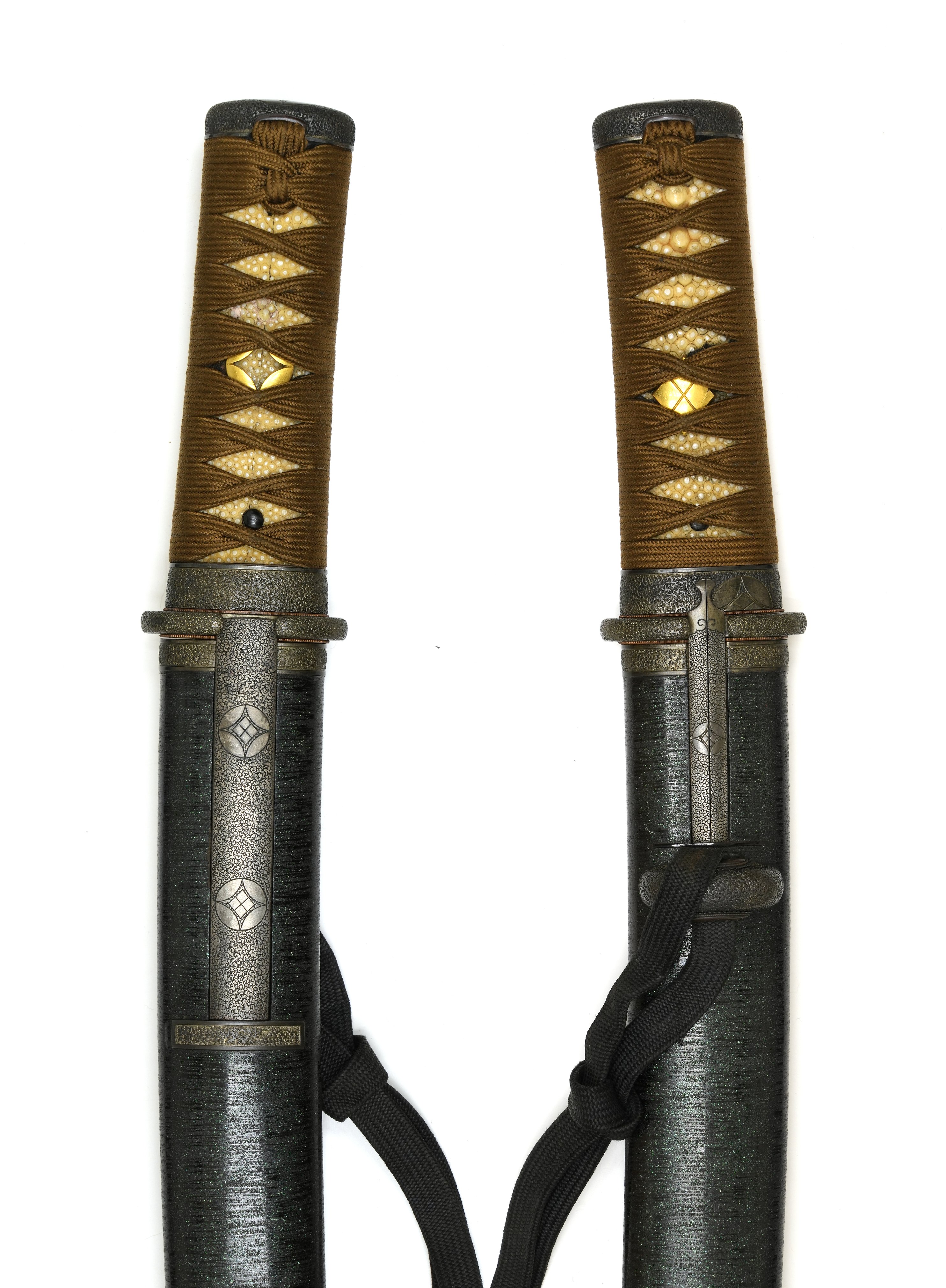
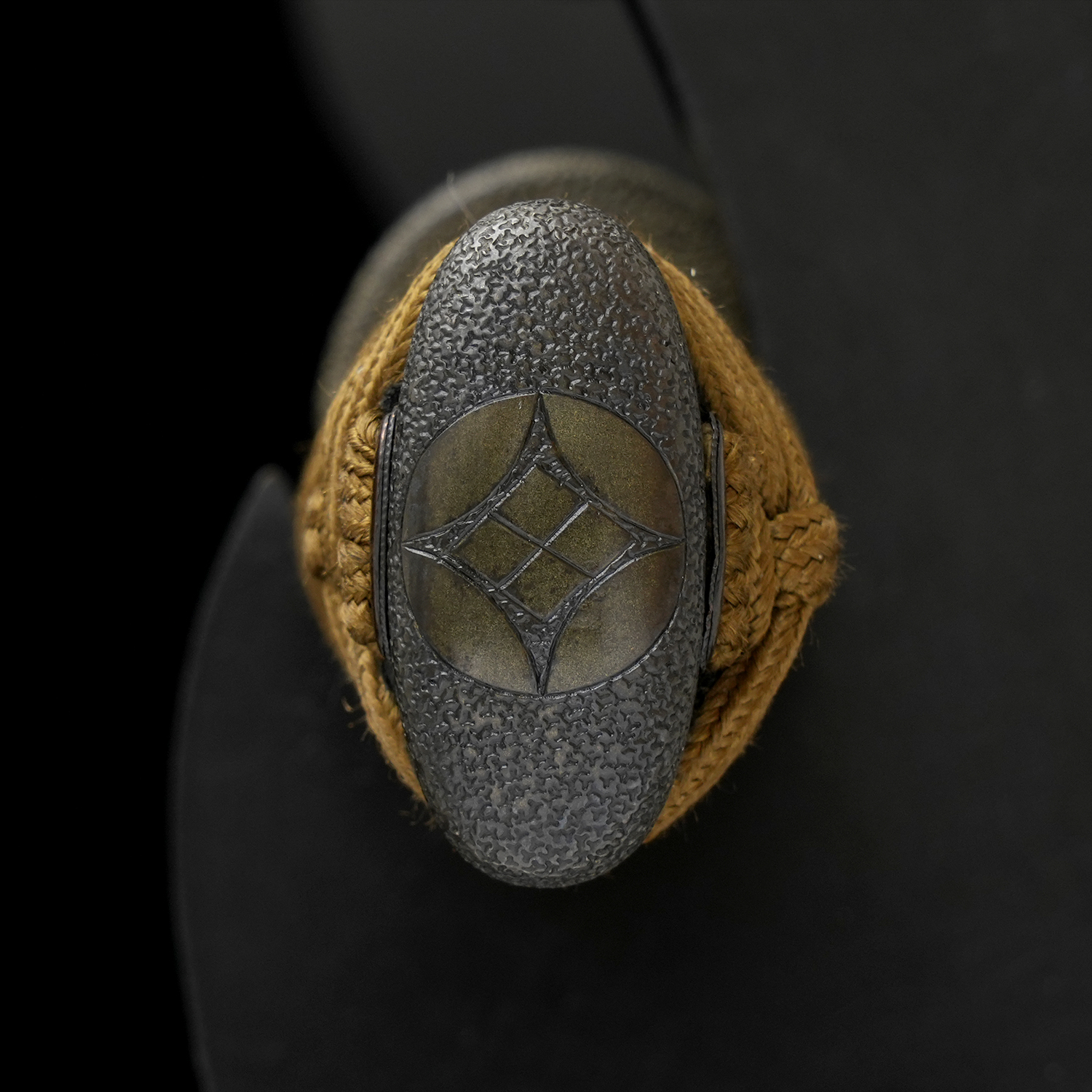
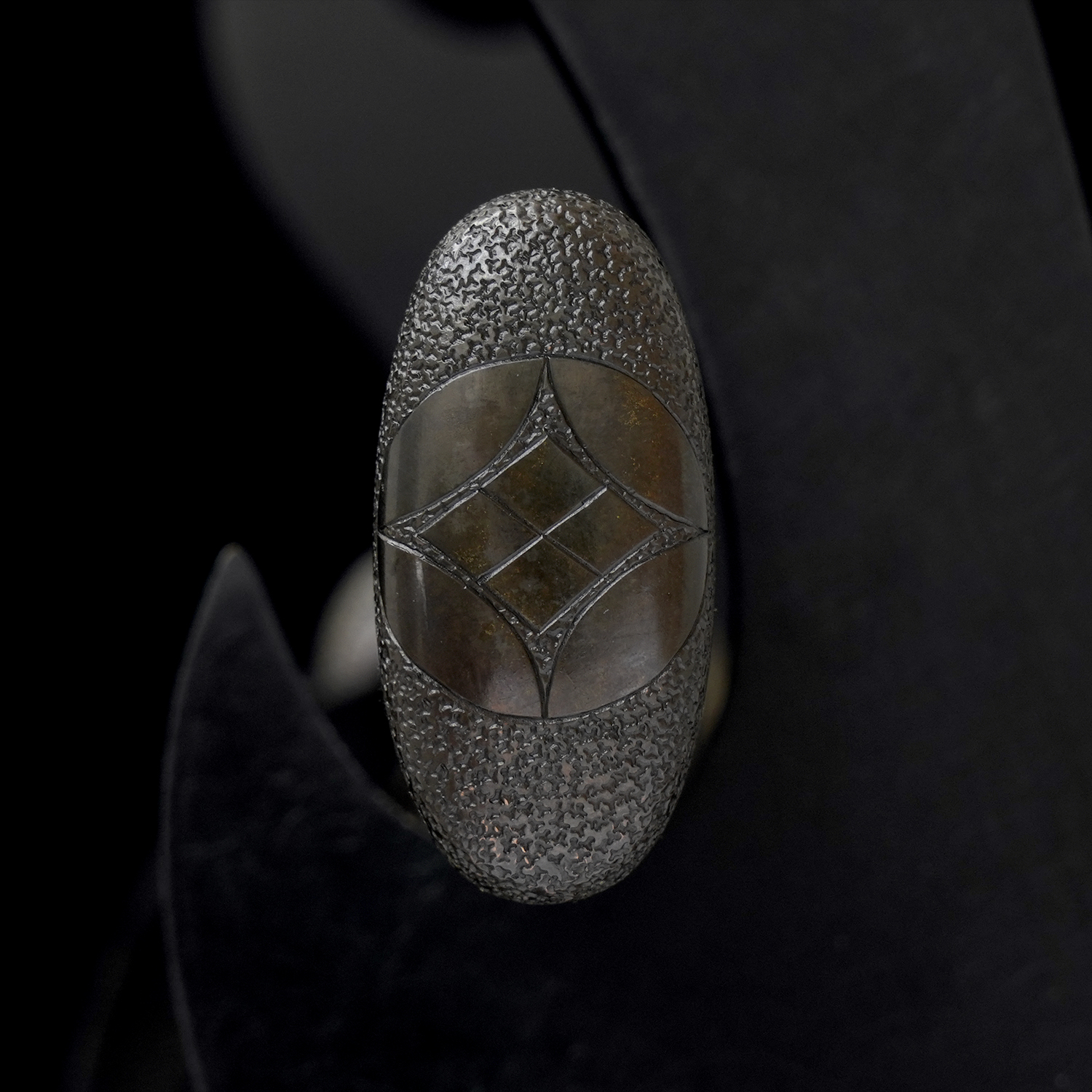
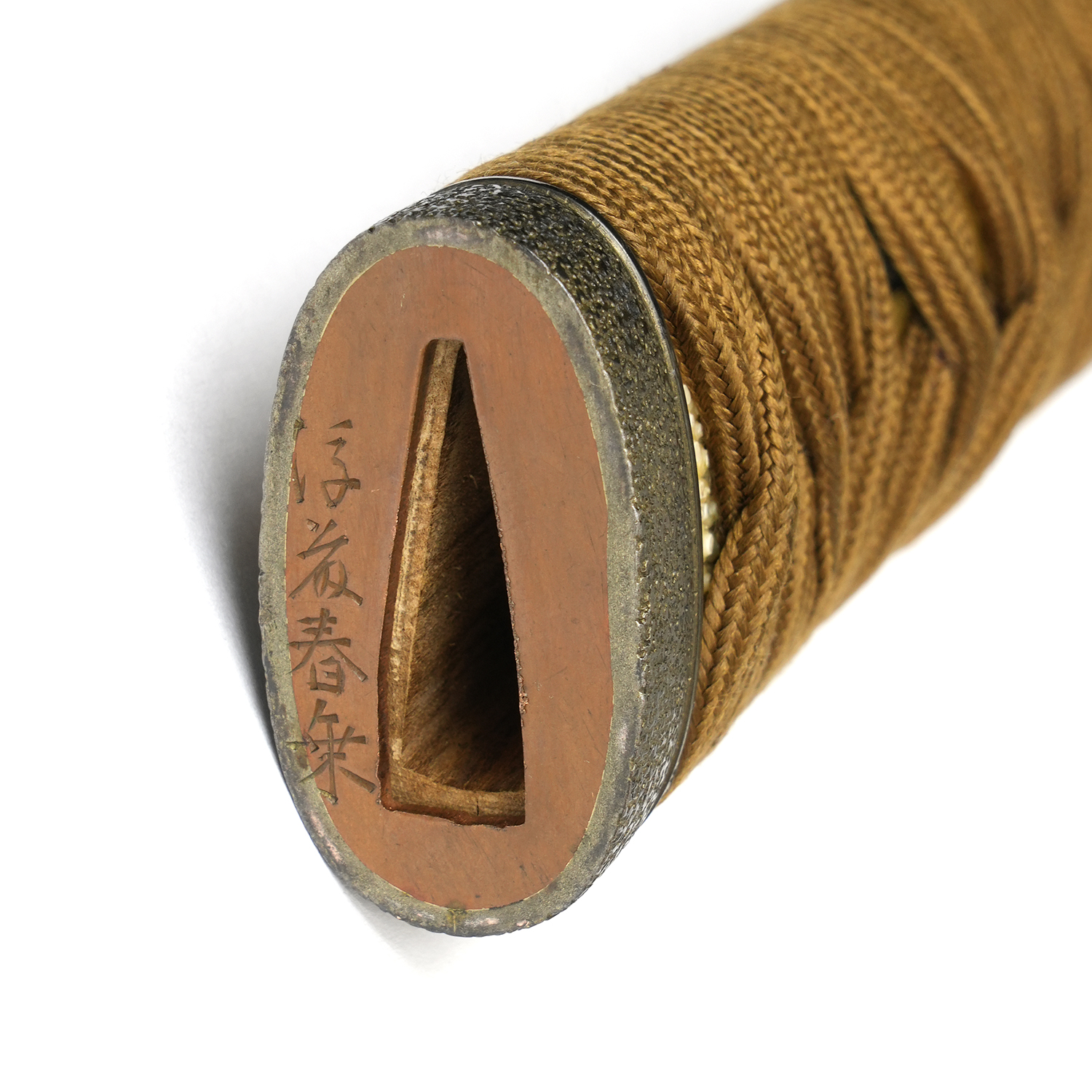
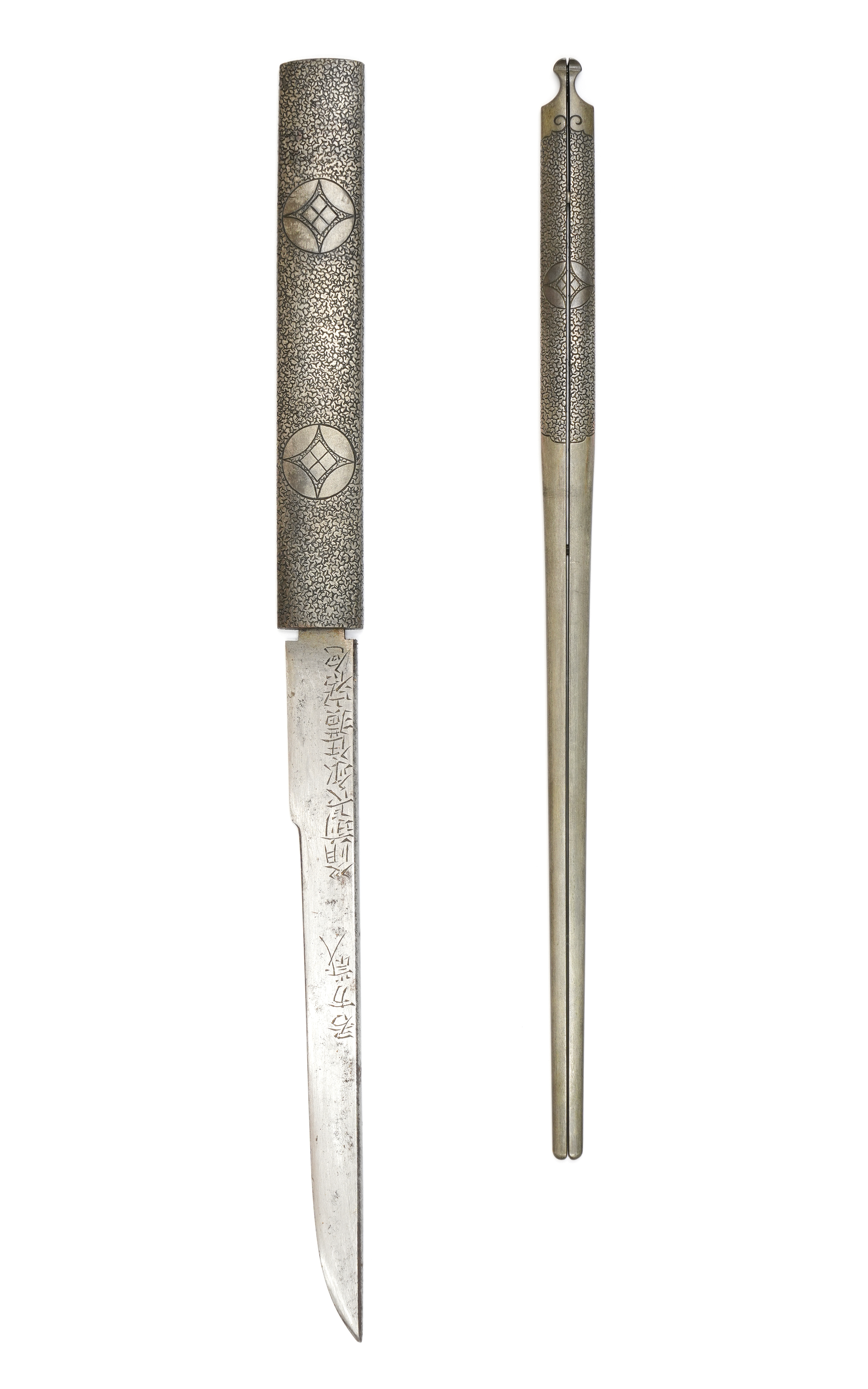
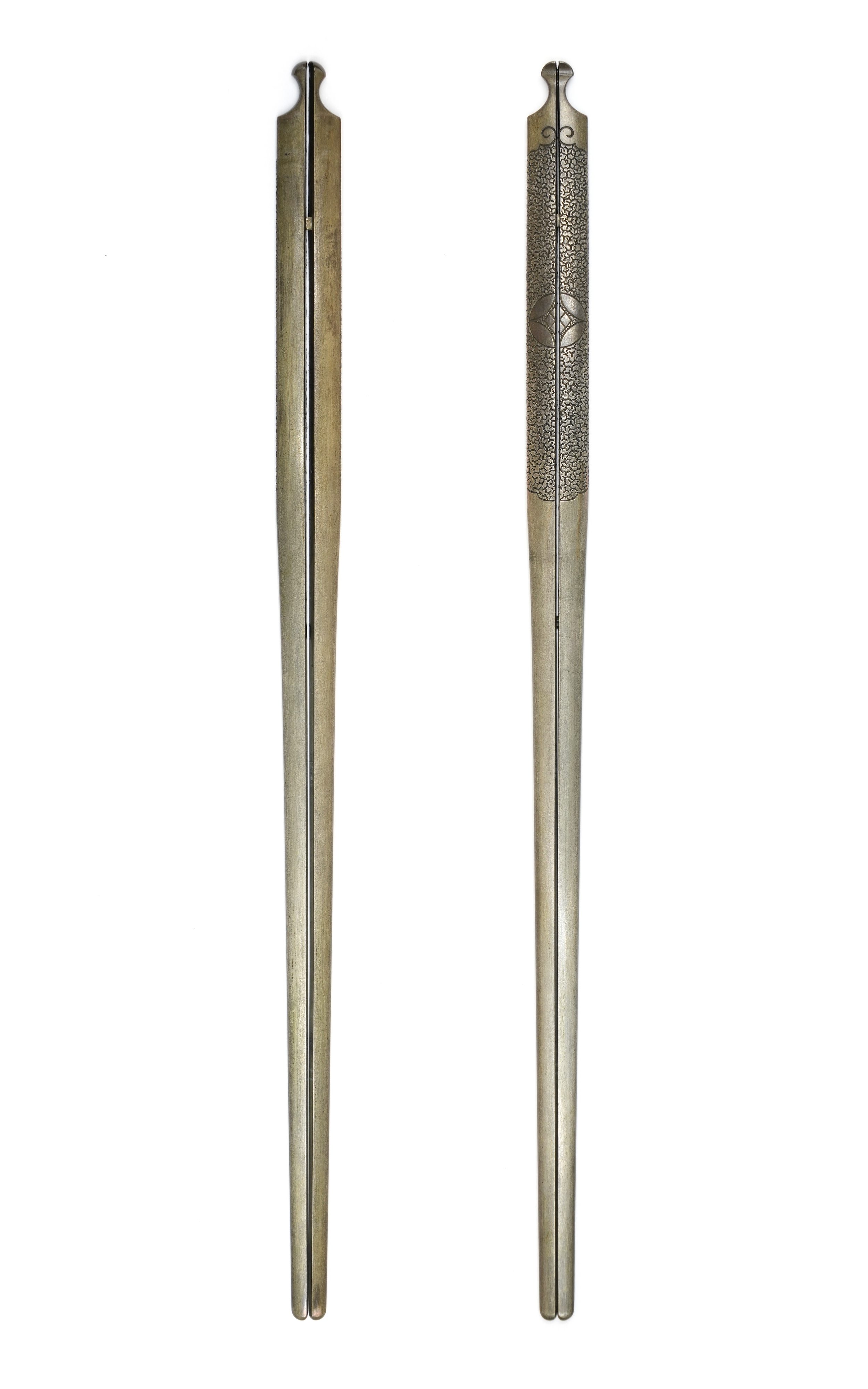
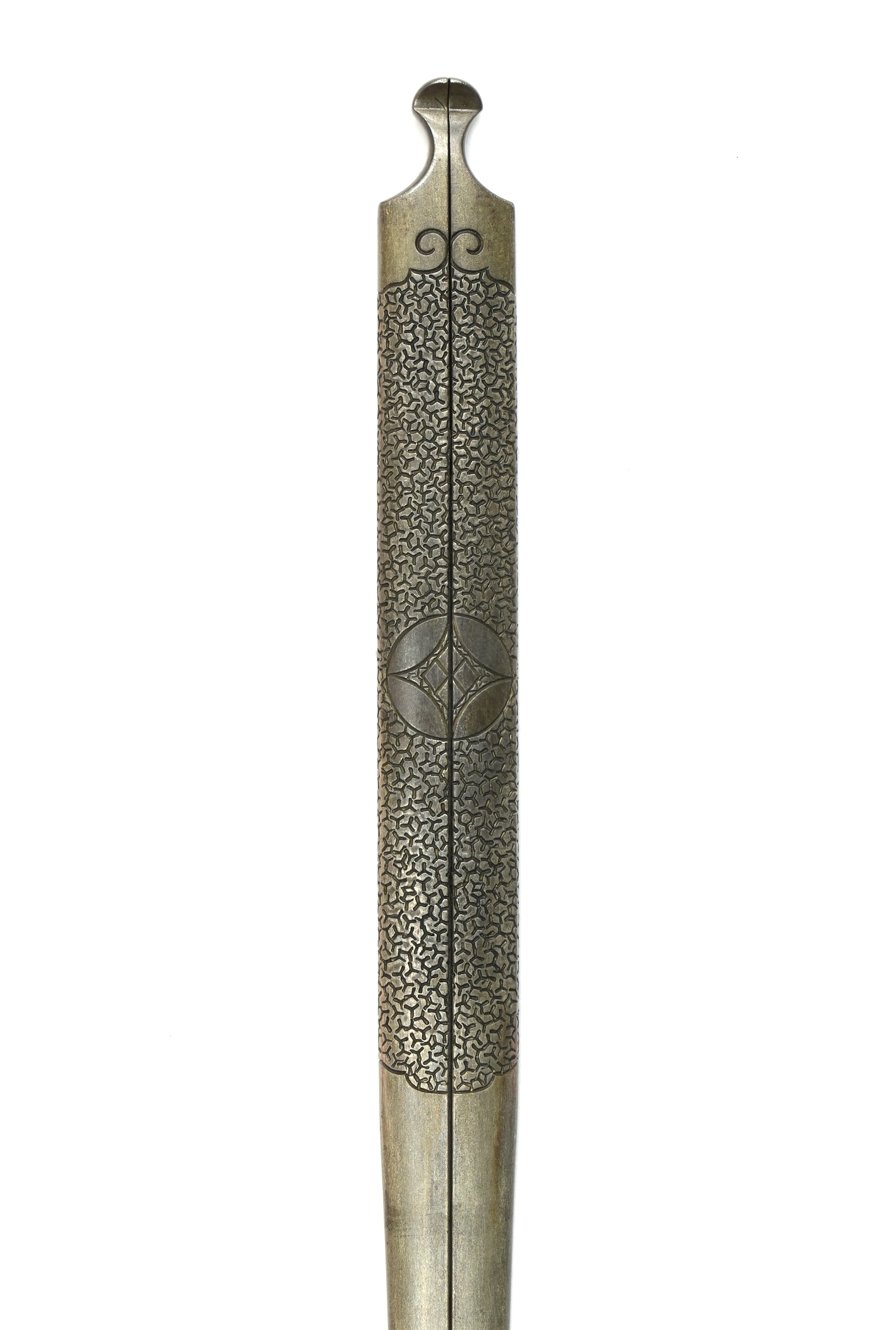
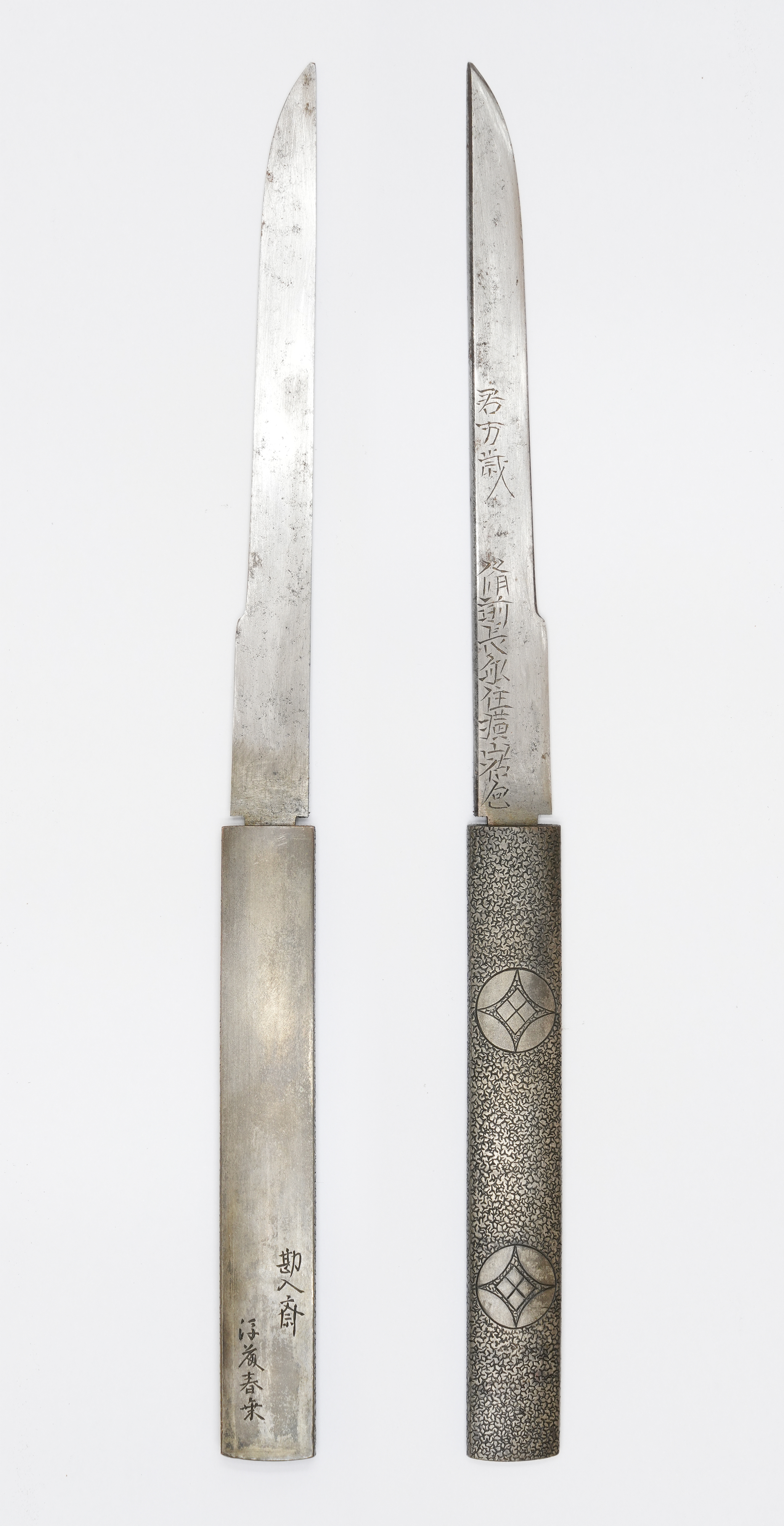
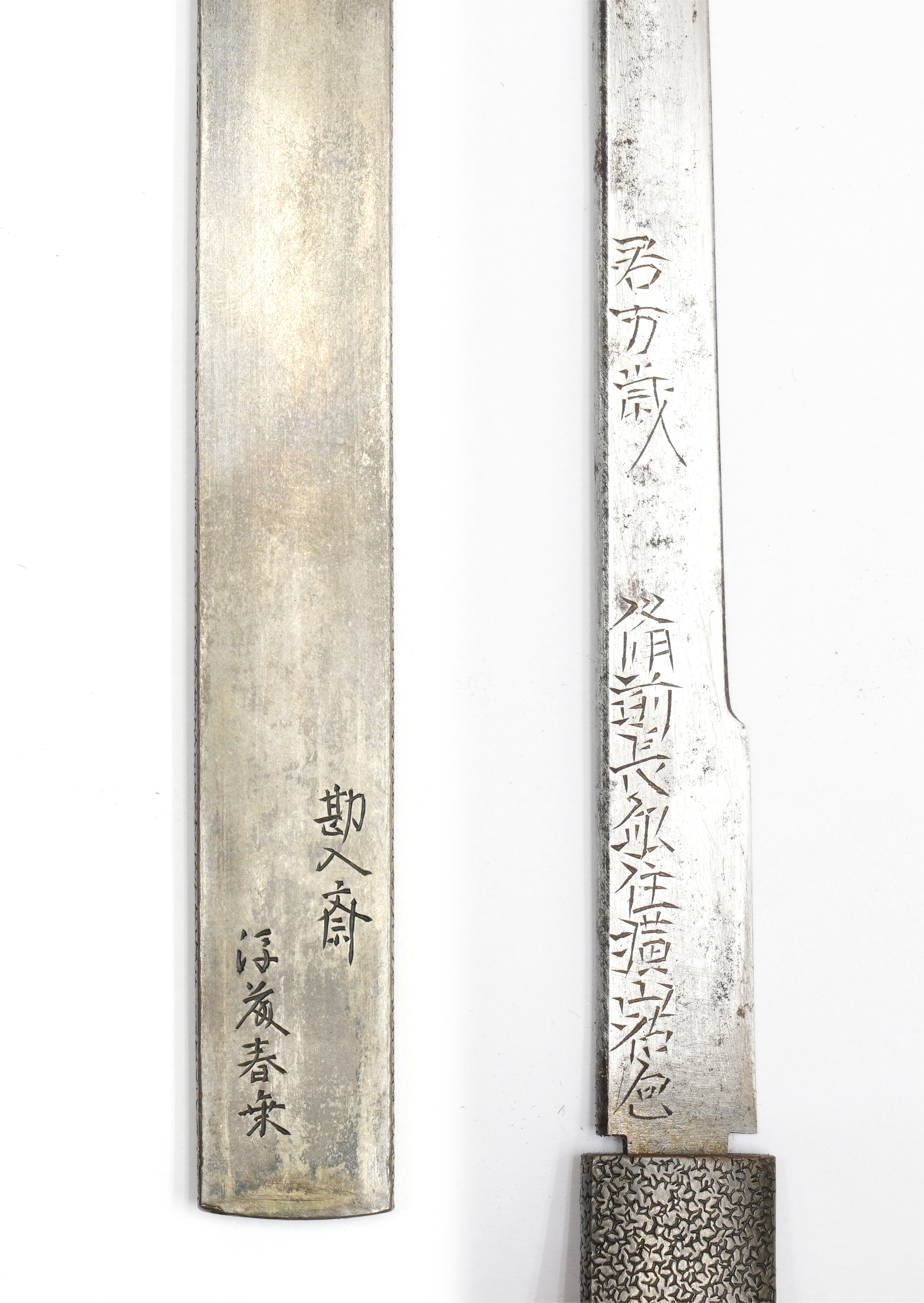
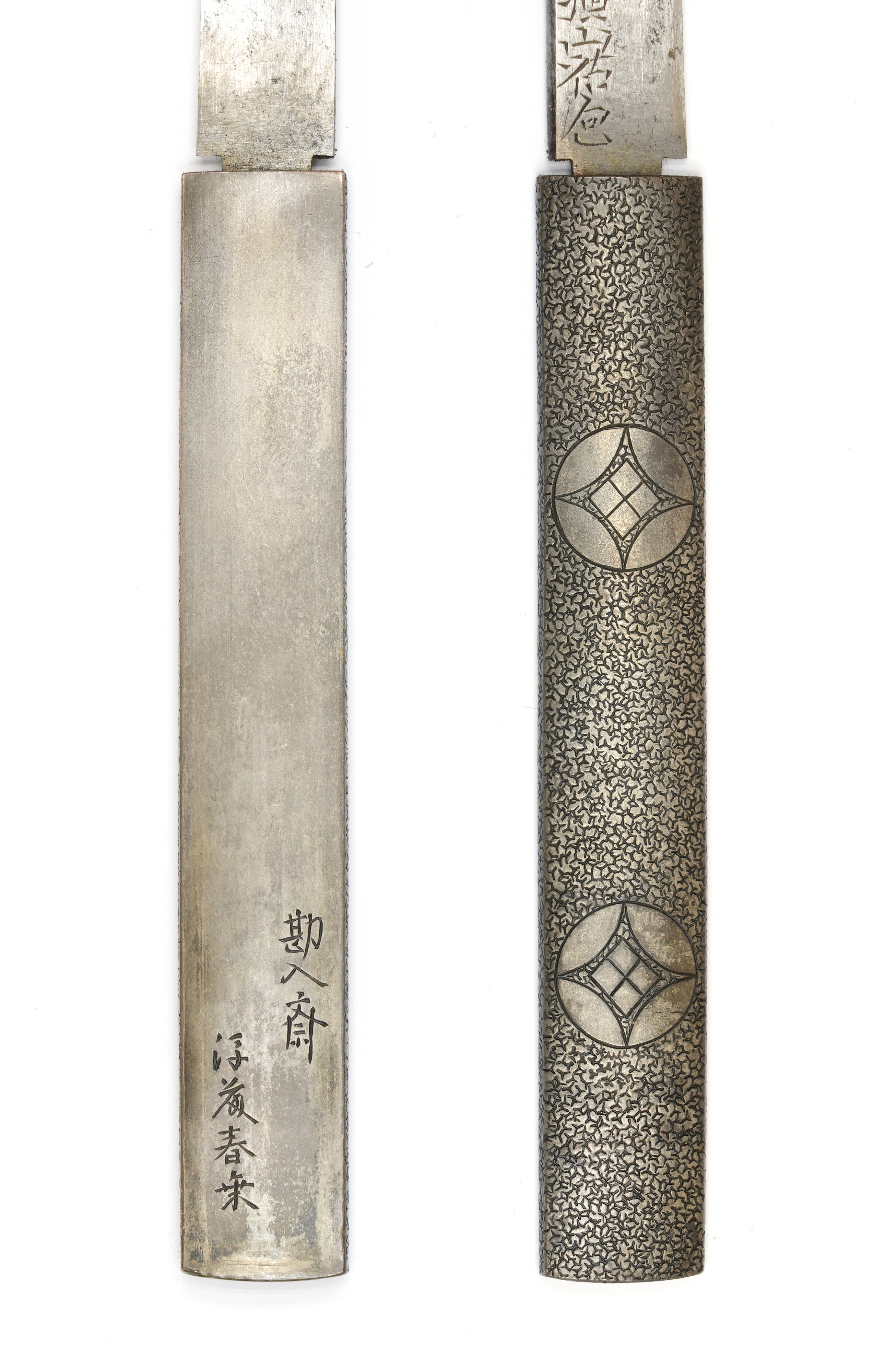
In this koshirae, the mei "Kannyu-sai Goto Shunjo" is chiseled on the kozuka and kogai, a crest design combining a shippo pattern and the Takeda-bishi is applied uniformly to the fuchigashira, tsuba, kurigata, and kaerizuno, and the Takeda-bishi is expressed alone on the menuki. From this composition, it is highly likely that this was a koshirae custom-made for a former owning family that used the Takeda-bishi as its primary crest rather than a mere combination of auspicious patterns, suggesting a relationship with the Kai Takeda clan or its relatives and branches, but because it lacks documents to verify the provenance, it has not been kiwame to a specific family name.
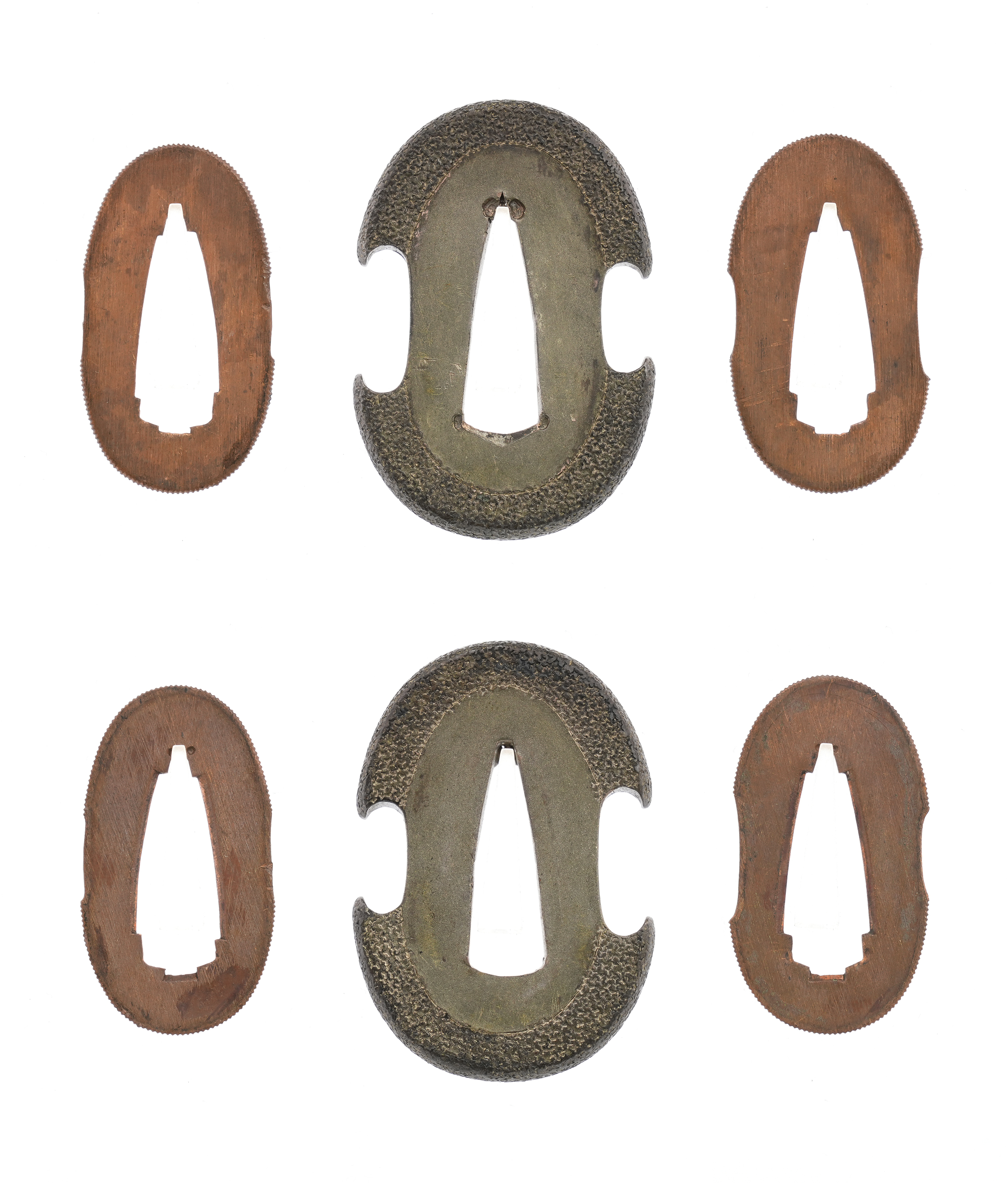
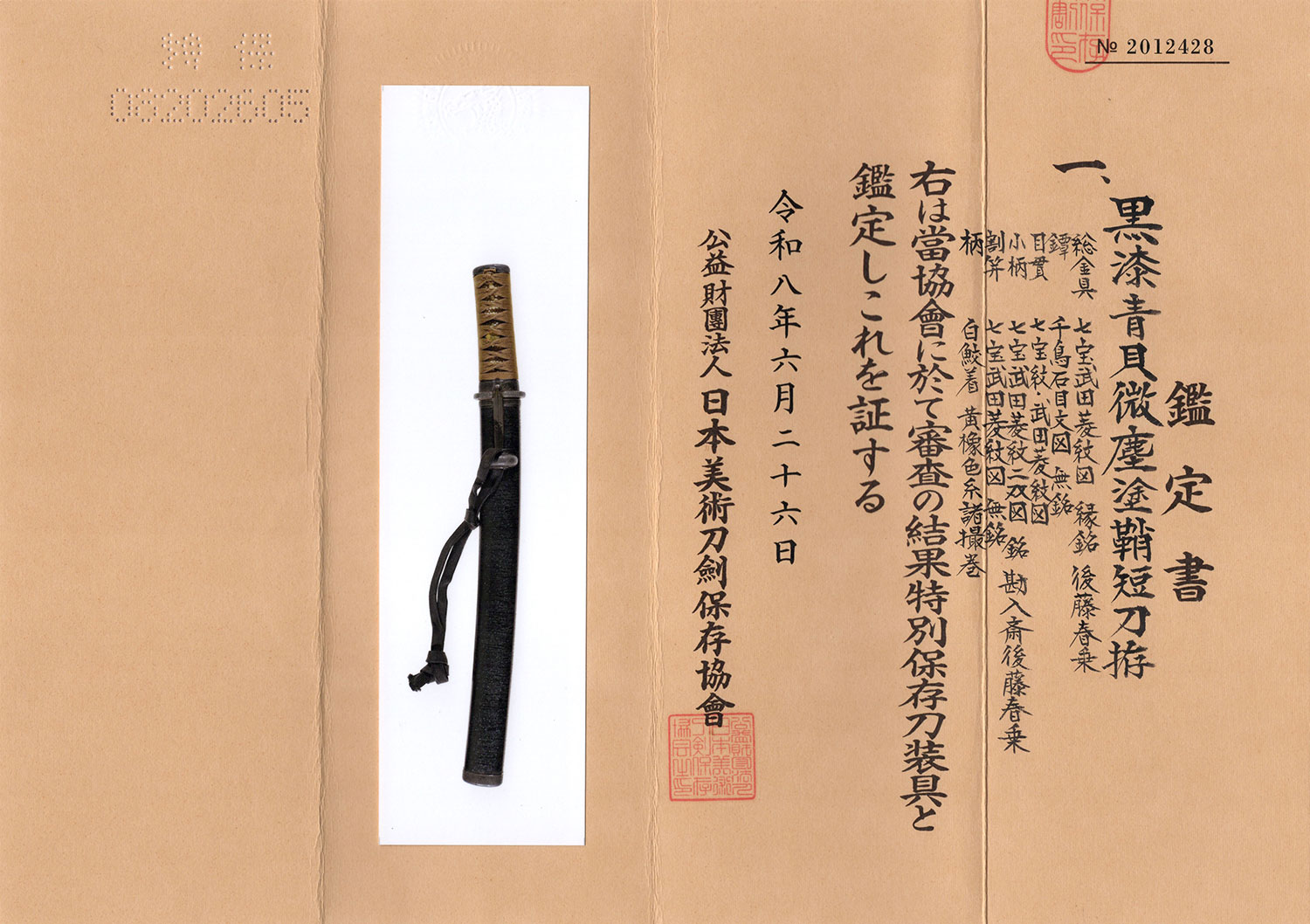
The saya with aogai-mijin scattered over a kuro-urushi base resonates with the shippo patterns and Takeda-bishi, and the fine patterns applied without gaps to the ground of the fittings and the neat arrangement of the crests express the aesthetic sense of the Goto family, which maintains dignity without leaning toward flashiness; the more one looks at the front and back, the more one can appreciate the precise design as an issaku-kanagu. In particular, the fact that both the kozuka and kogai, which are easily lost during the process of transmission in tanto koshirae, are complete is extremely precious, and the fact that the set of koshirae was appraised as Tokubetsu Hozon Tosogu by the Nihon Bijutsu Token Hozon Kyokai also supports its period characteristics, state of preservation, and the perfection of its composition. Although a slight tsuba-nari is recognized, there is no rattling in the tsuka, and looking closely at the construction of the habaki and seppa, it can be seen that kise was originally applied, and it is thought that it had an even more gorgeous appearance in its time.
This sword, in which the blade, jidai-koshirae, shirasaya, and tsunagi have been preserved together until today, is a superior item that can be appreciated and possesses both historical and artistic qualities.
October 19, Showa 43, Okayama Prefecture registration
Accessories
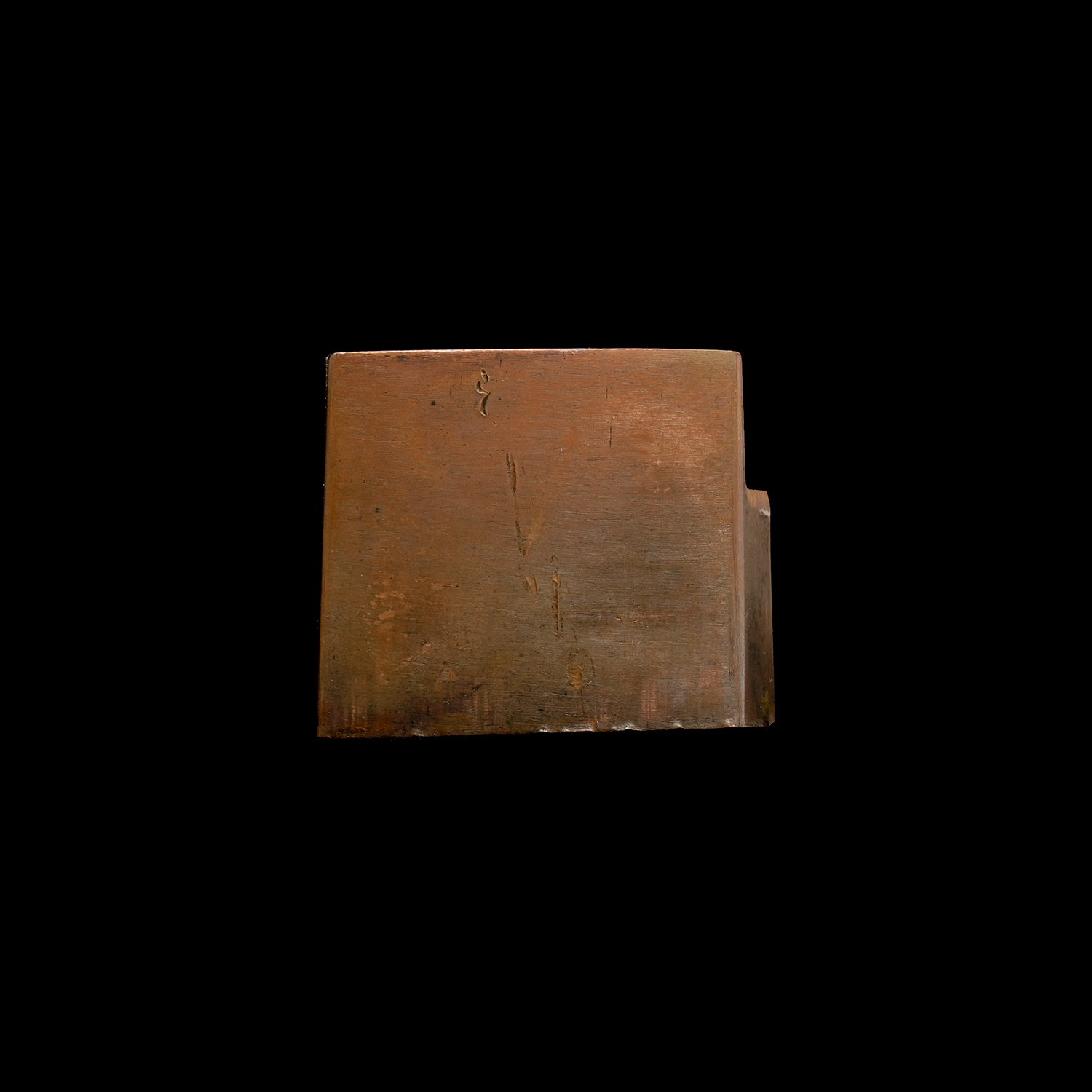
Kuro-urushi aogai-mijinnuri-saya tanto koshirae, suaka habaki, shirasaya, tsugiki
Machine translation of the shop's Japanese ·
Description from Toushin
Machine translation from the shop's Japanese · may contain errors ·
Soshu Ju Tsunahiro is the professional name of a lineage of Soshu smiths that continued uninterrupted from the late Muromachi period to the end of the Edo period; the first generation had the family name Yamamura, signed his early mei as Masahiro, and is said to have later been summoned by Hojo Ujitsuna of Odawara, from whom he received the character "Tsuna" and changed his mei to Tsunahiro. Regarding the differentiation of the generations of Tsunahiro, there are many that are difficult to distinguish, but the Fujishiro Toko Jiten places the first generation around Tenbun, the second around Eiroku, and the third around Bunroku, and according to the Yamamura family tree and ancient documents, the transition between the first and second generations occurred between Tenbun 7 (1538) and Tenbun 10 (1541). The third generation Tsunahiro, called Yamamura Soemon, lived in Kamakura Ogigayatsu and is said to have later traveled to Tsugaru at the invitation of the Tsugaru daimyo and returned home in Keicho 11 (1606) after forging three hundred long and short swords; among his works, he left inscriptions such as "Tsugaru Shu Tame Nobu Soshu Tsunahiro Keicho 10 Kinoto-Tori 8 Gatsu Kichijitsu Sanbyaku-koshi no Uchi" and "Tsugaru Shu Tame Nobu Soshu Tsunahiro Yobikudashi Kore o Tsuku Keicho 10 Kinoto-Tori 8 Gatsu Kichijitsu". In this way, the Tsunahiro name, which inherited the traditions of medieval Soshu smiths, was passed down through the generations and flourished throughout the Edo period until the Bakumatsu.
This work is a single sword by Tsunahiro forged during the Shinshinto period within that long lineage, exhibiting a sunobi shape in hira-zukuri with an iori-mune and a nagasa of 29.2 centimeters; the difference in width between the moto and saki is not conspicuously wide, and it has a solid body composition with a moto-kasane of 7.7 millimeters. The jigane is well-refined with mokume mixed into ko-itame, the hadame is tight with ji-nie, the hamon has a bright nioiguchi with small sunagashi running along the habuchi mixed with gunome and ko-notare, and the boshi enters sugu and returns with a maru tip; within its neat form, it shows the characteristic flavor of Tsunahiro inheriting the Soshu smith tradition. Without running into flashiness, both the ji and ha are composed without flaws, and its kenzen state, maintaining sufficient kasane and mihaba despite being sunobi, is also a major highlight of this work.
Furthermore, what greatly enhances the value of this work is the kuro-urushi aogai-mijin-nuri-saya tanto koshirae that has been handed down together with the blade.
Goto Shunjo was a sword fitting metalsmith of the Goto family born in the mid-Edo period who was active primarily in Kyoto during the late Edo period; he was first called Hyakujiro and, after inheriting the family headship, succeeded to the hereditary common name Shichiroemon. Born in Genbun 5 (1740) as the son of Setsujo, he died at the age of 83 on Bunsei 5 (1822) July 12, and is the same person as Mitsushina, serving as the 3rd generation head of the Shichiroemon family. The lineage continues from Yujo, Kenjo, the family founder Injo, Setsujo, Shunjo, to Jujo and Kyujo, and his grandsons include Ichijo, who is counted as one of the master craftsmen representing the Goto family. During the Bunka and Bunsei eras, he received a stipend from the Shogunate and, as an official in charge of the Kyoto office, was also engaged in the production of oban and koban; in addition to his excellent skill as a sword fitting metalsmith, he was a person who possessed high-level metalworking techniques for currency production and an official career.
In this koshirae, the mei "Kannyu-sai Goto Shunjo" is chiseled on the kozuka and kogai, a crest design combining a shippo pattern and the Takeda-bishi is applied uniformly to the fuchigashira, tsuba, kurigata, and kaerizuno, and the Takeda-bishi is expressed alone on the menuki. From this composition, it is highly likely that this was a koshirae custom-made for a former owning family that used the Takeda-bishi as its primary crest rather than a mere combination of auspicious patterns, suggesting a relationship with the Kai Takeda clan or its relatives and branches, but because it lacks documents to verify the provenance, it has not been kiwame to a specific family name.
The saya with aogai-mijin scattered over a kuro-urushi base resonates with the shippo patterns and Takeda-bishi, and the fine patterns applied without gaps to the ground of the fittings and the neat arrangement of the crests express the aesthetic sense of the Goto family, which maintains dignity without leaning toward flashiness; the more one looks at the front and back, the more one can appreciate the precise design as an issaku-kanagu. In particular, the fact that both the kozuka and kogai, which are easily lost during the process of transmission in tanto koshirae, are complete is extremely precious, and the fact that the set of koshirae was appraised as Tokubetsu Hozon Tosogu by the Nihon Bijutsu Token Hozon Kyokai also supports its period characteristics, state of preservation, and the perfection of its composition. Although a slight tsuba-nari is recognized, there is no rattling in the tsuka, and looking closely at the construction of the habaki and seppa, it can be seen that kise was originally applied, and it is thought that it had an even more gorgeous appearance in its time.
This sword, in which the blade, jidai-koshirae, shirasaya, and tsunagi have been preserved together until today, is a superior item that can be appreciated and possesses both historical and artistic qualities.
When the great Kamakura masters had passed and the country slid into the wars of the late Muromachi, a residual Soshu-den held on in Sagami under a new patron. The Later Hojo, ruling from Odawara castle, kept smiths at hand, and it was from this orbit that the leading name of the window emerged: Tsunahiro, transmitted as a retained smith of the Odawara Hojo who took the character tsuna from Hojo Ujitsuna. The first generation's earliest dated works fall in the Tenbun era, and the line runs forward in the conventional reckoning through Tensho, Keicho, Kan'ei, and Manji, the third generation drawn west to Tsugaru by Tamenobu to forge daisho before returning home. Around him stood a wider Sagami population working the same idiom: Hirotsugu of Kamakura, whose strongest hands cluster near the Meio and Tenbun years; Hiromasa and Soso, names carried across several indistinct generations; Masahiro, reaching back toward Joji; and the Odawara group of Yasuharu, Yasukuni, and Fusamune, the last praised above all for his carving. These smiths inherited the manner of the Nanbokucho apex at a remove of generations rather than by direct descent from the mainline of Masamune and Sadamune. The signature of the phase is the open declaration of the full temper. The forging stays itame mixed with mokume, the grain inclined to stand (hadadachi-gokoro), with ji-nie and chikei; over it the smiths ran a notare-and-gunome ground that climbs the upper half into hitatsura, tobiyaki and muneyaki firing across ji and mune, sunagashi and kinsuji threading the ha. This is the hitatsura and o-midare learned from Hiromitsu and Akihiro, but pushed toward display: the Hirotsugu katana of the 61st Juyo runs its temper so high it reaches the shinogi, mixing choji, togariba, and yahazu-gata into a demonstrative yakidaka pattern.
The contrast with the classic apex is precise and the appraisers mark it. Where Masamune raised nie to its deepest refinement over a bright, clear steel, the Sue-Soshu ji tends to shirake, a whitish cast standing in for that clarity, and the nioiguchi inclines to shizumi, a sunken or subdued quality rather than depth. The 238th Jubi record states the point plainly for the first-generation Tsunahiro: the ji and ha carry abundant nie, yet the very shape of the hamon departs from that of Hiromitsu and Akihiro. The temper is broader and busier across the surface, but it lacks the quiet command and the leaping interior activity of the original. To kantei the window is to separate this demonstrative late temper from the classic Soshu-den it imitates: a standing itame with shirake, a wide hitatsura worked with yahazu and crescent tobiyaki, a nioiguchi that sinks rather than deepens, and signatures reading Soshu-ju with full given names rather than the o-suriage mumei of the great forebears. The named hands carry the distinctions, Fusamune through his dense, precise horimono of kurikara and bonji, Tsunahiro through his crescent tobiyaki and high monouchi fire, Hirotsugu through a hitatsura vigorous enough to recall Hasebe. Provenance keeps these blades close to power: several are recorded in Honma's inventory of the Imperial collection, one bearing the ownership inscription of Akimoto Yoshihide of Kozuke, another the Hachiman Daibosatsu invocation of a Sengoku warrior, the Tsunahiro commission tied by its dated nakago to the Tsugaru house. Learn more →
For two and a half centuries of peace the sword was the warrior’s legal badge rather than his weapon. Each great city developed its own manner, Edo’s tested strength against Ōsaka’s polished brilliance, until demand thinned in the era’s last decades.
A Hozon-certified blade judged to show notably superior workmanship and a better state of preservation. The bar is higher: re-tempered blades and most unsigned Muromachi/Edo works are excluded.
About the NBTHK›
The NBTHK (Nihon Bijutsu Tōken Hozon Kyōkai, the Society for the Preservation of Japanese Art Swords) is a public-interest incorporated foundation founded in 1948 and supervised by Japan’s Agency for Cultural Affairs (Bunkachō); it is based at the Japanese Sword Museum in Tokyo. Its expert panels physically examine each submitted work (shinsa) and issue a certificate (kanteishō) ranking it by artistic and historical merit. NBTHK papers are the most widely recognized standard of authentication for Japanese swords and fittings.
As a rule we do not accept returns, except when we have sent a different item from the one ordered or when there is a significant discrepancy between the description and the item. If you wish to return an item, please contact us within 3 days of its arrival and then send it back.

 NihontoWatch