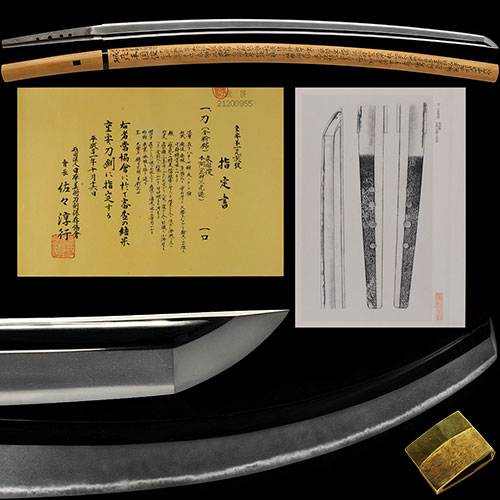
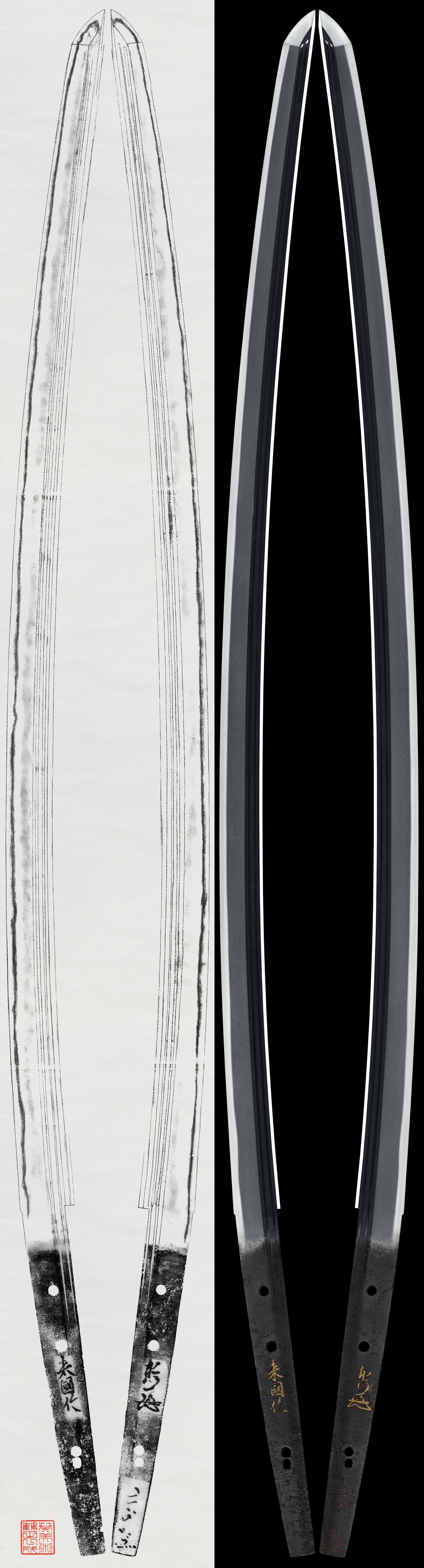
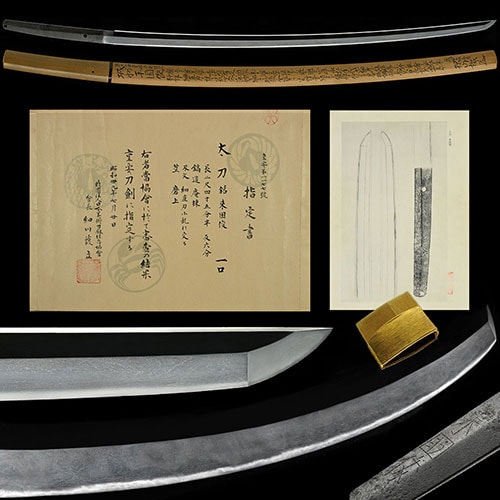
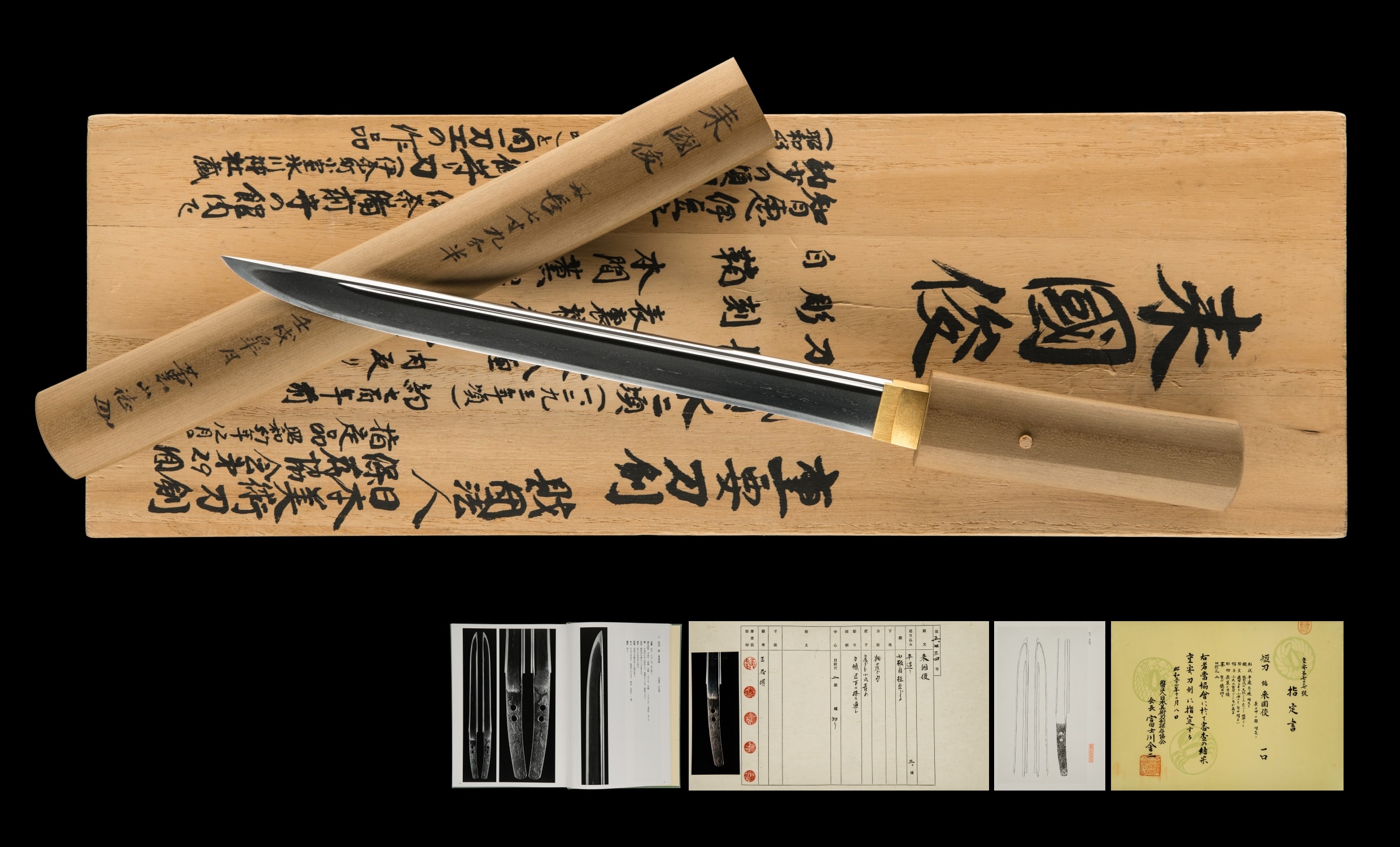
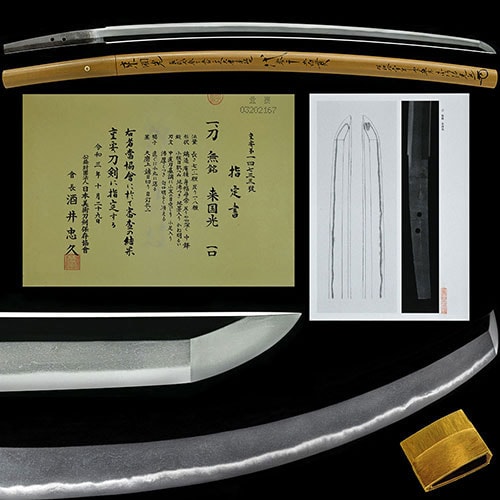
The published sources open Rai Kunitoshi's record with a single settled fact: he was "the first smith of the Rai line to crown his name with the character Rai, and all who followed took the practice from him"[[c:1]]. Traditionally the son of Rai Kuniyuki, he worked in Kyoto at the close of the Kamakura period. Dated blades open in the Shoo and Einin eras, fall silent for a time, then resume in Showa and continue through Bunpo, Gen'o and Genko; a tachi of Showa 4 (1315) in the Tokugawa Art Museum bears the age inscription seventy-five (七十五歳), and a work of Genko 1 (1321), cut at eighty-two, stands near the end of his production. This run of dated pieces is the backbone of the late Kamakura Rai chronology.
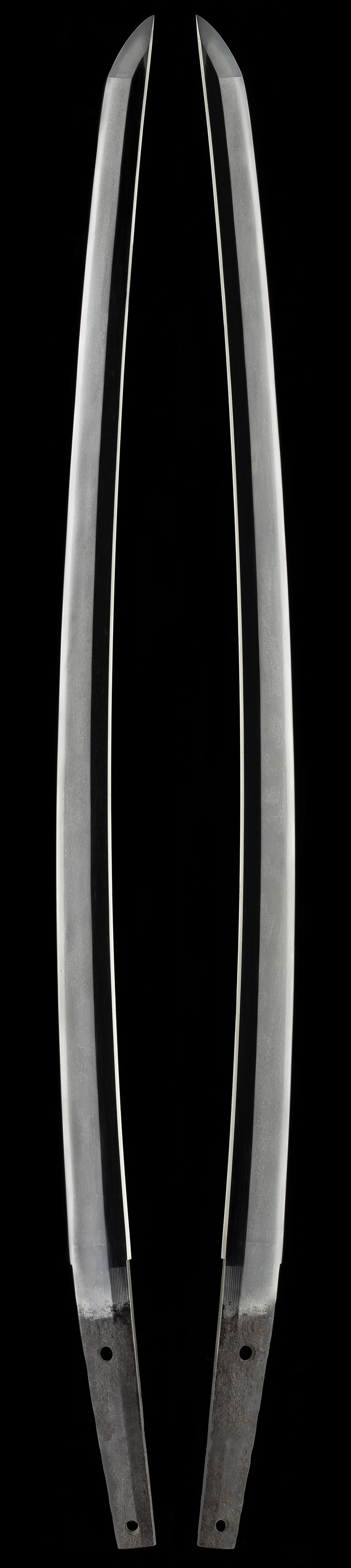
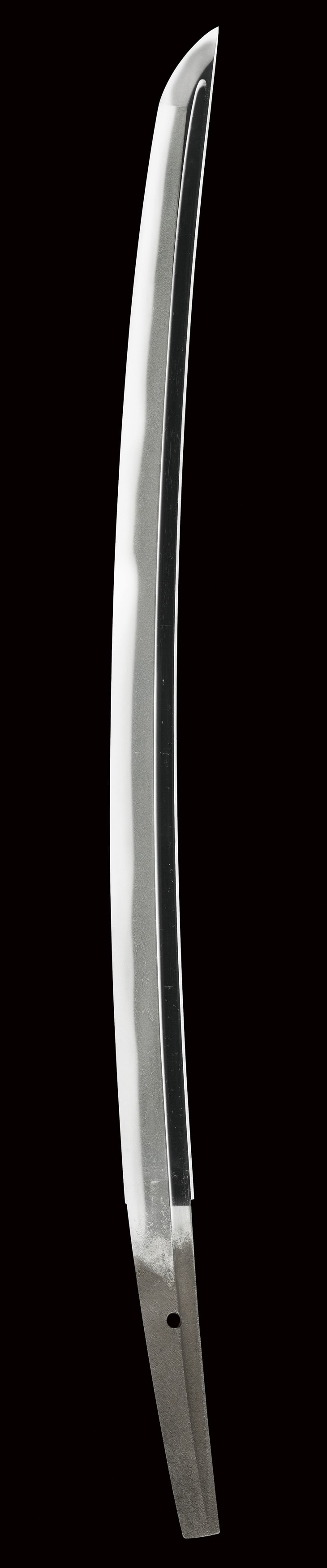
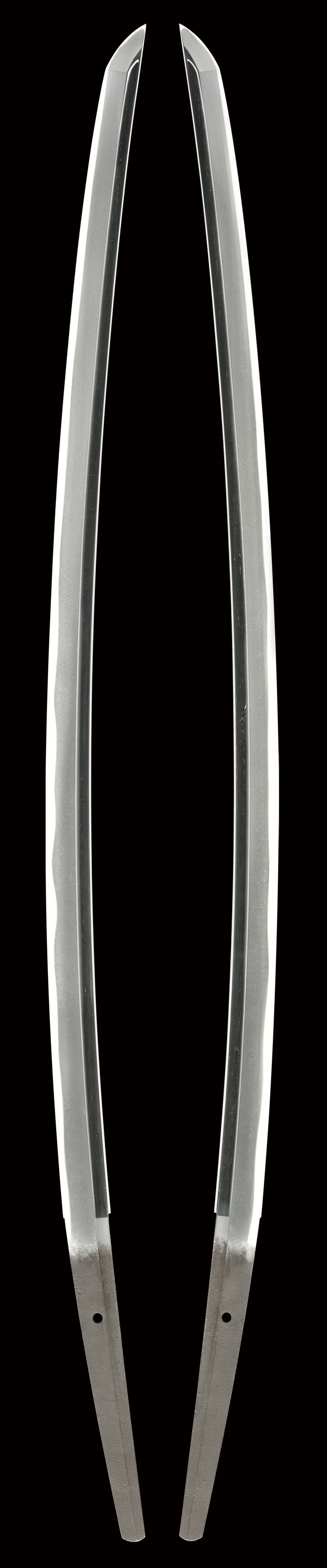
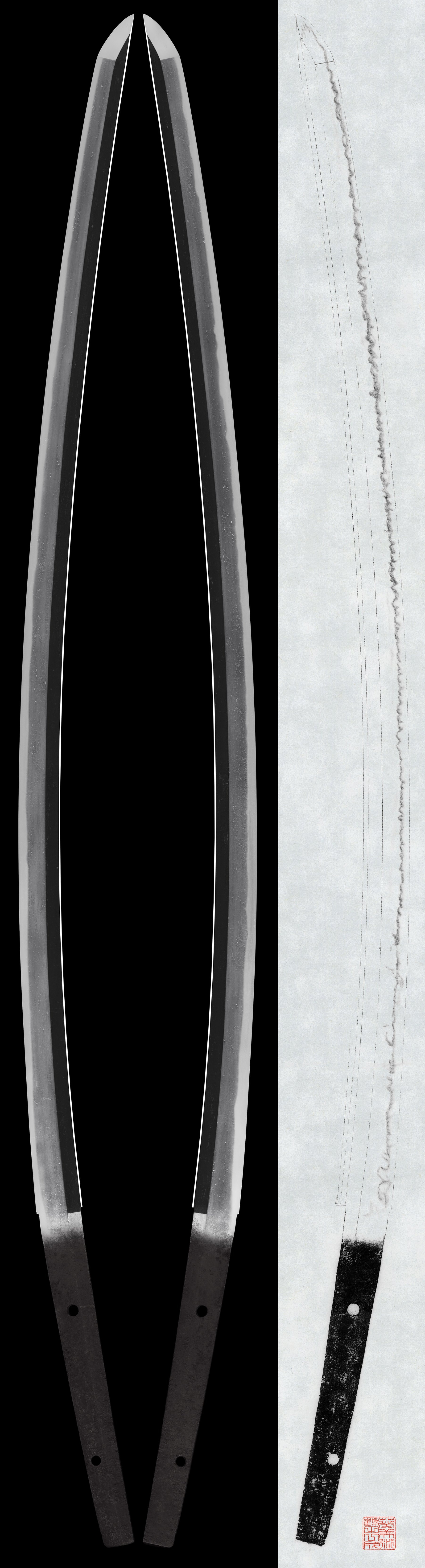
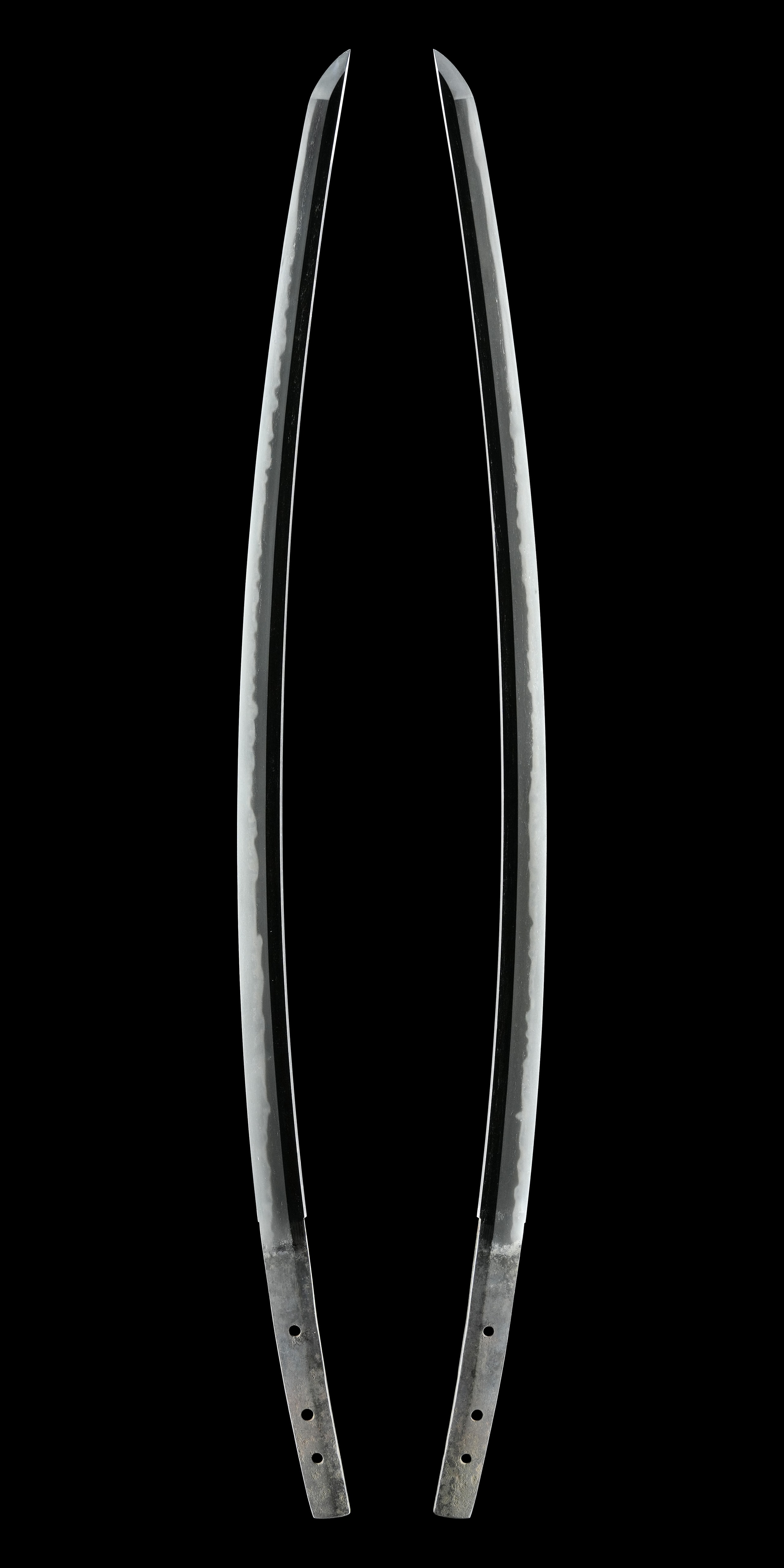
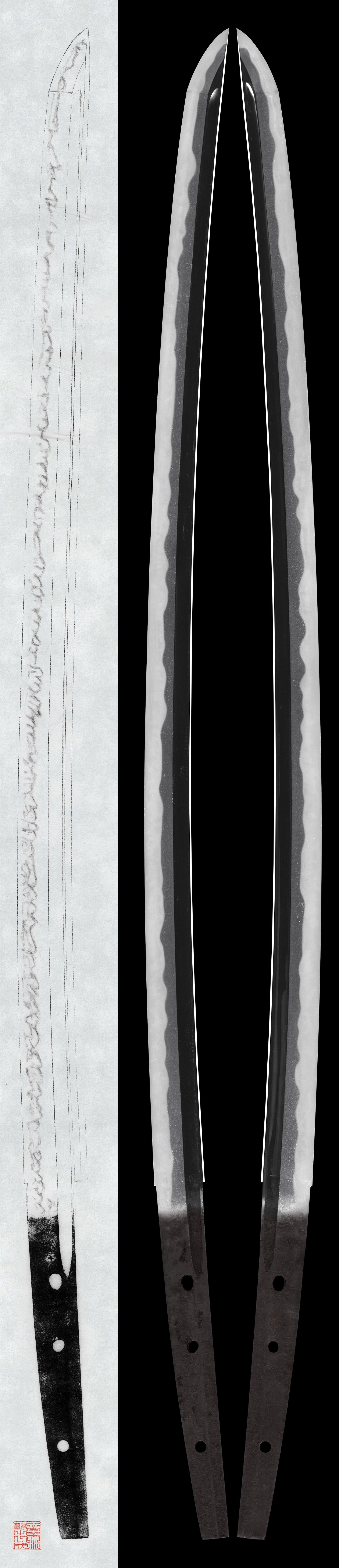
His hand is the Rai mainline at its most refined. The tachi are slender or of standard width with a pronounced taper, the curvature koshi-zori, turning to a rounded wa-zori on shortened blades, and the point small or medium. On this body he burns a chu-suguha or hoso-suguha in ko-nie with ko-choji and ko-gunome mixed in; ashi and yo enter well, at times slanting toward the nakago in the Kyoto manner the published sources call kyo-sakaashi. Nijuba appears in places, fine kinsuji and sunagashi run through the ha, and the nioiguchi is tight and bright; the boshi turns in a calm ko-maru, the tip lightly swept. The judgment the published sources attach to the whole is consistent: "a refined and calm manner that is Kyoto work through and through"[[c:2]].
The jigane carries as much of the attribution as the hamon: a tightly knit ko-itame with thick, often dust-fine ji-nie, fine chikei, and a nie-utsuri standing clearly over it; one Juyo appraisal adds that "the refinement of the jigane in particular deserves special mention"[[c:3]]. Here and there the larger, softer patches the texts call Rai-hada (来肌) intrude, and on tanto the hada may flow toward masame in places, both accepted as marks of the school rather than flaws. The packed ko-itame, the fine nie over it and the standing utsuri are what the appraisals return to whenever an unsigned blade is settled on his name.
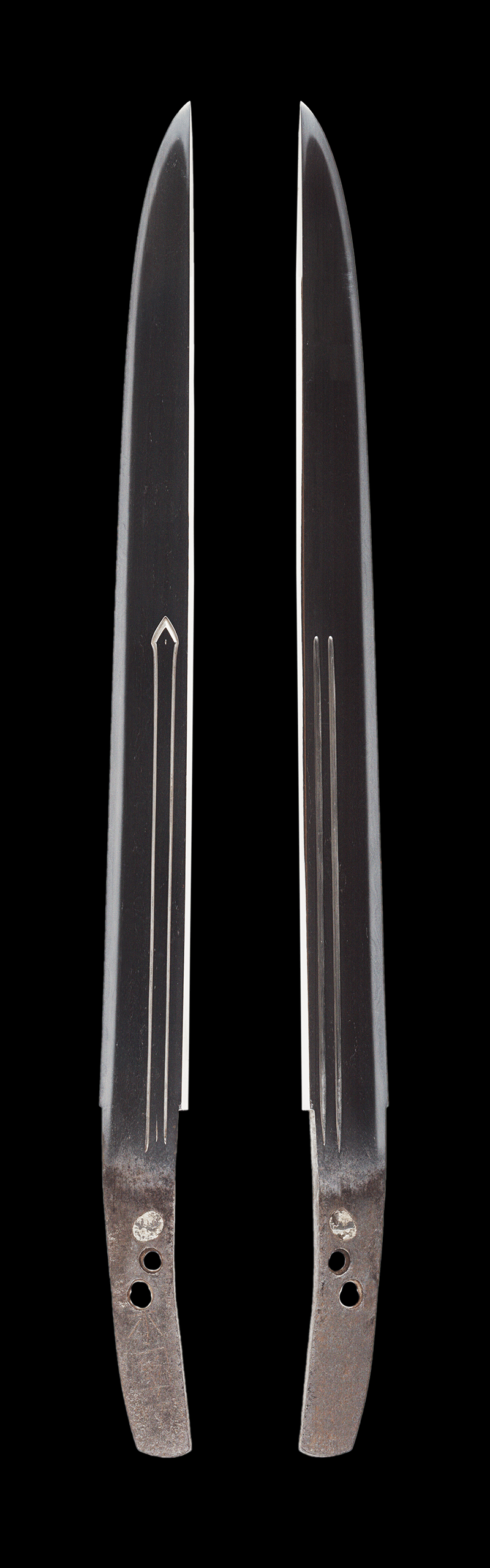
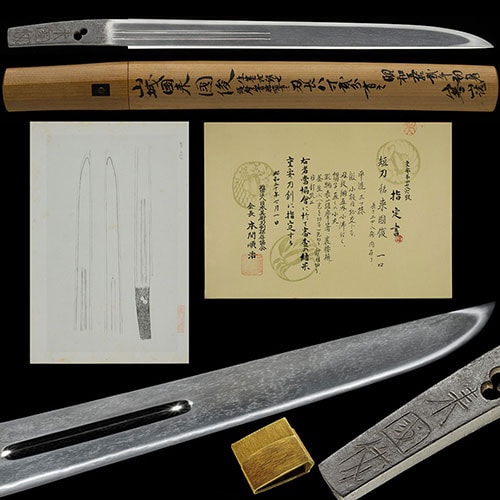
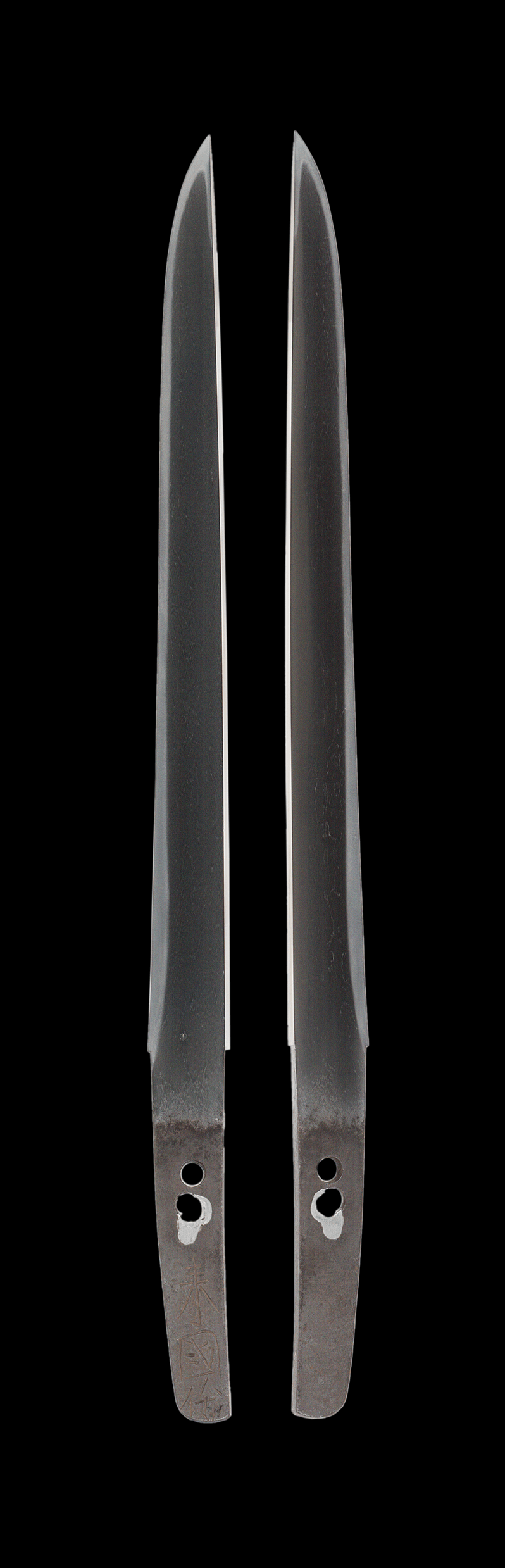
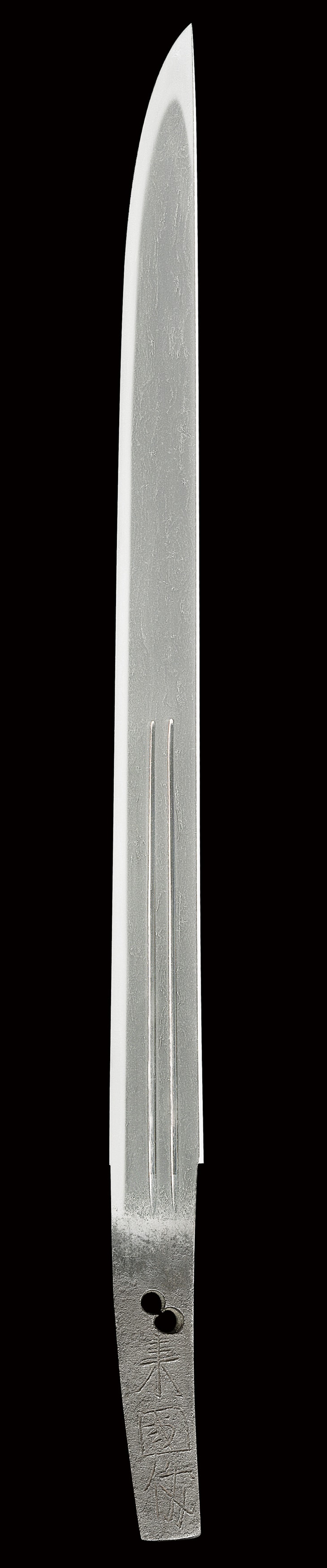
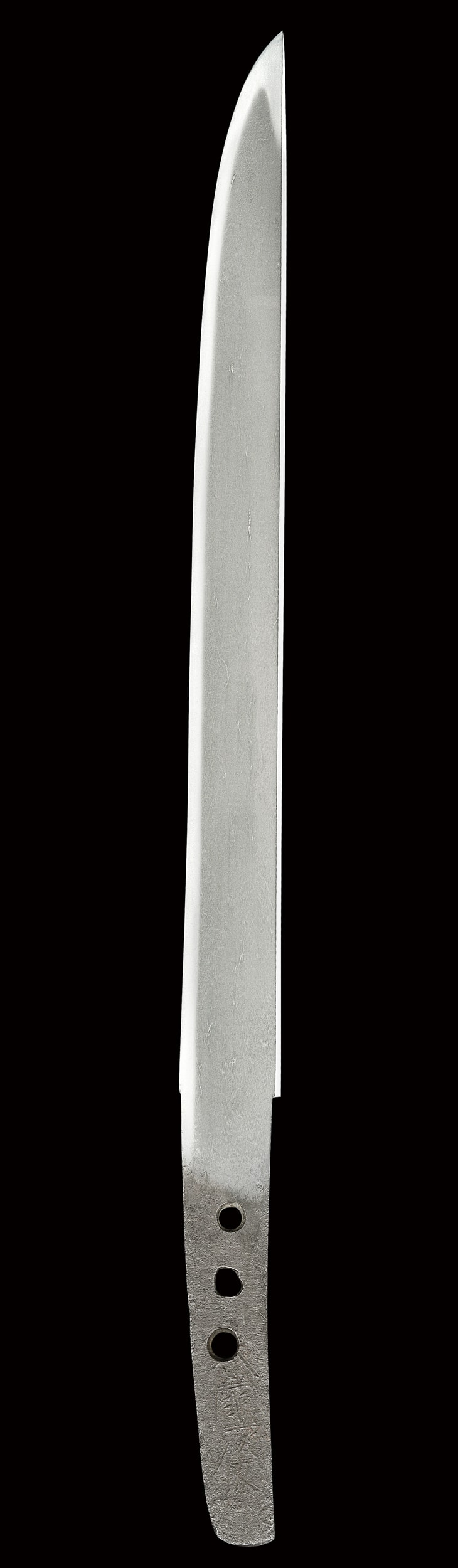
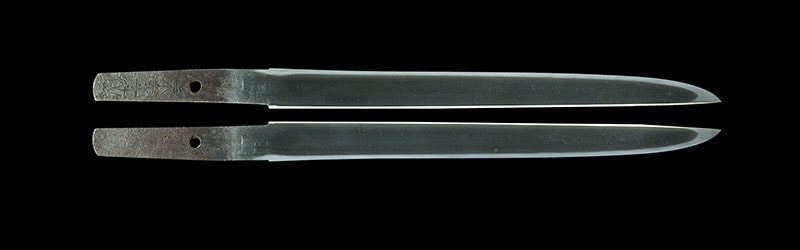
Nearly half of his published record is tanto: the sources state again and again that where the two-character Kunitoshi left a single example, the meibutsu Aizen Kunitoshi, Rai Kunitoshi left many. These are hira-zukuri and mitsu-mune, of standard width or slightly elongated, with the quiet uchi-zori of the late Kamakura period; the suguha may take a shallow notare, the kaeri of the ko-maru boshi often runs down long, and the hamachi is frequently hardened in. Carving is habitual, a katana-hi with a slender koshi-bi or suken set beside it, or bonji over gomabashi, the added side groove being a practice "peculiar to Rai work"[[c:4]]. Suguha rules him, yet a small choji group stands at the opposite limit. Its representative is a National Treasure tachi, and a kodachi raised at the 27th Tokubetsu Juyo session, slender, high in koshi-zori, mixing large-lobed choji with the nie thick in the ha, is called "the most flamboyant range of work in his oeuvre"[[c:5]], "just evoking Niji Kunitoshi"[[c:6]]. That evocation is the heart of the school's classic question, whether the two-character Kunitoshi and the three-character Rai Kunitoshi are one smith or two. The combined dated works run from Koan 1 (1278) to Genko 1 (1321), some forty years and no strain for a single career, and counted back from the age inscription of seventy-five, the lone dated Niji blade falls at age thirty-eight. In recent years, the sources write, re-examination of the workmanship and the signature forms has brought the same-smith view toward acceptance, prompting a rethink of the two-smith position, and the choji blades above are read as key material on his side of the divide. The signatures hold further scholarship: the Gen'o pieces turn cursive enough that the notes weigh his old age against a second generation; rare works add the Minamoto surname; and on a Genko 2 folded-signature katana once worn by Shimazu Narinobu, the character kuni is cut in the manner of his pupil Rai Kunitsugu, read as one of the rare cases of the pupil signing in the master's name, the third such example known.
The contrast with Niji Kunitoshi is the standing formula of his appraisals: against a grand body with ikubi point and a flamboyant choji-dominated midare, the three-character works set a slender or standard build, a suguha or suguha with small-patterned midare, and a gentle effect overall, so the two hands can be told apart even while the one-smith question stays open. His other neighbors lie within the school. At its quietest his hoso-suguha "can at first glance be mistaken for Ryokai"[[c:7]], and his calmest, largest tanto are read first toward Rai Kunimitsu before the dignity of the work, "a grade higher"[[c:8]], settles the attribution on Kunitoshi. His pupils Rai Kunimitsu and Rai Kunitsugu carried the school through the end of Kamakura, and the line between master and pupils is fine enough that the meibutsu Yuki Rai Kunitoshi, a tanto recorded in the Meibutsucho, is itself said at first sight to suggest Kunimitsu and Kunitsugu.
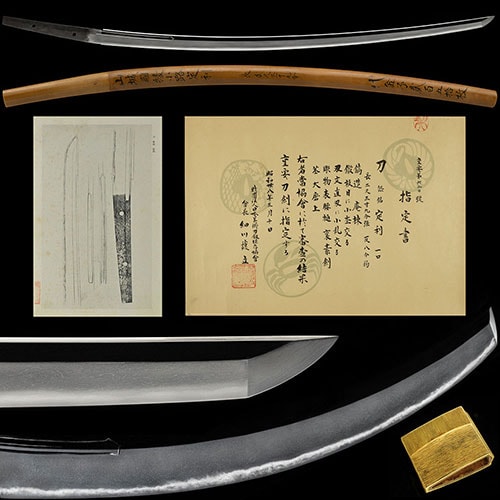
For a master of this rank he is unusually approachable. Fujishiro grades him Sai-jo saku; five of his blades are National Treasures and eleven are Important Cultural Properties, with twenty-one Tokubetsu Juyo and one hundred forty-three Juyo beneath them, one hundred sixty-four blades across those two tiers. Signed work is abundant, one hundred thirty-four signed against ninety-one unsigned here, which is why his chronology can be written at all. Ten blades are locked in the National Treasure and Important Cultural Property tiers and will never trade, among them the kodachi of Futarasan Shrine at Nikko; the Tokugawa Art Museum holds the age-75 tachi, and other works rest with the Tokyo National Museum, the Nezu Museum, the Sano Art Museum and the Kurokawa Institute. Sixty-one blades carry recorded provenance: Toyotomi Hideyoshi, the shoguns Tokugawa Hidetada and Iemitsu, the Owari and Kishu Tokugawa, the Maeda, the Uesugi, the Shimazu of Kagoshima and the Sanada of Matsushiro. Yet thirty-six works are recorded in private hands and many more sit in the tradeable Juyo tiers, so a suguha tanto or tachi by Rai Kunitoshi, late Kamakura Yamashiro work in its purest form, remains a goal a serious collector can actually reach; the choji blades and the dated pieces stand effectively beyond the market.