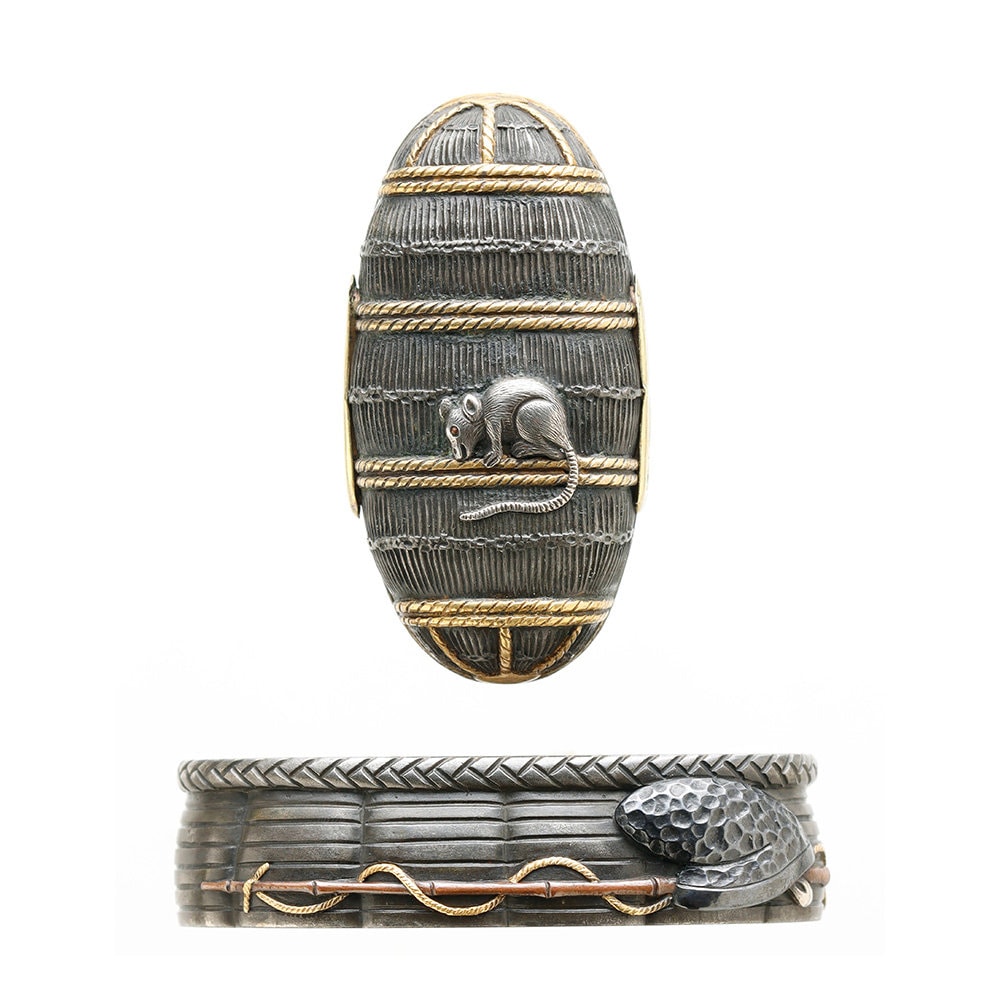
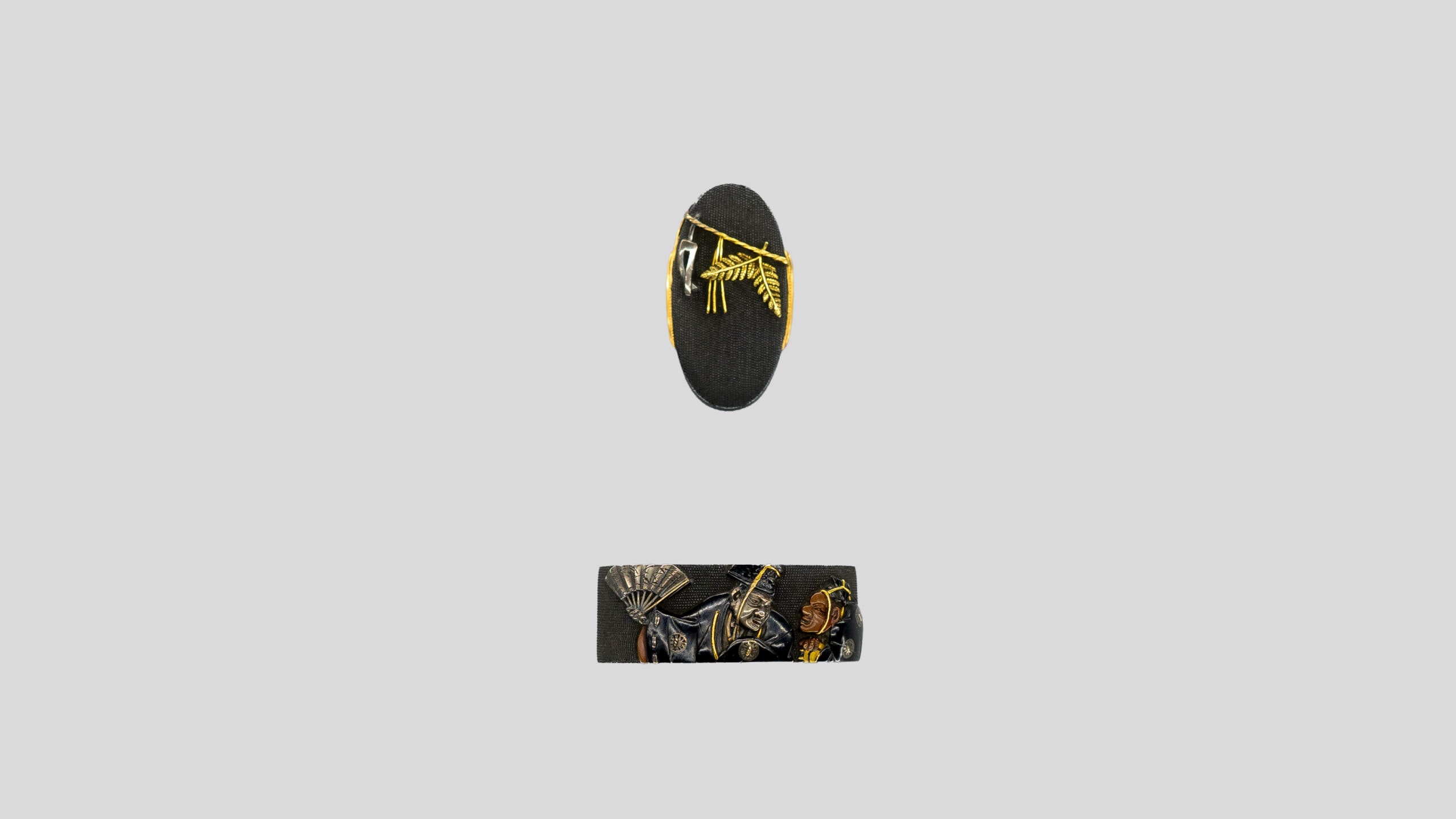
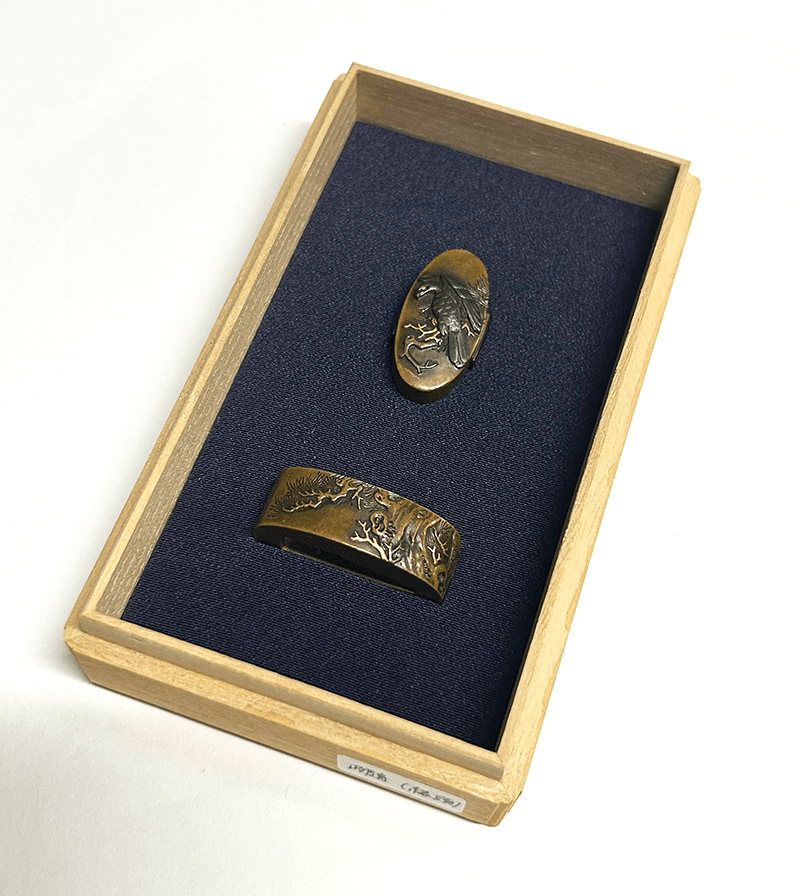
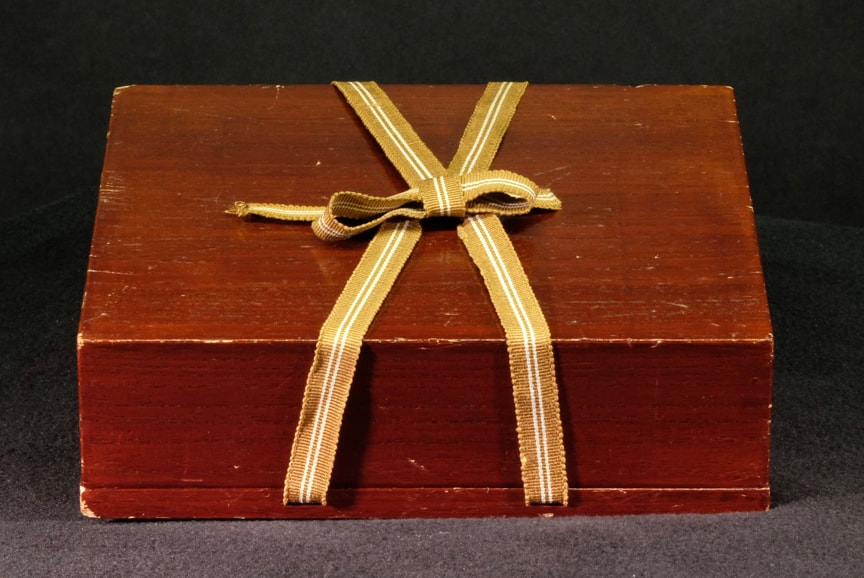
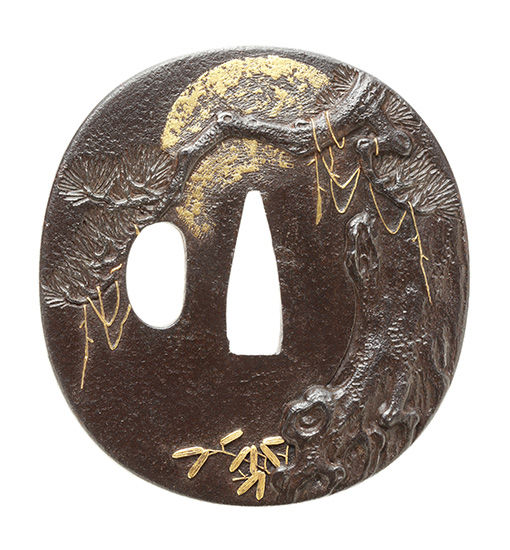
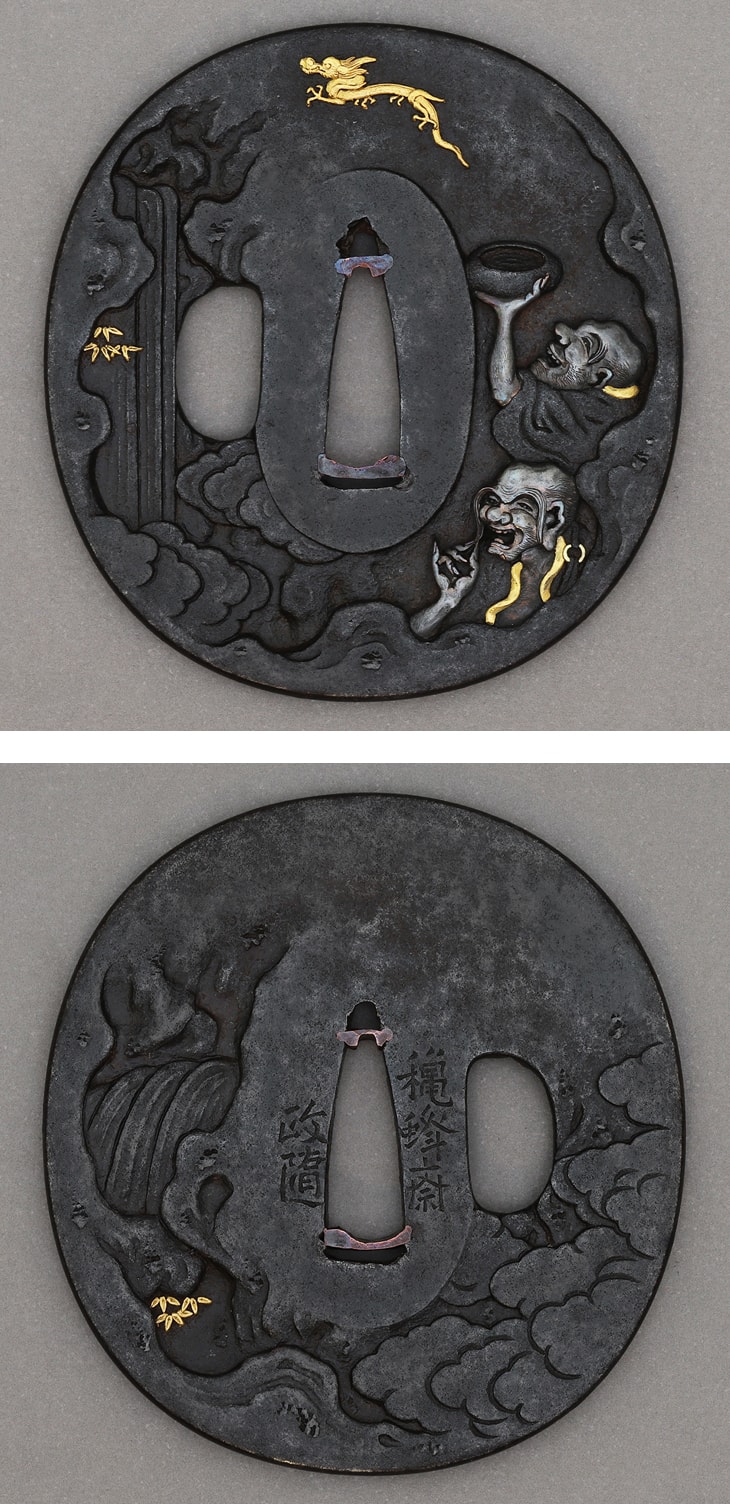
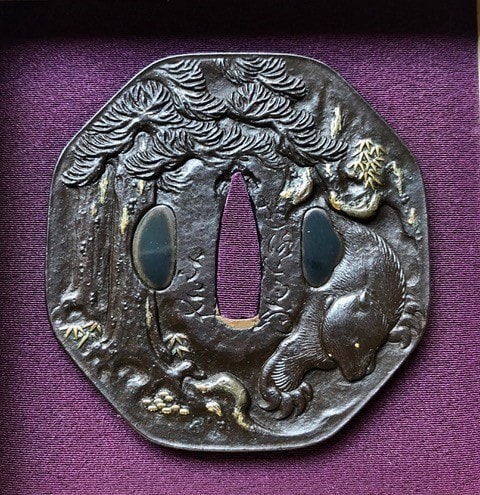
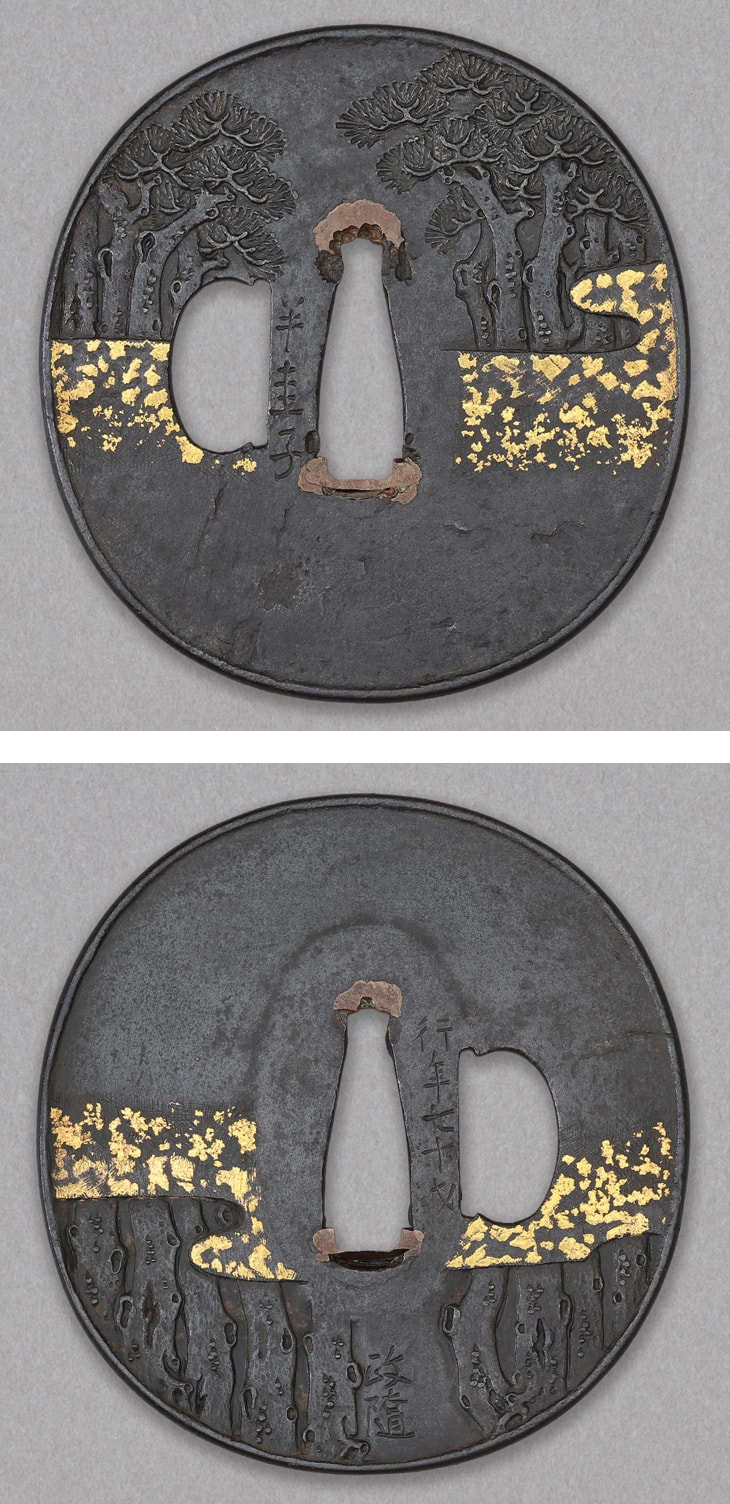
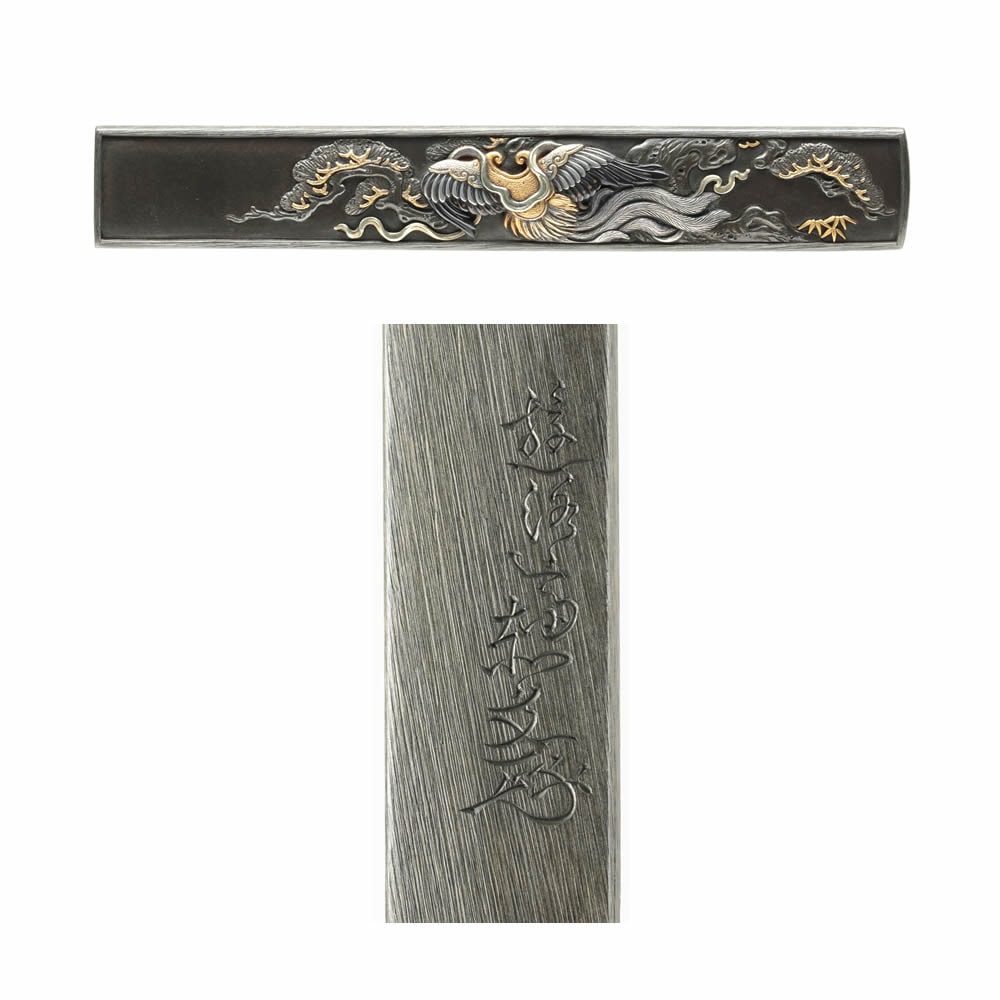
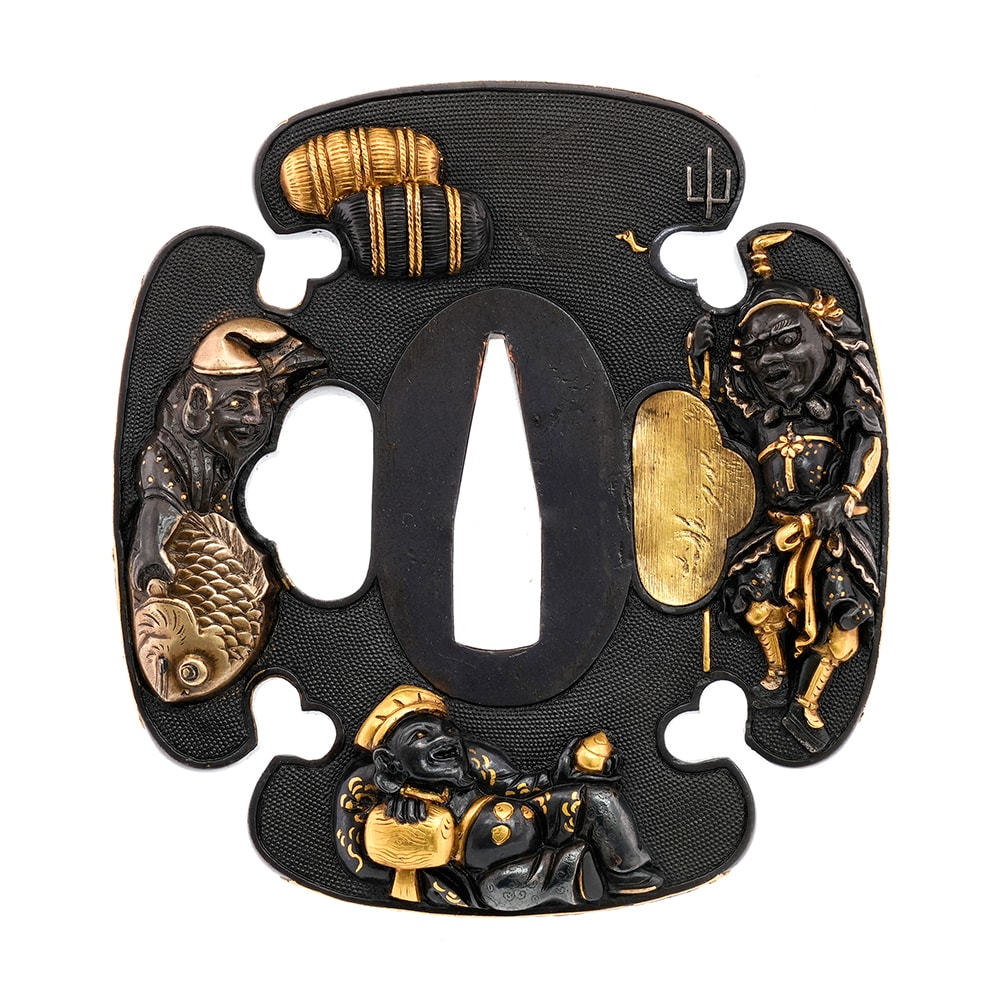
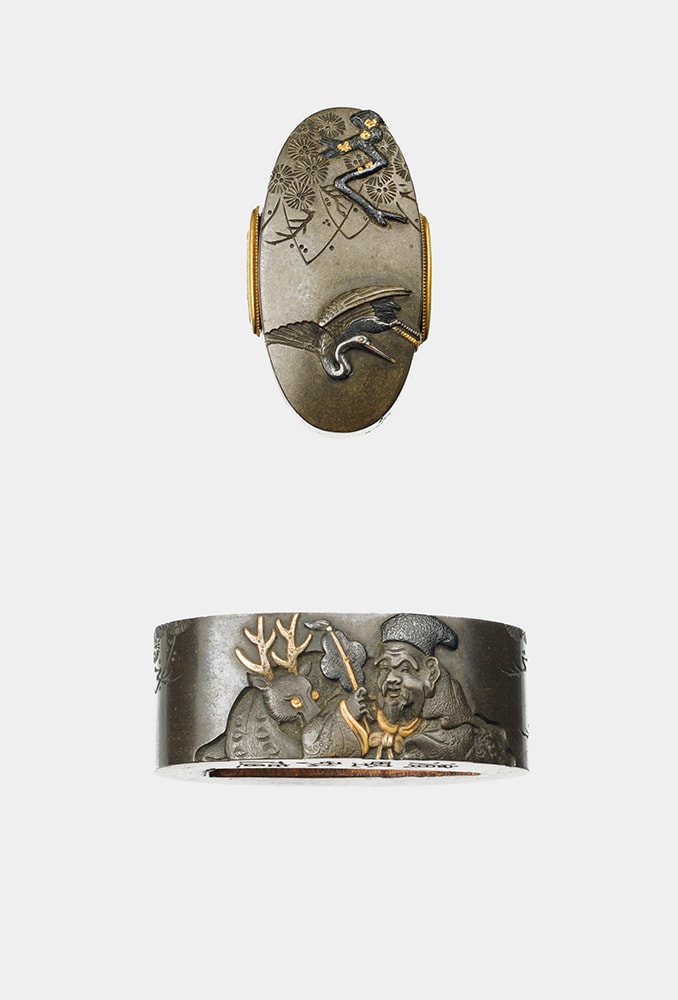
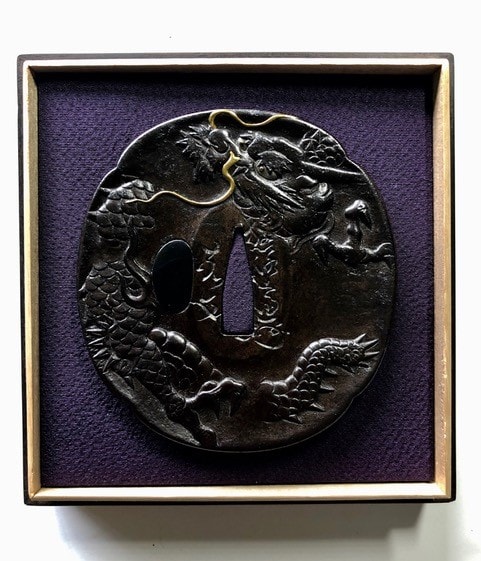
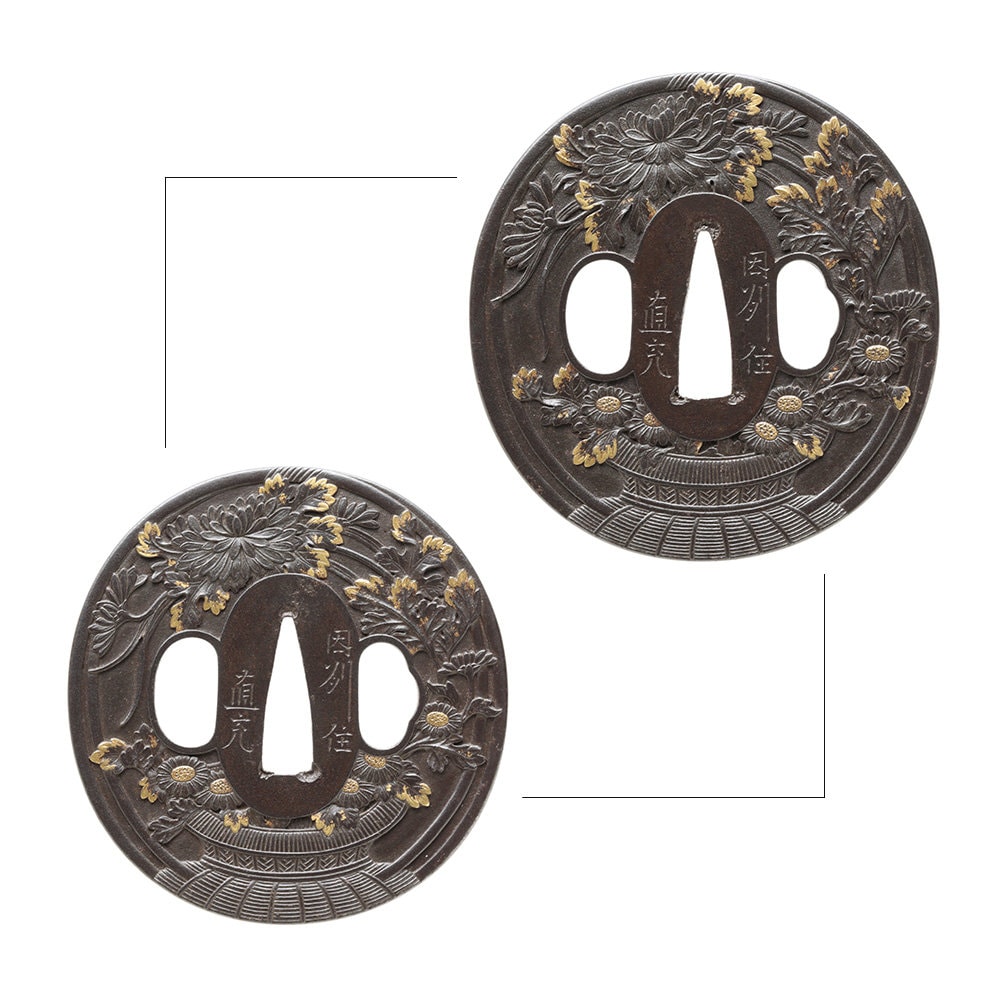
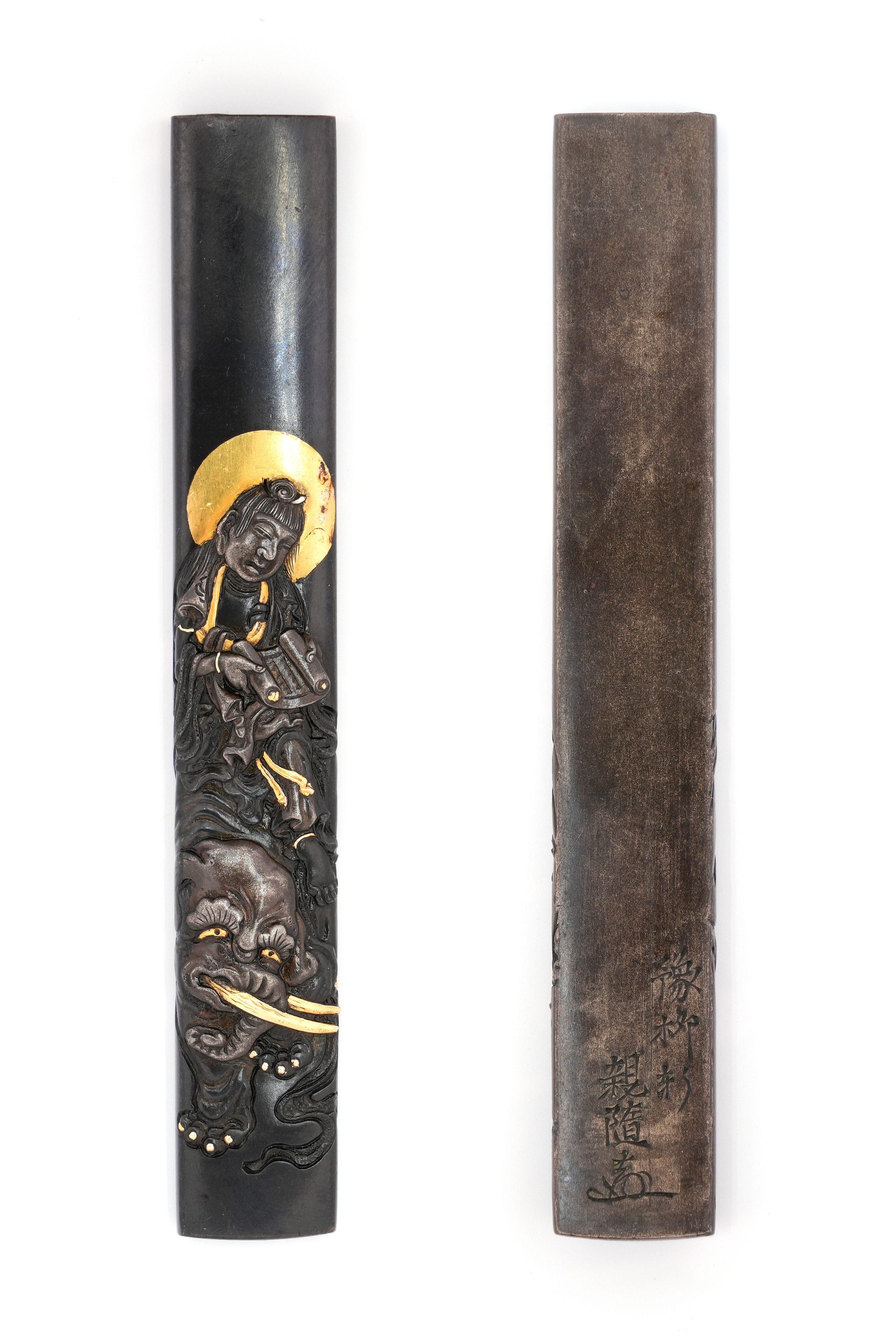
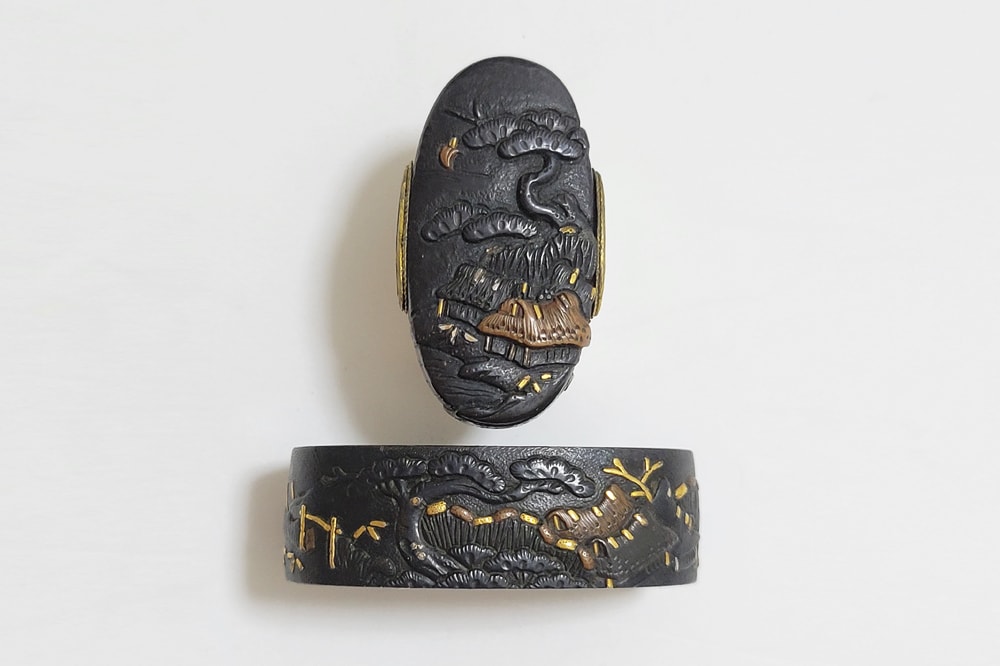
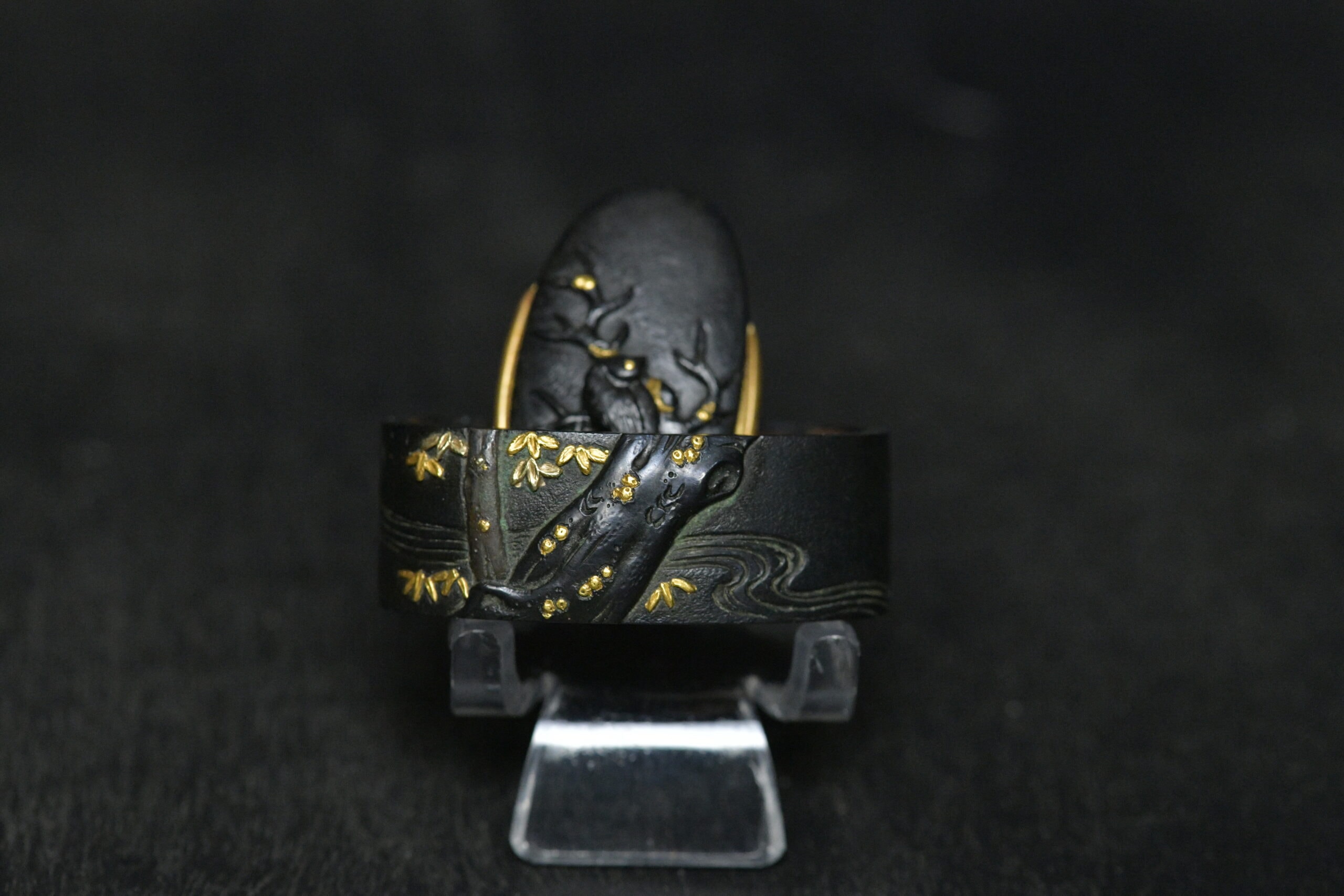
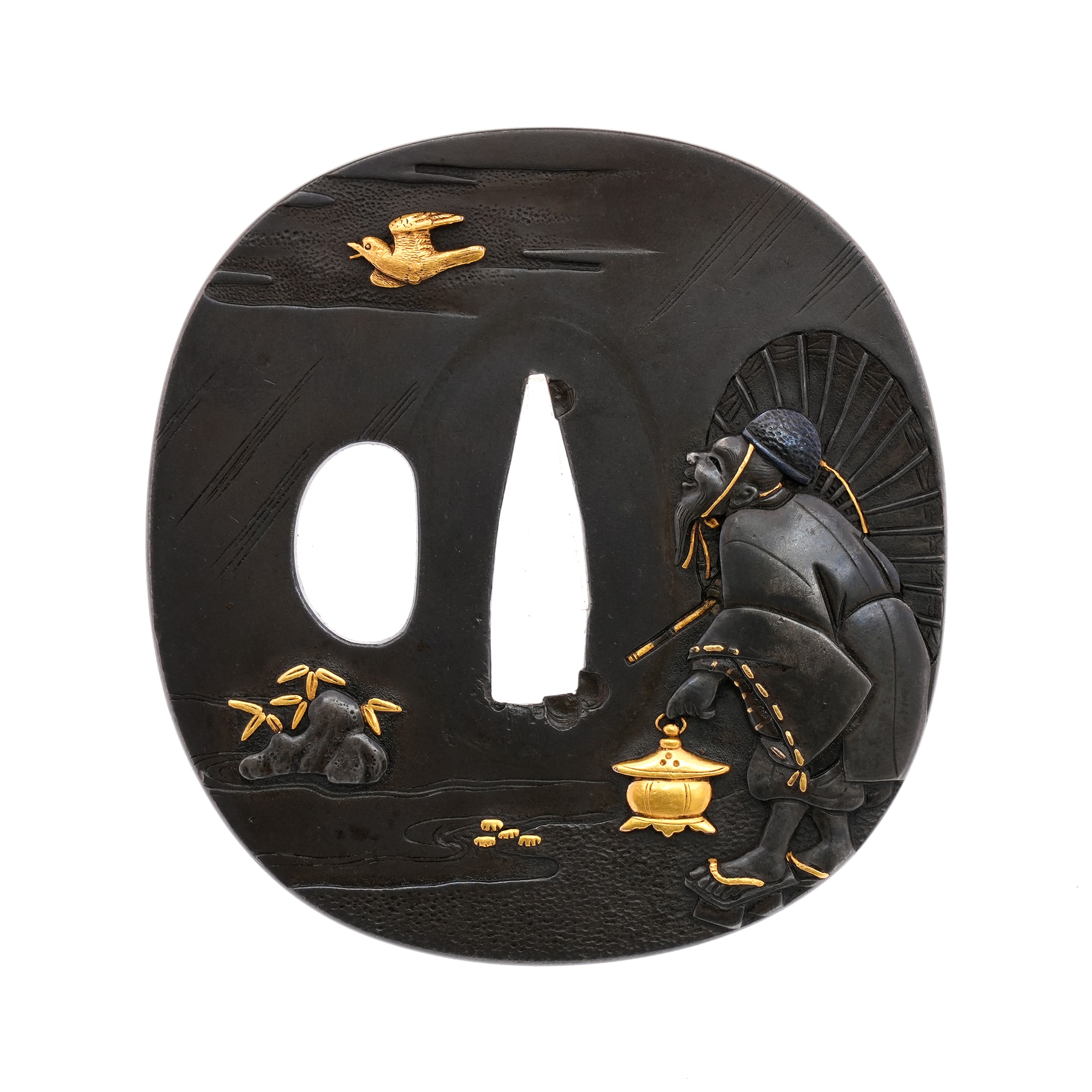
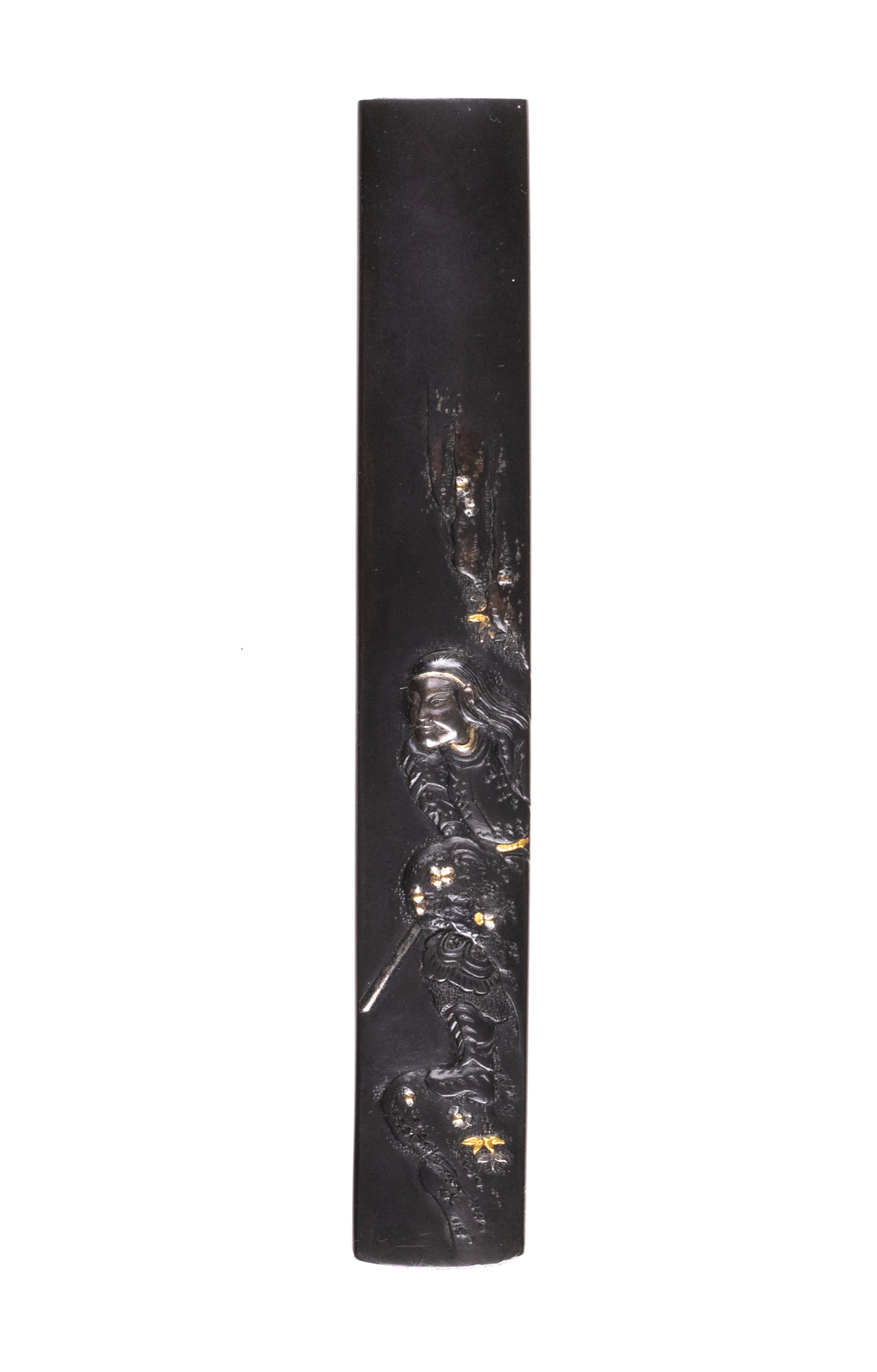
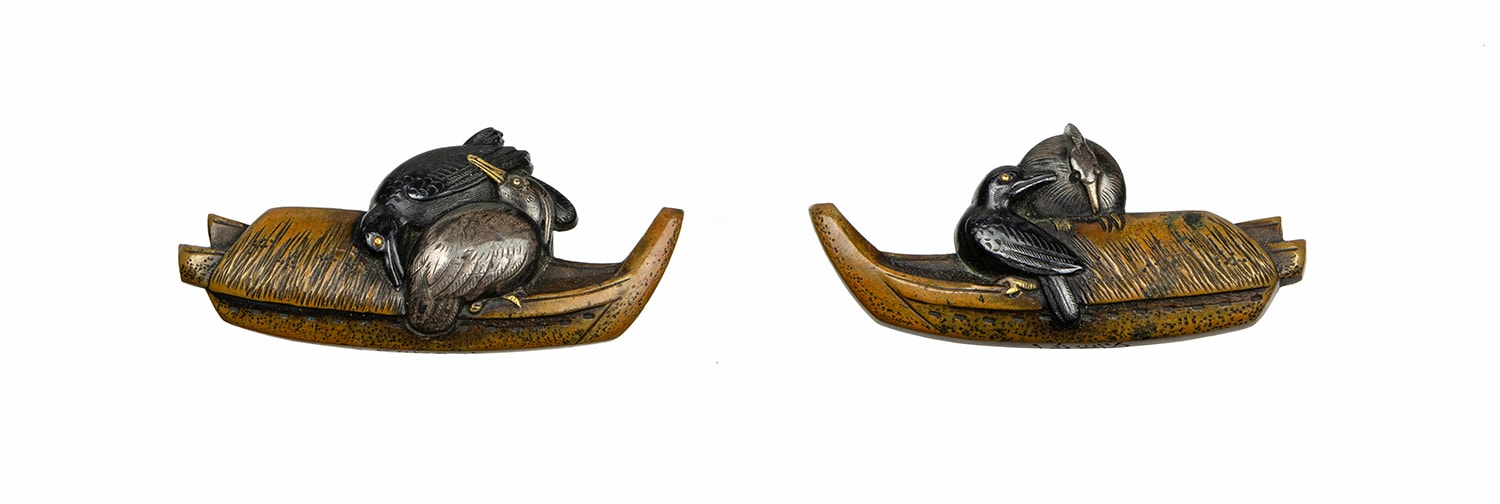
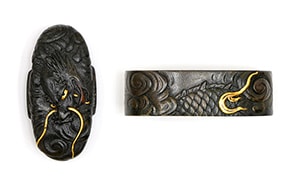
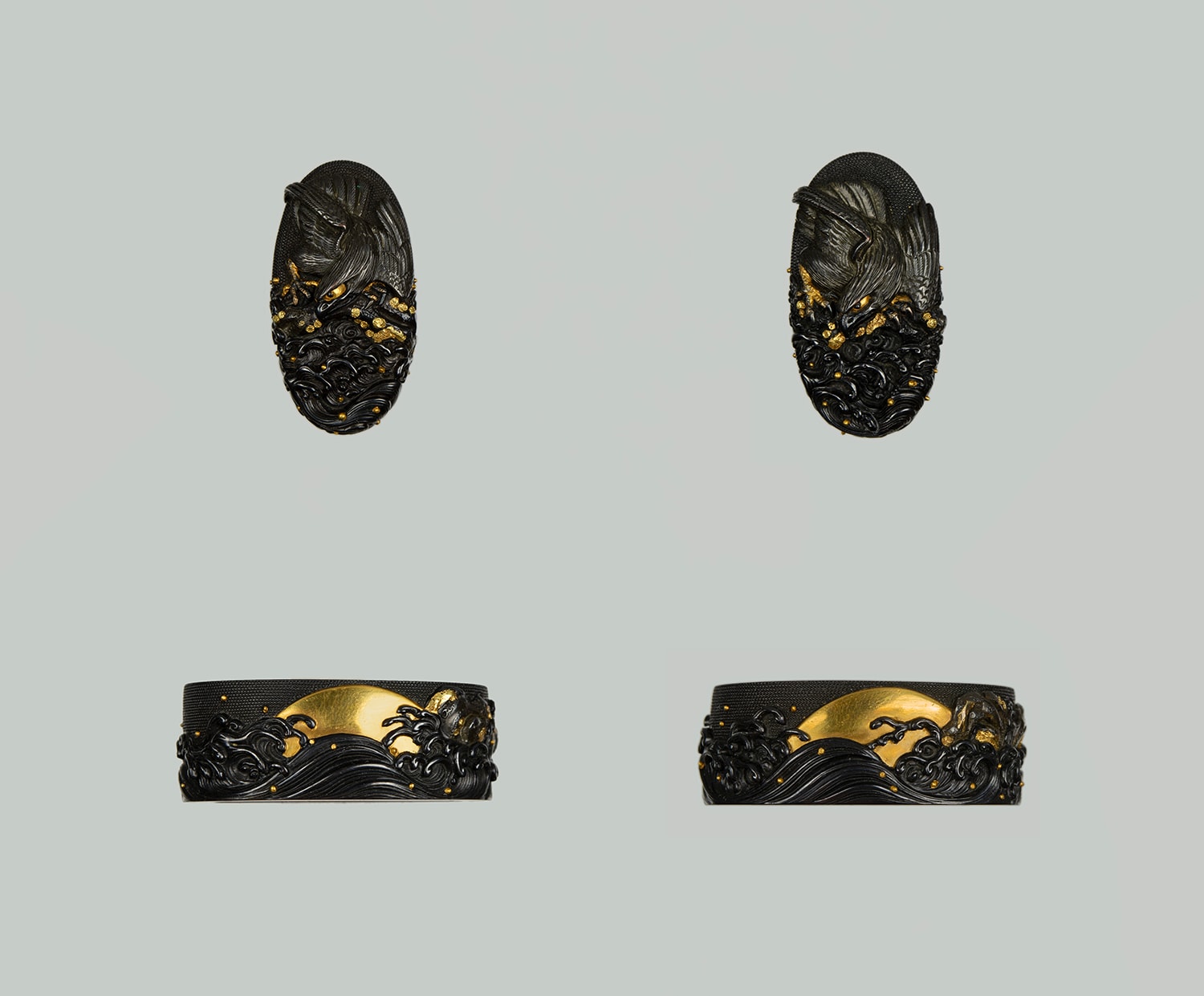
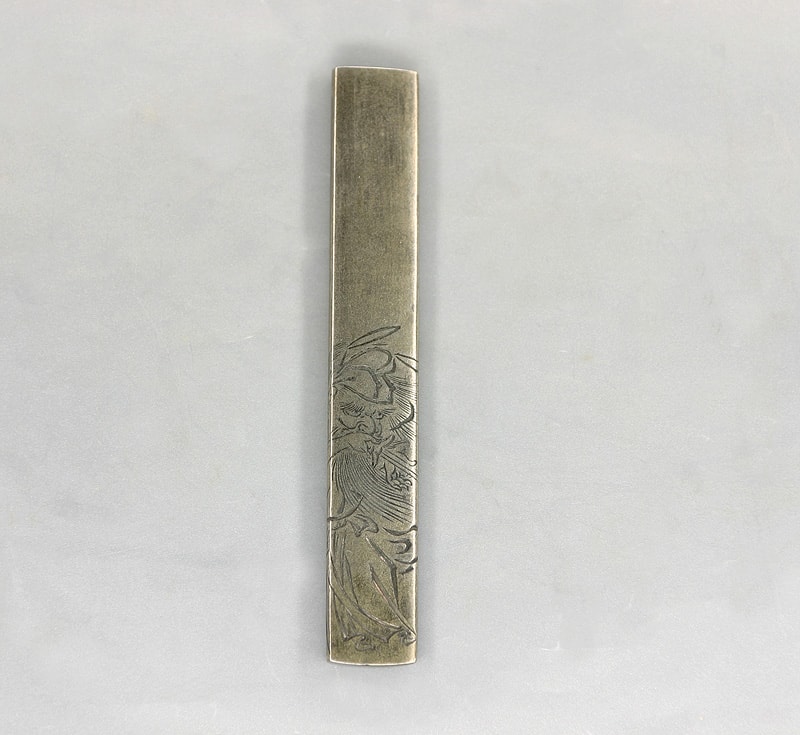
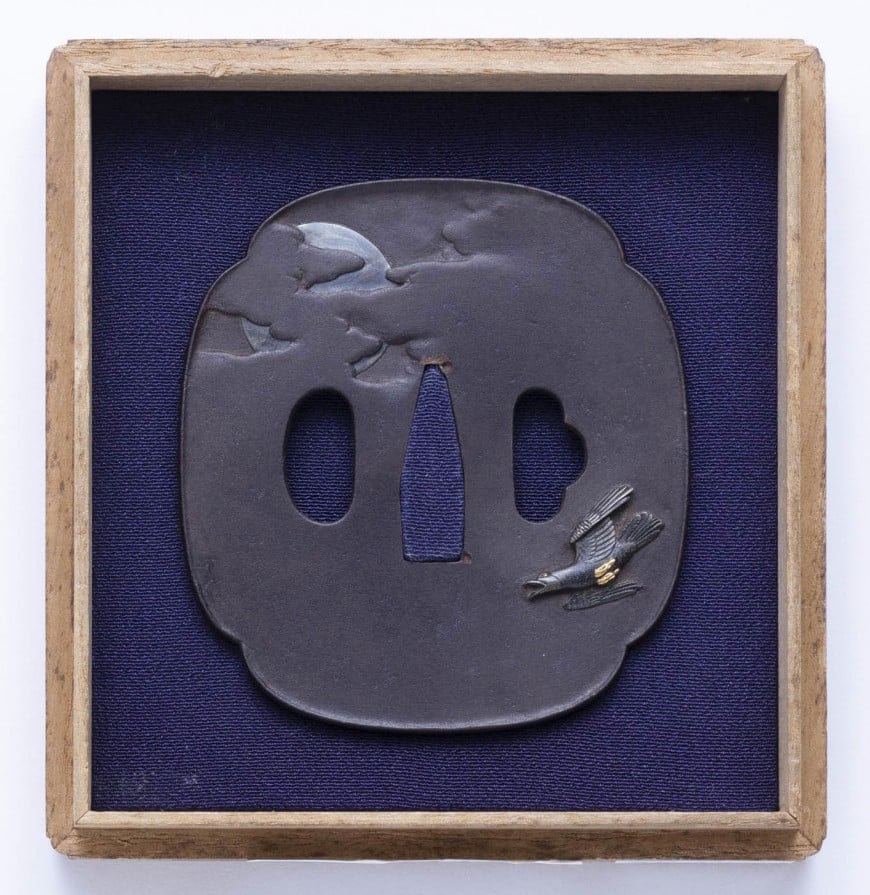
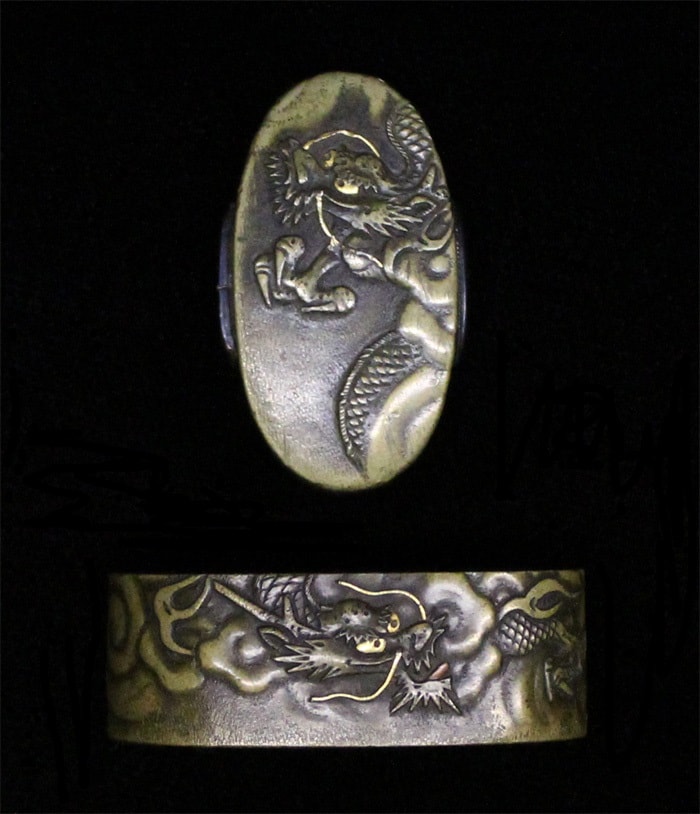
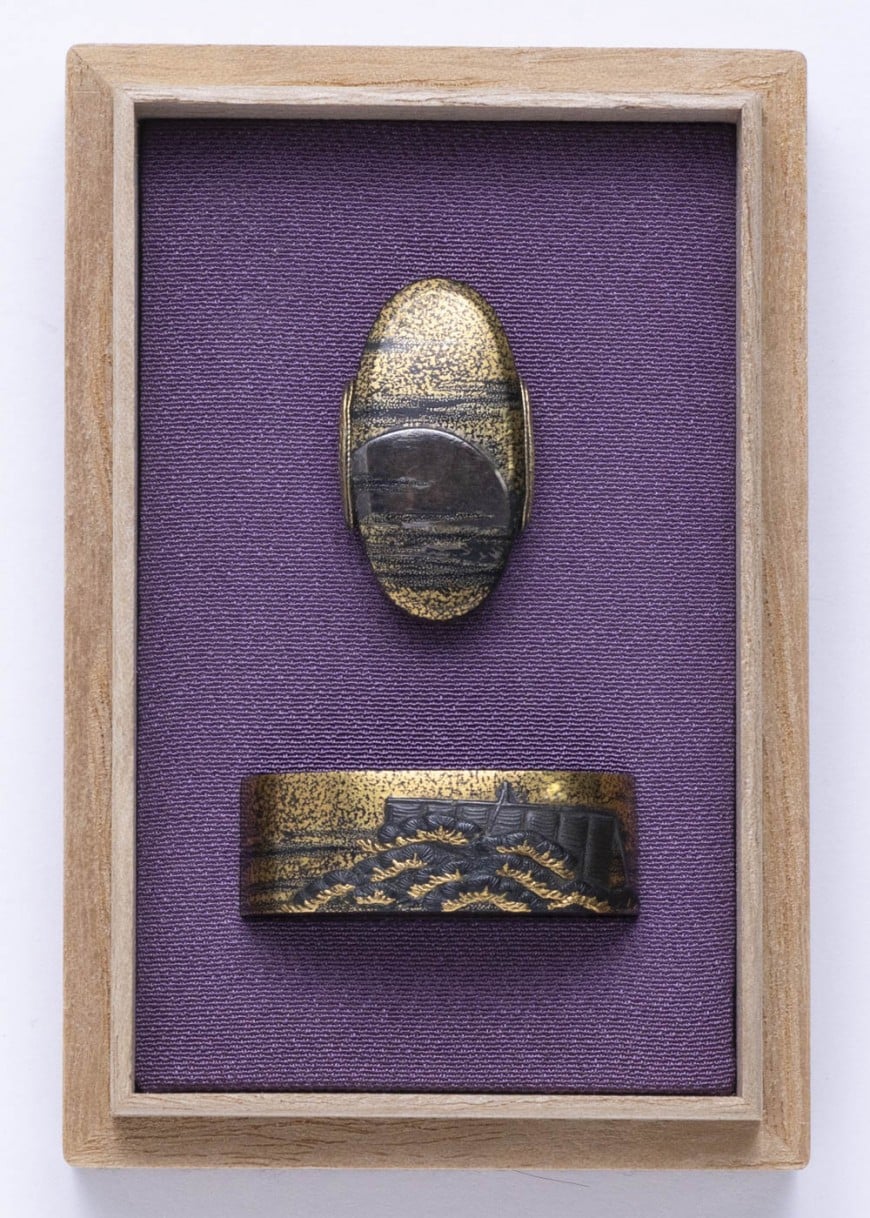
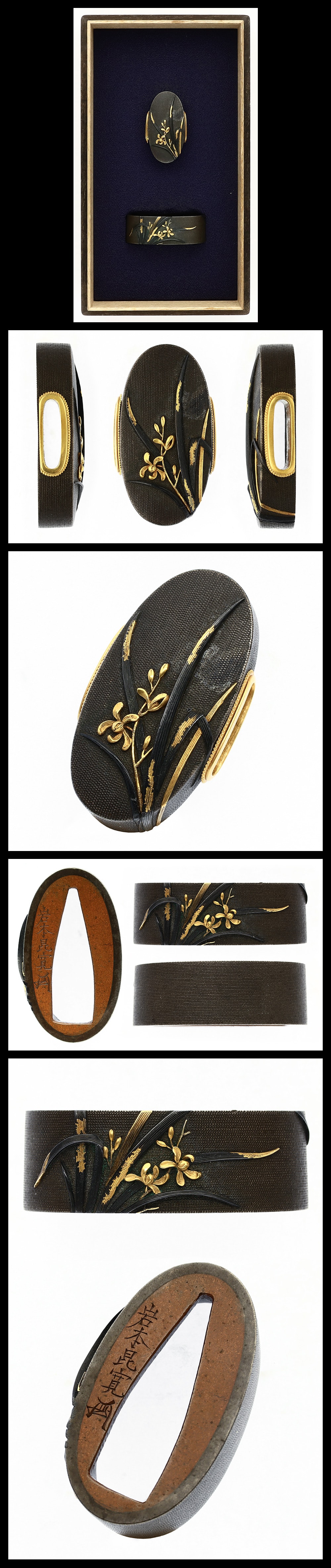
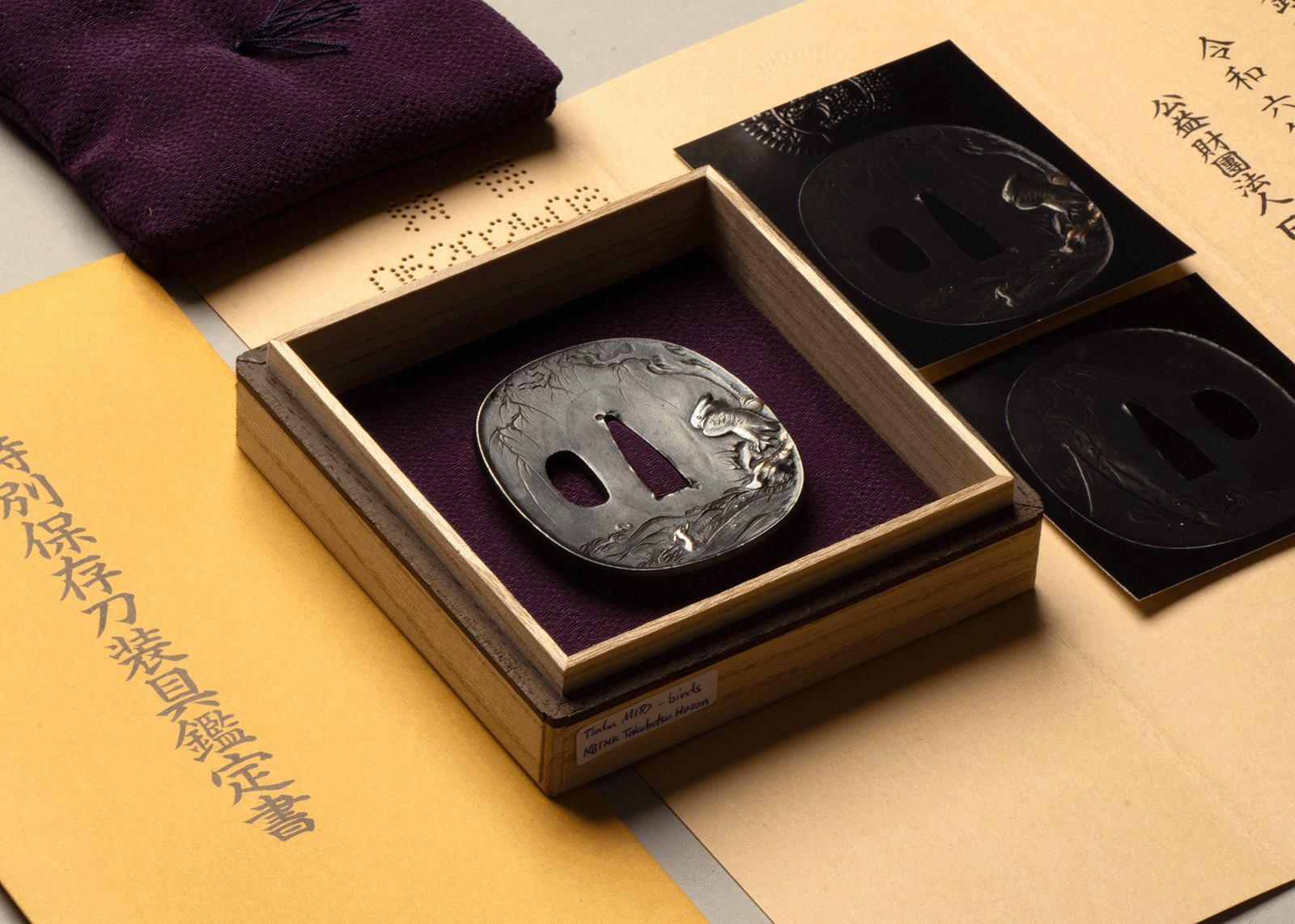
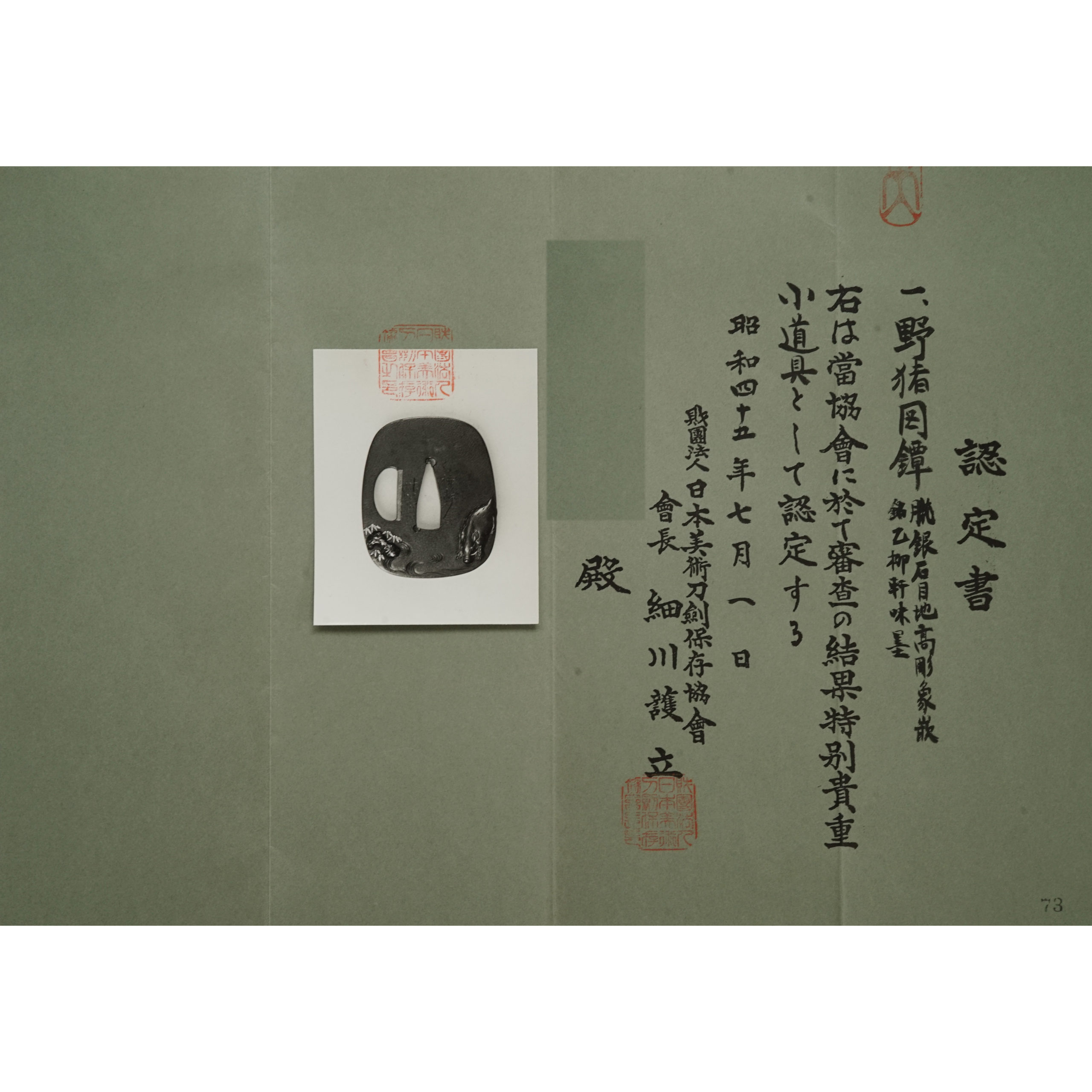
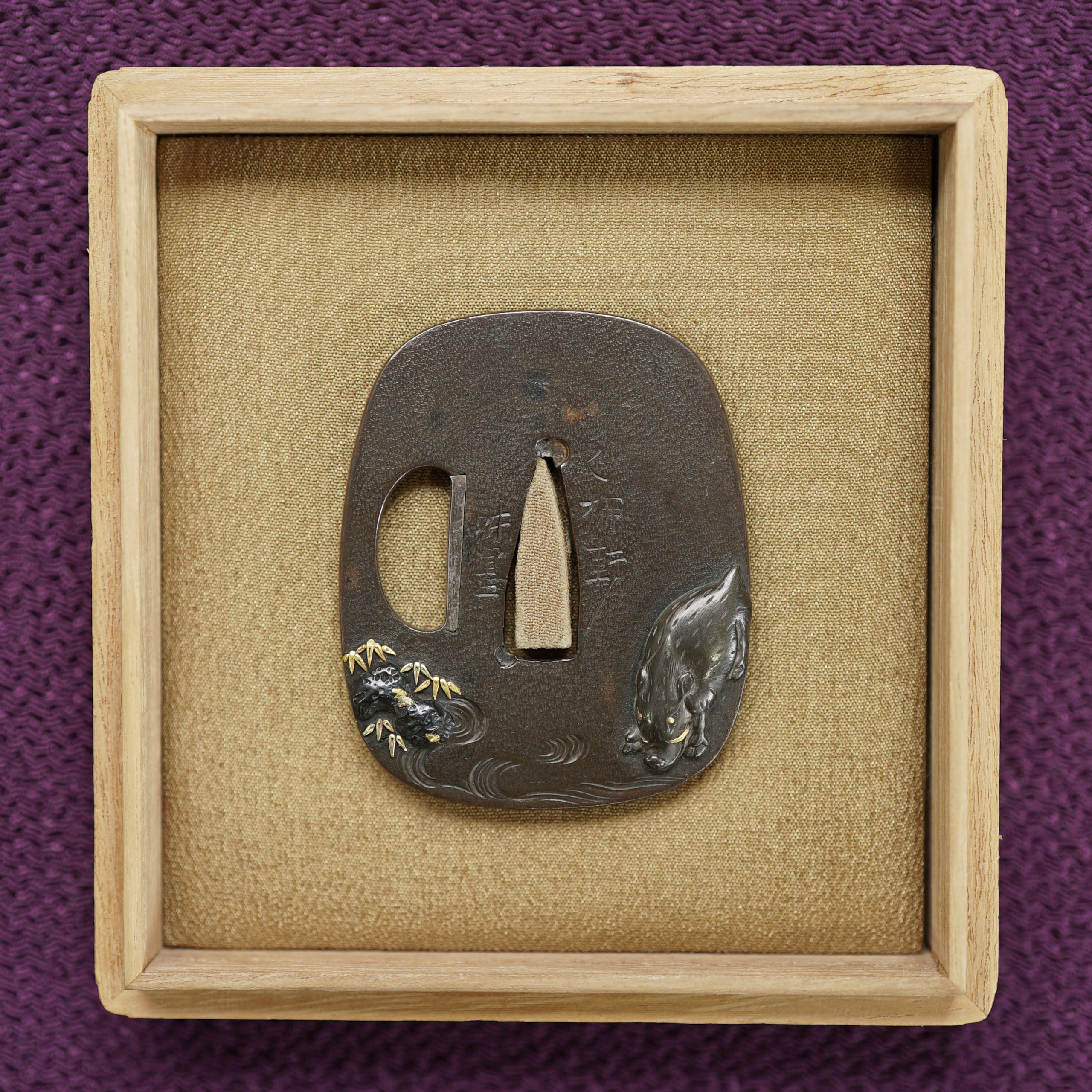
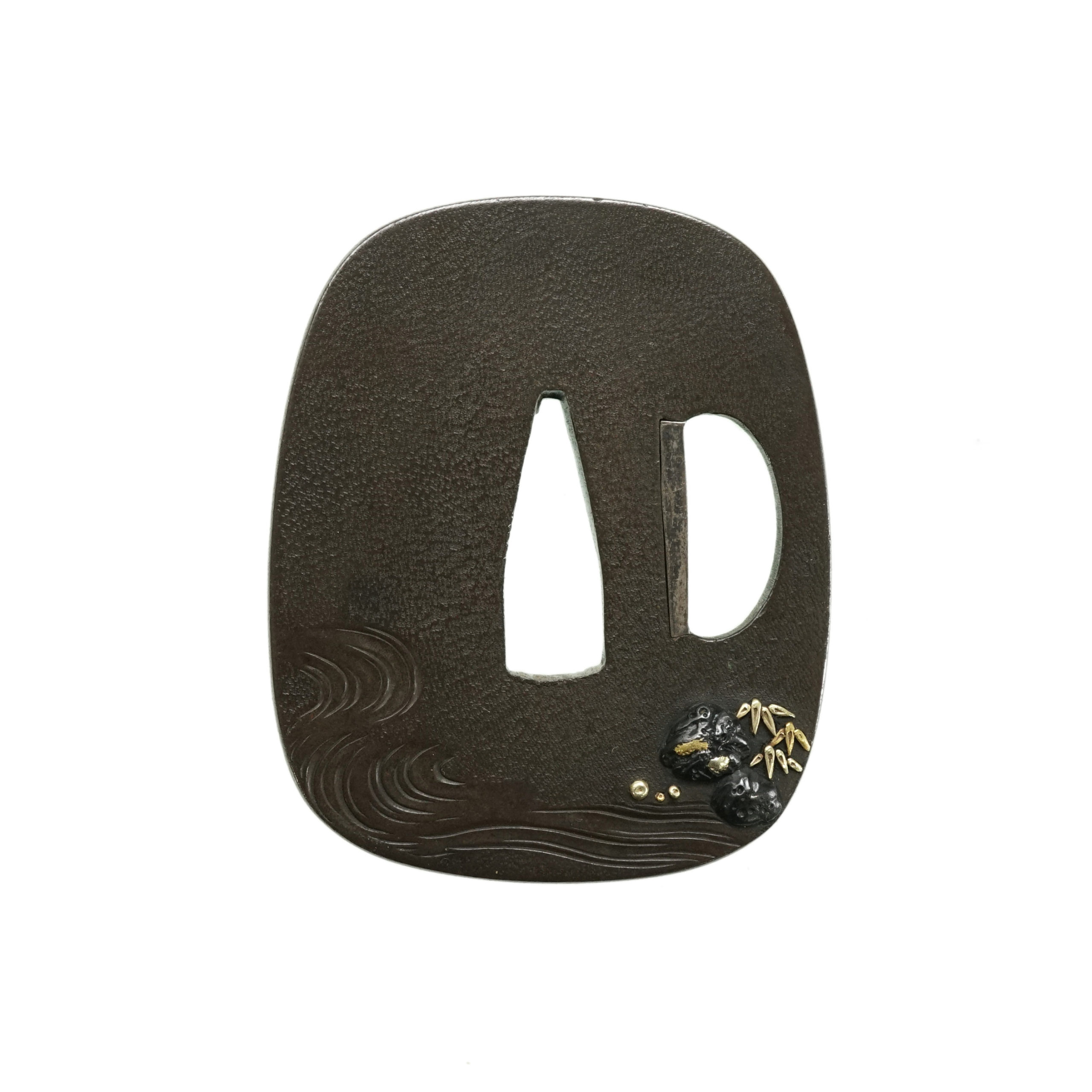
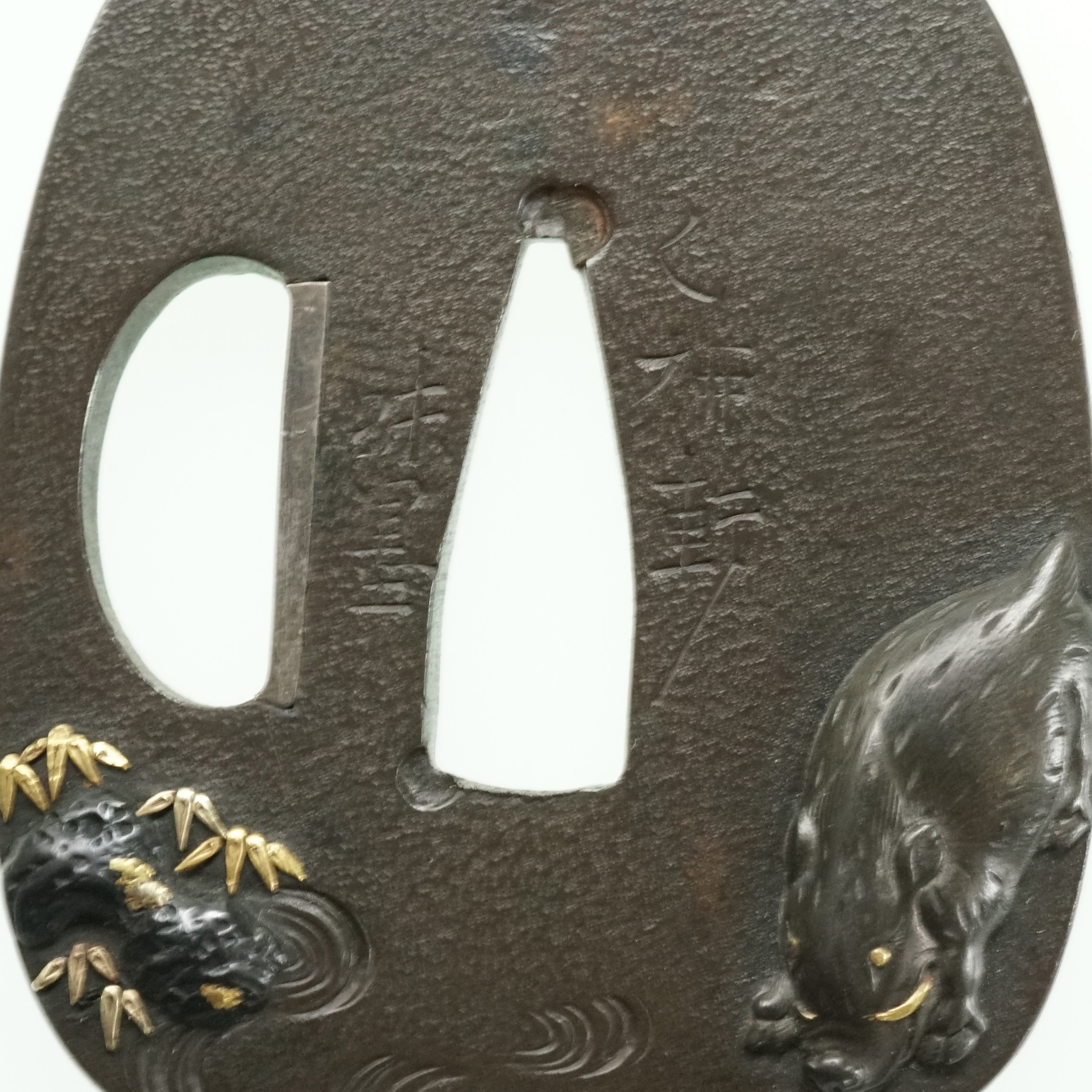
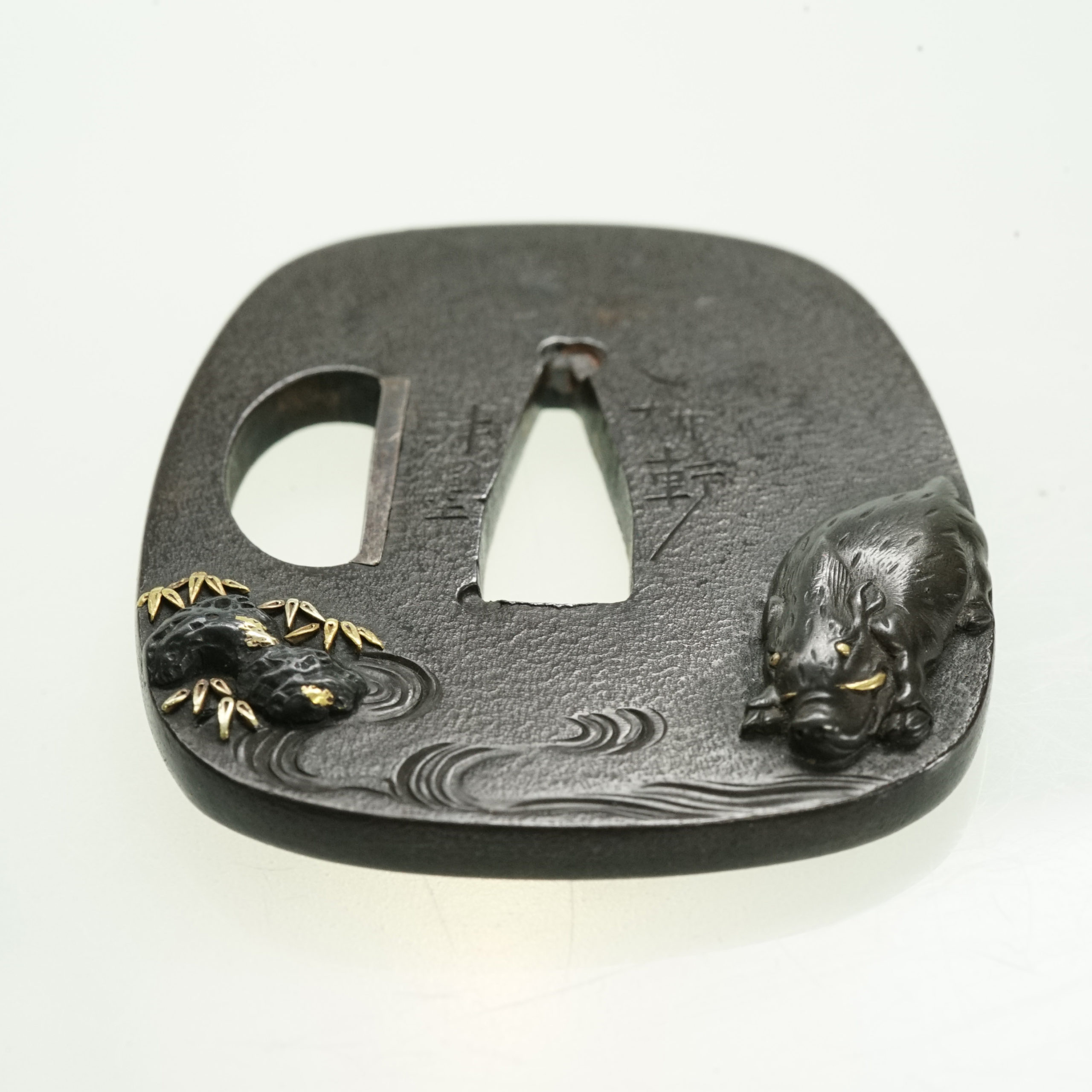
Title: Wild Boar Description A Shibuichi Tsuba sloping four corners shape with a Kozuka hole. A wild boar is engraved and inlaid with gold on the face. Its creator Shozui Hamano (1696-1769), was a pupil of Toshinaga Nara. He used his “Go” (like artist name) such as Miboku. The boar’s eyes are also used as a pattern for metalworks called “Inome Monyou” in Japanese. This pattern looks like a heart mark and works as an amulet. It is believed it would protect us from evil spirits. This Tsuba is recognized by The Society for Preservation of Japanese Art Swords, which is known as NBTHK. *As this item is an antique, please check each photo and ensure its condition. What is Tsuba? Tsuba is the hand-guard of the Japanese sword. High-class Samurai wore his katana sword with its beautiful sword mountings such as Tsuba. Tsuba’s front design tends to be more decorative as this part was often seen by other Samurais when he was walking on the streets. Why is it that the sword mounting was important for Samurai? The sword mountings of the Japanese sword have many kinds of decorations such as handguards (Tsuba), sword hilt (Menuki), pommel (Fuchi Kashira). The sword mountings of the Japanese sword have many kinds of decorations such as handguards (Tsuba), sword hilt (Menuki), pommel (Fuchi Kashira). The Japanese sword worked as a weapon and as an object to show who he was. For example, it shows their personalities and beliefs. You could say that it is like decorations for smartphones today. We recommend you zoom in on the pictures of the sword fittings. When you do so, you can see the skill of Japanese metal engraving techniques. They are mainly made of iron and copper with inlays of gold, silver, and bronze. When it comes to handguard (Tsuba), each one has a different outline and weight. These sword fittings that have lived with Japanese swords of the same age might be worth as much as the Japanese swords. They are inconspicuous parts of the Japanese sword. Nevertheless, if you are knowledgeable or particular about it, you will become a connoisseur of the Samurai. ————————————————————————————————————— About us Samurai Museum is located in Tokyo, Japan, exhibiting antique artifacts related to the Samurai history. Samurai Museum Shop is the place for those who are interested in Japanese culture and craftsmanship. We deal with antique Samurai swords/armor, original Japanese sword mounting, traditional crafts made in Japan and so on. Payment method We accept payment through Stripe (Credit card) or Paypal. If you prefer other payment method, please contact us. You can either pay in Japanese Yen or US Dollars. The price is decided in Japanese Yen. The price in US dollar is calculated automatically based on an exchange rate. Shipping Duration We normally ship via EMS (Express Mail Service) provided by Japan Post. It usually takes at least 5-14 days to deliver the package after you place an order. We will use DHL instead for those who ordered from USA or Australia as EMS temporarily stops shipping to these countries due to COVID-19. We offer Free International Shipping as long as we can ship your order by either EMS or DHL. (USA, Australia only) We will inform you of the order’s tracking number via email. Please make sure you fill out your valid email address correctly. *Please keep in mind that due to the spread of COVID-19, there might be delays in shipping. If you like to know the detail about shipping, please feel free to ask us. How to make sure the condition We uploaded high resolution photos for you to check its condition thoroughly. If you like to see more photos with different angles, please feel free to contact us. We will be happy to send them to you so that you can make informed decision. It is essential for us to know that you are happy with your choice of Tsuba and we are prepared to use the best of our ability to serve you. How to appreciate Tsuba Although Tsuba is a small component of Japanese sword mountings, we would say it is one o
 NihontoWatch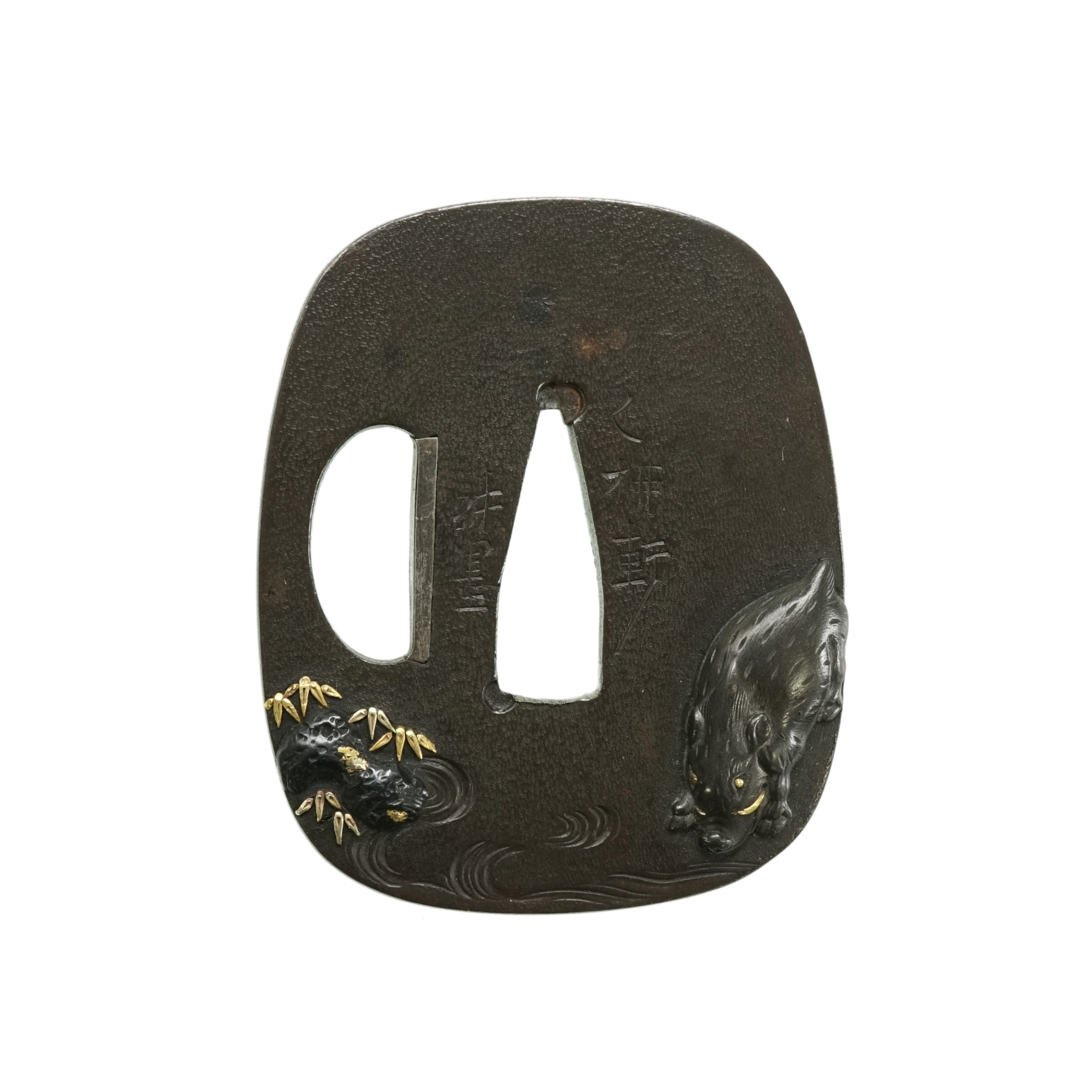
政随
江戸
在銘
町彫 · 武蔵
現在3点販売中
浜野政隨は、元禄九年(1696)に生まれ、奈良利寿門の逸材で、通称を太郎兵衛という。多くの子弟を育成し、浜野派という町彫の主要な門流を形成して一家をなした。嫡流は二代目兼隨、三代目鋪隨、四代目政信、五代目政芳と続き、また矩随をはじめとする有力な門人を多数養成した。乙柳軒・味墨・閑径・驪風堂・遊壺亭・穐峰斎・半圭子・一瞬庵など多くの別号を持ち、明和六年(1769)に七十四歳で没した。当時の江戸金工界にあっては横谷派と拮抗する門流として栄えた。
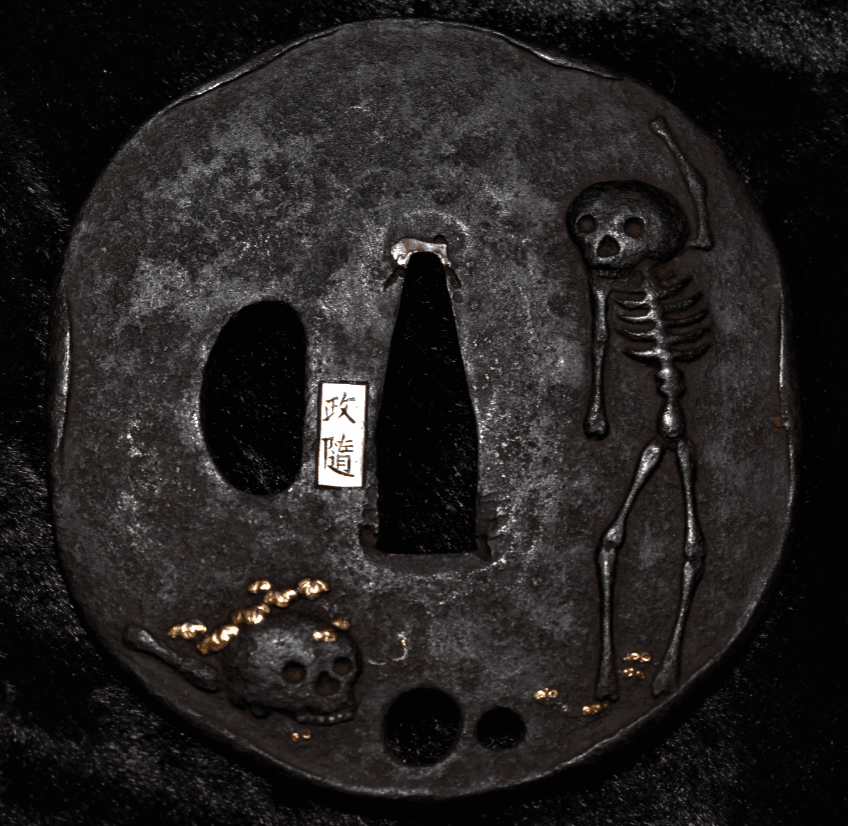
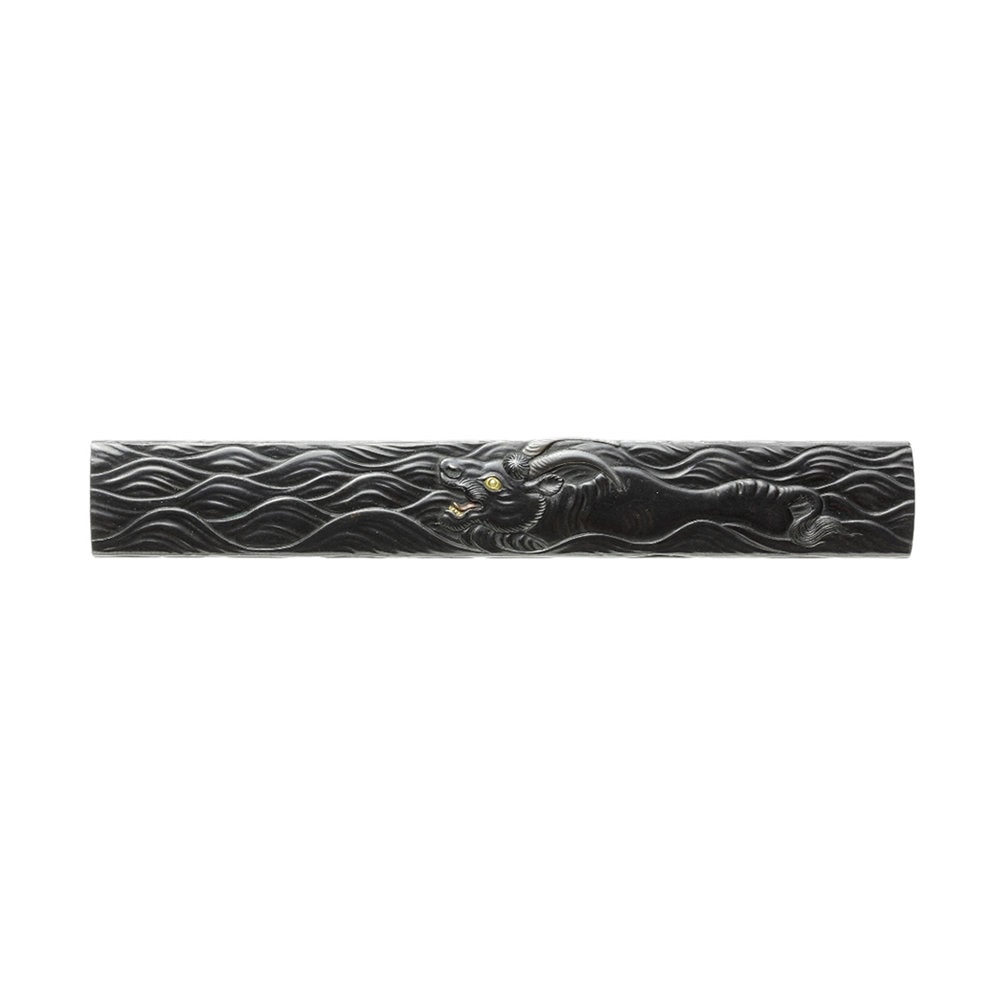
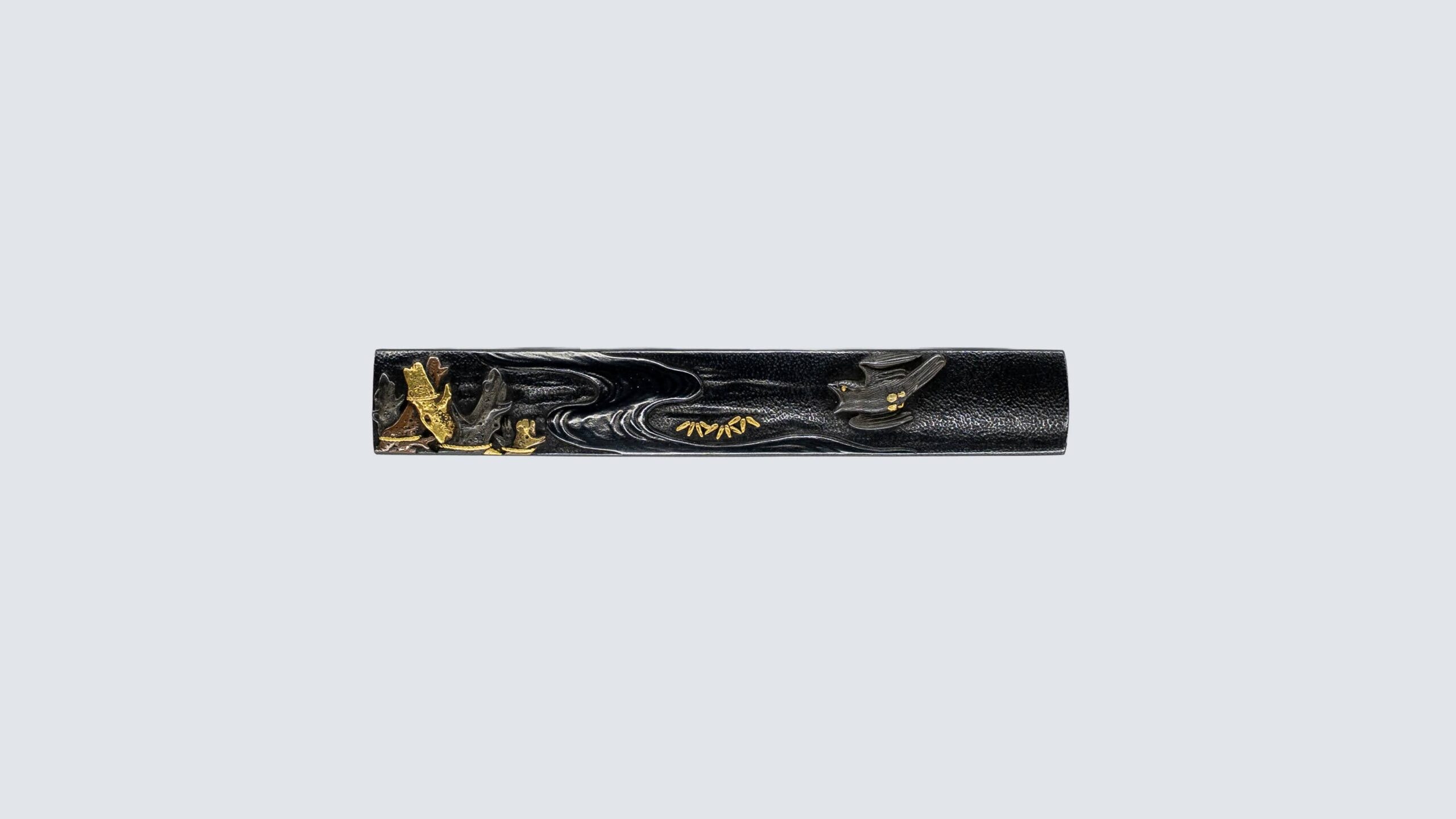
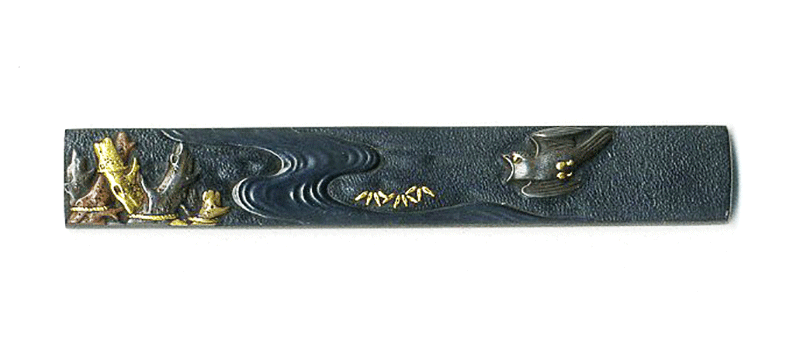
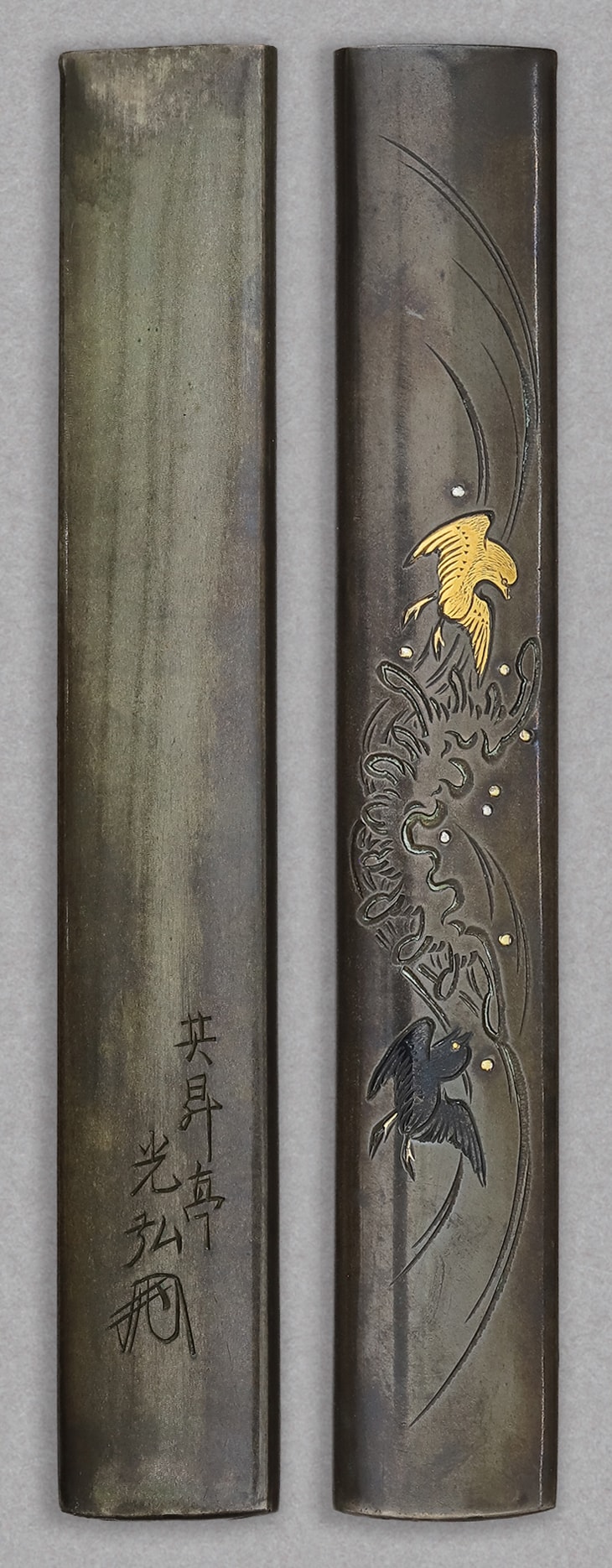
政隨の作風は、師である利寿の作風を継承しながらも乗意、安親の作風を取り入れて多岐にわたる。人物などを大図に描写した高肉彫を得意とし、大胆と細心を併用し、肉置きも主題の高肉彫に乗意風の肉合彫を加えるなど独得の彫法をあみだしている。作域は広く、鉄地、赤銅、四分一、素銅、朧銀など多様な素材を用い、高彫、鋤出彫、肉合彫、片切彫、石目地など、卓越した技術であらゆる彫技をこなす。晩年のものは豪快な高彫りを駆使した政隨独自というべき雄渾な作品を多く残している。鐔においては、竪丸形、撫角形、変り形など、さまざまな形状を手がけ、金、銀、赤銅、素銅、山銅などを用いた象嵌色絵を施し、その表現は写実的で、細部に至るまで鏨がよく行き届いている。小柄においては、朧銀地、素銅地、赤銅石目地などを用い、高彫色絵を施し、老松に繋がれた猛牛、流水に時鳥、老木に月など、趣のある題材を力強く表現している。目貫においては、素銅地、金地などを用い、容彫、色絵を施し、香木に銘を記してその品位を誇るなど、趣向を凝らした作品も見られる。拵においては、虫尽し金具など、意匠を凝らした総金具の作例があり、研出鮫鞘を用いて華麗に纏められている。
『江戸金工名譜』に「世に雷鳴す」とあるように、『奈良四天王』の一人として利寿・乗意・安親と並んで高名を馳せ、その技術は高く評価されている。装剣奇賞には「手強きを好みて気象を現わし、さっぱりとして勢あり」[[c:1]]と評されるように、大胆な構図と繊細な彫技を融合させた作風は、江戸趣味ともいえる情緒豊かな作風として高く評価されている。
政随の位置づけを、日本刀全体および伝統・時代・時期ごとに示します。各位(随一・屈指・有数・著名)は、NBTHK および文化庁による指定に加え、三作や名物帳などの歴史的栄誉を加味したものです。
各項目を選ぶと評価方法が表示されます。
町彫 · Edo
現在30点販売中
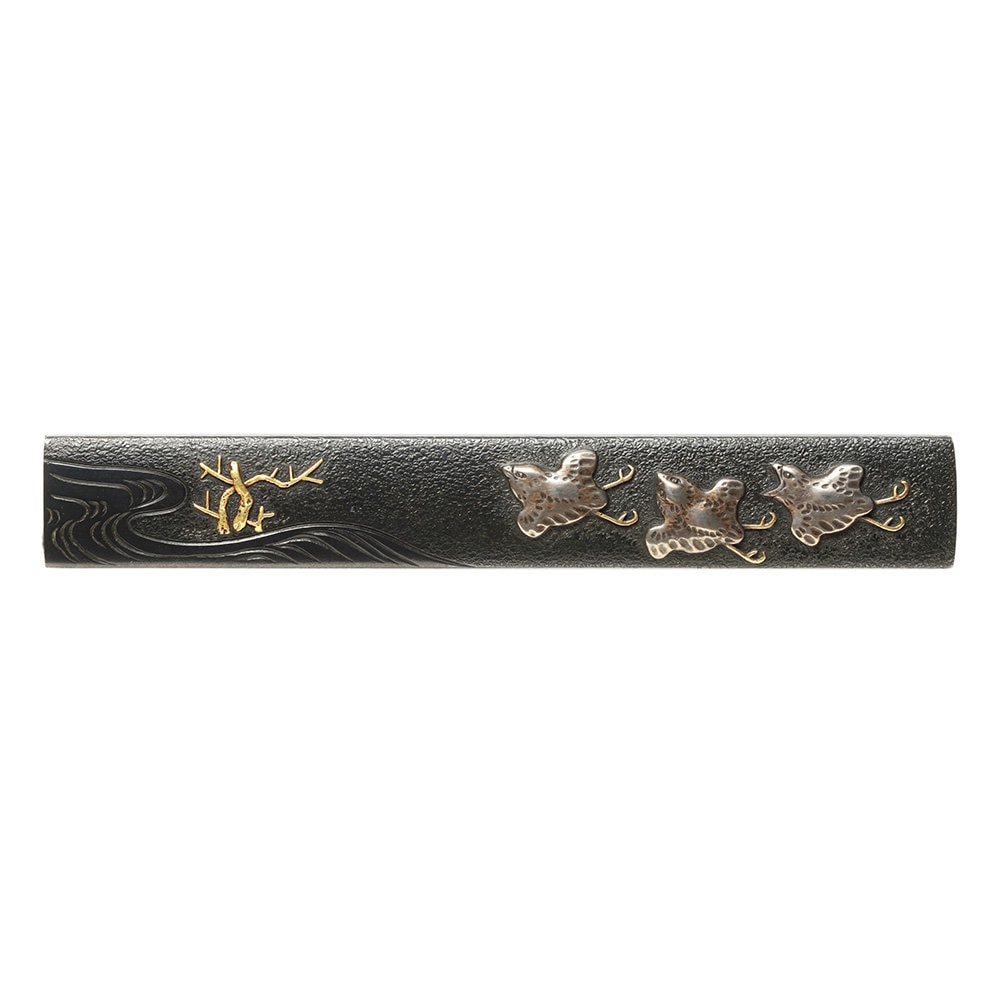
浜野派は江戸時代中期に奈良利寿の門人であった浜野政隨を祖とする装剣金工の一派である。政隨は通称を太郎兵衛といい、奈良四天王の一人として高名を馳せ、江戸金工名譜に「世に雷鳴す」と評される逸材であった。乙柳軒・味墨・閑径・驪風堂・遊壺亭・穐峰斎・半圭子・一瞬庵など多くの別号を有し、多数の門人を育成して町彫の主要な門流を形成し一家をなした。四代正信は乙柳軒味墨の号を継承し、政隨の伝統を継承している。また越後村上出身の桂野赤文は、青年時代に出府して浜野家に学び、のちに遊洛斎の号を用いたことから京都での修業も推測され、庄内藩酒井家の抱え工として活躍した。 浜野派の技術は大胆な高肉彫・鋤出彫・肉合彫・片切彫等あらゆる技法に長じており、その技量は極めて高く評価される。政隨の作には金銀の芋継地に容彫で韋駄天疾駆鬼を表したものや、金無垢地に銀と赤銅の置金を施した容彫で仁王像を表したものがあり、肉取りが巧みで量感に富み、題材の力強さを見事に表現している。その彫口には後藤上代の作を範としたとみられる落ち着きある品格が備わっている。四代正信の作には虫尽総金具の大小拵があり、銀四分一の石目地に高彫と据文色絵を施した各種の虫の図が揃っており、華麗かつ入念な仕上がりを示している。 桂野赤文の作風は土屋安親を手本として研鑽を積んだことが知られ、鐔を多く制作し、鉄と赤銅の地金に高肉彫形式で色絵を施すことを得意とした。片切彫・肉合彫・象嵌等の技法も用い、銘文には郷里越後の書家亀田鵬斎流の草書体を用いている。波千鳥図鐔では安親を手本とした題材を鉄地に鋤出による高肉彫で堂々と表し、千鳥の眼と足にのみ金銀の象嵌を施して画面全体に締まりと動きを与えている。柔軟な鏨使いながらも力強さを感じさせるその彫口は赤文独特のものであり、桂野家史に「生気躍動」「巧緻」と評されるその作風を顕示している。 詳しく見る →
販売店の出品ページで鑑定書を確認できませんでした。日本刀および刀装具は通常、NBTHK(または NTHK)の鑑定を受けます。鑑定書がない場合、極めは販売店の見解にとどまり、第三者による確認は行われていません。ご購入前に販売店へ鑑定書の有無をお問い合わせのうえ、慎重にご判断ください。
Returns/exchanges limited to defects caused by shipping (except willful misconduct or gross negligence by the company); customers must contact within 72 hours of receiving the product.
Title: Wild Boar Description A Shibuichi Tsuba sloping four corners shape with a Kozuka hole. A wild boar is engraved and inlaid with gold on the face. Its creator Shozui Hamano (1696-1769), was a pupil of Toshinaga Nara. He used his “Go” (like artist name) such as Miboku. The boar’s eyes are also used as a pattern for metalworks called “Inome Monyou” in Japanese. This pattern looks like a heart mark and works as an amulet. It is believed it would protect us from evil spirits. This Tsuba is recognized by The Society for Preservation of Japanese Art Swords, which is known as NBTHK. *As this item is an antique, please check each photo and ensure its condition. What is Tsuba? Tsuba is the hand-guard of the Japanese sword. High-class Samurai wore his katana sword with its beautiful sword mountings such as Tsuba. Tsuba’s front design tends to be more decorative as this part was often seen by other Samurais when he was walking on the streets. Why is it that the sword mounting was important for Samurai? The sword mountings of the Japanese sword have many kinds of decorations such as handguards (Tsuba), sword hilt (Menuki), pommel (Fuchi Kashira). The sword mountings of the Japanese sword have many kinds of decorations such as handguards (Tsuba), sword hilt (Menuki), pommel (Fuchi Kashira). The Japanese sword worked as a weapon and as an object to show who he was. For example, it shows their personalities and beliefs. You could say that it is like decorations for smartphones today. We recommend you zoom in on the pictures of the sword fittings. When you do so, you can see the skill of Japanese metal engraving techniques. They are mainly made of iron and copper with inlays of gold, silver, and bronze. When it comes to handguard (Tsuba), each one has a different outline and weight. These sword fittings that have lived with Japanese swords of the same age might be worth as much as the Japanese swords. They are inconspicuous parts of the Japanese sword. Nevertheless, if you are knowledgeable or particular about it, you will become a connoisseur of the Samurai. ————————————————————————————————————— About us Samurai Museum is located in Tokyo, Japan, exhibiting antique artifacts related to the Samurai history. Samurai Museum Shop is the place for those who are interested in Japanese culture and craftsmanship. We deal with antique Samurai swords/armor, original Japanese sword mounting, traditional crafts made in Japan and so on. Payment method We accept payment through Stripe (Credit card) or Paypal. If you prefer other payment method, please contact us. You can either pay in Japanese Yen or US Dollars. The price is decided in Japanese Yen. The price in US dollar is calculated automatically based on an exchange rate. Shipping Duration We normally ship via EMS (Express Mail Service) provided by Japan Post. It usually takes at least 5-14 days to deliver the package after you place an order. We will use DHL instead for those who ordered from USA or Australia as EMS temporarily stops shipping to these countries due to COVID-19. We offer Free International Shipping as long as we can ship your order by either EMS or DHL. (USA, Australia only) We will inform you of the order’s tracking number via email. Please make sure you fill out your valid email address correctly. *Please keep in mind that due to the spread of COVID-19, there might be delays in shipping. If you like to know the detail about shipping, please feel free to ask us. How to make sure the condition We uploaded high resolution photos for you to check its condition thoroughly. If you like to see more photos with different angles, please feel free to contact us. We will be happy to send them to you so that you can make informed decision. It is essential for us to know that you are happy with your choice of Tsuba and we are prepared to use the best of our ability to serve you. How to appreciate Tsuba Although Tsuba is a small component of Japanese sword mountings, we would say it is one o
NihontoWatch政随
江戸
在銘
町彫 · 武蔵
現在3点販売中
浜野政隨は、元禄九年(1696)に生まれ、奈良利寿門の逸材で、通称を太郎兵衛という。多くの子弟を育成し、浜野派という町彫の主要な門流を形成して一家をなした。嫡流は二代目兼隨、三代目鋪隨、四代目政信、五代目政芳と続き、また矩随をはじめとする有力な門人を多数養成した。乙柳軒・味墨・閑径・驪風堂・遊壺亭・穐峰斎・半圭子・一瞬庵など多くの別号を持ち、明和六年(1769)に七十四歳で没した。当時の江戸金工界にあっては横谷派と拮抗する門流として栄えた。
政隨の作風は、師である利寿の作風を継承しながらも乗意、安親の作風を取り入れて多岐にわたる。人物などを大図に描写した高肉彫を得意とし、大胆と細心を併用し、肉置きも主題の高肉彫に乗意風の肉合彫を加えるなど独得の彫法をあみだしている。作域は広く、鉄地、赤銅、四分一、素銅、朧銀など多様な素材を用い、高彫、鋤出彫、肉合彫、片切彫、石目地など、卓越した技術であらゆる彫技をこなす。晩年のものは豪快な高彫りを駆使した政隨独自というべき雄渾な作品を多く残している。鐔においては、竪丸形、撫角形、変り形など、さまざまな形状を手がけ、金、銀、赤銅、素銅、山銅などを用いた象嵌色絵を施し、その表現は写実的で、細部に至るまで鏨がよく行き届いている。小柄においては、朧銀地、素銅地、赤銅石目地などを用い、高彫色絵を施し、老松に繋がれた猛牛、流水に時鳥、老木に月など、趣のある題材を力強く表現している。目貫においては、素銅地、金地などを用い、容彫、色絵を施し、香木に銘を記してその品位を誇るなど、趣向を凝らした作品も見られる。拵においては、虫尽し金具など、意匠を凝らした総金具の作例があり、研出鮫鞘を用いて華麗に纏められている。
『江戸金工名譜』に「世に雷鳴す」とあるように、『奈良四天王』の一人として利寿・乗意・安親と並んで高名を馳せ、その技術は高く評価されている。装剣奇賞には「手強きを好みて気象を現わし、さっぱりとして勢あり」[[c:1]]と評されるように、大胆な構図と繊細な彫技を融合させた作風は、江戸趣味ともいえる情緒豊かな作風として高く評価されている。
政随の位置づけを、日本刀全体および伝統・時代・時期ごとに示します。各位(随一・屈指・有数・著名)は、NBTHK および文化庁による指定に加え、三作や名物帳などの歴史的栄誉を加味したものです。
各項目を選ぶと評価方法が表示されます。
町彫 · Edo
現在30点販売中
浜野派は江戸時代中期に奈良利寿の門人であった浜野政隨を祖とする装剣金工の一派である。政隨は通称を太郎兵衛といい、奈良四天王の一人として高名を馳せ、江戸金工名譜に「世に雷鳴す」と評される逸材であった。乙柳軒・味墨・閑径・驪風堂・遊壺亭・穐峰斎・半圭子・一瞬庵など多くの別号を有し、多数の門人を育成して町彫の主要な門流を形成し一家をなした。四代正信は乙柳軒味墨の号を継承し、政隨の伝統を継承している。また越後村上出身の桂野赤文は、青年時代に出府して浜野家に学び、のちに遊洛斎の号を用いたことから京都での修業も推測され、庄内藩酒井家の抱え工として活躍した。 浜野派の技術は大胆な高肉彫・鋤出彫・肉合彫・片切彫等あらゆる技法に長じており、その技量は極めて高く評価される。政隨の作には金銀の芋継地に容彫で韋駄天疾駆鬼を表したものや、金無垢地に銀と赤銅の置金を施した容彫で仁王像を表したものがあり、肉取りが巧みで量感に富み、題材の力強さを見事に表現している。その彫口には後藤上代の作を範としたとみられる落ち着きある品格が備わっている。四代正信の作には虫尽総金具の大小拵があり、銀四分一の石目地に高彫と据文色絵を施した各種の虫の図が揃っており、華麗かつ入念な仕上がりを示している。 桂野赤文の作風は土屋安親を手本として研鑽を積んだことが知られ、鐔を多く制作し、鉄と赤銅の地金に高肉彫形式で色絵を施すことを得意とした。片切彫・肉合彫・象嵌等の技法も用い、銘文には郷里越後の書家亀田鵬斎流の草書体を用いている。波千鳥図鐔では安親を手本とした題材を鉄地に鋤出による高肉彫で堂々と表し、千鳥の眼と足にのみ金銀の象嵌を施して画面全体に締まりと動きを与えている。柔軟な鏨使いながらも力強さを感じさせるその彫口は赤文独特のものであり、桂野家史に「生気躍動」「巧緻」と評されるその作風を顕示している。 詳しく見る →
販売店の出品ページで鑑定書を確認できませんでした。日本刀および刀装具は通常、NBTHK(または NTHK)の鑑定を受けます。鑑定書がない場合、極めは販売店の見解にとどまり、第三者による確認は行われていません。ご購入前に販売店へ鑑定書の有無をお問い合わせのうえ、慎重にご判断ください。
Returns/exchanges limited to defects caused by shipping (except willful misconduct or gross negligence by the company); customers must contact within 72 hours of receiving the product.