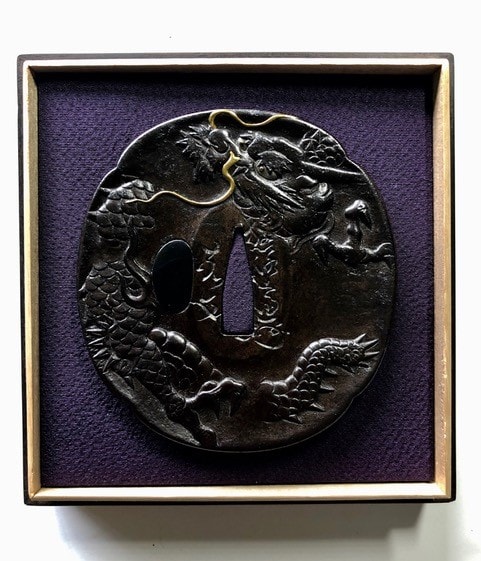
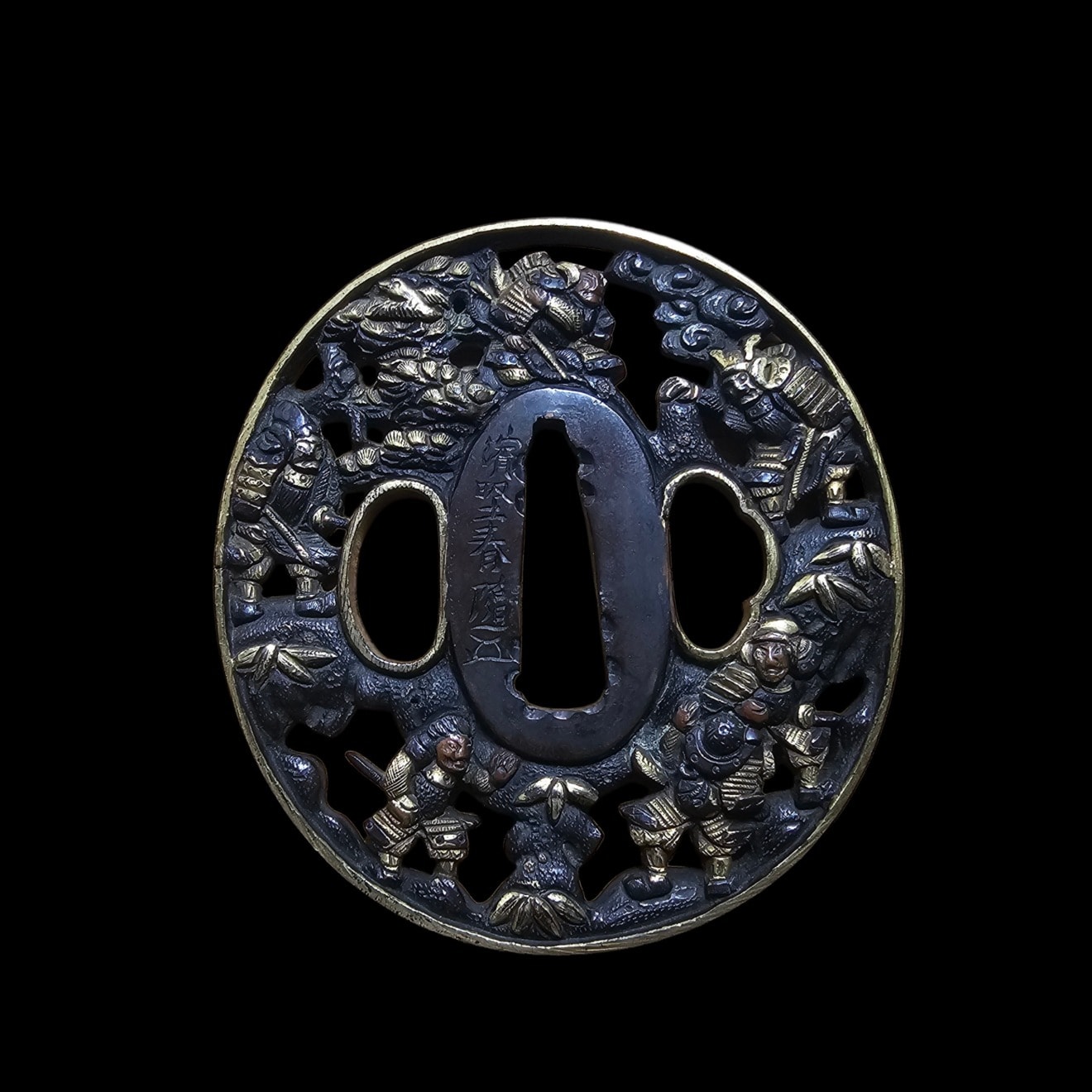
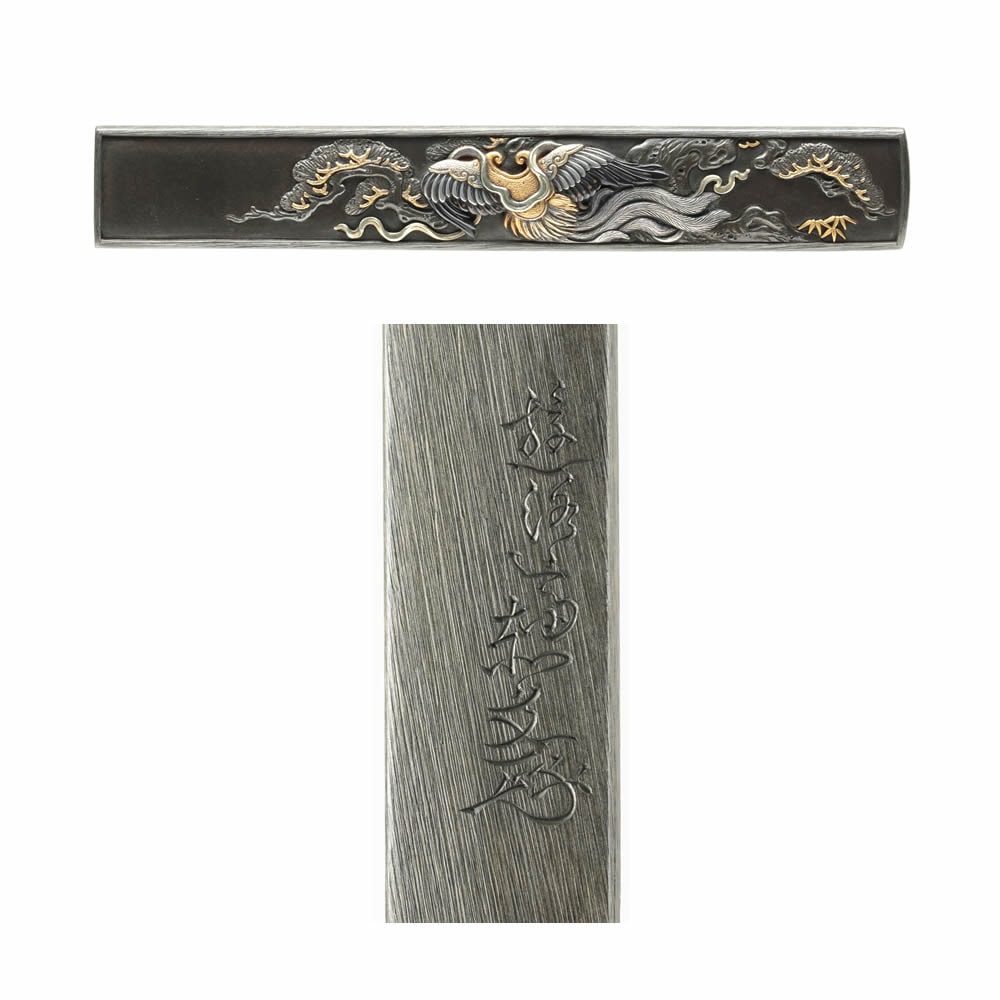
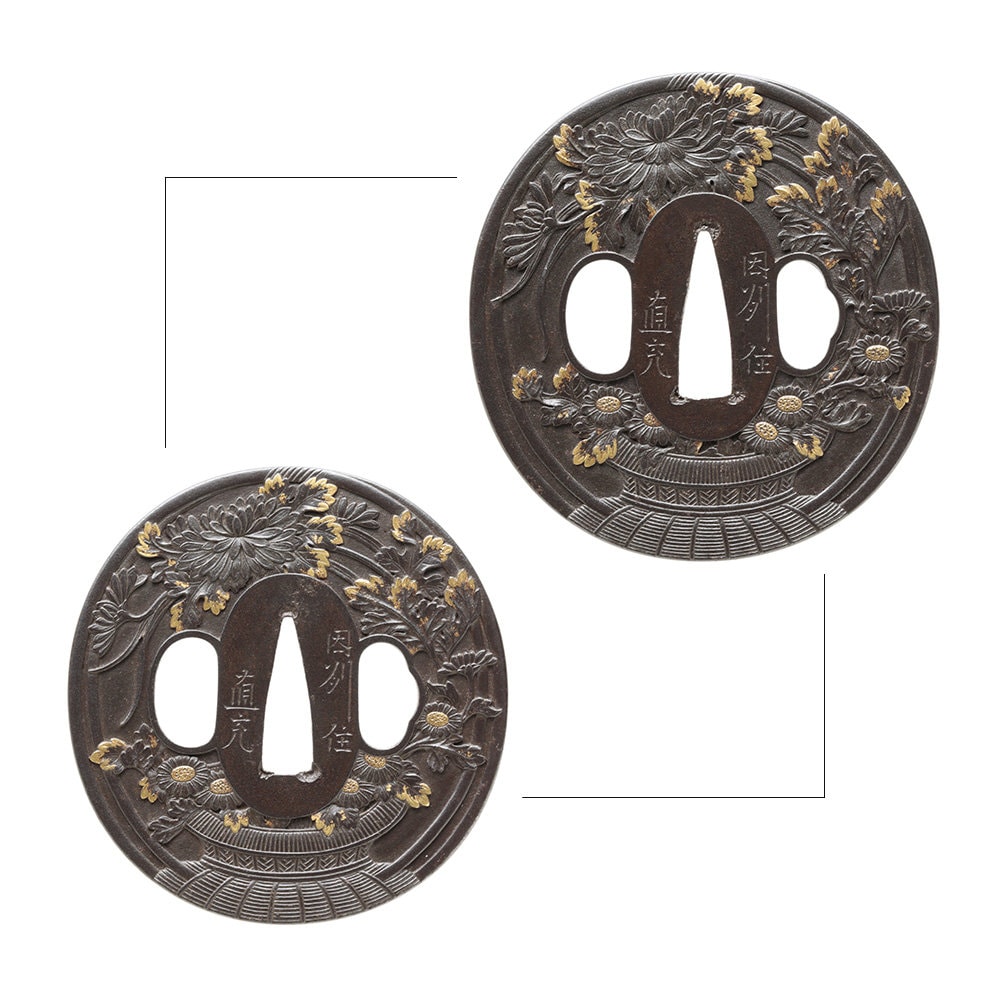
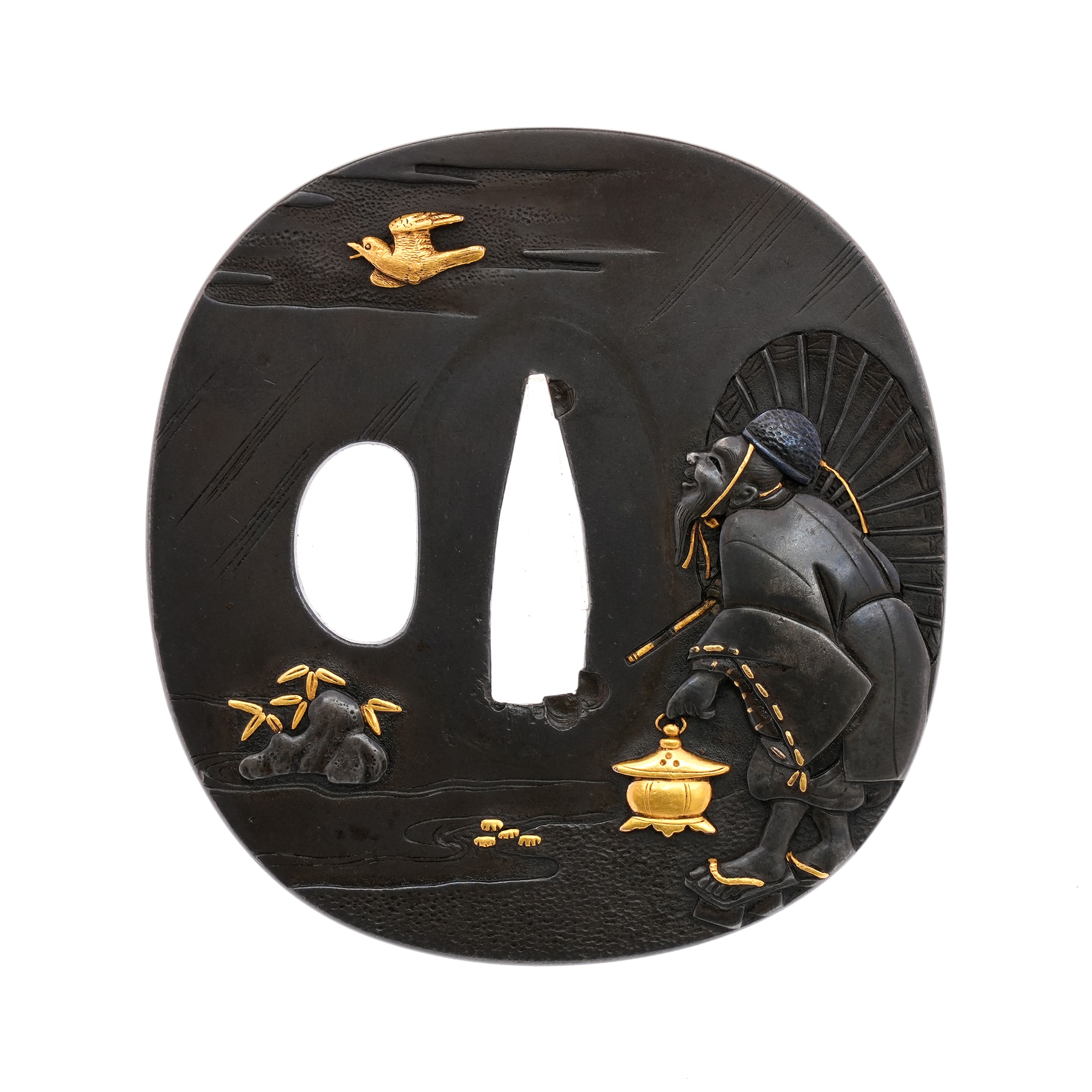
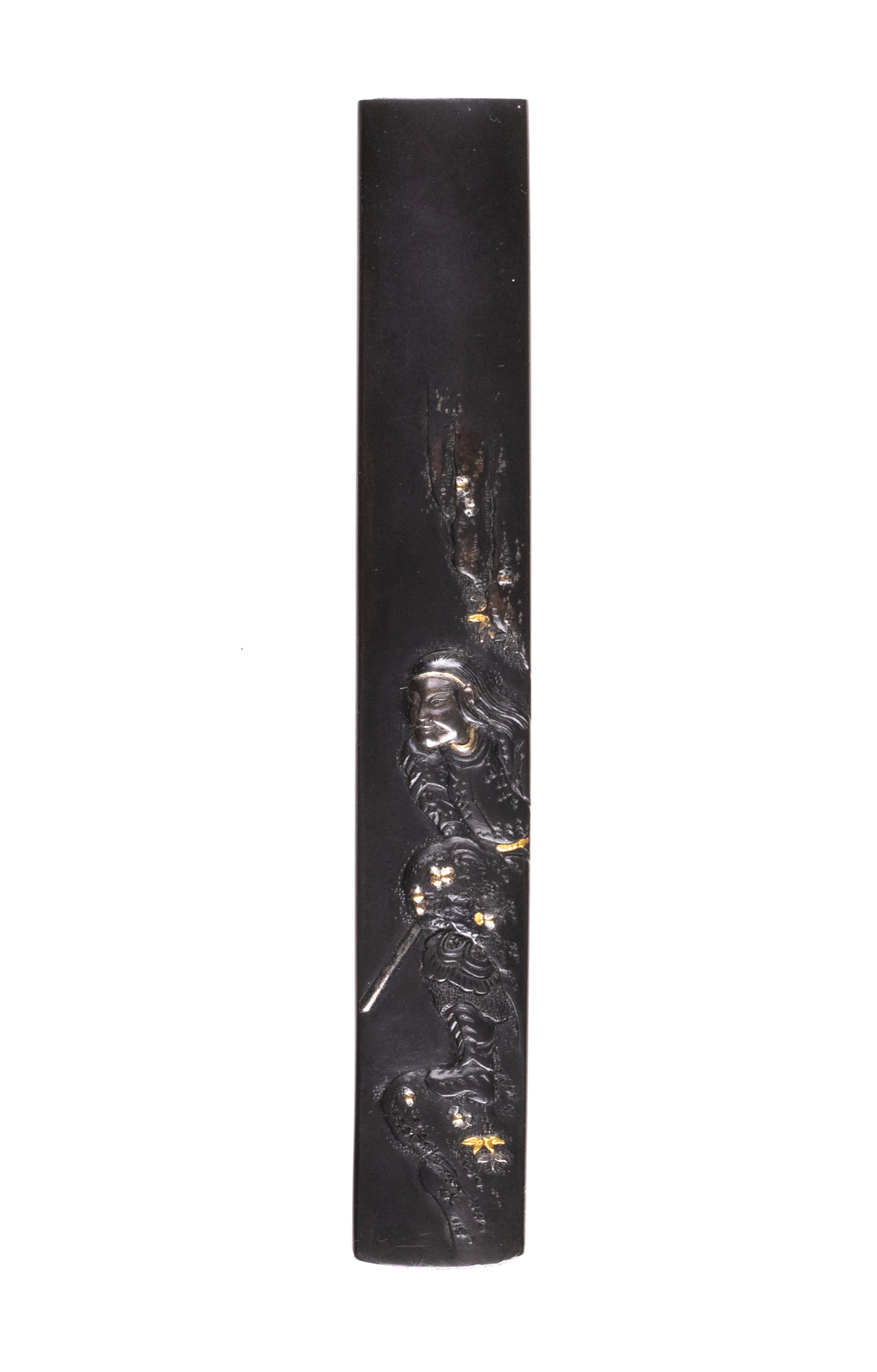
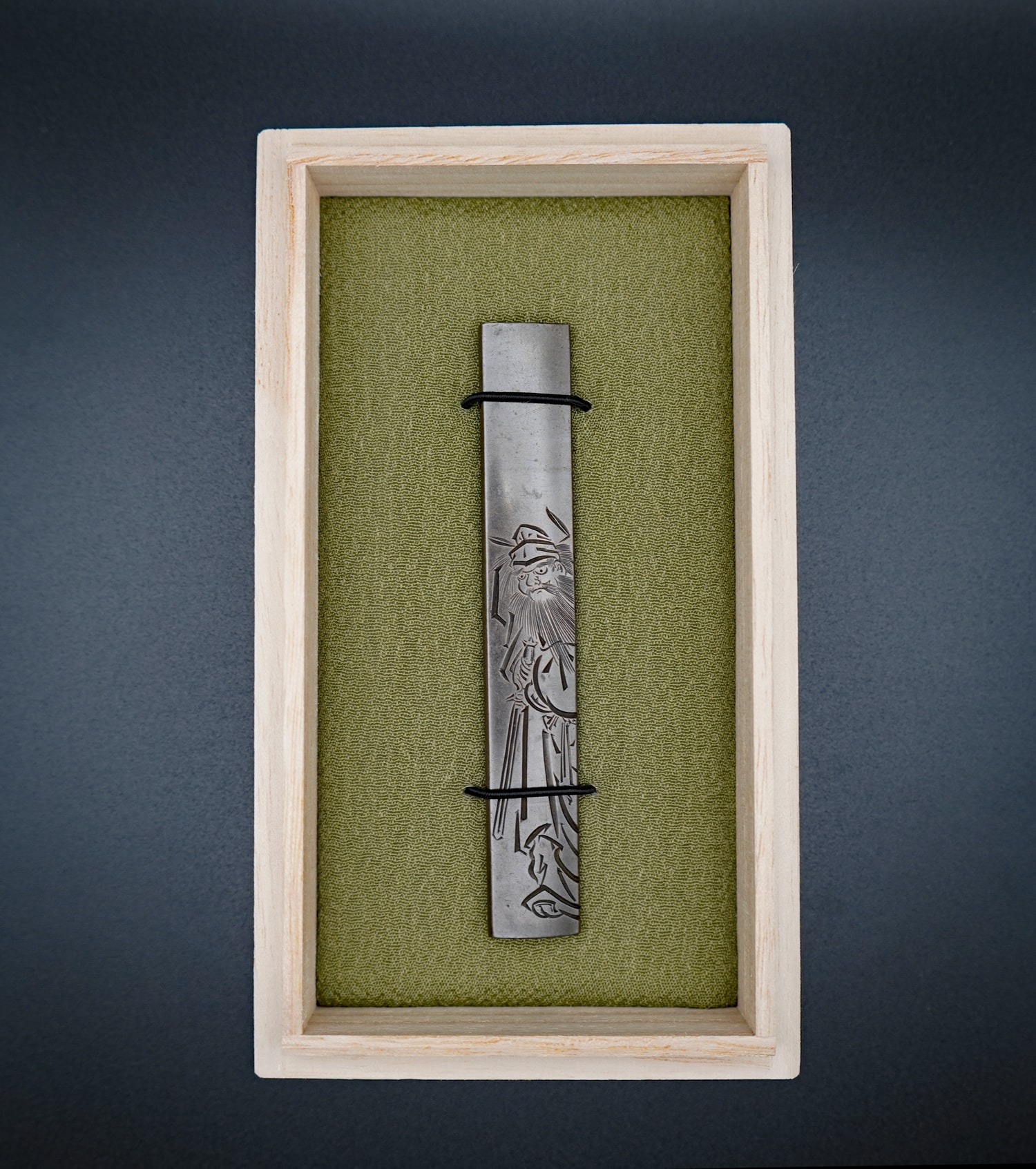
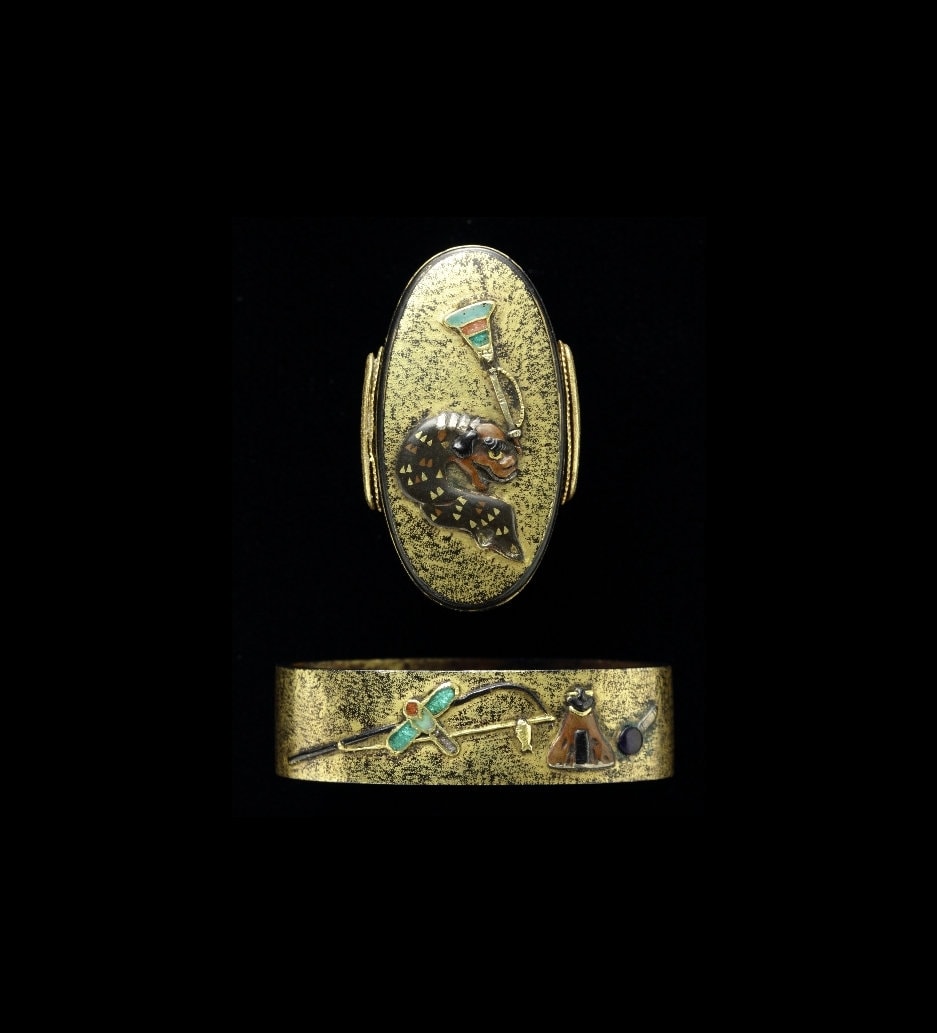
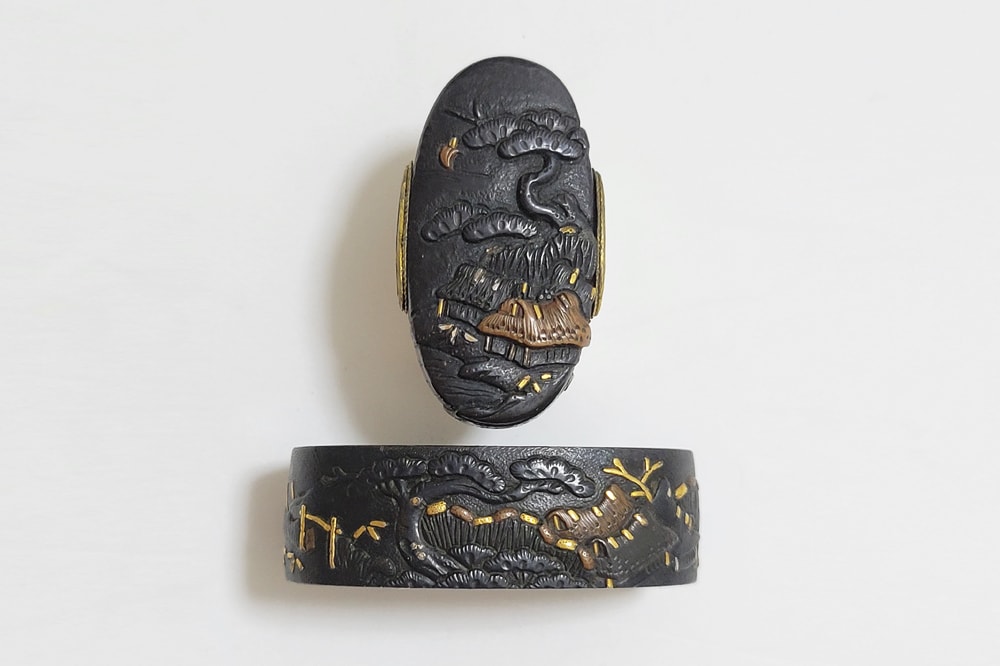
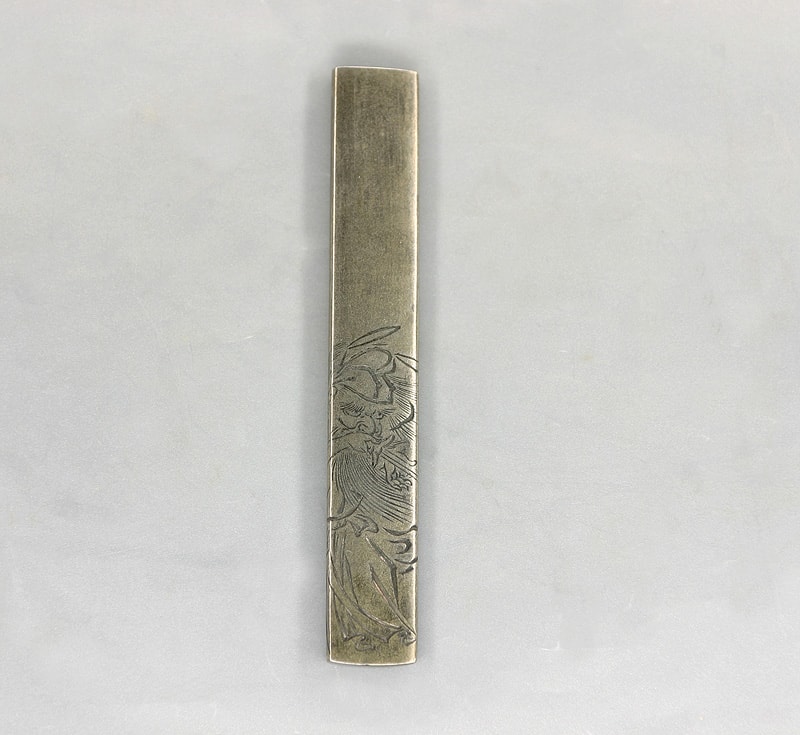
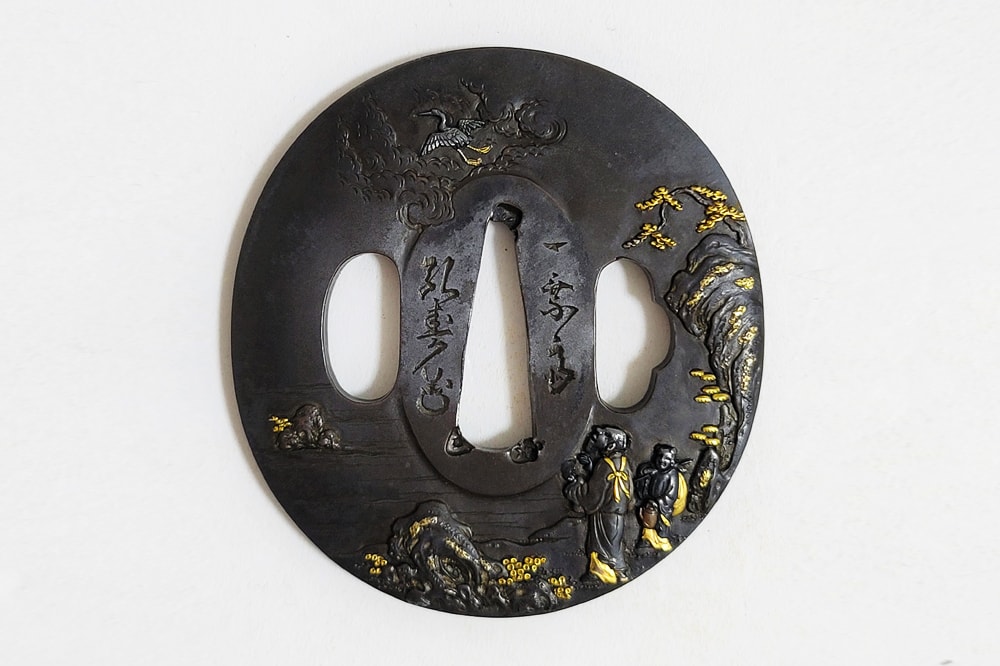
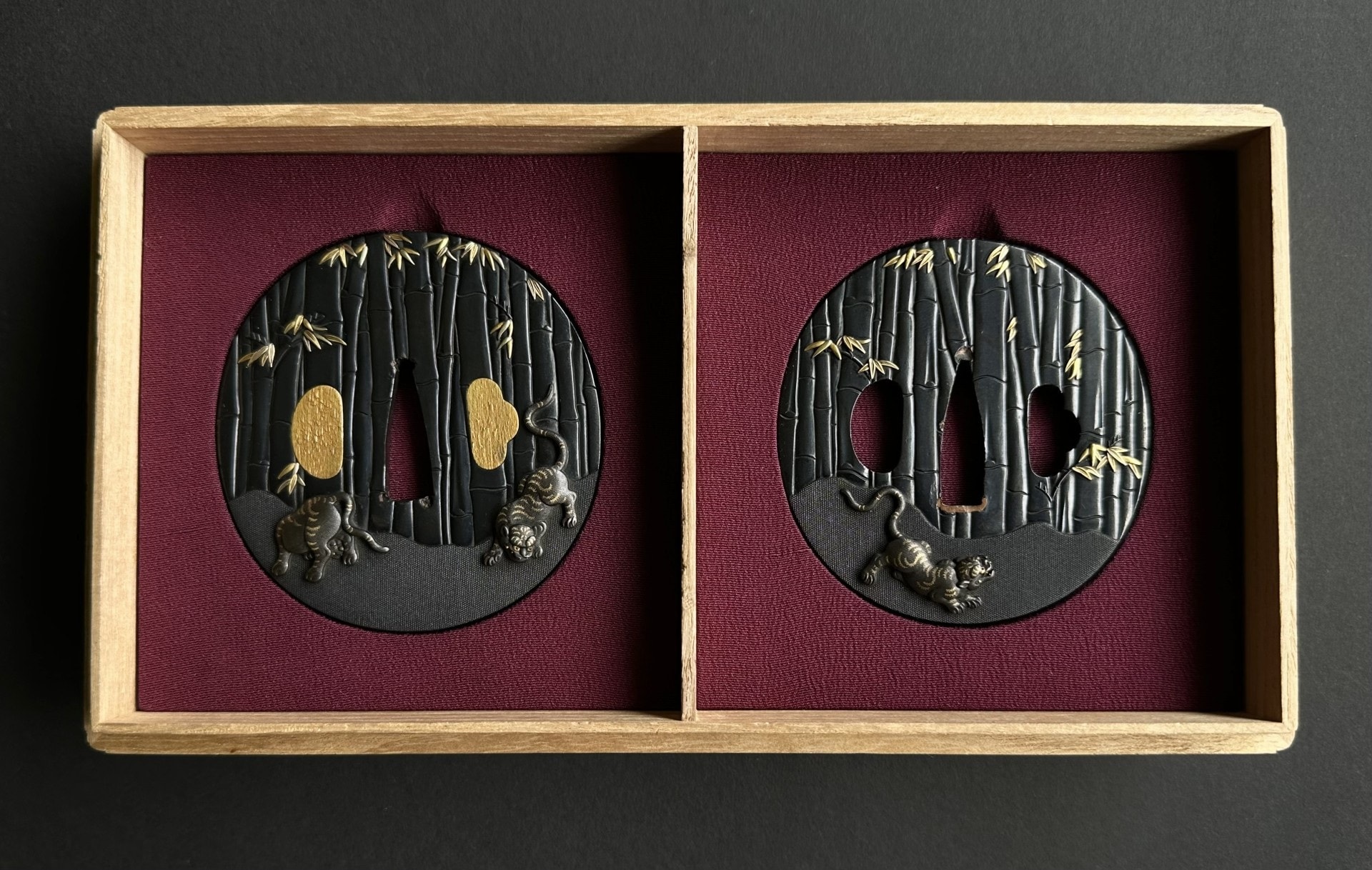
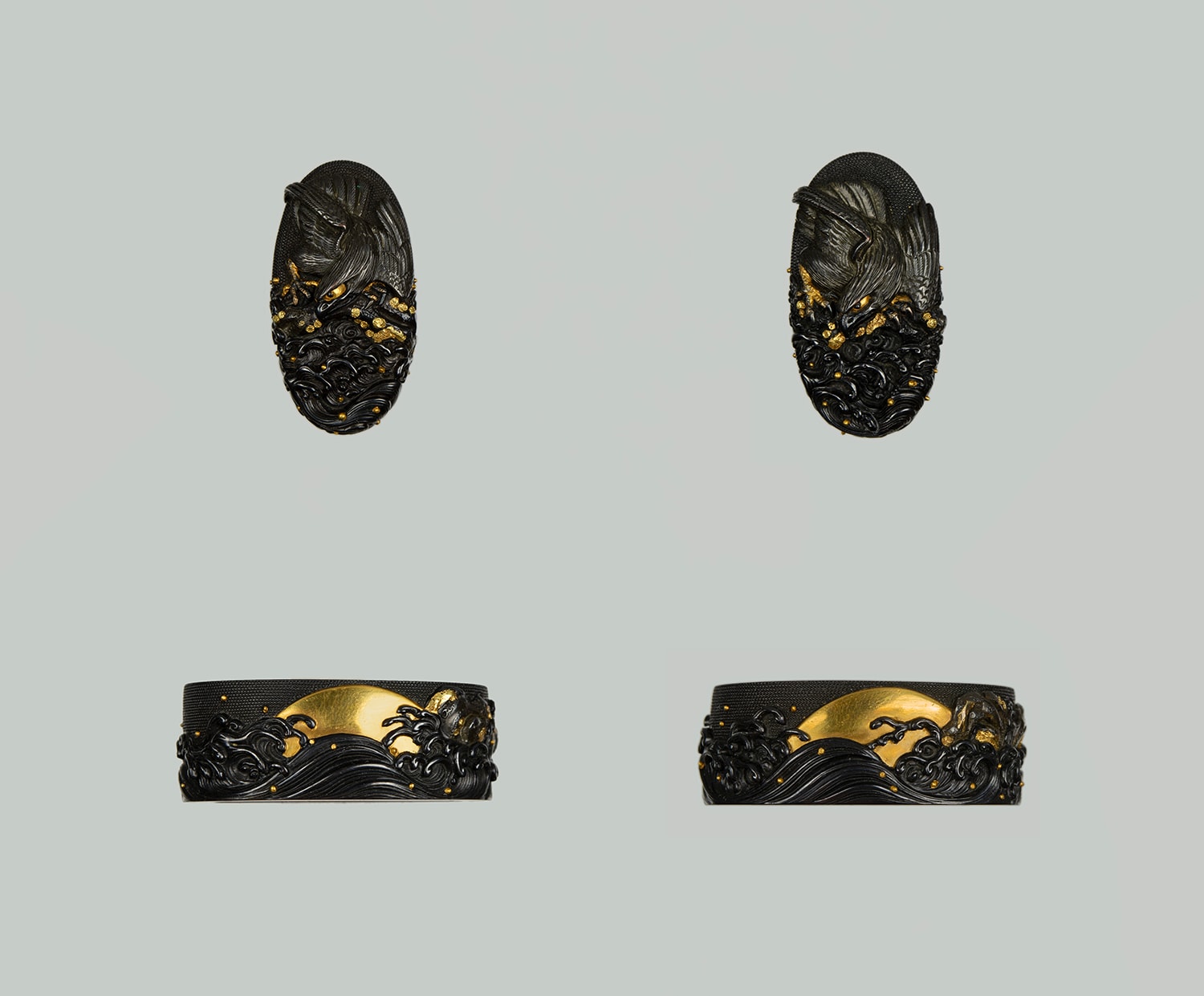
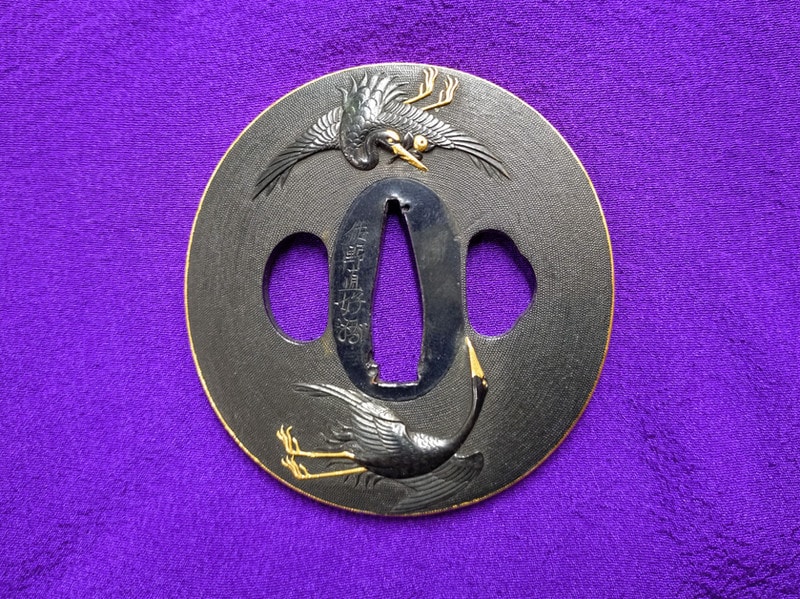
The first-generation Hamano Noriyuki (矩随), also read as Norizui, was a direct disciple of Hamano Shōzui (政随), the outstanding -period metalworker who stood as a leading representative of the Nara school of kinkō. Among Shōzui's pupils, Noriyuki distinguished himself most prominently, earning the high praise of having surpassed his teacher. He employed several art names over the course of his career, including Bōsaiken, Bōsōken, and Kaiundō. Together with his adopted son, the second-generation Noriyuki (who signed as Shōjuken), he is renowned as one of the foremost masters representing the Nara-school lineage.
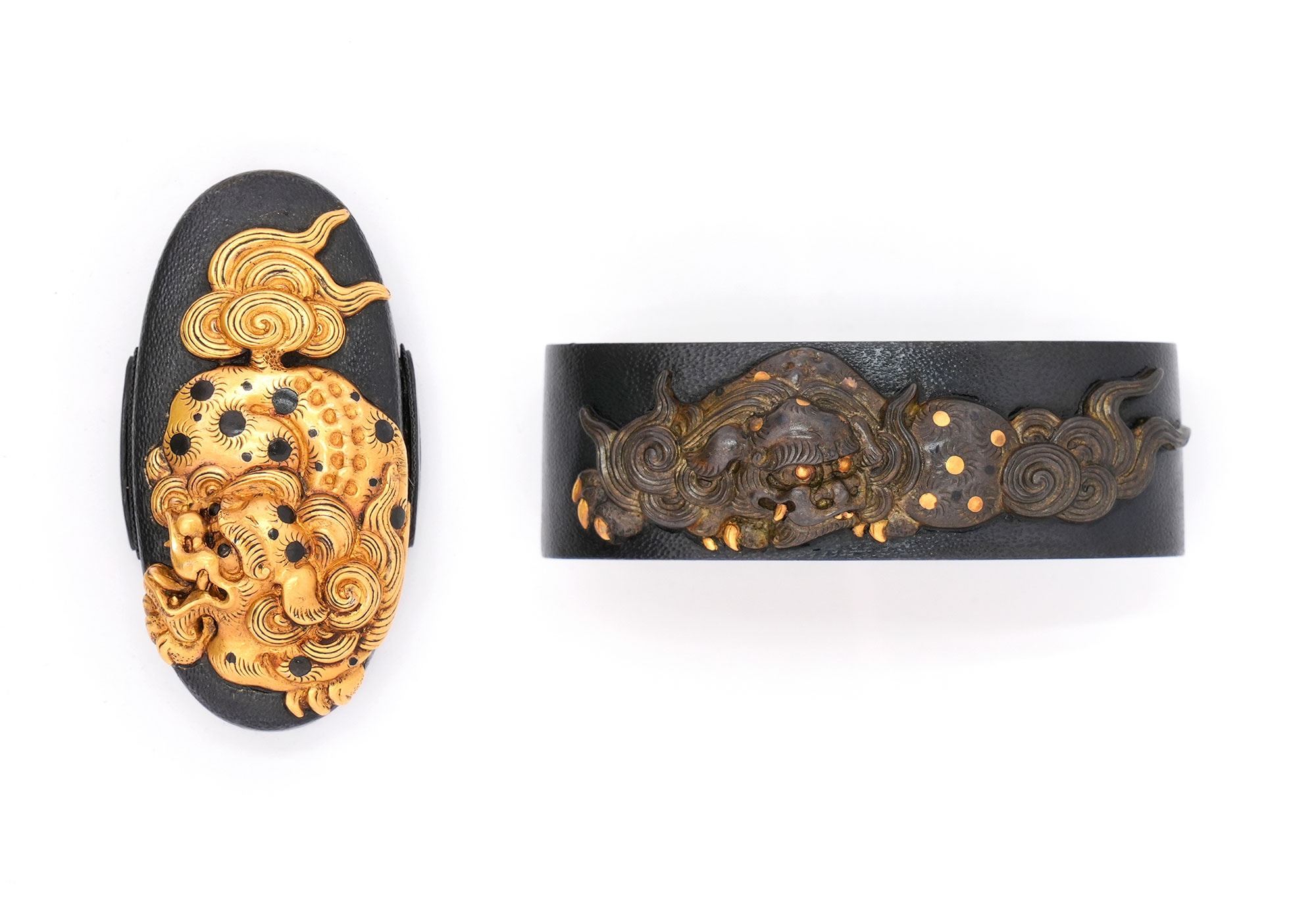
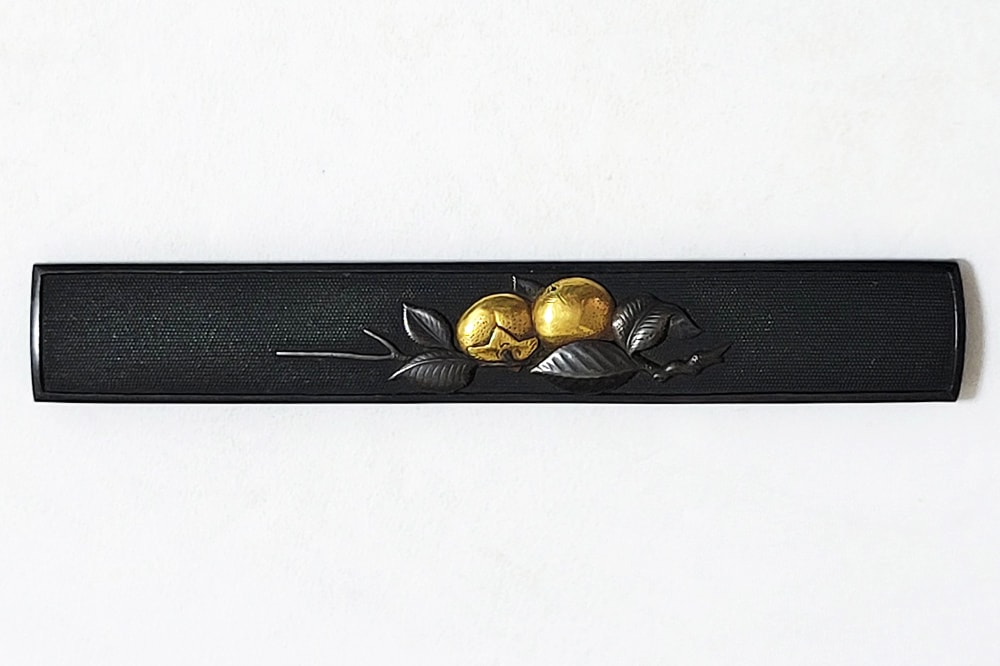
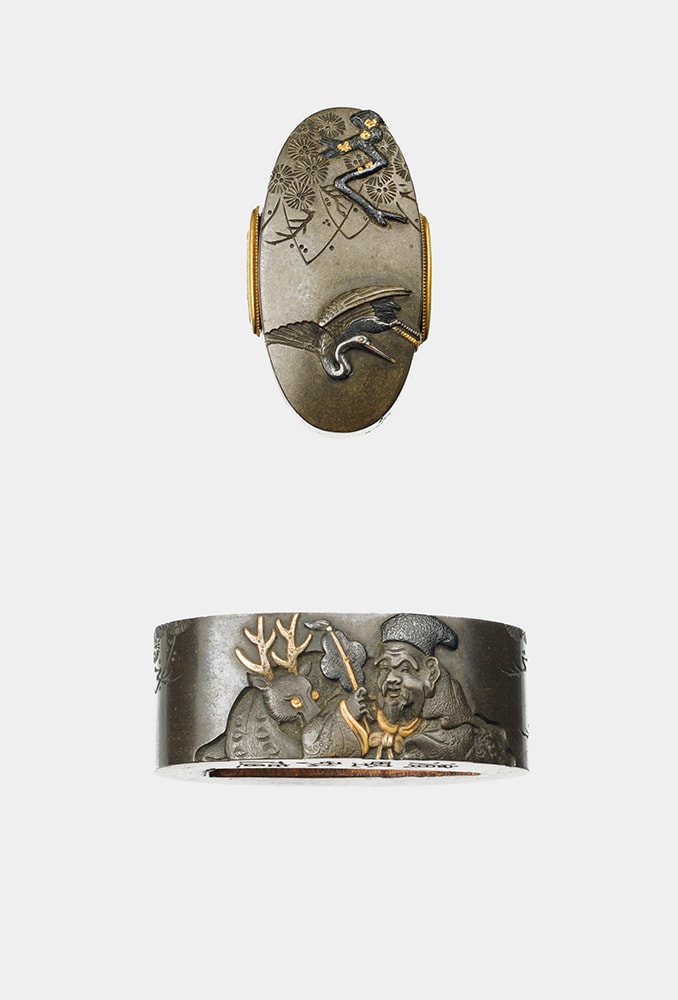
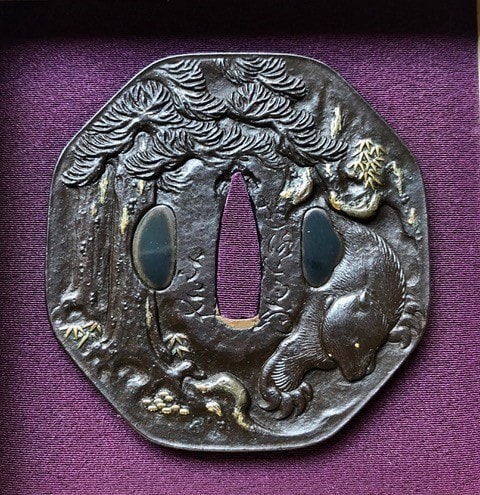
Noriyuki's technical signature is his mastery of — thin, precisely controlled relief carving — combined with richly varied in gold, silver, , and . Within the Nara school, the continuation of the manner of Toshiaki and Shōzui is clearly evident in his work, particularly in the modeling of figural facial features, which are rendered in distinctly higher relief than their surroundings — a hallmark of the school. His favored grounds include polished and -ishime, and he demonstrates equal command of , nikuai-bori, , and nikiai-bori. Compositions exploit open space with superb control, treating subjects ranging from Buddhist iconography and the Six Immortal Poets to Tatar horsemen and pastoral scenes with a refined sensibility.
The consistently characterizes Noriyuki's works as demonstrating "refined sensibility and technique to their fullest extent," noting compositions of "superb compositional scheme" that "skillfully exploit open space." His depictions of sacred and literary subjects are praised for their "profound solemnity" and expressive richness. The designating body identifies his mature works as "excellent examples from Noriyuki's fully matured period," affirming his position as a master who carried the Nara-school tradition forward with both technical authority and artistic distinction.