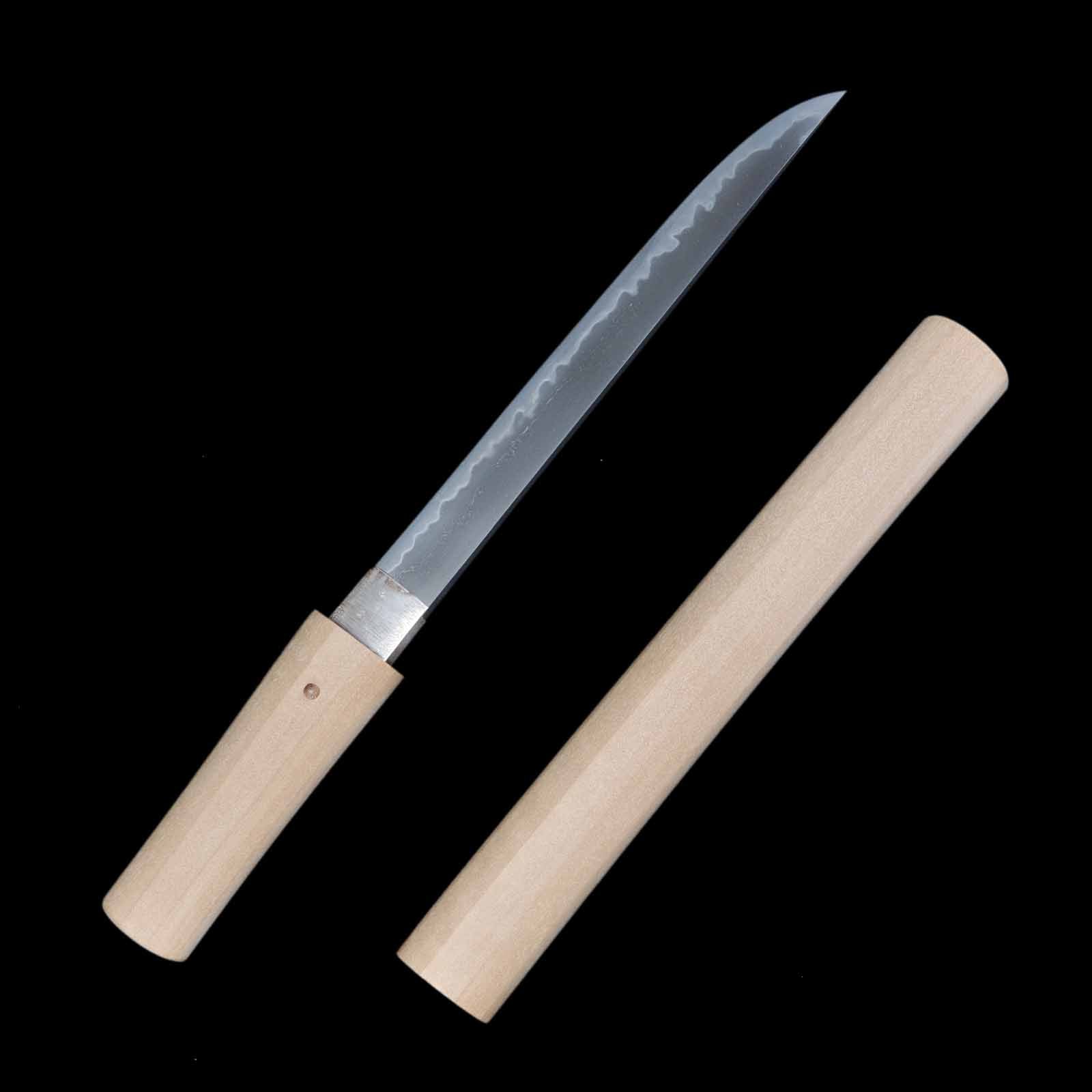
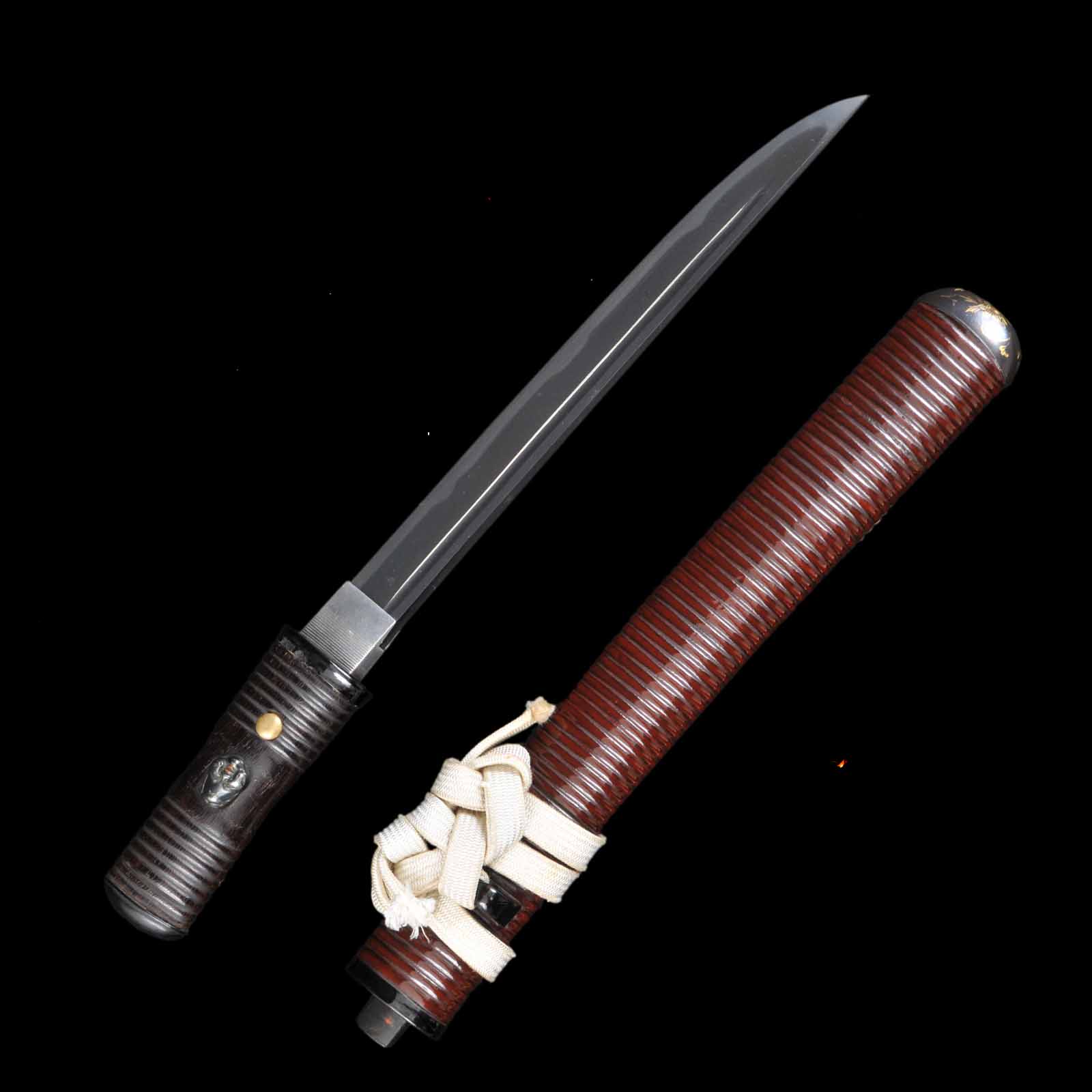
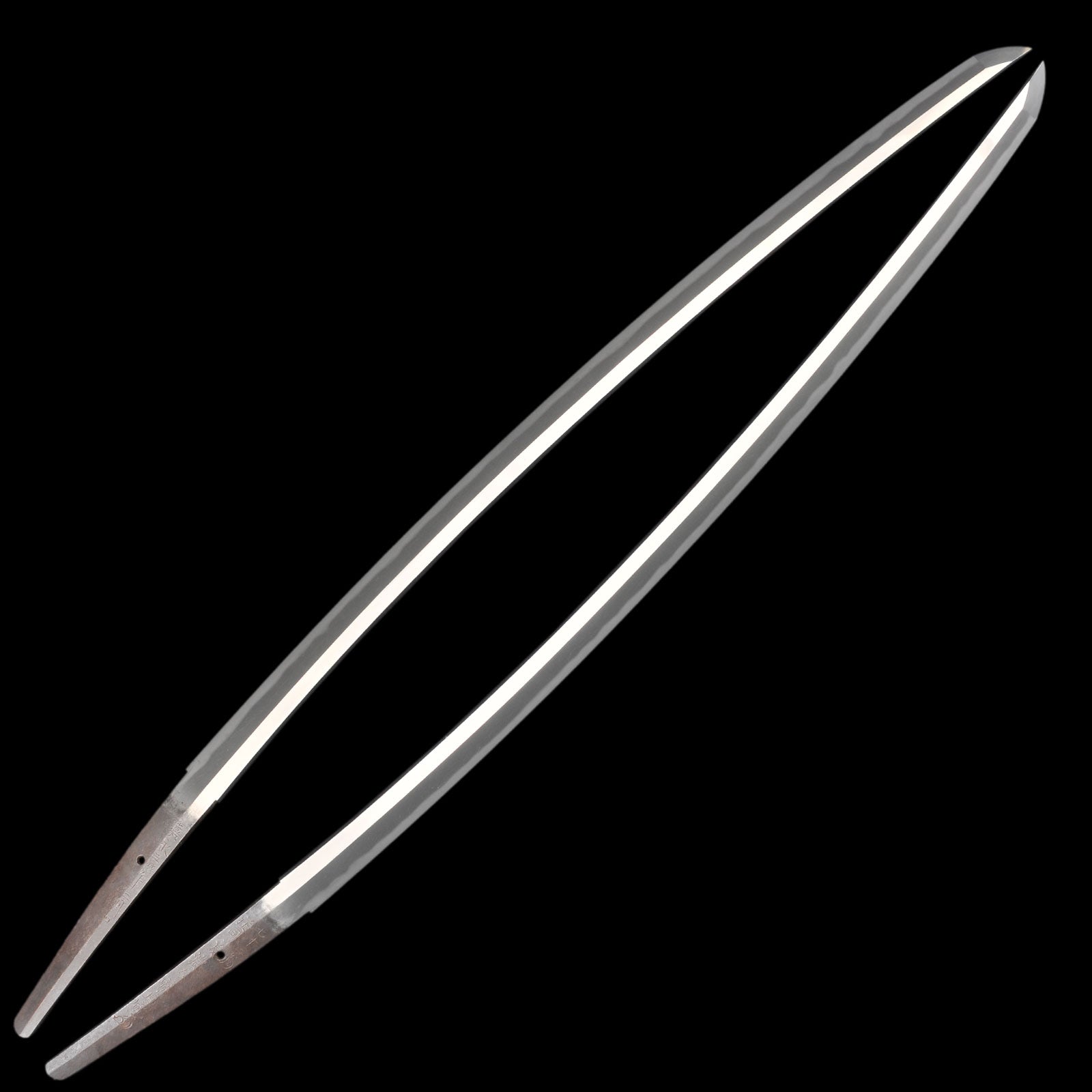
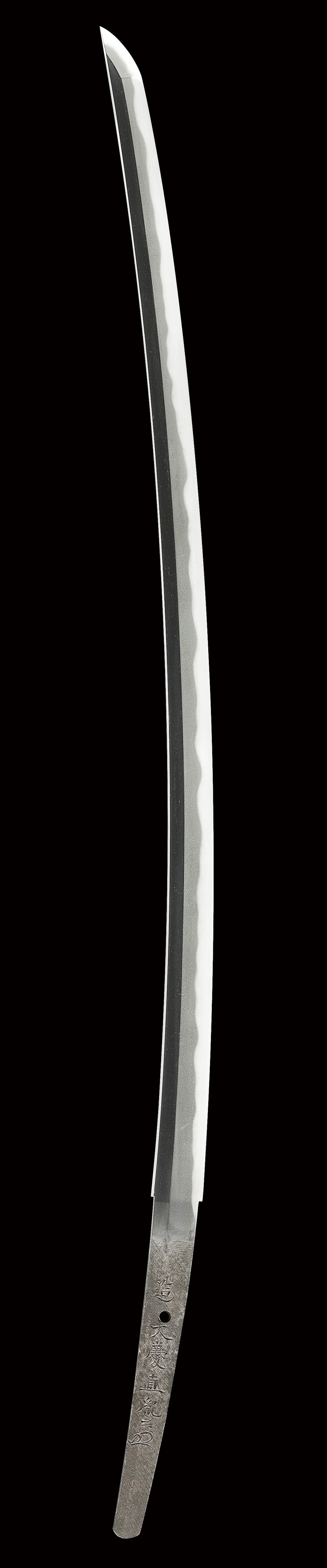
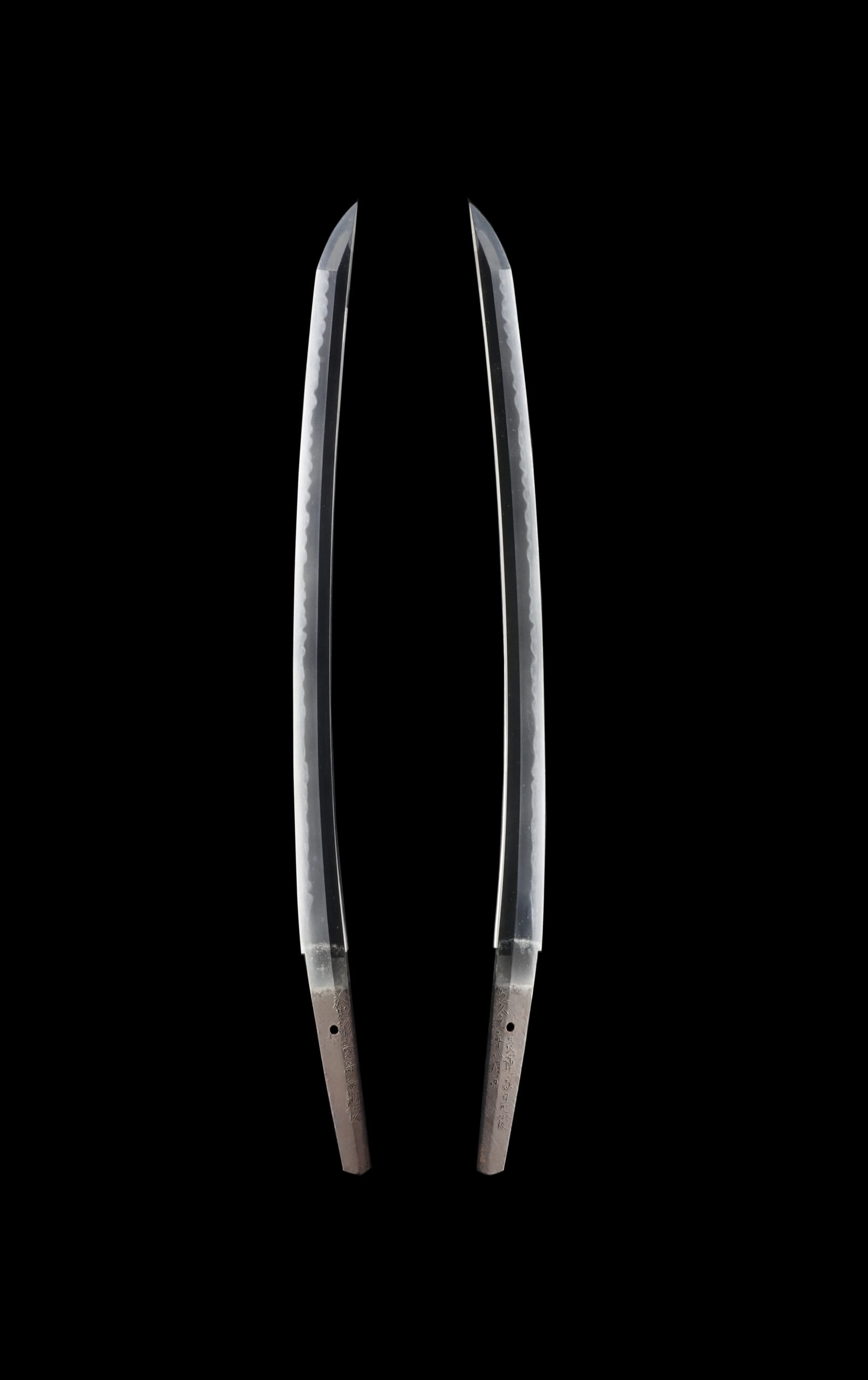
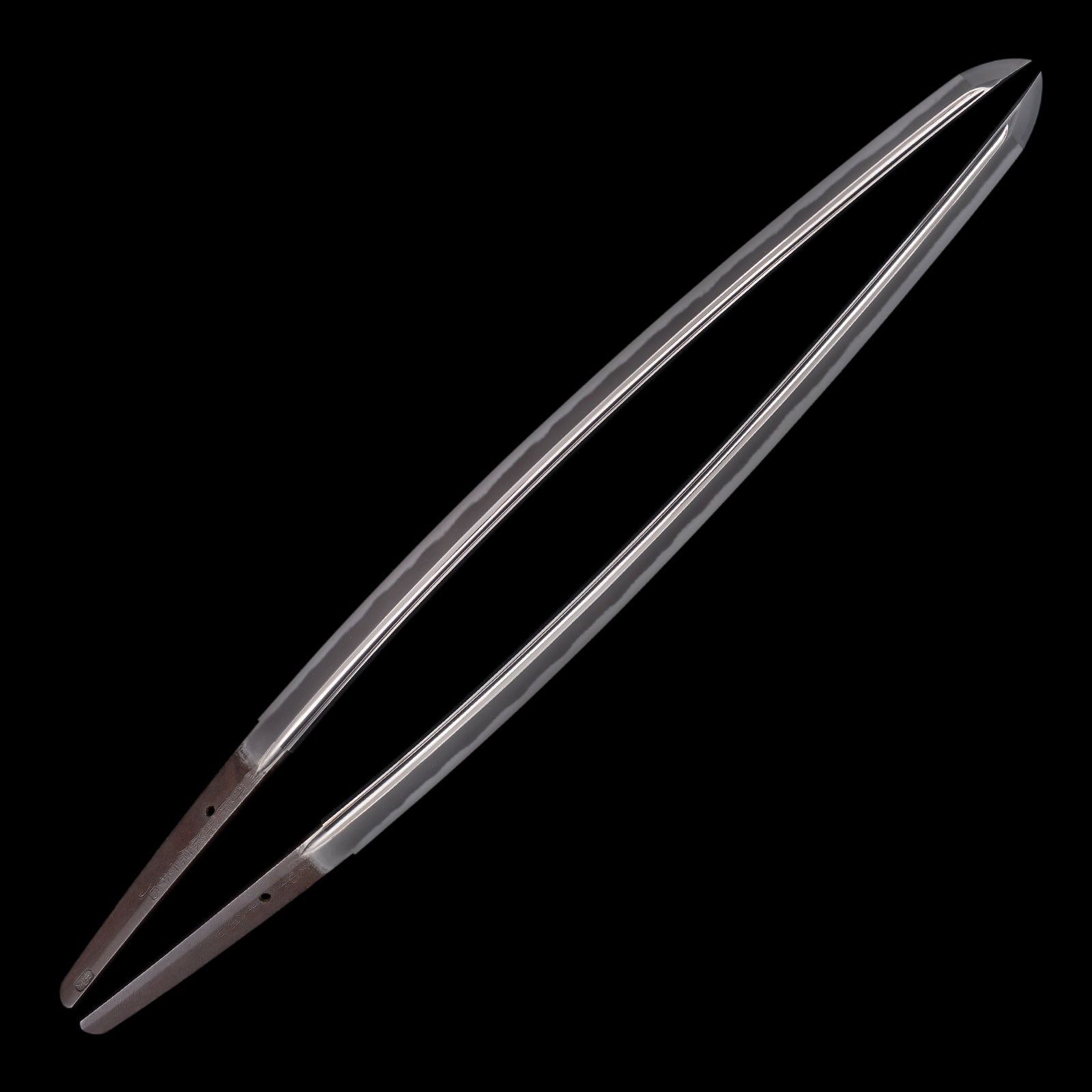
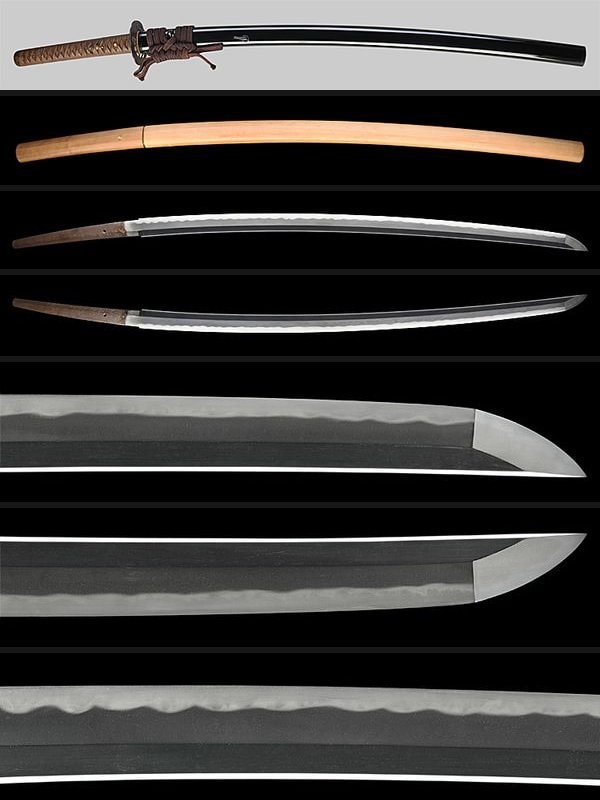
1800年前後、水心子正秀は著述をもって、鍛刀は古作の法に立ち返るべしと説いた。復古刀の運動である。最大の後継者直胤は、数百年絶えていた備前伝と相州伝を確信をもって再現した。
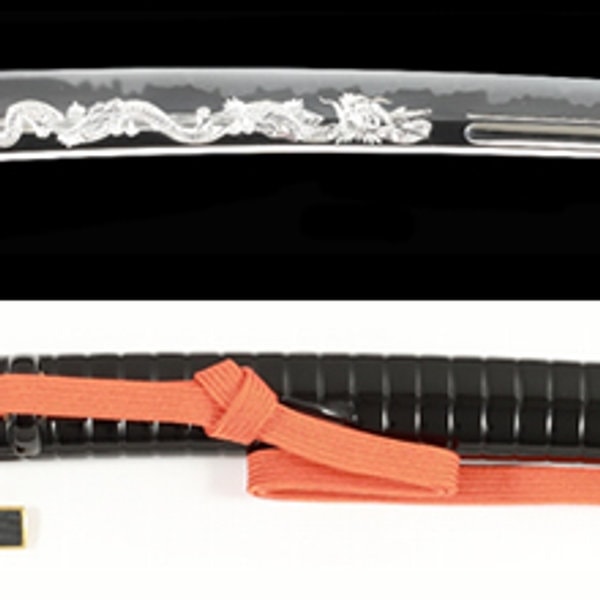
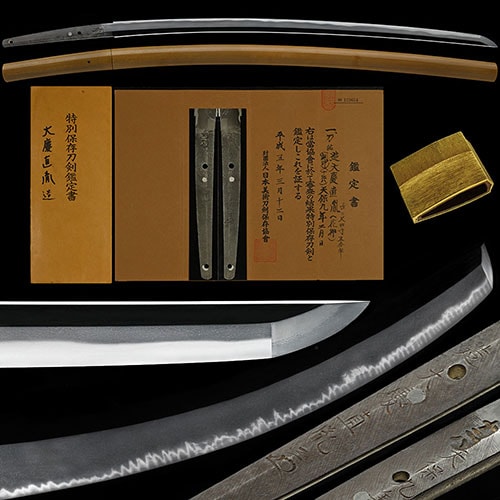
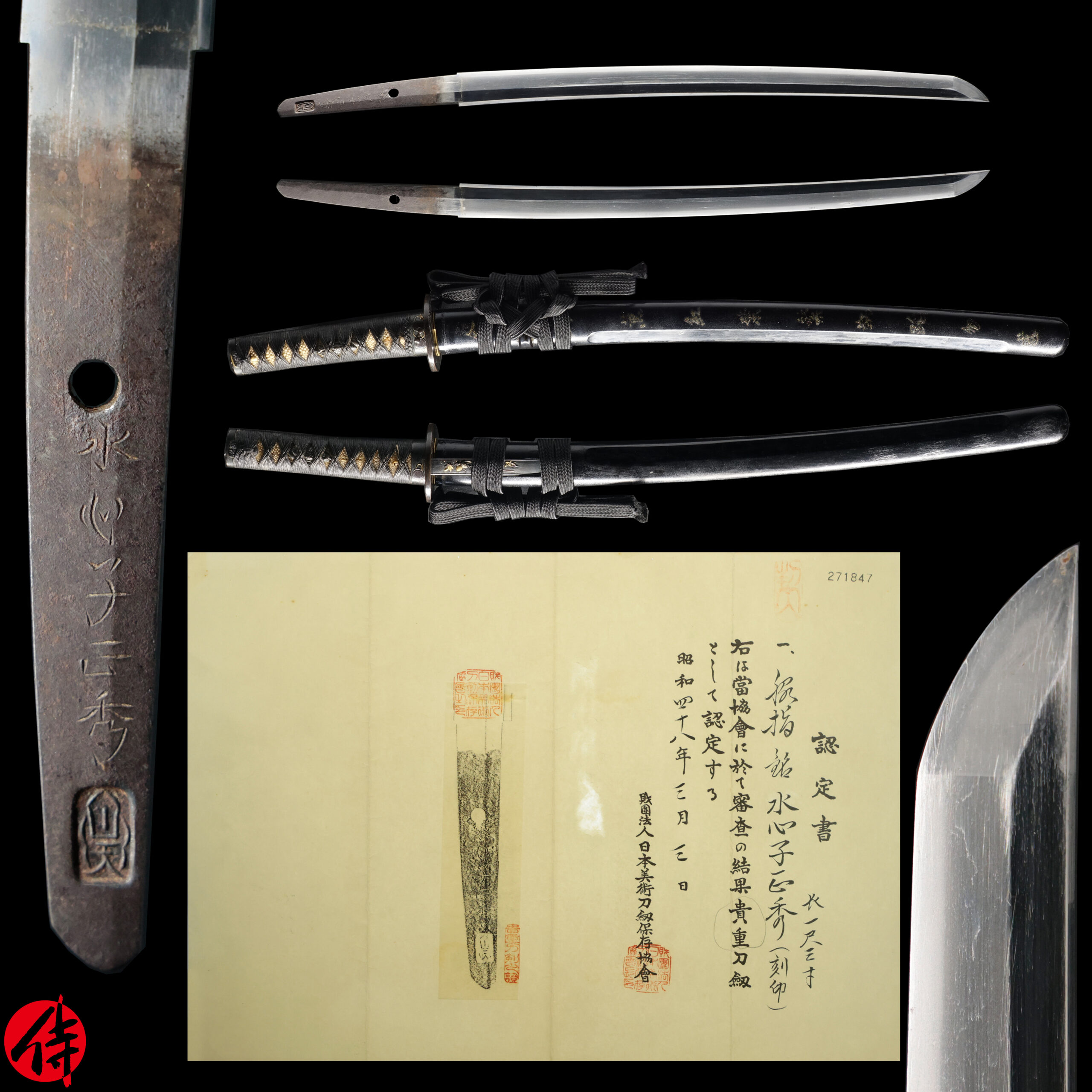
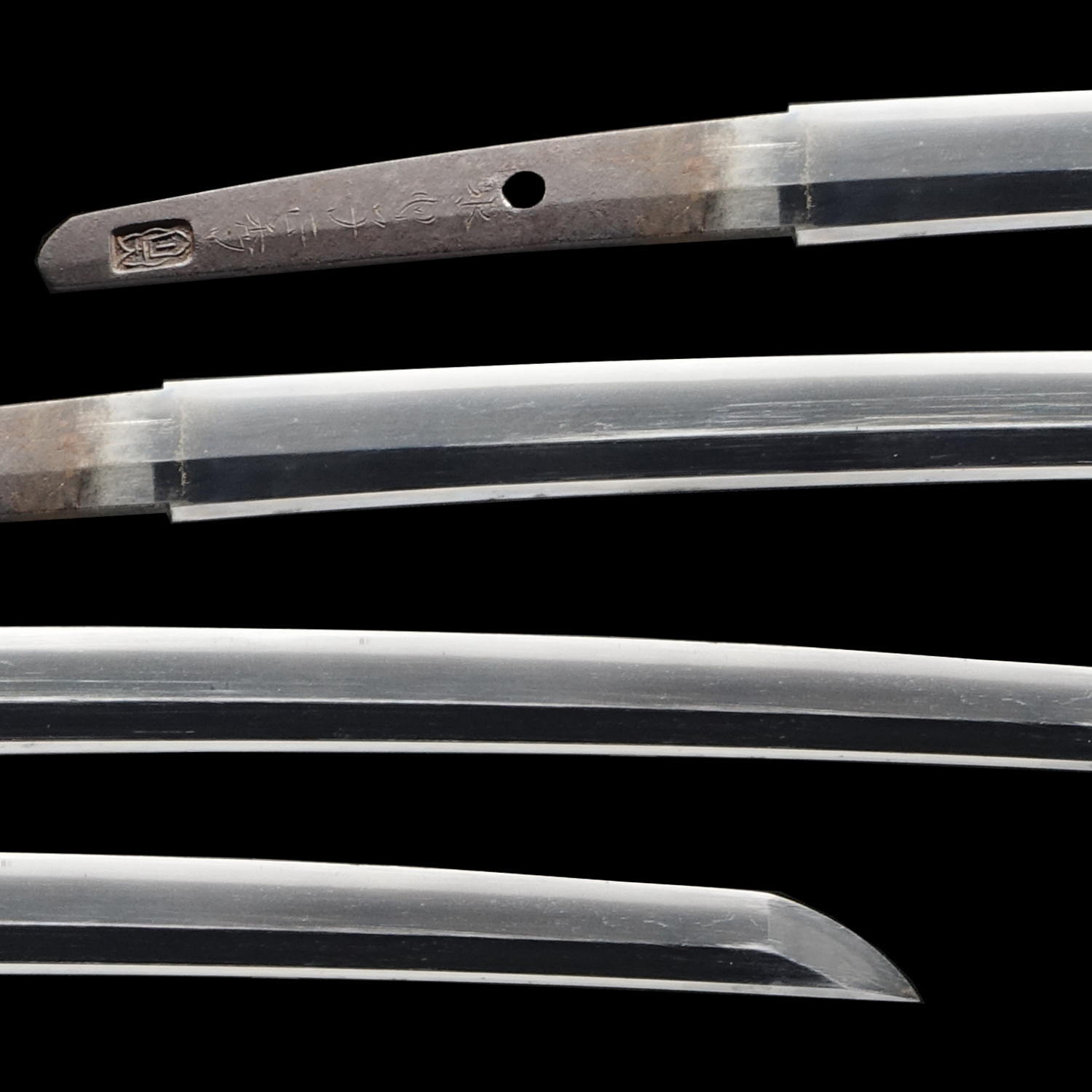
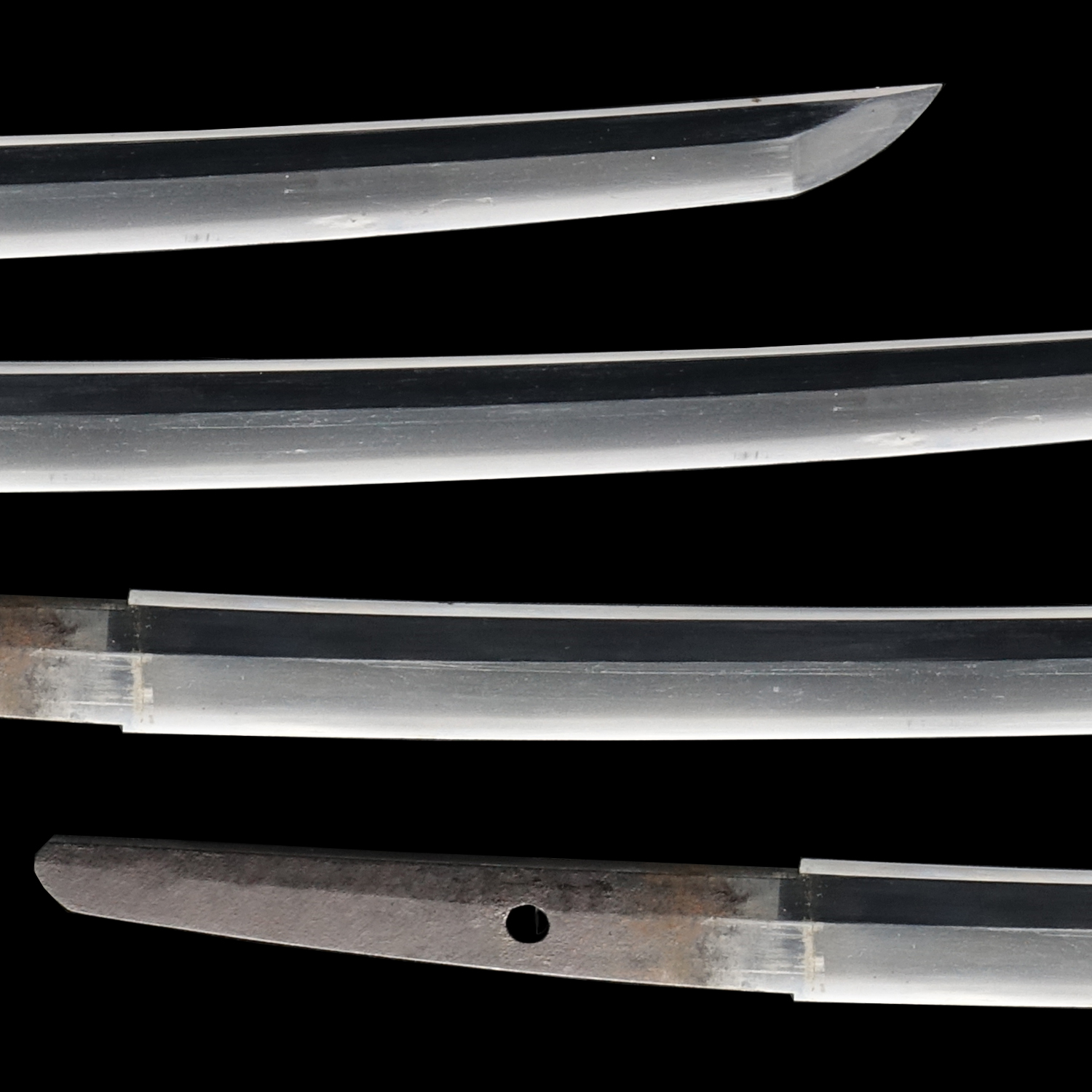
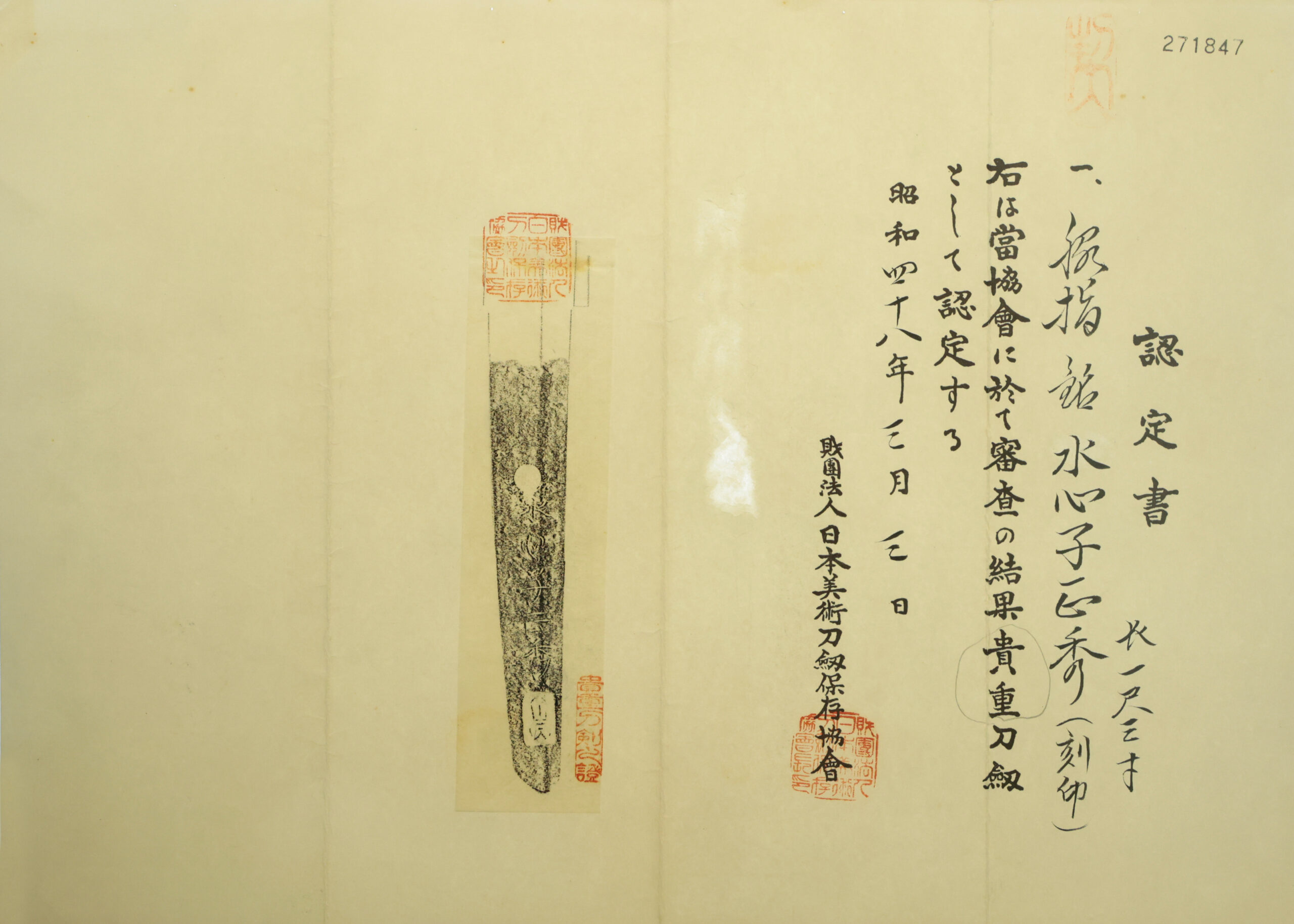
Antique Japanese Sword Wakizashi Signed by Suishinshi Masahide with NBTHK Kicho Token Certificate 【Description】 This blade was signed by Suishinshi Masahide (水心子正秀) . He was especially active during the late Edo period (1781-1820). The signature has Kao (花押: stylized signature) and Kokuin (刻印: stamped signature). Suishinshi Masahide (水心子正秀) was one of the most famous and innovative swordsmiths at the end of the Edo period. He was born in the third year of the Kan-En era (1750) in the Yonezawa domain in Dewa province (Today’s Yamagata/Akita prefecture). His birth name was Suzuki Sanjiro (鈴木三治郎). When he was about 18 years old, he started learning blacksmithing techniques from a local blacksmith named Yoshizawa Sanjiro, who specialized in producing farming tools in Dewa Koku. Later on, Masahide decided to become a swordsmith. In 1771, when he was 22 years old, he moved to Musashi Koku (Today’s Tokyo) to become an apprentice of Miyagawa Yoshihide, also known as Shitahara Yoshihide. Masahide learned sword-forging techniques under this master, who belonged to Shitahara School, one of the most prestigious schools in this area. After finishing his apprenticeship, he returned to Dewa Koku. His craftsmanship was widely recognized in the province. In 1774, Masahide started to serve Akimoto Tsunetomo, the head of the domain, because of his superb sword-forging techniques. It is said that he began to use Suishinshi as his title during this time and changed his maker’s name to Kawabe Gihachiro Masahide. In 1781, he moved to Edo City, settling in a house owned by the Akimoto clan. He was always curious to know various sword-forging techniques. He started to search how Japanese swords were made during the late Heian-Azuchi Momoyama period (late 12th-late 16th century: KOTO era), especially the ones made with SOSHU DEN and BIZEN DEN traditions. He often visited the offsprings of renowned swordsmiths in the old days to know the secret of old sword-forging techniques. One of the most notable episodes is when he visited Yamamura Tsunahiro, an offspring of Masamune, one of the historical figures in Japanese sword forging. And he improved his craftsmanship there as well. Back in the day, the mainstream Japanese swords were less curved and muscular. However, he started to feel something was missing in those blades made in his days by exploring ancient Japanese swords. Therefore, he announced Token Fukko Ron (刀剣復古論), where swordsmiths need to go back to the old way the blades were forged. This theory resonated with many sword makers back then. Eventually, this theory became mainstream. While he published about ten books on how to forge Japanese swords and other related topics, he was also passionate about training his apprentices. Many apprentices who had learned sword-forging techniques from him later became famous swordsmiths, such as Chounsai Tsunatoshi and Takei Naotane. Considering this fact, he played an essential role in the late Edo period. He is listed as Edo Sansaku (One of the three most prestigious swordsmiths). The other two are Taikei Naotane(大慶直胤)and Minamoto Kiyomaro (源清麿). In his biography, he mentioned that he had forged 369 swords in his career. Fujishiro Yoshio wrote a book called Token Jiten (Japanese Sword Dictionary). He is one of the most reputable Japanese sword experts in modern times. He categorized swordsmiths into five categories (Saijyo Saku, Jyojyo Saku Jyo Saku, Chu Jyo Saku, Chu Saku) regarding the reputation and skill of swordsmiths during the Shinto Shin To era (Late Edo period). Saijyo Saku is in the highest position. This chart often reflects how prominent a Japanese swordsmith is. Masahide is categorized as a Saijo Saku swordsmith. *Please keep in mind that there are a few Hike Kizu (scratches on the blade). If you like to know the detailed condition, please feel free to contact us. 【 Blade】 Cutting Edge Length(Nagasa) : 39.4 cm (15.5 inches) Curvature(Sori) : 0.6 cm (0.23 inches) Hamon : The crystalline struct
 NihontoWatch
在銘 · Shitahara · 新々刀 · 長さ 39.4cm · 反り 0.6cm
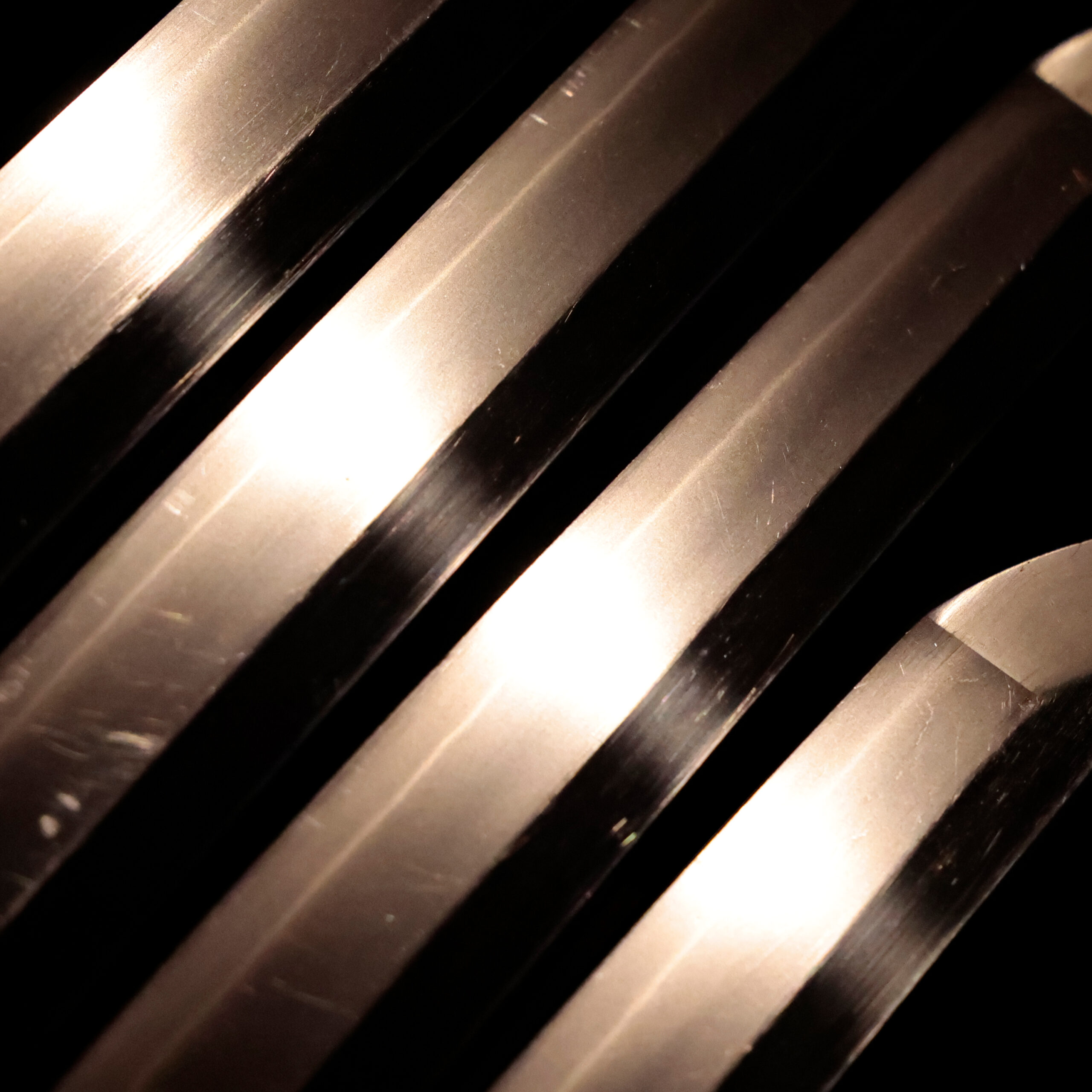
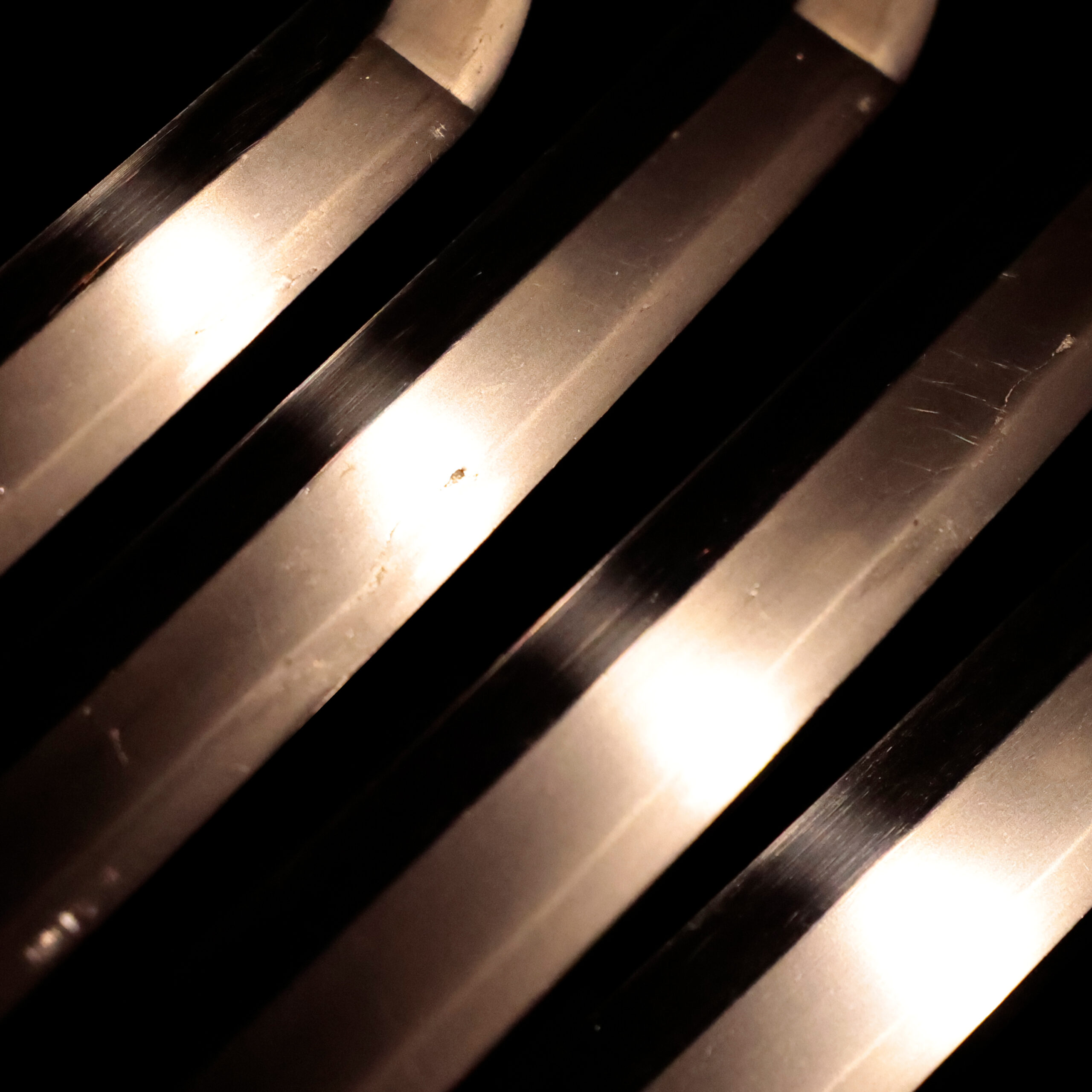
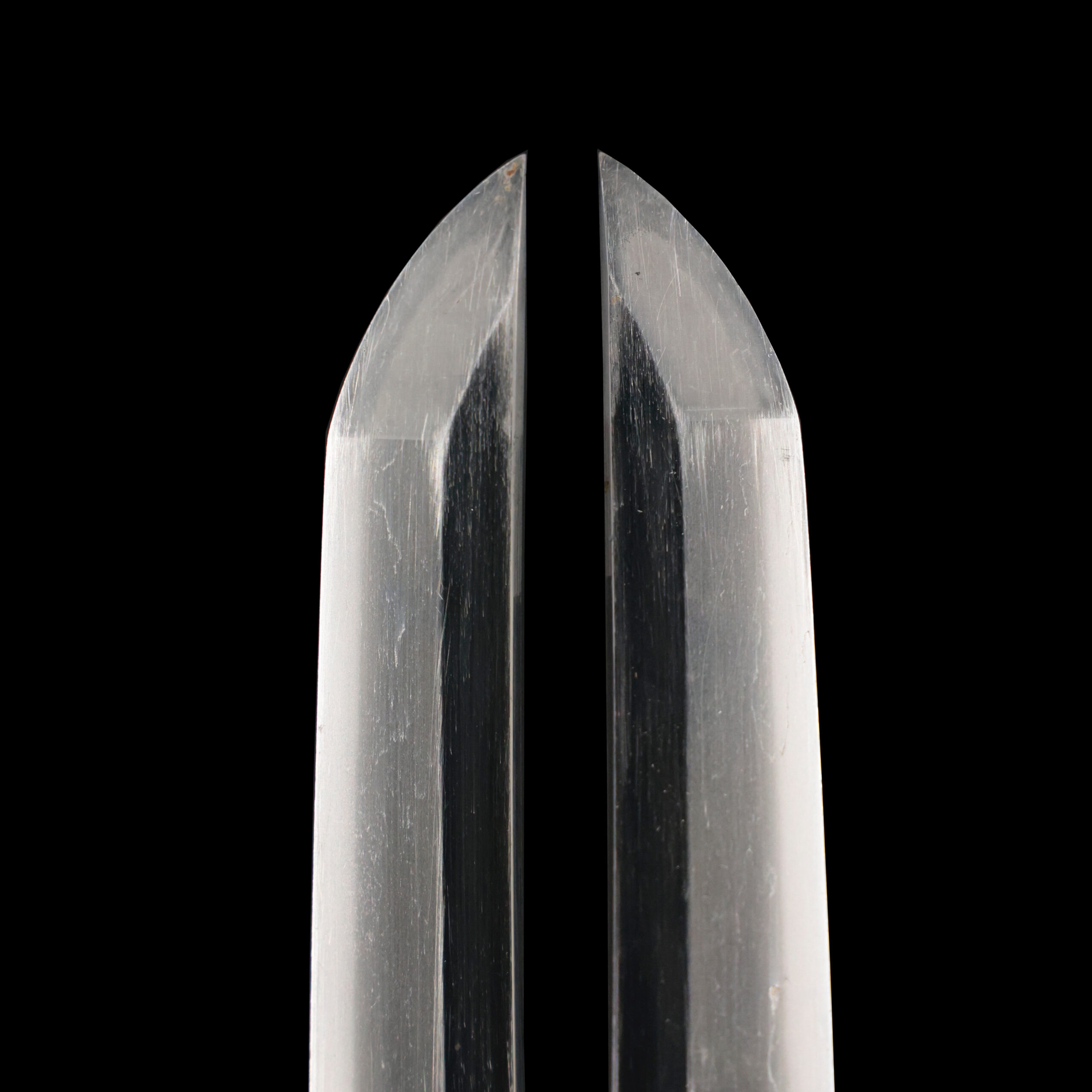
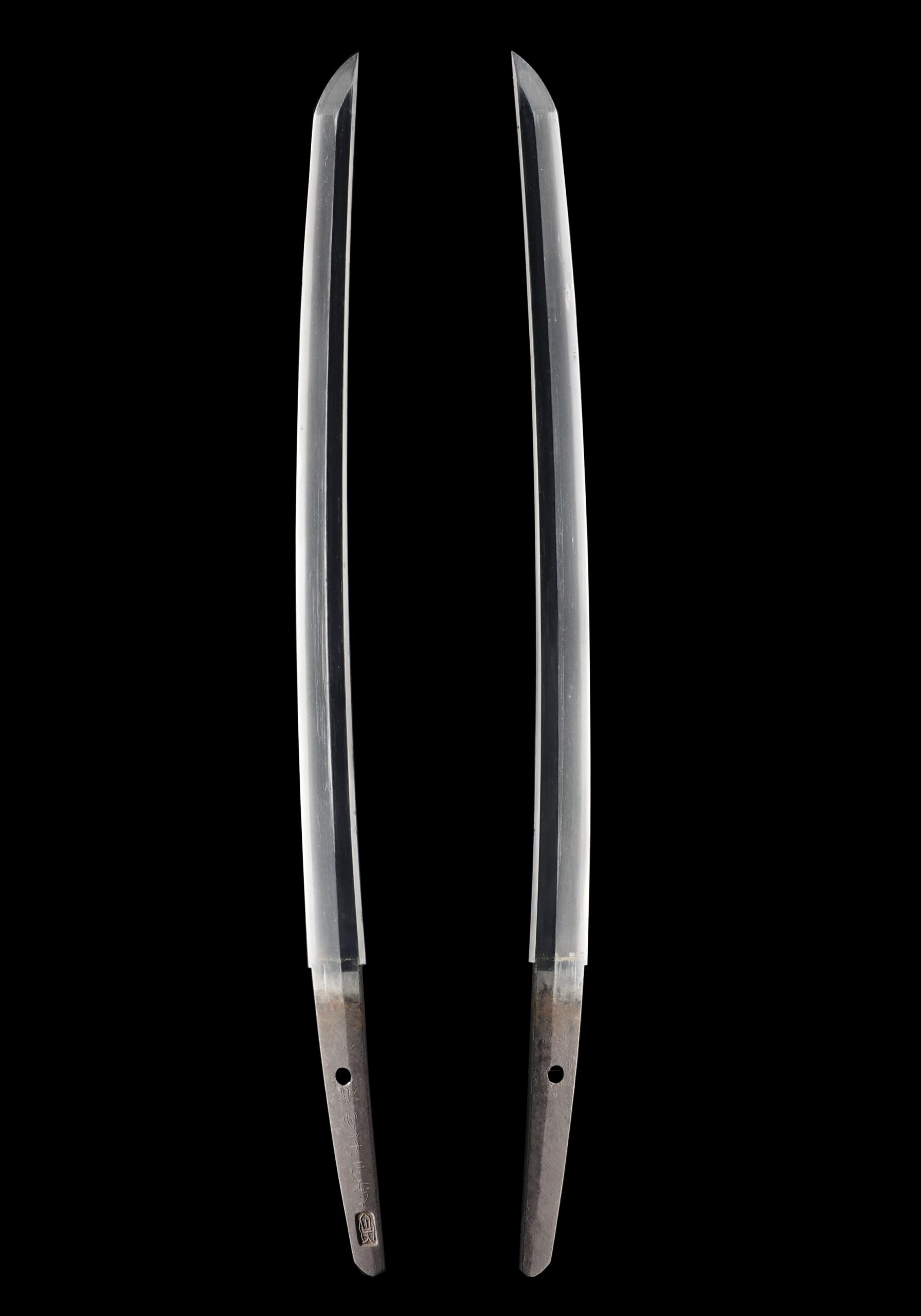
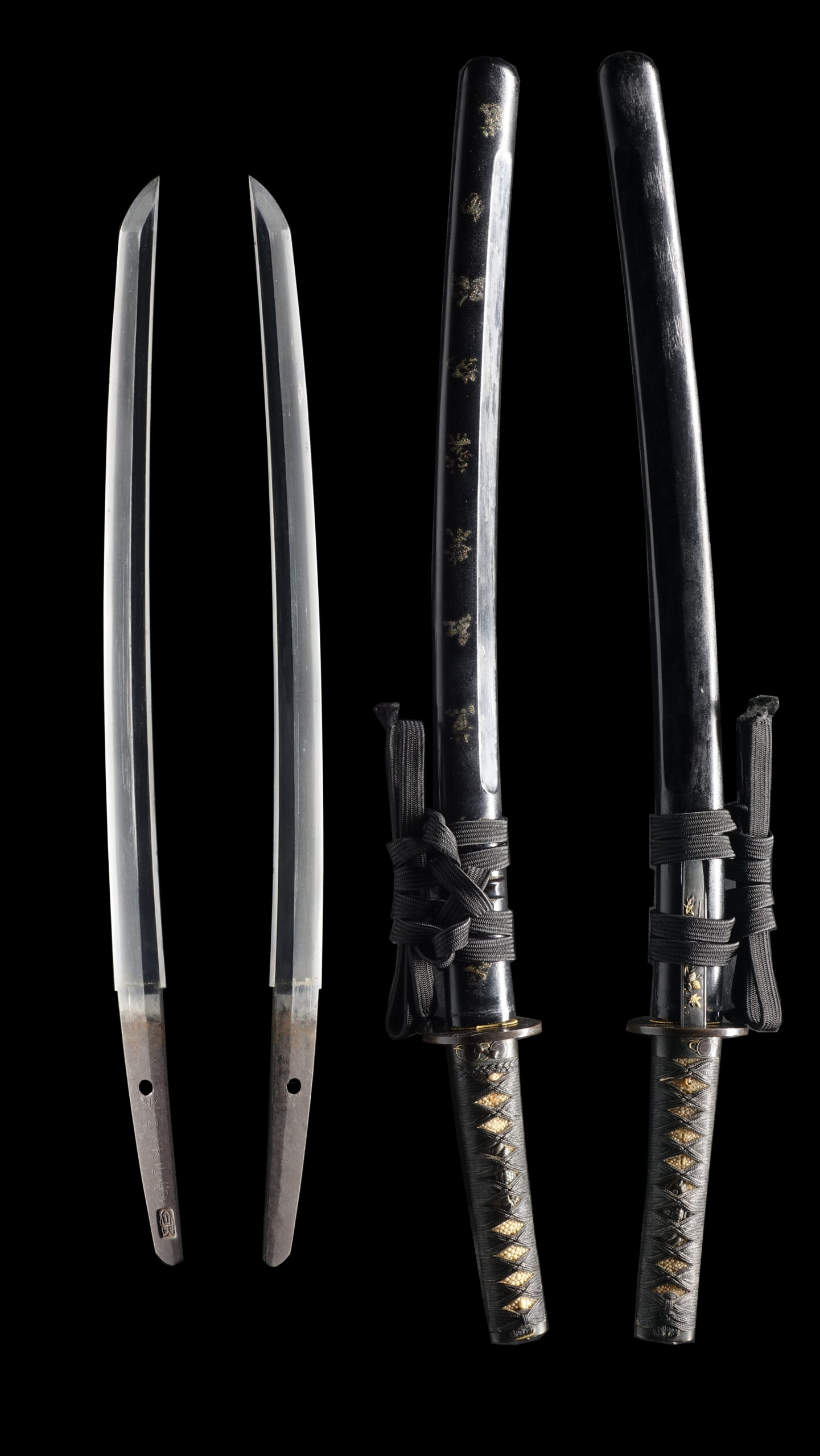
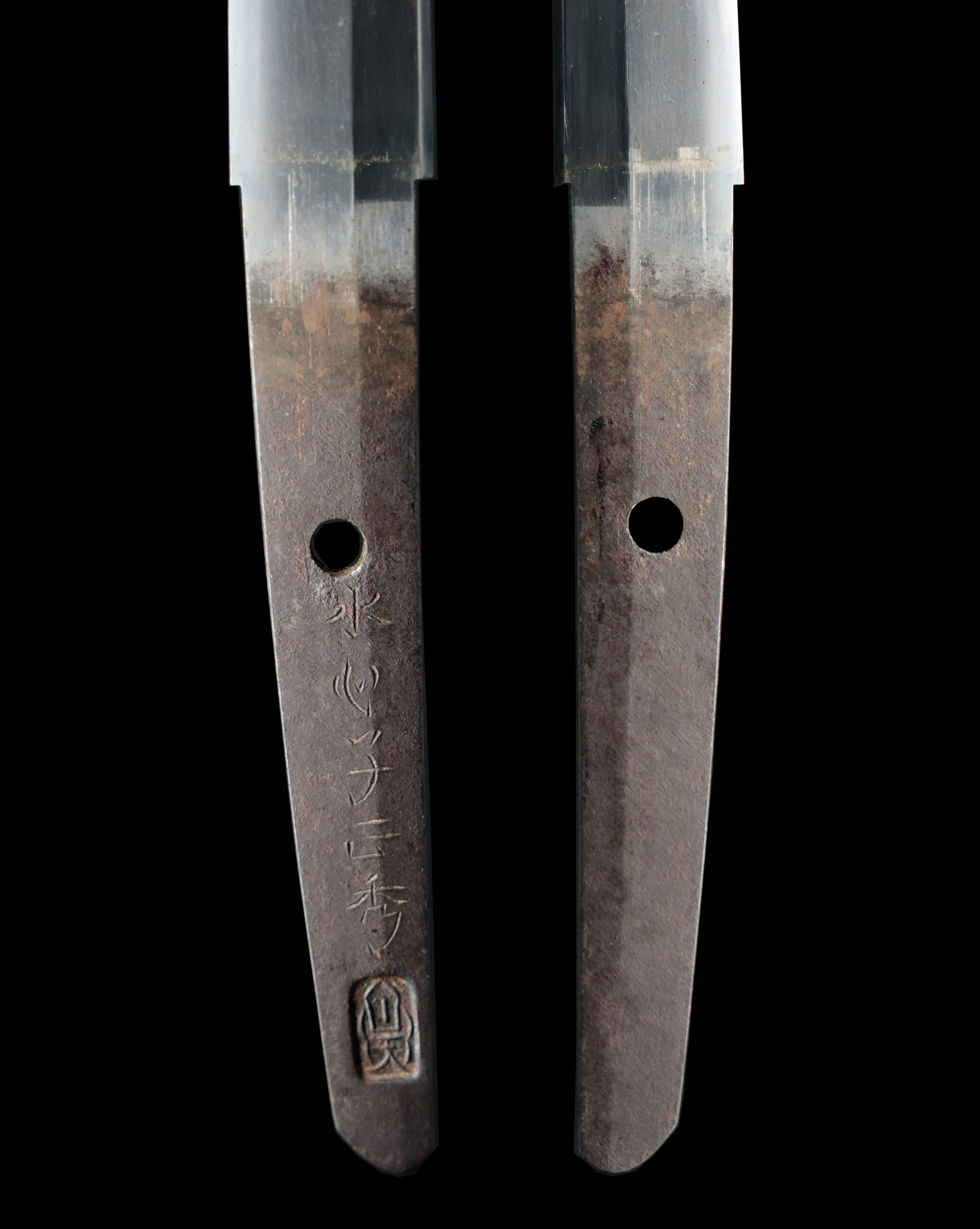
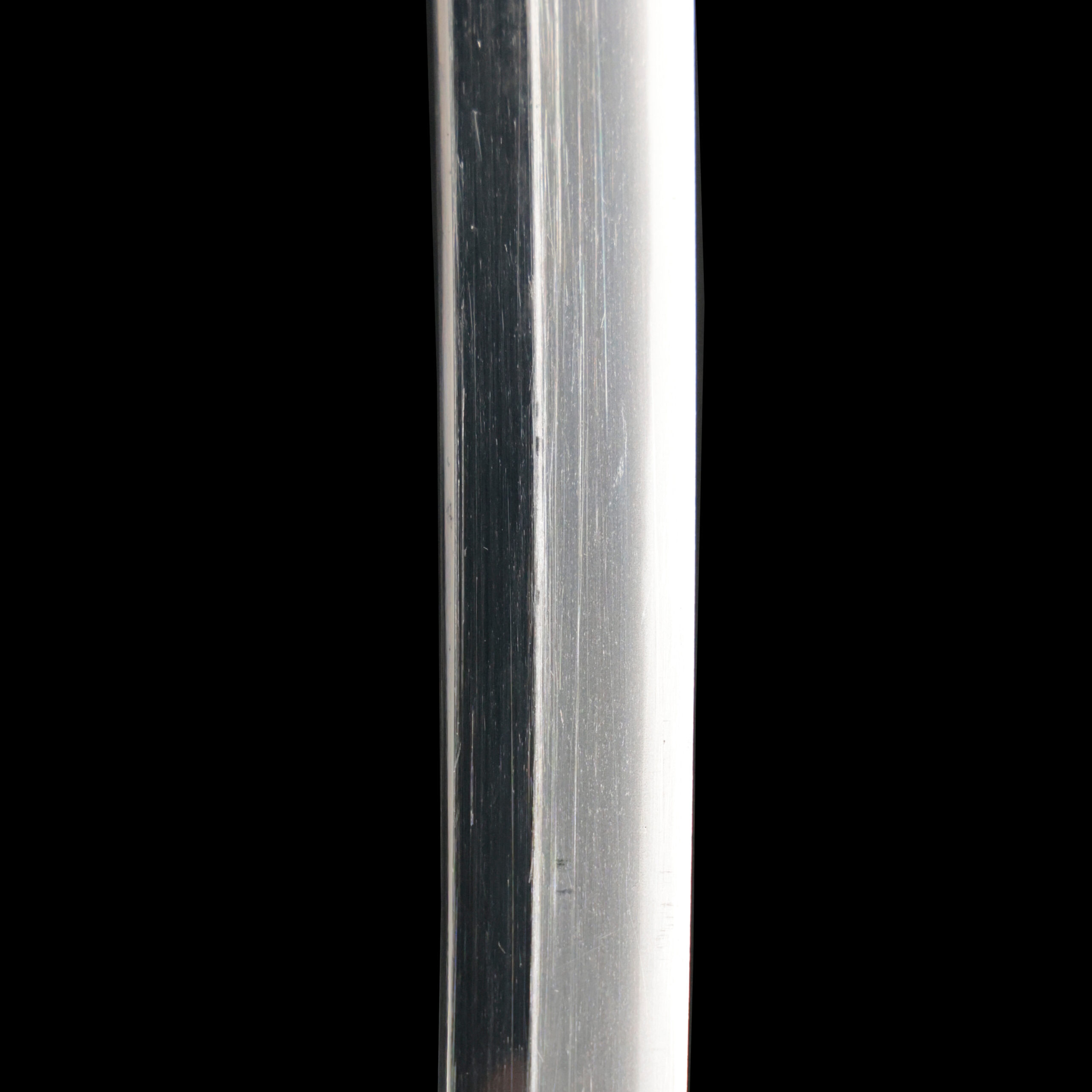
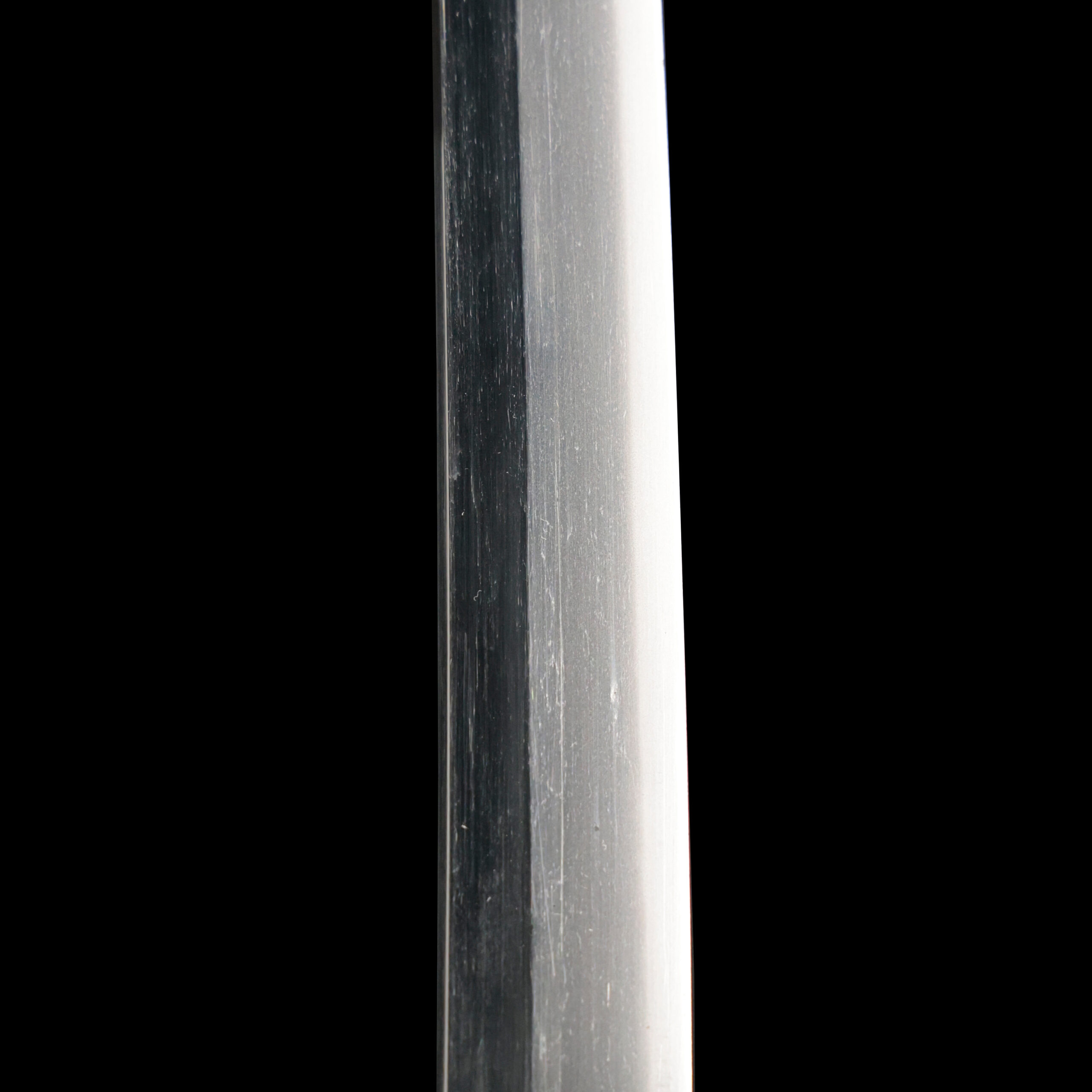
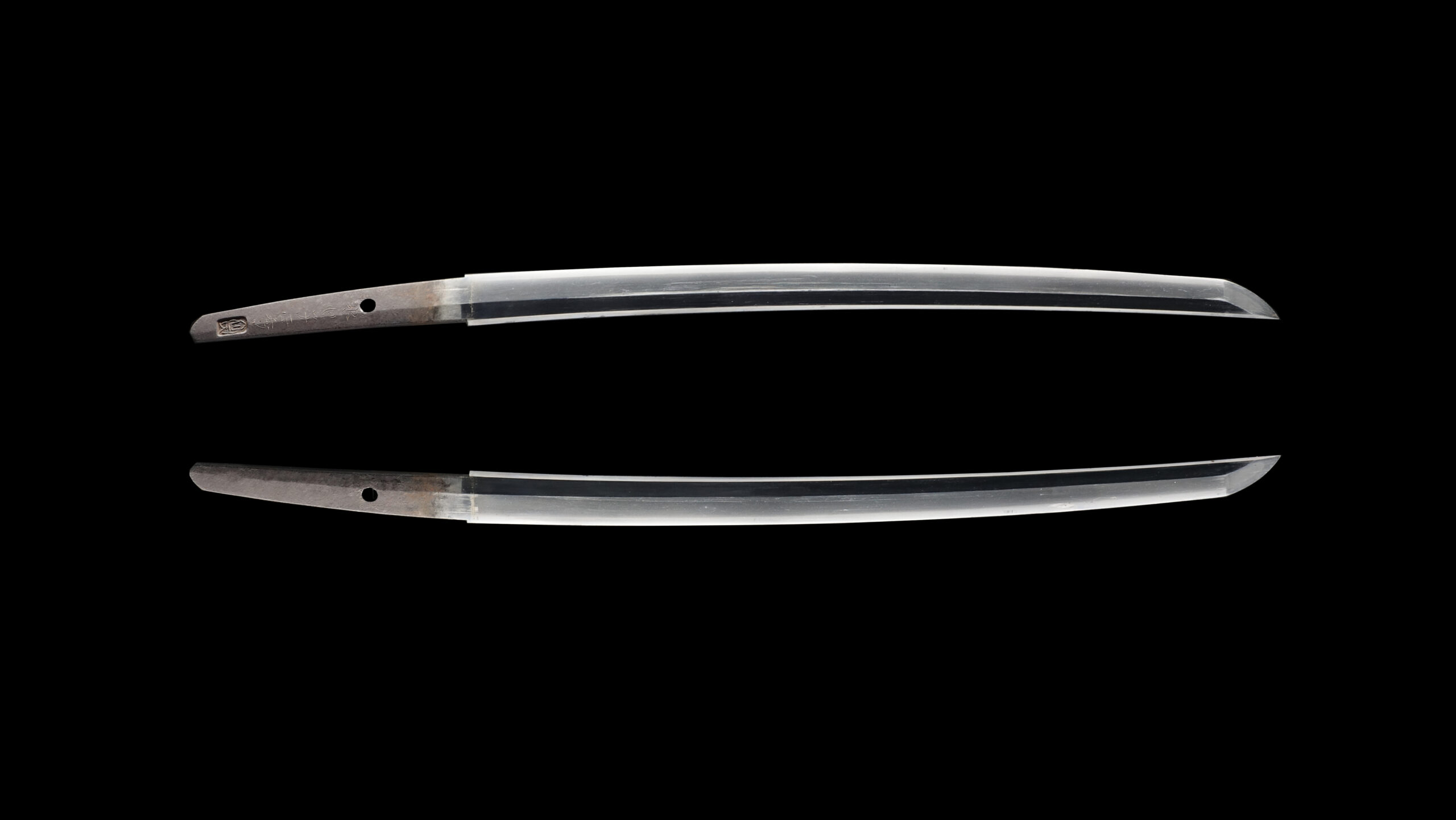
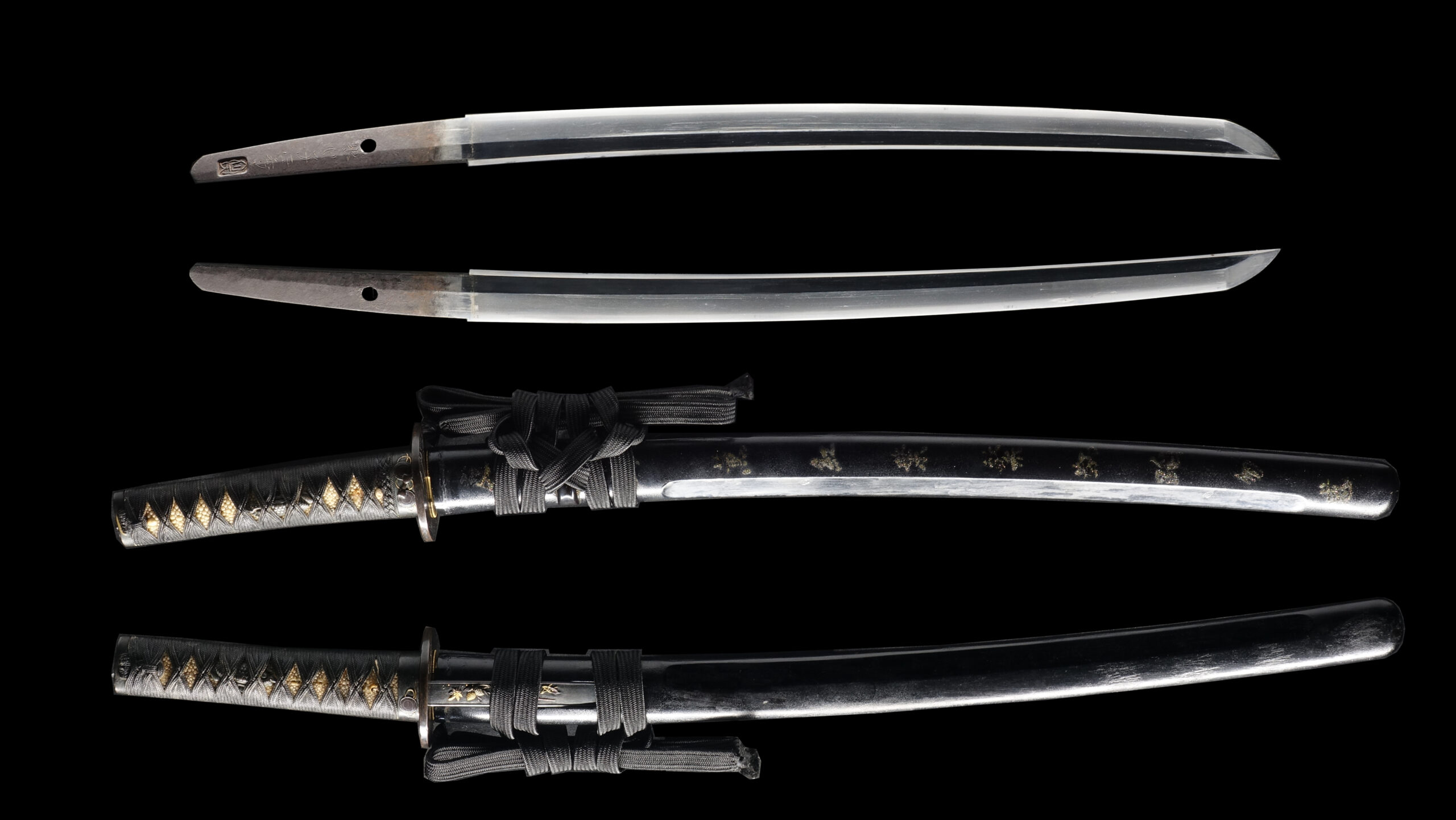
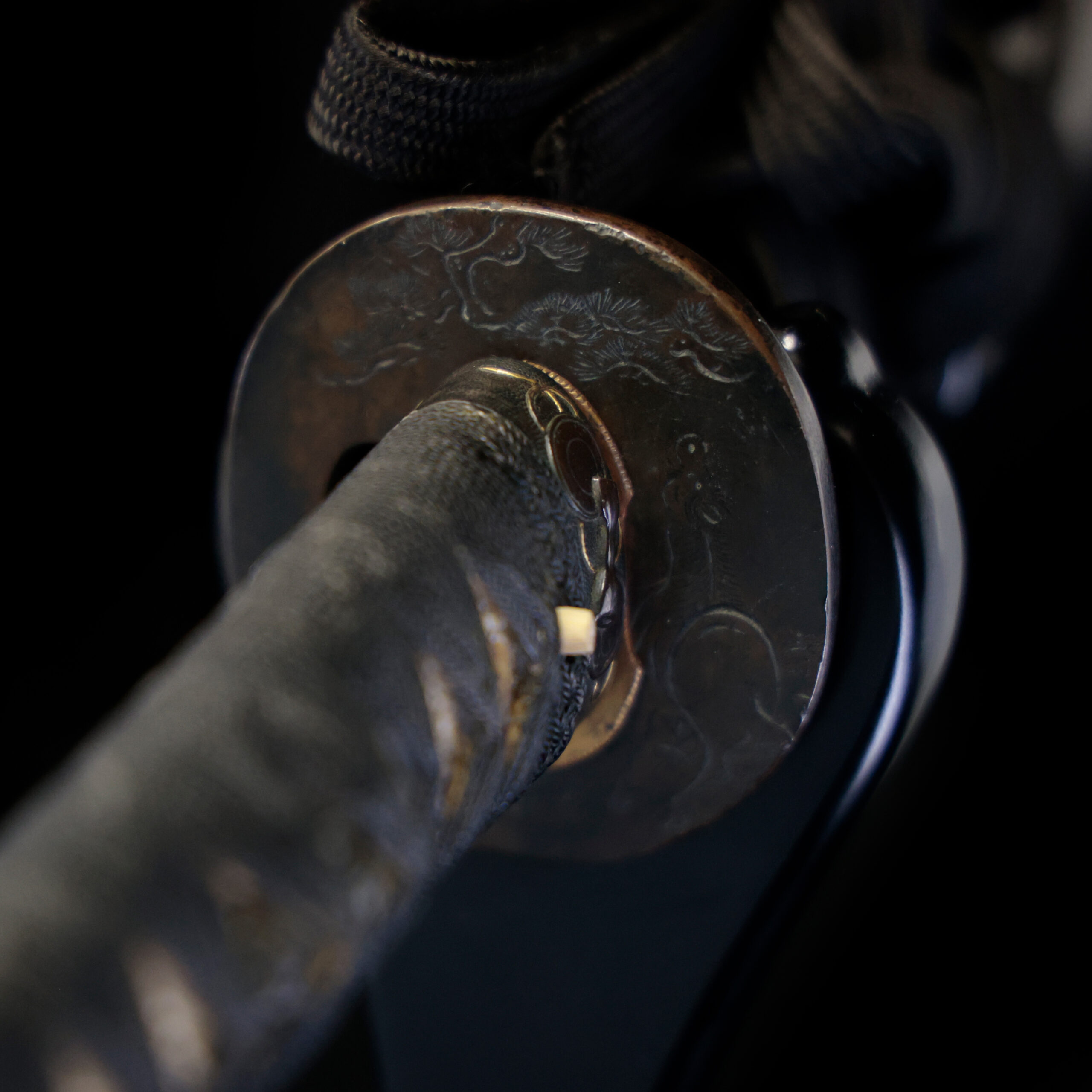
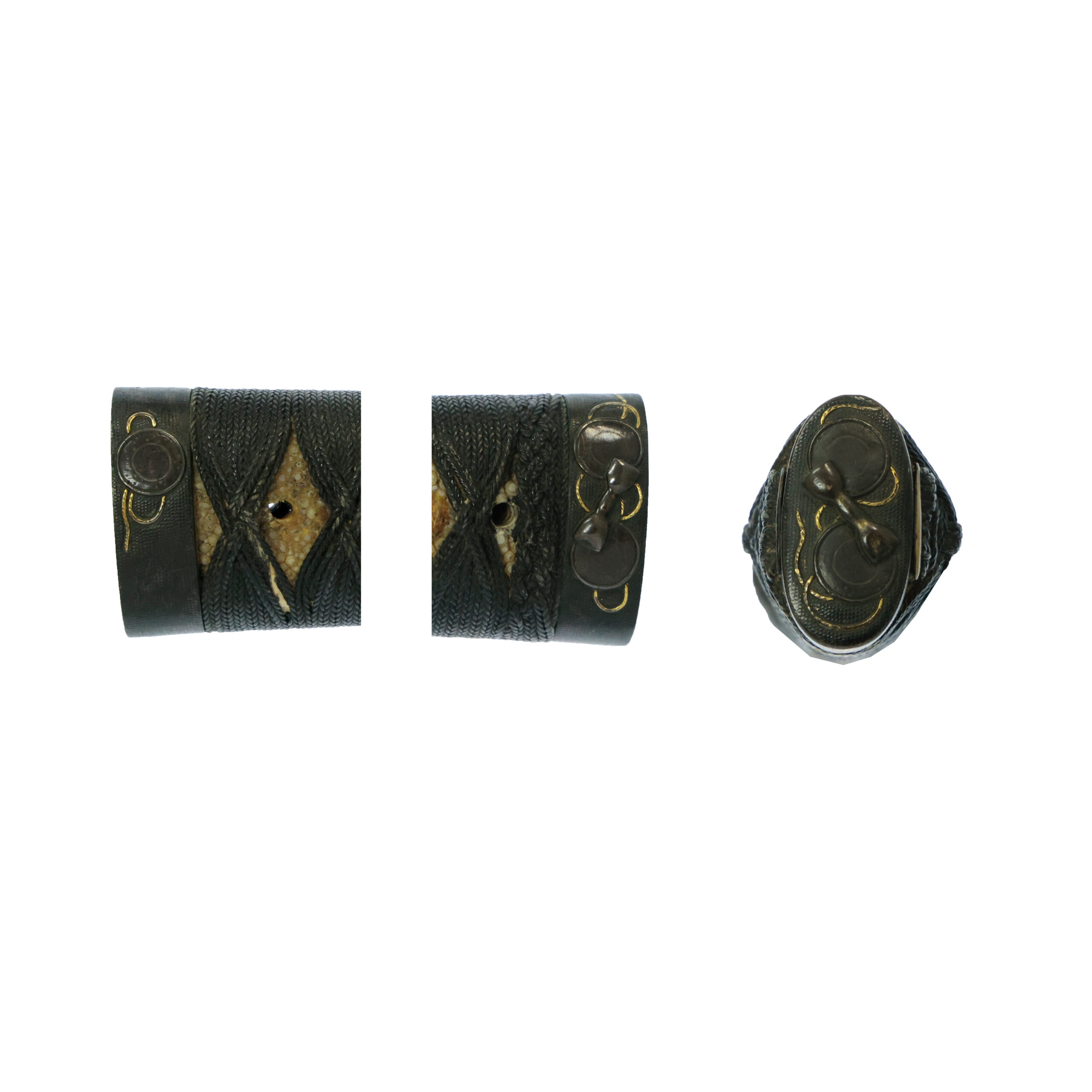
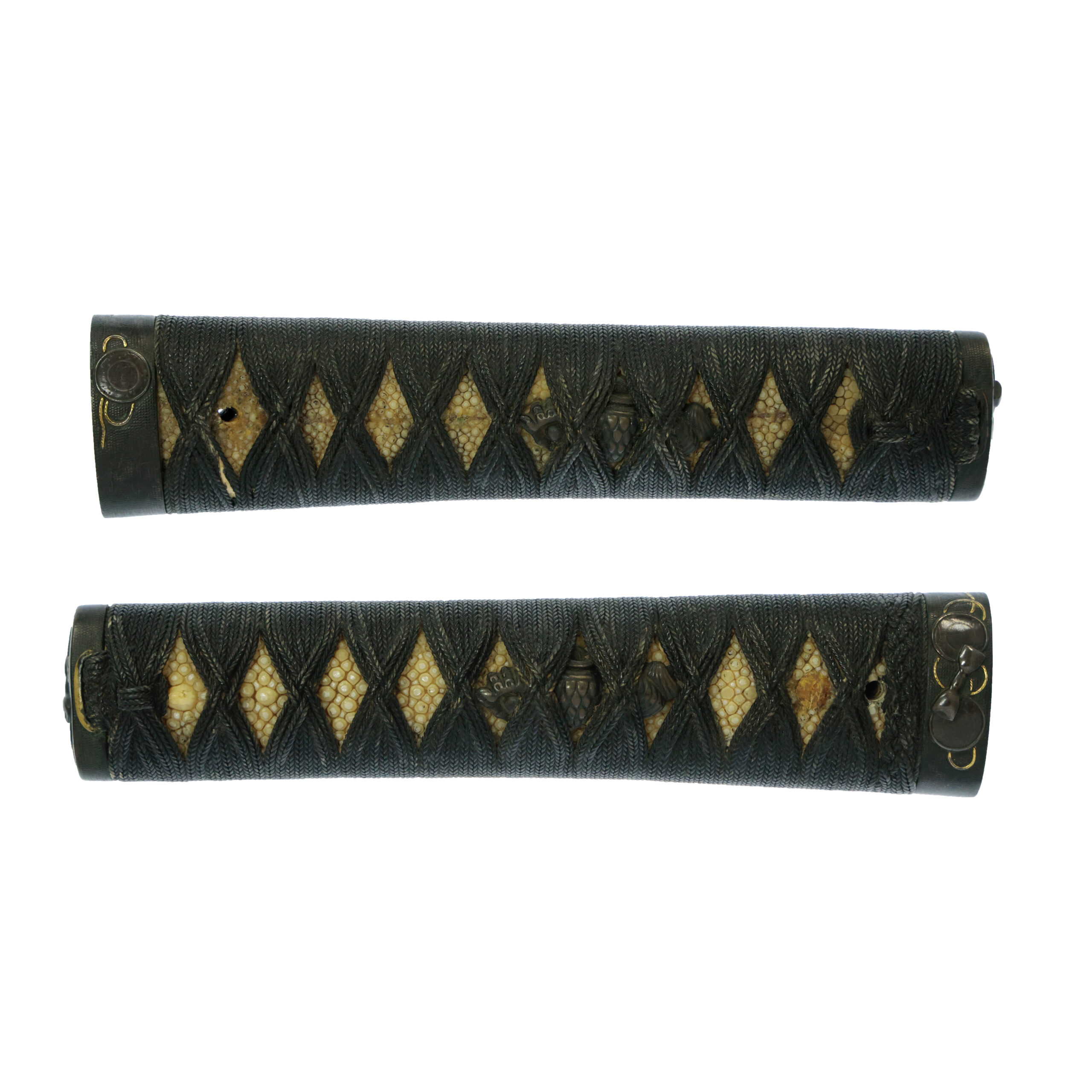
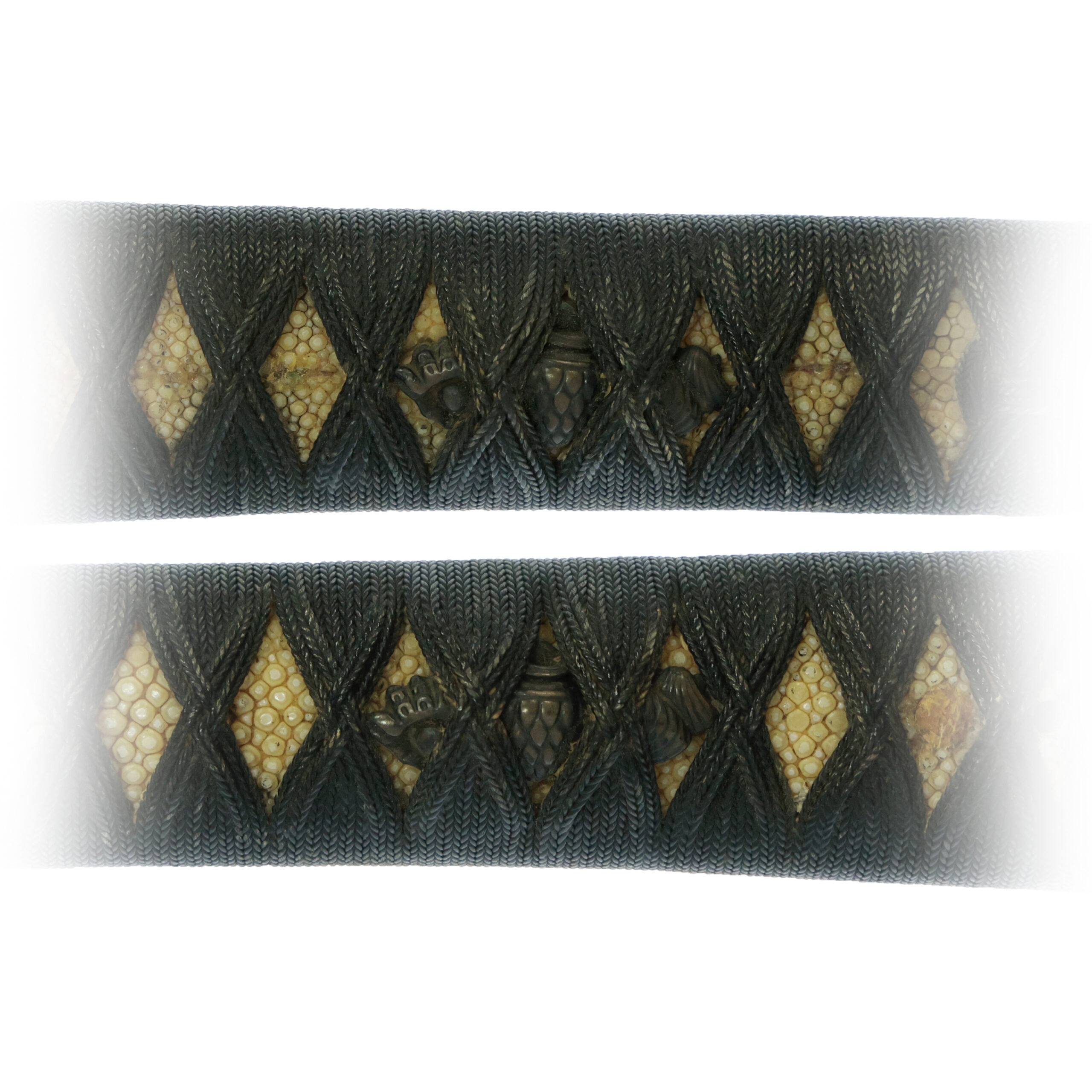
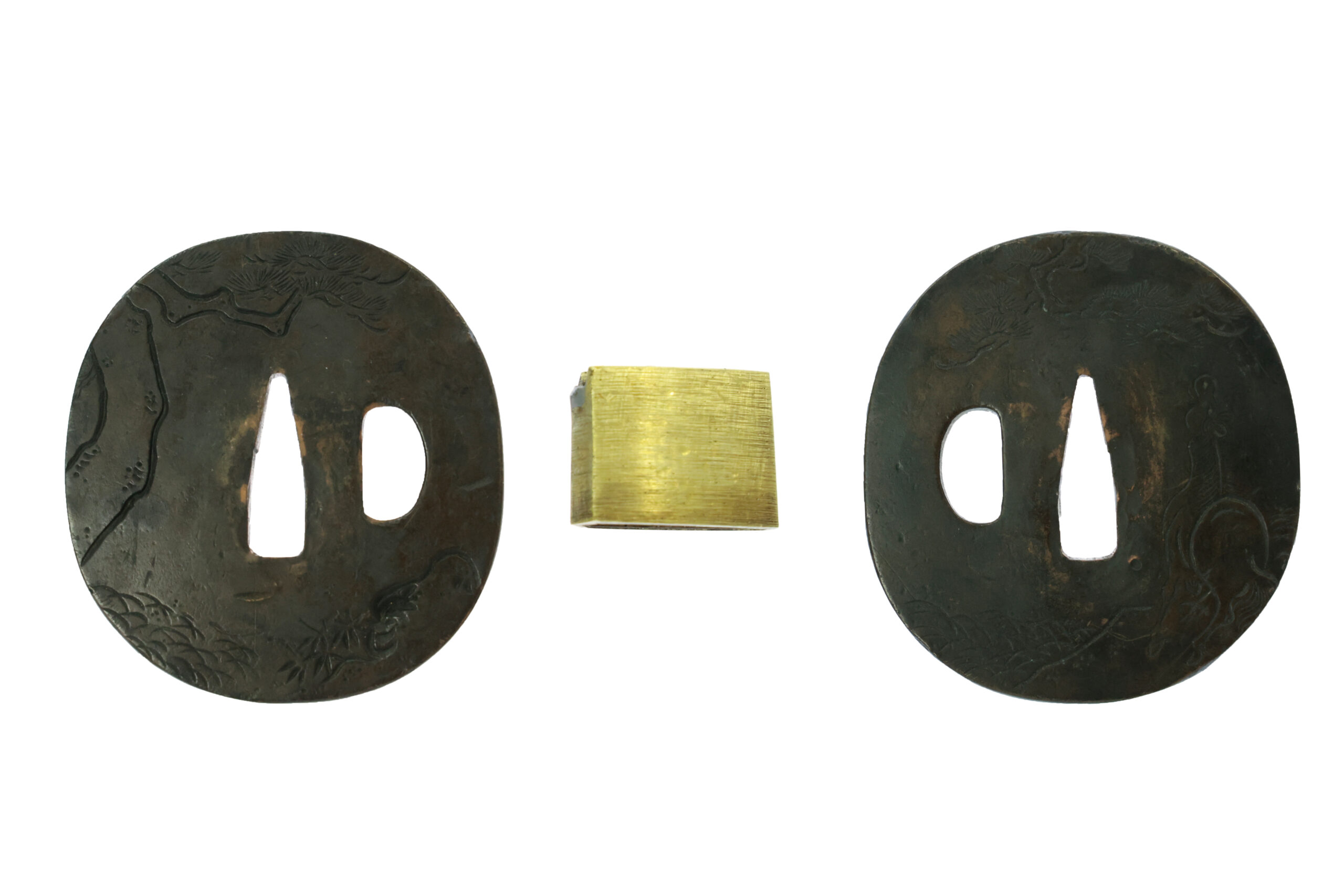
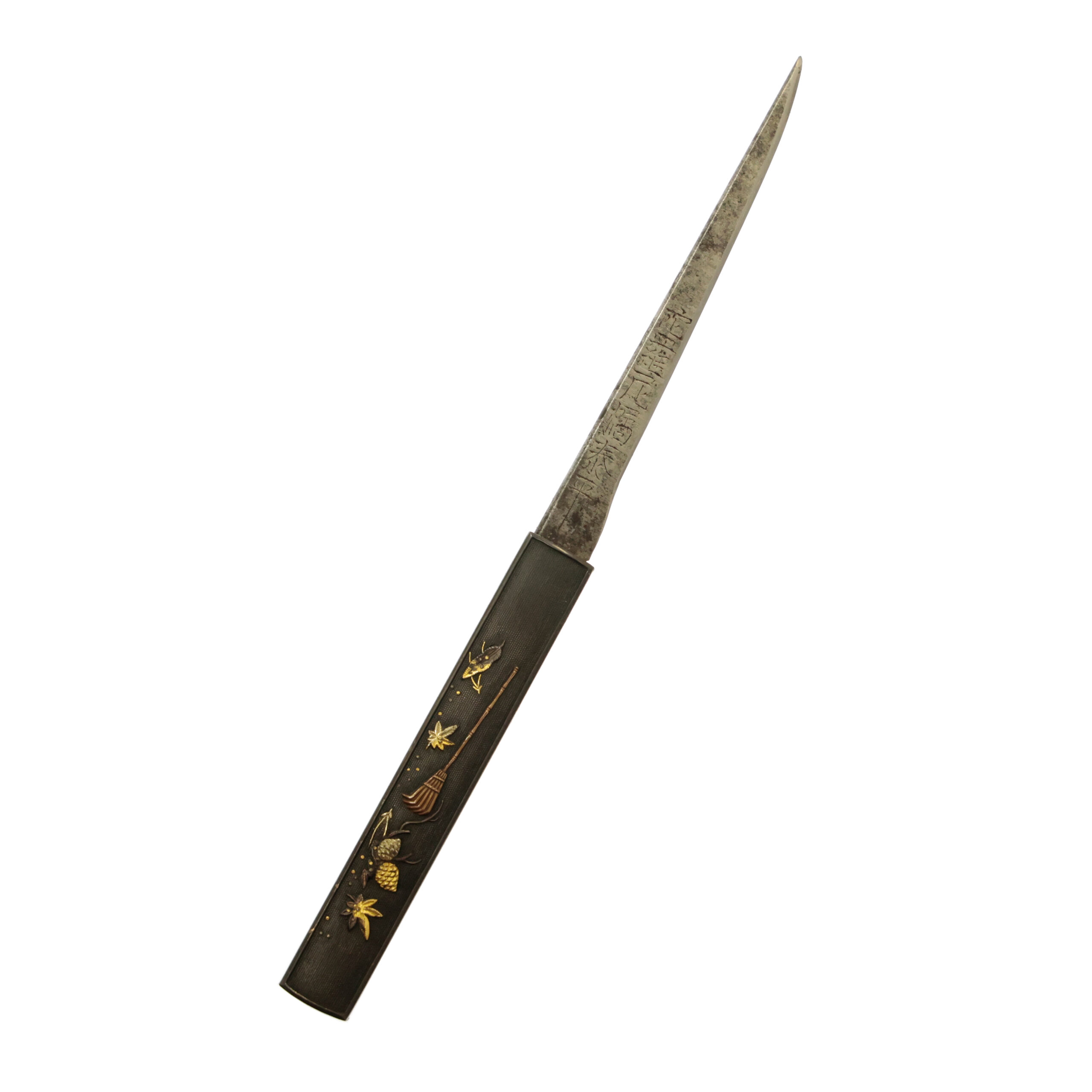
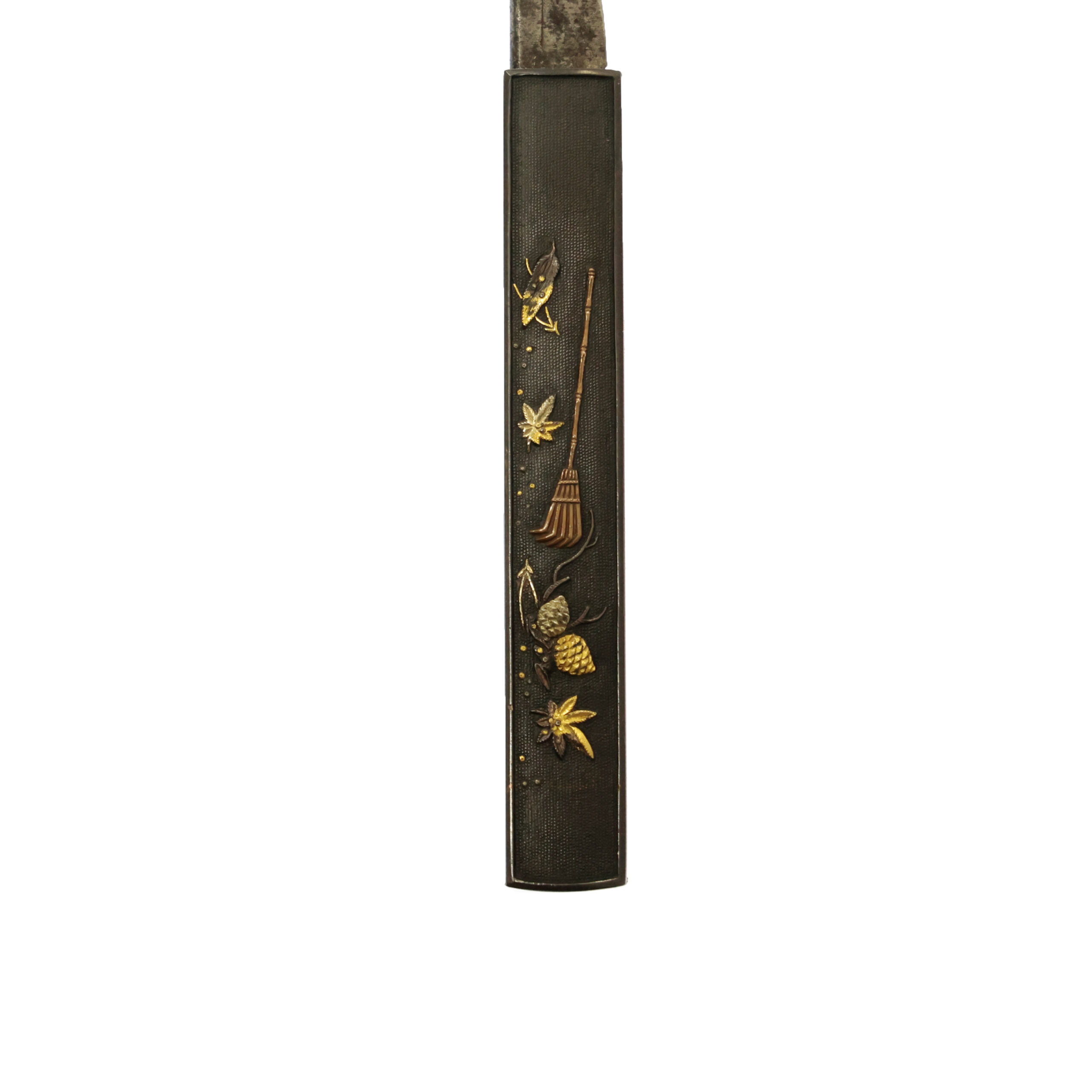
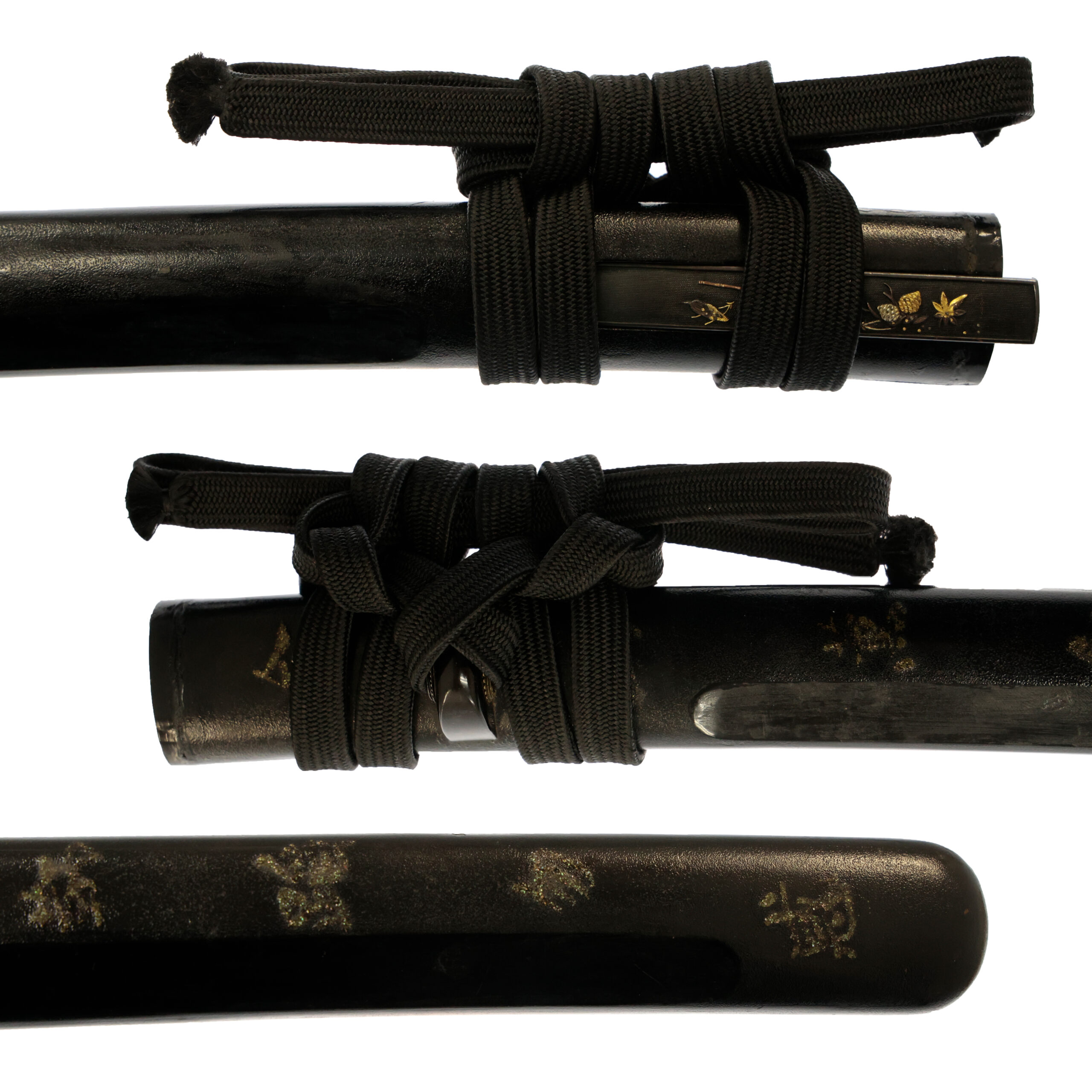
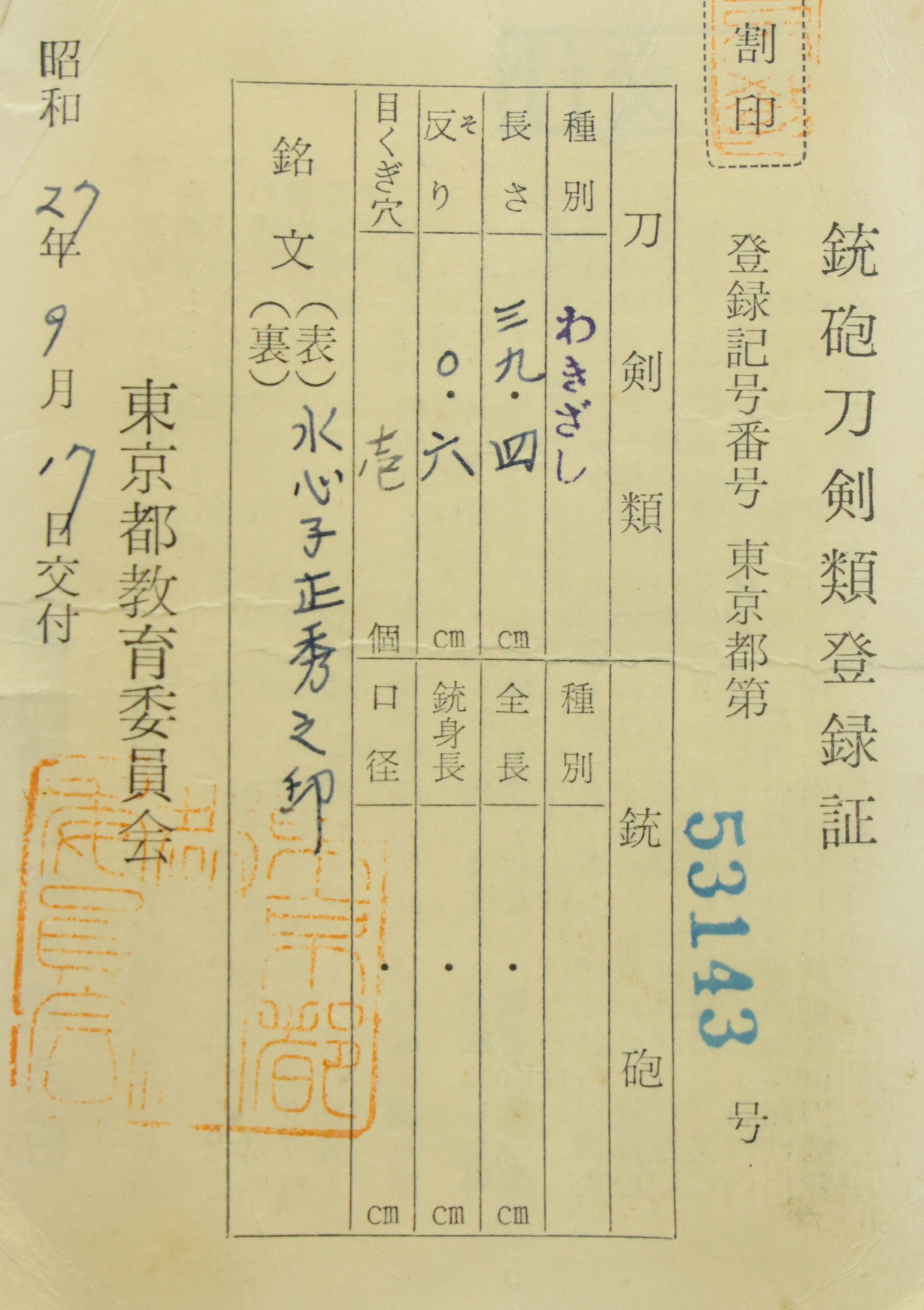
新々刀 · 武蔵
現在80点販売中
水心子正秀派は、十八世紀末から十九世紀初頭の江戸に興り、刀はすべて鎌倉の昔に復すべしとする復古刀運動を中核に据えた新々刀の一門である。開祖水心子正秀は、寛延三年に出羽国赤湯に川部儀八郎として生まれ[[c:1]]、武州下原の鍛冶吉英に学んだのち山形秋元家に仕え、のちに江戸浜町に移って約五十年に及ぶ作刀生活を送り、文政八年に七十六歳で歿した。彼は新々刀の祖と称され、古作の伝法を意図して甦らせることを唱えてその理論を世に広めたが、説明書は正秀自身の才のありかをむしろ壮年までの大坂写しに見いだす。この一門の物語で最も重きをなすのは、彼が江戸に糾合し育てた門人たちであろう。復古刀論を実地に示した第一の門人大慶直胤、二代正義細川守秀がその直下に立ち、さらに直胤の門から養子となった次郎太郎直勝、直胤の女婿と伝える水心子正次、正義の嫡子正守、米沢上杉家に仕えた長運斎綱俊、水戸藩工直江助政が連なって、出羽・江戸を中心に各藩へと広がった。 この一門を貫く共通の語法は、古刀各伝の意図的な復興にある。よく約んだ無地風に近い小板目に地沸を厚くつけ、その地の上に相州伝ののたれ・互の目、あるいは備前伝の丁子・互の目を焼くのが基調で、技術論的かつ教導的な性格がこれを支える。正秀の典型は津田助広に私淑した大坂写しの濤瀾乱れと井上真改風の広直刃にあり、地へこぼれる黒味がちの荒い沸が終始の手癖をなした。これに対して門人たちは古備前への遡りをいっそう深め、新々刀には本来失われた映りを意図して甦らせた。直胤はよくつんだ小板目に乱れ映りを鮮明に立て、後期長船の逆がかりを示す丁子乱れを焼いてこれを得意とし、説明書はその丁子乱れの巧みさを新々刀第一と評する。直勝は兼光に範をとった片落ち互の目を主体に、直胤よりも豪壮な姿と低く静かな焼きで古調を醸し、正次と正守はともに直胤・正義の二伝を忠実に承けて相州伝と備前伝を均しく再現し、綱俊は丁子に互の目を交えた備前伝を主調とした。一方で正秀みずからの備前伝・相州伝は終始焼刃が浅く荒い沸を交え、説明書はその技が門人直胤に及ばないと明記する。差異は資料の支持する範囲で明瞭で、直胤の備前・相州の両伝、直勝の長船写しに見る逆がかりと大杢目、助政の真改風直刃に偏した作域がそれぞれを分かつ。 鑑定の勘所は、まずこの意図的な映りと逆がかりに置かれる。明るい乱れ映りと角互の目を伴う逆がかりの丁子は、映りも逆がかりも持たぬ一般の新々刀から備前伝を分かち、相州伝は独特の渦巻肌と叢づき縞がかる沸の働きによって示される。位列としては正秀を上々作、直胤を最上作の在銘の大名跡とし、正義に次ぐ正守、綱俊、助政らがこれに続く。この一門は在銘・有年紀の作を数多く遺したため、その鑑定の問題は極めの難ではなくむしろ系統内の位置にあり、年ごとに変化する銘がその発展を正確に辿らせる。伝来は真田家伝来の大小や皇室に伝わった御太刀の副作、各藩工としての藩命作にうかがわれ、正秀が向き直らせた江戸の作刀は直胤を介して直勝・正次らへ受け継がれ、兼光・景光をねらった長船復古として幕末の十九世紀作刀に広く及んだ。 詳しく見る →
新々刀 復古の運動
1800年前後、水心子正秀は著述をもって、鍛刀は古作の法に立ち返るべしと説いた。復古刀の運動である。最大の後継者直胤は、数百年絶えていた備前伝と相州伝を確信をもって再現した。
本作はNBTHKの旧鑑定書(貴重・特別貴重)を有しますが、これらは現在発行されておらず、信頼性に欠けるとされています。極めを確認するには、公的な鑑定機関(NBTHK・NTHKなど)への再提出による現代の鑑定をご検討いただけます。
Returns/exchanges limited to defects caused by shipping (except willful misconduct or gross negligence by the company); customers must contact within 72 hours of receiving the product.